



National and State-Level Estimates of WIC Eligibility and Program Reach in 2023
This report, the latest in an annual series, presents 2023 national and state-level estimates of the number of people eligible to receive benefits provided through the Special Supplemental Nutrition Program for Women, Infants, and Children (WIC) and the percentage of the eligible population and the general U.S. population participating in the program.
The number of people eligible for WIC in 2023 remained about the same as the year prior.
- The estimated average monthly WIC-eligible population totaled 11.83 million in calendar year (CY) 2023 (Table 1), essentially unchanged from the estimate of 11.79 million in 2022.
- In 2023, about half of infants and children and more than one third of pregnant women in the U.S. were eligible to participate in WIC.
| Participant Category | Number Eligible | Percent of Total Eligible (%) | Total Population | Eligibility Rate (%) |
|---|---|---|---|---|
| Infants | 1,796,821 | 15.2 | 3,600,389 | 49.9 |
| Children | 7,626,138 | 64.5 | 14,713,756 | 51.8 |
| 1-year-old children | 1,883,018 | 15.9 | 3,672,400 | 51.3 |
| 2-year-old children | 1,914,319 | 16.2 | 3,668,357 | 52.2 |
| 3-year-old children | 1,937,138 | 16.4 | 3,619,422 | 53.5 |
| 4-year-old children | 1,891,664 | 16.0 | 3,753,577 | 50.4 |
| Women | 2,406,255 | 20.3 | 6,615,976 | 36.4 |
| Pregnant women | 1,091,474 | 9.2 | 2,791,608 | 39.1 |
| Postpartum women | 1,314,781 | 11.1 | 3,824,368 | 34.4 |
| Breastfeeding women | 848,829 | 7.2 | 1,995,462 | 42.5 |
| Non-breastfeeding women | 465,952 | 3.9 | 1,828,907 | 25.5 |
| Total | 11,829,215 | 100.0 | 24,930,121 | 47.4 |
In 2023, WIC reached 56% of those who are eligible – the highest coverage rate since 2016.
- The percentage of the eligible population participating in WIC is known as the coverage rate.
- In an average month in 2023, WIC served an estimated 56.1% of those eligible for WIC (Table 2), up from the estimate for 2022 (53.5%), and the highest coverage rate since 2016.
- The increase in the coverage rate resulted from the negligible change in the number of individuals eligible for WIC combined with a significant increase in participation. WIC participation increased by around 320,000 in CY 2023, an increase of about 5% over the year prior.
| Characteristic | Number Eligible | Number Participating | Coverage Rate (%) |
|---|---|---|---|
| Total | 11,829,215 | 6,631,309 | 56.1 |
| Participant Category | |||
| Infants | 1,796,821 | 1,479,155 | 82.3 |
| Children | 7,626,138 | 3,656,078 | 47.9 |
| 1-year-old children | 1,883,018 | 1,268,459 | 67.4 |
| 2-year-old children | 1,914,319 | 1,004,346 | 52.5 |
| 3-year-old children | 1,937,138 | 874,822 | 45.2 |
| 4-year-old children | 1,891,664 | 508,450 | 26.9 |
| Pregnant women | 1,091,474 | 538,332 | 49.3 |
| Postpartum women | 1,314,781 | 957,744 | 72.8 |
| Breastfeeding women | 848,829 | 600,628 | 70.8 |
| Non-breastfeeding women | 465,952 | 357,117 | 76.6 |
| Race and Hispanic Ethnicitya | |||
| Hispanic/Latino | 4,341,509 | 2,865,239 | 66.0 |
| Black-only, not Hispanic | 2,477,494 | 1,308,652 | 52.8 |
| White-only, not Hispanic | 3,742,399 | 1,840,027 | 49.2 |
| Two or more races or other race, not Hispanic | 1,238,566 | 602,318 | 48.6 |
| American Indian/Alaska Native, not Hispanic | 243,653 | 112,539 | 46.2 |
| Asian, not Hispanic | 619,026 | 285,804 | 46.2 |
| Native Hawaiian/Pacific Islander, not Hispanic | 74,125 | 46,583 | 62.8 |
a See report “Table 3.1 WIC coverage rate by participant characteristics” for detailed definitions of race and ethnicity categories used in the report.
Coverage rates varied by participant category and characteristics – continuing to be highest for infants and decreasing as children age.
- In 2023, coverage rates were highest for WIC-eligible infants (82.3%) and postpartum non-breastfeeding women (76.6%), while the coverage rates for WIC-eligible children (47.9%) and pregnant women (49.3%) continued to be lower than other participant categories.
- The relative differences in coverage rates by participant category remained mostly consistent from CY 2005 to CY 2023. Across all years, coverage rates were highest for infants, followed by coverage rates for postpartum women. Coverage rates for children were consistently the lowest (except for 2022, when the coverage rate for pregnant women was the lowest).
- In recent years, coverage rates for pregnant women have declined more rapidly than for other participant categories, declining from 53.0% in 2018 to 49.3% in 2023, despite a small increase in coverage rates for pregnant women between 2021 and 2023.
- The estimated coverage rate for WIC-eligible individuals in metropolitan areas in the average month of 2023 was 61.1%, while the coverage rate for WIC-eligible individuals in nonmetropolitan areas was 24.0%. Of the 11.83 million individuals eligible for WIC, an estimated 10.21 million lived in metropolitan areas in 2023.
A large share of Medicaid and SNAP participants do not participate in WIC despite being eligible.
- Consistent with previous findings, large percentages of Medicaid and Supplemental Nutrition Assistance Program (SNAP) recipients who were eligible for WIC did not participate in WIC in 2023.
- Among WIC-eligible Medicaid participants, 32.0% participated in WIC.
- Among WIC-eligible SNAP participants, 57.6% participated in WIC.
Coverage rates vary substantially by state.
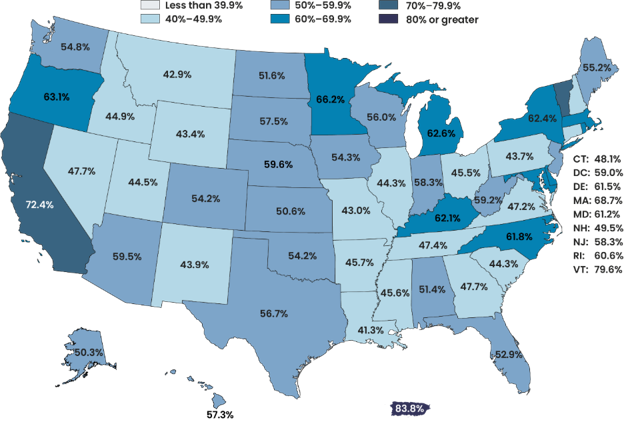
- Coverage rates vary substantially by state, as shown in the map below (Figure 1), ranging from around 40% in some states to more than 70% in others.
- Coverage estimates are less precise for states with small populations compared to other states (see Figure 3.5 in the full report); therefore, differences between states and across years may be less pronounced than they appear in the map.
Why FNS Did This Study
WIC provides healthy foods, breastfeeding support, nutrition education, and referrals to other services to eligible pregnant, breastfeeding and non-breastfeeding (up to six months after the end of pregnancy) postpartum women, infants, and children up to age 5.
WIC funding is provided by Congress through the annual appropriations process. Since approximately 1997, Congress has funded WIC at a level sufficient for the program to serve all eligible applicants. WIC funding needs are estimated annually using the number of individuals eligible for WIC and the percentage of the eligible population likely to participate. We allocate funds to participating state agencies based on a formula that considers the previous year’s funding and the estimated eligible population in each WIC state agency, along with other factors. Accurately estimating the number of individuals eligible for WIC and the number likely to participate enables us to better predict future funding needs, measure WIC performance, and identify potentially unmet nutrition assistance needs.
This report presents estimates of the numbers of women, infants, and children eligible for WIC during an average month in 2023 and historical estimates for 2016–2022. This is the most recent report in a series that provides eligibility estimates at the national, regional, and state levels. Estimates are also provided by participant category—infants, children, pregnant women, and postpartum women—and by race and ethnicity, urbanicity, and reported household income.
How FNS Did This Study
We calculated the estimates for this study on a methodology developed in 2003 by the Committee on National Statistics of the National Research Council.1 The 2023 estimates continue to incorporate methodological improvements first described in the 2021 report.2 These methodologies use data from various sources, including the Community Population Survey Annual Social and Economic Supplement (CPS-ASEC), American Community Survey (ACS), and National Vital Statistics. The estimates presented in this report use the same methodology as and are consistent with the 2022 WIC eligibility estimates published in 2024.3
1 Ver Ploeg, M., & Betson, D. M. (Eds.). (2003). Estimating eligibility and participation for the WIC program: Final report. The National Academies Press.
2 Kessler C., Bryant A., Munkacsy, K., and Gray K. (2023). National- and State-Level Estimates of WIC Eligibility and WIC Program Reach in 2021. Prepared by Insight Policy Research, Contract No 12319819A0005. Alexandria, VA: U.S. Department of Agriculture, Food and Nutrition Service, Office of Policy Support, Project Officer: Grant Lovellette. Available online at: https://www.fns.usda.gov/research/wic/eer/2021.
3 Kessler C., Bryant A., Munkacsy, K., and Gray K. (2024). National- and State-Level Estimates of the Special Supplemental Nutrition Program for Women, Infants, and Children (WIC) Eligibility and WIC Program Reach in 2022. Prepared by Insight Policy Research, Contract No 12319819A0005. Alexandria, VA: U.S. Department of Agriculture, Food and Nutrition Service, Office of Policy Support, Project Officer: Grant Lovellette. Available online at: https://www.fns.usda.gov/research/wic/eer/2022.
Suggested Citation
Kessler C., Bryant A., Munkacsy K., Maxson S., Ressler D., Saluja R., and Farson Gray K. (2025). National- and State-Level Estimates of the Special Supplemental Nutrition Program for Women, Infants, and Children (WIC) Eligibility and WIC Program Reach in 2023. Prepared by Westat, Contract No. GS-00F-009DA/140D0424A0040, Order No. 140D0424F1045. Alexandria, VA: U.S. Department of Agriculture, Food and Nutrition Service, Project Officer: Grant Lovellette. Available online at: www.fns.usda.gov/research/wic/eer/2023.
This report, the latest in an annual series, presents 2023 national and state-level estimates of the number of people eligible to receive benefits provided through the Special Supplemental Nutrition Program for Women, Infants, and Children and the percentage of the eligible population and the general U.S. population participating in the program.
FD-162: Public Posting of TEFAP Information
| DATE: | September 9, 2025 | |
|---|---|---|
| POLICY NO: | FD-162: The Emergency Food Assistance Program (TEFAP) | |
| SUBJECT: | Public Posting of TEFAP Information | |
| TO: | Regional Directors Supplemental Nutrition Programs | State Directors All TEFAP State Agencies |
Under the leadership of Secretary Brooke Rollins, the U.S. Department of Agriculture’s (USDA) Food and Nutrition Service (FNS) is committed to strengthening strategies to encourage healthy choices, healthy outcomes, and healthy families, along with clarifying program requirements for our state agency partners. In support of these goals, this memorandum provides guidance to TEFAP state agencies on requirements for public posting of TEFAP information at 7 CFR 251.4(l). Each state agency must post a list of eligible recipient agencies (ERAs) that have an agreement with the state agency on a publicly available webpage. In addition, state agencies must post the state’s uniform statewide eligibility criteria on a publicly available webpage. The public posting of ERAs and uniform statewide eligibility criteria must be implemented by Oct. 31, 2025. State agencies are encouraged to implement these provisions before that deadline.
ERAs that have an Agreement with the State Agency
TEFAP regulations at 7 CFR 251.4(l) require each state agency to post a list of ERAs that have an agreement with the state agency on a publicly available webpage. At a minimum, this list must include the name, address, and contact telephone number of all ERAs that have an agreement with the state agency. State agencies must update this list annually but are encouraged to update it more frequently as needed.
FNS recognizes that state agencies may identify a compelling public safety reason to forgo posting an ERA address publicly; for example, for a domestic abuse shelter. In such circumstances and without divulging sensitive or confidential information, the state agency should submit general information to their FNS regional office regarding why the location should be exempted from the publicly available list posted online. FNS will work with state agencies on a case-by-case basis for ERAs in this situation.
State Agency Option to Post Additional ERA Information
State agencies may choose to exceed the above minimum posting requirements to support public awareness. While state agencies are not required to post information about ERAs that have agreements with other ERAs, states have the option to publish this information online. State agencies may also choose to include additional information about ERAs on the webpage, such as operating hours, the areas served by the ERA, links to ERA websites, and distribution site addresses. In addition, state agencies may develop tools to aid eligible individuals in accessing the program, for example by establishing a searchable tool to identify aid based on zip code.
Posting TEFAP Statewide Eligibility Information
TEFAP regulations at 7 CFR 251.5(b) require each state agency to establish uniform statewide criteria for determining the eligibility of households to receive USDA Foods for home consumption, including requirements for demonstrating income and residency. Per 7 CFR 251.4(l), state agencies must post this uniform statewide eligibility criteria to a publicly available webpage. This information must be updated on an annual basis or whenever changes to eligibility criteria are made. Additional guidance on establishing criteria and methods for determining the eligibility of households to receive TEFAP can be found in Participant Eligibility in TEFAP (revised).
State agencies should contact their respective FNS regional office with any questions about this memorandum.
Sara Olson
Director
Policy Division
Supplemental Nutrition and Safety Programs
This TEFAP program guidance memorandum provides TEFAP state agencies information on requirements for public posting of TEFAP information.
Written Information on and Referrals to Public Assistance Programs for CSFP Participants
| DATE: | August 25, 2025 | |
|---|---|---|
| POLICY NO: | FD-161: Commodity Supplemental Food Program (CSFP) | |
| SUBJECT: | Written Information on and Referrals to Public Assistance Programs for CSFP Participants | |
| TO: | Regional Directors Supplemental Nutrition Programs | Directors CSFP State Agencies and Indian Tribal Organizations (ITOs) |
Under the leadership of Secretary Brooke Rollins, USDA’s Food and Nutrition Service (FNS) is prioritizing the clarification of statutory, regulatory, and administrative requirements, as well as strengthening strategies to encourage healthy choices, healthy outcomes, and healthy families. In support of these goals, FNS is issuing this memorandum to provide CSFP state agencies, including ITOs, with guidance on implementing 7 CFR § 247.14(a), which requires local agencies, as appropriate, to make referrals and provide CSFP applicants with written information on specific public assistance programs. The specific public assistance programs are:
- supplemental security income benefits (SSI);
- medical assistance under Title XIX of the Social Security Act, including medical assistance provided to qualified Medicare beneficiaries;
- the Supplemental Nutrition Assistance Program (SNAP); and
- beginning on Oct. 31, 2025, the Senior Farmers’ Market Nutrition Program (SFMNP).
Methods of Information Sharing
CSFP local agencies may provide written materials in hard copy or via electronic means such as a link to a webpage, an email, or text messages to applicants.
State and Local Agency Coordination
FNS recommends that, as applicable, CSFP state agencies coordinate with the appropriate state agency for each public assistance program to ensure written information for local agency dissemination is accurate and up to date. Coordination may also occur between CSFP local agencies and entities administering the identified public assistance programs at the local level; for example, between a CSFP local agency and the local Social Security Office. For further information and applicable state or local agency contacts, see below:
- SSI
- Medicaid and Medicare
- SNAP
- SFMNP
Considerations for the Senior Farmers' Market Nutrition Program
SFMNP is a federal nutrition assistance program that provides low-income seniors with seasonal benefits that can be exchanged for eligible foods directly from farmers, farmers’ markets, roadside stands, and community-supported agriculture programs (CSAs). CSFP and SFMNP work in tandem to serve the low-income senior population and help meet their nutritional needs. Connecting CSFP participants with SFMNP creates new opportunities for American farmers to connect with federal nutrition assistance programs.
SFMNP is administered by state agencies, which are responsible for determining months of operation, as the program may not be available year-round. SFMNP is not available nationwide and, in states where it does operate, may not be available in all areas of a state. CSFP state and local agencies may use discretion on when it is appropriate to distribute materials and make referrals to SFMNP based on program availability.
CSFP state agencies should coordinate with SFMNP state agencies to access up-to-date information on SFMNP and determine whether the program is accepting new participants within the state. If SFMNP is not available in the applicable area(s) or the state’s SFMNP is not accepting participants, then CSFP local agencies do not need to provide written information and/or referrals to that program.
State agencies should contact their respective FNS regional office with any questions about this memorandum.
Sara Olson
Director
Policy Division
Supplemental Nutrition and Safety Programs
We are issuing this memorandum to provide CSFP state agencies, including ITOs, with guidance on implementing 7 CFR § 247.14(a), which requires local agencies, as appropriate, to make referrals and provide CSFP applicants with written information on specific public assistance programs.
WIC Infant and Toddler Feeding Practices Study-2: Ninth Year Report
The WIC Infant and Toddler Feeding Practices Study-2 (WIC ITFPS-2), also known as the "Feeding My Baby Study," is the only national study to analyze the long-term impact of WIC by gathering information on caregivers and children over the first nine years of the child's life after enrollment in WIC, regardless of their continued participation in the program.
WIC Participation Is Associated With Declining Rates of Hunger
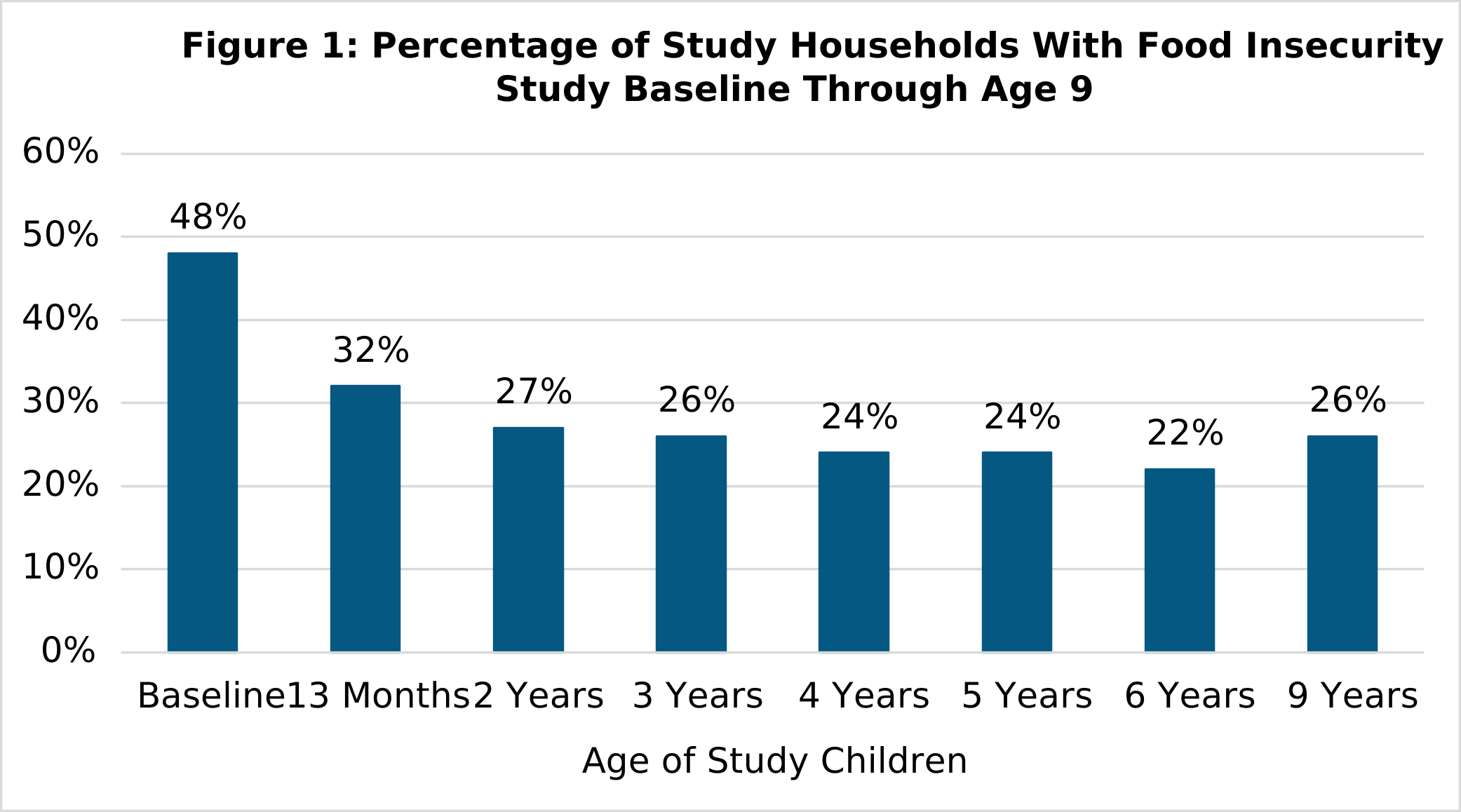
- Over the course of the nine-year study, household hunger among study participants declined dramatically from baseline (during pregnancy or shortly after birth) to age 6 (from 48% to 22%) and then rose slightly to 26% at age 9 (Figure 1).
- Although the study children were no longer eligible to receive WIC at age 9, nearly 20% of their caregivers received WIC for themselves or another child or both.
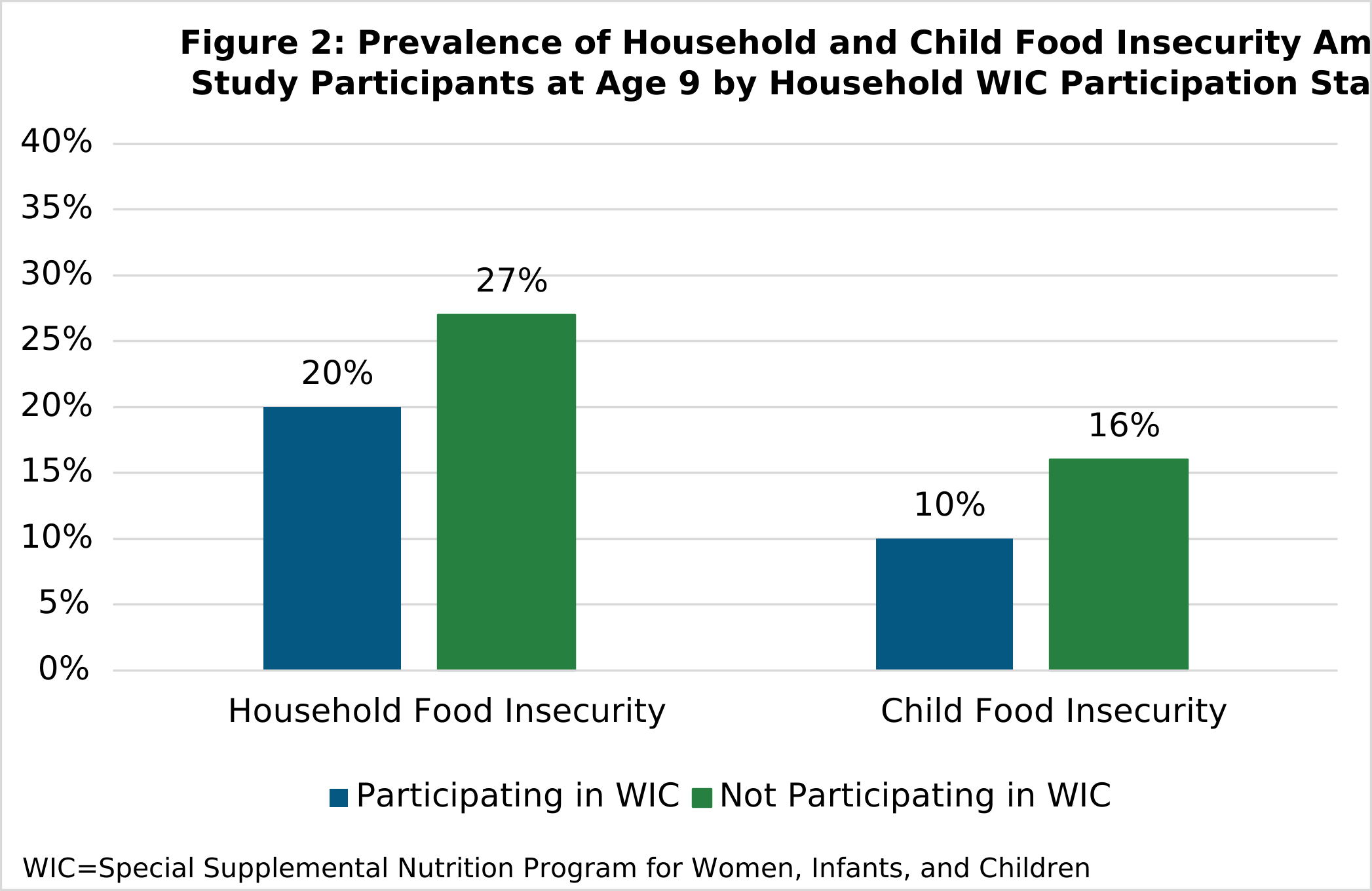
- Households with at least one WIC participant when the study child was 9 years old were less likely to report experiencing household hunger, as well as child hunger, compared to those not participating in WIC (Figure 2).
WIC Caregivers Choose Healthier Foods for Their Families
- Four out of every five study caregivers reported that they learned something from WIC that helps them make decisions about what foods to offer their 9-year-old child.
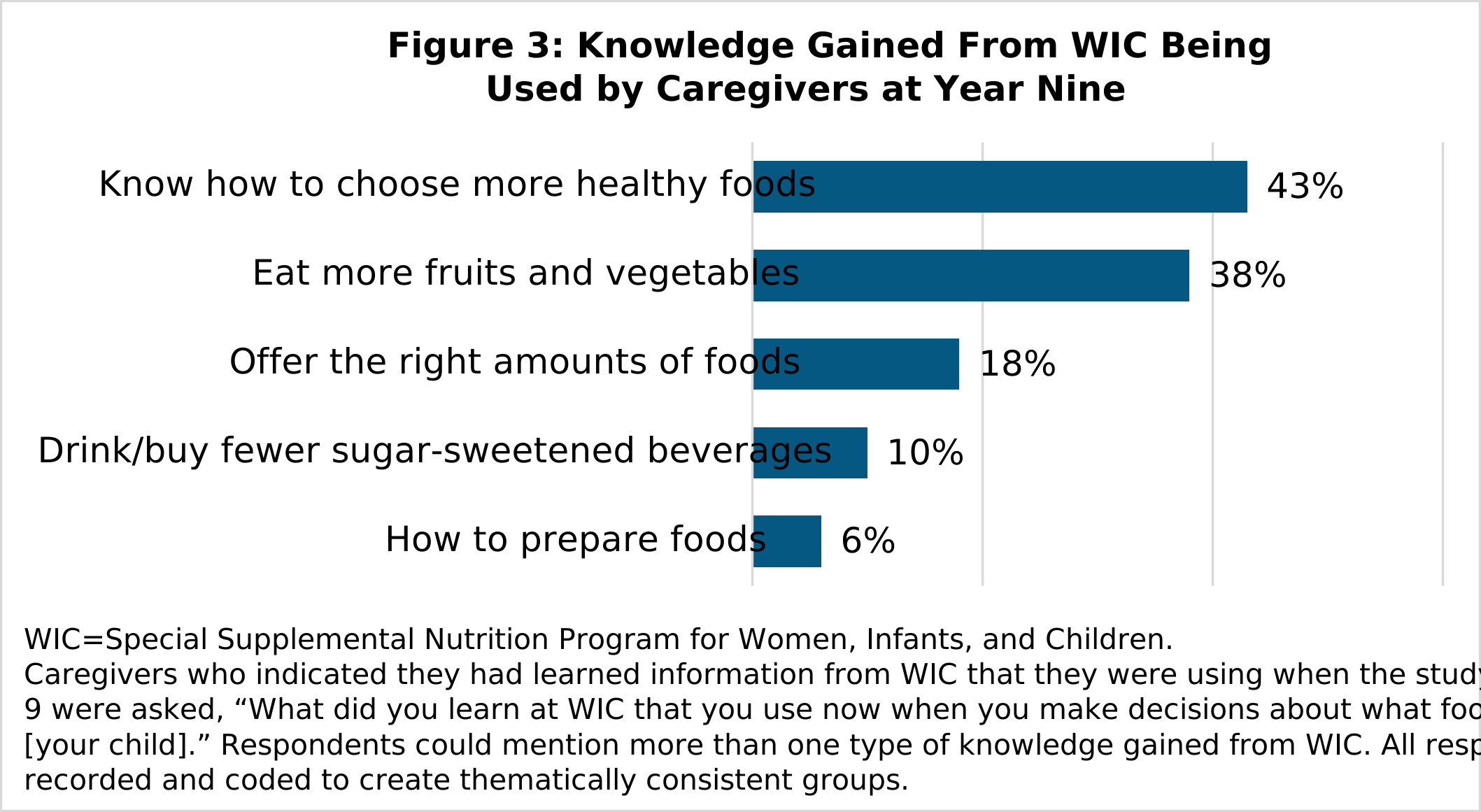
- Around 40% of study caregivers said they learned how to choose healthier foods for their 9-year-old child and 38% of caregivers indicated their families eat more fruits and vegetables because of something they learned from WIC (Figure 3).
- Caregivers who reported at year nine that they learned something from WIC that helped them make decisions about the foods they offer to the study child were more likely to say they often or very often had fruits, dark green vegetables, and reduced fat milks available in their home compared to caregivers who said they didn’t learn something from WIC.
WIC Participation Beyond Age 3 is Linked to Higher Diet Quality1 in Young Children
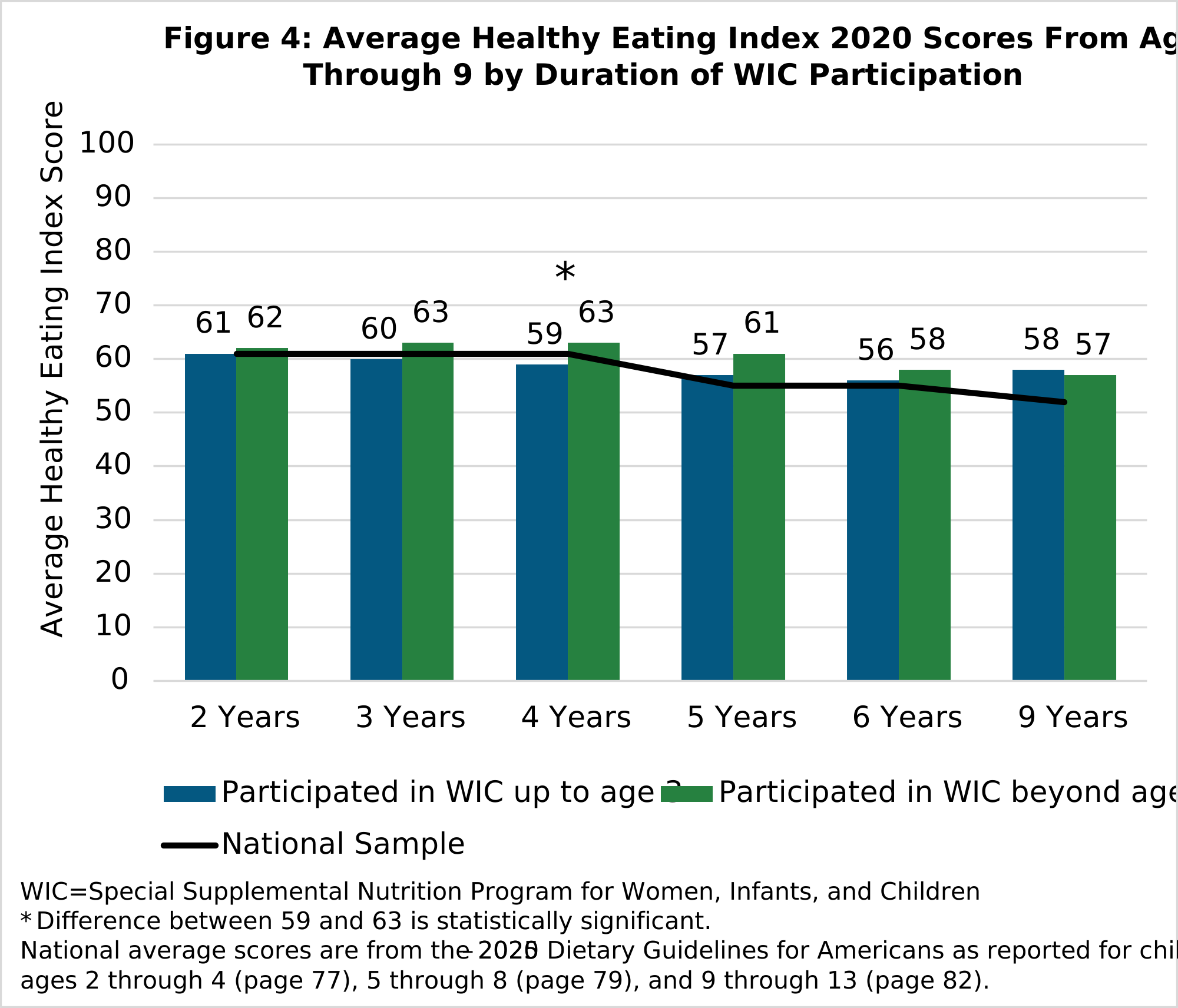
- Looking at duration of WIC participation up to age 9, diet quality scores were higher for children who participated in WIC beyond age 3 compared to children who stopped participating before age 3 (Figure 4).
- This study found that 9-year-old children who previously participated in WIC had similar diet quality scores as the national average at ages 2, 3, 4, and 6 and significantly higher scores at ages 5 and 9, regardless of the duration of WIC participation.
- Consumption of nutrients of concern like saturated fat, added sugars, and sodium among study children was also similar to the general U.S. population at age 9.
Why FNS Did This Study
WIC is one of USDA, FNS's nutrition assistance programs. WIC safeguards the health of pregnant and postpartum women, infants, and young children from households with low incomes who are at nutritional risk. The WIC Infant and Toddler Feeding Practices Study-2 (WIC ITFPS-2), also known as the "Feeding My Baby Study," is the only national study to capture information about caregivers and their children over the first nine years of the child's life after enrollment in WIC, regardless of their continued participation in the program.
Little is known about the long-term impact of WIC participation on the health and diets of children who participate early in life. In 2024, we published the WIC ITFPS-2 Sixth Year Report showing that WIC participation is positively linked to diet quality among children. We extended WIC ITFPS-2 until the study children turned 9 years old. Continuing the study helped us better understand the longer-term diet, health, and food security status of children who participated in WIC as infants and young children.
How FNS Did This Study
Starting in July 2013, we enrolled 3,775 caregiver-child pairs in the study who were certified to participate in WIC during the caregiver’s pregnancy or shortly after the child’s birth. Caregivers and their children were enrolled in the study if the caregiver was at least 16 years old, spoke English or Spanish, and were certified at a WIC agency that enrolled at least 30 new pregnant women or infants per month.
Throughout the study, caregivers were interviewed every 2 to 6 months through the child’s fifth birthday, with follow-up interviews at ages 6 and 9 years. While many caregivers stayed in the study up to age 9, the analysis for the WIC ITFPS-2 Ninth Year report was made up of the 683 caregivers who completed every interview in the study – that is “the longitudinal sample”.
During the year 9 interview, caregivers completed a survey over the phone and a 24-hour dietary recall. To analyze the information provided by caregivers, we used statistical weights to inflate the sample to represent a national population of study-eligible caregivers and their children.
The interview questionnaires and recruitment materials for this study are available at RegInfo.gov. Publicly available data from pregnancy through age 5 can be found on Ag Data Commons.
Suggested Citation
Borger, C., Zimmerman, T. P., DeMatteis, J., Gollapudi, B., Thorn, B., Whaley, S.E., & Ritchie, L. (2025). WIC Infant and Toddler Feeding Practices Study-2: Year 9 report. Westat. U.S. Department of Agriculture, Food and Nutrition Service. This report was conducted by Westat under Contract No. GS-00F-009DA.
1 Overall diet quality was measured using the Healthy Eating Index Score (HEI). On a scale of 0 to 100, an HEI score of 100 means that the diet meets all the Dietary Guidelines for Americans recommendations.
This report, in the WIC Infant and Toddler Feeding Practices Study 2 (WIC ITFPS-2)/ “Feeding My Baby” Study analyzes the long-term impact of the USDA’s Special Supplemental Nutrition Program for Women, Infants, and Children (WIC) by gathering information on caregivers and children over the first nine years of the child's life after enrollment in WIC, regardless of their continued participation in the program.
WIC and FMNP Modernization Annual Evaluation Report - 2024
In 2021, Congress provided the U.S. Department of Agriculture’s Food and Nutrition Service (FNS) with $390 million and waiver authority for outreach, innovation, and program modernization in the Special Supplemental Nutrition Program for Women, Infants, and Children (WIC) and the WIC Farmers’ Market Nutrition Program (FMNP). The WIC and FMNP Modernization Evaluation tracks the progress and outcomes of these efforts.
This first annual report provides an overview of the WIC and FMNP modernization efforts underway and highlights early implementation findings, covering activities from September 2022 – September 2024.
WIC and FMNP Modernization Grants
- We awarded grants to all 88 WIC state agencies to modernize technology and service delivery, improve the shopping experience, and improve access to farmers’ markets.
- As of September 2024, many WIC and FMNP state agency projects were in the planning (pre-implementation) stage (Table 1).
- Total WIC participation increased from 6.24 million participants in FY 2021 to 6.58 million in FY 2023. This upward trend continued into FY 2024. WIC participation grew to 6.84 million in September 2024 (Figure 1). As WIC and FMNP modernization progresses, the WIC and FMNP Modernization Evaluation will determine whether these efforts are associated with changes in participation and other outcomes.

Participation is averaged over the fiscal year (October to September) and the marker is at the midpoint (April 30). Participation data are available. EBT = Electronic Benefit Transfer; CVB = Cash Value Benefits; WIC = Special Supplemental Nutrition Program for Women, Infants, and Children; FMNP = WIC Farmers’ Market Nutrition Program. *The CVB increase was funded separately from WIC modernization.
| Modernizing Technology and Service Delivery | Improving the Shopping Experience | Improving Access to Farmers' Markets | Across Focus Areas | |
| Grant |
| WIC Shopping Experience Improvement grants | FMNP eSolution grants |
|
| Year(s) awarded | FY 2022 and 2023 | FY 2022 and 2023 | FY 2022, 2023, and 2024 | FY 2023 and 2024 |
| Number of grants awarded | 51 | 21 | 37 | 95 |
| Number of state agencies participating | 75 | 21 | 37 | 88 |
| Funding amount | $75,161,144 | $10,984,204 | $9,172,475 | $106,767,651 |
| Stage of Implementation | ||||
| Planning | 14 | 4 | 3 | 64 |
| Implementing | 36 | 15 | 26 | 31 |
| Complete | 1 | 2 | 8 | 0 |
WIC and FMNP Modernization Waivers
In 2021, Congress gave us time-limited authority through Sept. 30, 2024 to grant waivers for WIC and FMNP state agencies to support modernization. We approved 1,069 waivers across 24 waiver categories. All 88 WIC state agencies received Physical Presence and Remote Issuance waivers. As of September 2024, 80 WIC state agencies (91%) have implemented the Physical Presence waiver, and 72 WIC state agencies (82%) have implemented the Remote Issuance waiver.
- Physical Presence waivers give WIC state agencies the option to allow participants to enroll and re-enroll in WIC, if they are deemed eligible, without visiting a clinic in person.
- Remote Issuance waivers give WIC state agencies the option to issue WIC food instruments and benefits remotely, so that participants do not have to pick up their food instruments or benefits in person.
Most waivers are in effect through Sept. 30, 2026, or until we end evaluation efforts, whichever is later.
Early Implementation Highlights and Challenges
- Two WIC state agencies successfully converted from offline electronic benefit transfer (EBT) technology to online EBT by September 2024. Offline EBT technology limits state agencies to issuing and modifying benefits in person. Modernizing to online EBT technology enables WIC families to receive benefits without having to visit a WIC clinic and makes online shopping possible.
- Six WIC state agencies have developed and implemented plain language materials and resources for WIC participants to use while shopping in stores or online. The most common materials include shopping lists in multiple languages, document translation, and shopping education videos.
- Of the 37 FMNP state agencies awarded grants to transition to electronic purchasing methods (eSolutions), 24 reported successfully procuring and implementing eSolutions throughout their service areas by September 2024.
- State agencies have experienced several challenges while planning and implementing modernization projects. The most common challenges experienced through September 2024 include project and implementation delays, staffing issues, cost constraints, and competing priorities.
Why FNS Did This Study
This brief is part of the WIC and FMNP Modernization Evaluation series. In 2021, Congress provided a one-time appropriation of $390 million and waiver authority to support WIC and FMNP modernization (PL 117-2). Evaluation of the modernization efforts allows us to track the progress and outcomes of these efforts. The evaluation is in the early stages, so this brief provides an initial look at implementation progress and findings.
How FNS Did This Study
- For this first annual report, the evaluation team examined the early implementation experiences of WIC state agencies, drawing on FNS administrative data and grantee progress reports covering activities through September 2024.
- We will soon begin additional data collection efforts to support this evaluation. Future reports will draw on interviews with WIC state agencies; case studies of local agency modernization efforts; surveys of WIC participants, staff, and vendors; reports from cooperative agreements; and data from other FNS data collections.
Background
- We received funding and waiver authority to support WIC modernization through the American Rescue Plan Act of 2021 (PL 117-2).
- Federal agencies must comply with the Paperwork Reduction Act. Before collecting data from the public, we publish the data collection plan and ask the public for comments. You may read the 60-day request for public comments.
Resources
- We used data from this evaluation to create an interactive data visualization: WIC and FMNP Modernization Dashboard.
- Series webpage: WIC and FMNP Modernization Evaluation
Programs This Study Evaluates
Suggested Citation
White, S., Boyle, M., and Navarro, S. (2025). Brief: WIC Modernization Annual Evaluation Report, 2024. Prepared by Mathematica, Contract No. 47QRAA18D00BQ. Alexandria, VA: U.S. Department of Agriculture, Food and Nutrition Service, Office of Evidence, Analysis, and Regulatory Affairs, Project Officer: Carol Dreibelbis. Available online at: https://www.fns.usda.gov/research/wic/fmnp-modernization-evaluation/annual-report-2024.
The WIC and FMNP Modernization Evaluation tracks the progress and outcomes of program modernization efforts funded by Congress in 2021. This first annual report provides an overview of the WIC and FMNP modernization efforts underway and highlights early implementation findings, covering activities from September 2022 - September 2024.
Comment Request - 2027 Farm to School Census
Summary
The intended purpose of this information collection is to administer the 2027 Farm to School Census (Census), previously titled 2023 Farm to School Census. This information collection request is for a revision and extension for three years to the currently approved Farm to School Census and Comprehensive Review (OMB Number 0584-0646, expiration date 5/31/2025).
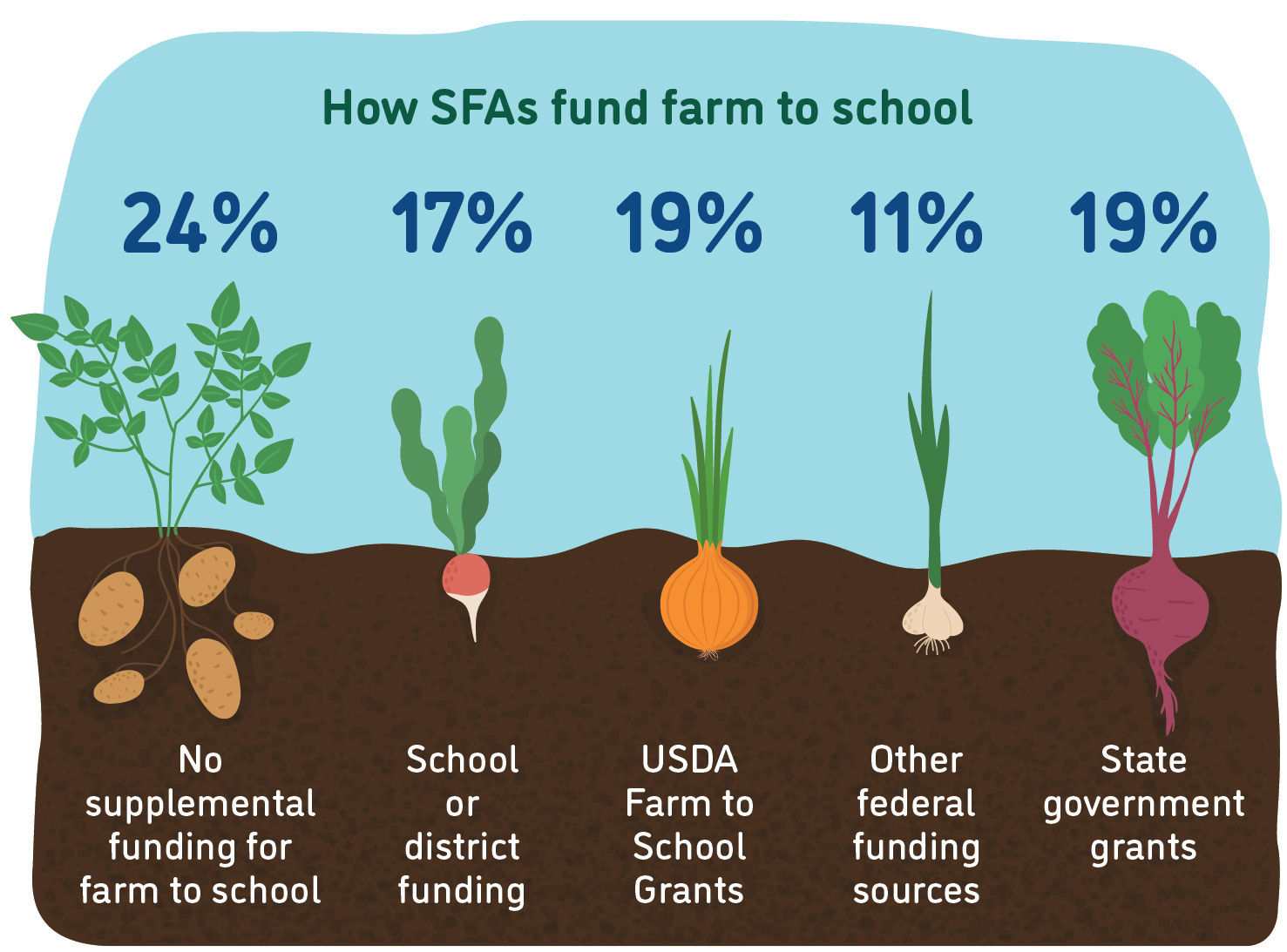
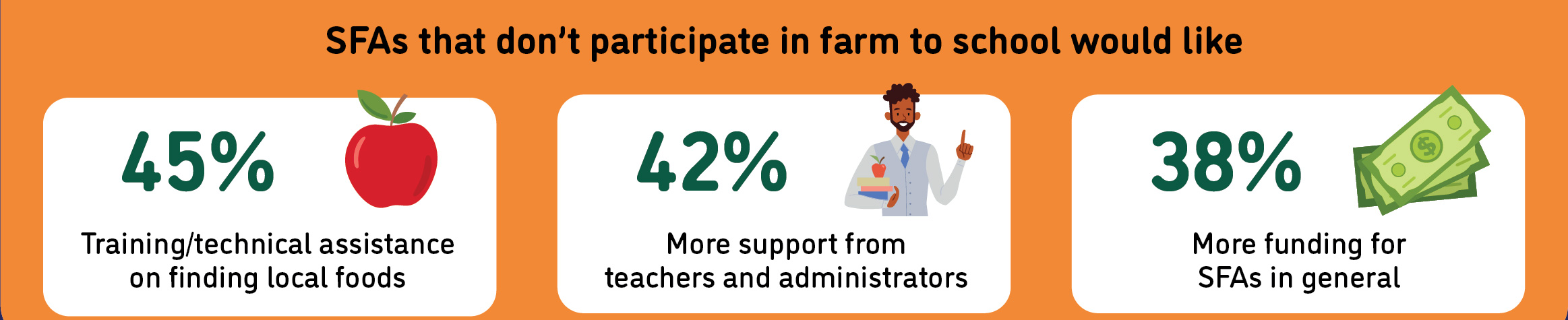
Section 18 of the Richard B. Russell National School Lunch Act (NSLA) authorized and funded the U.S. Department of Agriculture (USDA) to establish a farm to school program to assist eligible entities, through grants and technical assistance, in implementing farm to school programs that improve food and agriculture education as well as access to local foods in schools. This work is housed within the Food and Nutrition Service (FNS) Community Food Systems Division (CFSD). As part of the Farm to School Program's authorization, CFSD collects and disseminates information on farm to school activities throughout the country. The Census provides the only nationally representative data available on farm to school participation and activities in the United States. It also compiles detailed information about state- and school food authority (SFA)-level farm to school engagement.
Need and Use of the Information
The 2027 Census will collect and synthesize data from a national census of SFAs to fulfill the following study objectives:
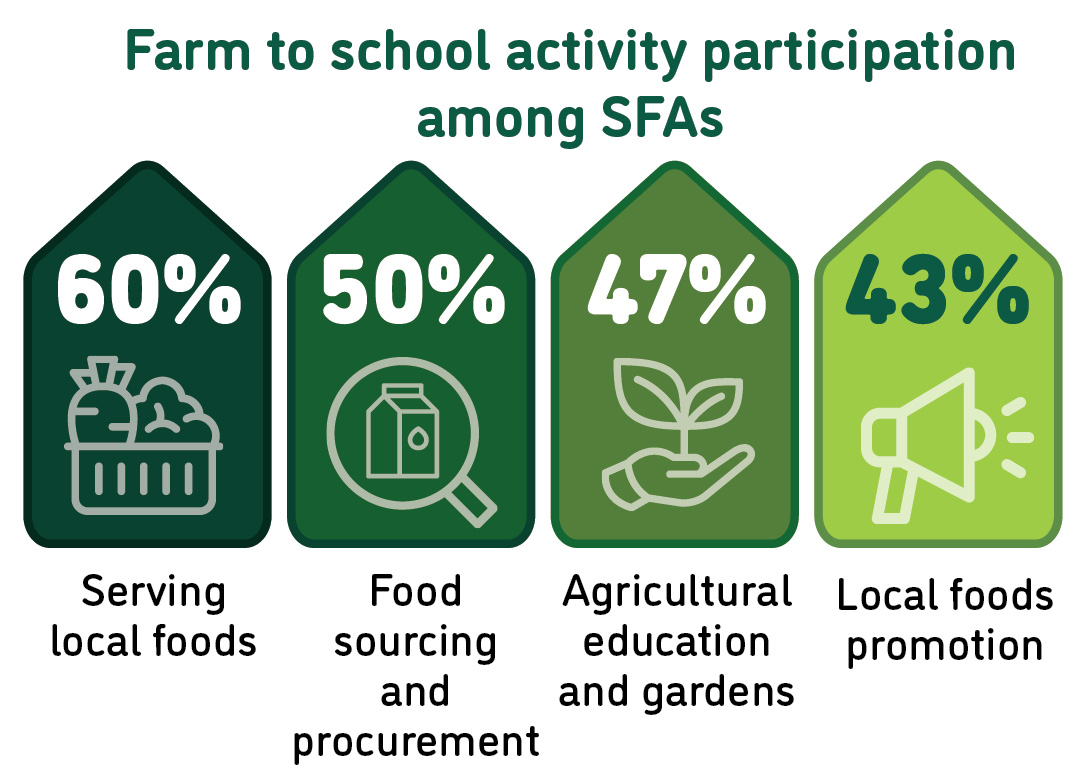
- Establish the scope of SFA participation in farm to school activities and the characteristics of participating SFAs;
- describe details of SFA participation in certain farm to school activities (especially procurement of local foods);
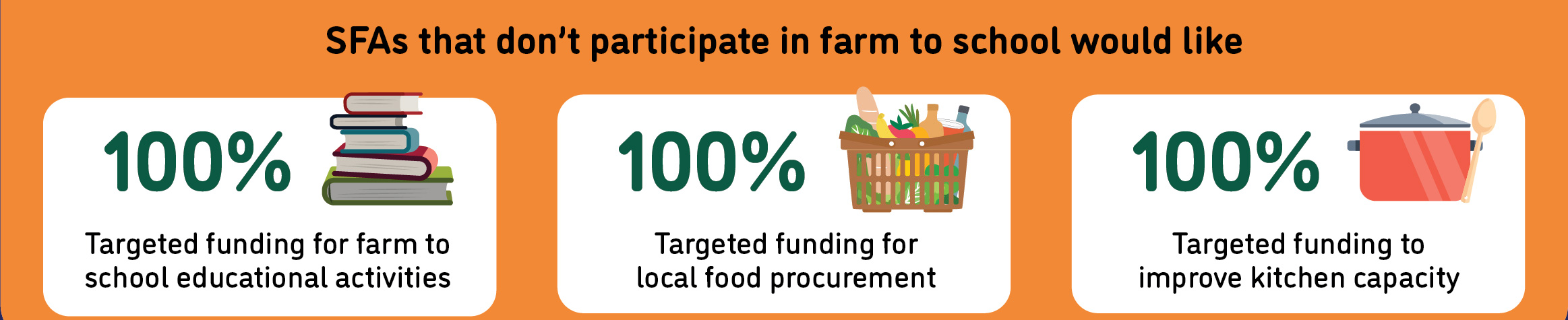
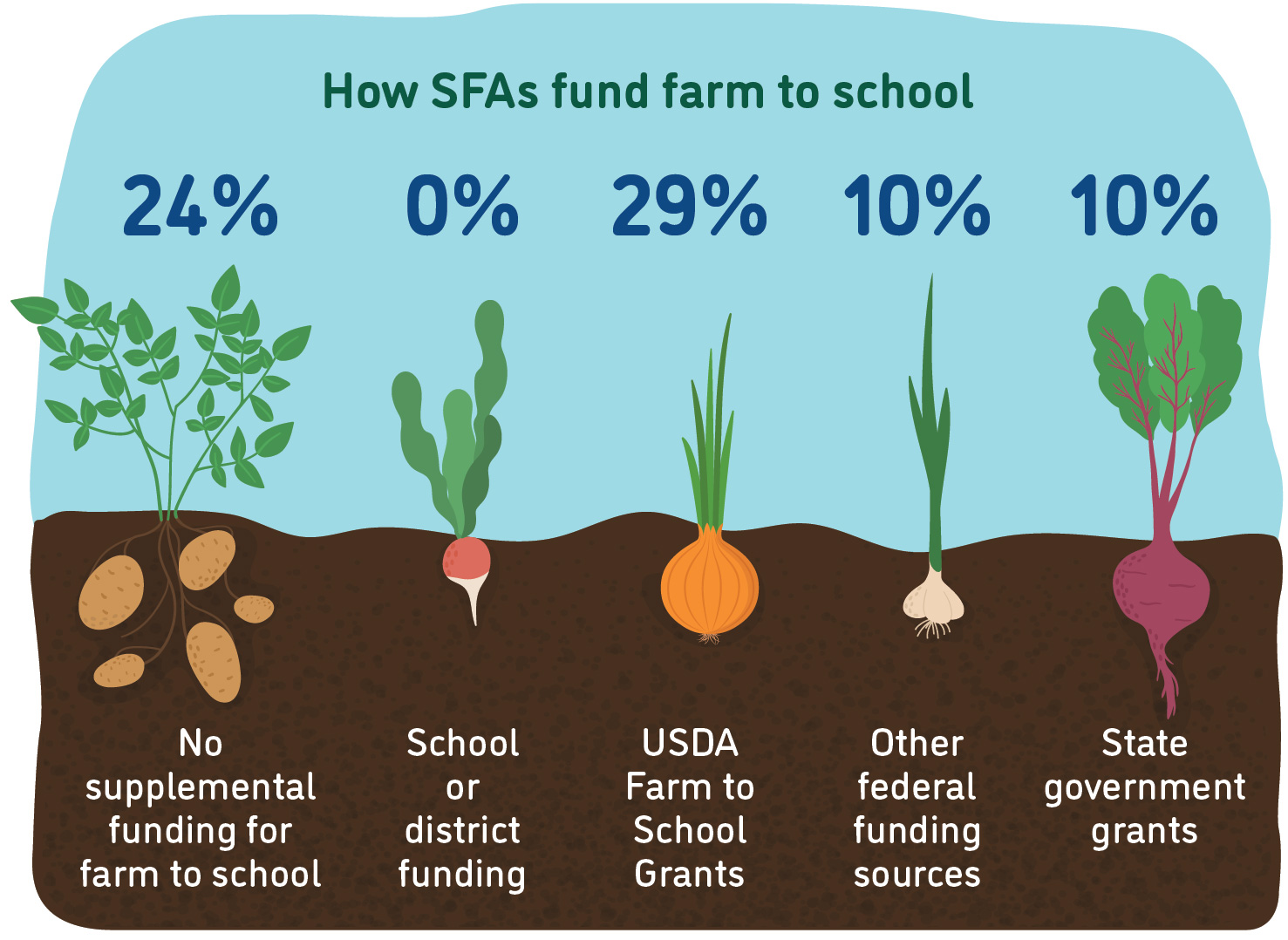
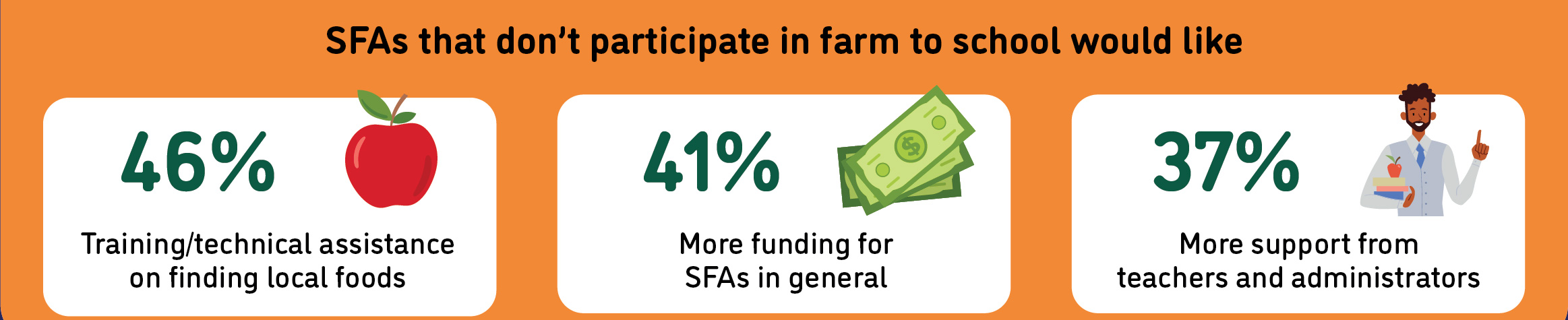
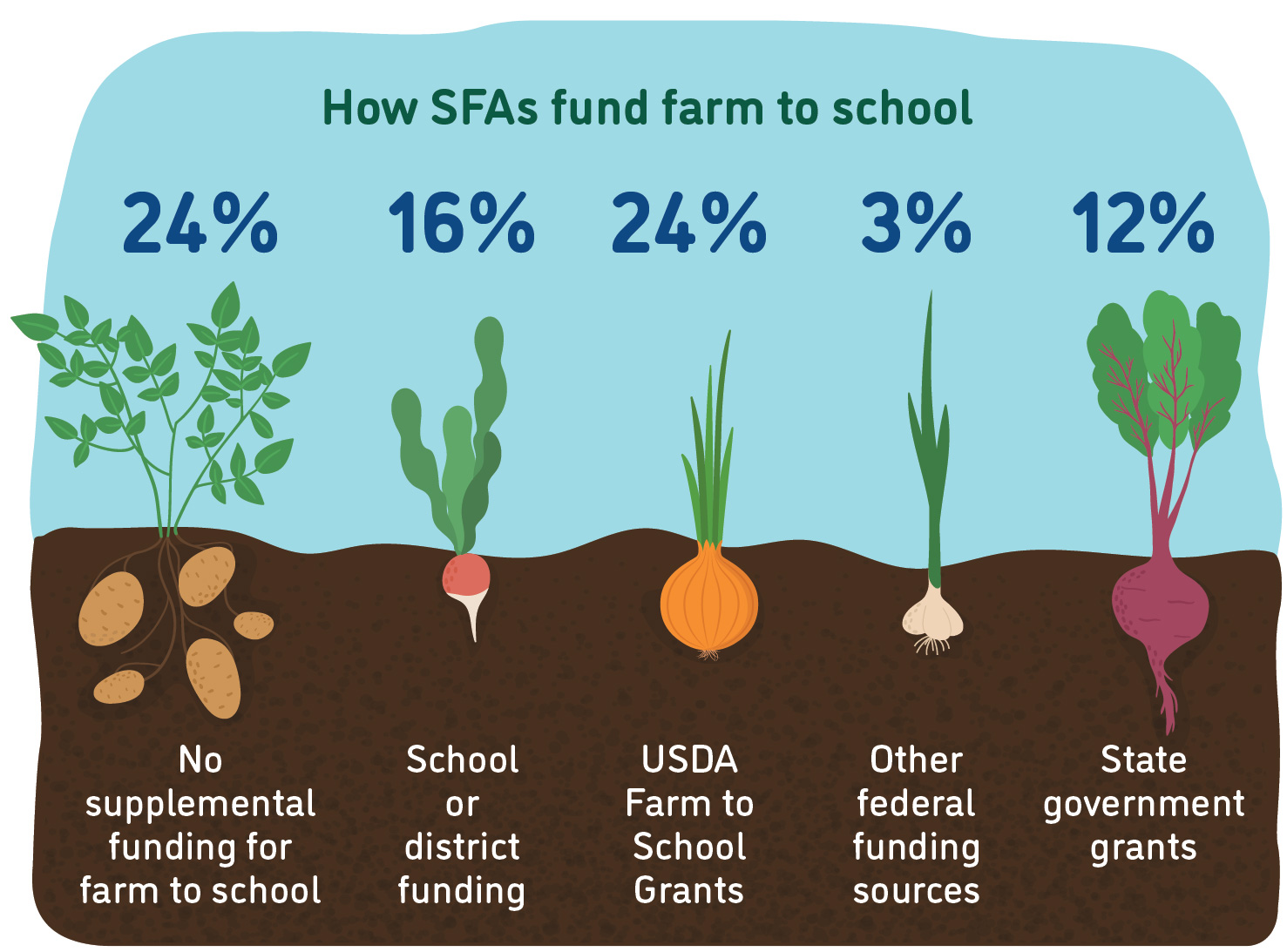
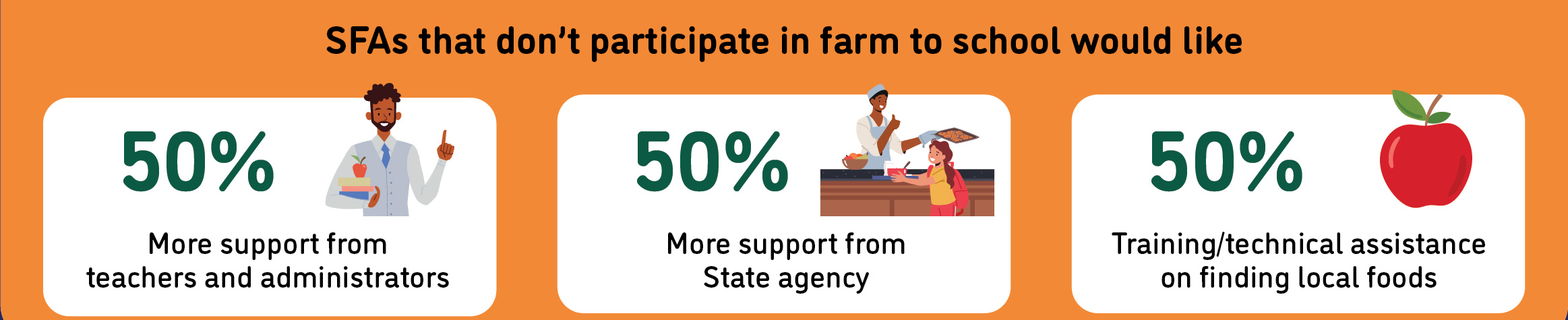
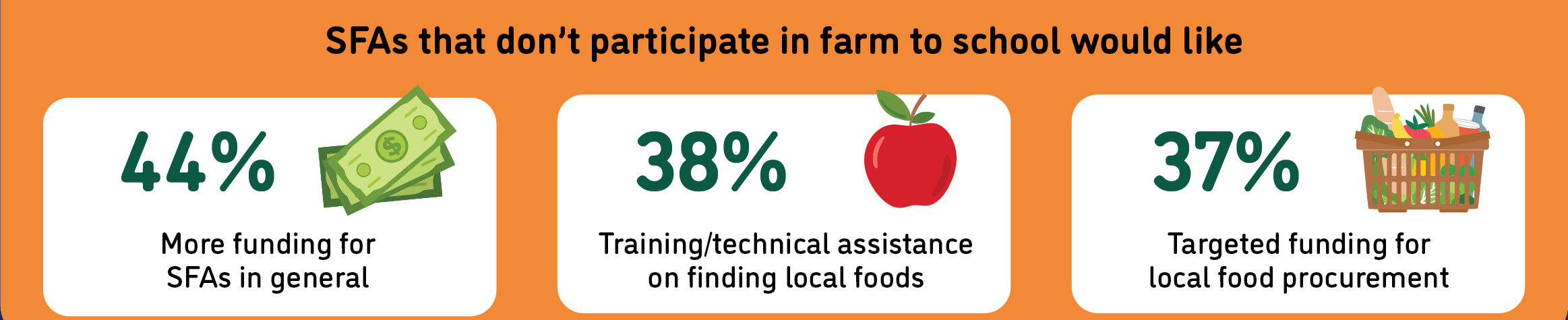
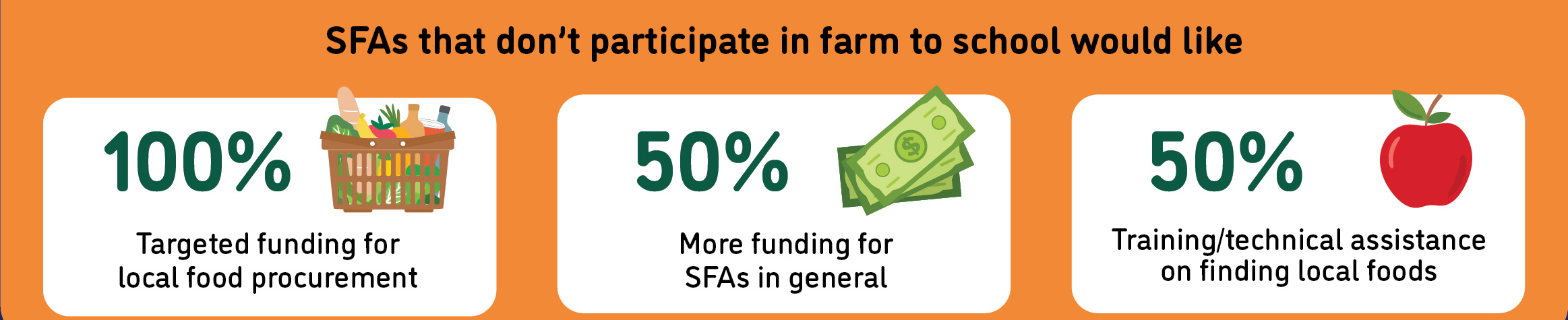
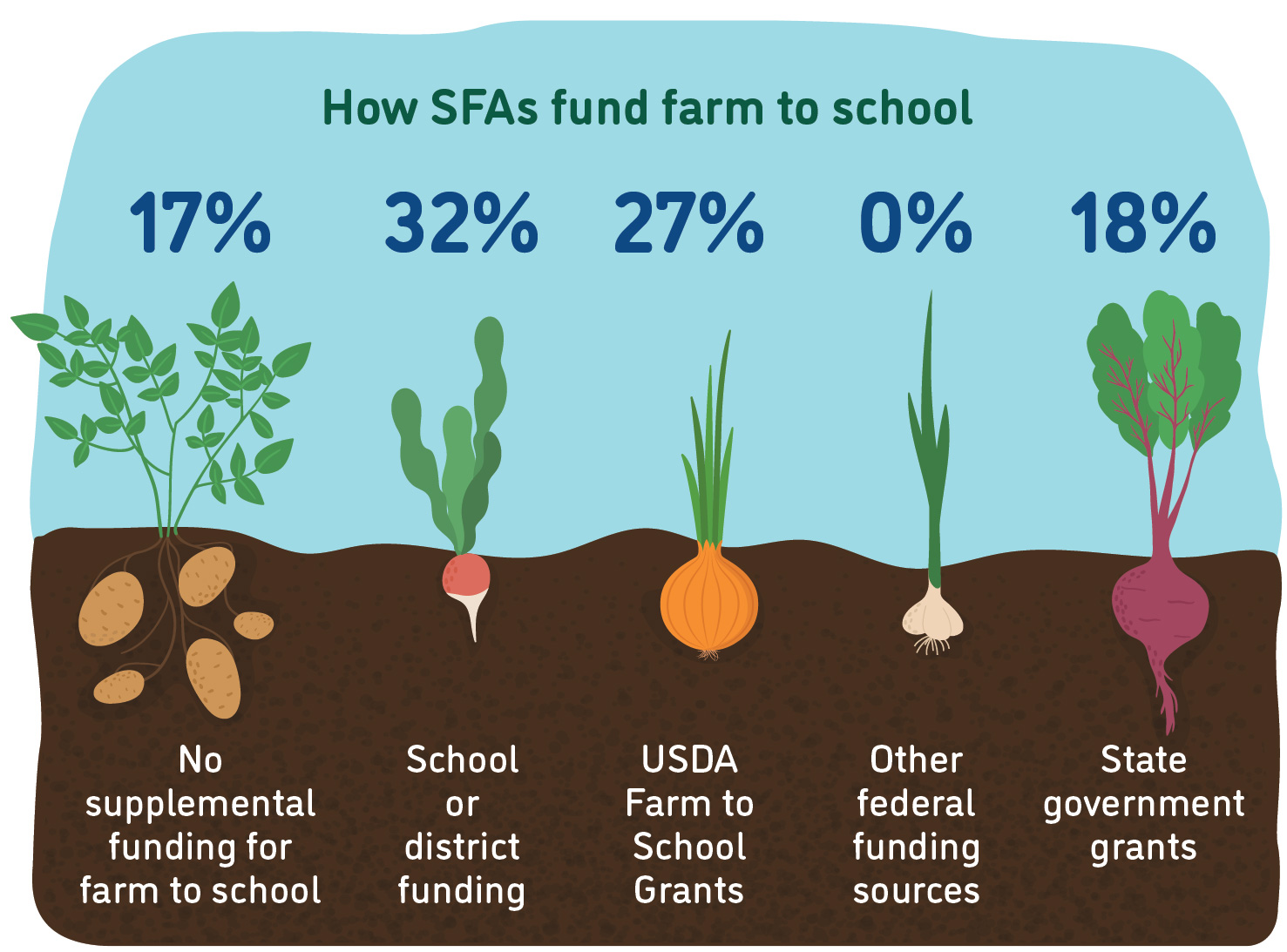
- assess sources of support for farm to school activities and identify areas for additional assistance; and
- compare findings across different types of SFAs (i.e., based on characteristics such as size, urbanicity, and eligibility for free and reduced-price meals) and to findings from the 2023 and 2019 Census.
The results of this study will be used to assess farm to school program engagement and to set priorities for USDA outreach and technical support, as mandated by the NSLA.
Request for Comments
Comments regarding this information collection received by April 25, 2025 will be considered. Written comments and recommendations for the proposed information collection should be submitted within 30 days of the publication of this notice on the following website www.reginfo.gov/public/do/PRAMain. Find this particular information collection by selecting “Currently under 30-day Review—Open for Public Comments” or by using the search function. An agency may not conduct or sponsor a collection of information unless the collection of information displays a currently valid OMB control number and the agency informs potential persons who are to respond to the collection of information that such persons are not required to respond to the collection of information unless it displays a currently valid OMB control number.
The intended purpose of this information collection is to administer the 2027 Farm to School Census (Census), previously titled 2023 Farm to School Census.
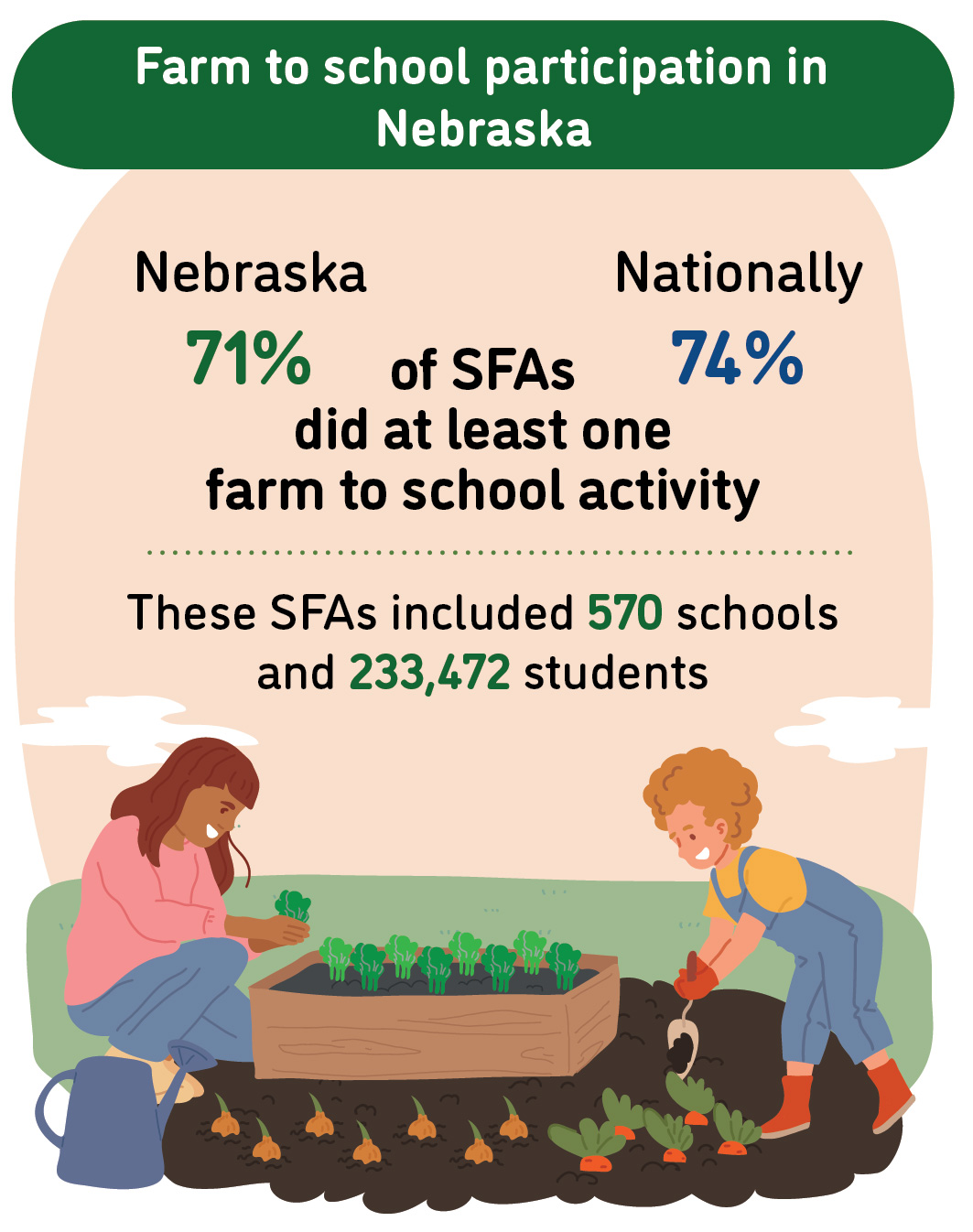
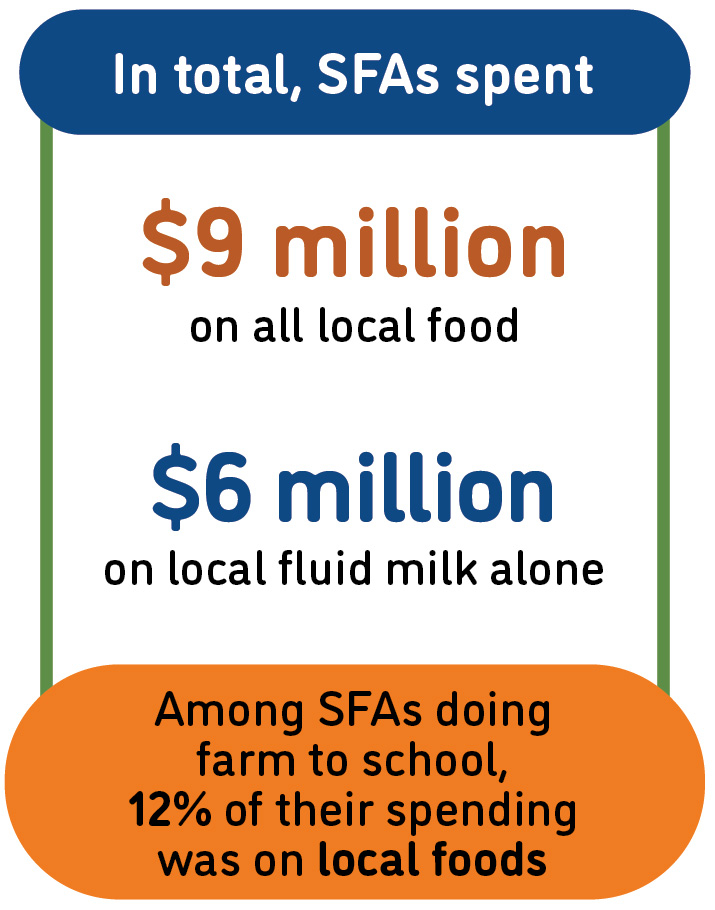
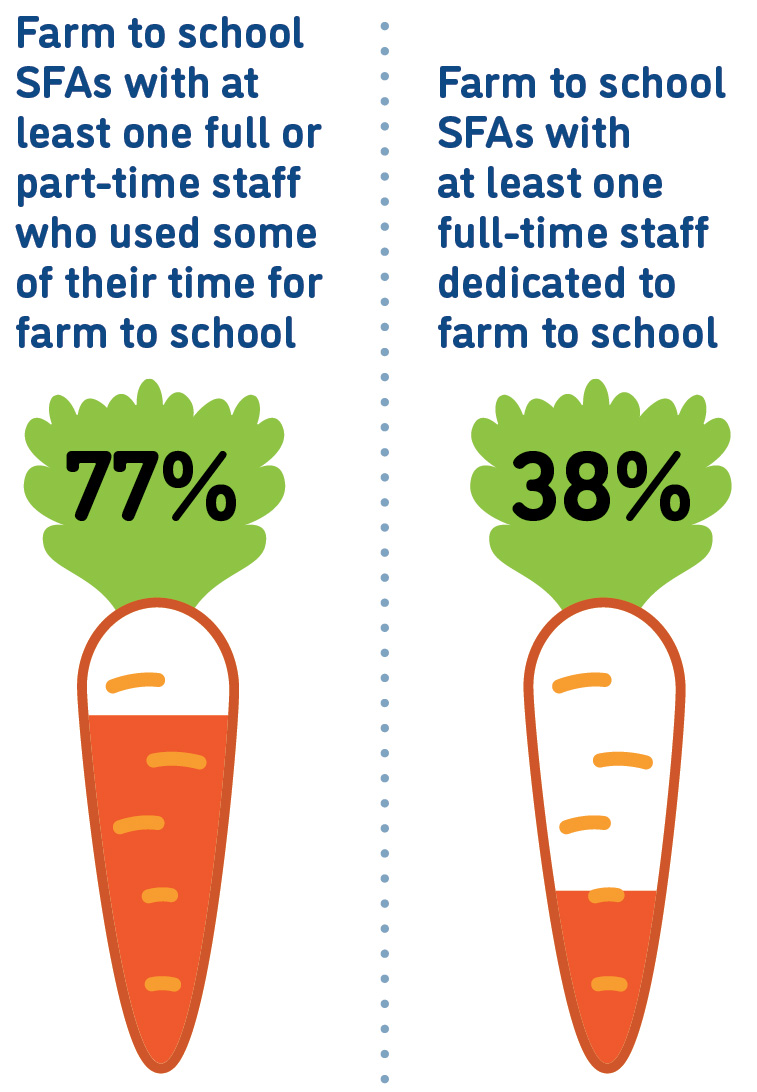
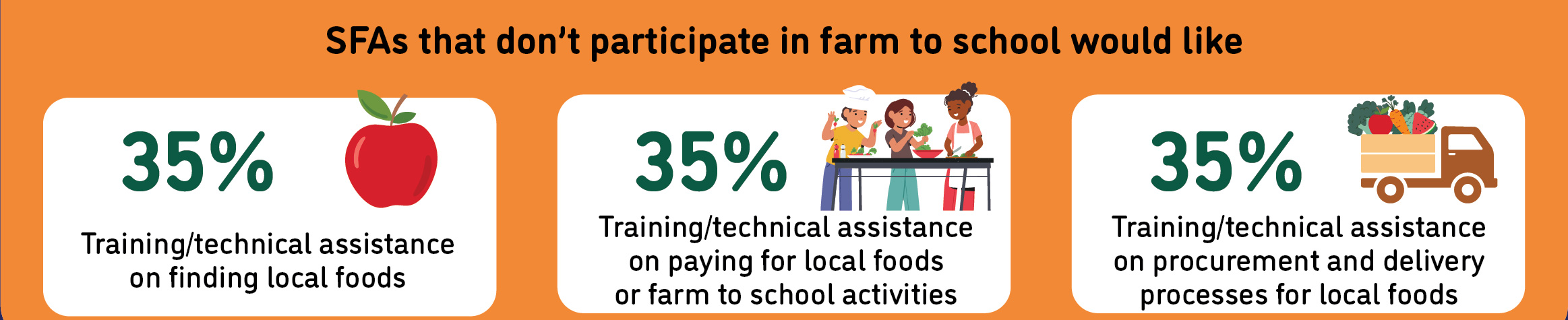
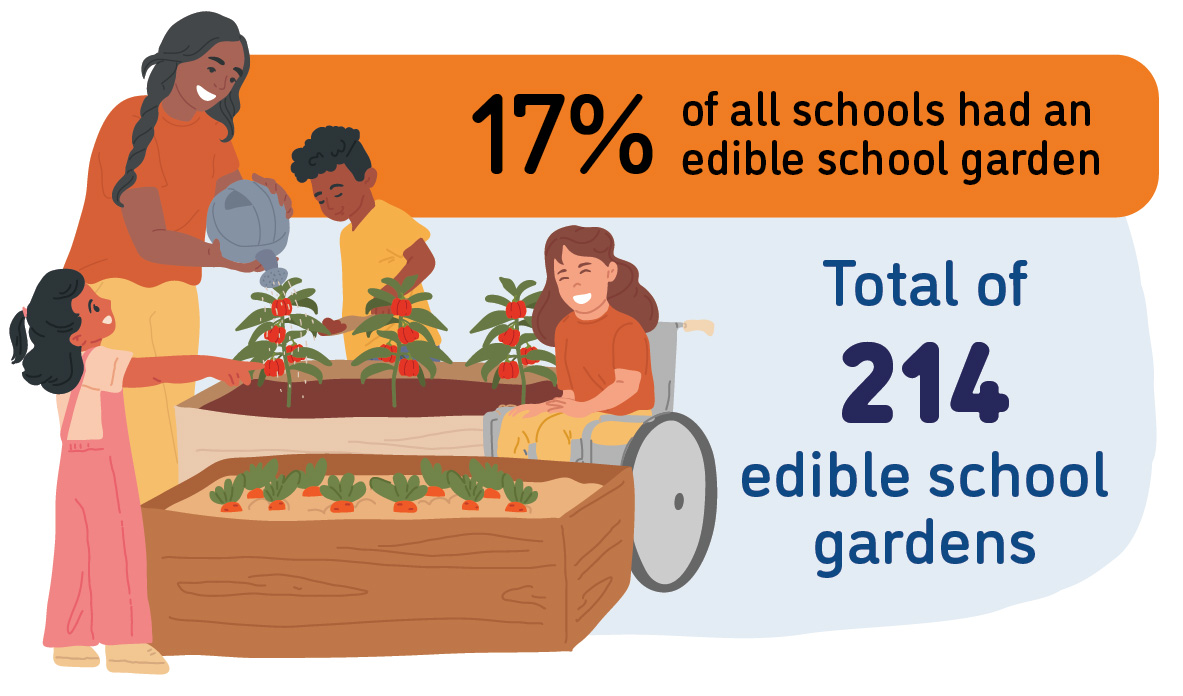
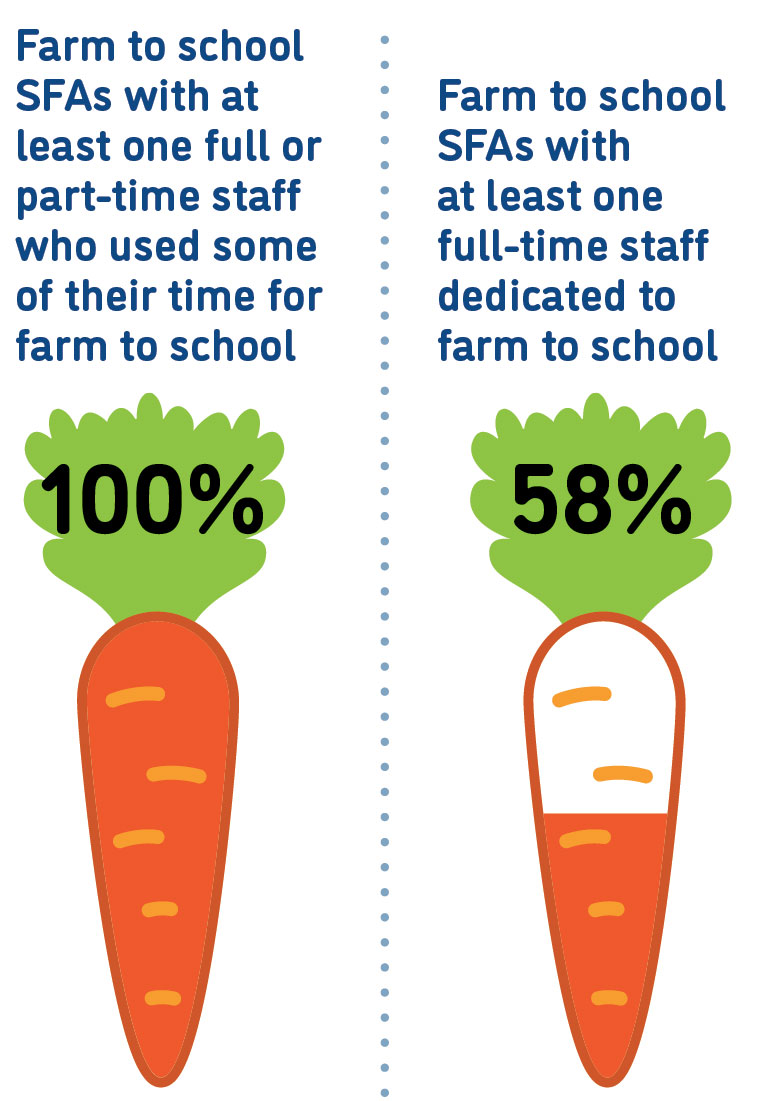
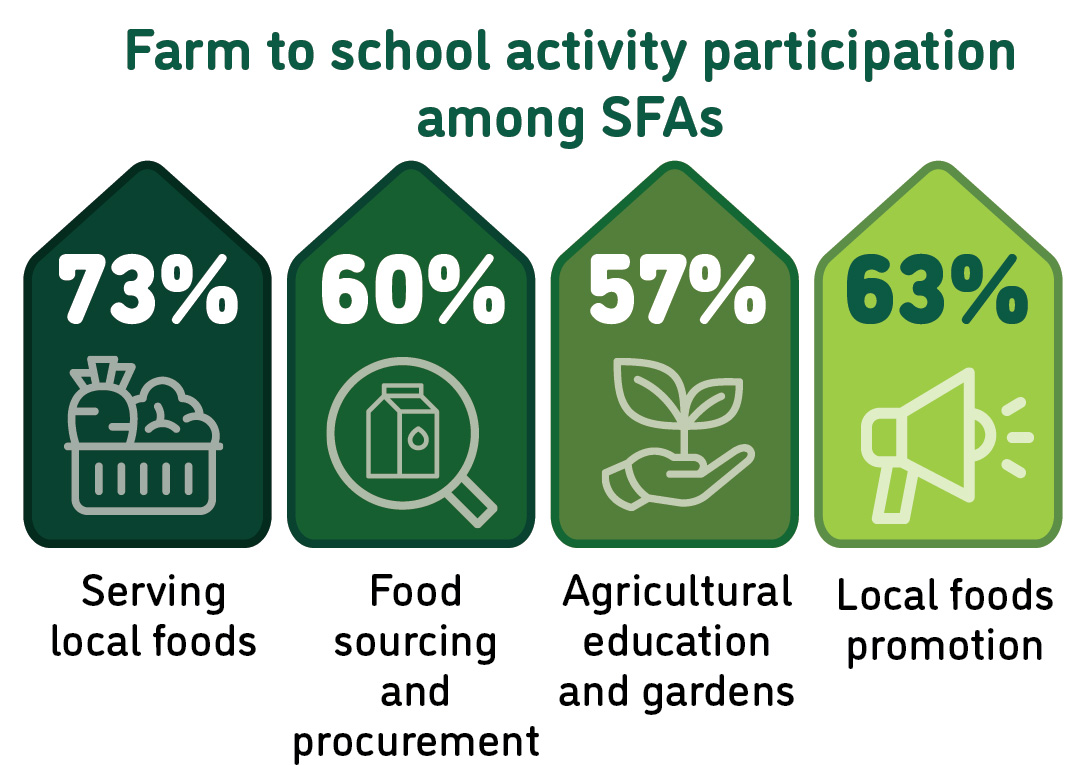
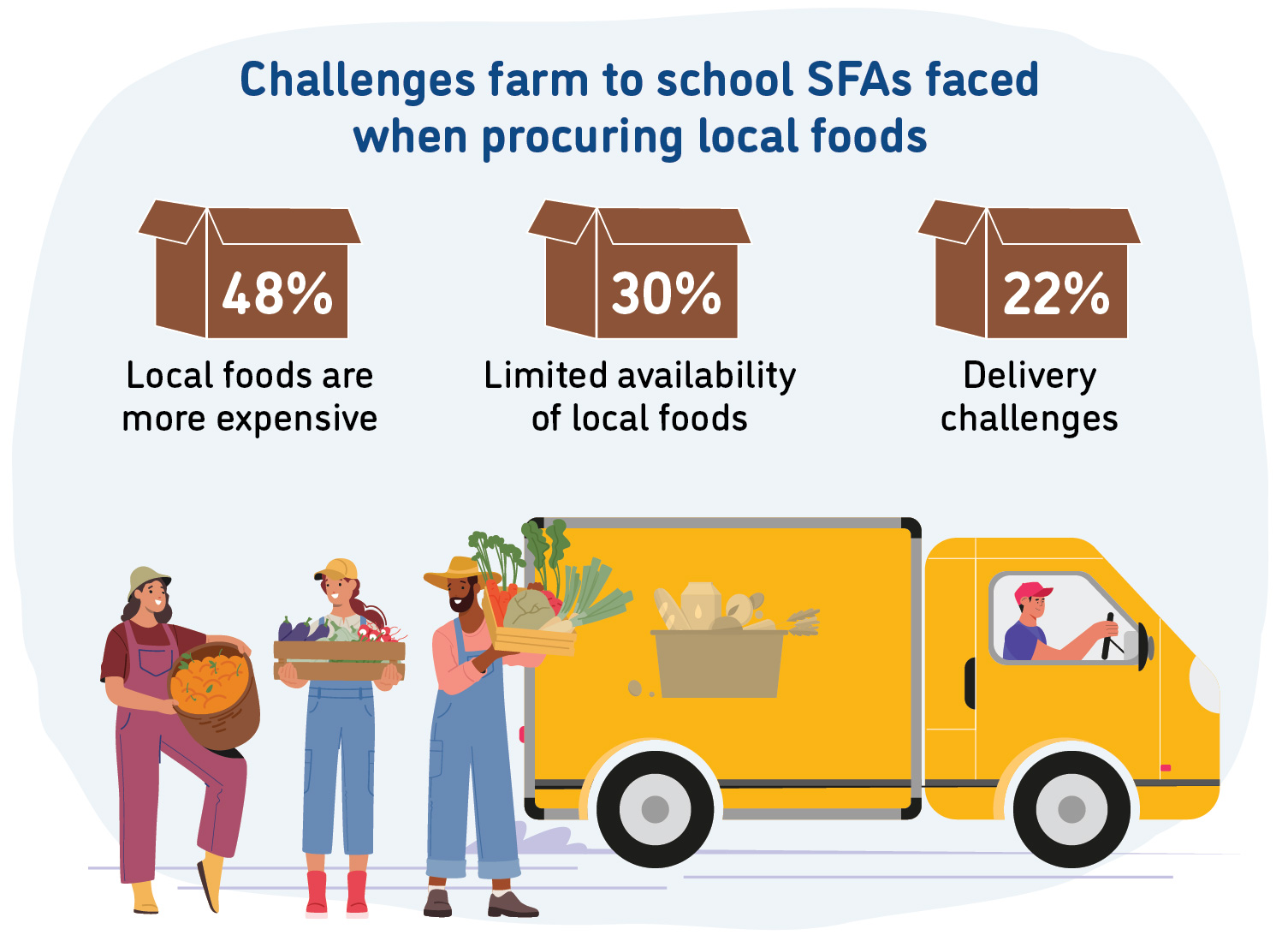
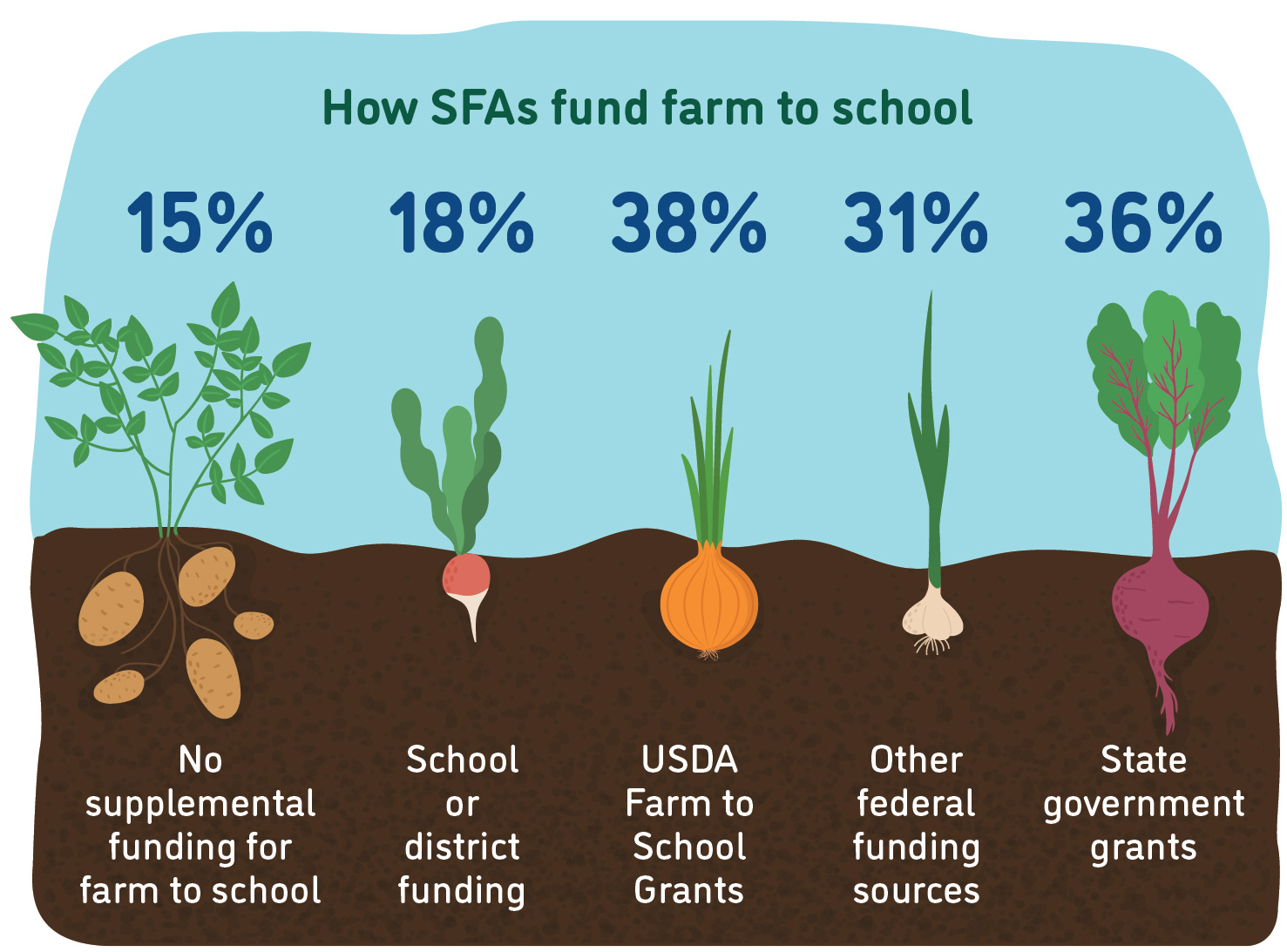
2023 Farm to School Census Infographics
National Summary
Individual Graphics

State Summaries and Graphic Files
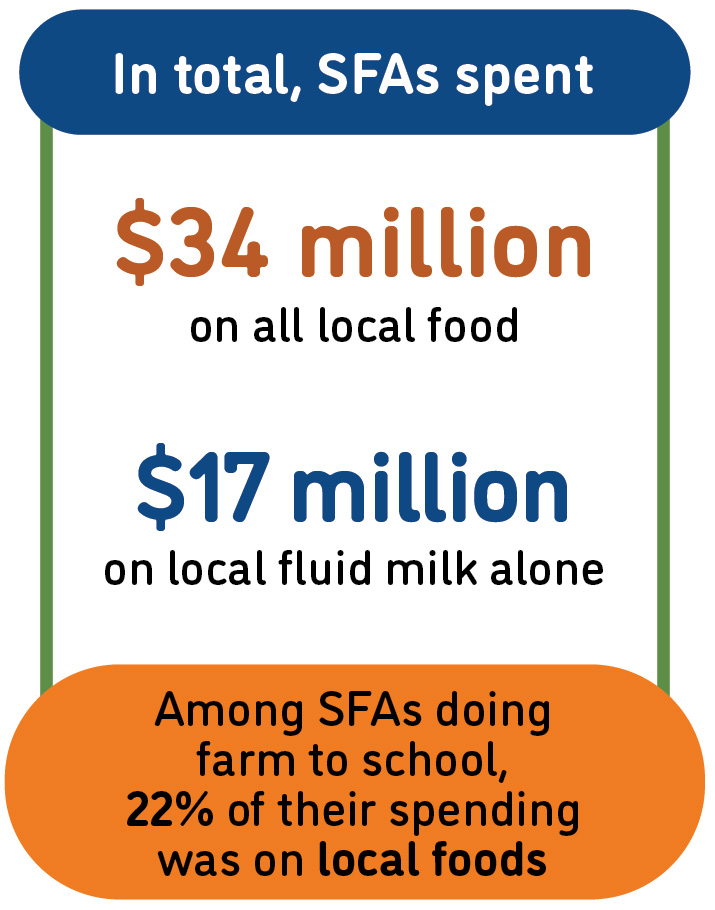
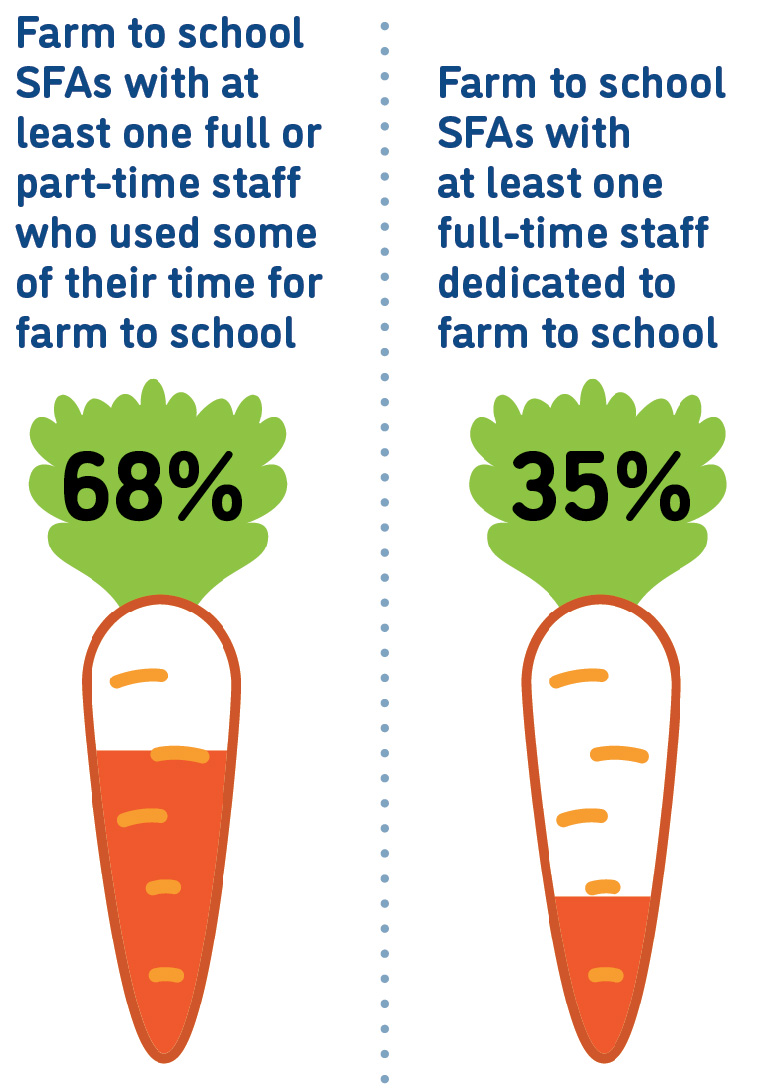
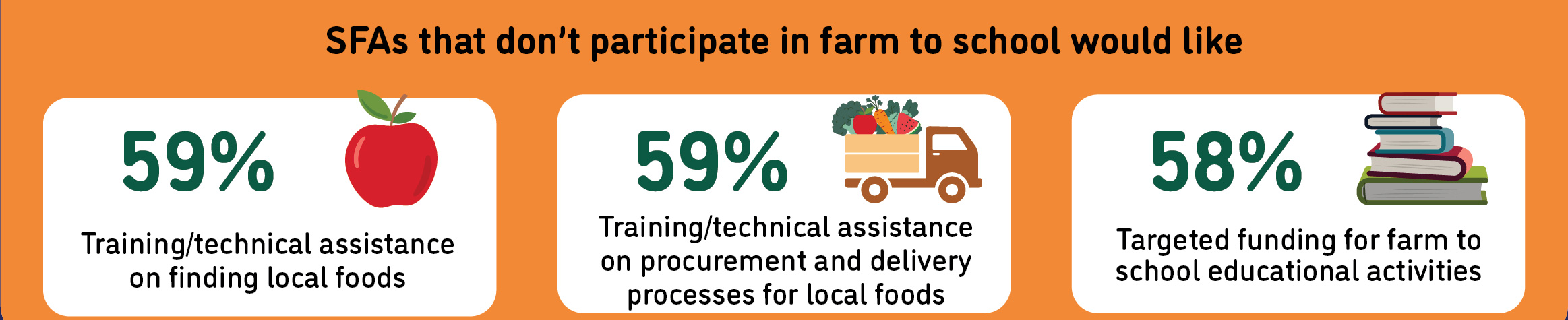
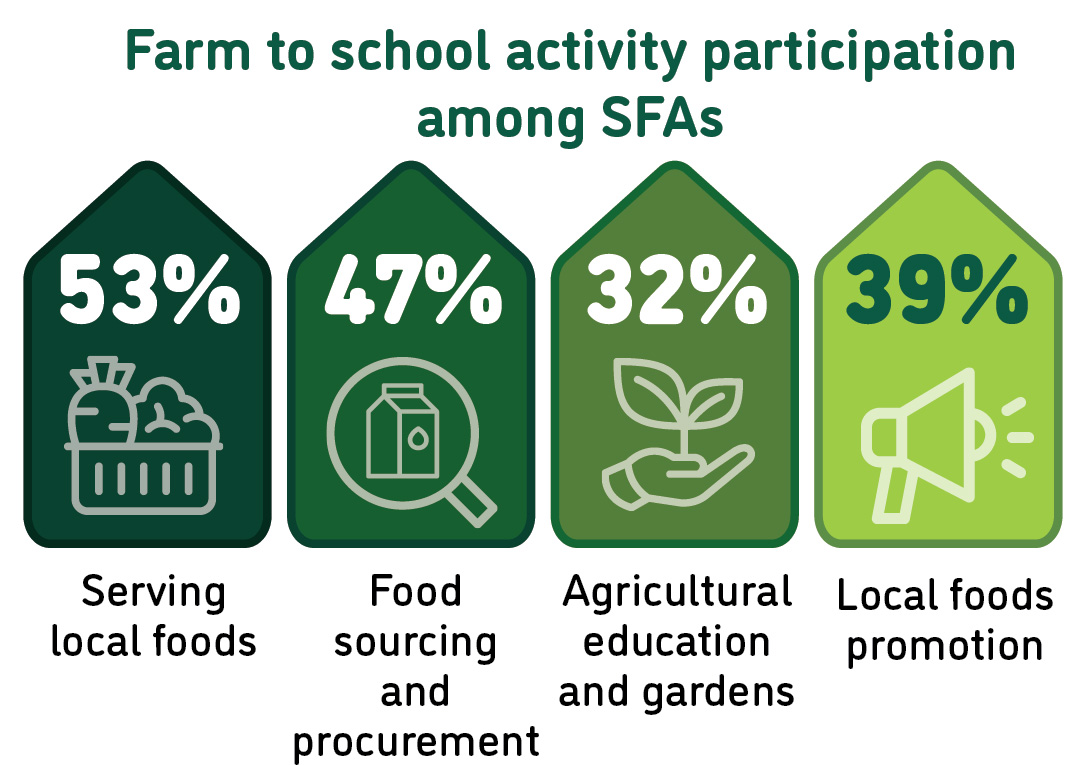
Use the dropdowns below to download the full infographic and individual image files for your state/territory.
- Alaska
- Alabama
- Arkansas
- Arizona
- California
- Colorado
- Connecticut
- District of Columbia
- Delaware
- Florida
- Georgia
- Guam
- Hawaii
- Iowa


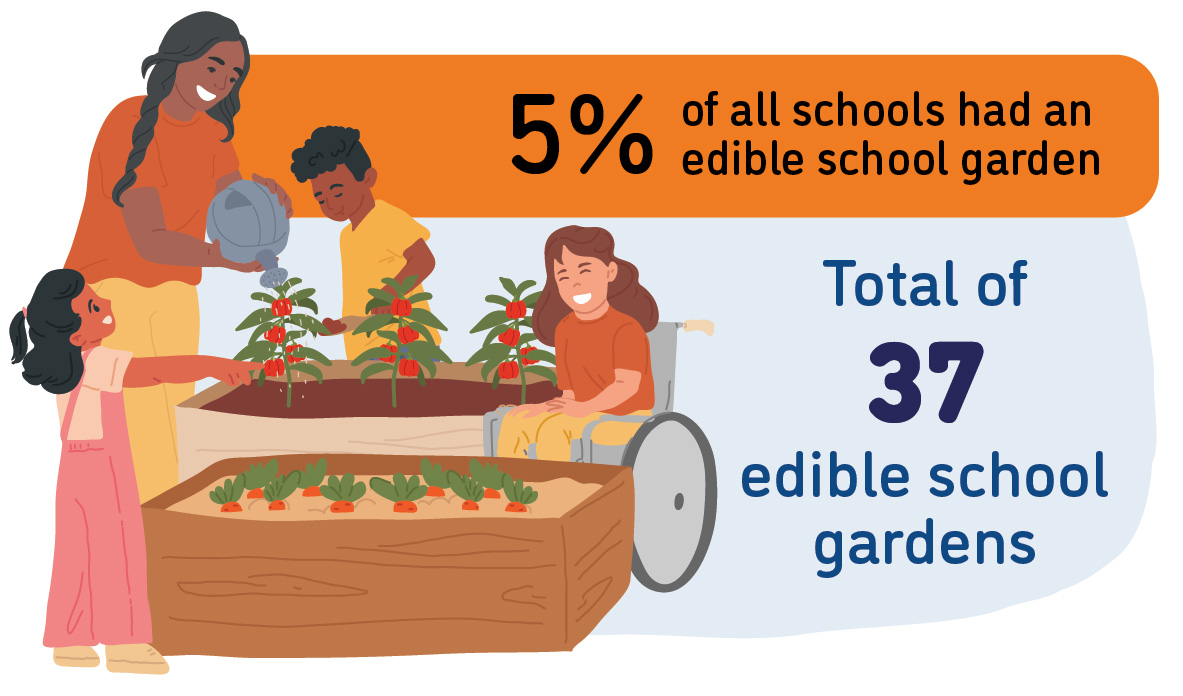
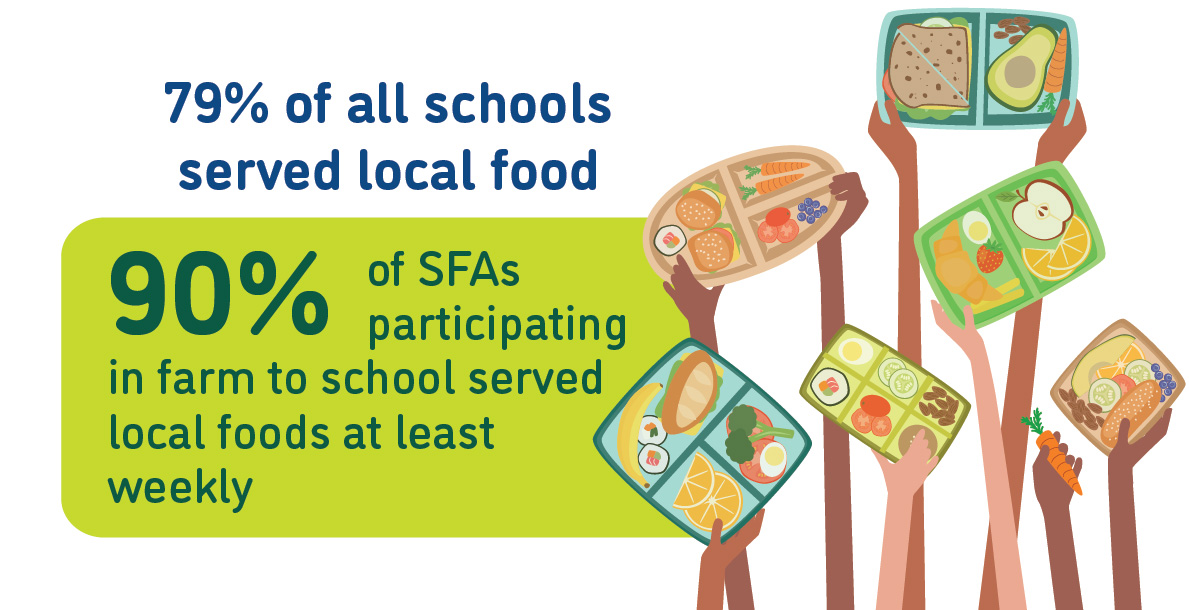
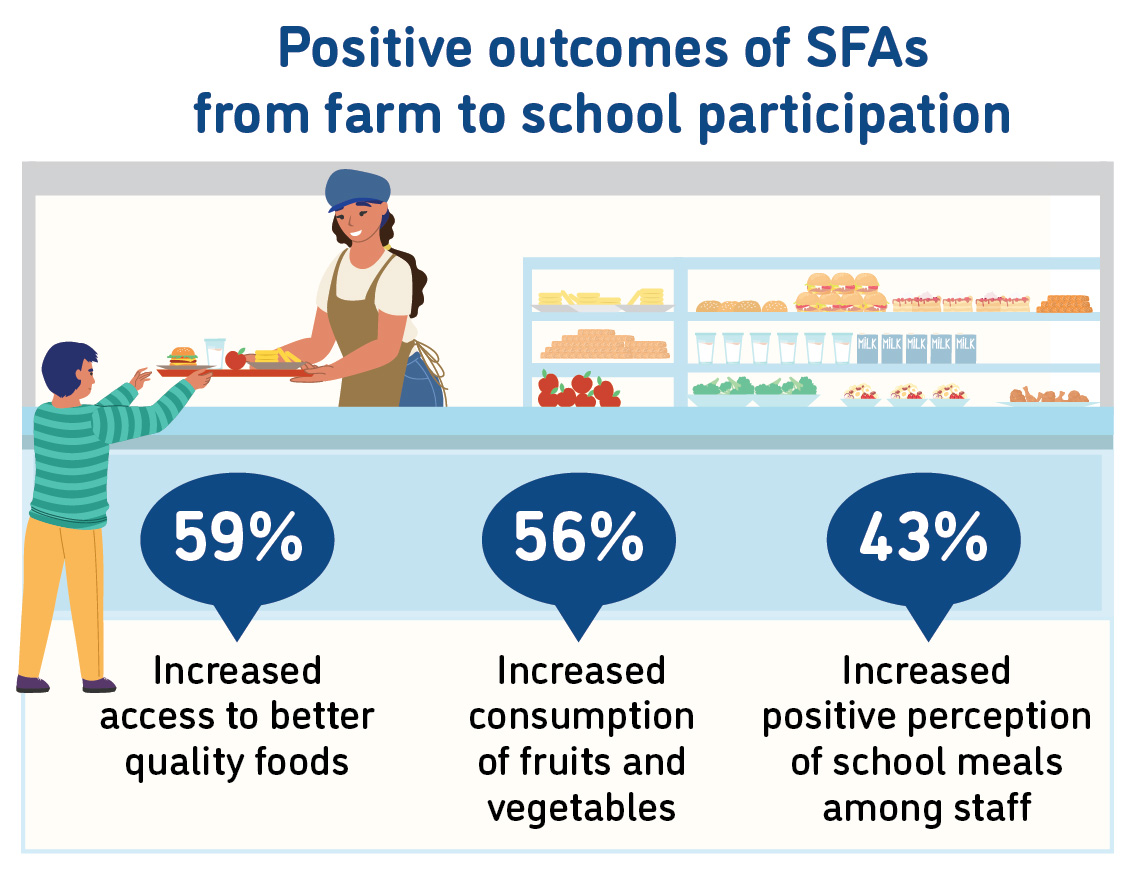
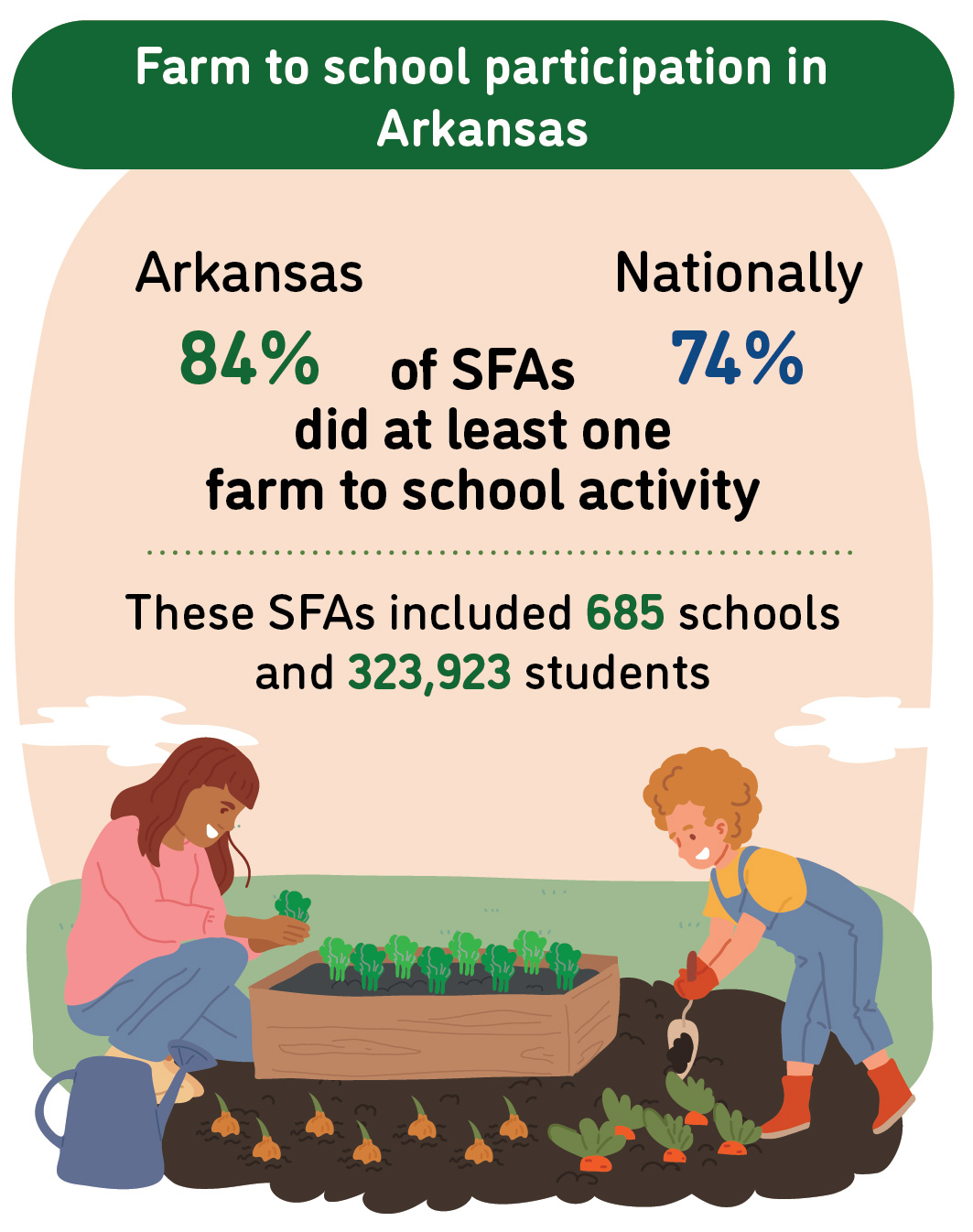






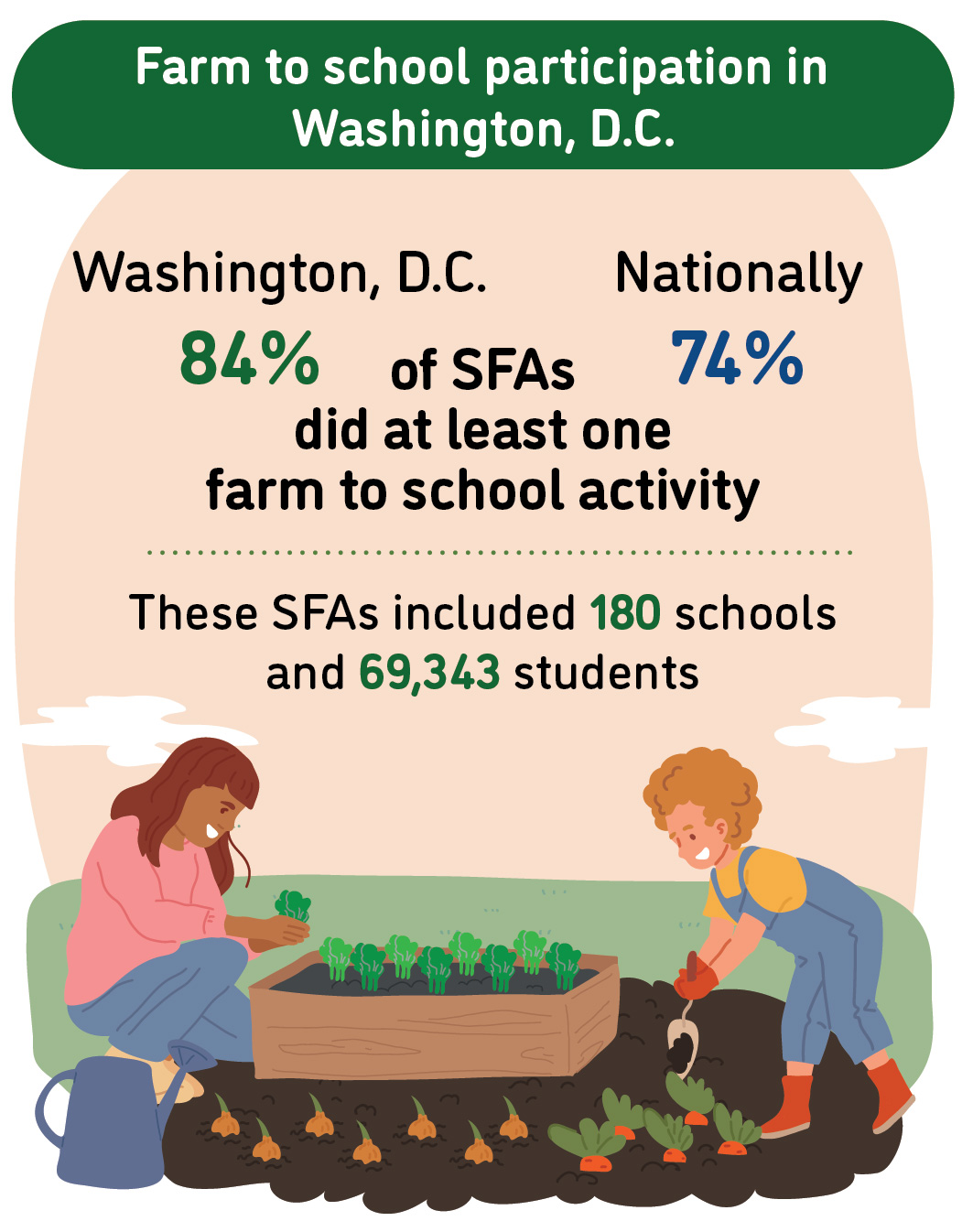
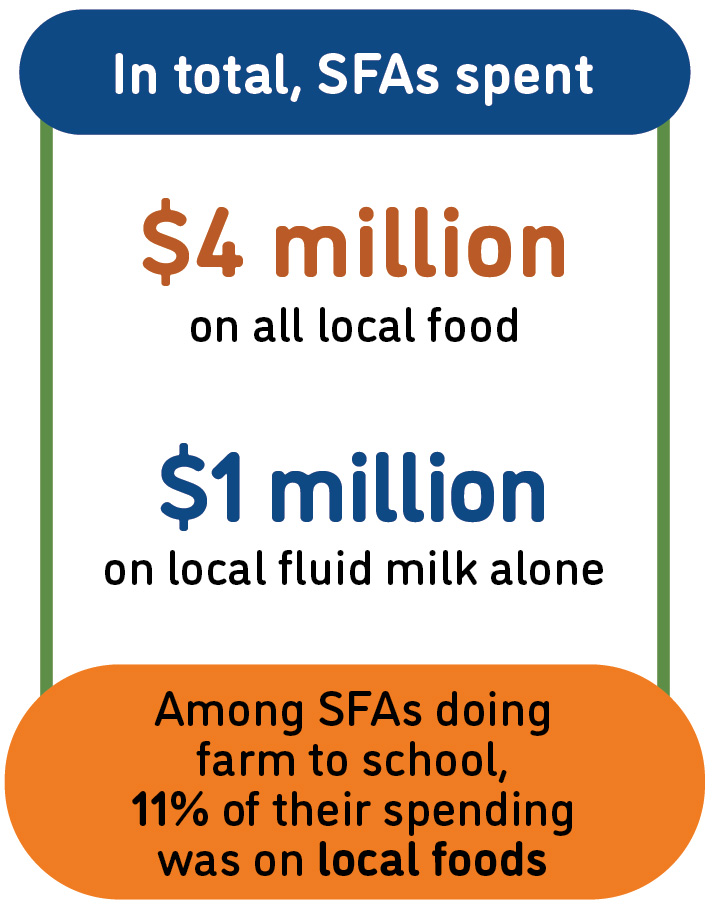
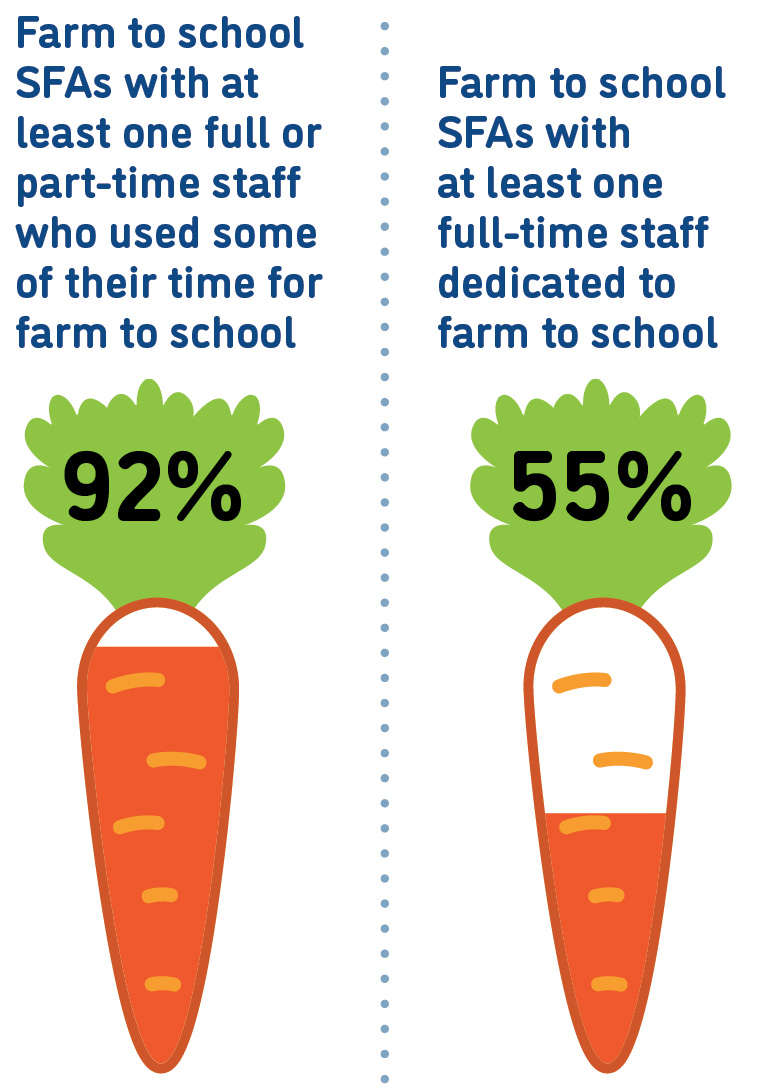
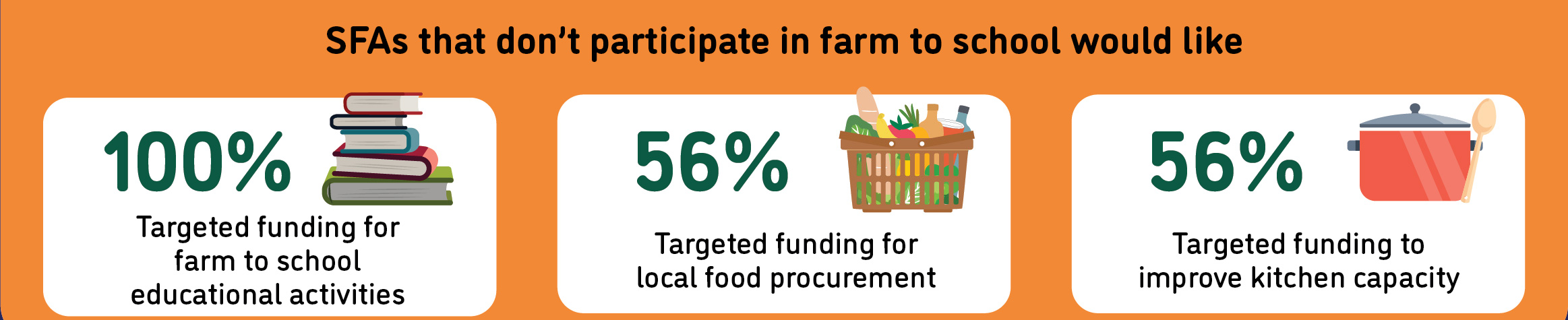


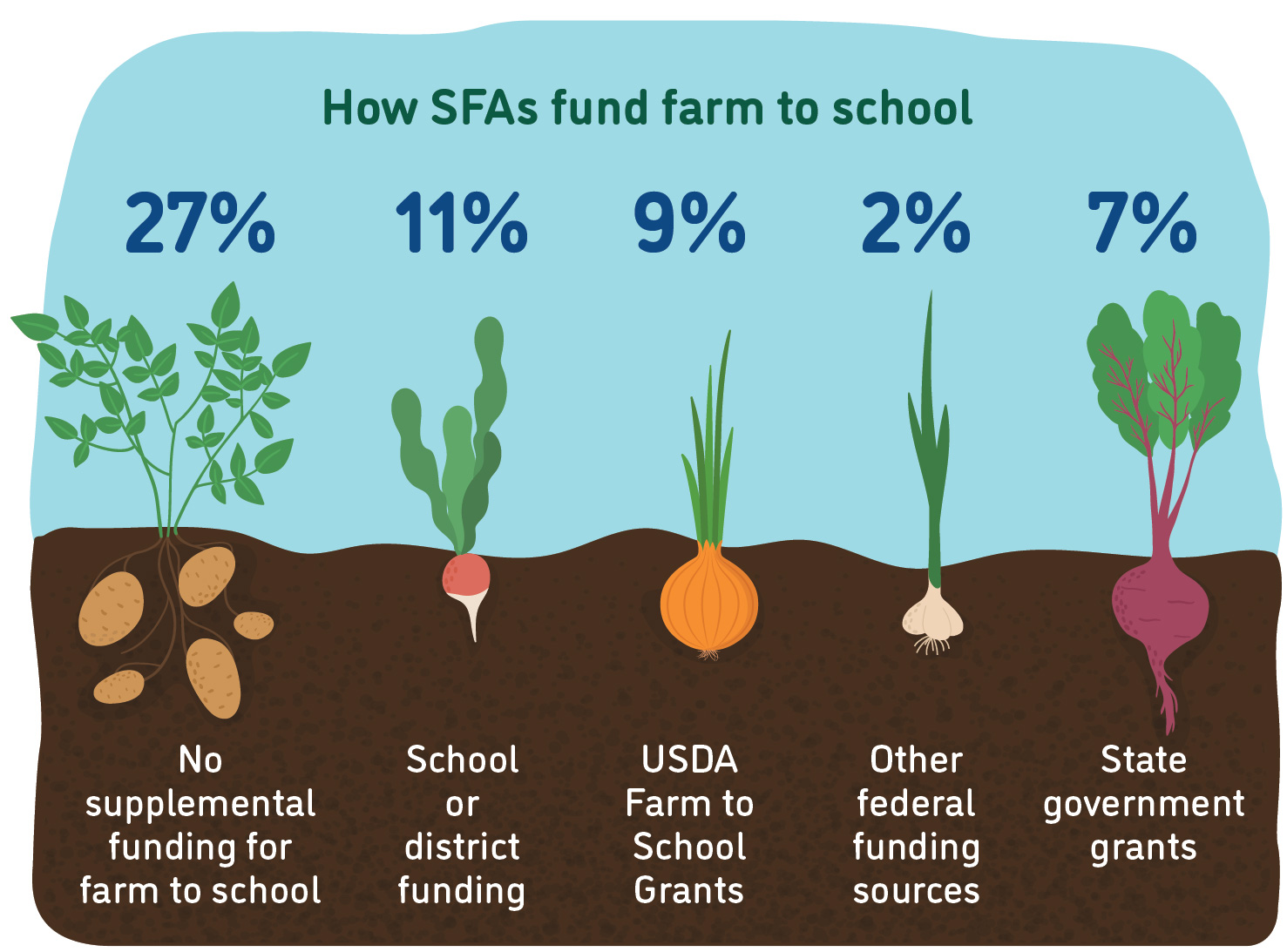
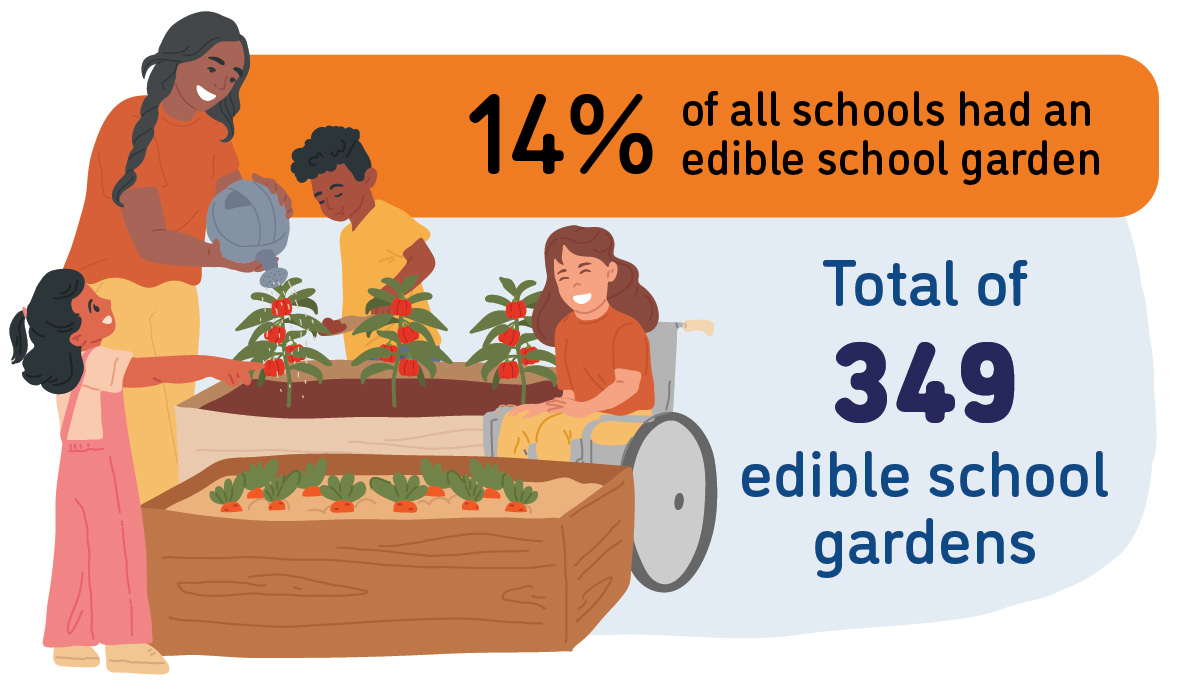
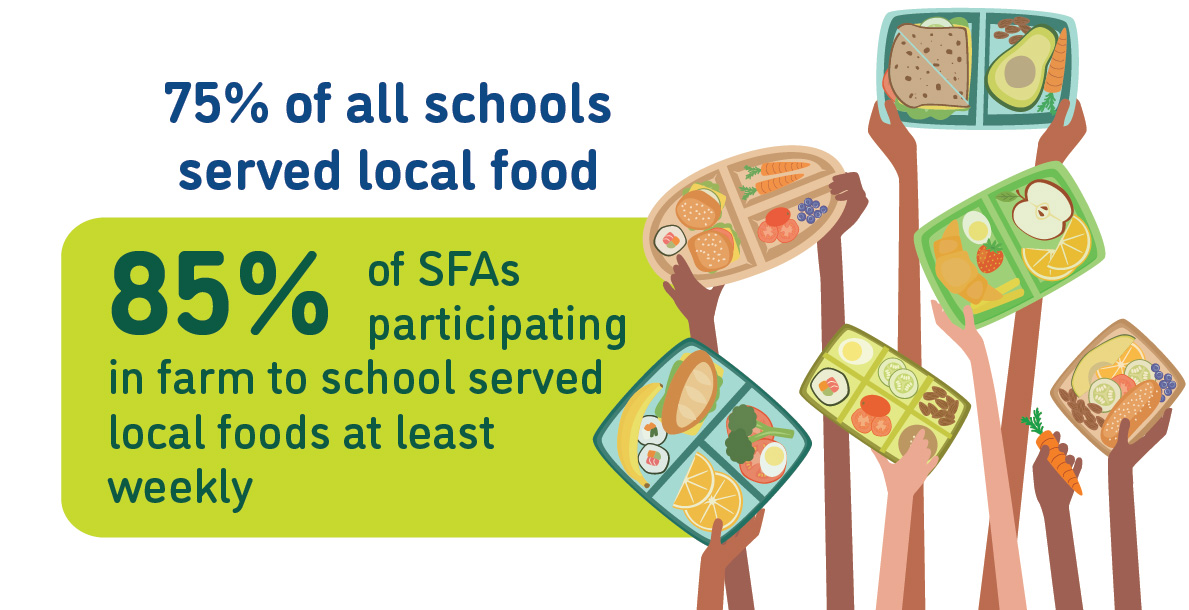
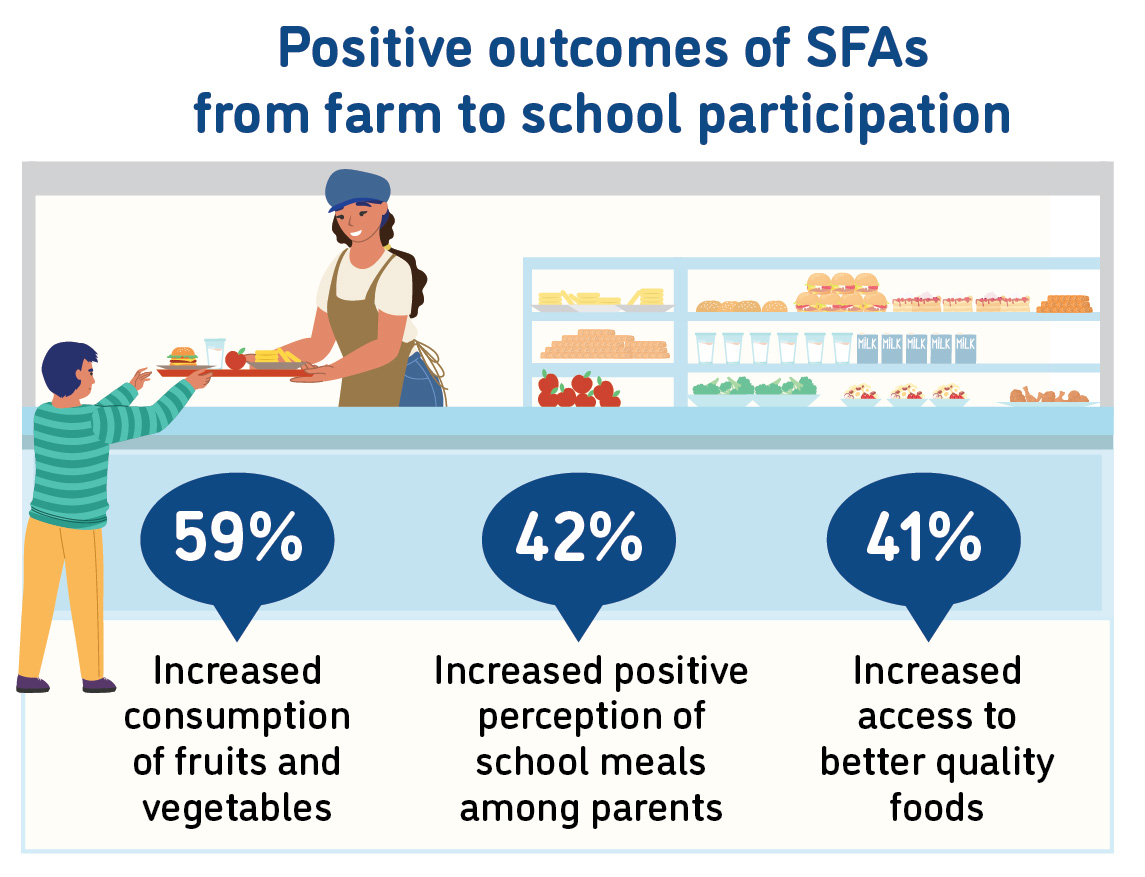



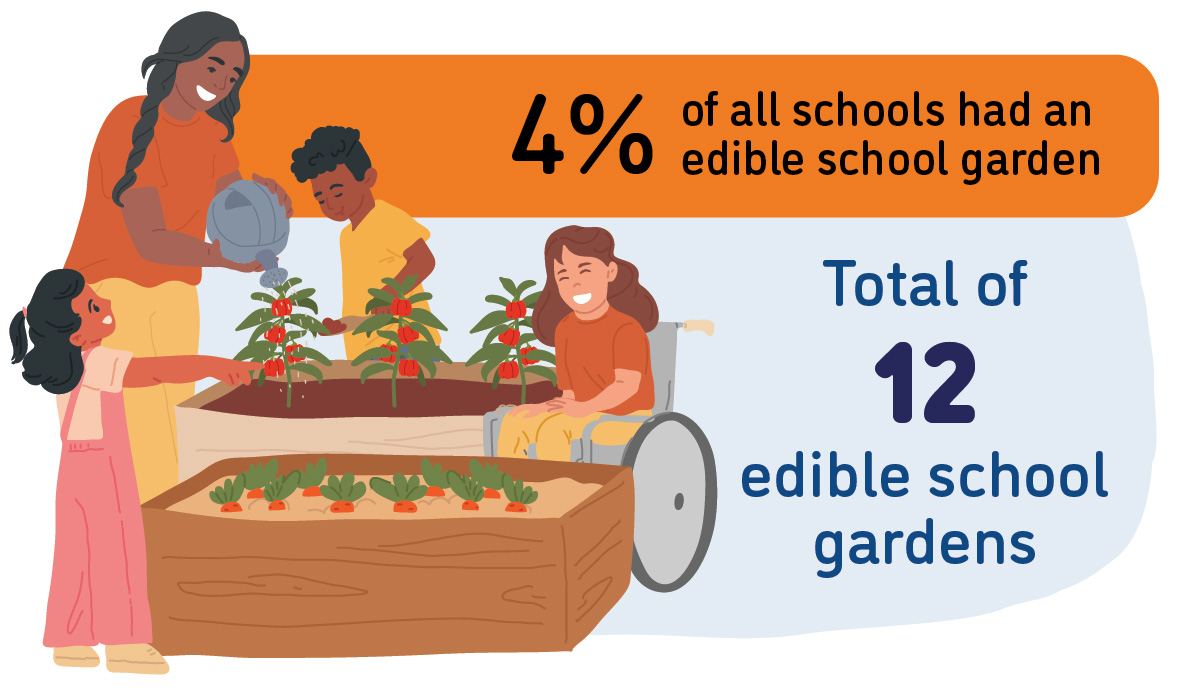
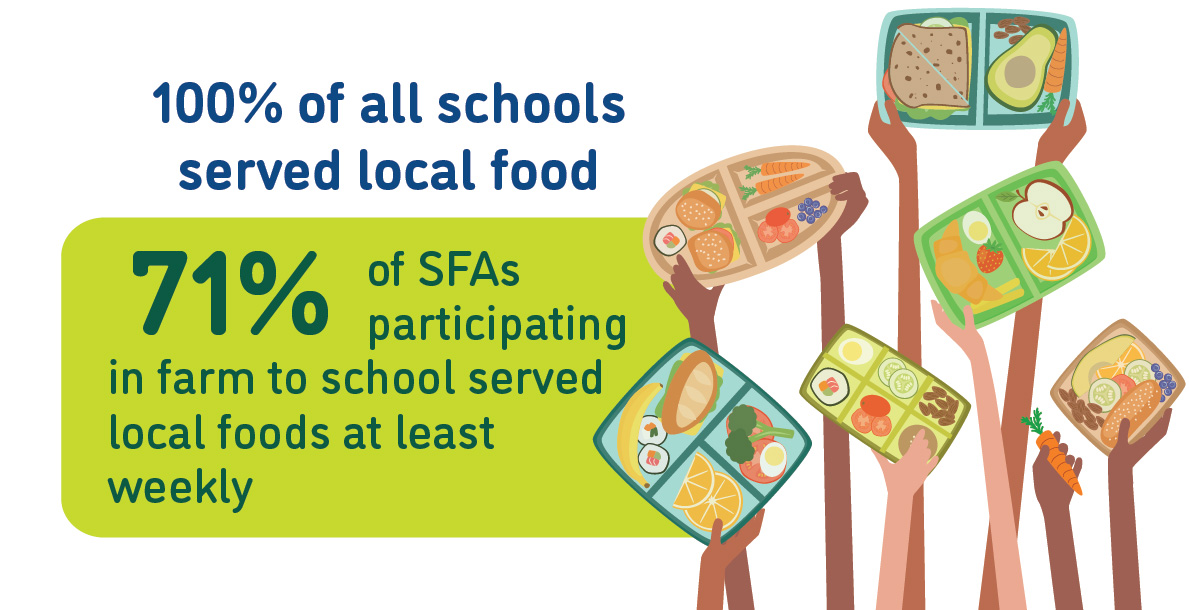
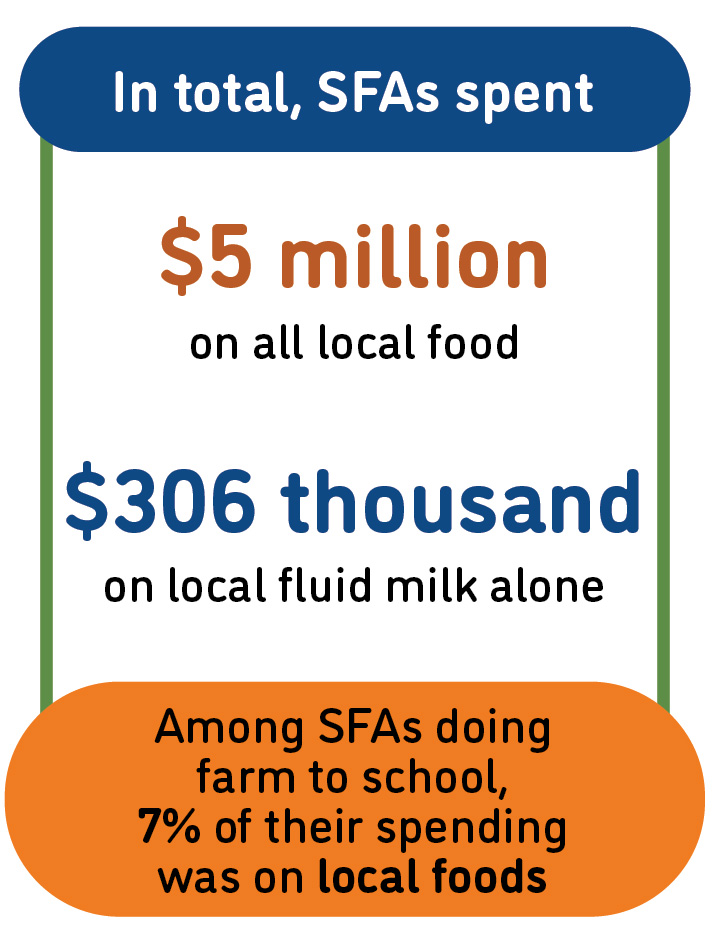
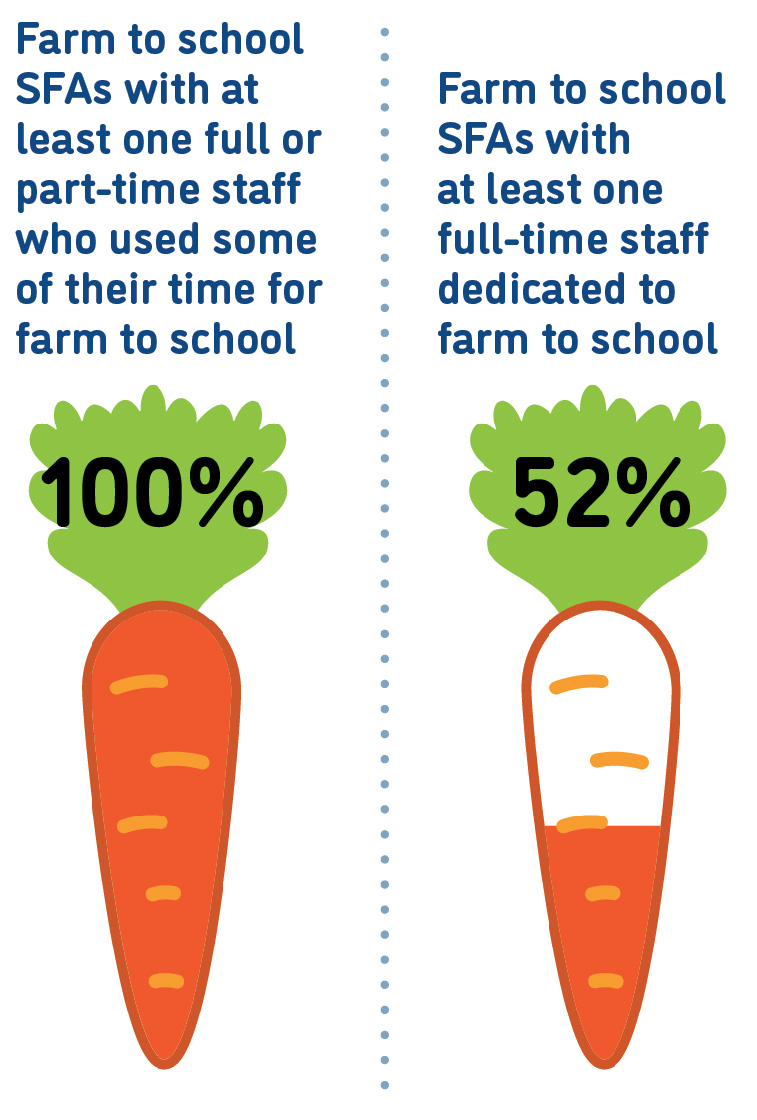

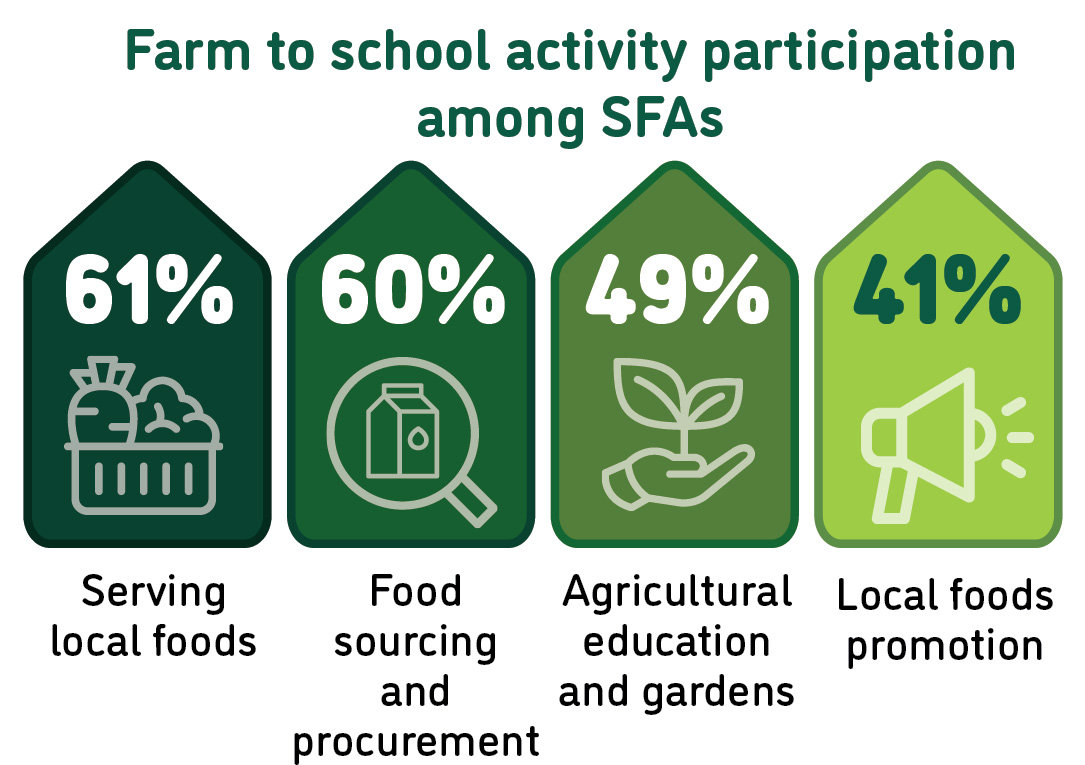
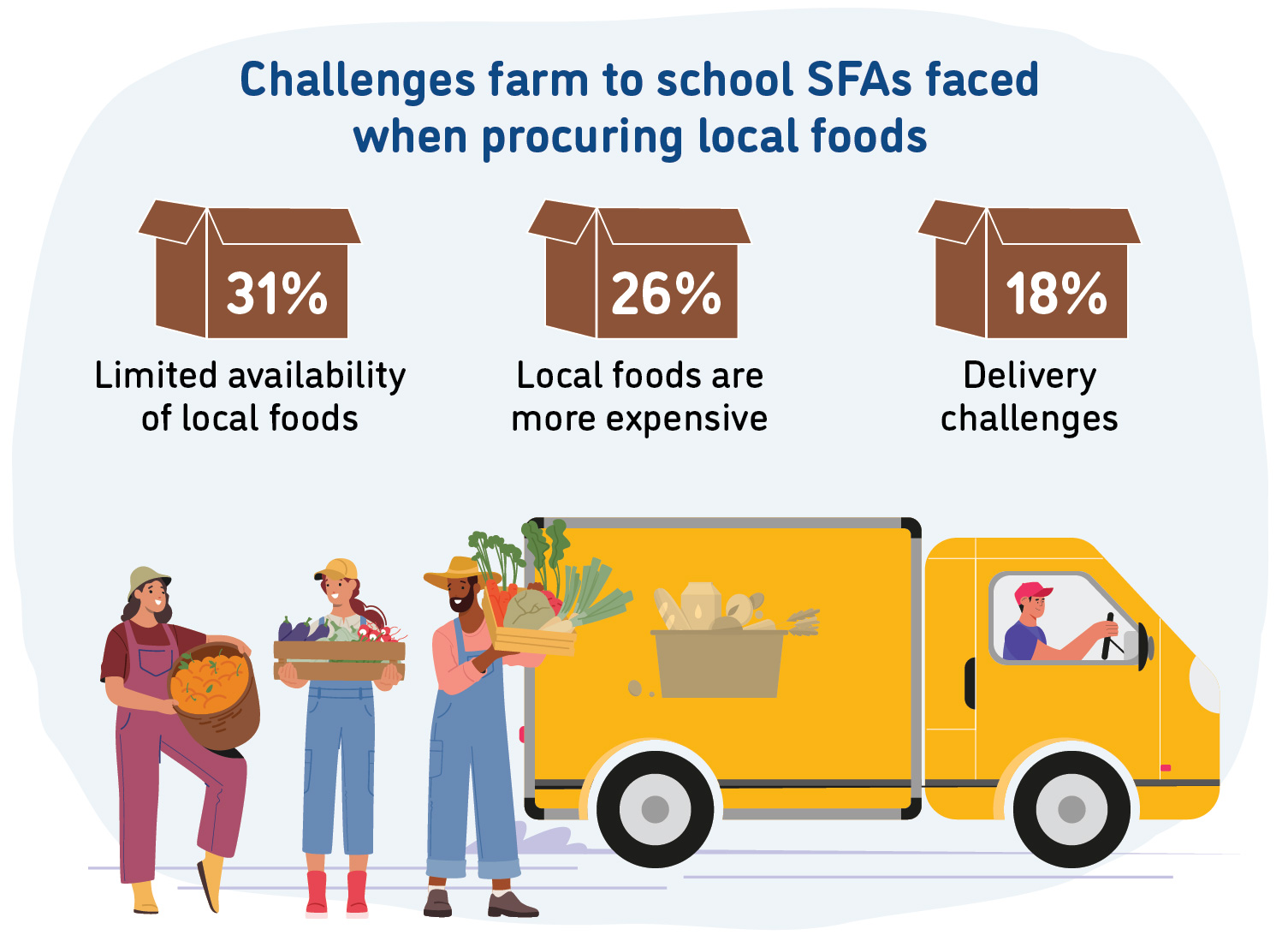

- Idaho
- Illinois
- Indiana
- Kansas
- Kentucky
- Louisiana
- Massachusetts
- Mariana Islands
- Maryland
- Maine
- Michigan
- Minnesota
- Missouri
- Mississippi

















- Montana
- North Carolina
- North Dakota
- Nebraska
- New Hampshire
- New Jersey
- New Mexico
- Nevada
- New York
- Ohio
- Oklahoma
- Oregon
- Pennsylvania
- Puerto Rico






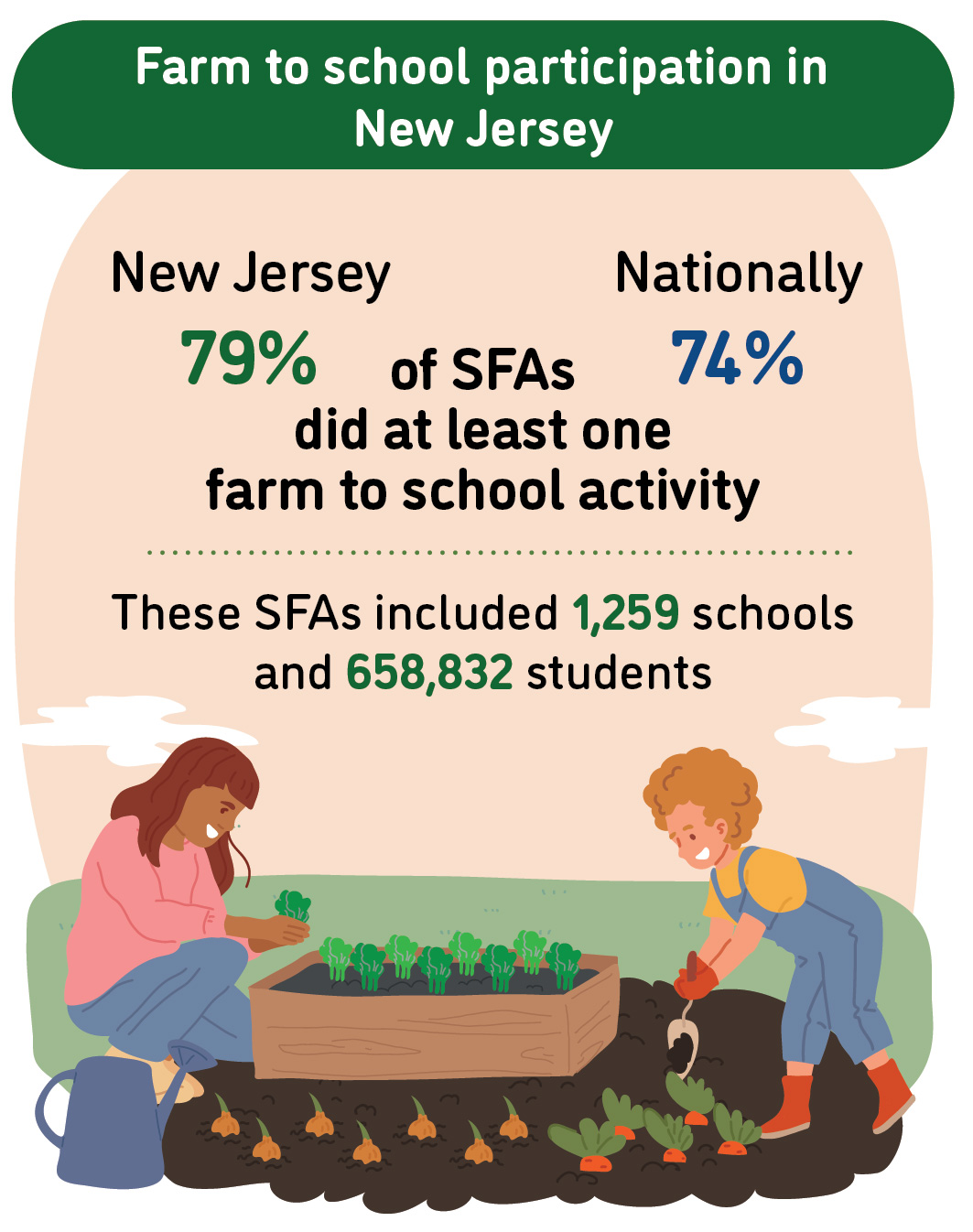
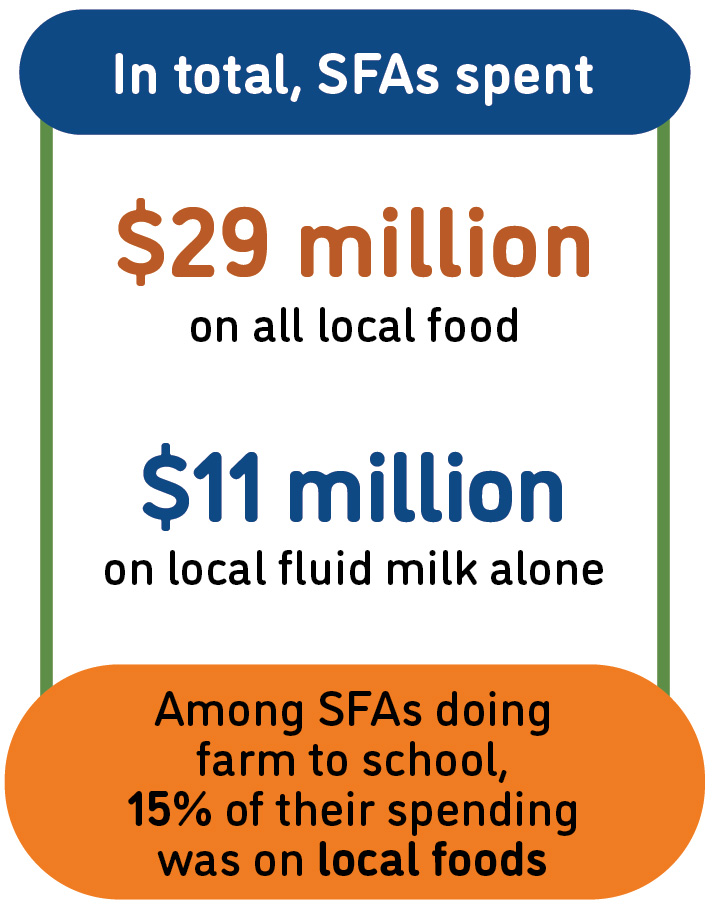
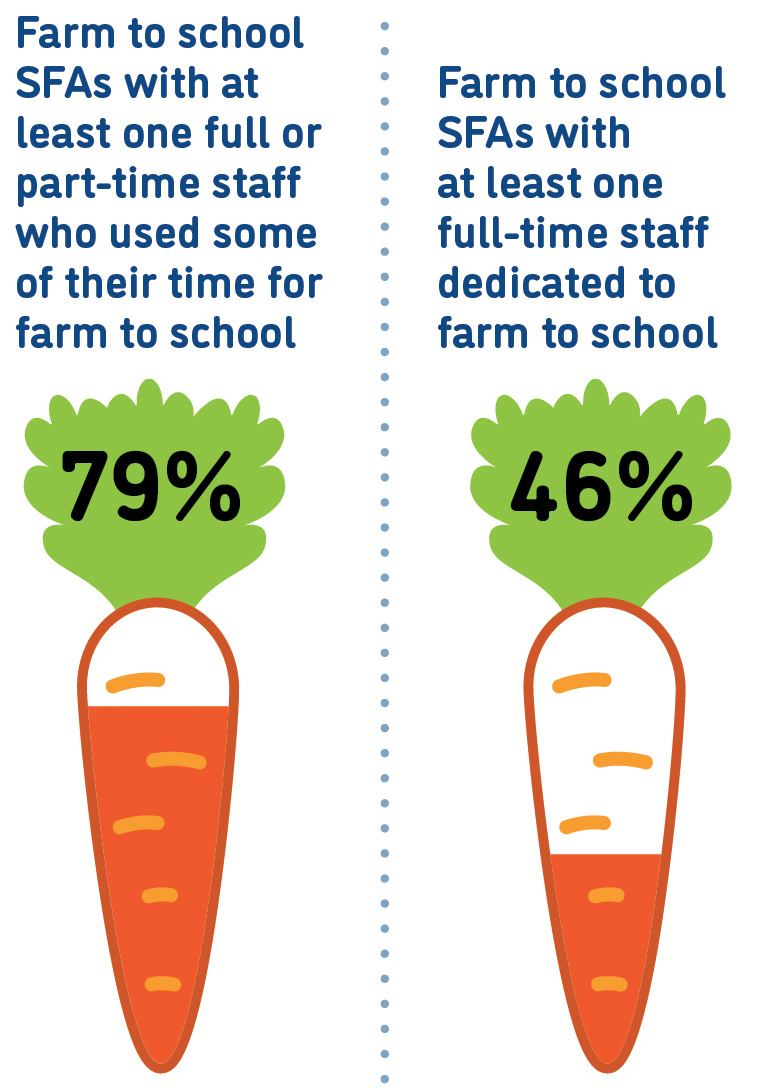
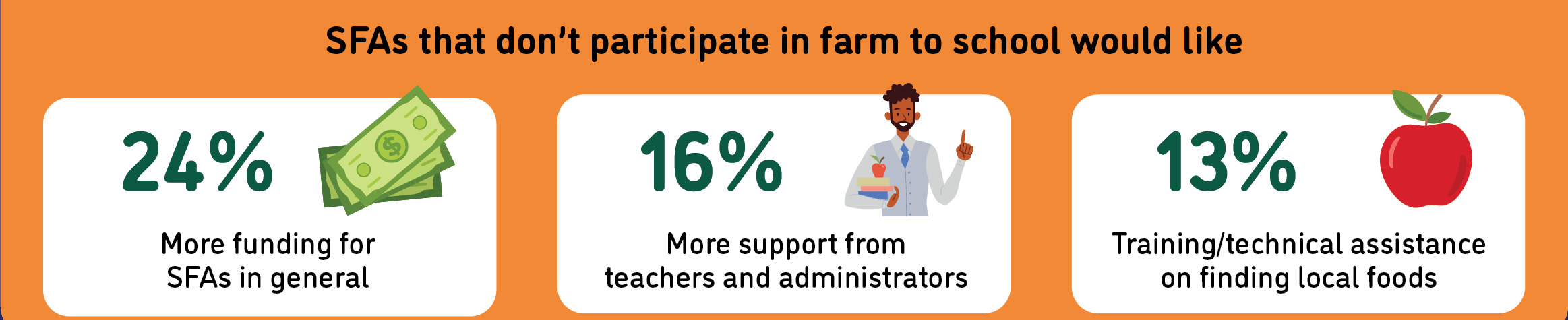










- Rhode Island
- South Carolina
- South Dakota
- Tennessee
- Texas
- Utah
- Virginia
- Virgin Islands
- Vermont
- Washington
- Wisconsin
- West Virginia
- Wyoming


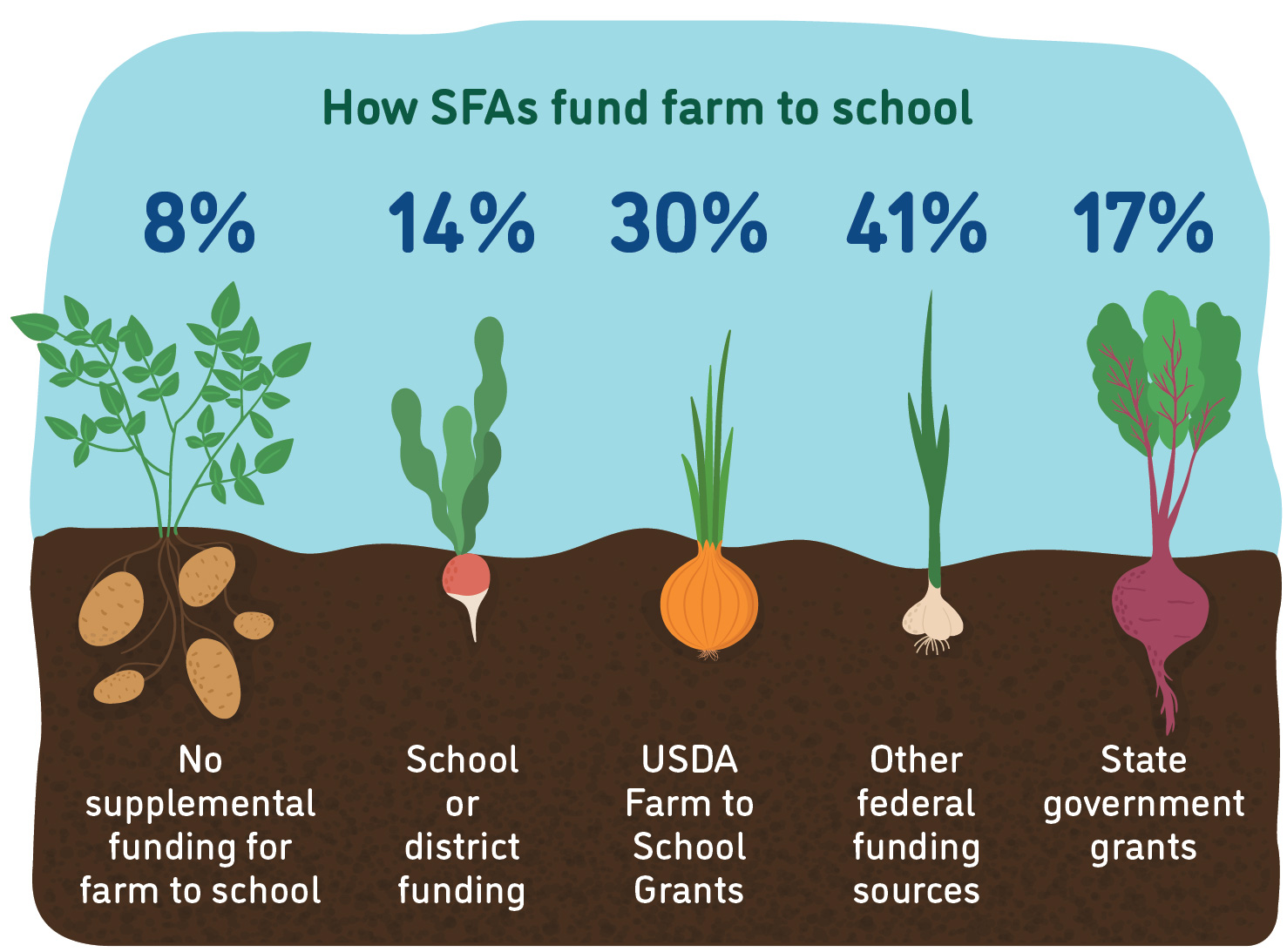
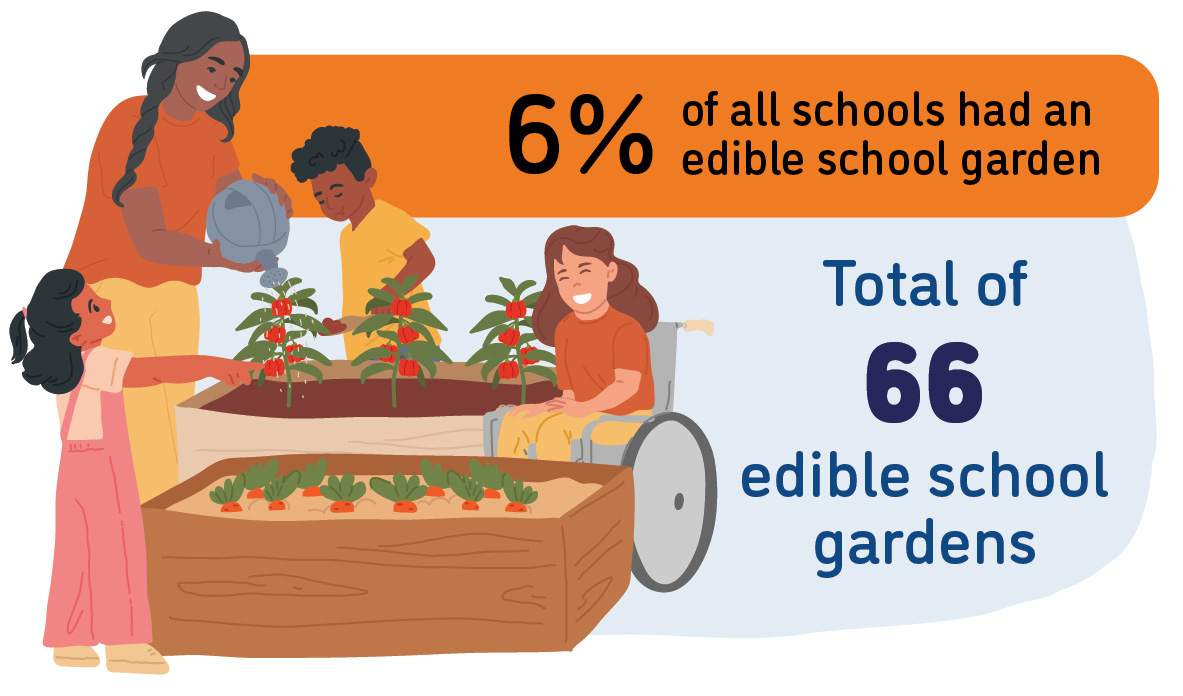
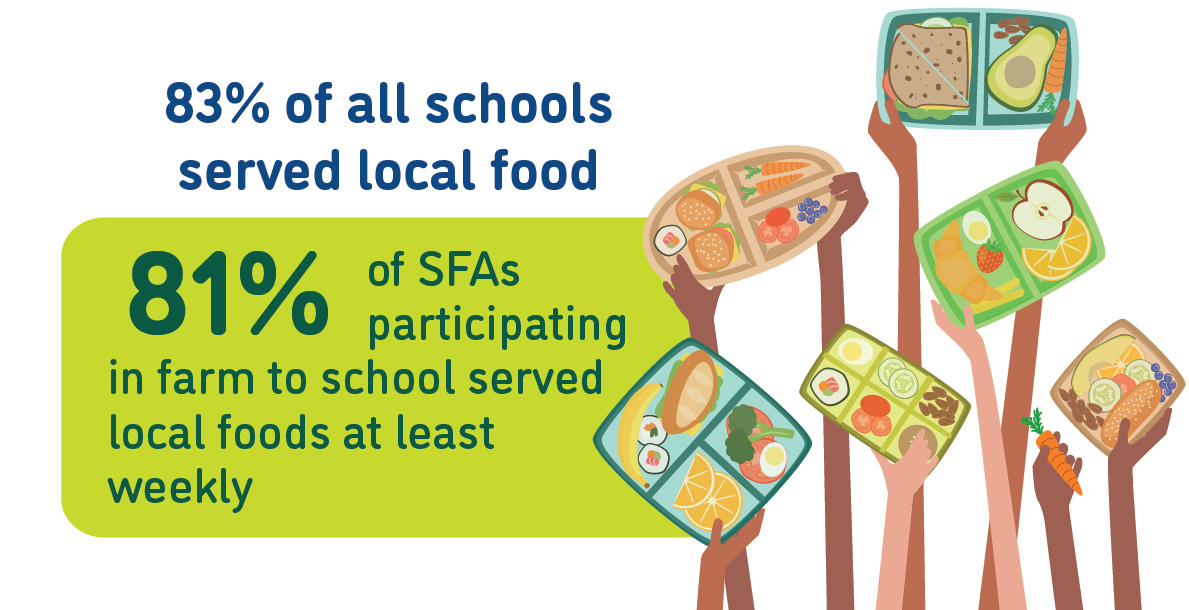

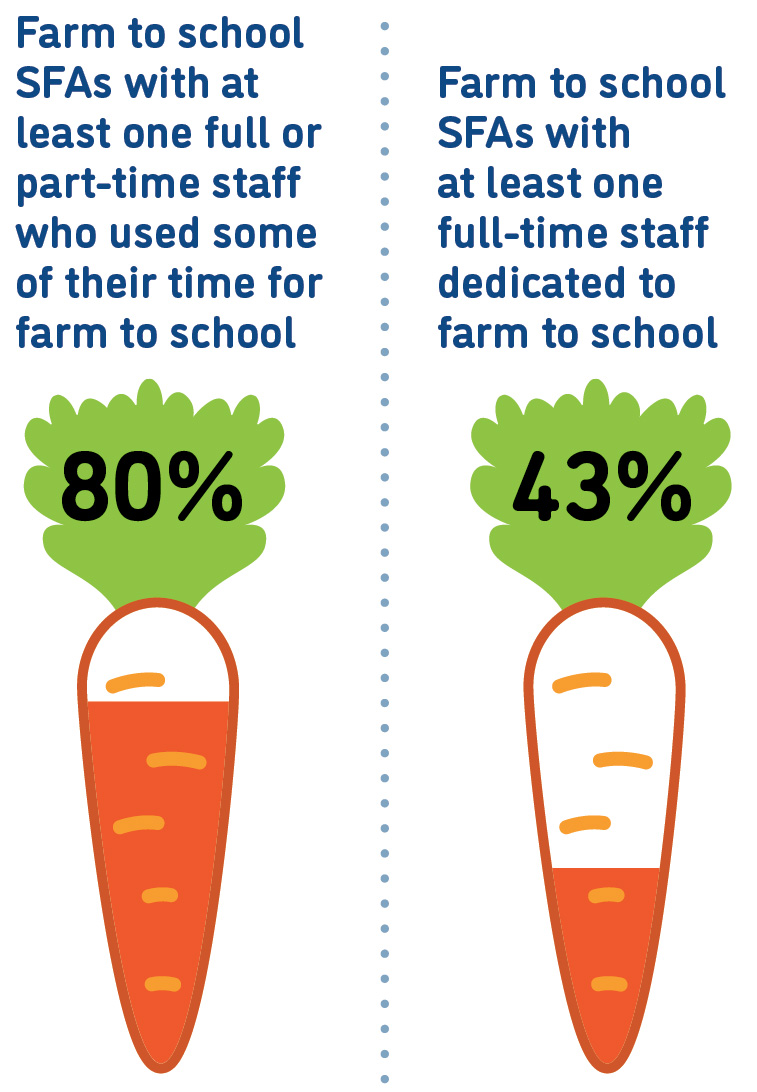
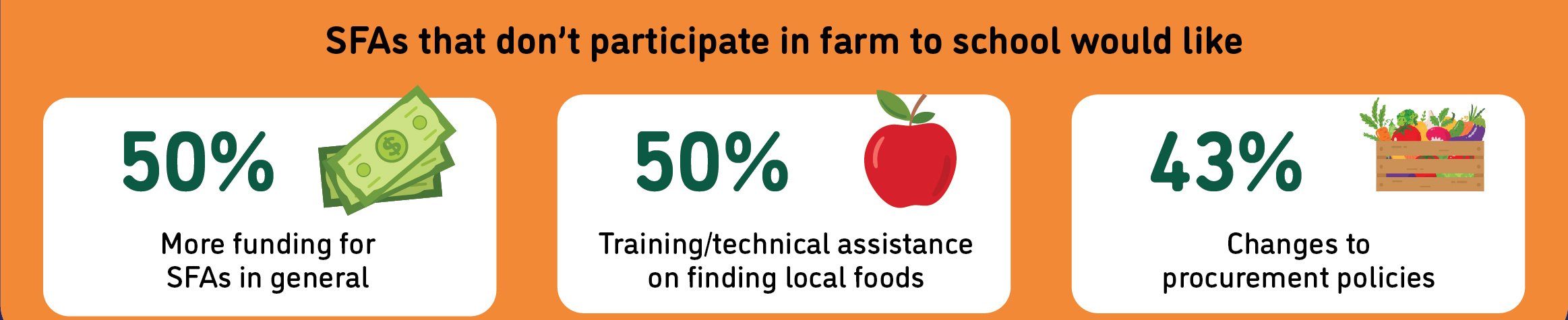

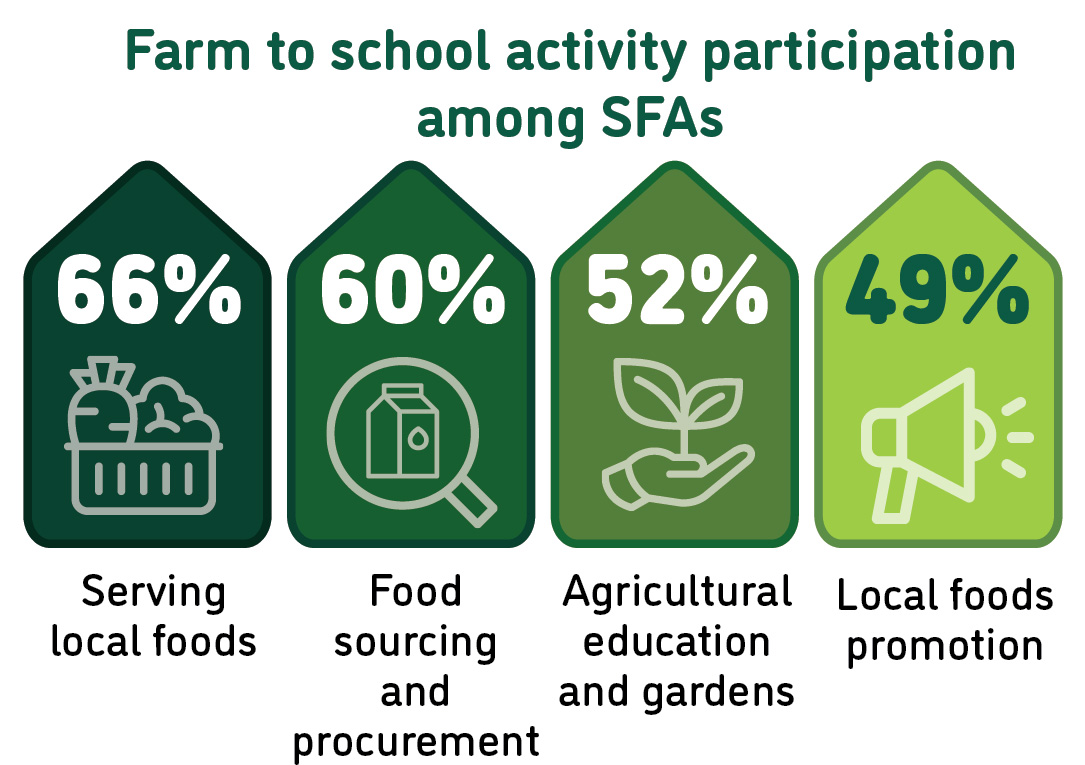
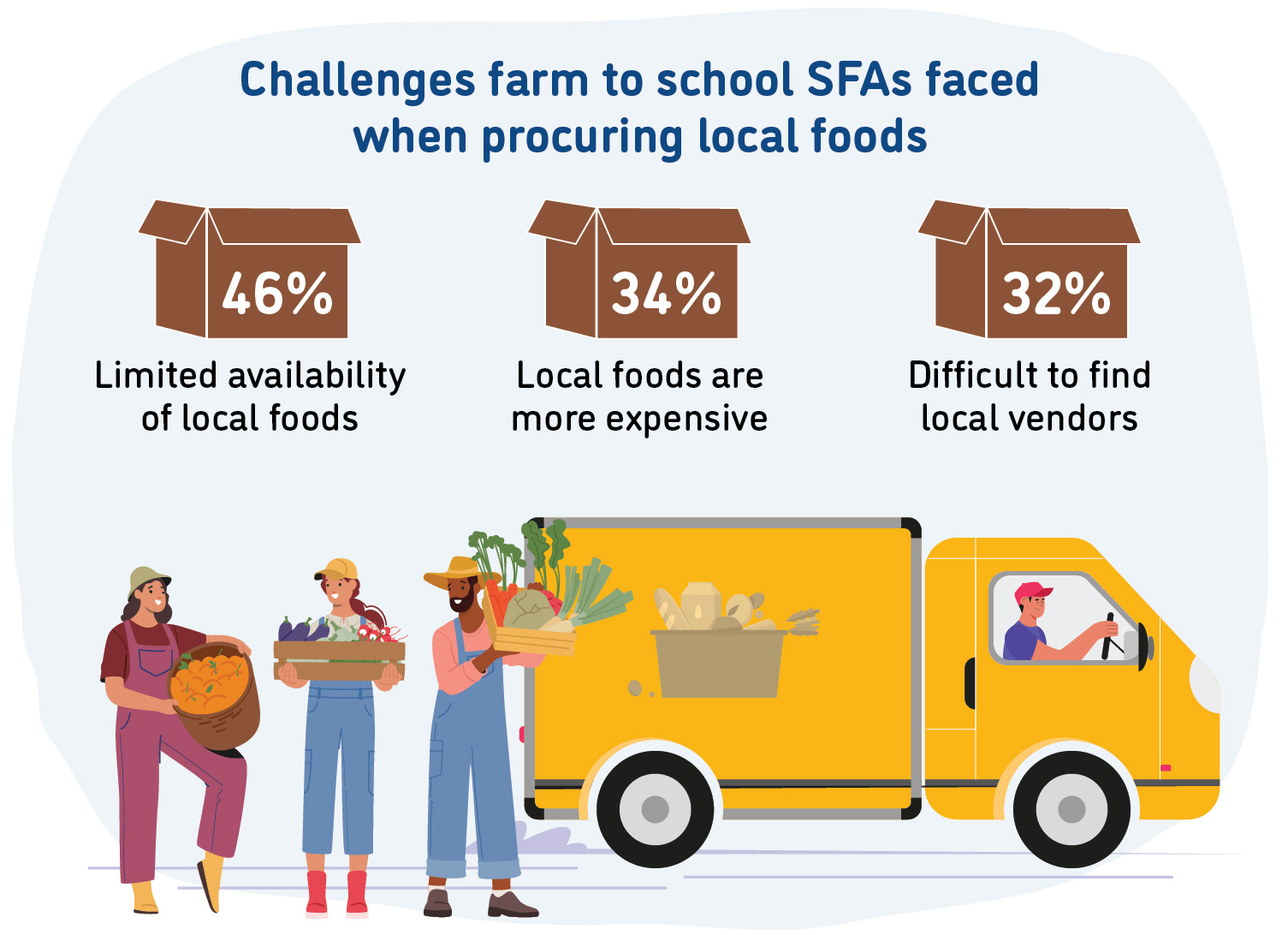









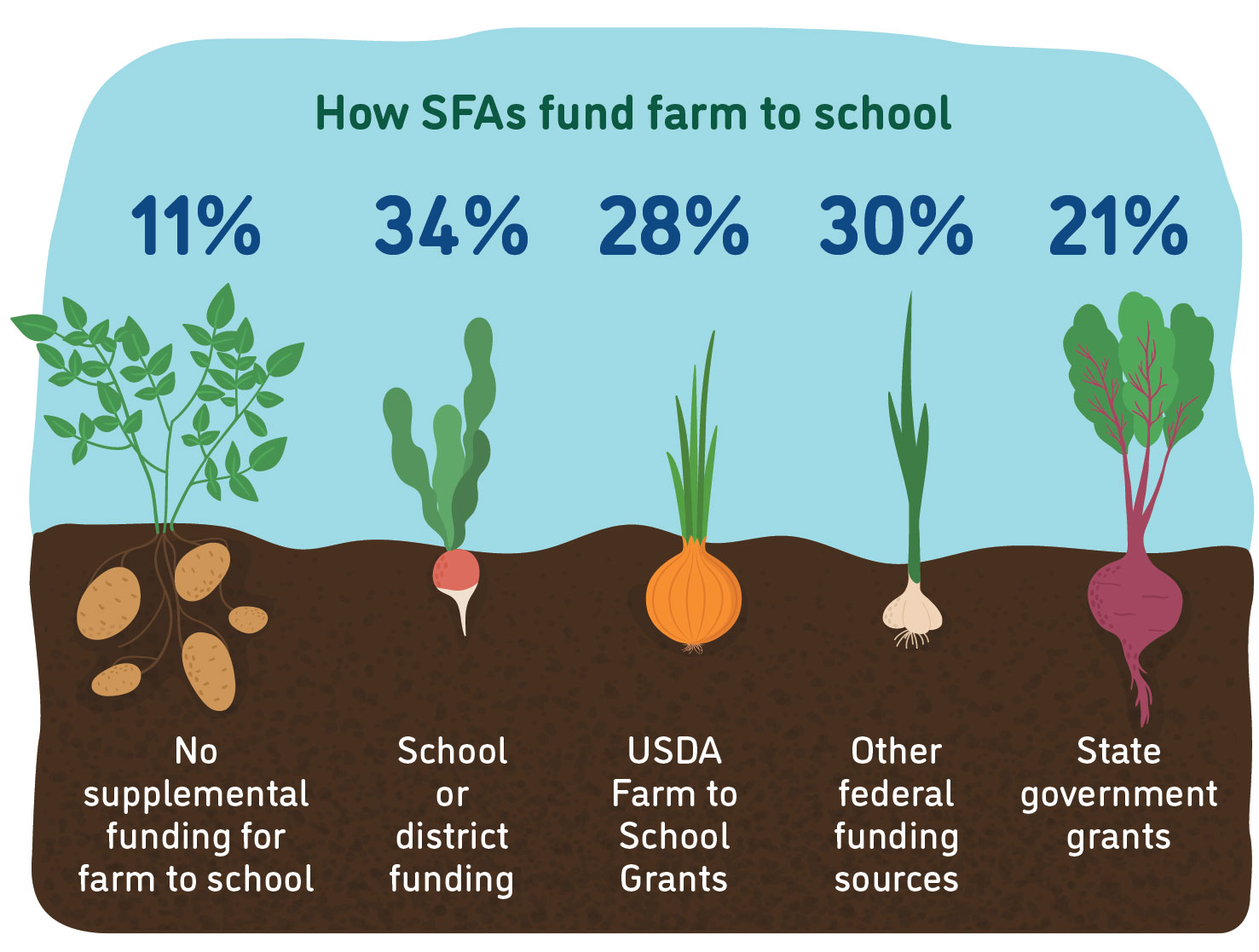
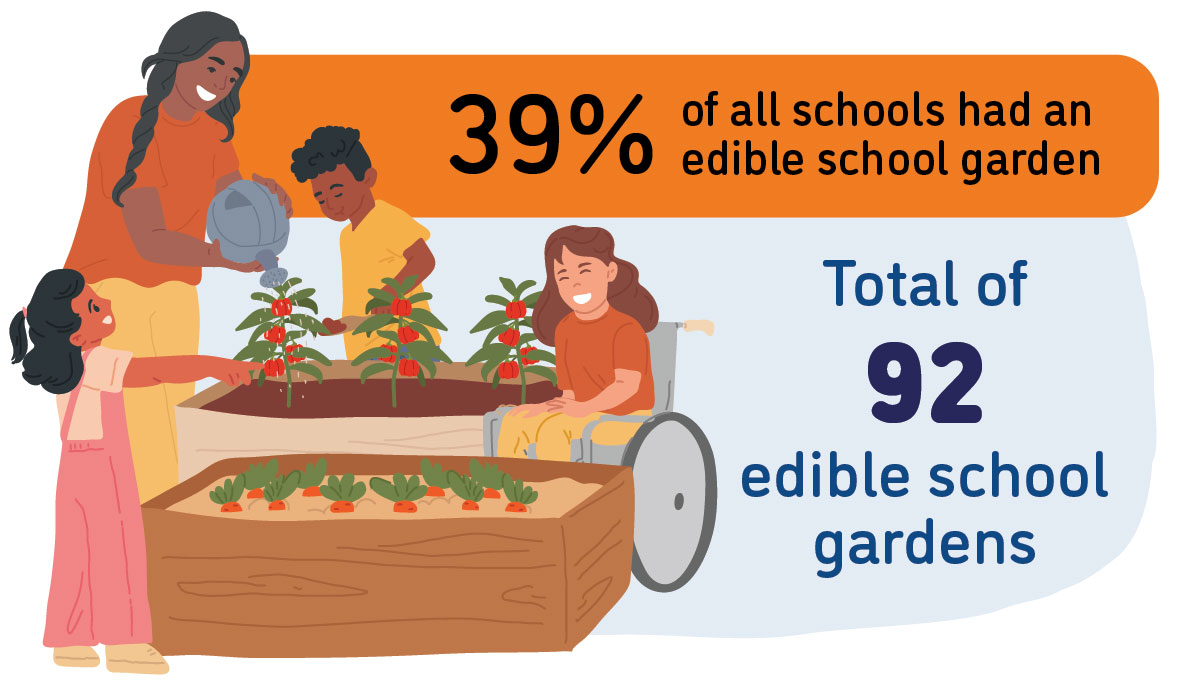
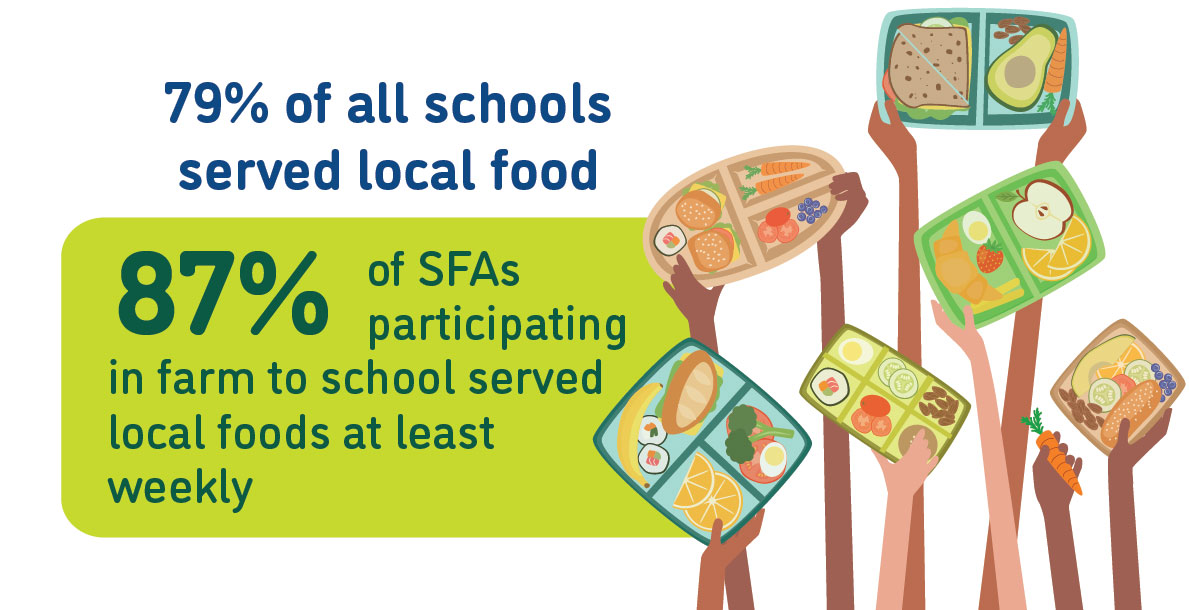
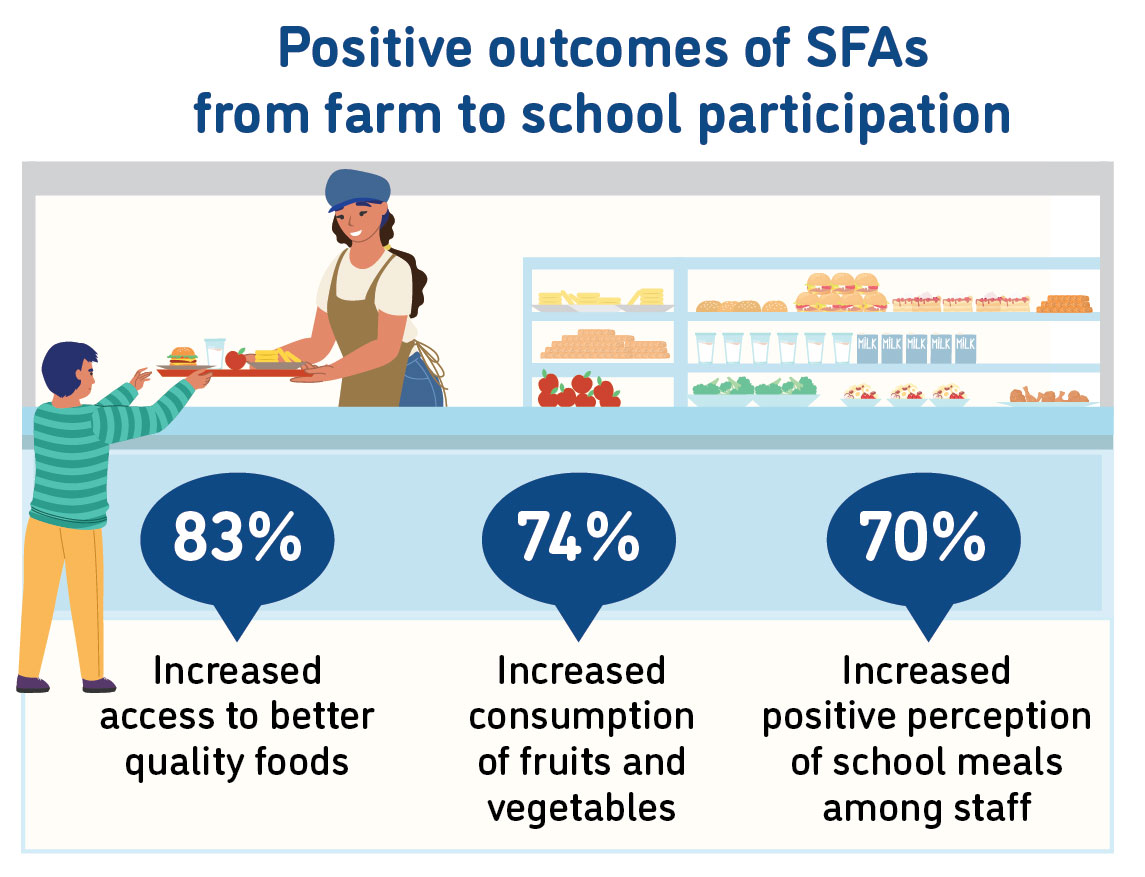


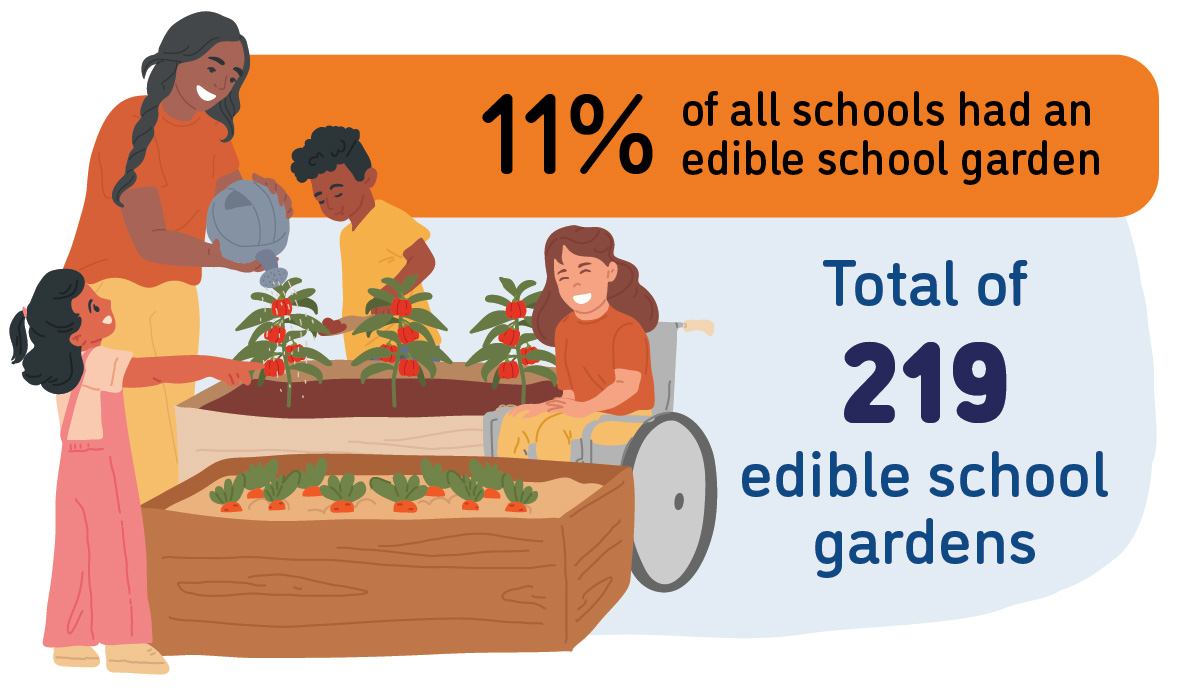
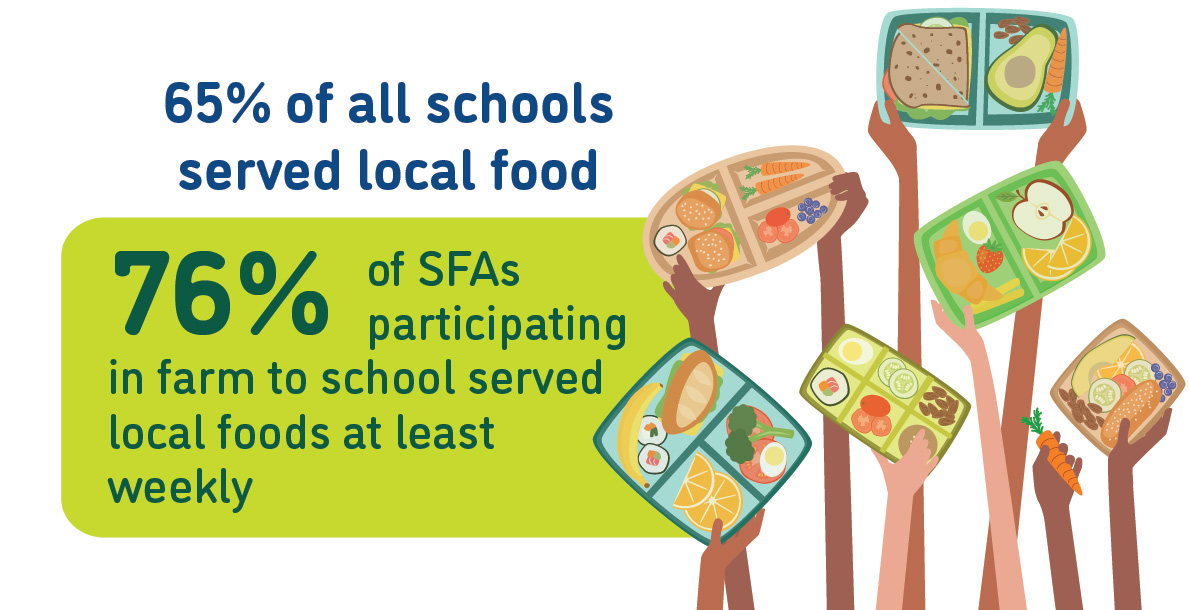
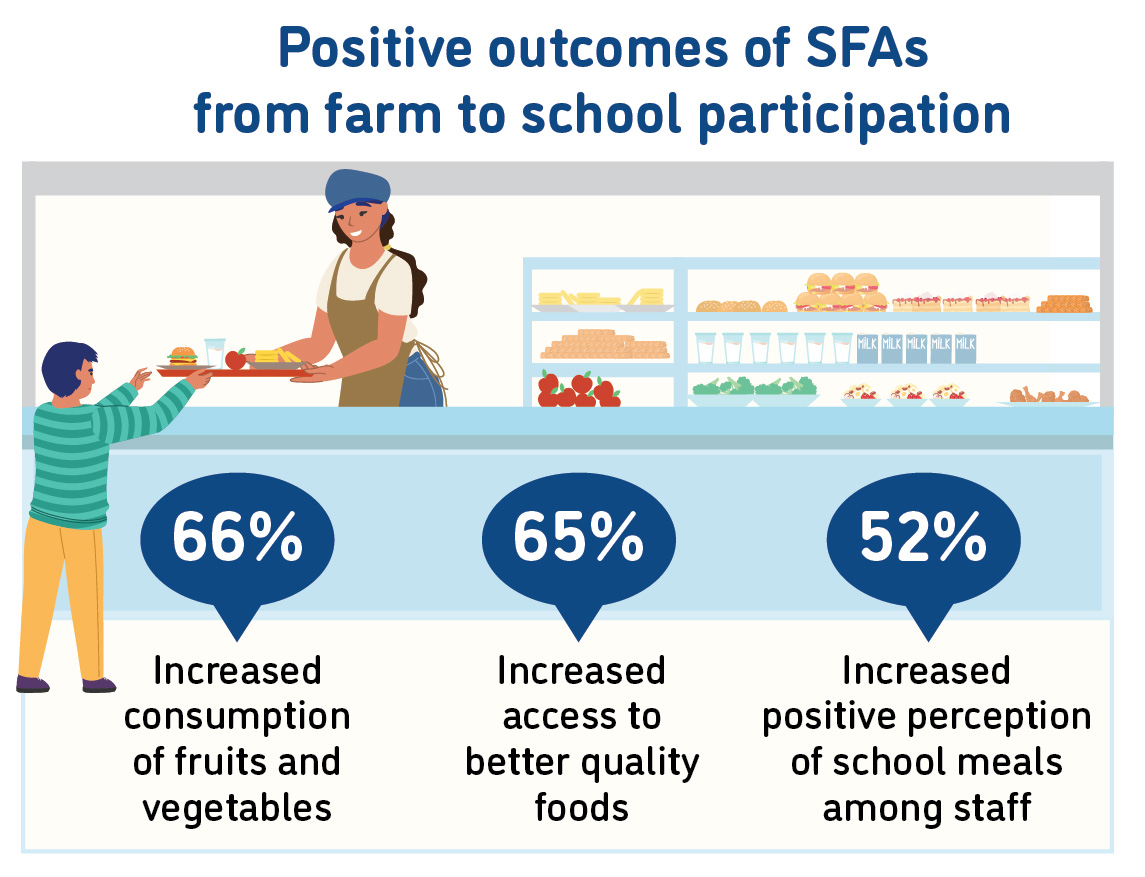
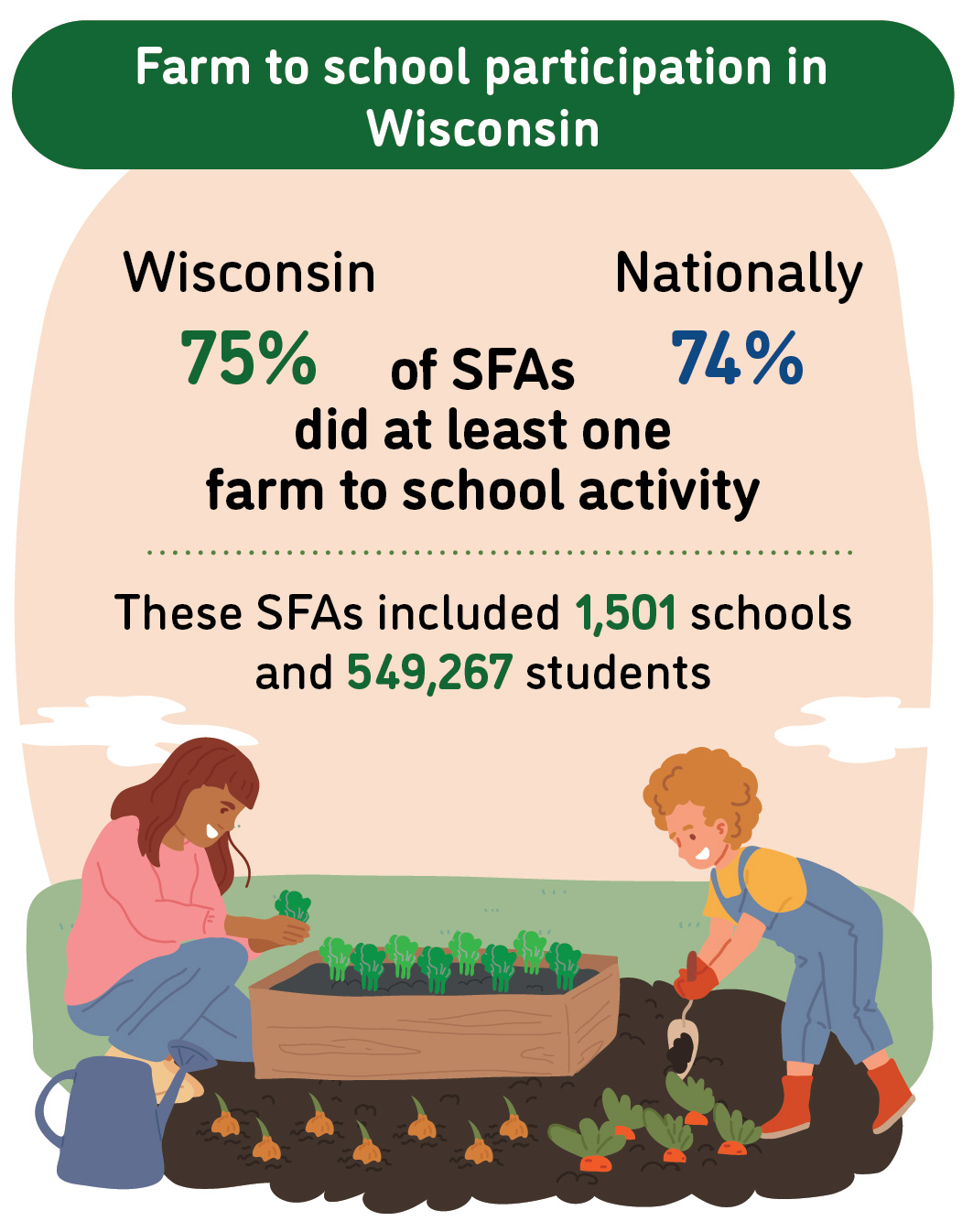





draft page
Kosher and Halal Foods in Child Nutrition Programs
On Nov. 14, 2024, we held a webinar for state and local agencies administering child nutrition programs on serving halal and kosher observant students eligible for their programs.
On Nov. 14, 2024 we held a webinar for state and local agencies administering child nutrition programs on serving halal and kosher observant students eligible for their programs.
FY 2021-2023 Report to Congress on Reducing Barriers to Food Access
USDA prepared this Report to Congress to address requirements to coordinate efforts within USDA to reduce barriers to food access. USDA has identified the Food and Nutrition Service (FNS) as the Food Access Liaison to coordinate efforts and annually respond to this request. The report describes activities that occurred from October 2020 through September 2023 to reduce barriers to food access given the last such annual report submitted in March 2021 covered fiscal year 2020.
USDA adapts to numerous population and economic conditions to ensure food access, food safety, conservation of natural resources, and support for agricultural markets. During the performance period described in this report, the United States addressed a national public health emergency due to the coronavirus pandemic (COVID-19). USDA implemented several interim programs and numerous policy changes based on key legislation. Some of the legislation allowed for temporary policy flexibilities while others resulted in permanent changes or enhancements to existing programs and statutes. These strategies increased access to healthy foods, offered new market opportunities for farmers and ranchers, stabilized small and independent retailers, and created quality jobs and economic opportunities in underserved communities. Much of the work to overcome extensive challenges encountered during this historical period can be attributed to committed communities, a national resolve to push forward, and steadfast USDA staff and partners.
This Report to Congress from USDA responds to a requirement established by the 2018 Farm Bill to address requirements to coordinate efforts within USDA to reduce barriers to food access. USDA has identified FNS as the Food Access Liaison to coordinate efforts and annually respond to this request. The report describes activities that occurred from October 2020 through September 2023 to reduce barriers to food access given the last such annual report submitted in March 2021 covered fiscal year 2020
Final Rule - Food Distribution Programs
Please note: A correction to this final rule was published in the Federal Register Dec. 23, 2024.
Summary
This final rule revises regulations for the Commodity Supplemental Food Program (CSFP), the Food Distribution Program on Indian Reservations (FDPIR), The Emergency Food Assistance Program (TEFAP), and USDA Foods disaster response regulations. This final rule makes improvements in USDA’s food distribution programs.
Dates
Effective date: This rule is effective Dec. 30, 2024.
Implementation dates: See section 2 of the Supplementary Information. This rulemaking consists of multiple provisions. Implementation for each provision is referenced in the Supplementary Information section of this final rule and detailed in the section-by-section analysis.
Background
The U.S. Department of Agriculture's (the Department or USDA) Food and Nutrition Service (FNS) works to increase food security and reduce hunger through the administration of 16 federal nutrition assistance programs. Through the provision of food and administrative funding, USDA FNS food distribution programs assist the emergency feeding network—made up of thousands of food banks, food pantries, Tribal governments, and other community partners—in feeding those in need.
In a proposed rule published in the Federal Register on Aug. 14, 2023 (88 FR 54908) (described hereafter as “the proposed rule”), FNS proposed to amend food distribution regulations at 7 CFR parts 247, 250, 251, 253, and 254 to make access and parity improvements within the Commodity Supplemental Food Program (CSFP), the Food Distribution Program on Indian Reservations (FDPIR), The Emergency Food Assistance Program (TEFAP), and USDA Foods disaster response. Based on comments received in response to the proposed rule, USDA is finalizing regulatory changes with the following overall aims:
- Increasing access to food distribution programs so eligible individuals can more easily receive the nutrition resources they need, and program operators can more easily provide those resources;
- Increasing parity between FDPIR and the Supplemental Nutrition Assistance Program (SNAP);
- Modernizing program operations by updating some outdated terminology and processes;
- Updating regulations to be consistent with current program operations and building in flexibility for future changes; and
- Incorporating lessons learned from implementing these critical programs during the COVID-19 pandemic.
Resources
- Snapshot of regulatory changes that the final rule makes.
- Questions and answers about the final rule.
CSFP
FDPIR
- Regulatory changes
- Webinars
- Policy Memos
TEFAP
USDA Foods in Disasters
This final rule revises regulations for the Commodity Supplemental Food Program (CSFP), the Food Distribution Program on Indian Reservations (FDPIR), The Emergency Food Assistance Program (TEFAP), and USDA Foods disaster response regulations. This final rule makes improvements in USDA’s food distribution programs.
Q&As: Food Distribution Programs - Improving Access & Parity Final Rule
The final rule, Food Distribution Programs: Improving Access and Parity changes program regulations to make access and parity improvements within several food distribution programs including:
- Commodity Supplemental Food Program (CSFP) - 7 CFR 247
- The Food Distribution Program on Indian Reservations (FDPIR) - 7 CFR 253 and 254
- The Emergency Food Assistance Program (TEFAP) - 7 CFR 251
- USDA Foods Disaster Response - 7 CFR 250
- 1. Who will be affected by the changes in the rule?
Changes in the final rule affect CSFP, TEFAP, and FDPIR participants, in addition to those individuals seeking USDA Foods disaster assistance. The changes also affect state agencies, Indian Tribal Organizations (ITOs), and local agencies that administer CSFP, TEFAP, FDPIR, and USDA Foods in Disasters.
- 2. Why are we revising food distribution regulations and what are the goals of the final rule?
We are revising food distribution regulations with the following overall aims:
- Increasing access to TEFAP, CSFP, FDPIR, and USDA Foods Disaster Assistance so that eligible individuals can more easily receive the nutrition resources they need, and program operators can more easily provide those resources;
- Increasing parity between FDPIR and the Supplemental Nutrition Assistance Program (SNAP);
- Modernizing program regulations to keep them consistent with current program operations, while also building in flexibility for future changes; and
- Incorporating lessons learned from implementing these critical programs during the COVID-19 pandemic.
This routine rulemaking action has been in development since 2022. Many of the rule’s provisions have been years in the making and were specifically requested by program partners.
- 3. What major changes does the rule make?
The rule makes several key changes in each of the affected programs in addition to a number of smaller and nonsubstantive, technical changes in each program. Please see this summary chart for a list of all changes. Several of the major changes are also listed below:
In CSFP, the rule:
- Increases CSFP’s maximum income eligibility guidelines from 130% of the Federal Poverty Guidelines, to 150% of the Federal Poverty Guidelines, so that the program can reach additional seniors in need.
- Streamlines CSFP home delivery services by providing flexibility for identity verification requirements at the time of delivery of CSFP foods. This change is intended to help support state and local agencies in modernizing the program’s delivery methods.
In TEFAP, the rule:
- Removes a longstanding, burdensome requirement that requires TEFAP eligible recipient agencies (ERAs) to collect the address of all TEFAP participants. This change will streamline the TEFAP intake process and minimize lines at food banks and pantries.
- Standardizes TEFAP income eligibility standards among state agencies and establishes a maximum income eligibility threshold range for the program. This change will reduce variance in income eligibility across state agencies, and protect TEFAP access for those most in need.
In FDPIR, the rule:
- Allows FNS to waive or modify specific FDPIR administrative requirements under similar processes, for similar amounts of time, and in similar situations as outlined in SNAP regulations. This allows ITOs significantly more regulatory flexibility in administering the program, while increasing parity between FDPIR and SNAP.
- Increases the FDPIR shelter and utility standard deduction used in income eligibility calculations. It also allows actual shelter and utility expenses to be used. This long overdue change is being made in response to Tribal leader and stakeholder feedback about regional deductions not reflecting actual costs of living in Indian country.
In USDA Foods in Disasters, the rule:
- Removes a longstanding restriction on the simultaneous provision of USDA Foods and Disaster Supplemental Nutrition Assistance Program (D-SNAP) benefits, which was determined to be unnecessary and slowed down the provision of food to those affected by disasters, emergencies, and distress situations.
- Revises reporting requirements for state agencies operating approved disaster household distributions. This reporting will improve USDA’s and state distributing agencies’ understanding of the quantity and types of USDA Foods available for emergency response and allow USDA to more quickly replace USDA Foods used in disaster response.
- 4. What provisions in the final rule are different from those in the proposed rule?
We made several changes to the provisions in the final rule in response to feedback received on the proposed provisions. We thank everyone in the program community who took the time to submit this feedback; your comments were invaluable in the formation of the final rule.
In total, we received 155 comments on the proposed rule – most of which were supportive, but some that expressed concerns about the administrative burden that some of the rule’s provisions would place on state agencies and Indian Tribal Organizations that operate USDA’s food distribution programs on the ground. In response to these concerns, FNS modified several of the provisions in the final rule to reduce administrative burden. Provisions that were modified include the requirement for CSFP and TEFAP state agencies to post local agency and eligible recipient agency information online, TEFAP state agency reporting requirements related to household participation, and reporting requirements related to Disaster Household Distribution. For a detailed explanation of changes that were made, please refer to the preamble of the final rule.
- 5. How did we come up with the changes in the final rule?
Many changes in the final rule were initially proposed in response to feedback received from program partners including Feeding America, the National Association of Food Distribution Programs on Indian Reservations (NAFDPIR), the FDPIR Tribal Leaders Consultation Working Group (TLCWG), and the National Commodity Supplemental Food Program Association (NSCFPA). Other changes were identified by FNS leadership and staff to reflect more modern program operations and/or lessons learned from the COVID-19 pandemic. The final provisions in the rule also reflect feedback received during the public comment period for the proposed rule, which was open from August 14, 2023, until Oct. 13, 2023.
- 6. When will these changes take effect?
Most changes in the final rule take effect 60 days after the date of publication in the Federal Register, on Dec. 30, 2024.
As they may be particularly helpful in responding to near-term program disruptions, the establishment of administrative waiver authority in FDPIR, as well as the provision that allows households to receive both USDA Foods Disaster Assistance and Disaster-SNAP benefits during a disaster, are effective immediately upon publication of this rule.
Six provisions of the final rule will take effect within 60 days of the rule’s publication, but state agencies will not need to implement them for 12 months, or by Oct. 31, 2025. This implementation flexibility is in recognition of the fact that those provisions will require program partners to take more action or implement a larger change in program administration. Those provisions include the requirement for CSFP state agencies to post a copy of their CSFP state plan on a public webpage, the requirement for CSFP state agencies to post local agency information on a public webpage, the requirement for CSFP state agencies to share information about the Senior Farmers’ Market Nutrition Program with CSFP applicants, the requirements for TEFAP state agencies to post eligible recipient agency information and program eligibility information on a public webpage, and requirements for TEFAP state agencies related to TEFAP participation reporting.
- 7. Does this rule affect USDA Foods in Schools/USDA Foods in the child nutrition programs?
The final rule does not make any specific changes to the use of USDA Foods in the child nutrition programs, including the National School Lunch Program (NSLP); however, USDA Foods intended for child nutrition programs are frequently used in disaster response, so the changes being made to USDA Foods Disaster Assistance would apply to child nutrition state agencies.
Questions and answers about Food Distribution Programs: Improving Access and Parity Final Rule published on Oct. 31, 2024.
Snapshot of Regulatory Changes: Food Distribution Programs Final Rule
We have amended our regulations to make access and parity improvements within several food distribution programs, including the Commodity Supplemental Food Program, the Food Distribution Program on Indian Reservations, The Emergency Food Assistance Program, and USDA Foods disaster response.
Regulatory Changes by Program
- The Commodity Supplemental Food Program
Former Provision New Provision Maximum CSFP income eligibility standards set at 130% of the U.S. Federal Poverty Guidelines. States can elect to set a standard lower than 130%. Maximum CSFP income eligibility standards set at 150% of the U.S. Federal Poverty guidelines. States can still elect to set a lower standard. No requirement. State agencies have the option to allow participation in specific federal programs and state level programs with income eligibility standards at or below the CSFP requirements to demonstrate eligibility for the program. The federal programs include the Supplemental Nutrition Assistance Program (SNAP), the Food Distribution Program on Indian Reservations (FDPIR), Supplemental Security Income (SSI), the Low Income Subsidy (LIS) Program, and the Medicare Savings Programs (MSP). CSFP participants, or their proxies, must show some form of identification prior to receiving a food package. CSFP state and local agencies may establish other methods of verifying the identity of participants when receiving a food package. No requirement. CSFP state agencies must post a list of CSFP local agencies, which excludes agencies operating under an agreement with a local agency, on a publicly available internet webpage. At minimum, the information must be updated annually. CSFP state agencies must keep a copy of their state plan on file for public inspection. CSFP state agencies must post their current state plan on a public webpage. No requirement. Where applicable, local agencies must share written information and referrals to the Senior Farmers’ Market Nutrition Program to expand awareness and access to the program. N/A - Technical corrections. Throughout CSFP regulations:
- Replaces the outdated term “commodities” with “USDA Foods.”
- Removes references to “elderly” and replaces with “participants” as the program is now seniors only.
- Removes cross-citations to WIC regulations where applicable as the program is now seniors only.
- USDA Foods in Disasters
Former Provision New Provision Simultaneous provision of USDA Foods Disaster Assistance and Disaster Supplemental Nutrition Assistance Program (D-SNAP) benefits during a disaster is prohibited. Simultaneous provision of USDA Foods Disaster Assistance and Disaster Supplemental Nutrition Assistance Program (D-SNAP) benefits during a disaster is allowed. No biweekly reporting requirement, but states must submit the FNS 292-A within 45 days after a disaster. State distributing agencies operating disaster household distributions must submit a biweekly report (every two weeks) to FNS, for the duration of the approved disaster household distribution, in addition to the currently required FNS 292-A. State agencies must ensure the use of USDA Foods for disaster response activities does not have an ongoing negative impact on the operation of other programs. Codifies in regulations the existing principle that state agencies must ensure the use of USDA Foods for disaster response activities does not have an ongoing negative impact on the operation of other programs. N/A - Technical corrections. Reorganizes regulations for readability and clarity.
Replaces outdated term “donated foods” with “USDA Foods” throughout USDA Foods in Disasters regulations.- The Emergency Food Assistance Program
Former Provision New Provision State agencies must set income eligibility guidelines for household distribution that include income-based standards and that ensure that foods are only provided to those with low-income. There is no set income eligibility range. State agencies must set maximum income-based eligibility standards between 185 percent and 300 percent of the U.S. Federal Poverty Guidelines and may submit a request to FNS to establish guidelines at a higher level, with justification. Eligible recipient agencies must collect the address of all households receiving TEFAP foods for home consumption (to the extent practicable) to ensure the household resides in the geographic location served by the state agency. State agencies must develop a process for requesting residency information from households to determine eligibility but may not require households to provide an address or identification to confirm residency. For example, state agencies could implement a process that would allow self-declaration of residency. No requirement. State agencies must annually post information on all eligible recipient agencies that have an agreement with the state agency on a public webpage. State agencies must also make participant eligibility information available on a public webpage. At a minimum, the information must be updated annually and whenever participant eligibility information changes. TEFAP distribution sites must collect and maintain on record the number of persons in each household receiving USDA Foods for home consumption, as well as other household information. State agencies must report the number of persons (i.e., site visits) served by each TEFAP distribution site providing USDA Foods for home consumption per month. The requirement to collect and maintain this information on record is retained. No requirement. TEFAP participant information must be kept confidential and limits are established on the disclosure of information obtained from applicants or participants and the identity of persons making a complaint or allegation against persons participating in or administering the program. State agencies shall encourage eligible recipient agencies to implement or expand TEFAP distributions in rural areas. FNS encourages state agencies and eligible recipient agencies to implement or expand TEFAP distributions in rural, remote, and Tribal areas. N/A - Technical corrections. - Replaces outdated term “commodities” with “USDA Foods.”
- Updates definition of “food bank” for clarity.
- Reorganizes “Miscellaneous provisions” section for readability and clarity.
- Revises Farm to Food Bank Project regulations for clarity.
- The Food Distribution Program on Indian Reservations
Former Provision New Provision Any urban place (defined as a city/town with a population of 10,000+) outside of the reservation boundaries may not be served unless an FDPIR administering agency requests to serve the area with a justification. Any urban place outside of the reservation boundaries may be served by the FDPIR administering agency without justification. No regulatory waiver authority. FNS may waive or modify specific regulatory requirements for FDPIR administering agencies in certain situations. Waivers must be approved by FNS and may only be issued in specific situations outlined by FNS. FDPIR shelter and utility deductions are region-specific and based on SNAP data, inflation adjustments, and FDPIR participation in the region. FDPIR shelter and utility standard deductions are increased to the level of the SNAP maximum deduction, and FDPIR households may choose to use actual expenses to calculate the deductions. Separate household status cannot be granted to spouses not living together. Therefore, if a legally married couple lives separately and one of the individuals is receiving FDPIR or SNAP benefits, the other cannot receive FDPIR as a separate household. Separate household status can be granted to separated spouses who are living apart. Children under the age of 18 under the parental control of a member of the household cannot receive separate household status. Requirements for determining parental control of minor children mimic SNAP regulations: a child must be considered under parental control if they are financially or otherwise dependent on a member of the household. FNS makes ad-hoc changes to food packages at the request of program partners and in consultation with the FDPIR Food Package Review Work Group. FNS is required to periodically assess how USDA Foods provided in FDPIR compare to the Dietary Guidelines for Americans (DGAs) and the market baskets of the Thrifty Food Plan (TFP) to adjust food package contents to ensure they are consistent with basic dietary needs. The FDPIR Food Package Review Workgroup process will continue to be followed. N/A - Technical corrections. - Replaces outdated term “commodities” with “USDA Foods.”
- Replaces outdated term “Food Stamps” with “SNAP.”
- Updates outdated language and misspellings throughout the regulations.
- Clarifies that households can participate in FDPIR and other USDA Foods programs in the same month.
- Removes outdated references to SSI recipients in “cash-out” states.
- Corrects verification for recertification threshold from $50 to $100.

Summary of the provisions in the final rule and how they compare to previous program regulations.
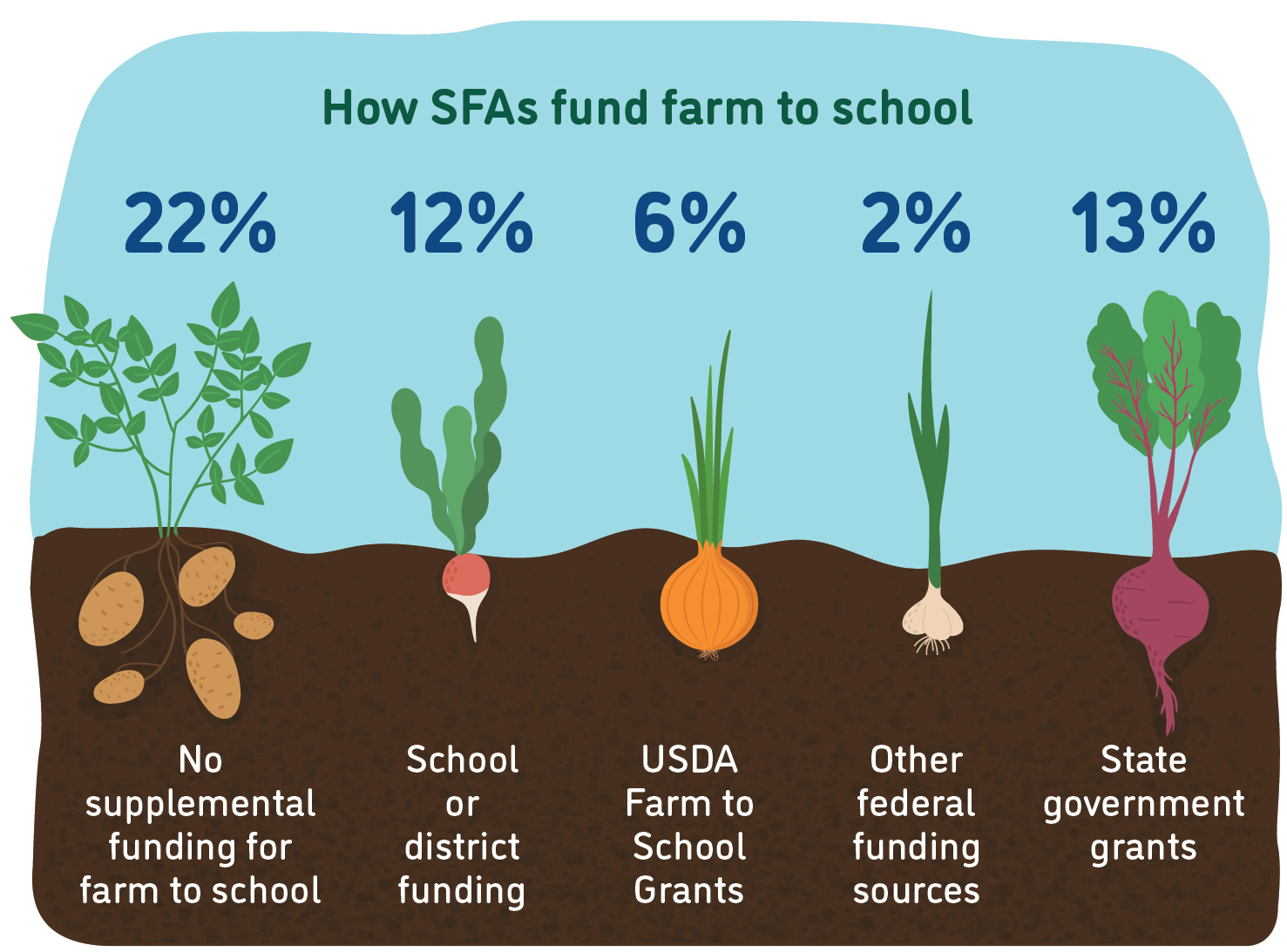
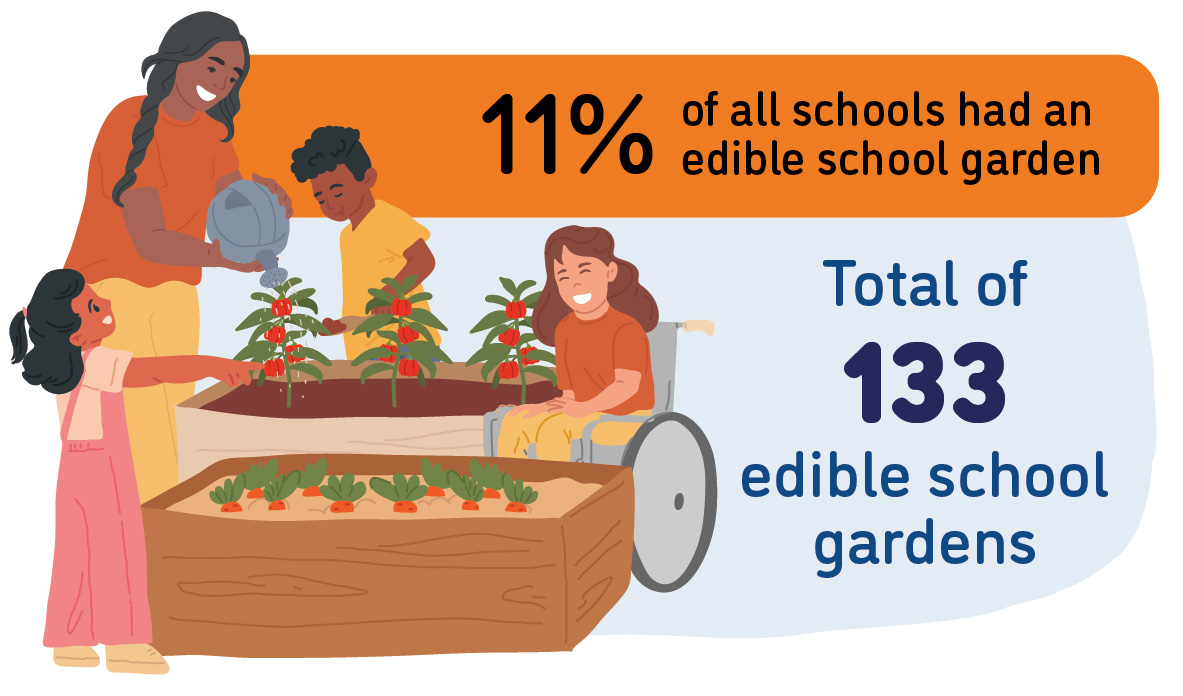
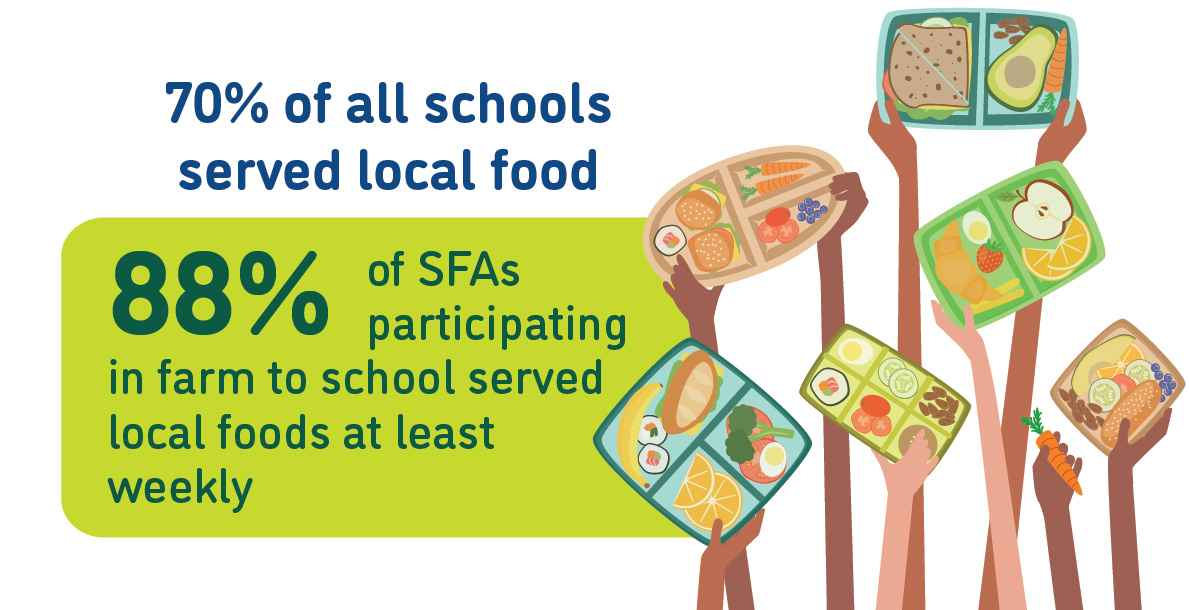
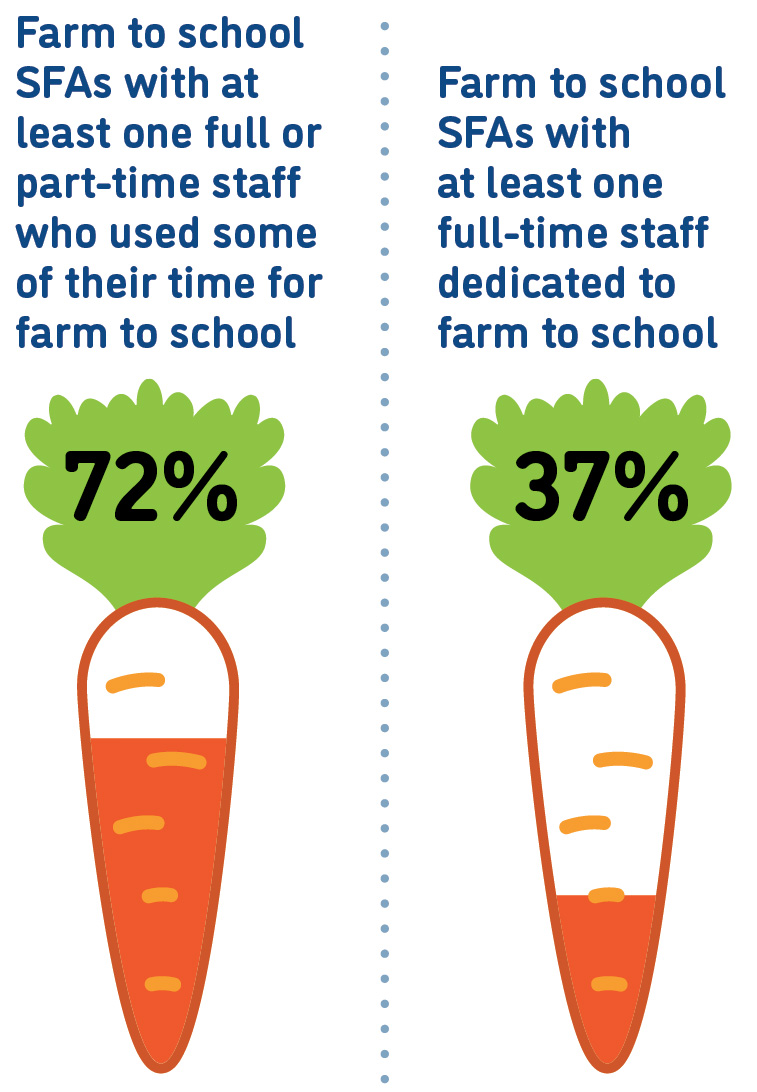
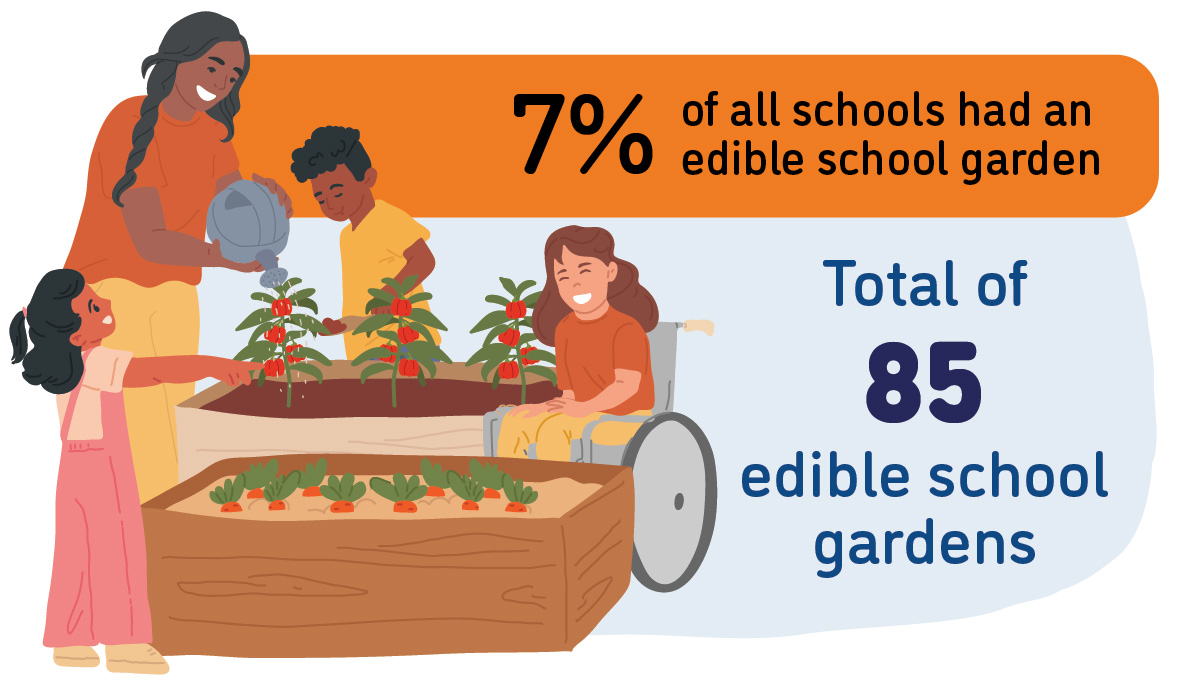
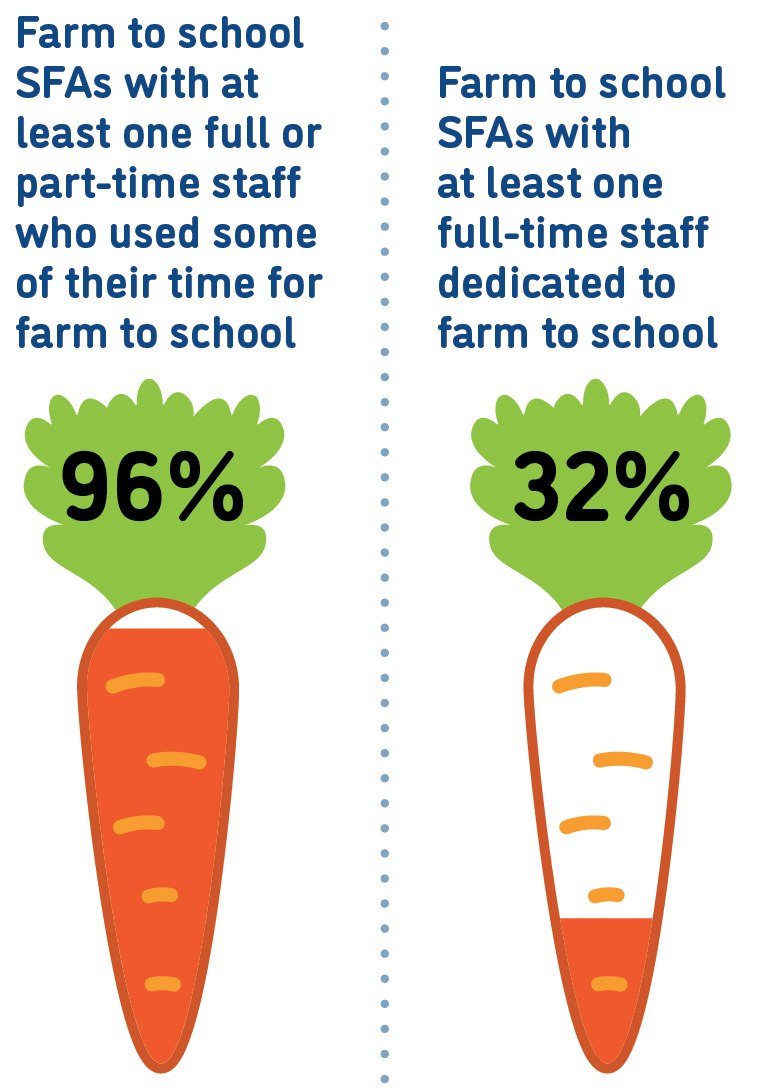
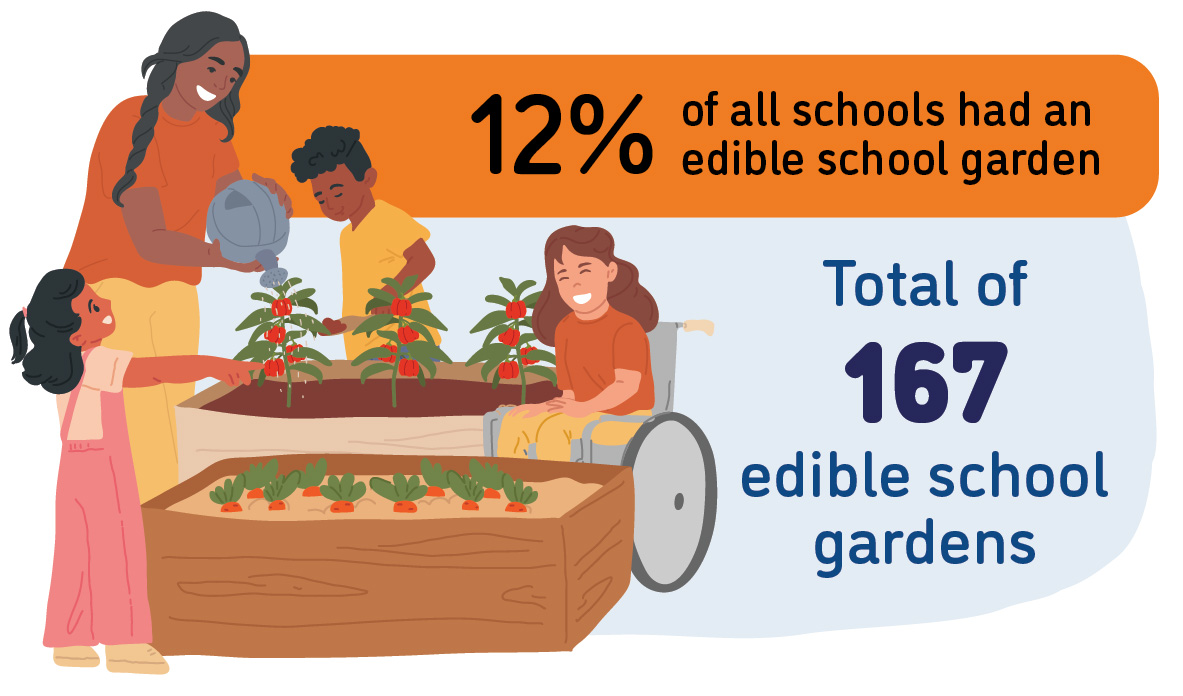
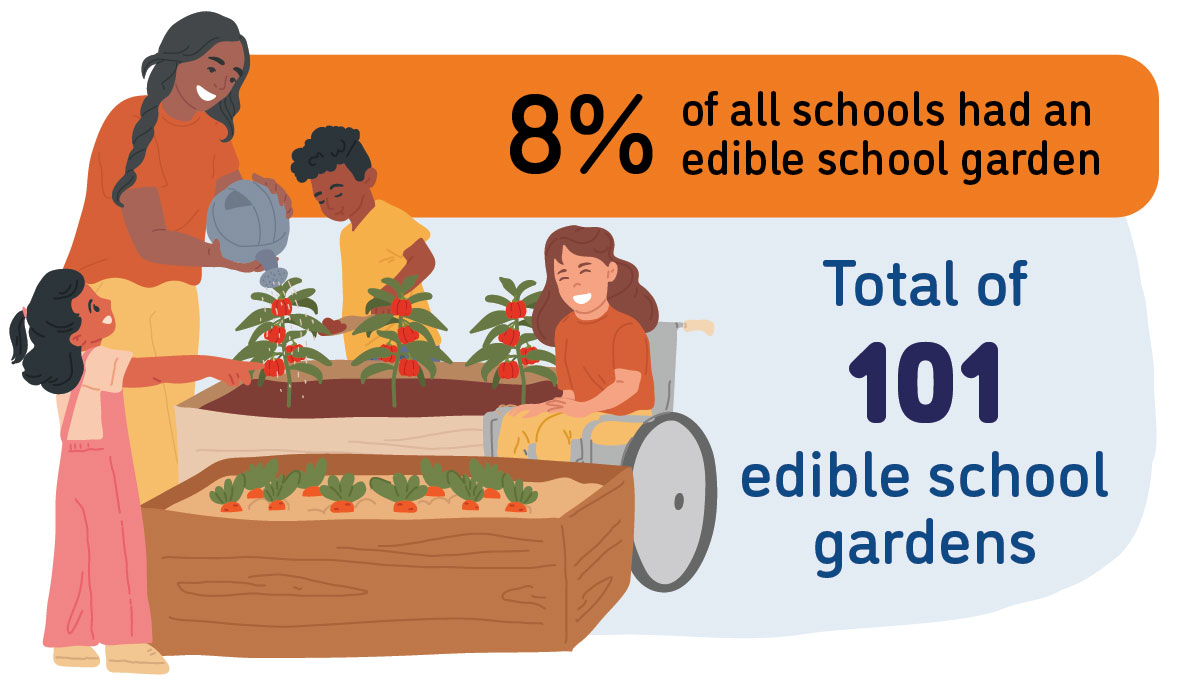
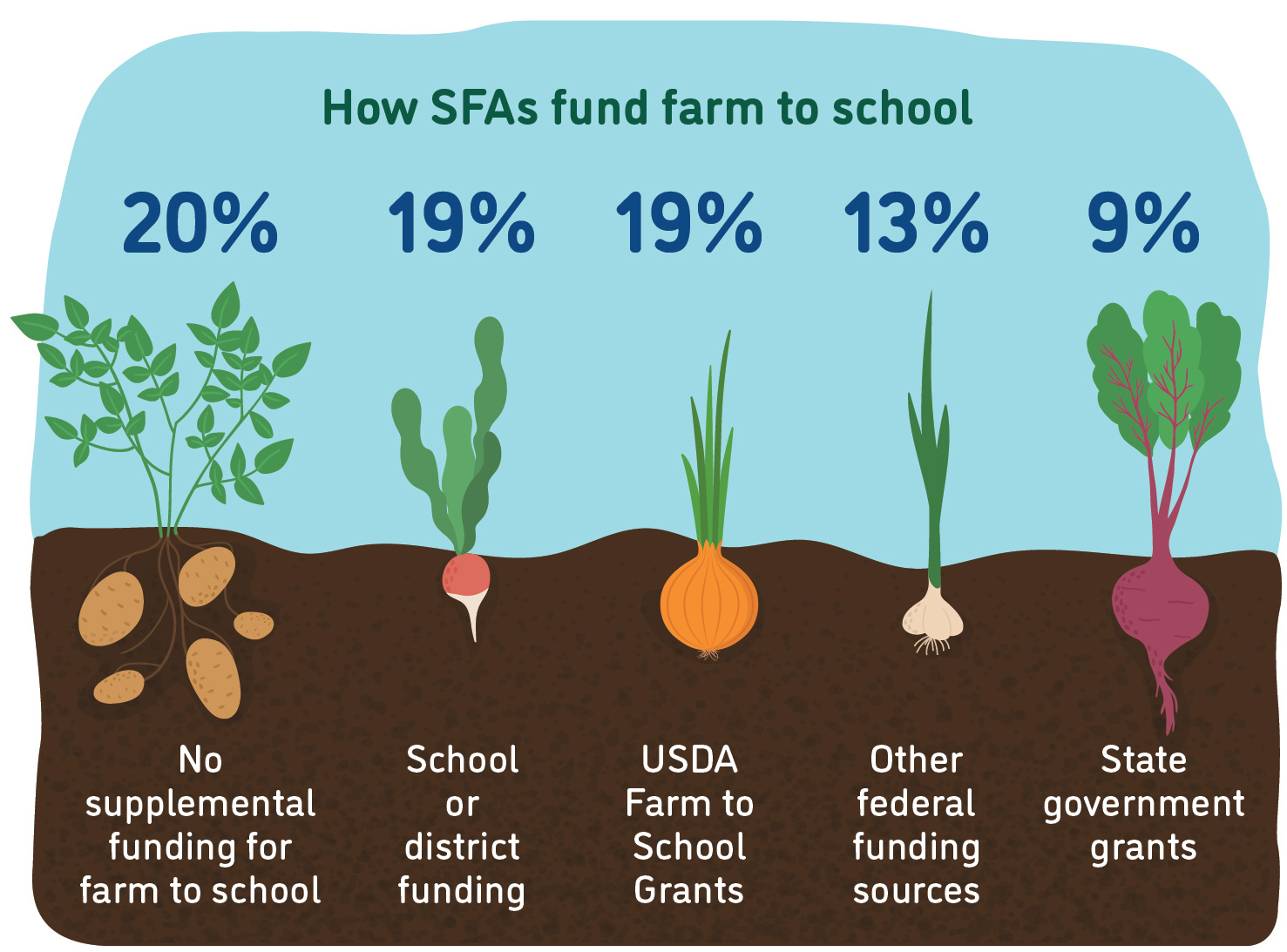
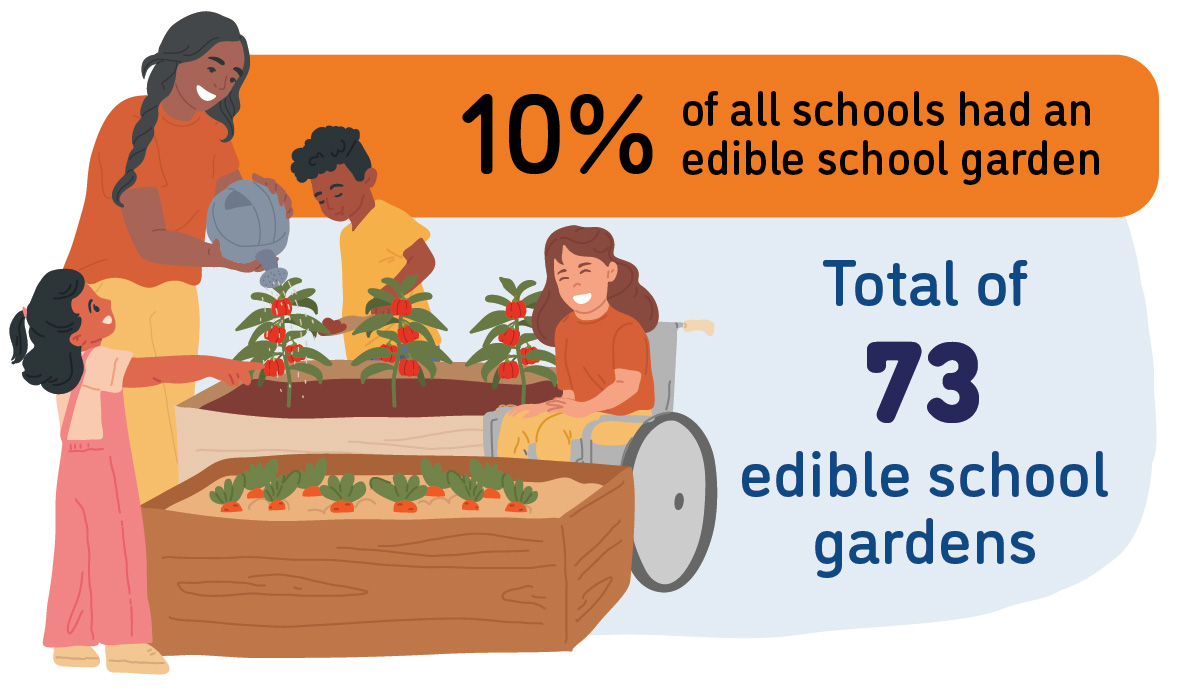
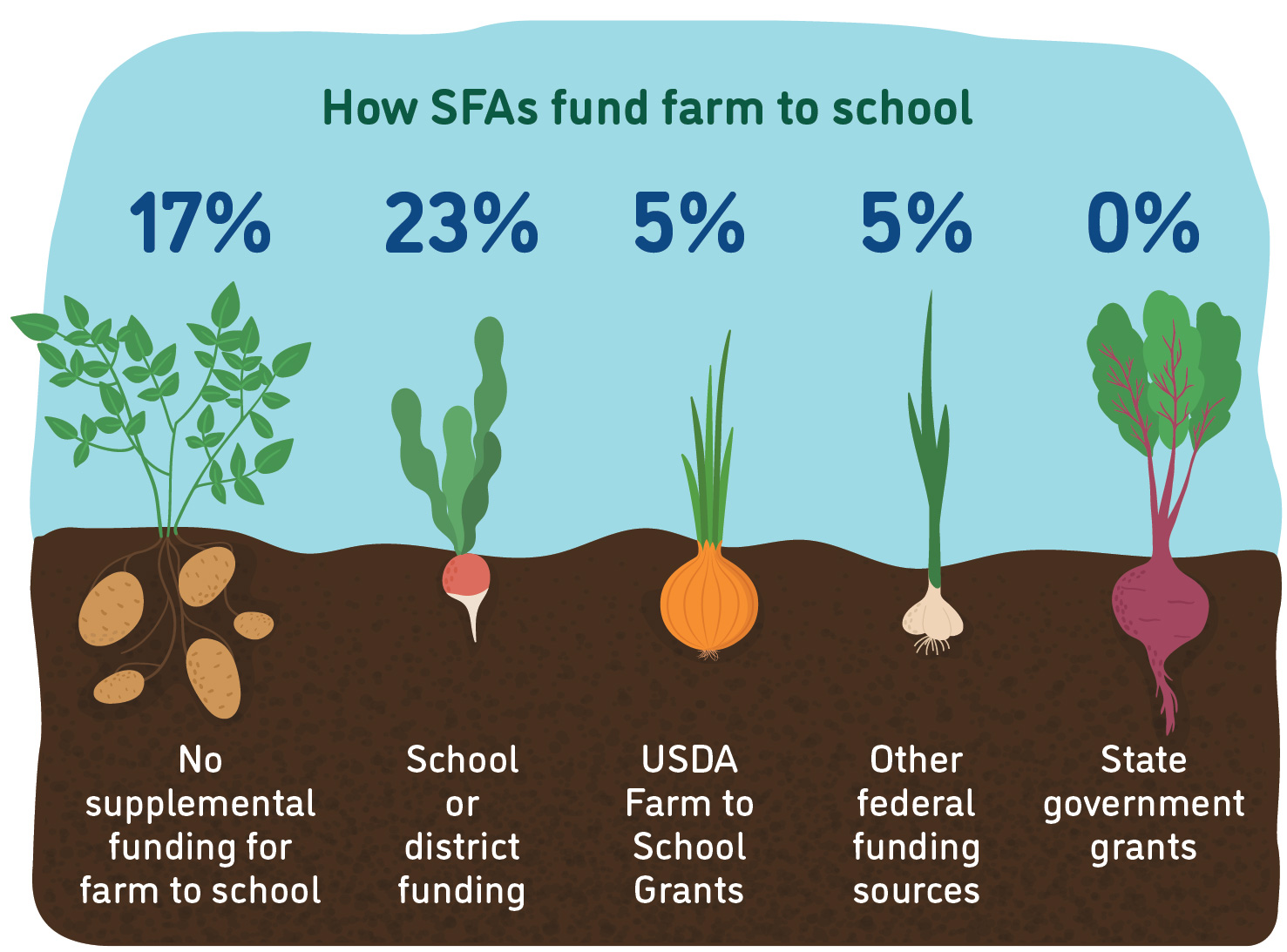
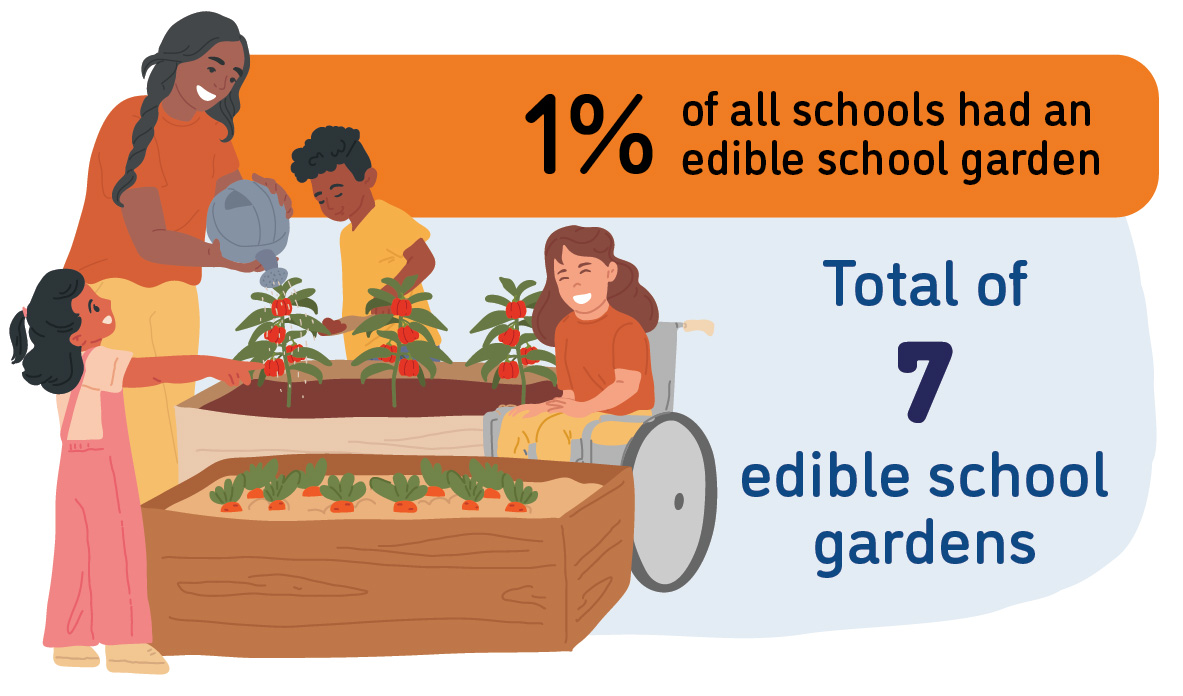
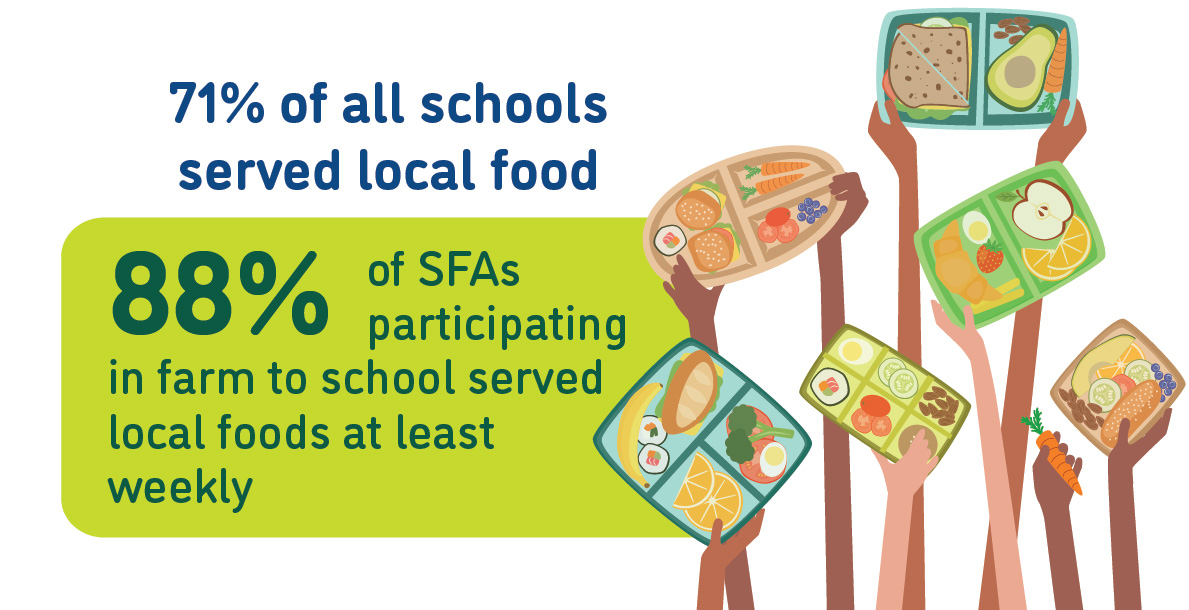
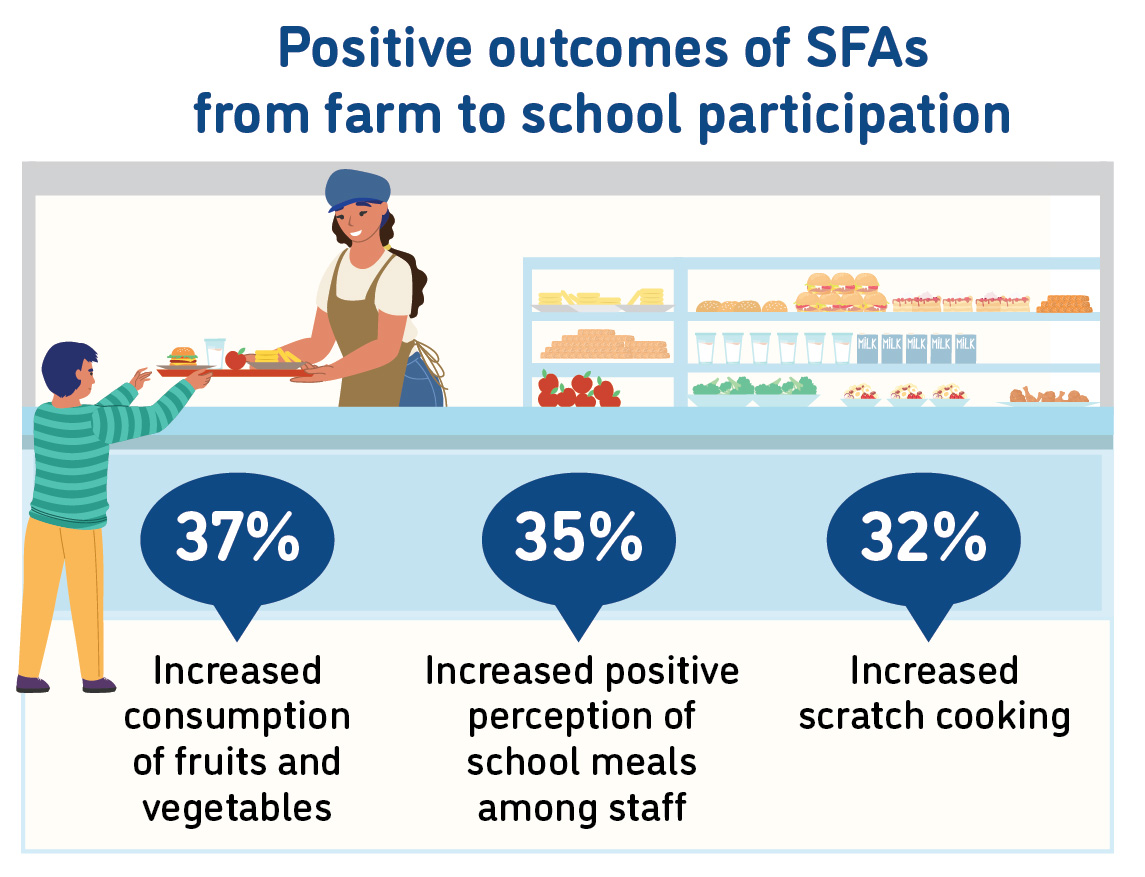
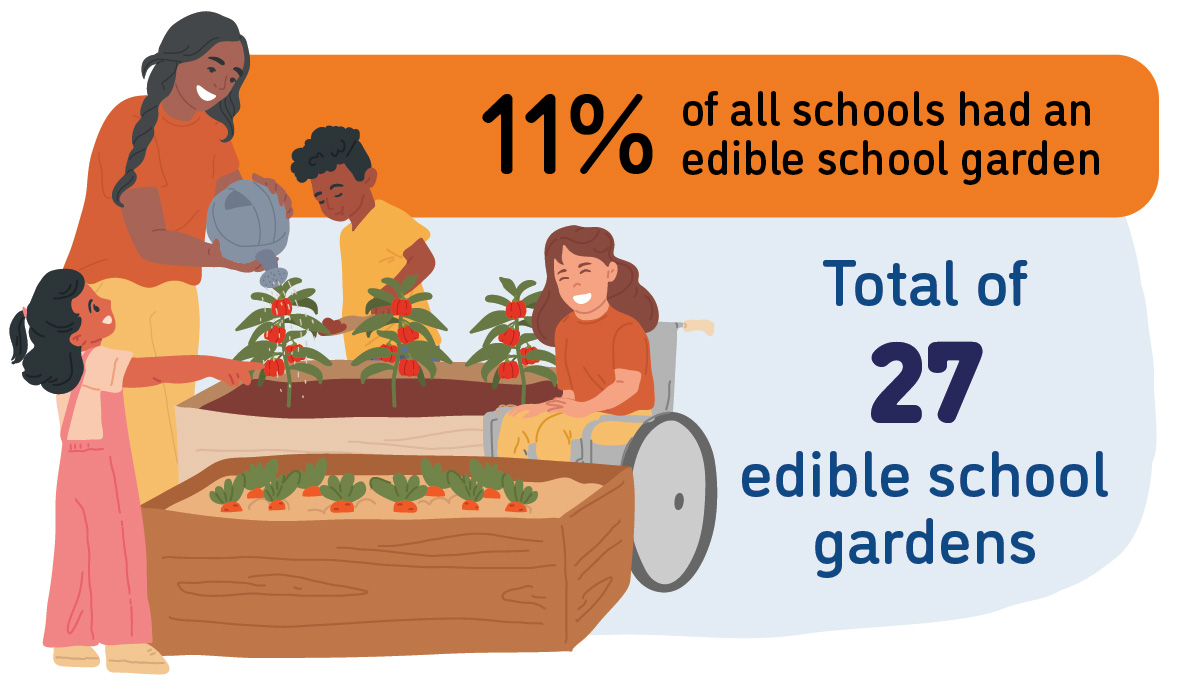
2023 Farm to School Census
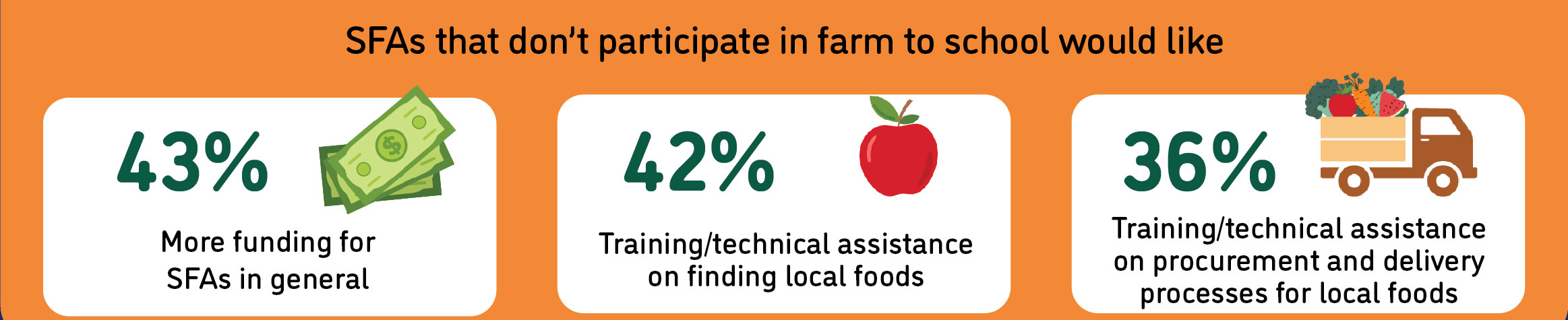
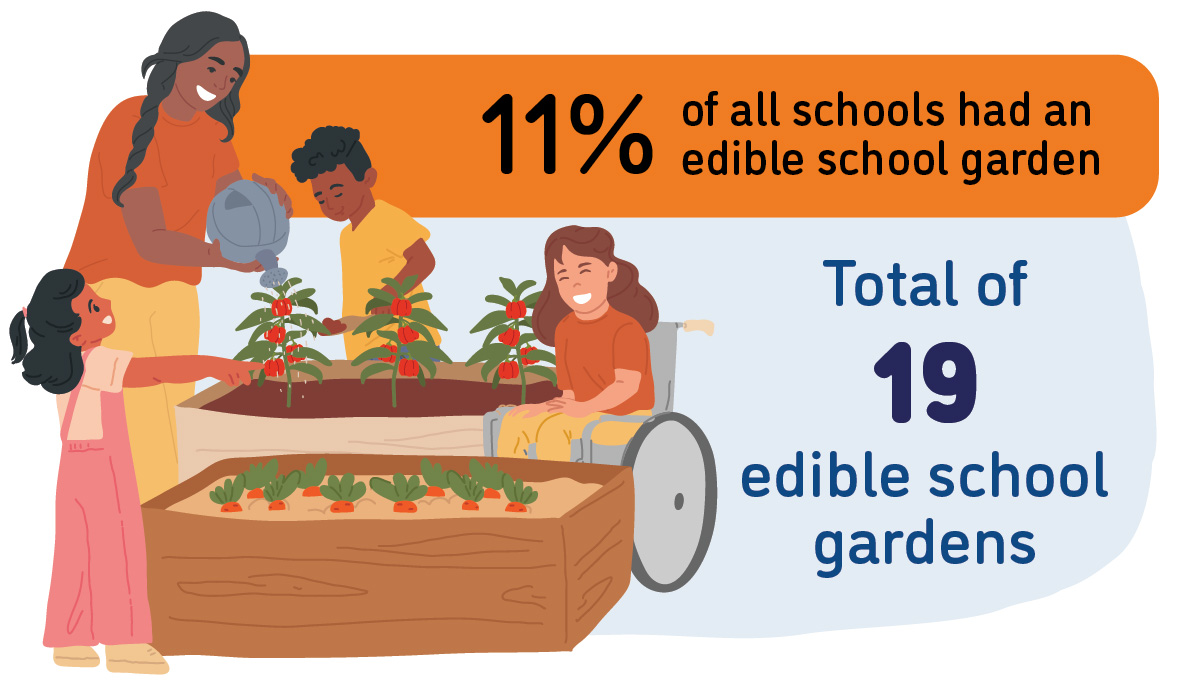
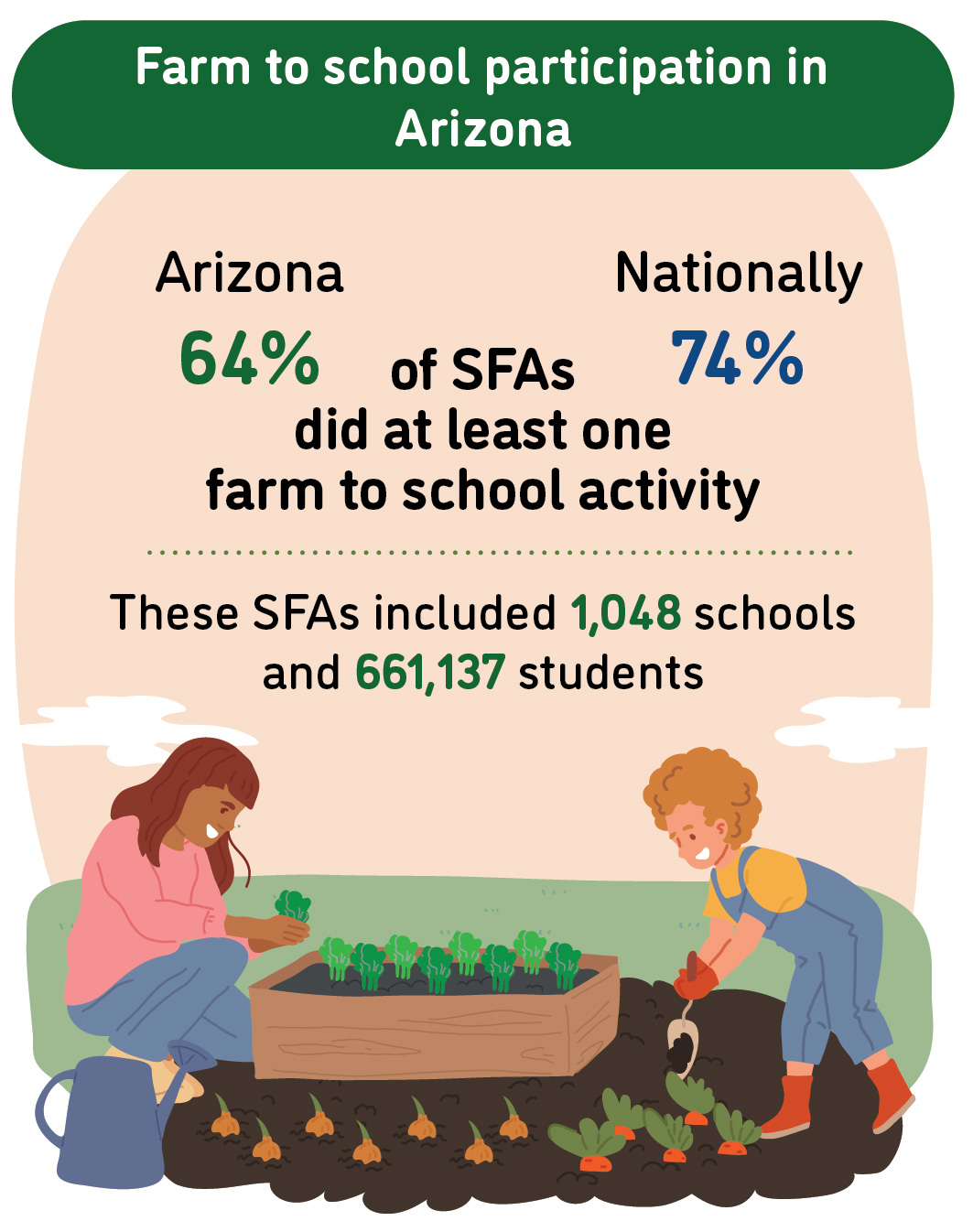
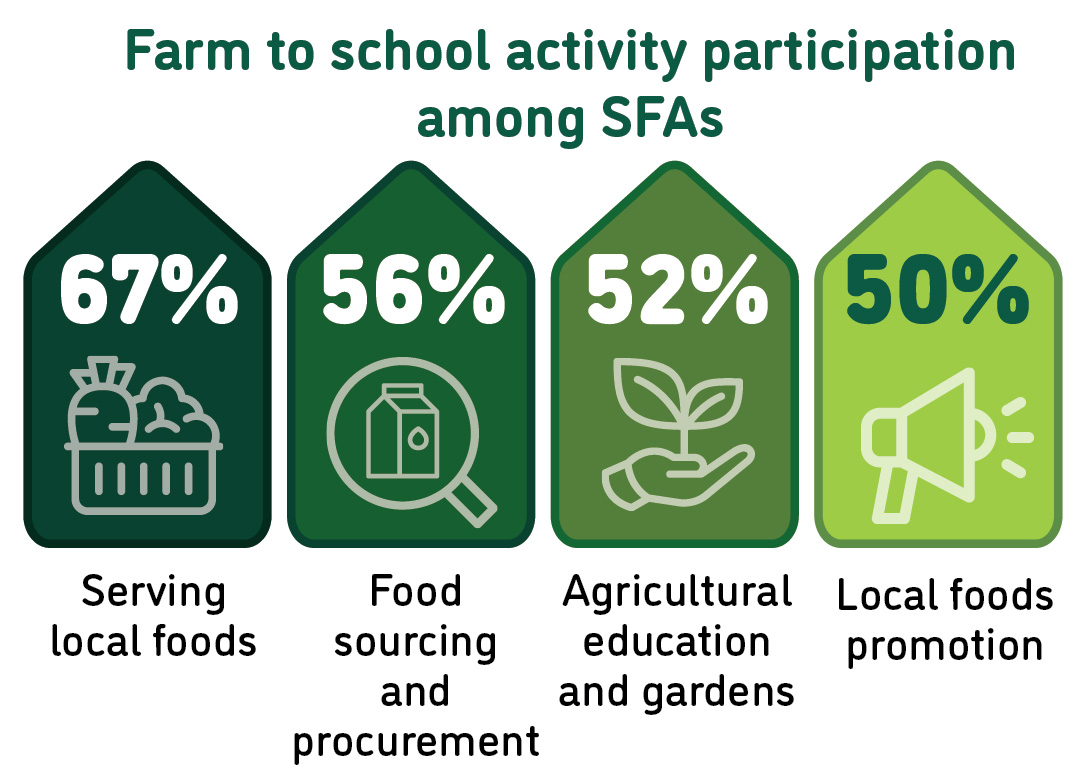
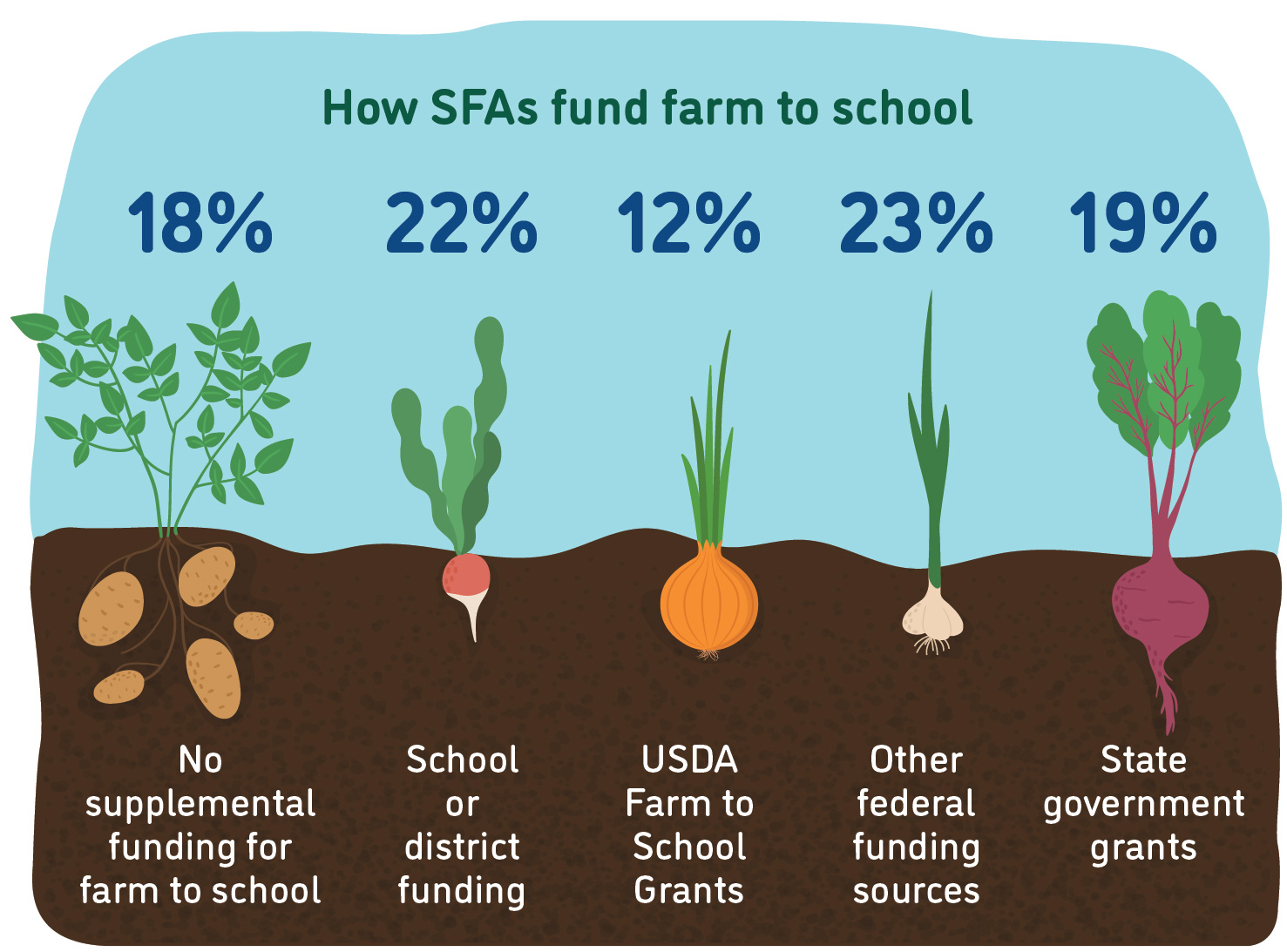
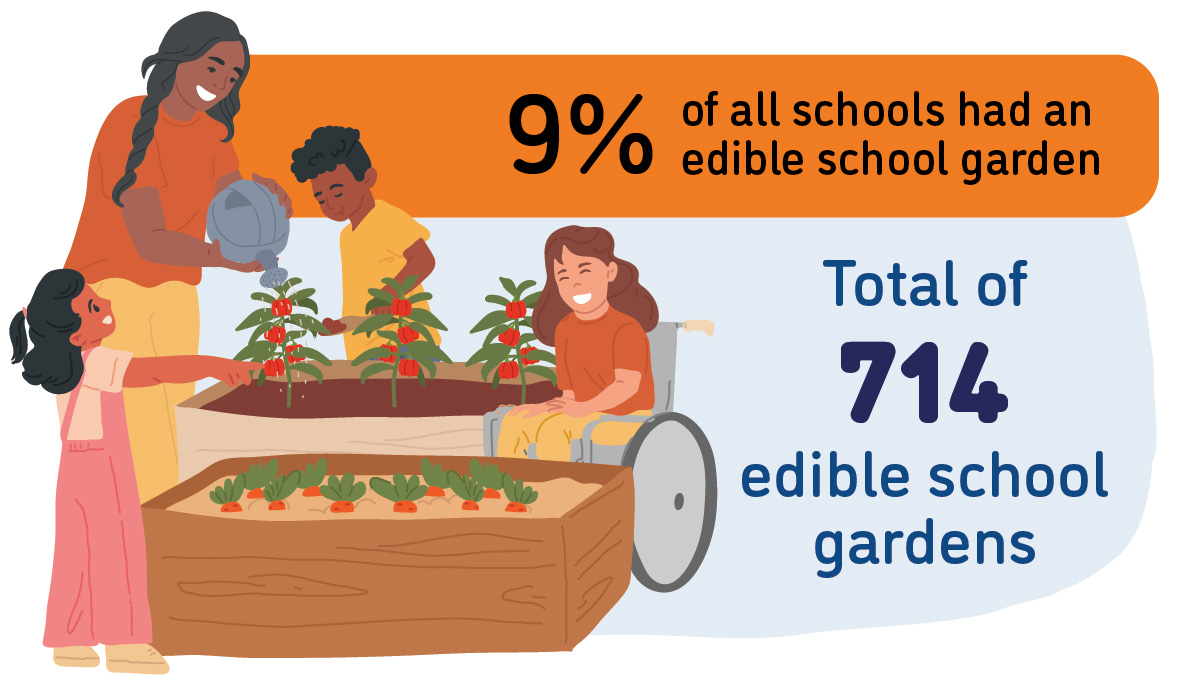
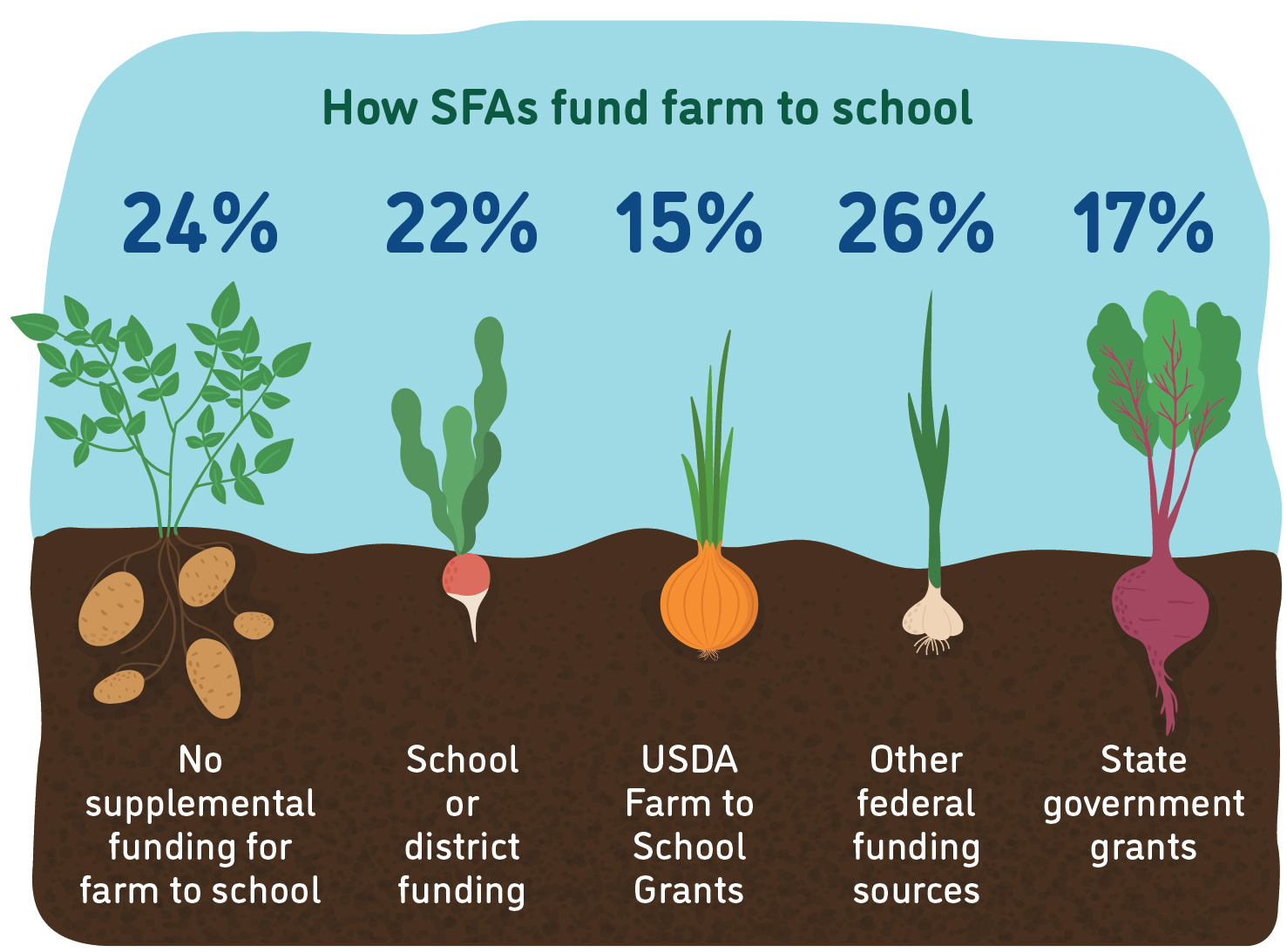
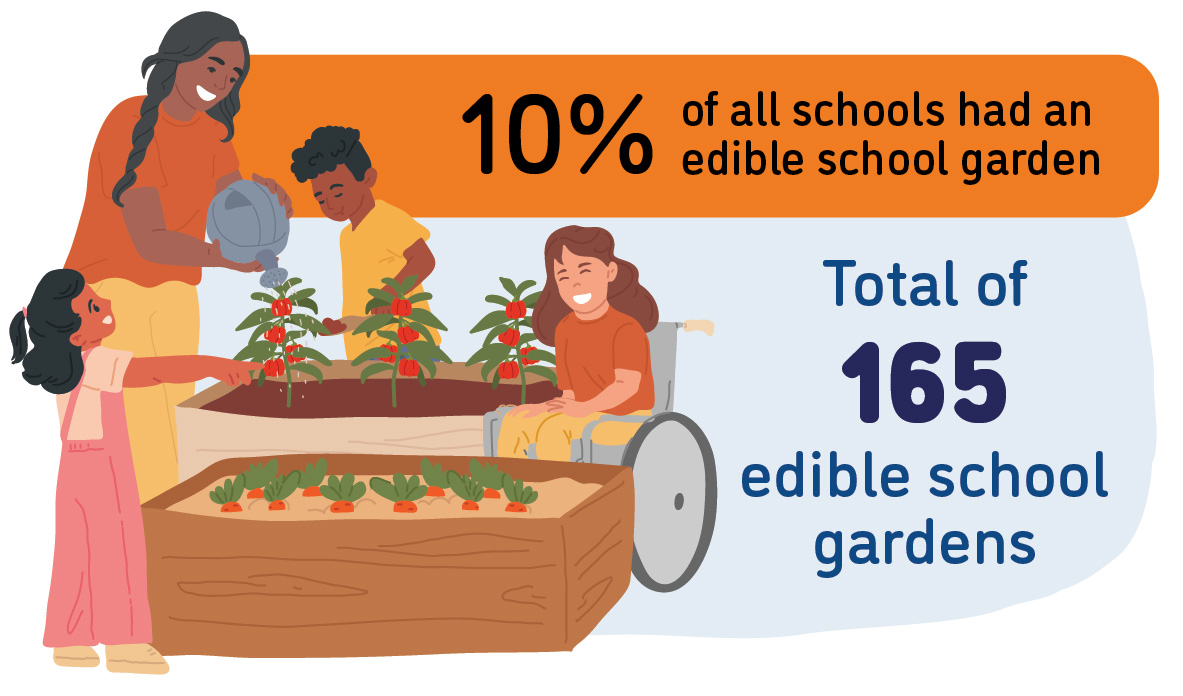
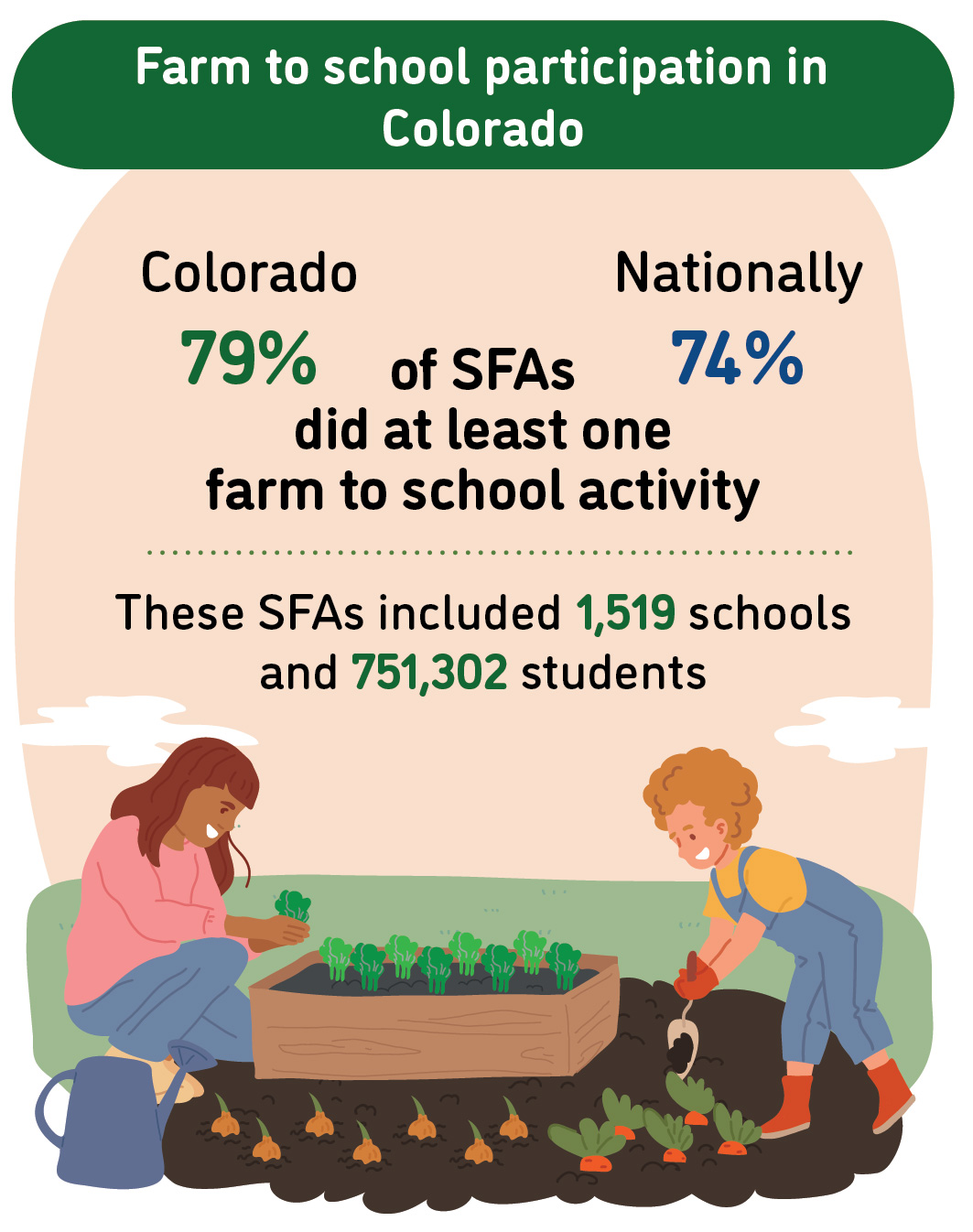
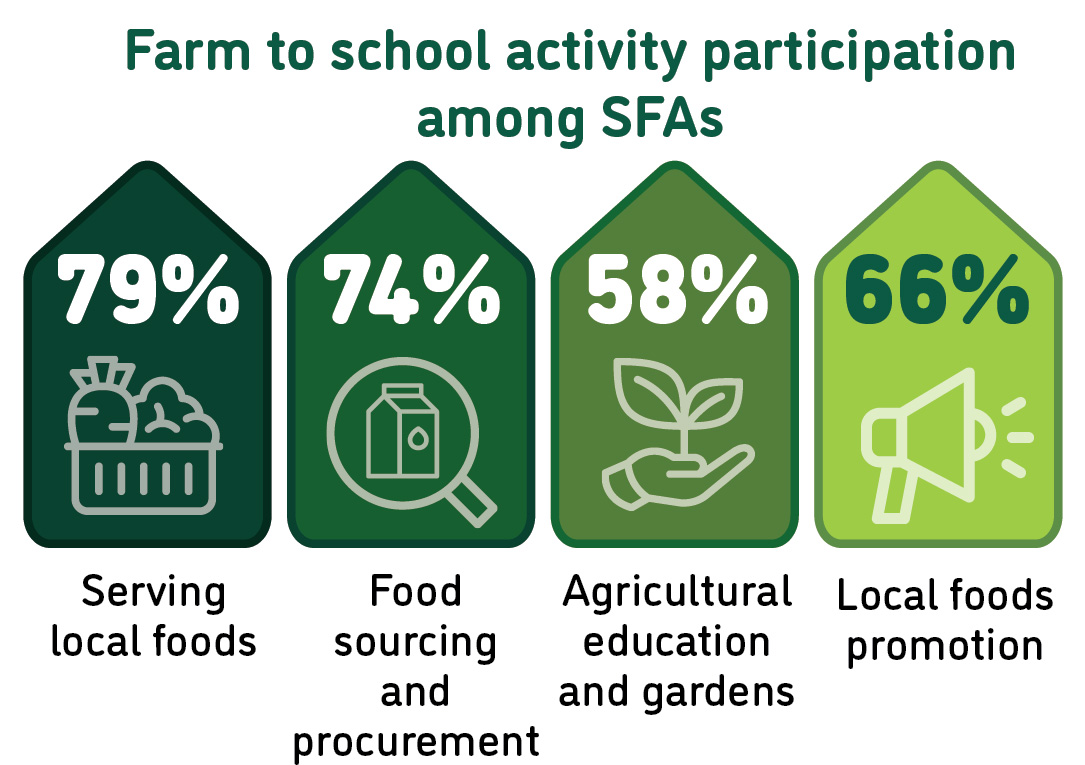
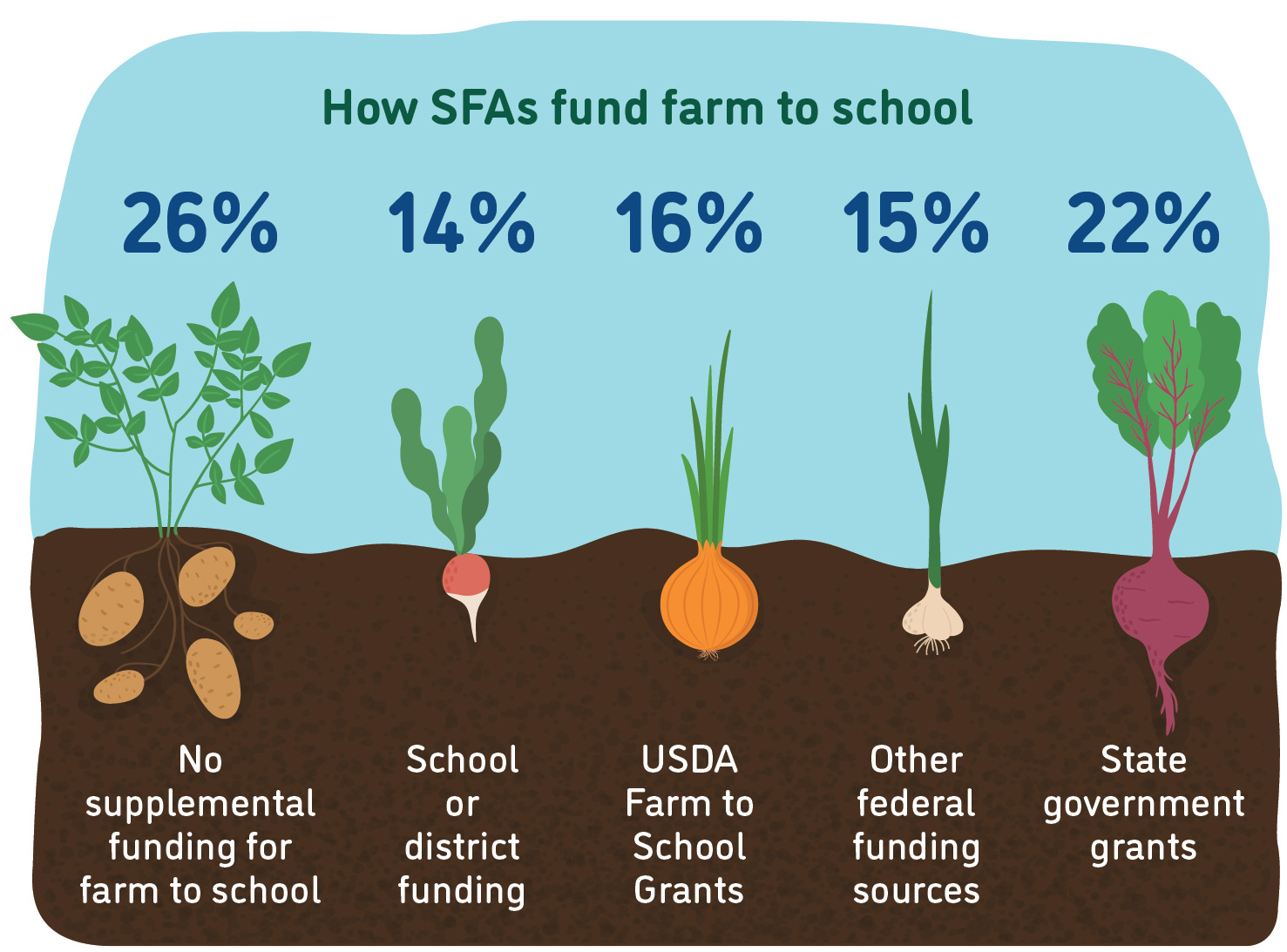
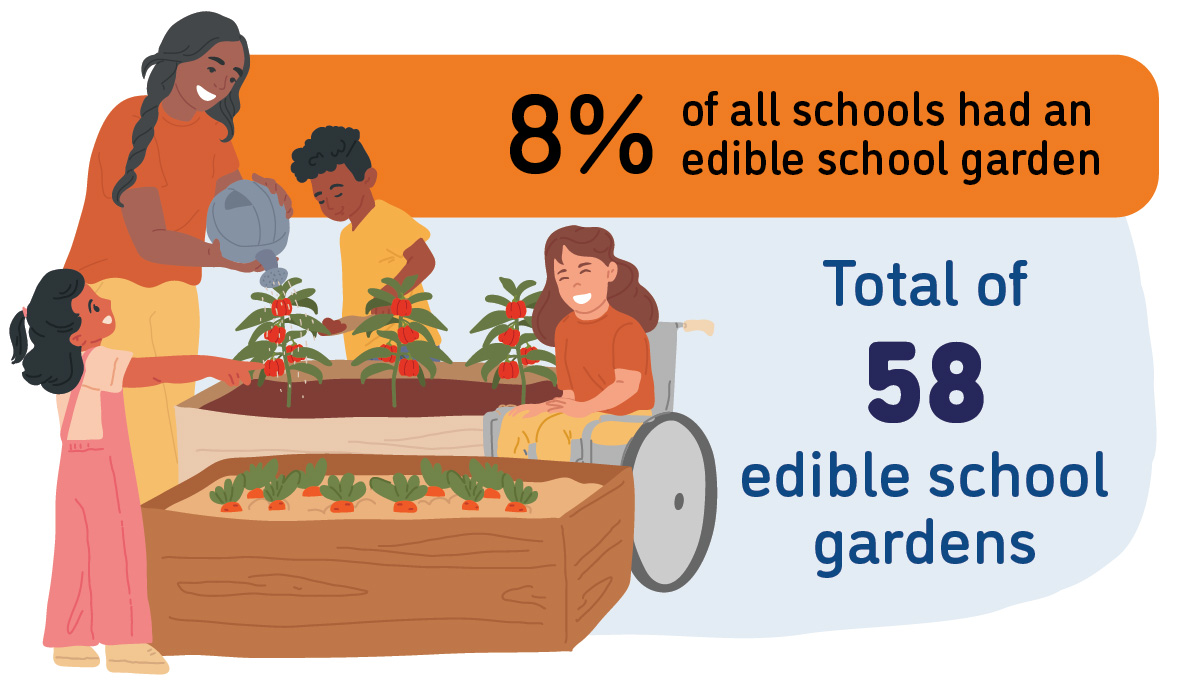
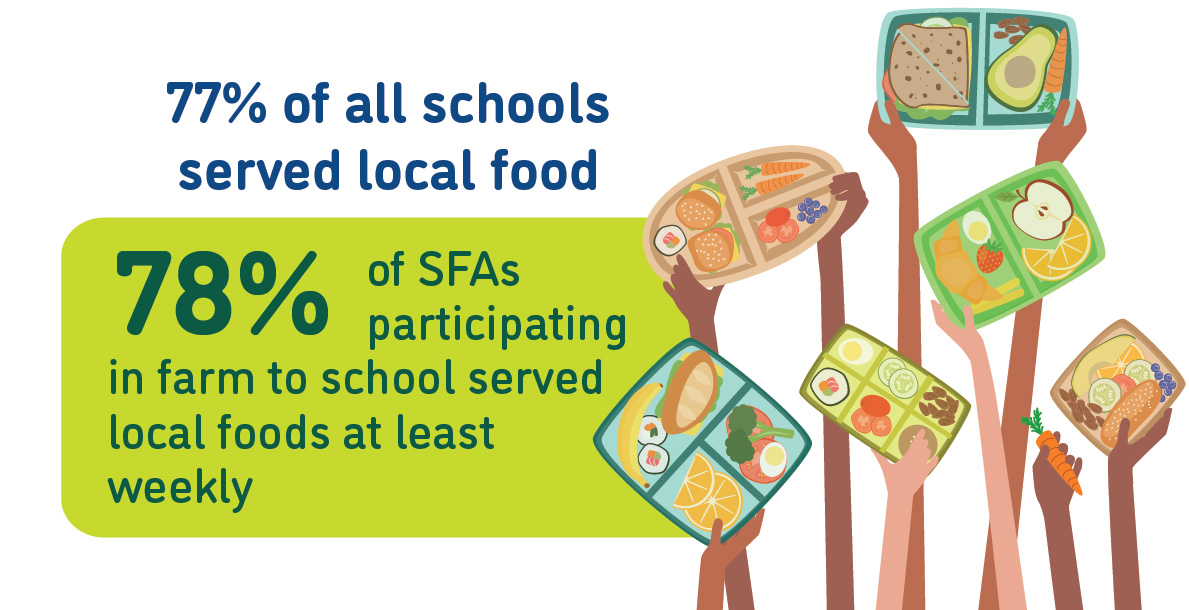
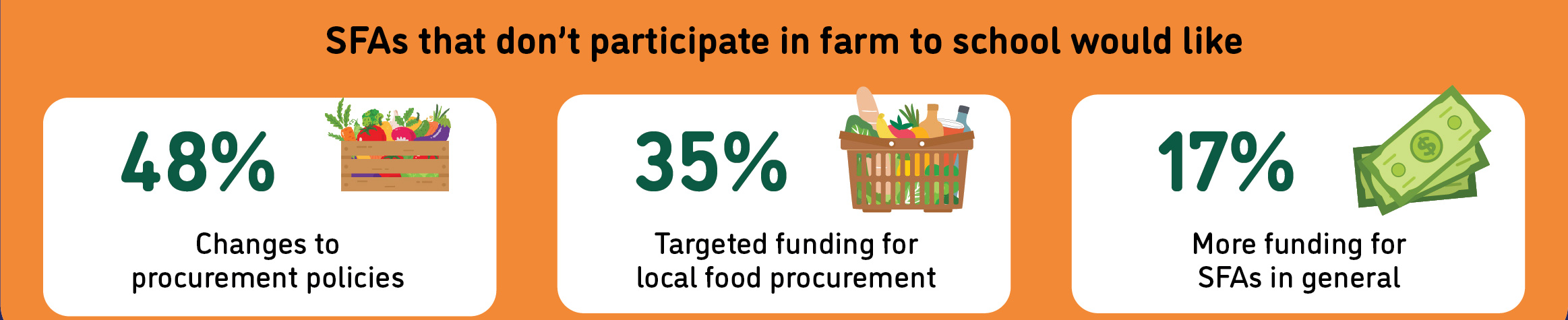
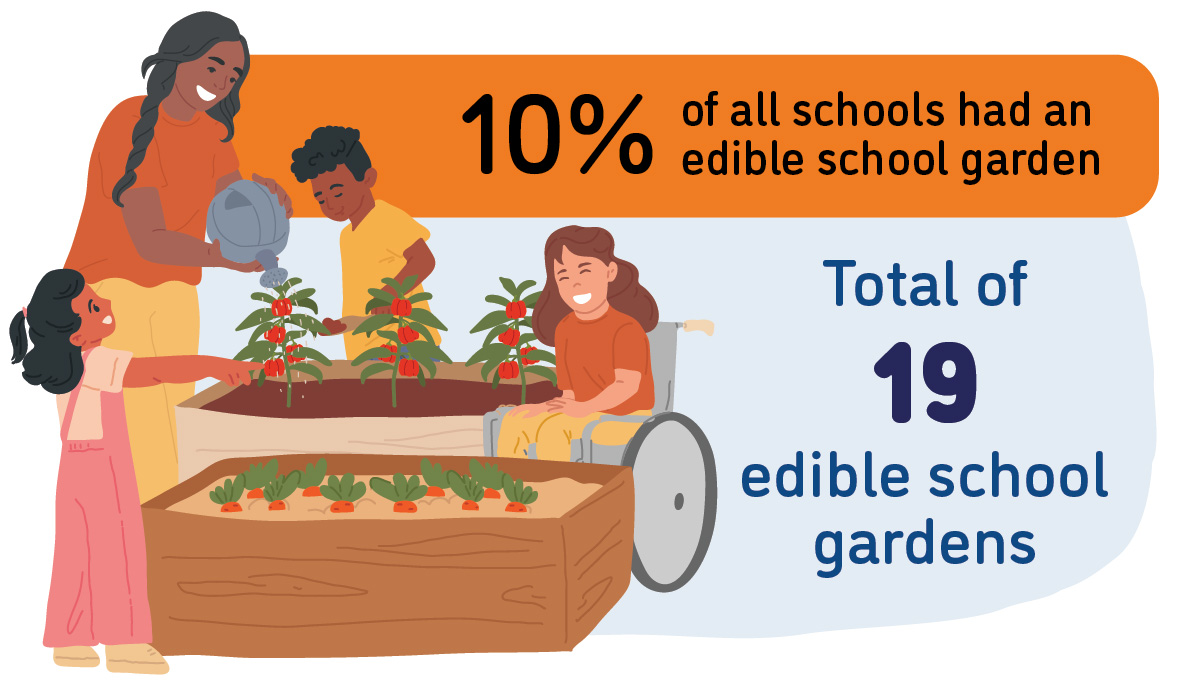
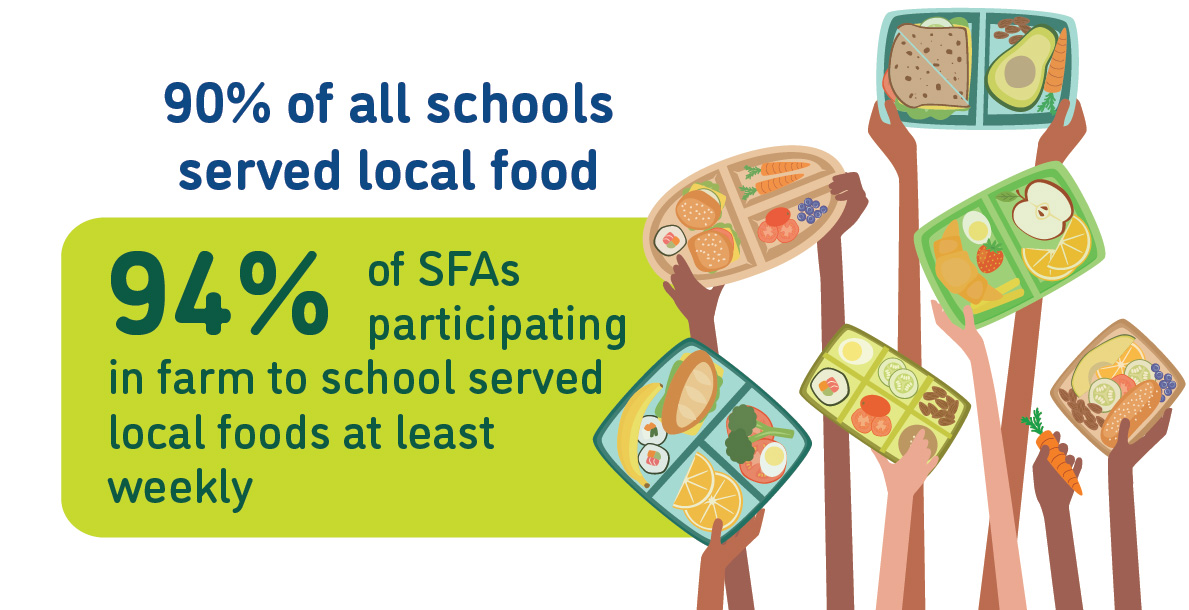
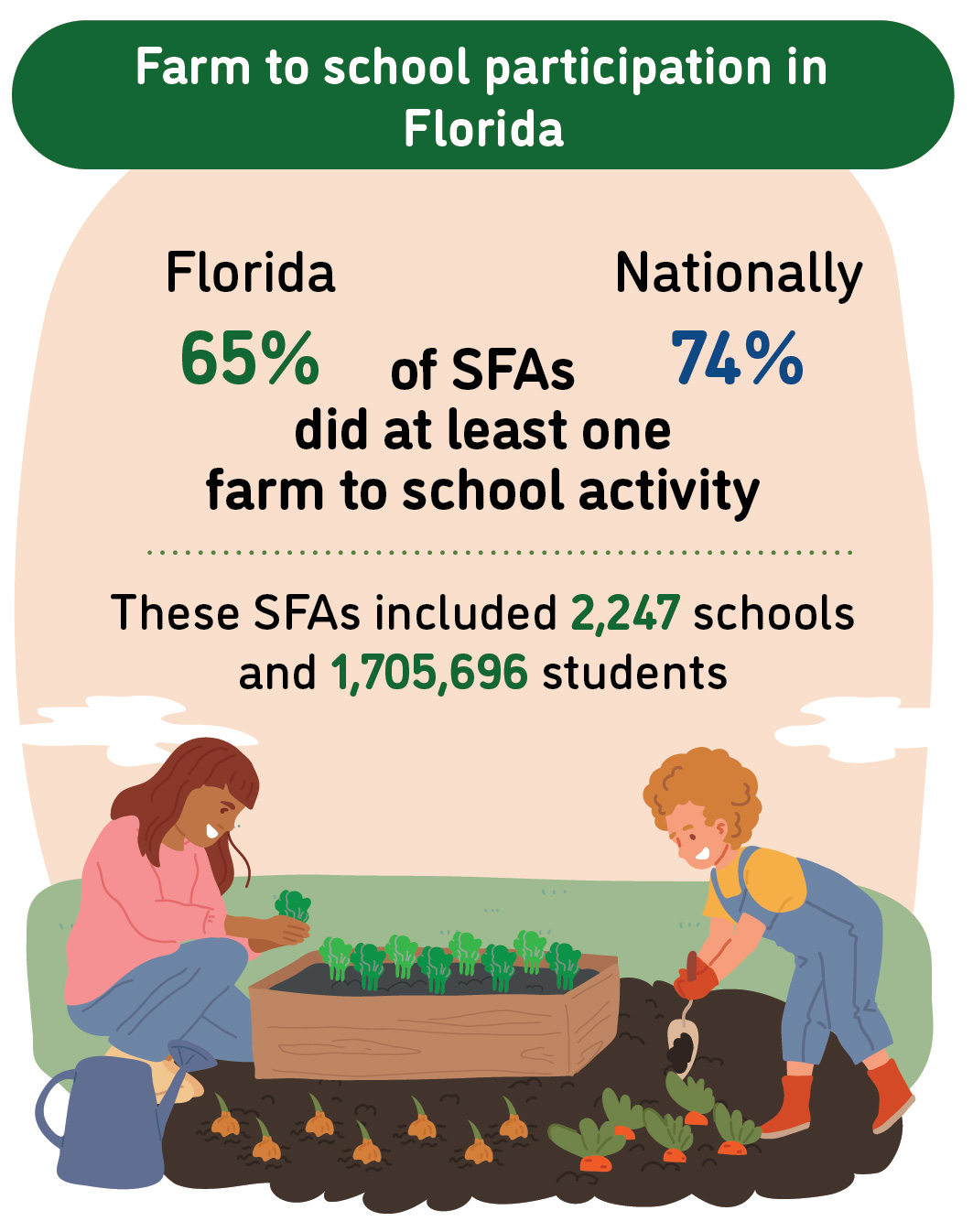
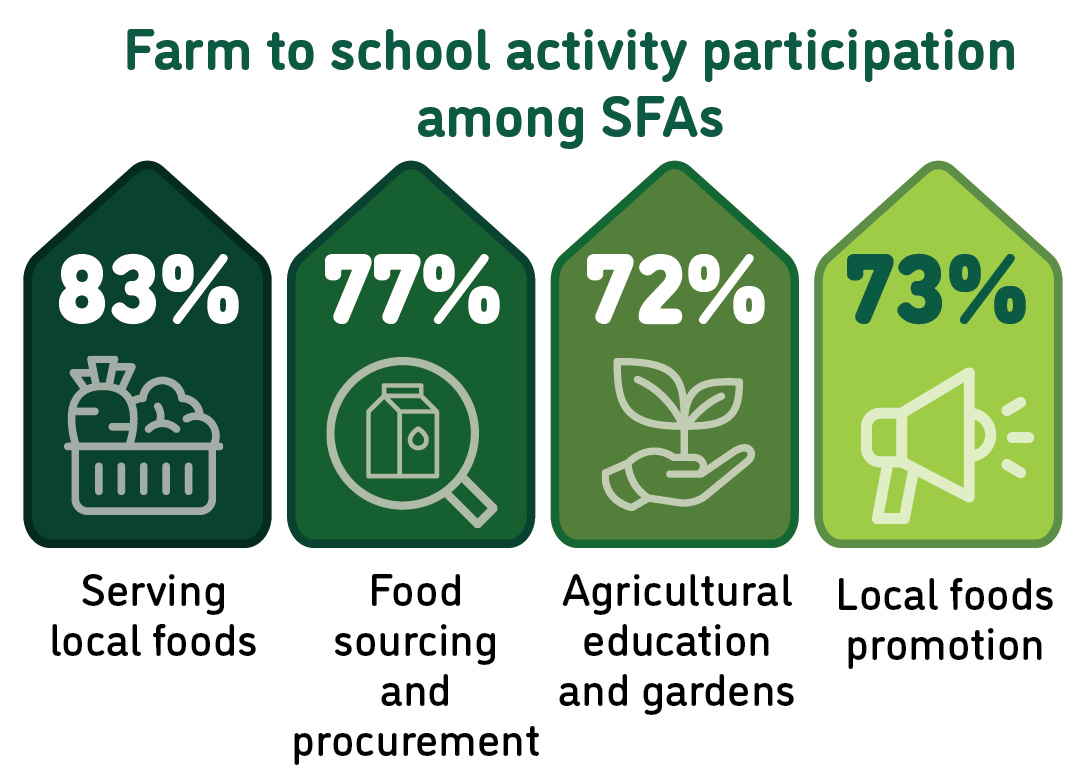
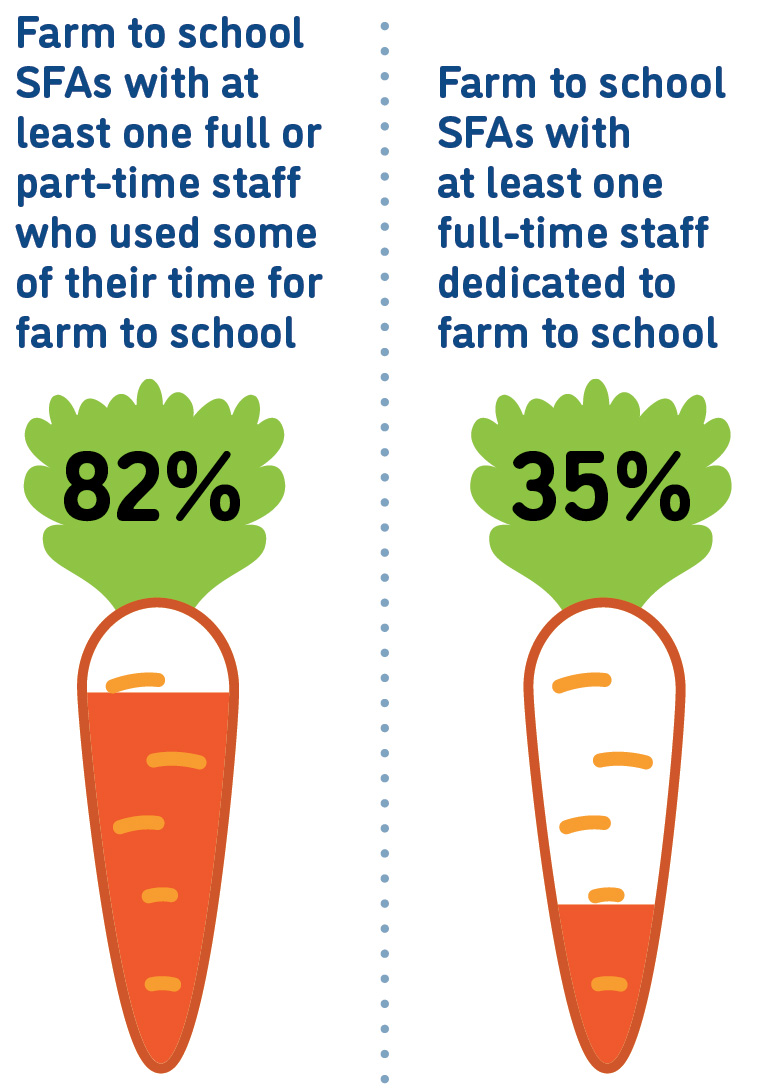
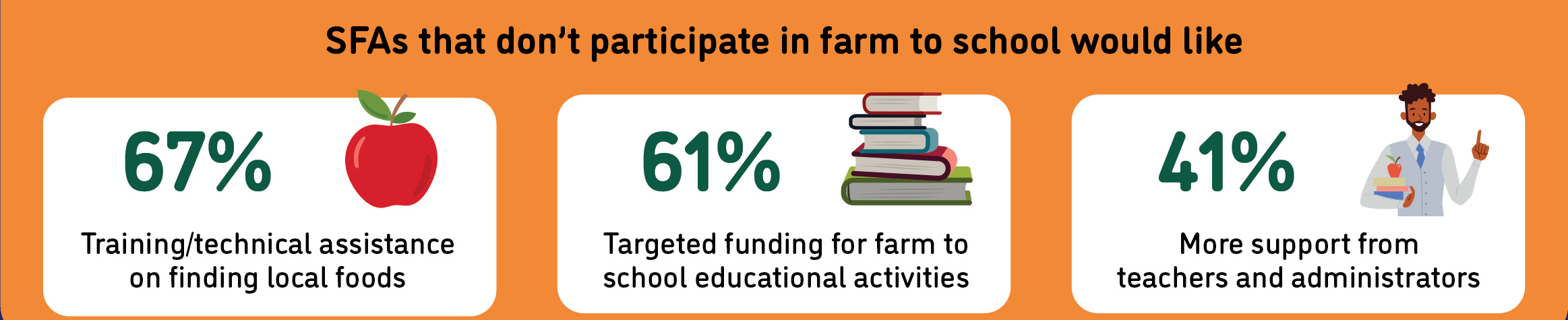
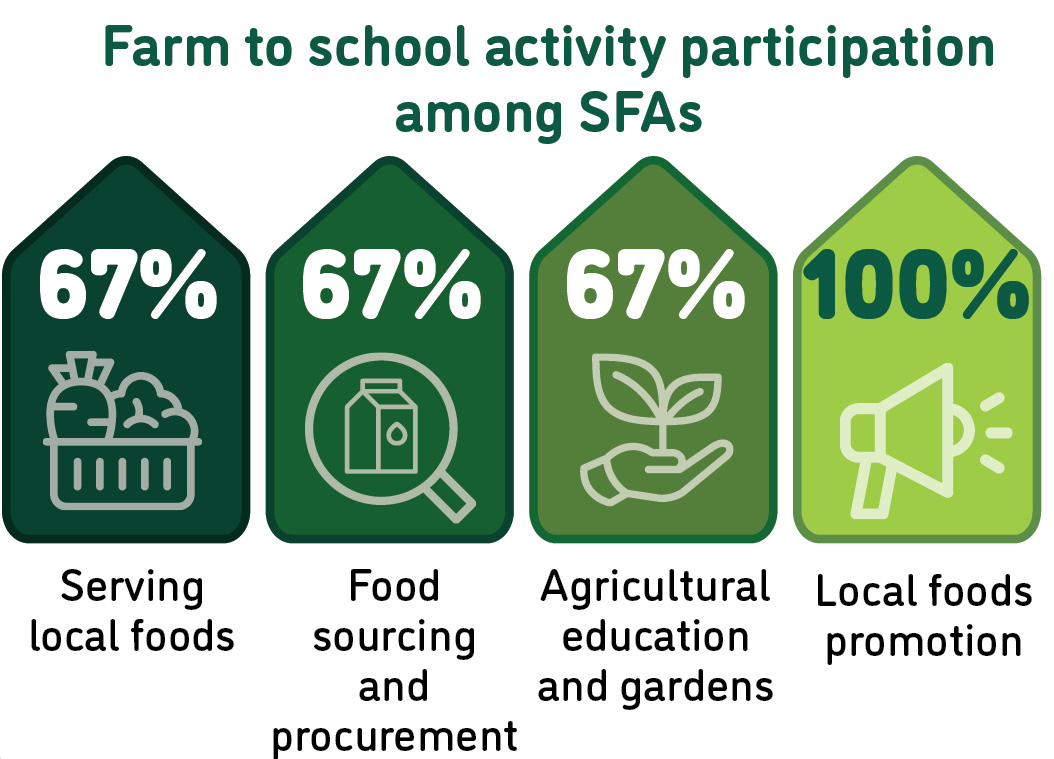
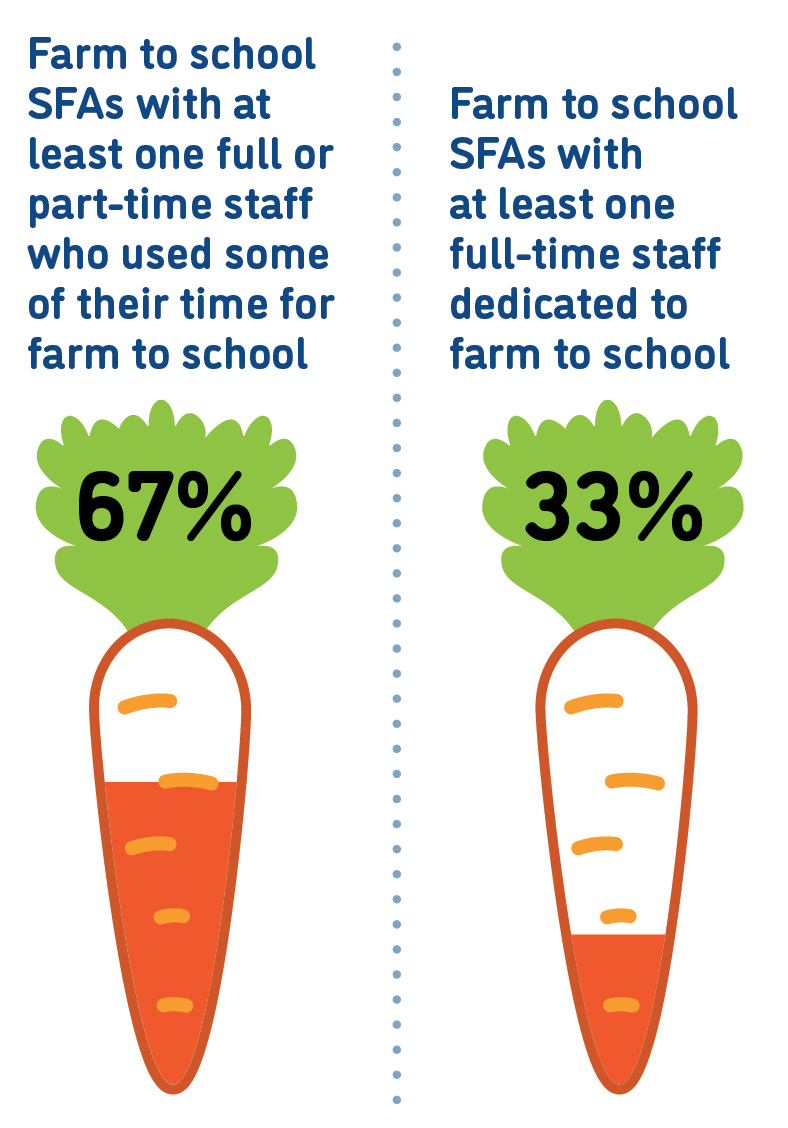
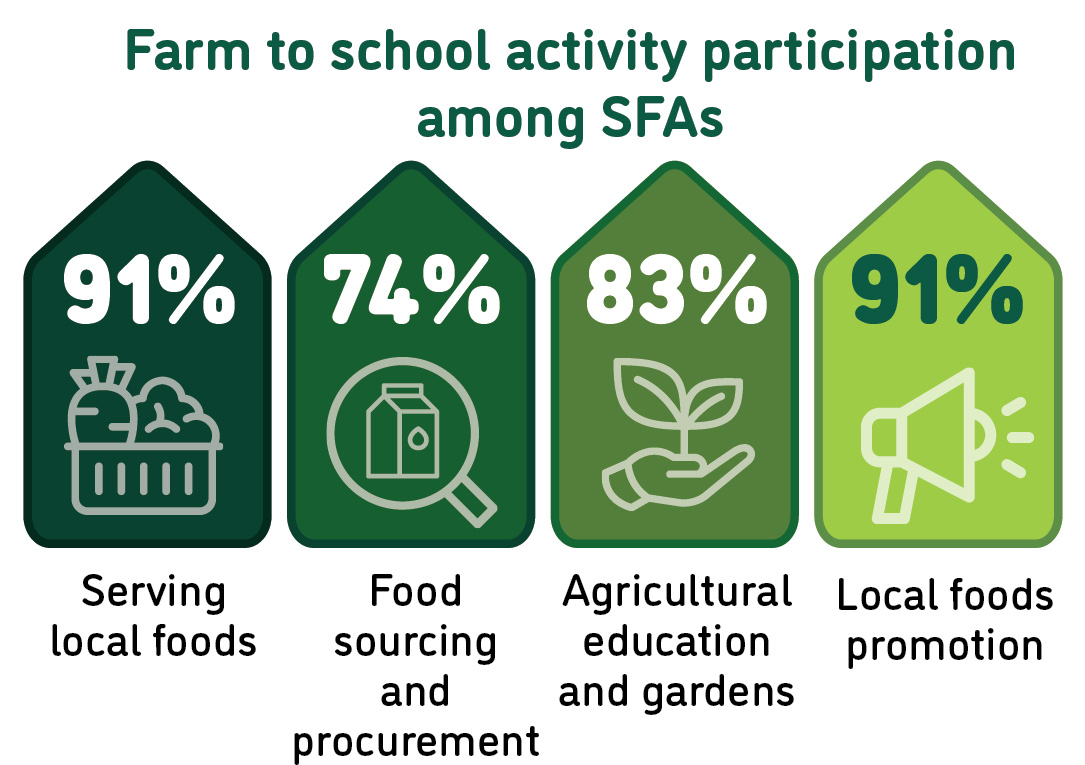
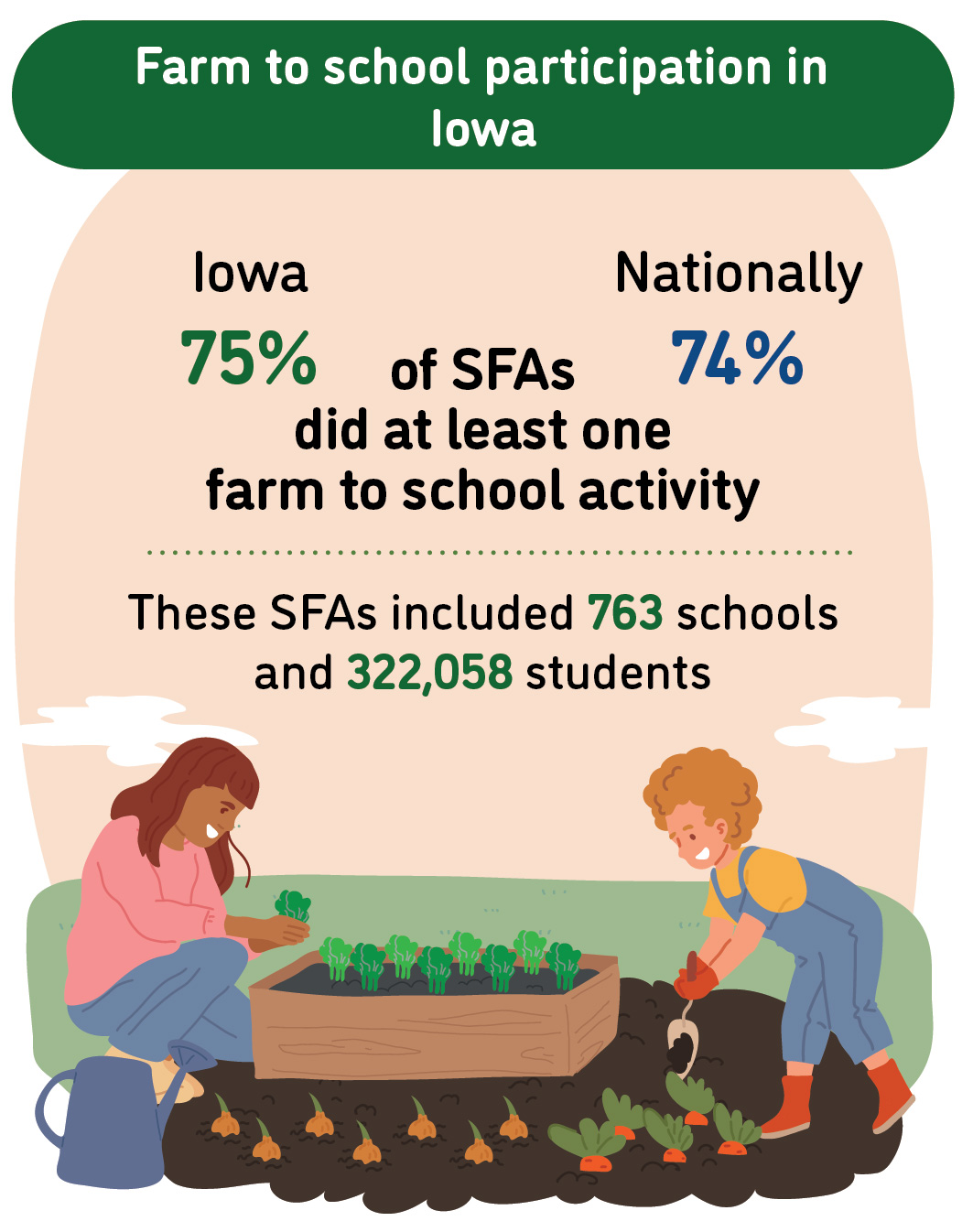
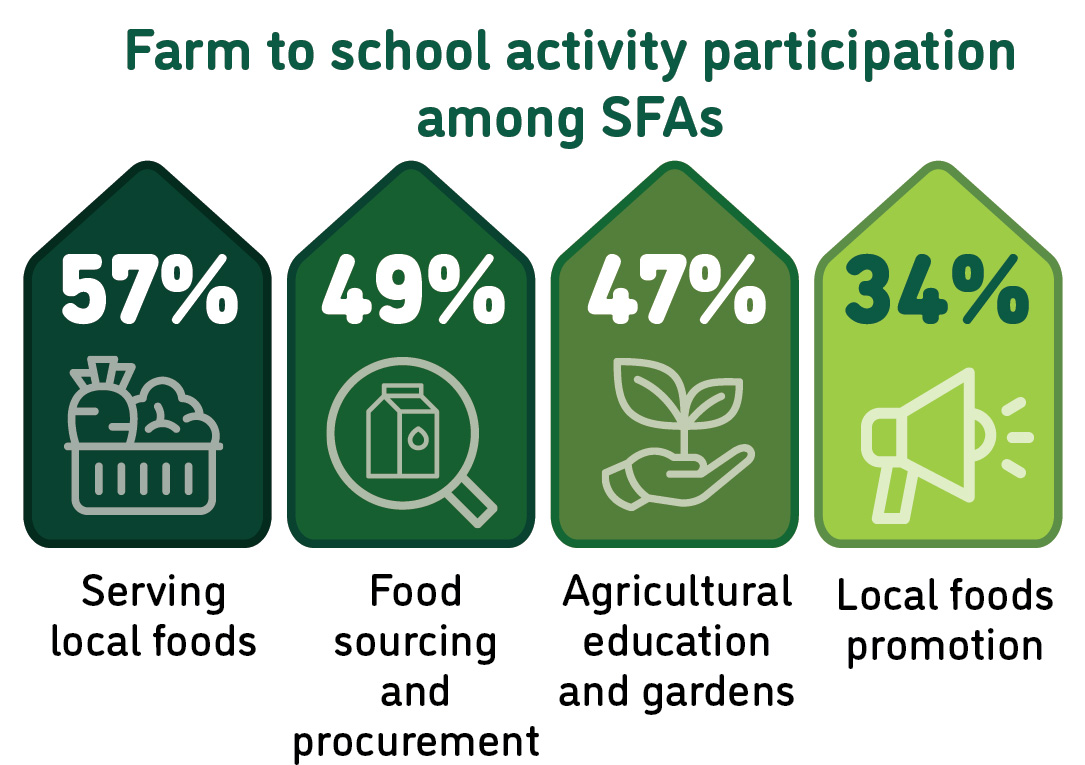
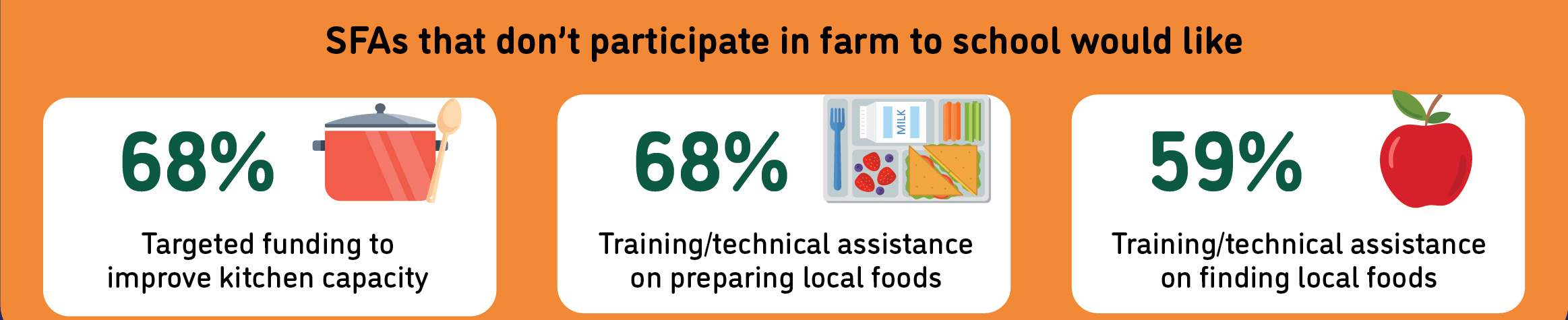
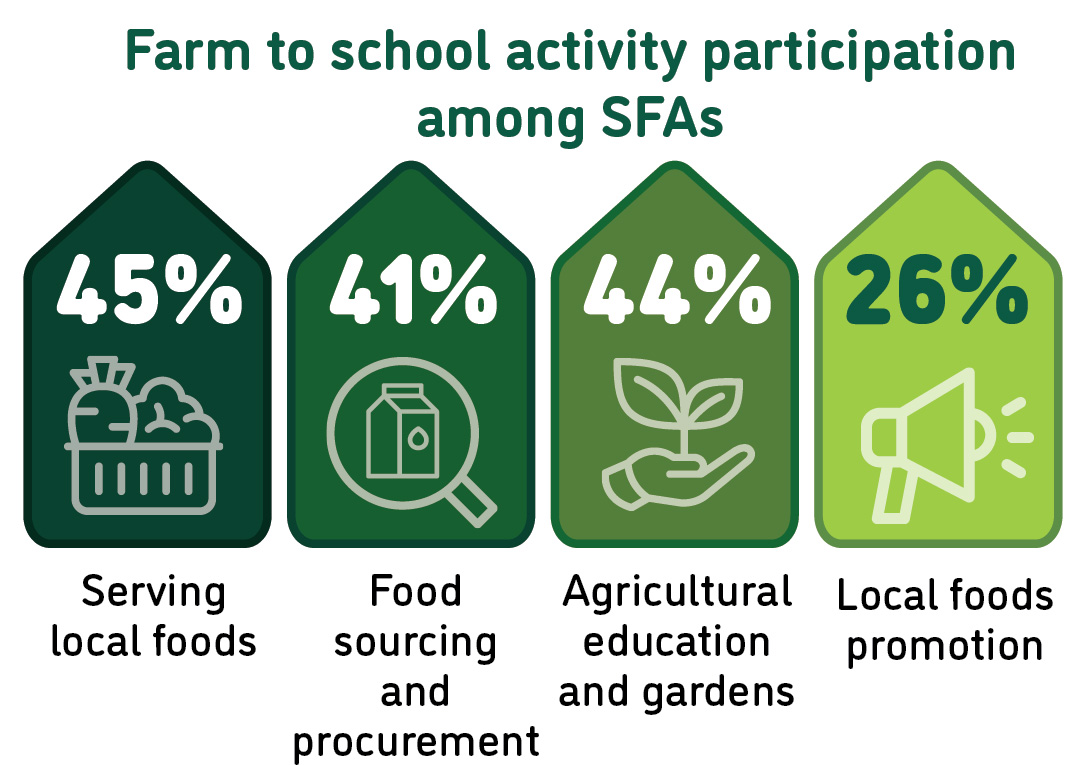
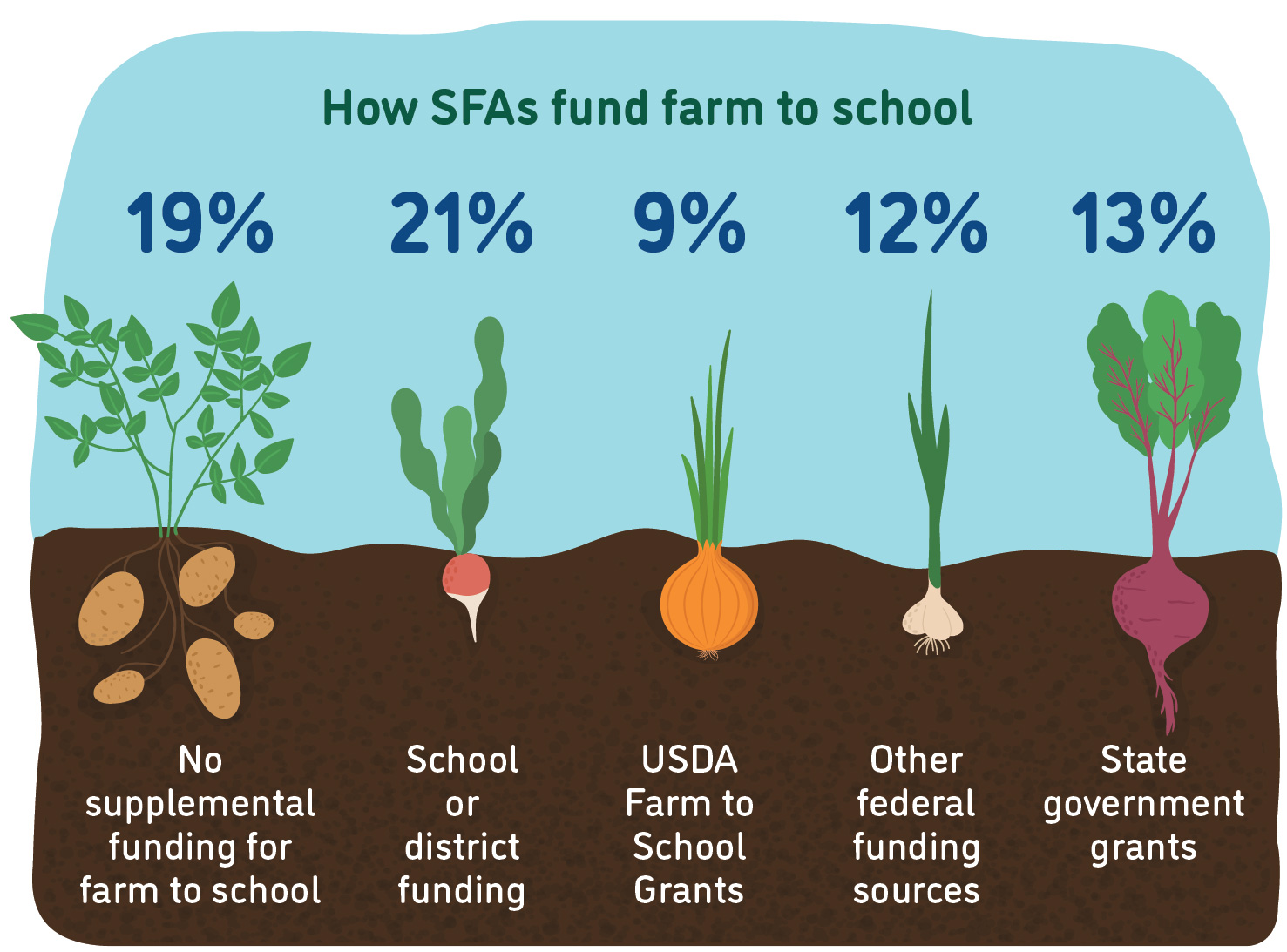
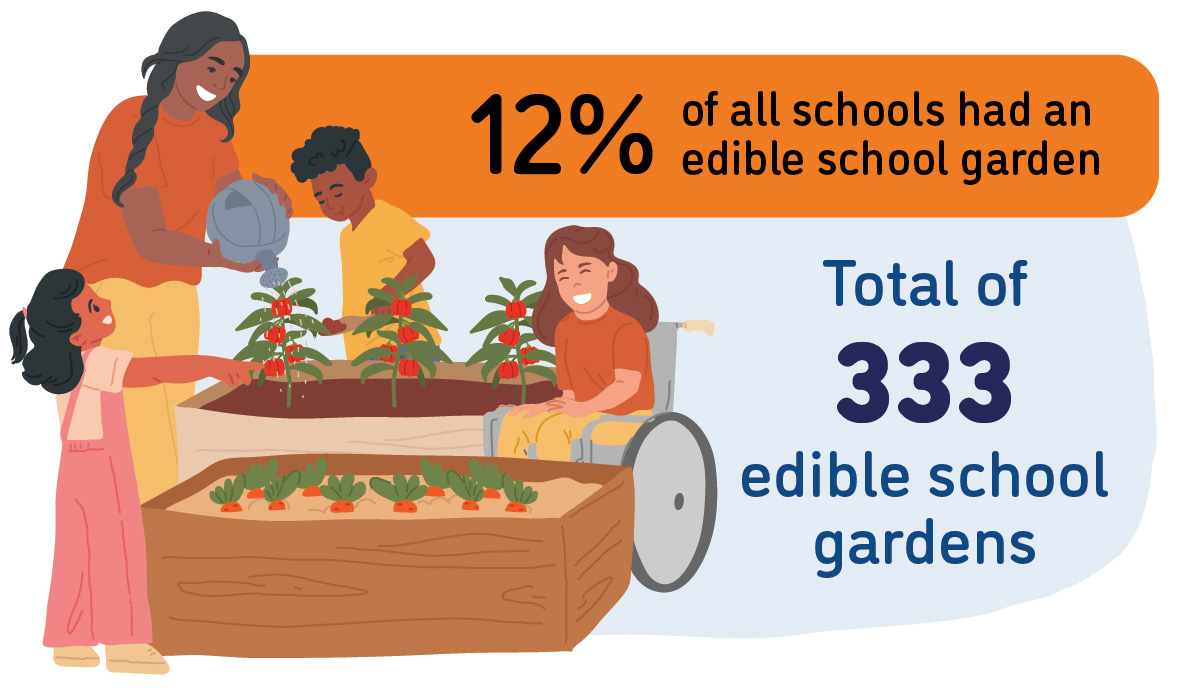
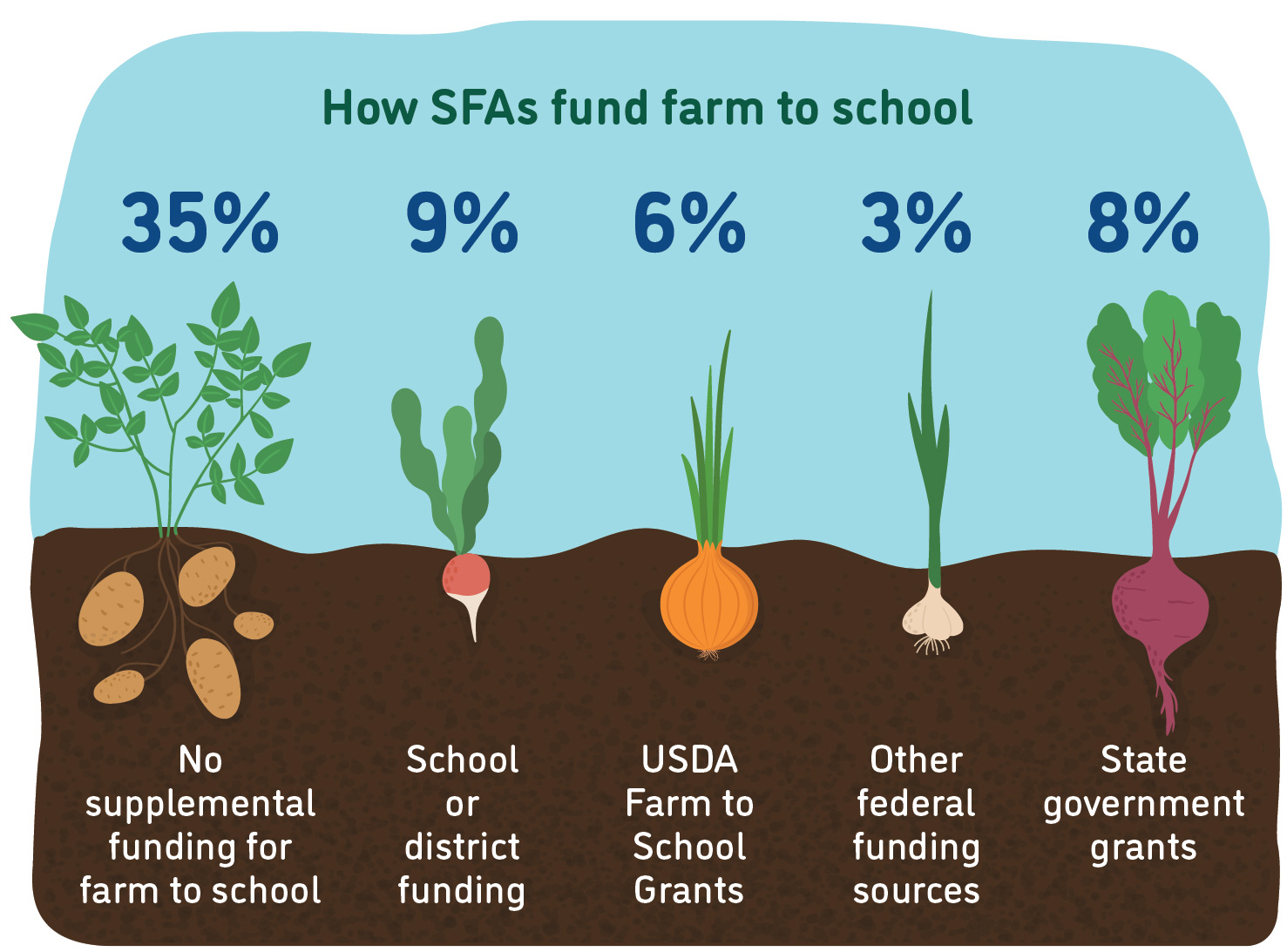
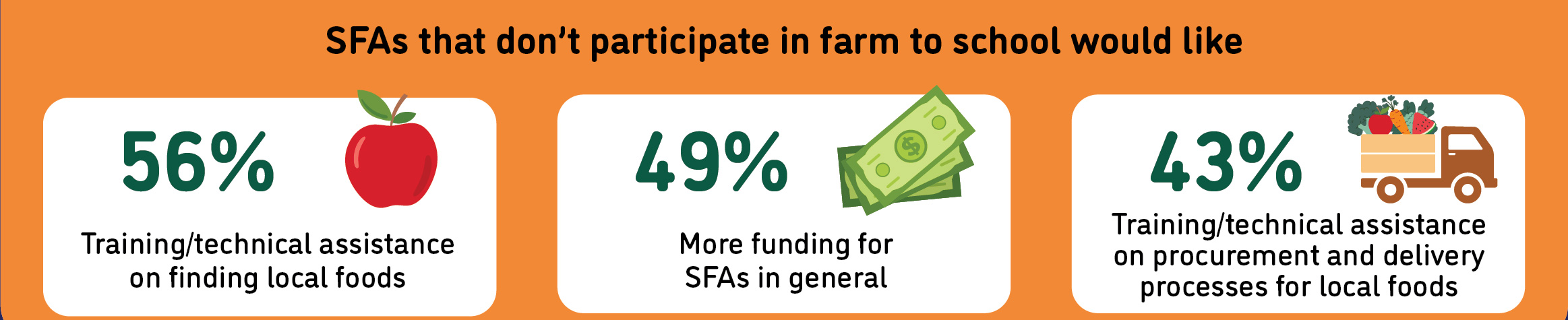
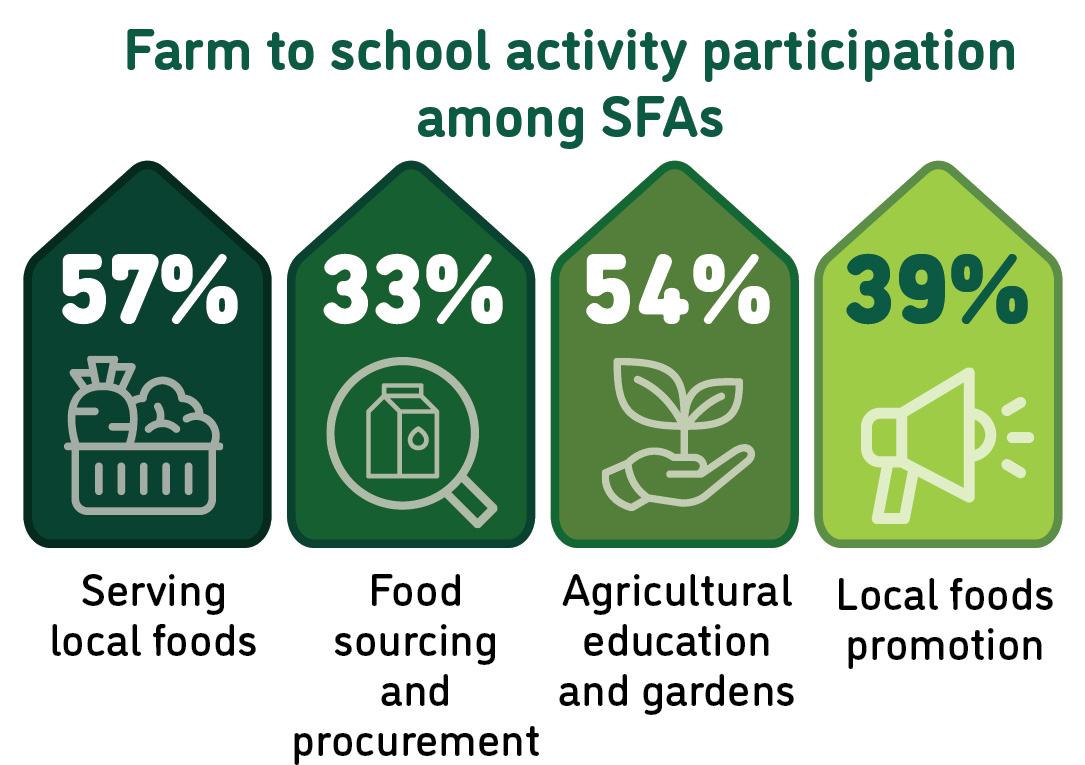
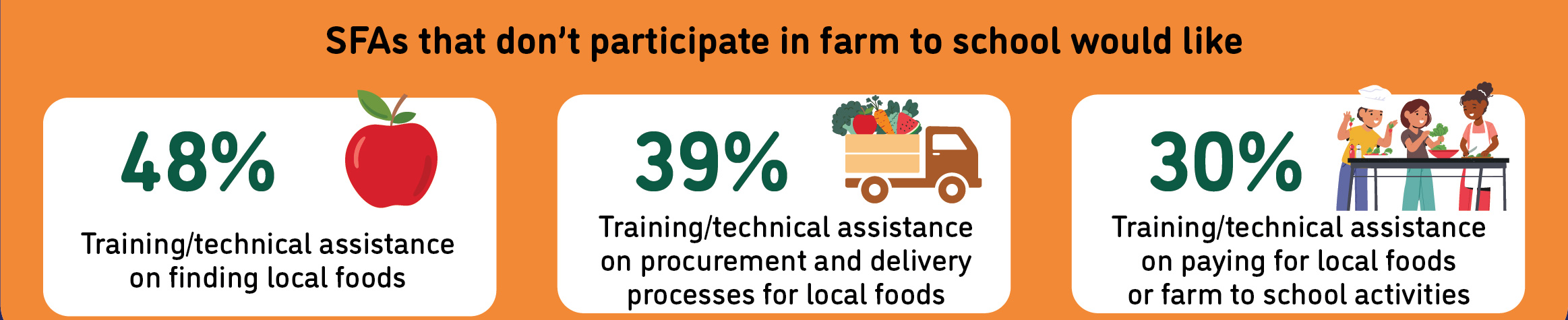
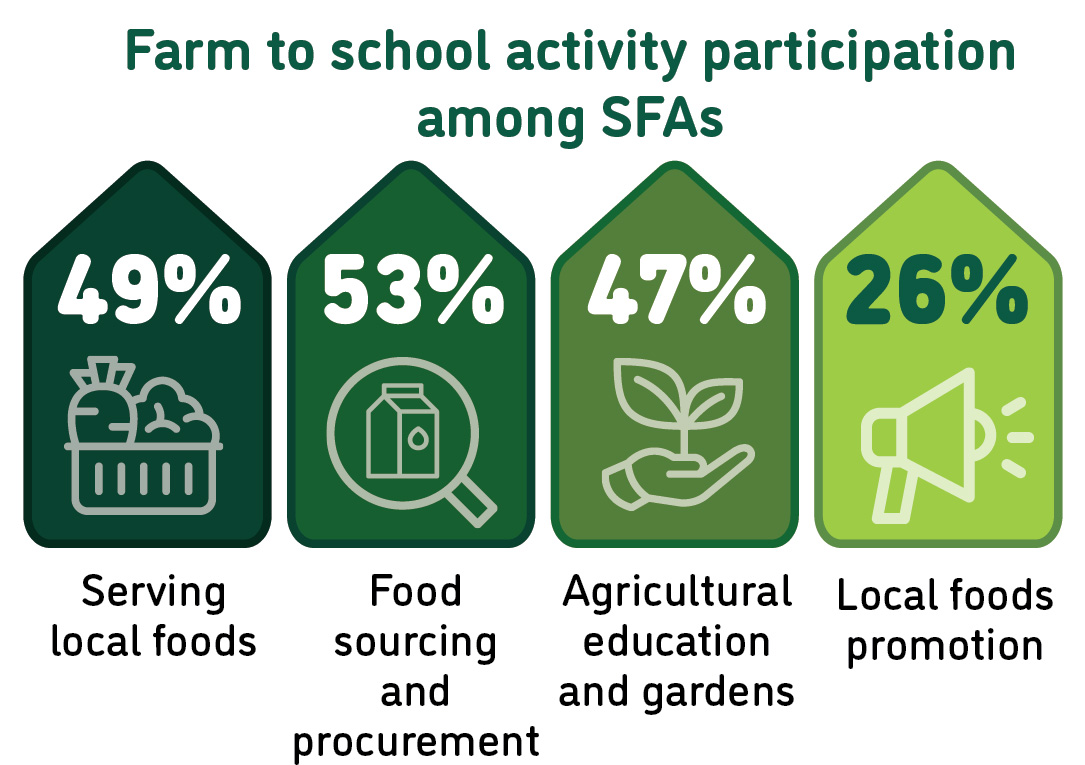
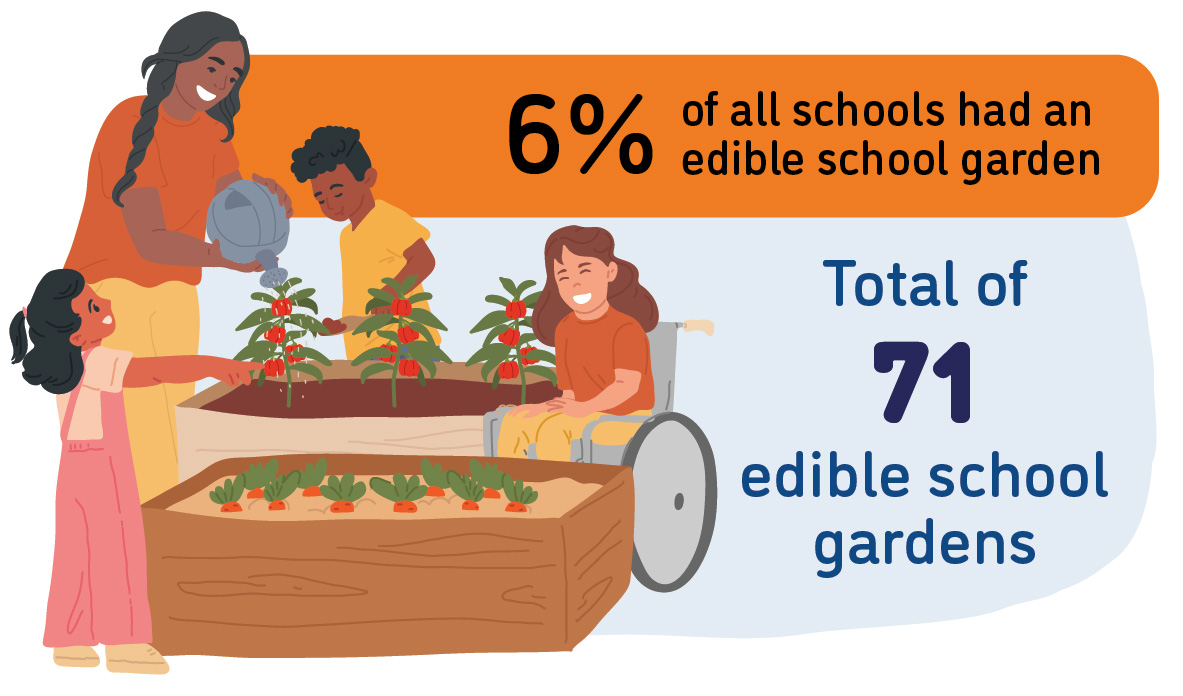
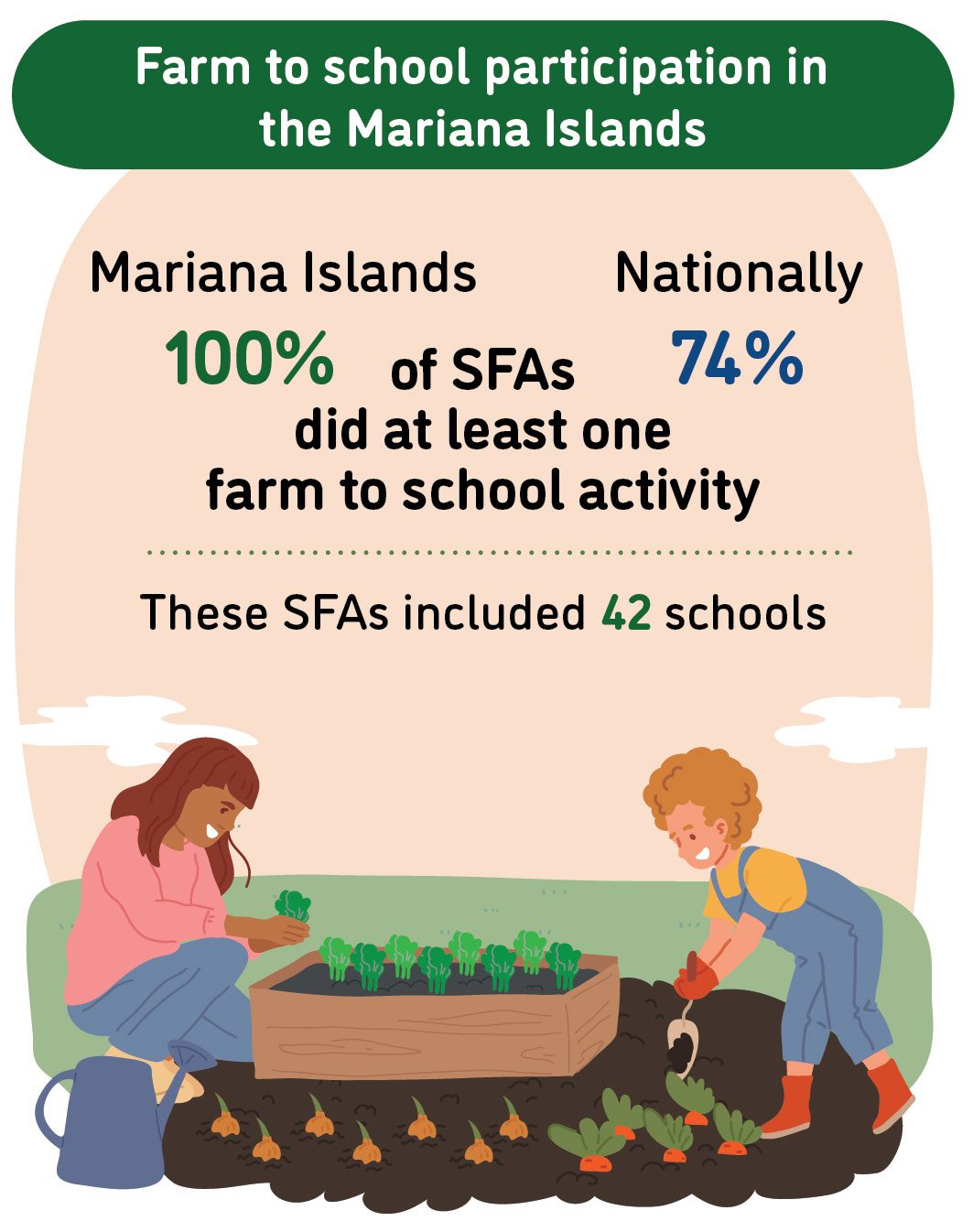
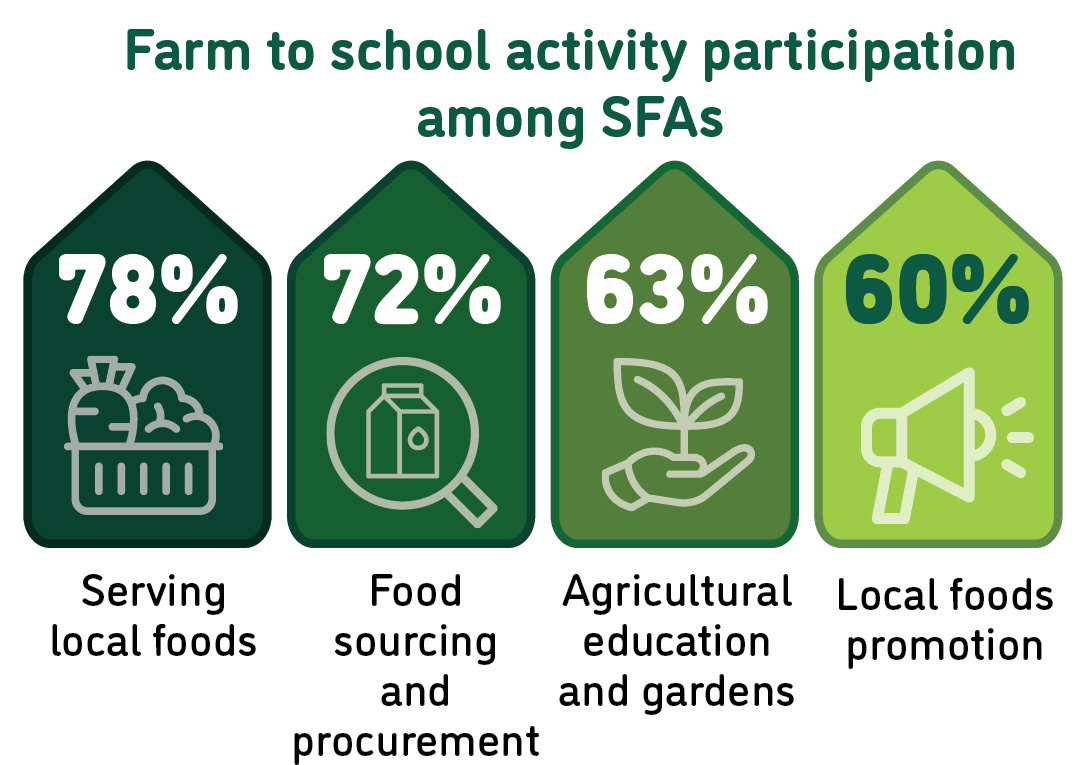
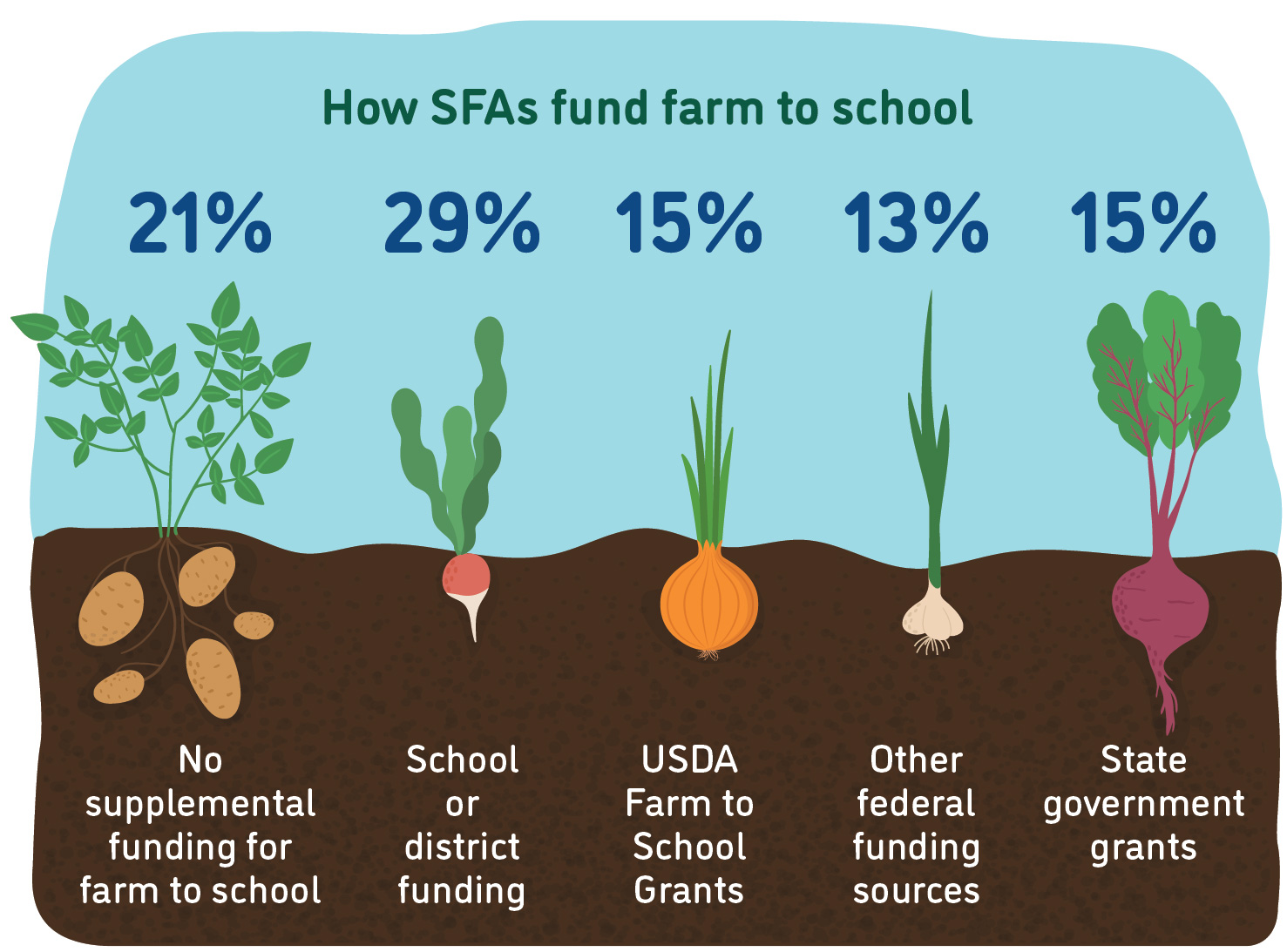
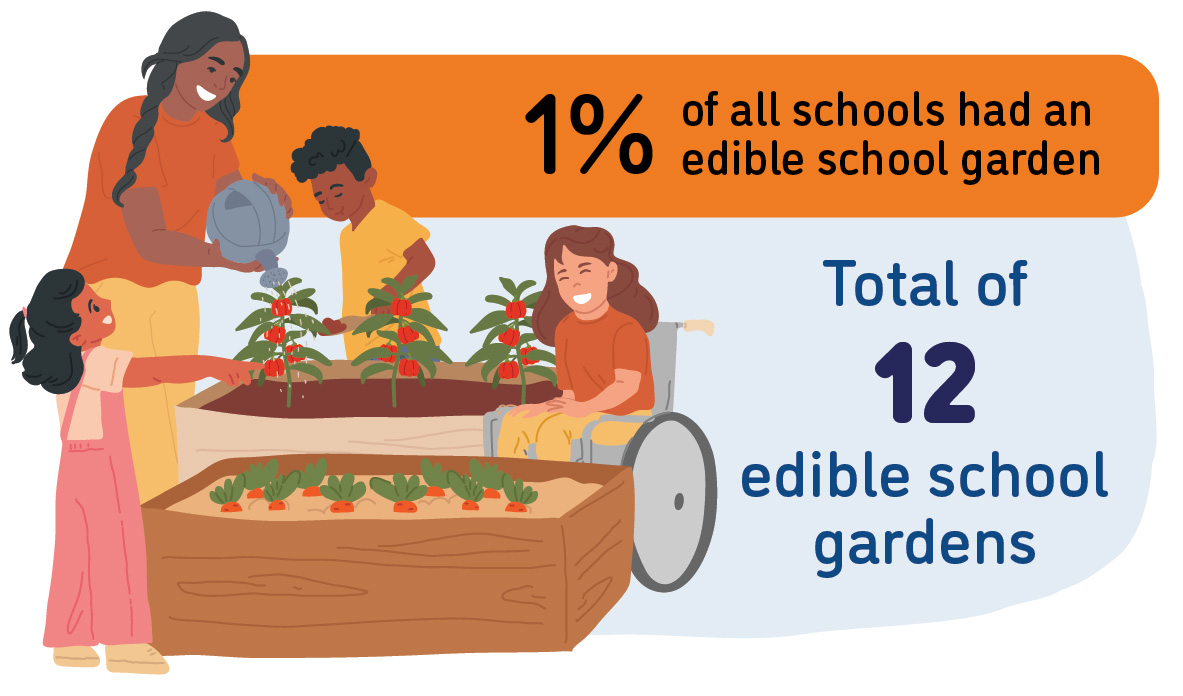
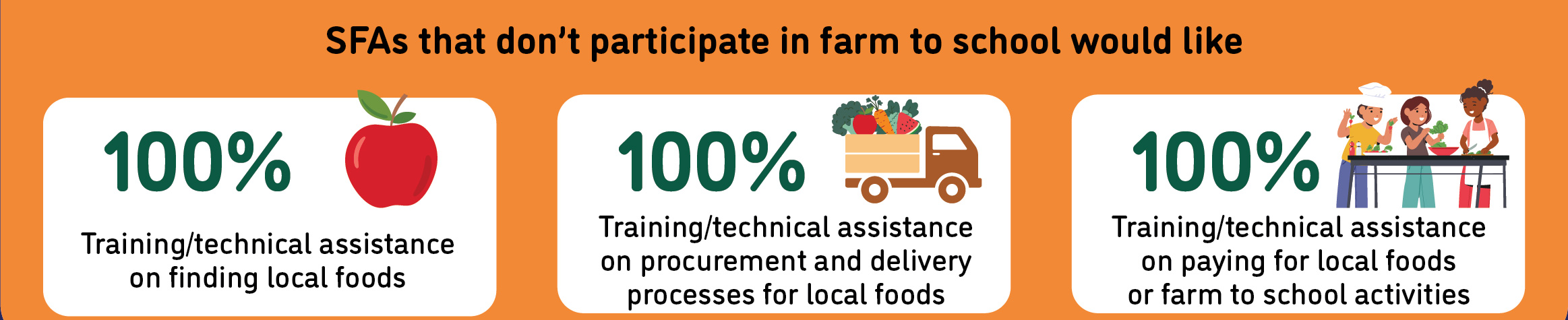
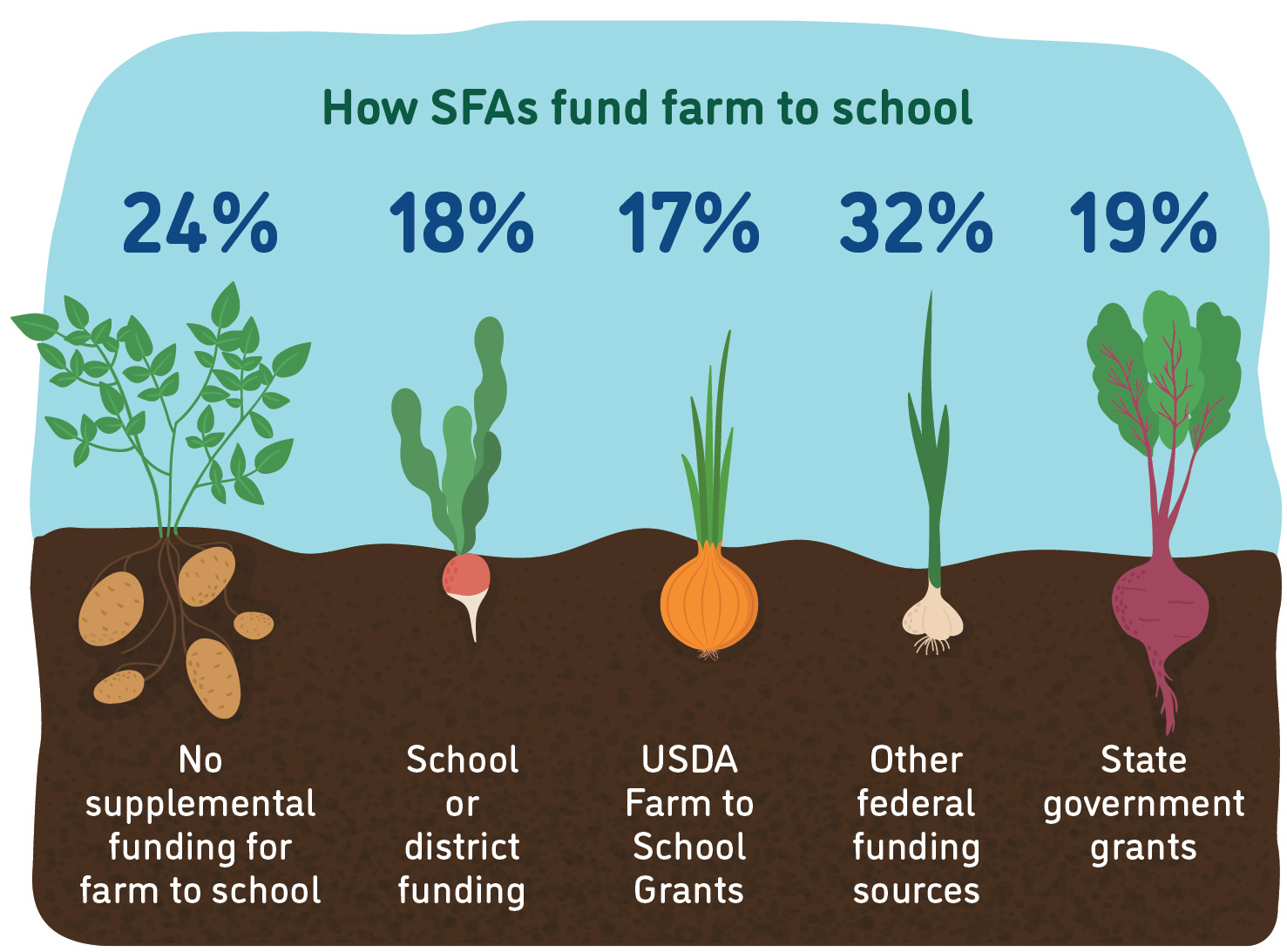
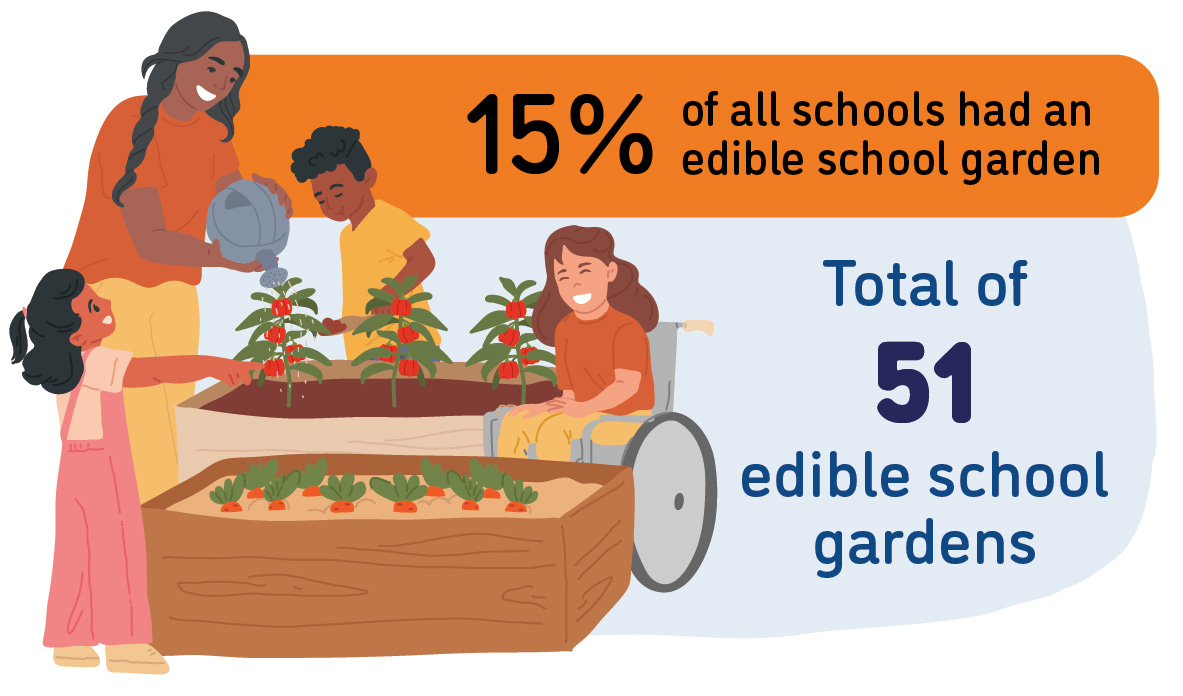
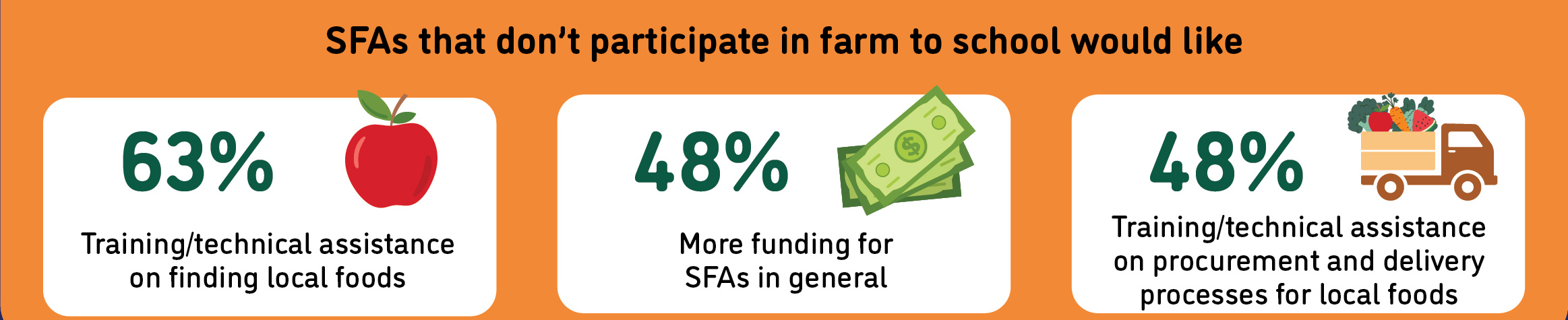
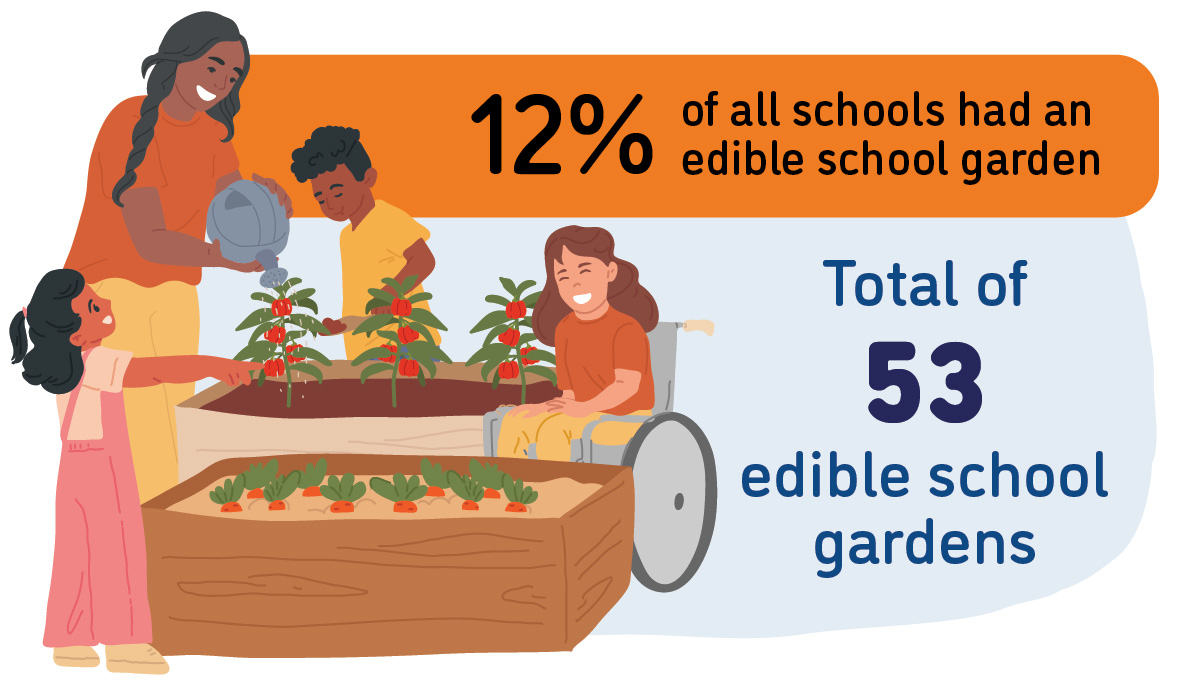
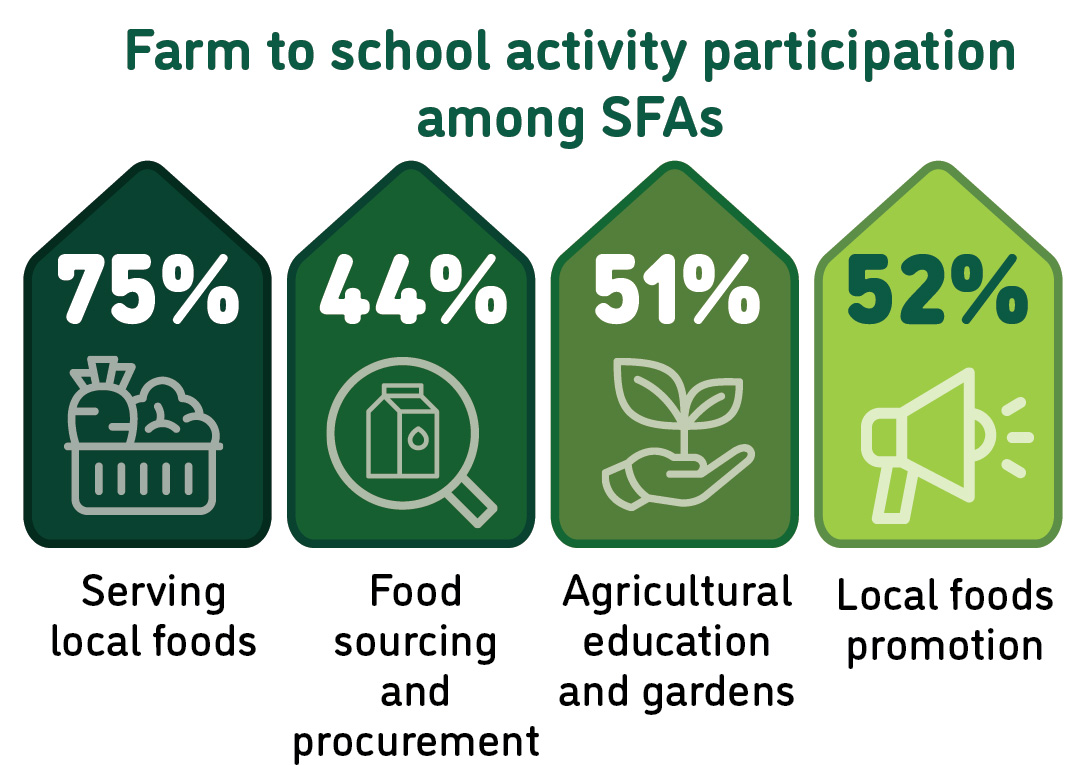
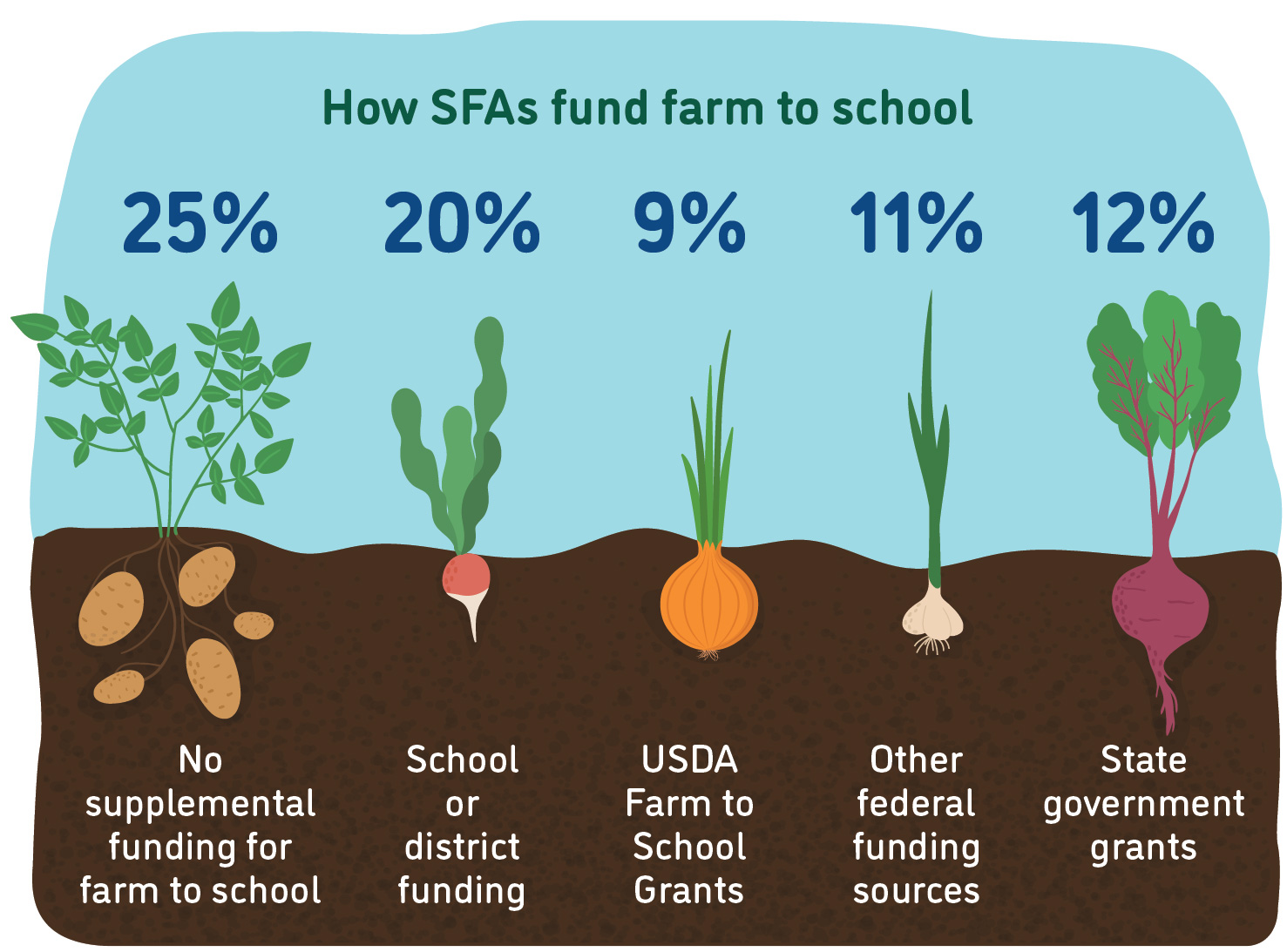
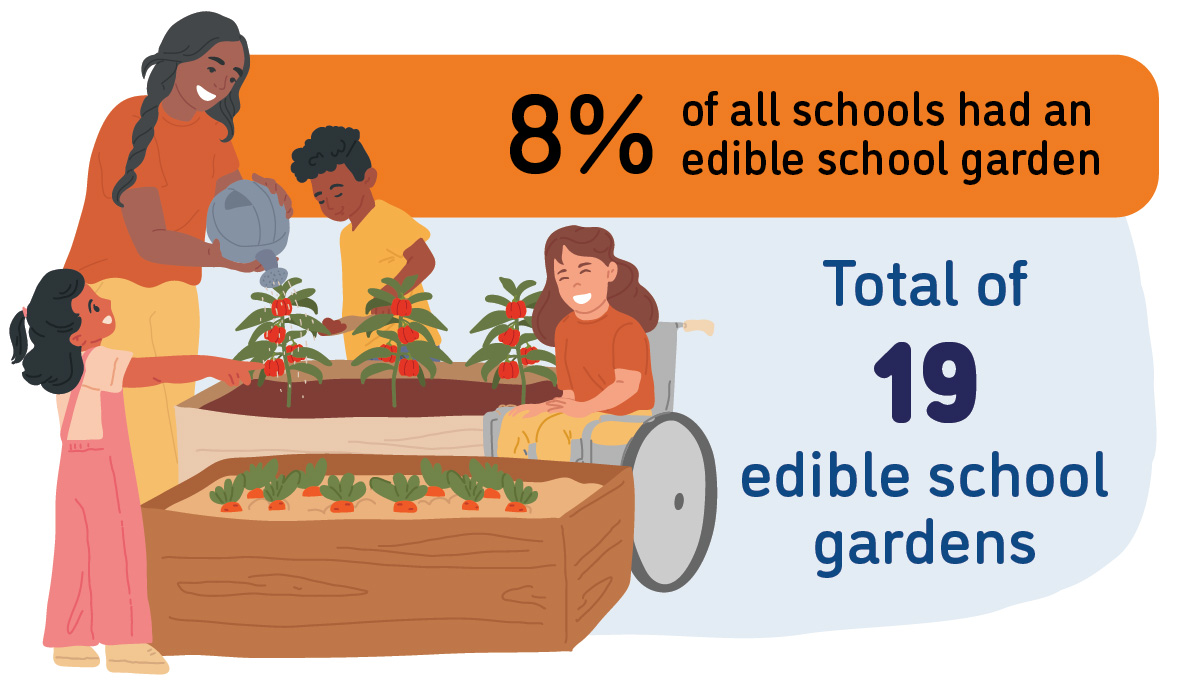
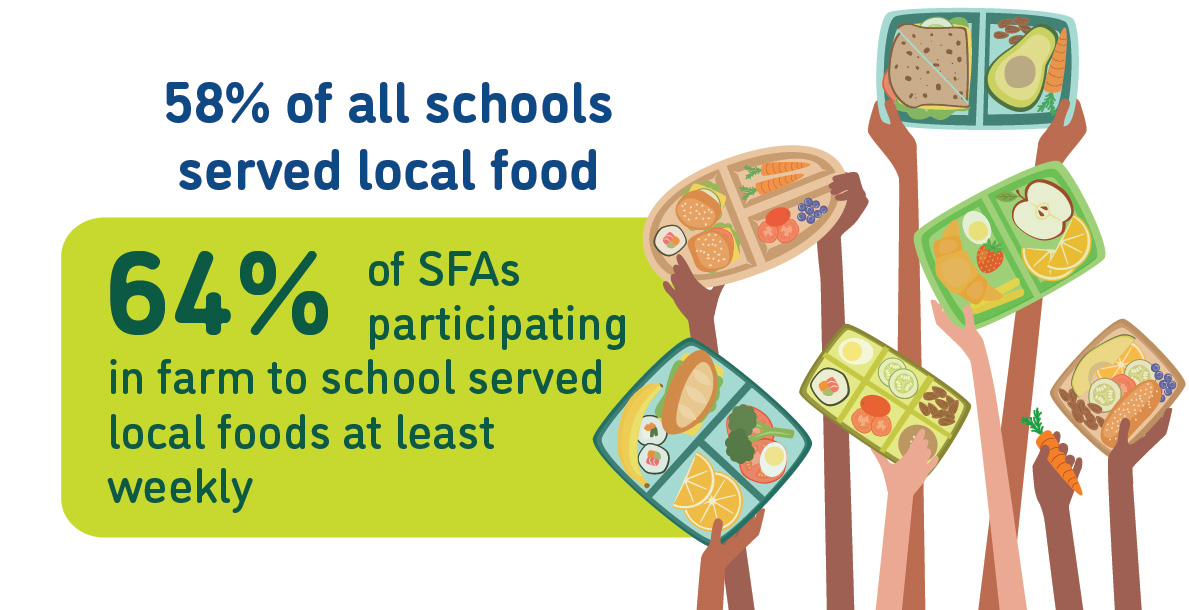
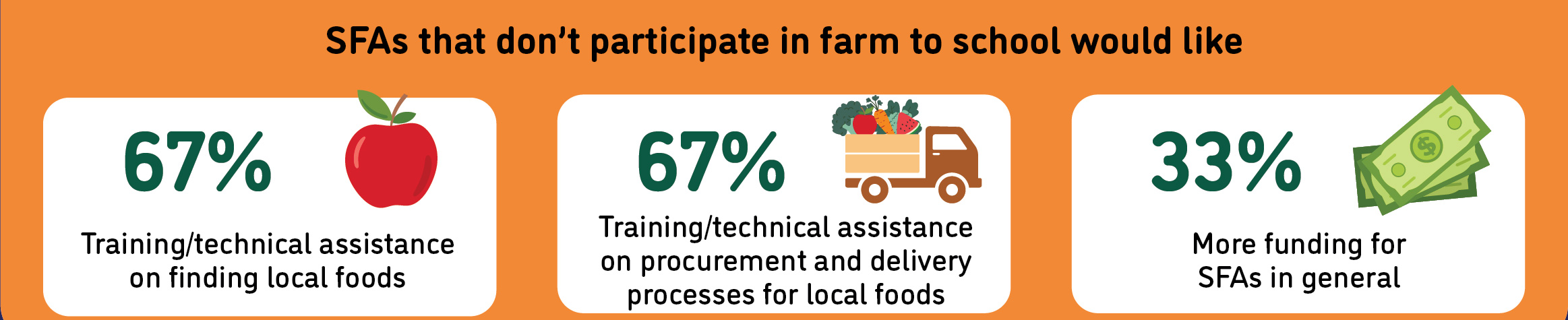
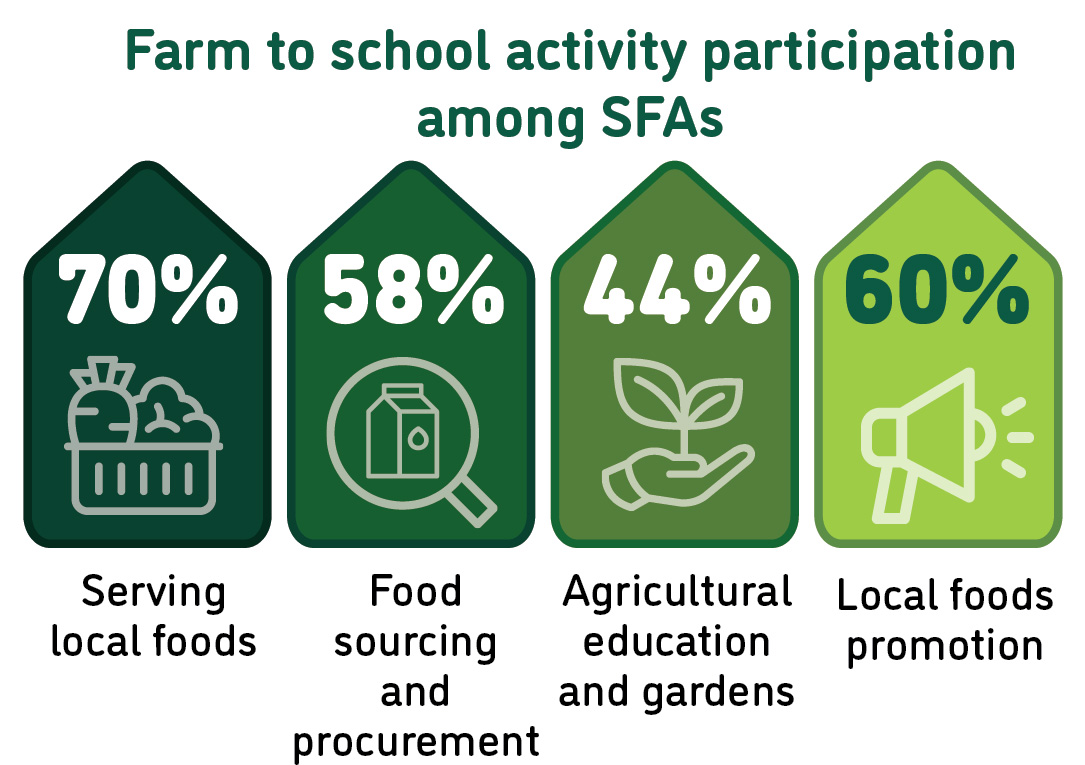
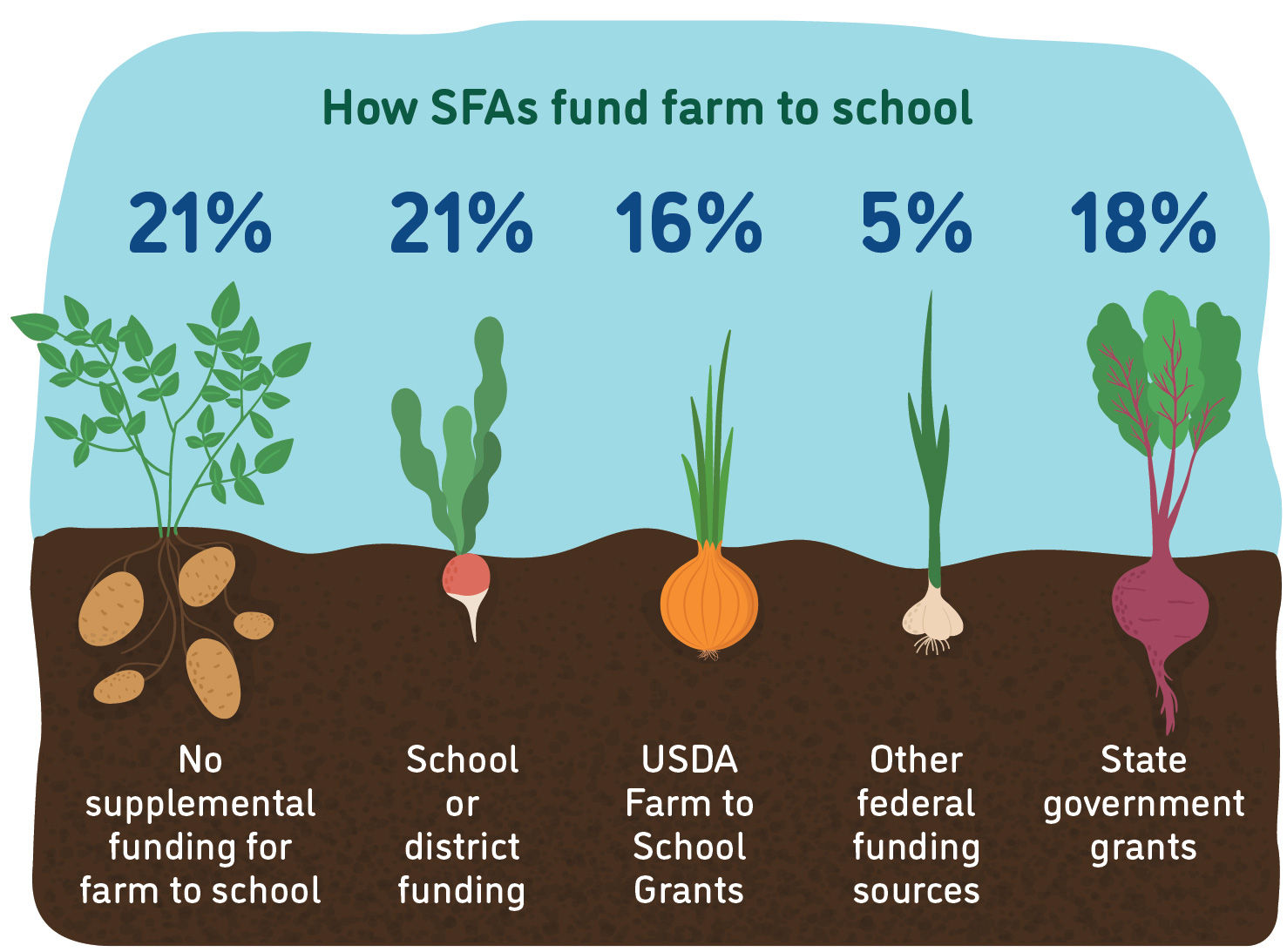
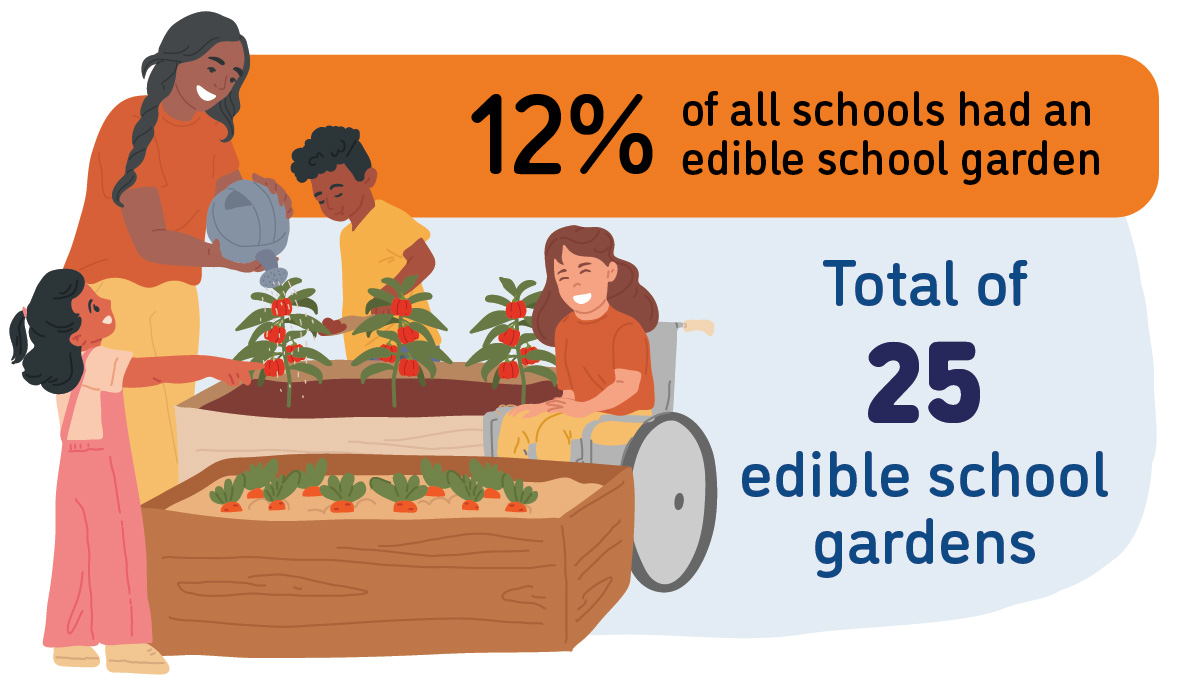
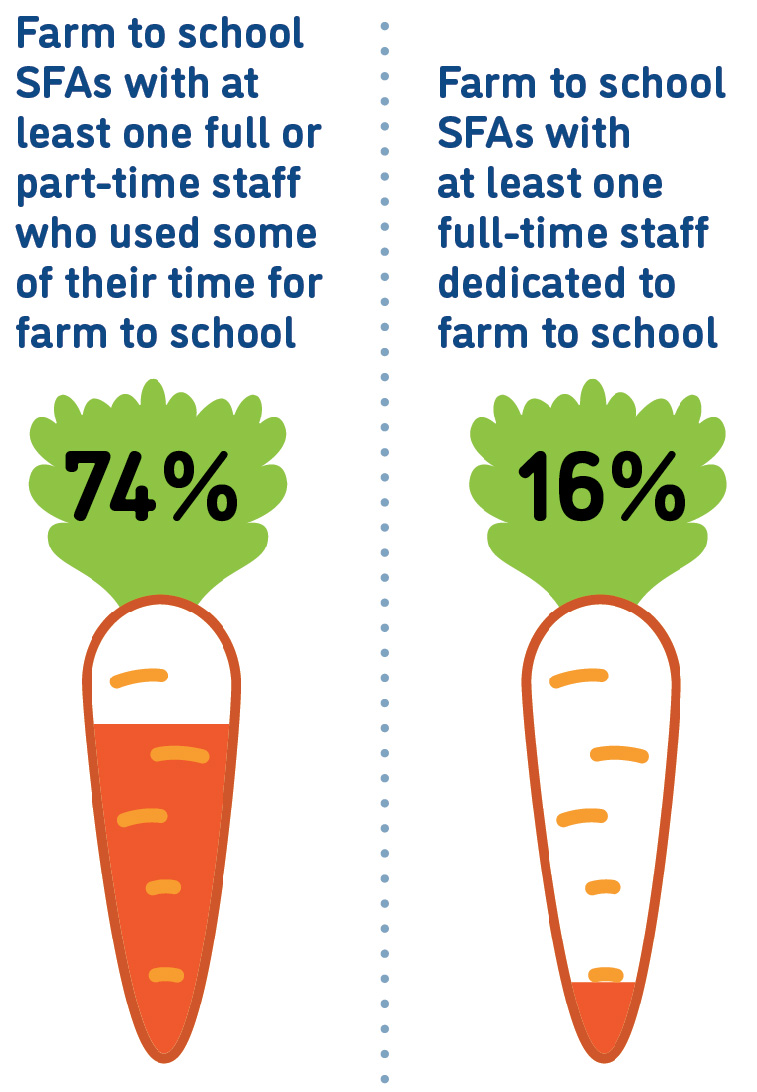
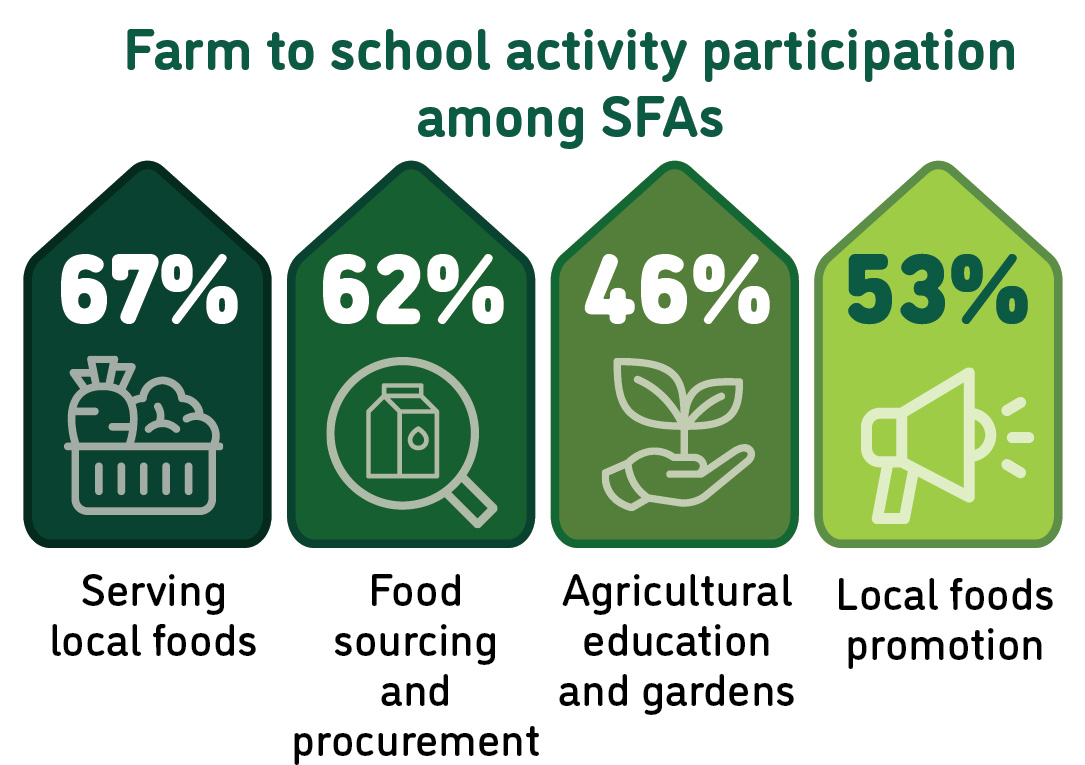
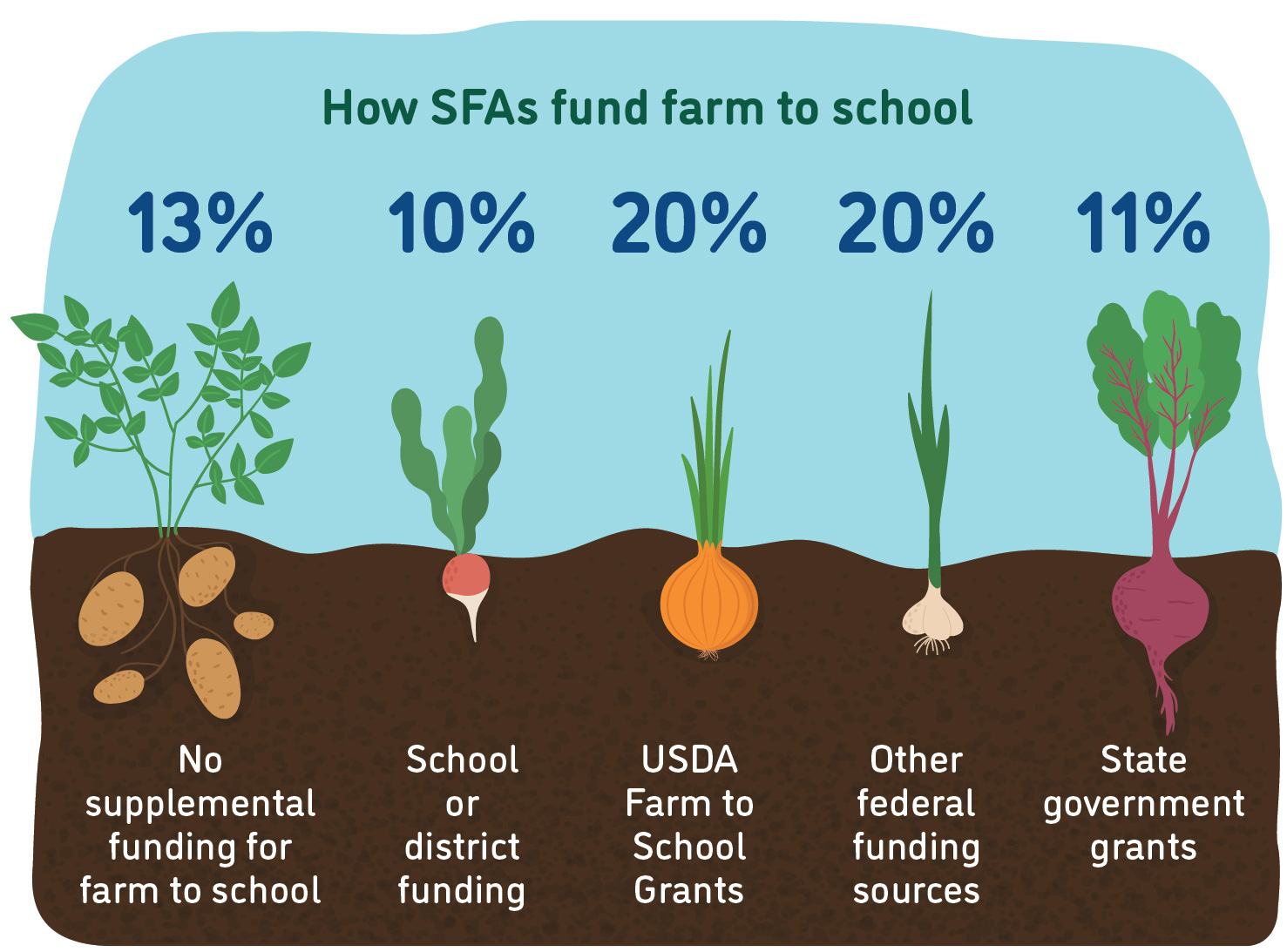
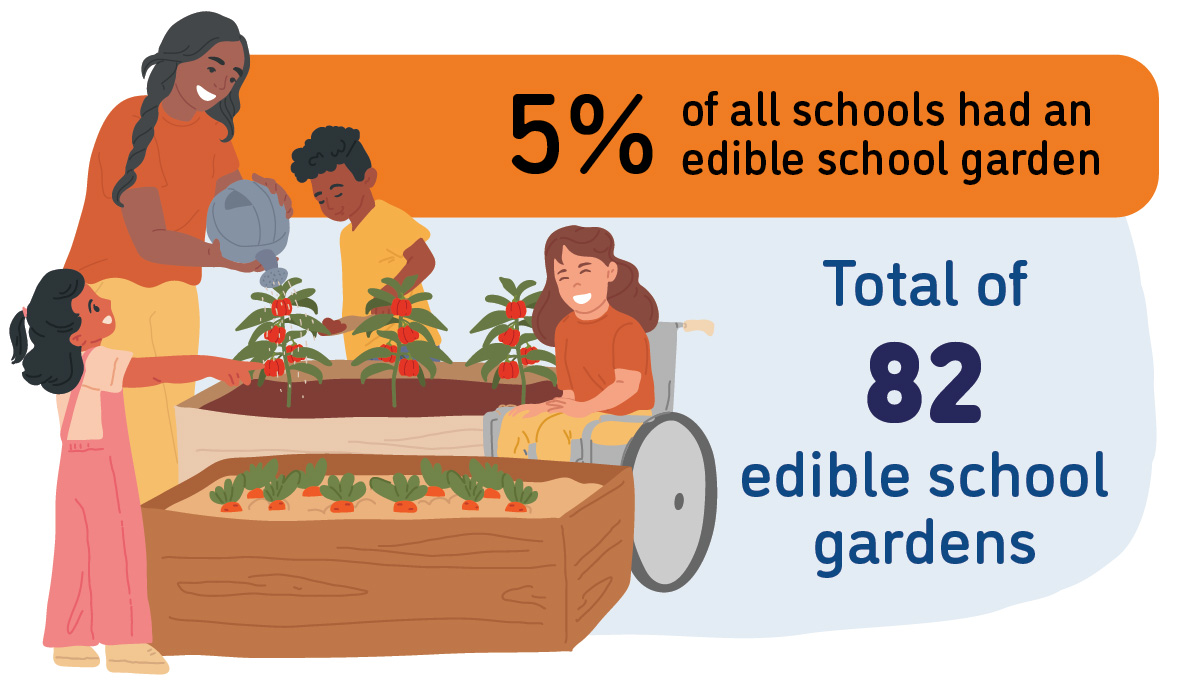
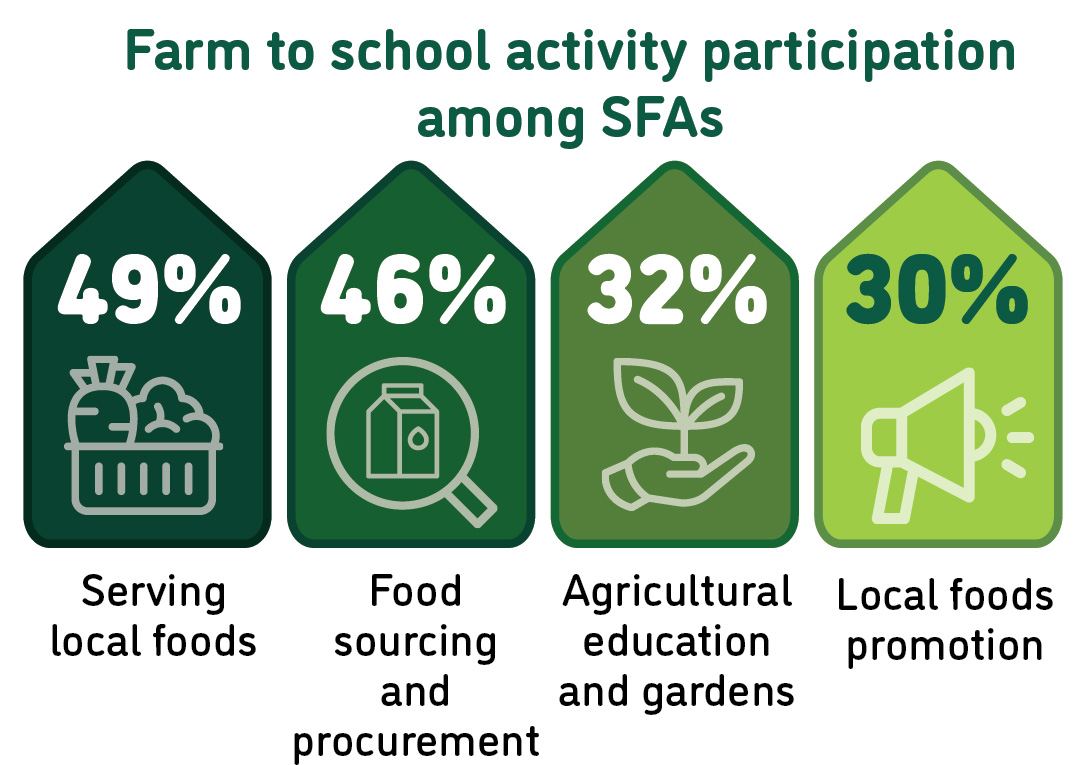
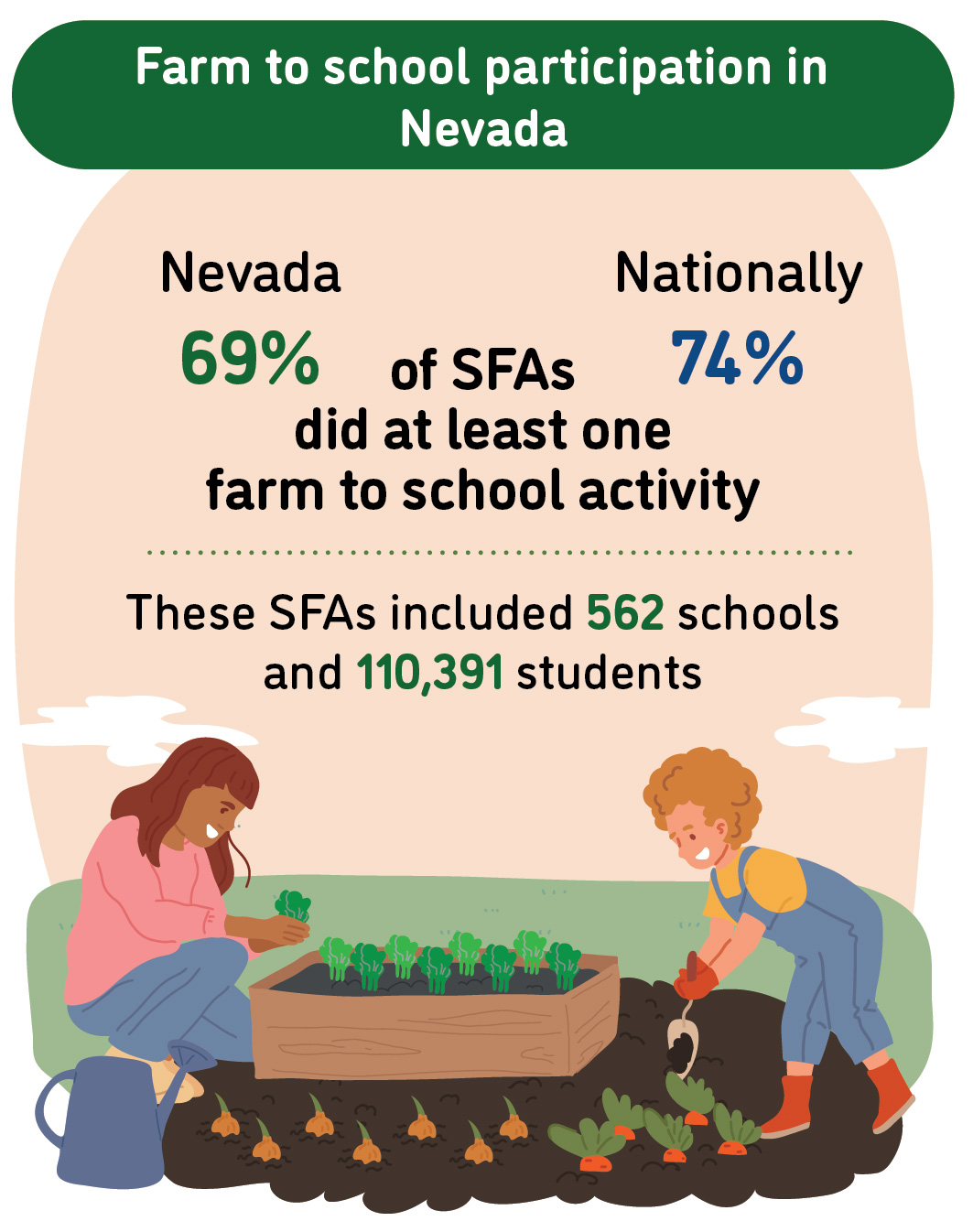
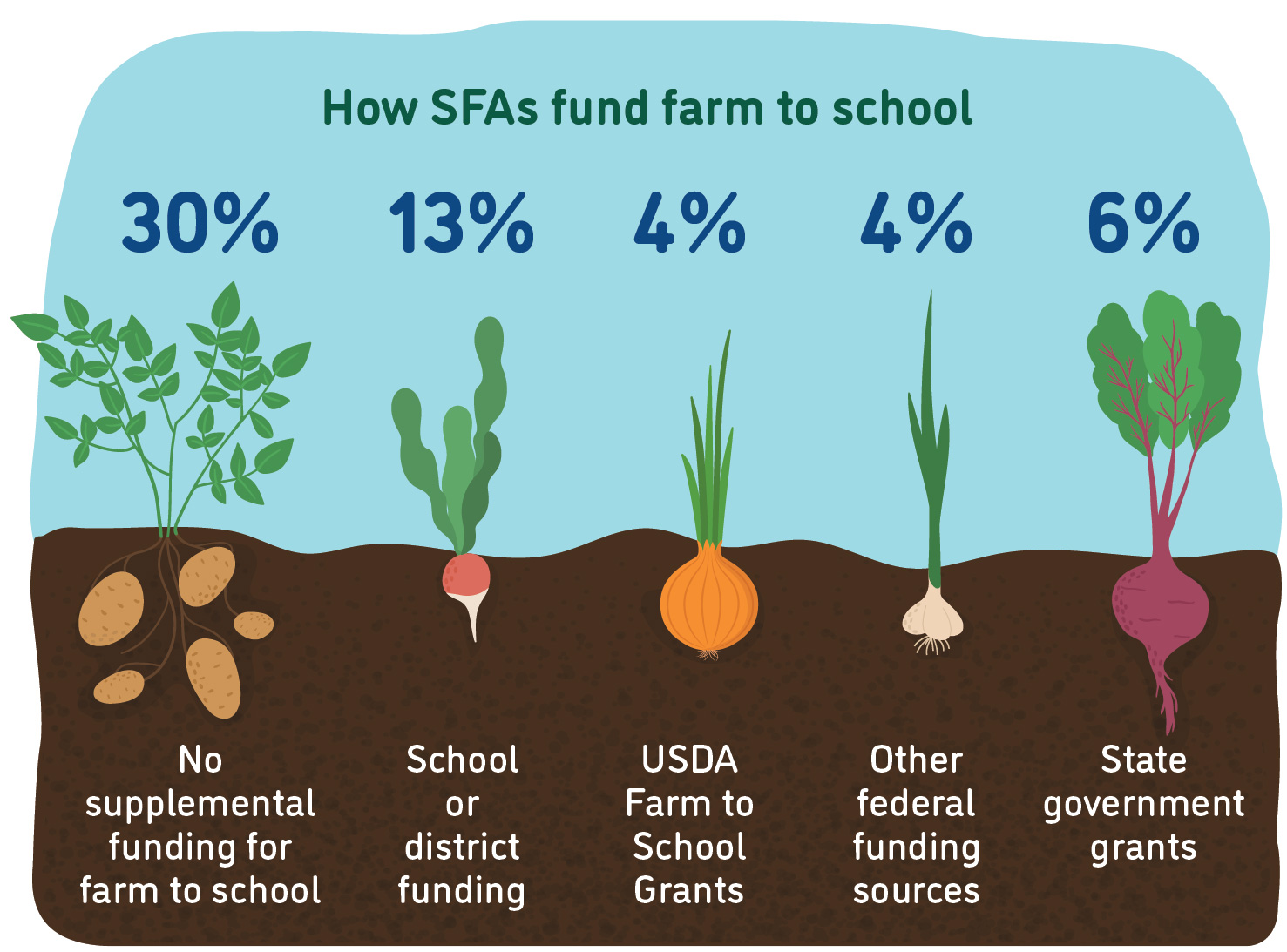
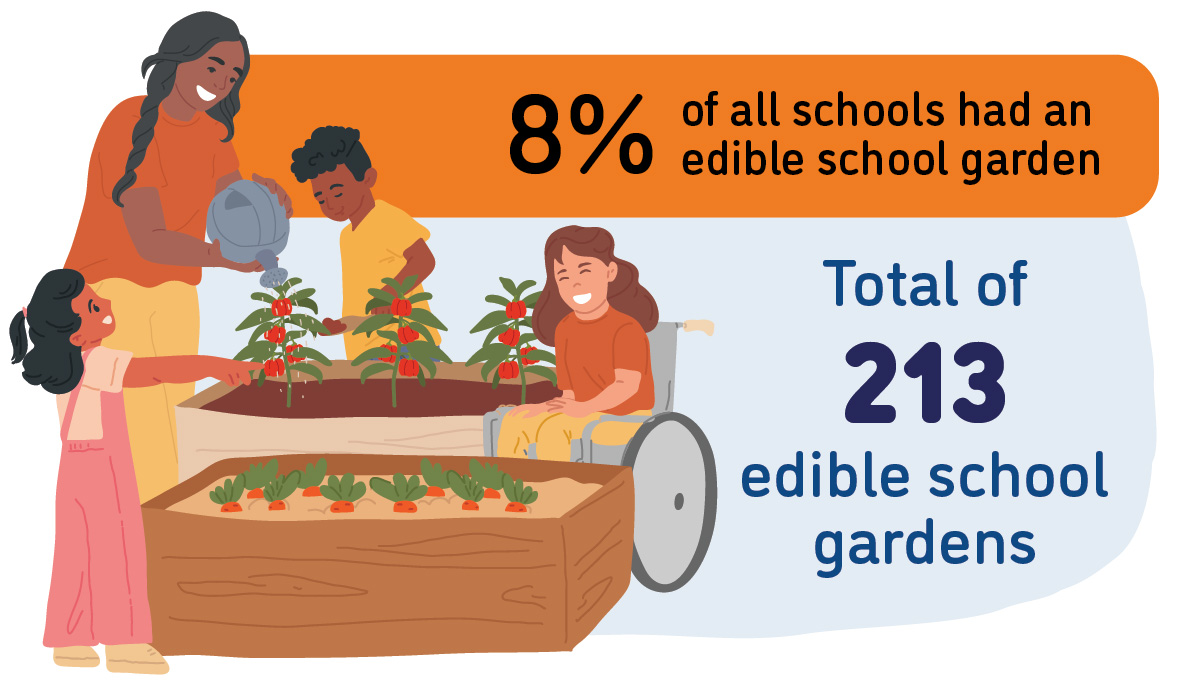
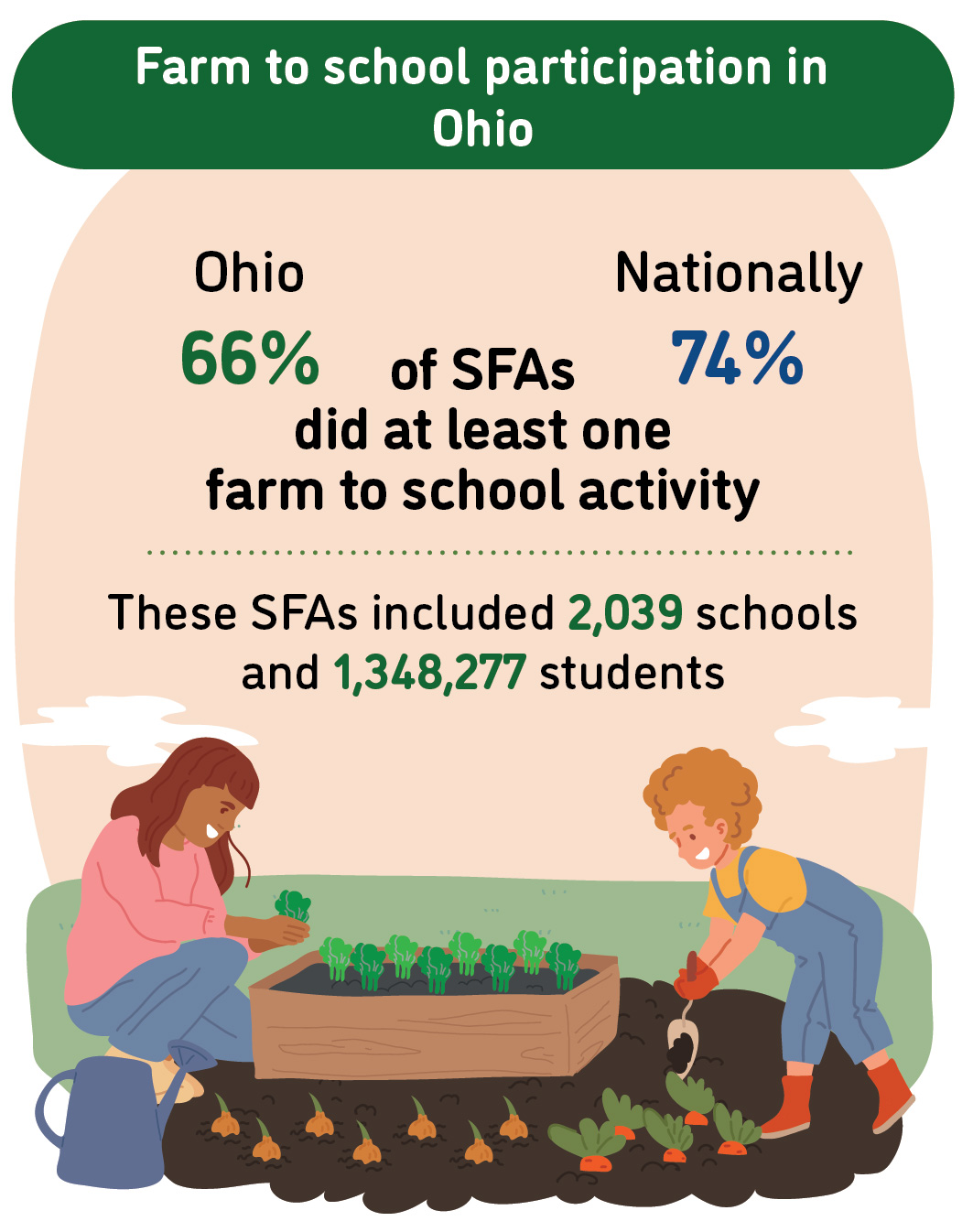
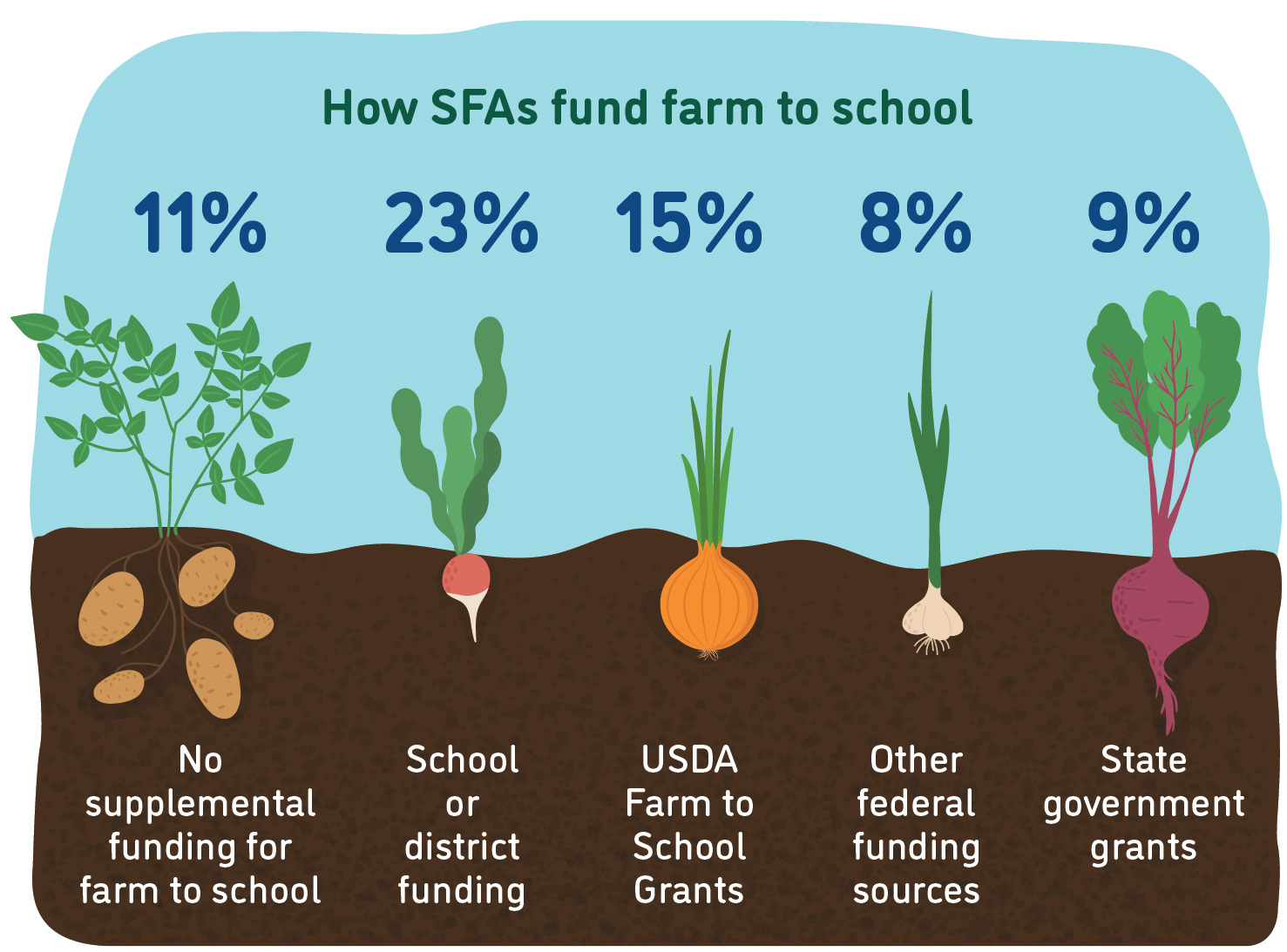
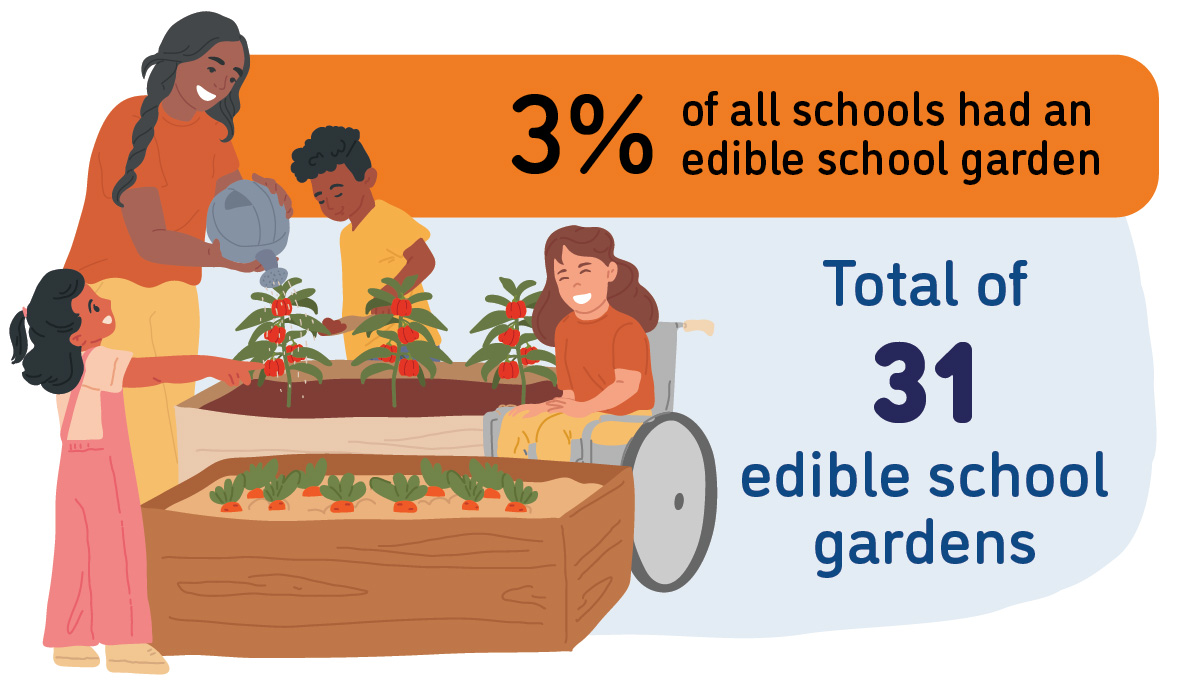
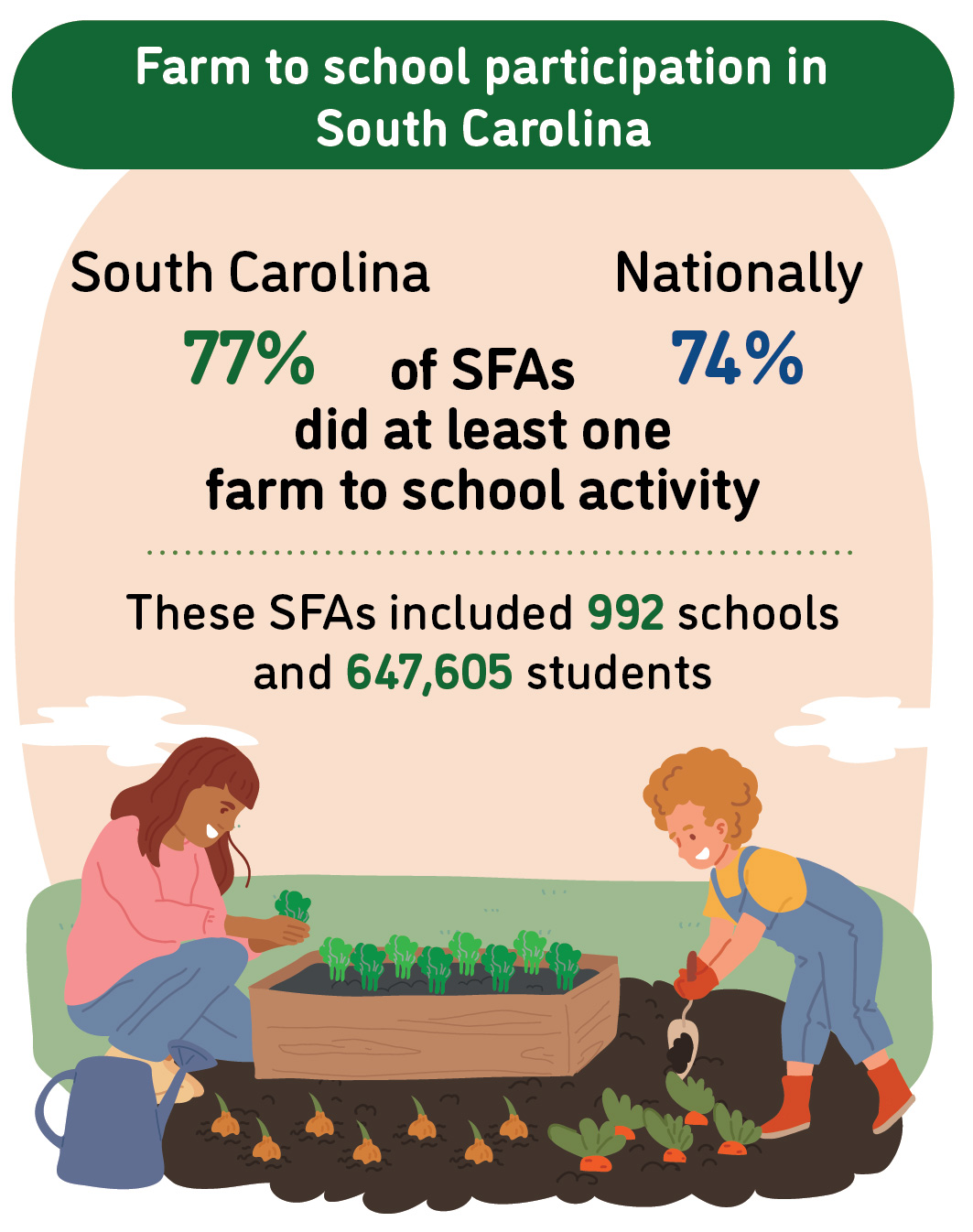
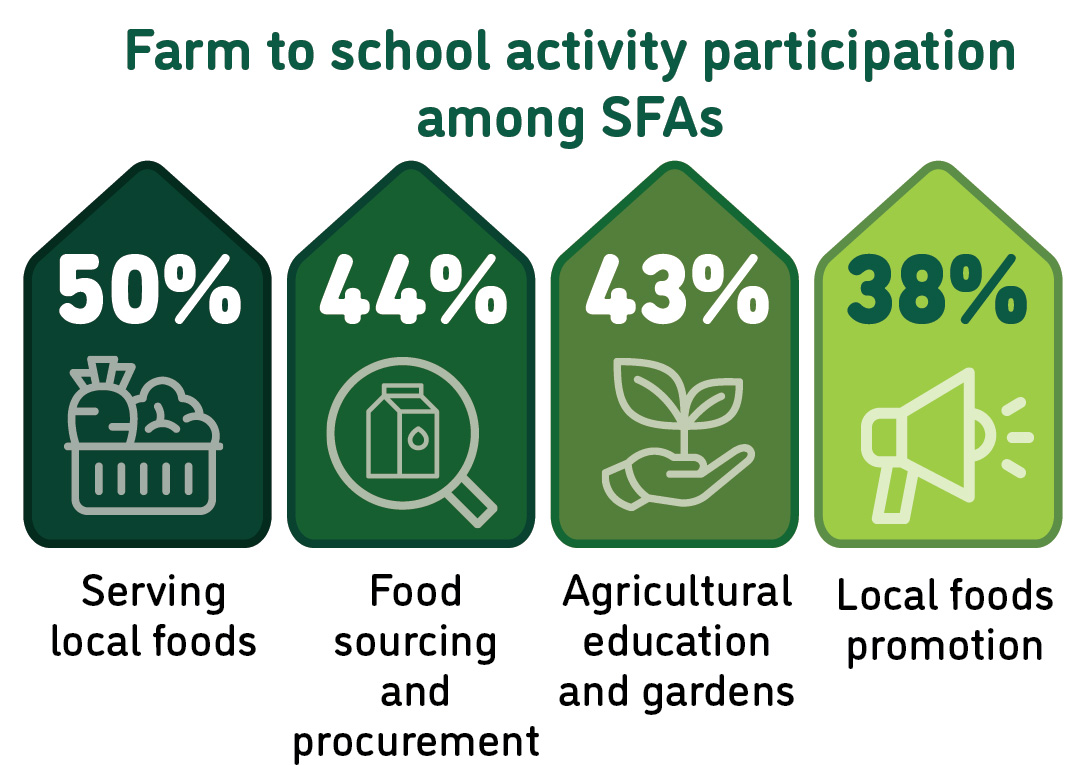
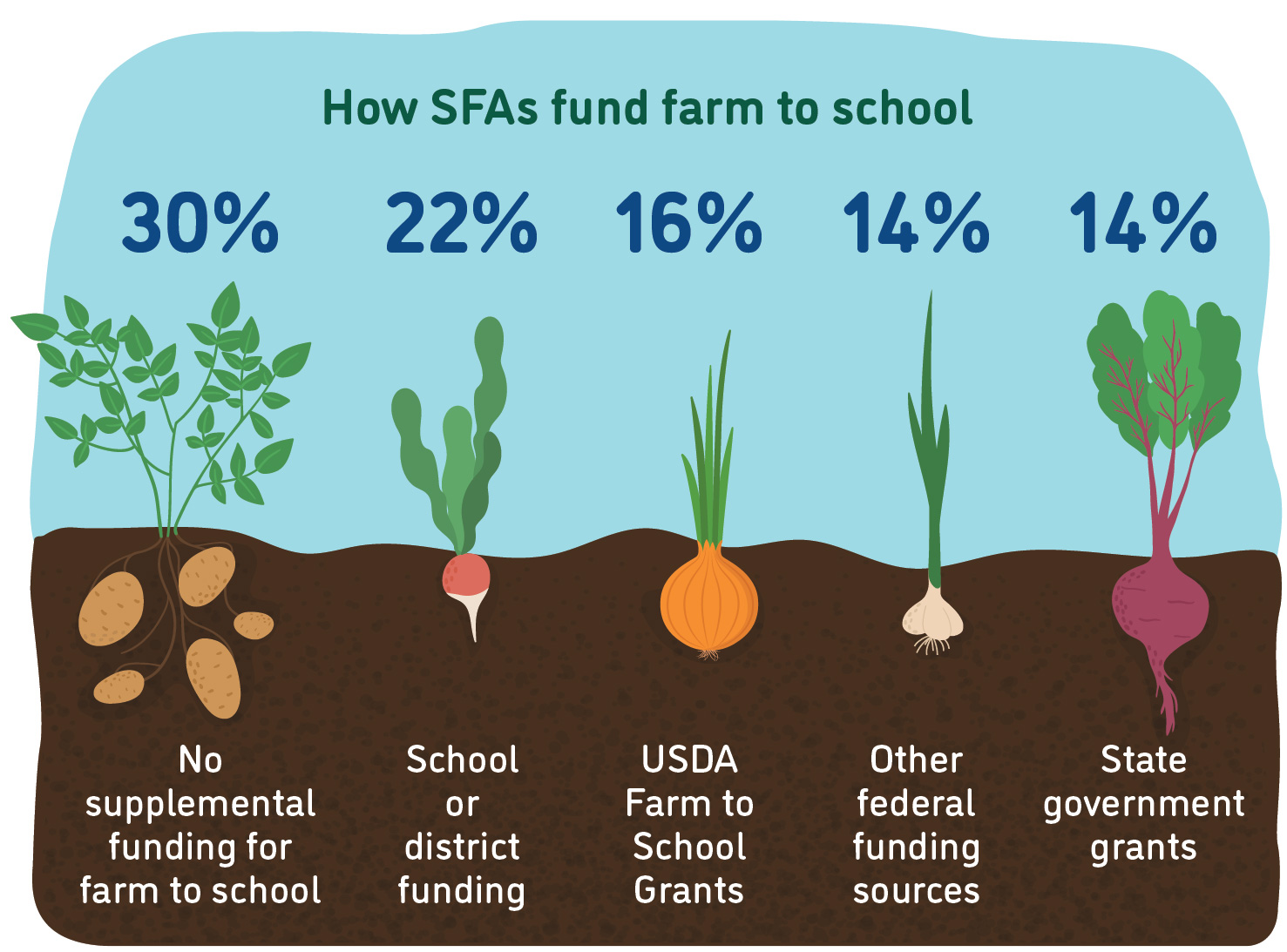
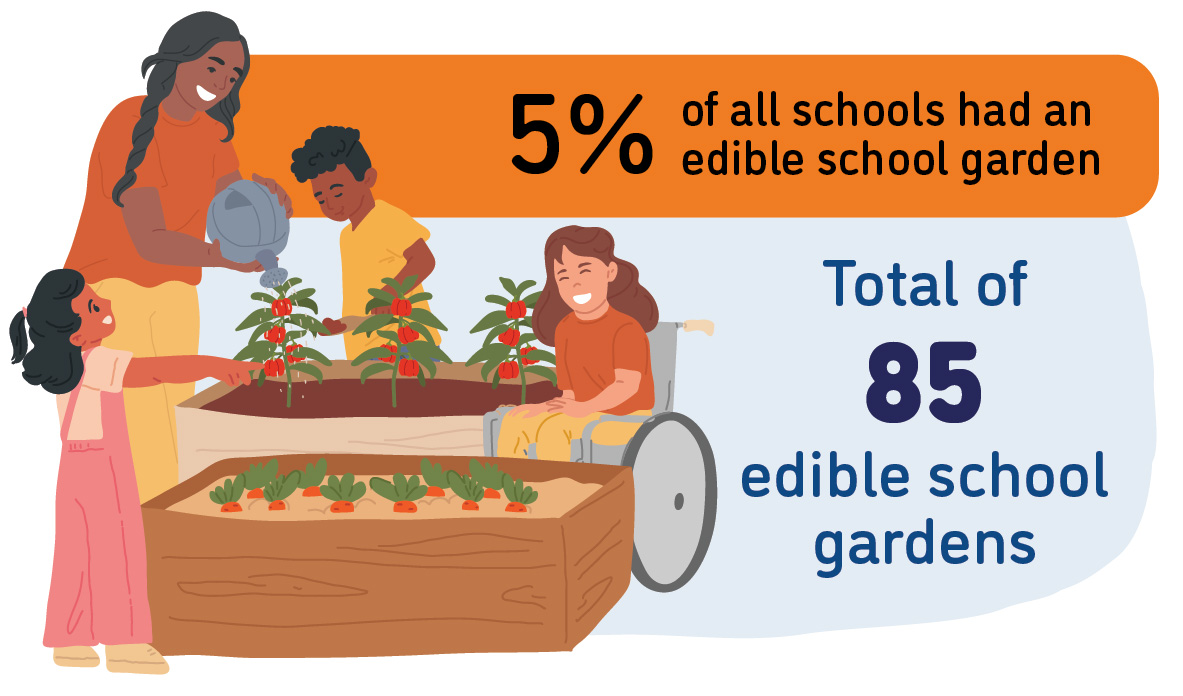
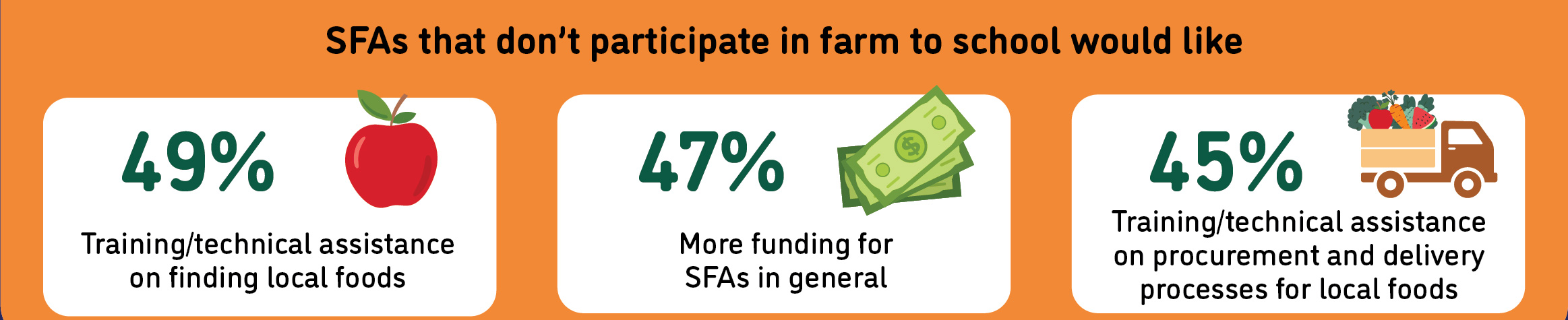
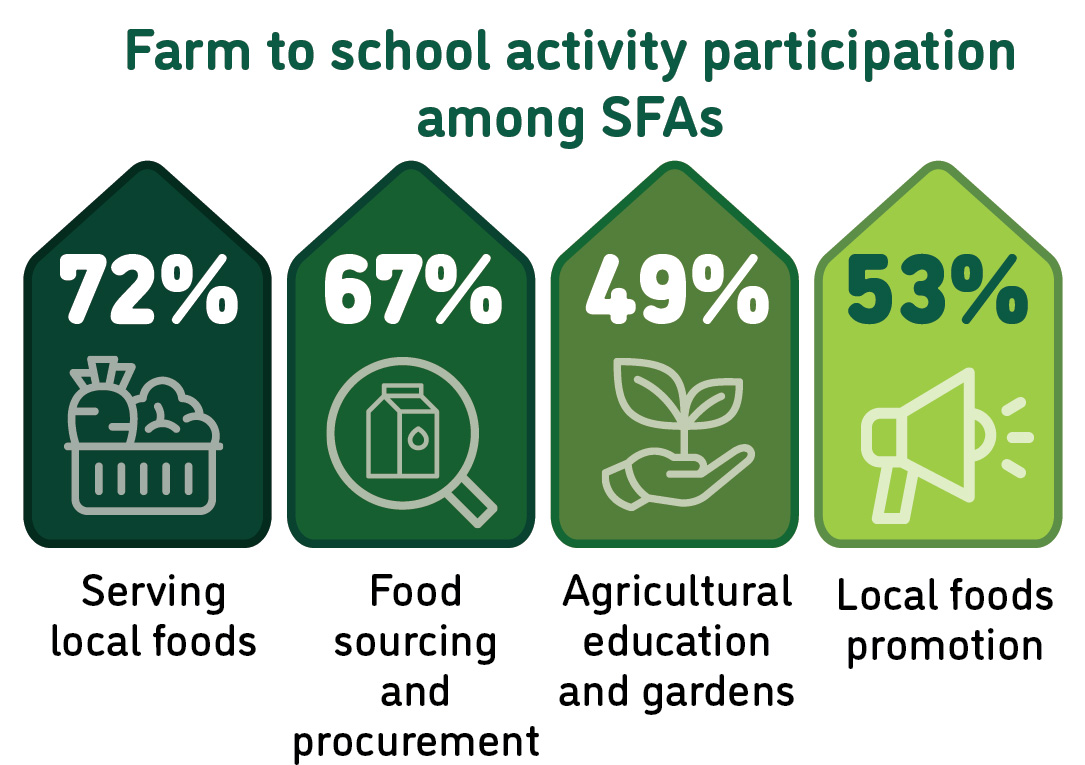
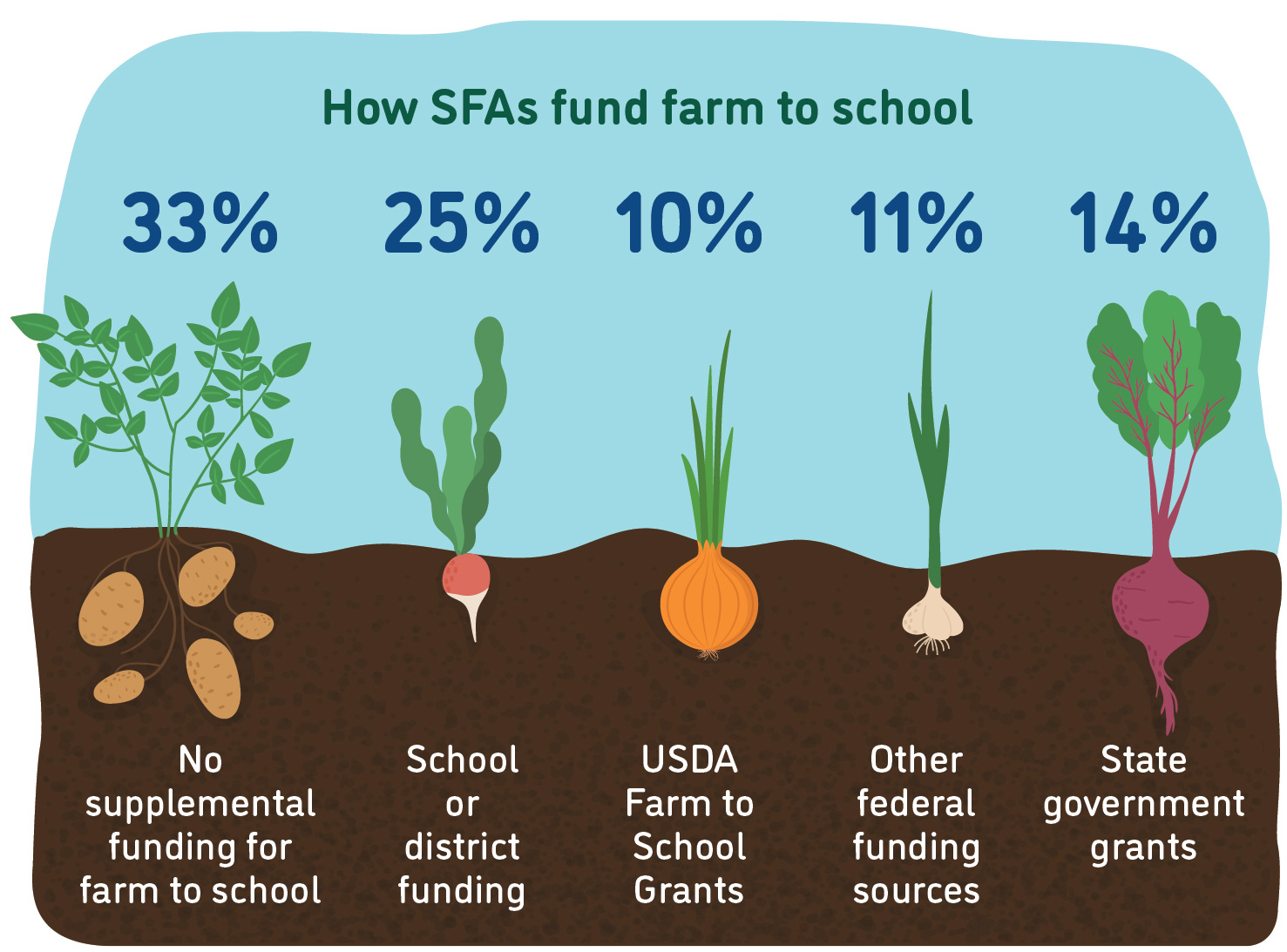
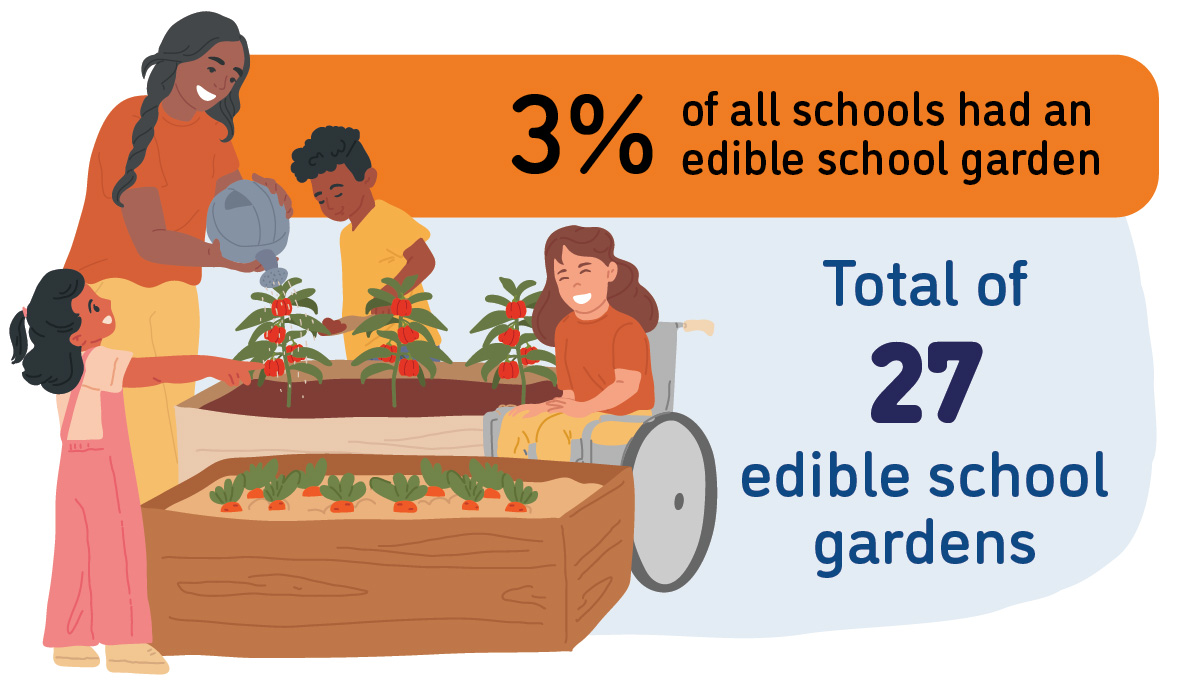
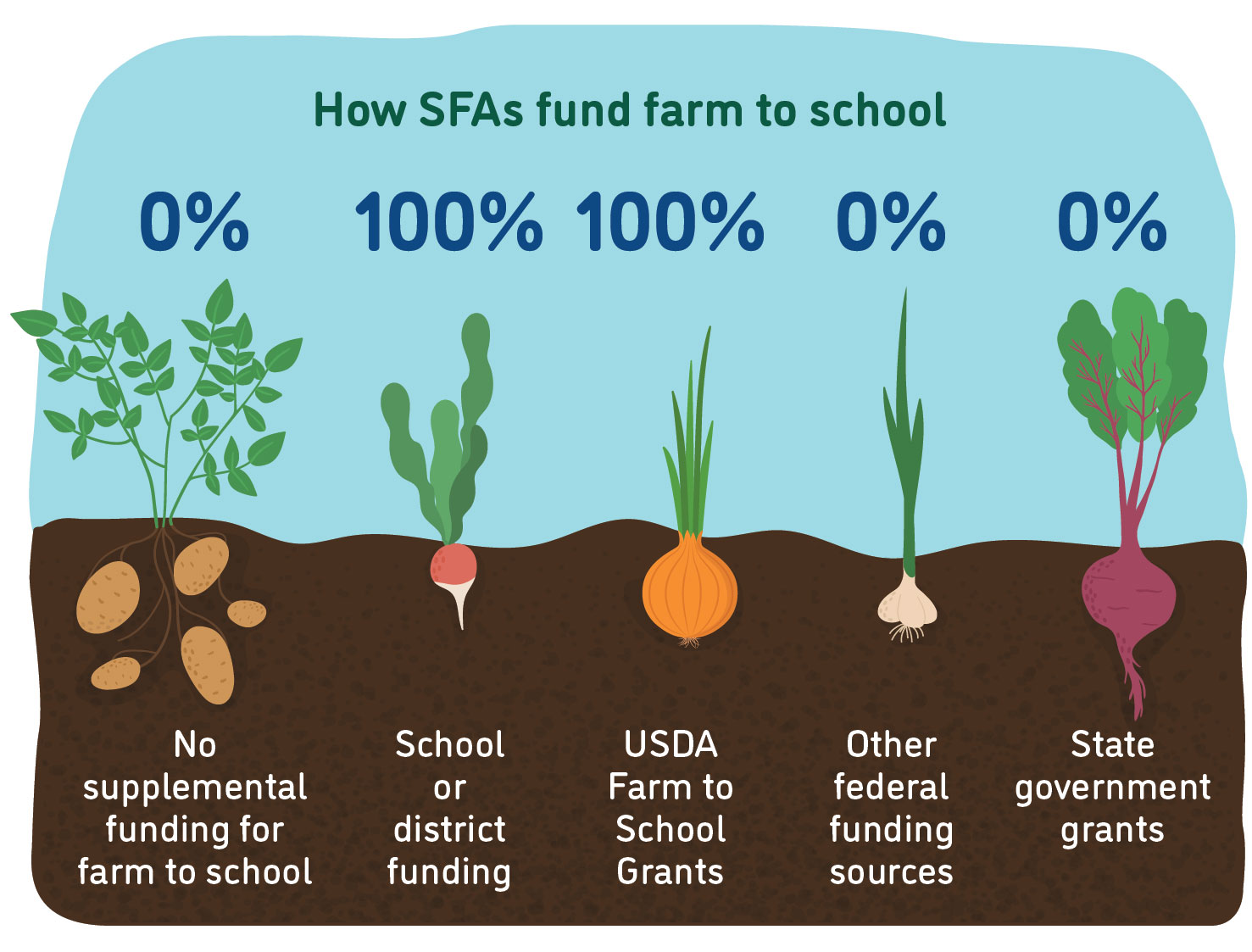
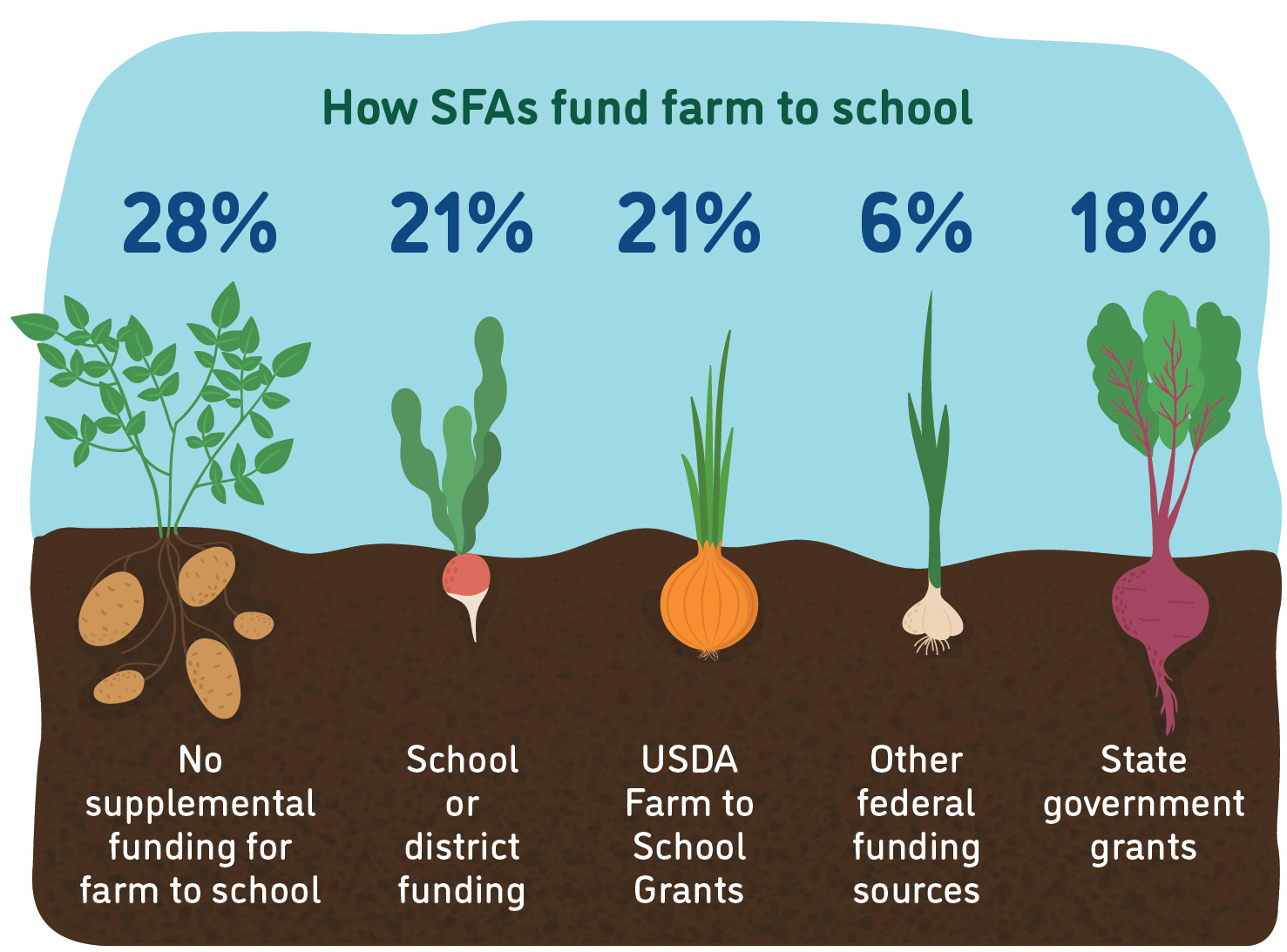
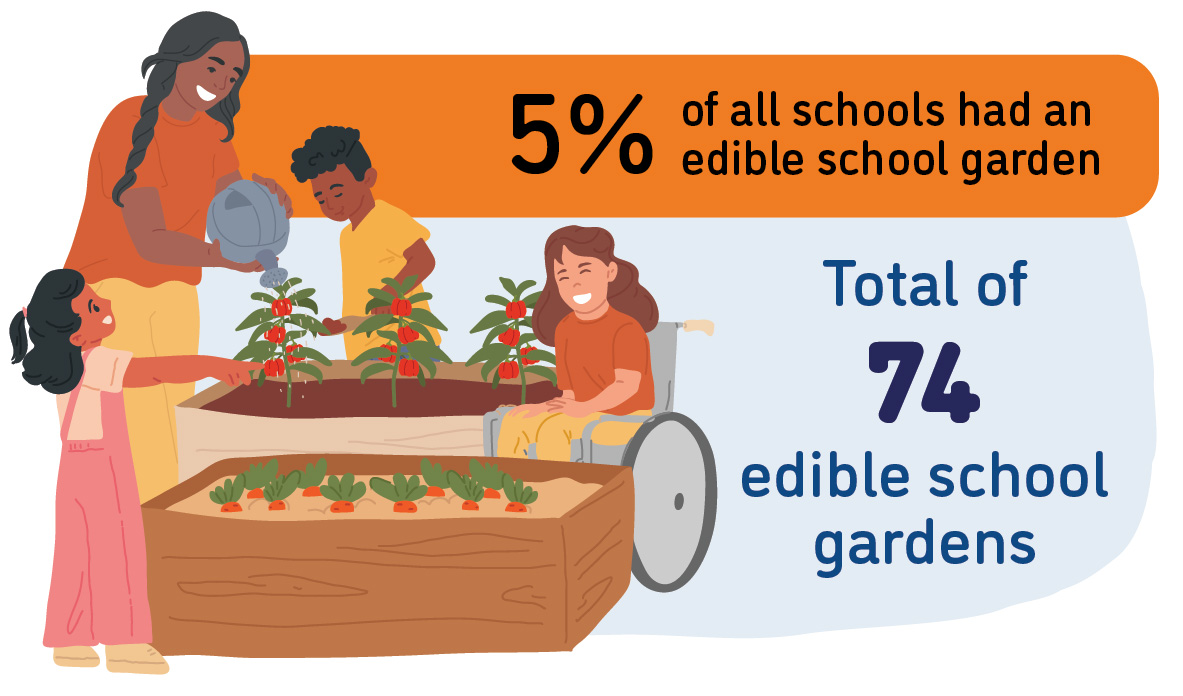
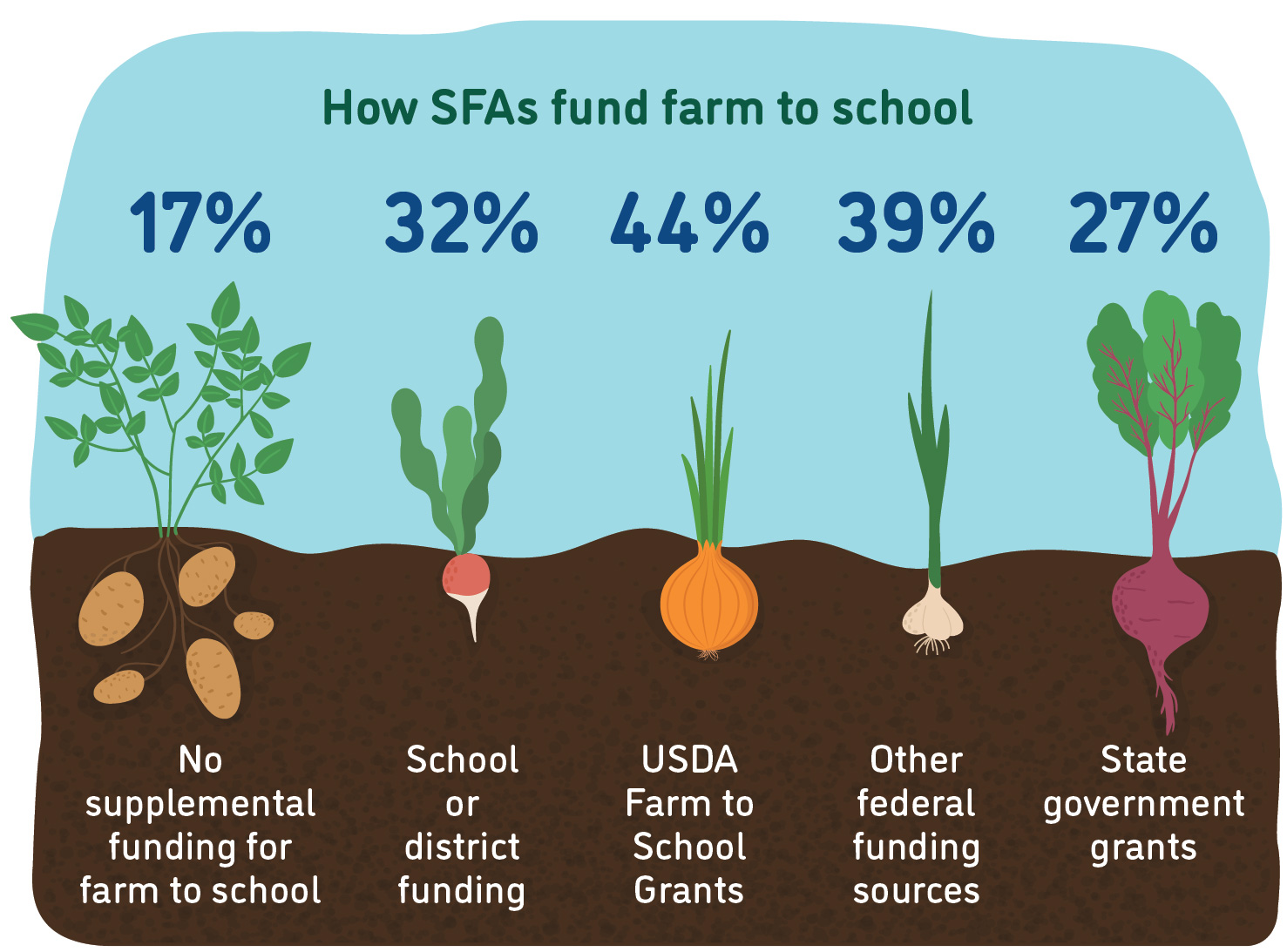
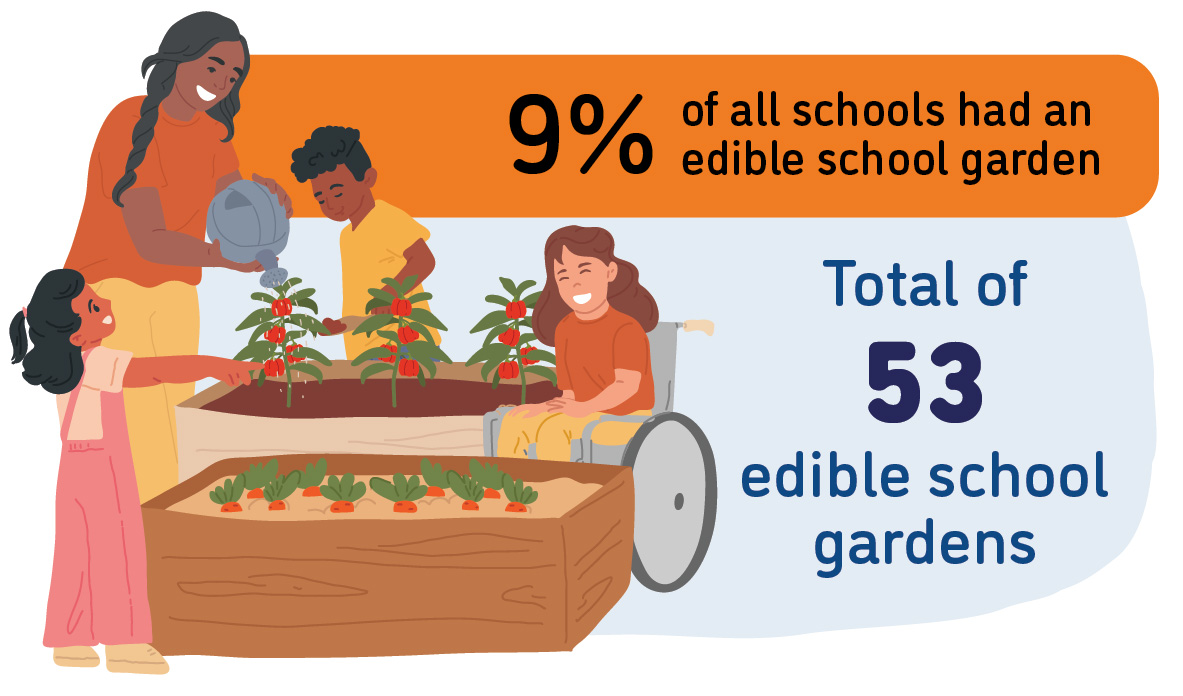
The term “farm to school” refers to efforts to serve local foods and provide education on food and agriculture to children in schools, child care settings, and summer meal sites. The 2023 Farm to School Census collected information on farm to school participation by school food authorities (SFAs) in school year (SY) 2022–23. Every SFA participating in the National School Lunch Program in the 50 states, Washington, DC, and five territories received an online survey asking about the farm to school activities they participated in, details of their participation, and their perspectives on farm to school. Past Farm to School Census surveys were conducted in 2013, 2015, and 2019.
Key Findings
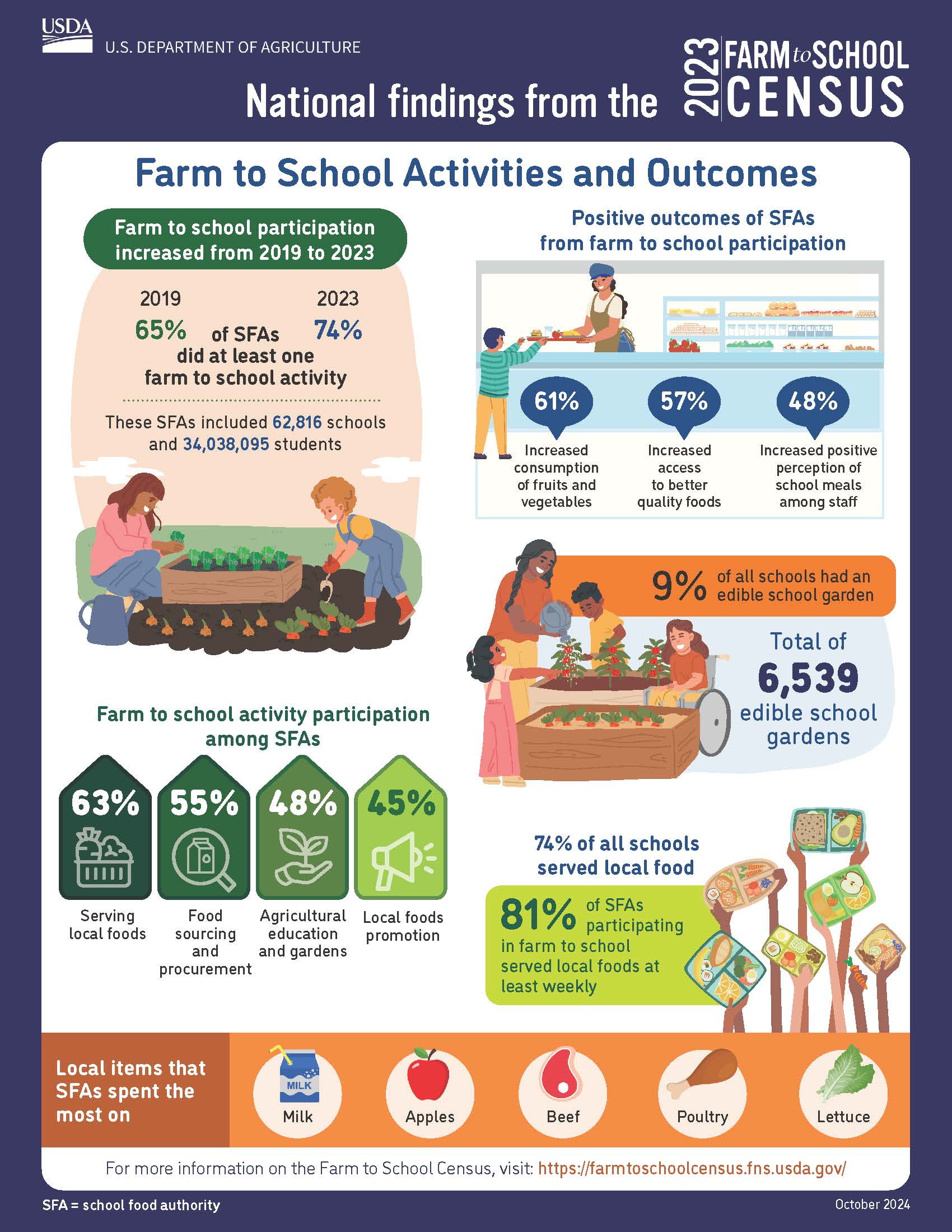
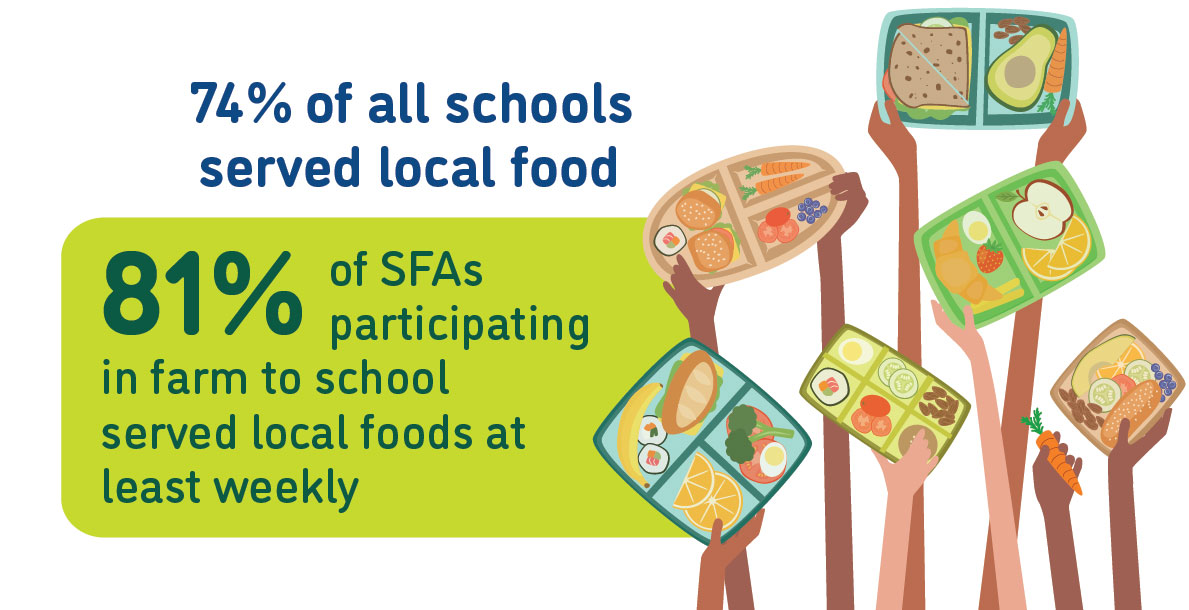
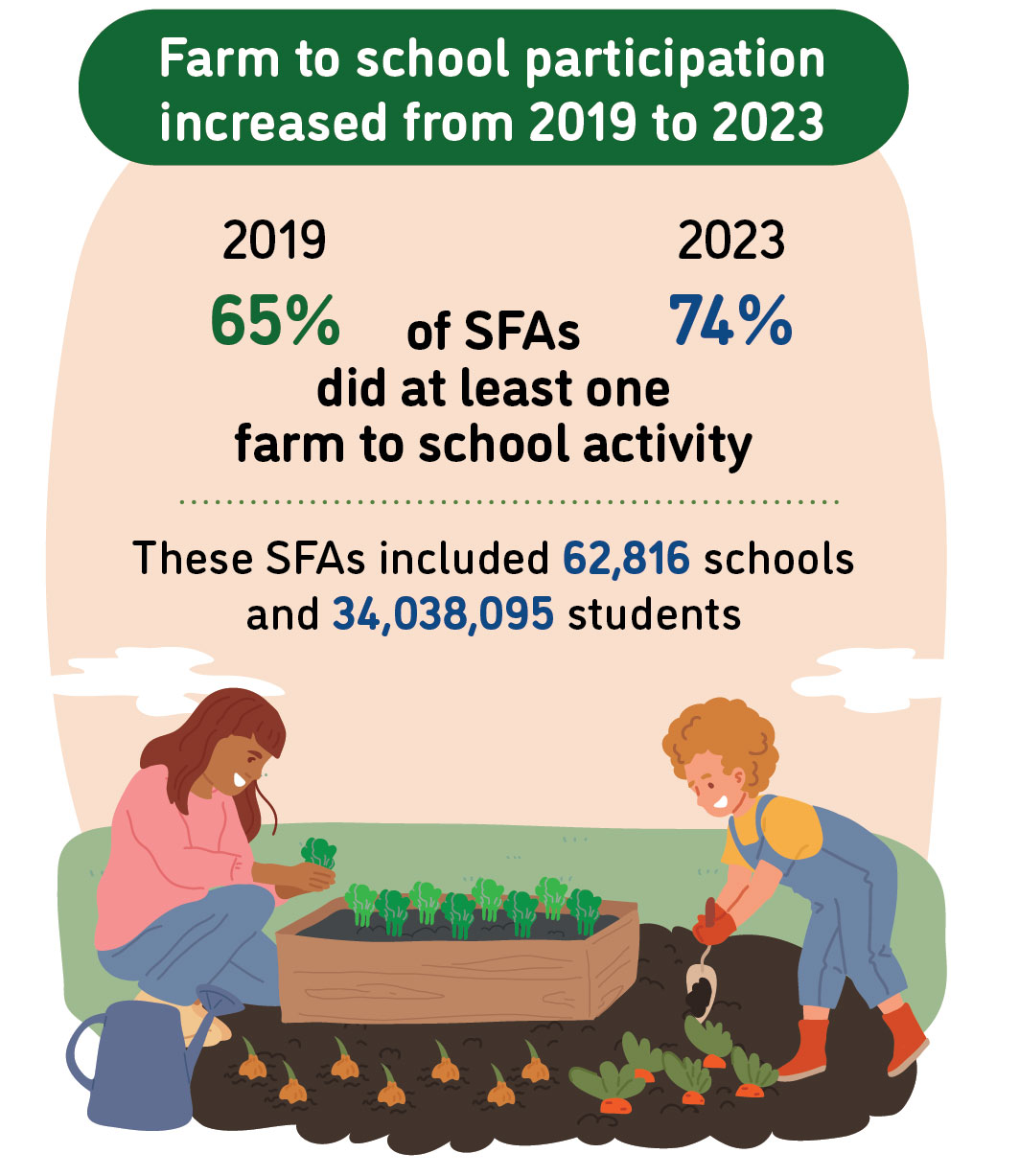
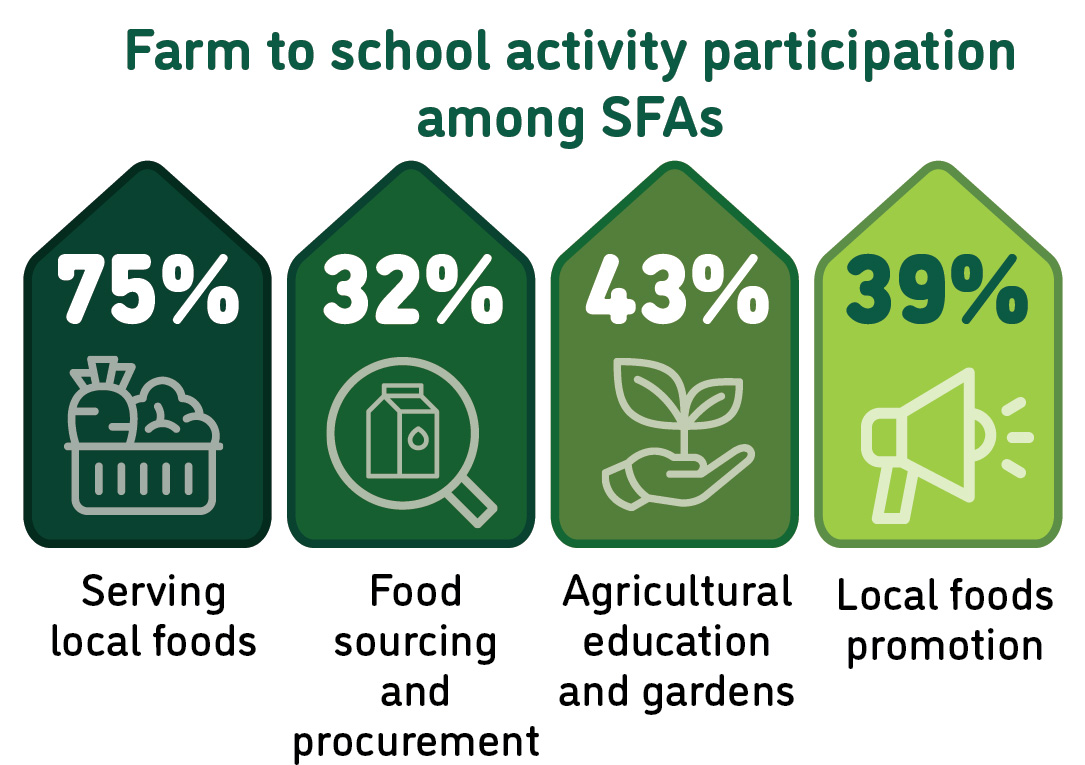
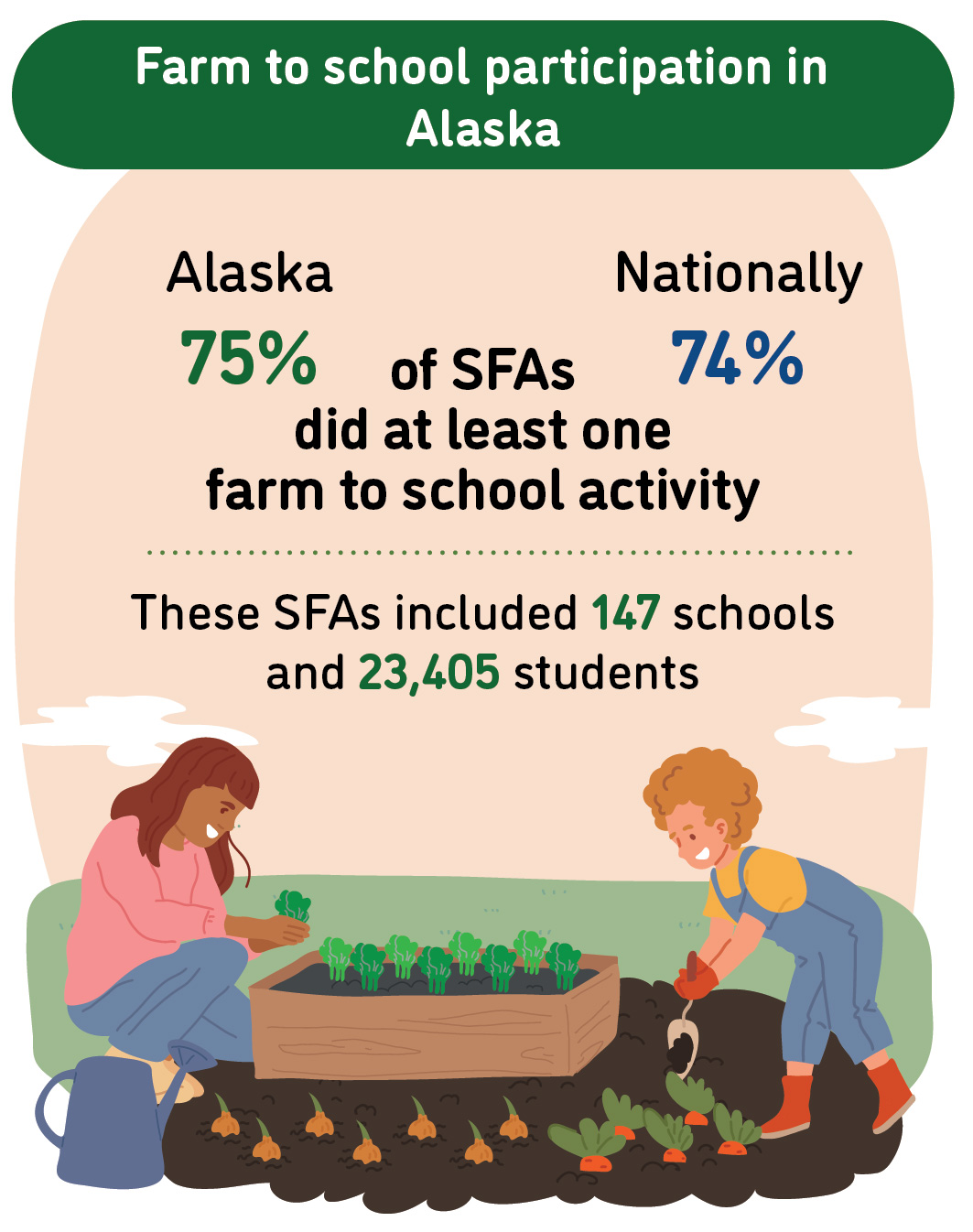
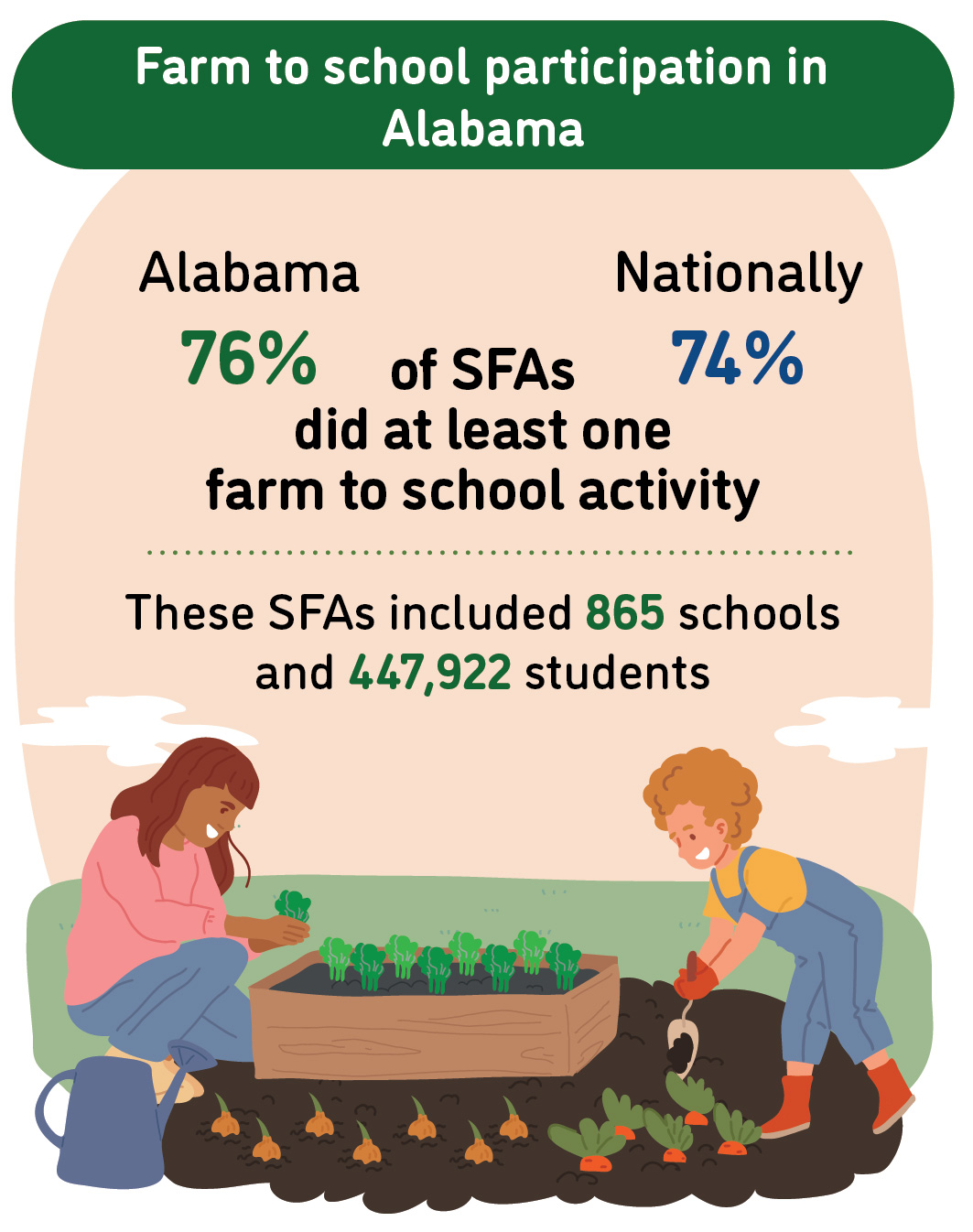
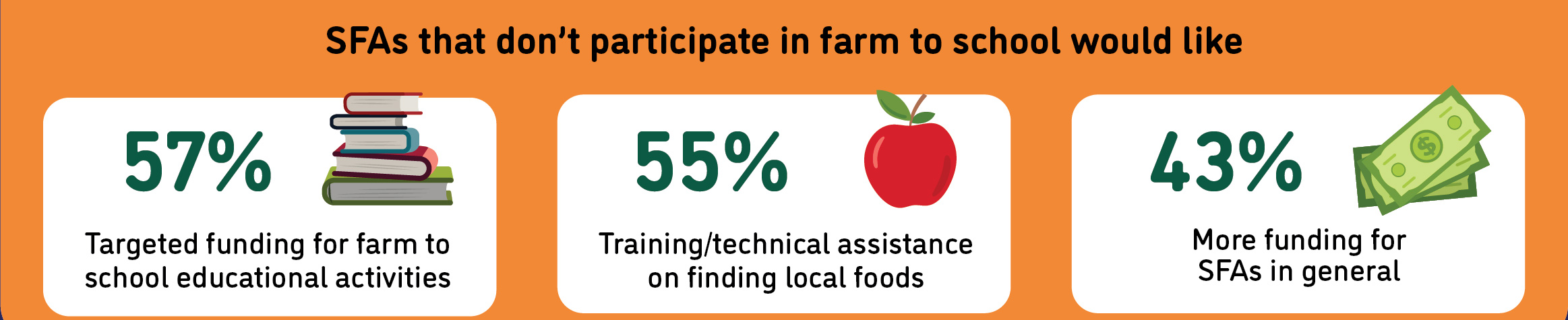
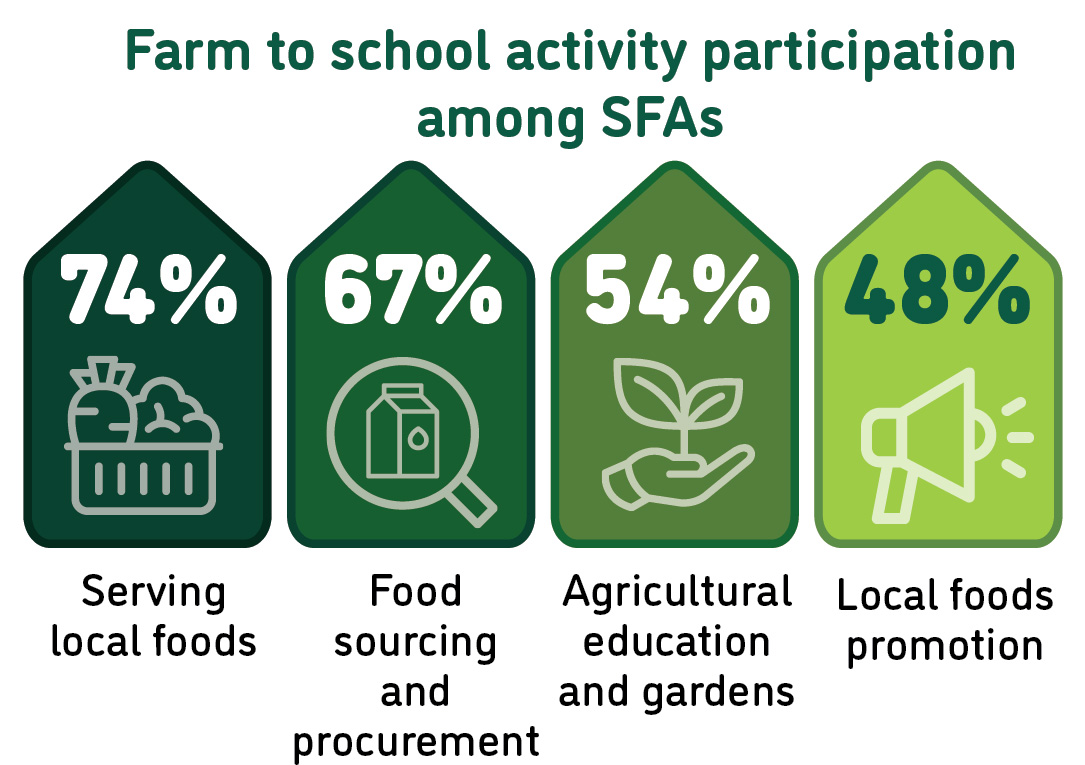
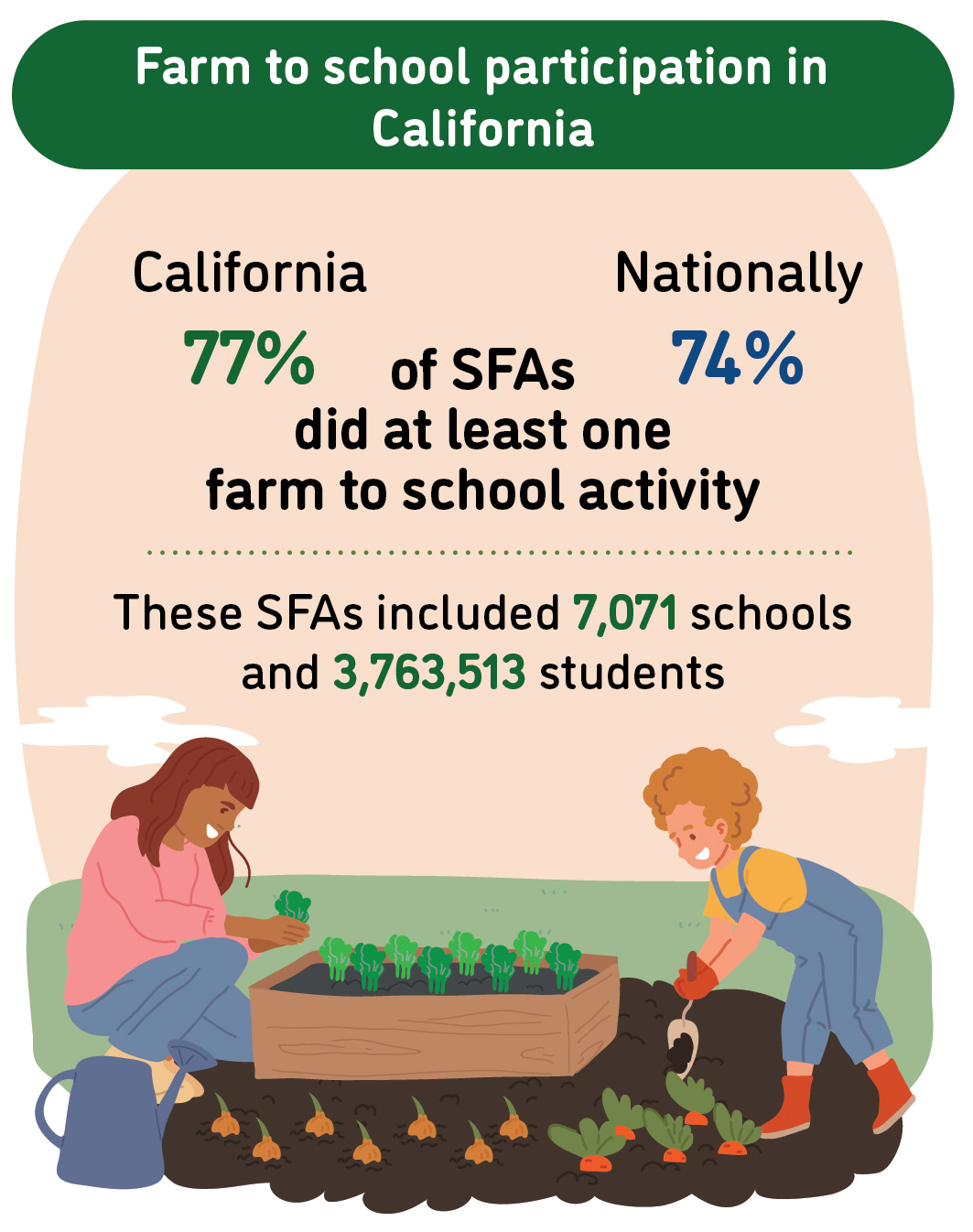
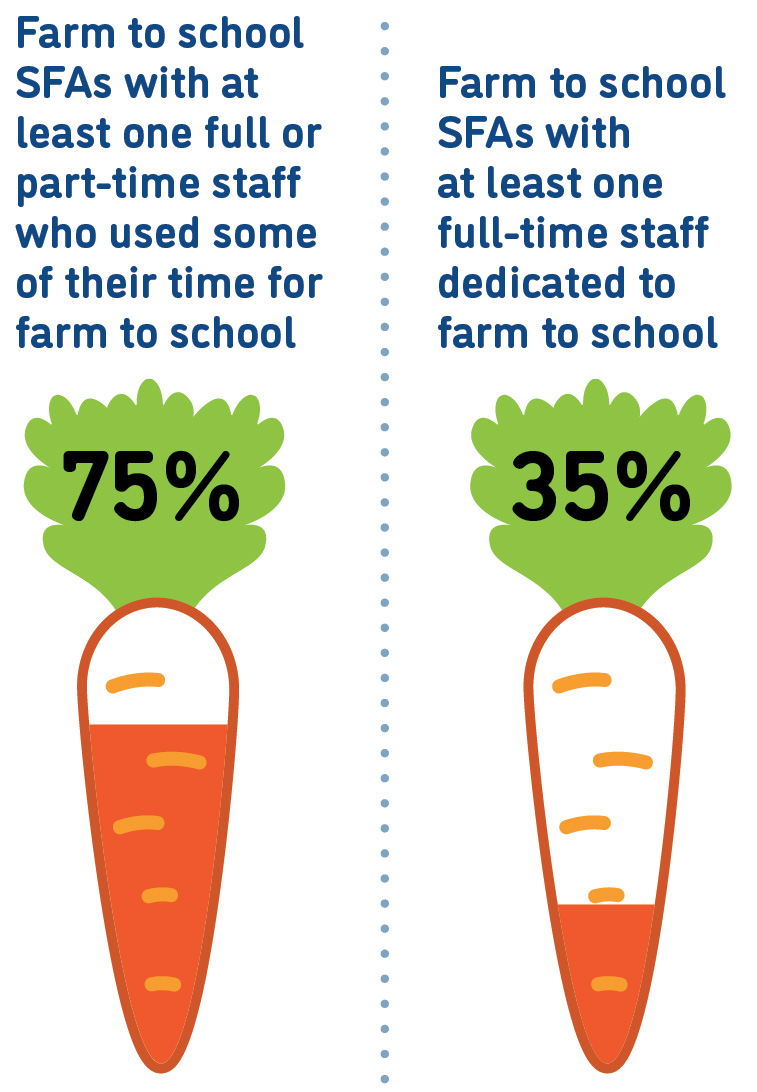
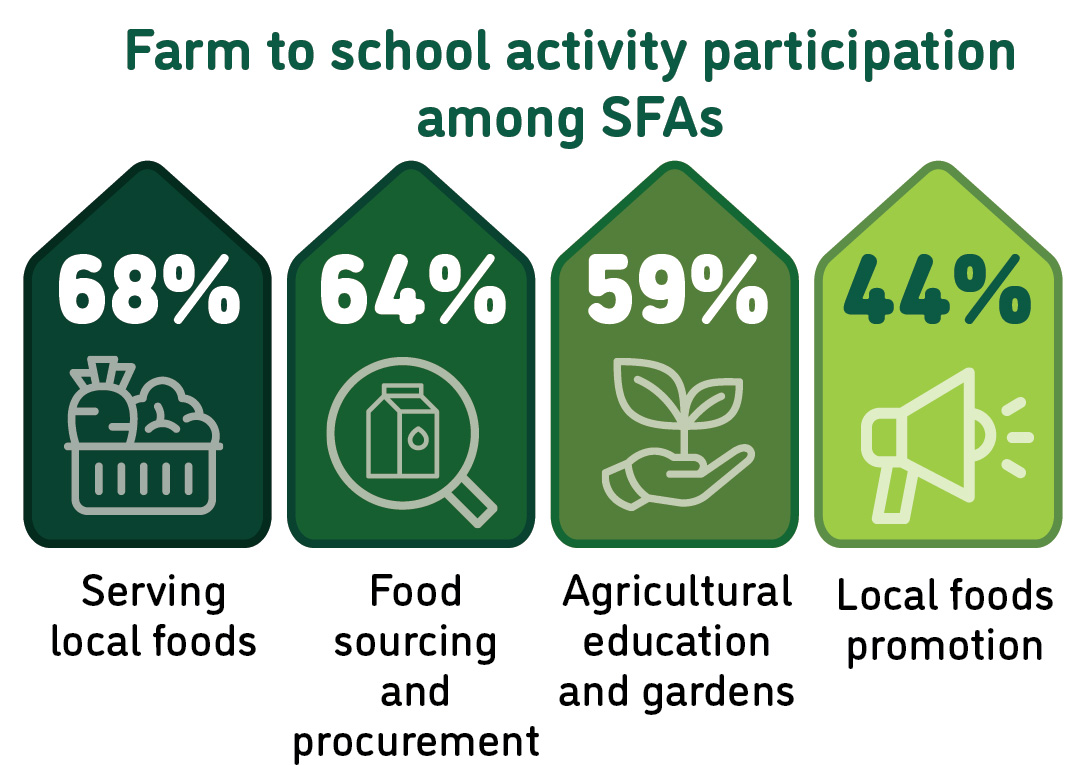
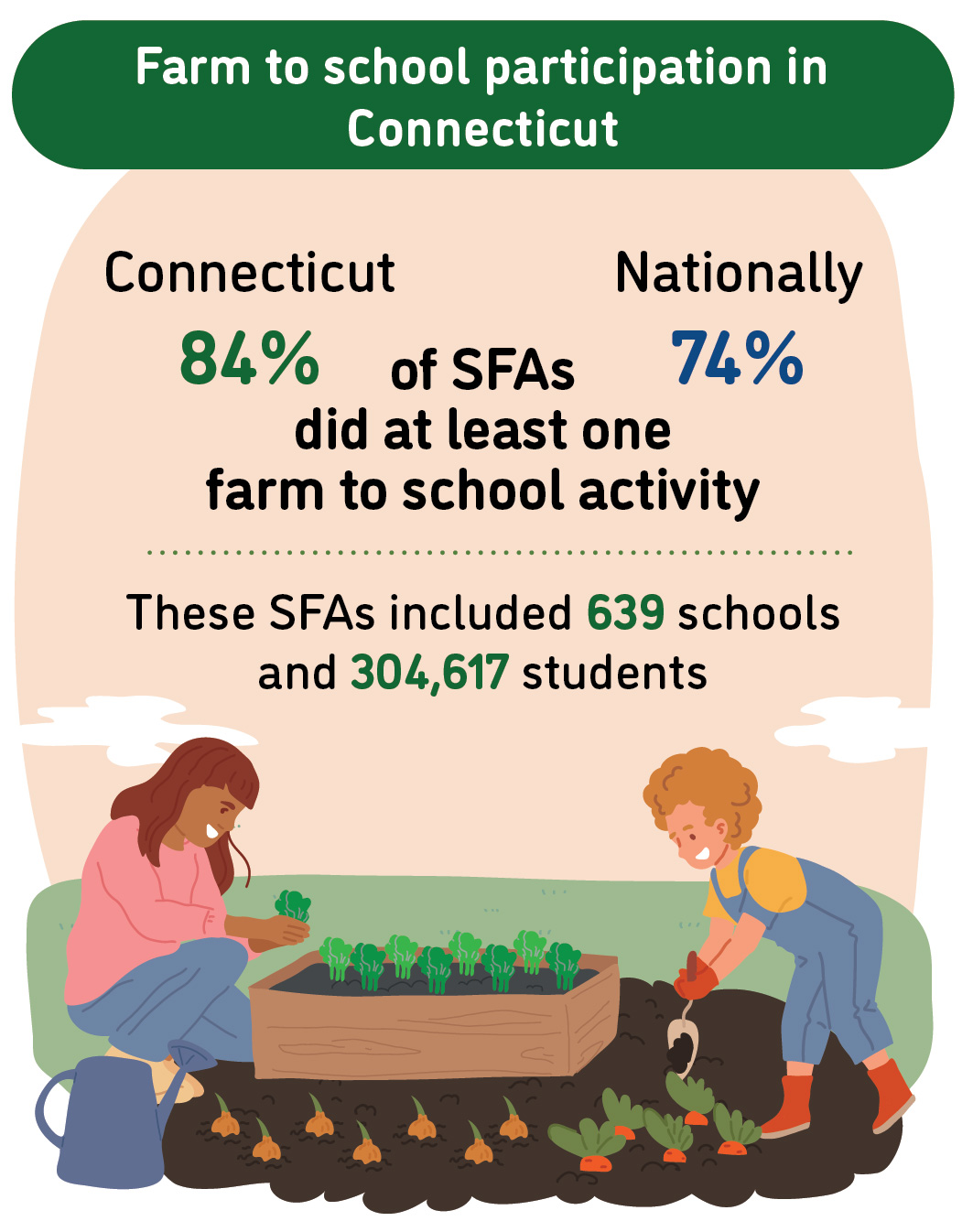
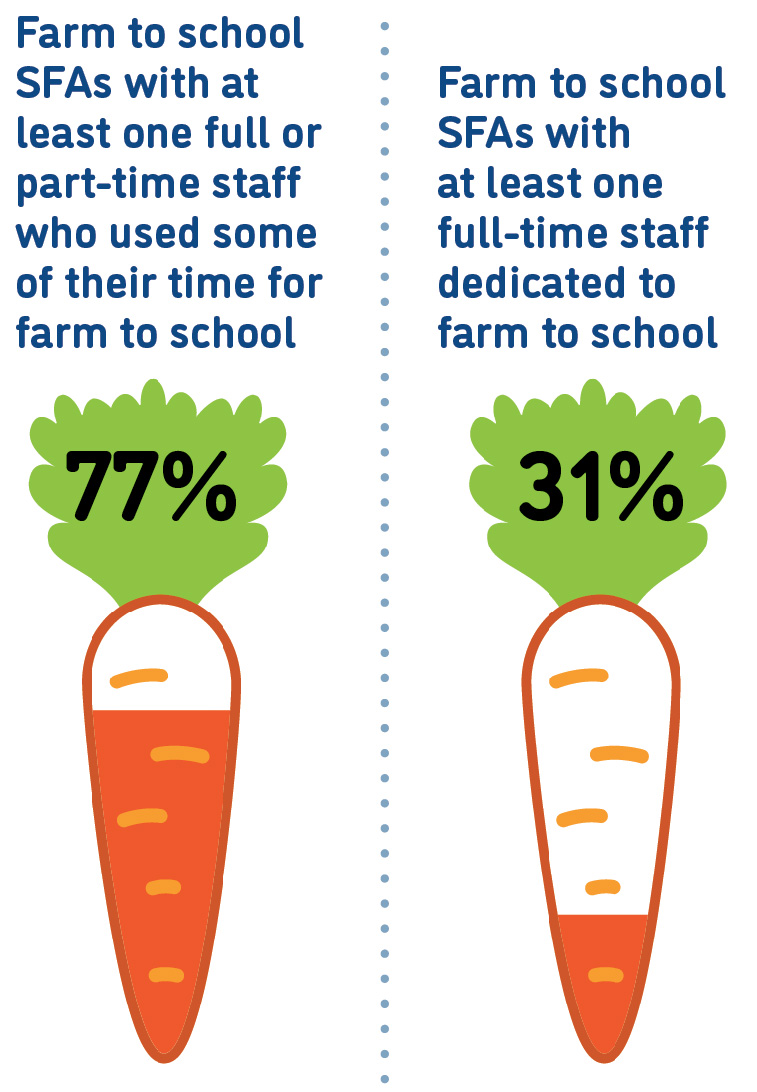
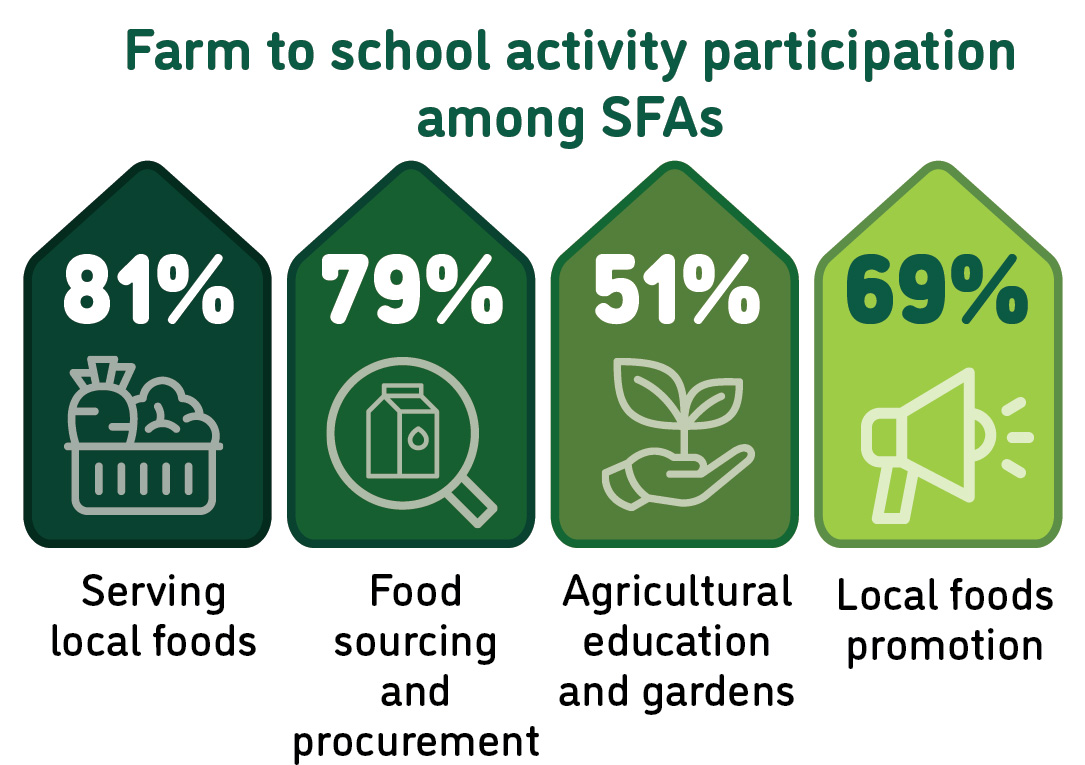
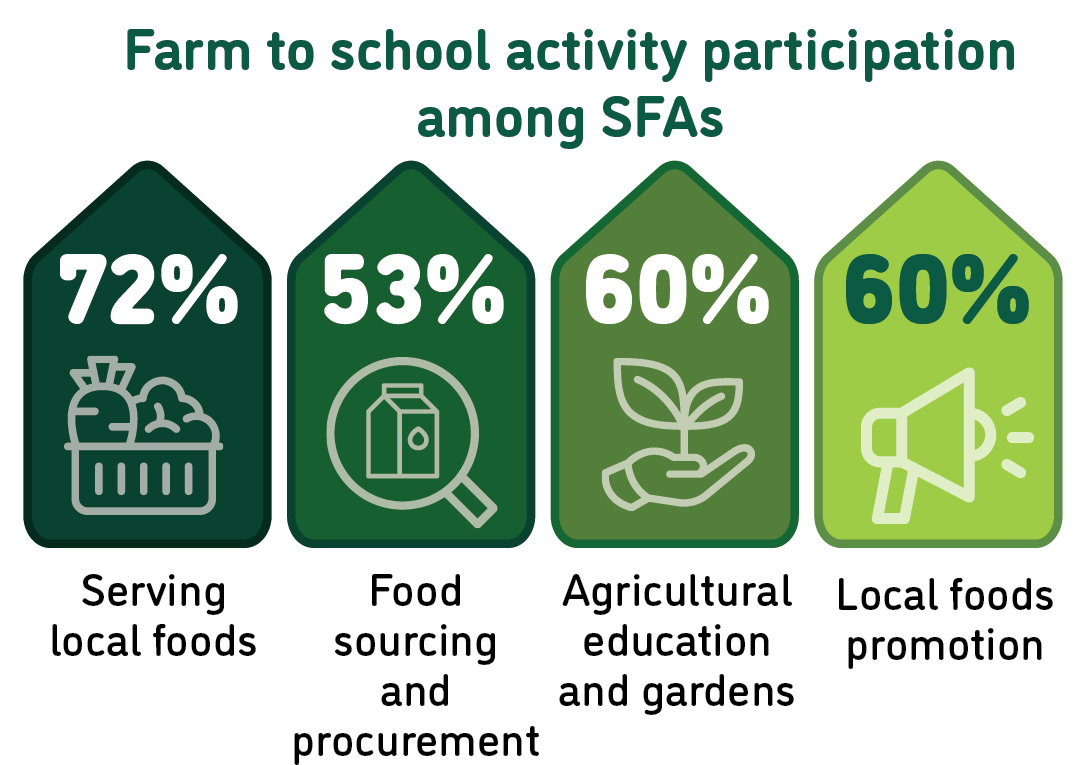
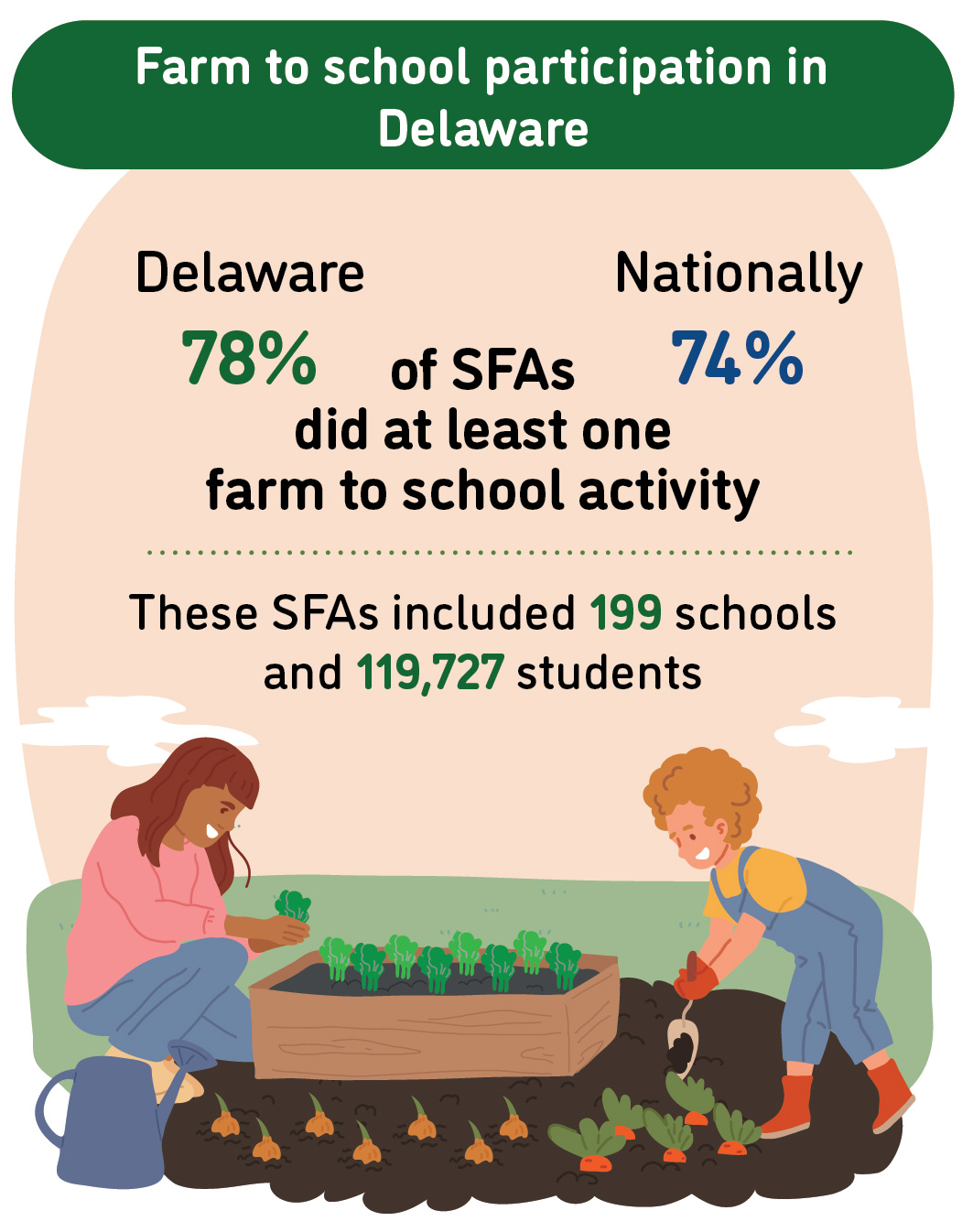
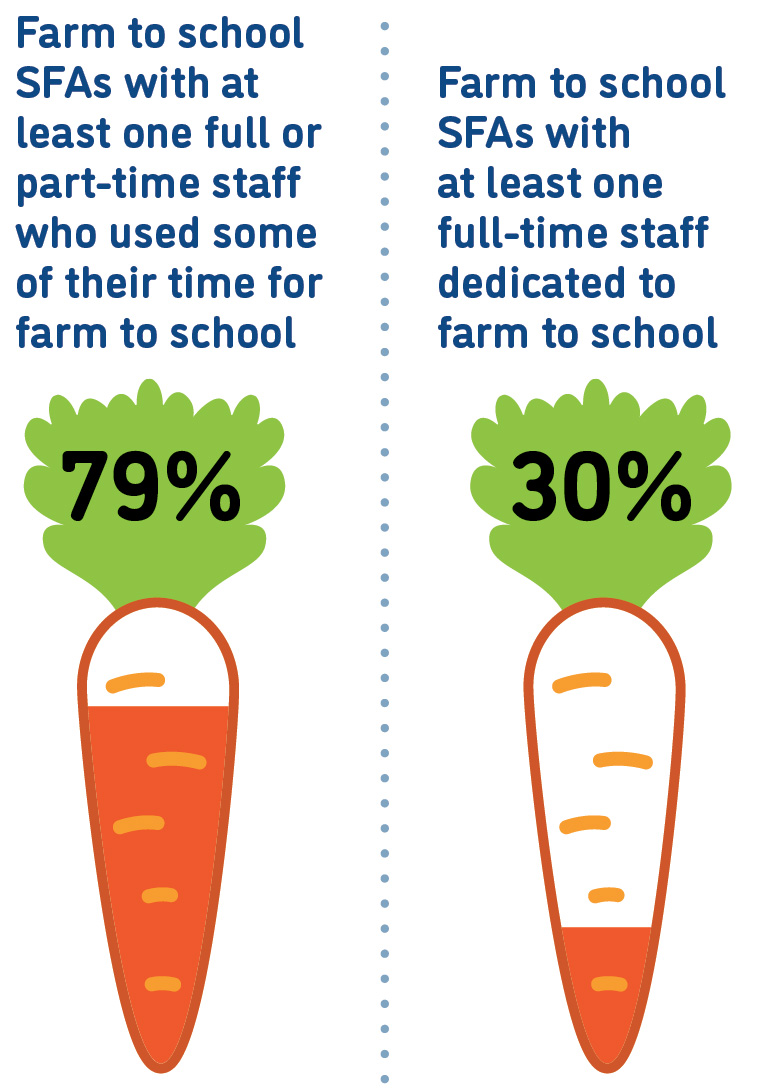
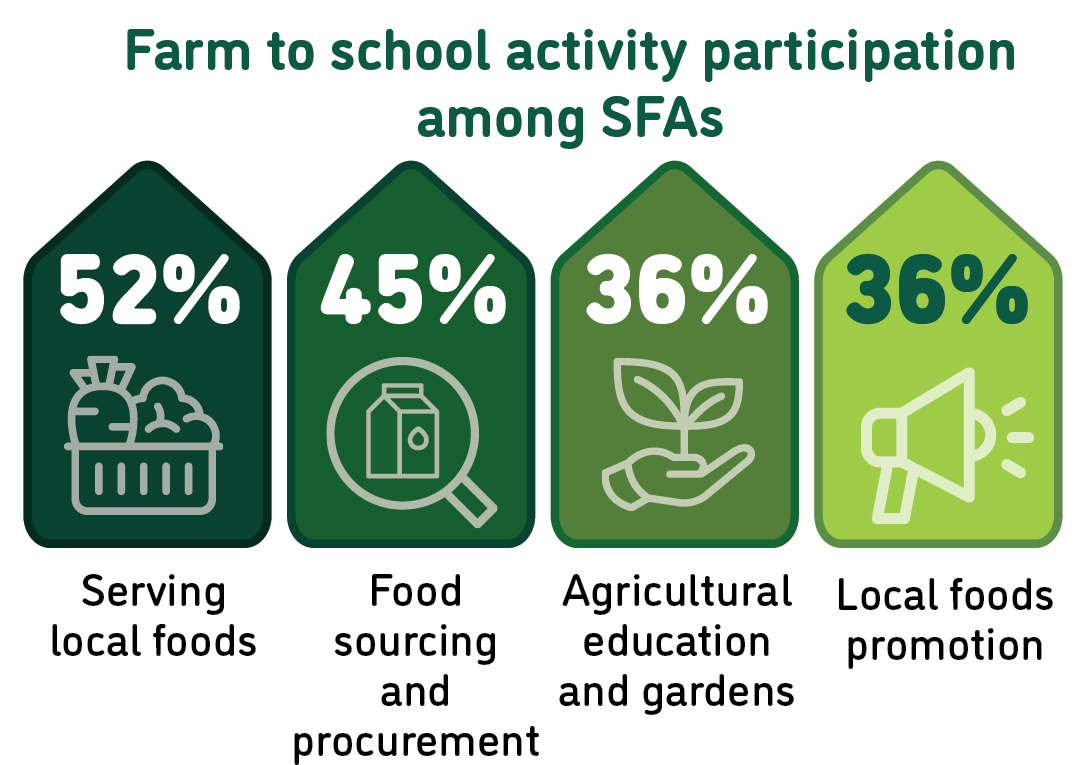
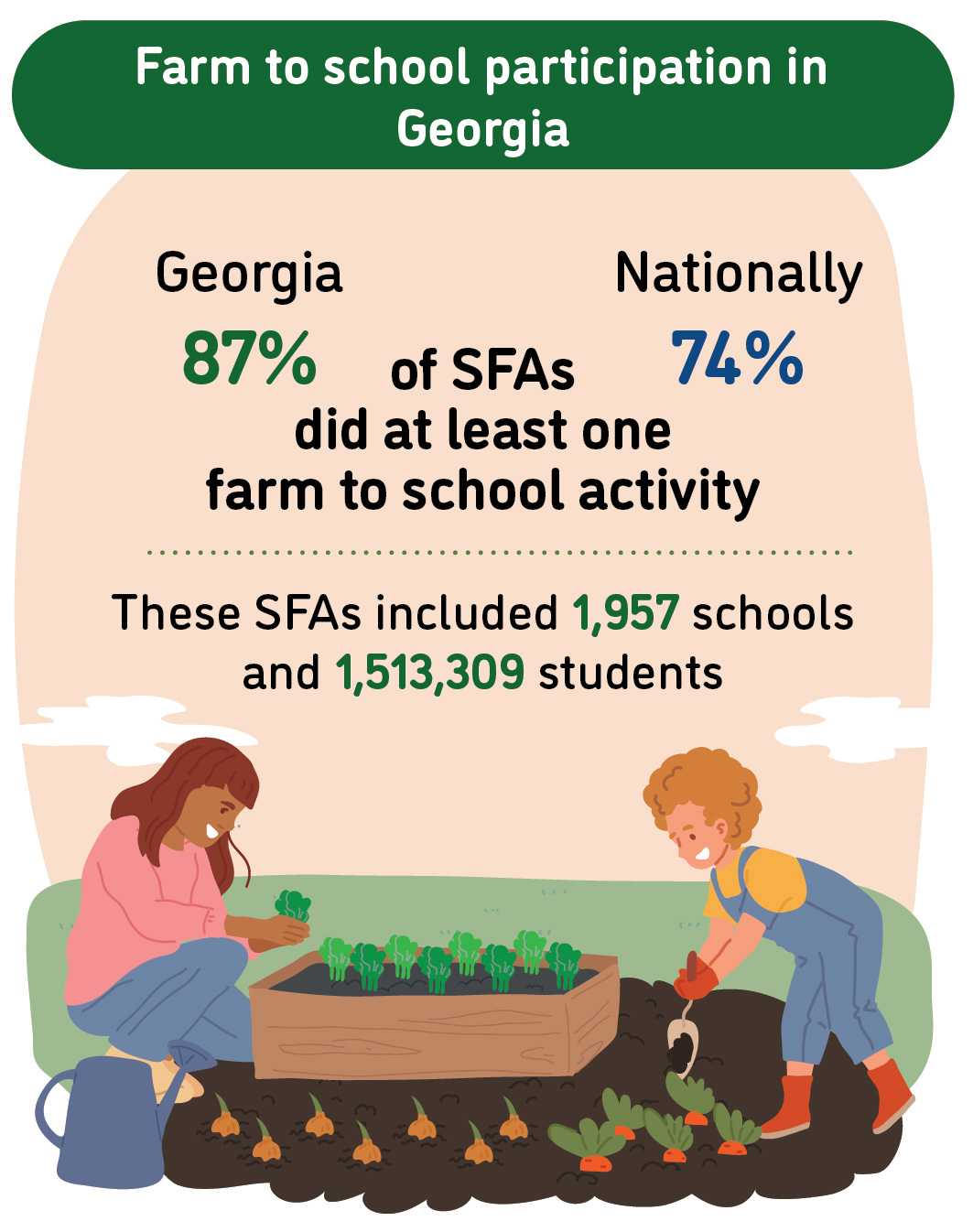
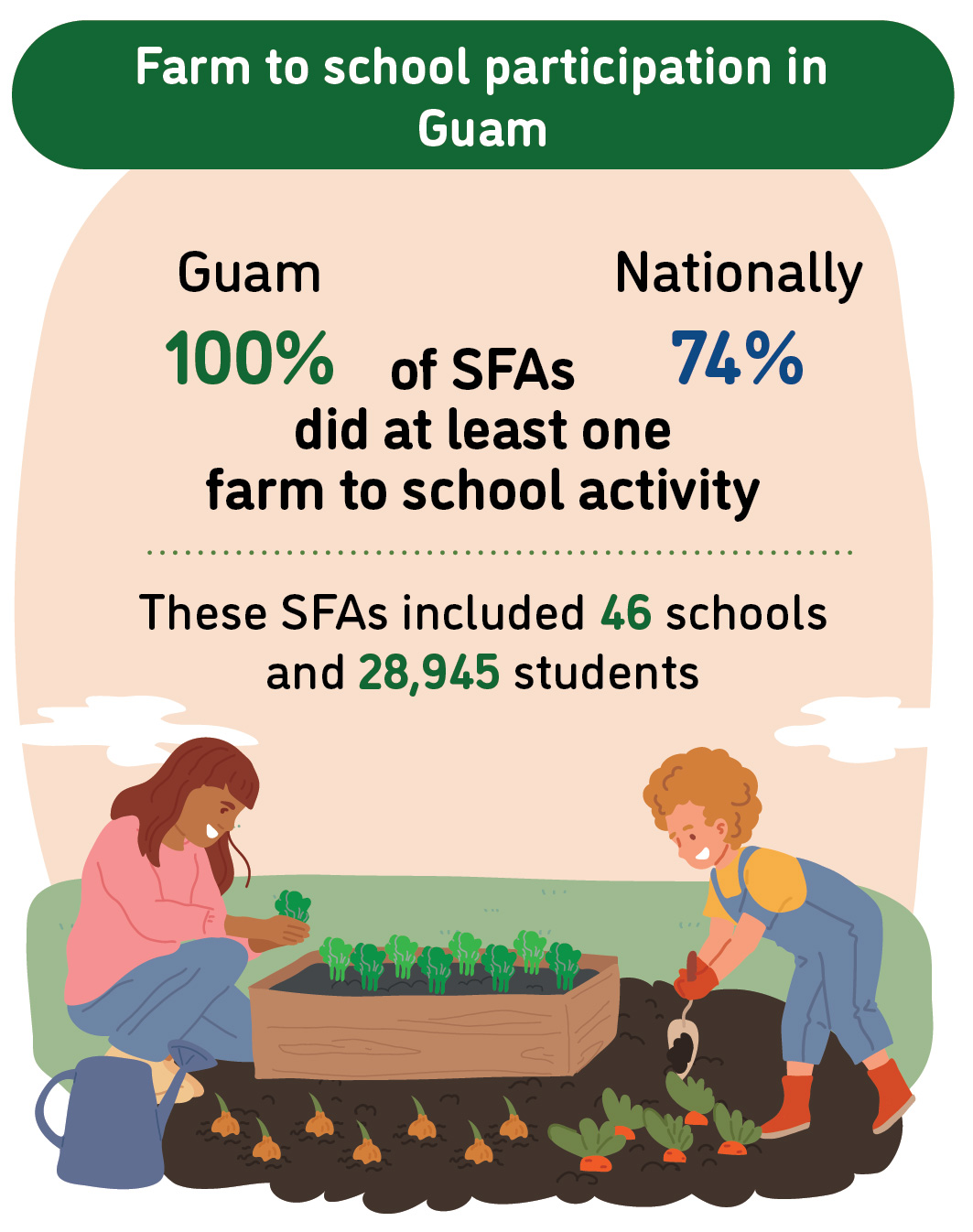
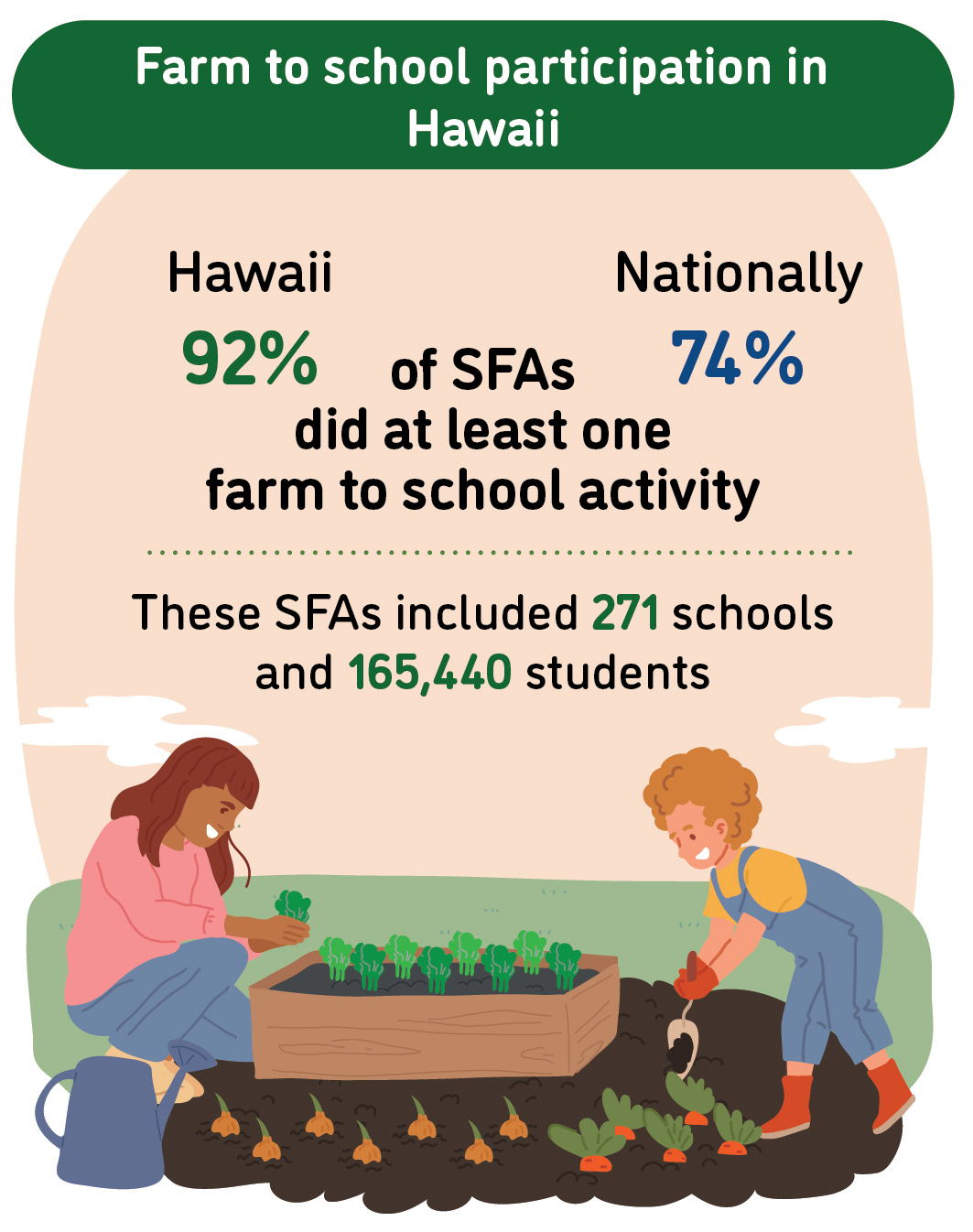
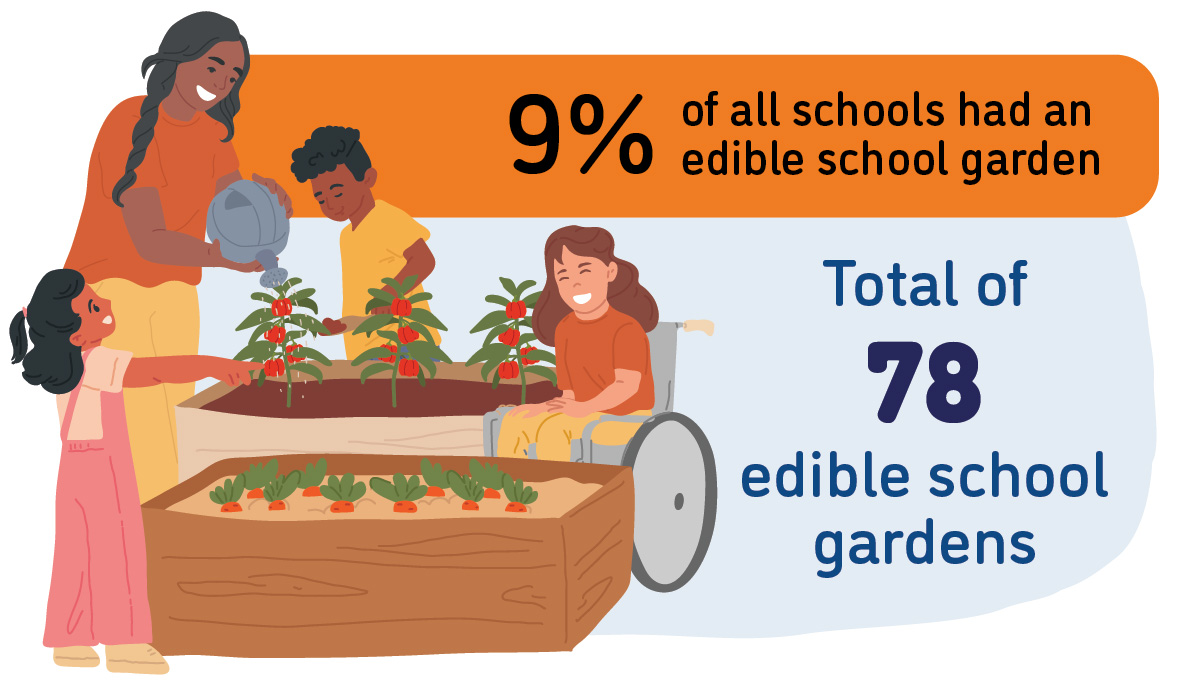
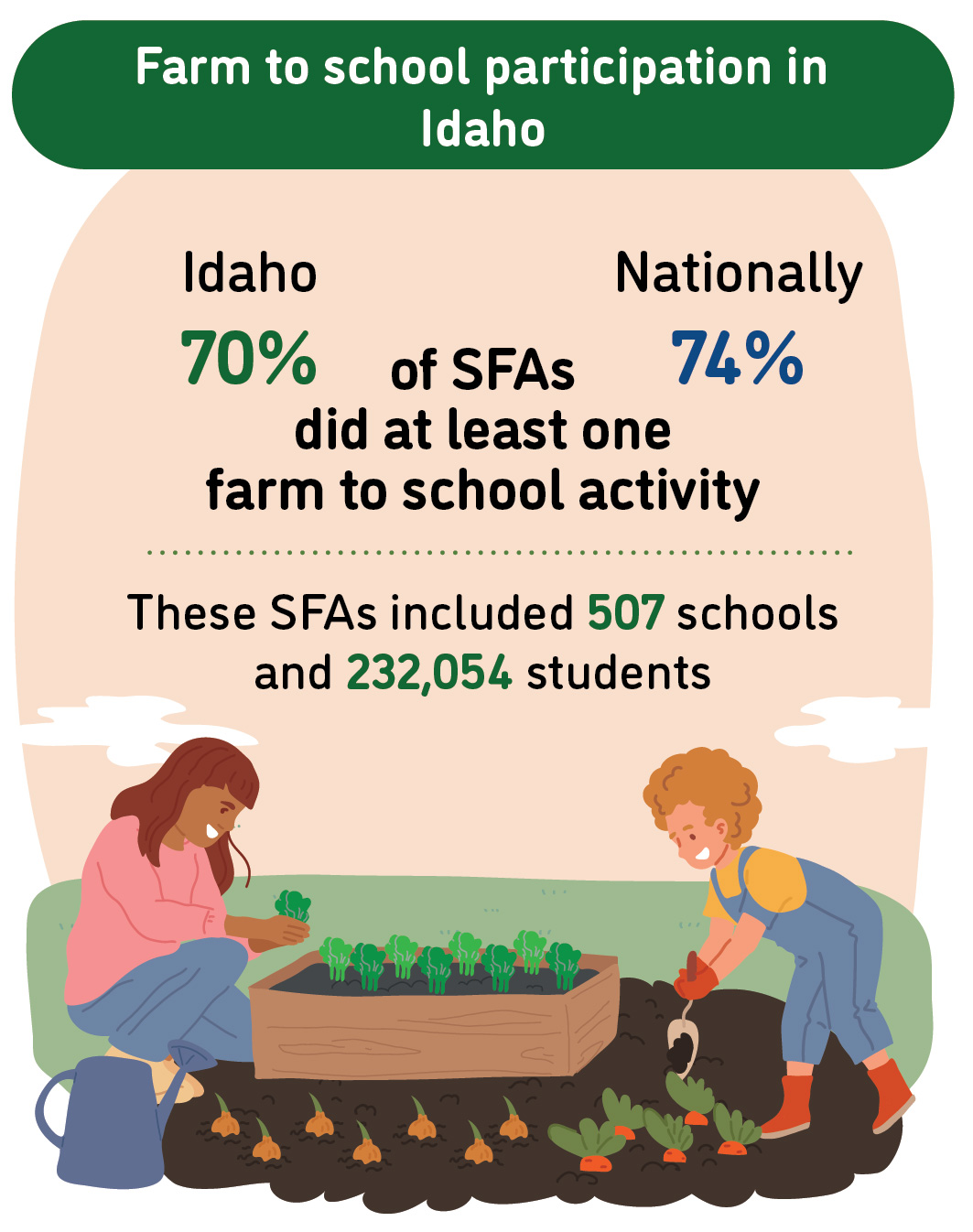
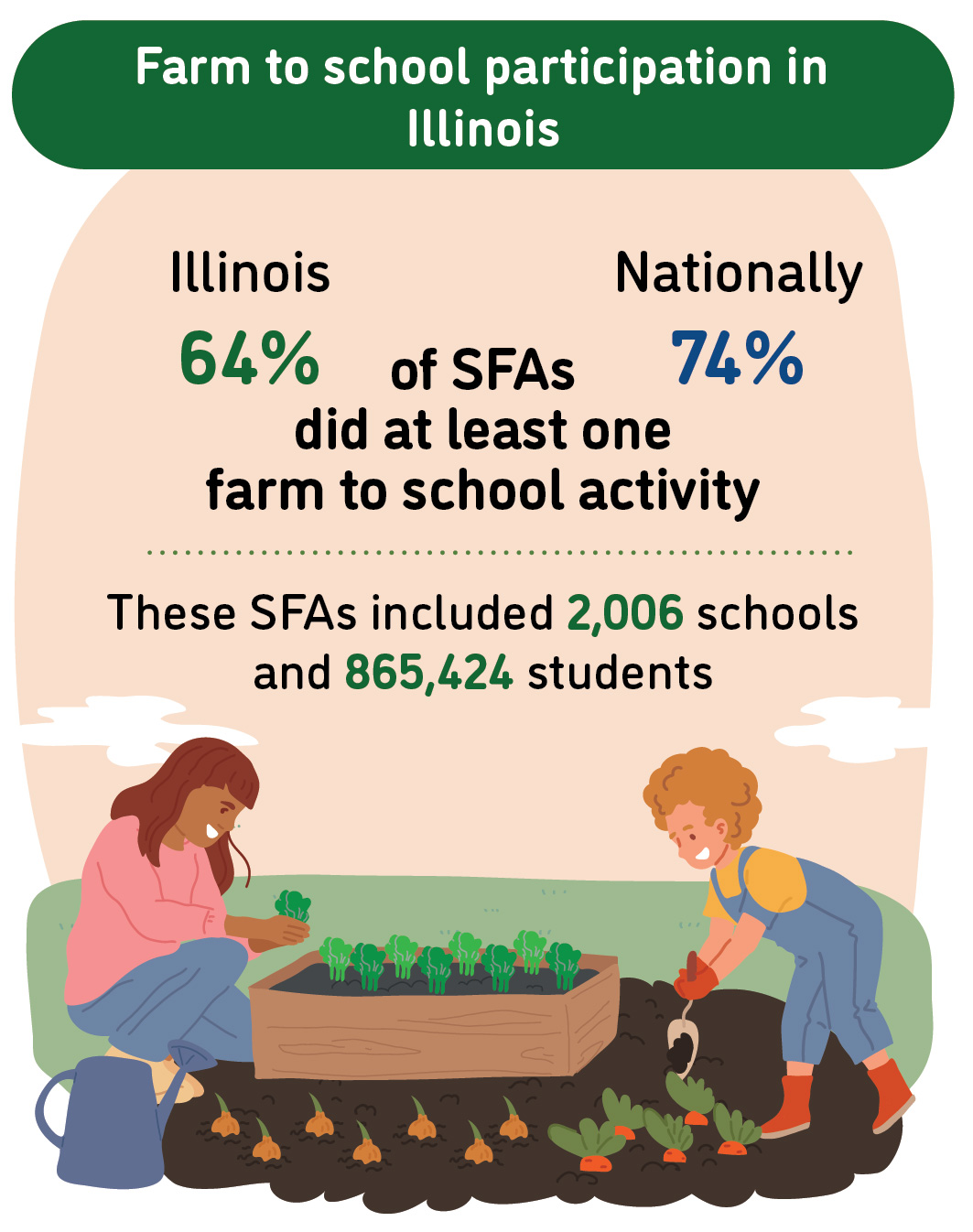
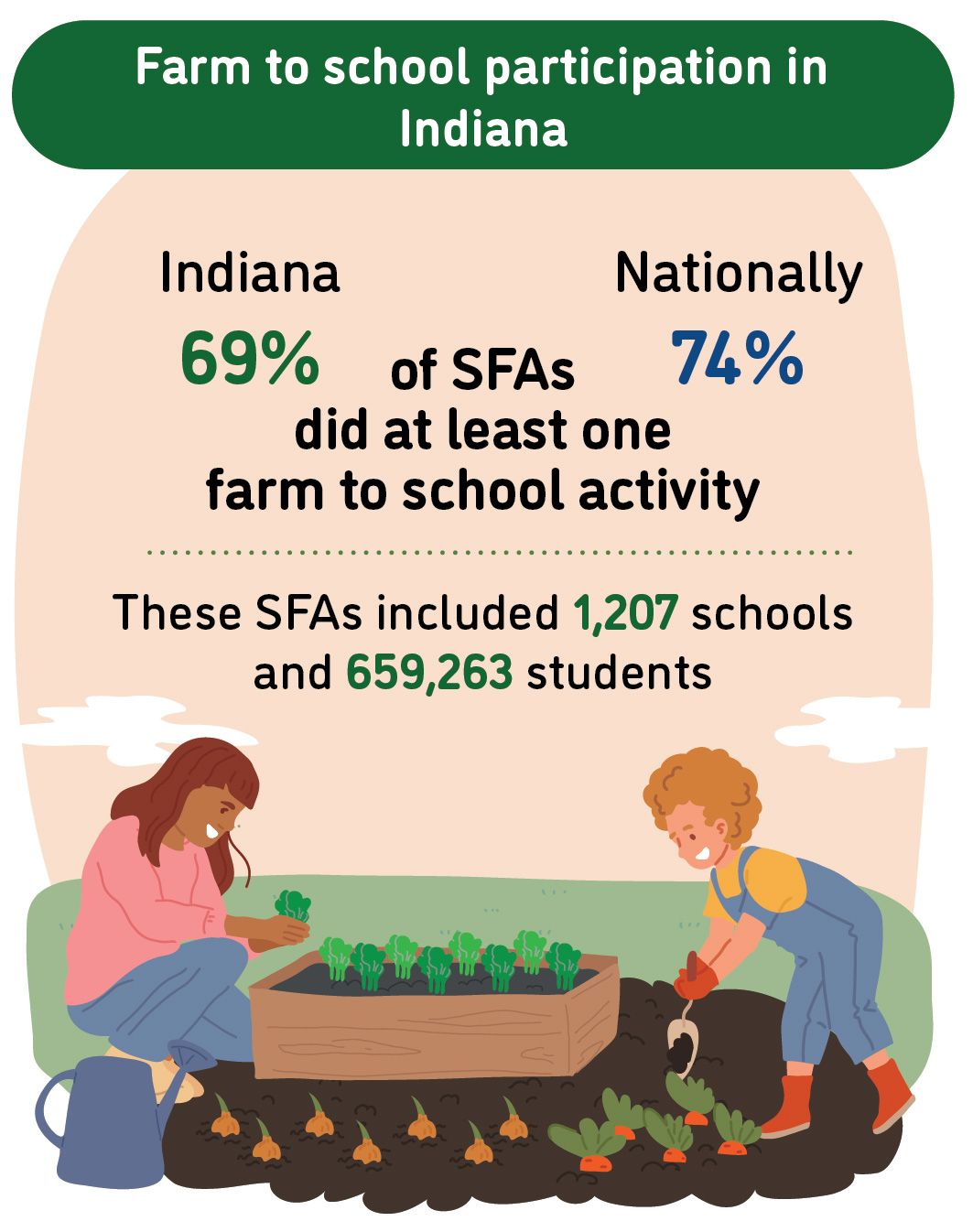
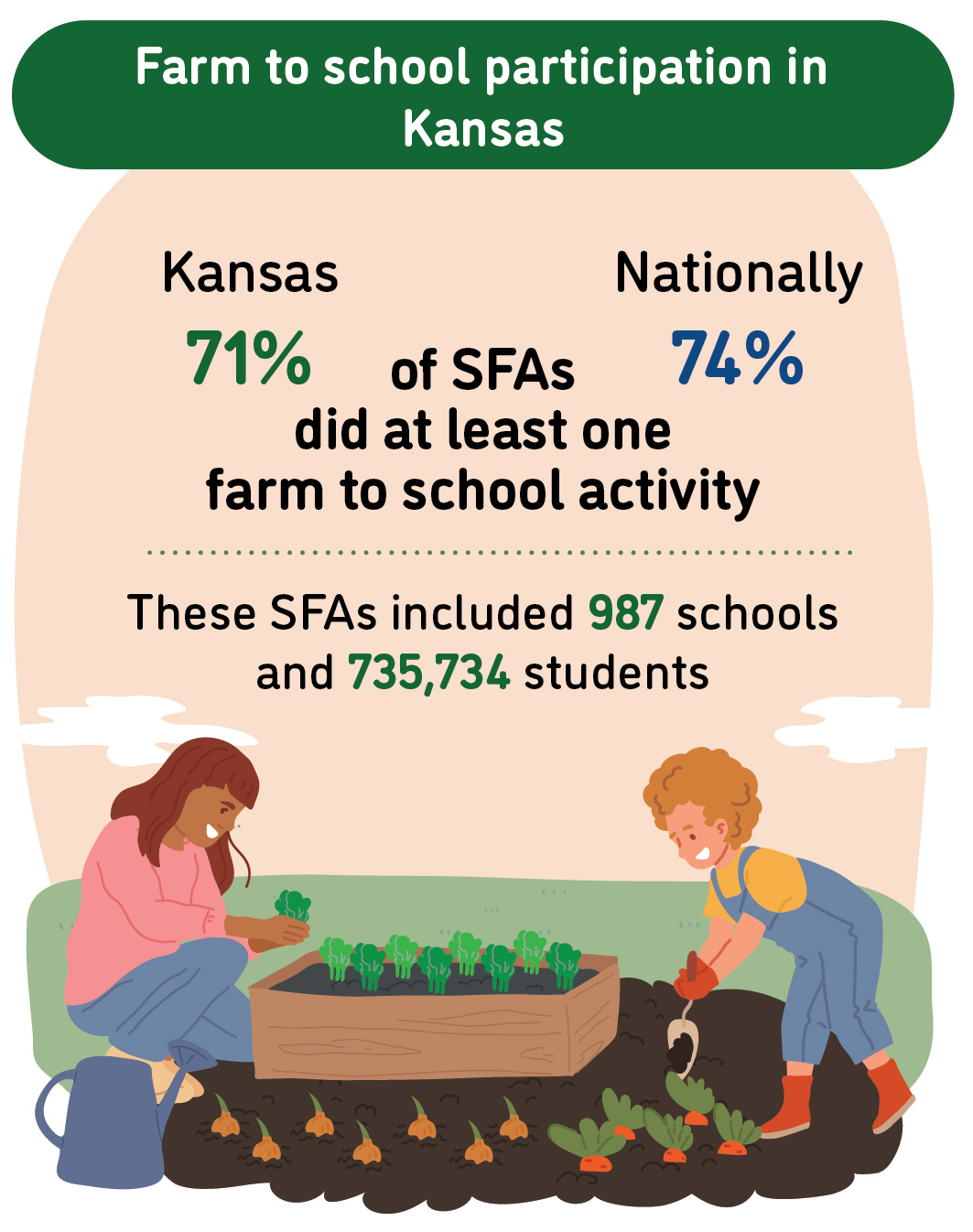
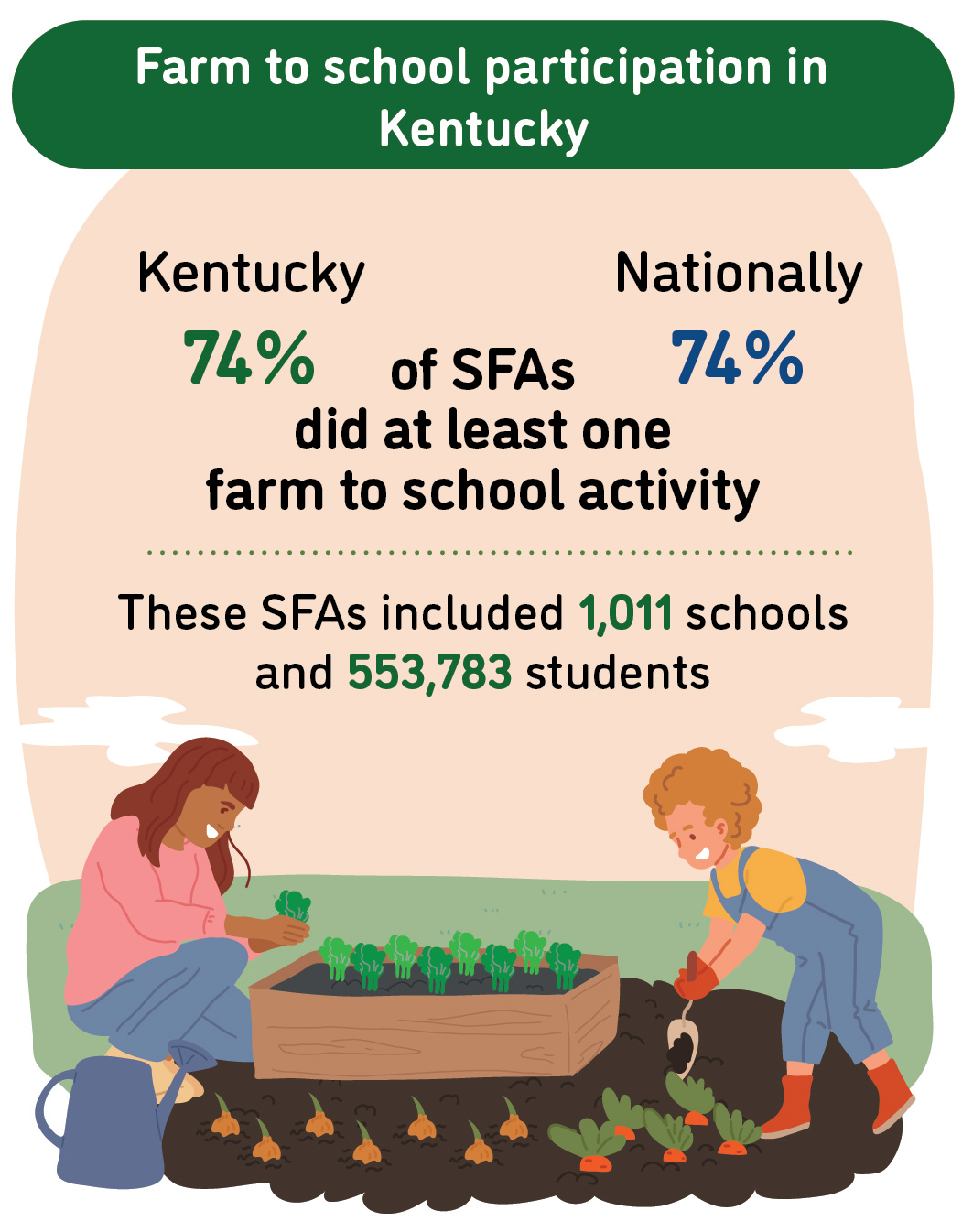
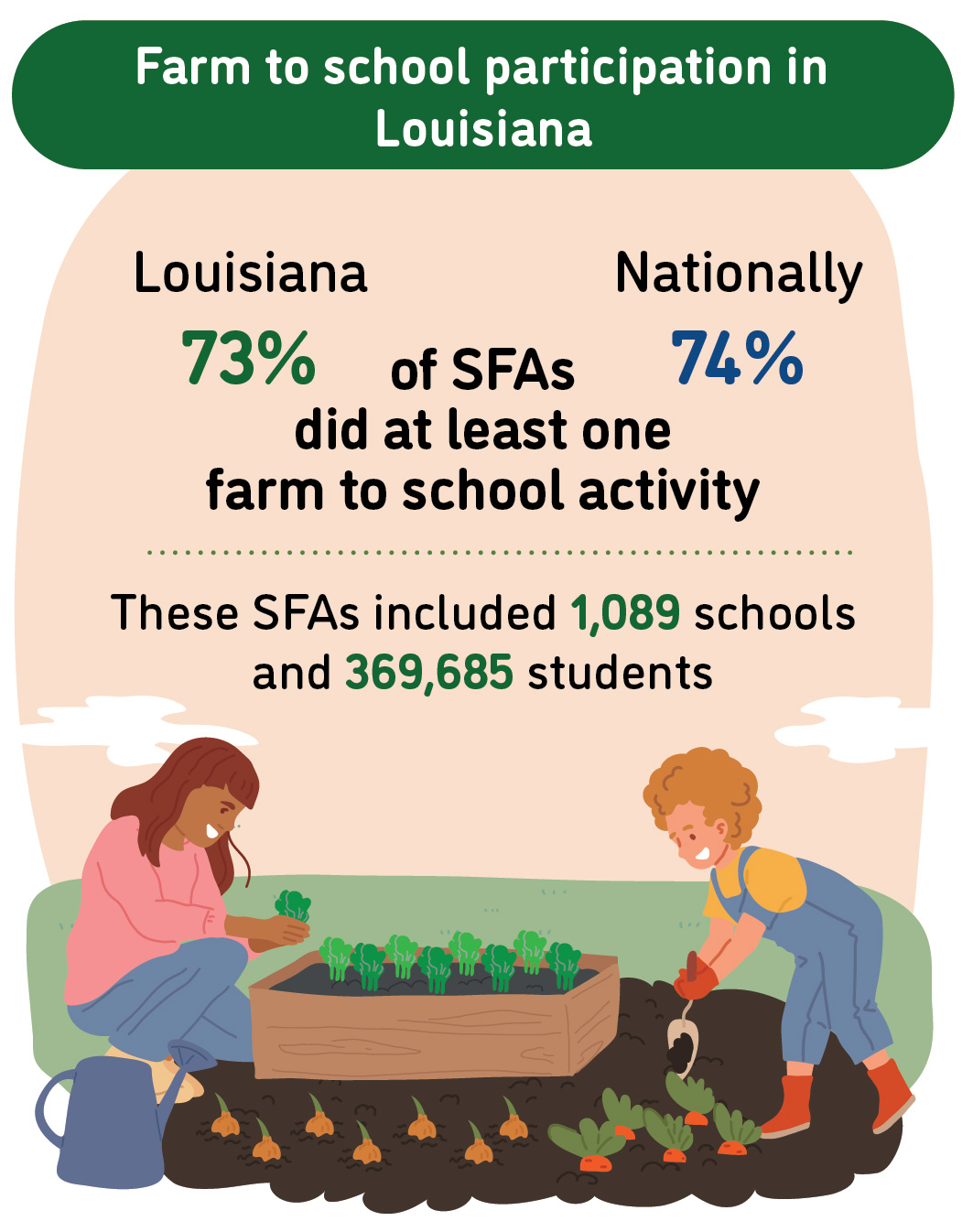
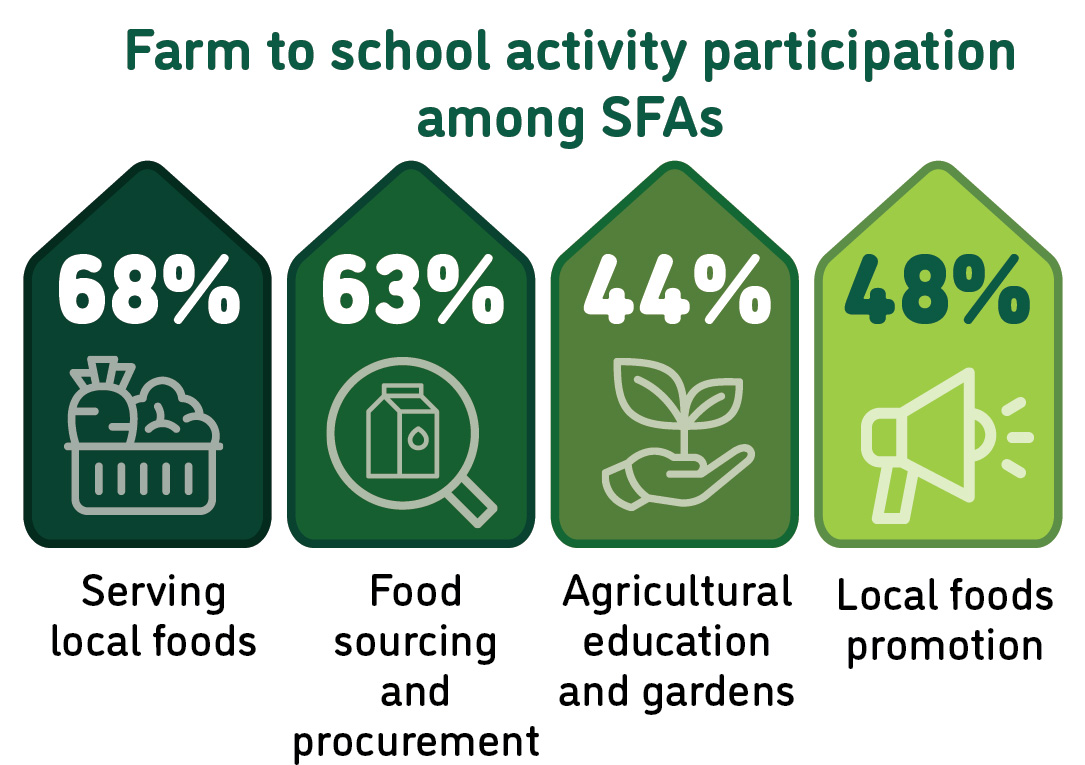
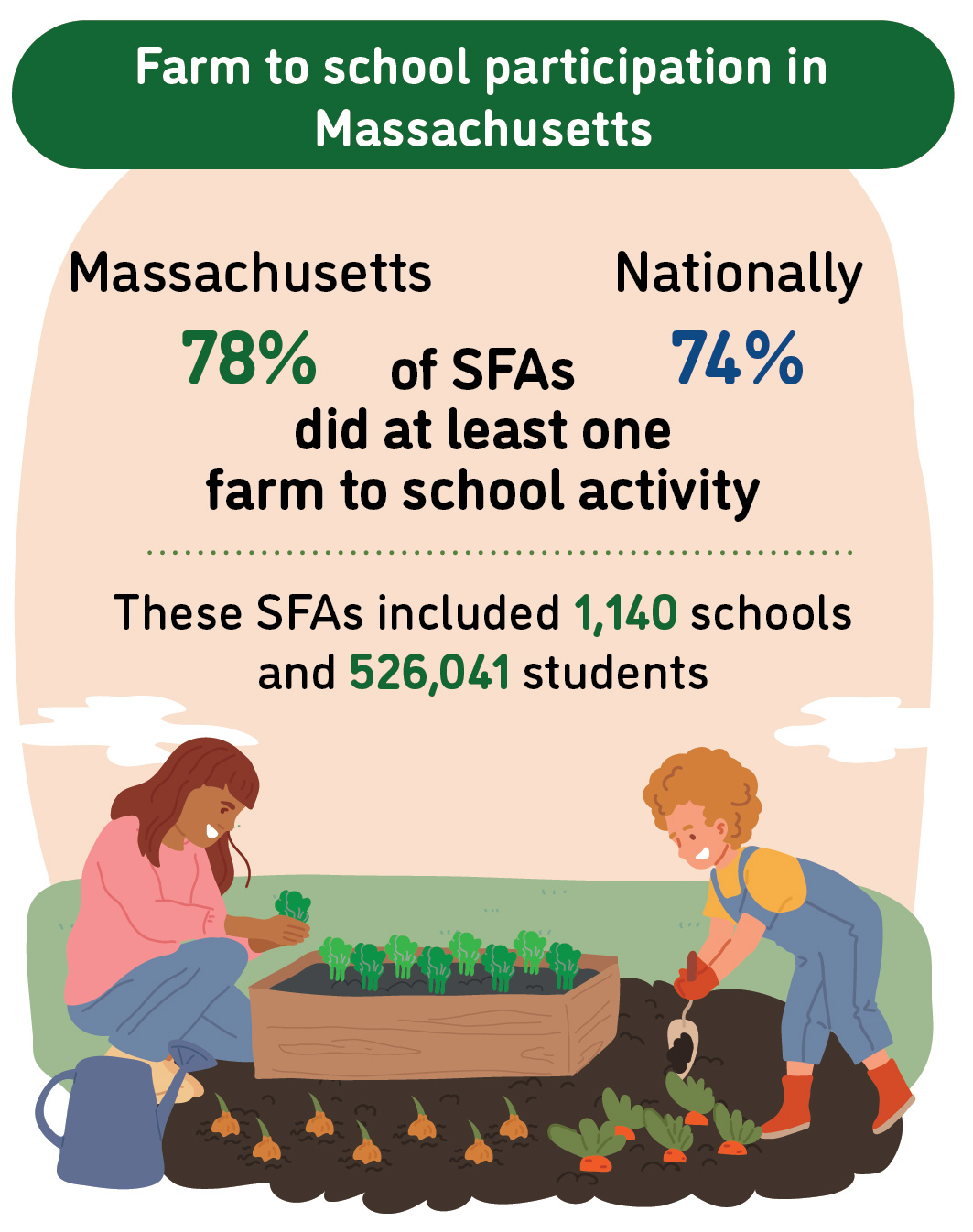
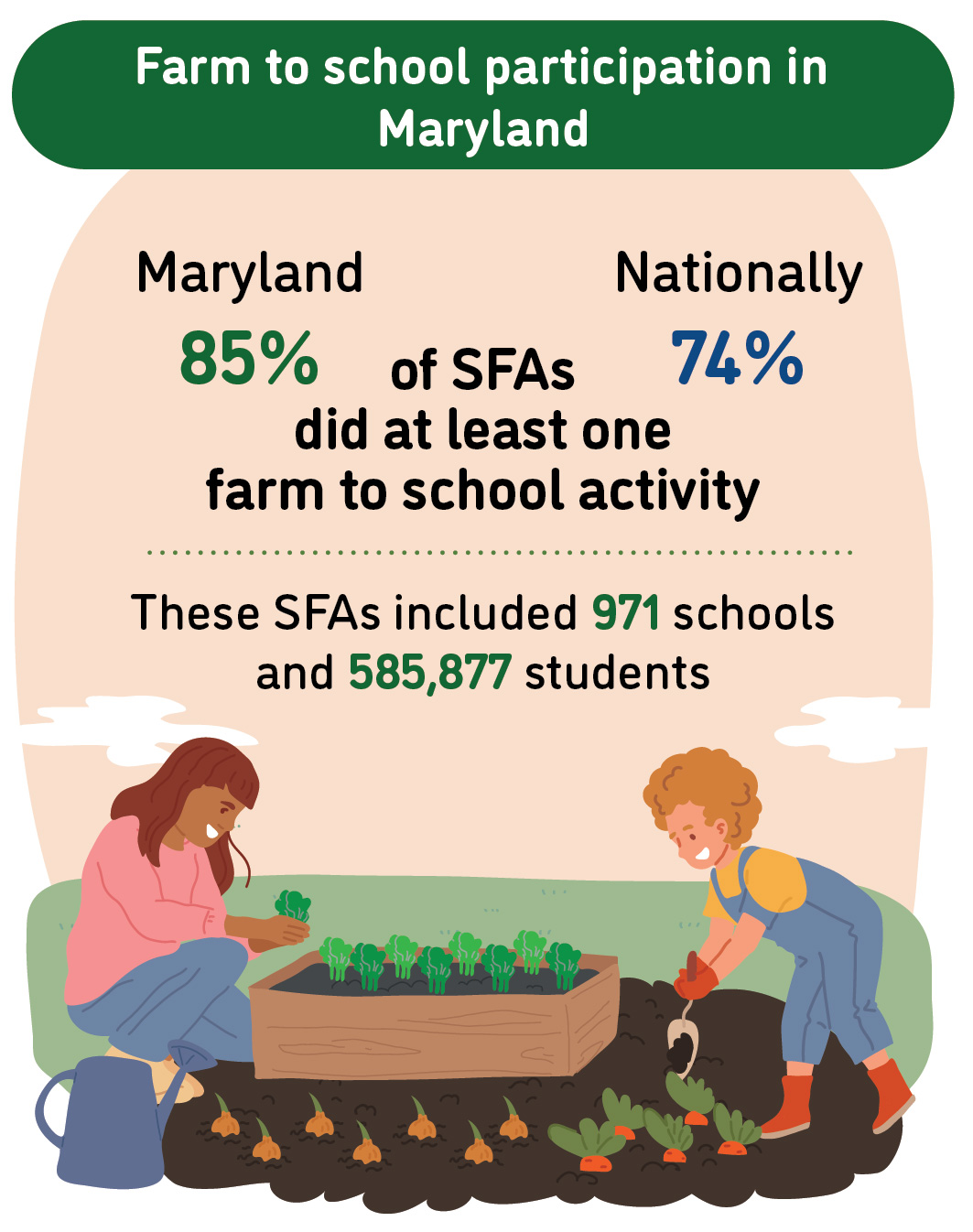
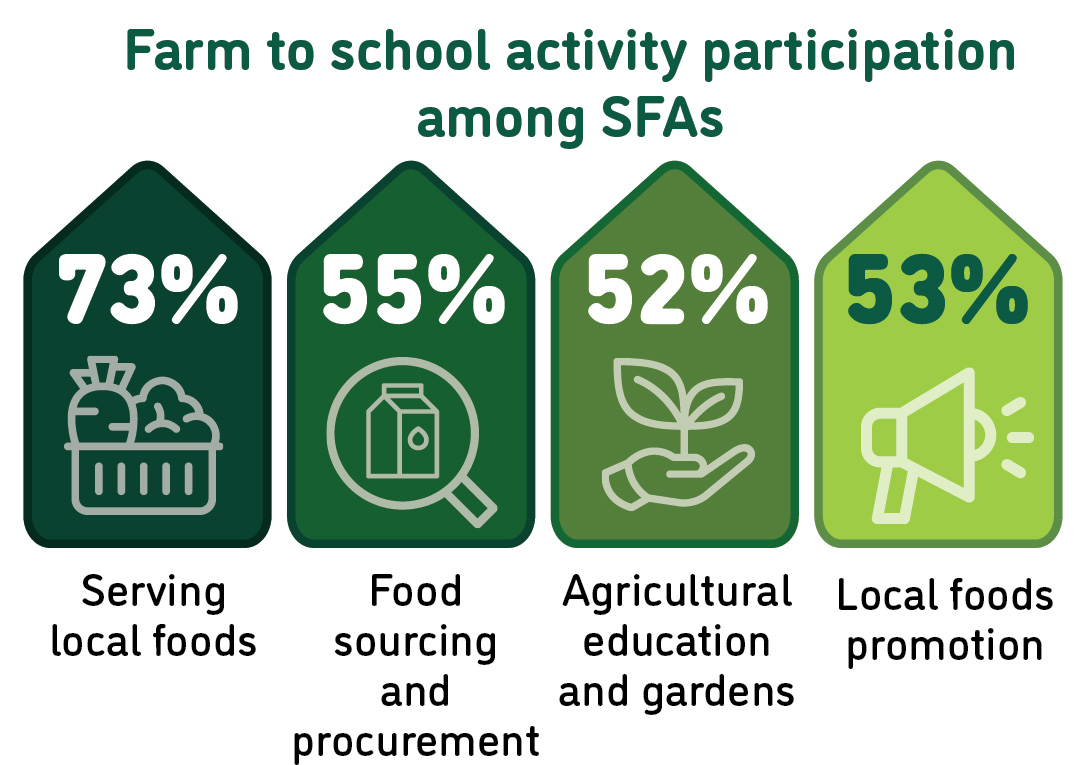
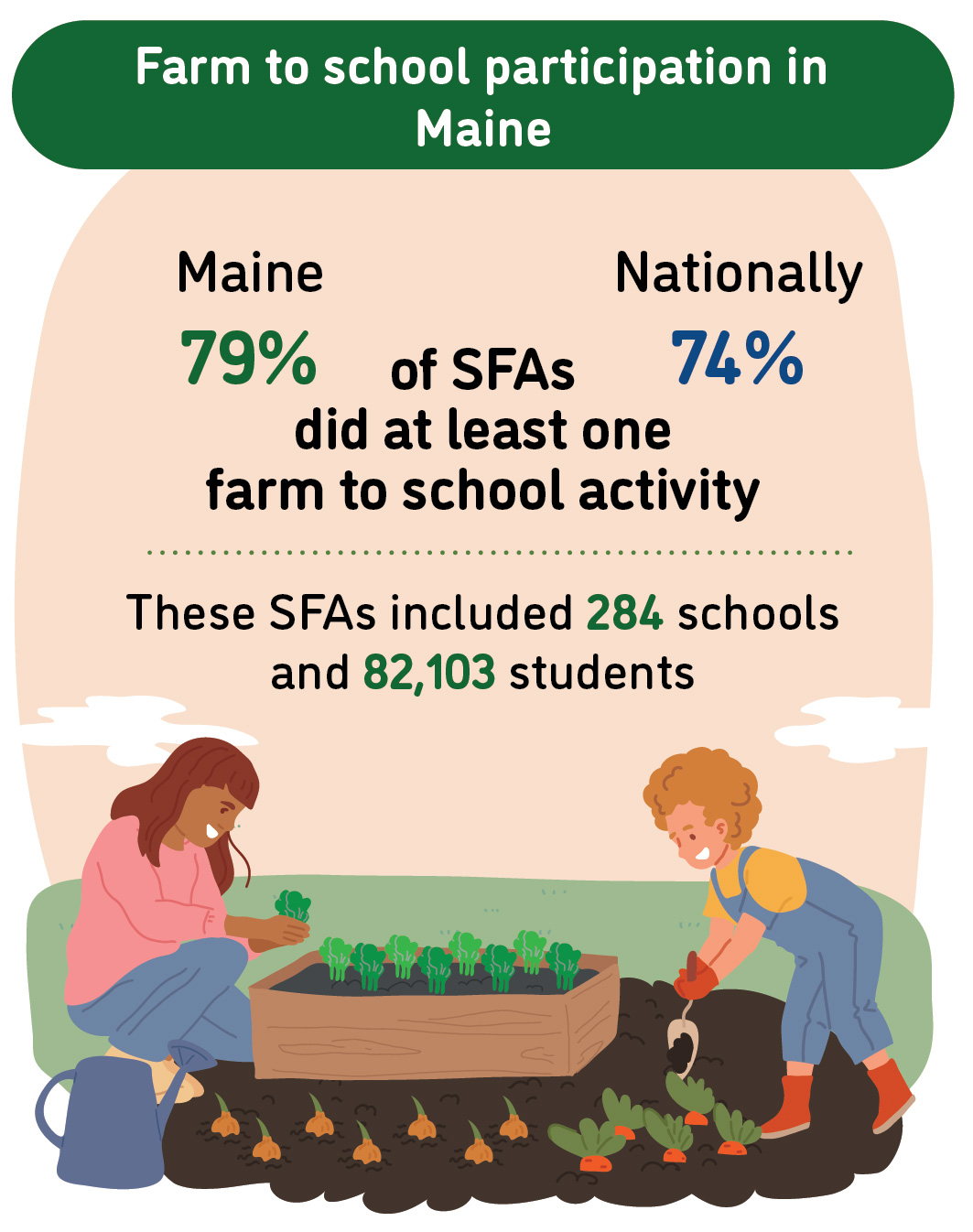
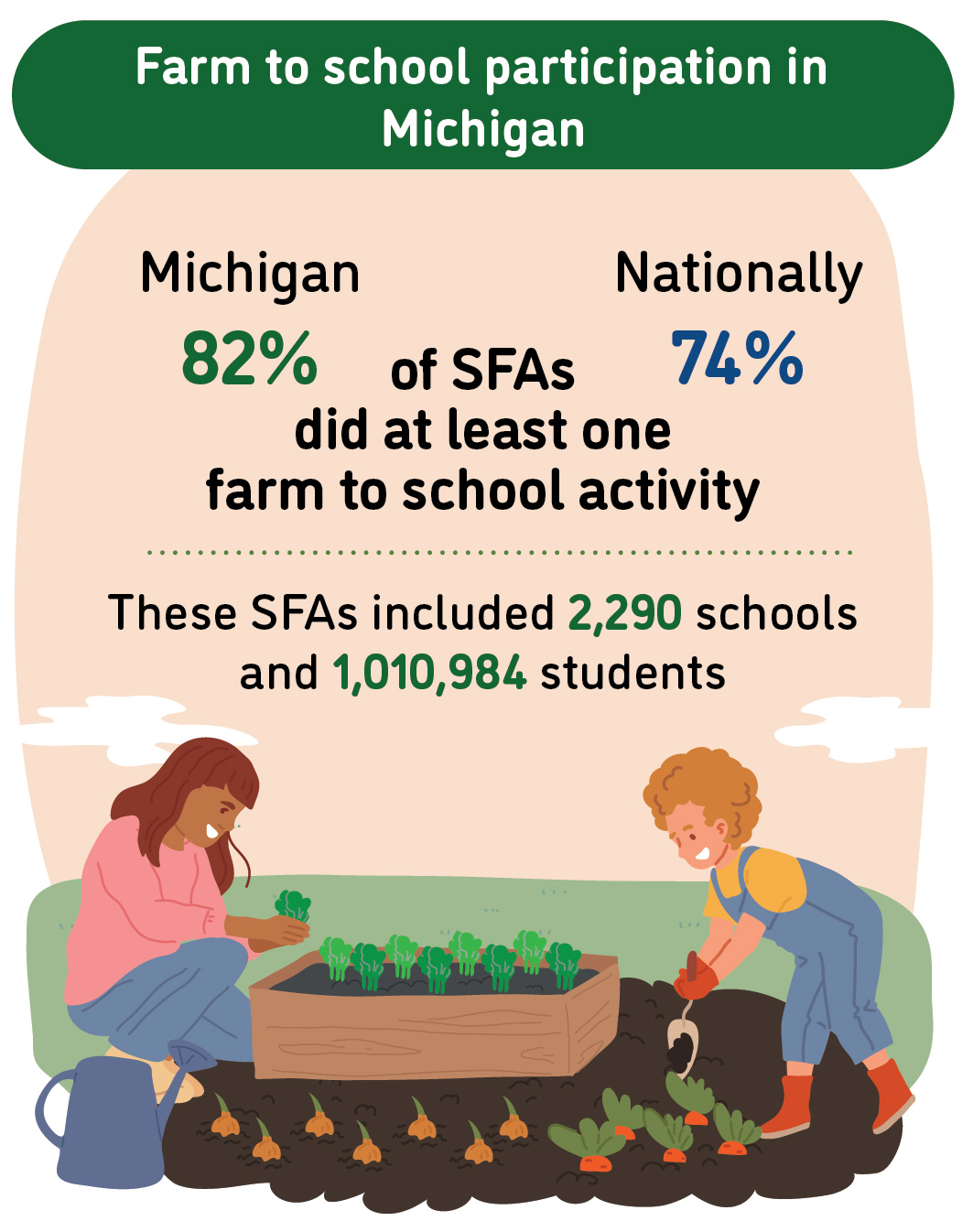
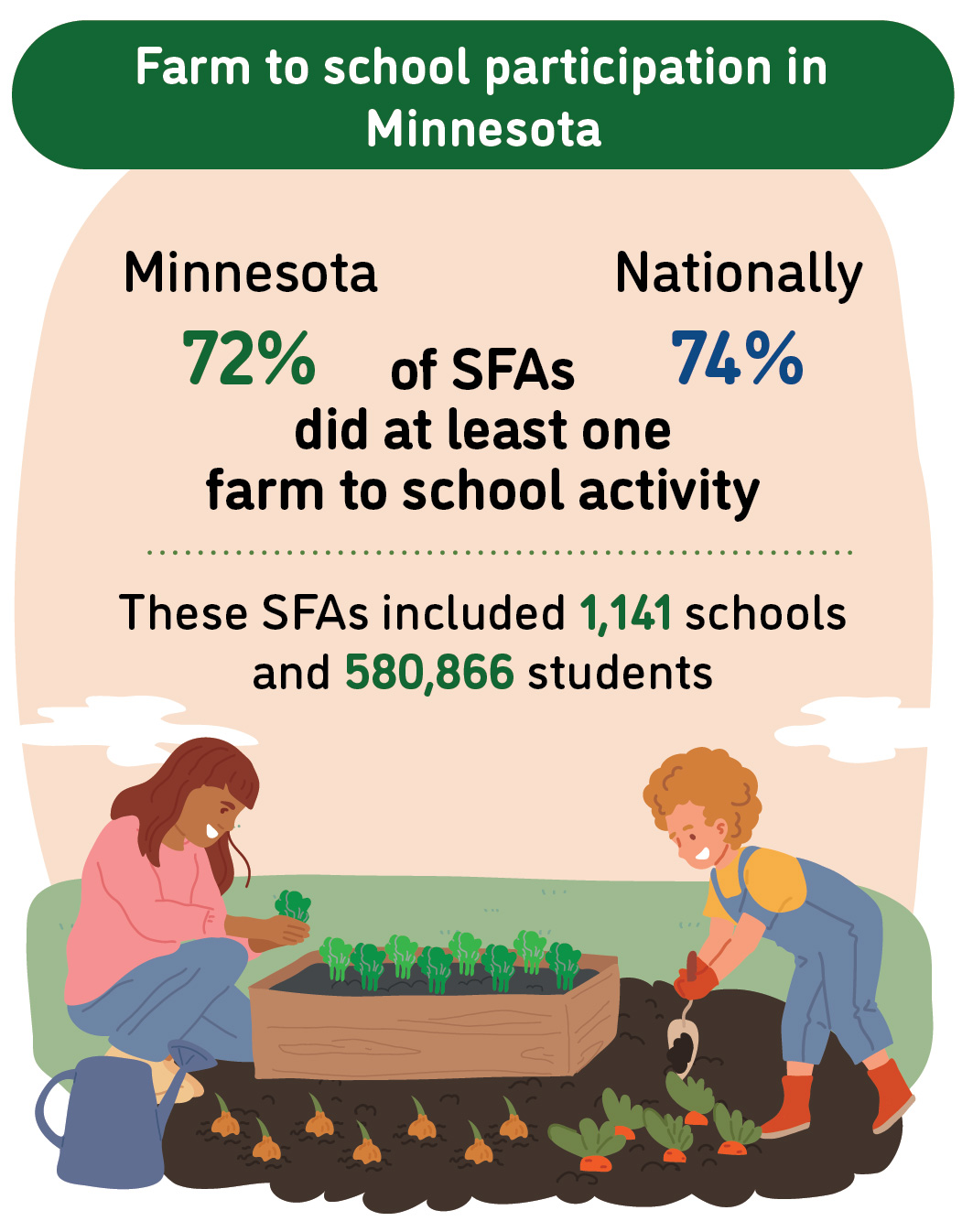
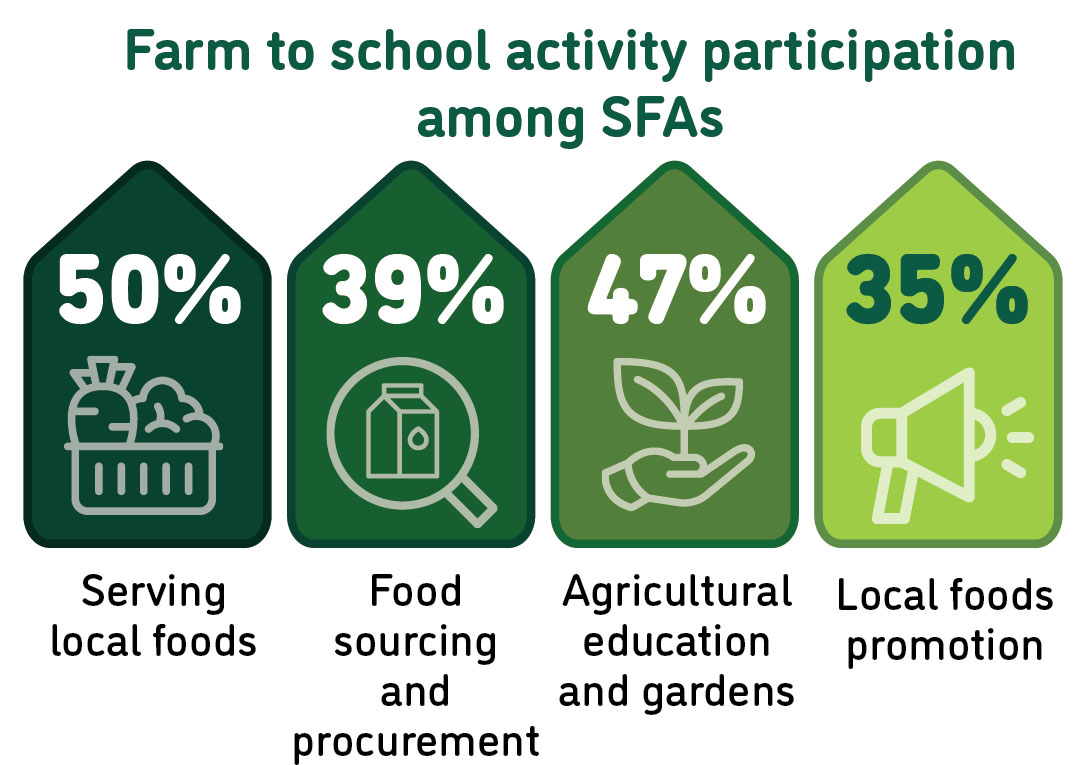
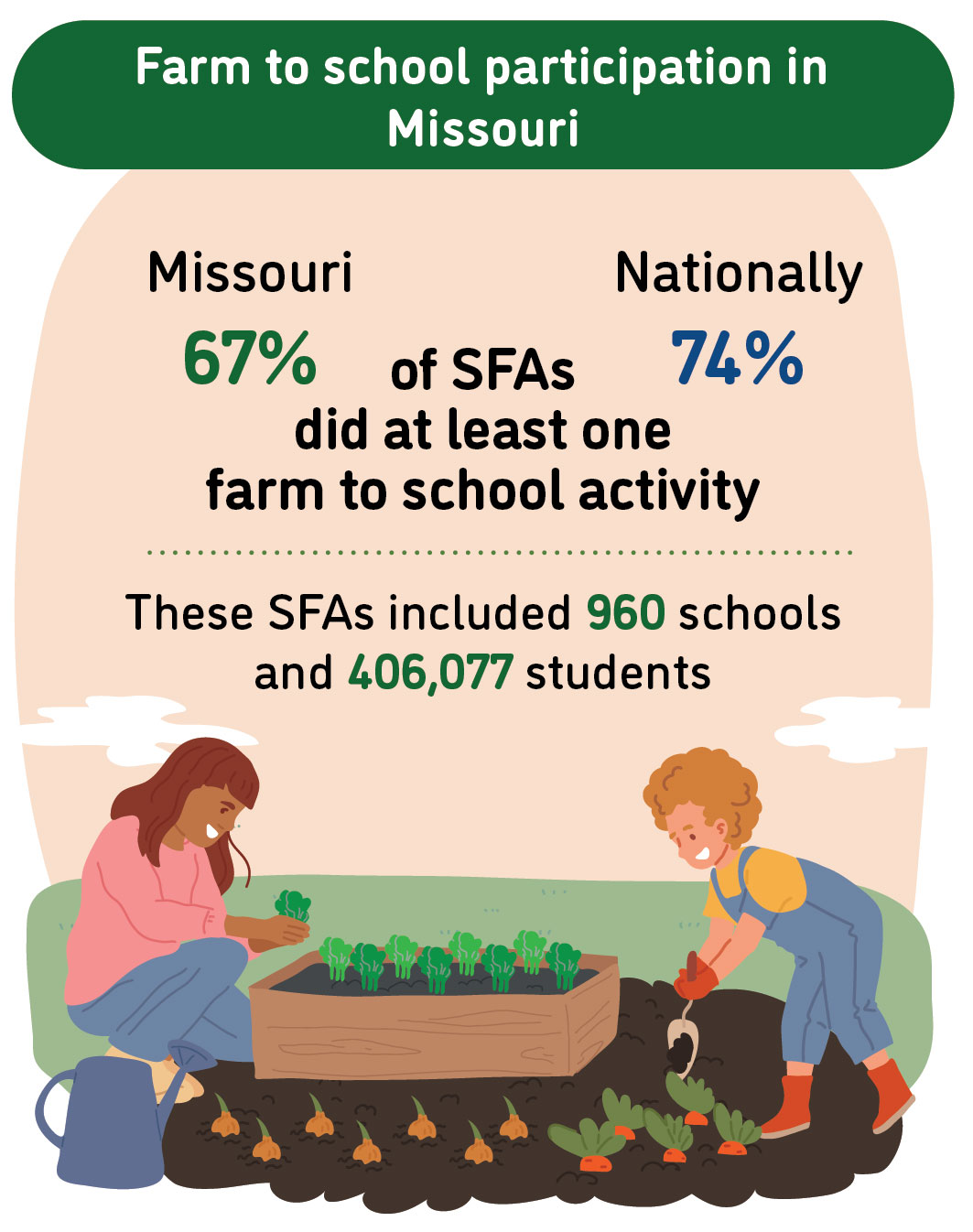
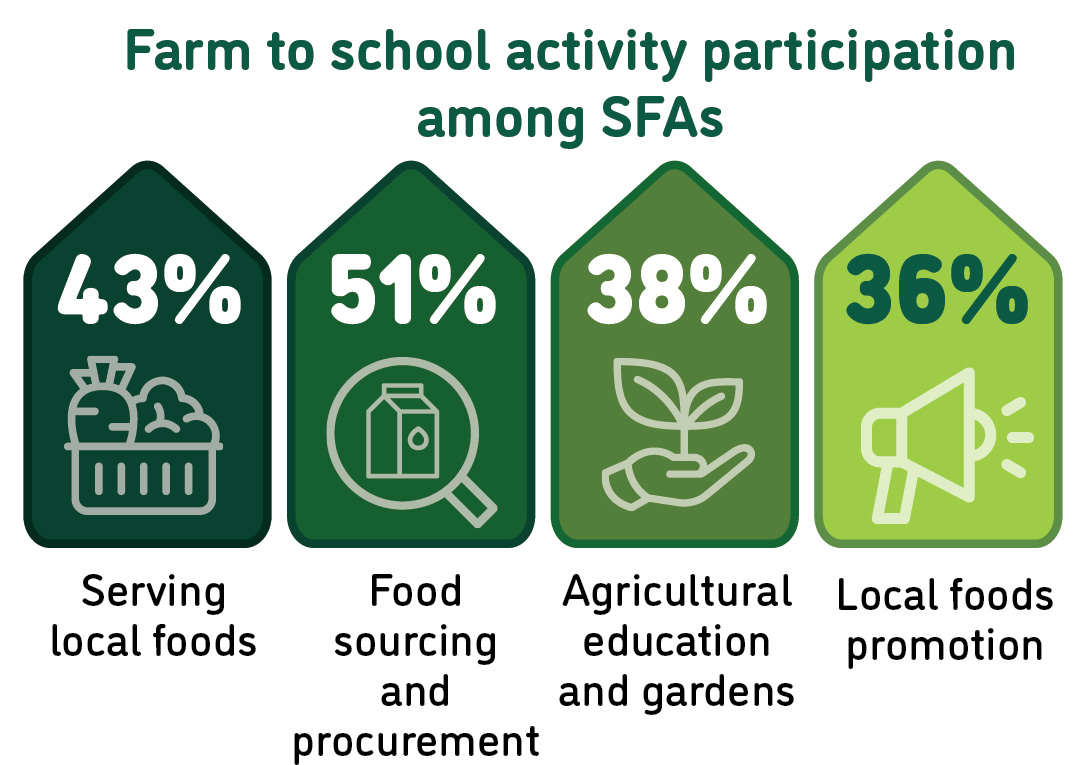
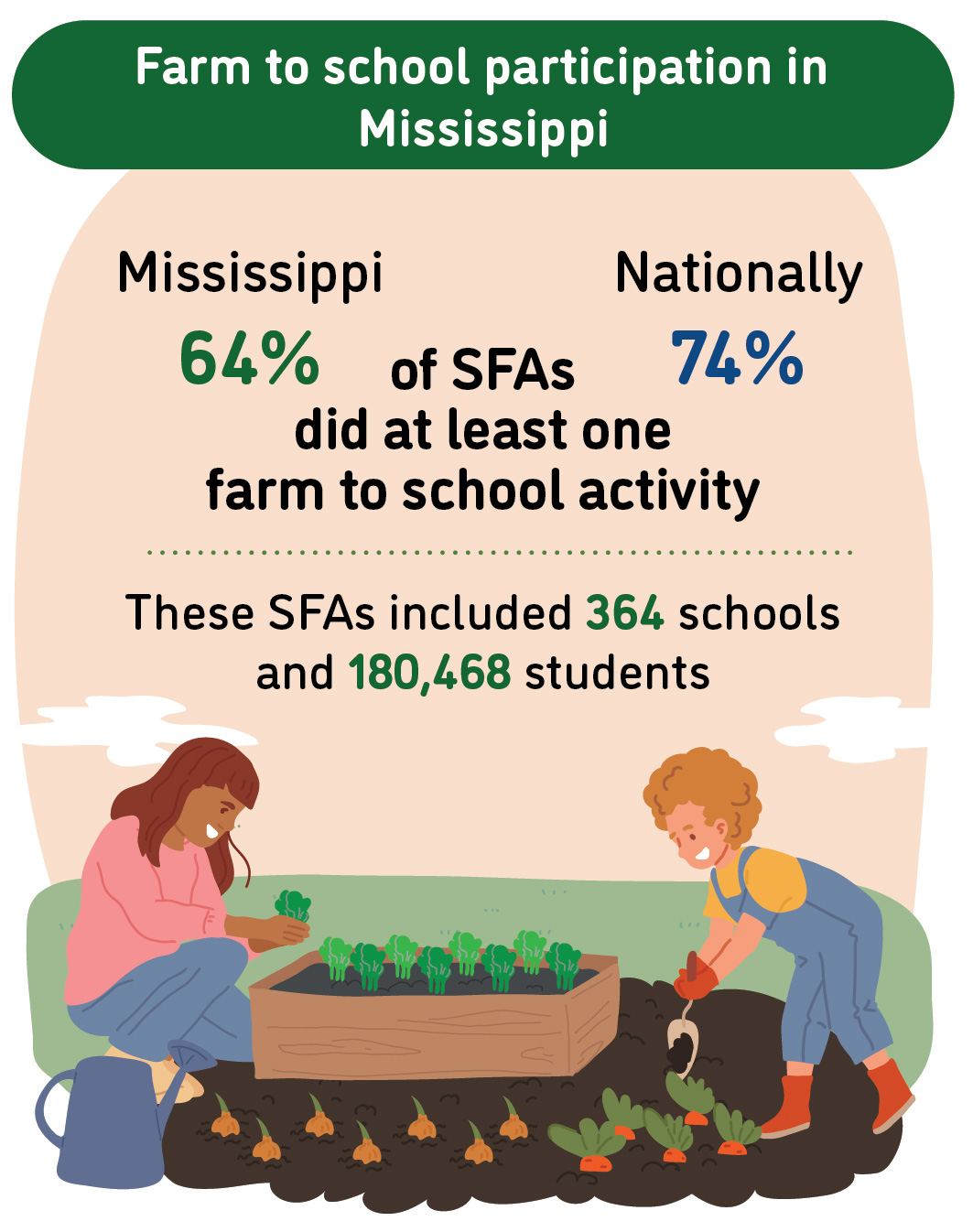
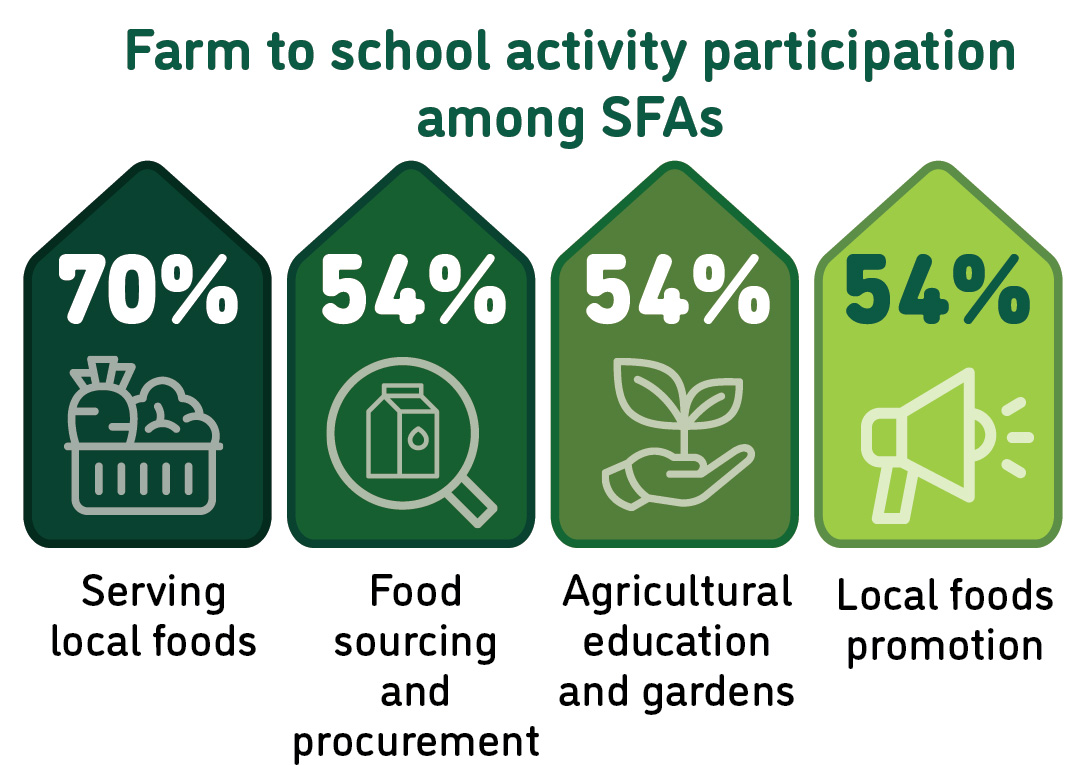
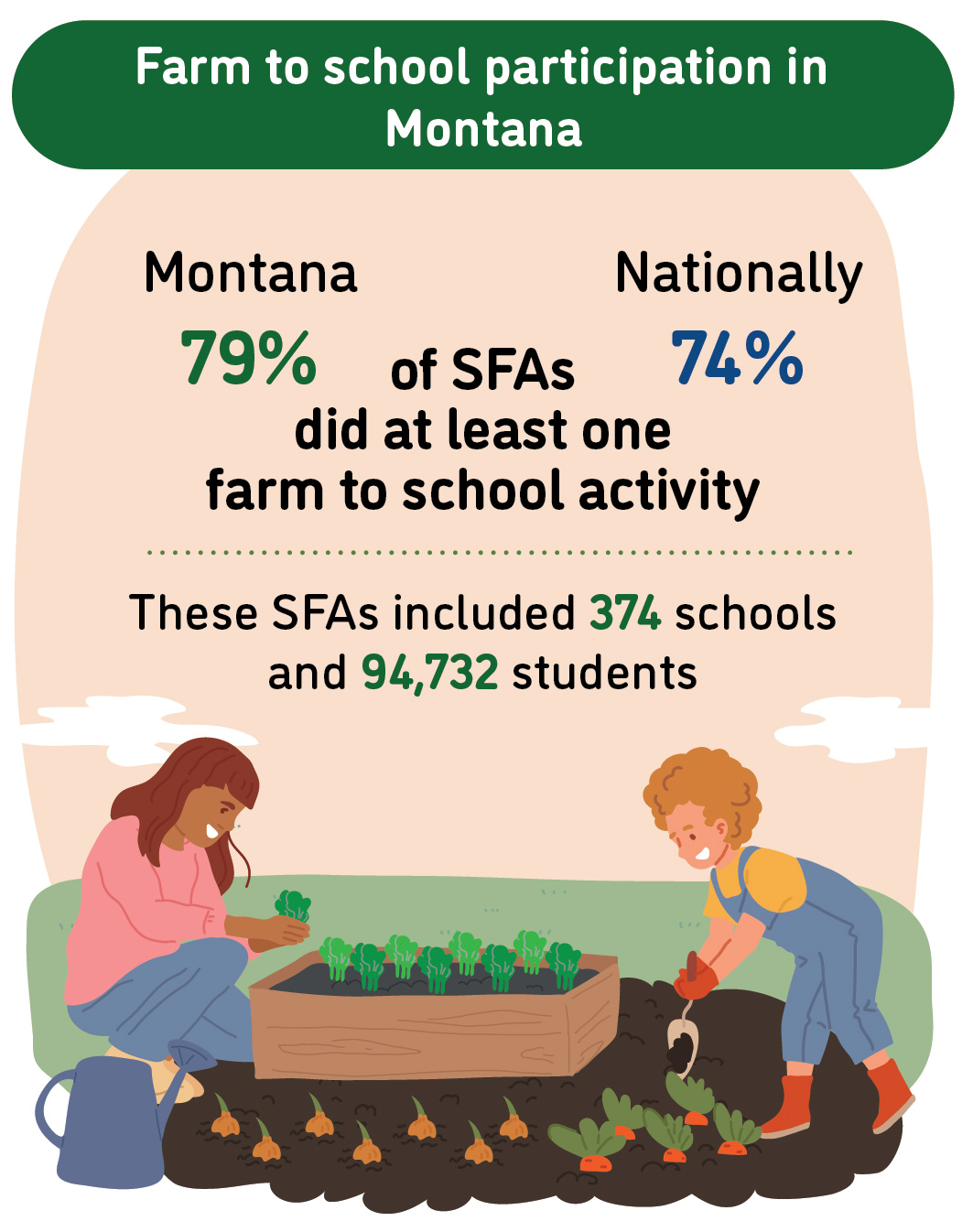
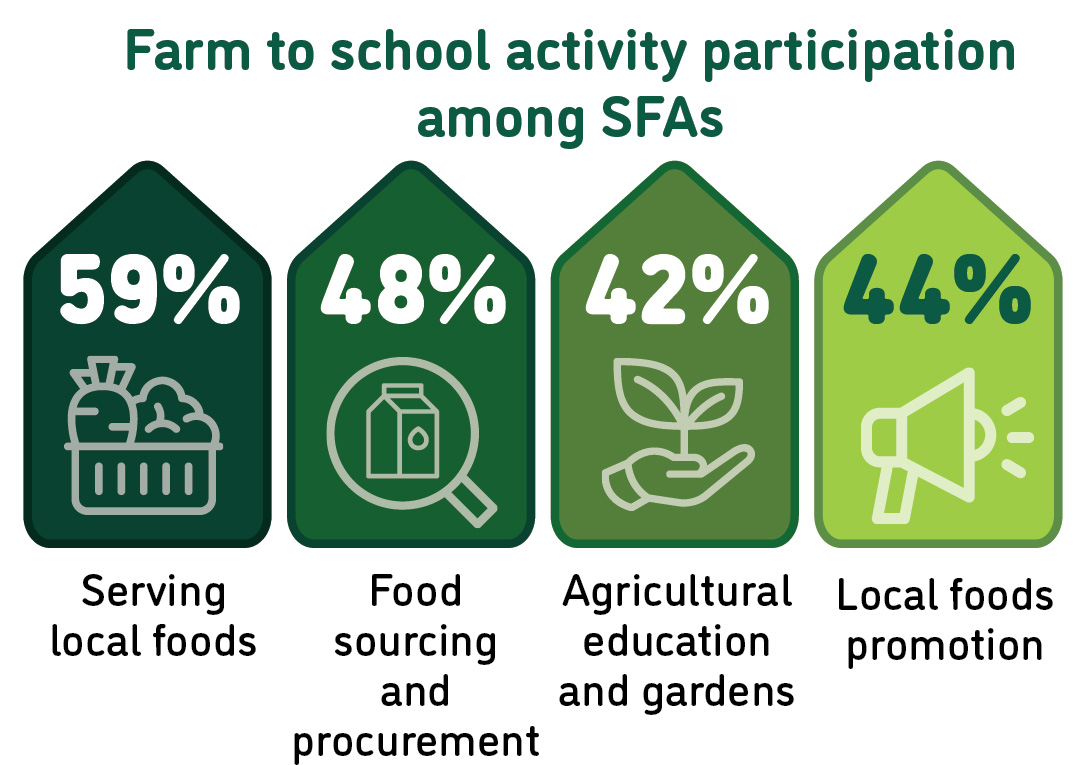
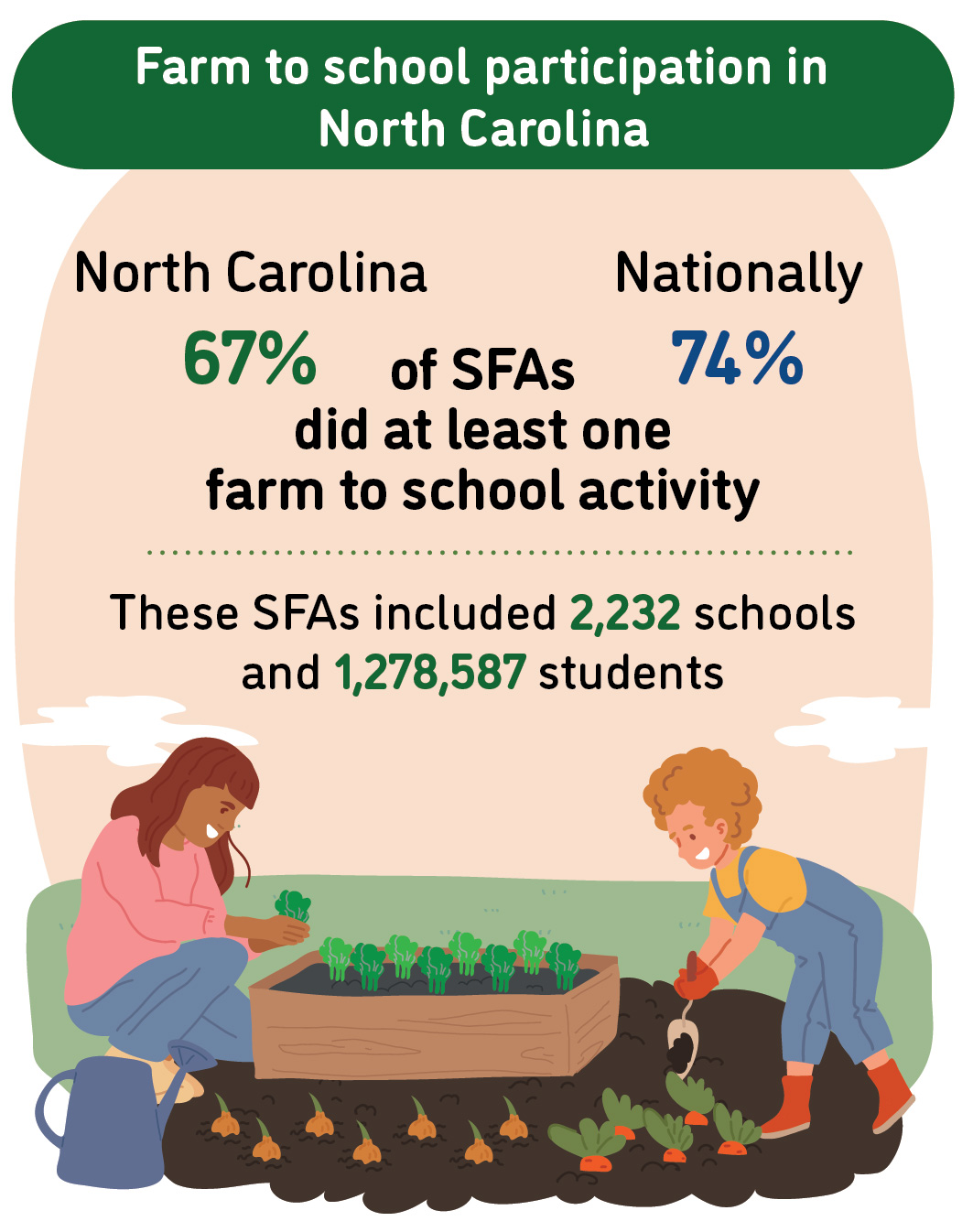
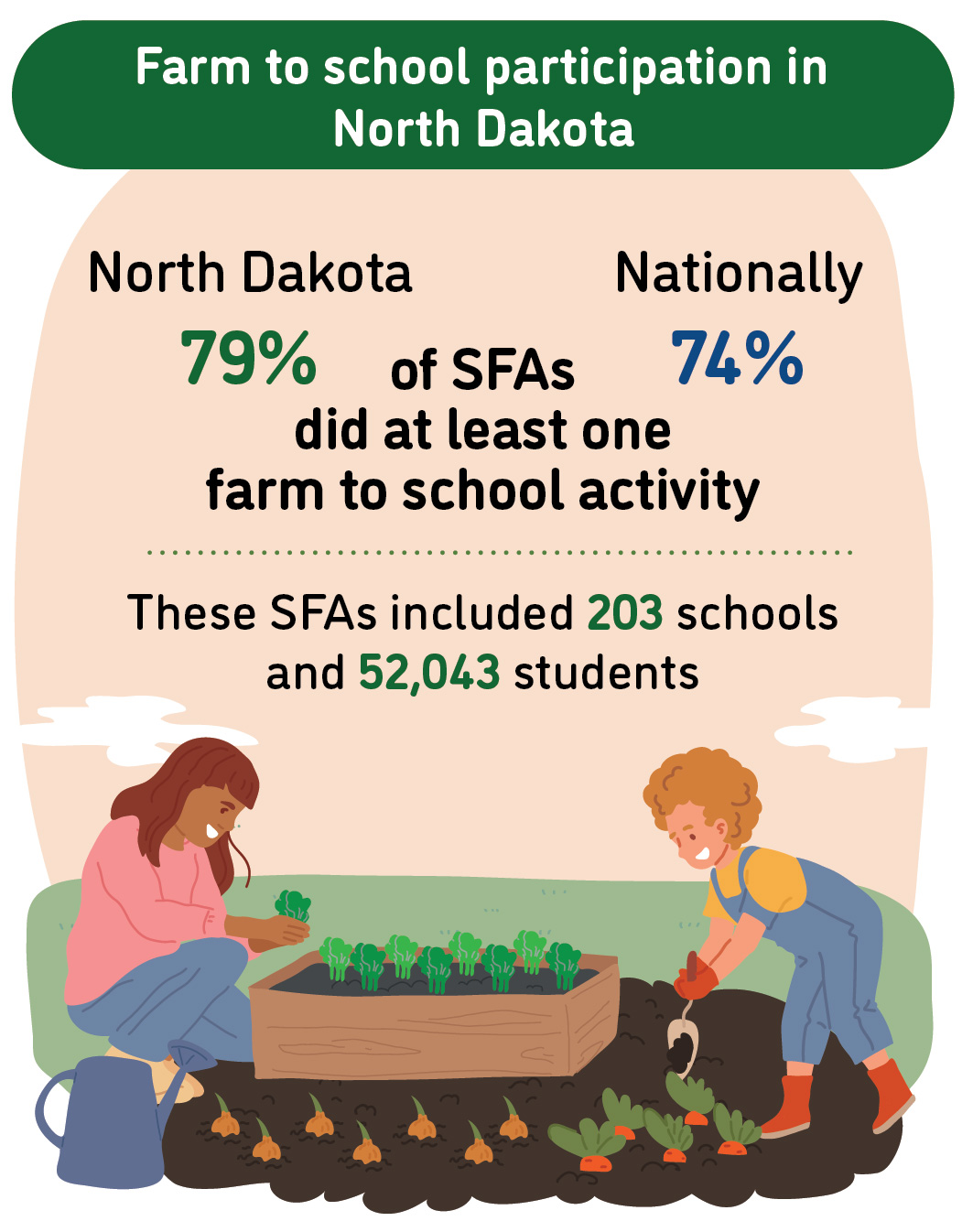
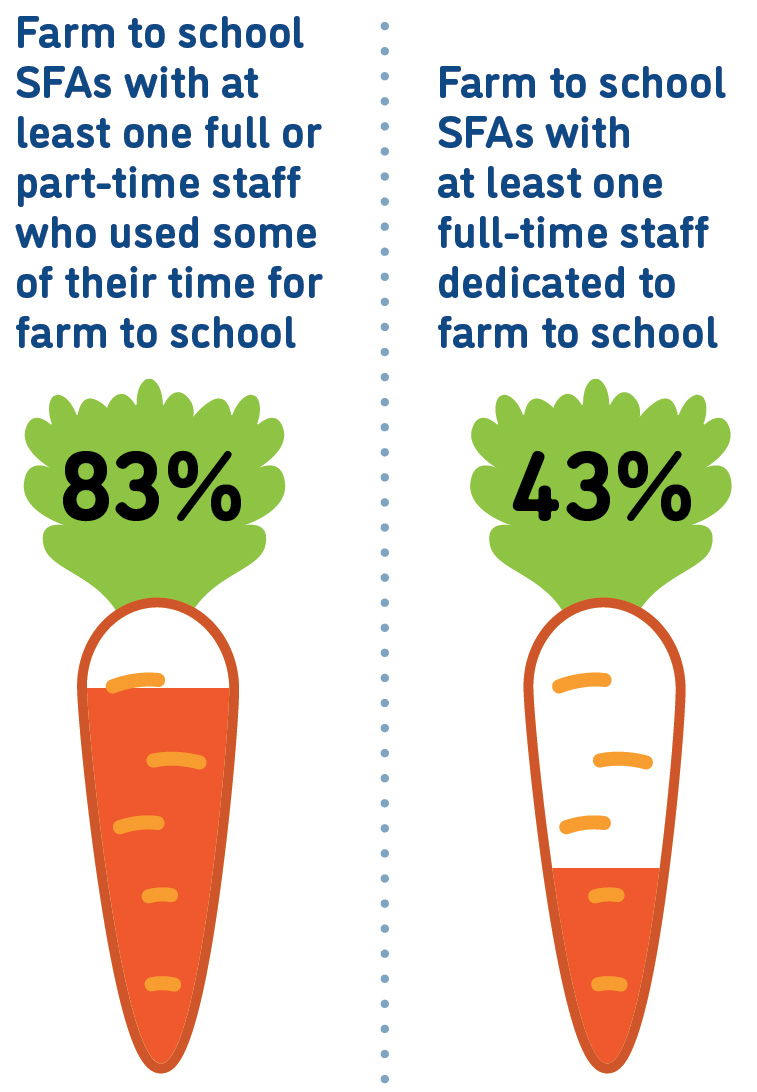
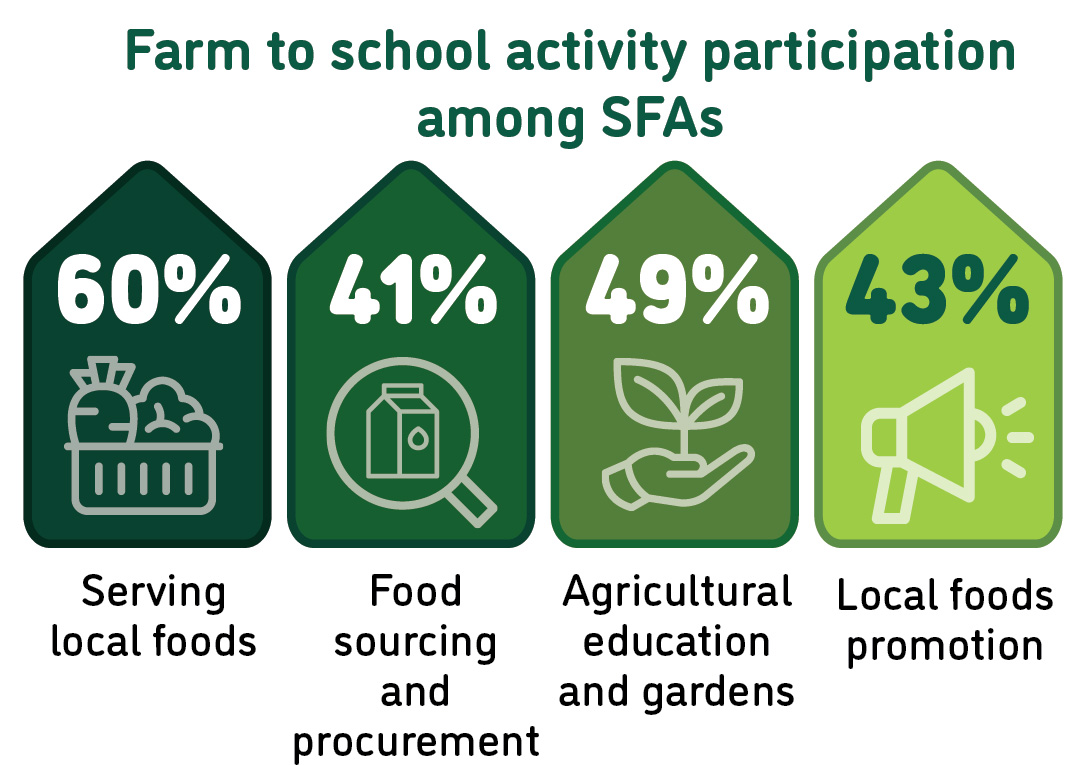
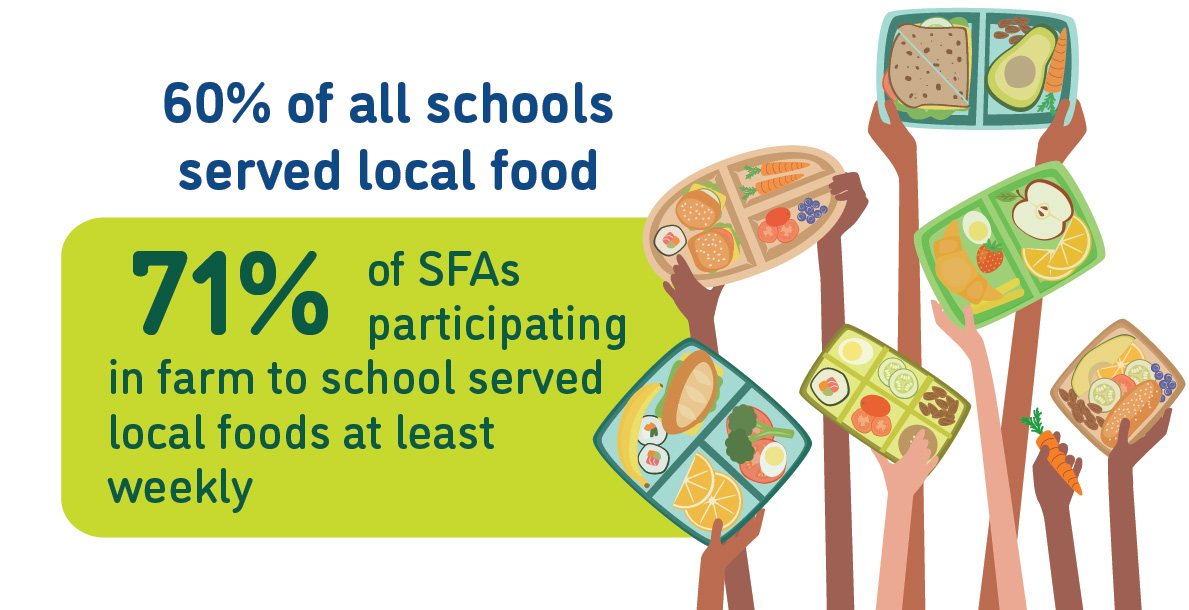
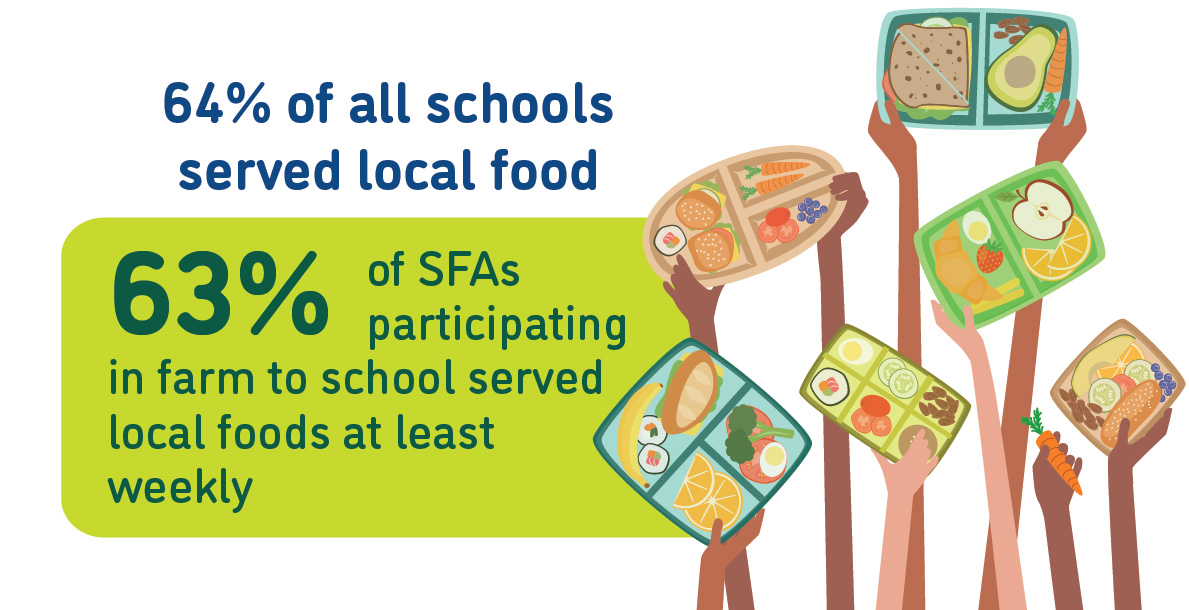
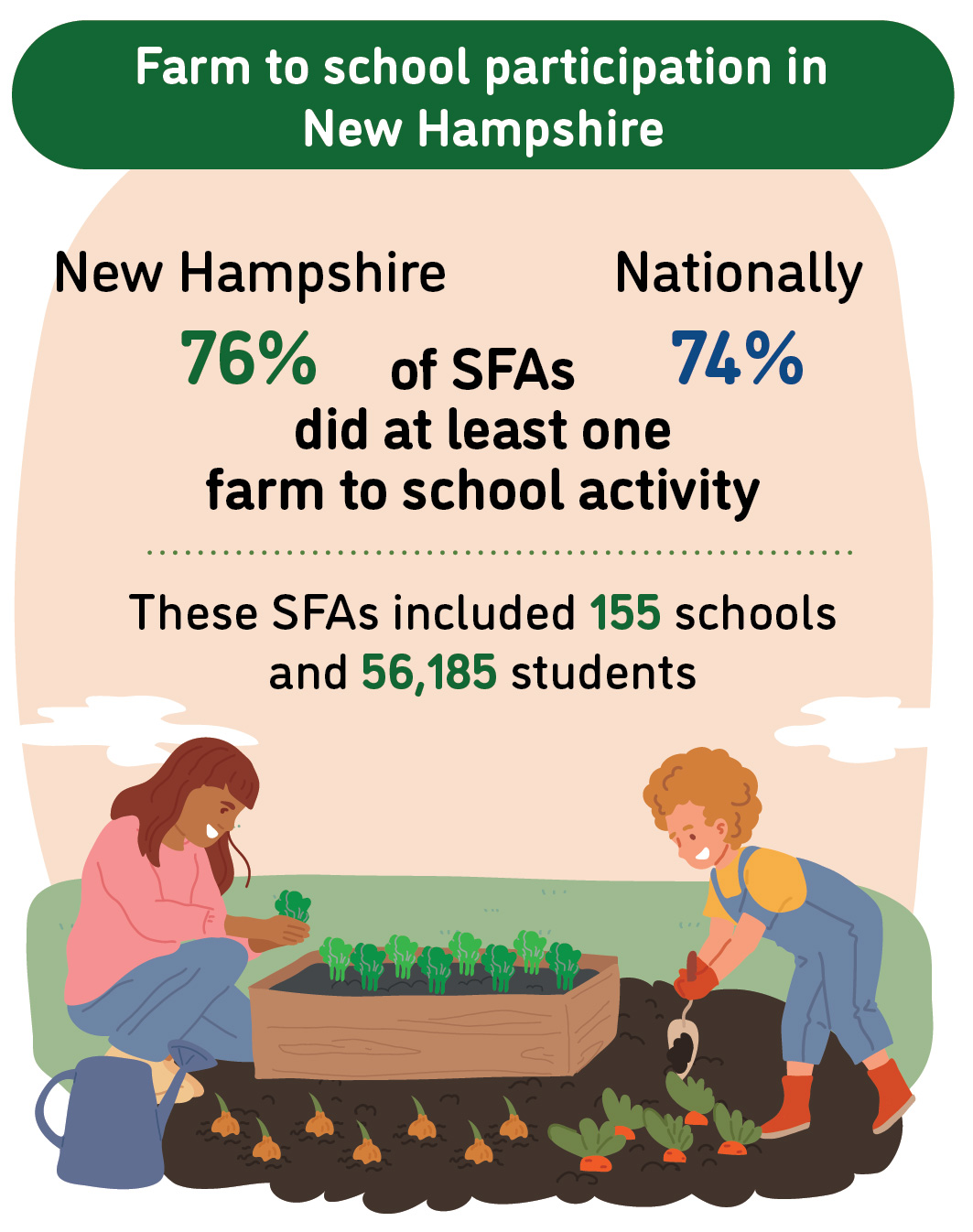
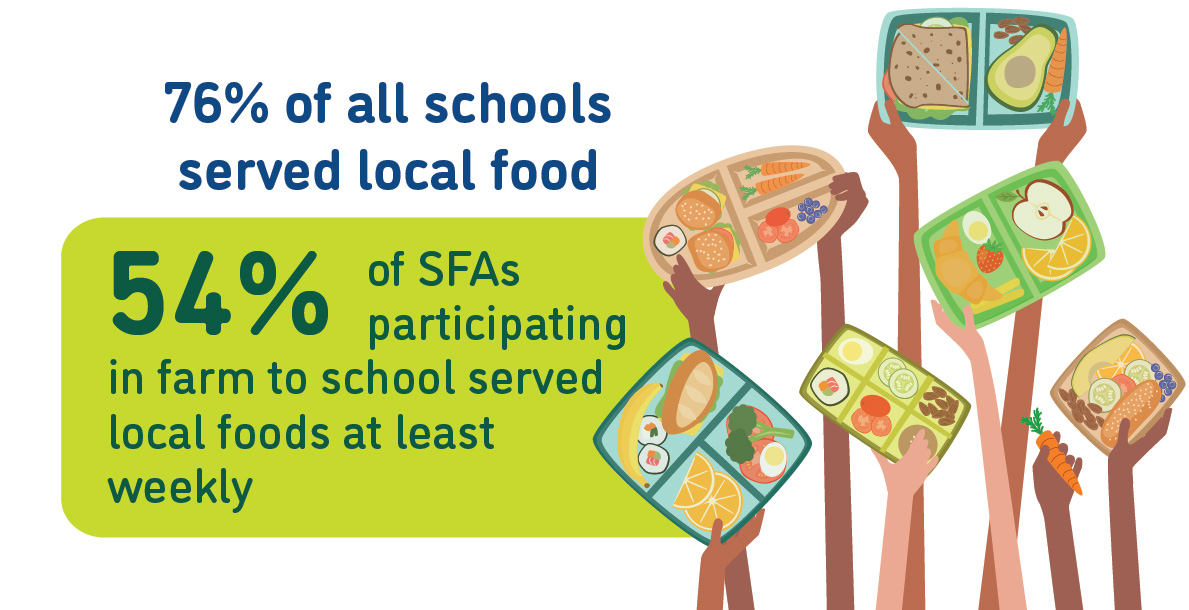
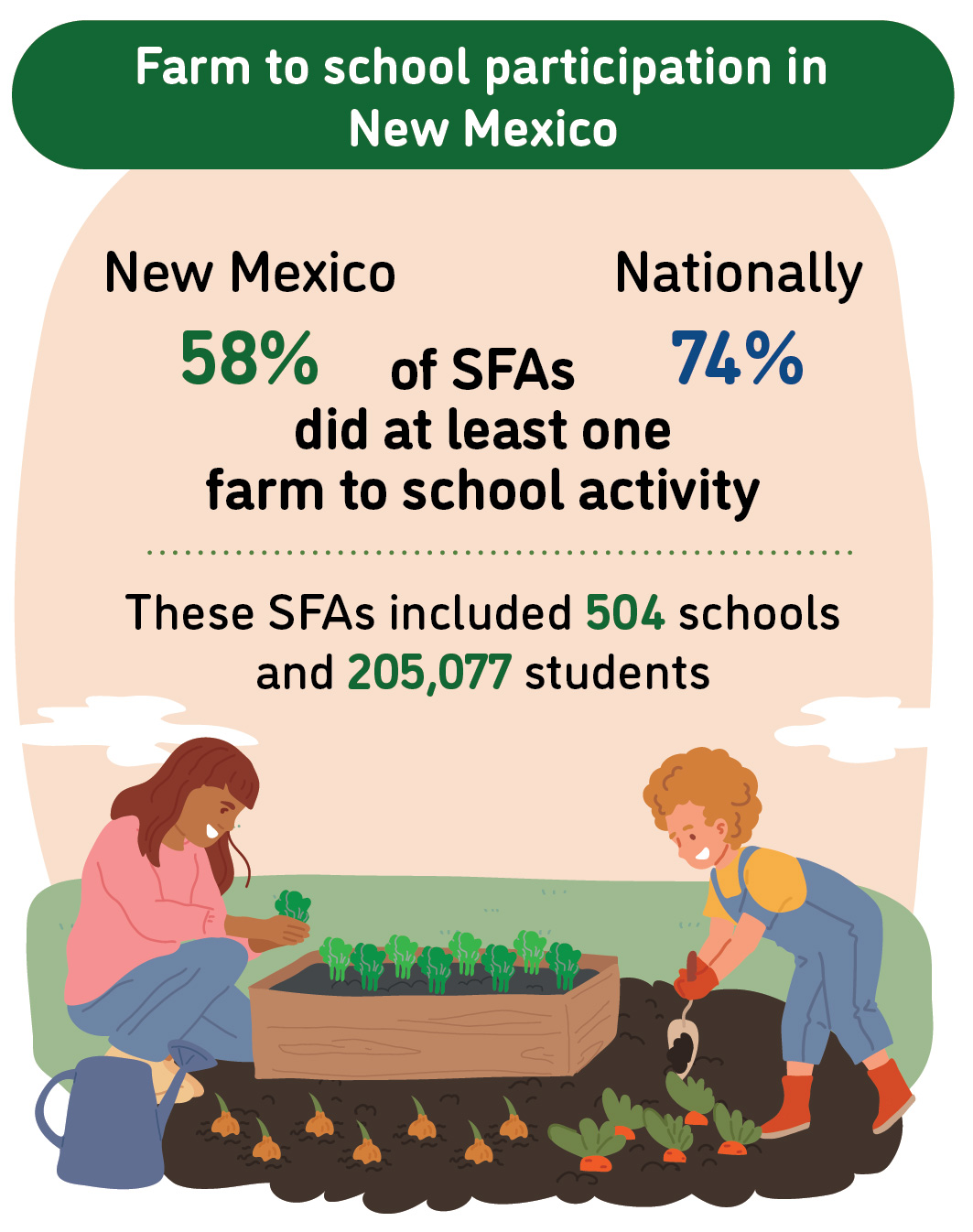
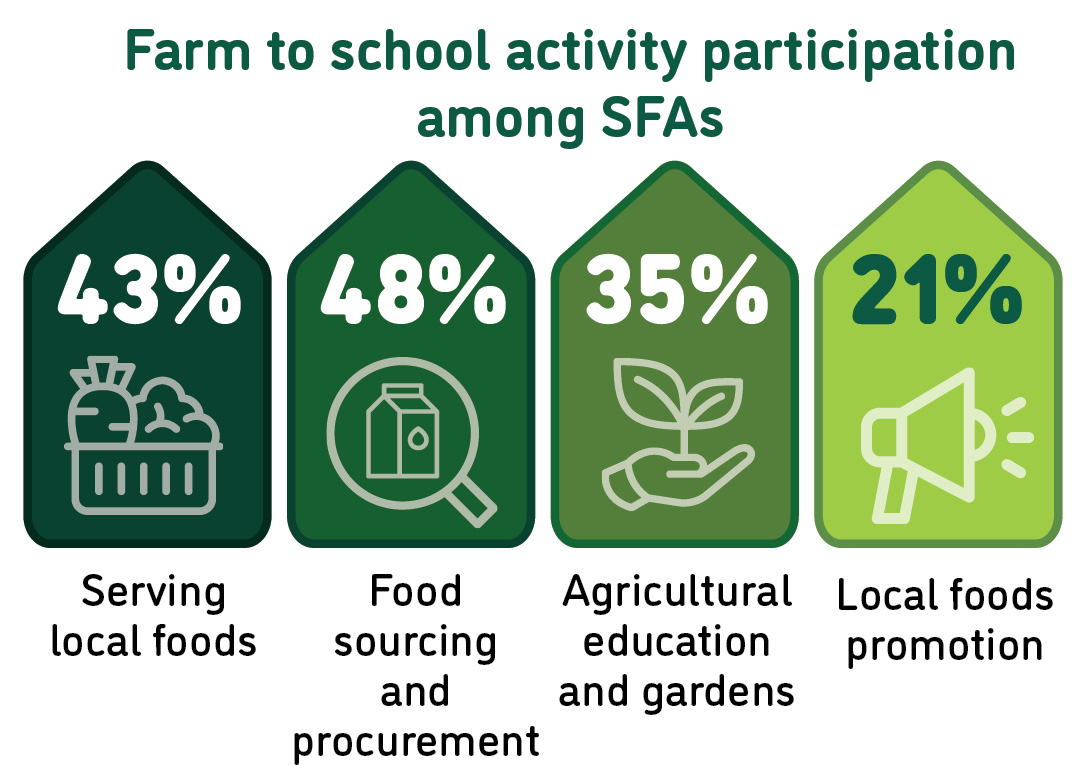
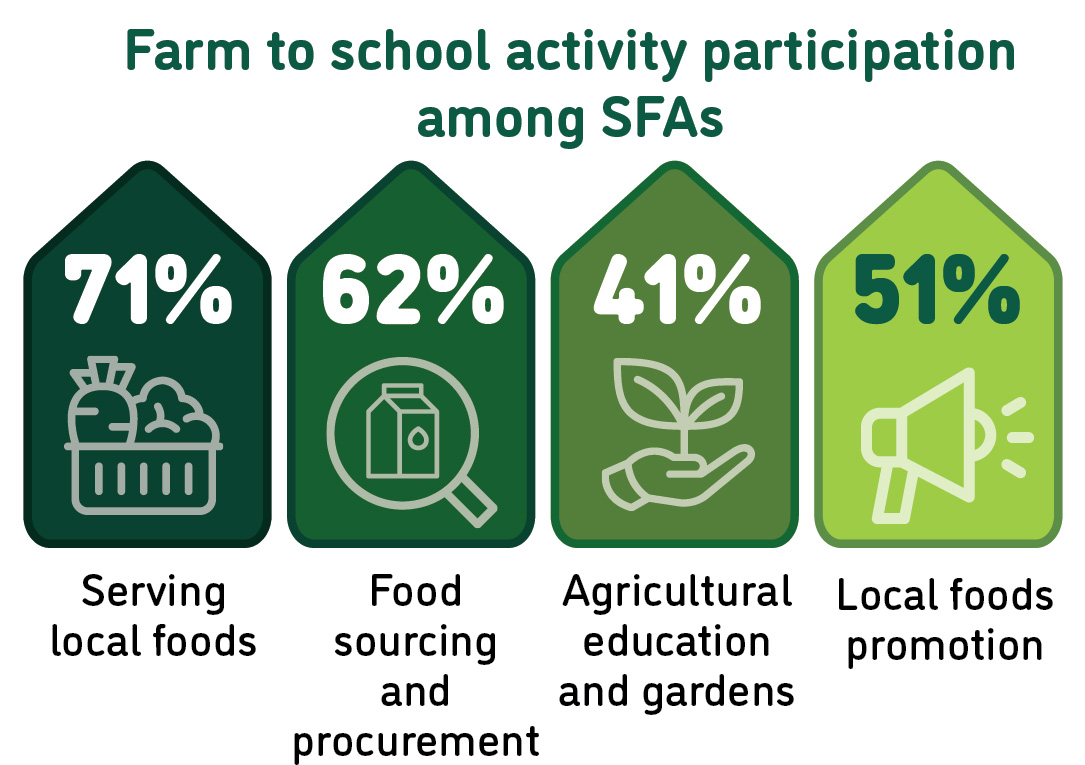
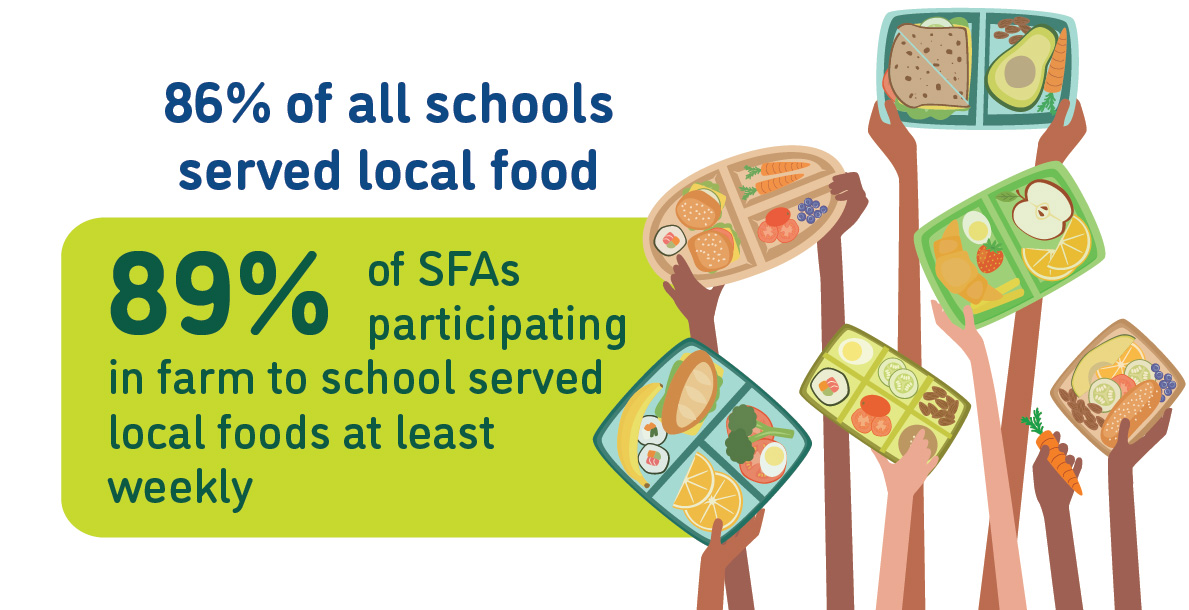
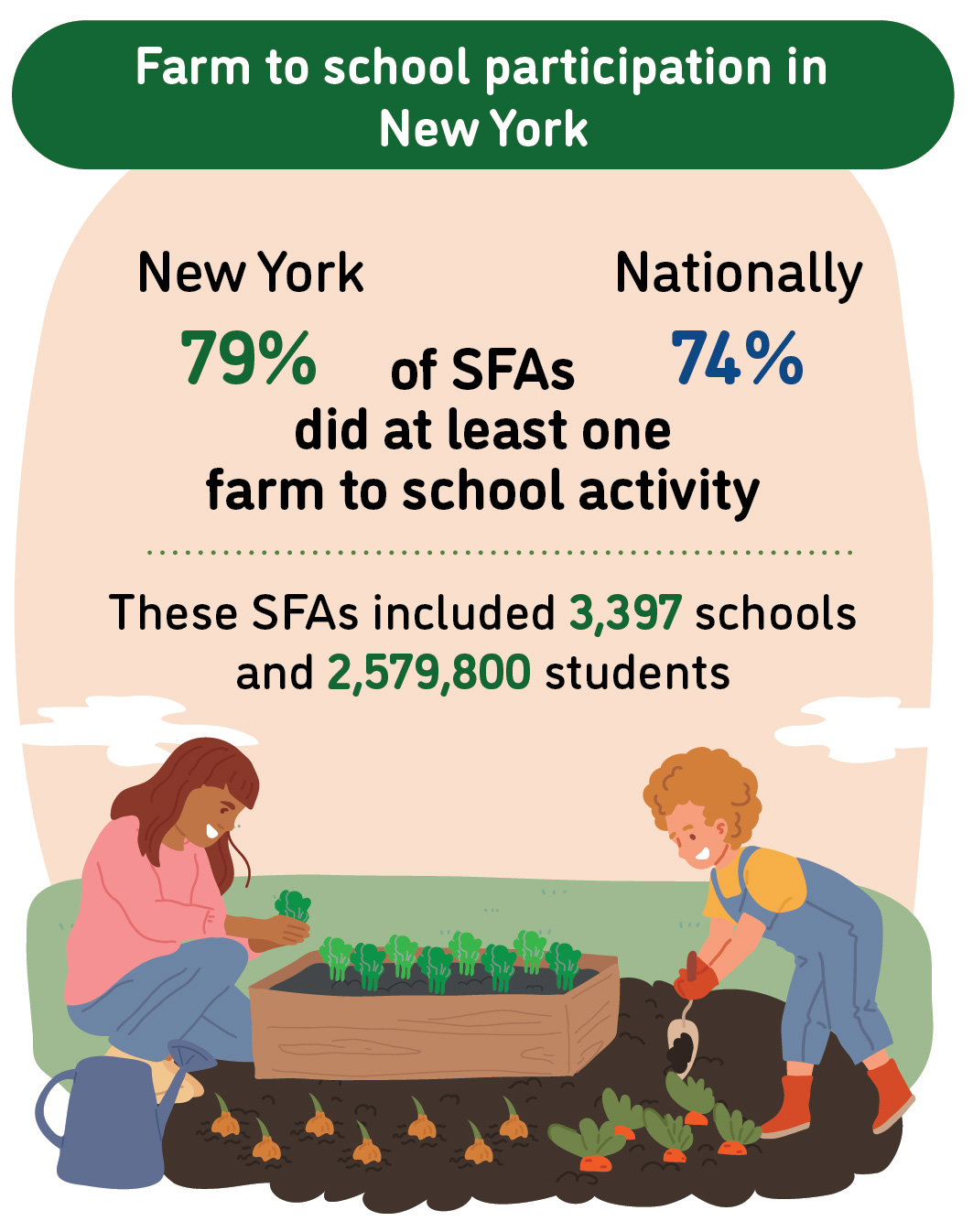
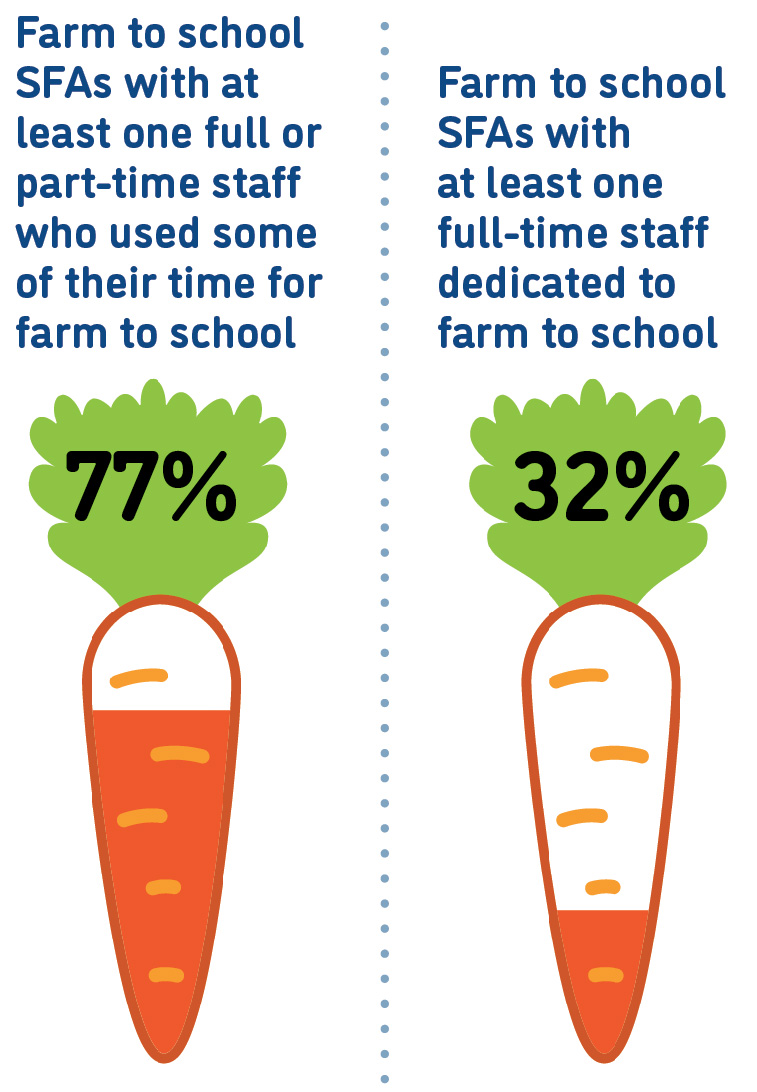
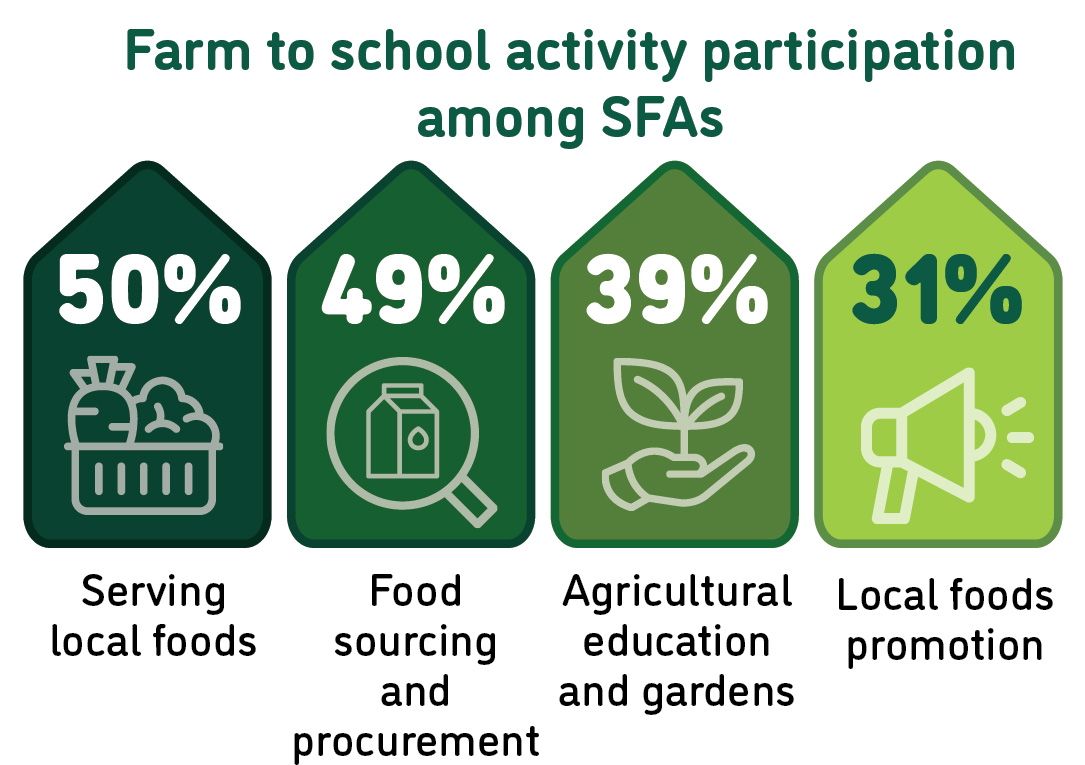
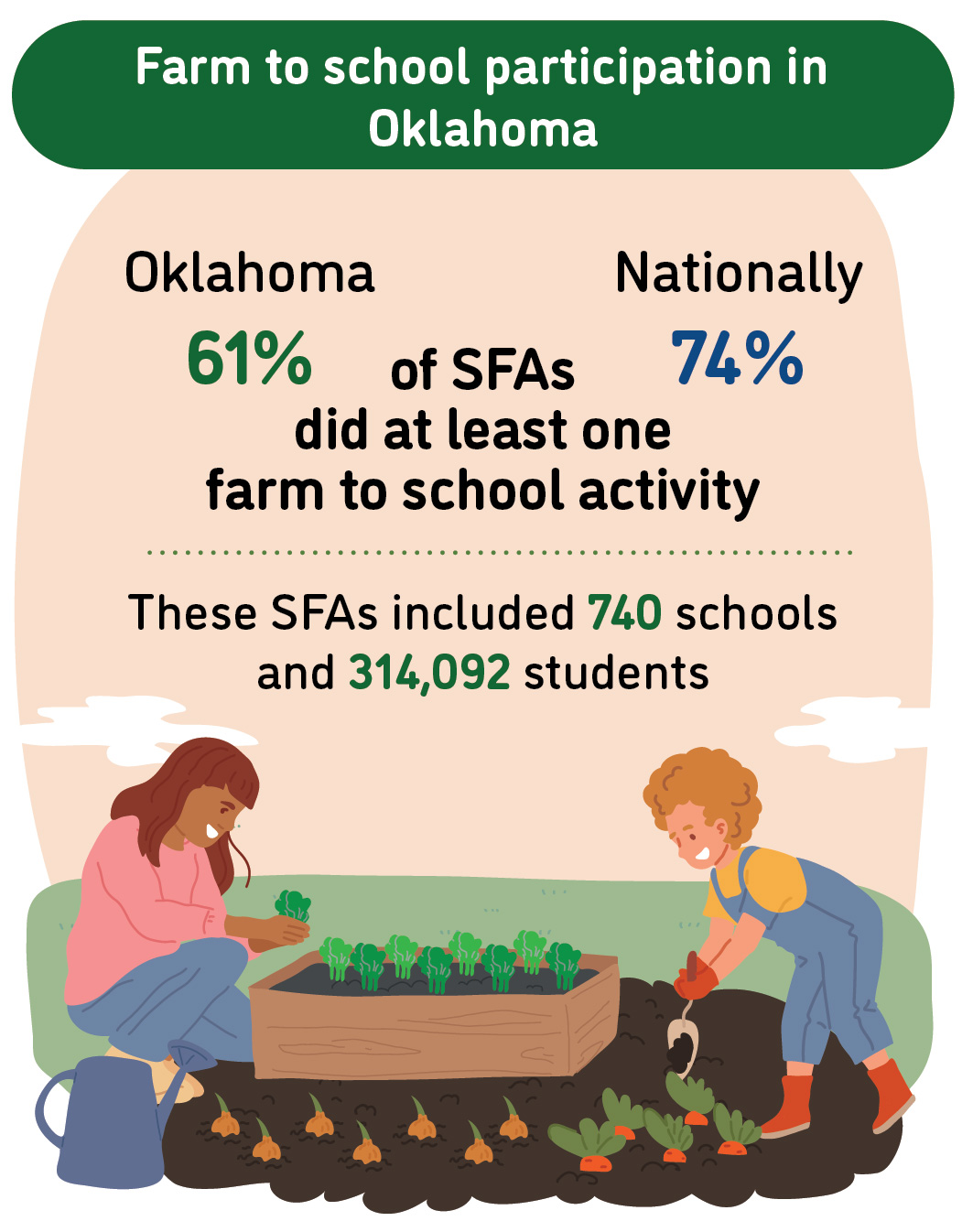
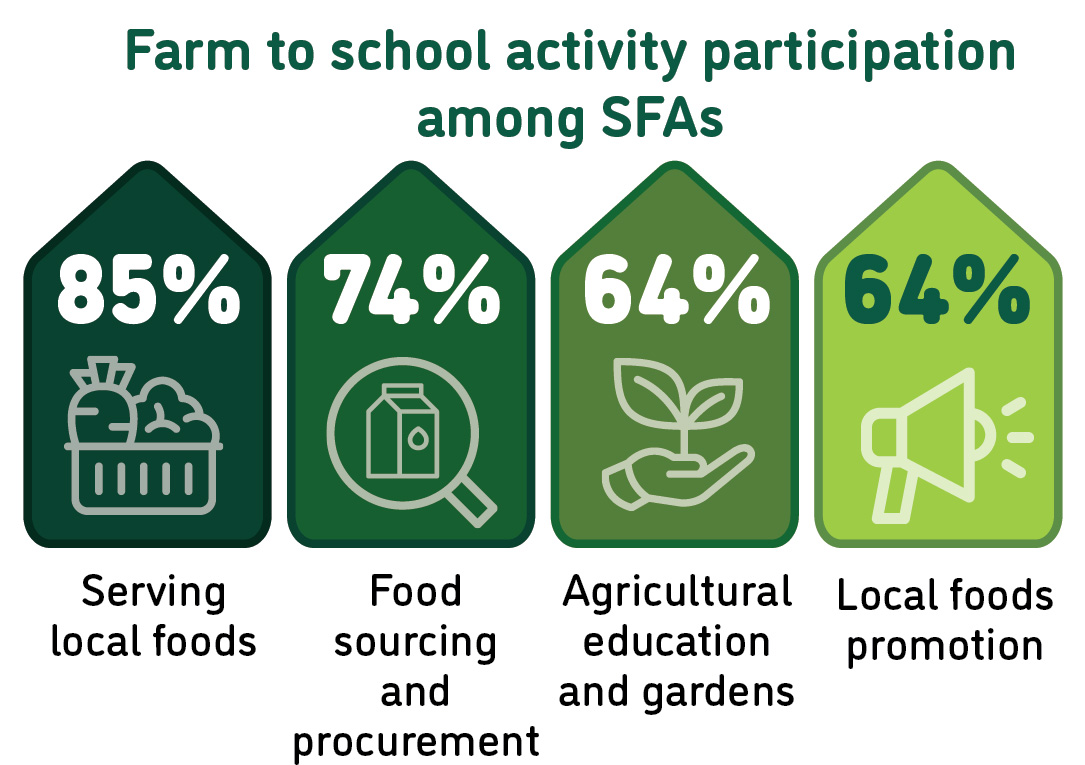
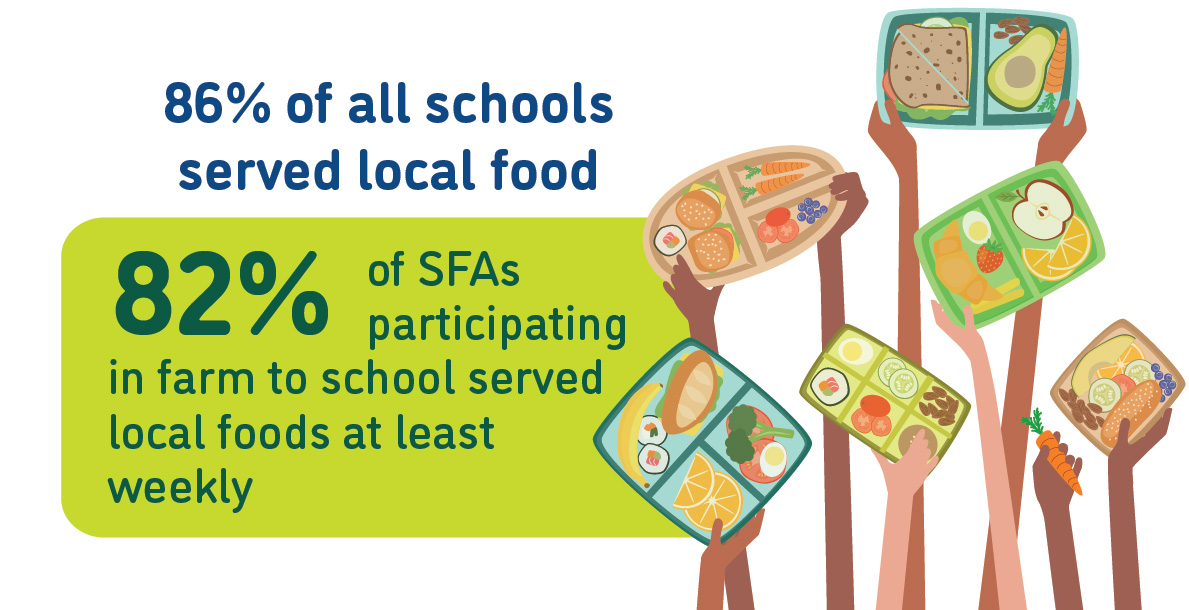
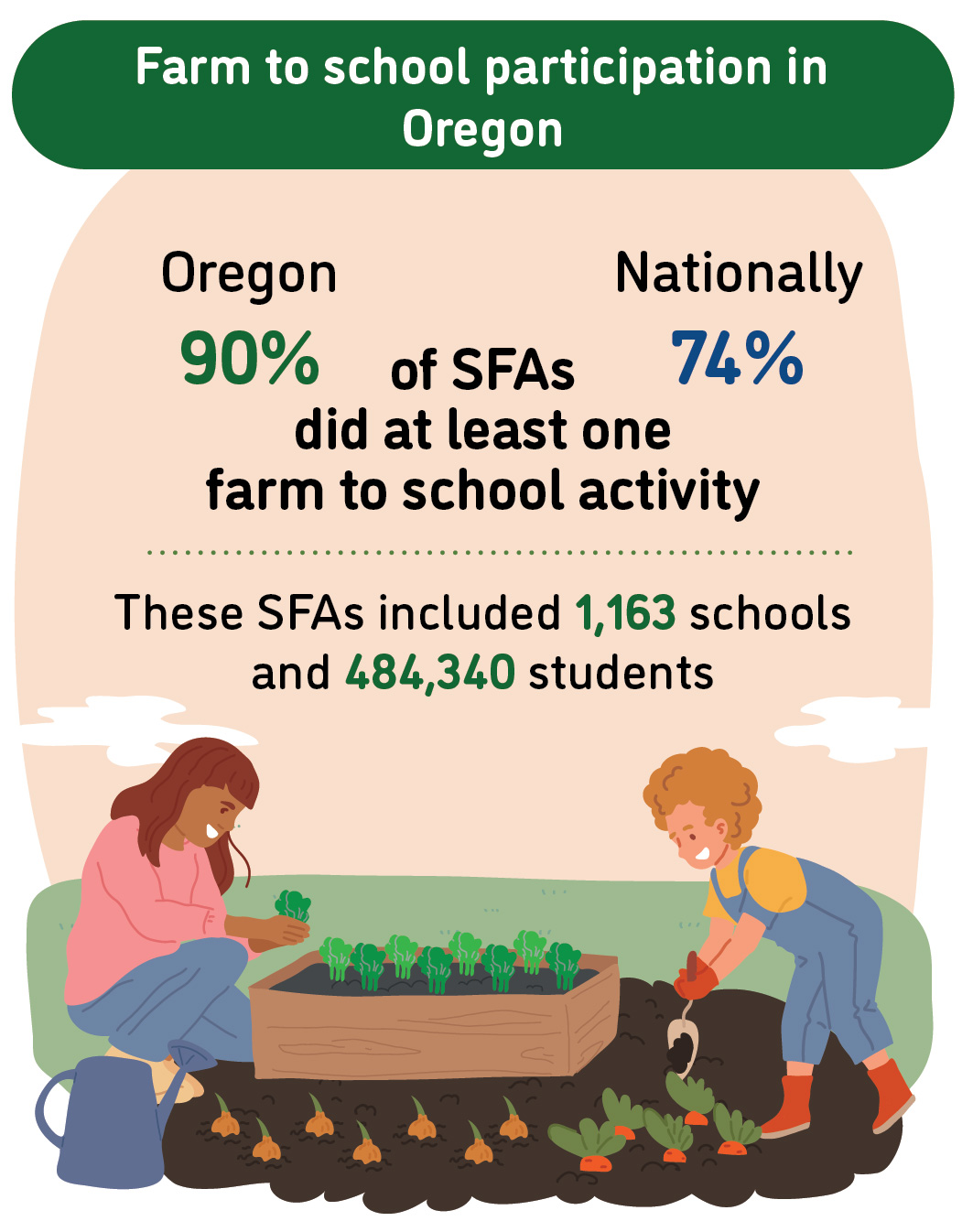
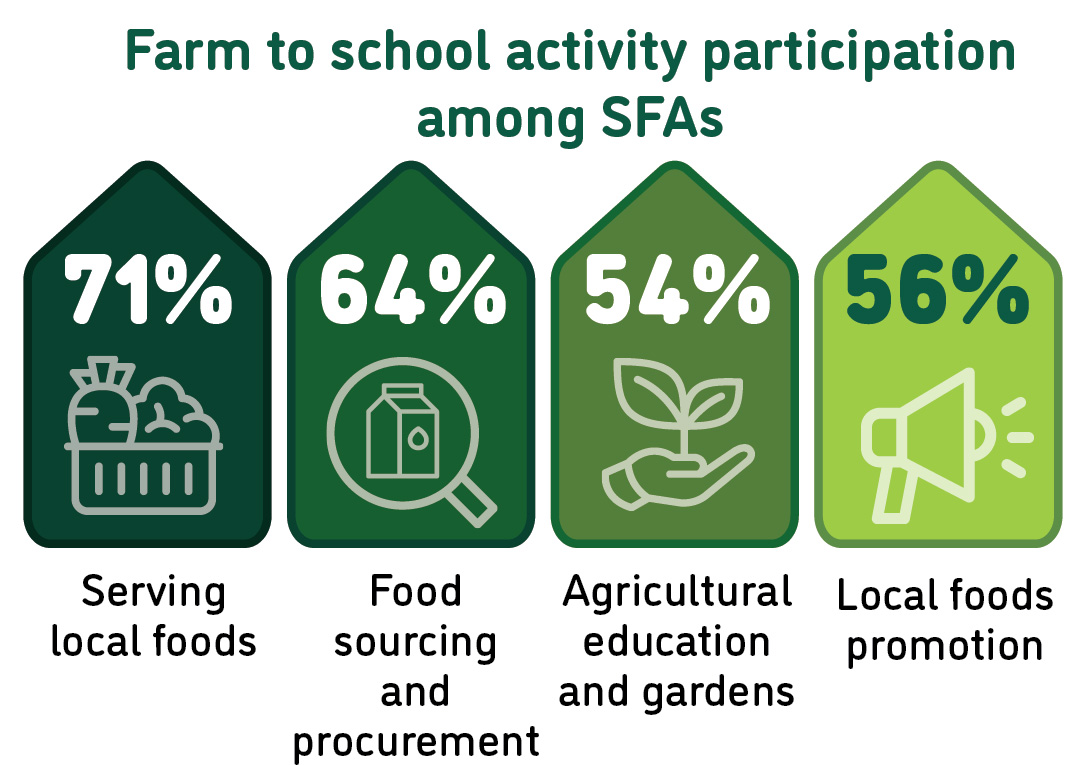
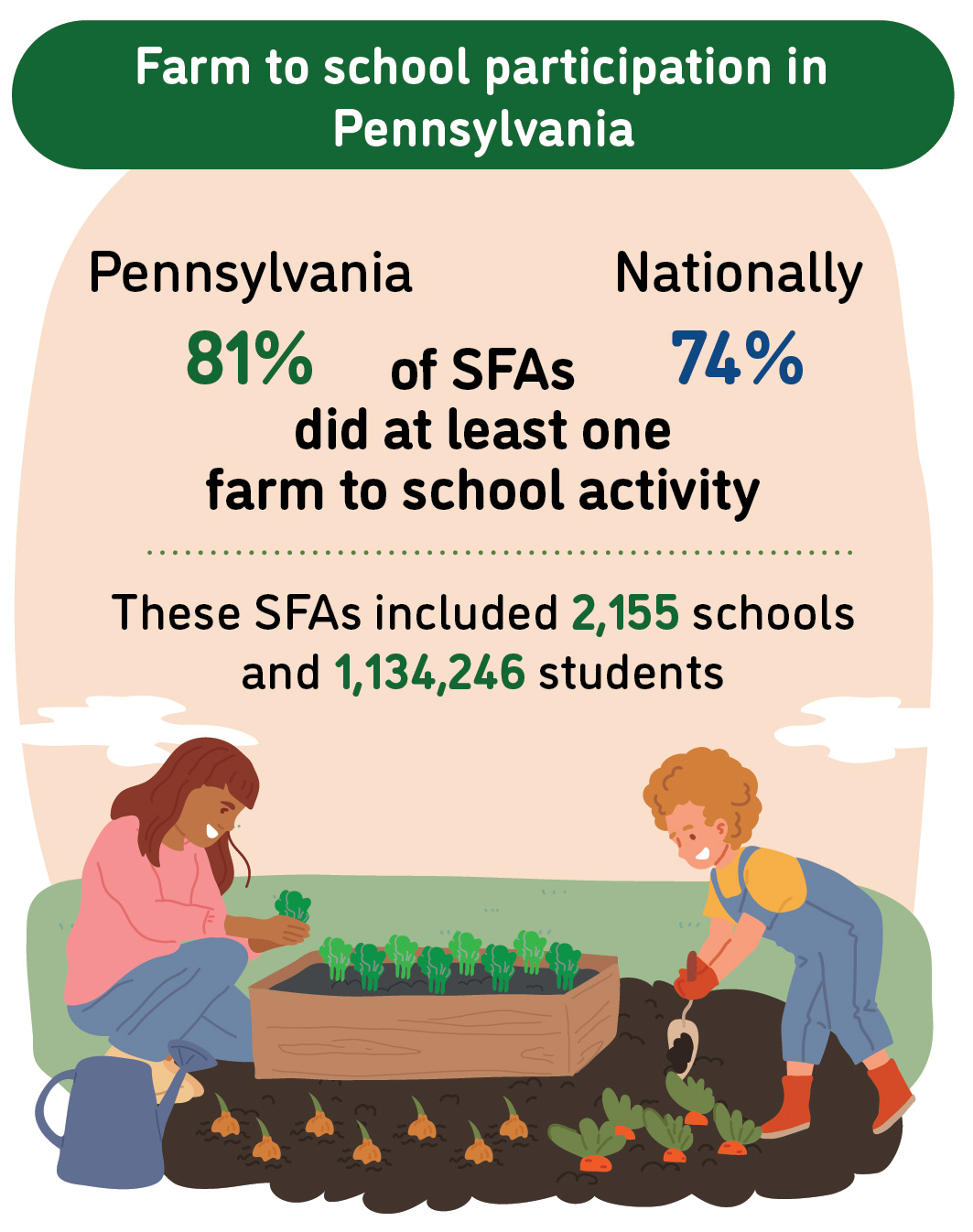
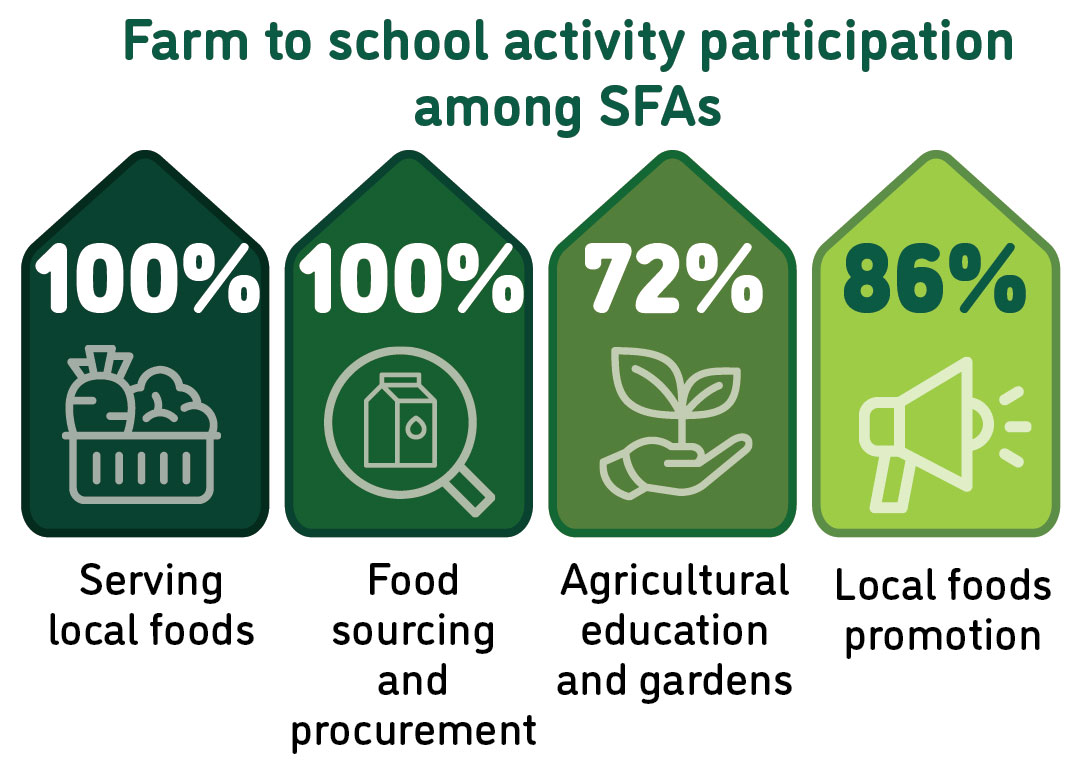
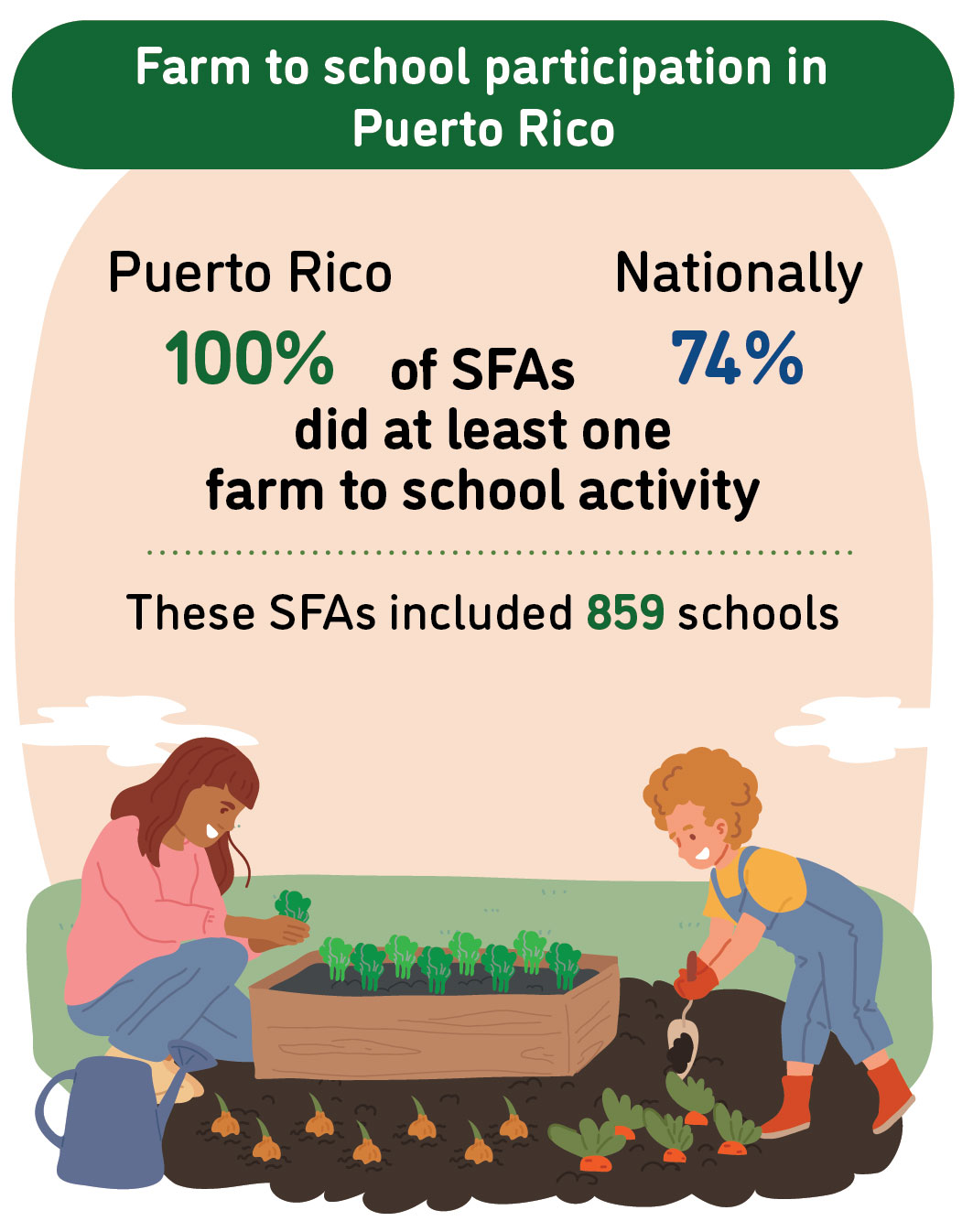
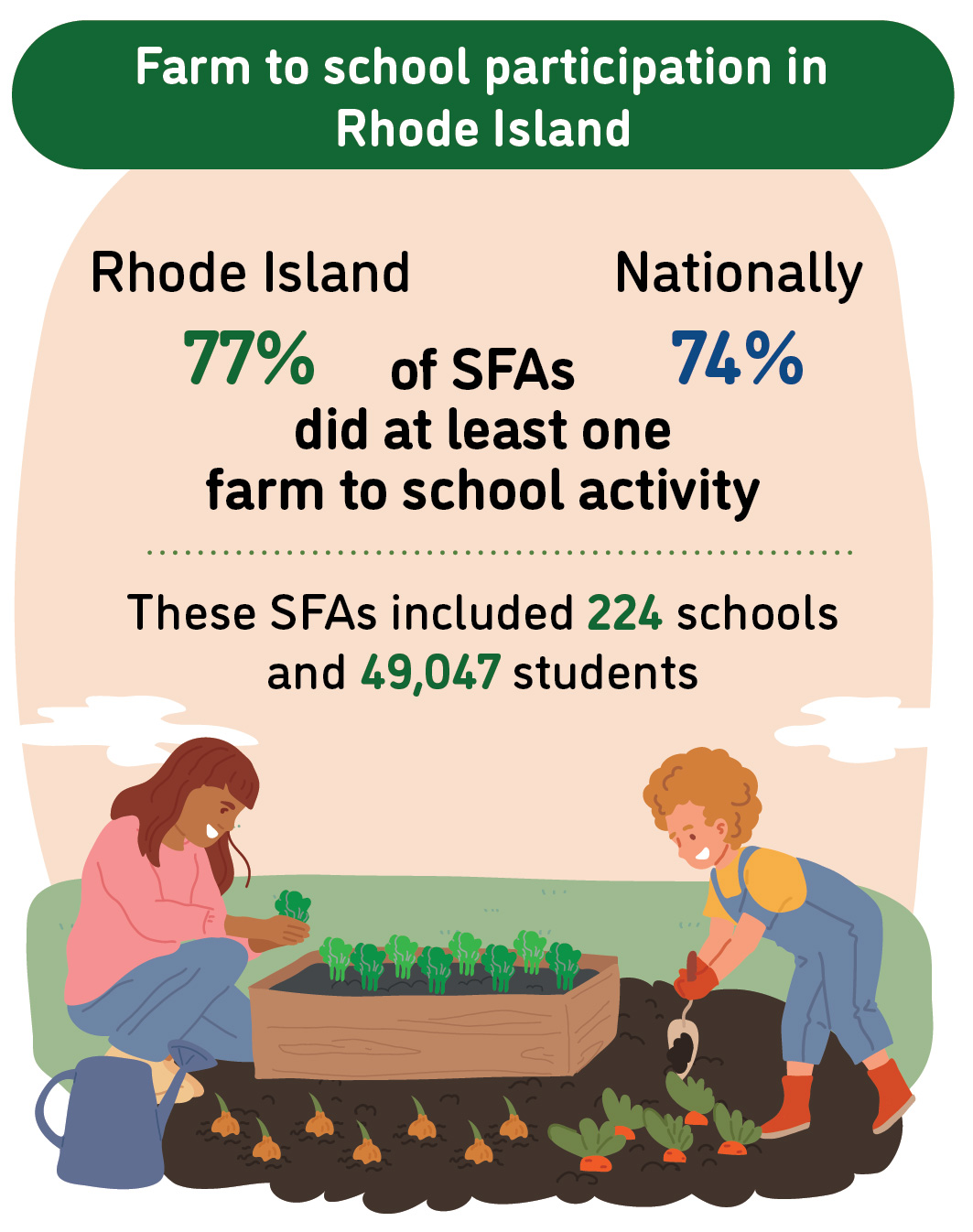
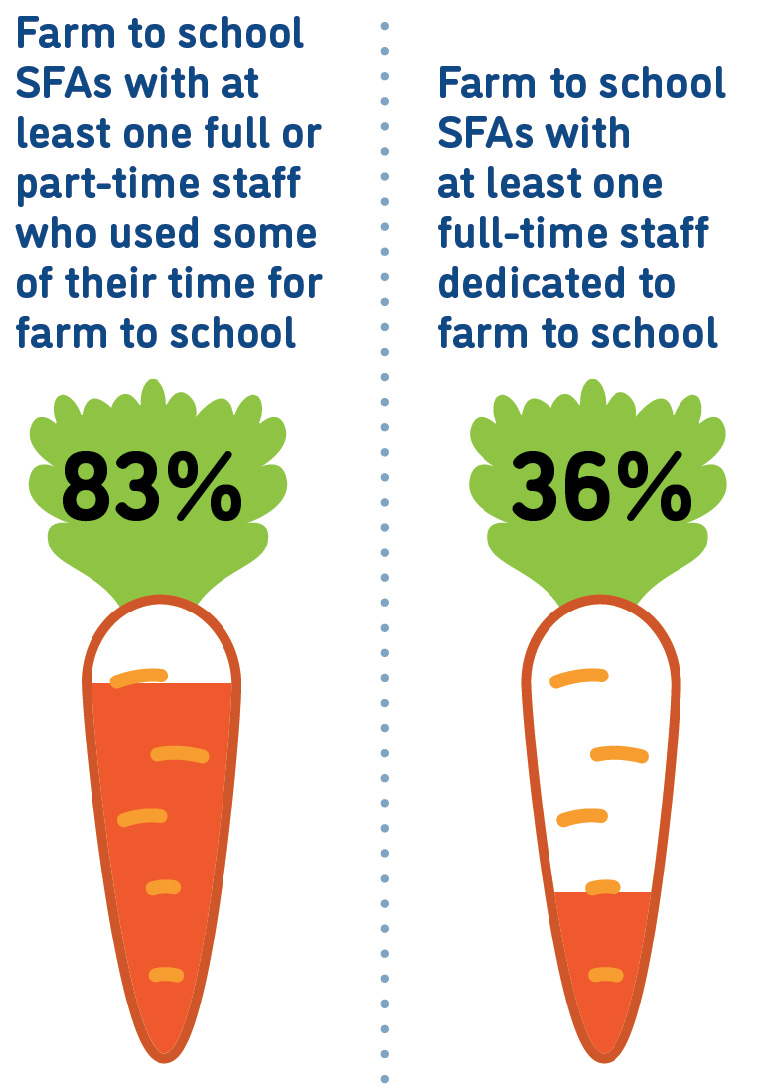
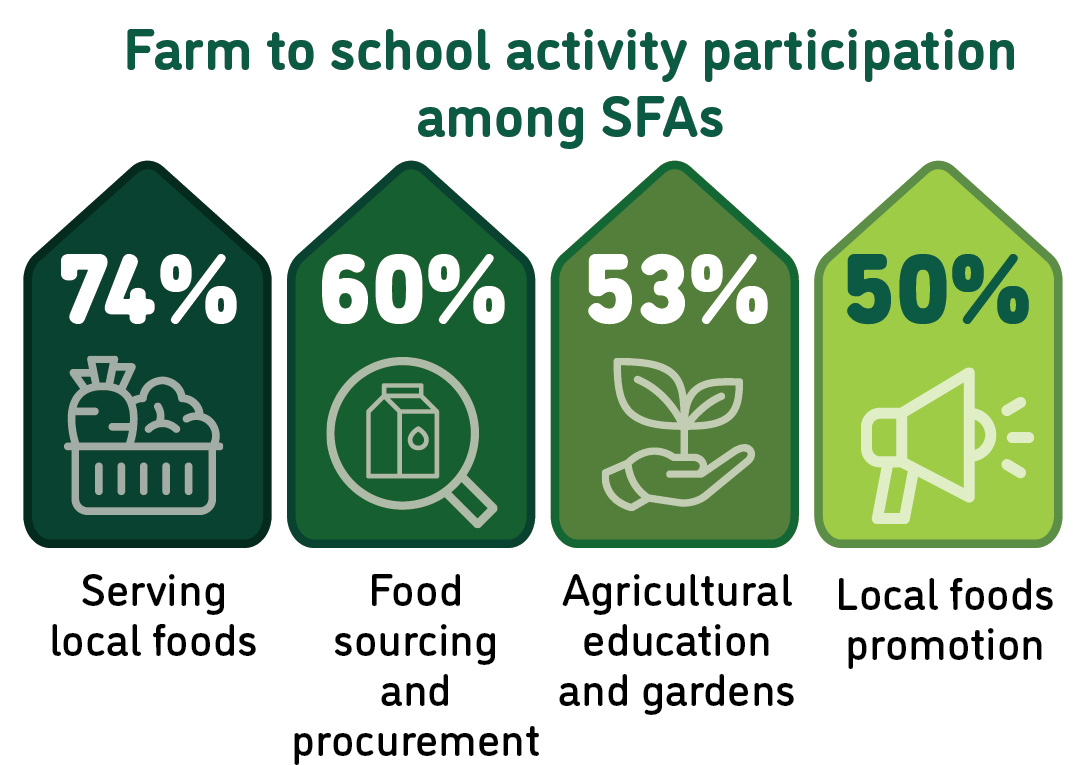
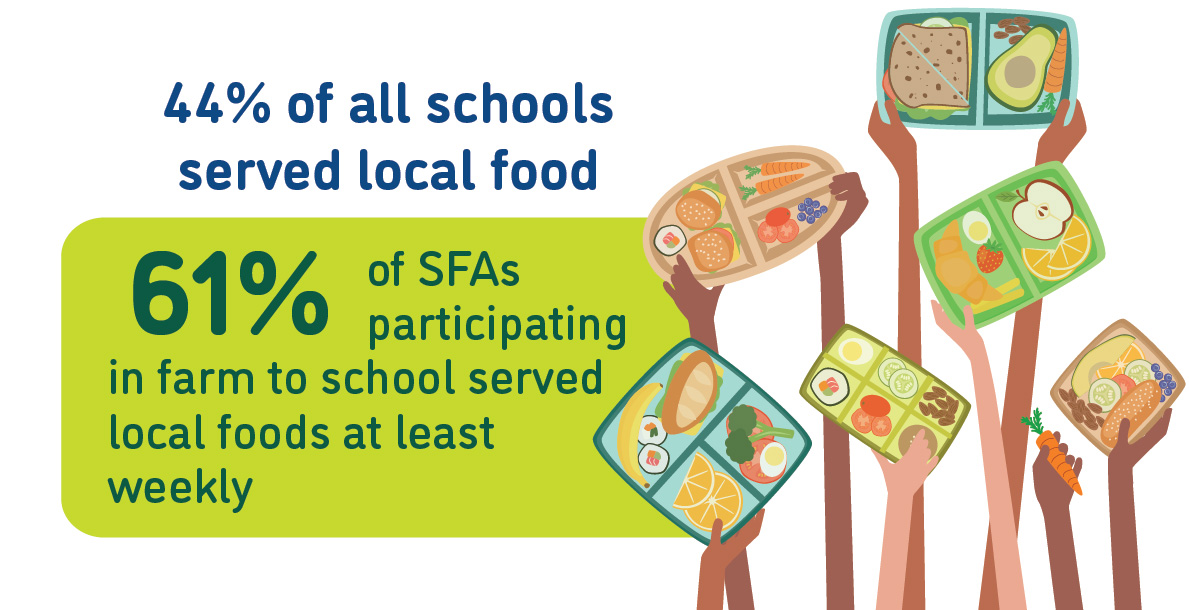
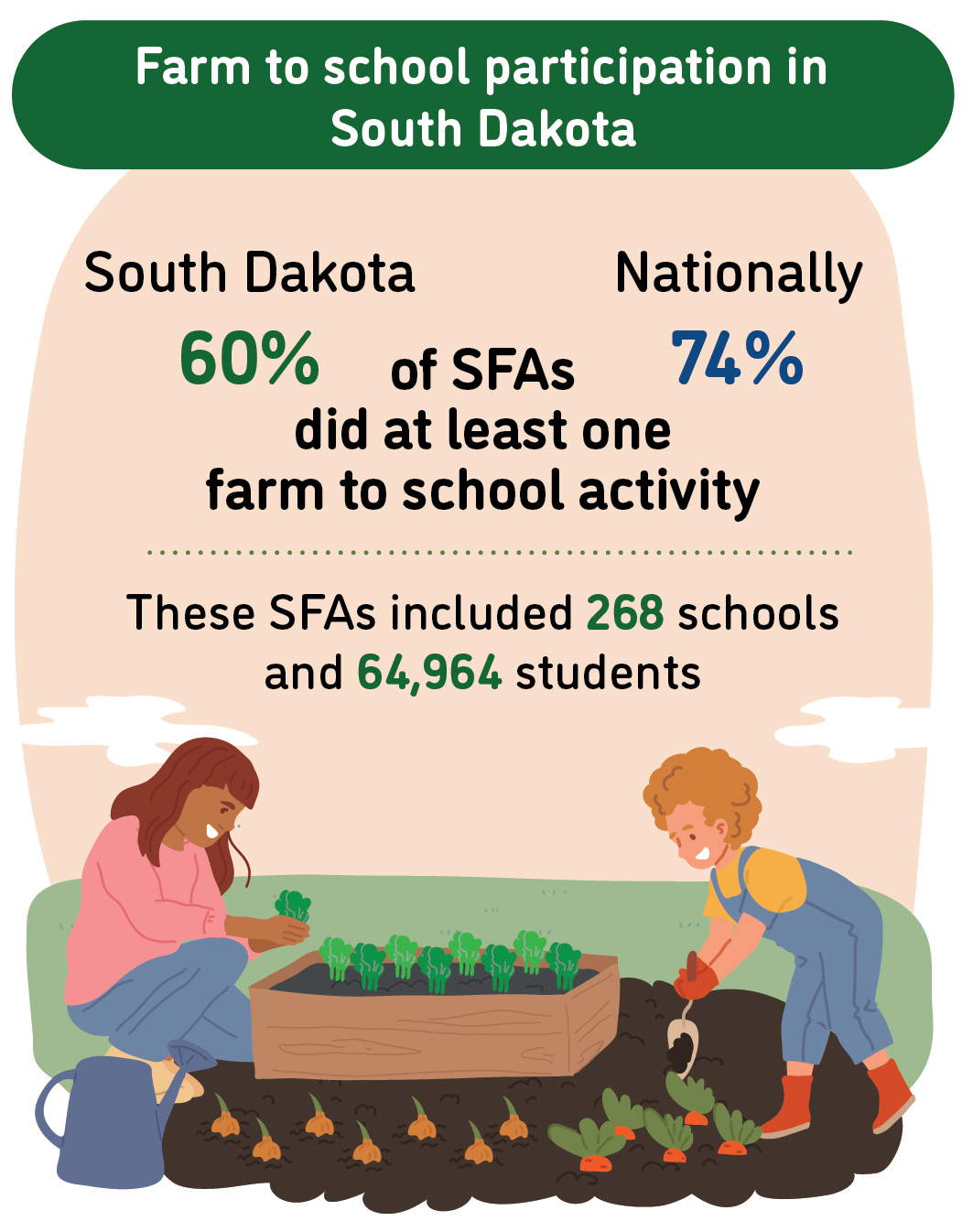
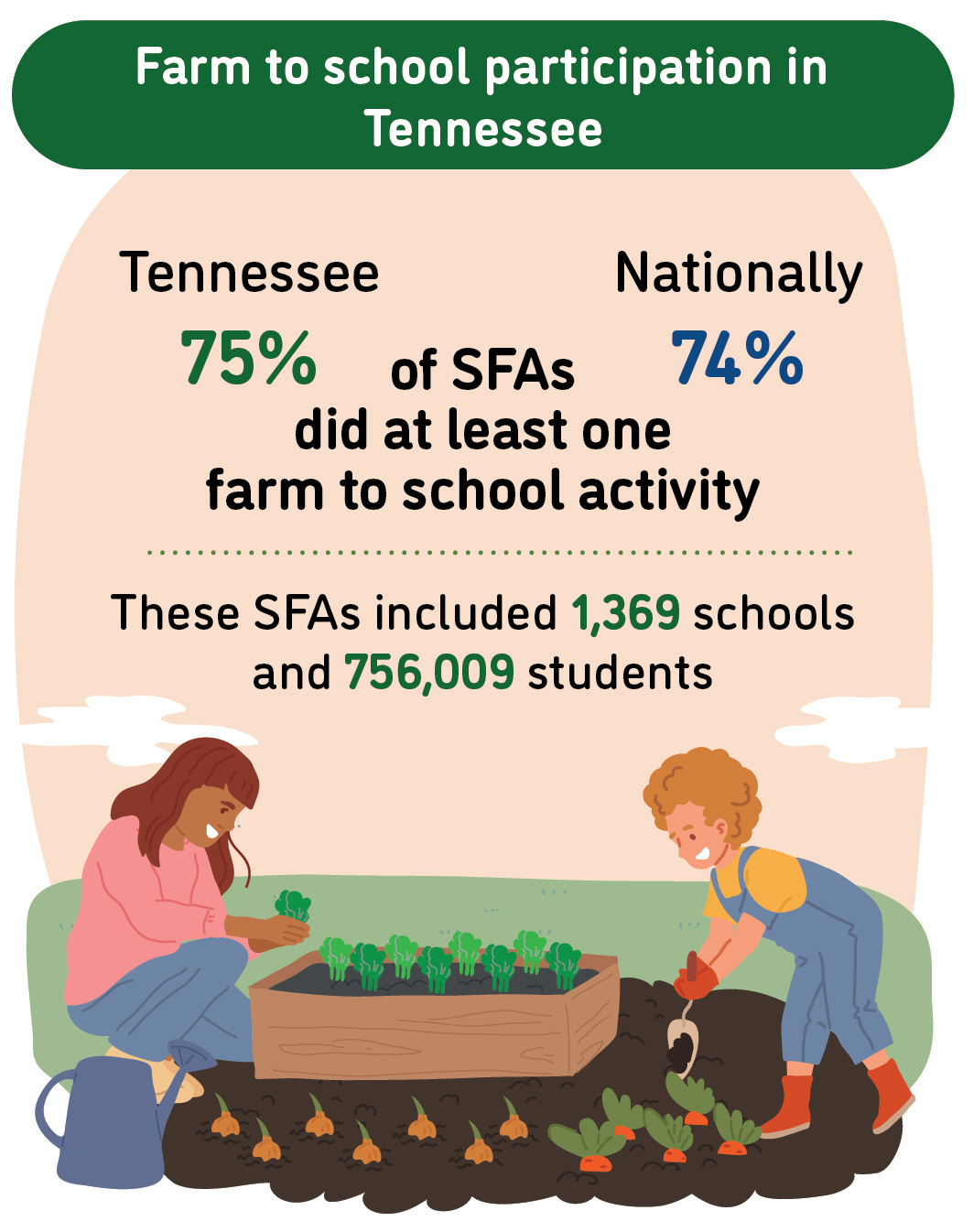
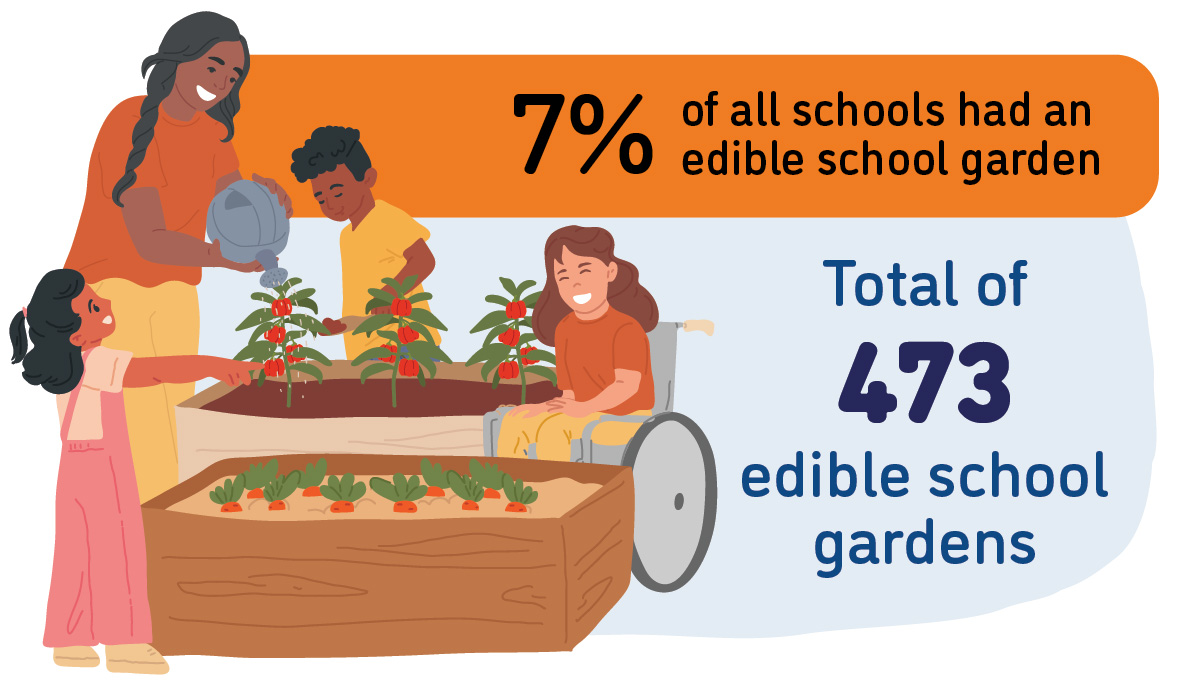
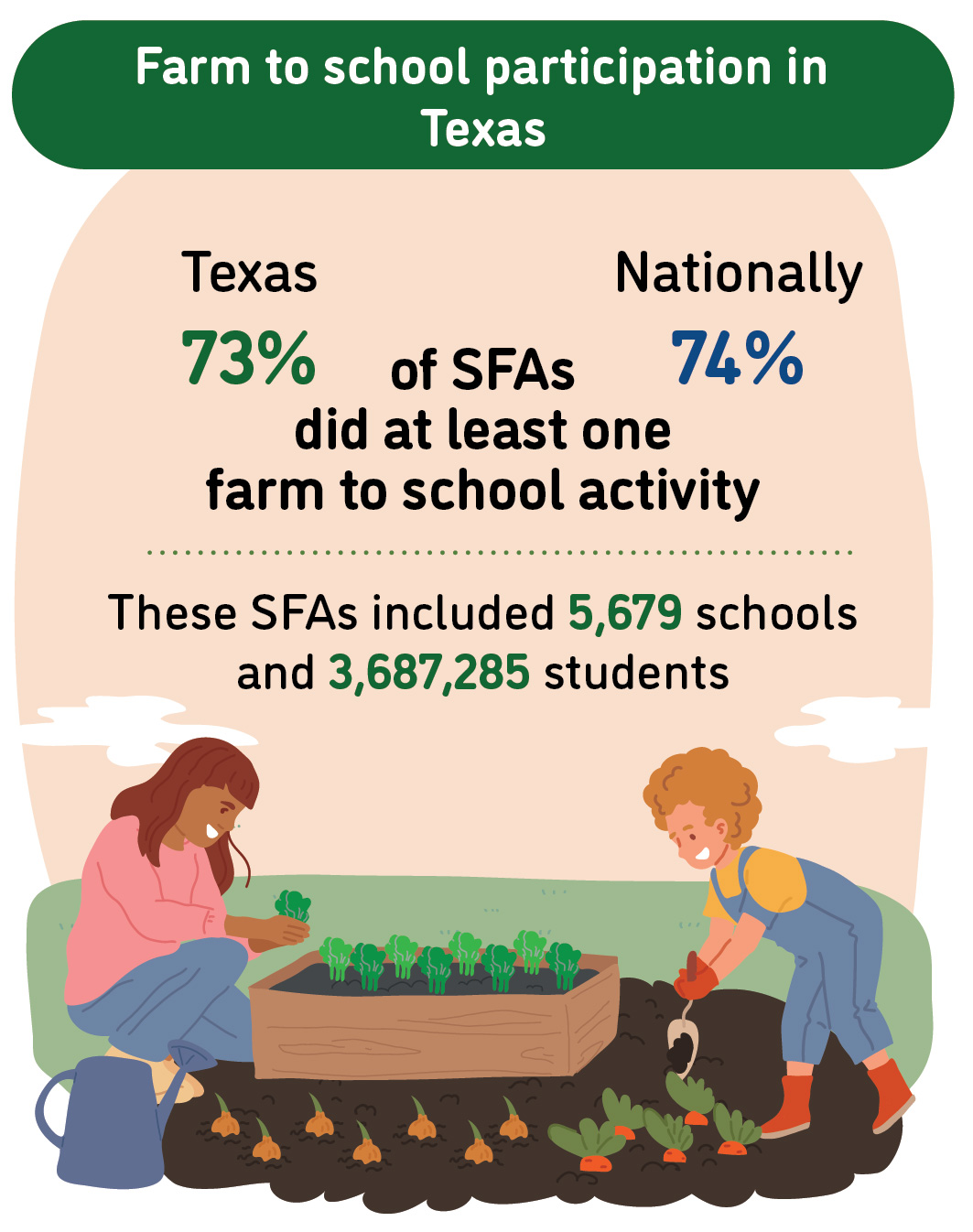
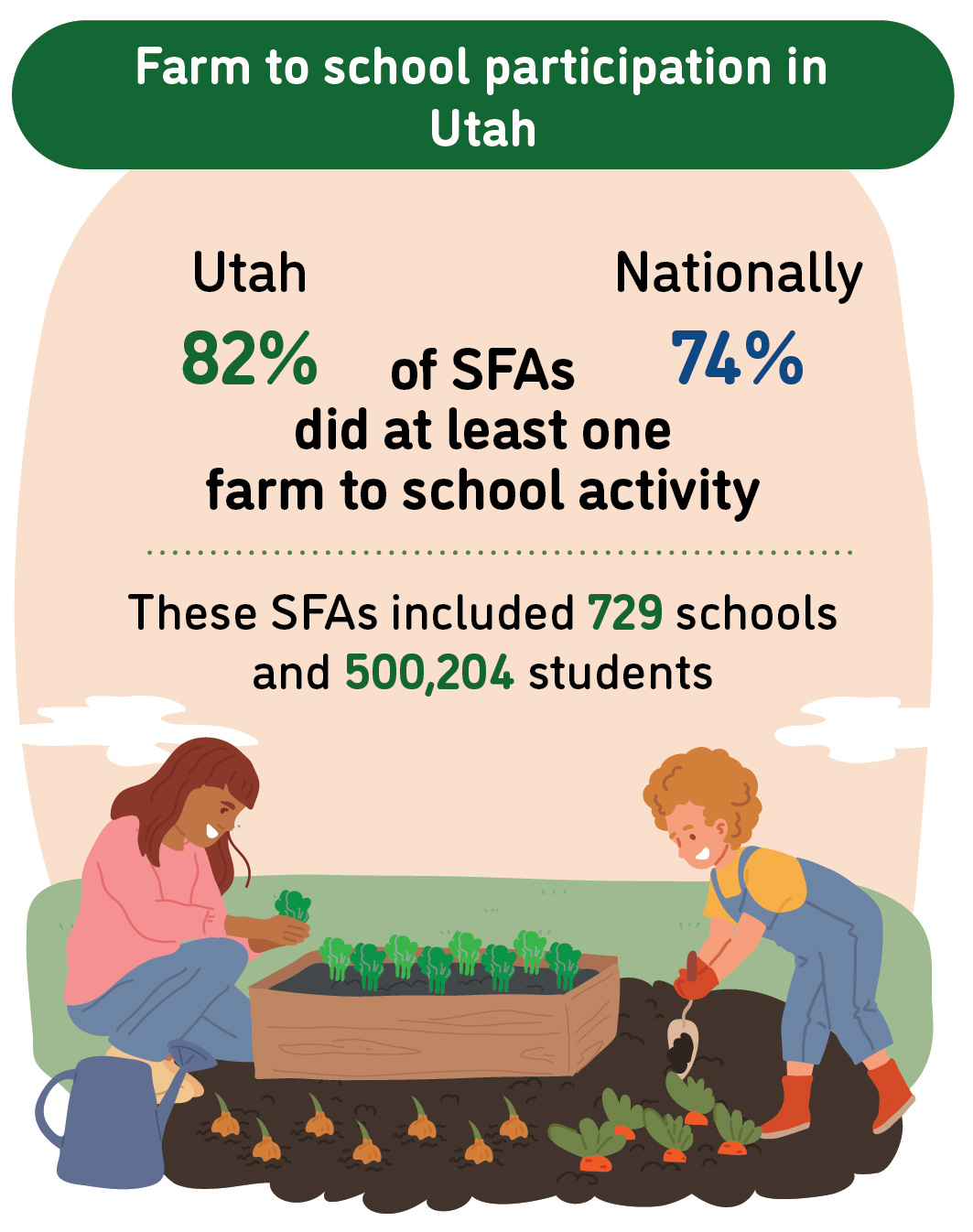
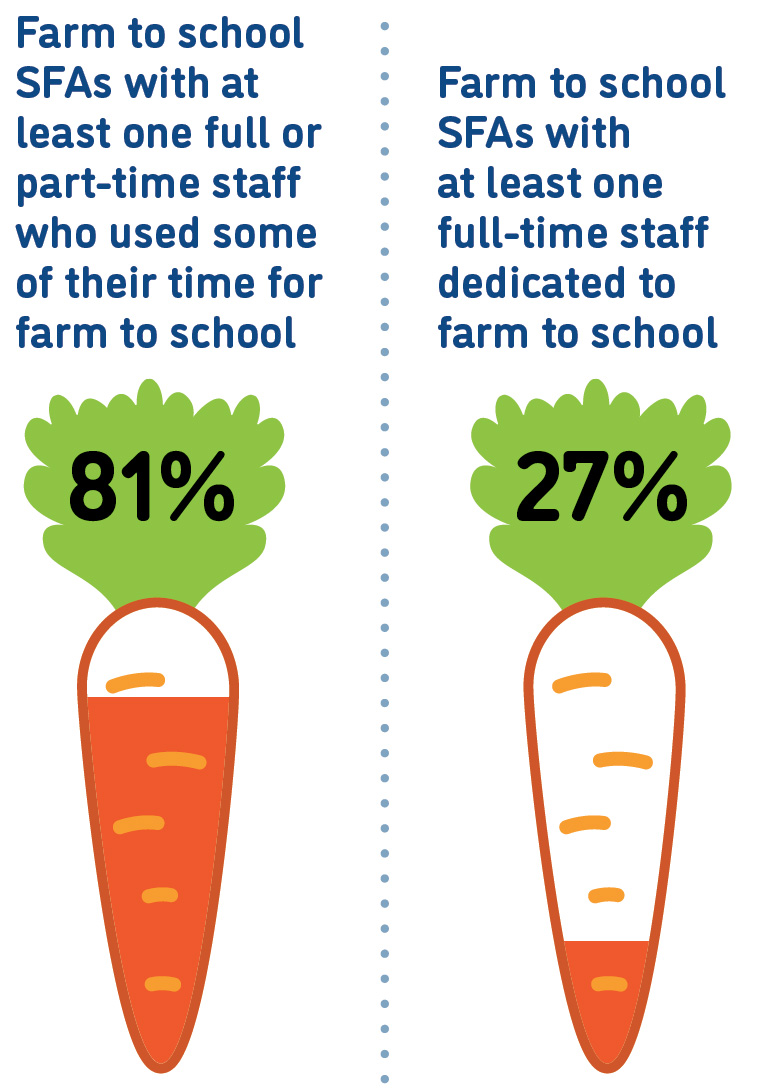
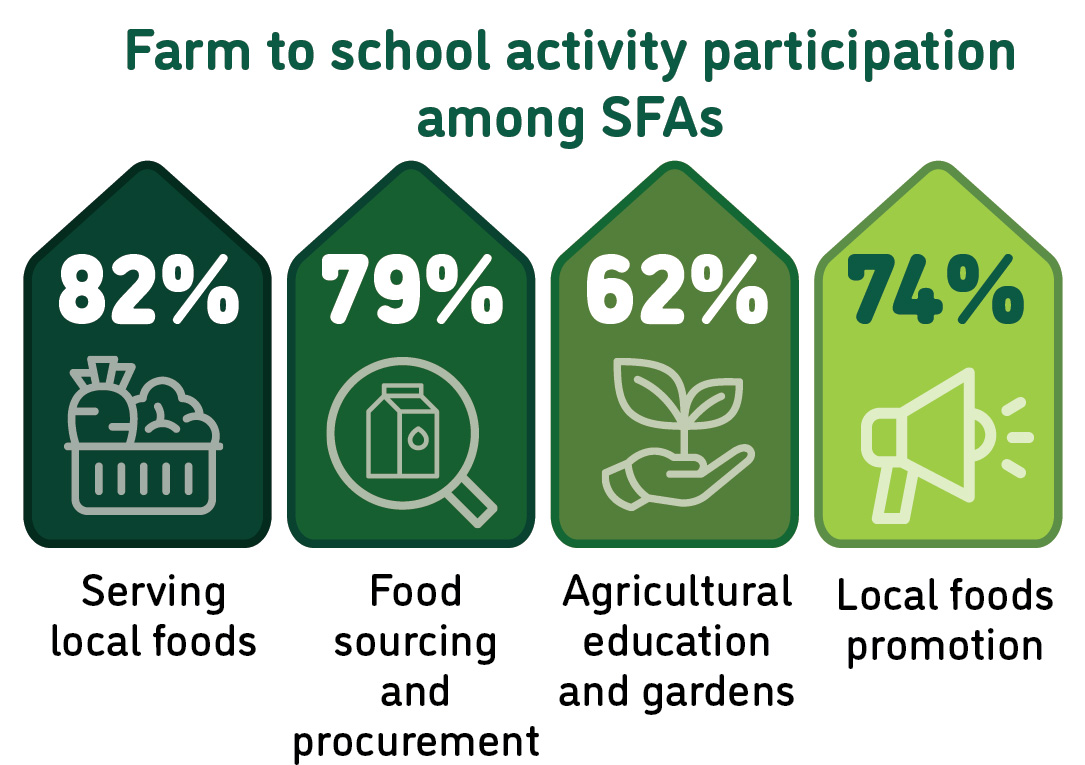
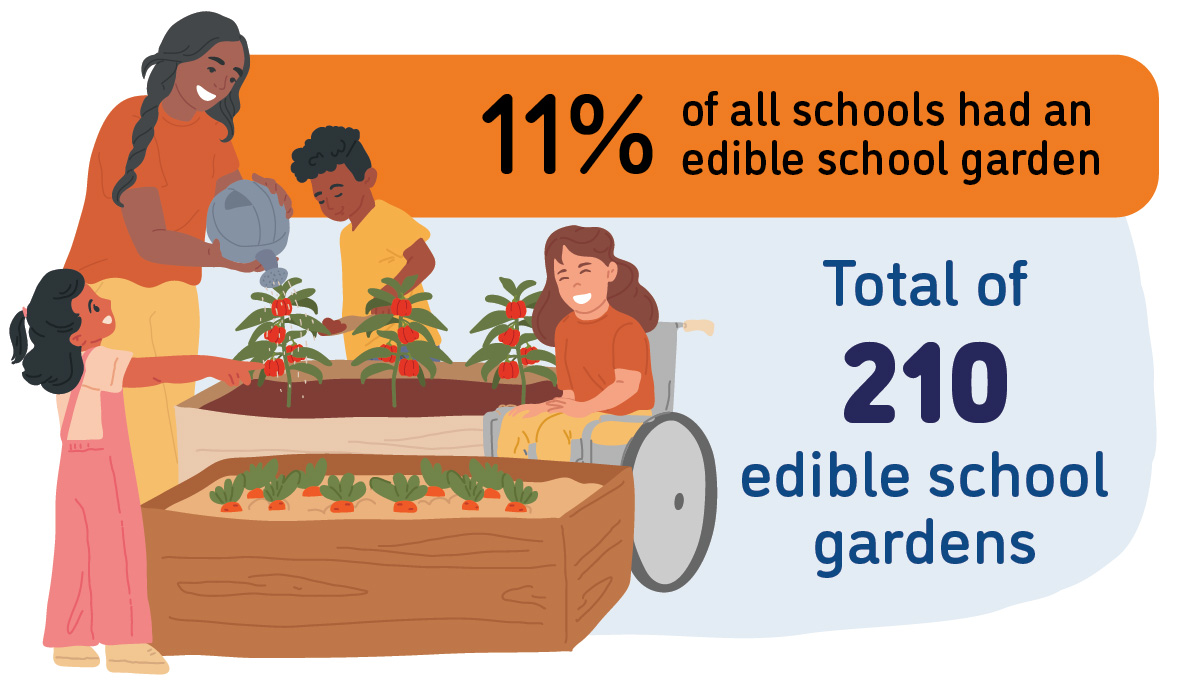
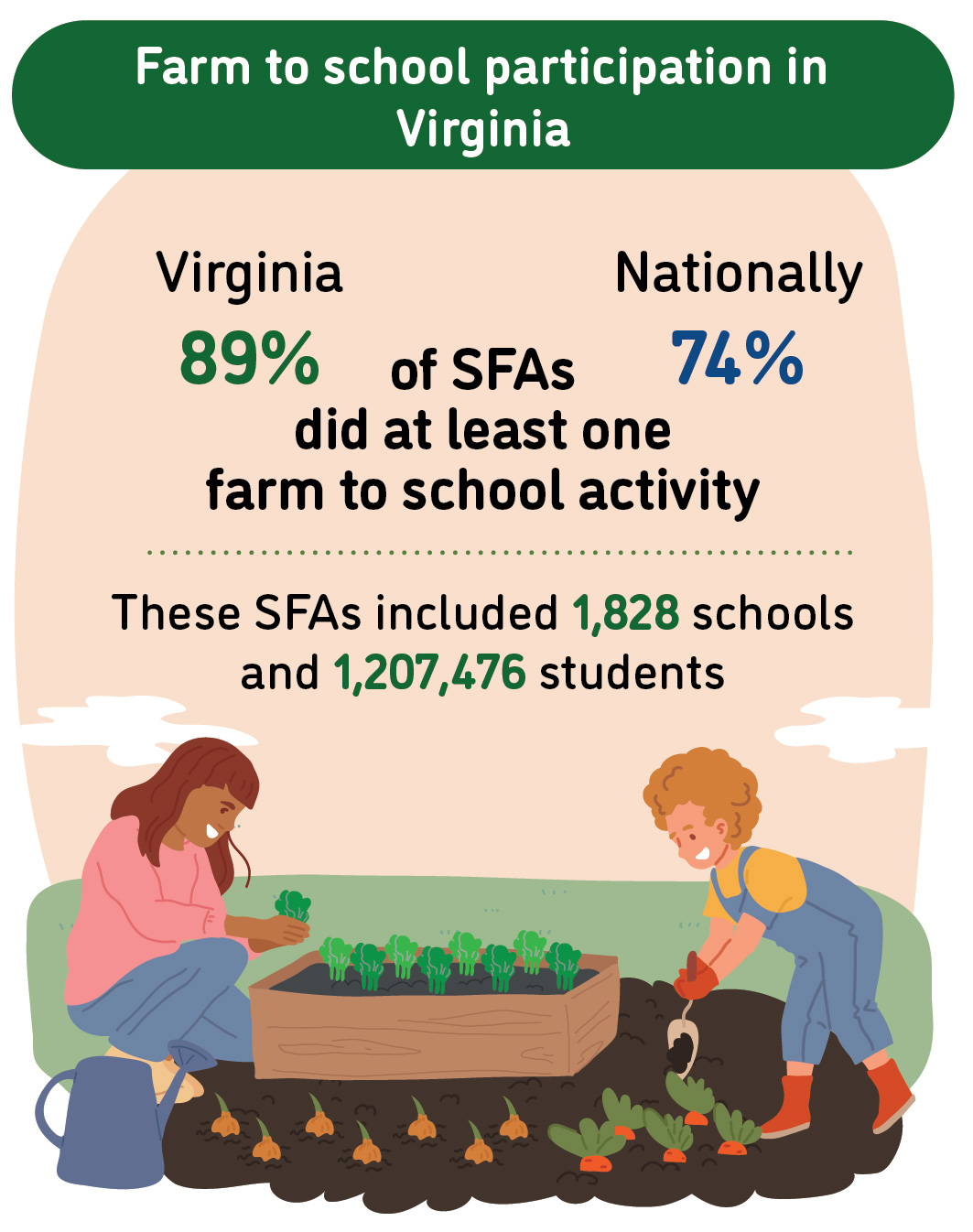
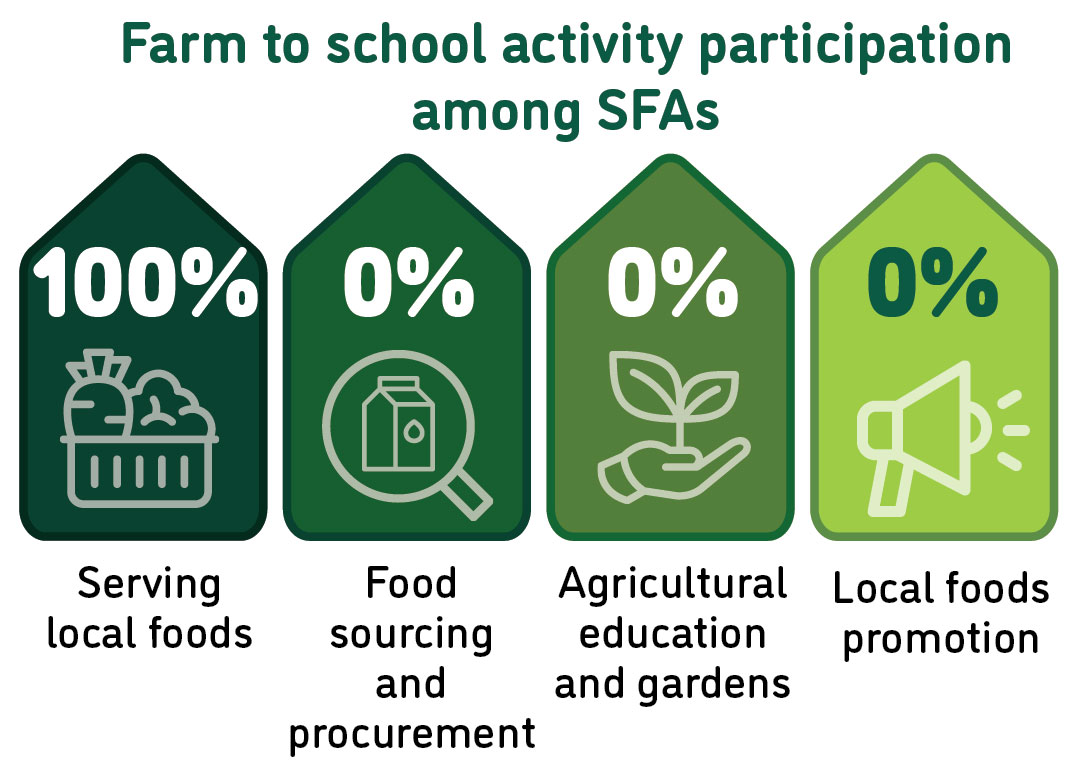
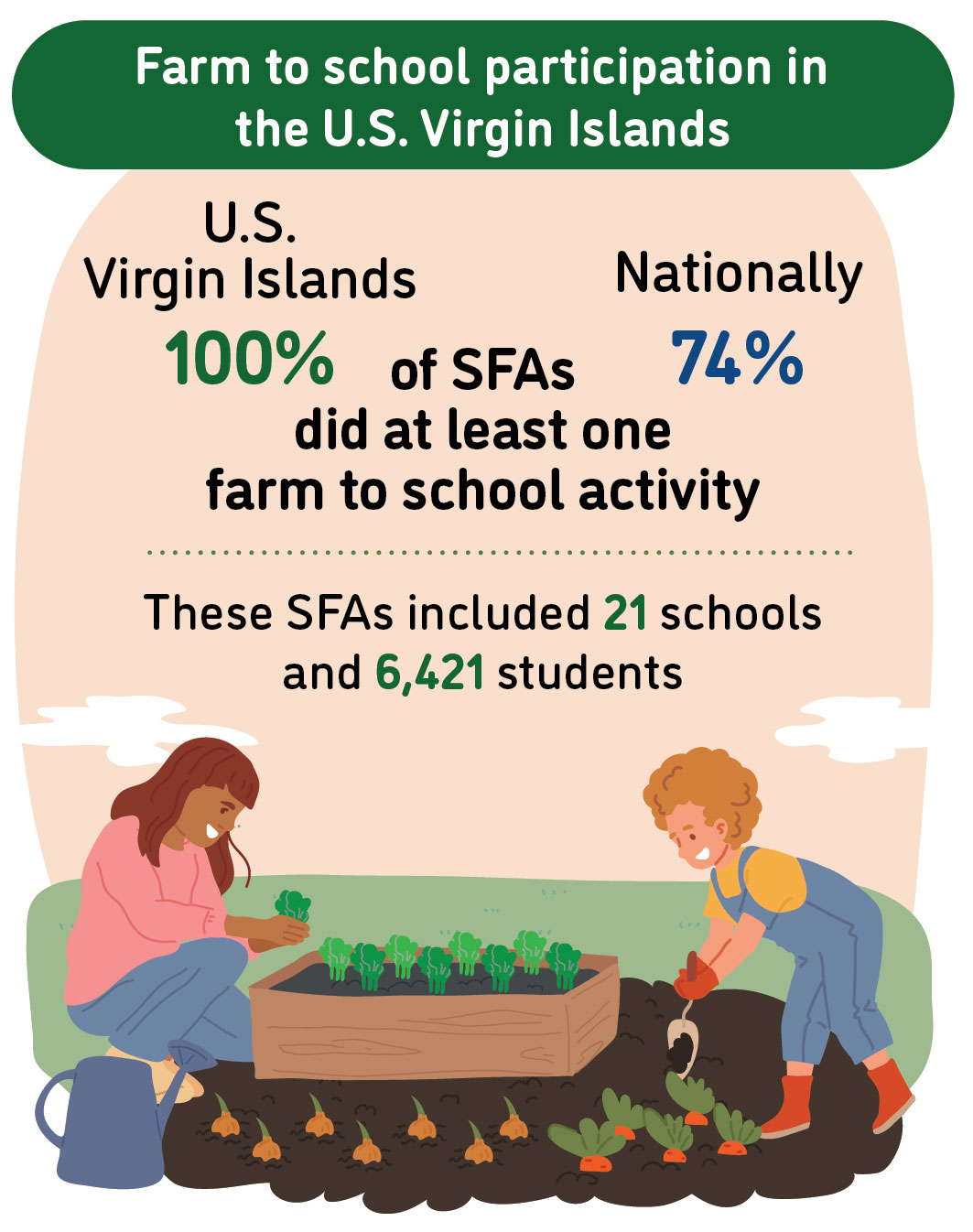
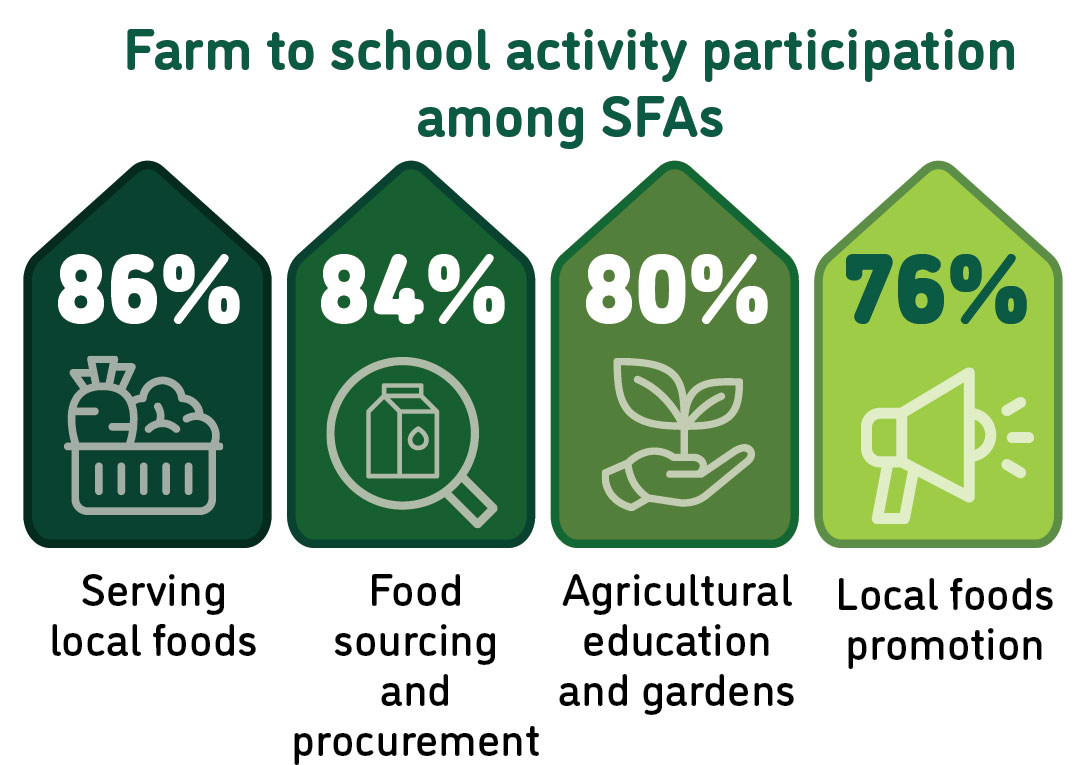
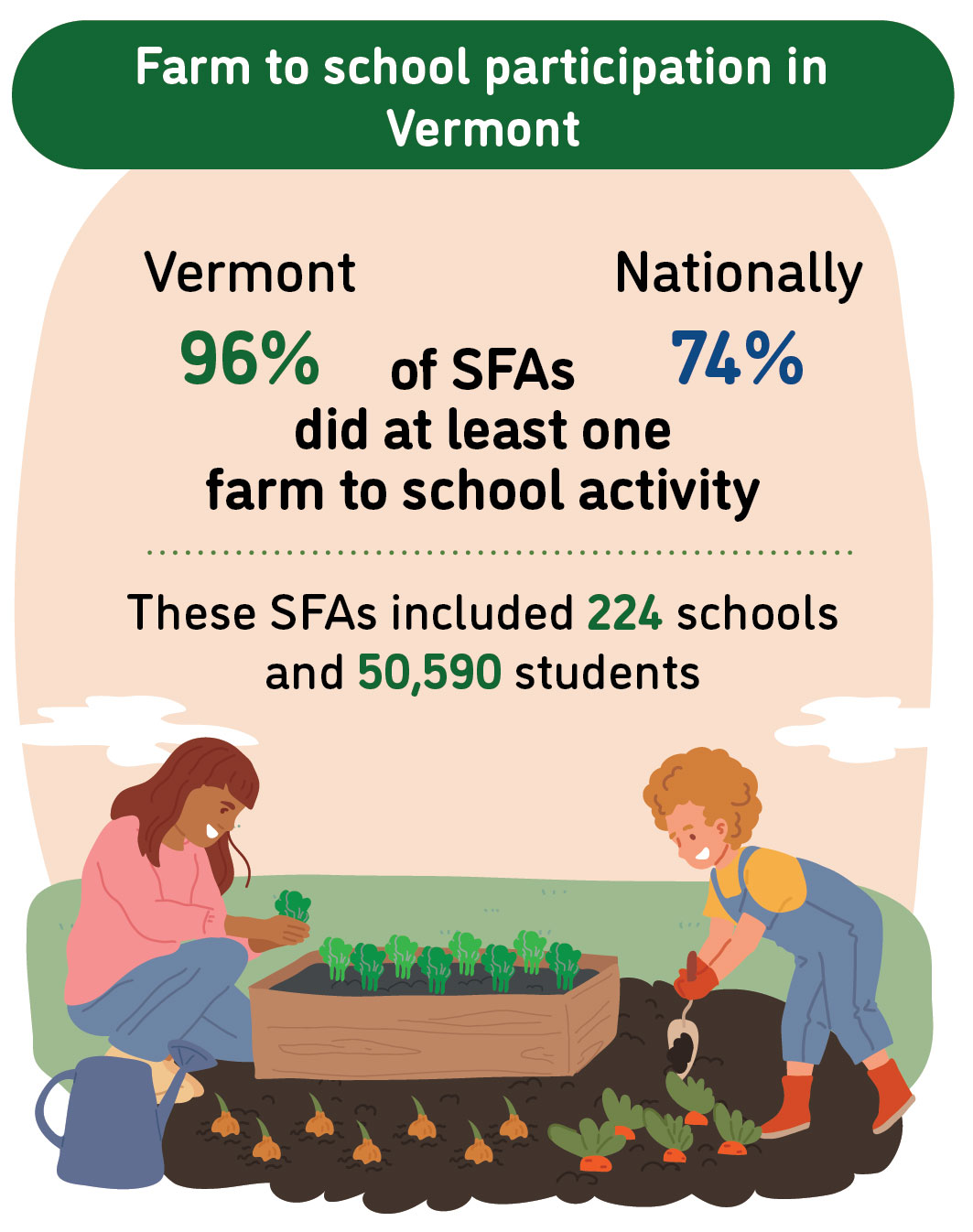
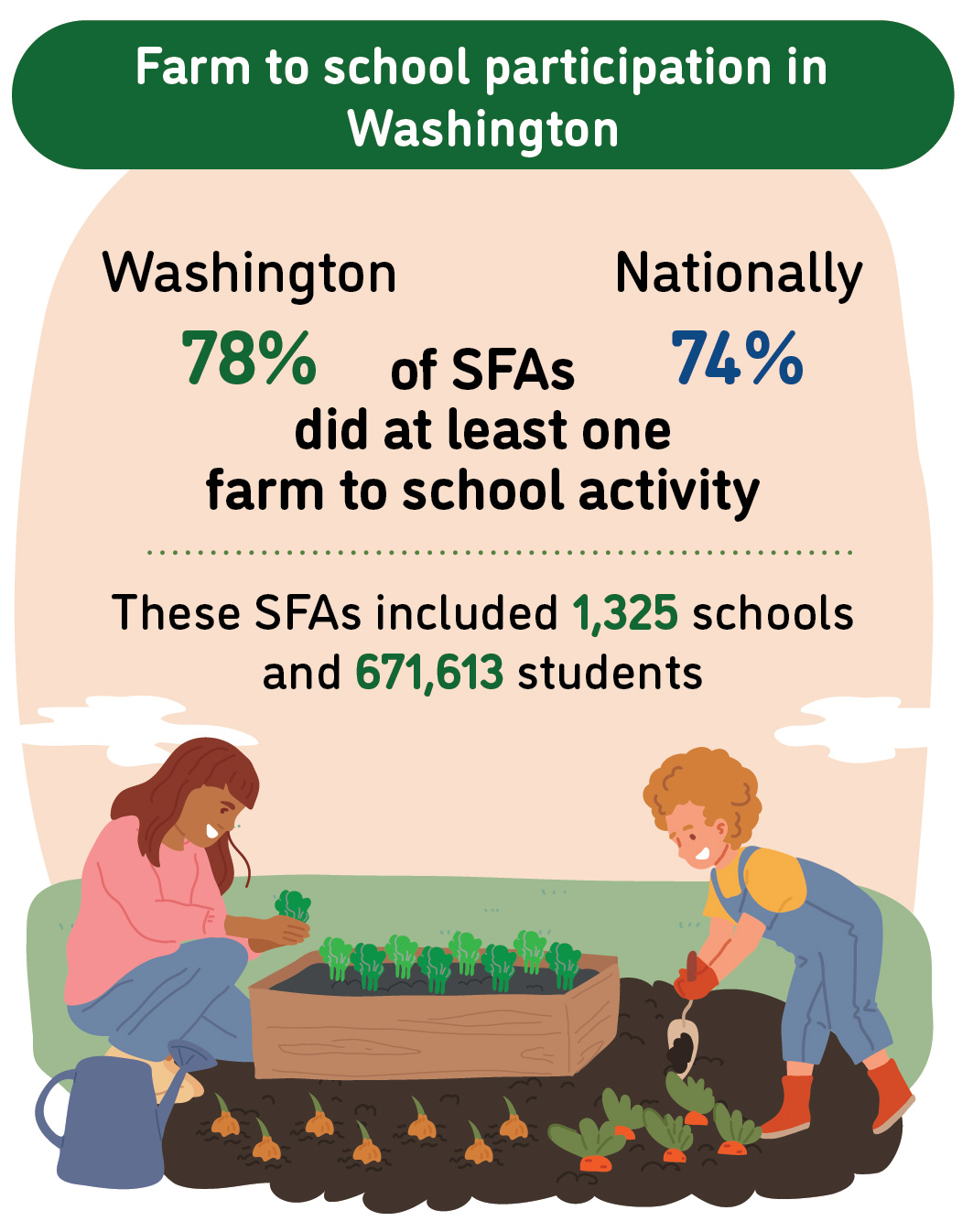
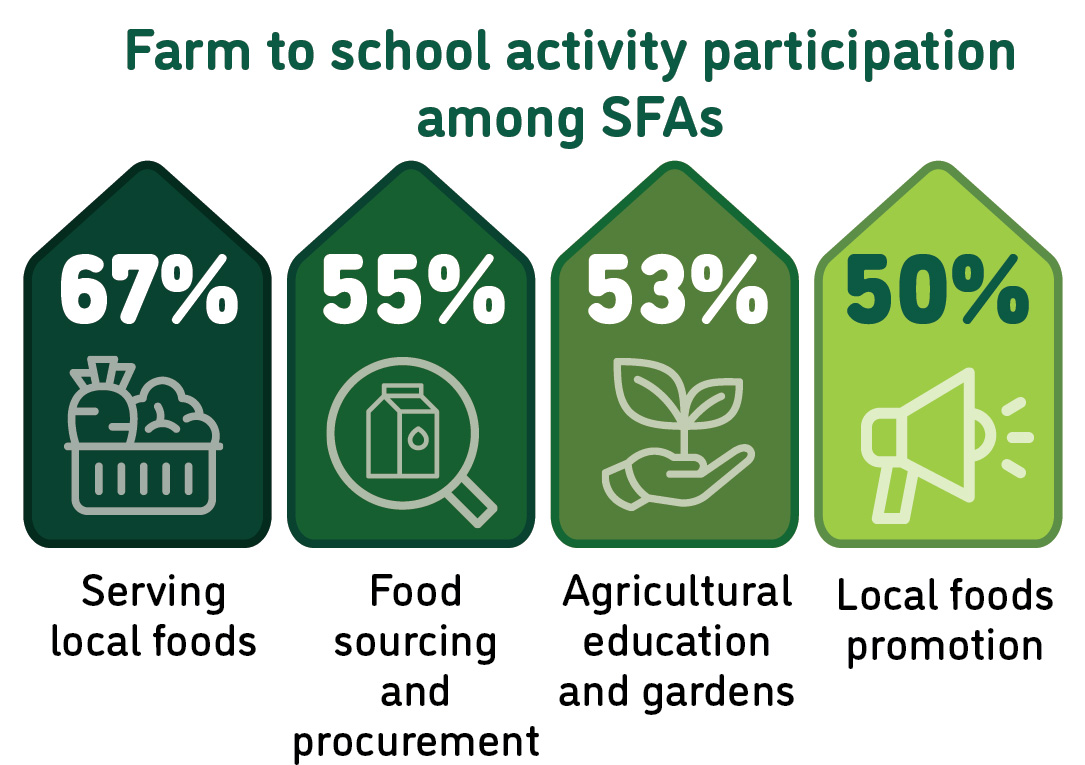
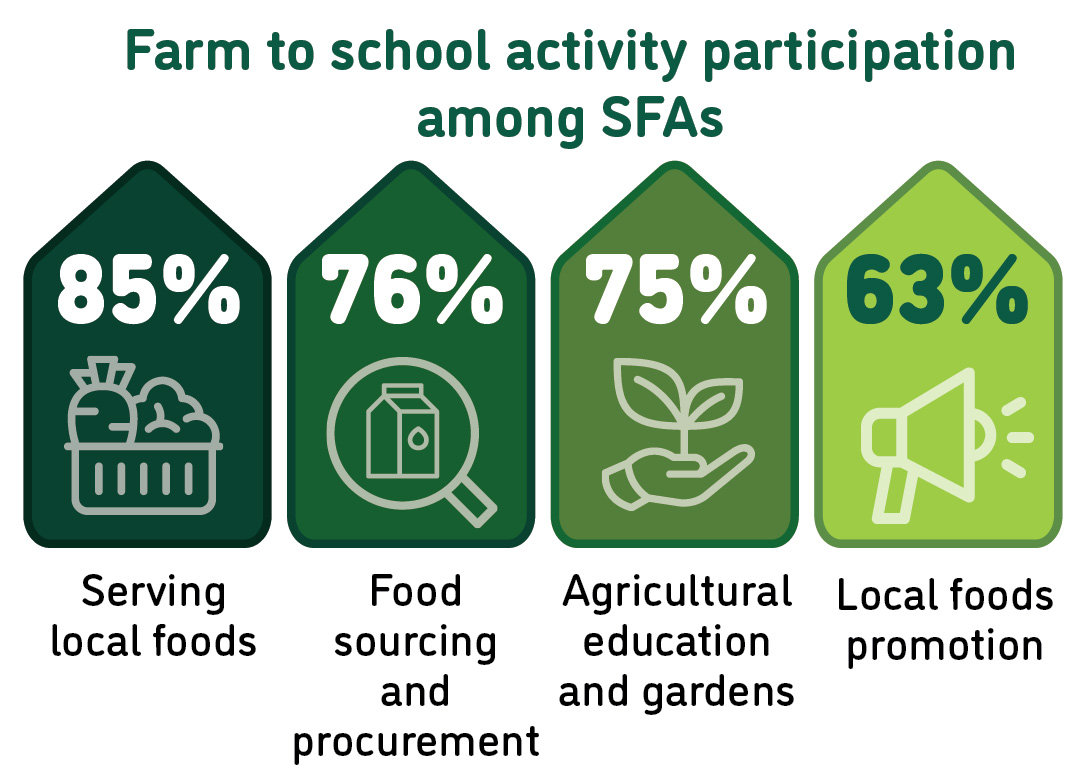
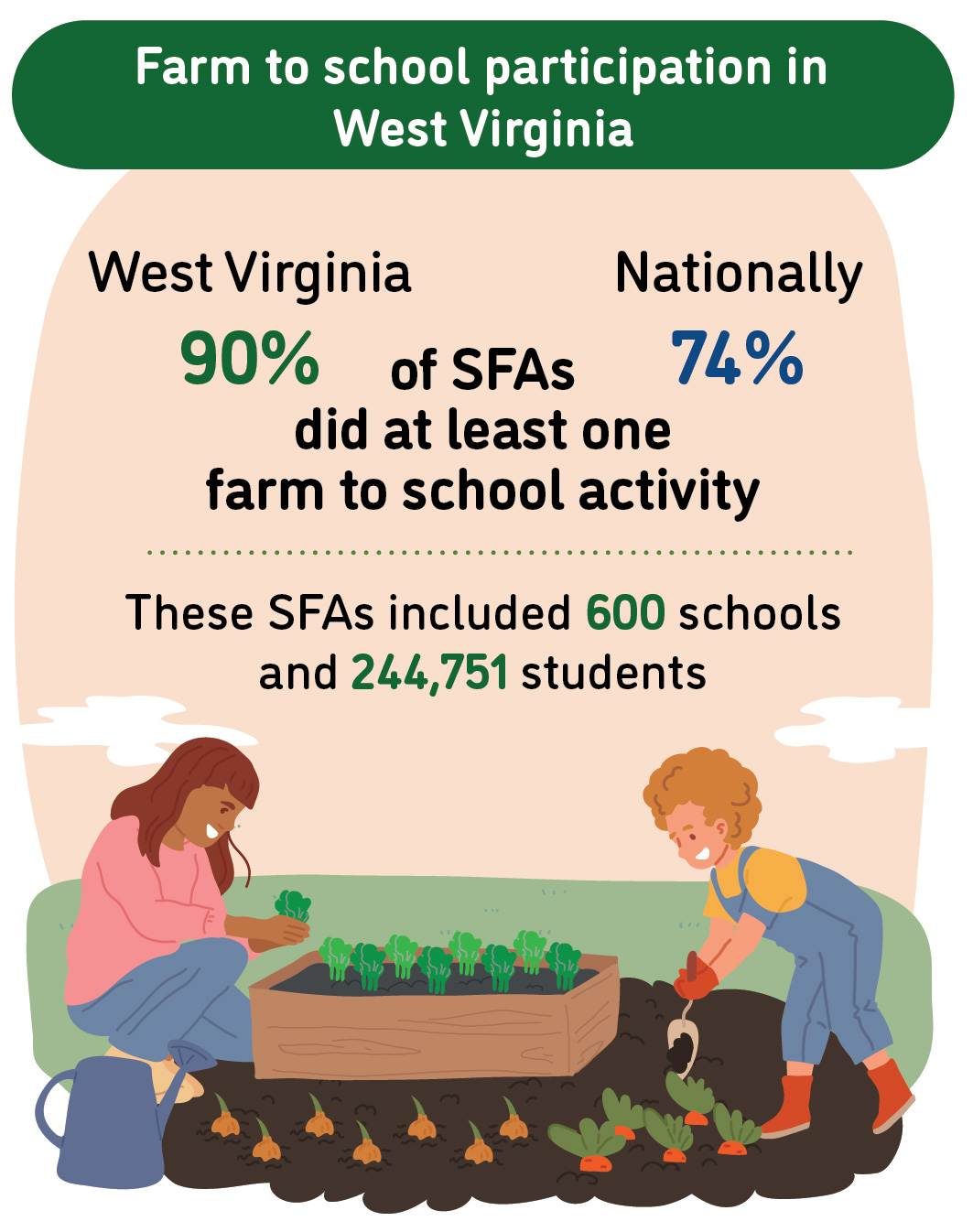
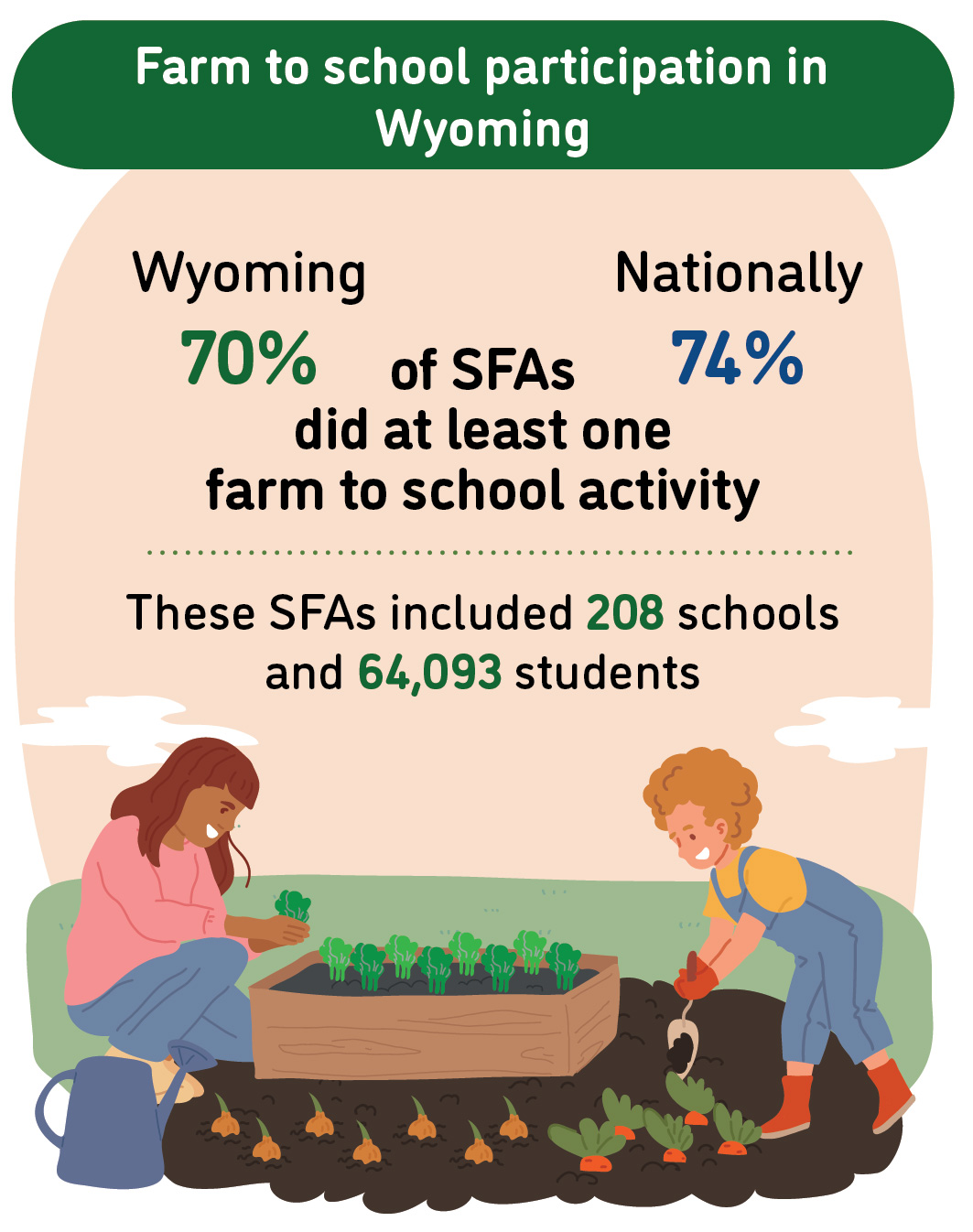
- Nearly three-quarters (74 percent) of SFAs did at least one farm to school relevant activity in SY 2022-23, an increase of 9 percentage points over SY 2018–19.
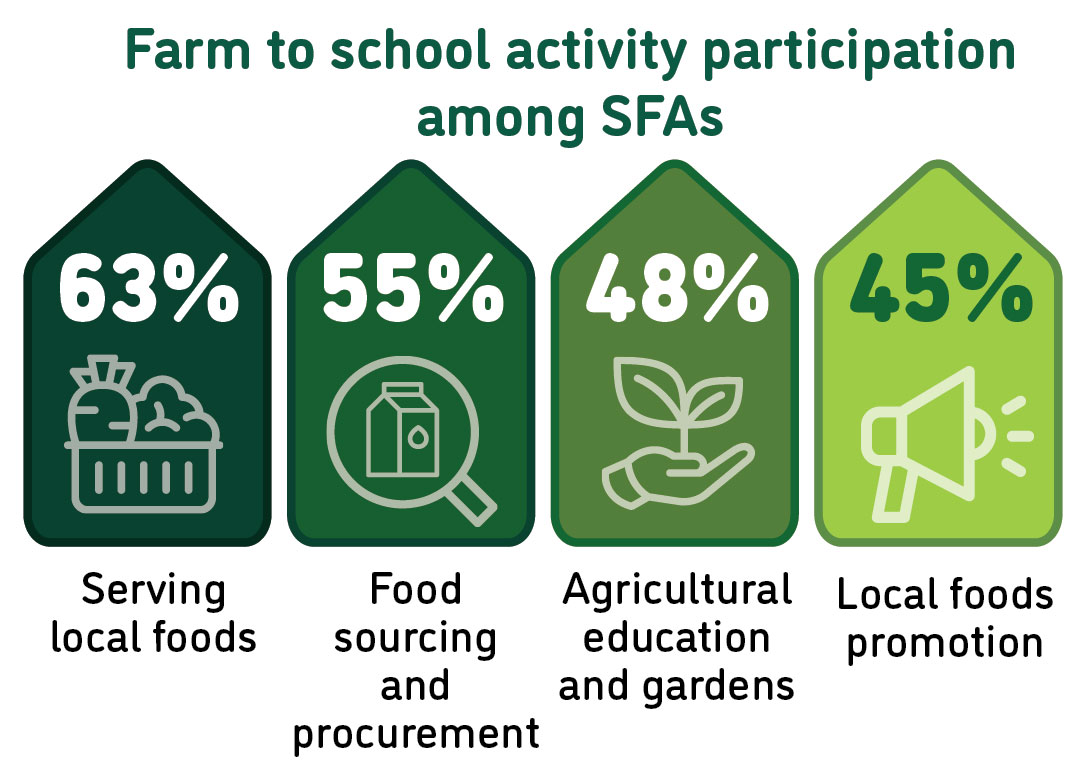
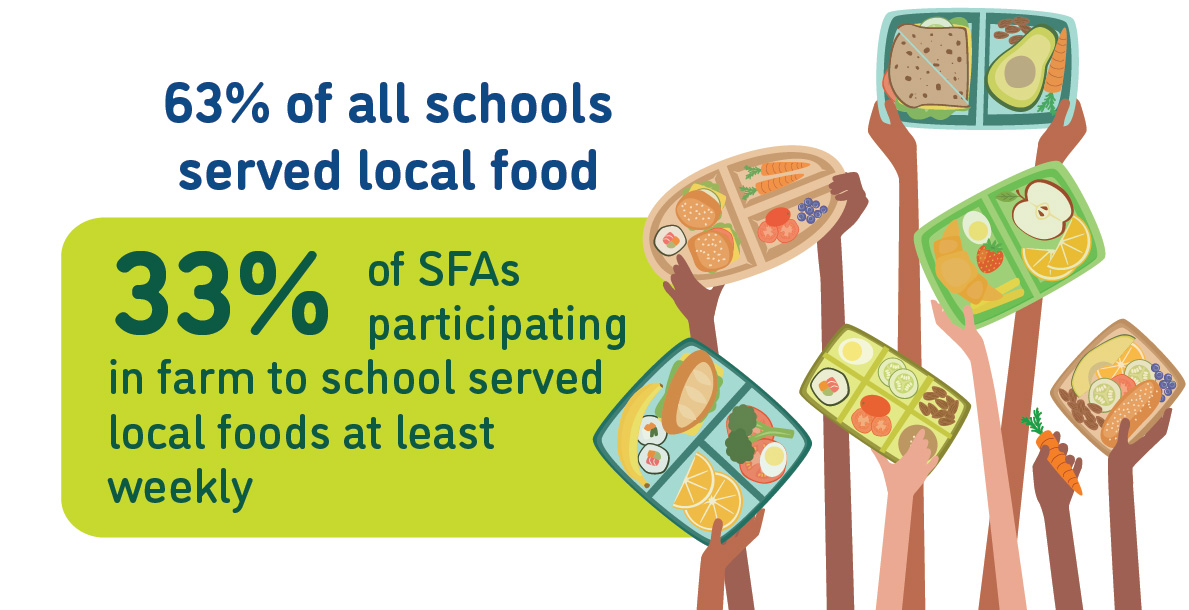
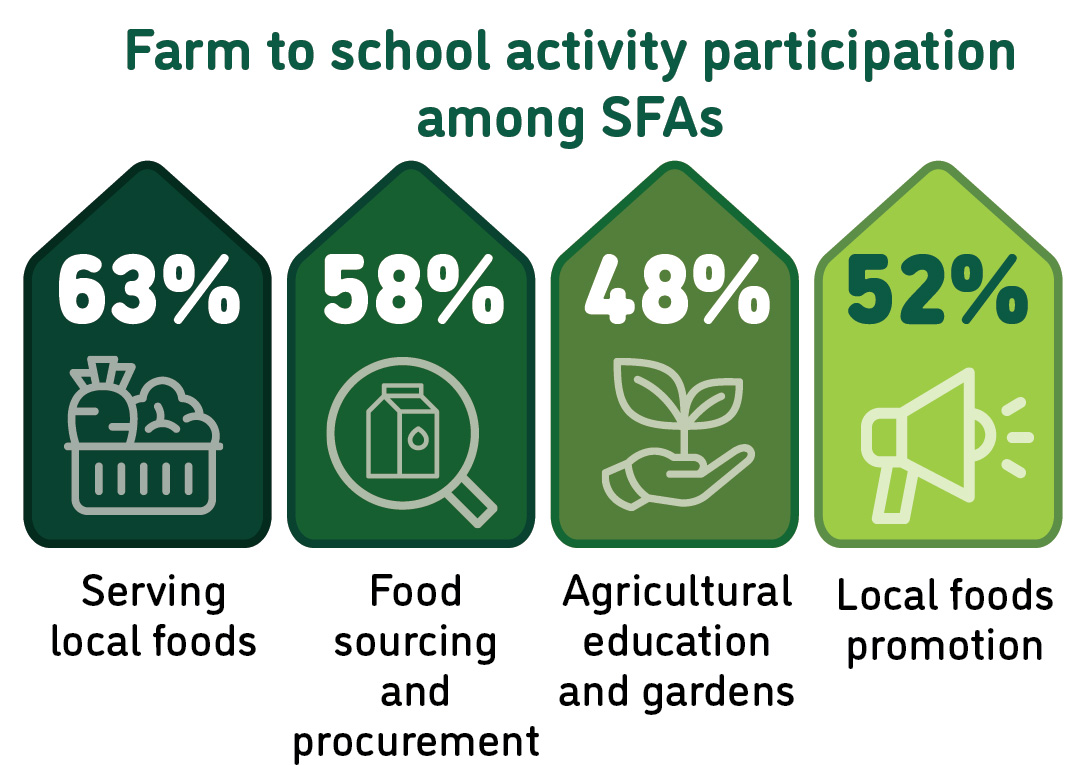
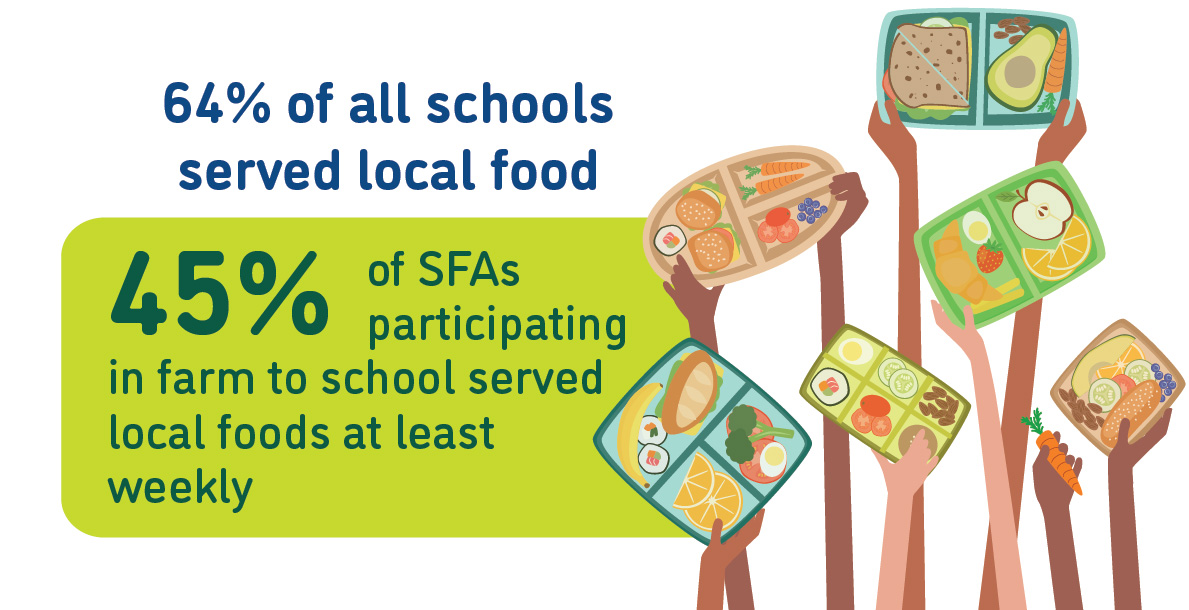
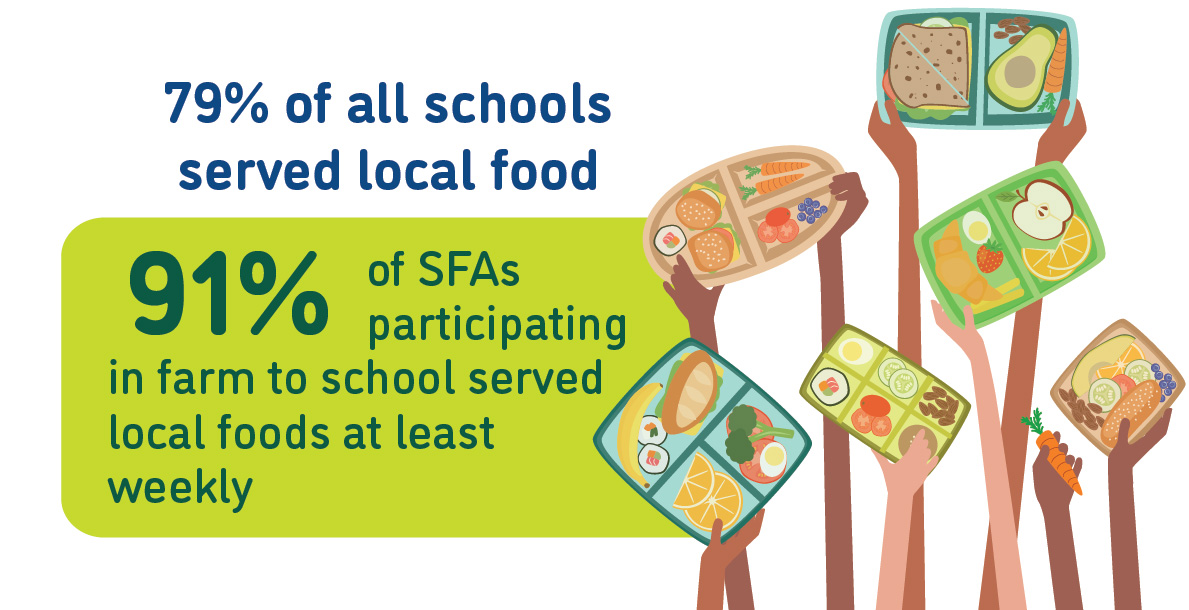
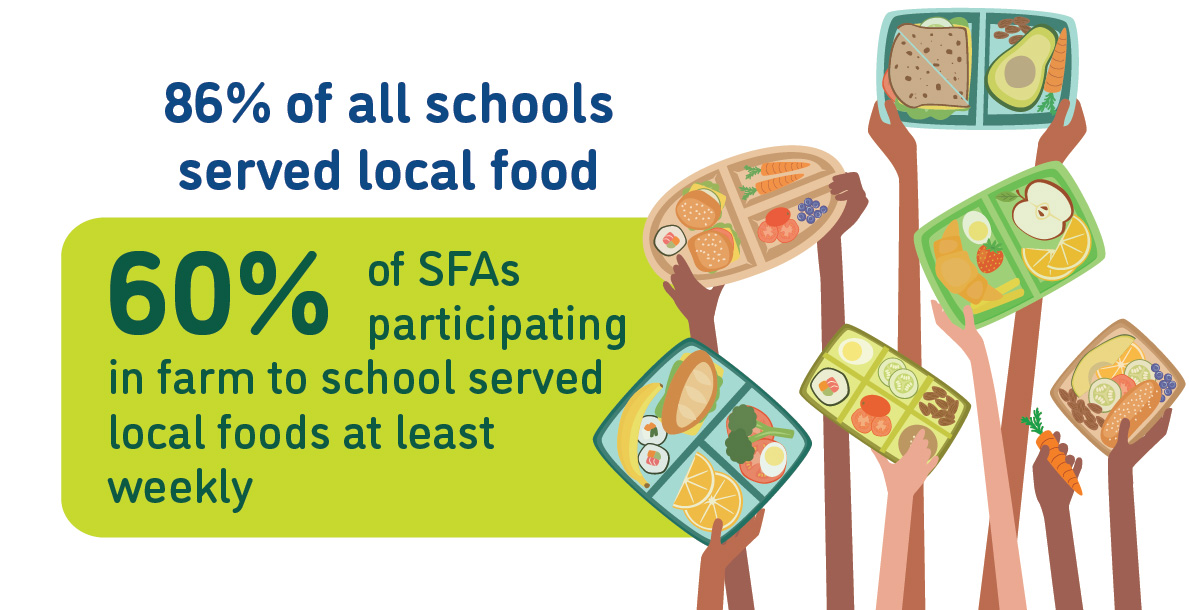
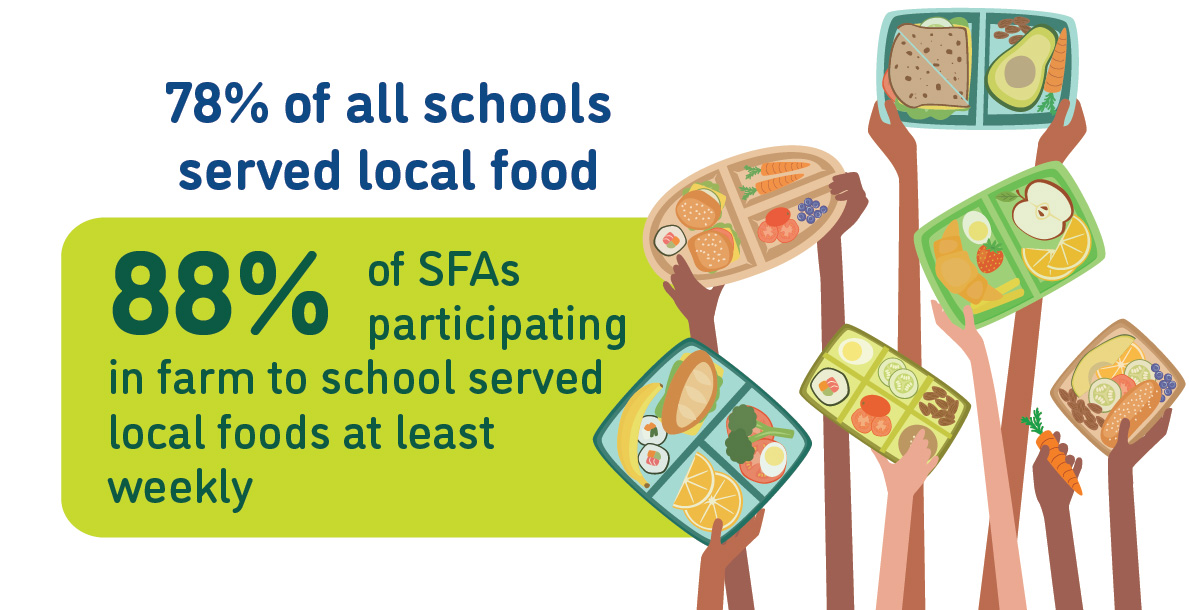
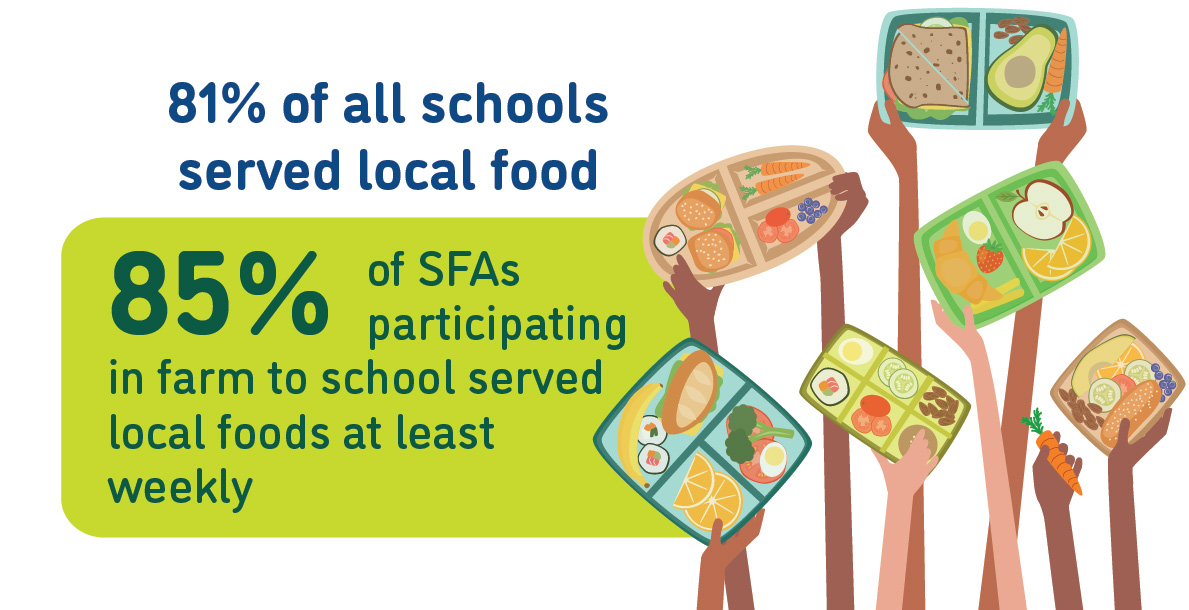
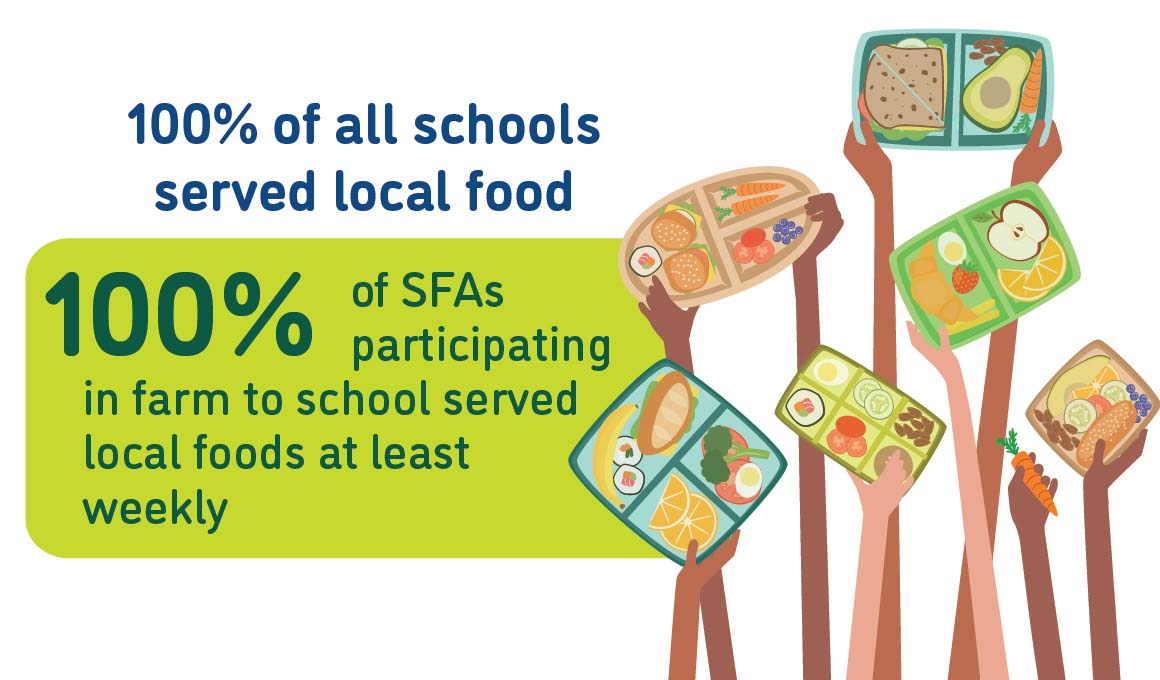
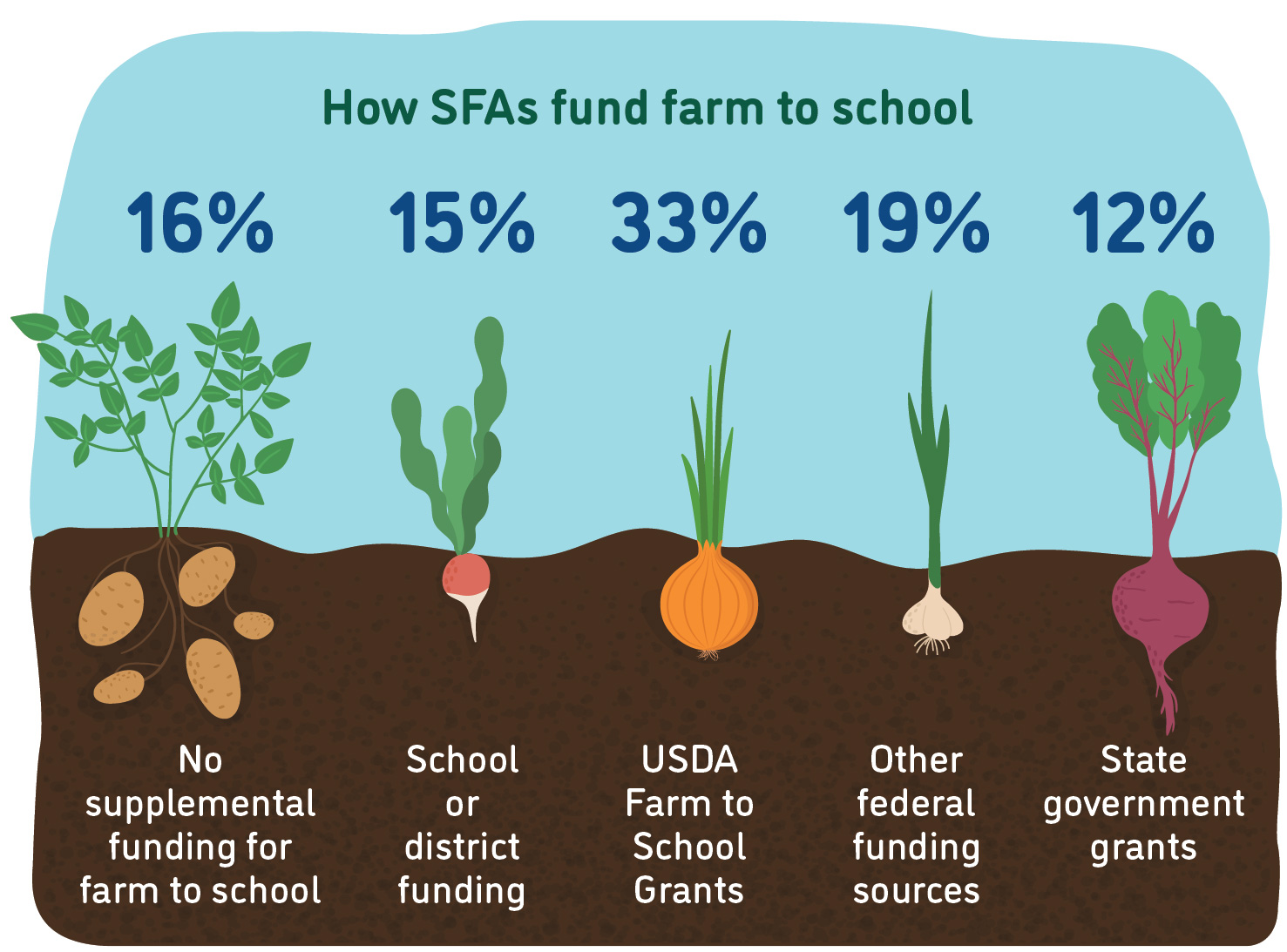
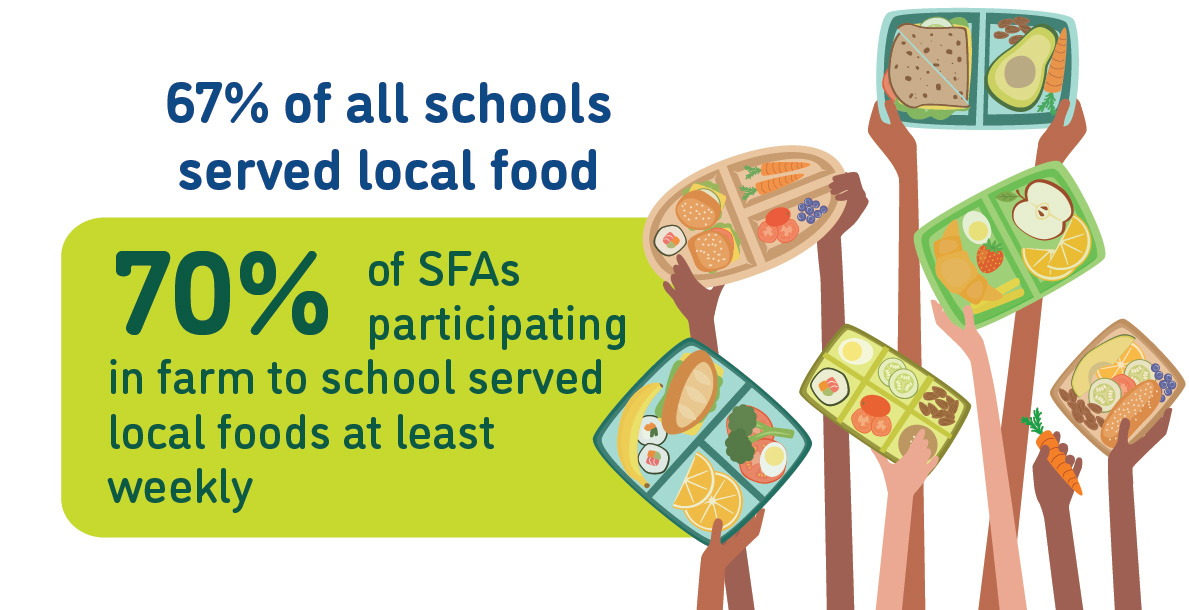
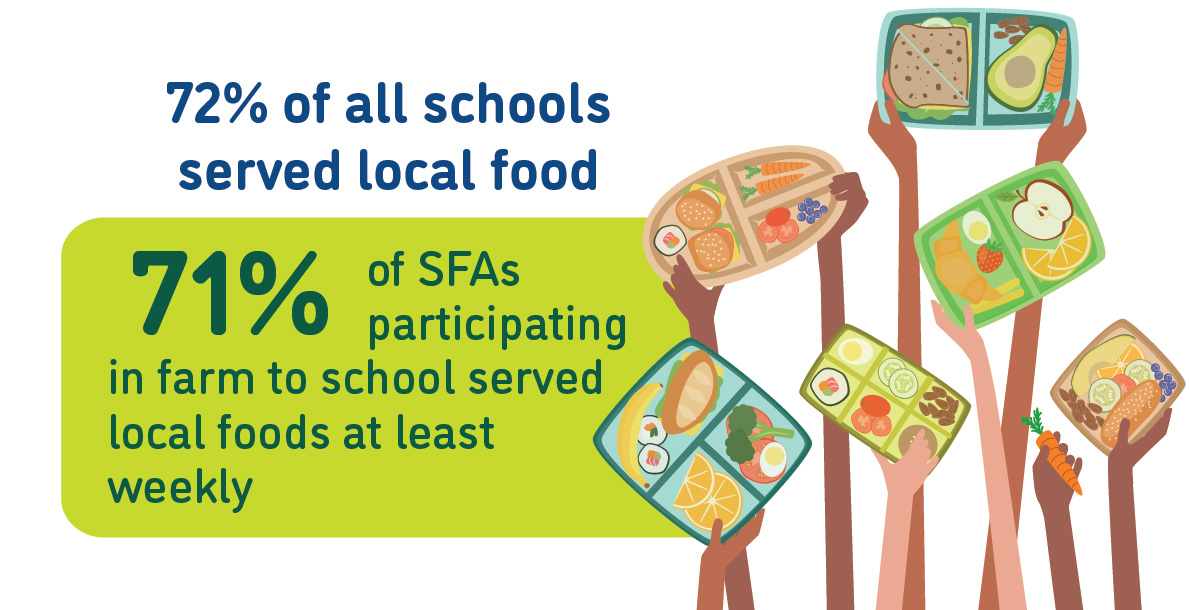
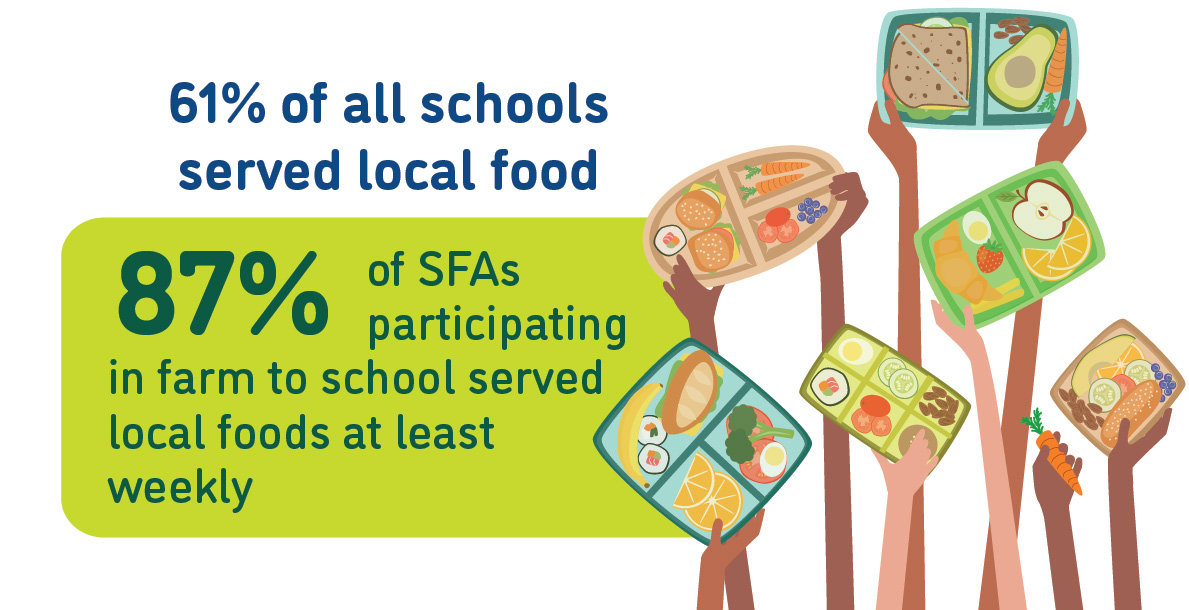
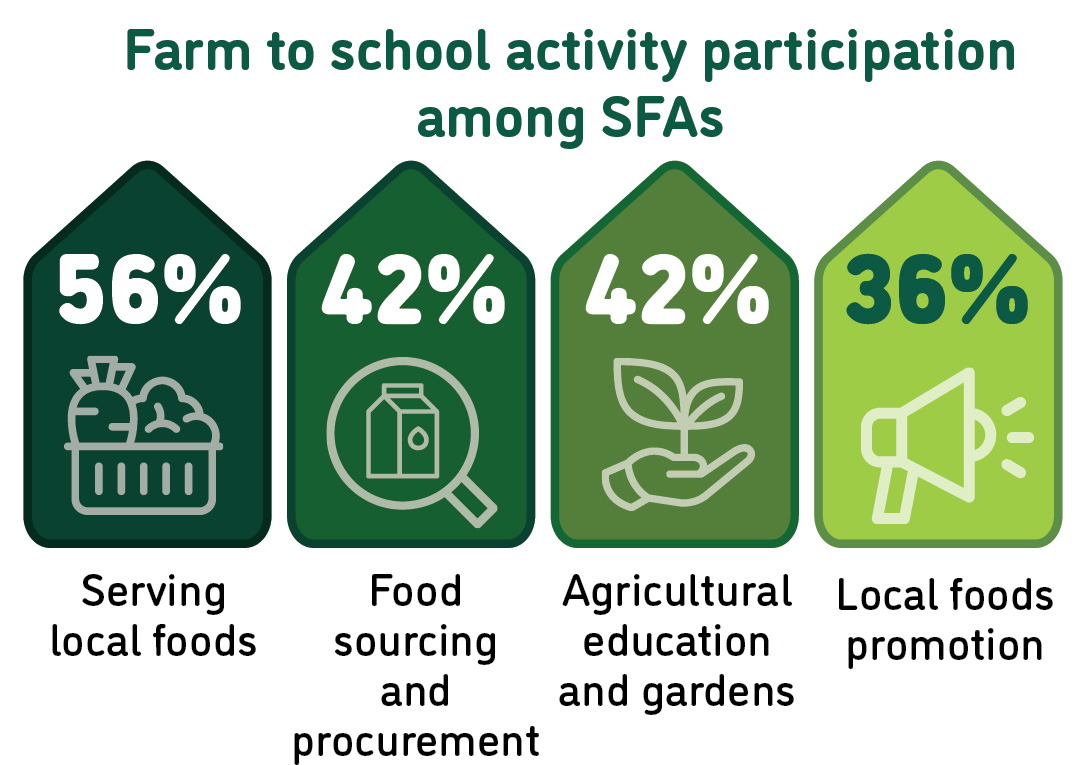
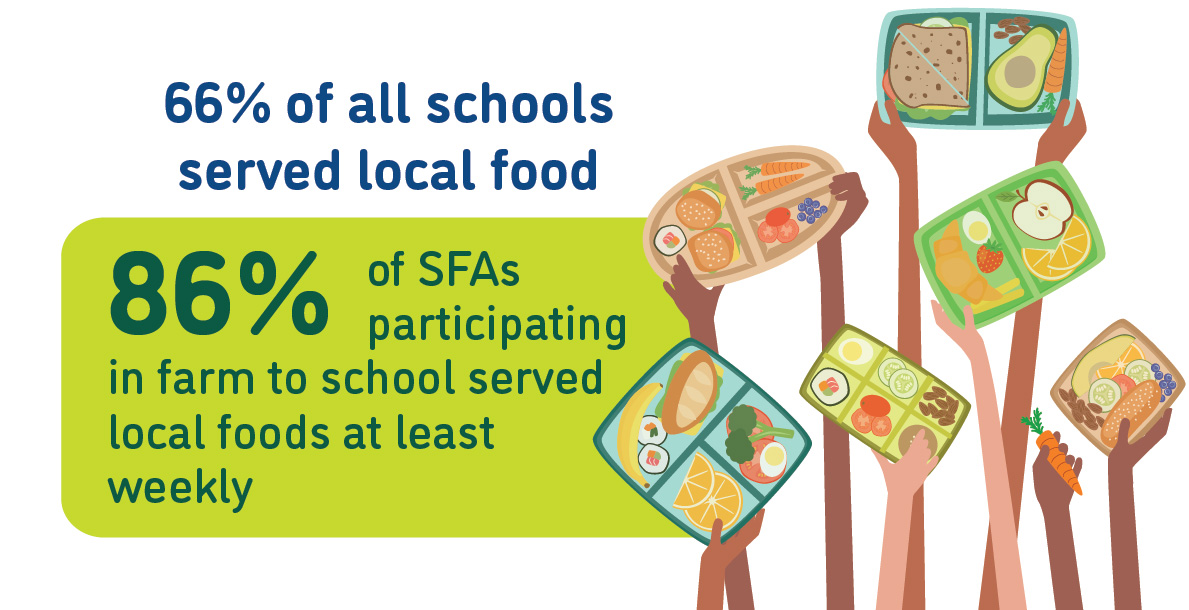
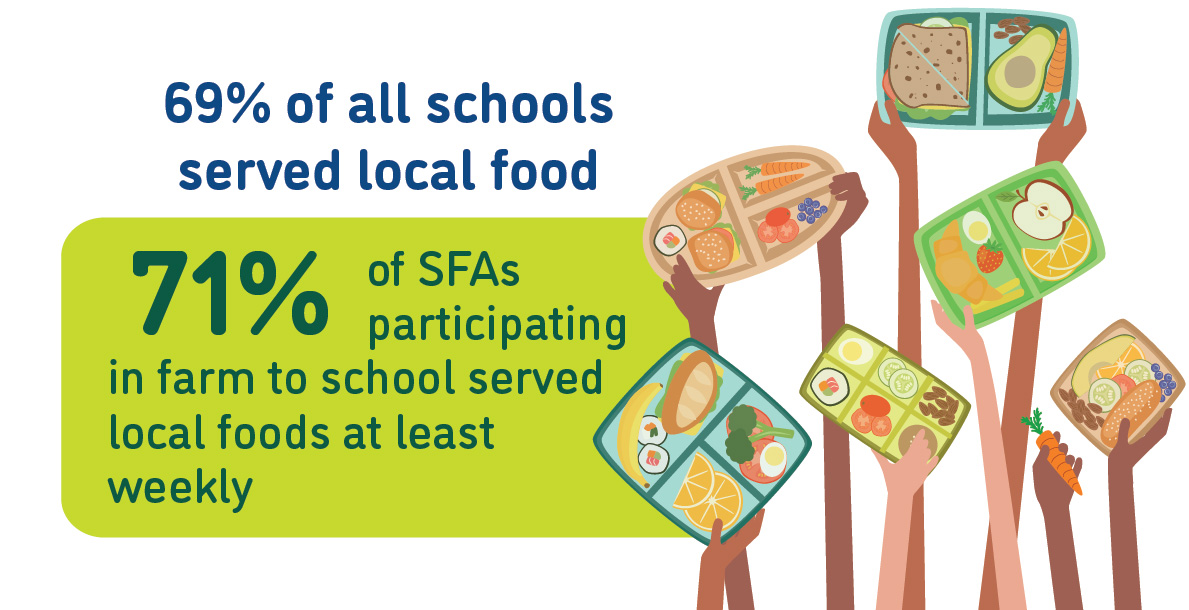
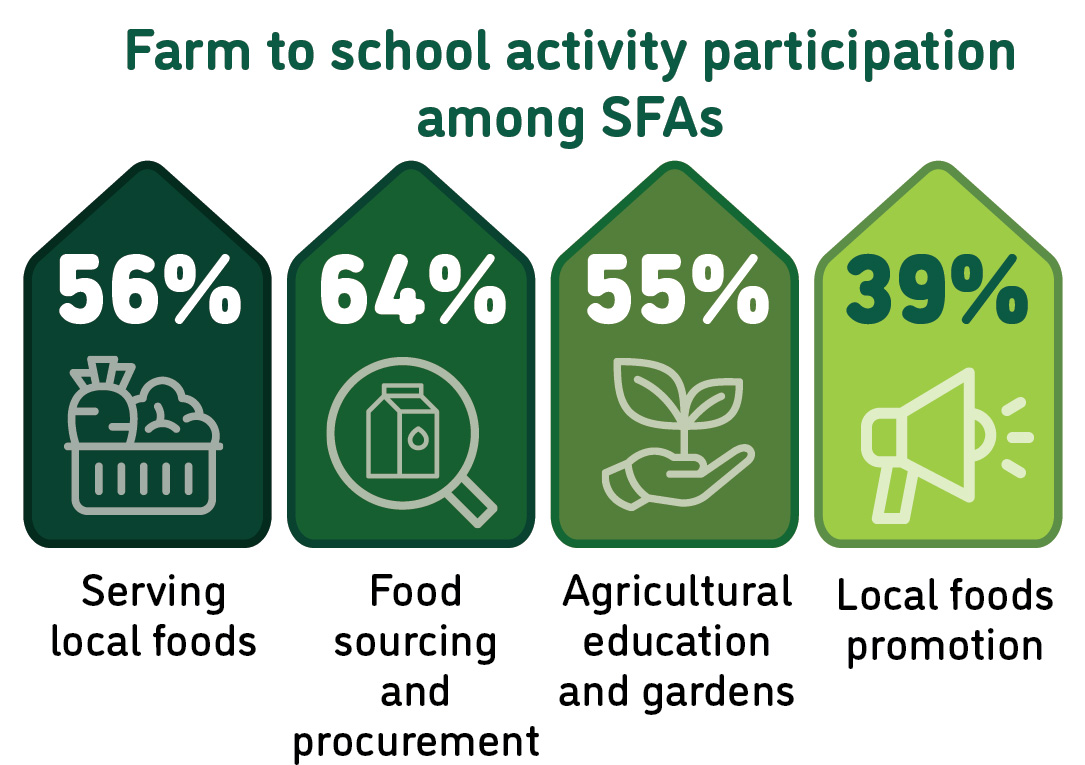
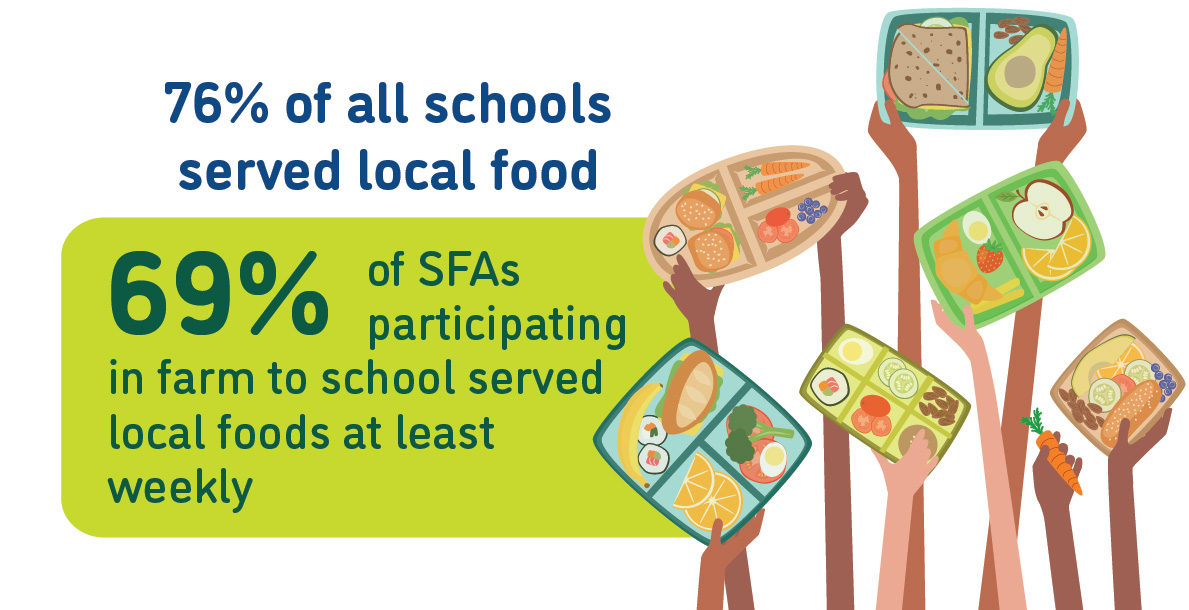
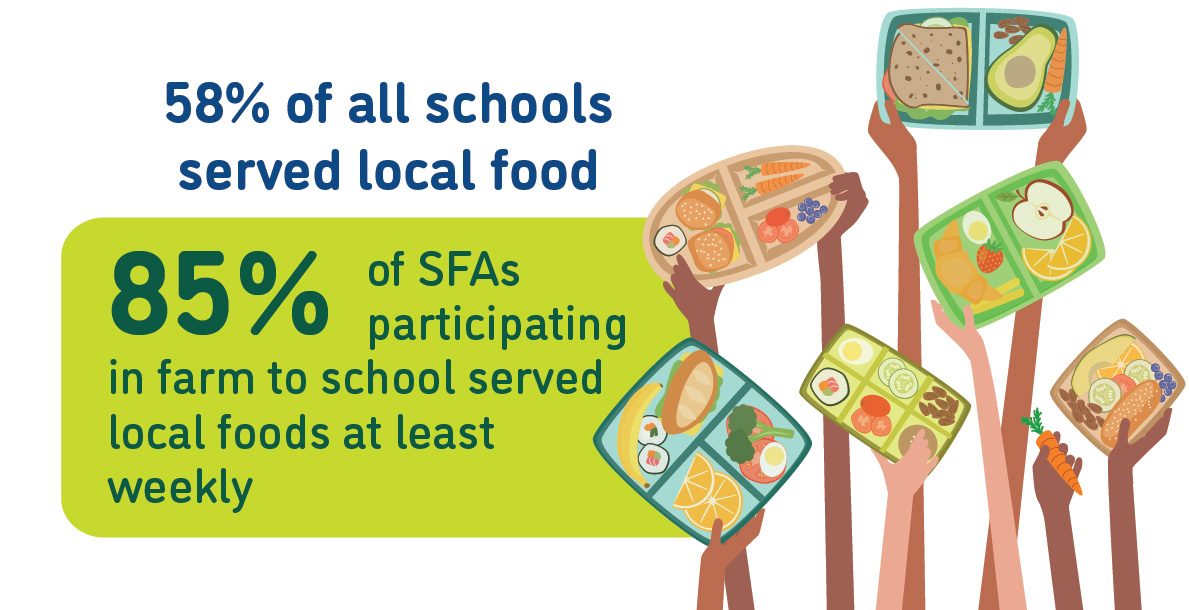
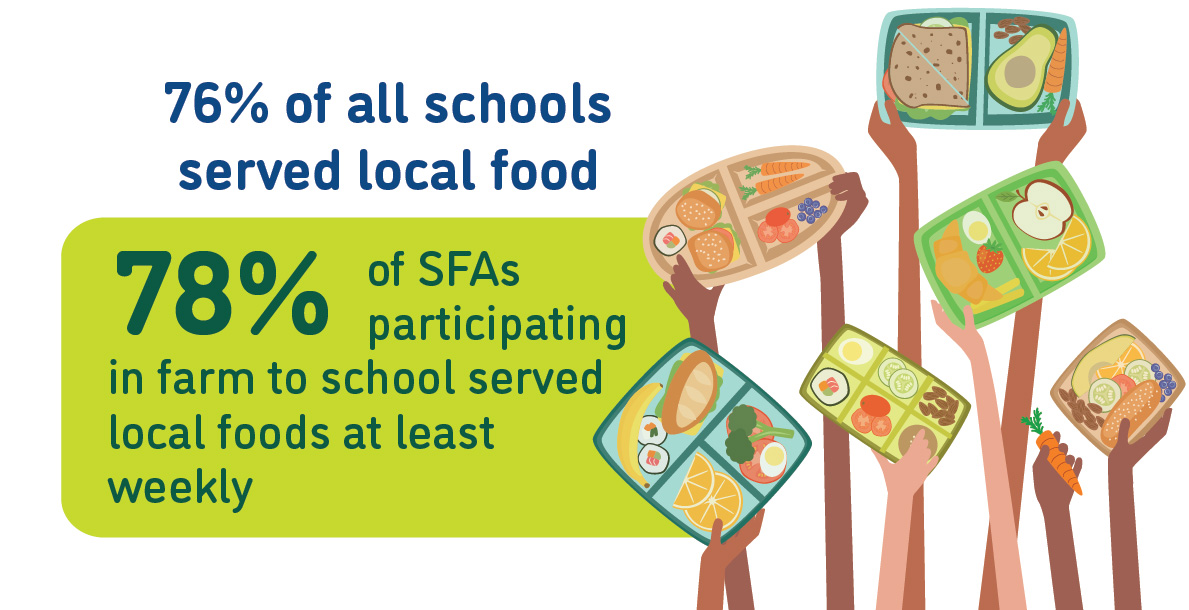
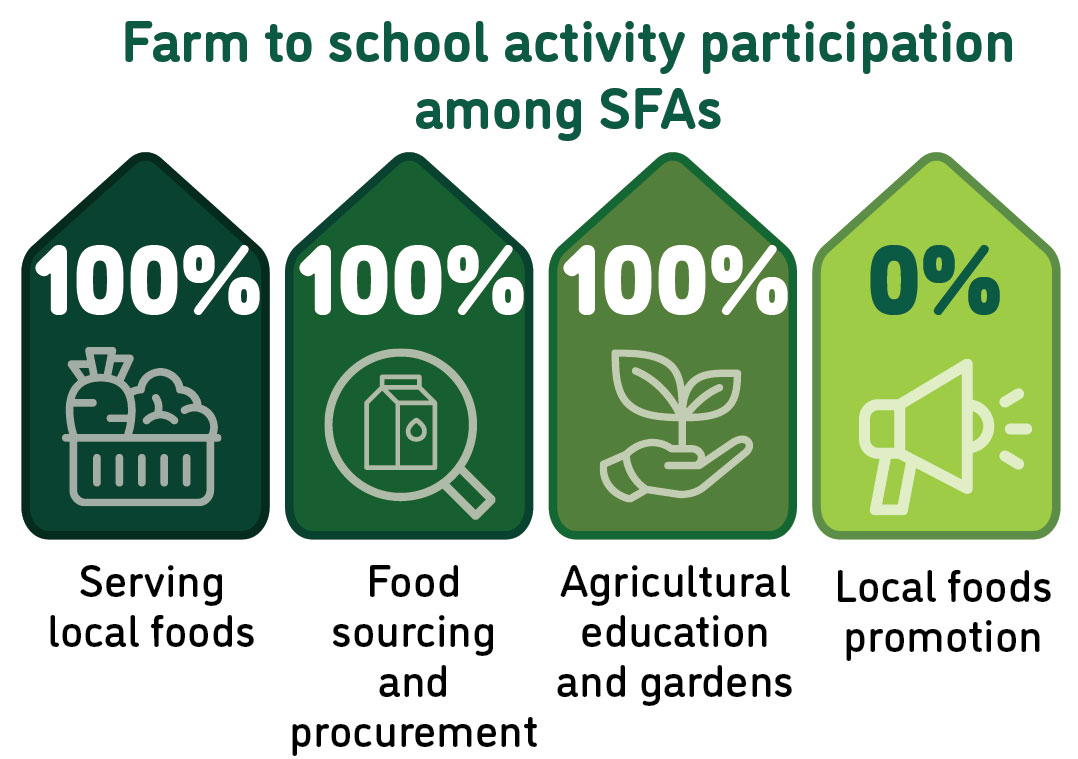
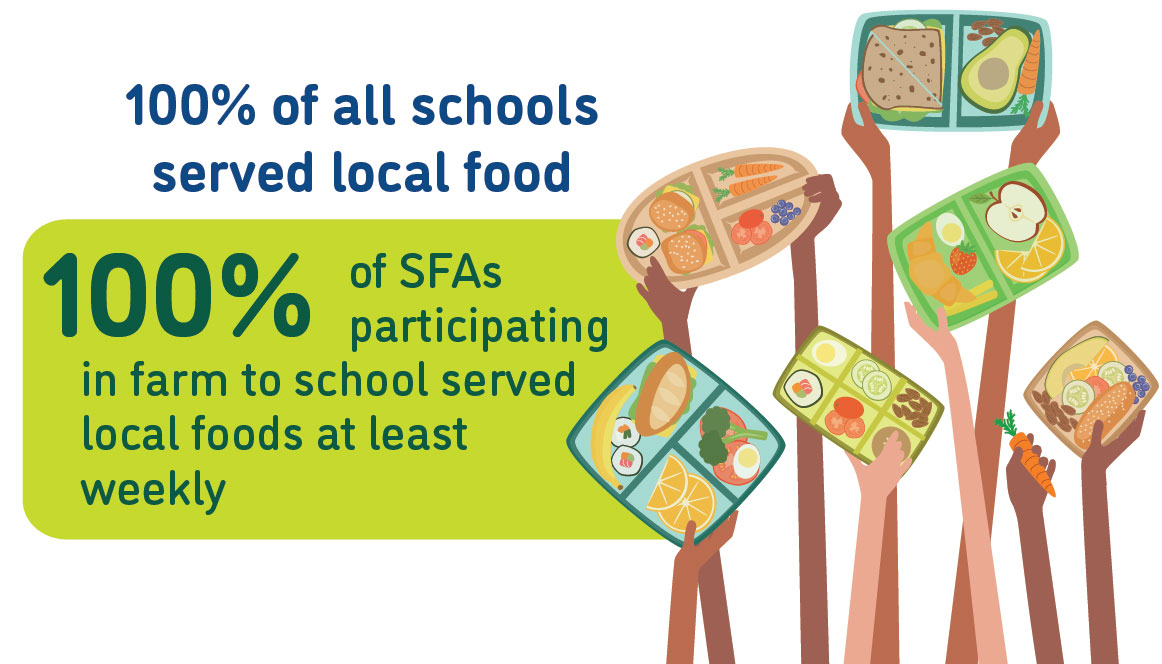
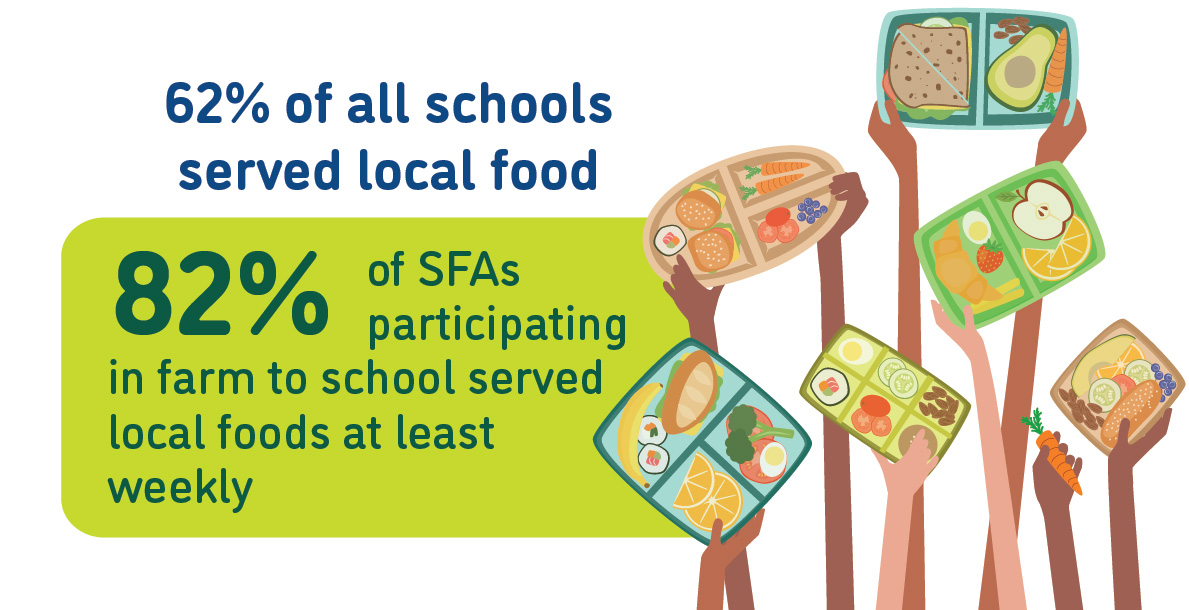
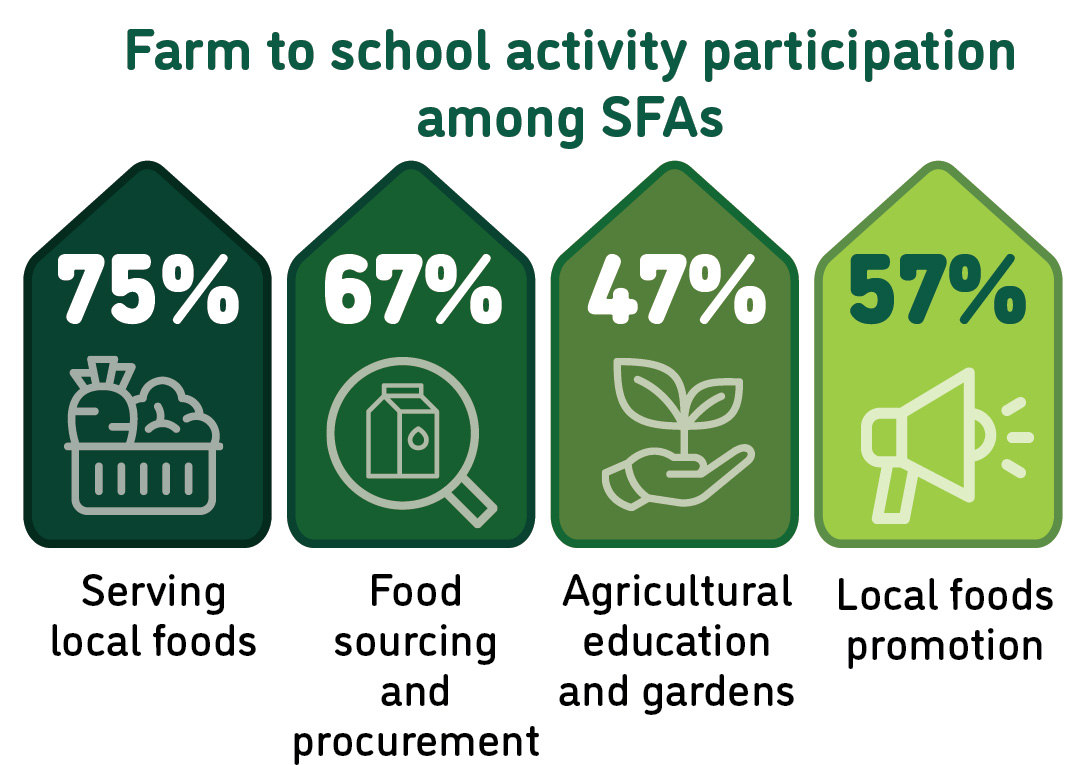
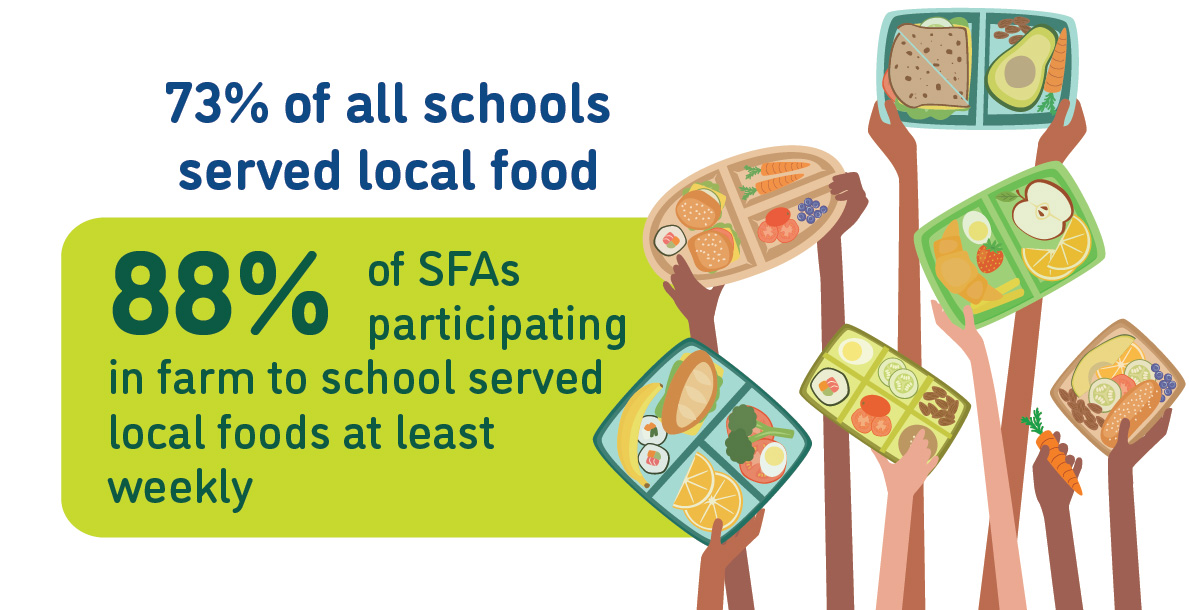
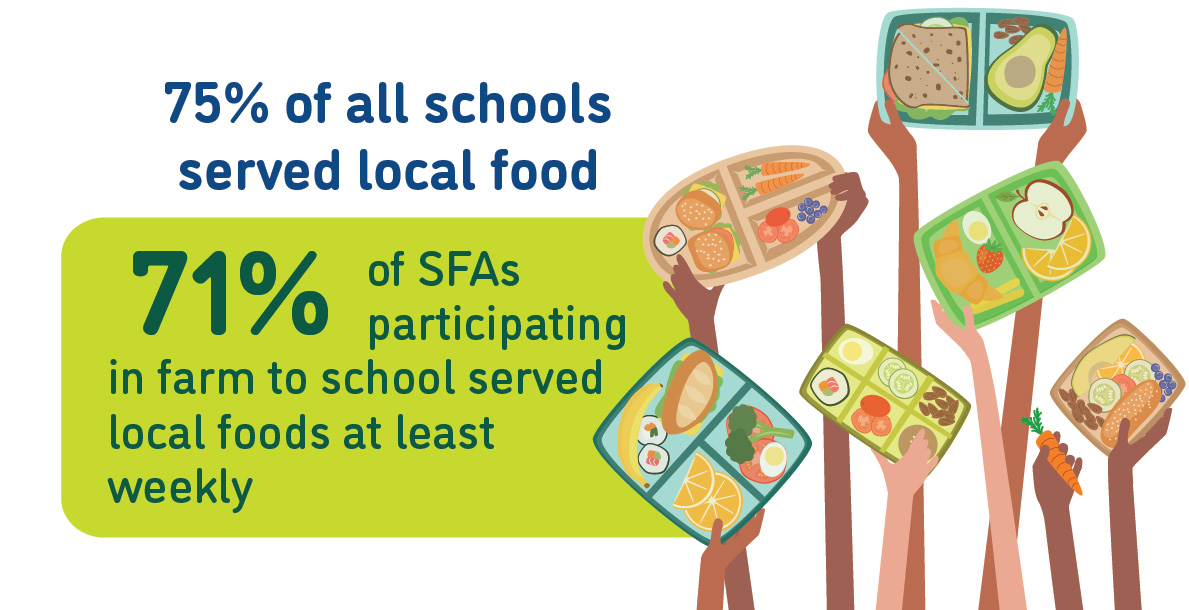
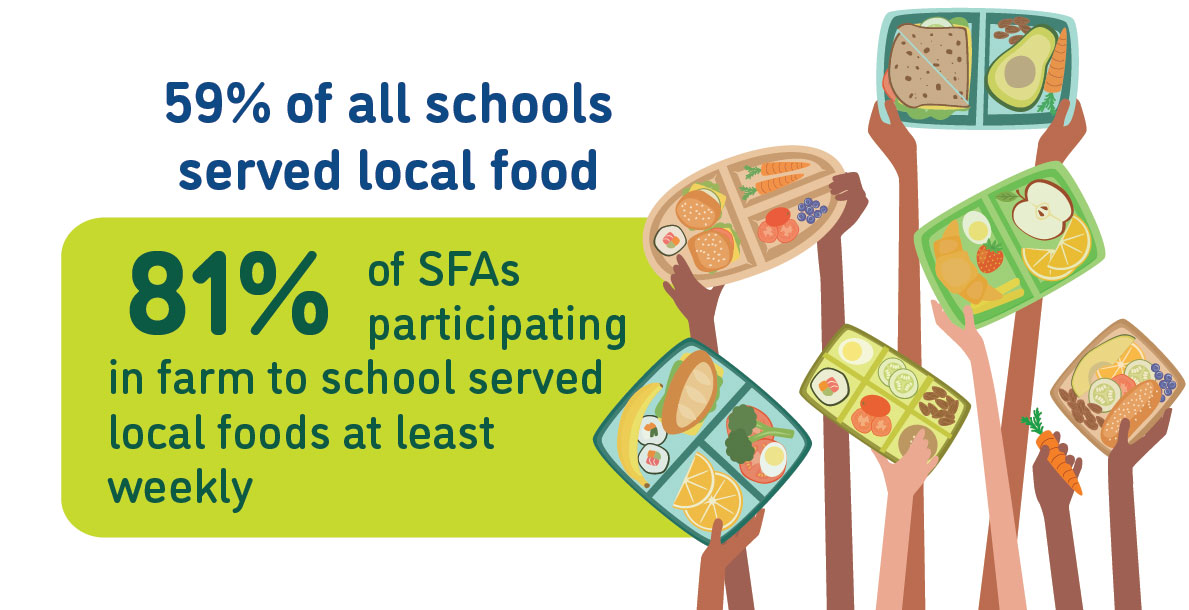
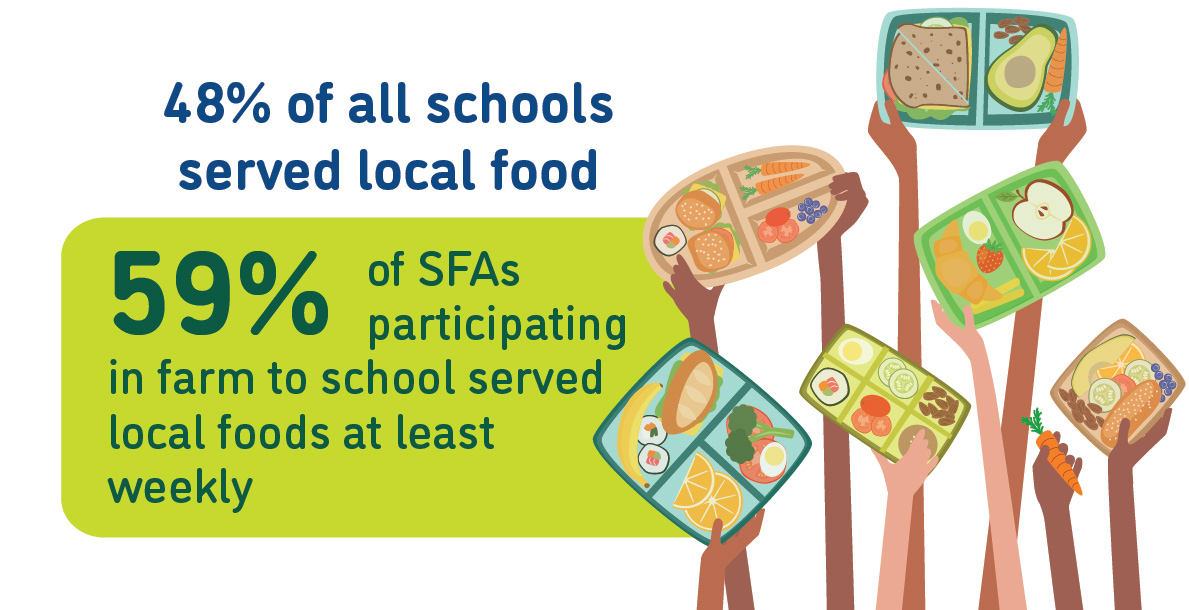
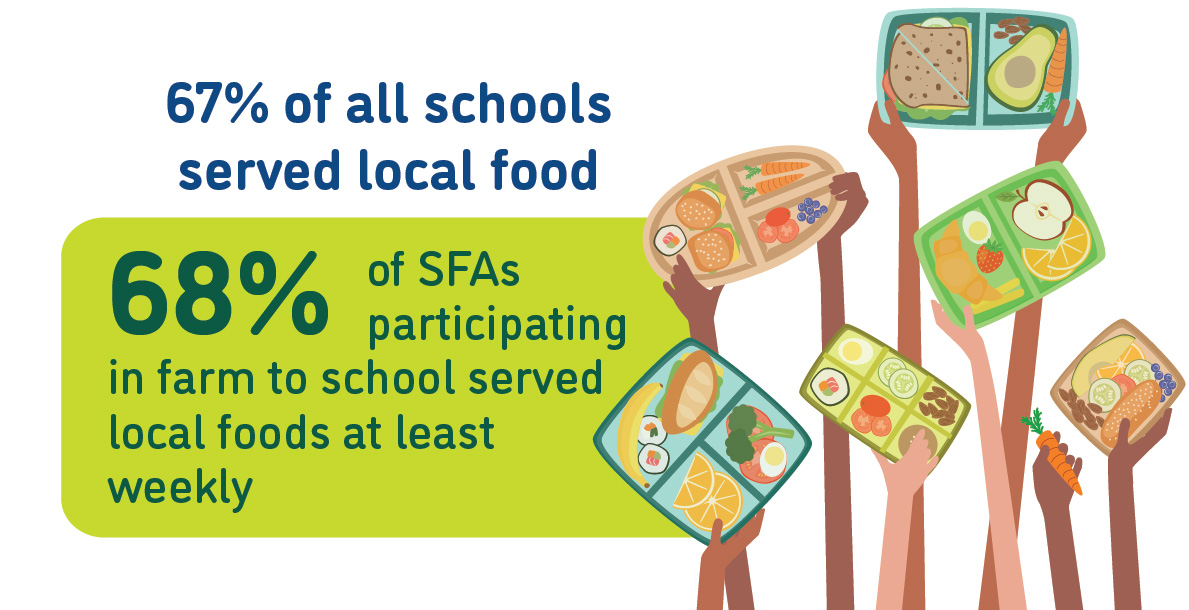
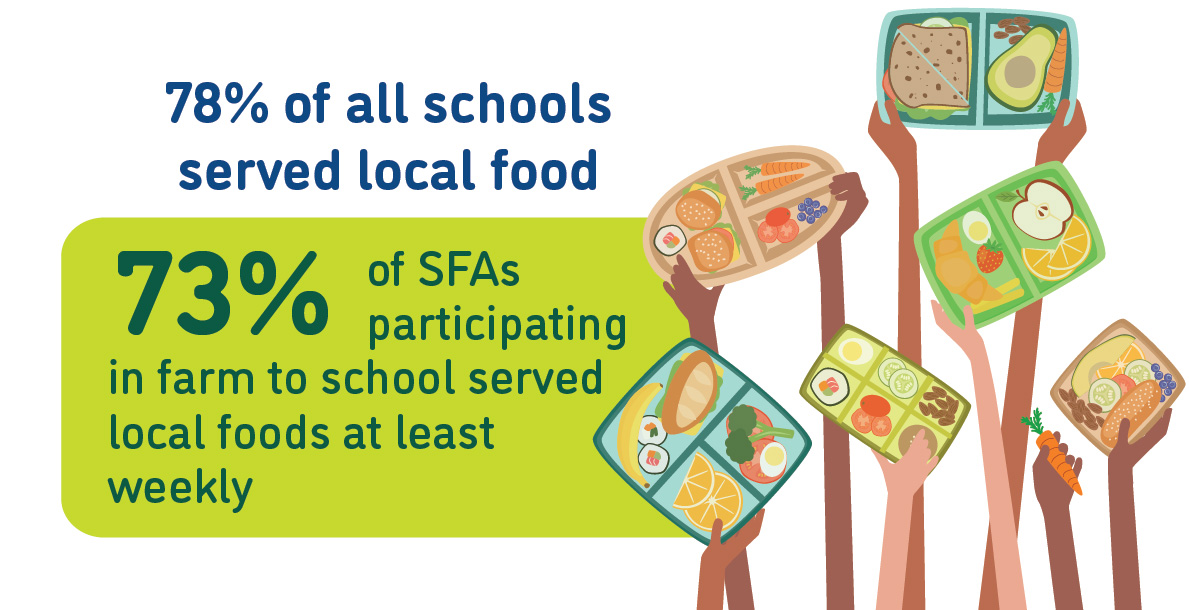
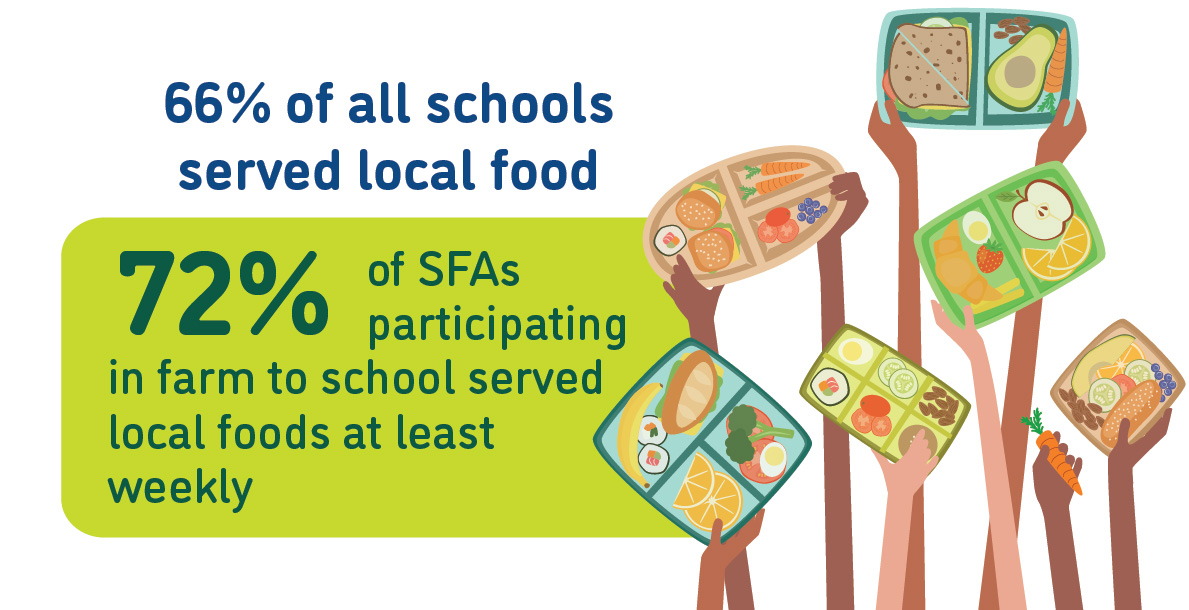
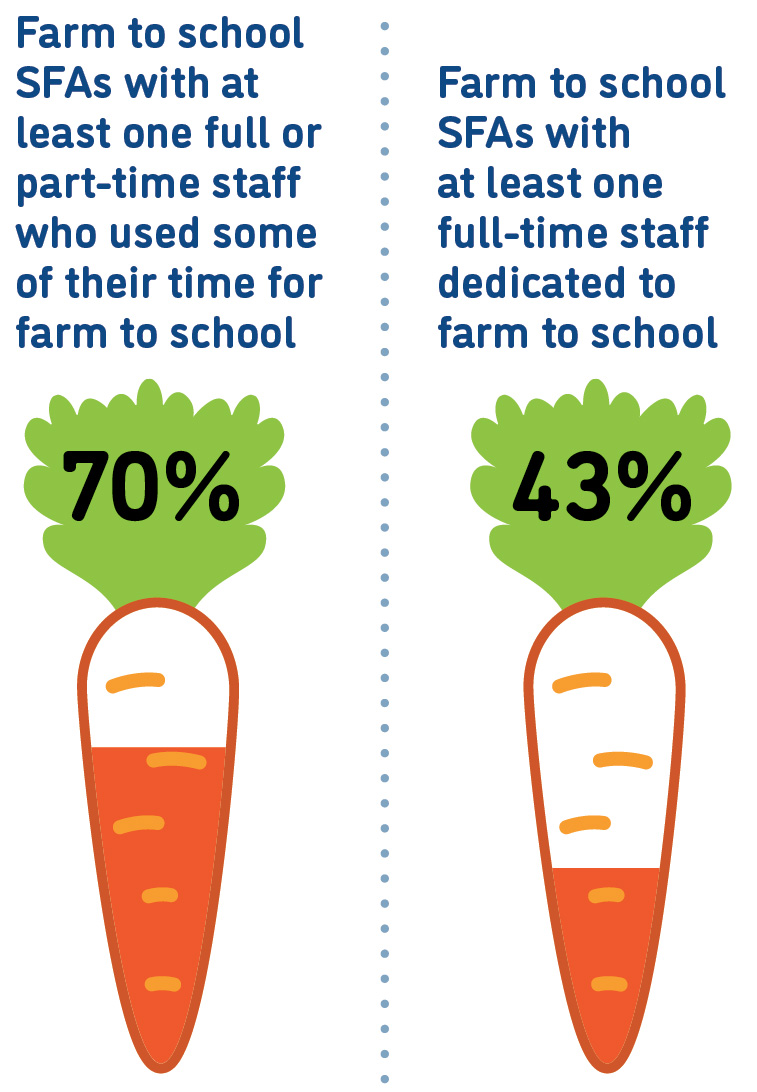
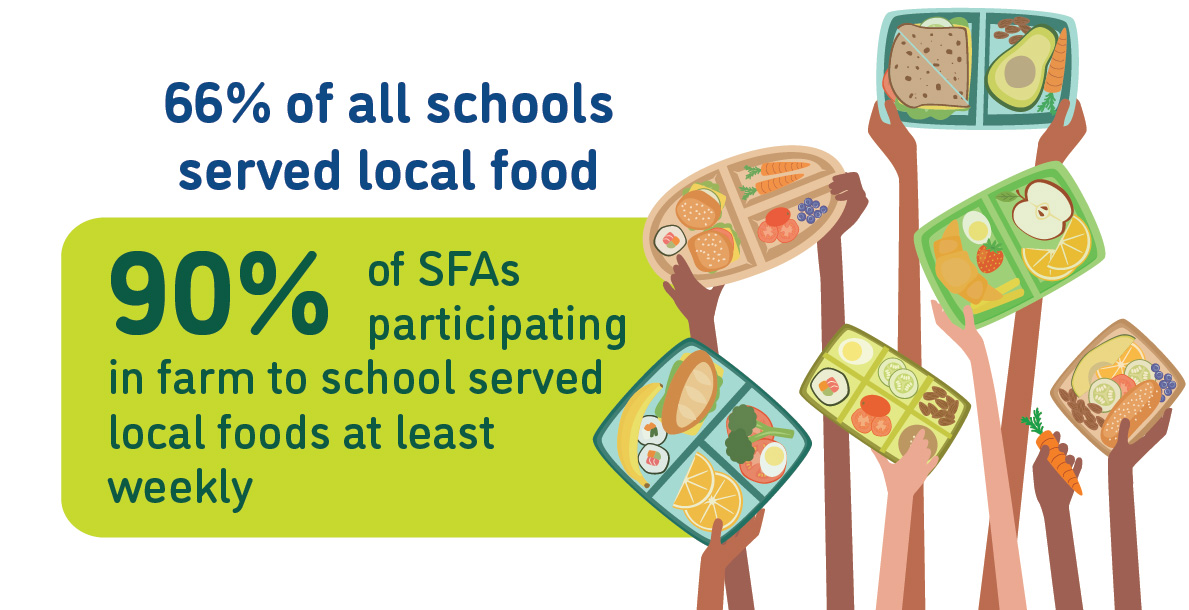
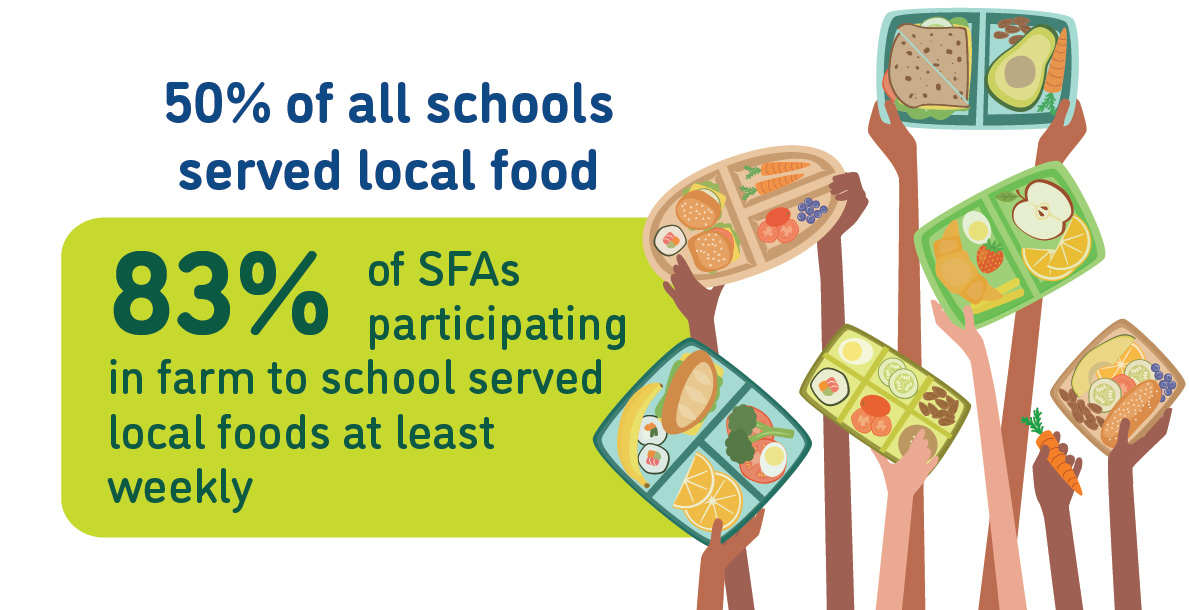
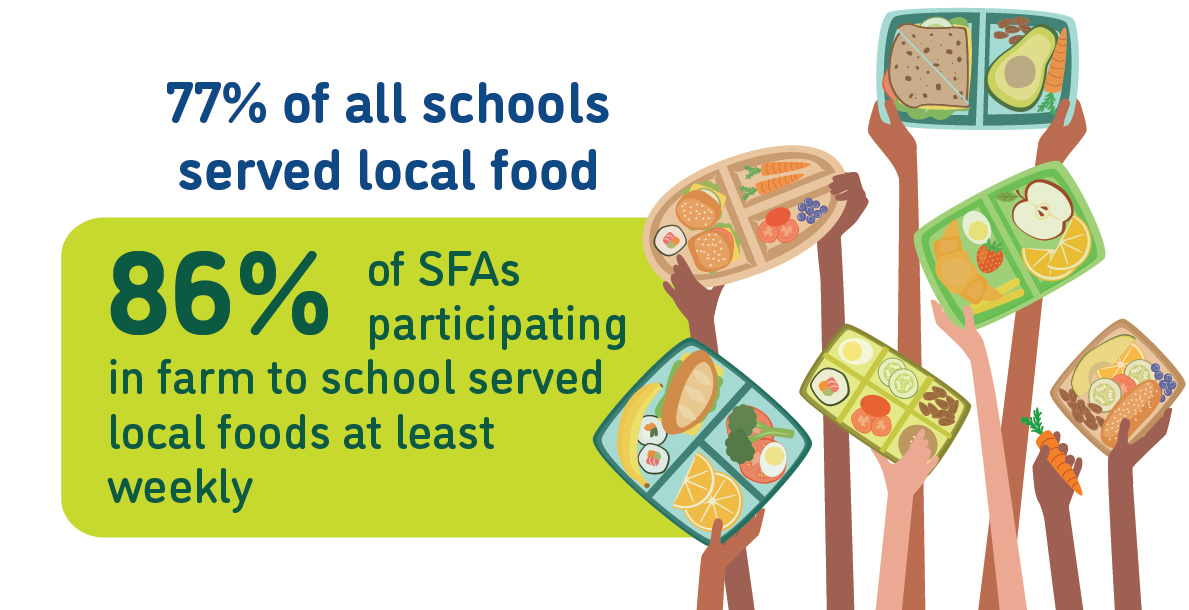
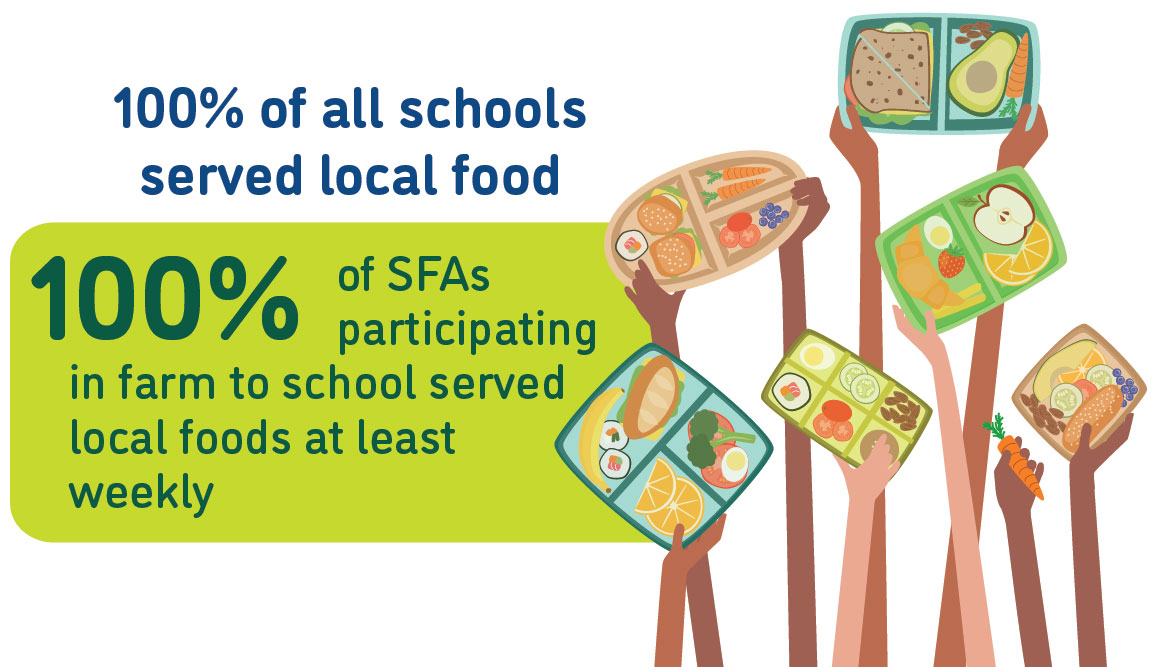
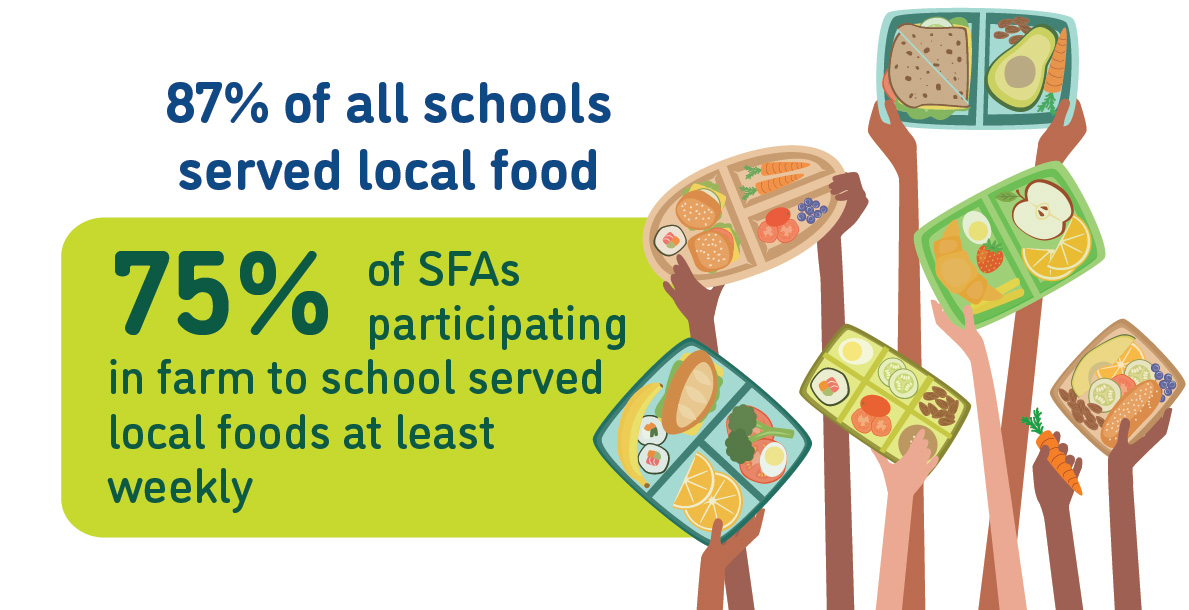
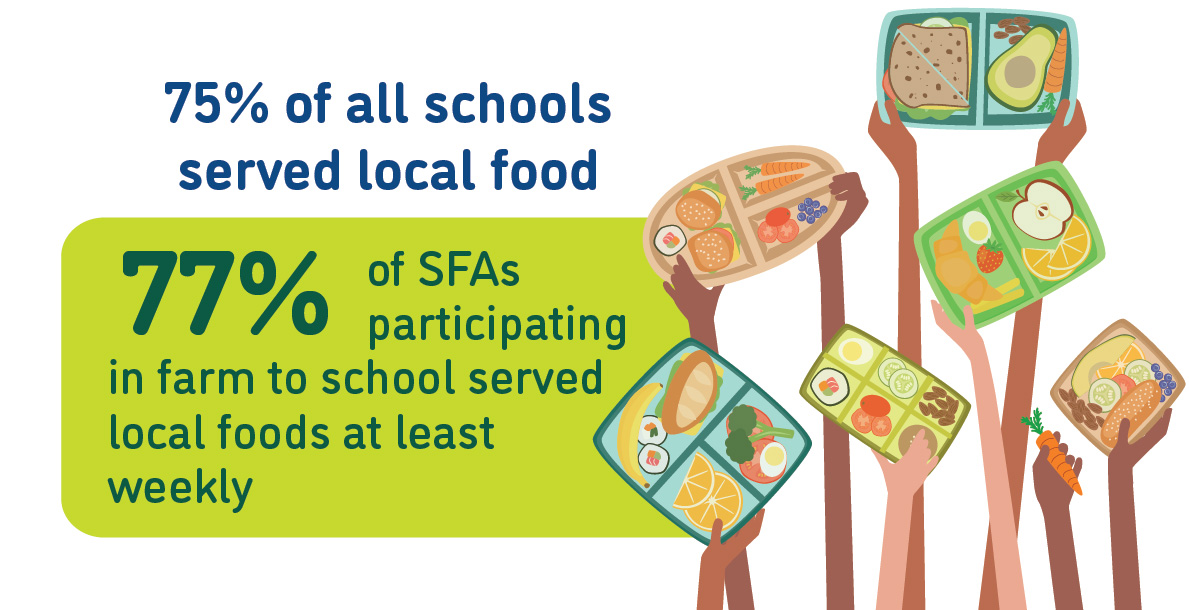
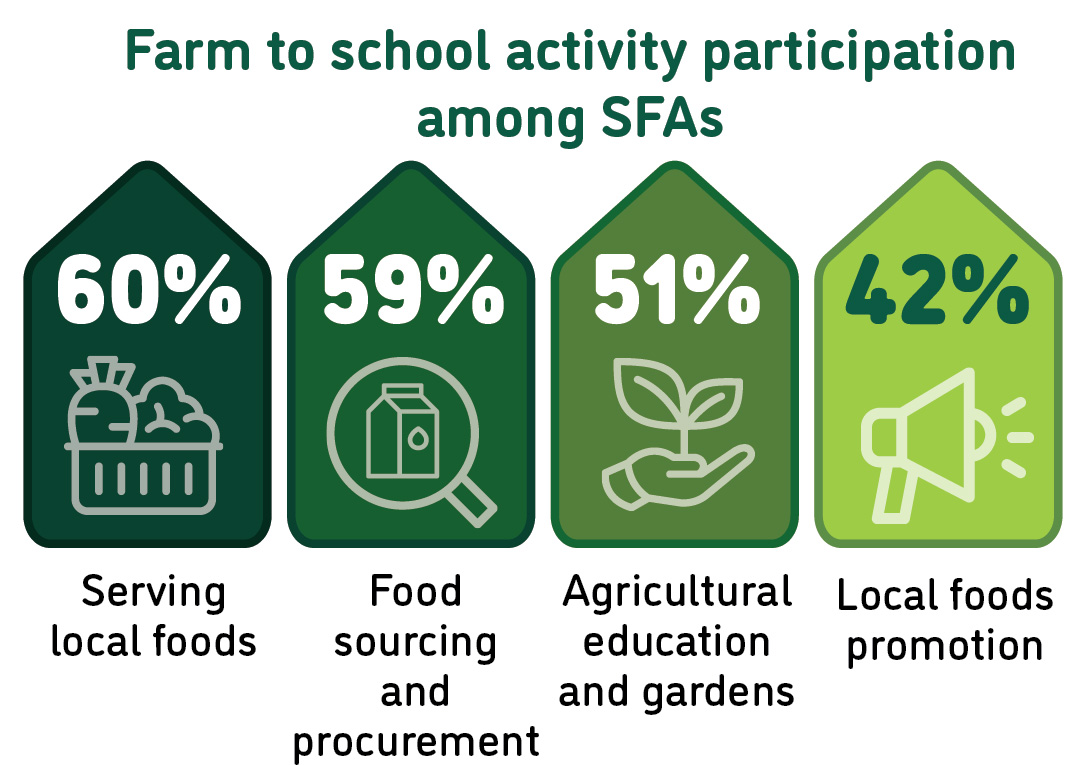
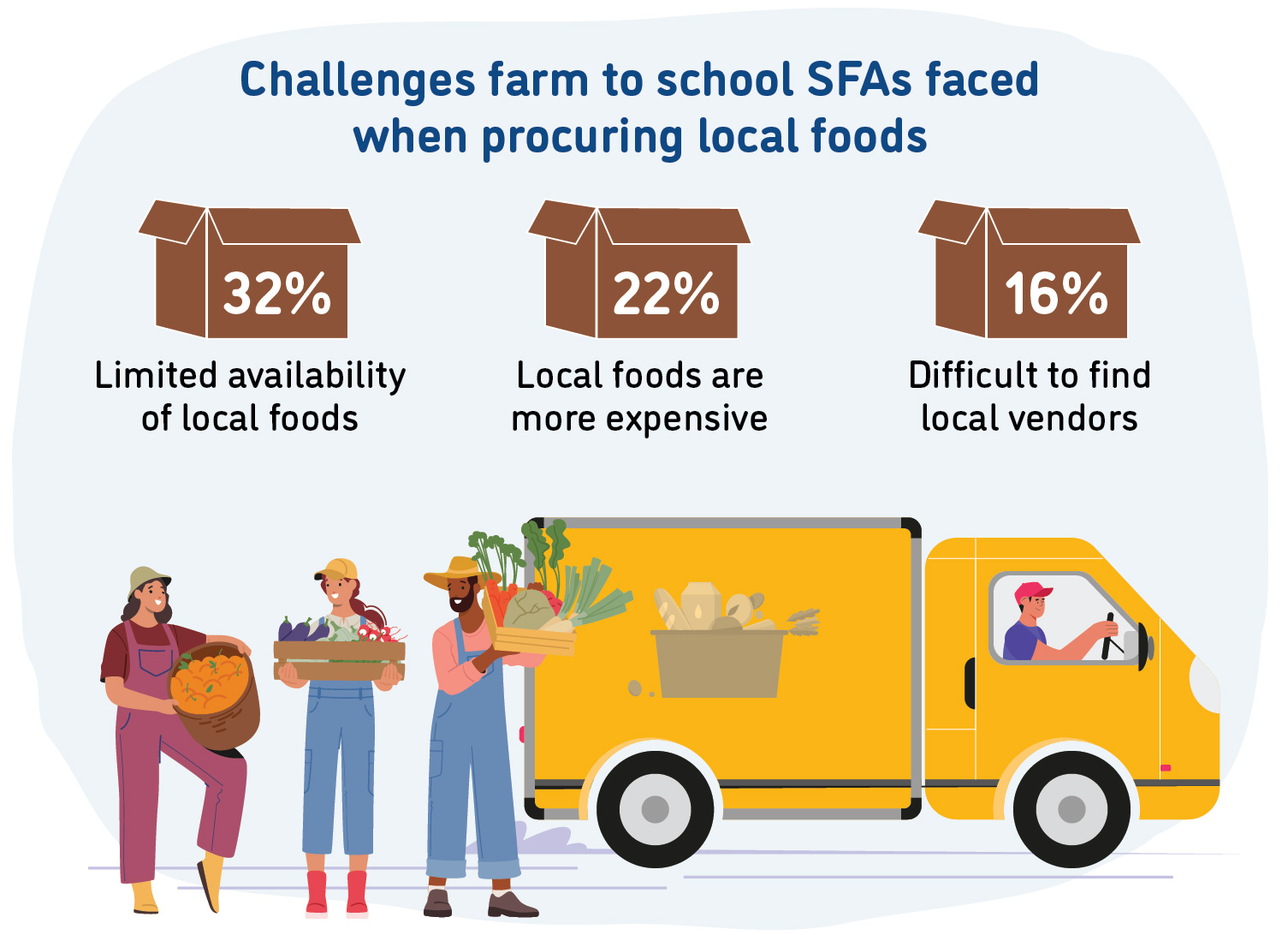
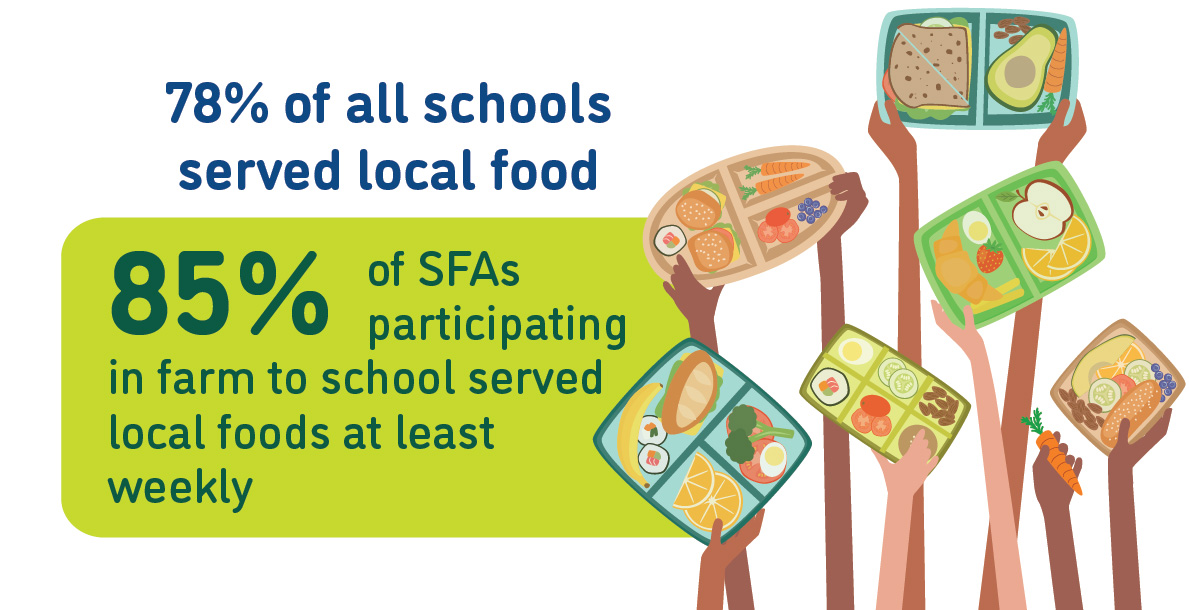
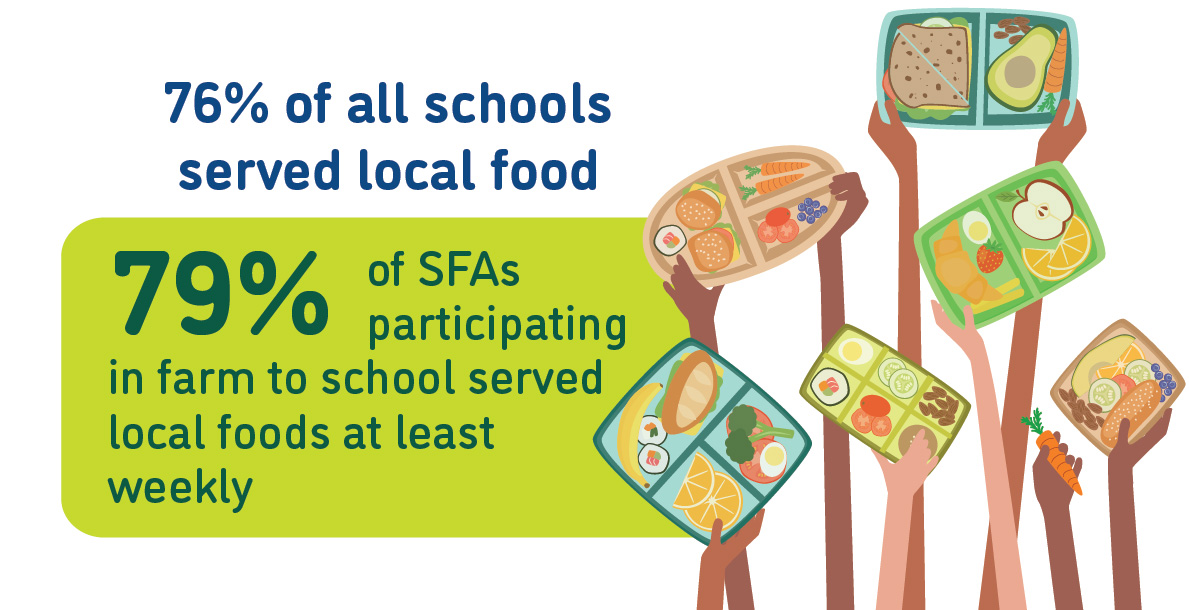
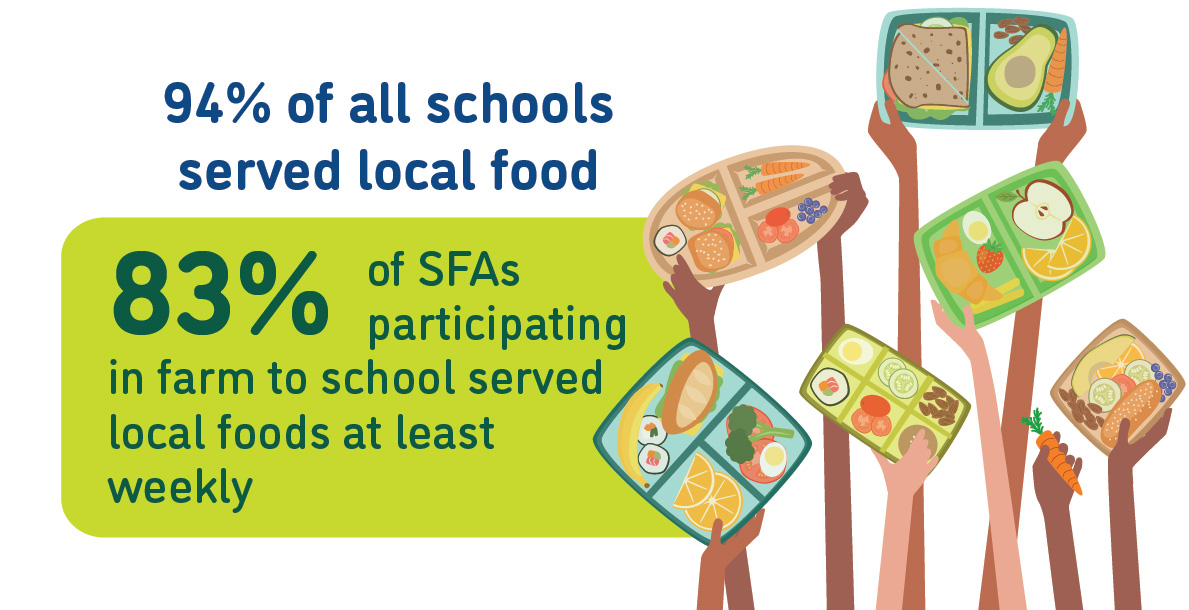
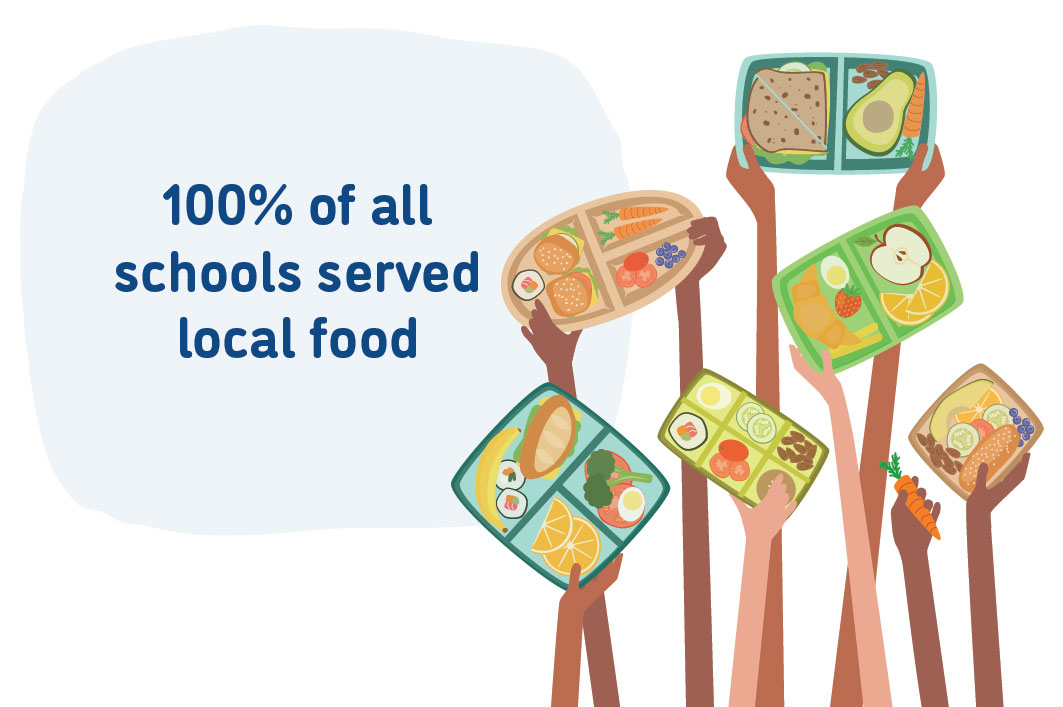
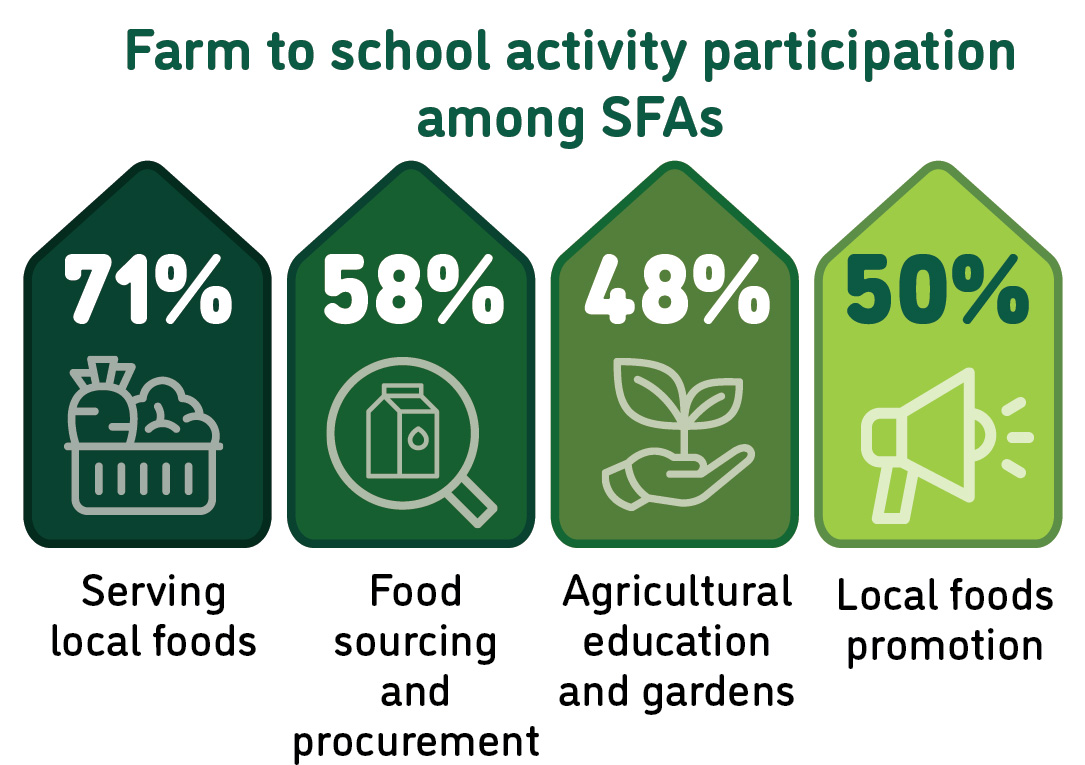
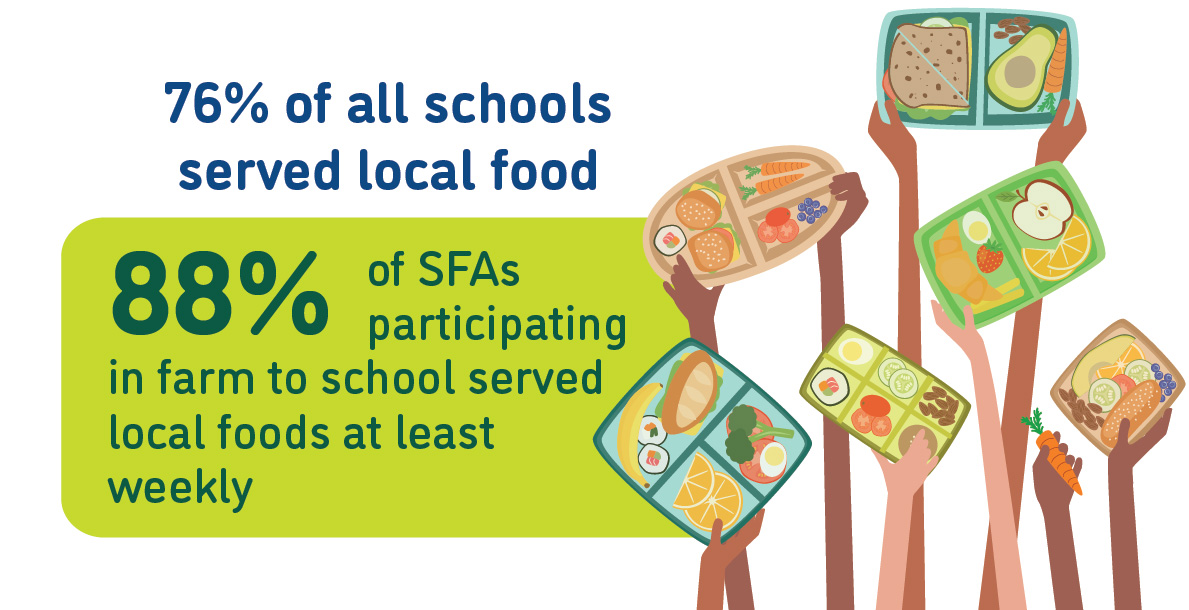
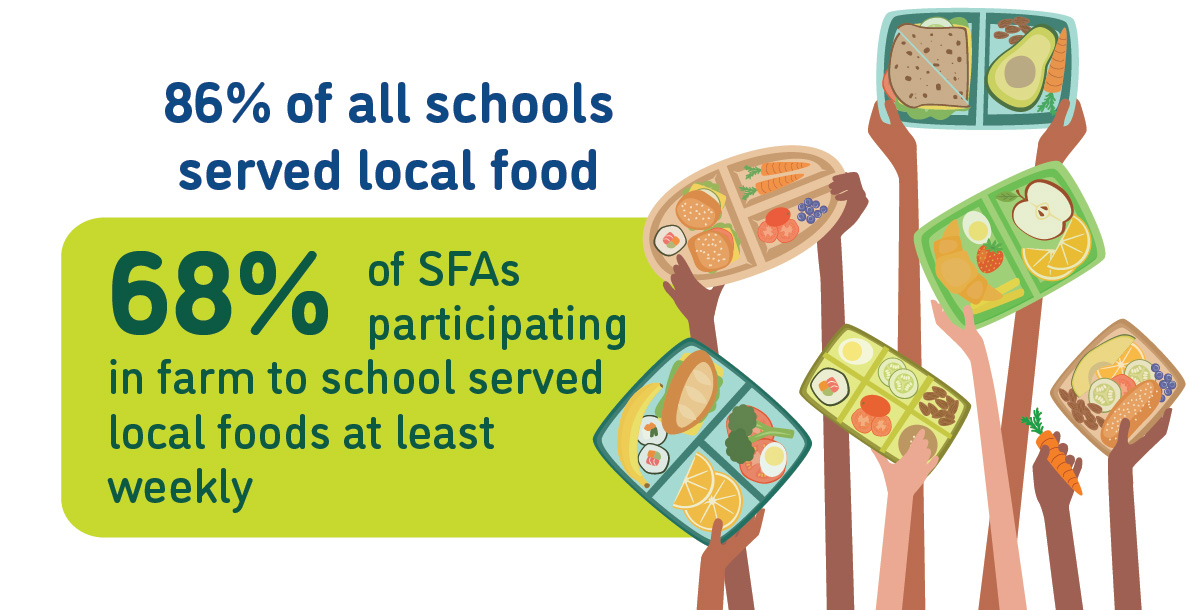
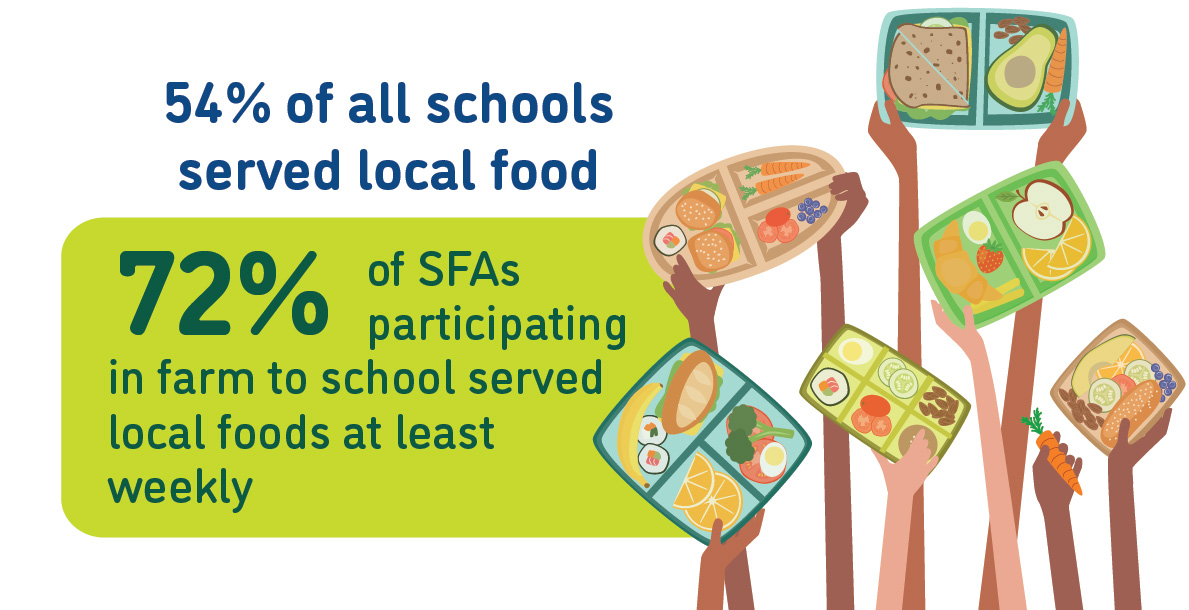
- Nearly two-thirds (63 percent) of SFAs said they served local foods to students in SY 2022-23.
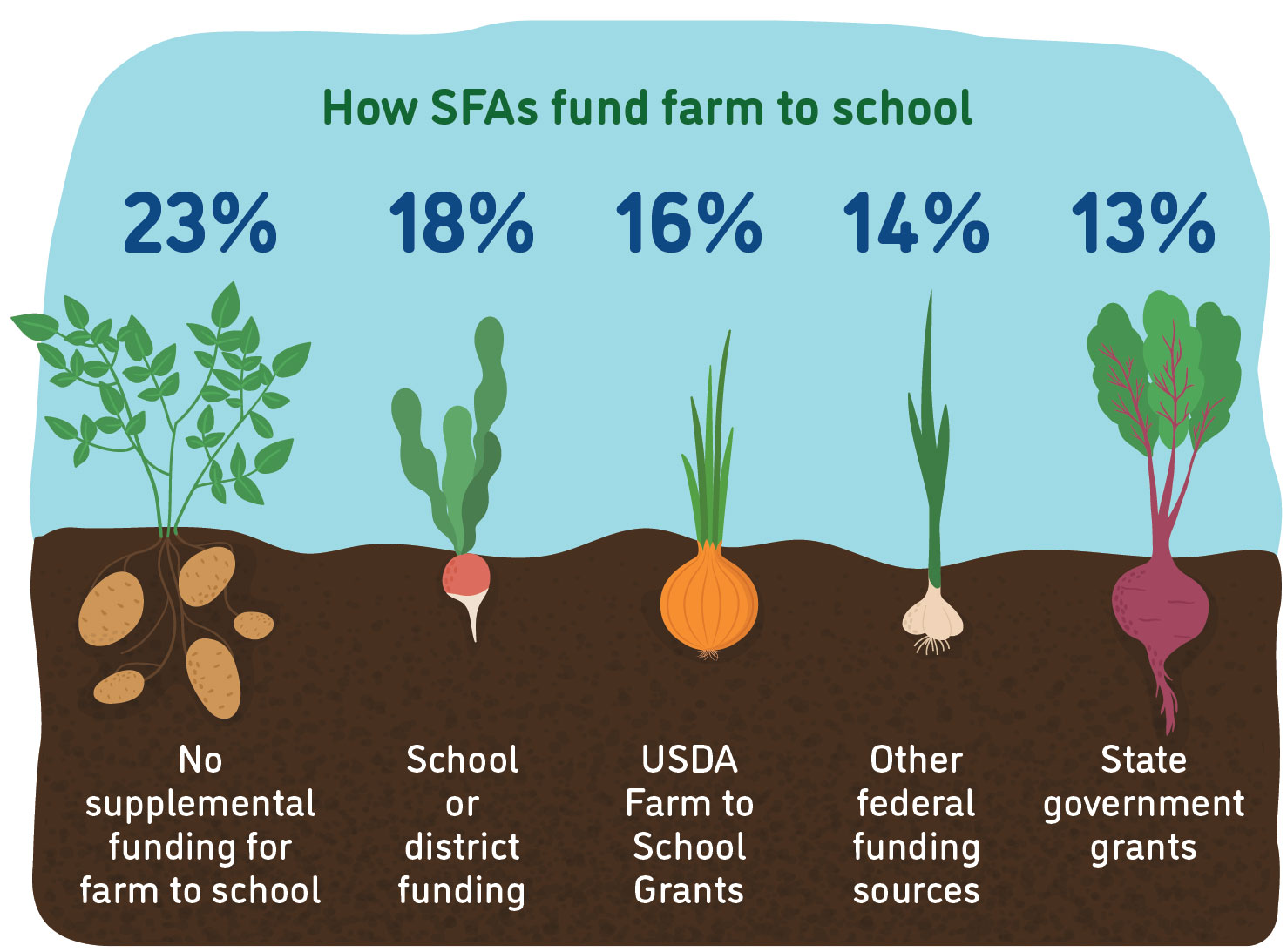
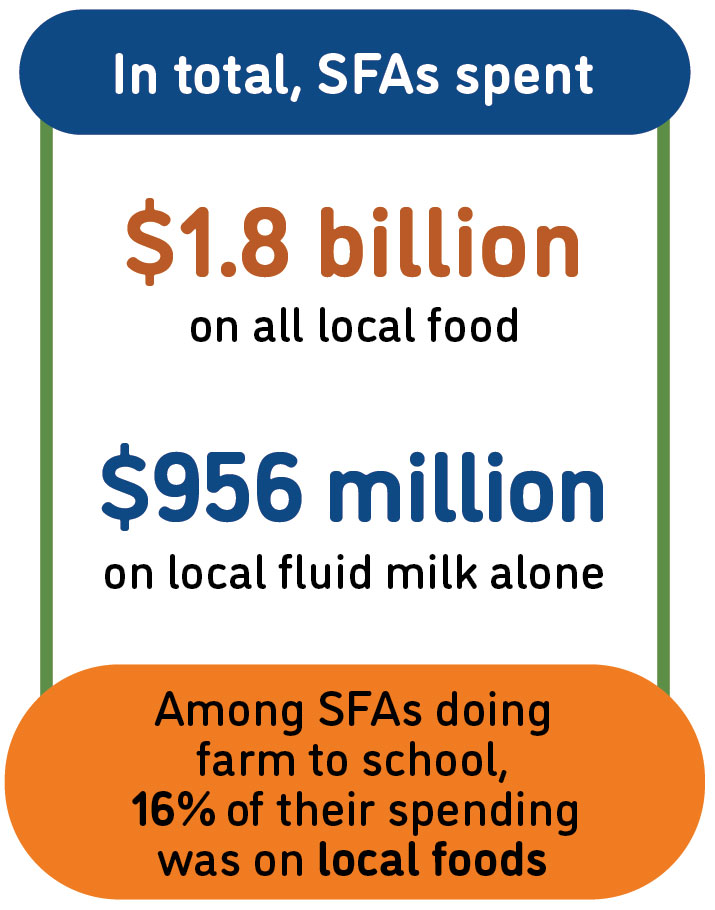
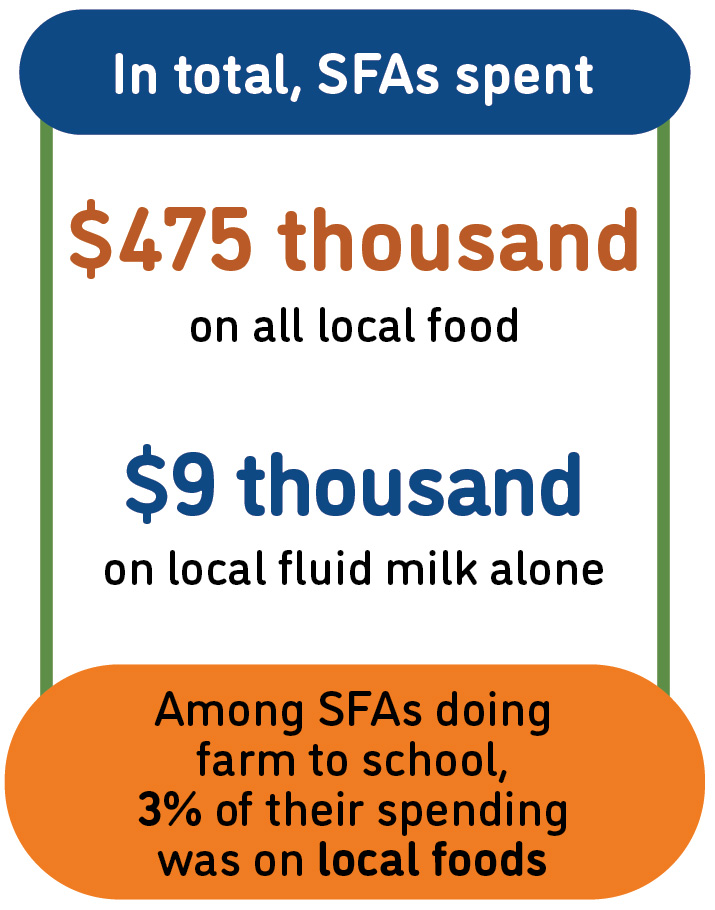
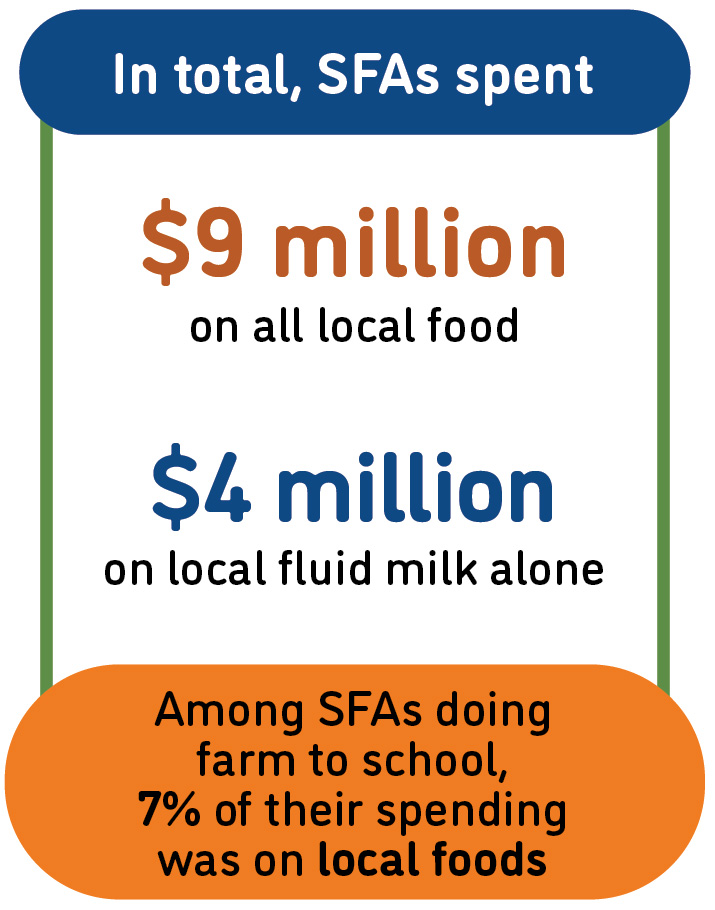
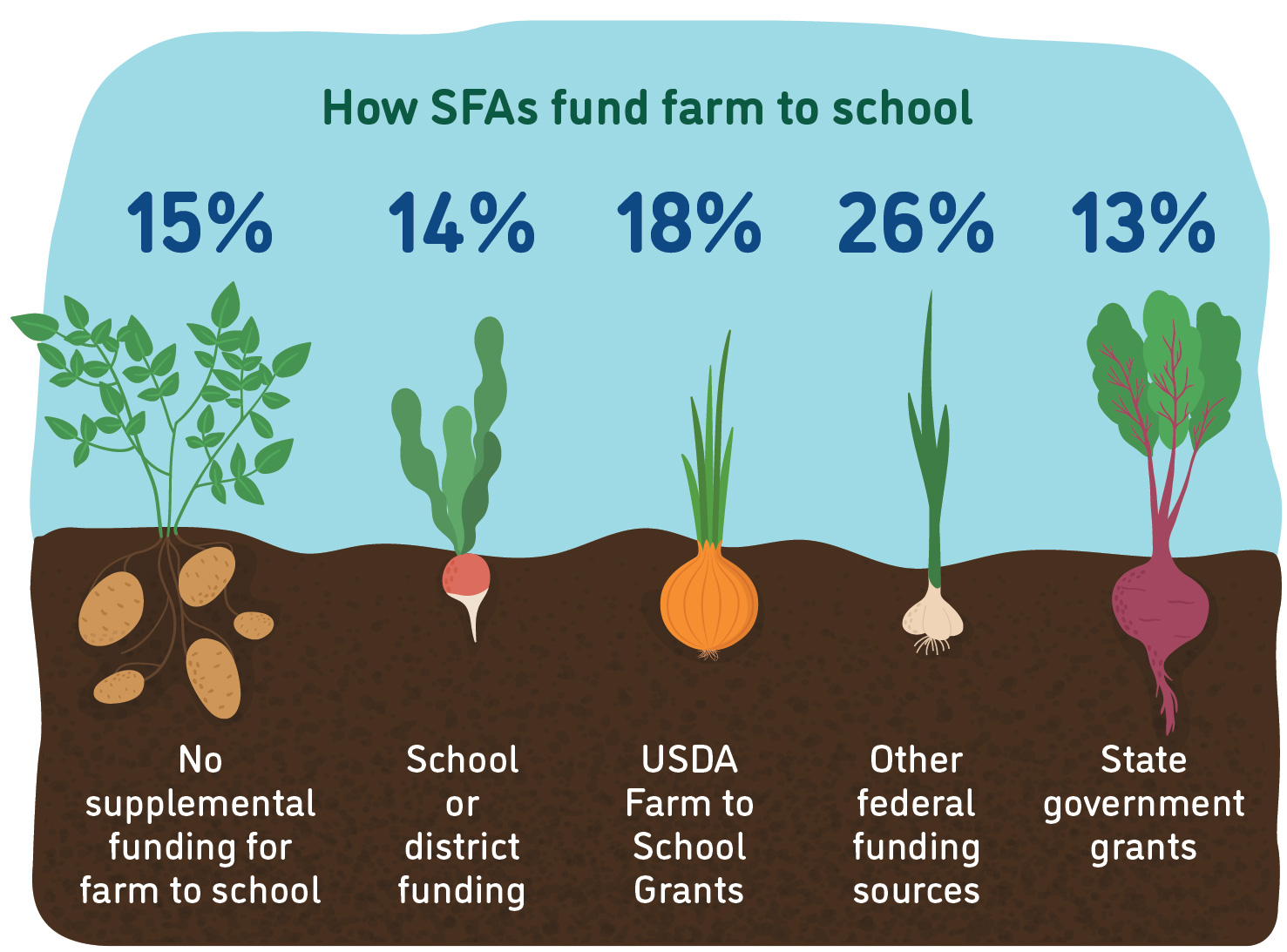
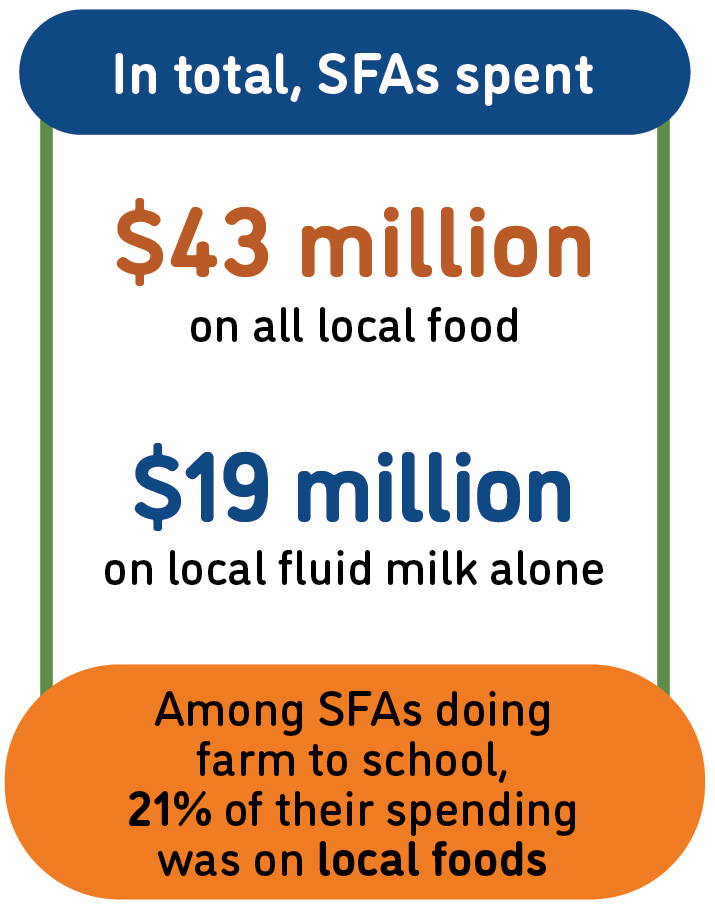
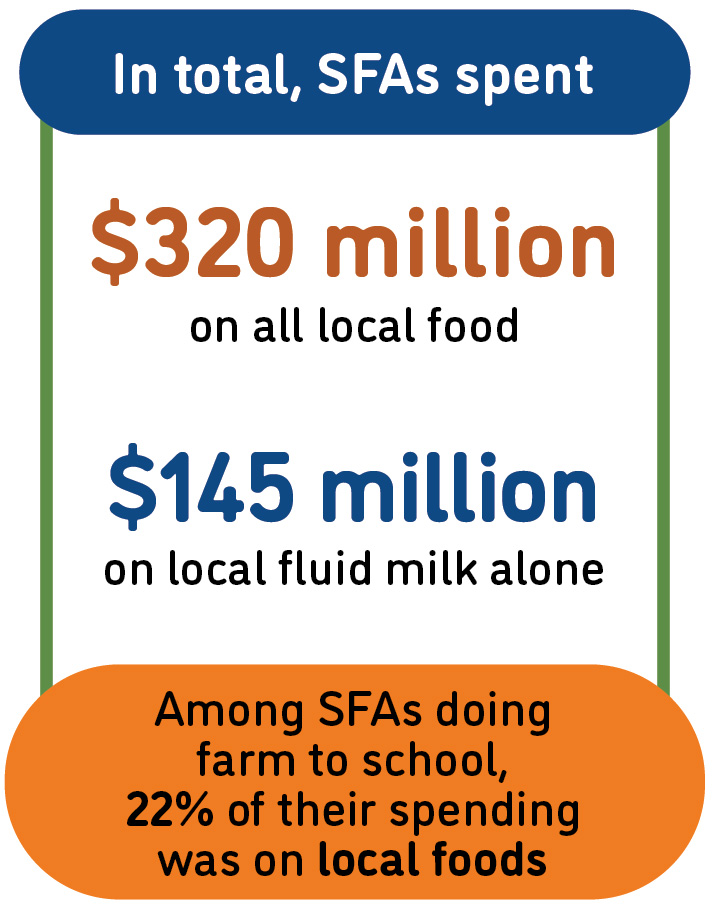
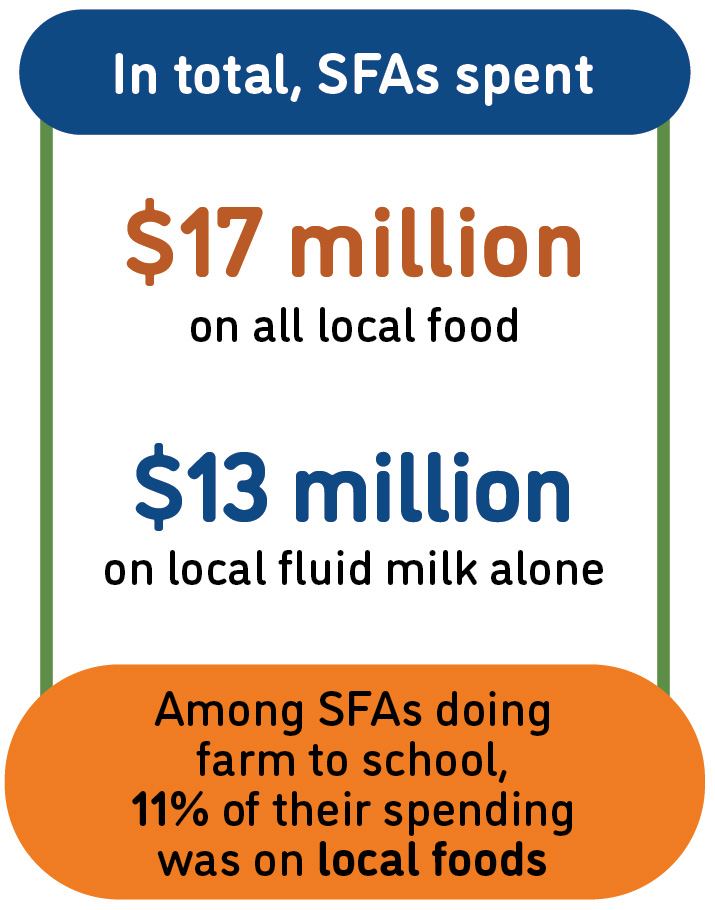
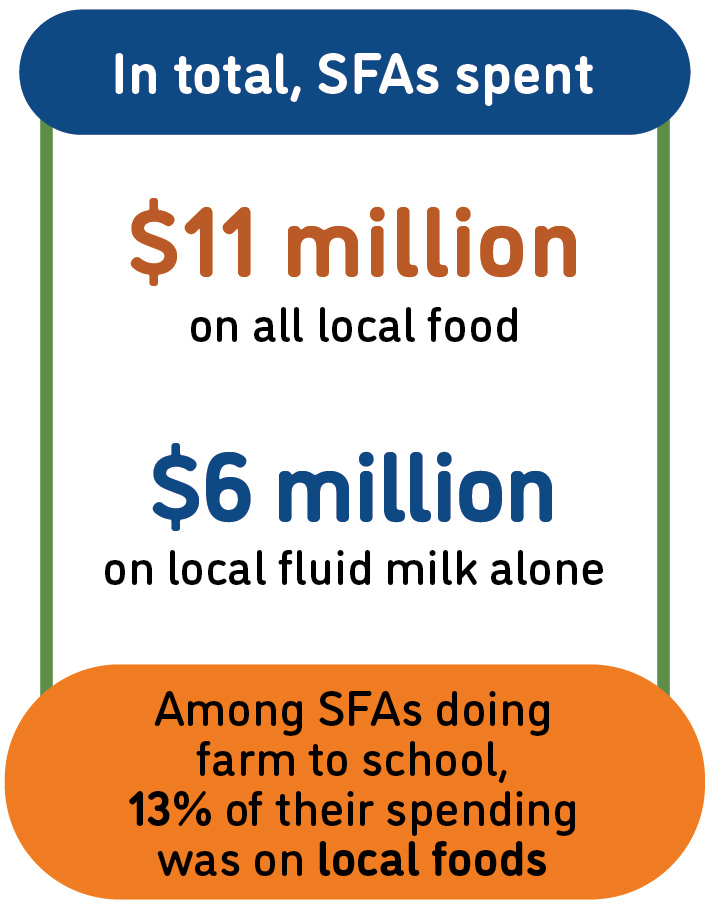
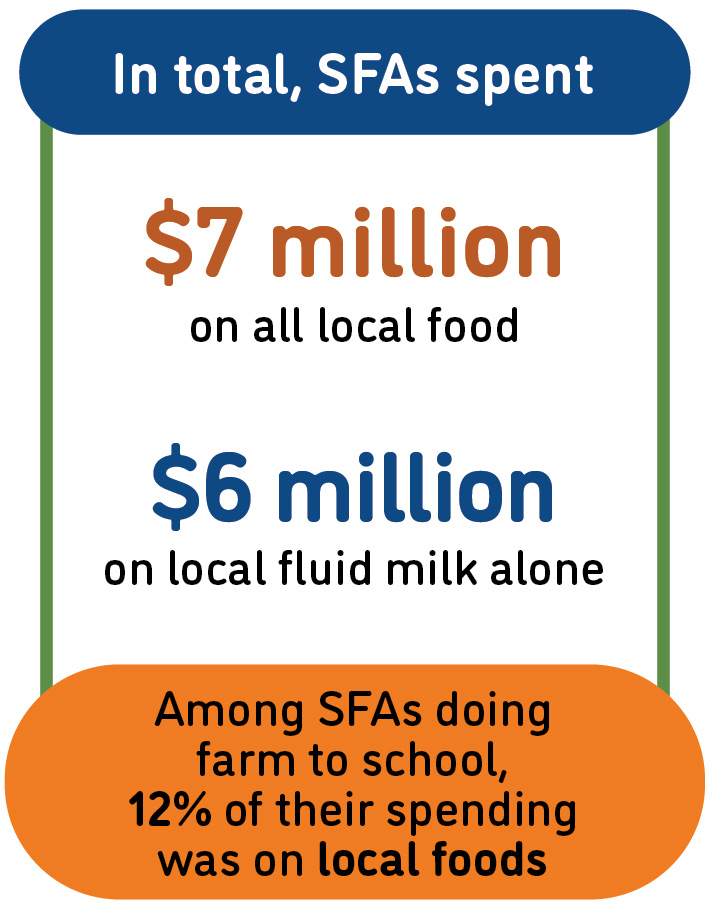
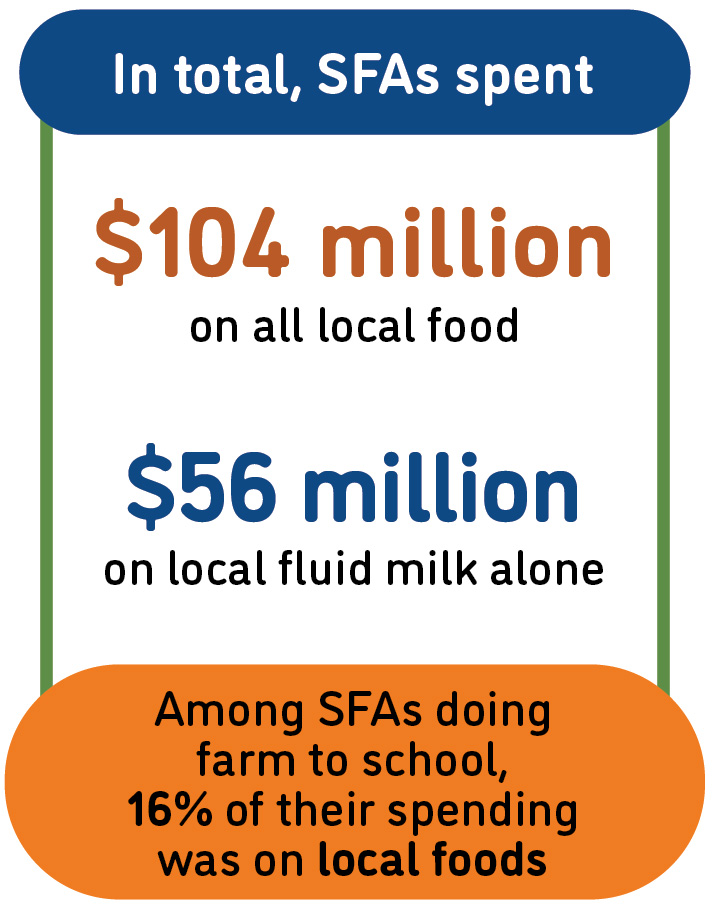
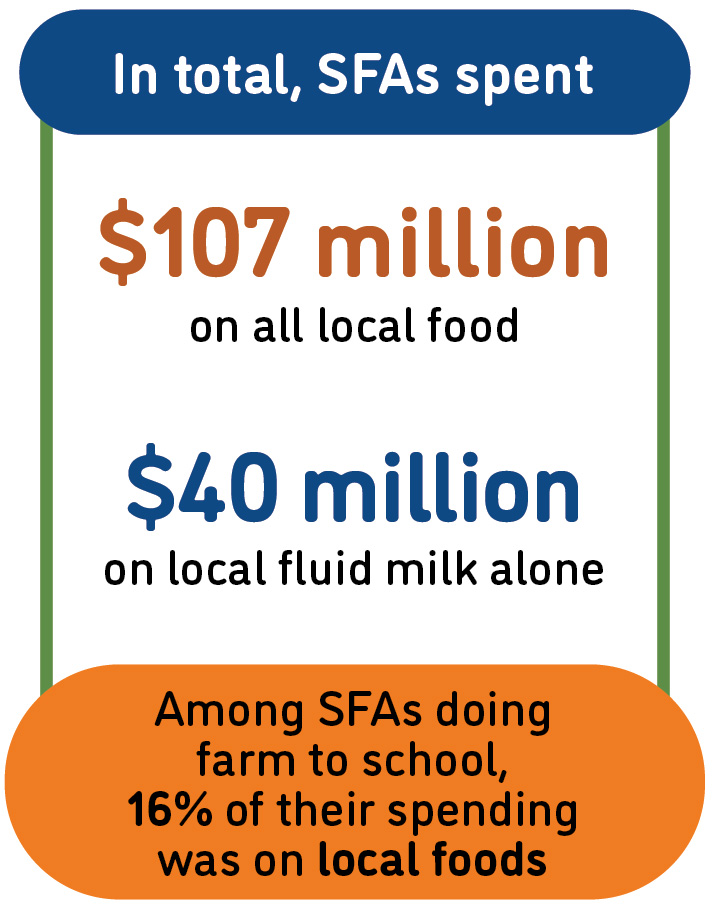
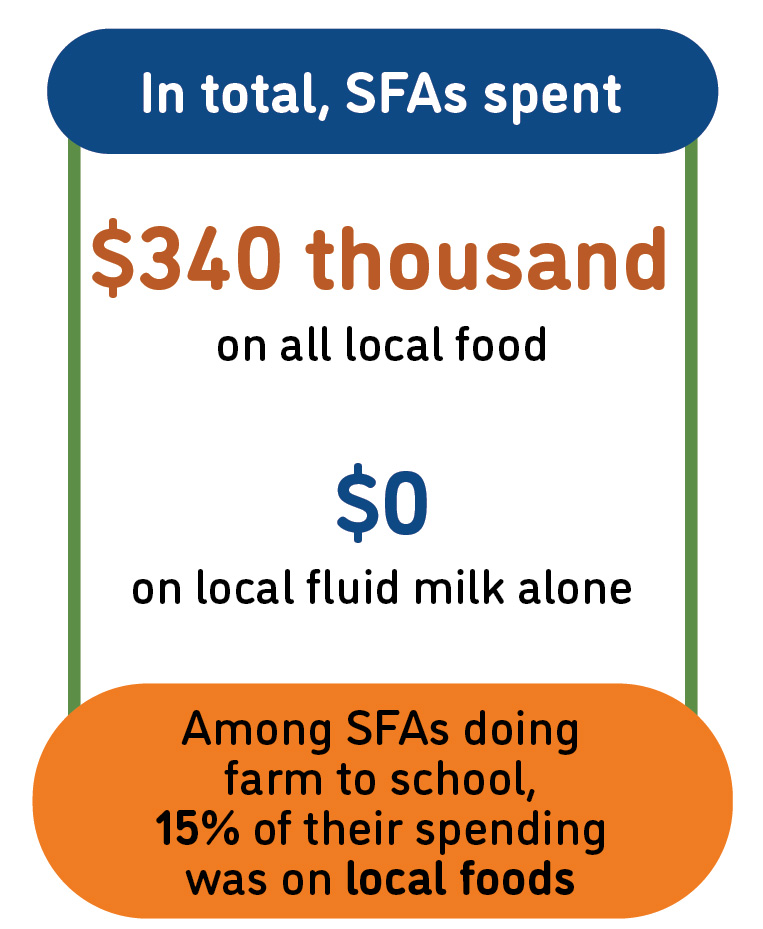
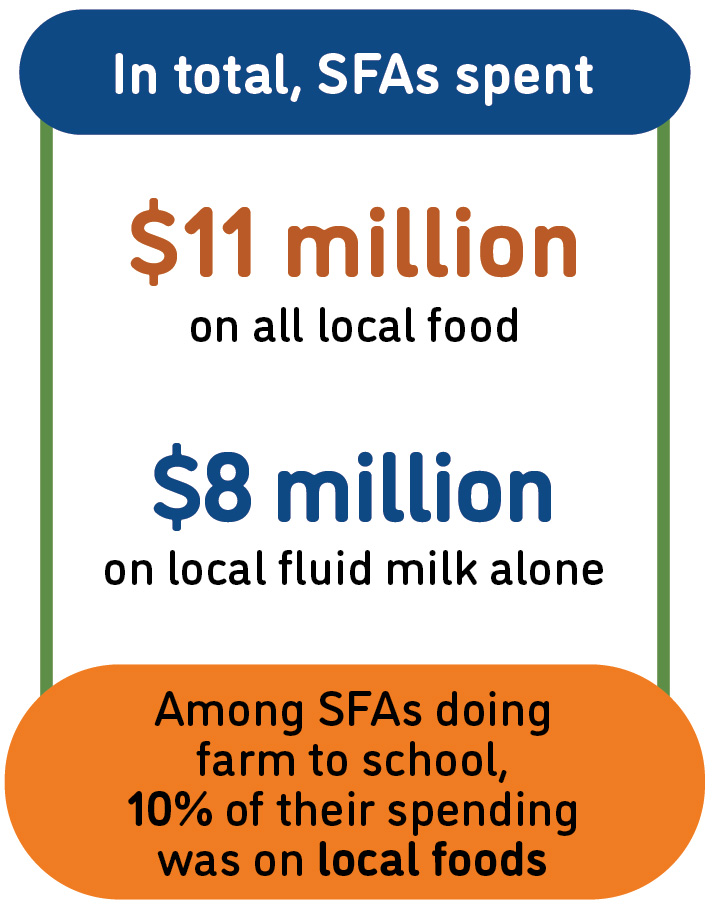
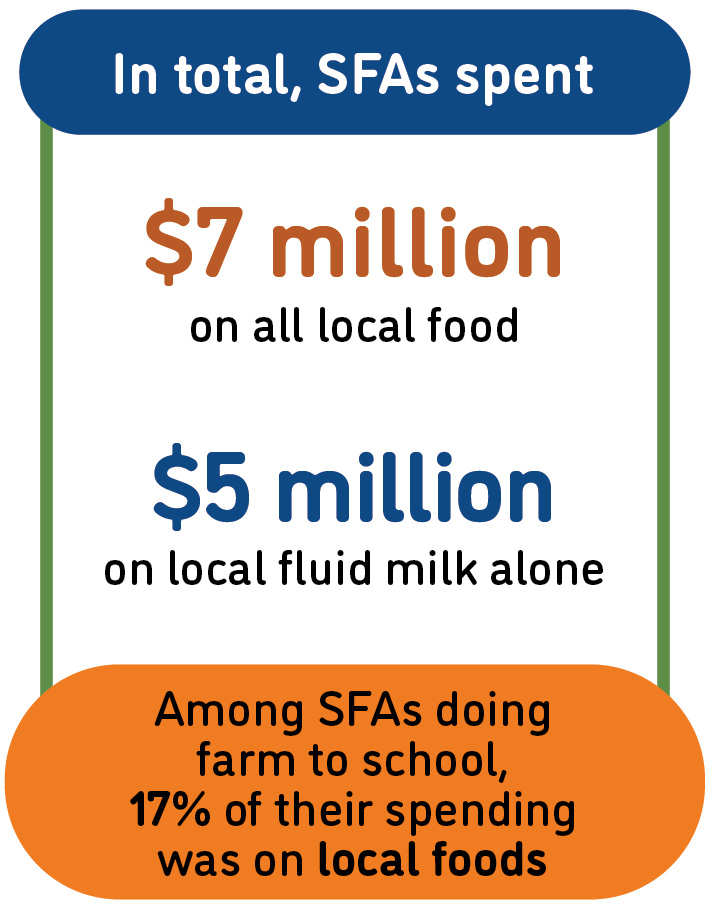
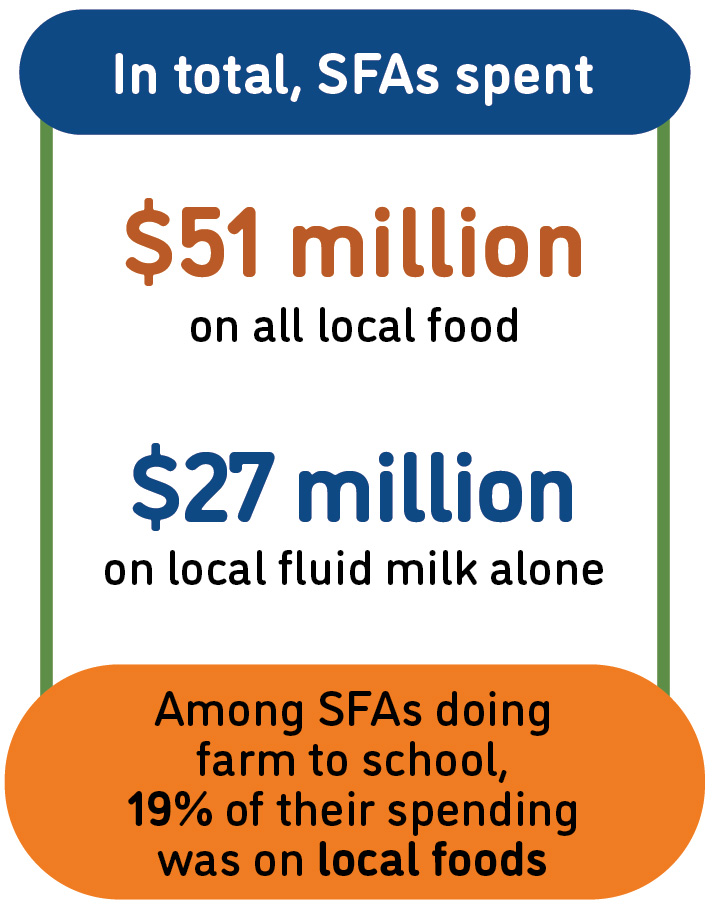
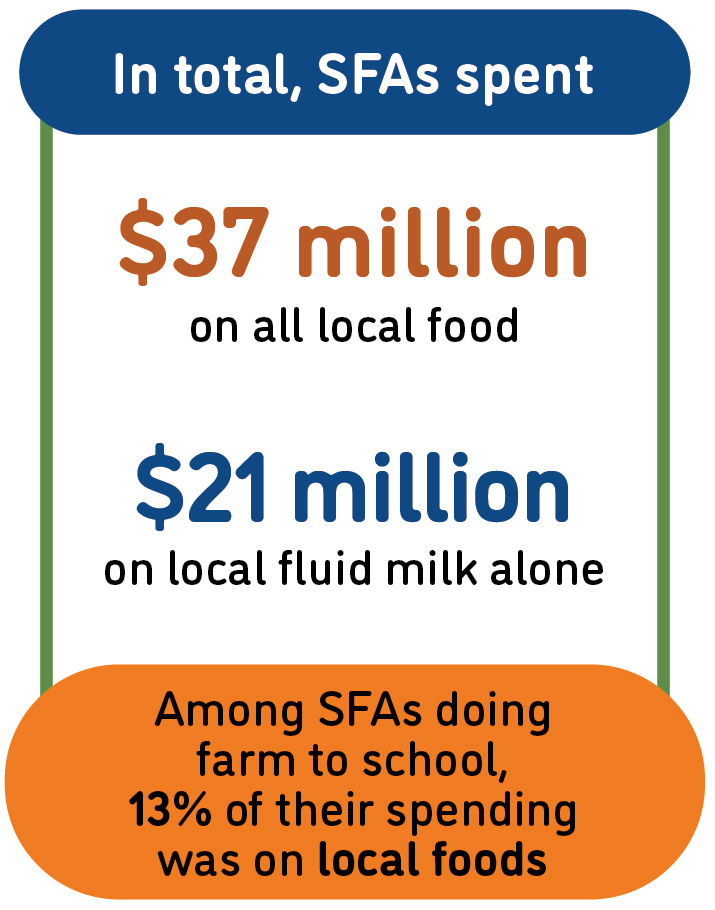
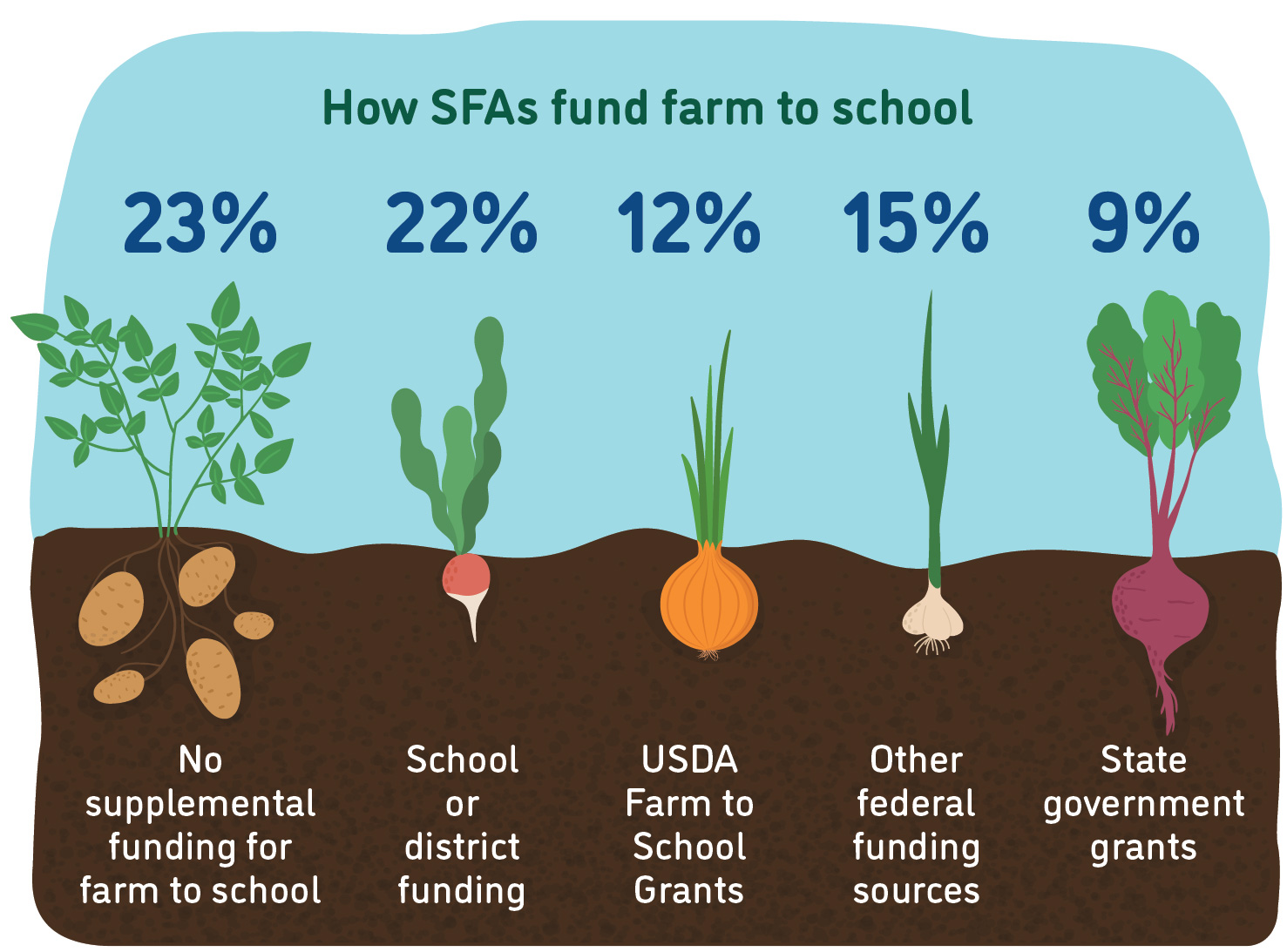
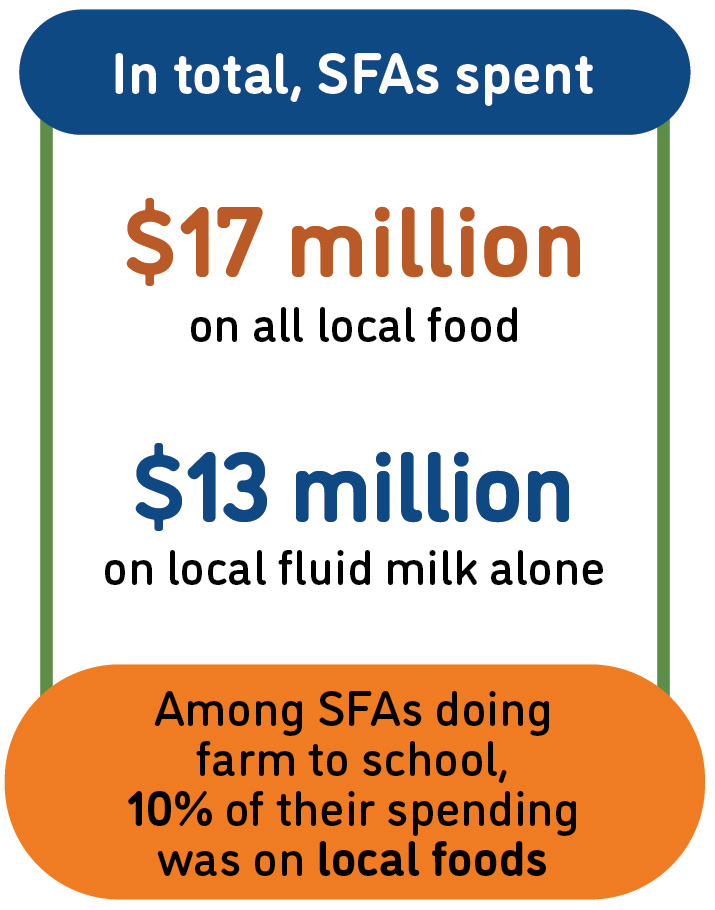
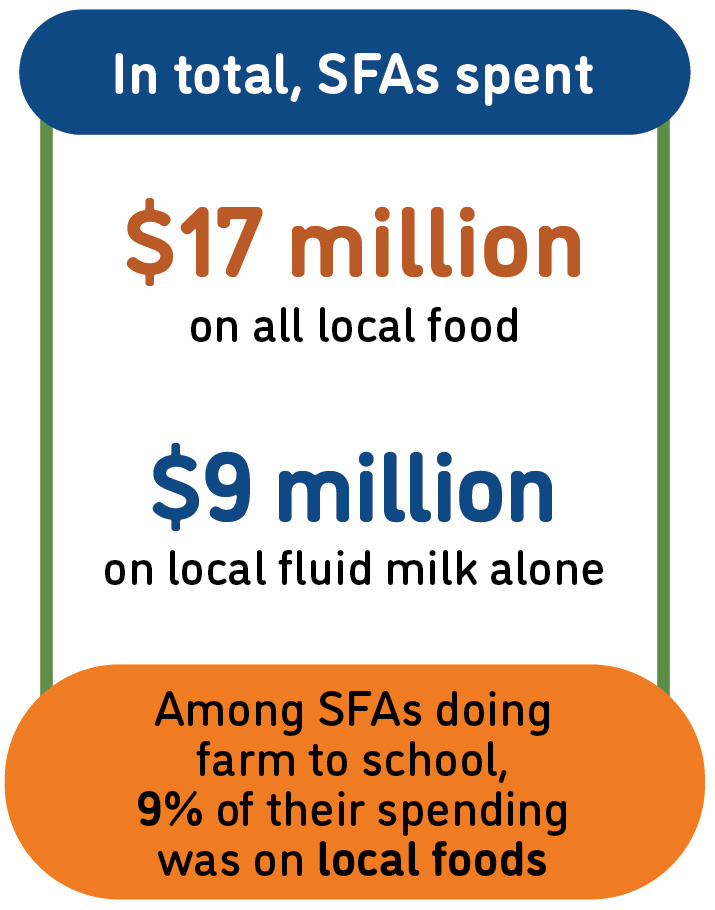
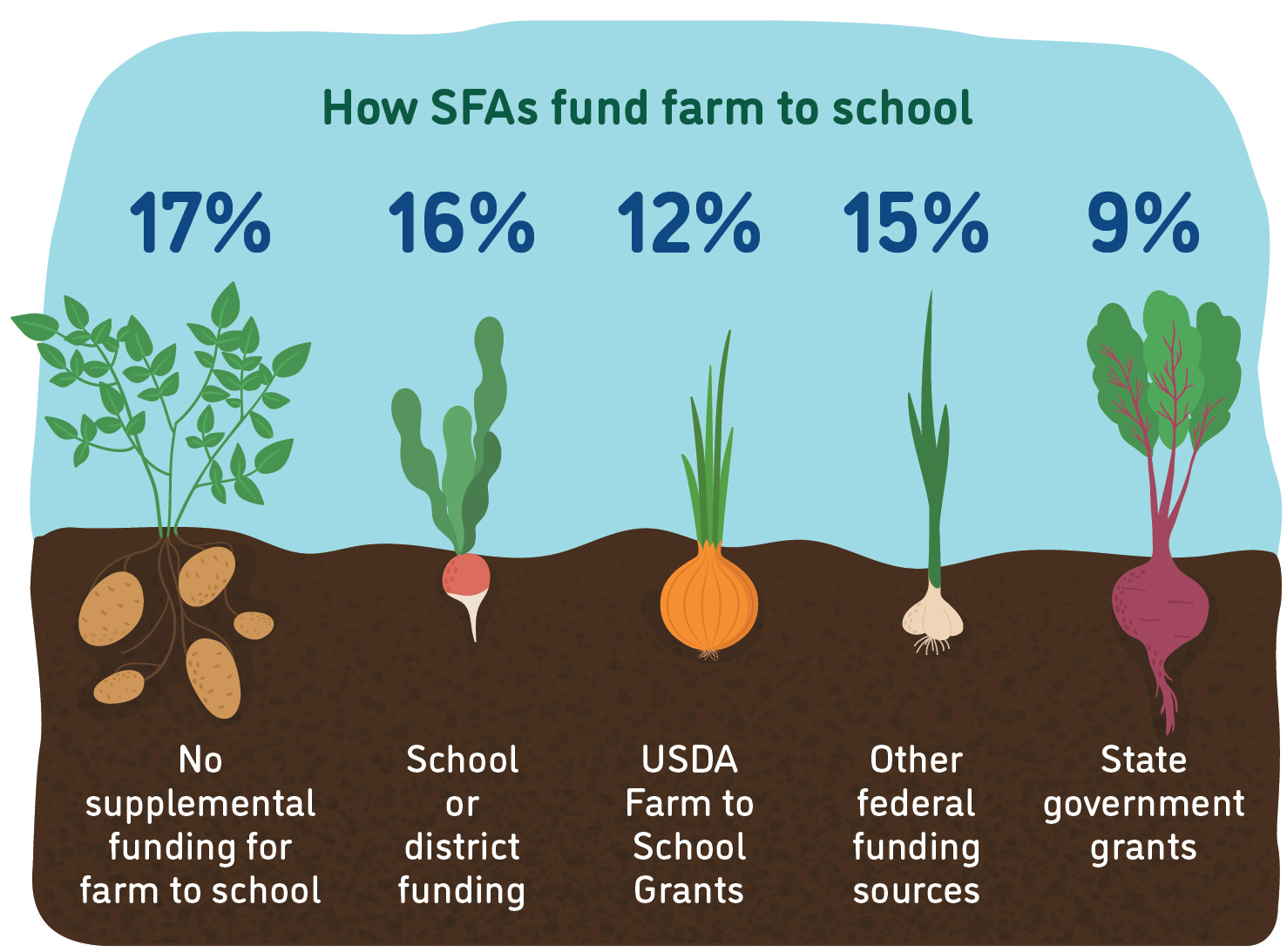
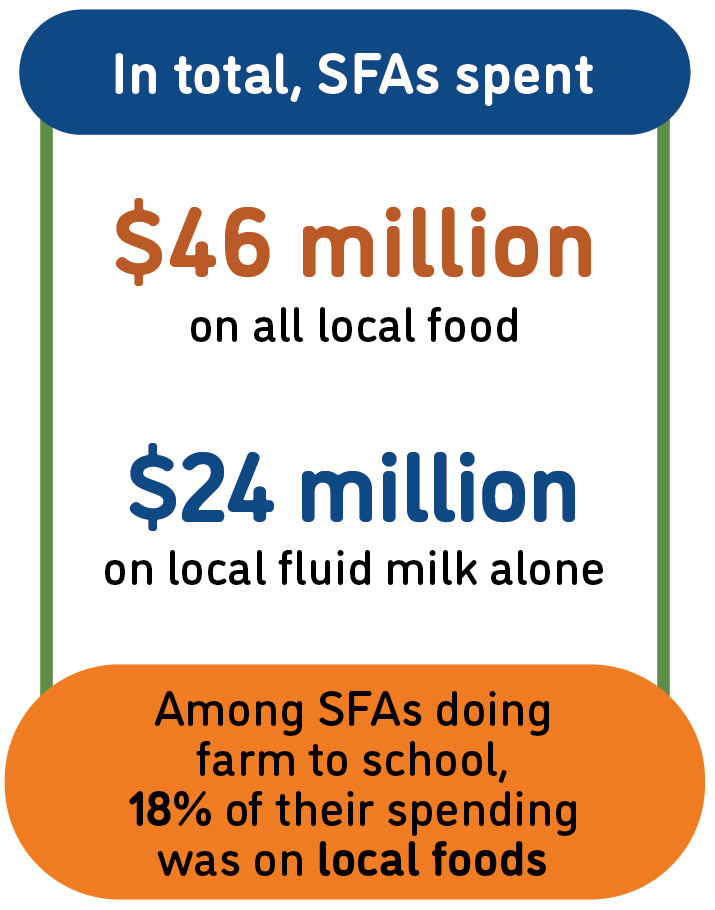
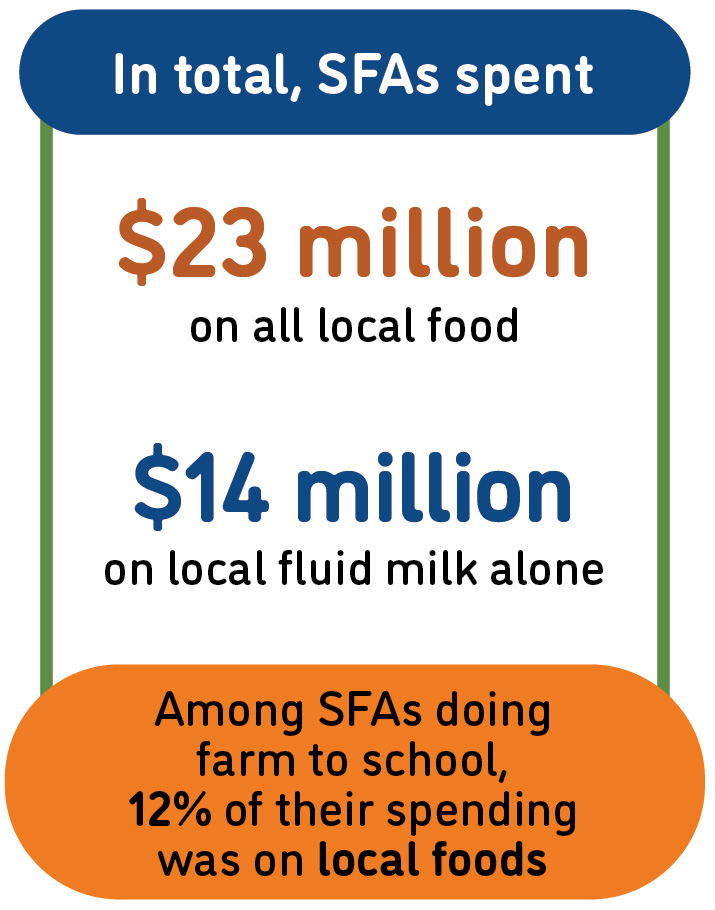
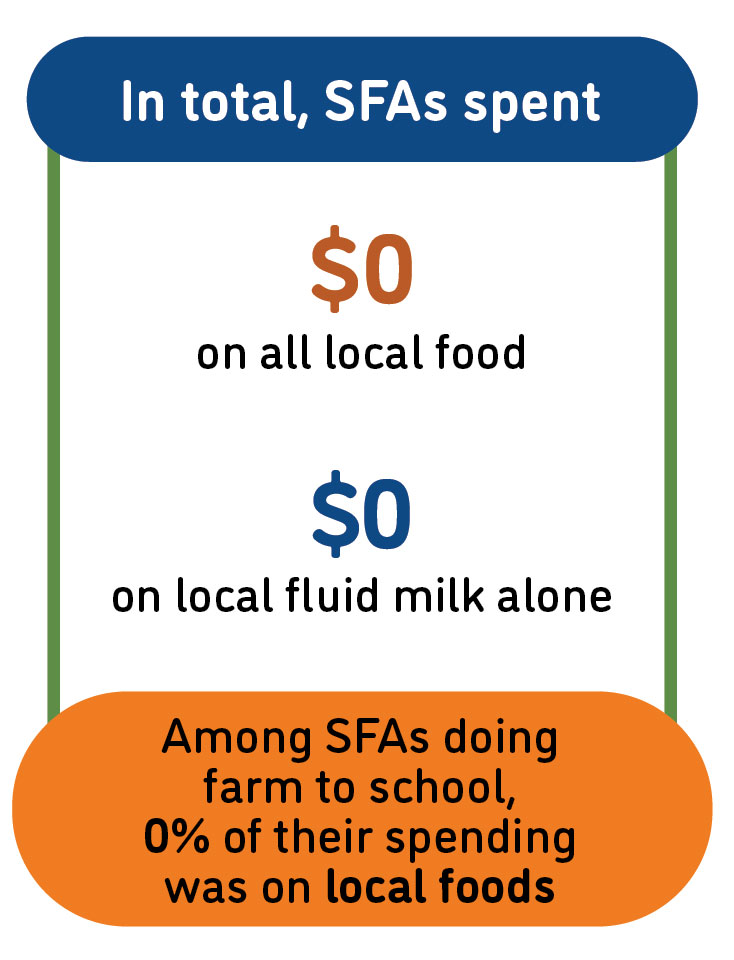
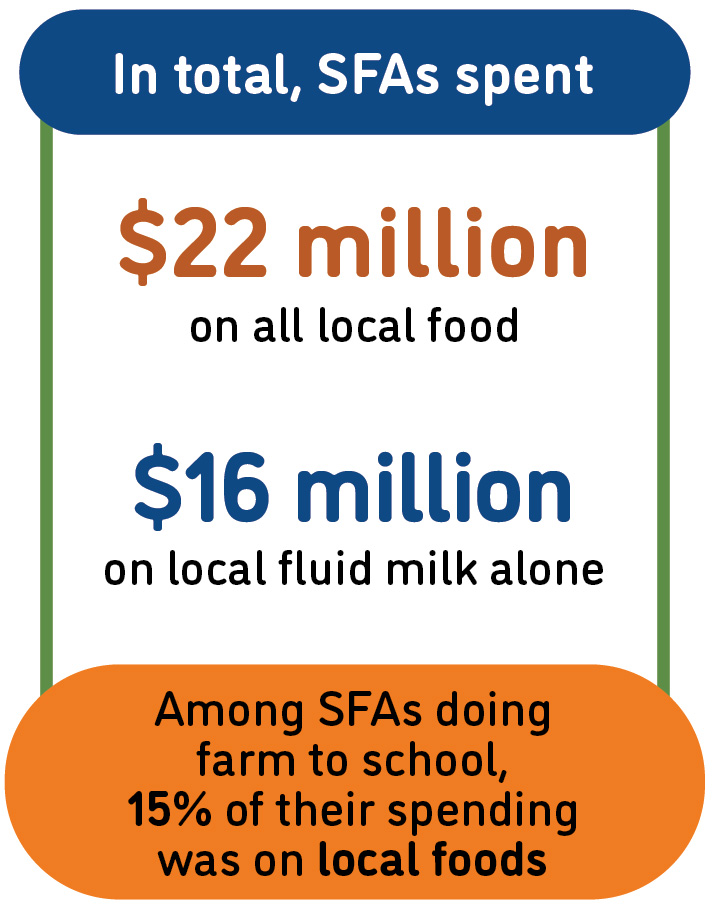
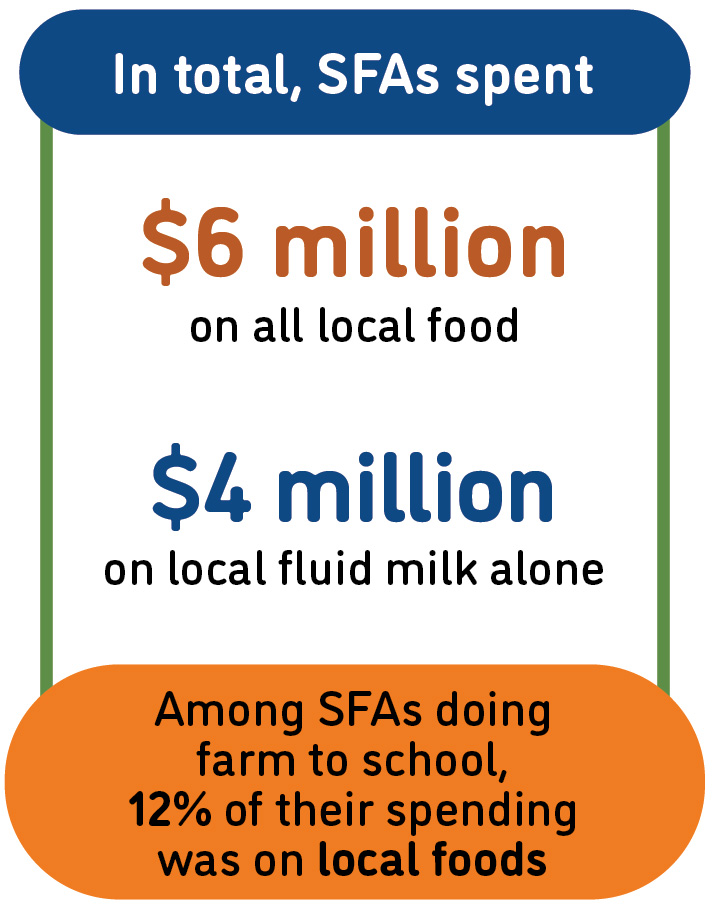
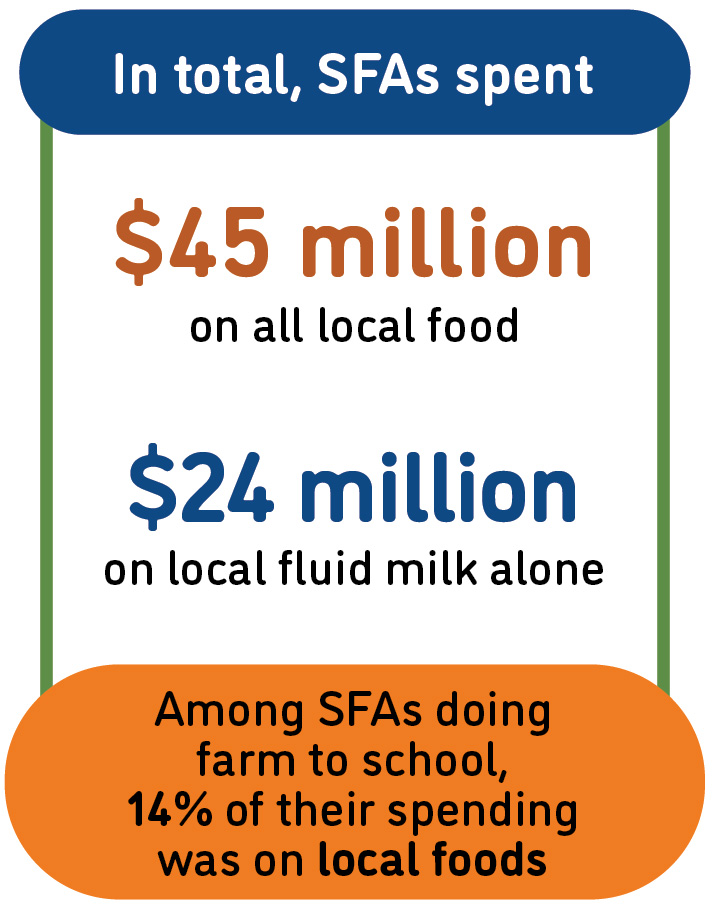
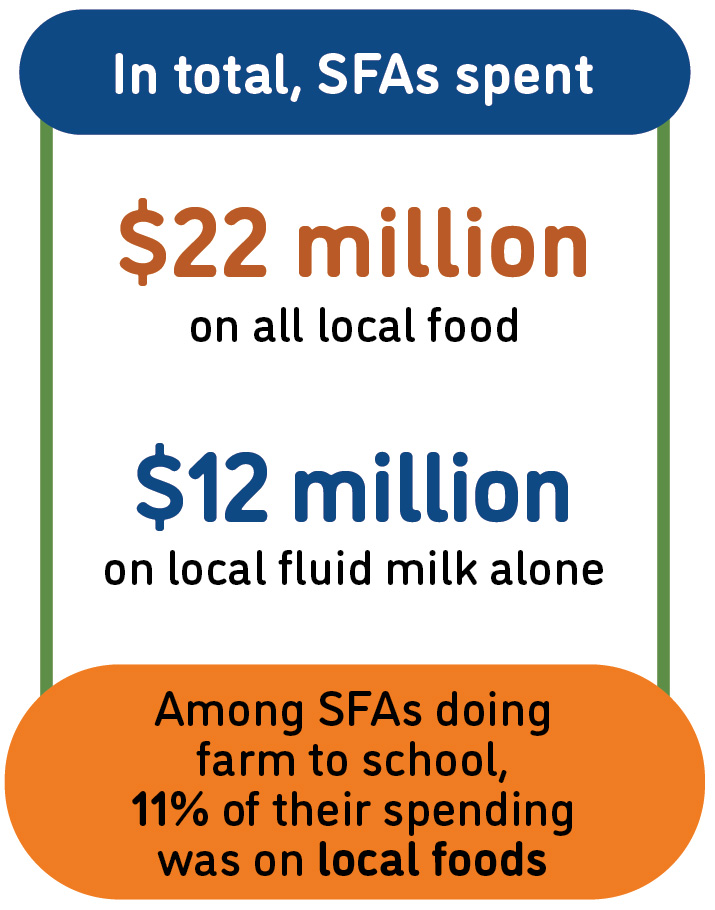
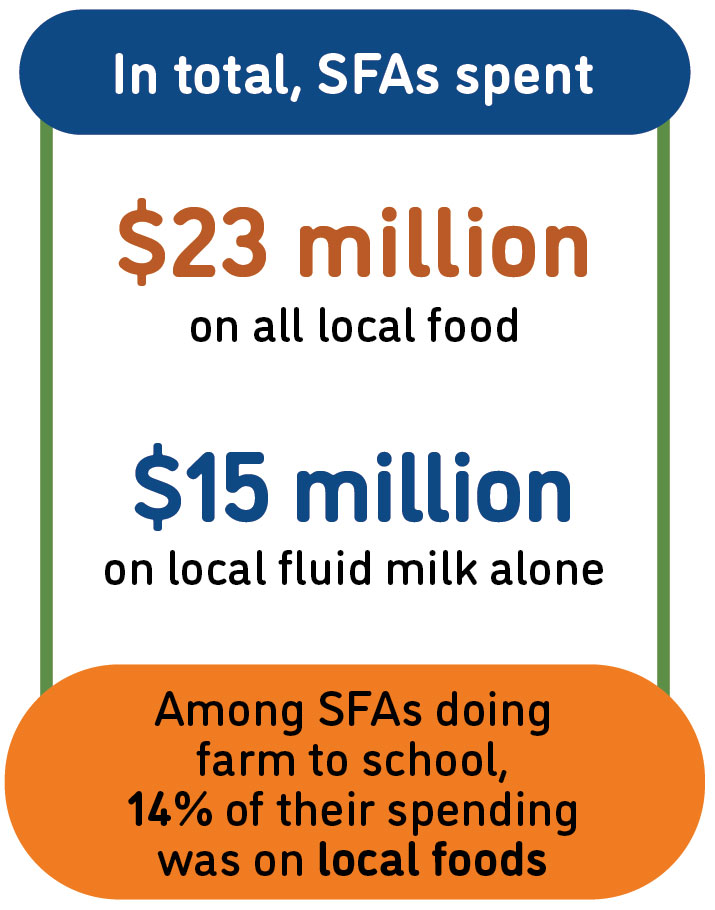
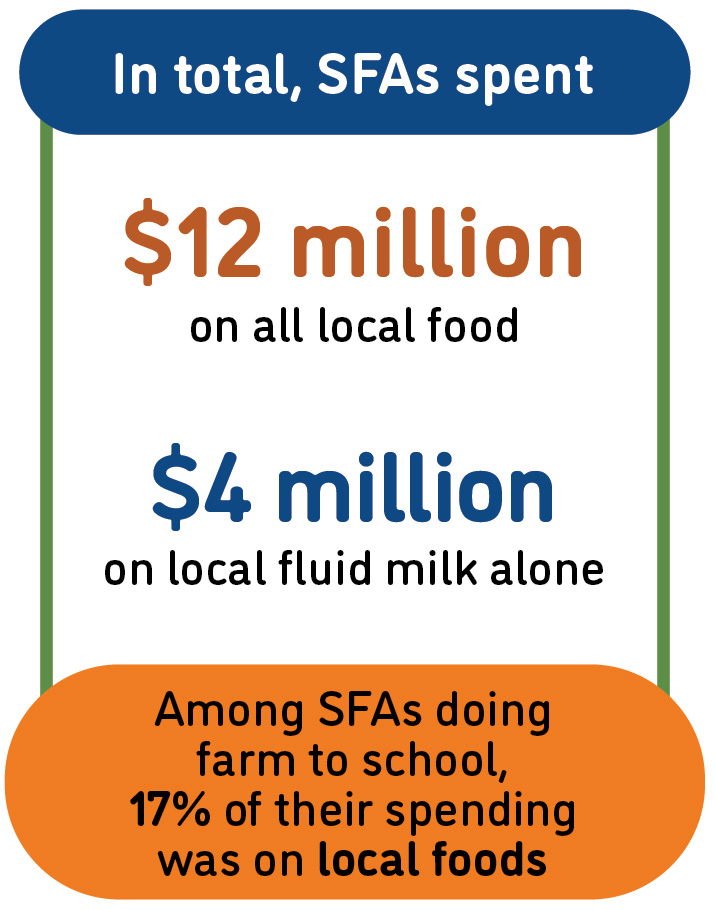
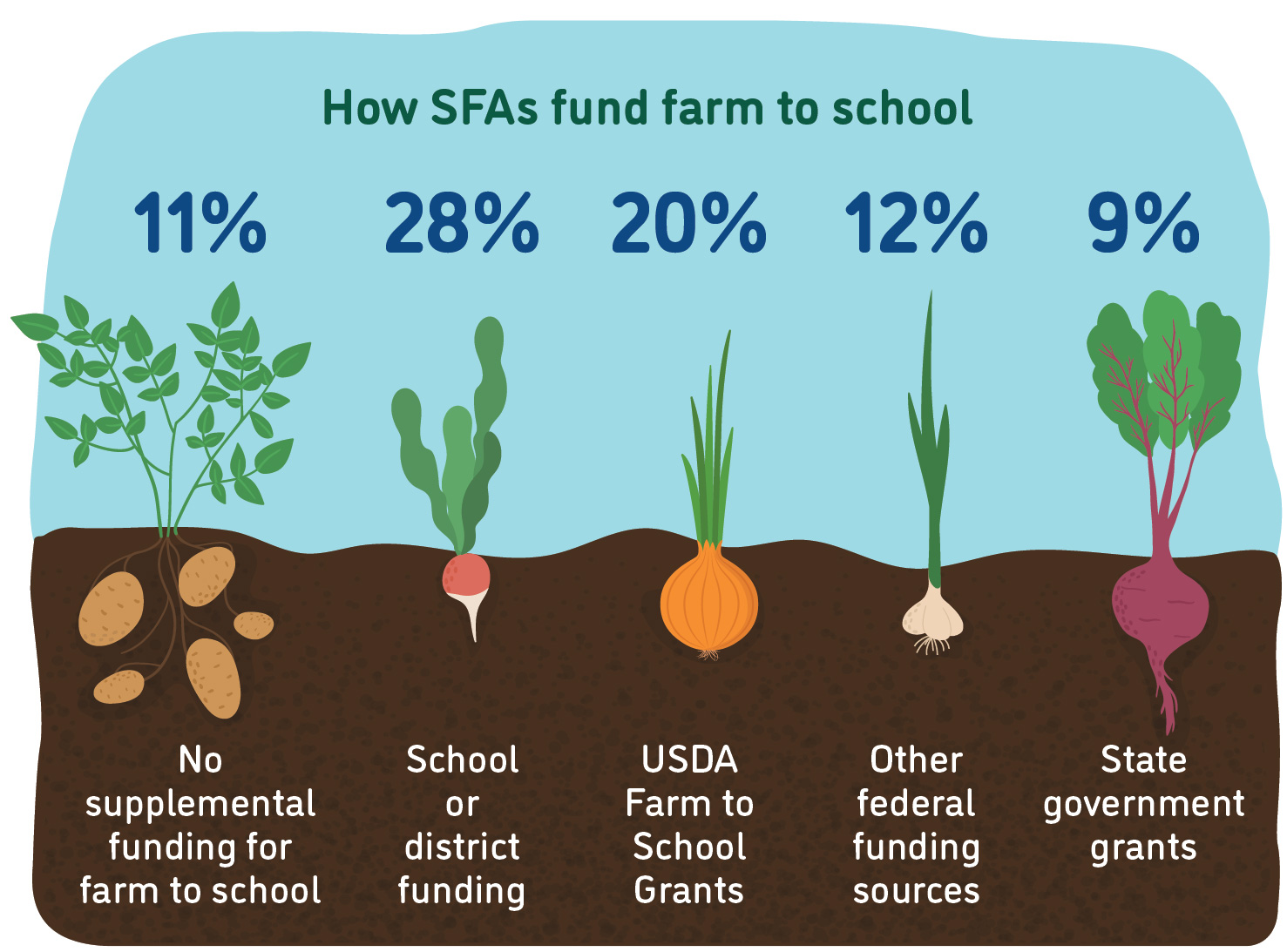
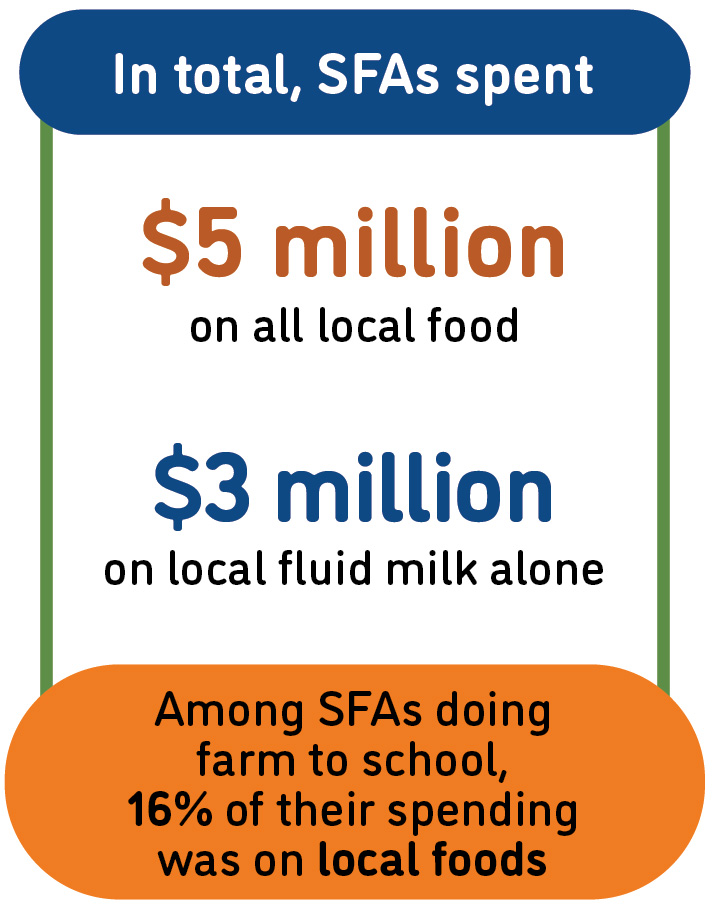
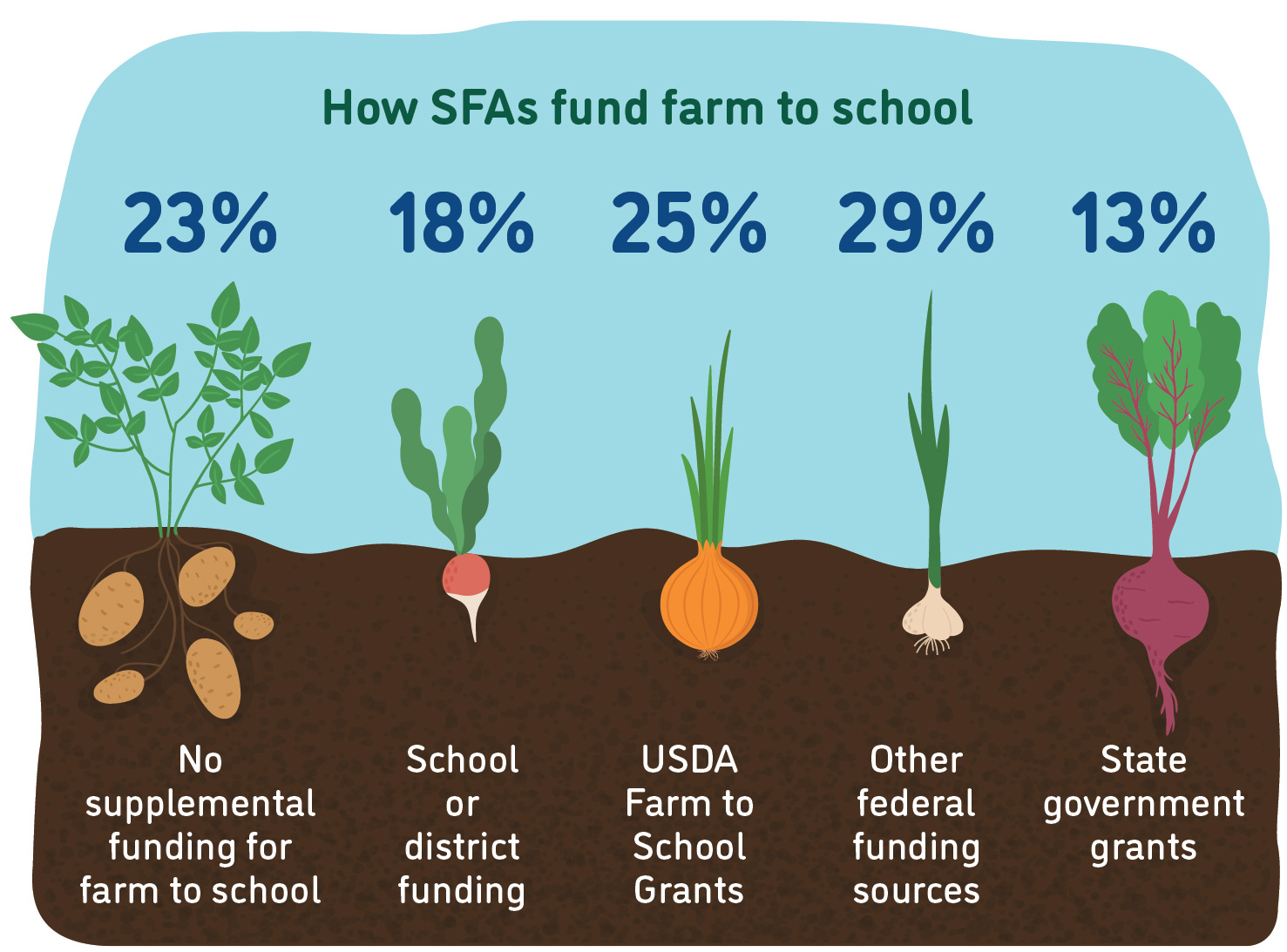
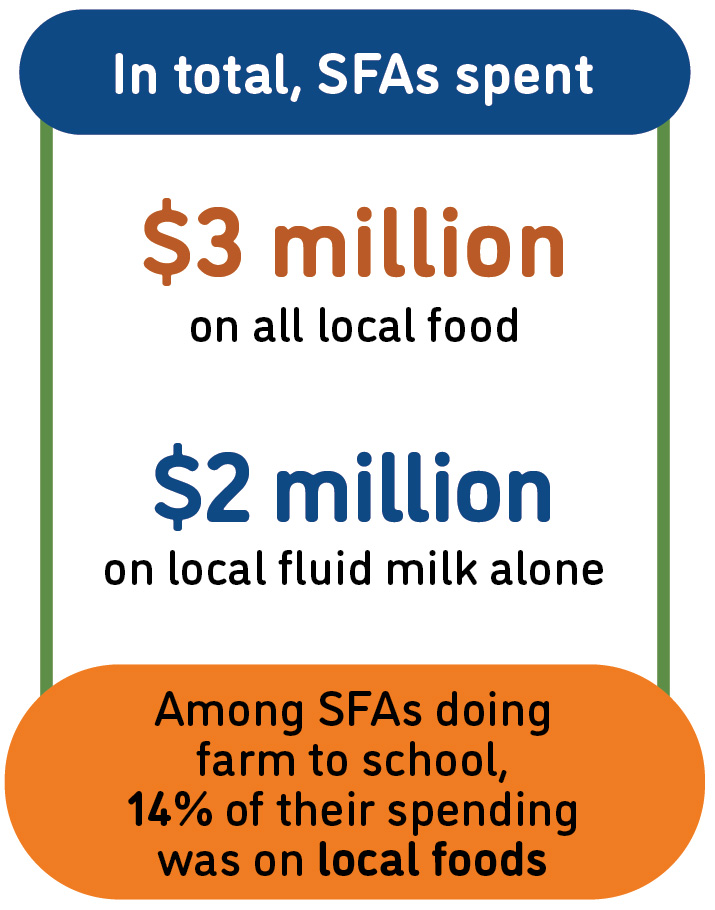
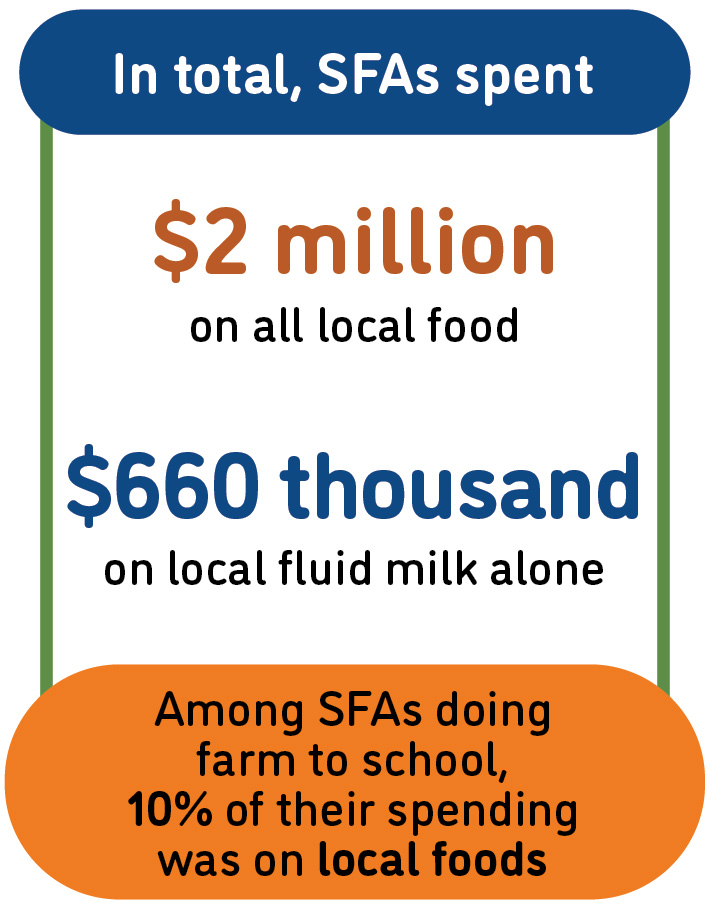
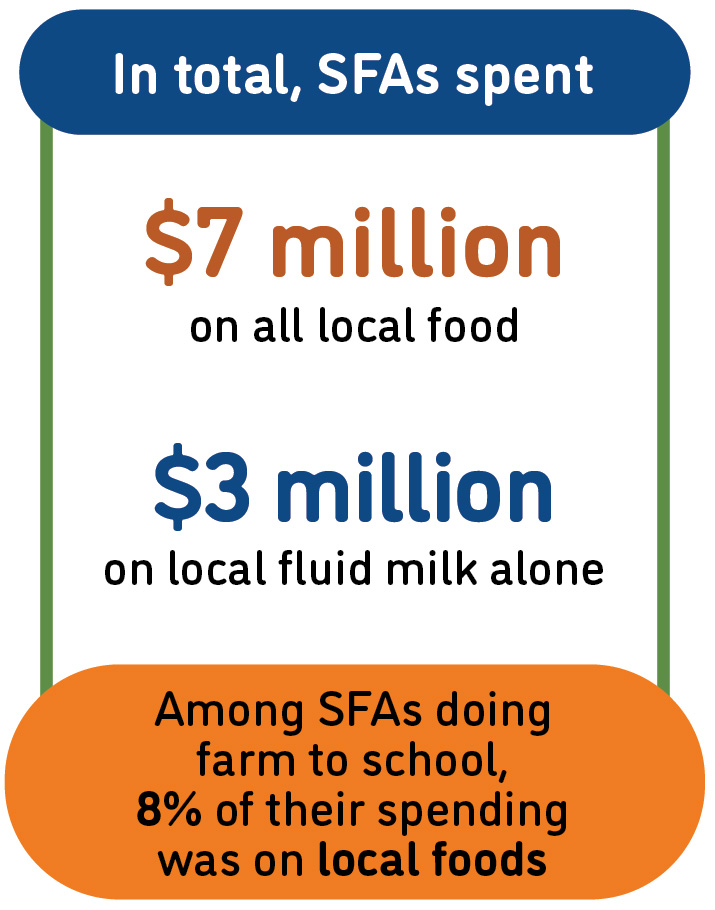
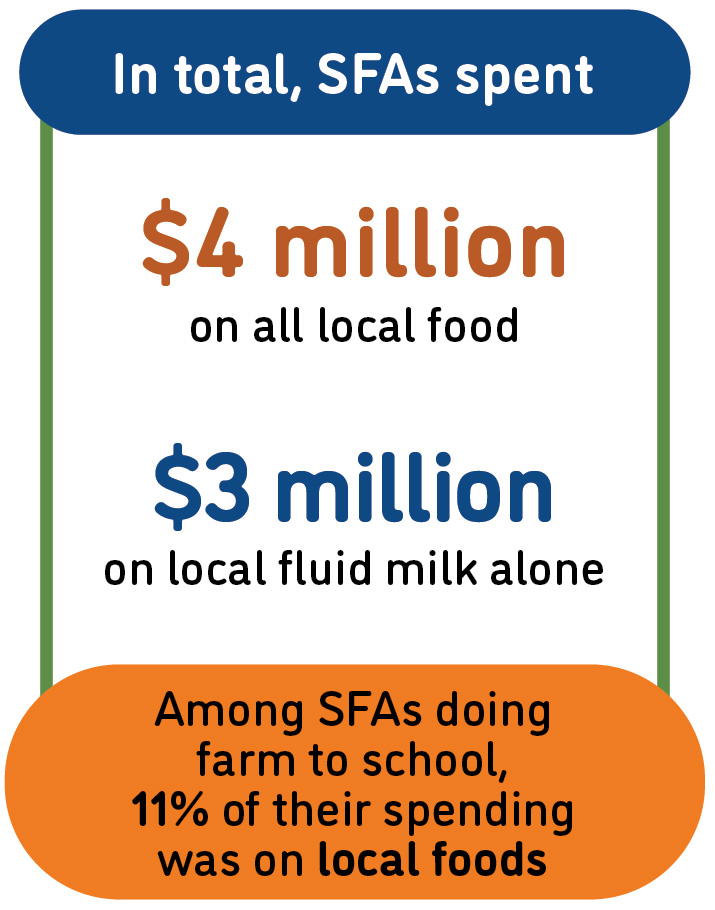
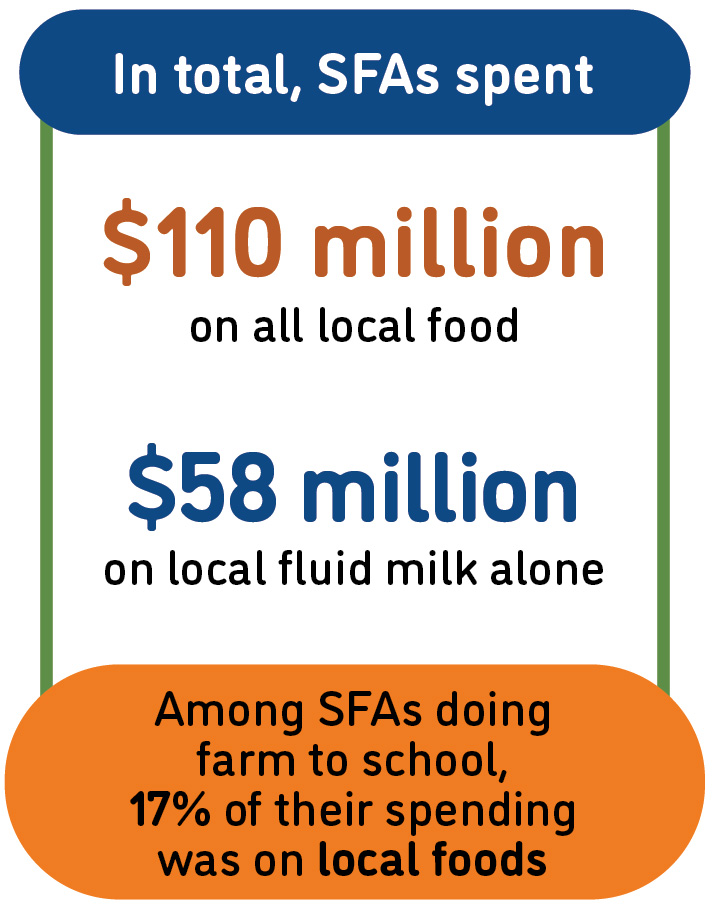
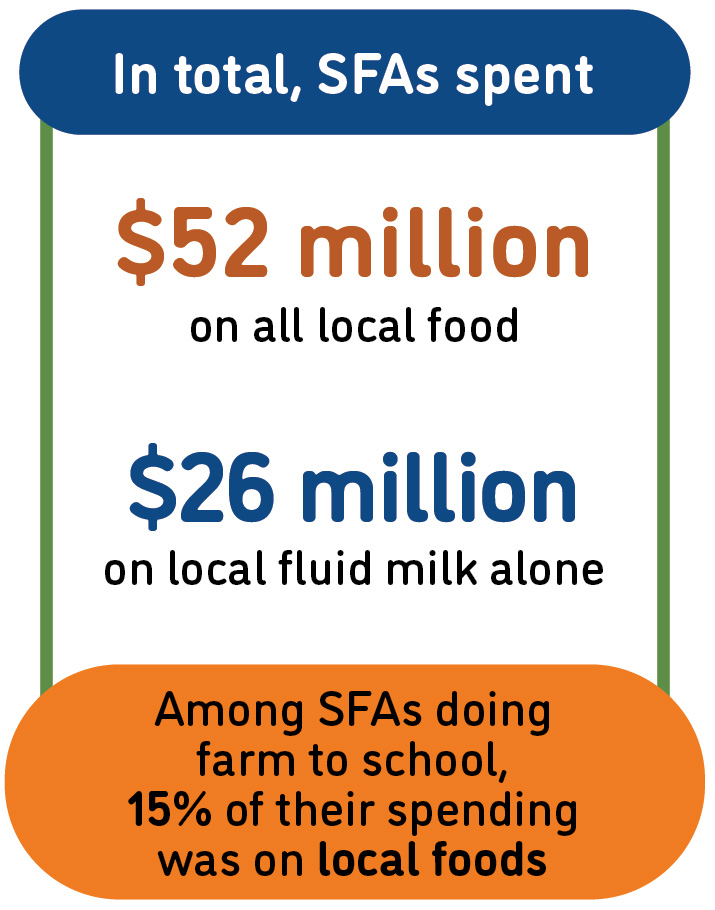
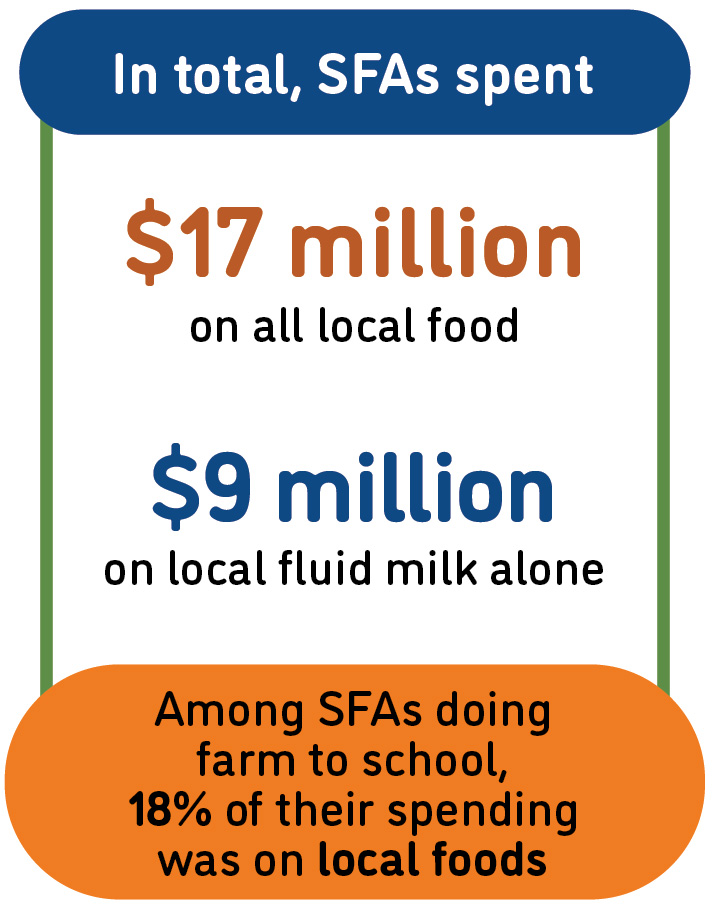
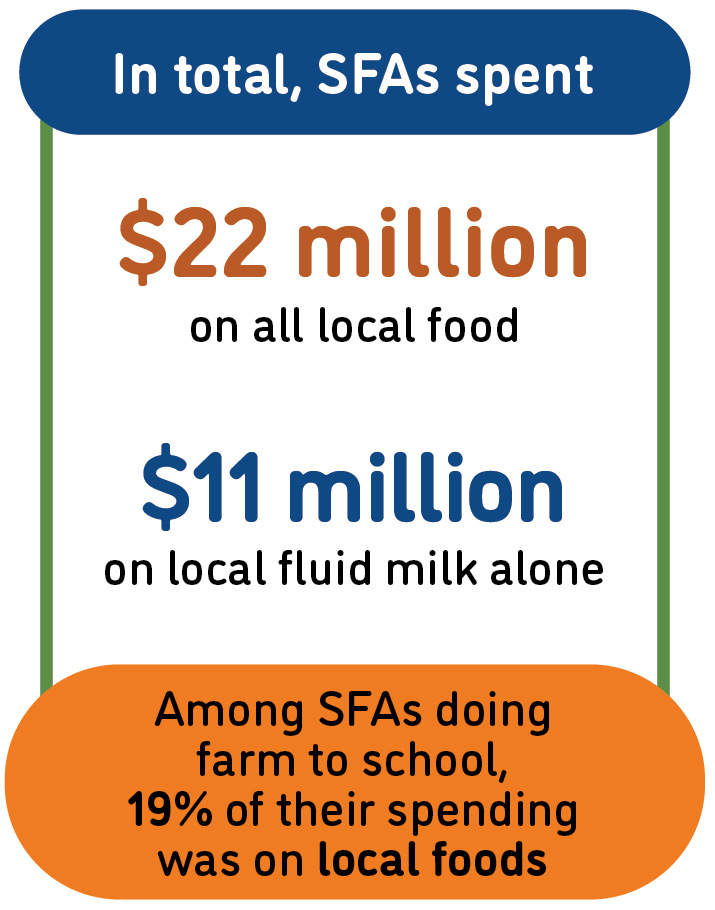
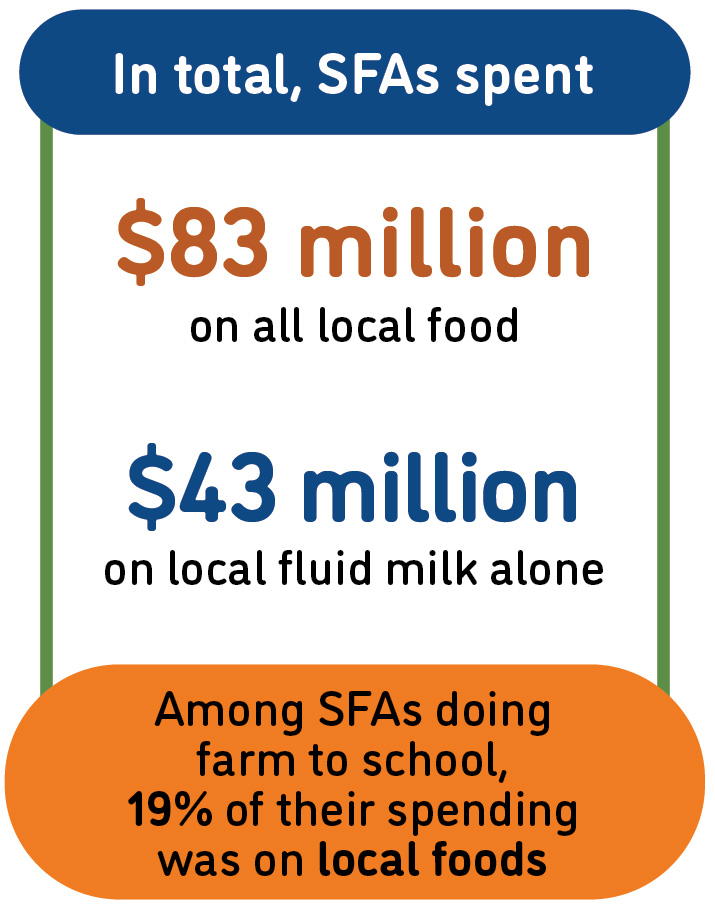
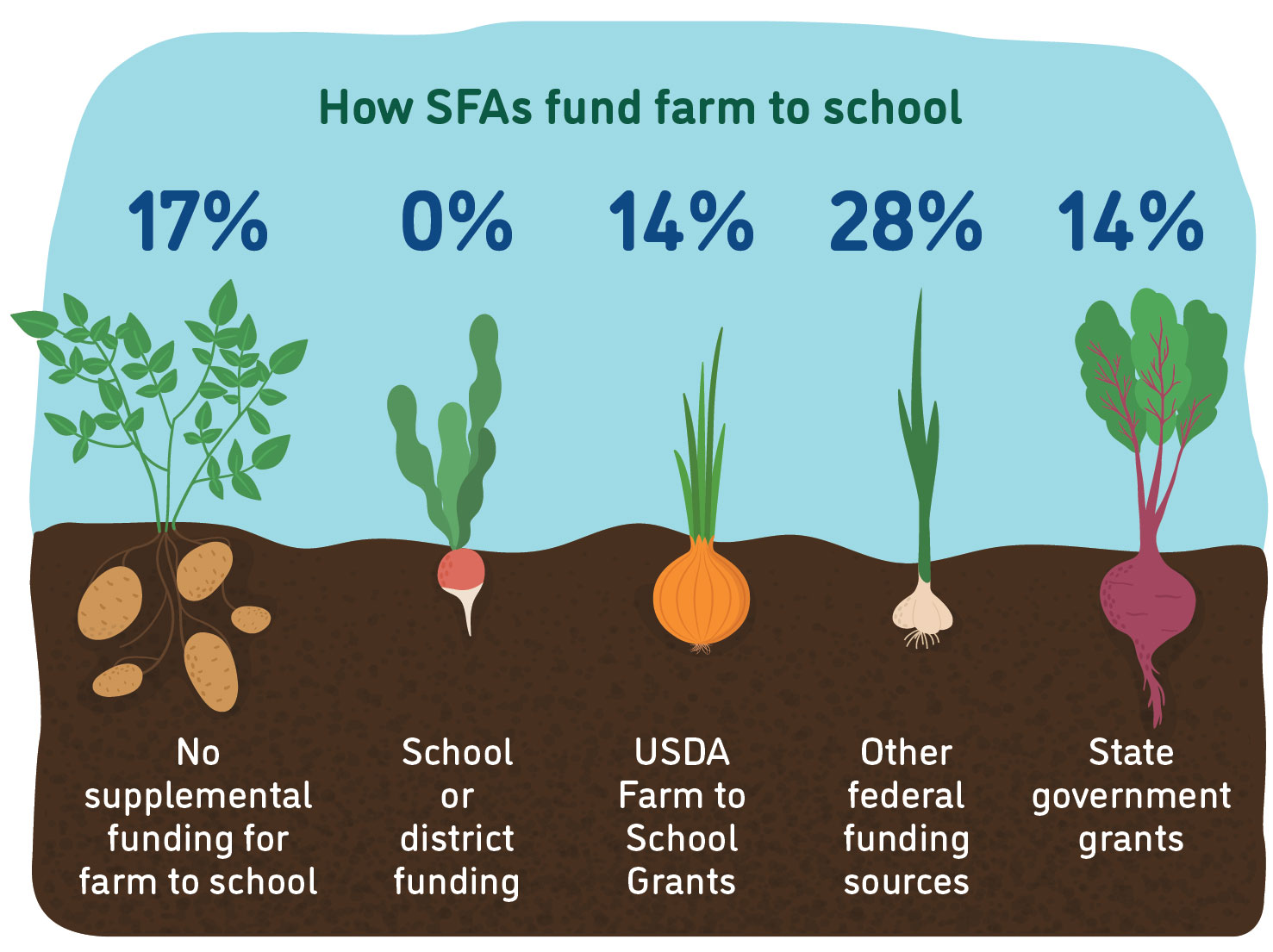
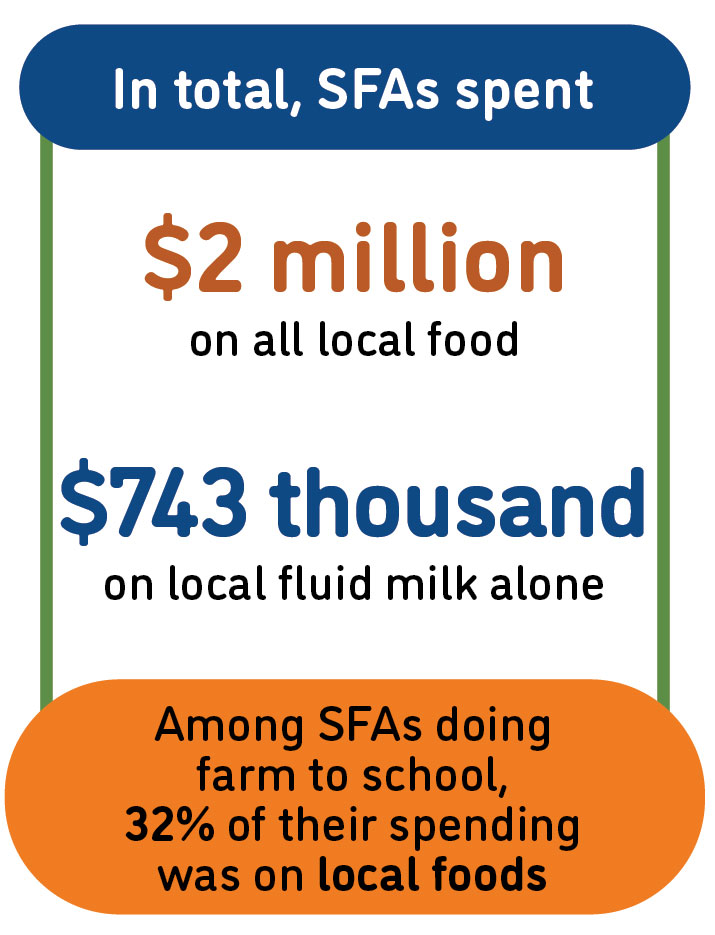
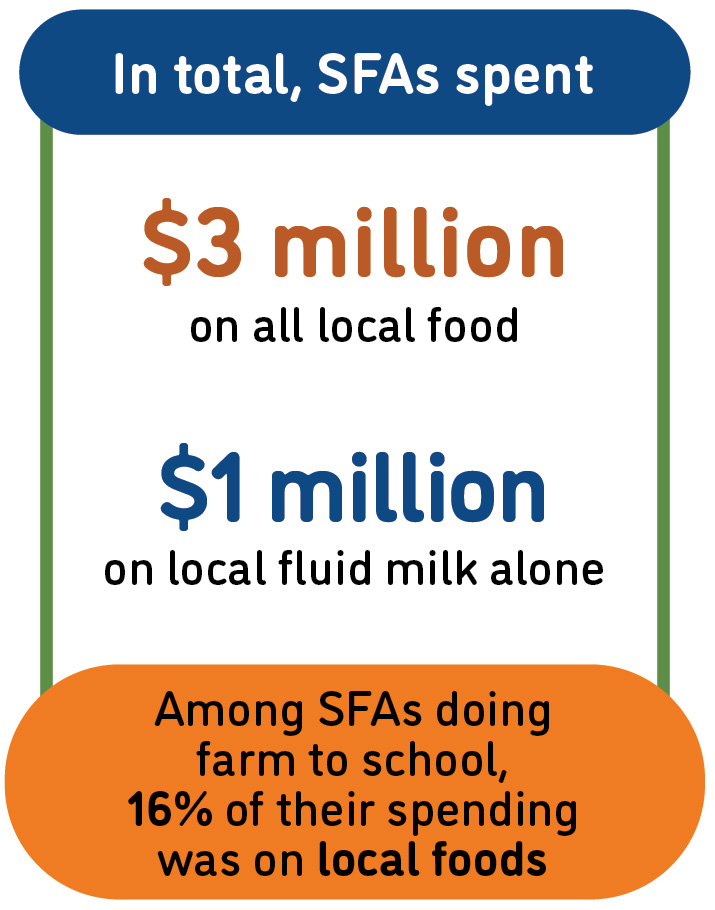
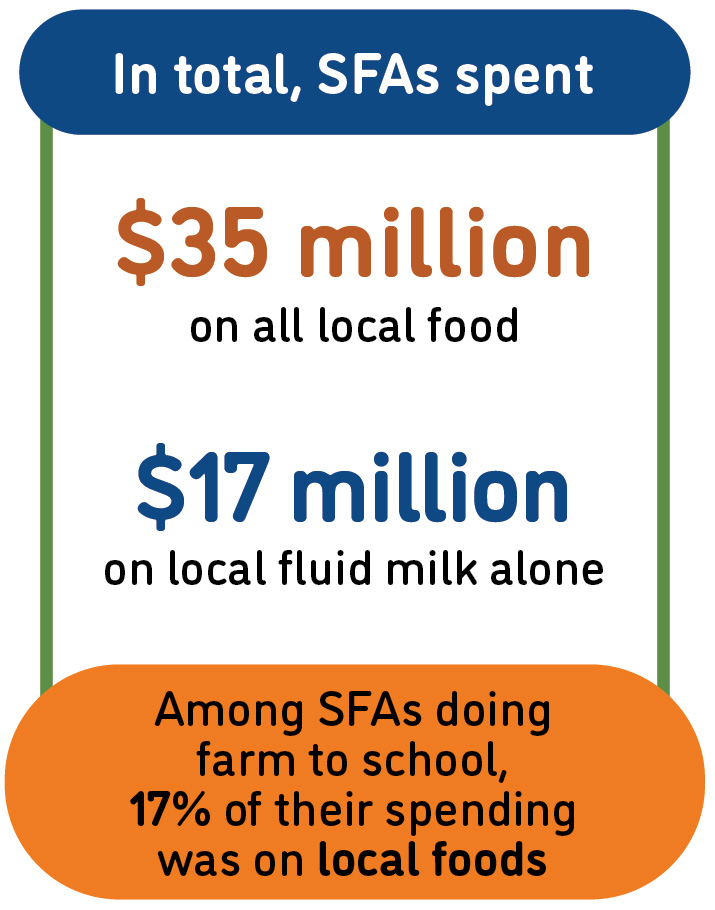
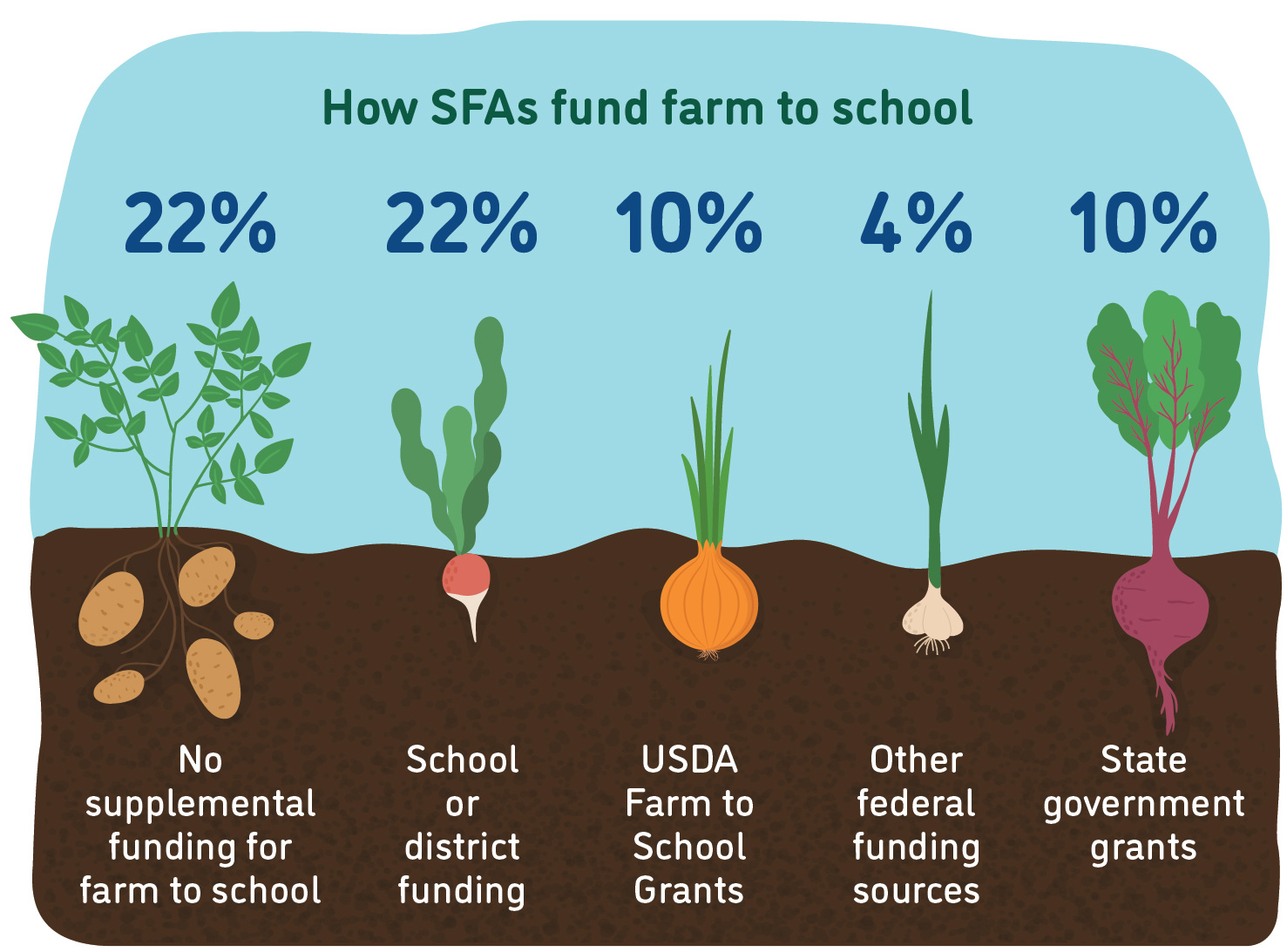
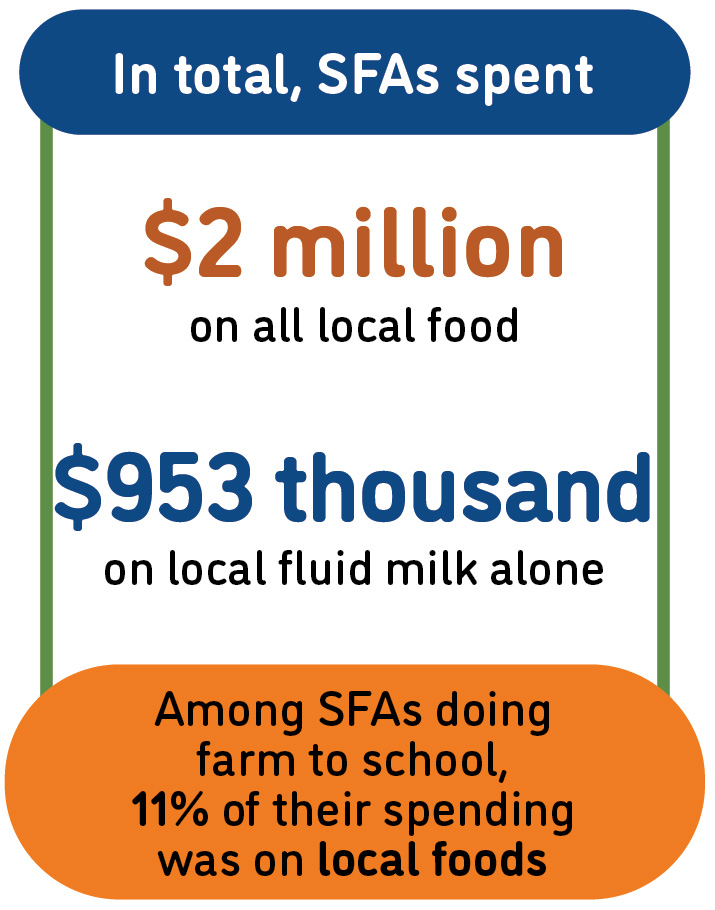
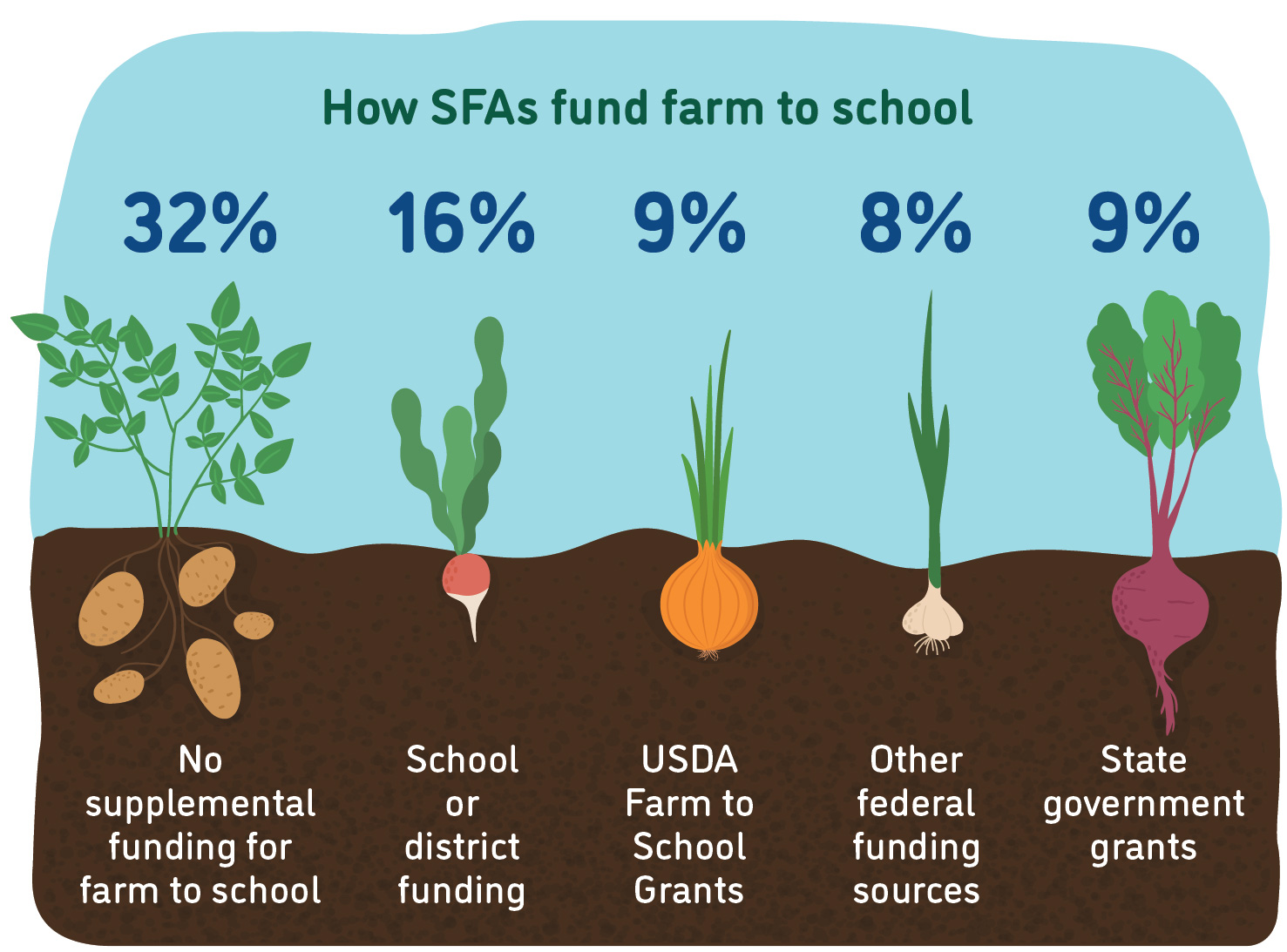
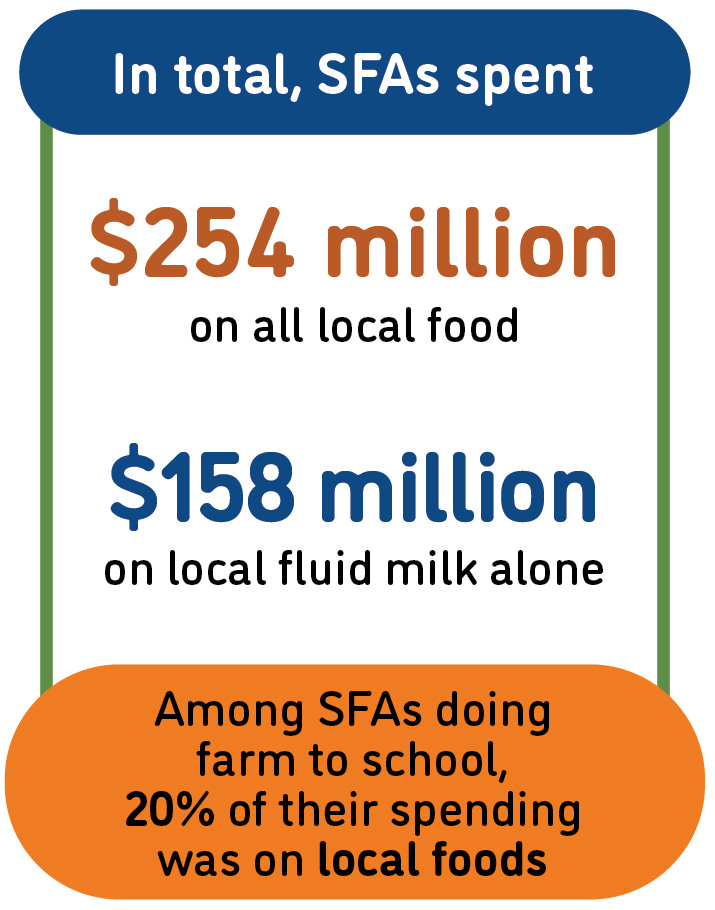
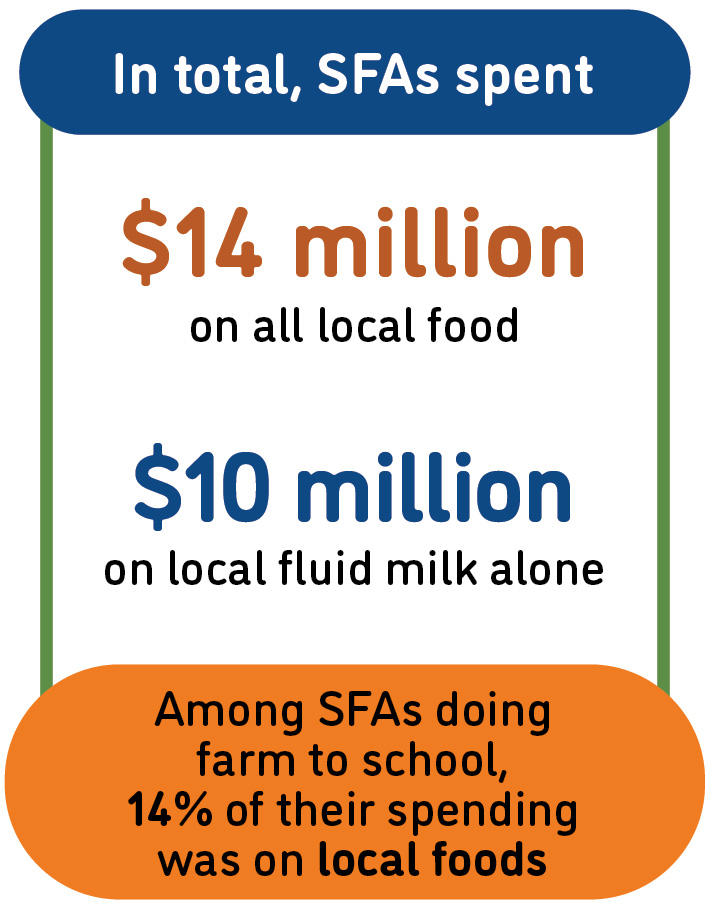
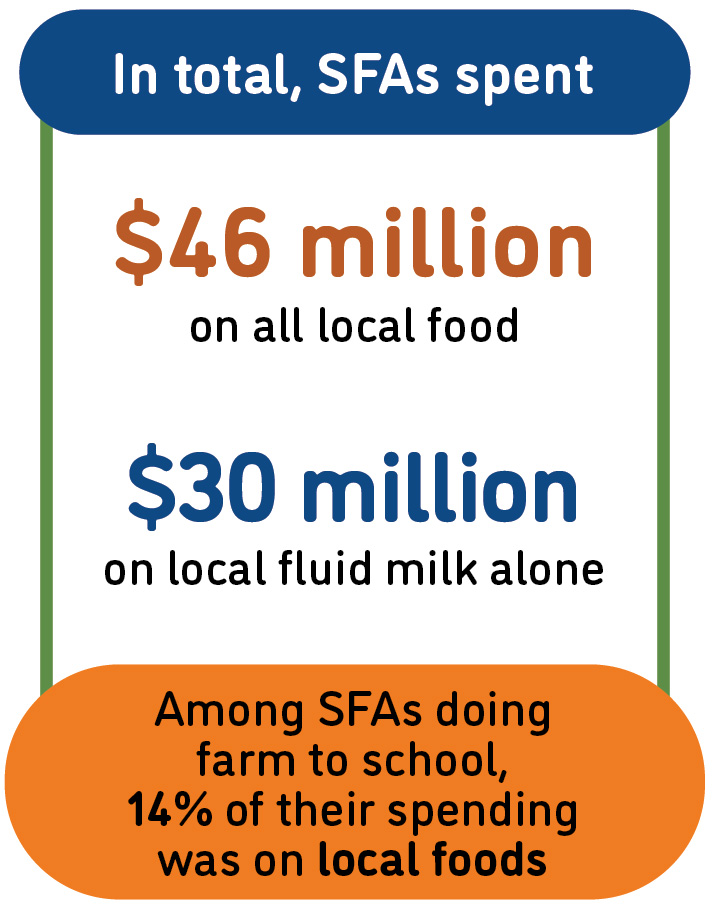
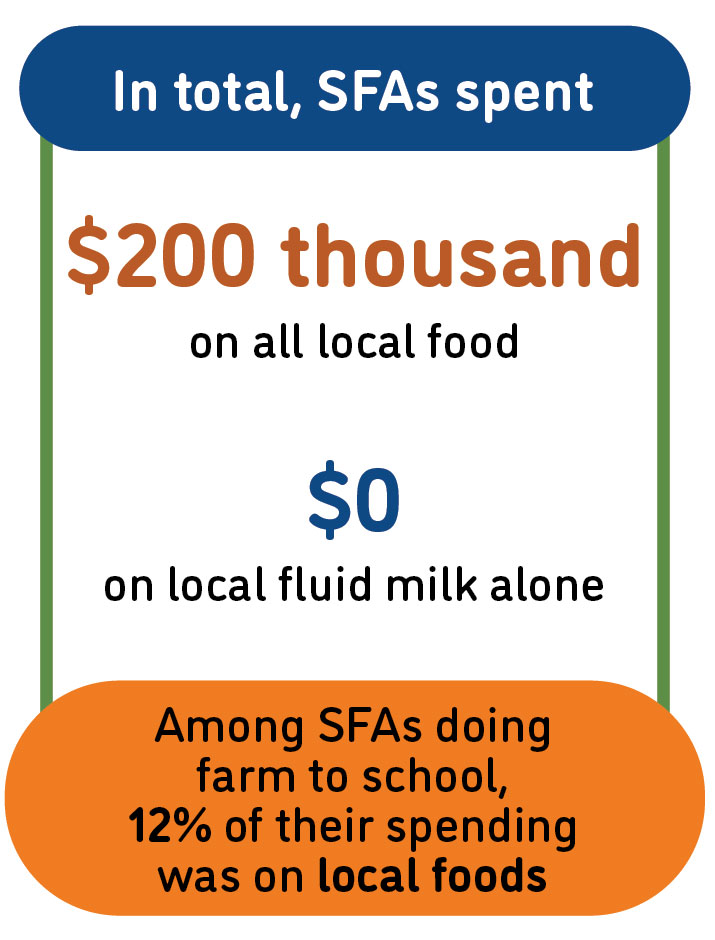
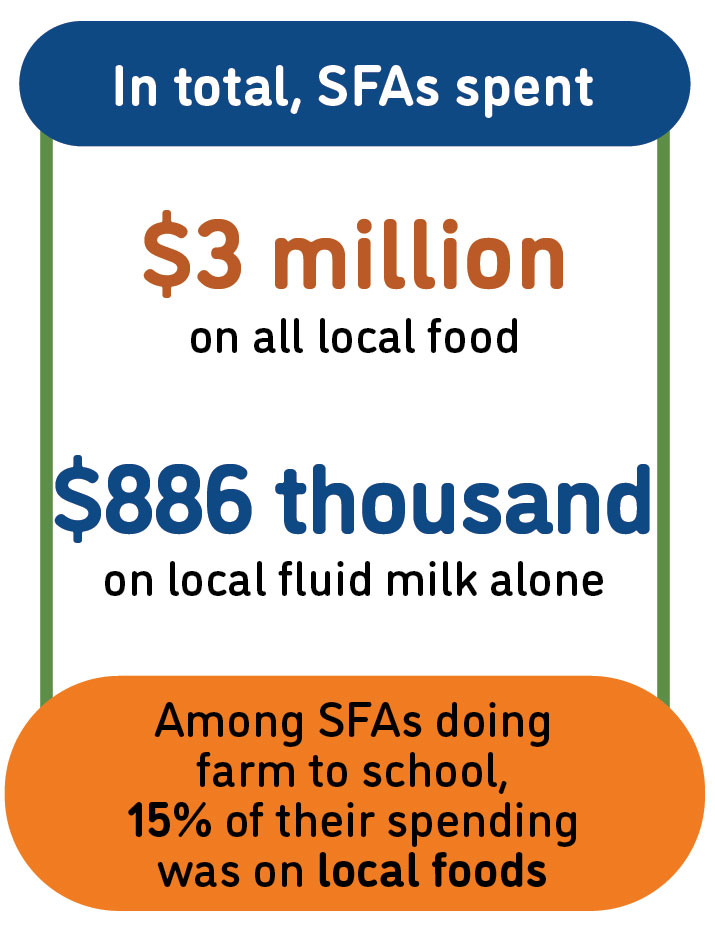
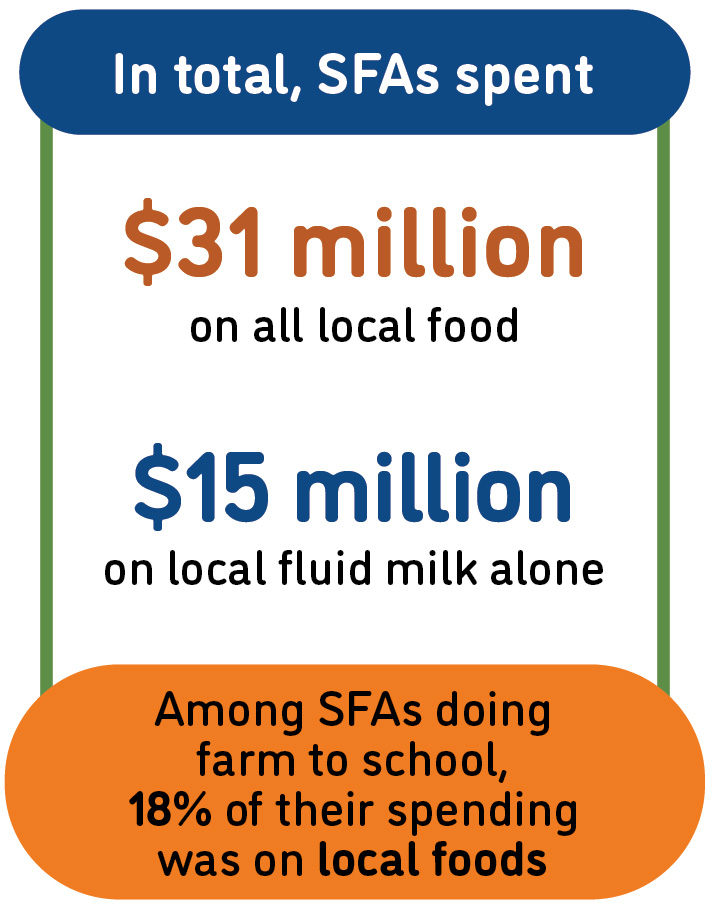
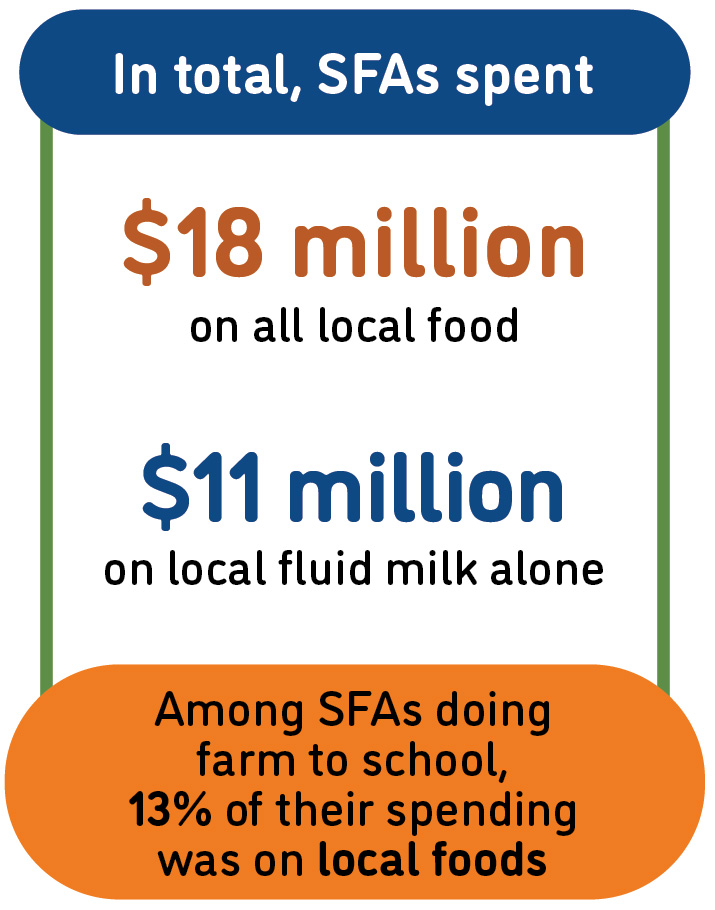
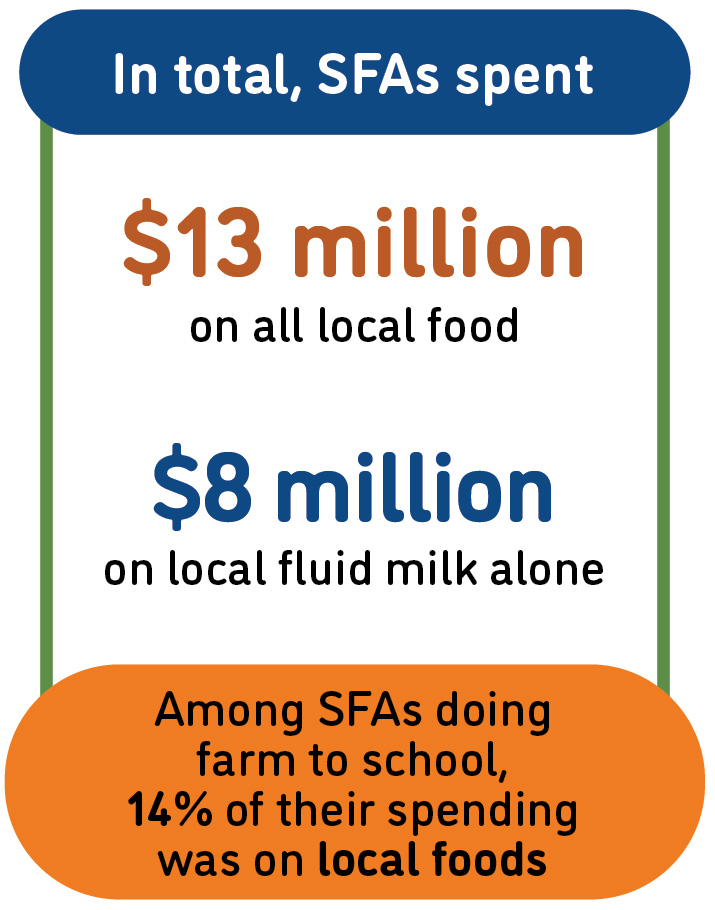
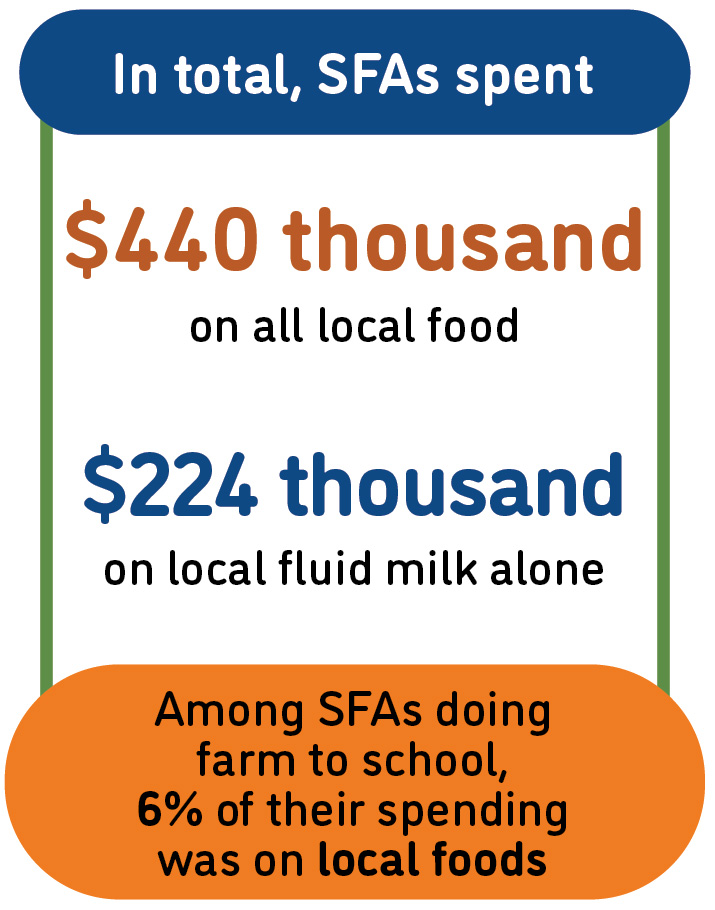
- SFAs participating in farm to school spent almost $1.8 billion on local purchases, representing about 16 percent of their total food spending. Fluid milk purchases made up about half of local spending at $955 million.
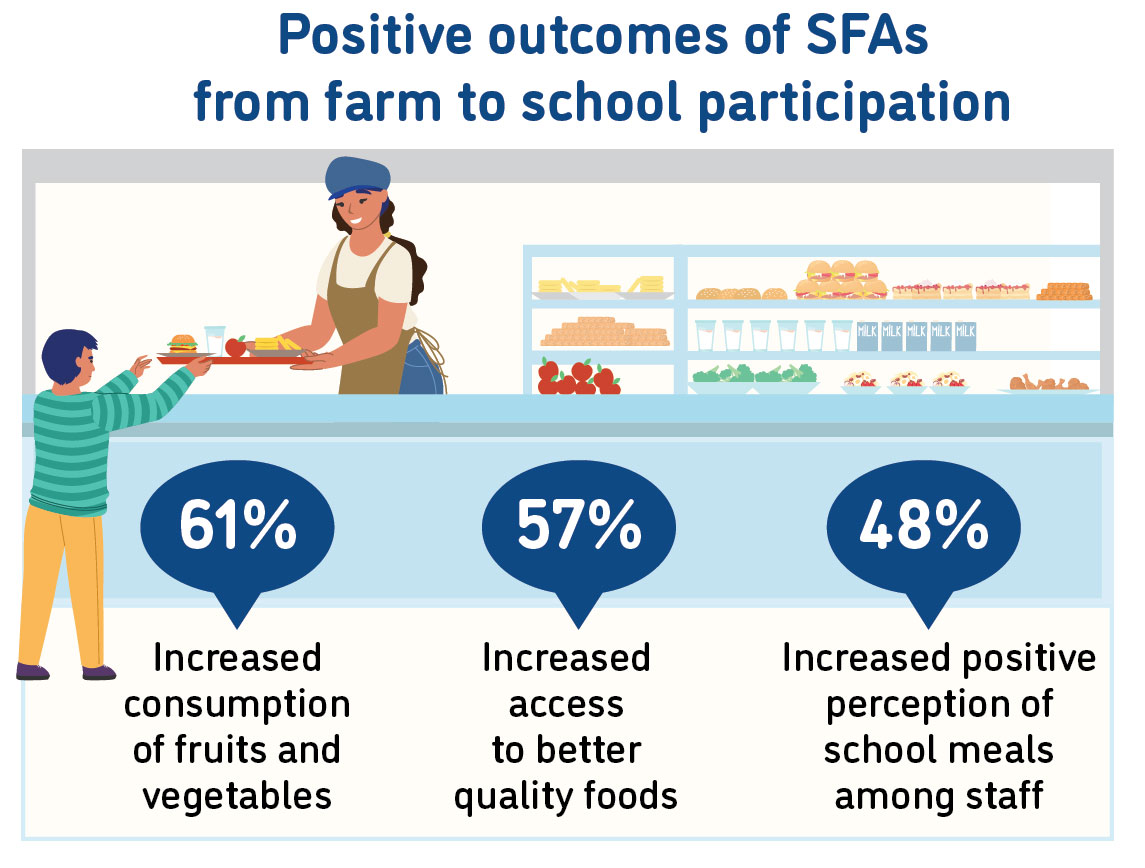
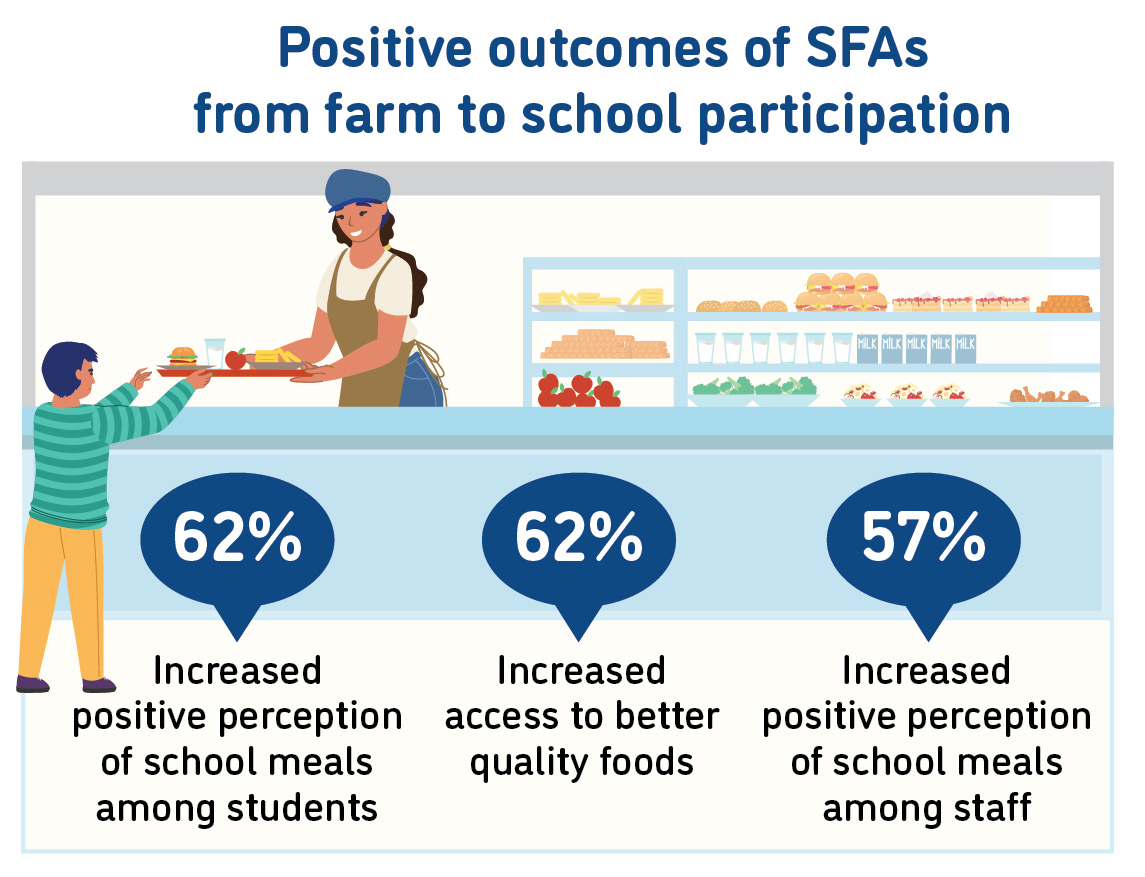
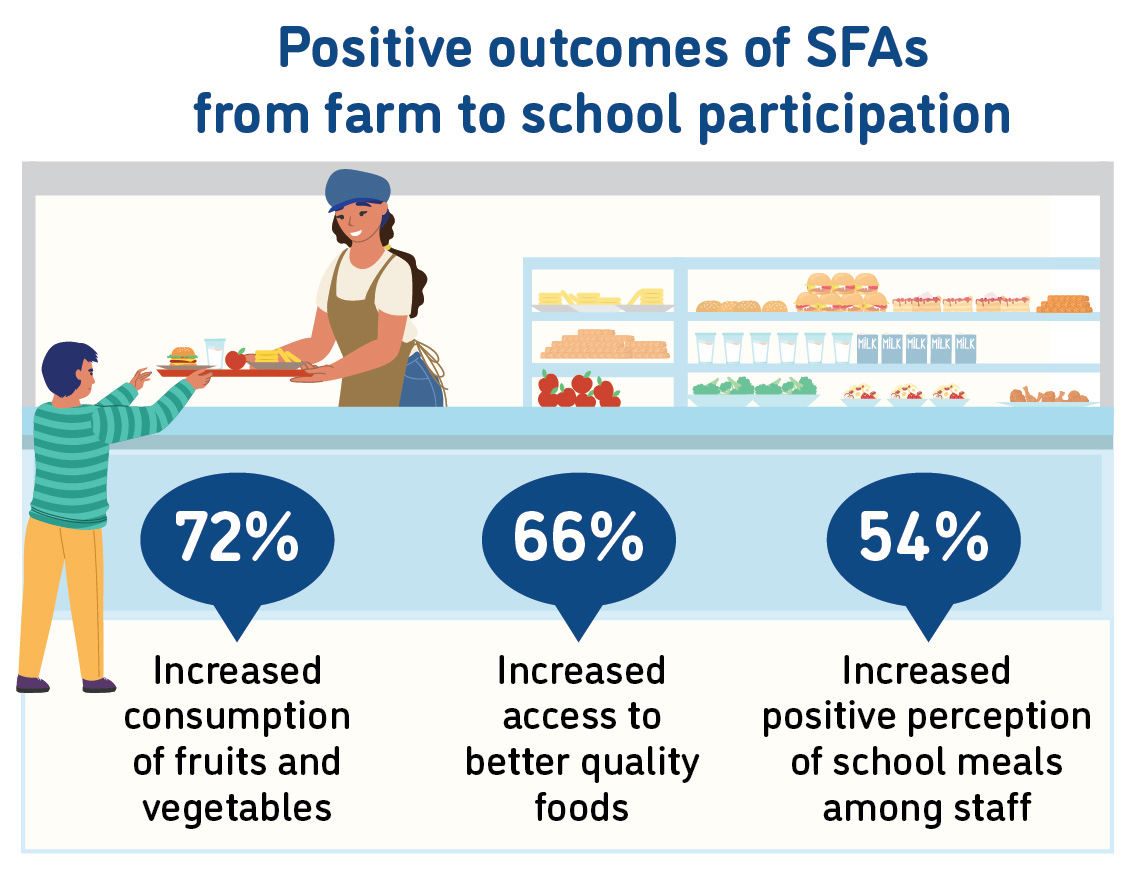
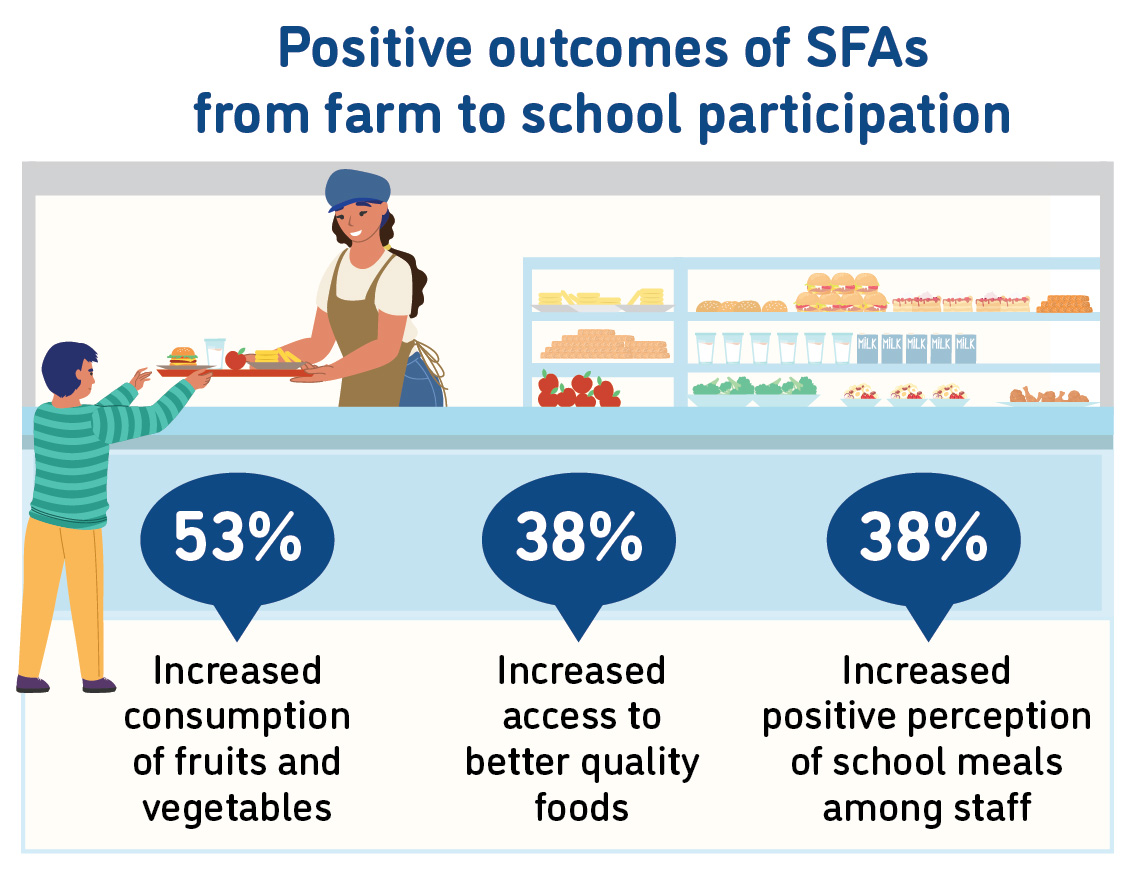
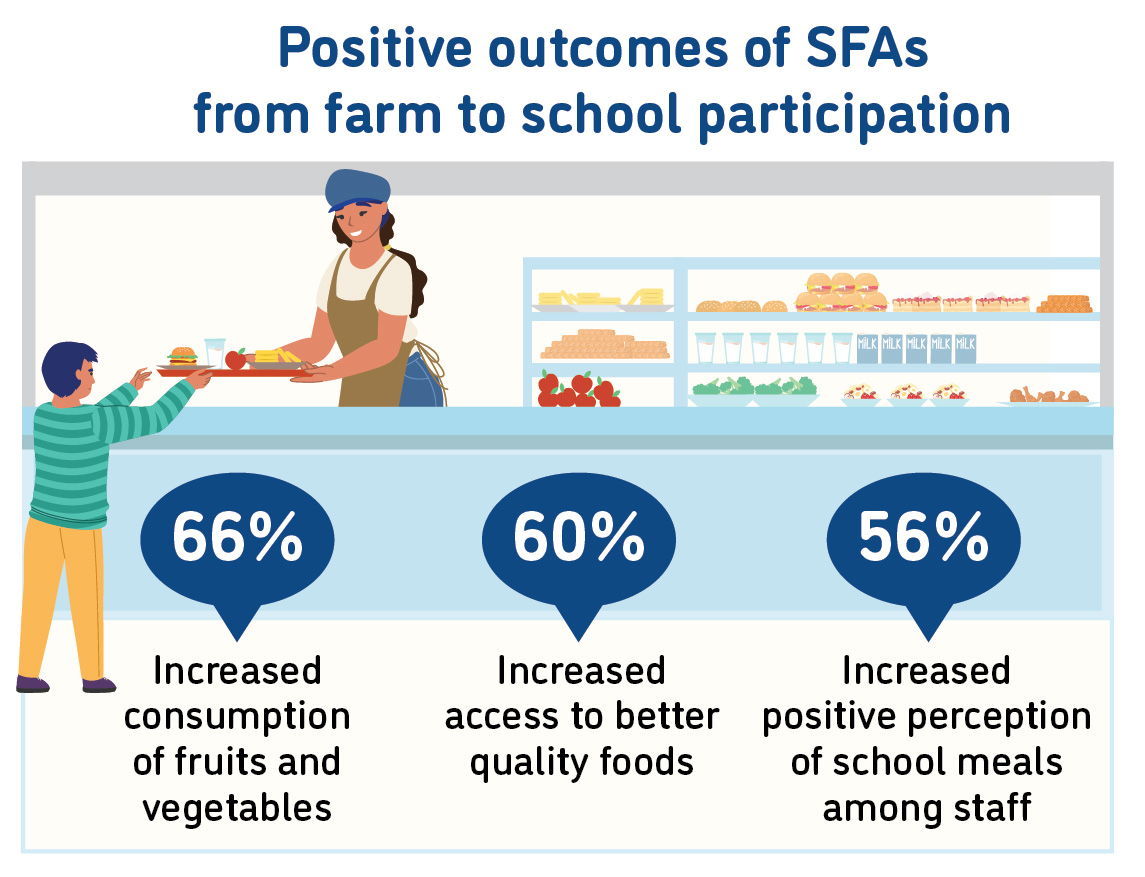
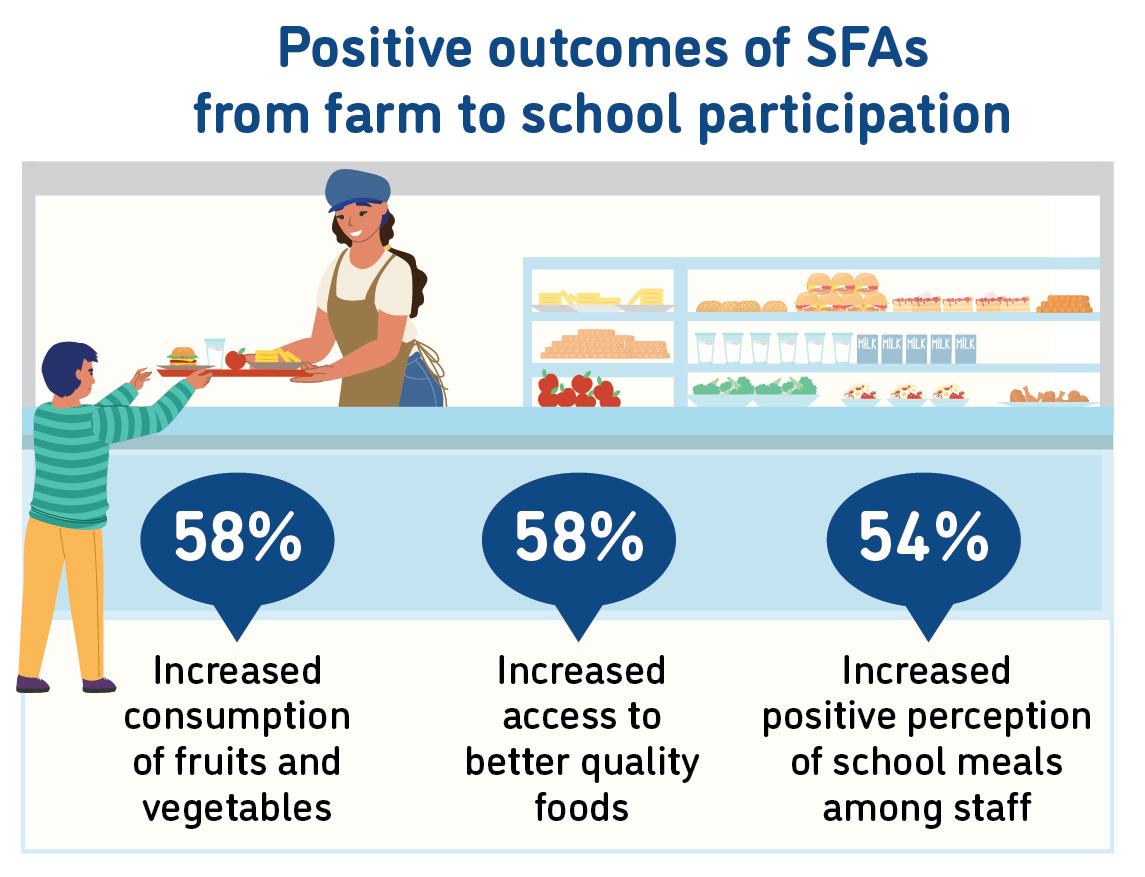
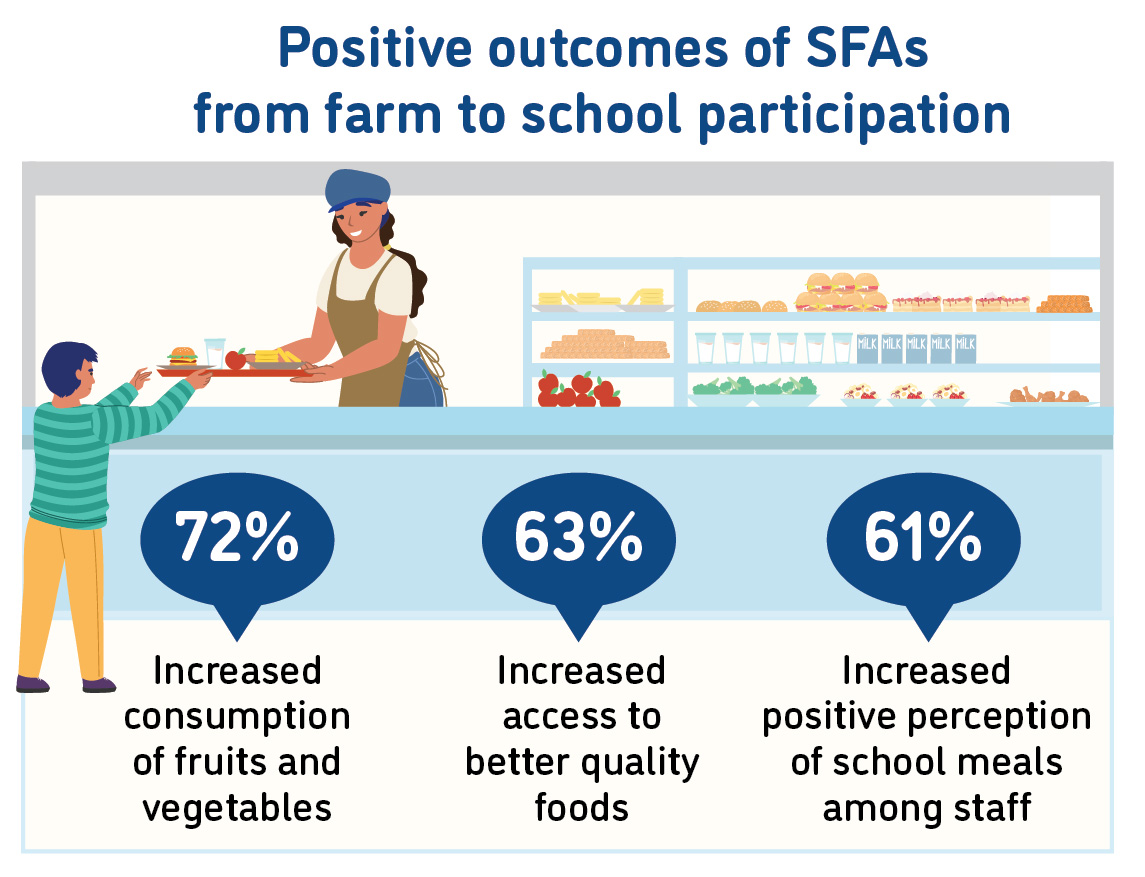
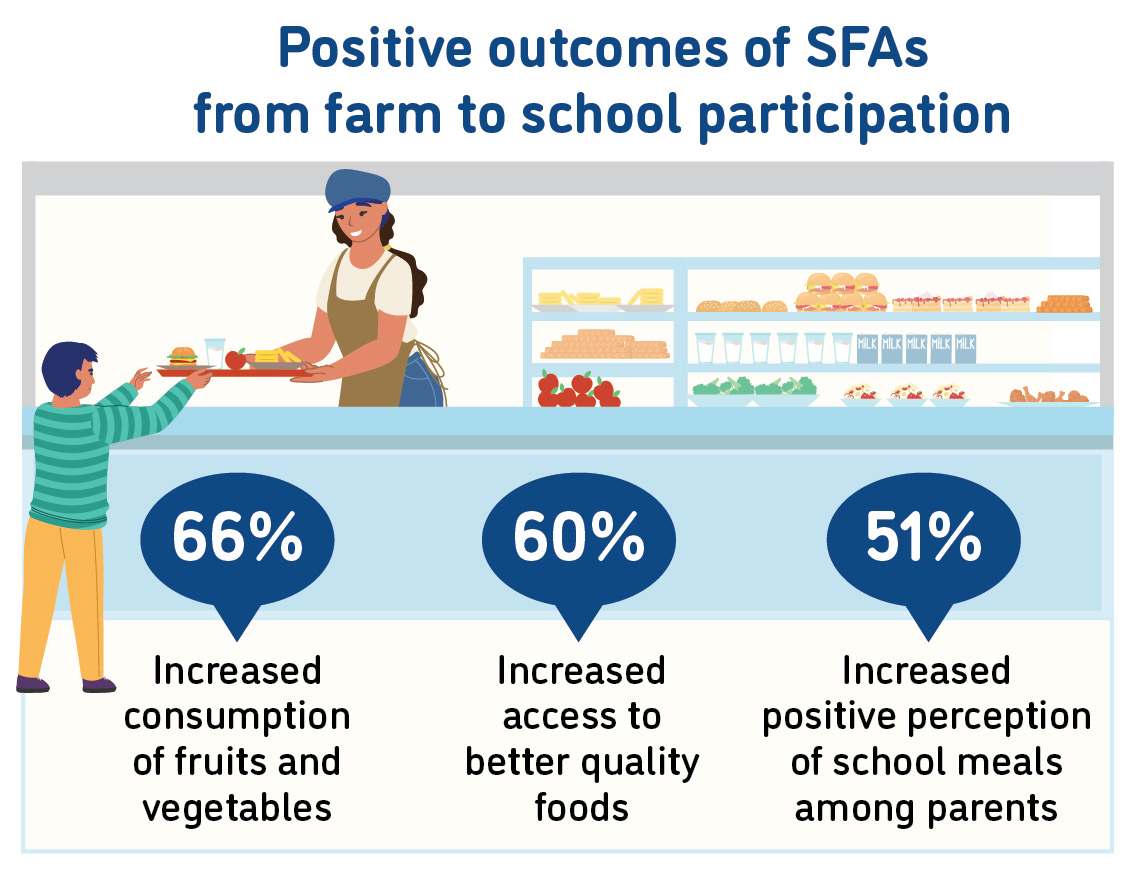
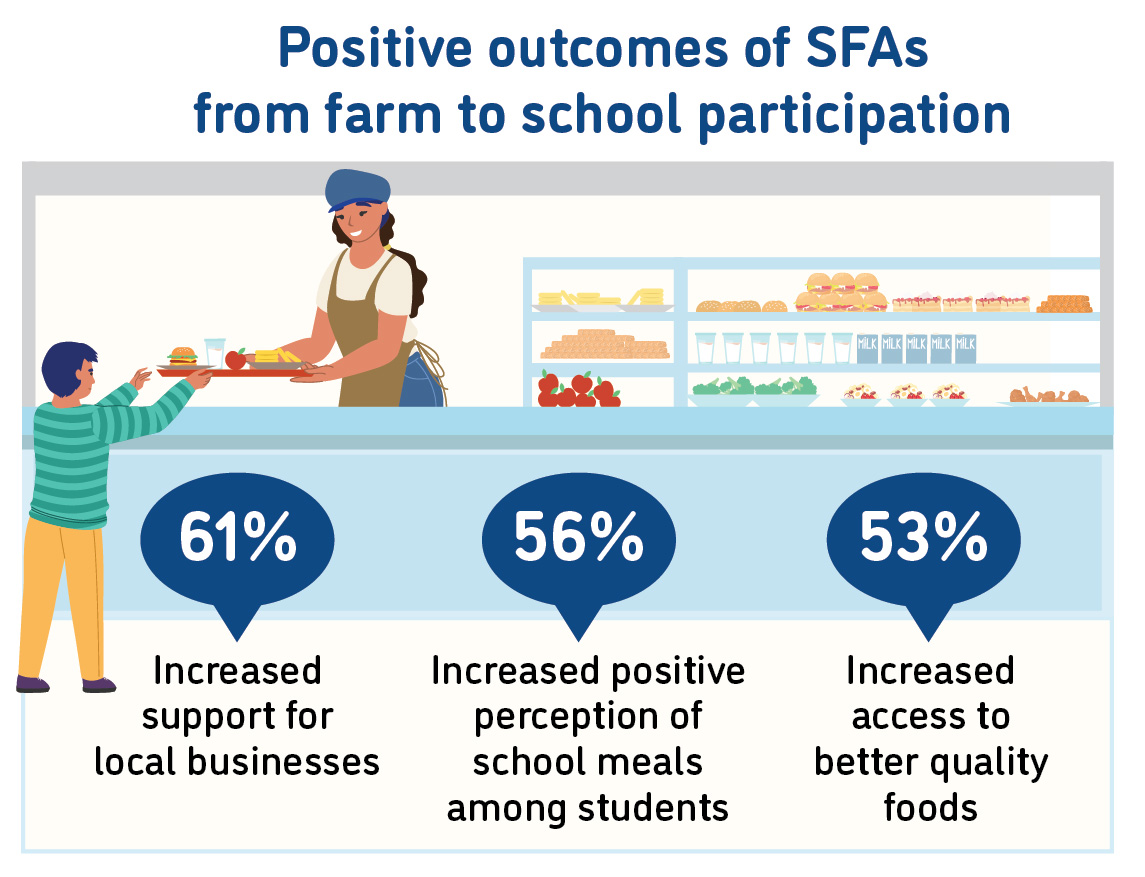
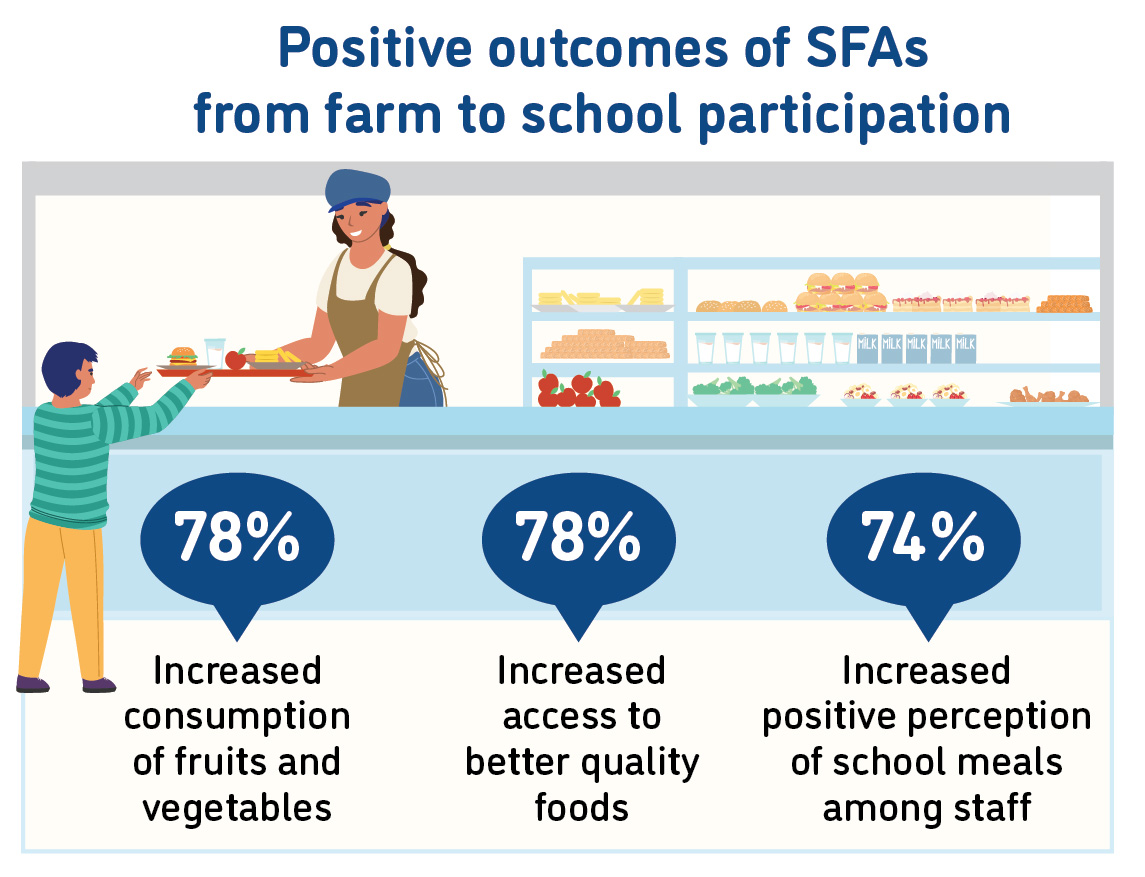
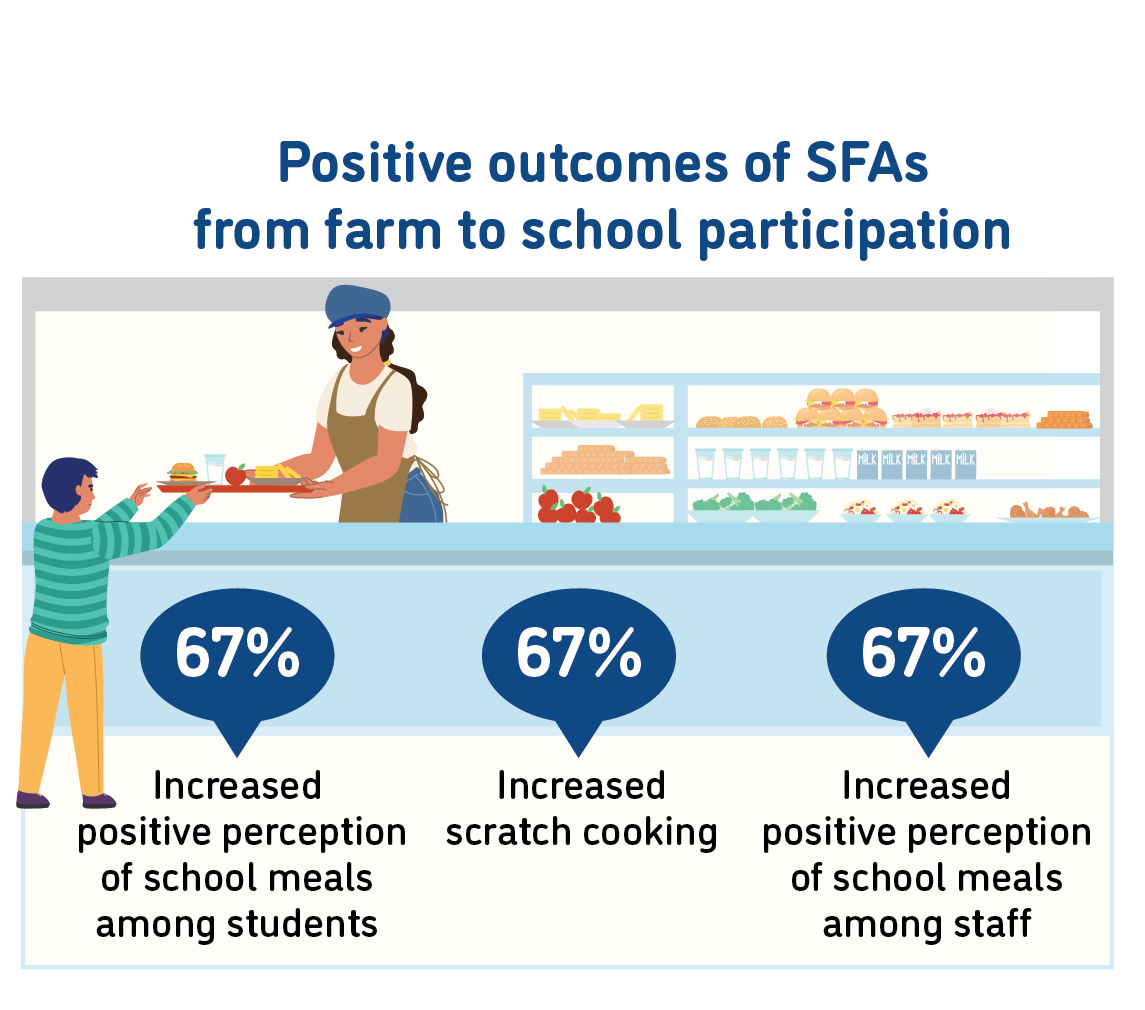
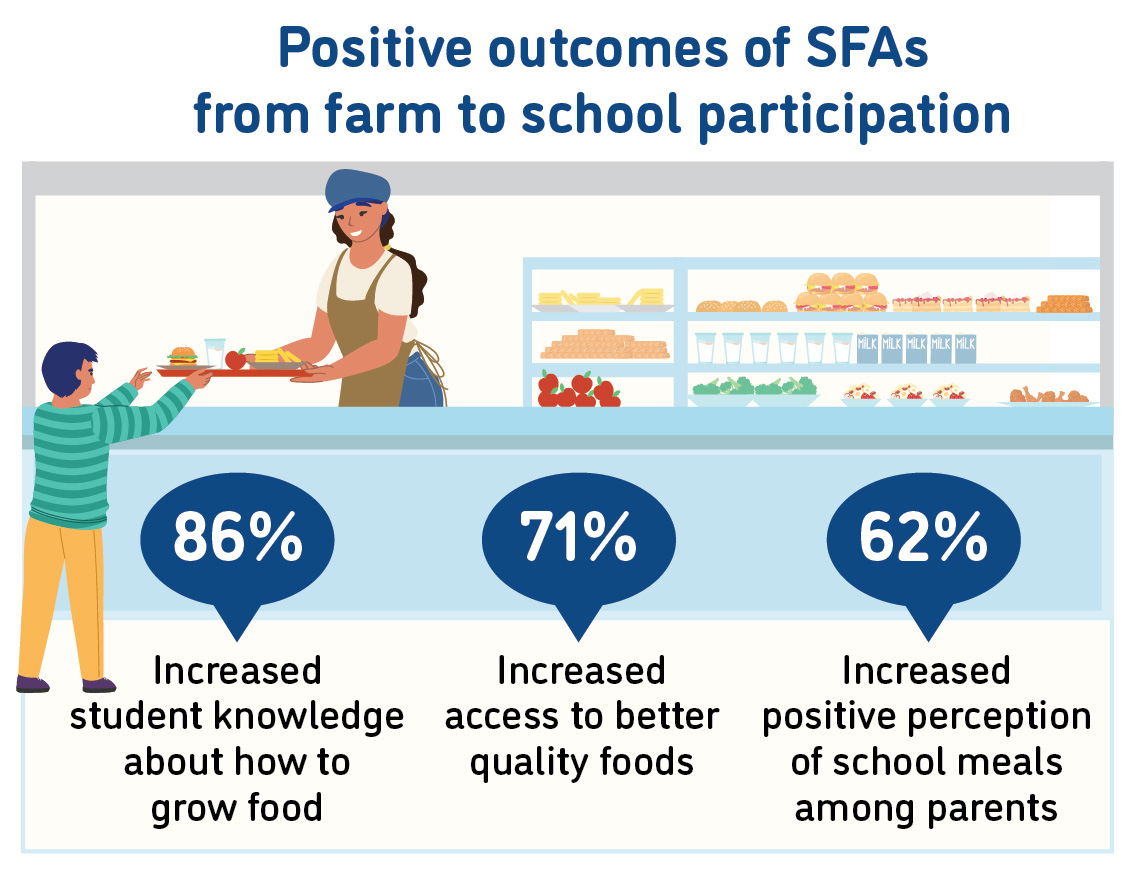
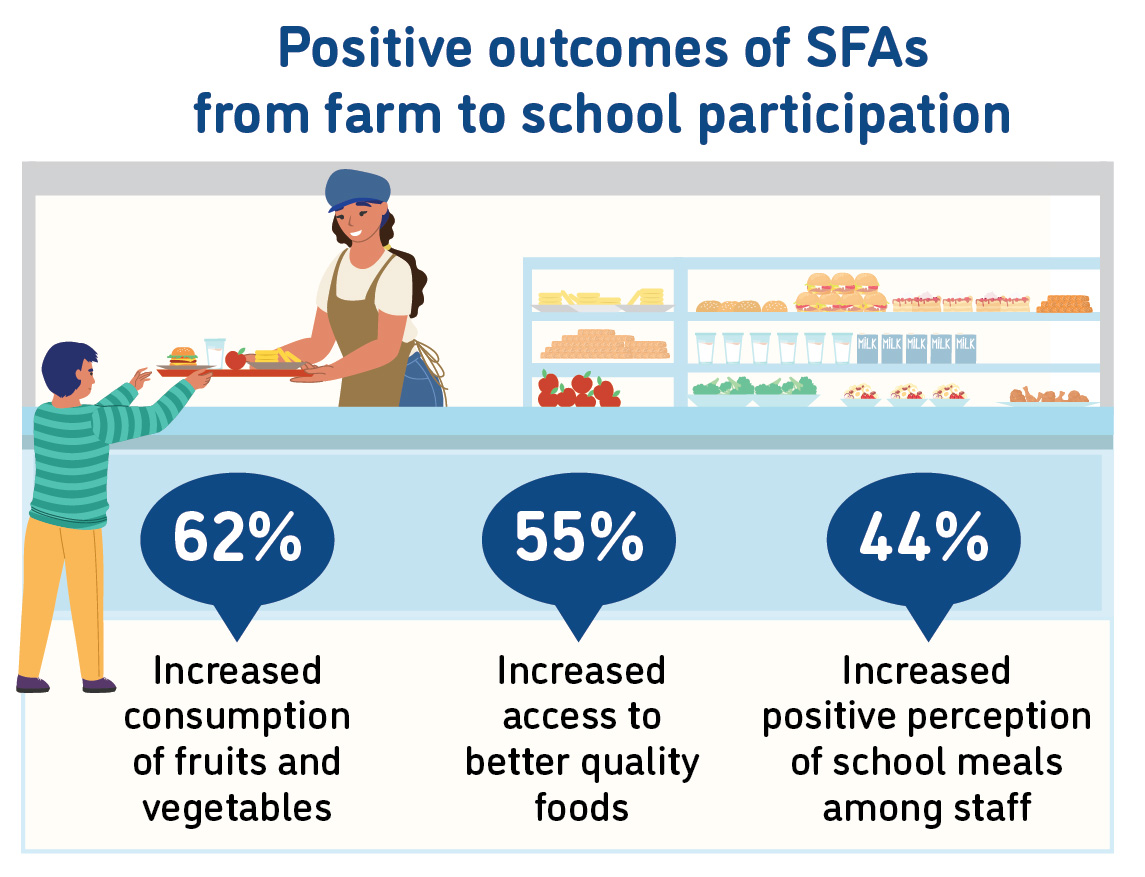
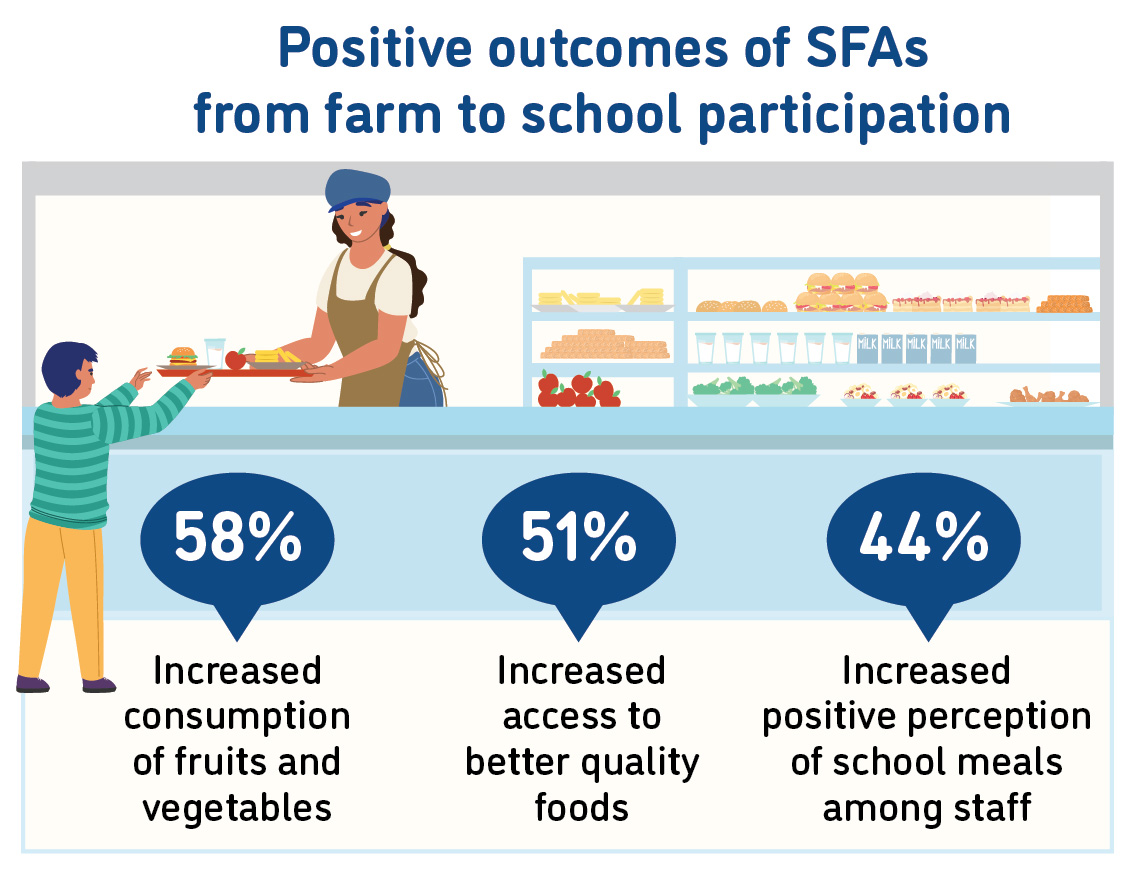
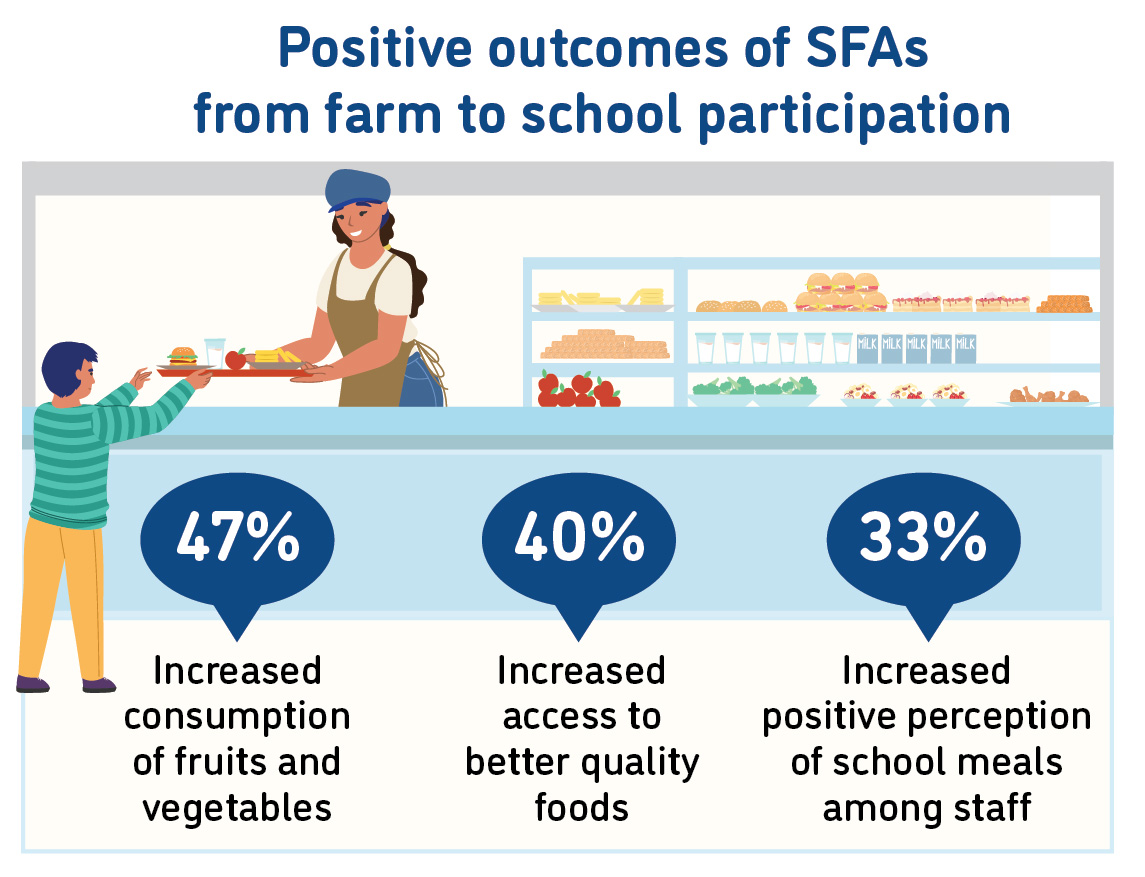
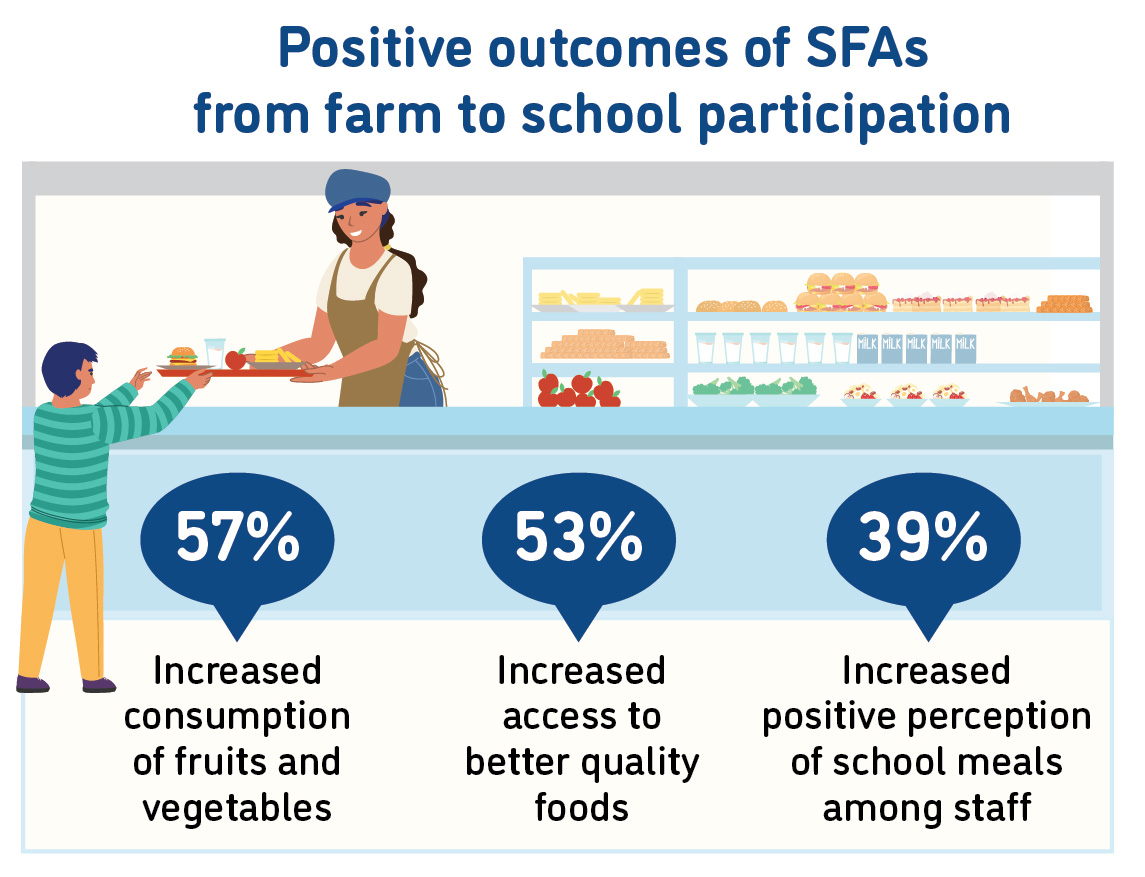
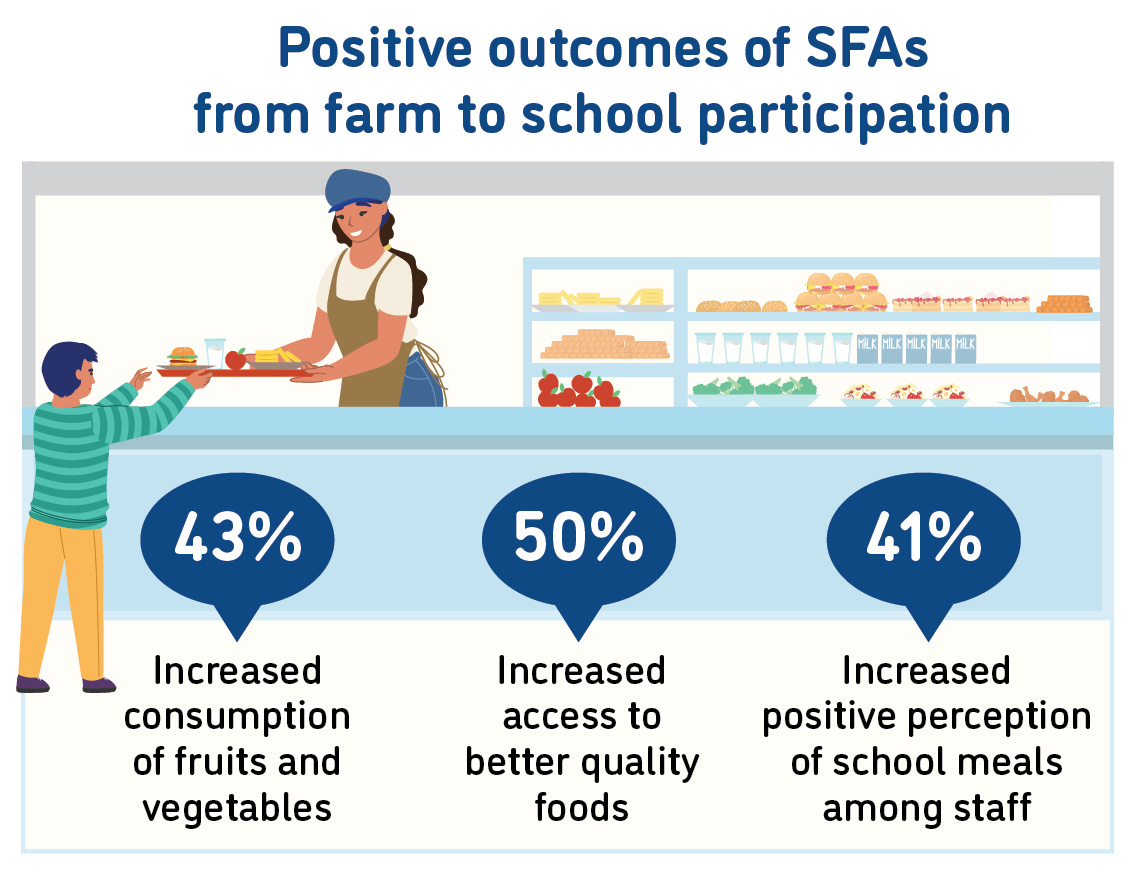
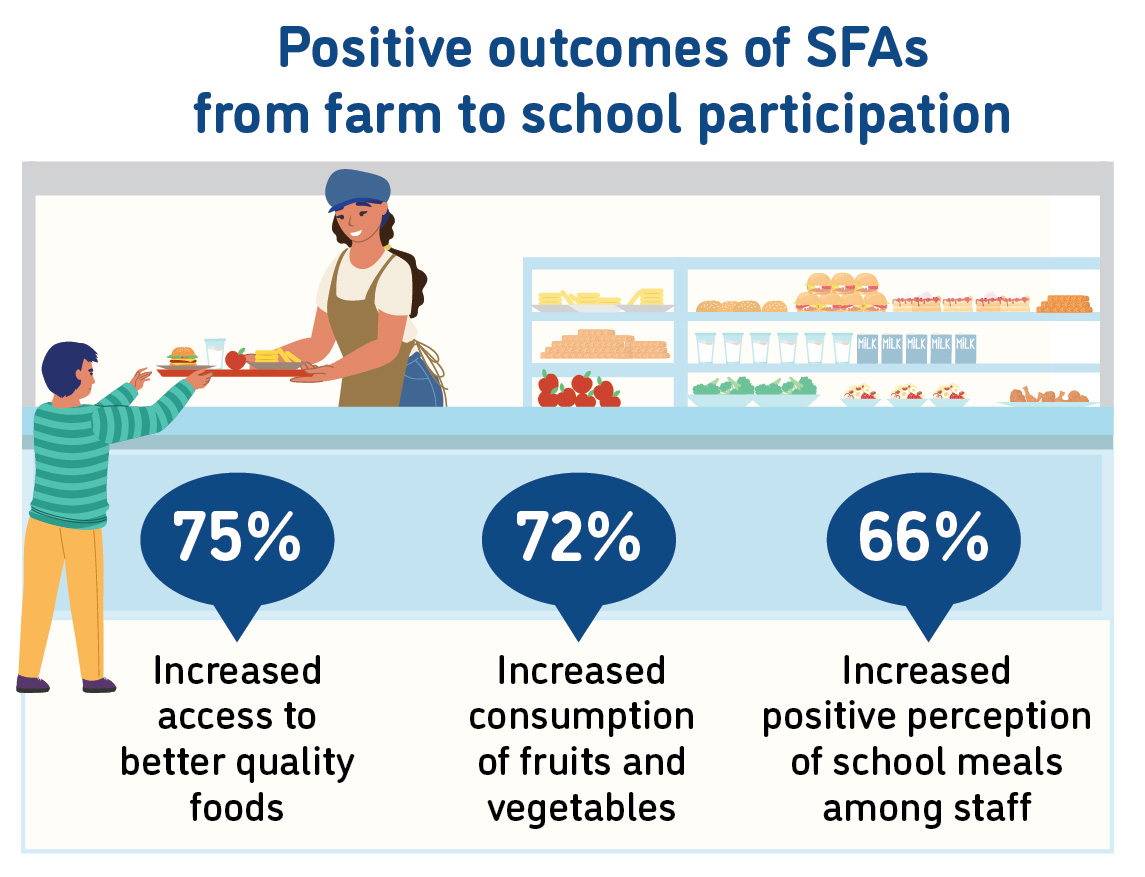
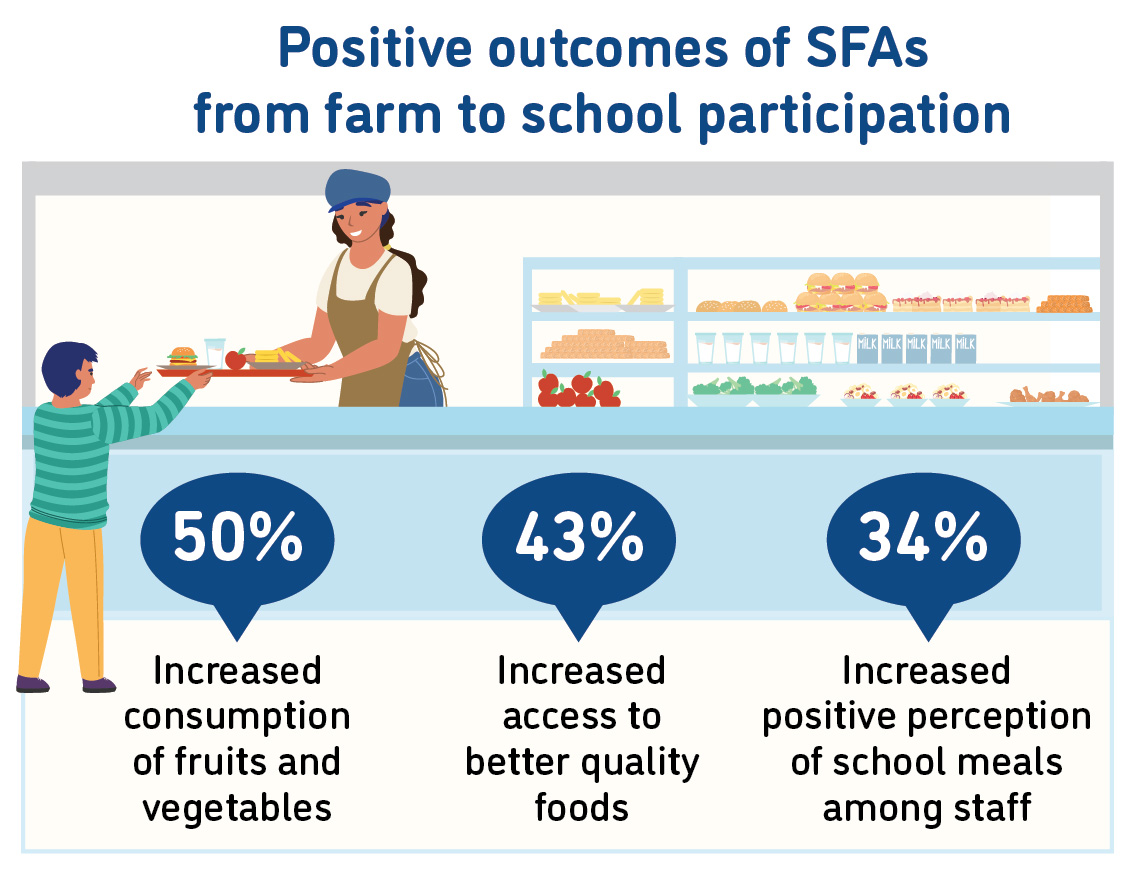
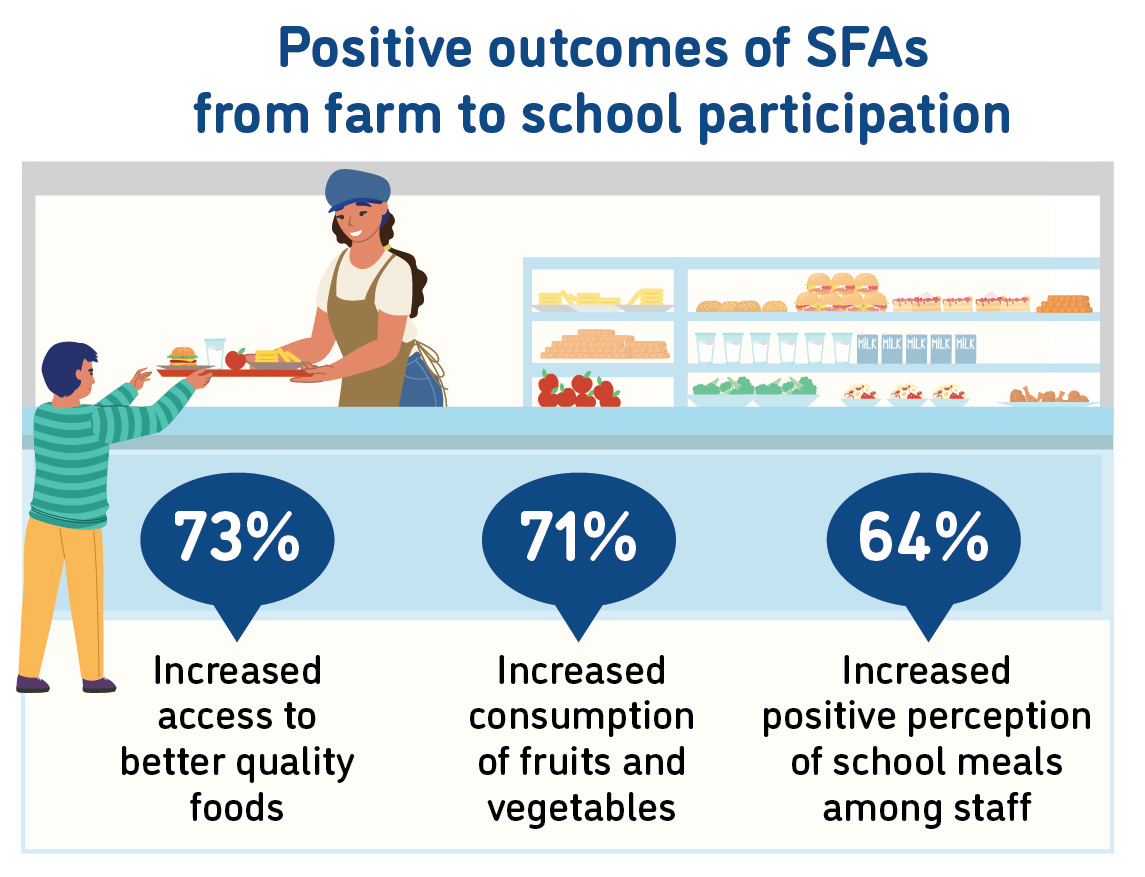
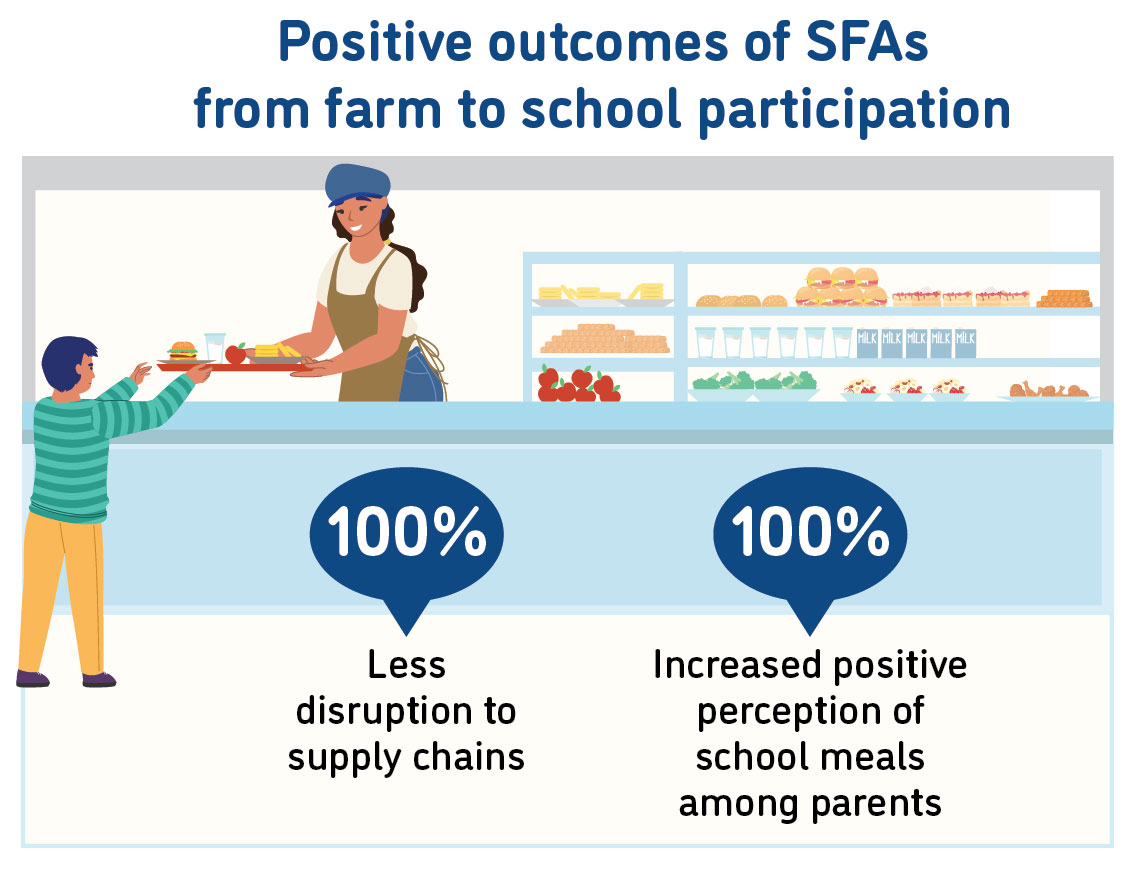
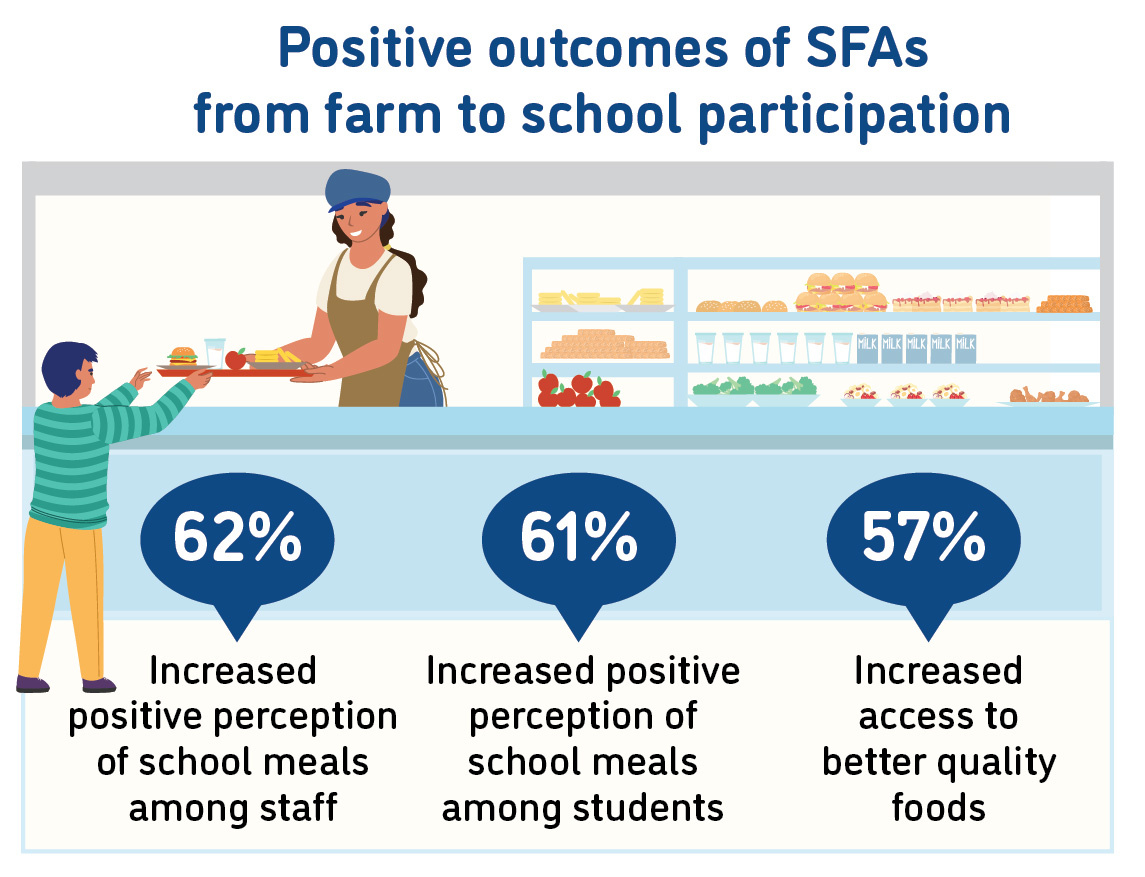
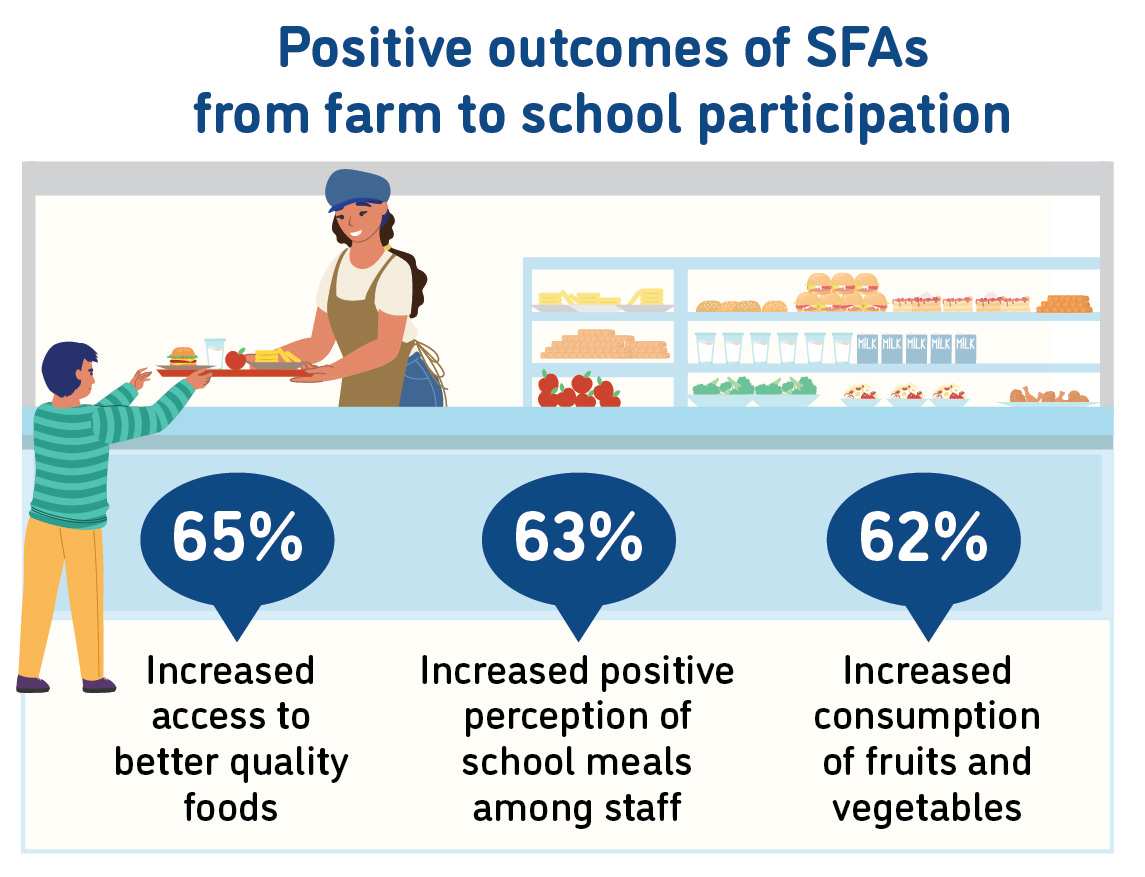
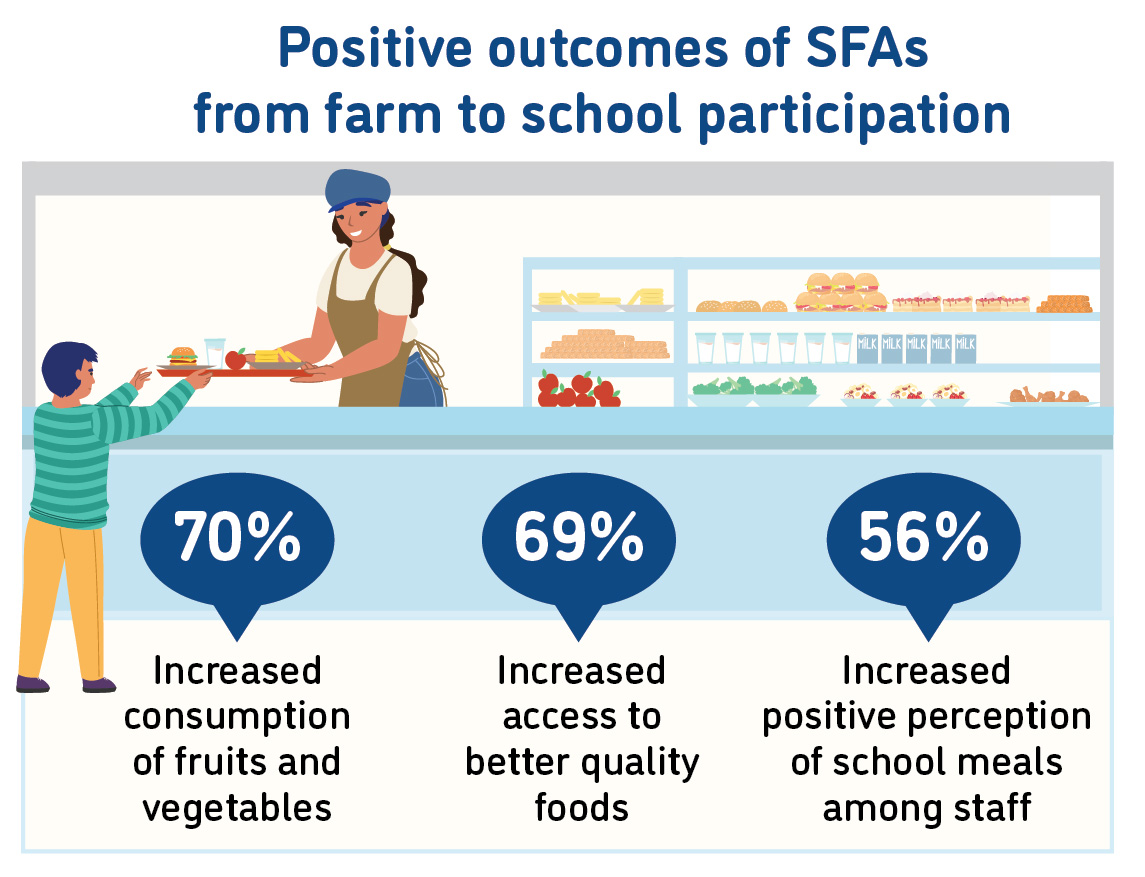
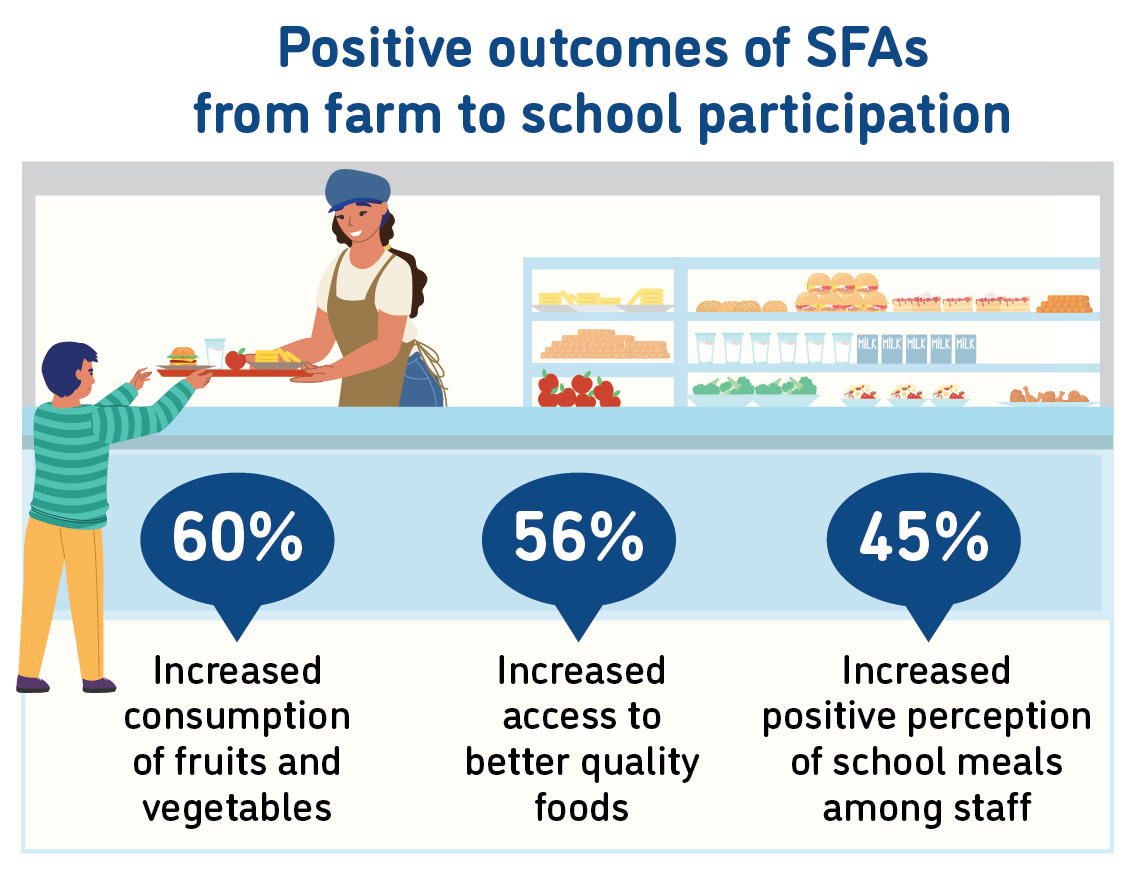
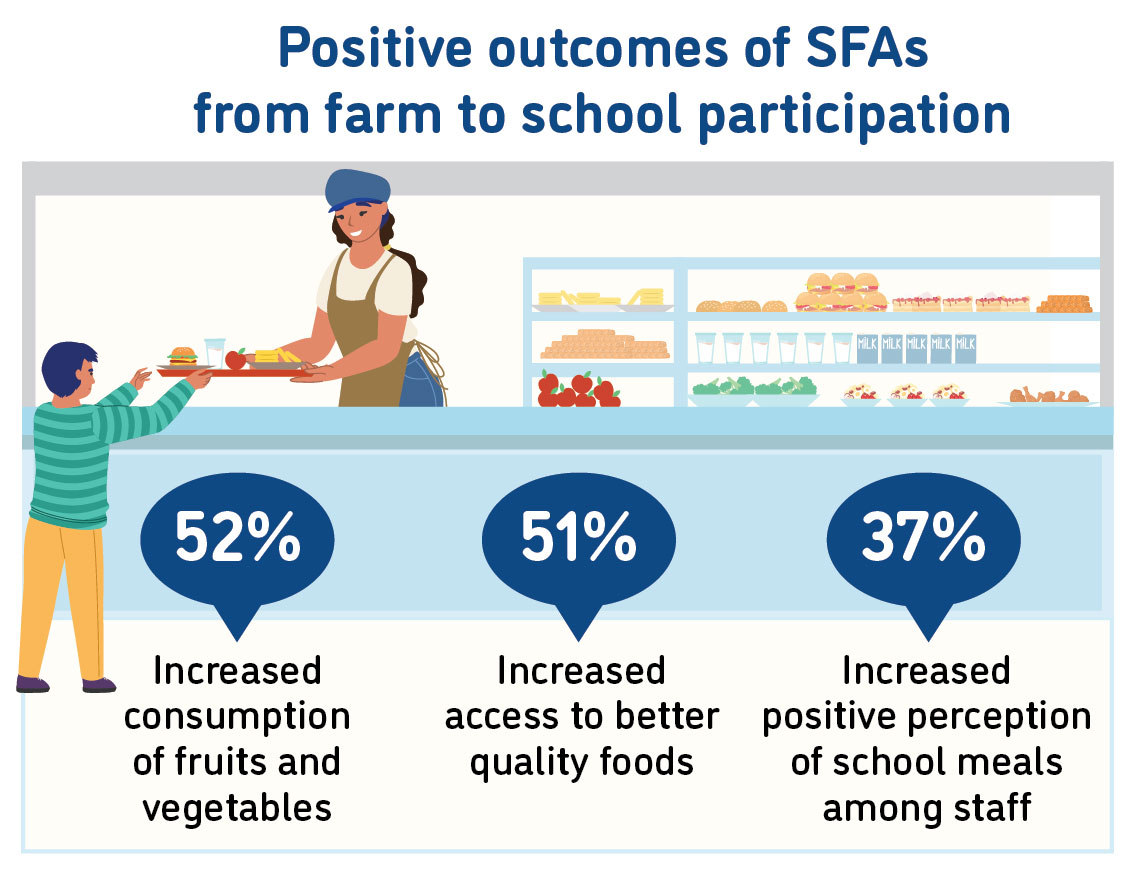
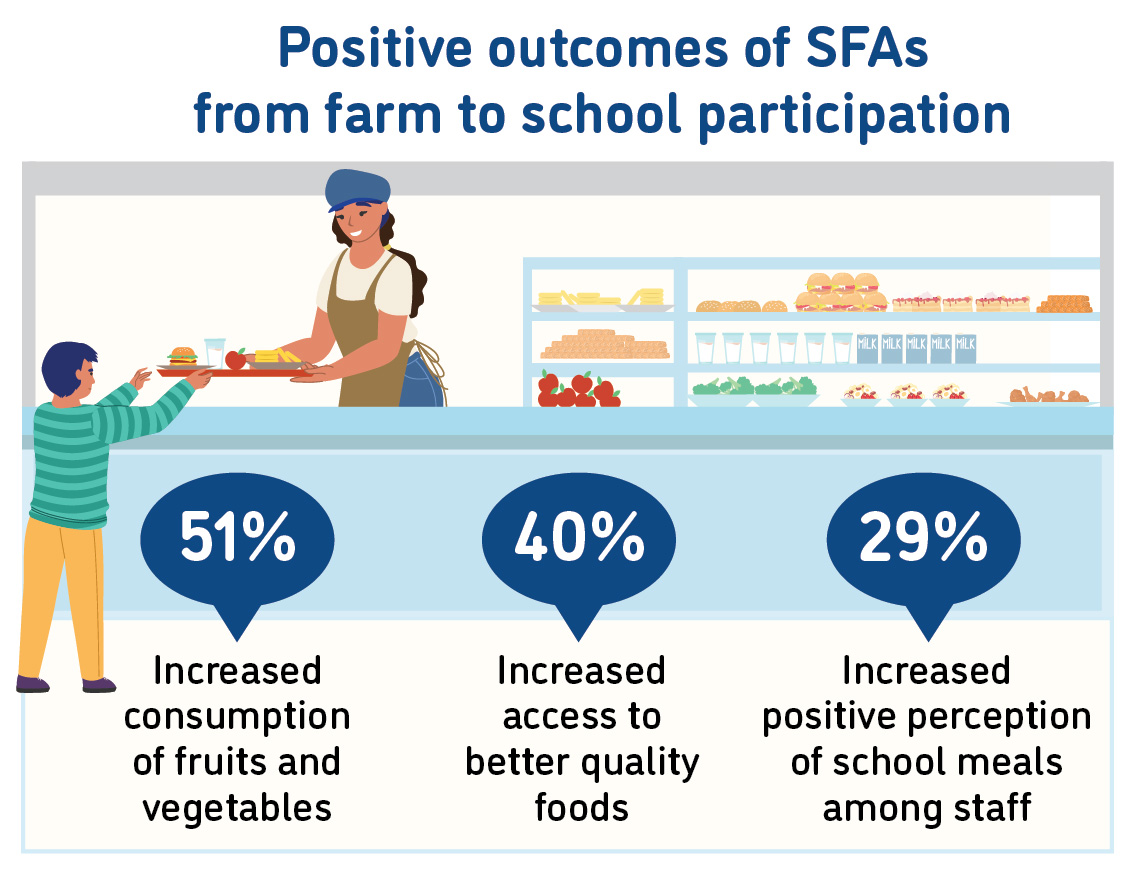
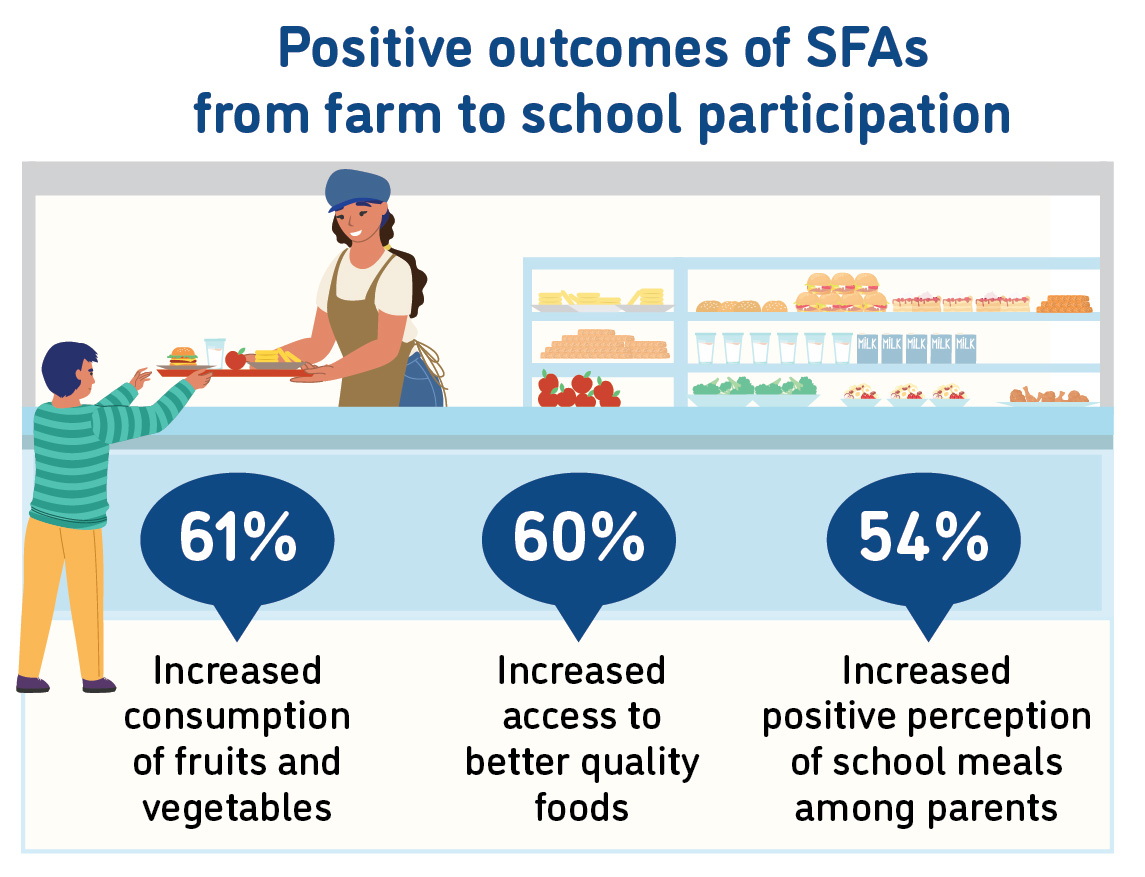
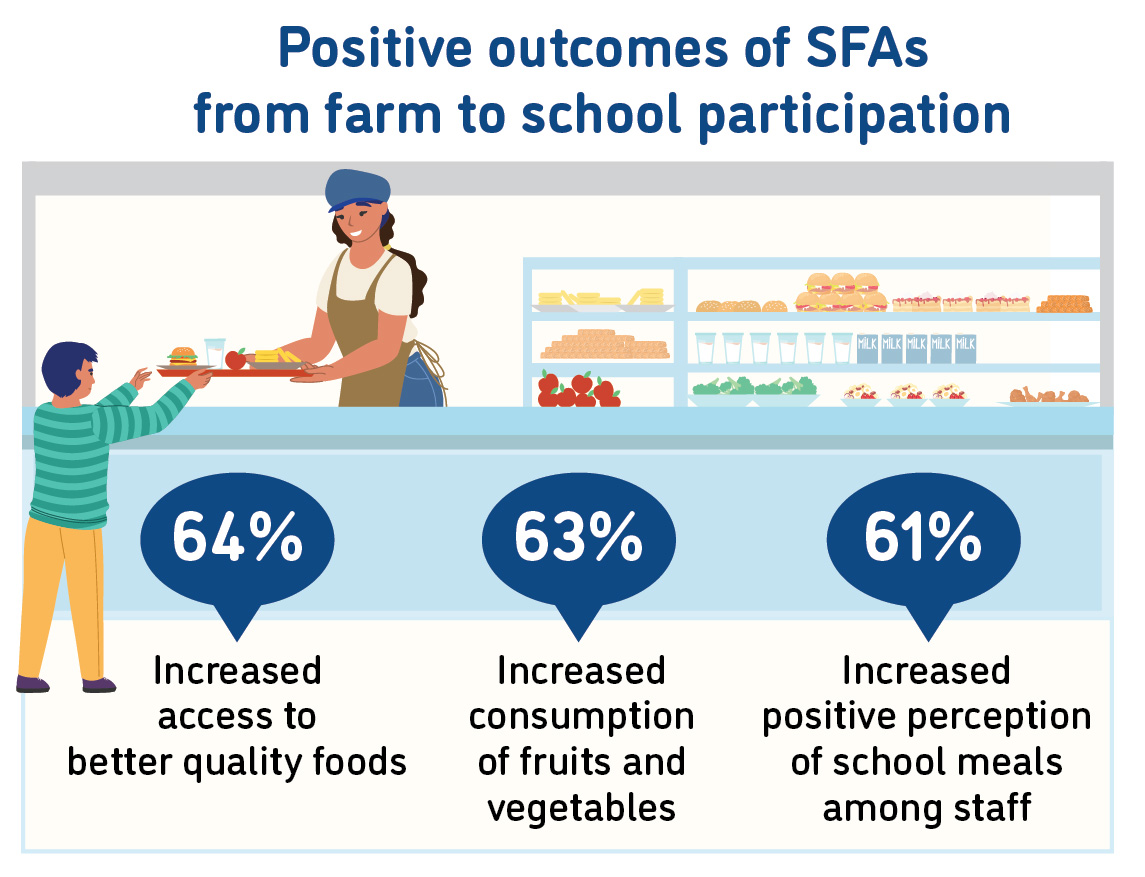
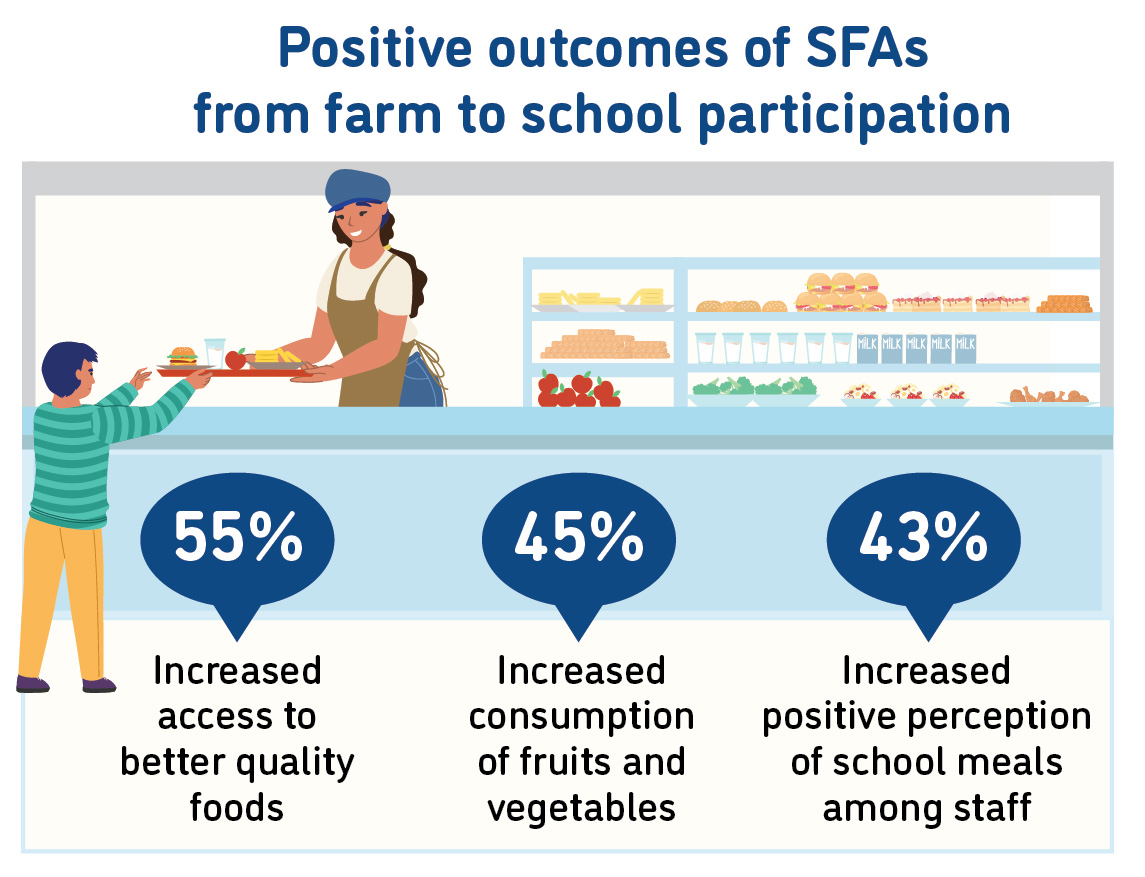
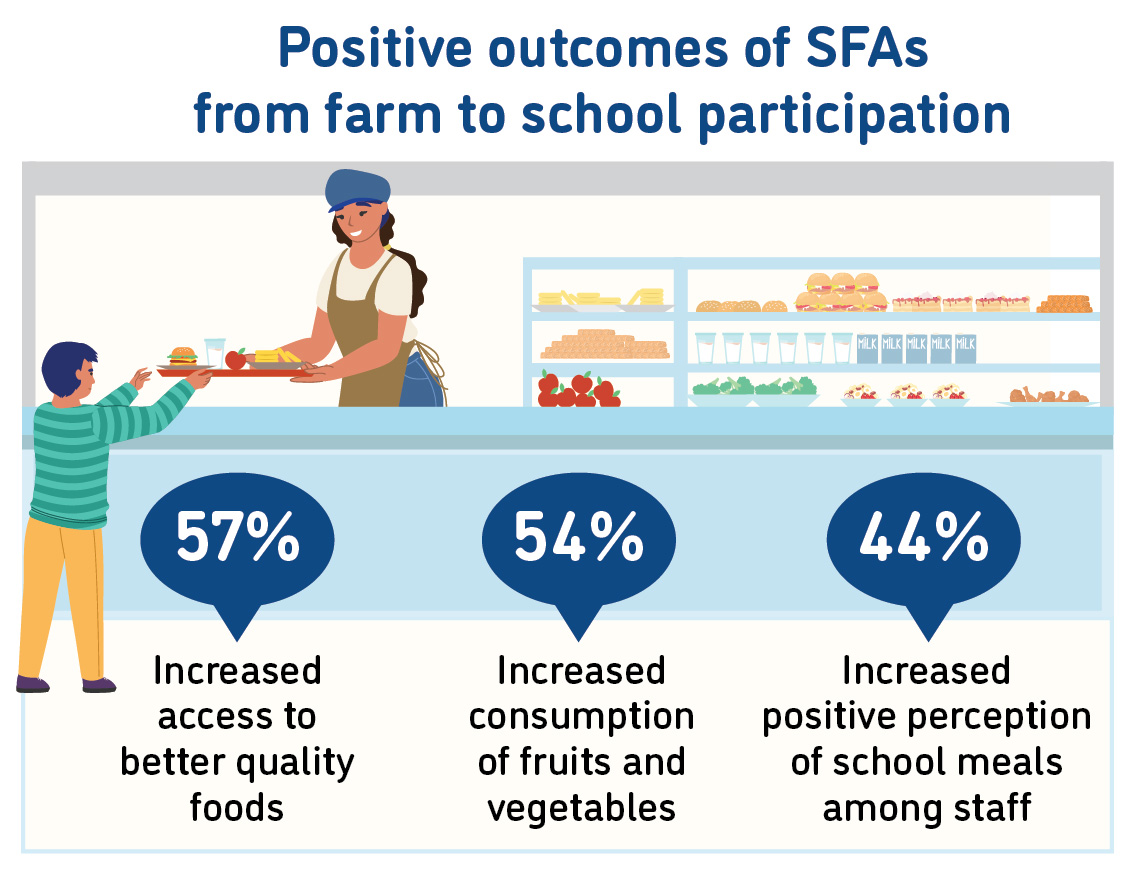
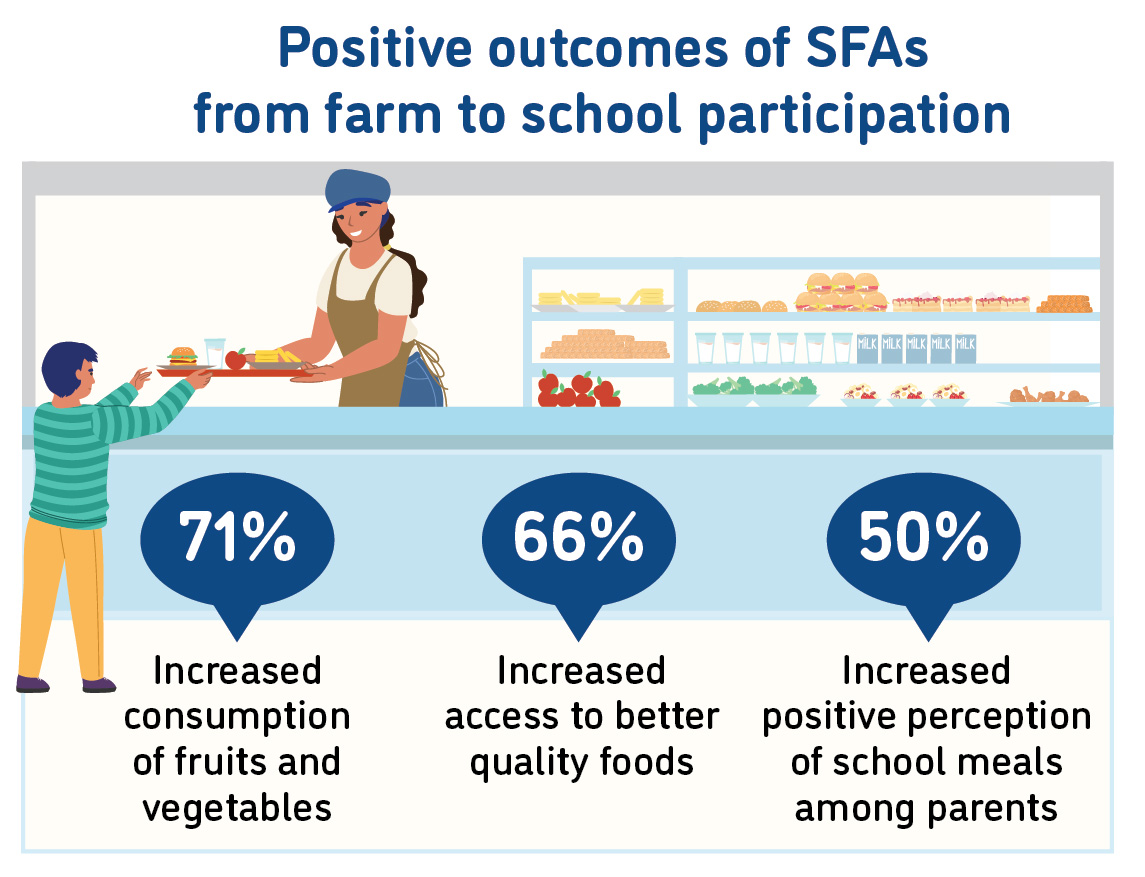
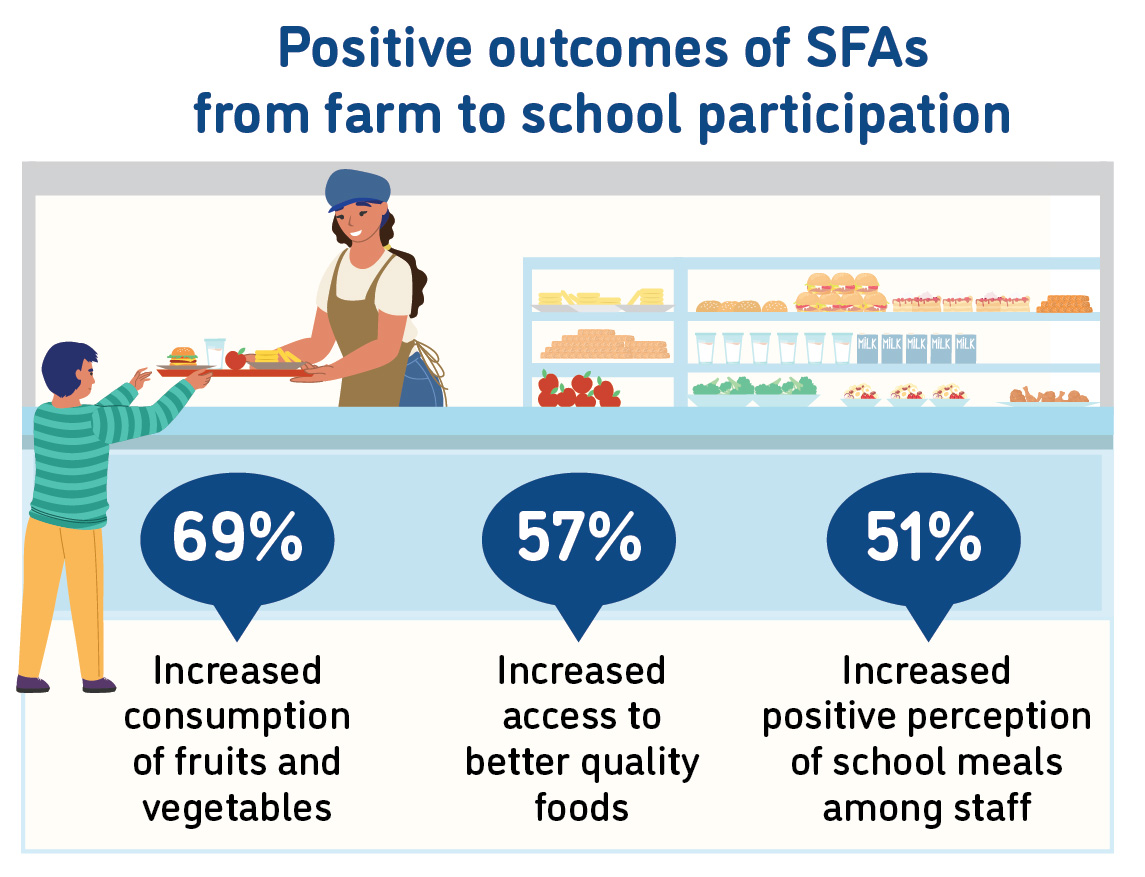
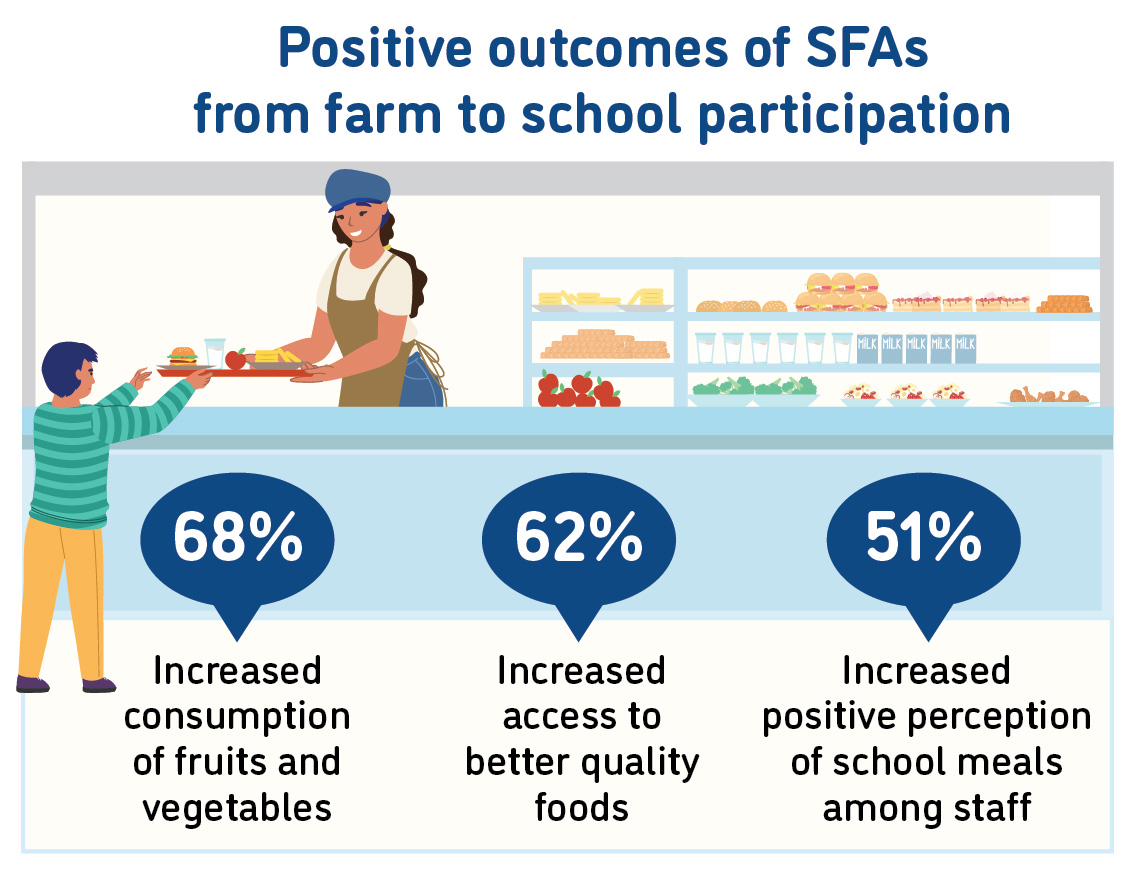
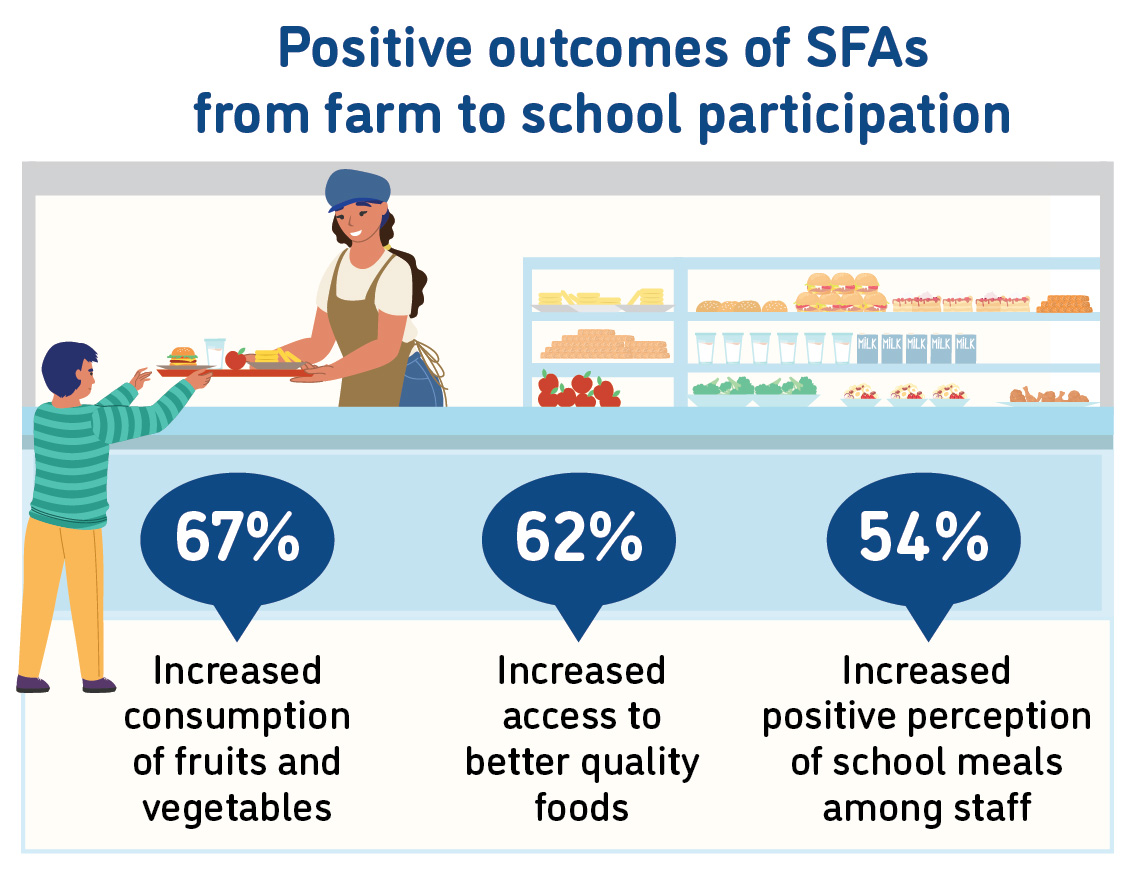
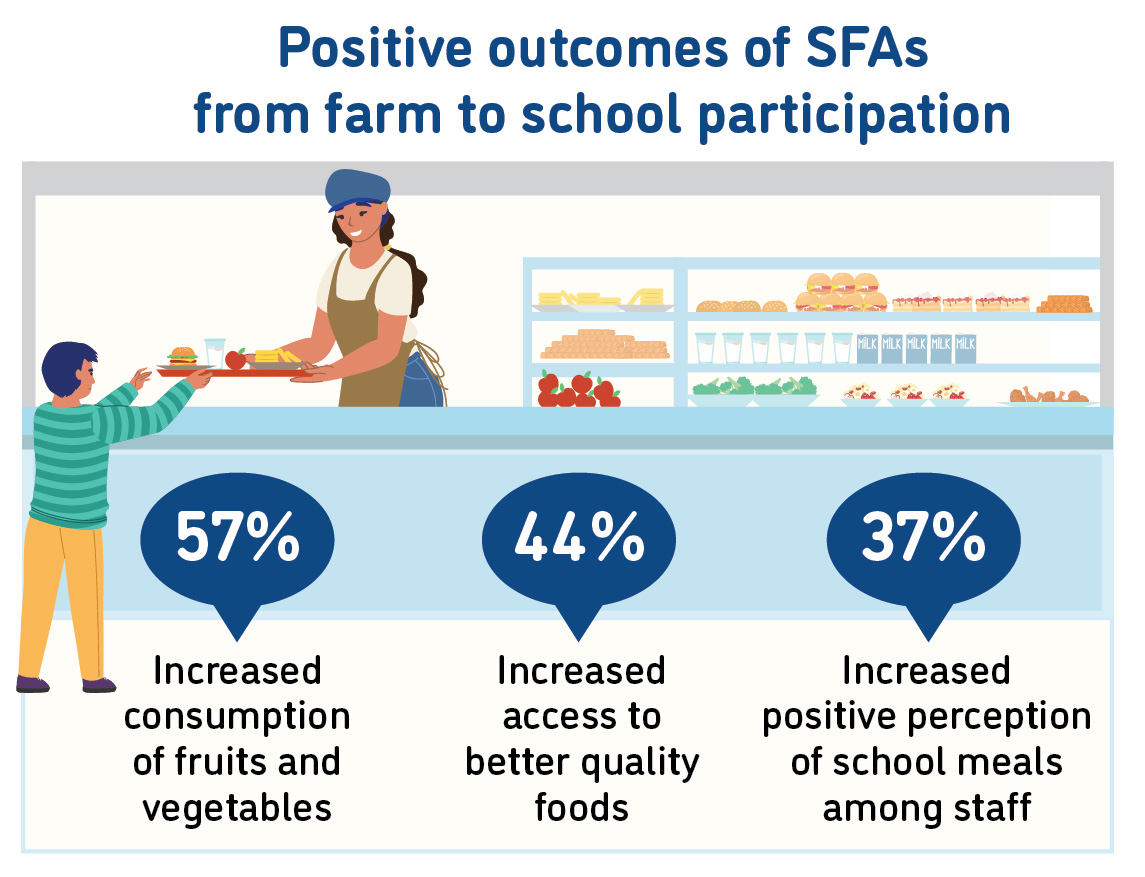
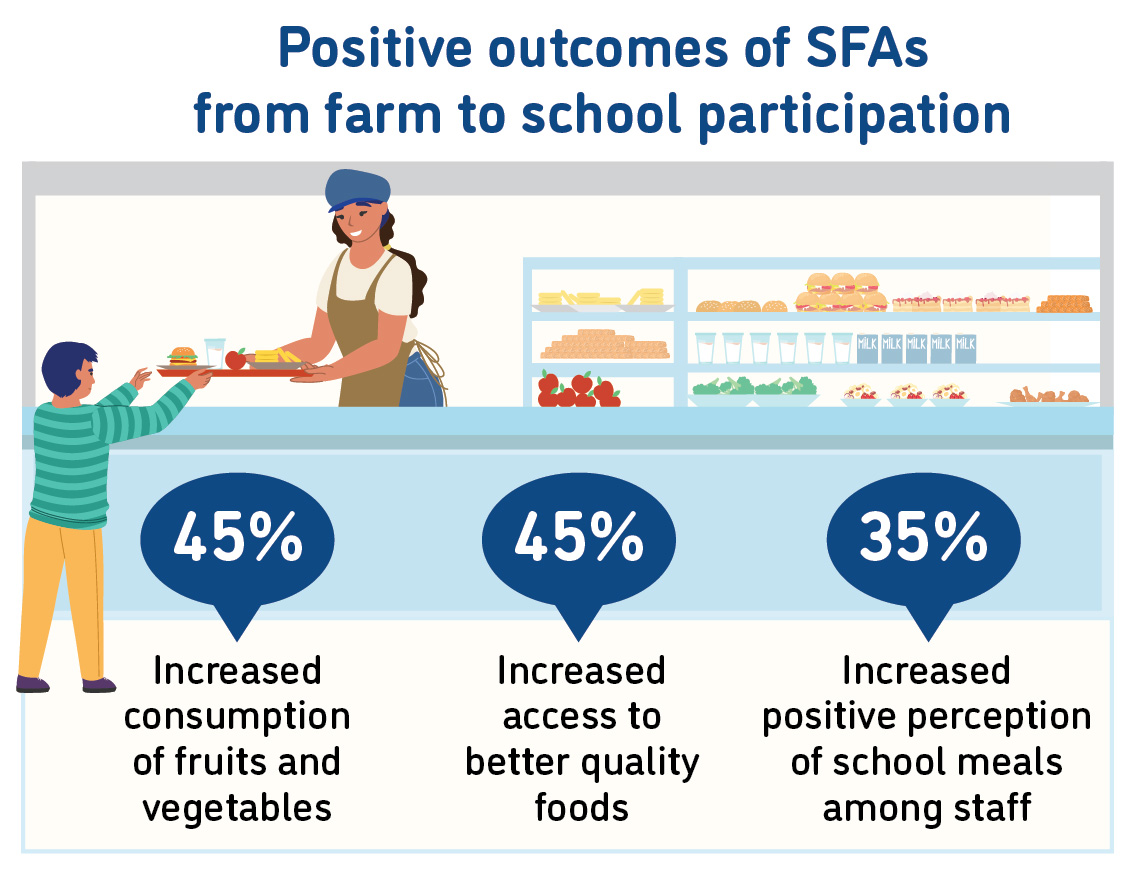
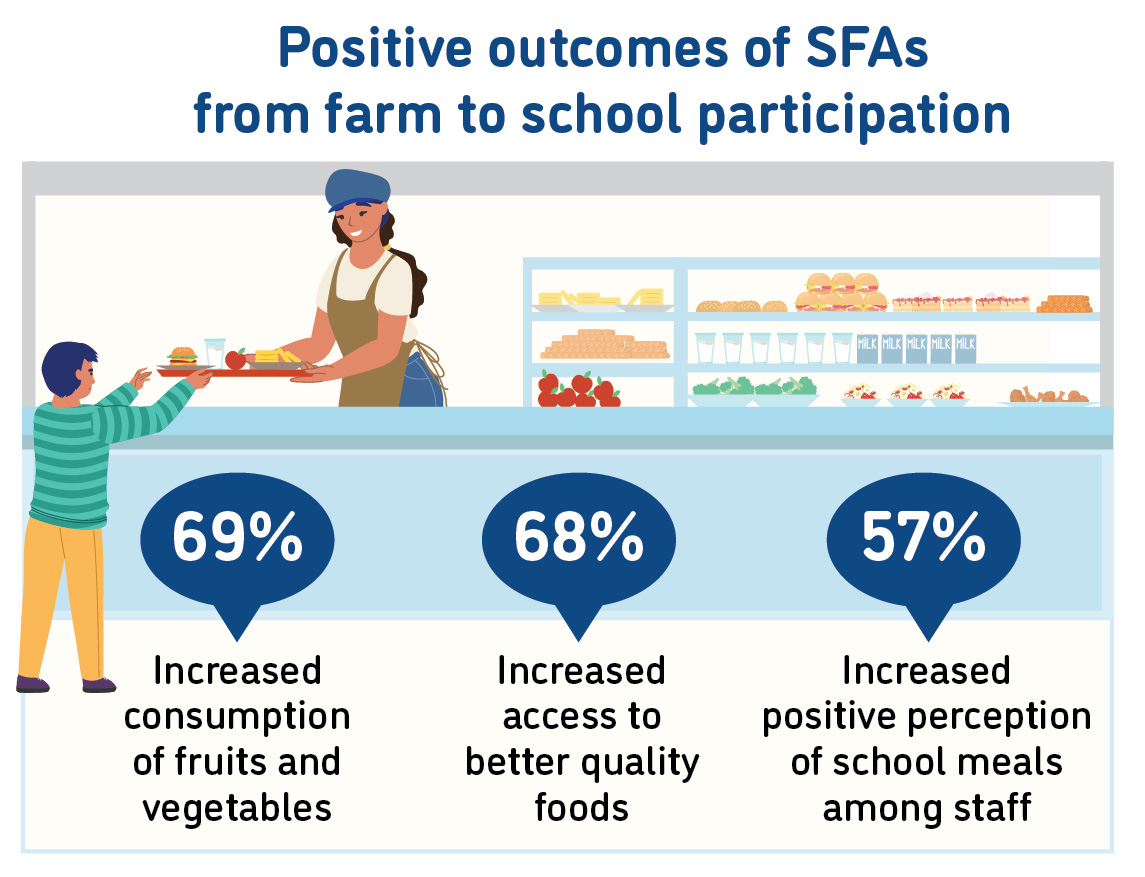
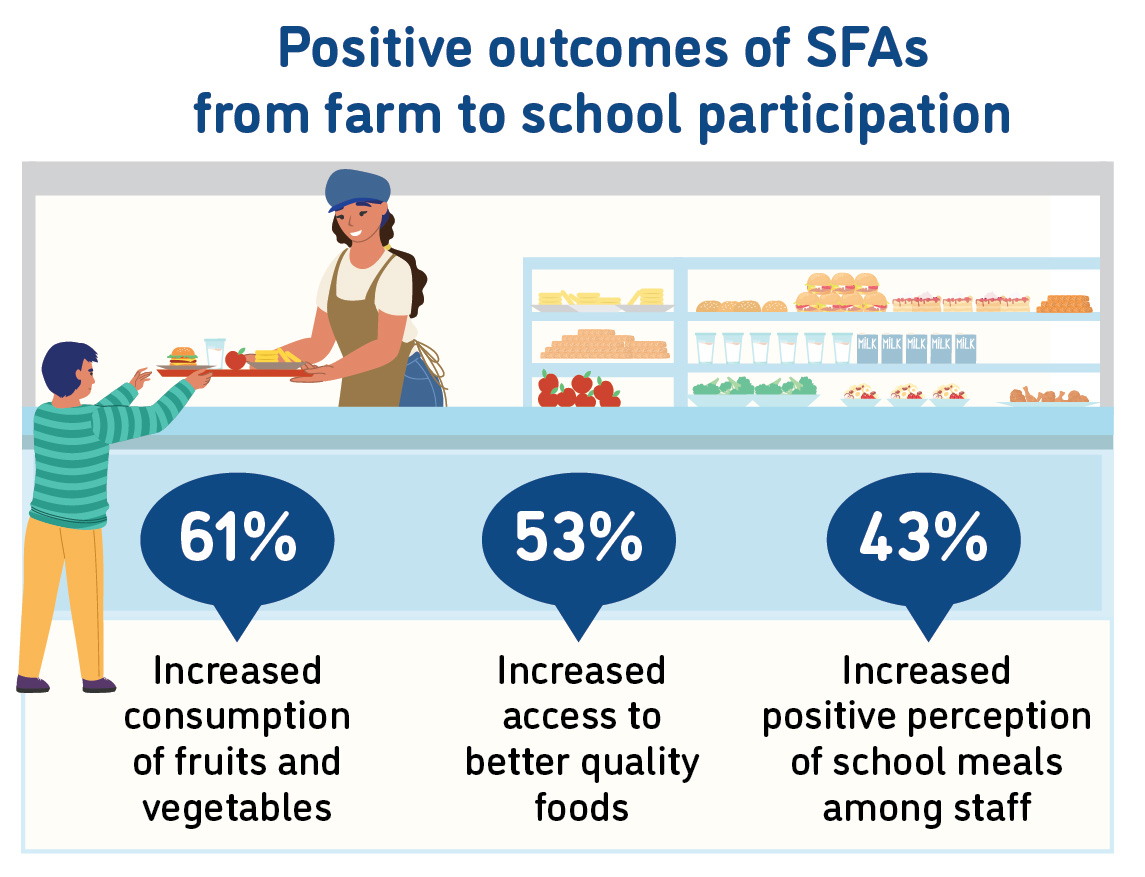
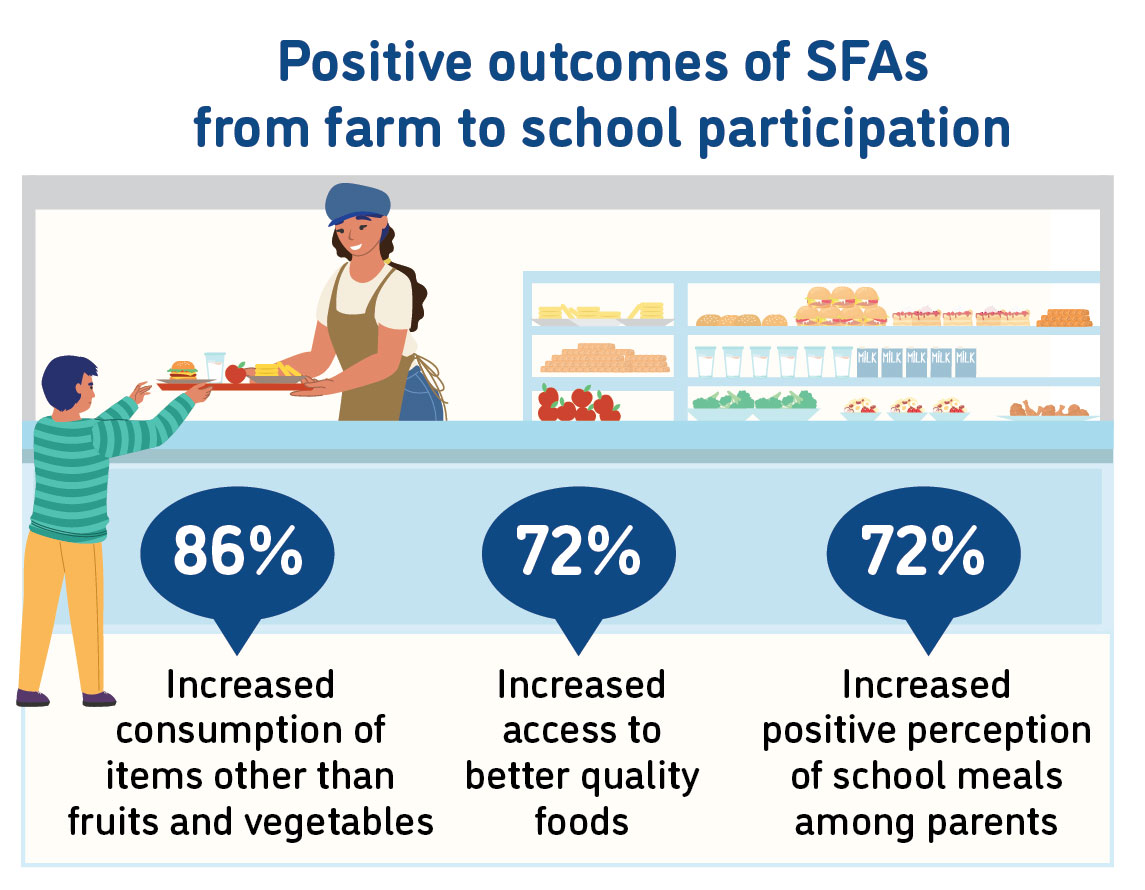
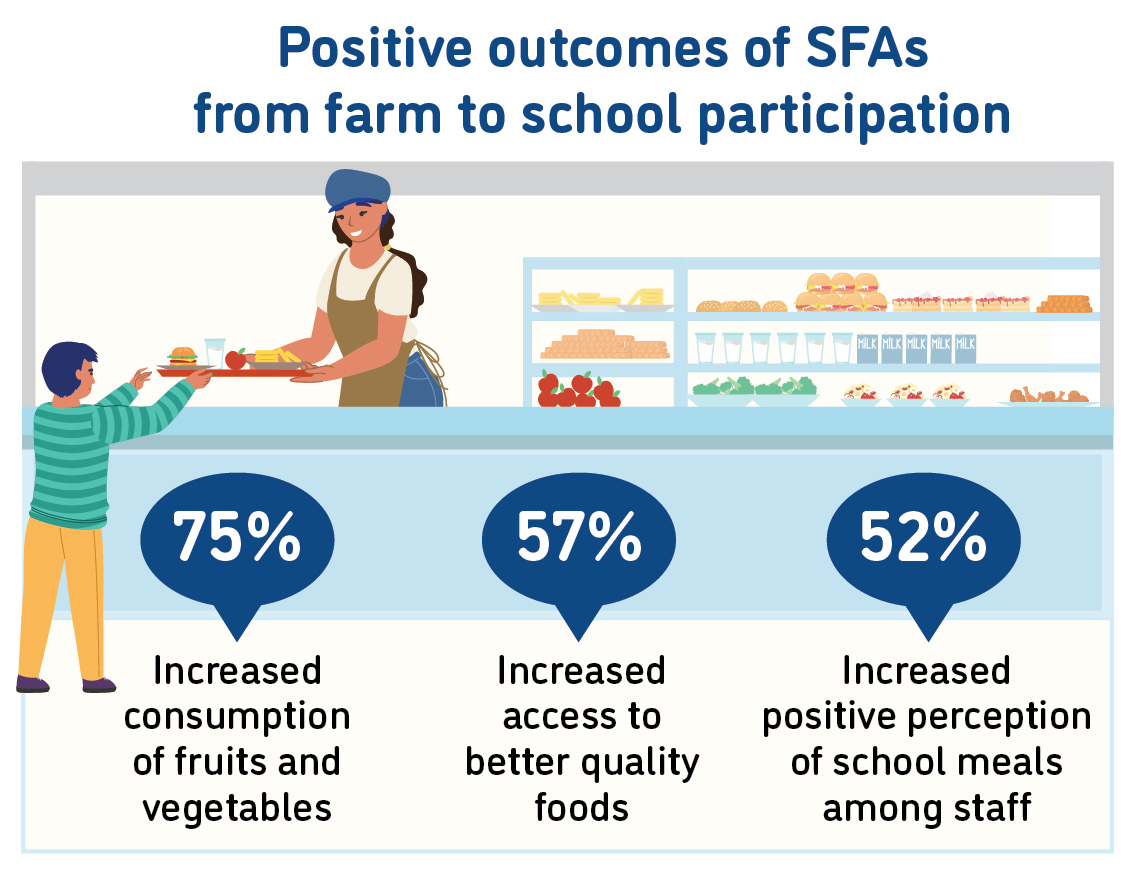
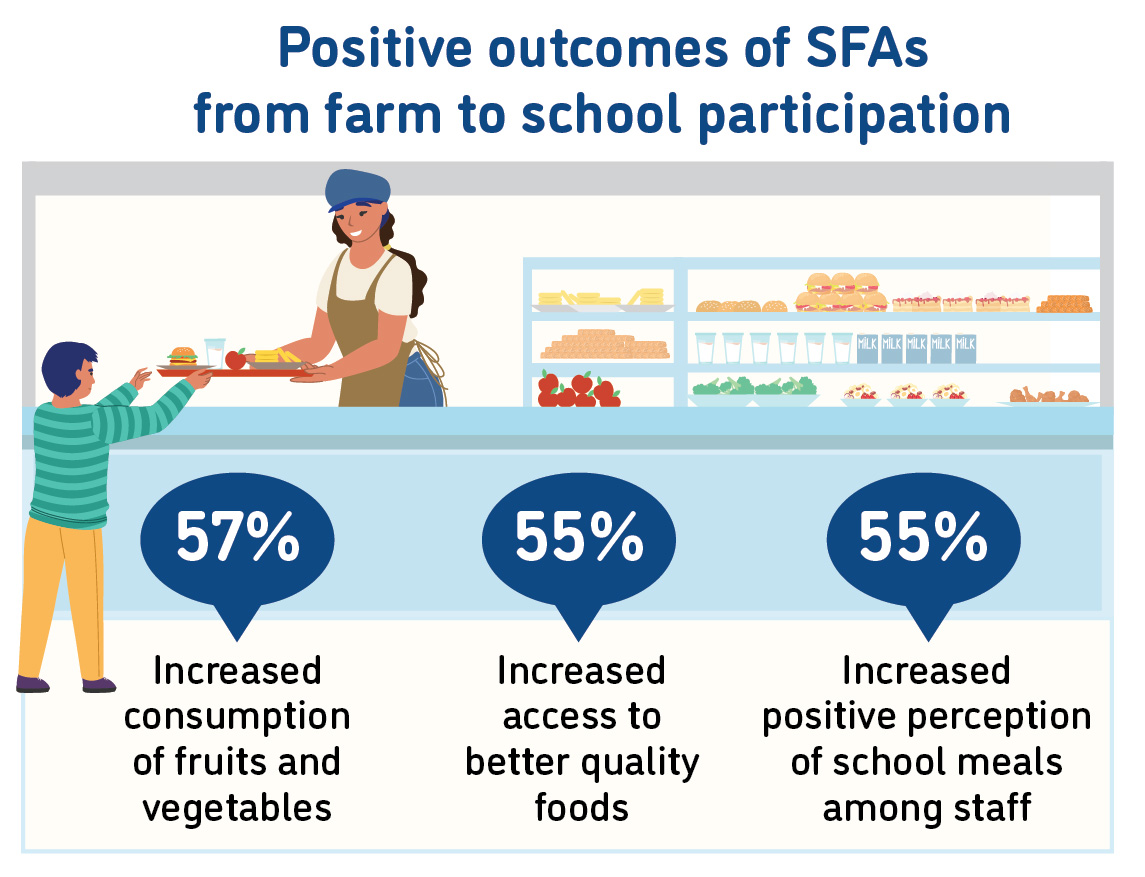
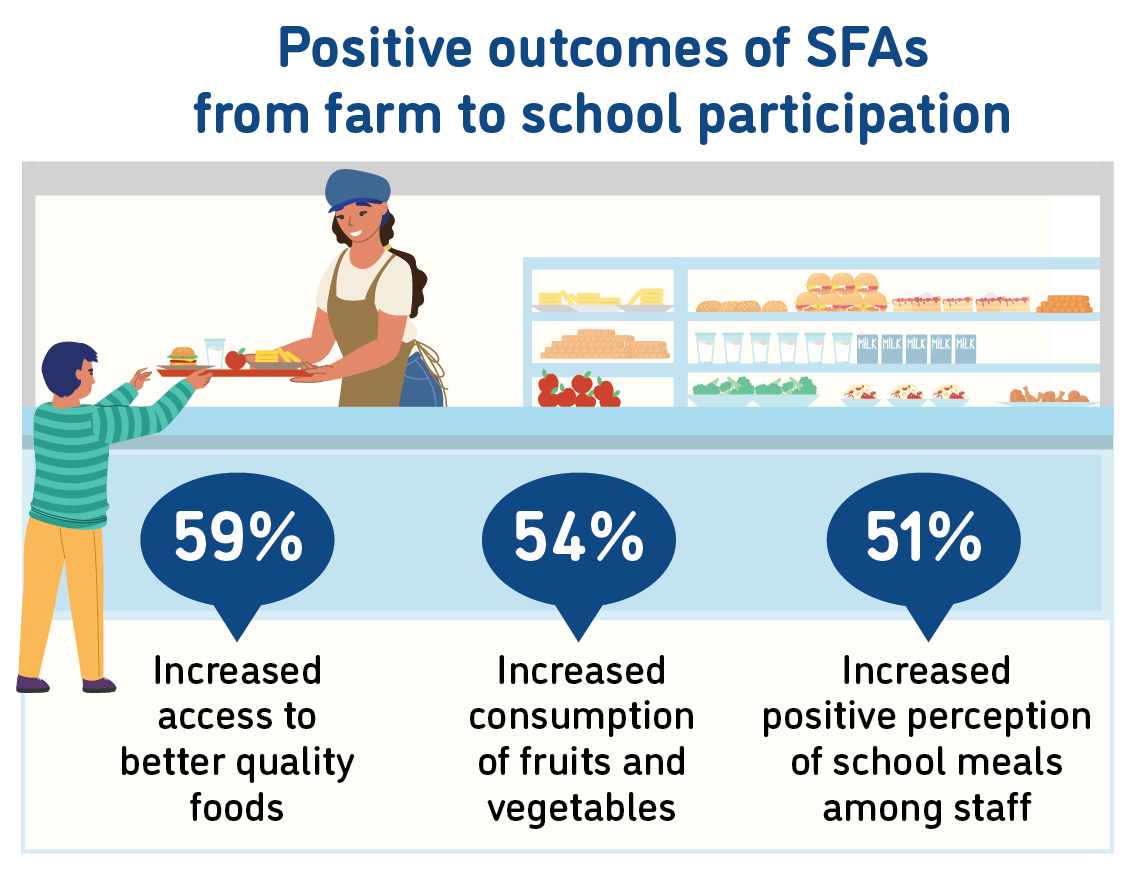
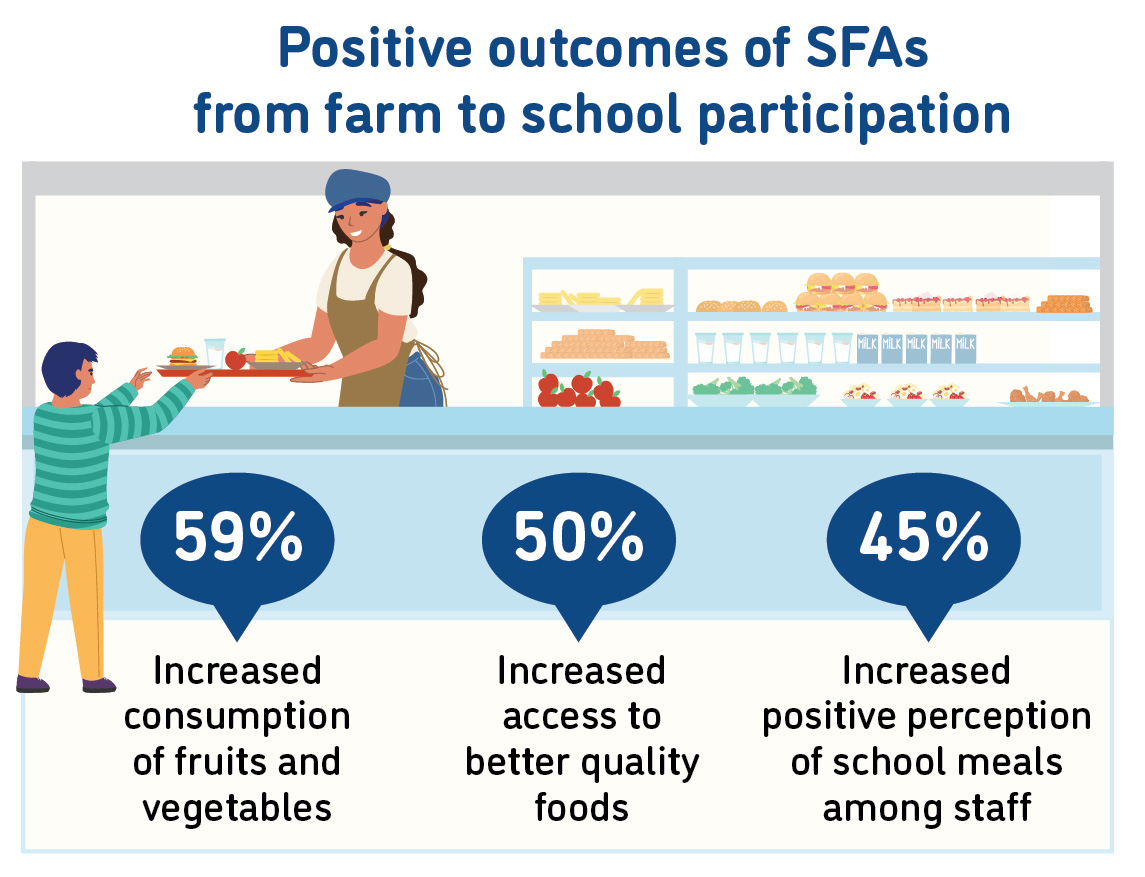
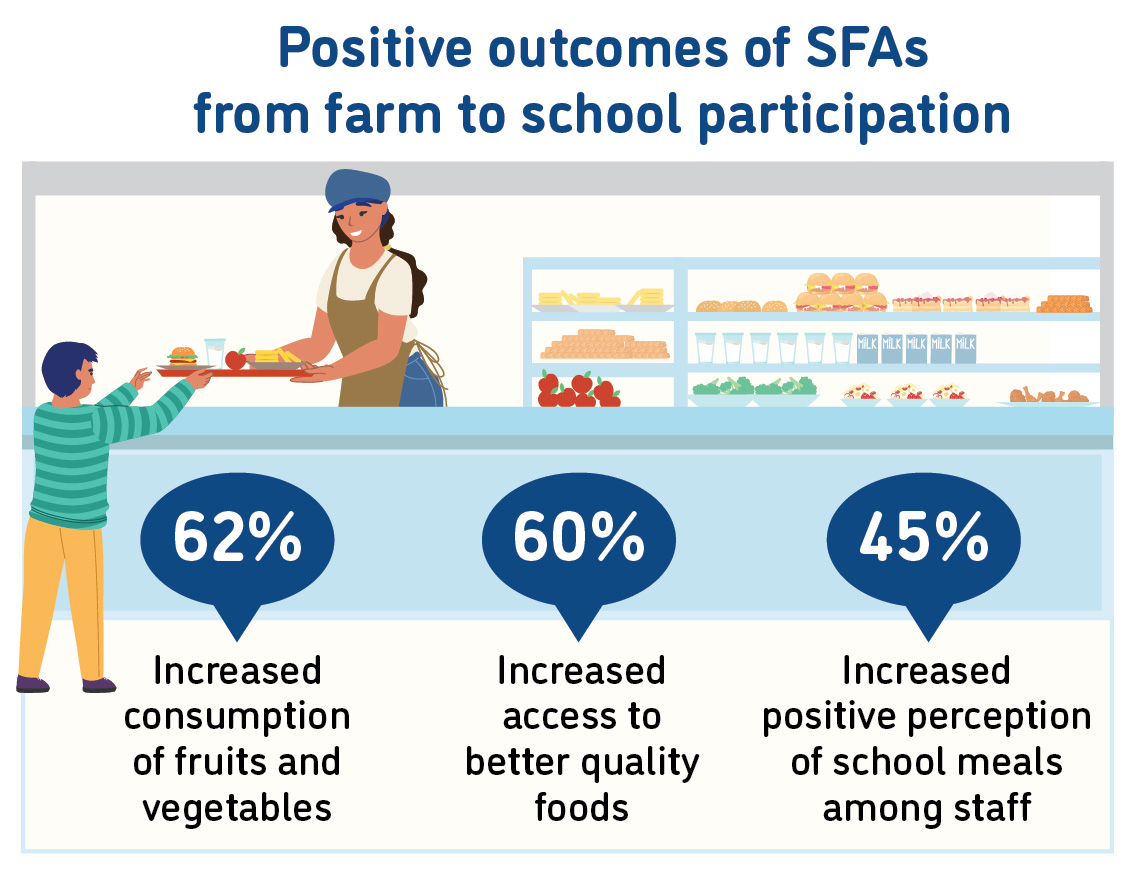
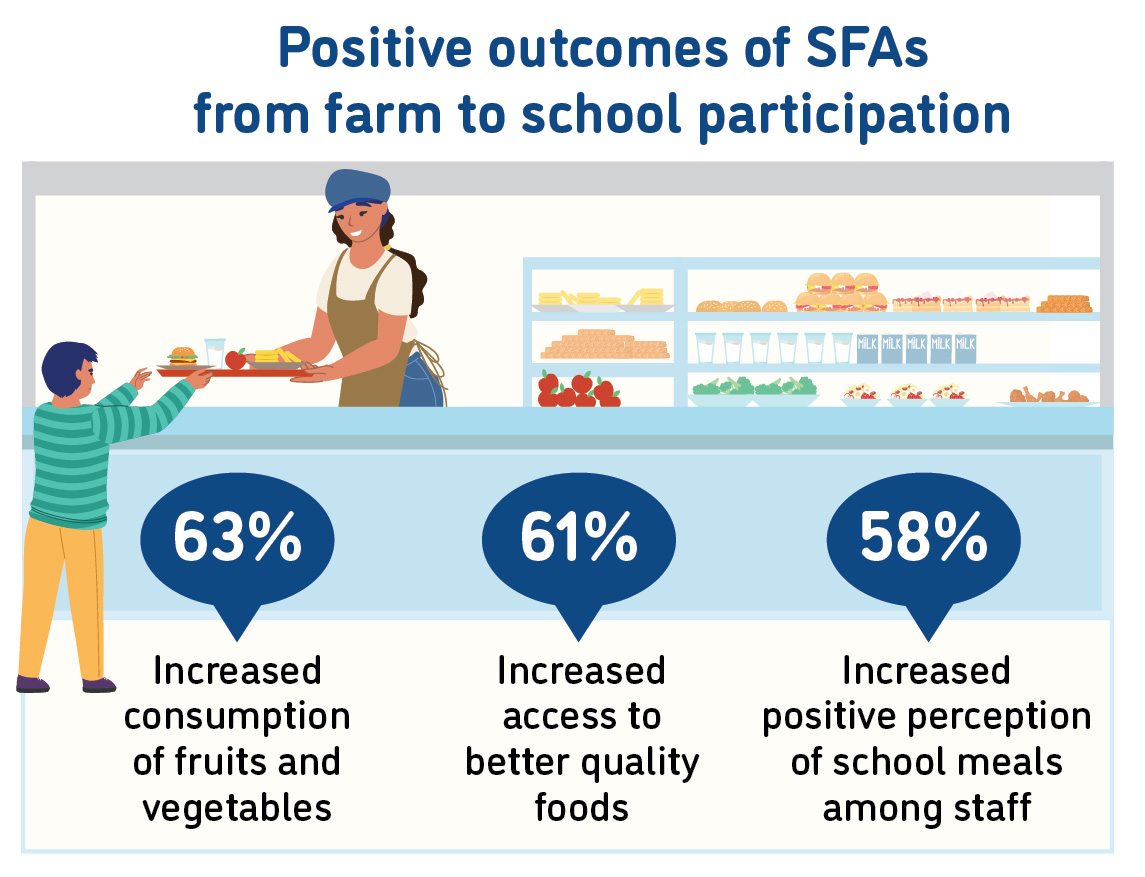
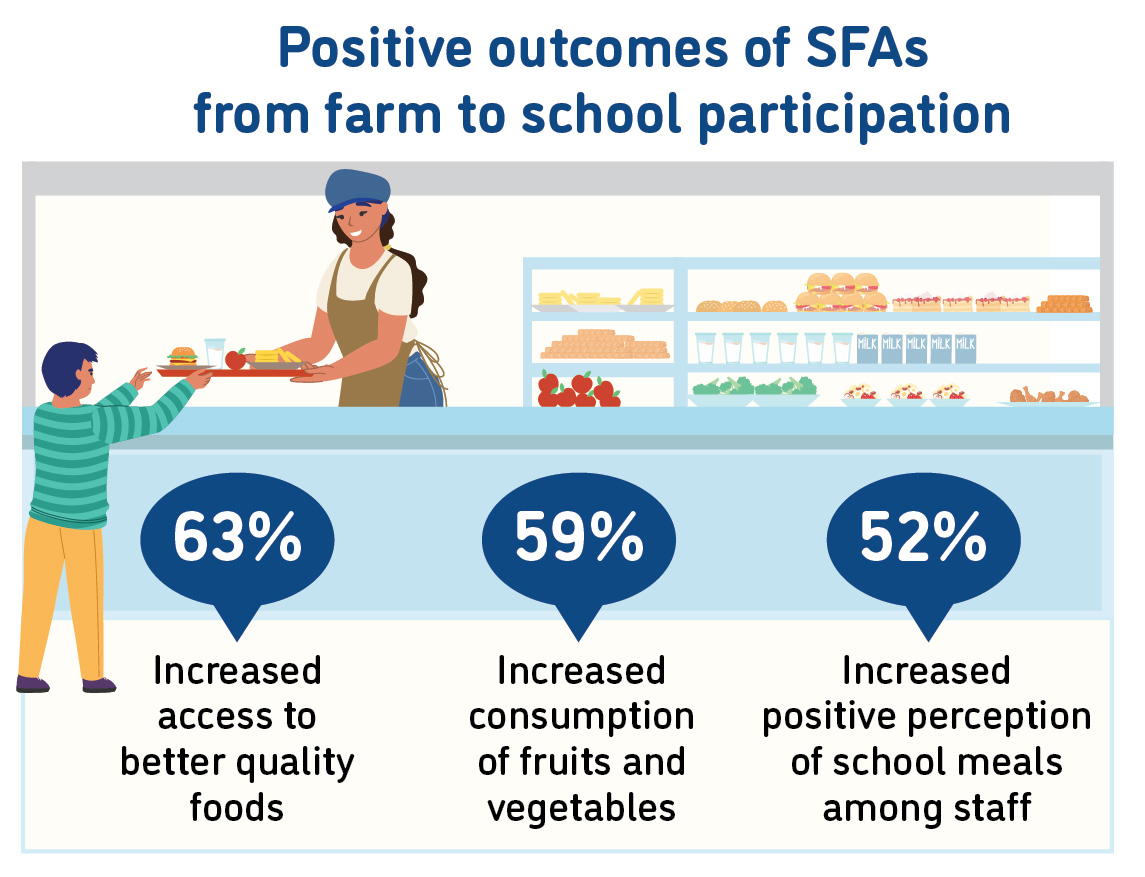
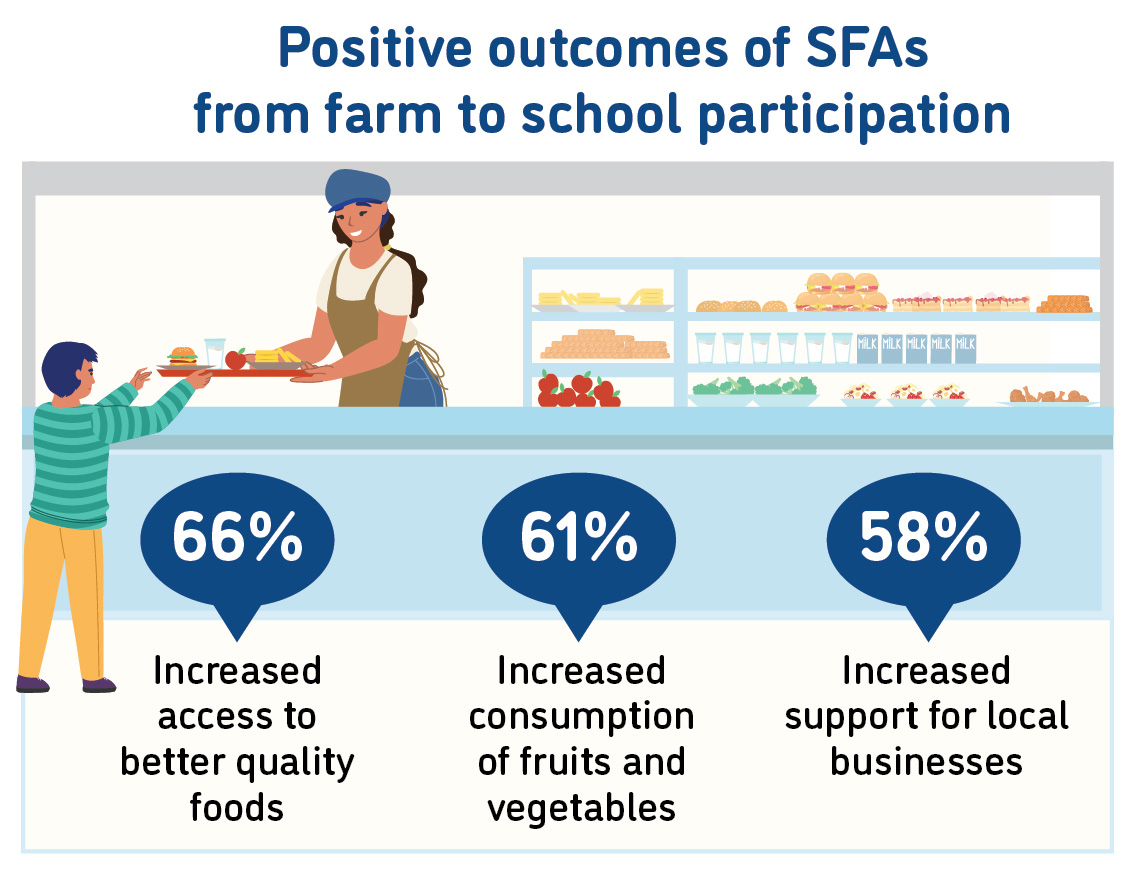
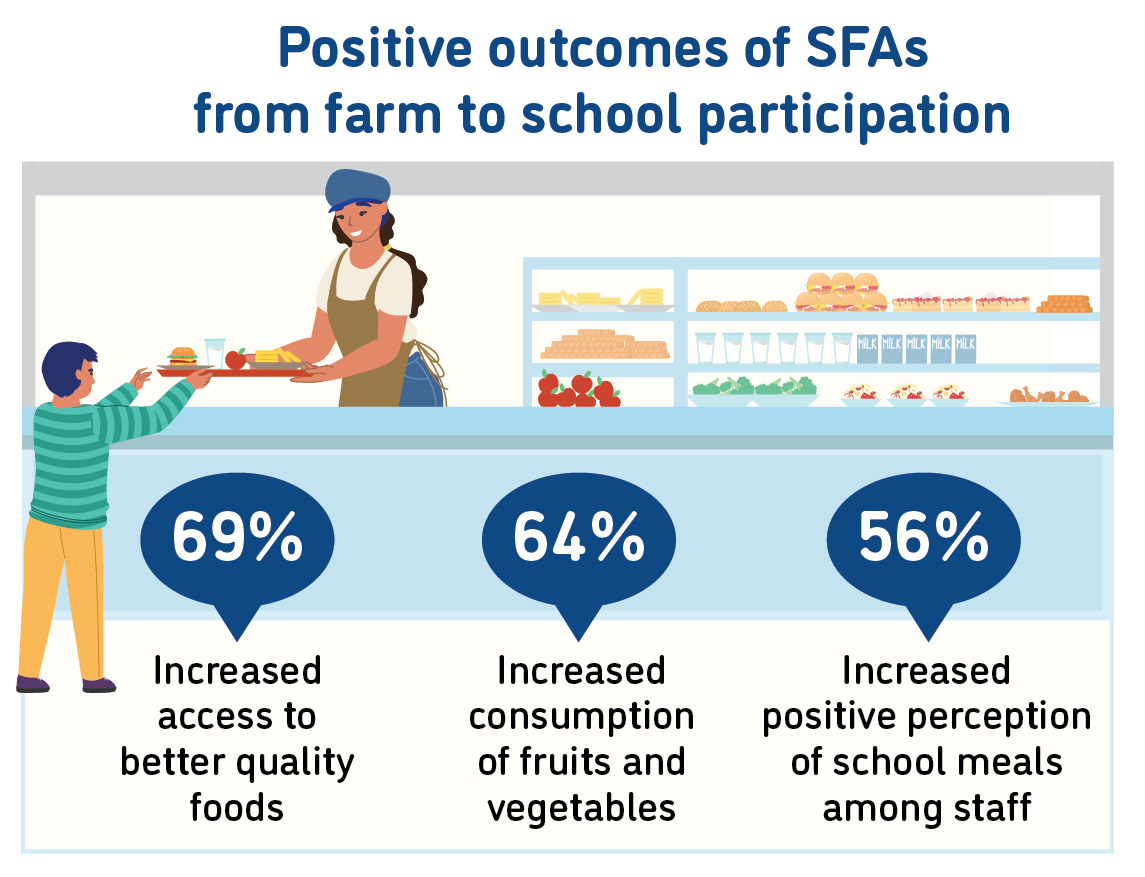
- A variety of positive outcomes were reported by SFAs that participated in farm to school, including an increase in consumption of fruits and vegetables in school meals (61 percent of participating SFAs), access to better quality foods (57 percent), and an increased positive perception of the school food program among educators (49 percent).
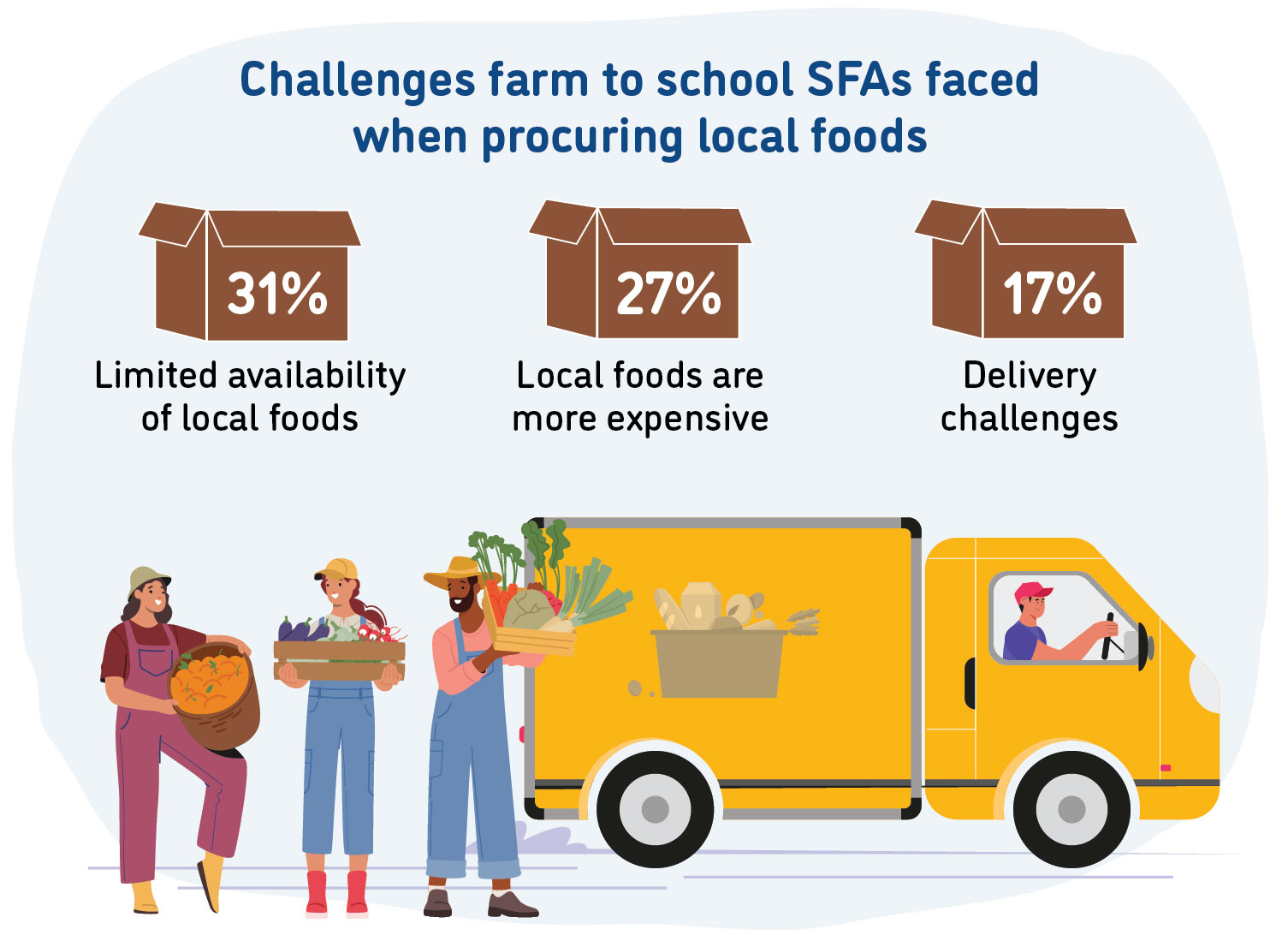
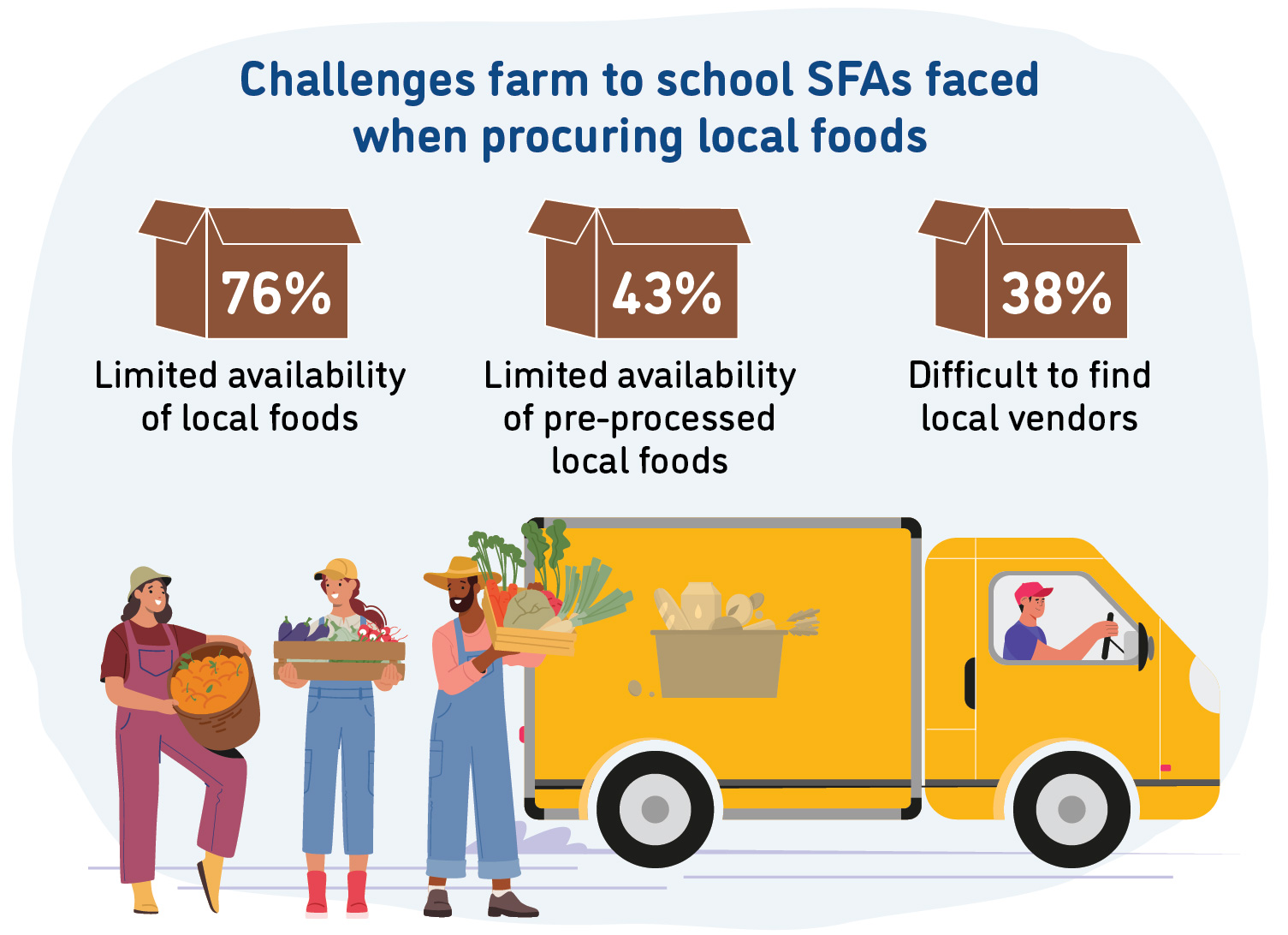
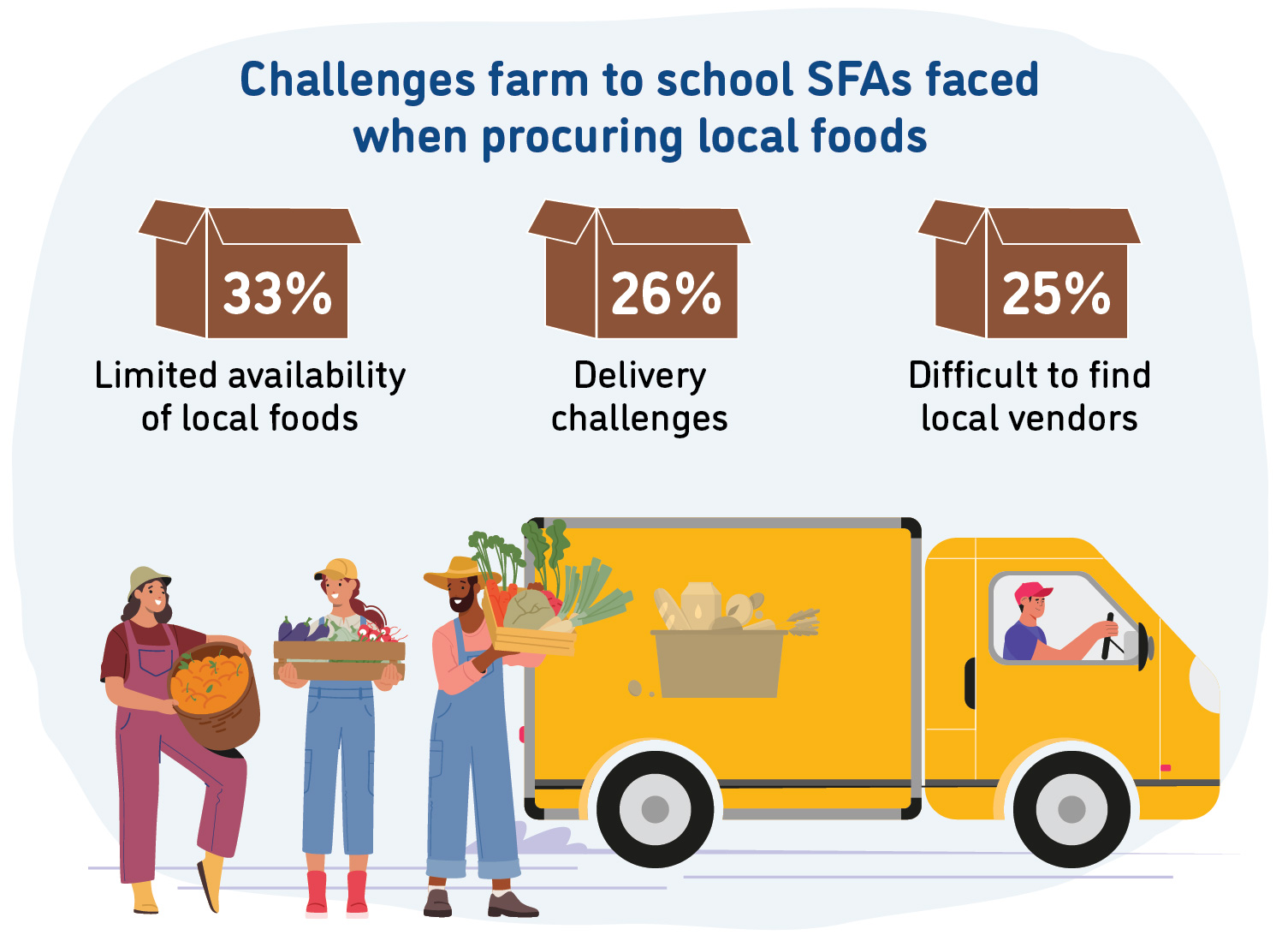
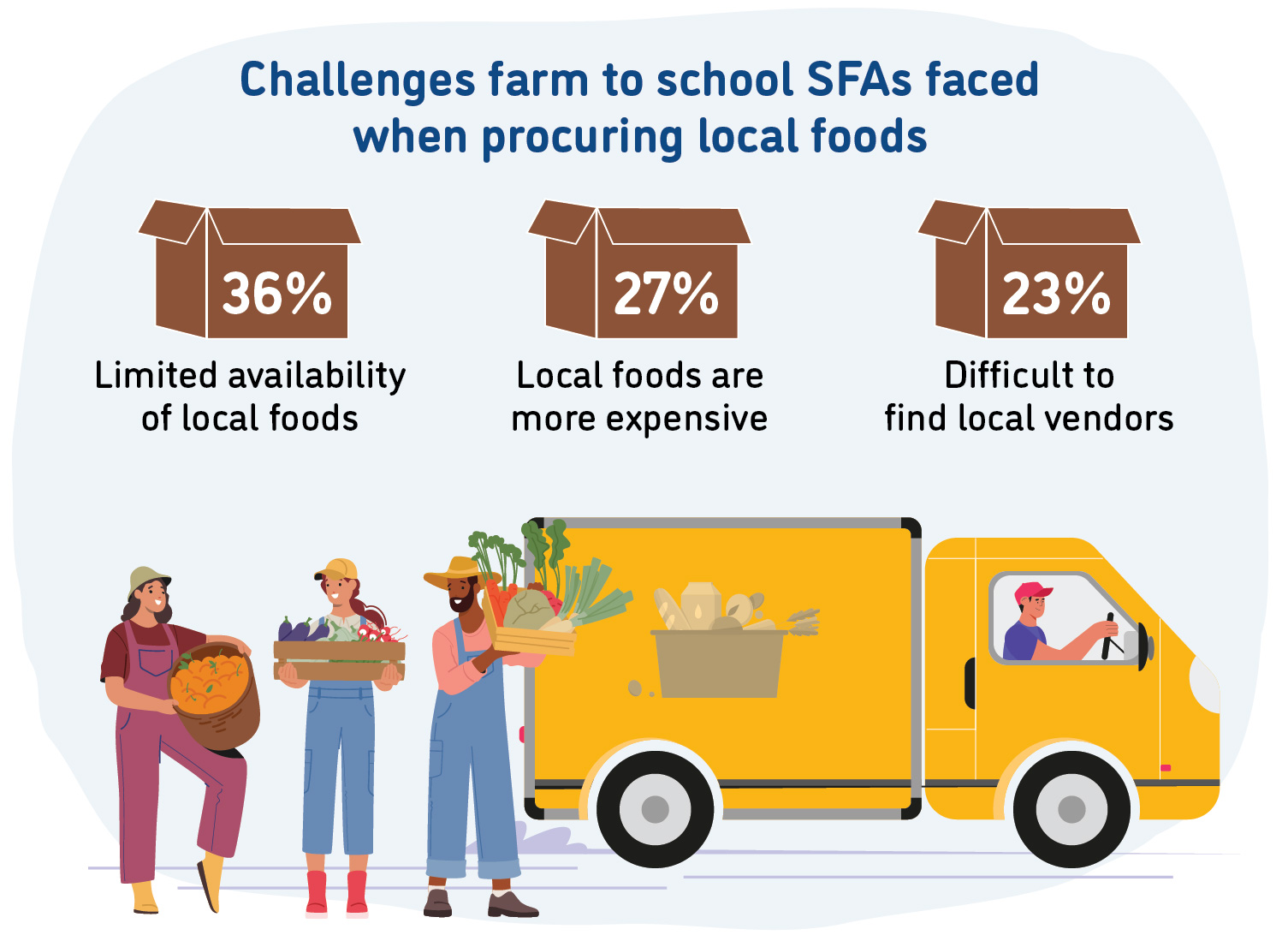
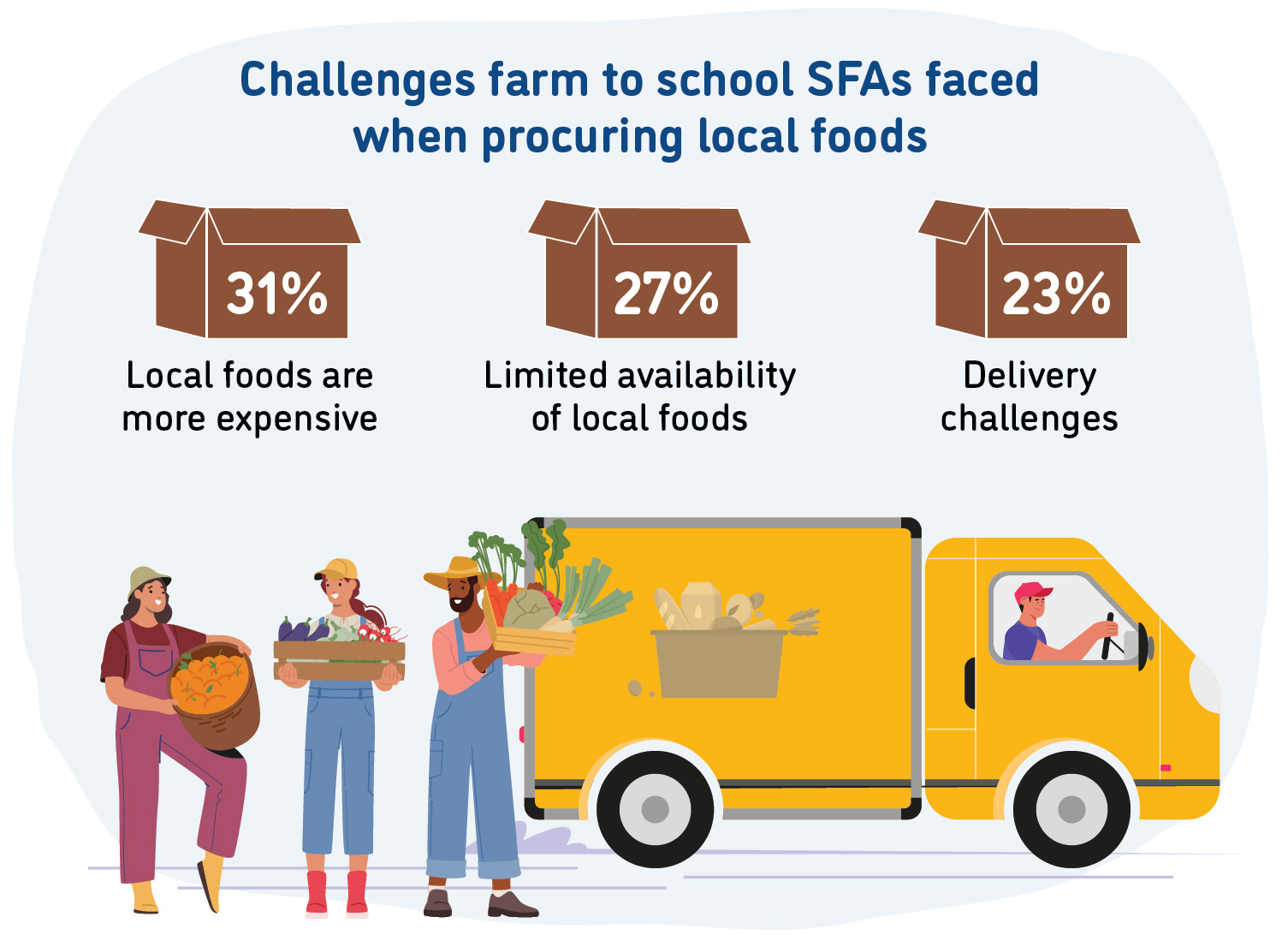
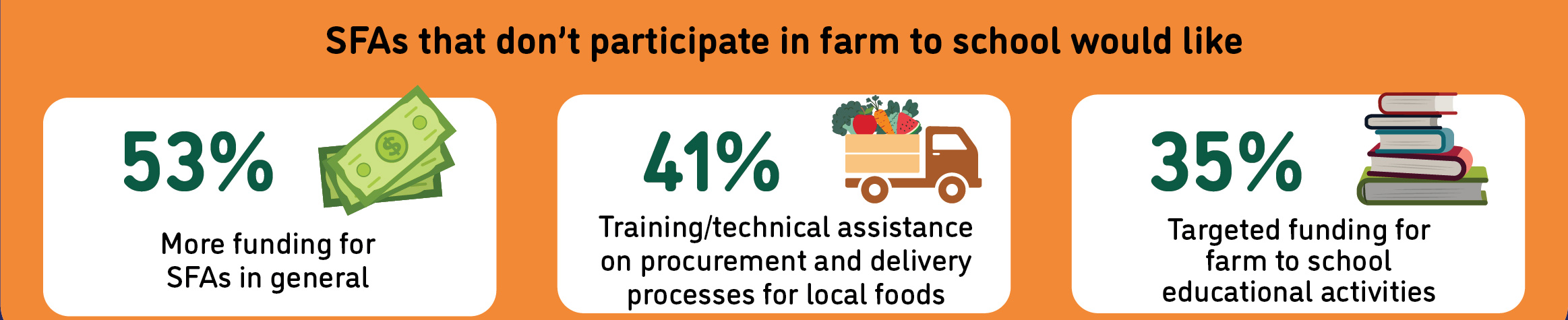
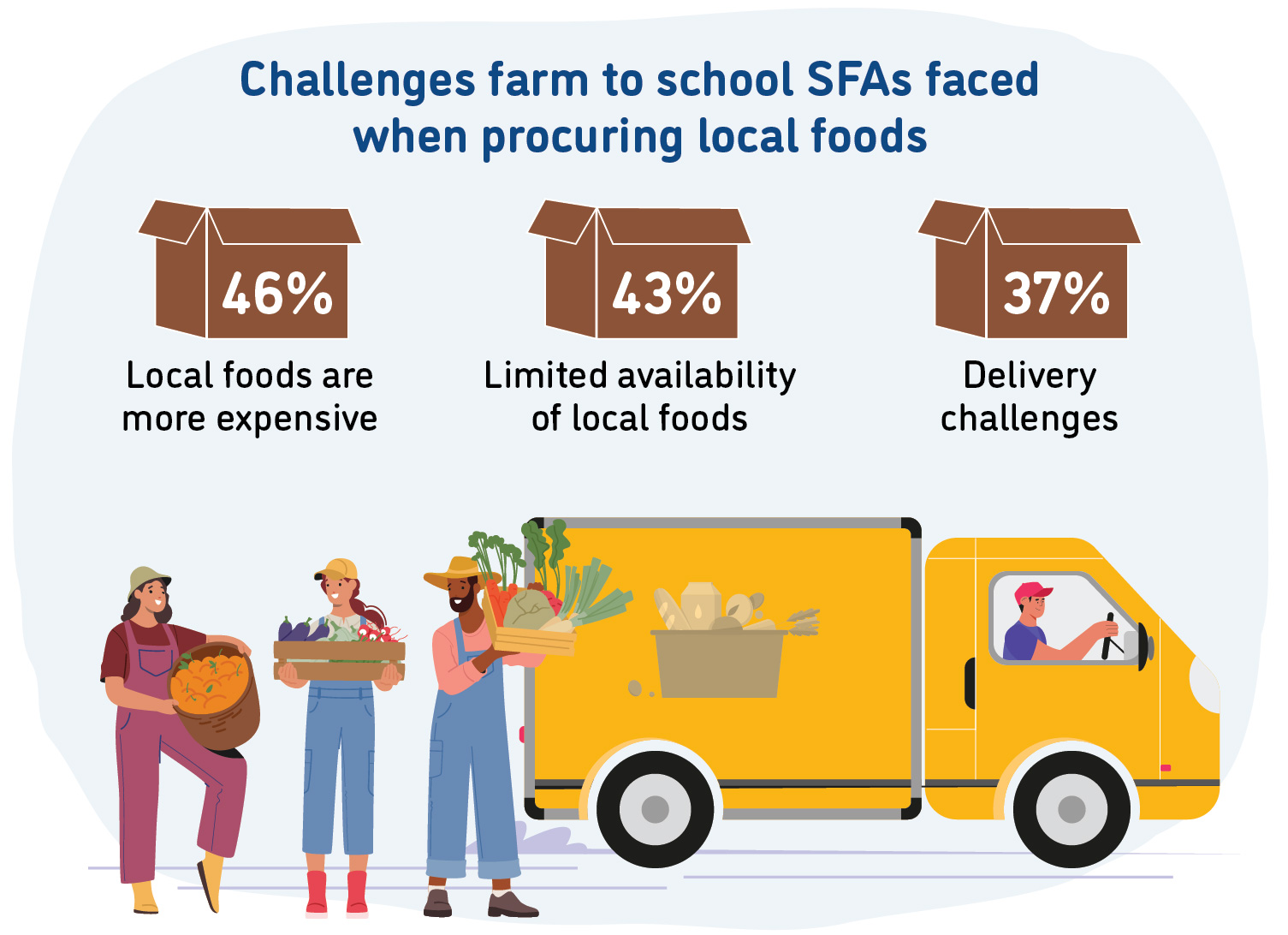
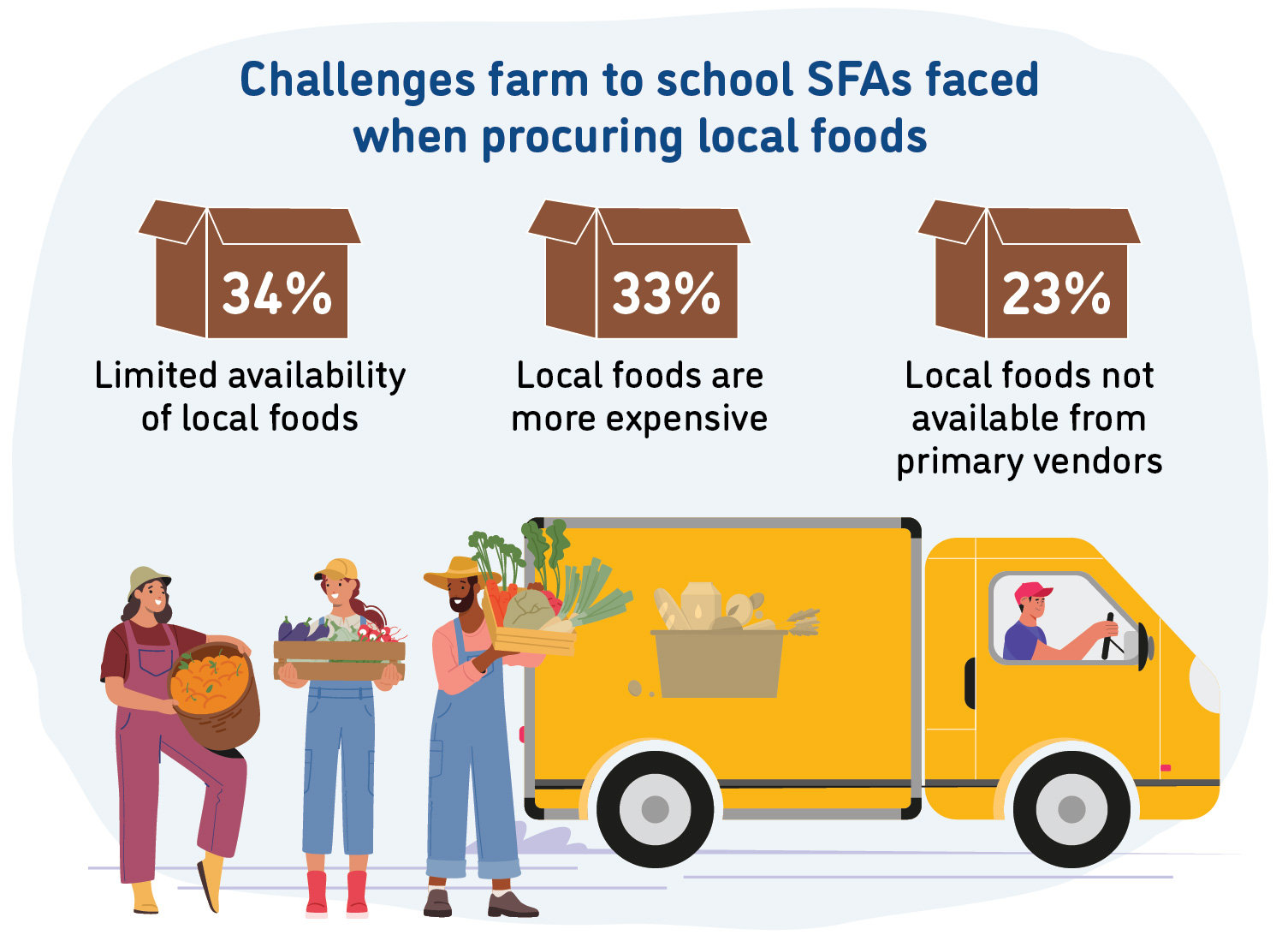
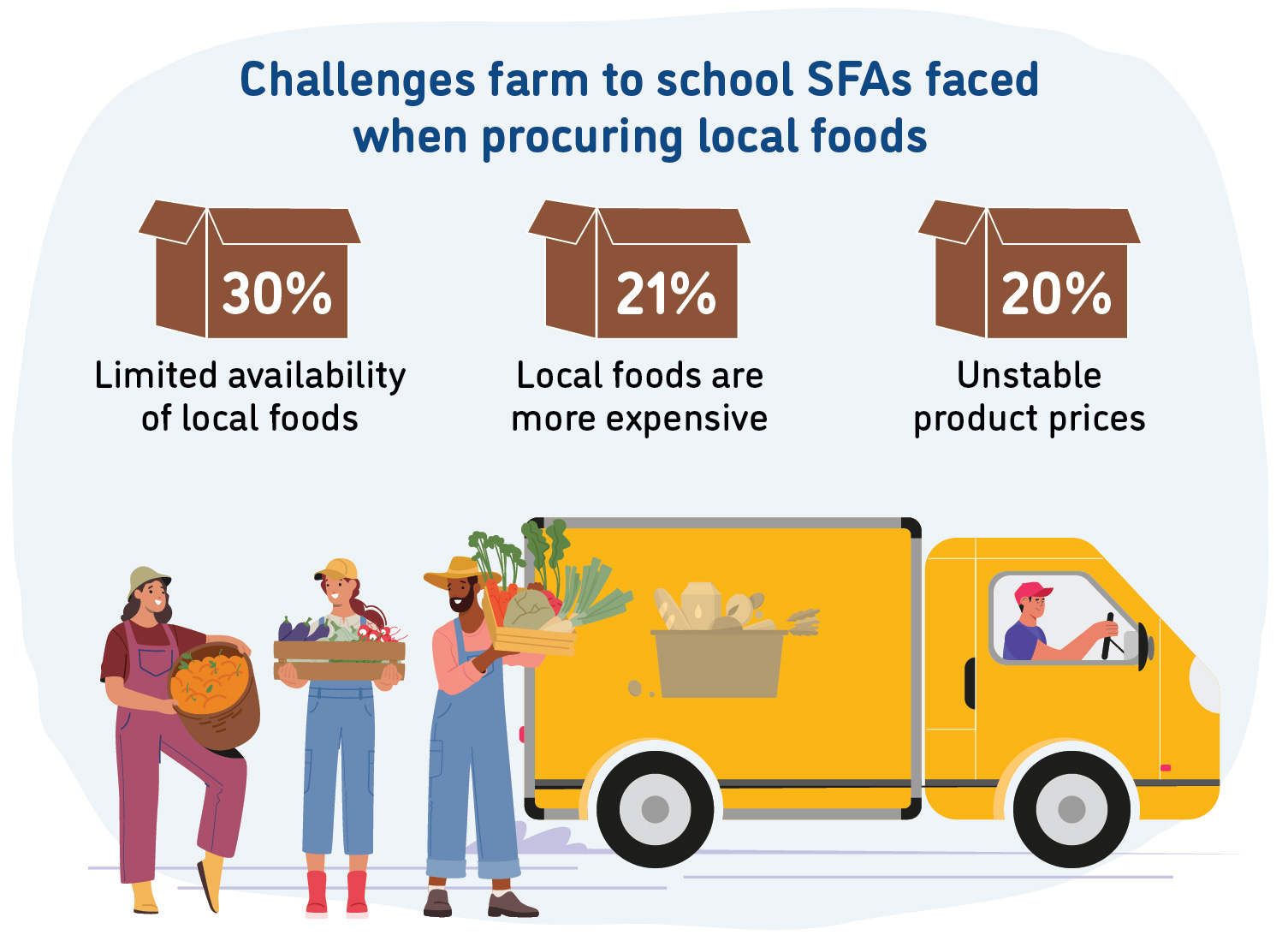
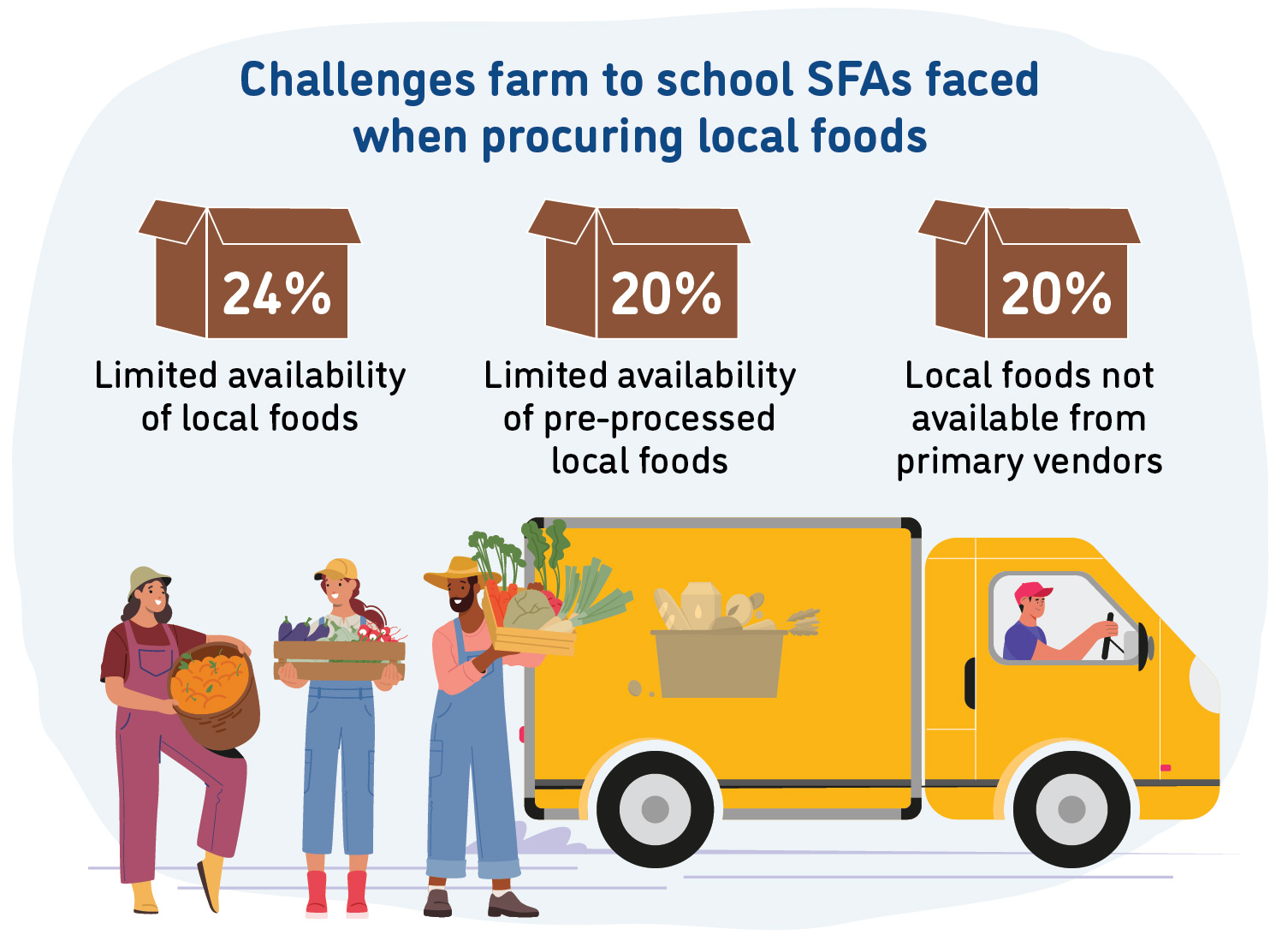
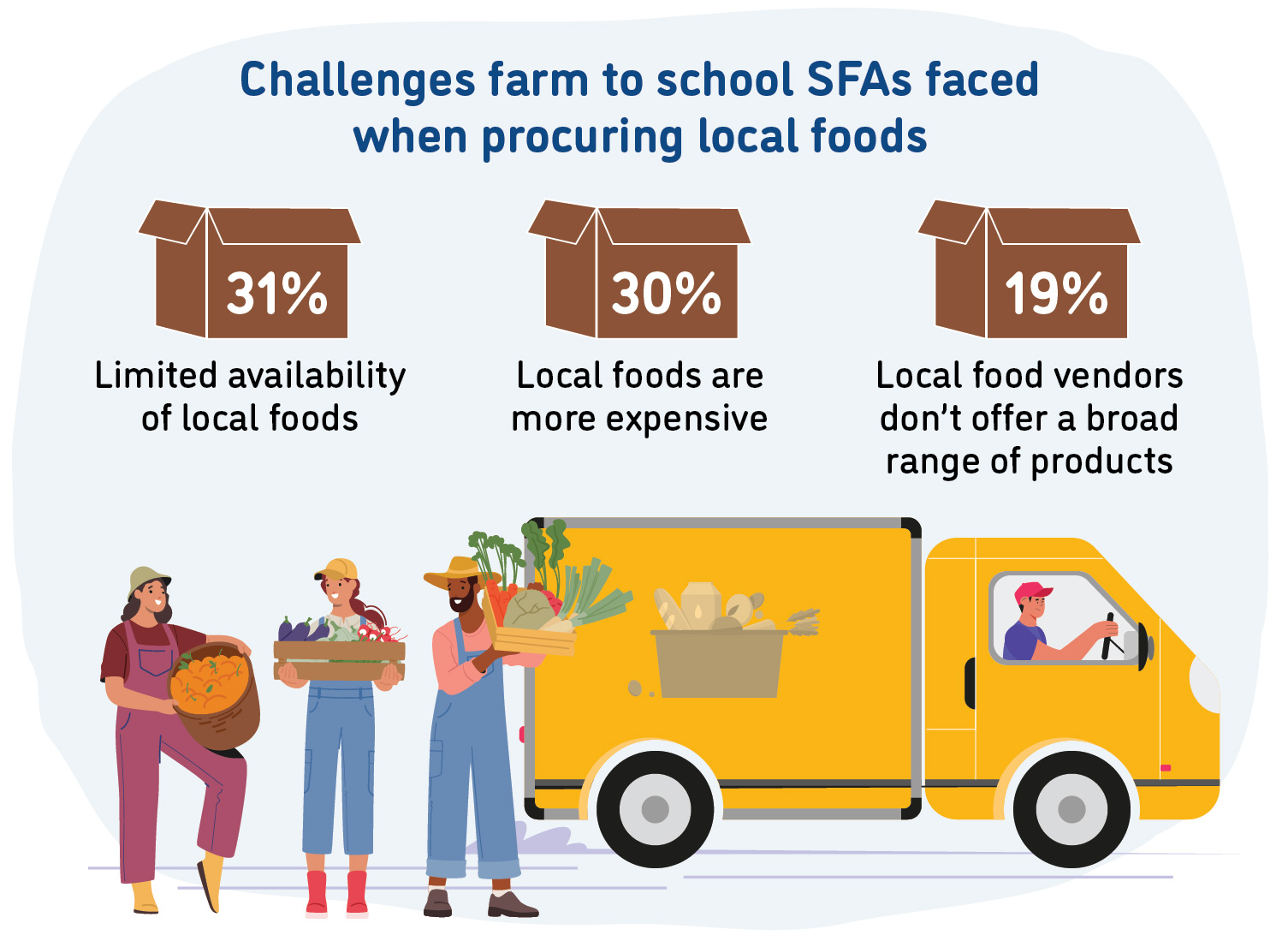
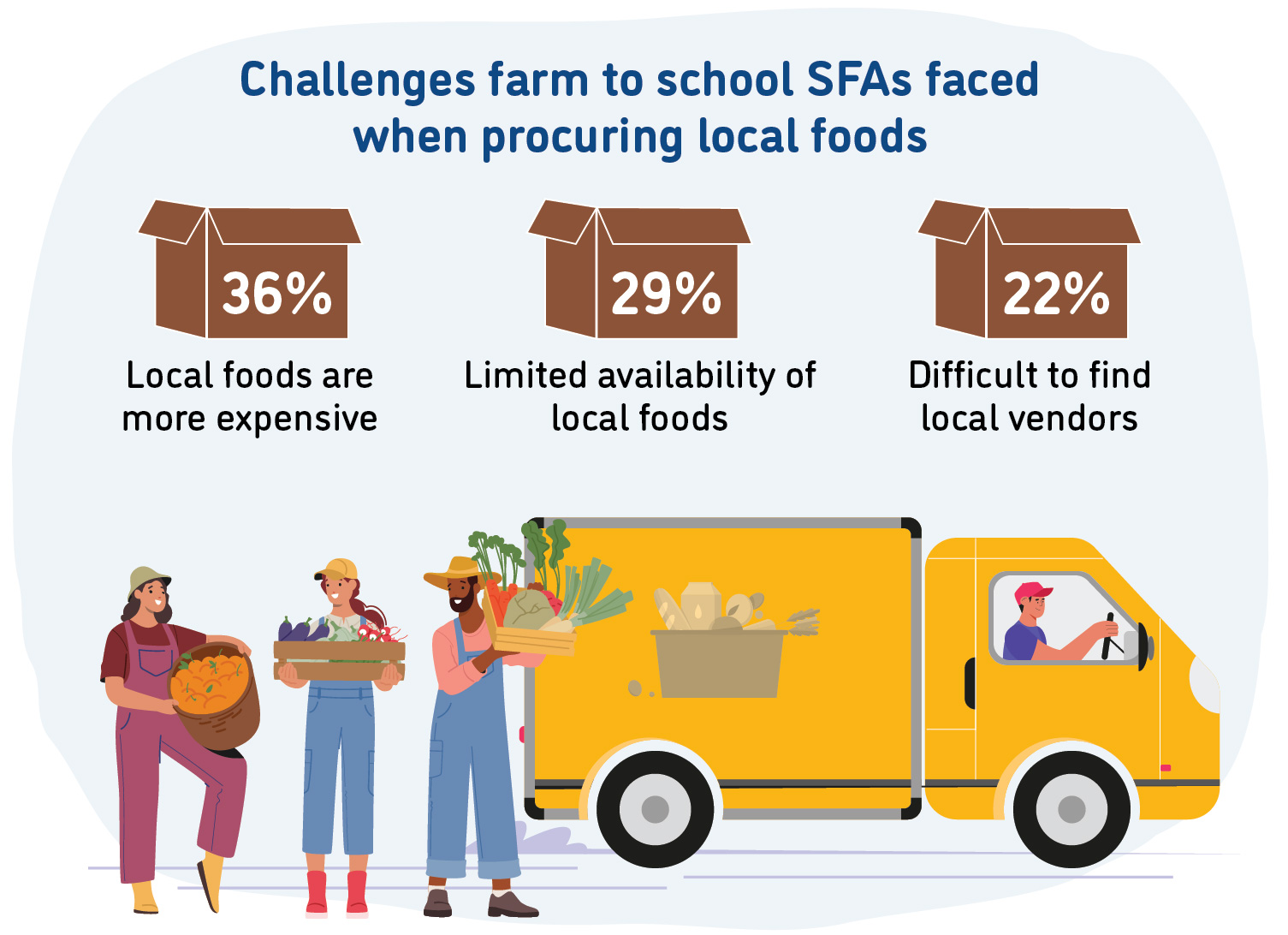
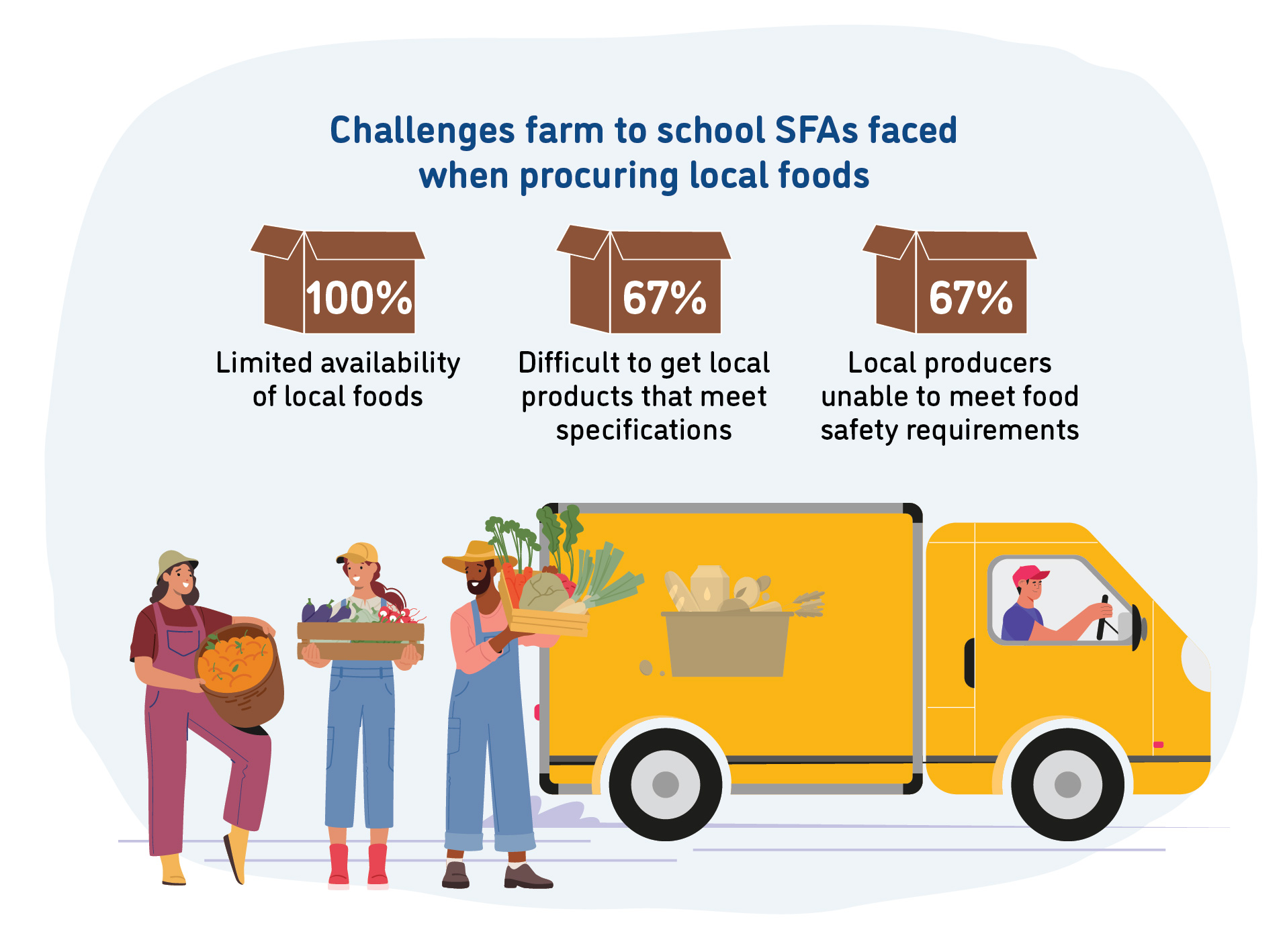
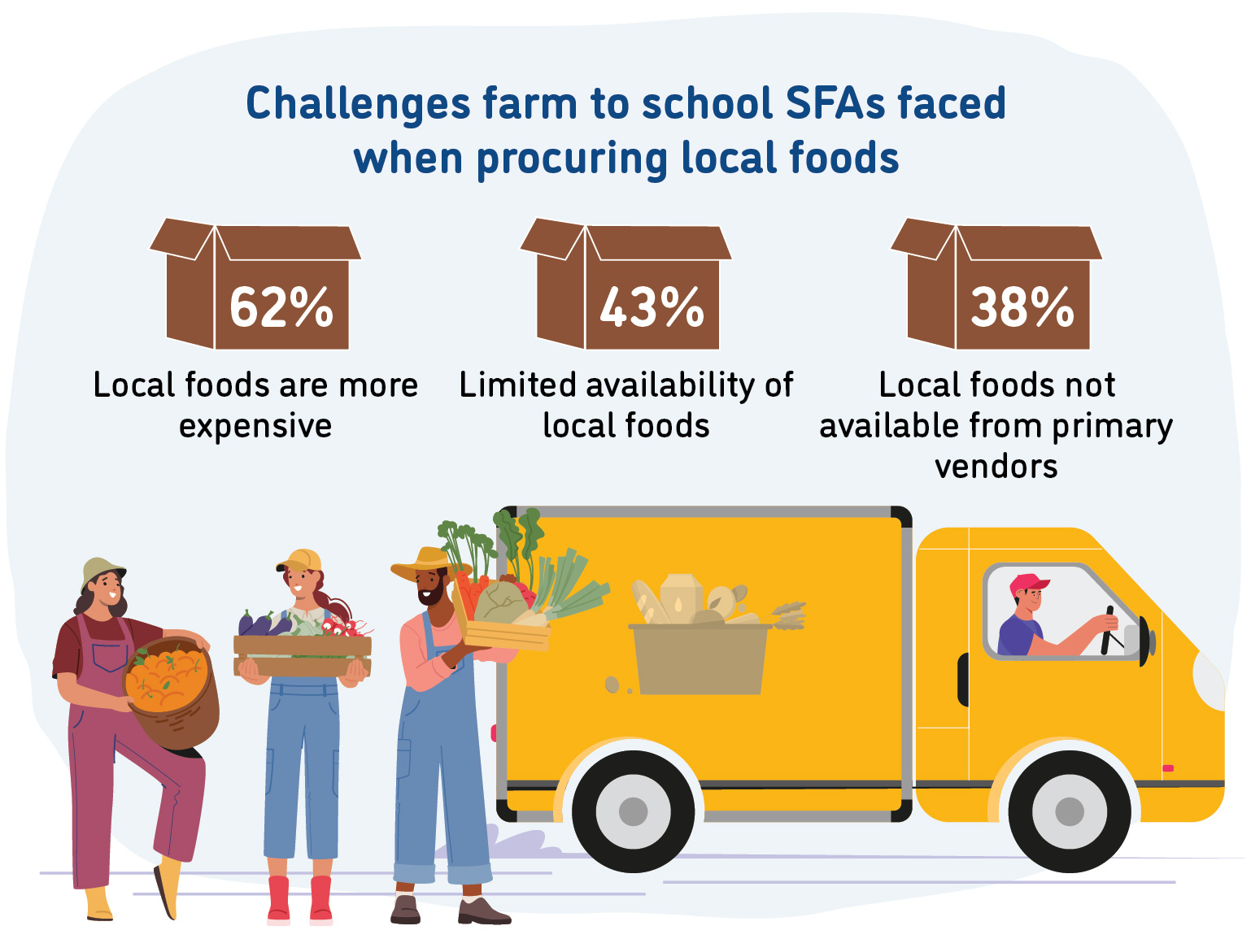
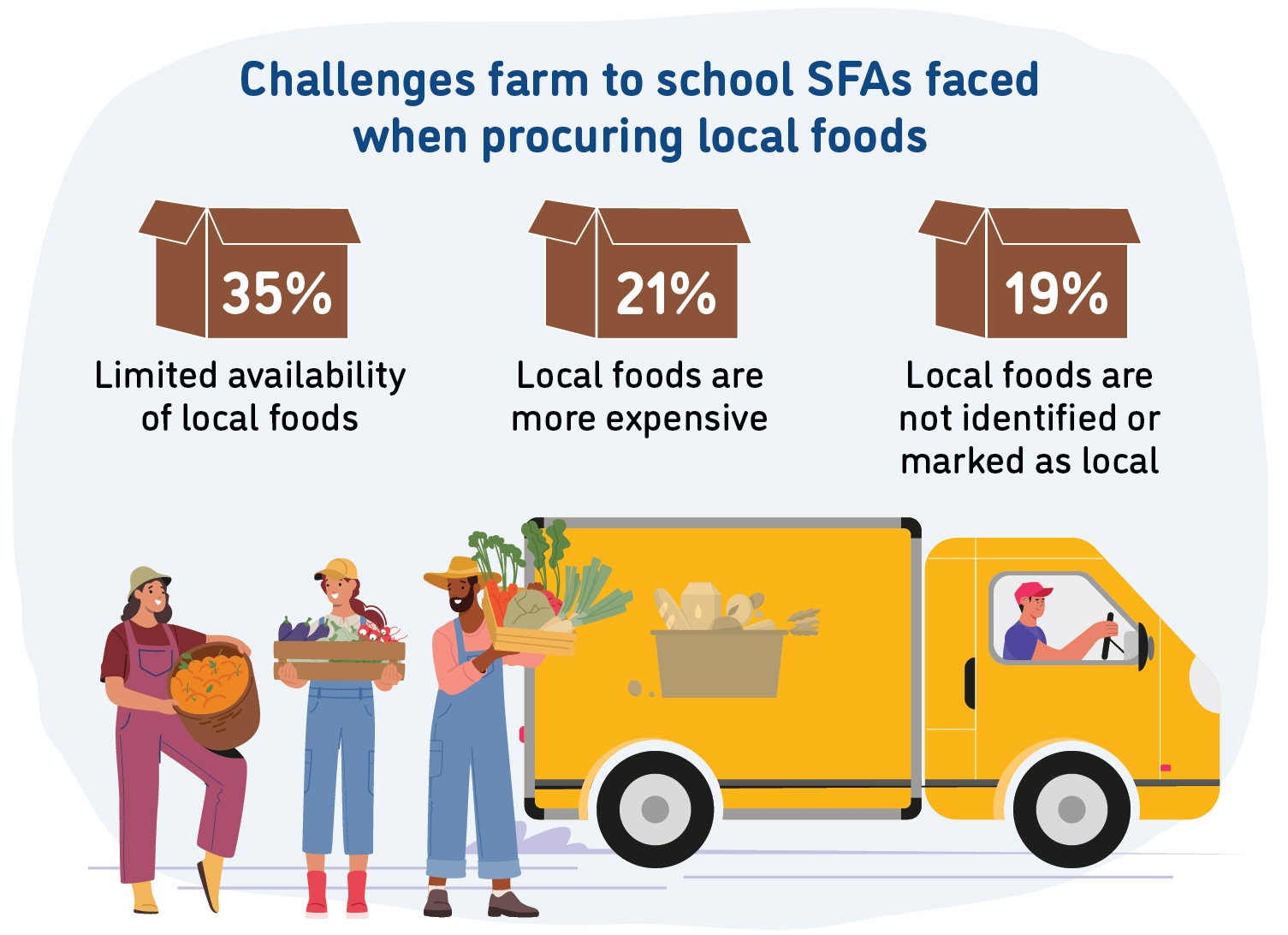
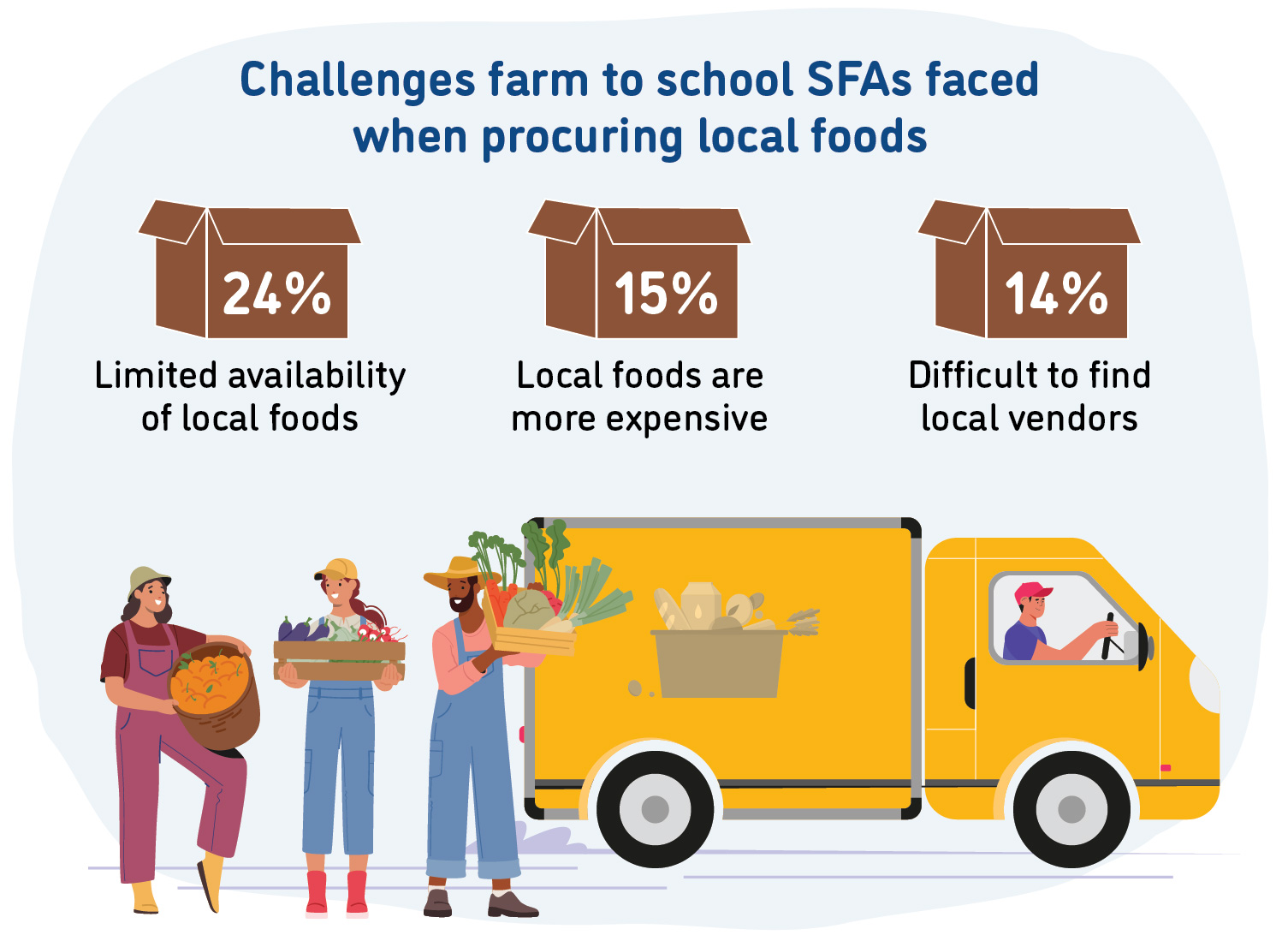
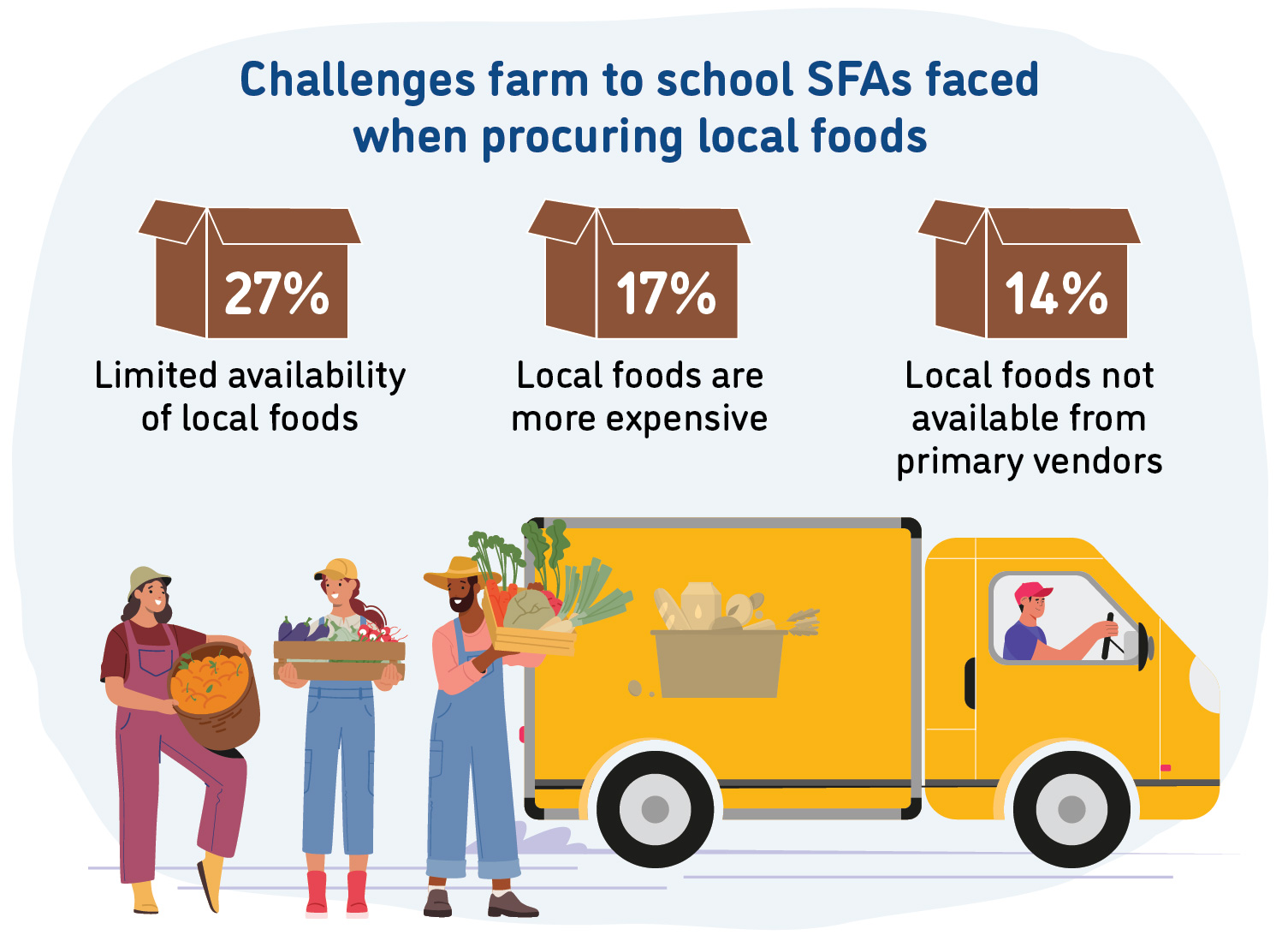
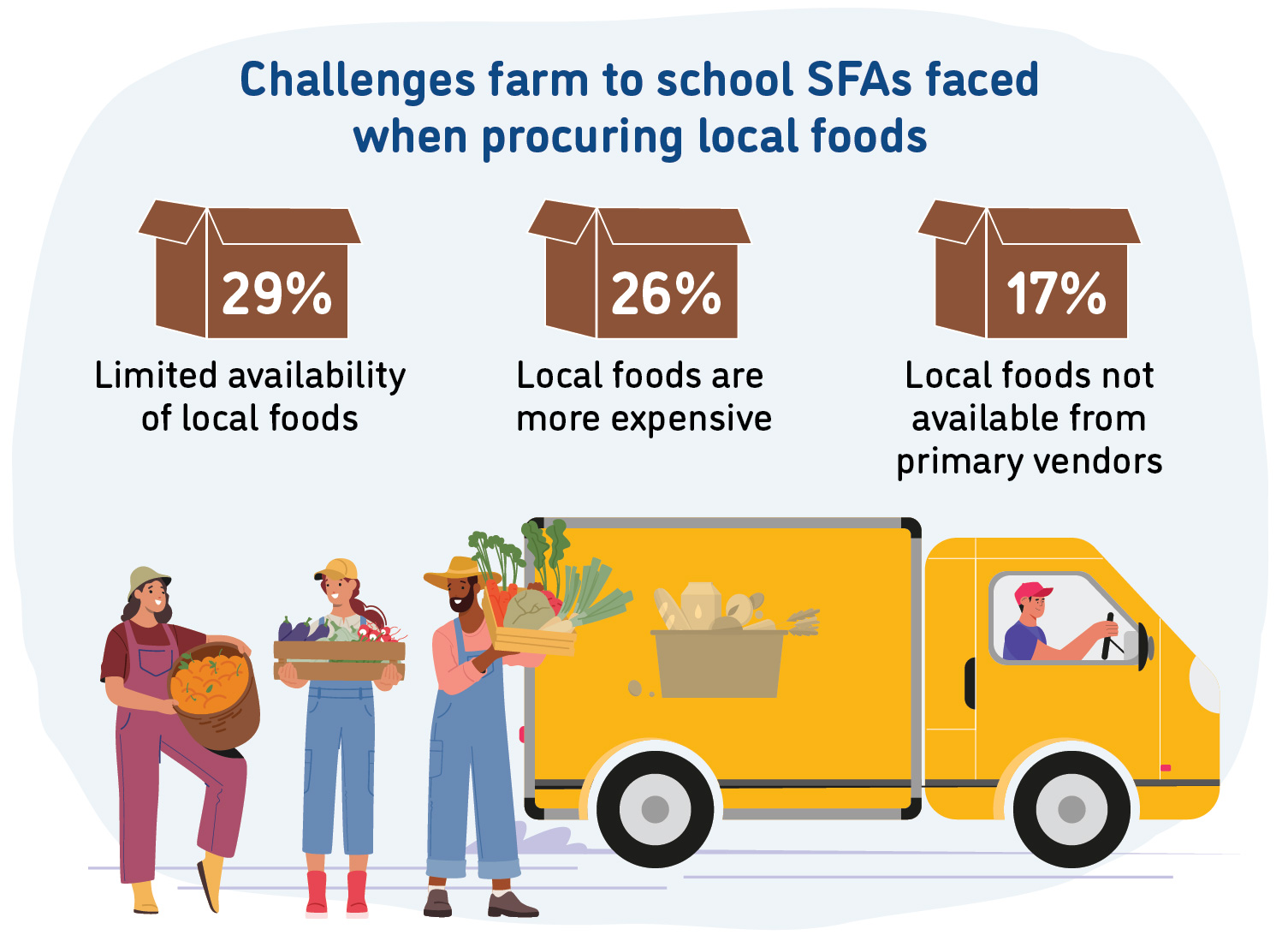
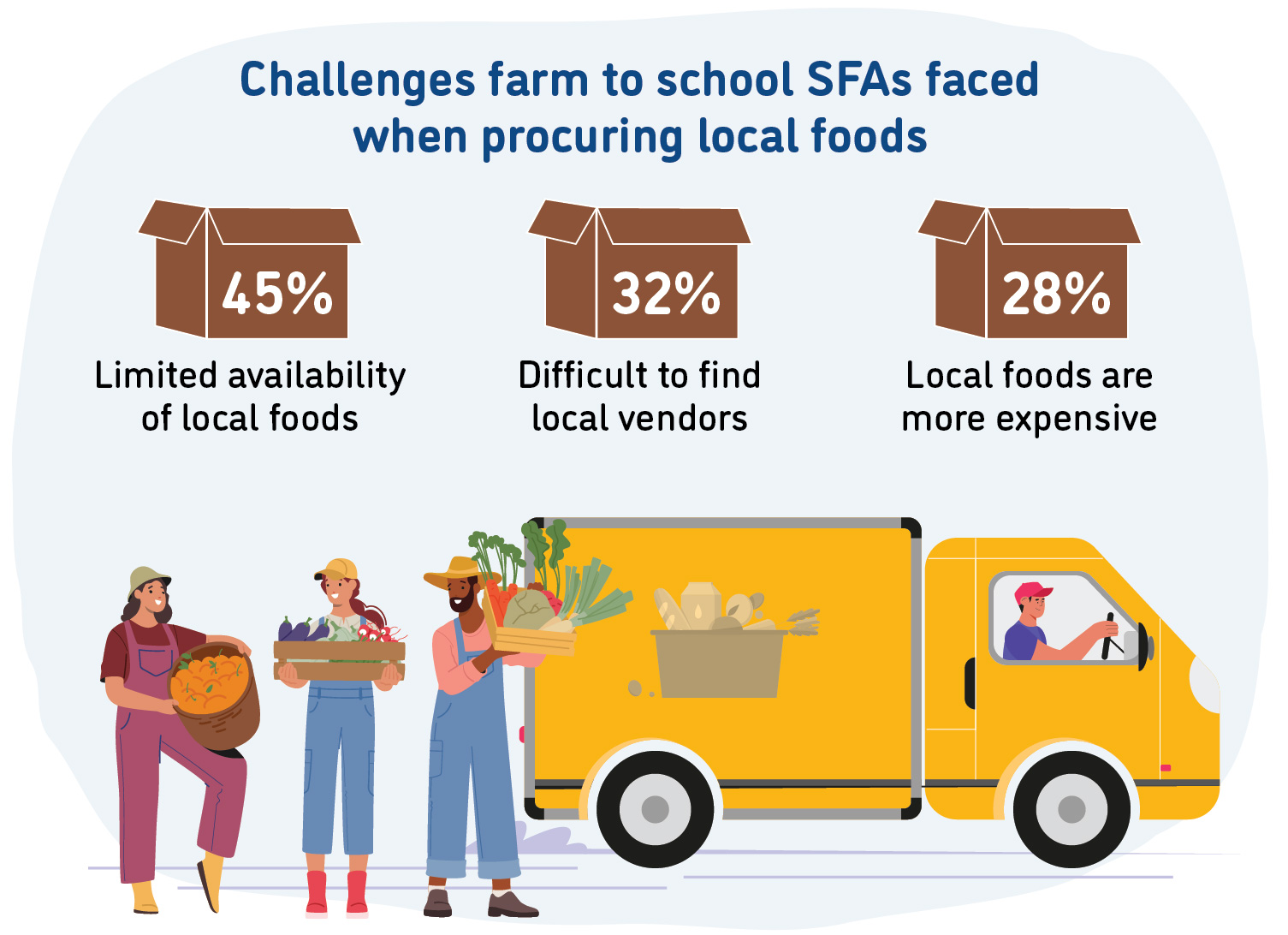
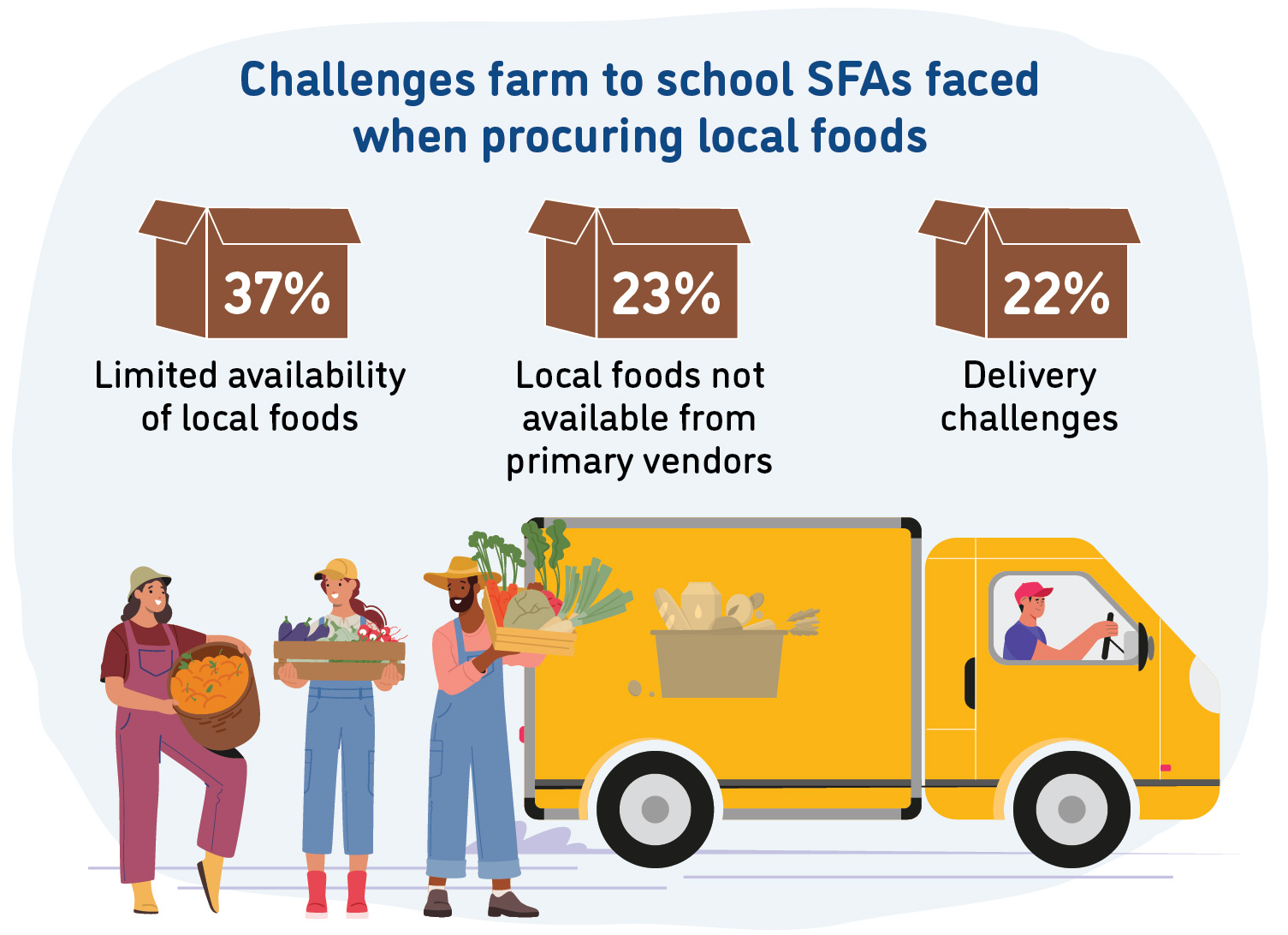
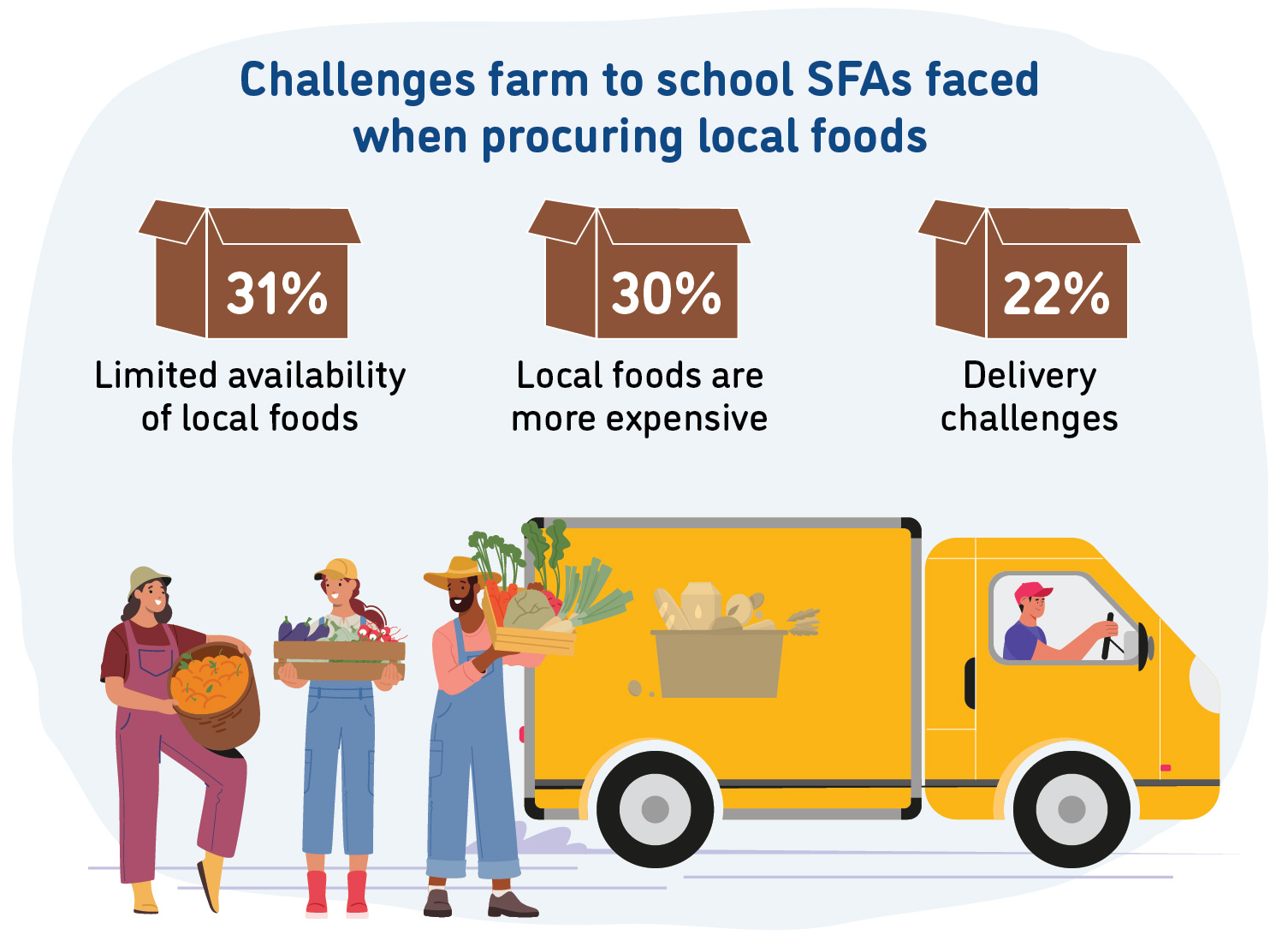
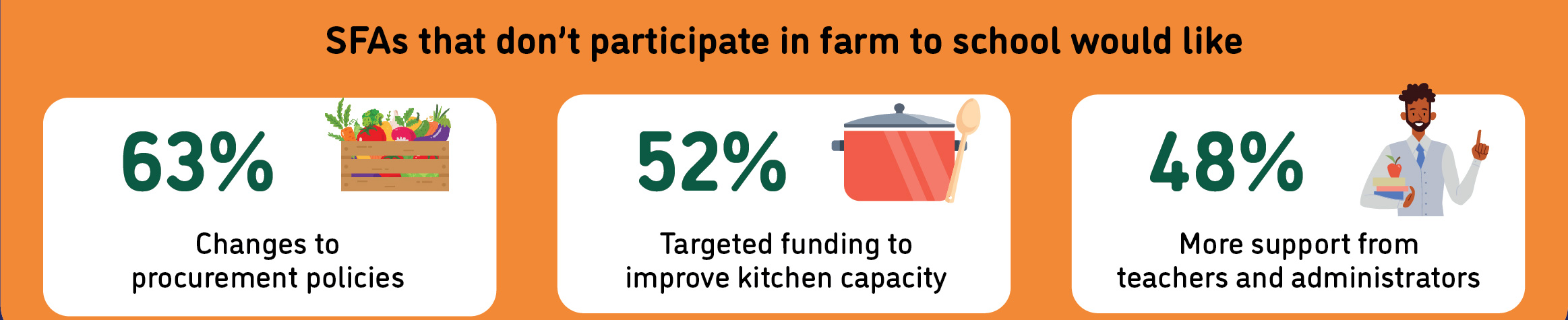
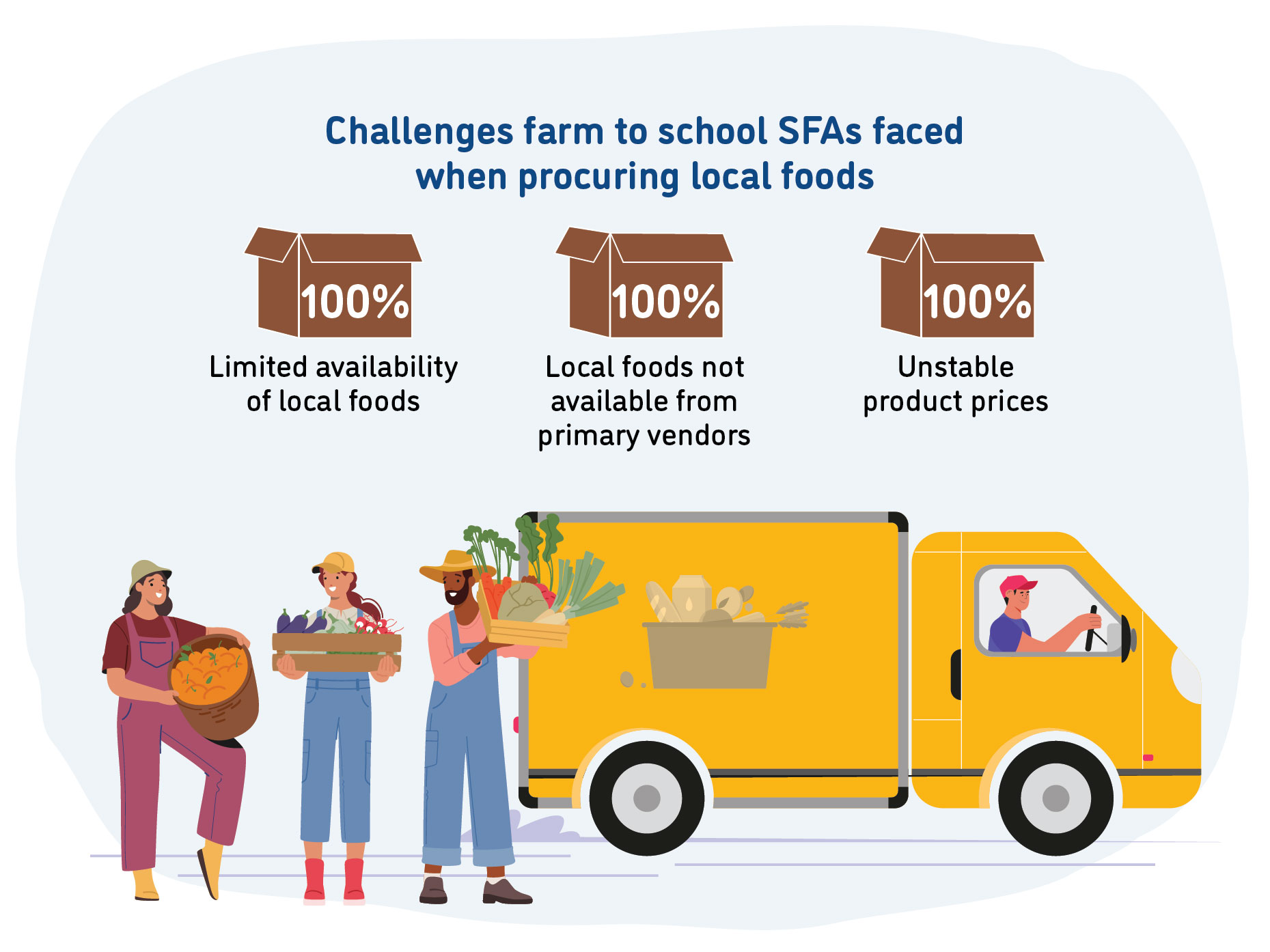
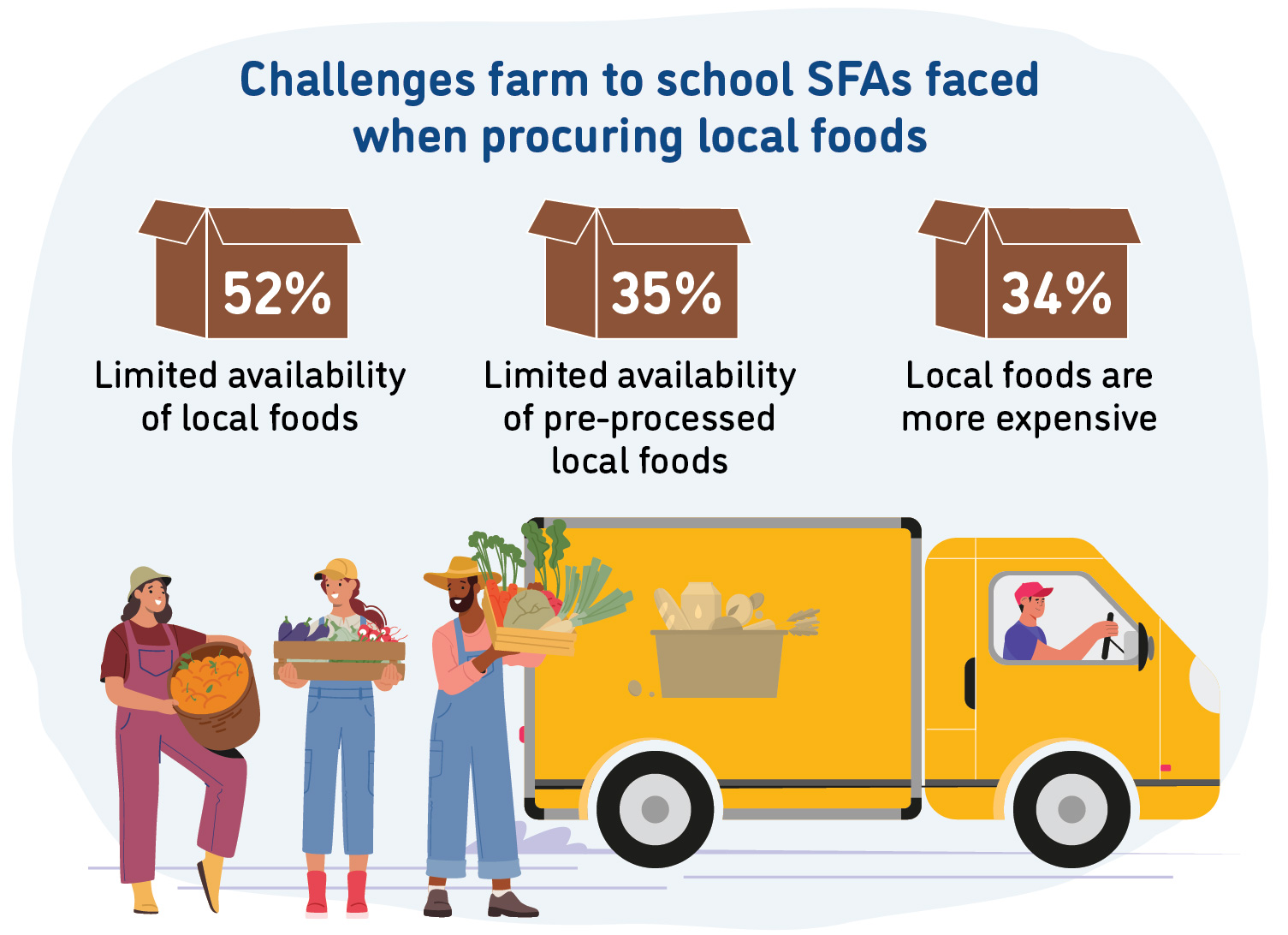
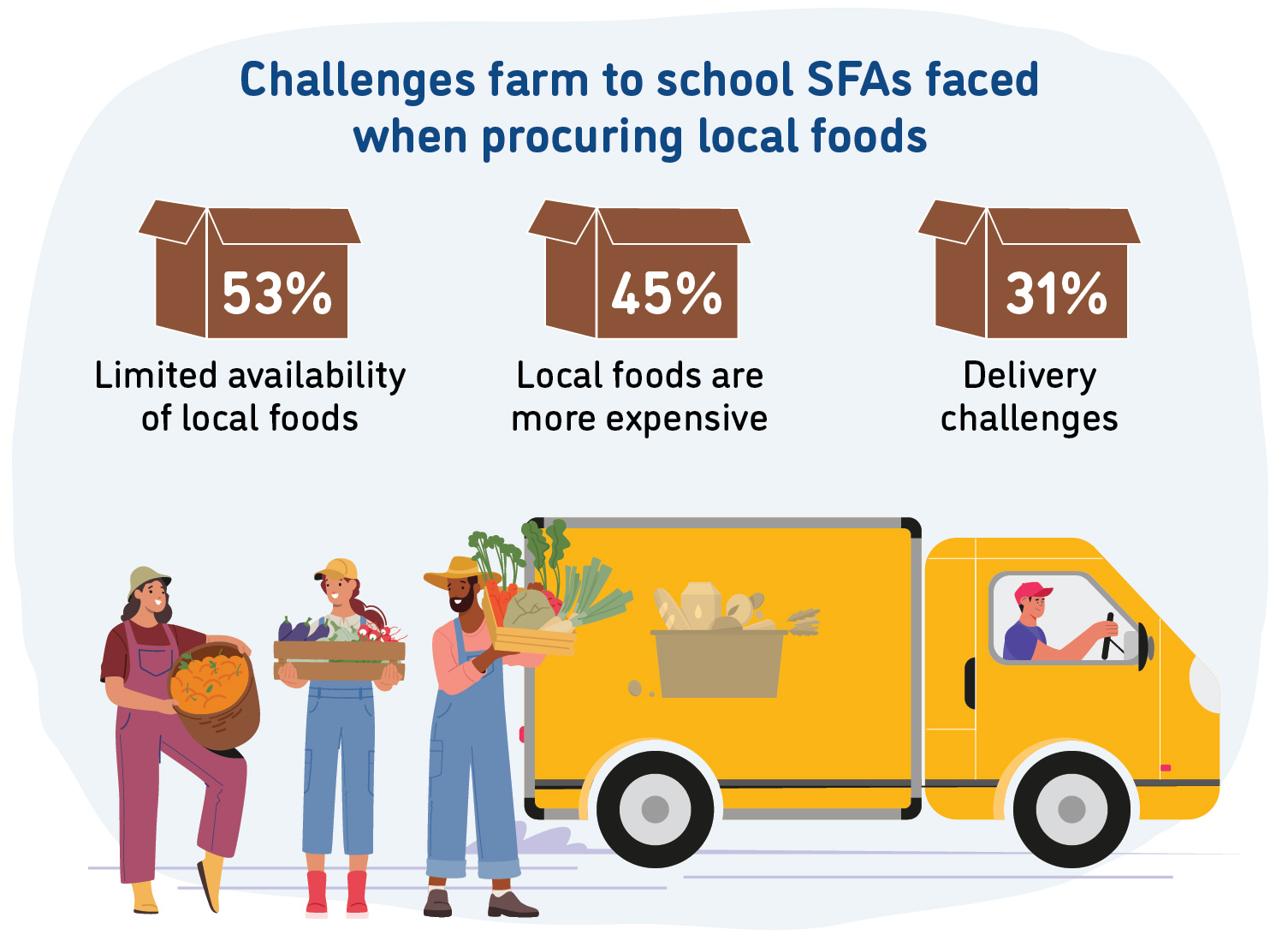
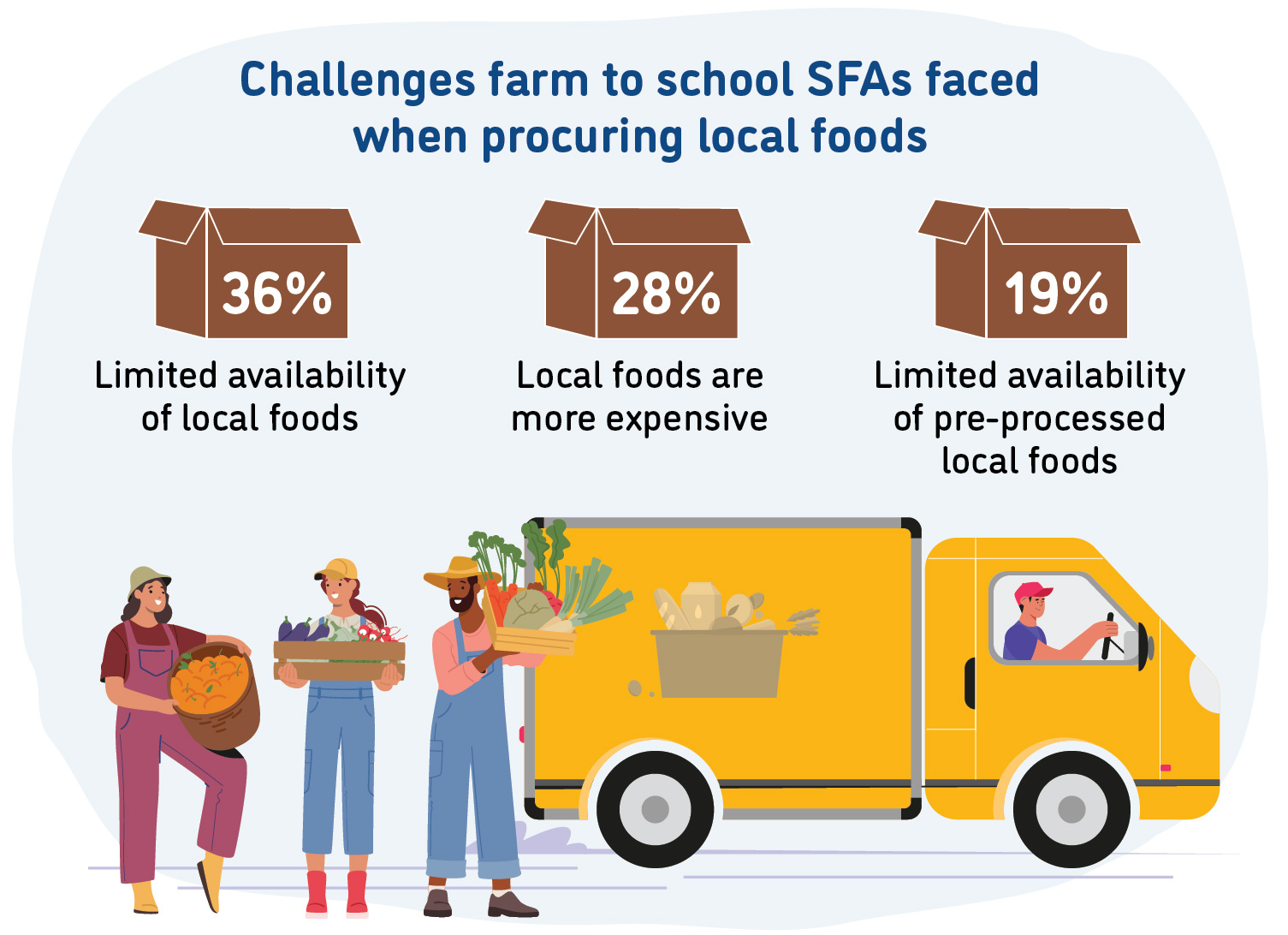
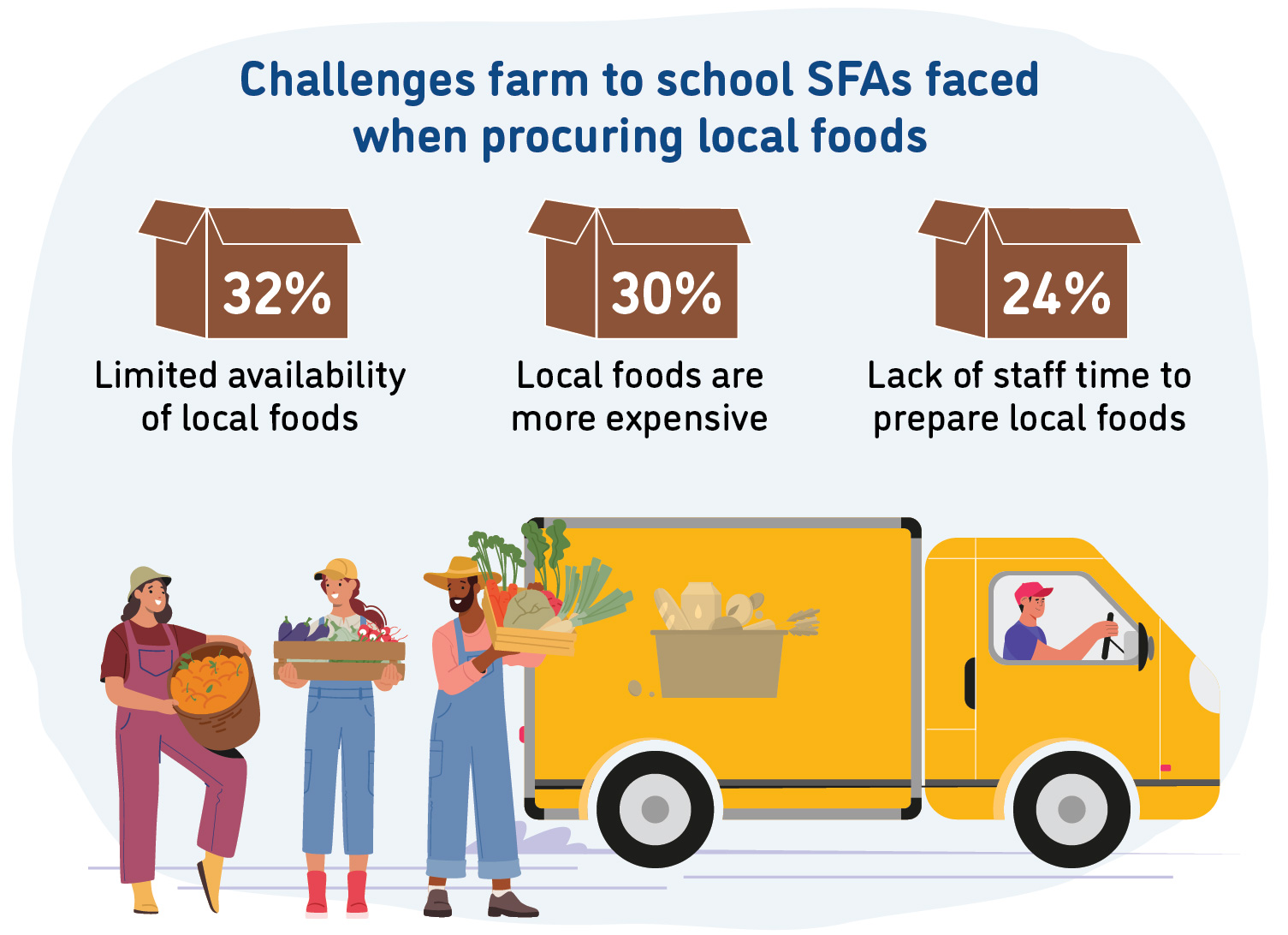
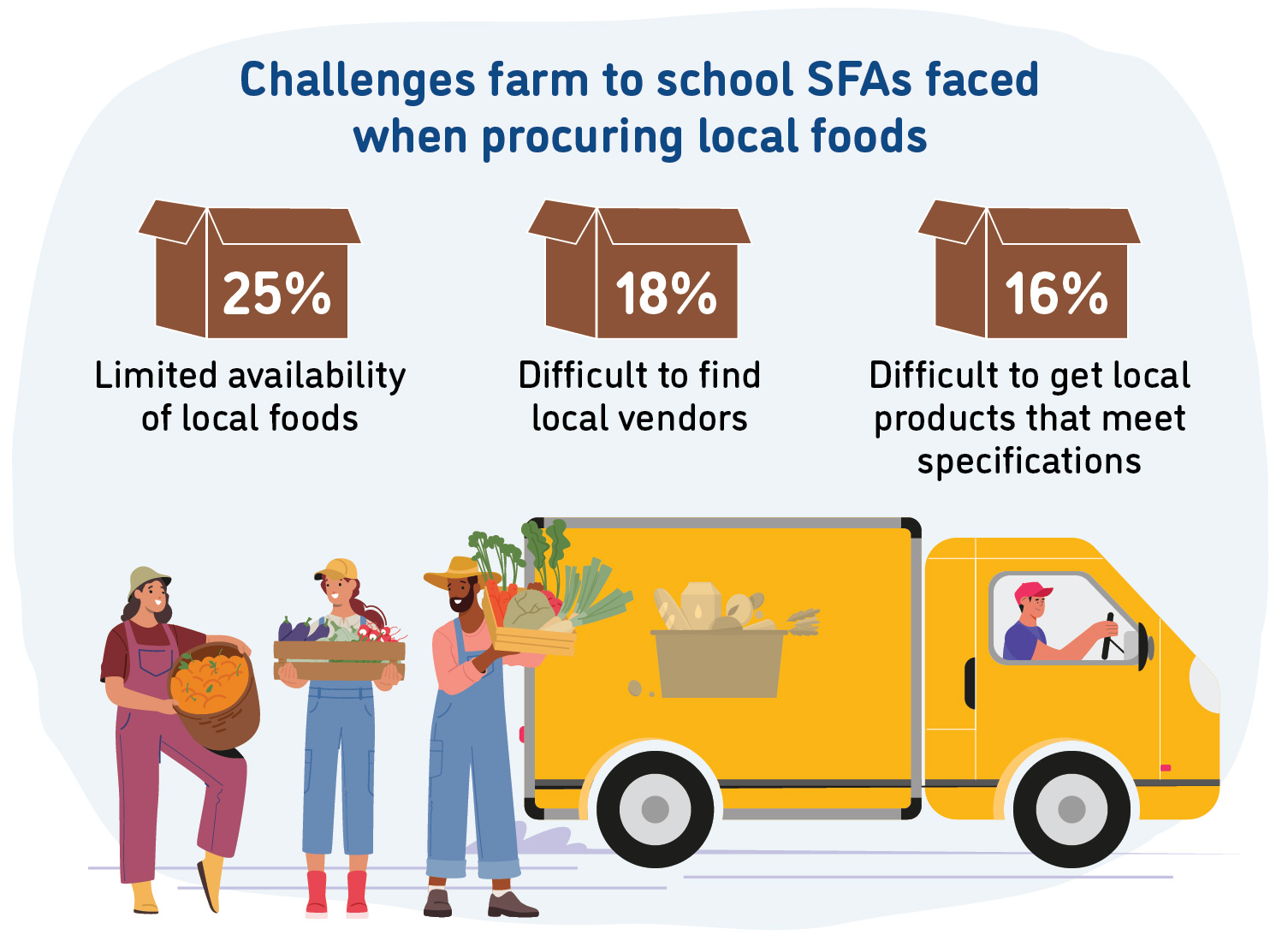
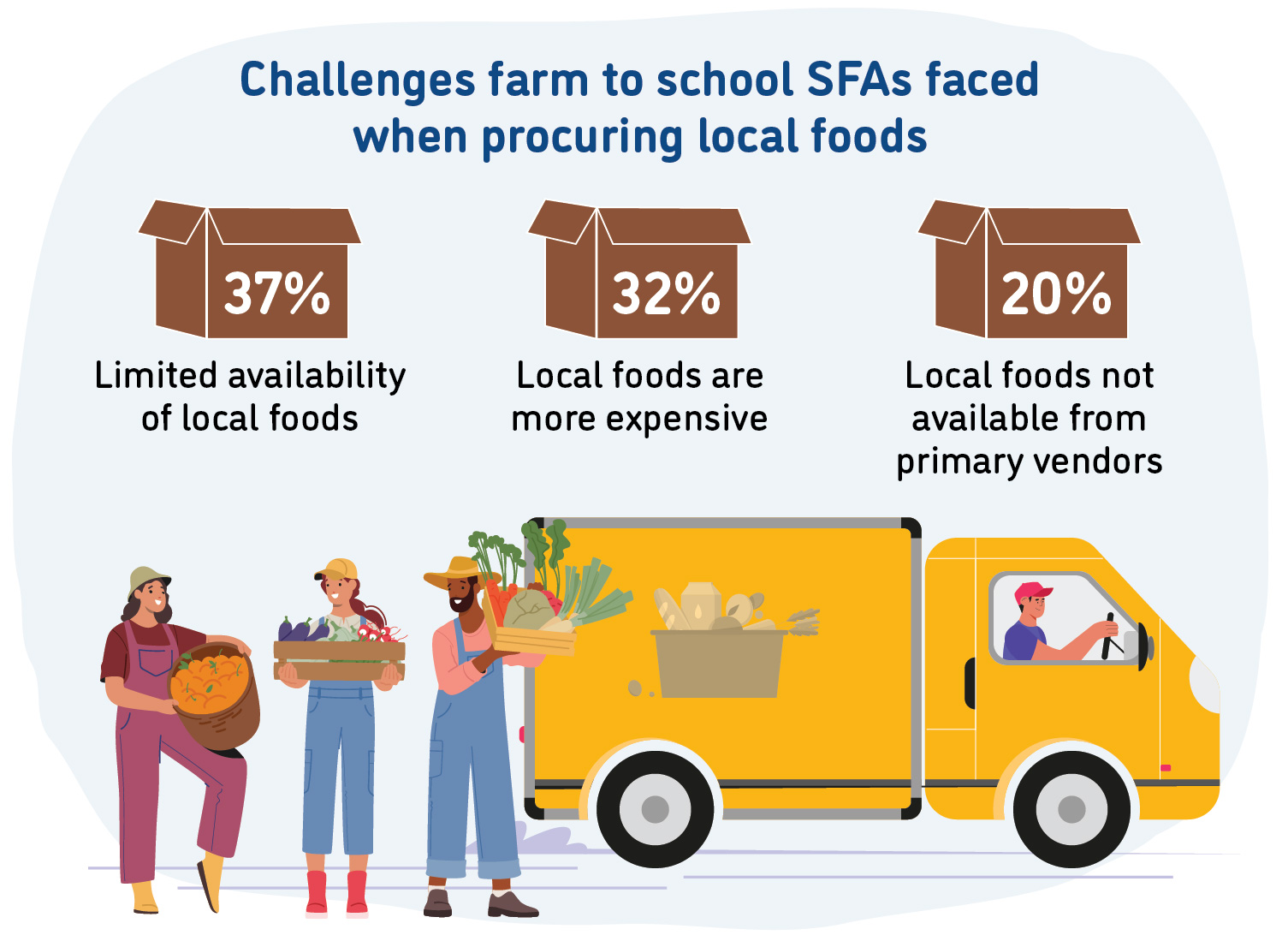
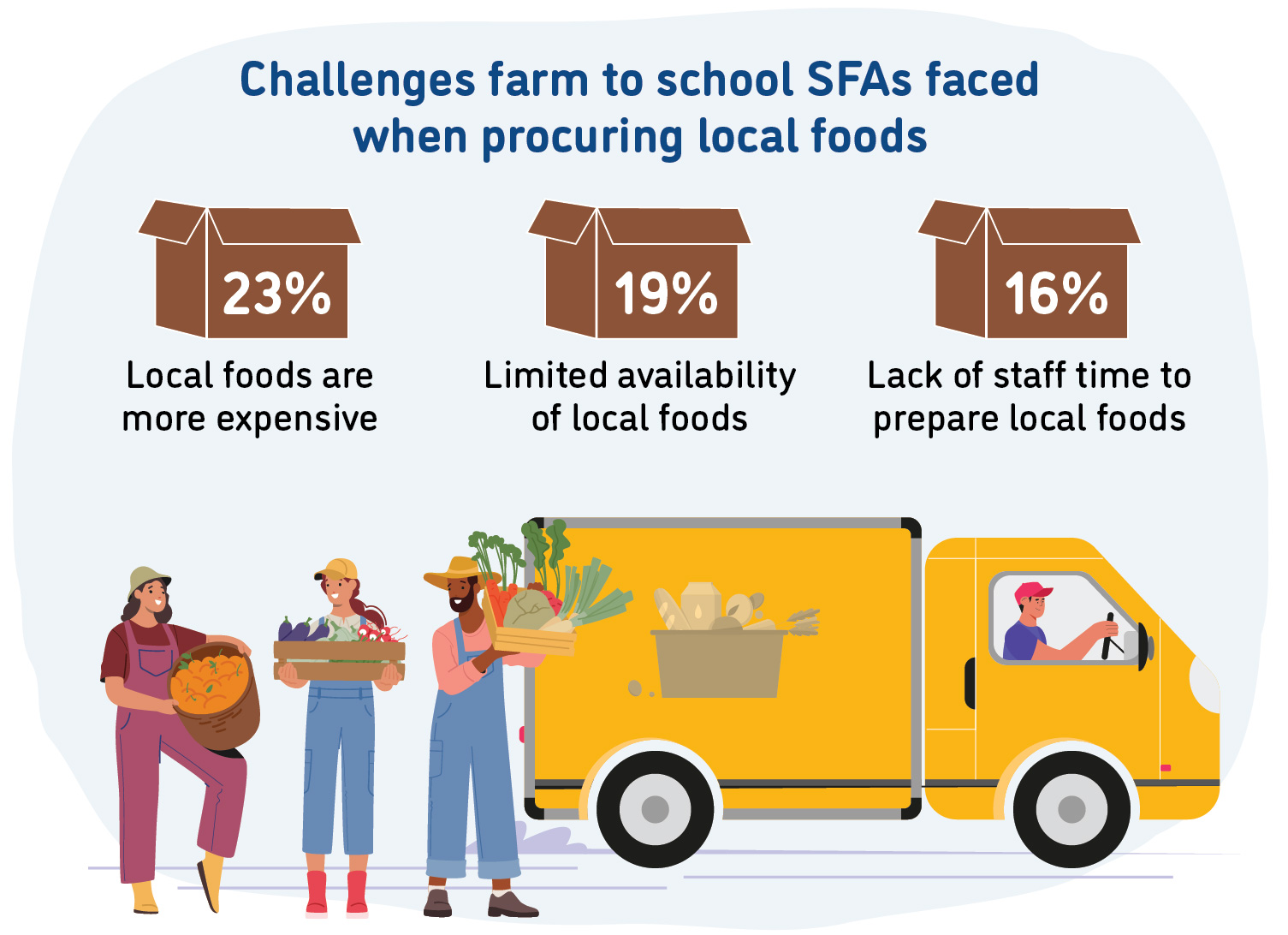
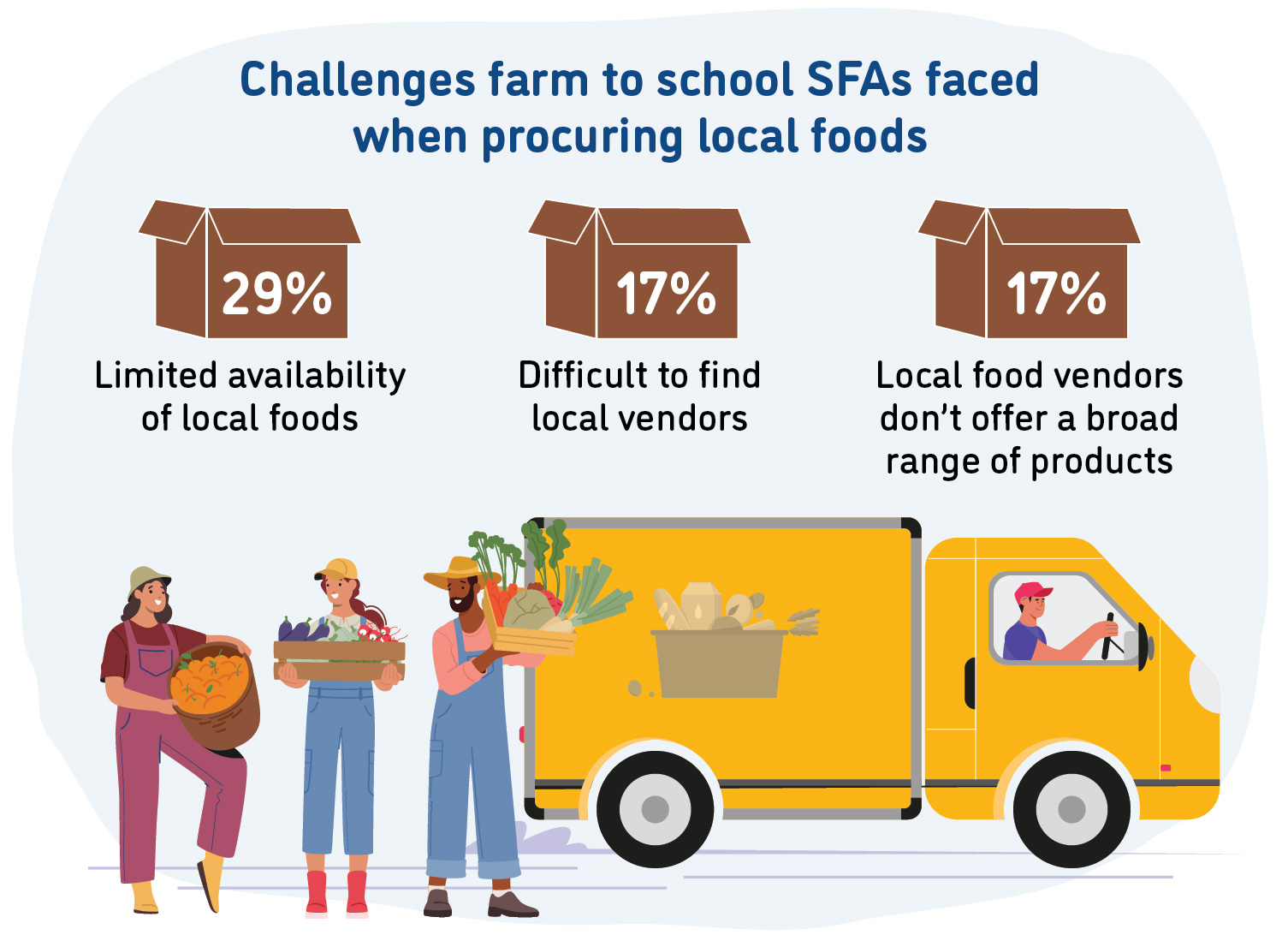
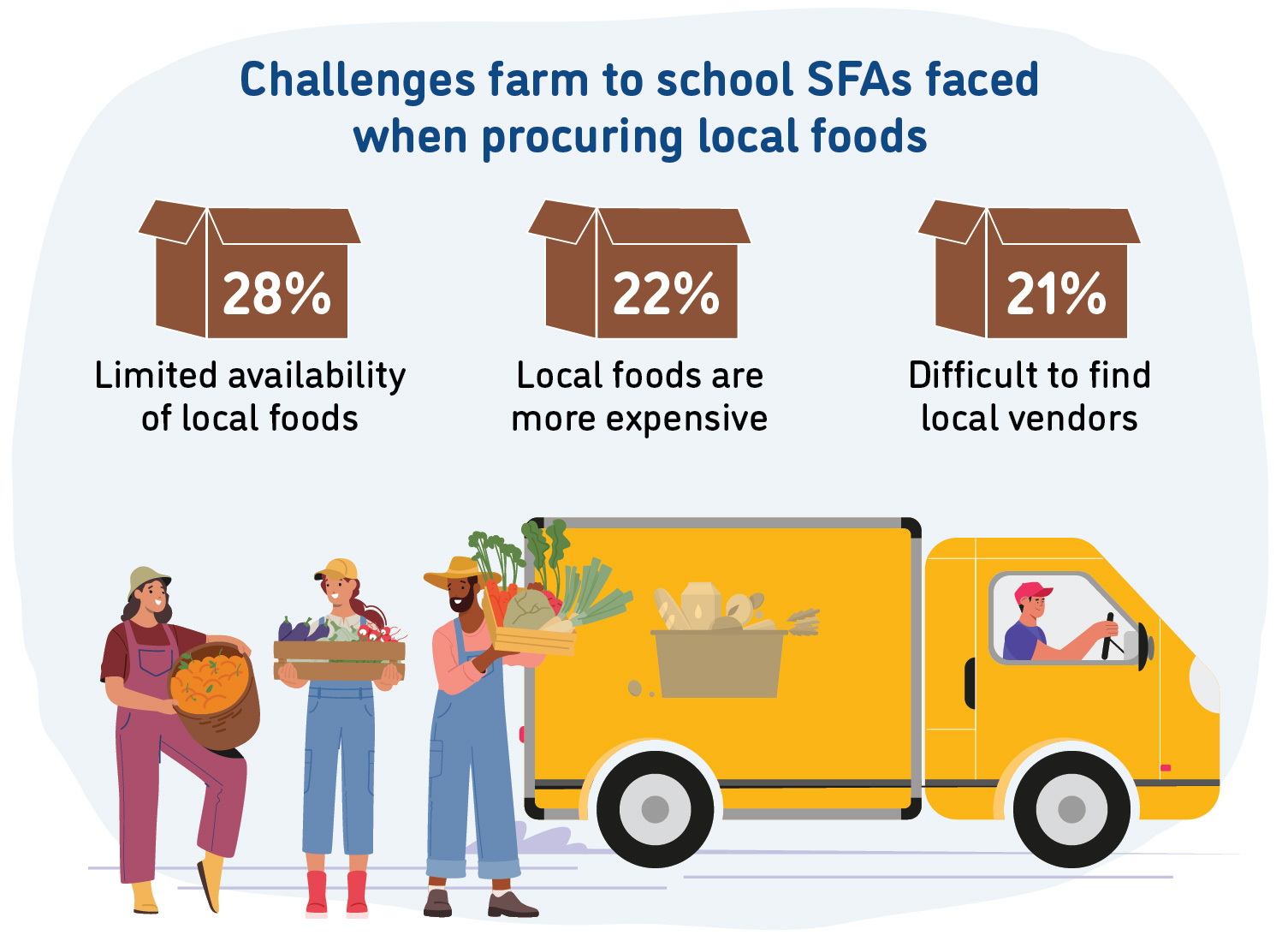
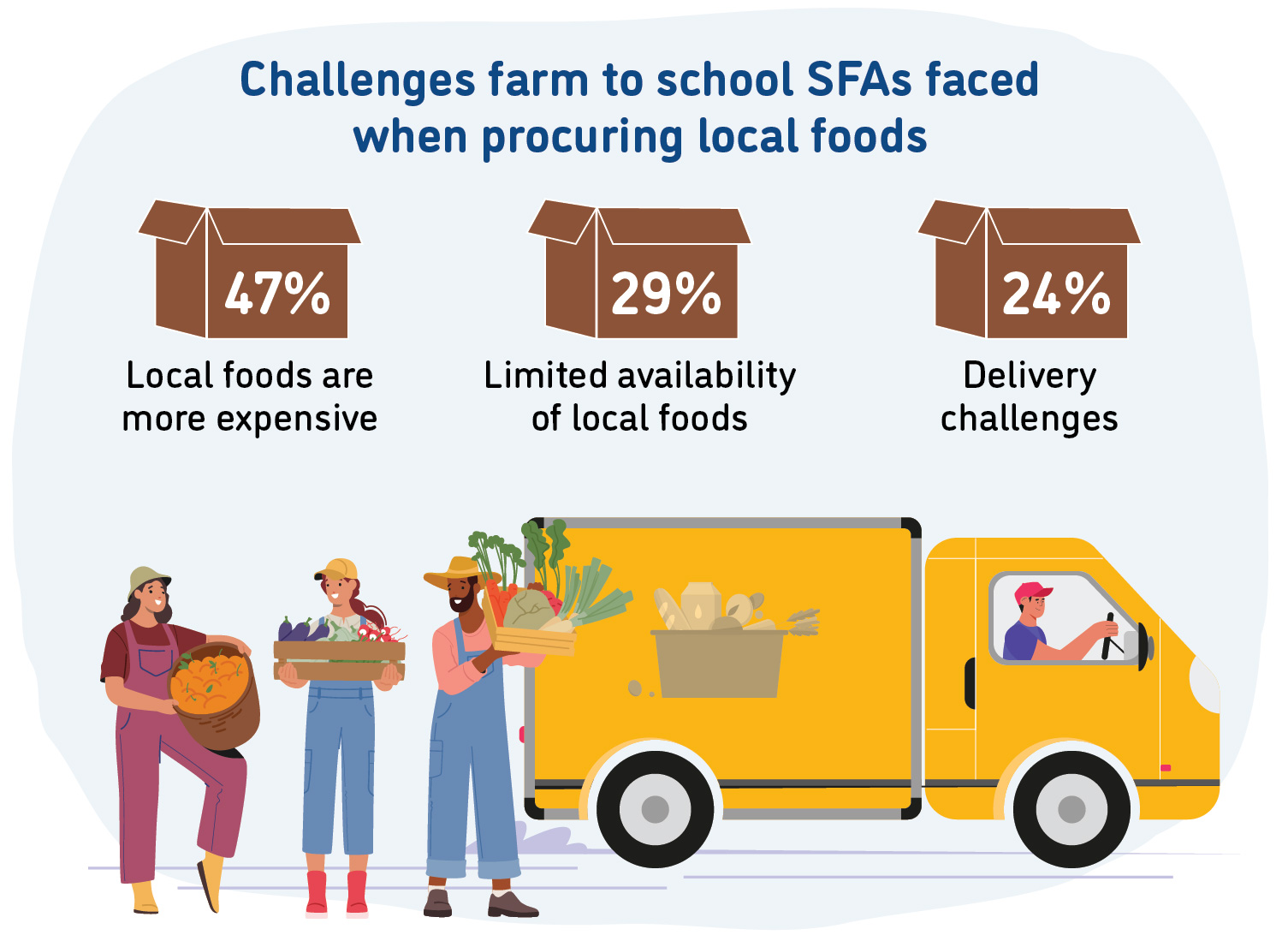
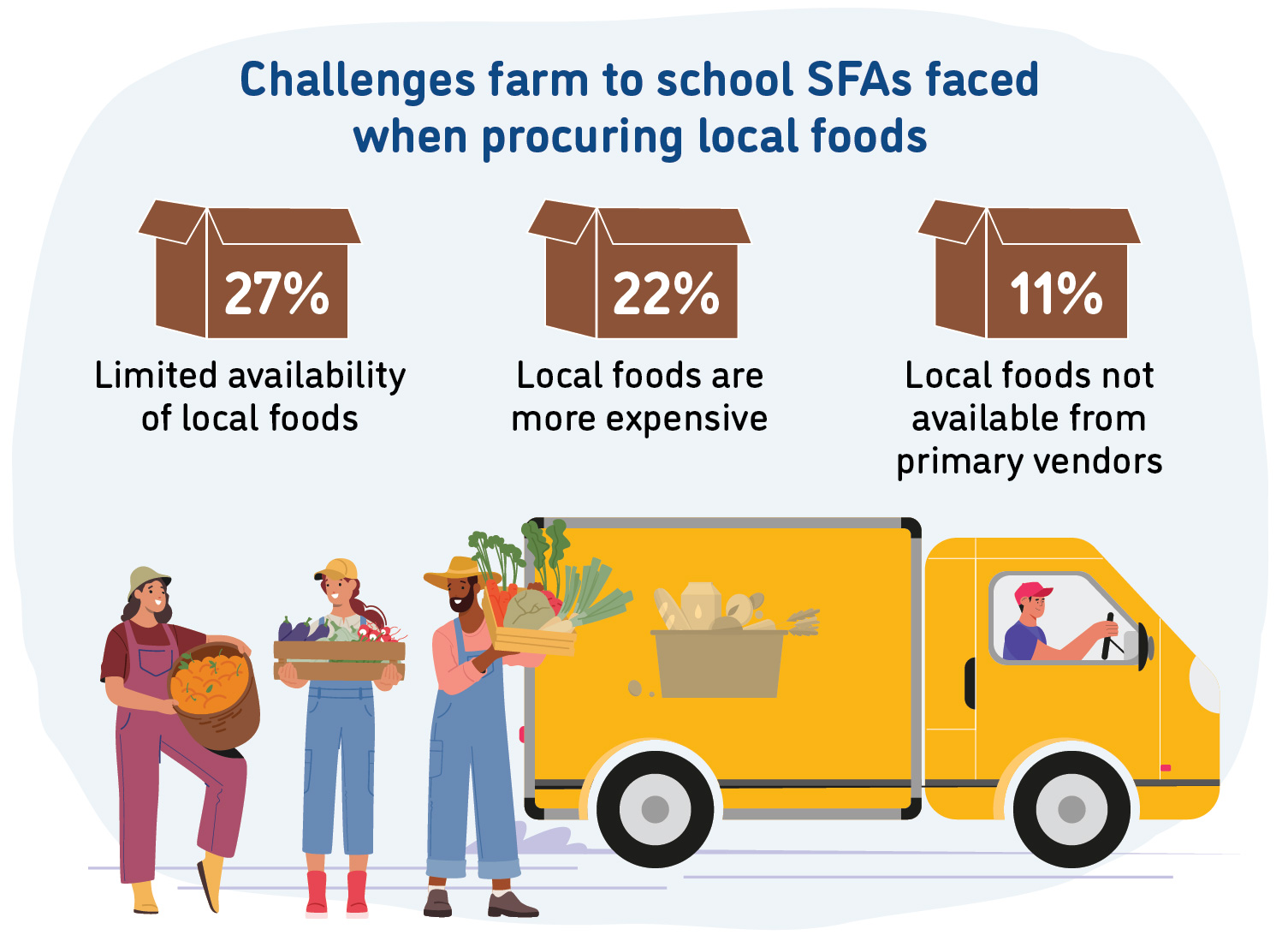
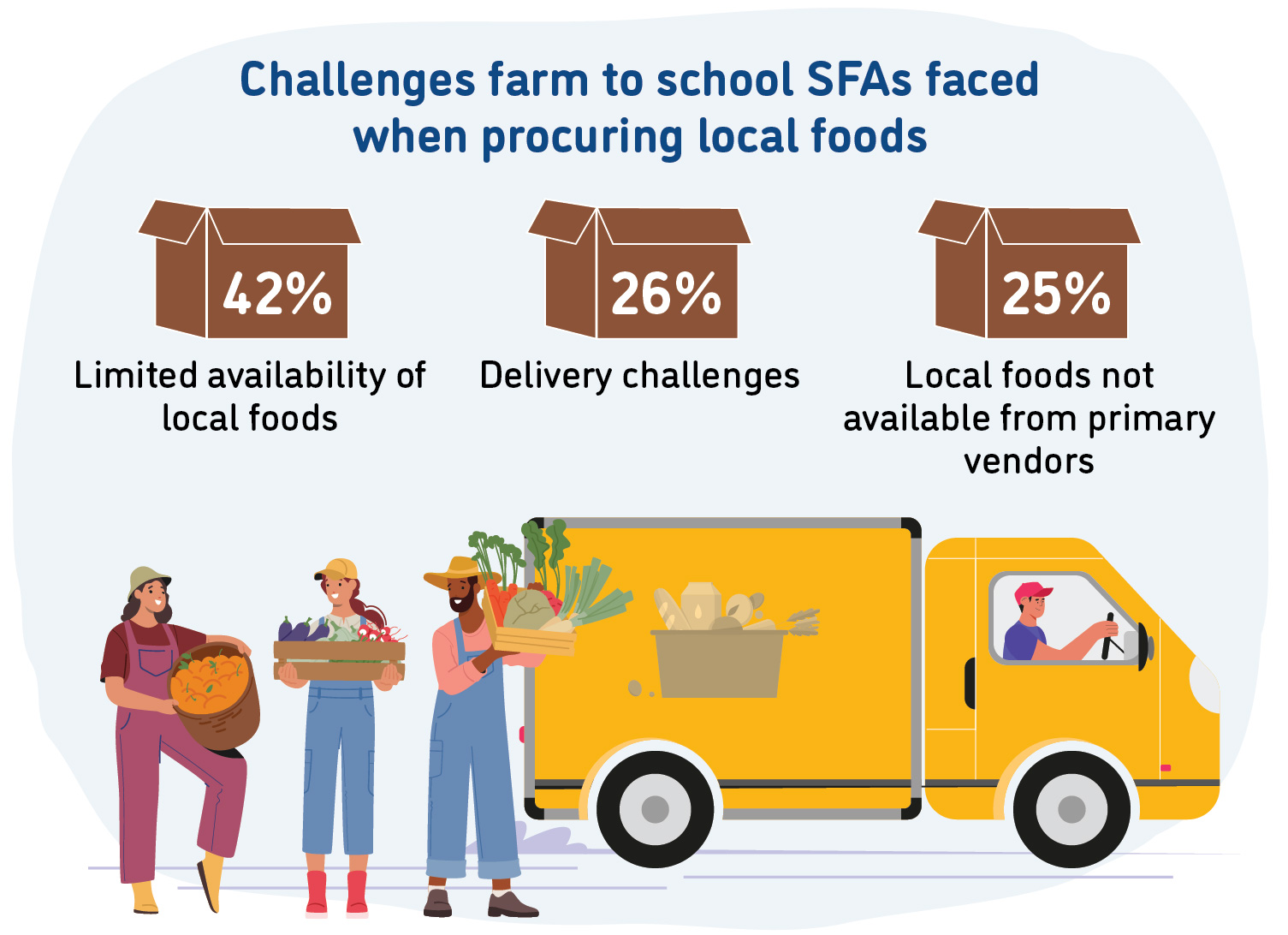
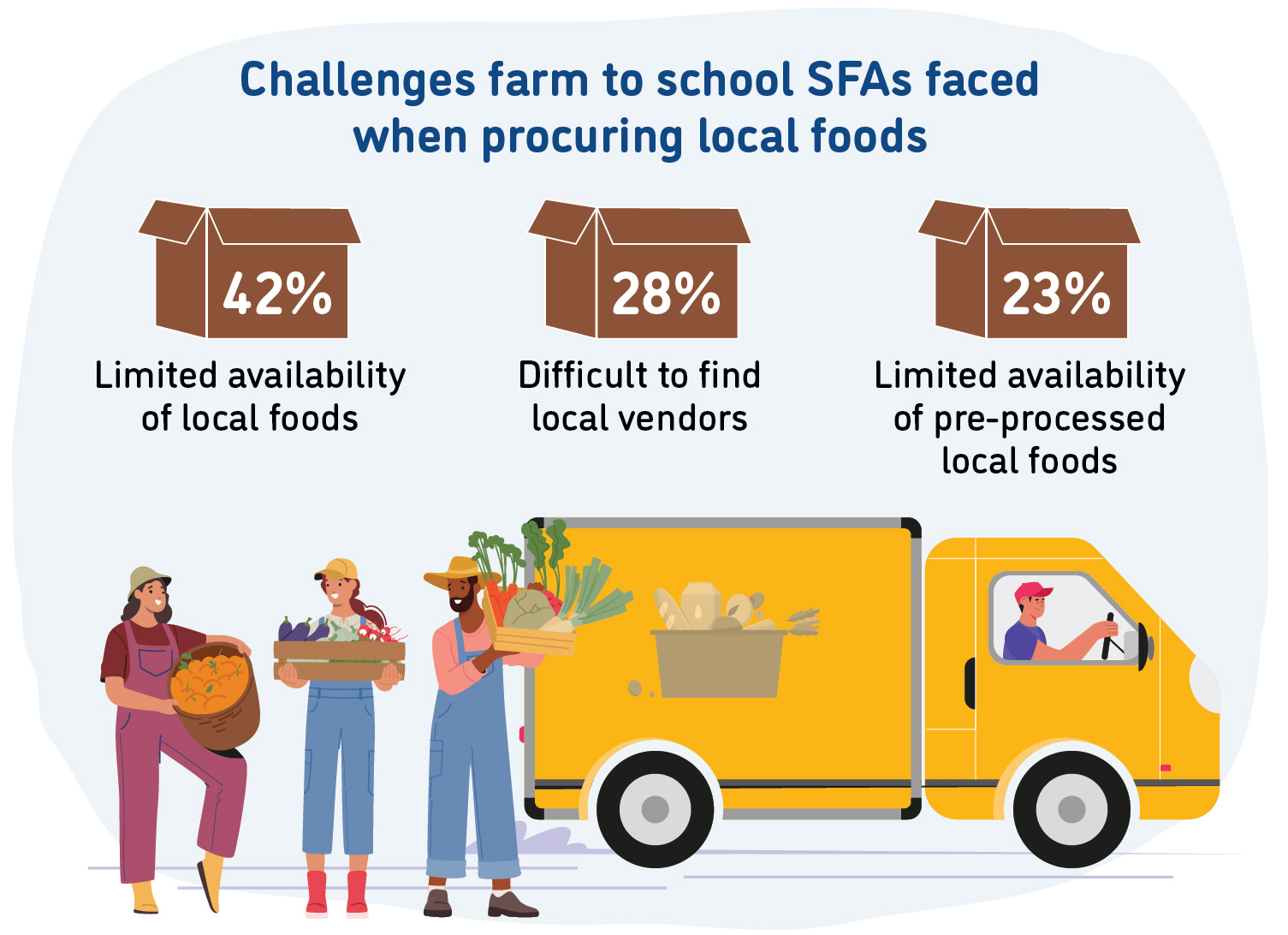
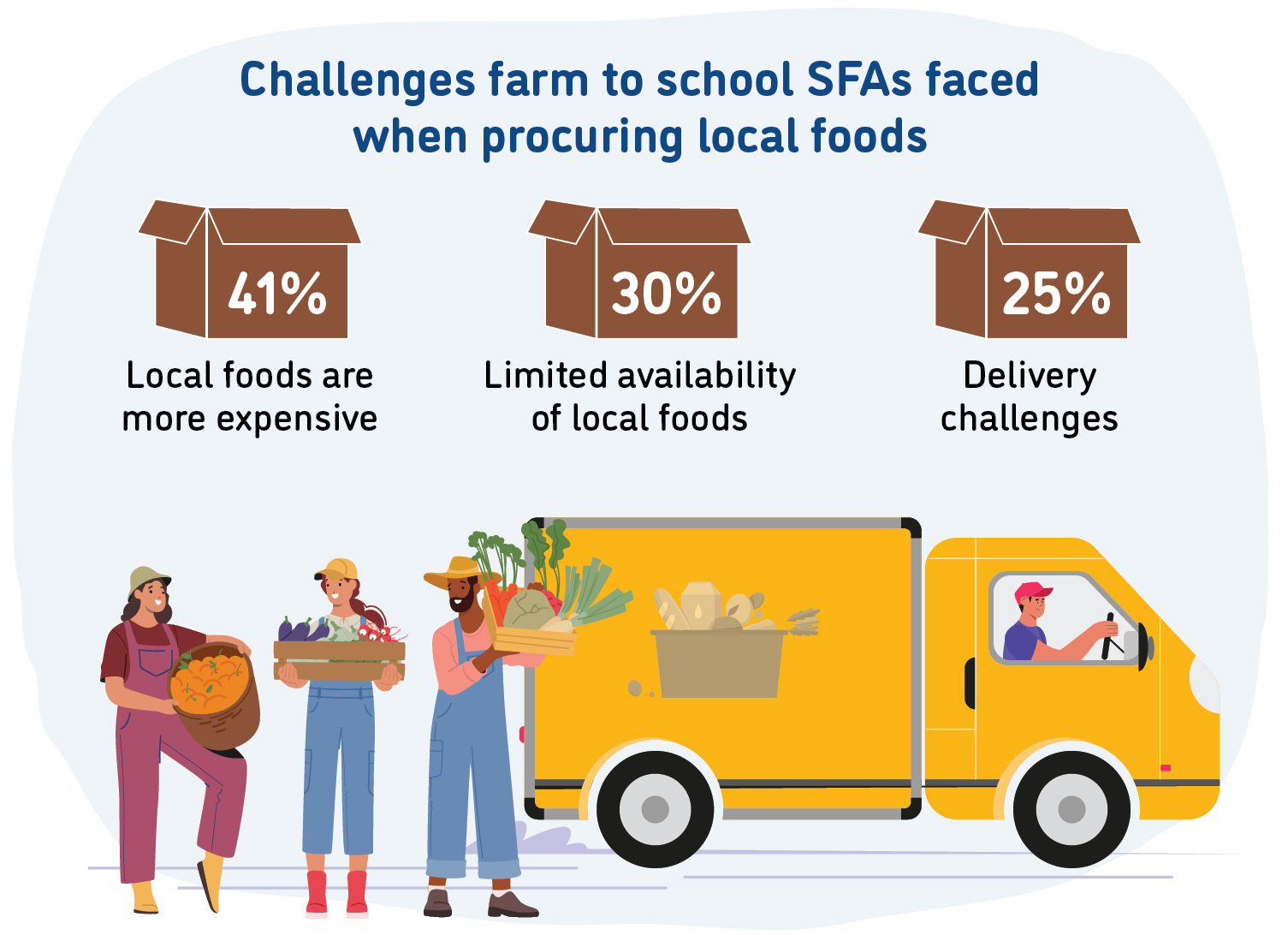
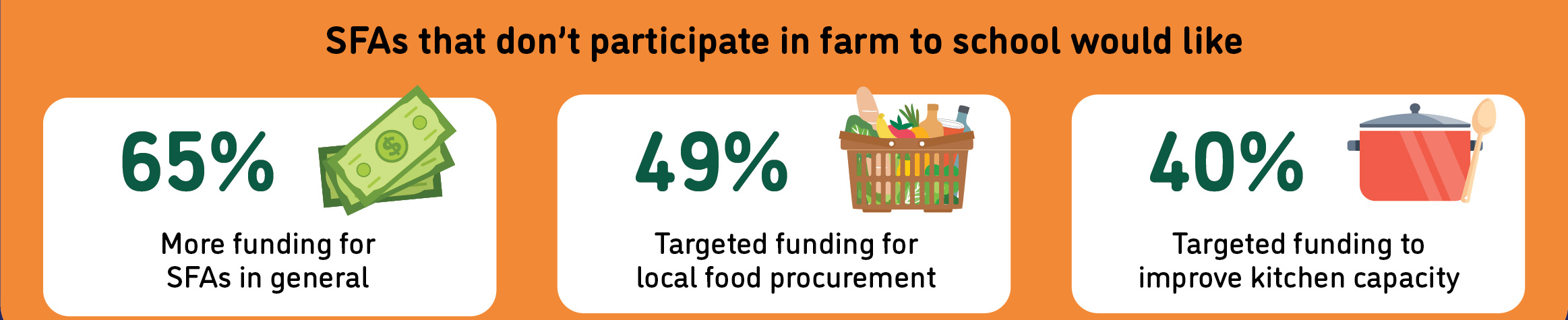
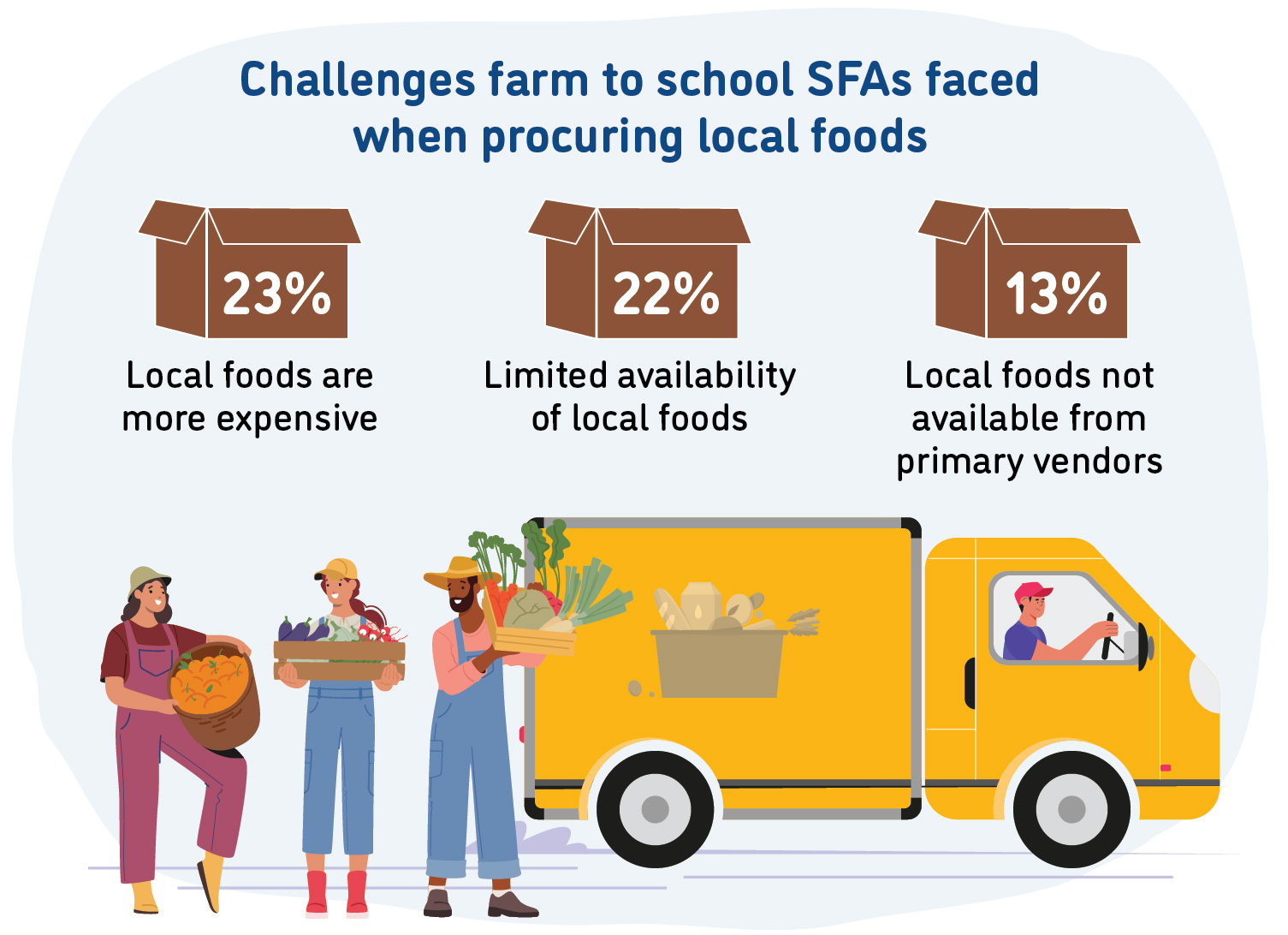
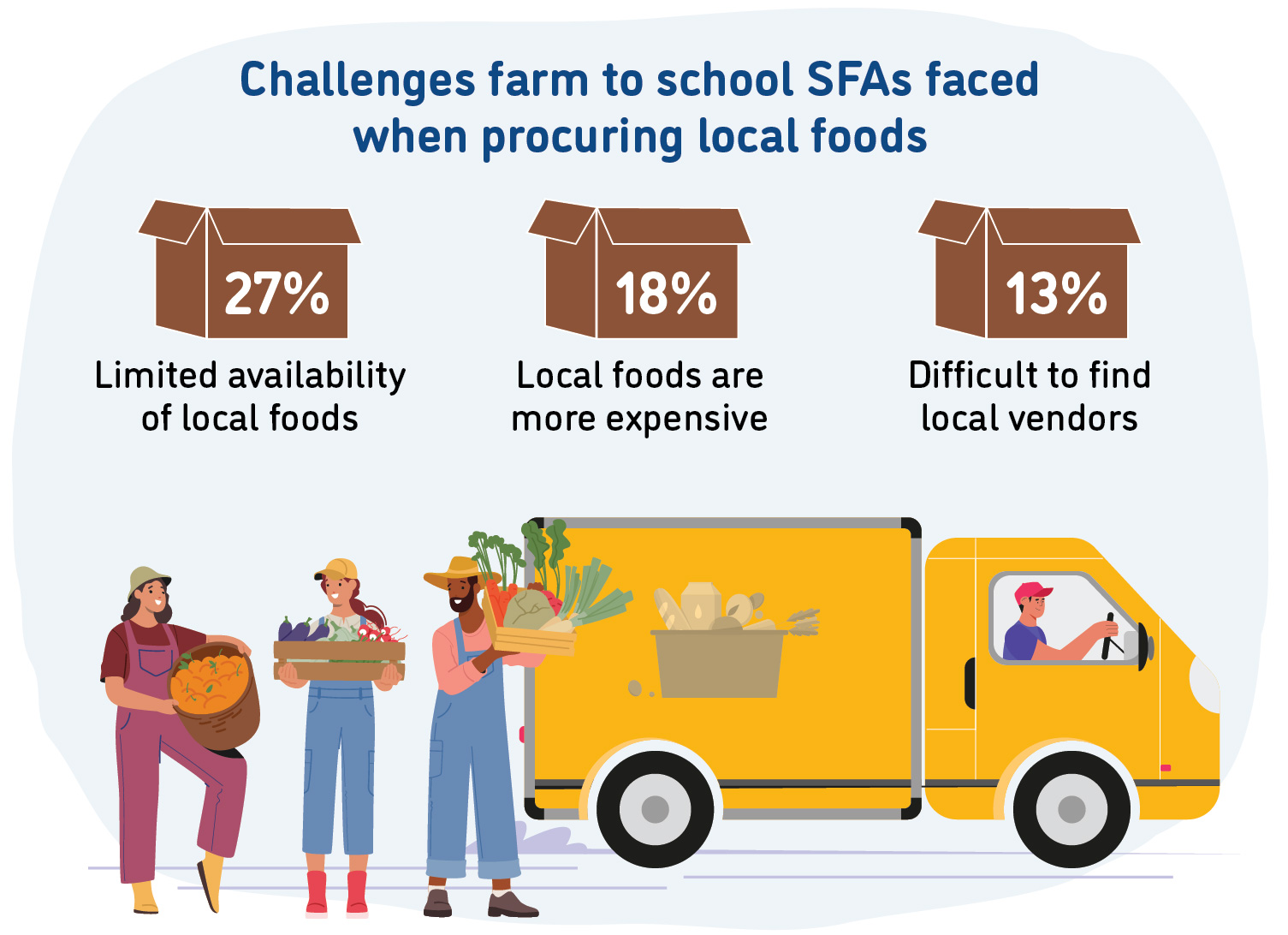
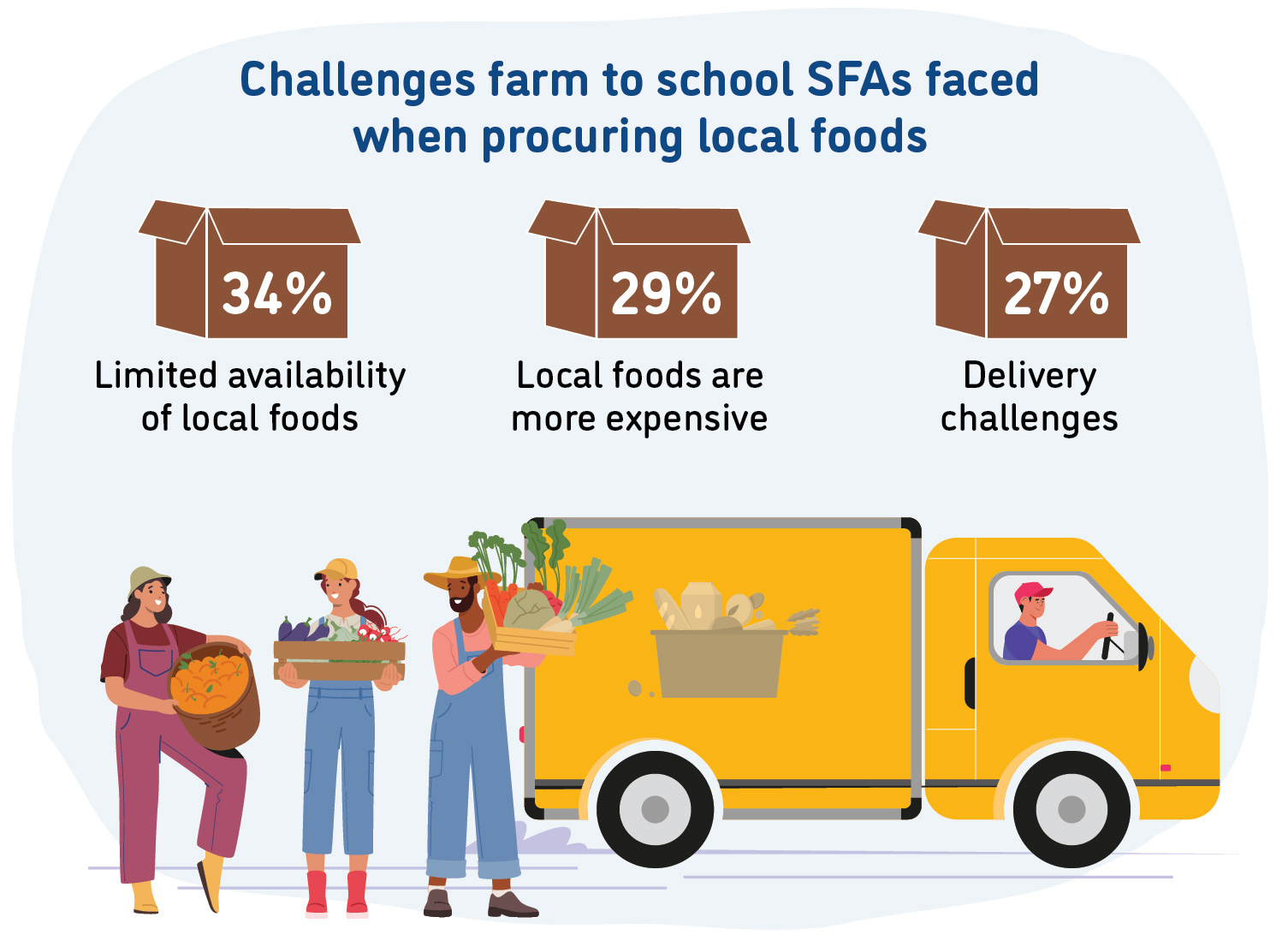
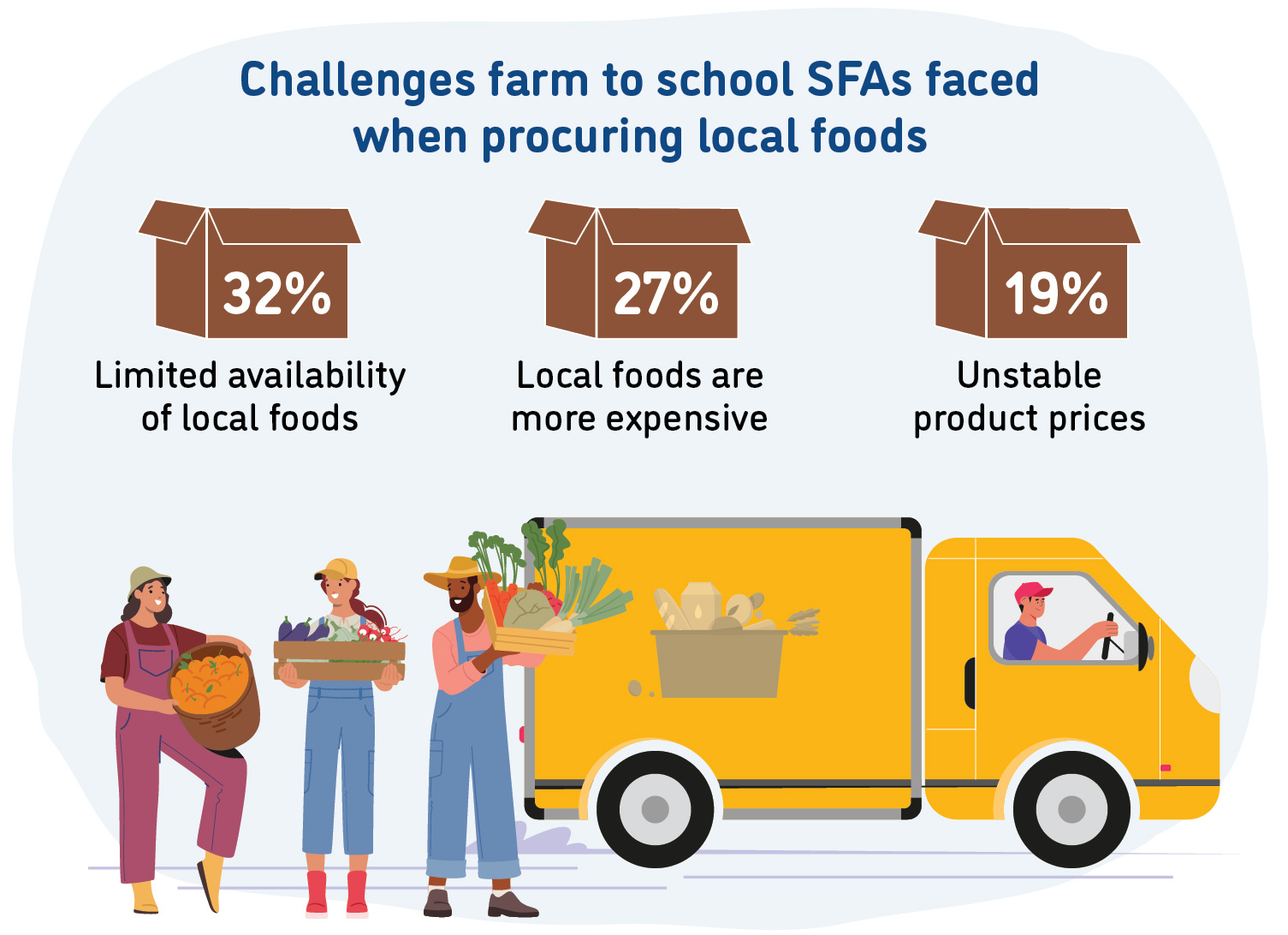
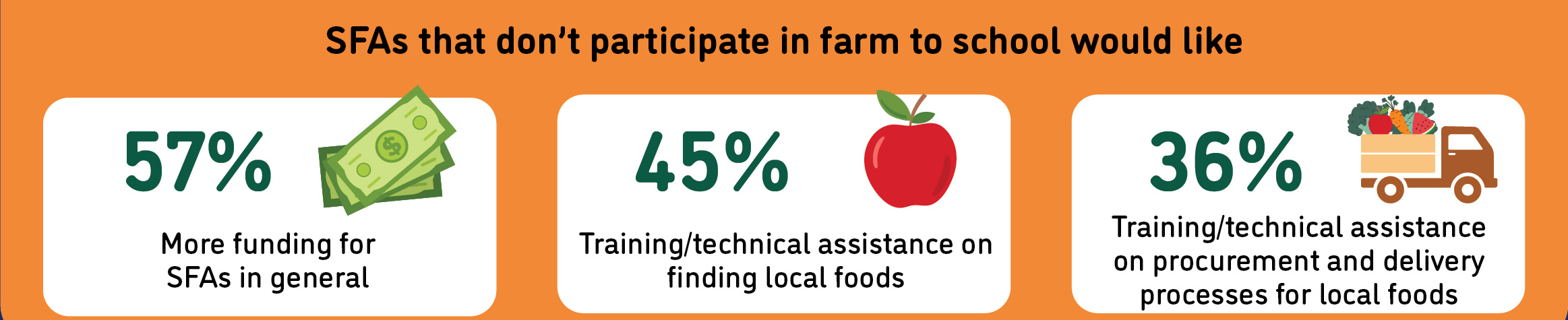
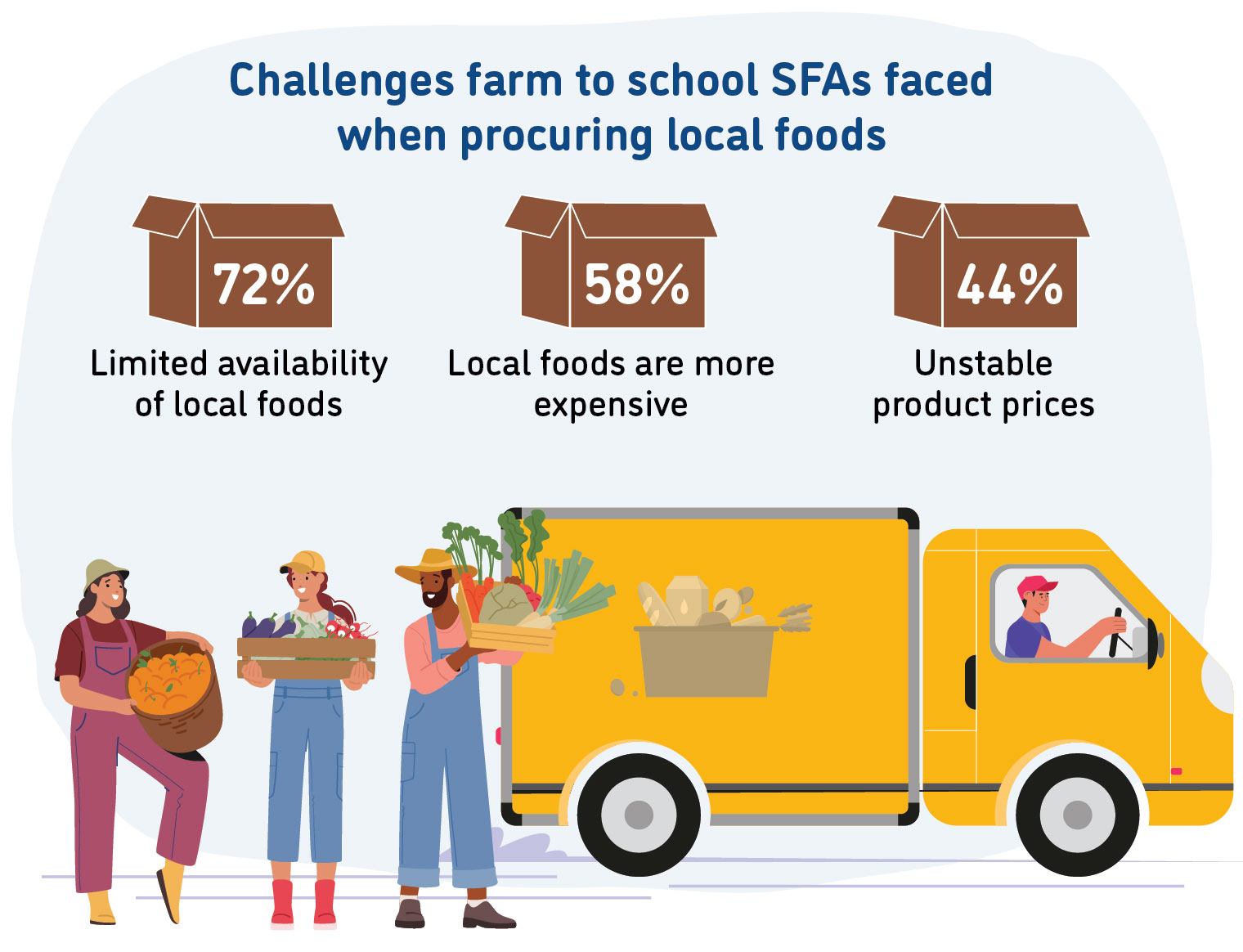
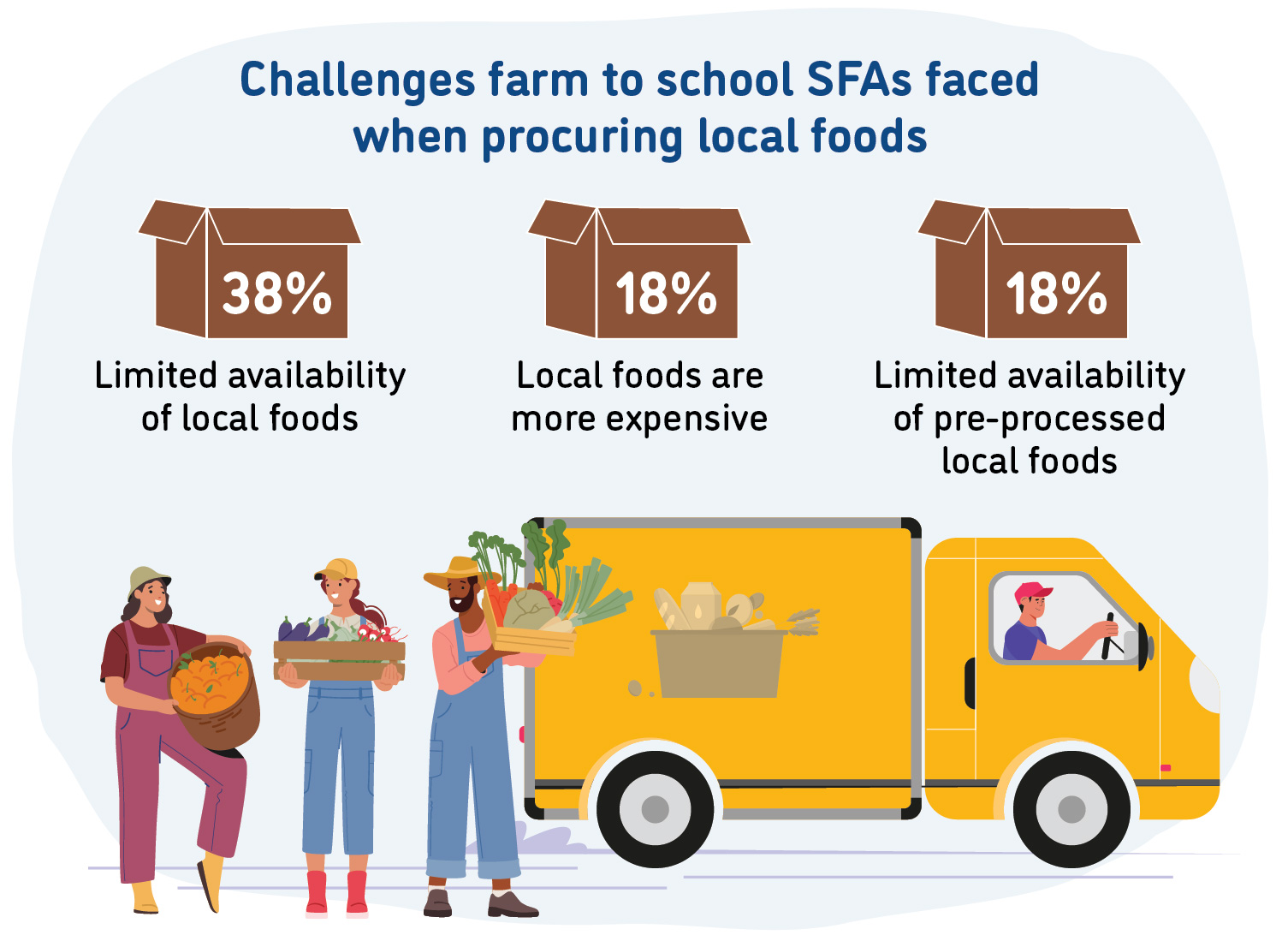
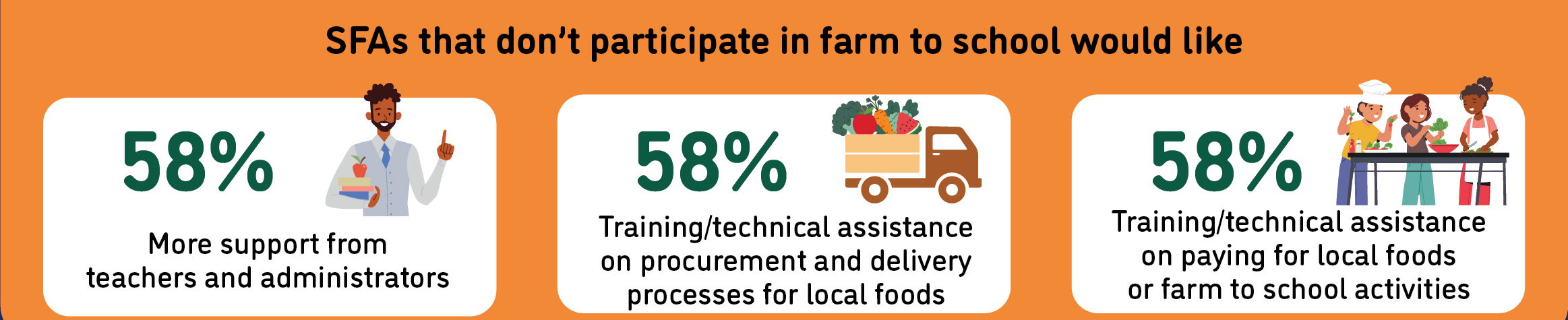
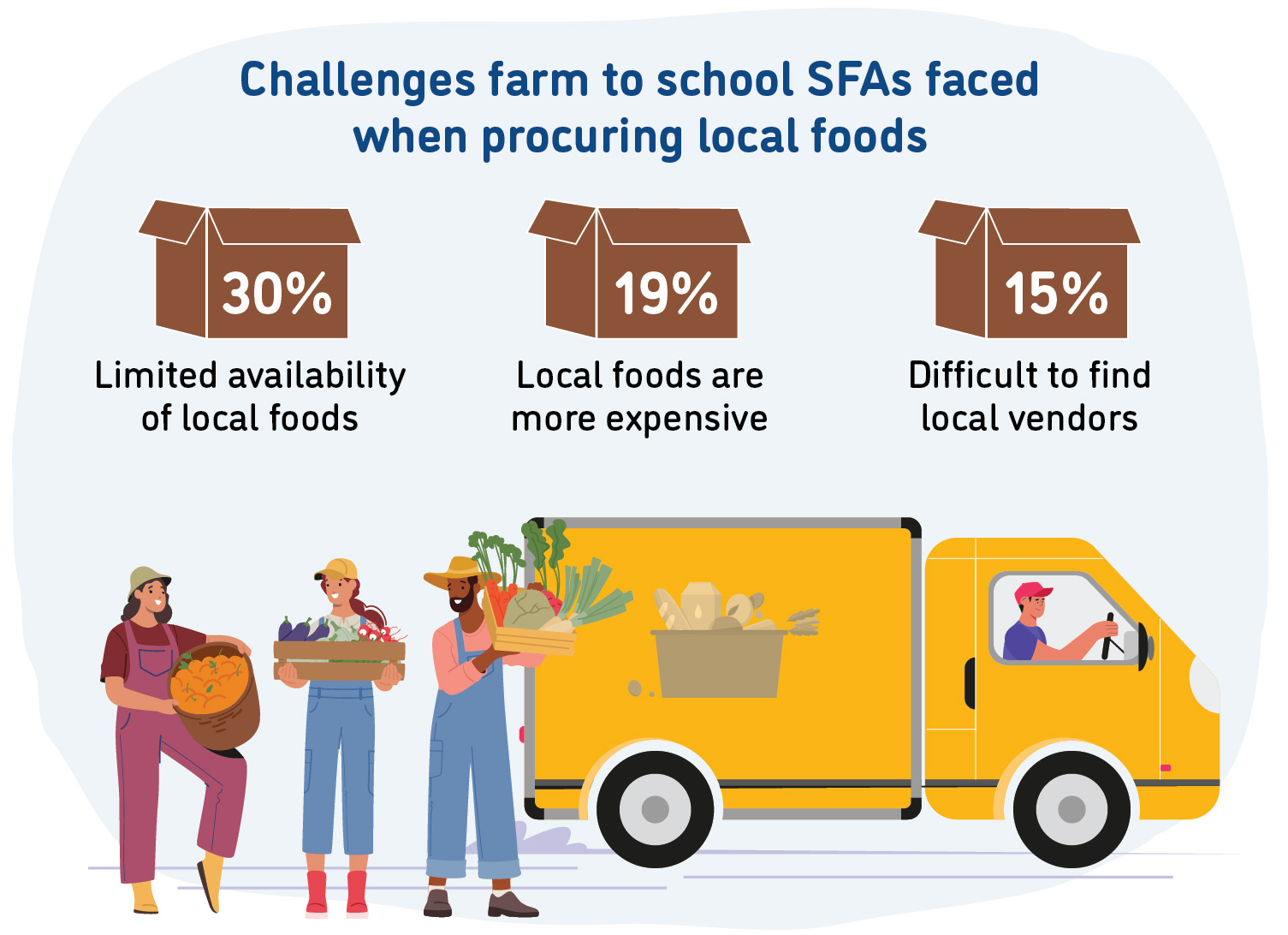
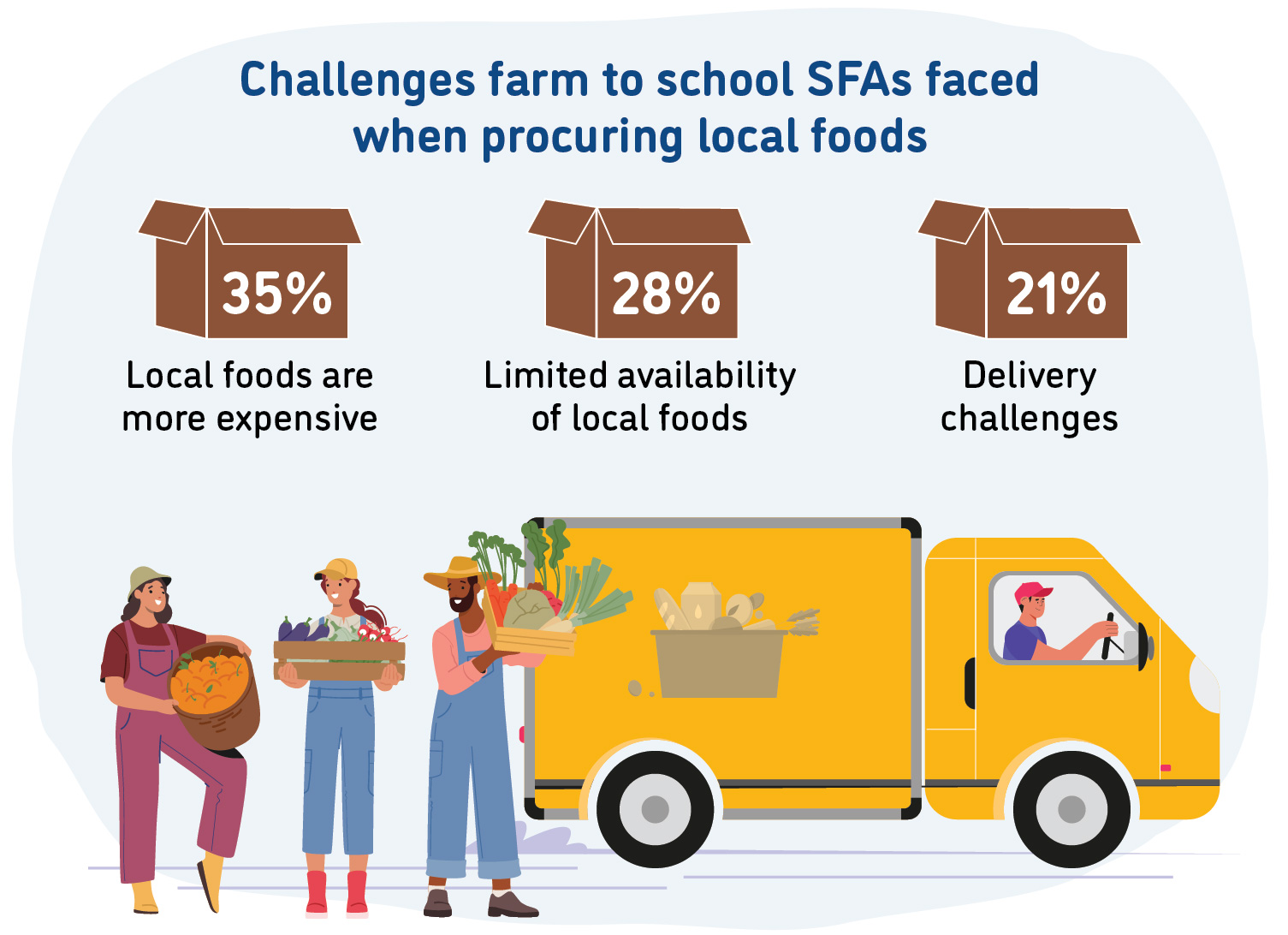
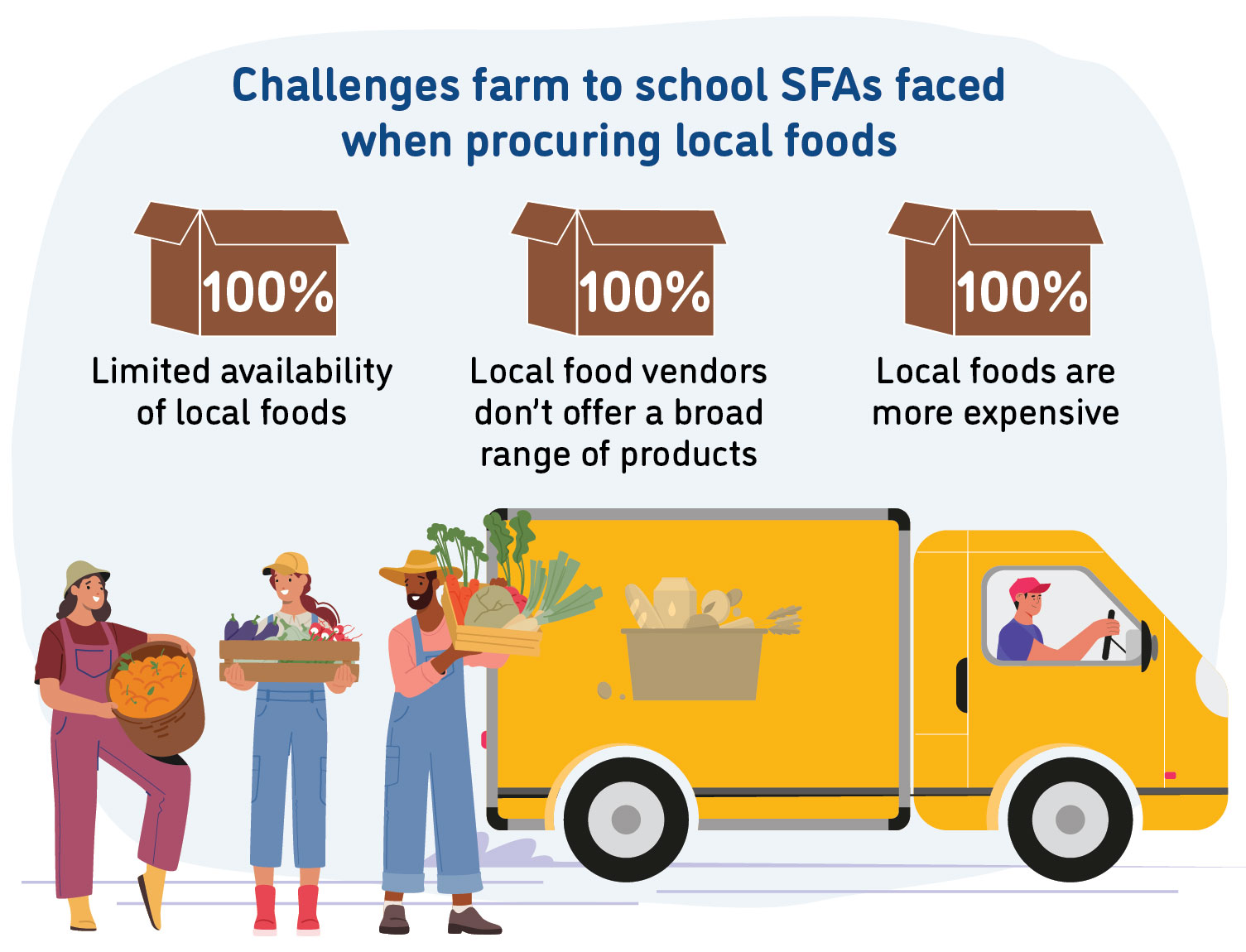
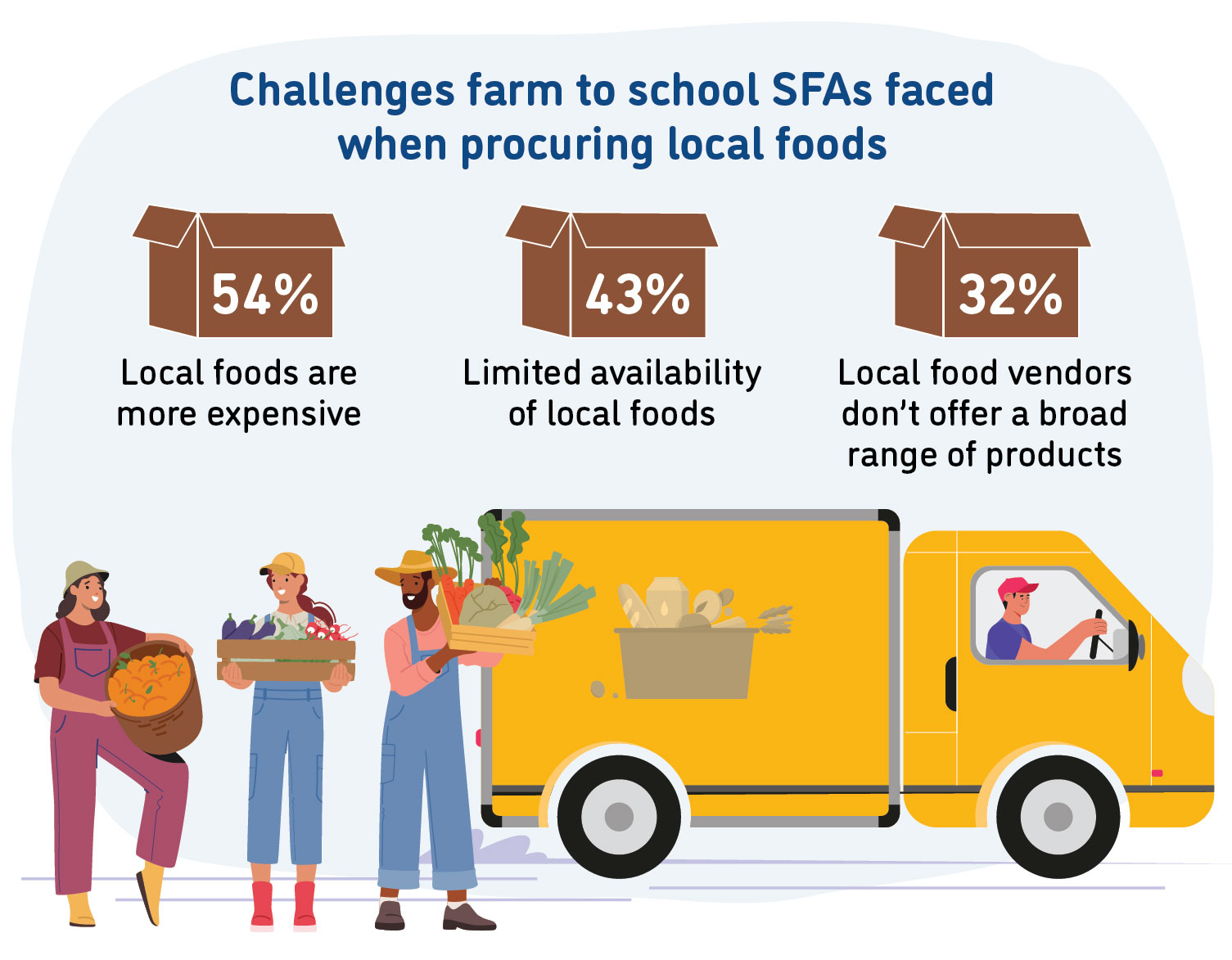
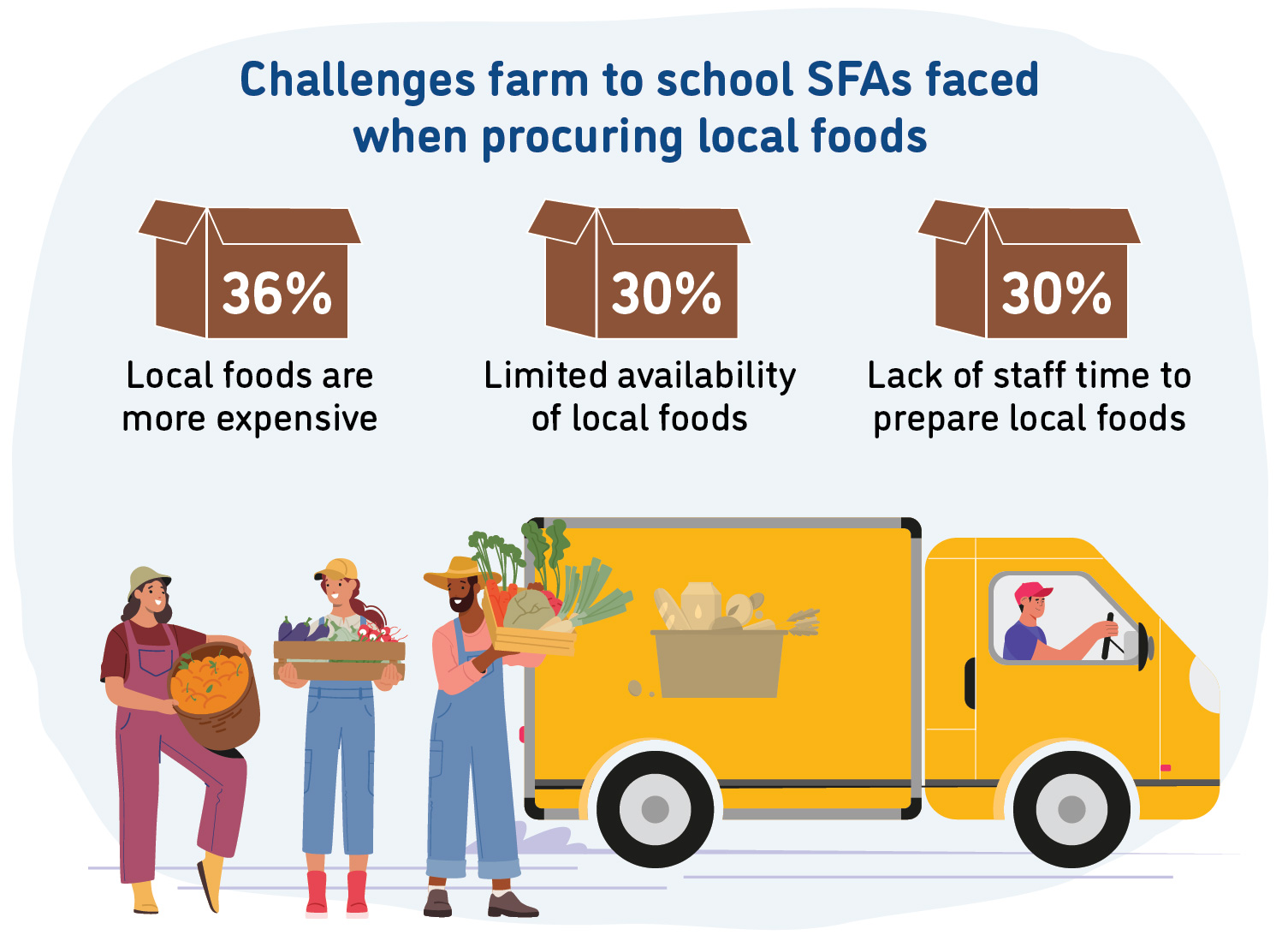
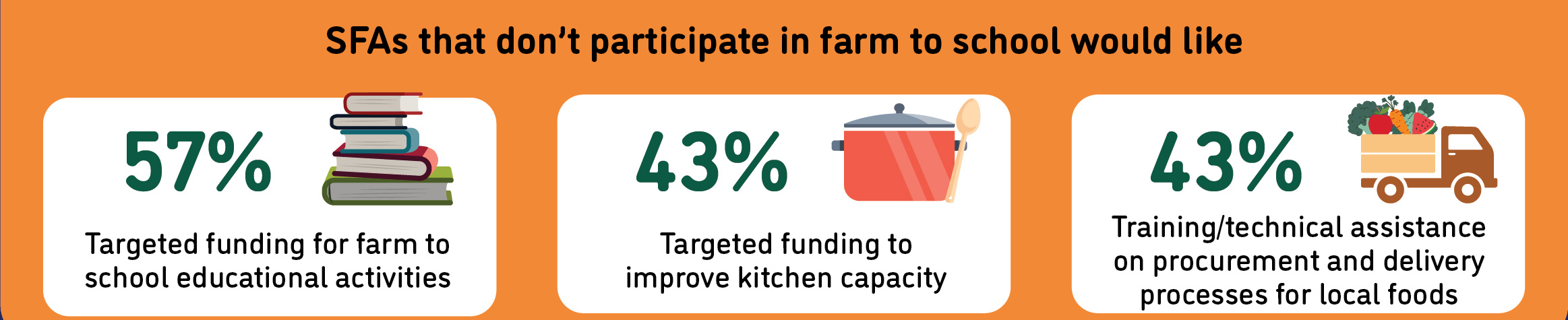
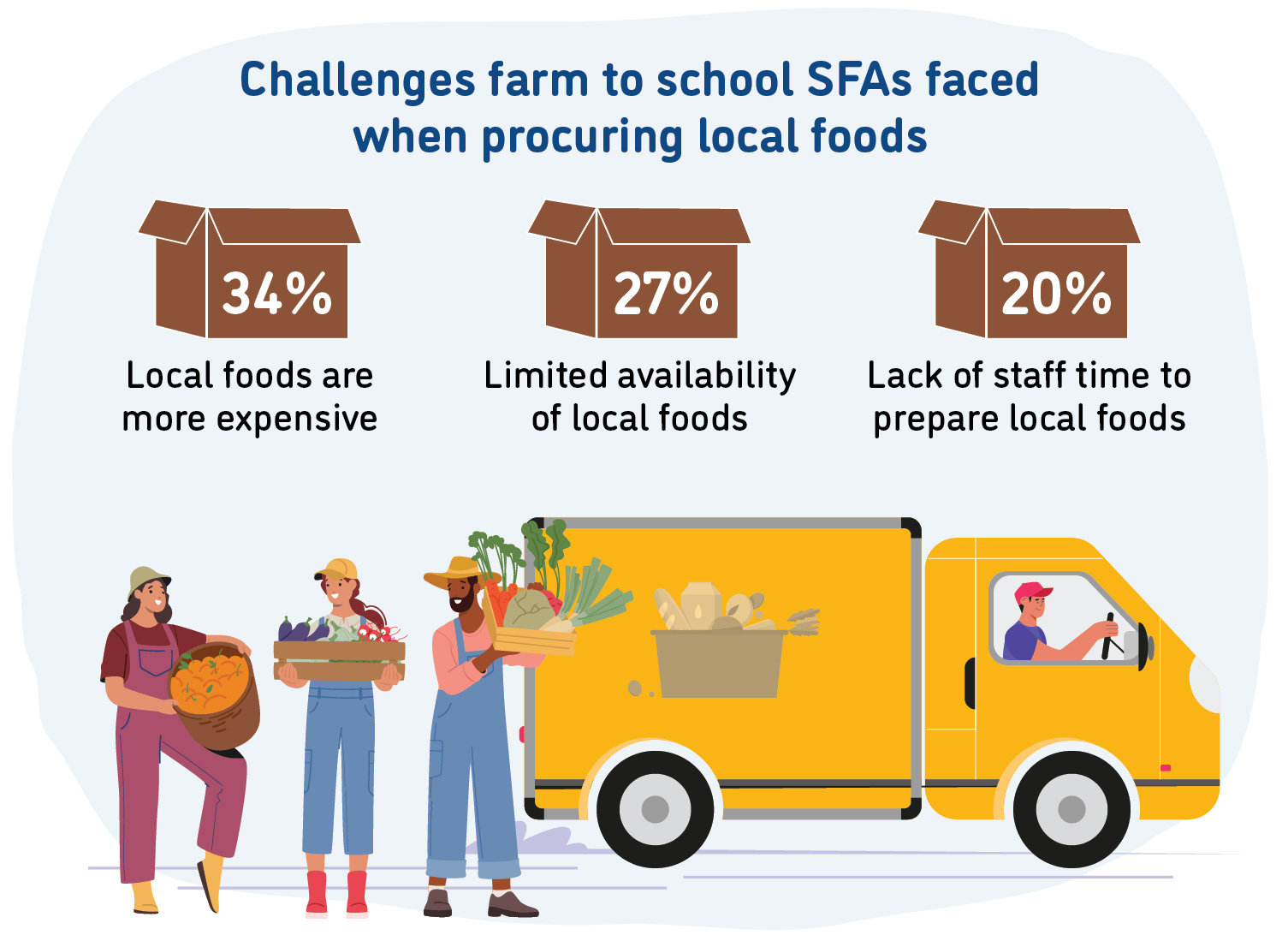
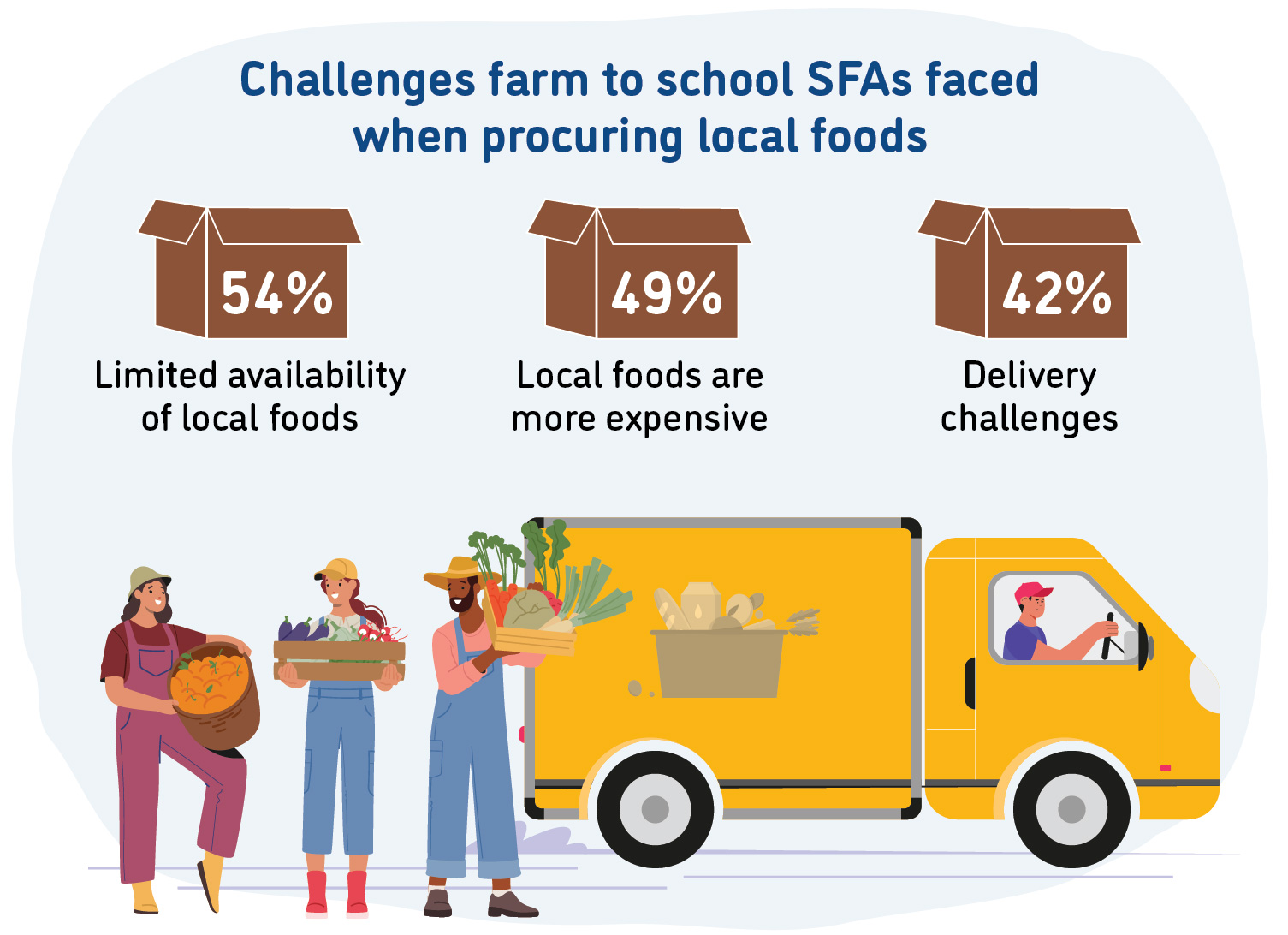
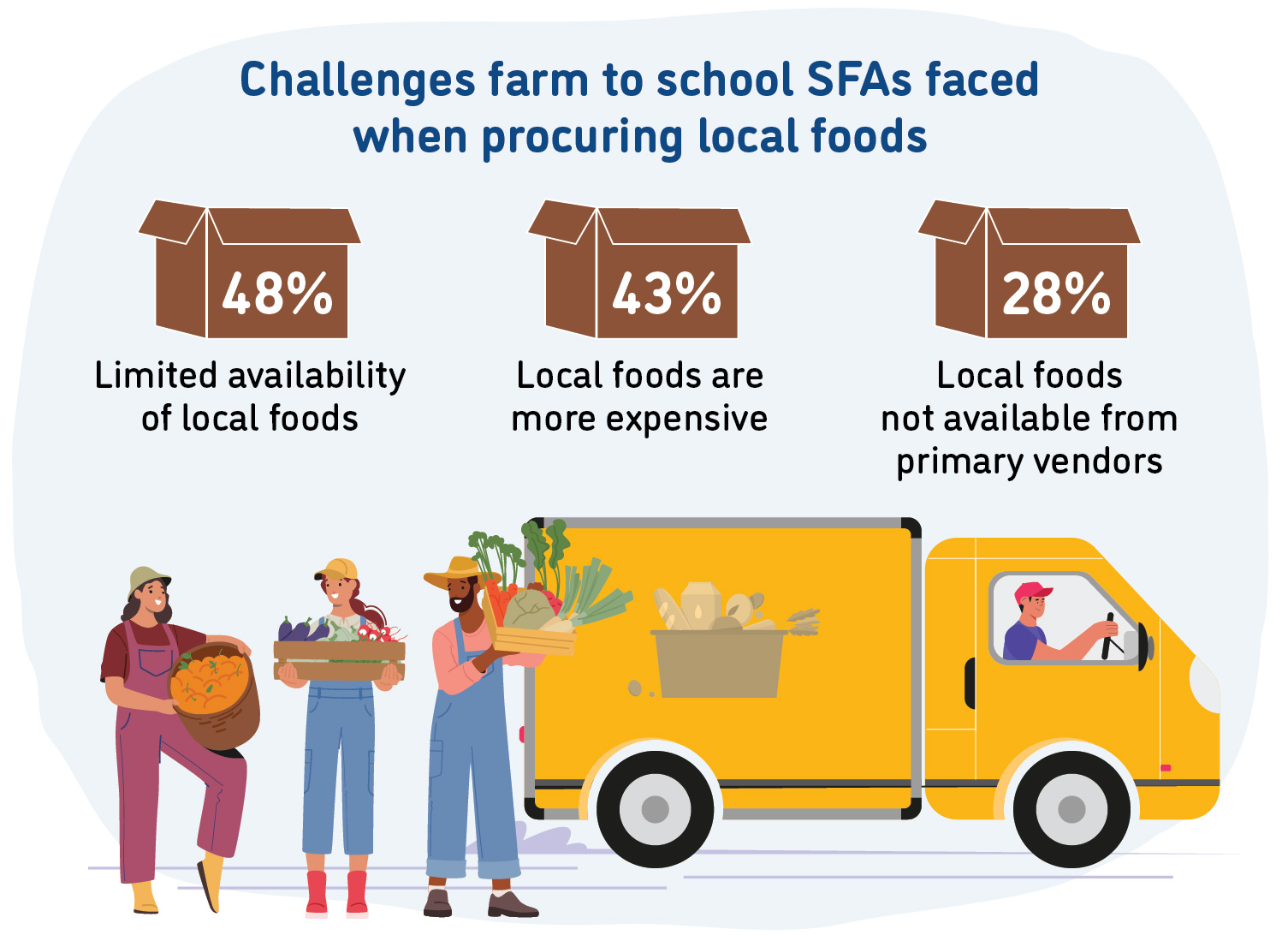
- Some SFAs said they had challenges with farm to school, most notably availability of local foods (42 percent of participating SFAs) and cost of local foods (35 percent).
- SFA engagement in farm to school grew in spite of challenges from COVID-19.
Attachments
- 2023 Farm to School Census Public Dataset - Microsoft excel file that includes all individual responses from school food authority respondents.
- 2023 Farm to School Census Public Dataset Codebook - may be used to interpret the findings in the dataset.
- 2023 Farm to School National and State Data Workbook - reference document with weighted summaries of national and state level responses.
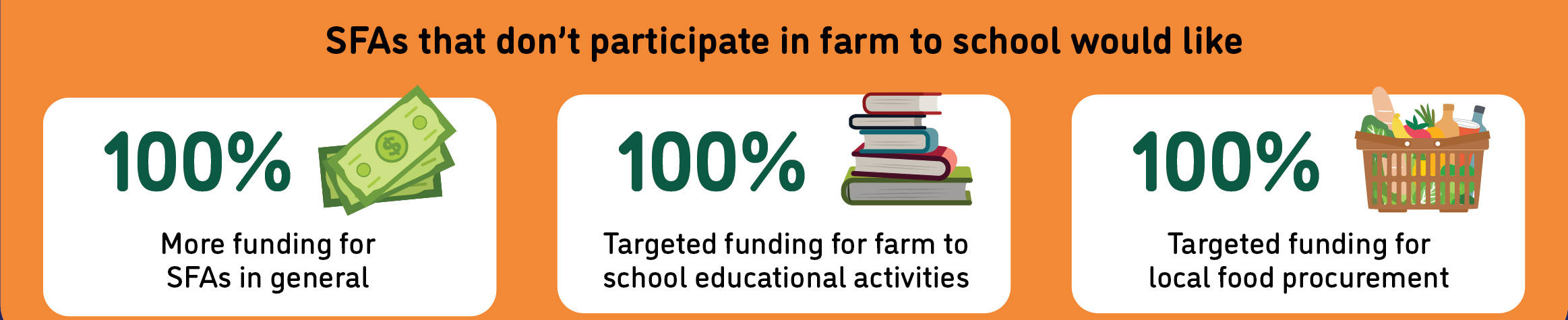
The 2023 Farm to School Census collected information on farm to school participation by school food authorities (SFAs) in school year 2022–23. Every SFA participating in the National School Lunch Program in the 50 states, Washington, DC, and five territories received an online survey asking about the farm to school activities they participated in, details of their participation, and their perspectives on farm to school.
Farm to School Grantee Progress Reports (2024)
FY24 Farm to School Grant Reporting Requirements and Indicators Webinar:
Watch the webinar above to understand the Farm to School FNS-908 progress reporting requirements and guidance on how to correctly record and track your required indicators for progress reporting.
Patrick Leahy Farm to School Grantees are required to submit progress reports using the FNS-908 reporting form. Links to the progress report for each grant type are provided below along with an indicator key to assist you in completing the form.
The reports on this page are only for active 2024 Farm to School Grantees. If you are operating a Farm to School Grant from a prior year, please refer to the reports that correspond with the year your grant was awarded.
For technical support navigating the FNS-908 reporting form, please watch the FNS-908 Overview for Farm to School Grantees | Food and Nutrition Service.
In order for the report to open properly, you must save it to your computer and open the file using ADOBE READER, then choose “enable all content” when prompted. These reports will not open in your web browser.
- State Agency Grant or Implementation Grant
Performance Progress Report
Indicators Key
Required Indicators 908 Friendly Equivalent Number and types of partner organizations No. & Types of Partner Orgs Number of collaborating early childhood education sites (age 0-pre-K) No. of CACFP sites Number of collaborating primary school sites (grades k-5) No. of primary schools Number of collaborating secondary school sites (grades 6-12) No. of secondary schools Number of early childhood educations students impacted (age 0-pre K) No. of CACFP participants Number of primary students impacted (grades k-5) No. of primary students Number of secondary students impacted (grades 6-12) No. of secondary students Dollar value of local foods purchased: Fruit Dollar value of fruit Dollar value of local foods purchased: Vegetables Dollar value of vegetables Dollar value of local foods purchased: Fluid Milk Dollar value of fluid milk Dollar value of local food purchased: Other Dairy Dollar value of other dairy Dollar value of local food purchased: Protein Dollar value of protein Dollar value of local food purchased: Grains (including baked goods) Dollar value of grains Dollar value of local food purchased: Other Dollar value of other - Turn-Key Action Planning Grant
Performance Progress Report
Indicators Key
Required Indicators 908 Friendly Equivalent Number attended No. Attended Number and types of partner organizations No. & Types of Partner Orgs Number of collaborating early childhood education sites (age 0-pre-K) No. of CACFP sites Number of collaborating primary school sites (grades k-5) No. of primary schools Number of collaborating secondary school sites (grades 6-12) No. of secondary schools Number of early childhood educations students impacted (age 0-pre K) No. of CACFP participants Number of primary students impacted (grades k-5) No. of primary students Number of secondary students impacted (grades 6-12) No. of secondary students - Turn-Key Agricultural Education Grant
Performance Progress Report
Indicators Key
Required Indicators 908 Friendly Equivalent Number attended No. Attended Number and types of partner organizations No. & Types of Partner Orgs Number of collaborating early childhood education sites (age 0-pre-K) No. of CACFP sites Number of collaborating primary school sites (grades k-5) No. of primary schools Number of collaborating secondary school sites (grades 6-12) No. of secondary schools Number of early childhood educations students impacted (age 0-pre K) No. of CACFP participants Number of primary students impacted (grades k-5) No. of primary students Number of secondary students impacted (grades 6-12) No. of secondary students Dollar value of local foods purchased: Fruit Dollar value of fruit Dollar value of local foods purchased: Vegetables Dollar value of vegetables Dollar value of local foods purchased: Fluid Milk Dollar value of fluid milk Dollar value of local food purchased: Other Dairy Dollar value of other dairy Dollar value of local food purchased: Protein Dollar value of protein Dollar value of local food purchased: Grains (including baked goods) Dollar value of grains Dollar value of local food purchased: Other Dollar value of other - Turn-Key Edible Garden Grant
Performance Progress Report
Indicators Key
Required Indicators 908 Friendly Equivalent Number attended No. Attended Number and types of partner organizations No. & Types of Partner Orgs Number of gardens completed No. of gardens completed Number of collaborating early childhood education sites (age 0-pre-K) No. of CACFP sites Number of collaborating primary school sites (grades k-5) No. of primary schools Number of collaborating secondary school sites (grades 6-12) No. of secondary schools Number of early childhood educations students impacted (age 0-pre K) No. of CACFP participants Number of primary students impacted (grades k-5) No. of primary students Number of secondary students impacted (grades 612) No. of secondary students Dollar value of local foods purchased: Fruit Dollar value of fruit Dollar value of local foods purchased: Vegetables Dollar value of vegetables Dollar value of local foods purchased: Fluid Milk Dollar value of fluid milk Dollar value of local food purchased: Other Dairy Dollar value of other dairy Dollar value of local food purchased: Protein Dollar value of protein Dollar value of local food purchased: Grains (including baked goods) Dollar value of grains Dollar value of local food purchased: Other Dollar value of other Pounds of food produced from edible garden site Pounds of food produced
FNS-908 Reporting Forms and the 908 Indicator Keys for 2024 Patrick Leahy Farm to School Grant Participants.
FY 22 SNAP Characteristics Video
We released a new report on SNAP household characteristics for fiscal year (FY) 2022. For more information about SNAP benefits and research findings check out our SNAP in Action Dashboard.
FNS recently released a new report on SNAP household characteristics for fiscal year (FY) 2022.
National- and State-Level Estimates of WIC Eligibility and Program Reach in 2022
This report, the latest in a series of annual reports on WIC eligibility, presents 2022 national and state estimates of the number of people eligible for WIC benefits and the percents of the eligible population and the US population covered by the program, including estimates by participant category.
The analysis also provides estimates by FNS region, by state and territory, by race and ethnicity, and by urbanicity. For the first time in this series of reports, estimated coverage rates for American Indian/Alaska Native (AIAN) individuals are also presented at a national level.
Key Findings
- The average monthly WIC-eligible population totaled 11.79 million in calendar year 2022.
- In the average month of 2022, WIC served an estimated 53.5 percent of those eligible for WIC, which is a statistically significant increase from 2021 (51.2 percent).
- Coverage rates were highest for Hispanic (63.0 percent) and lowest for non-Hispanic White (45.9 percent) WIC-eligible individuals.
- The coverage rate for non-Hispanic AIAN WIC-eligible individuals was 59.1 percent.
- Nationally, more than 50 percent of WIC-eligible SNAP and Medicaid recipients do not participate in WIC.
Interactive Graphics
This report, the latest in a series of annual reports on WIC eligibility, presents 2022 national and state estimates of the number of people eligible for WIC benefits and the percents of the eligible population and the US population covered by the program, including estimates by participant category.
CSFP Participant Characteristics and Program Operations Study
Summary
In accordance with the Paperwork Reduction Act of 1995, this notice invites the general public and other public agencies to comment on this proposed information collection. This is a new information collection request in which FNS seeks a description of Commodity Supplemental Food Program (CSFP) participant characteristics and program operations. CSFP provides free groceries to approximately 700,000 low-income seniors each month and is administered by 60 state agencies, approximately 250 local agencies, and approximately 9,000 distribution sites.
Request for Comments
Written comments must be received on or before Oct. 4, 2024.
Comments may be sent to Rachel Zack, Office of Policy Support, Food and Nutrition Service, U.S. Department of Agriculture, 1320 Braddock Place, Alexandria, VA 22314. Comments may also be submitted via email to Rachel.Zack@usda.gov.
Comments will also be accepted through the Federal eRulemaking Portal. Go to http://www.regulations.gov, and follow the online instructions for submitting comments electronically.
All responses to this notice will be summarized and included in the request for Office of Management and Budget approval. All comments will be a matter of public record.
Abstract
Administered by the U.S. Department of Agriculture's (USDA) Food and Nutrition Service (FNS), the Commodity Supplemental Food Program (CSFP) provides USDA Foods to income-eligible seniors aged 60 years and older. This will be the first comprehensive nationally representative study of CSFP participant characteristics and program operations.
The CSFP Participant Characteristics and Program Operations (CSFP PCPO) study will provide nationally representative information on CSFP participants and local program operations. Through this study, FNS aims to better understand who is participating in the program, how the program is operated, and successes and challenges in implementing CSFP. Findings from the study will help to identify program needs and inform decisions at the federal, state, and local levels about program administration and potential policy decisions.
The objectives of this study are to: (1) provide a sociodemographic and health profile of CSFP participants; (2) describe CSFP participants' use of the program and its contribution to their food supply; (3) provide descriptive information on key aspects of CSFP operations at the state and local agency level; and (4) describe the participants' experience with, and perceptions of, CSFP.
The study will consist of surveys with three populations: (a) all CSFP state agencies, (b) all CSFP local agencies, and (c) a sample of CSFP participants from a nationally representative sample of CSFP distribution sites. We define distribution sites as any location that distributes CSFP food packages directly to CSFP participants. The study will also request administrative data from local agencies with information on their distribution site characteristics, which will be used for sampling for the participant survey, as well as de-identified data on participant demographics and program use if available.
CSFP provides USDA Foods to income-eligible seniors aged 60 years and older. This will be the first comprehensive nationally representative study of CSFP participant characteristics and program operations.
Best Practices in USDA Disaster SNAP Operations and Planning
Under the authority of the Robert T. Stafford Disaster Relief and Emergency Assistance Act, the Secretary of Agriculture can authorize requesting state agencies to operate Disaster Supplemental Nutrition Assistance Program (D-SNAP) in areas with a Presidential disaster declaration authorizing individual assistance from the Federal Emergency Management Agency (FEMA) once commercial channels of food distribution are operational. D-SNAP serves people who would not qualify for SNAP under normal circumstances but need temporary food assistance because of the impacts of a disaster on their property, possessions, and livelihood.
Study Goals
- Assess the implementation and operation of D-SNAP for selected disasters in four study states;
- Document each state’s approach to protecting program integrity while operating D-SNAP for the selected disasters;
- Determine best practices for developing annual disaster plans to address a variety of disaster types; and
- Determine best practices for implementing and operating D-SNAP for a variety of disaster types.
Key Findings
- State agencies expressed a desire to continue virtual D-SNAP operations after the Coronavirus COVID-19 pandemic.
- State agencies should maintain relationships and open communication with other state agencies, partners, and contractors.
- During operations, daily management huddles, and a centralized “command room” promote efficient collaboration and decision making.
- Preregistration systems shorten interview duration and reduce errors.
- State agencies can use the closeout process to reflect on challenges and effective practices and identify areas for improvement in future D-SNAPs.
Through an examination of 5 disasters in 4 states, this study develops recommendations for best practices in planning for, implementing, and operating D-SNAP.
SFMNP Profile Data
These files contain Senior Farmers Market Nutrition Program (SFMNP) profile data by fiscal year. The profile data includes grant amounts, number of recipients, benefit levels and numbers of participating farmers, markets, stands and Community-Supported Agriculture systems for each state agency that administers the SFMNP.
These files contain Senior Farmers Market Nutrition Program profile data by fiscal year. The profile data includes grant amounts, number of recipients, benefit levels and numbers of participating farmers, markets, stands and Community-Supported Agriculture systems for each state agency that administers the SFMNP.