



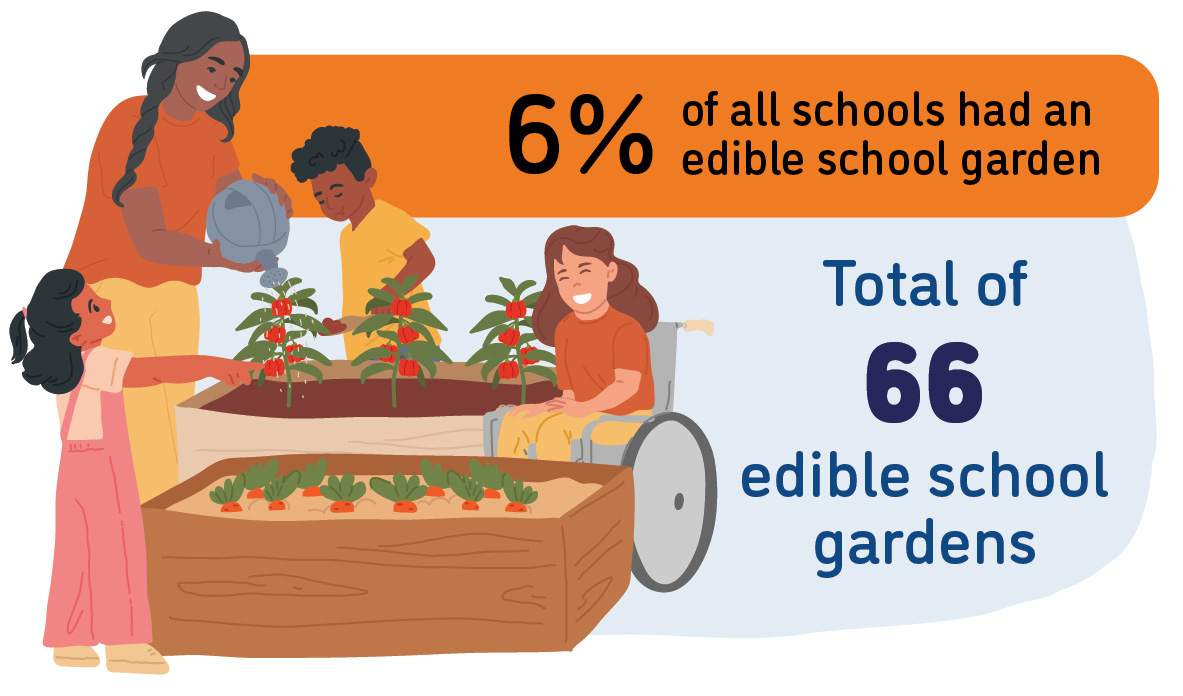
2023 Farm to School Census Infographics
National Summary
Individual Graphics

State Summaries and Graphic Files
Use the dropdowns below to download the full infographic and individual image files for your state/territory.
- Alaska
- Alabama
- Arkansas
- Arizona
- California
- Colorado
- Connecticut
- District of Columbia
- Delaware
- Florida
- Georgia
- Guam
- Hawaii
- Iowa















- Idaho
- Illinois
- Indiana
- Kansas
- Kentucky
- Louisiana
- Massachusetts
- Mariana Islands
- Maryland
- Maine
- Michigan
- Minnesota
- Missouri
- Mississippi










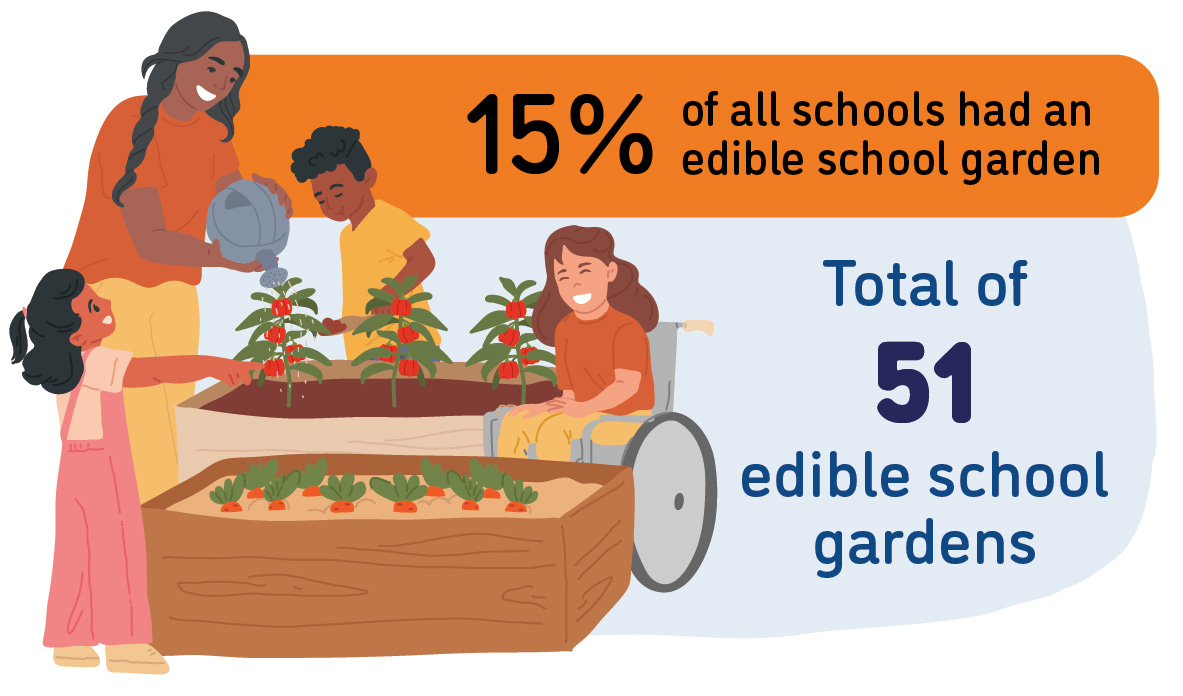

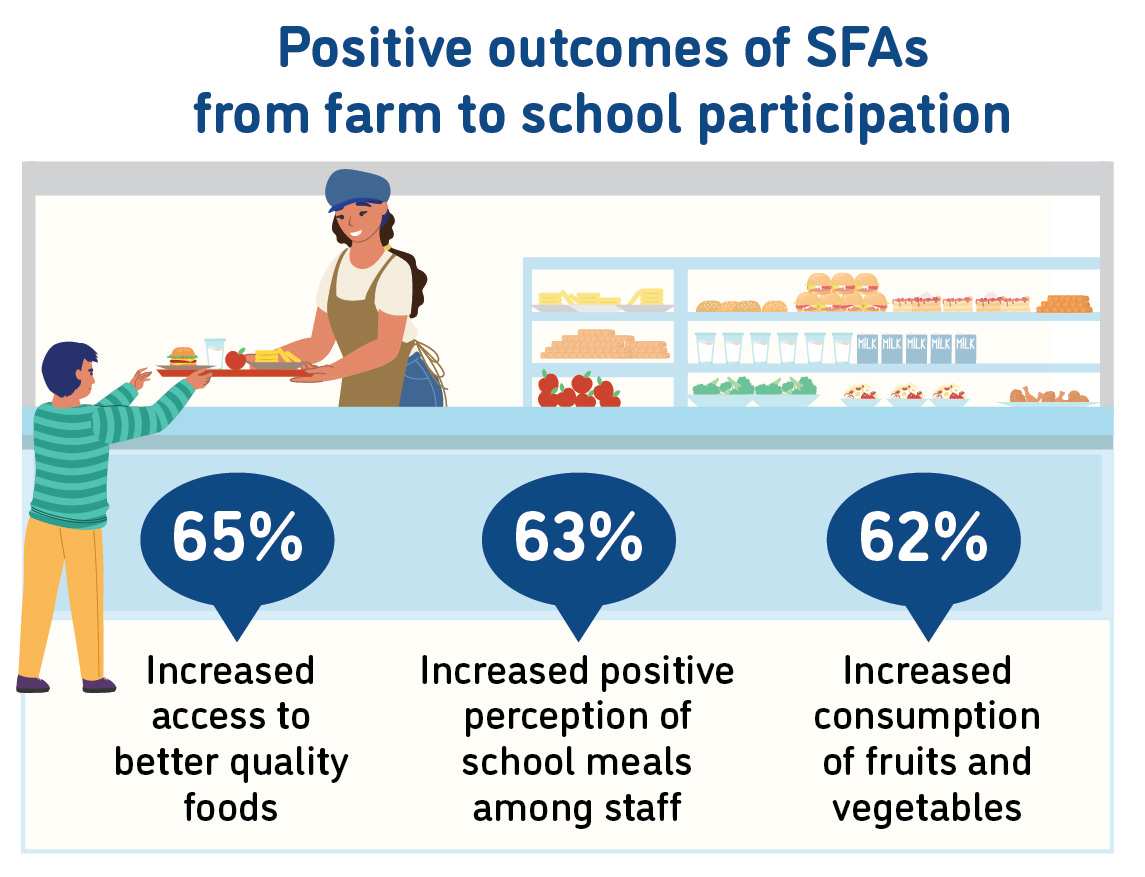
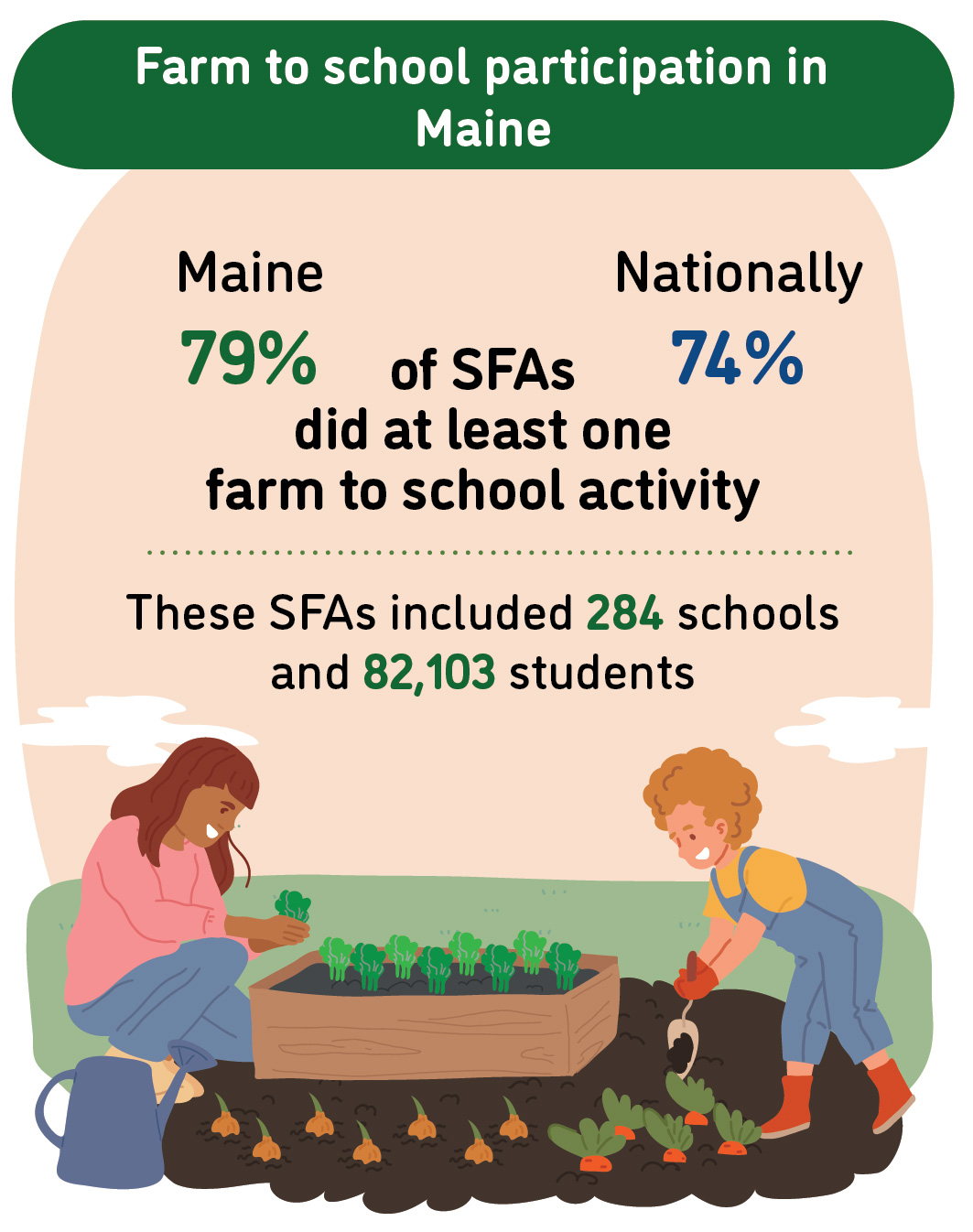
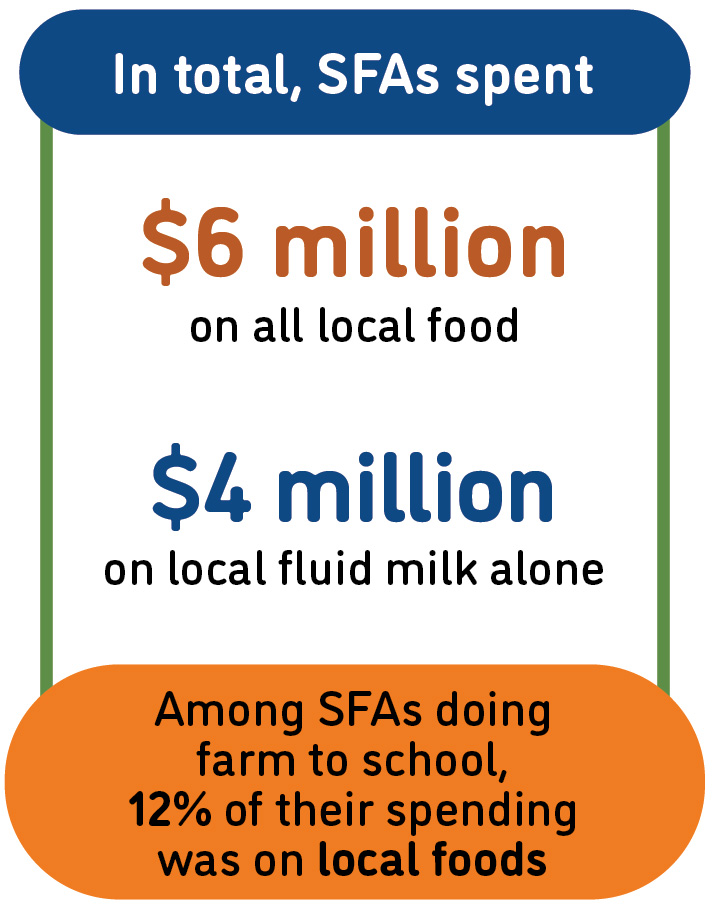






- Montana
- North Carolina
- North Dakota
- Nebraska
- New Hampshire
- New Jersey
- New Mexico
- Nevada
- New York
- Ohio
- Oklahoma
- Oregon
- Pennsylvania
- Puerto Rico
















- Rhode Island
- South Carolina
- South Dakota
- Tennessee
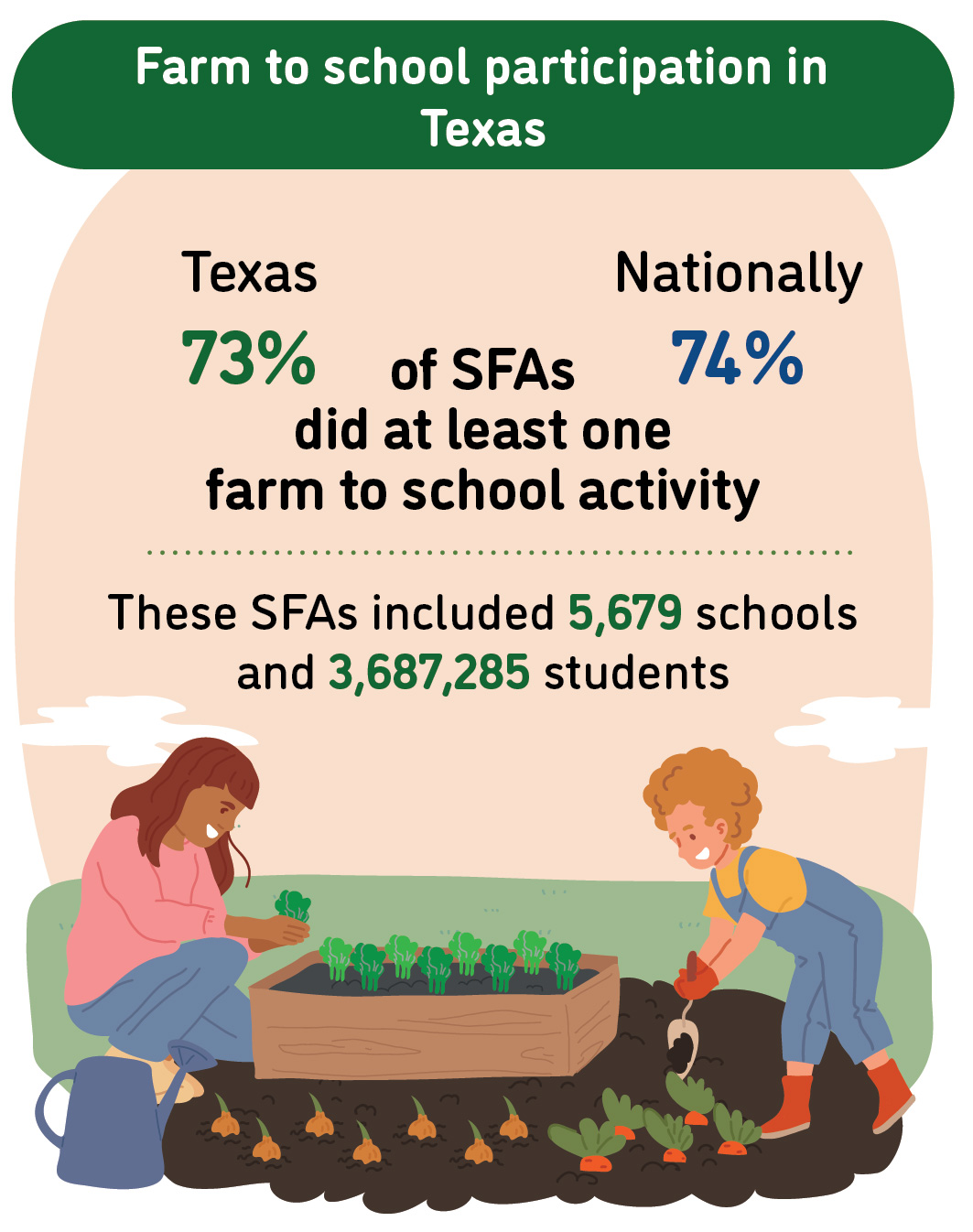
- Texas
- Utah
- Virginia
- Virgin Islands
- Vermont
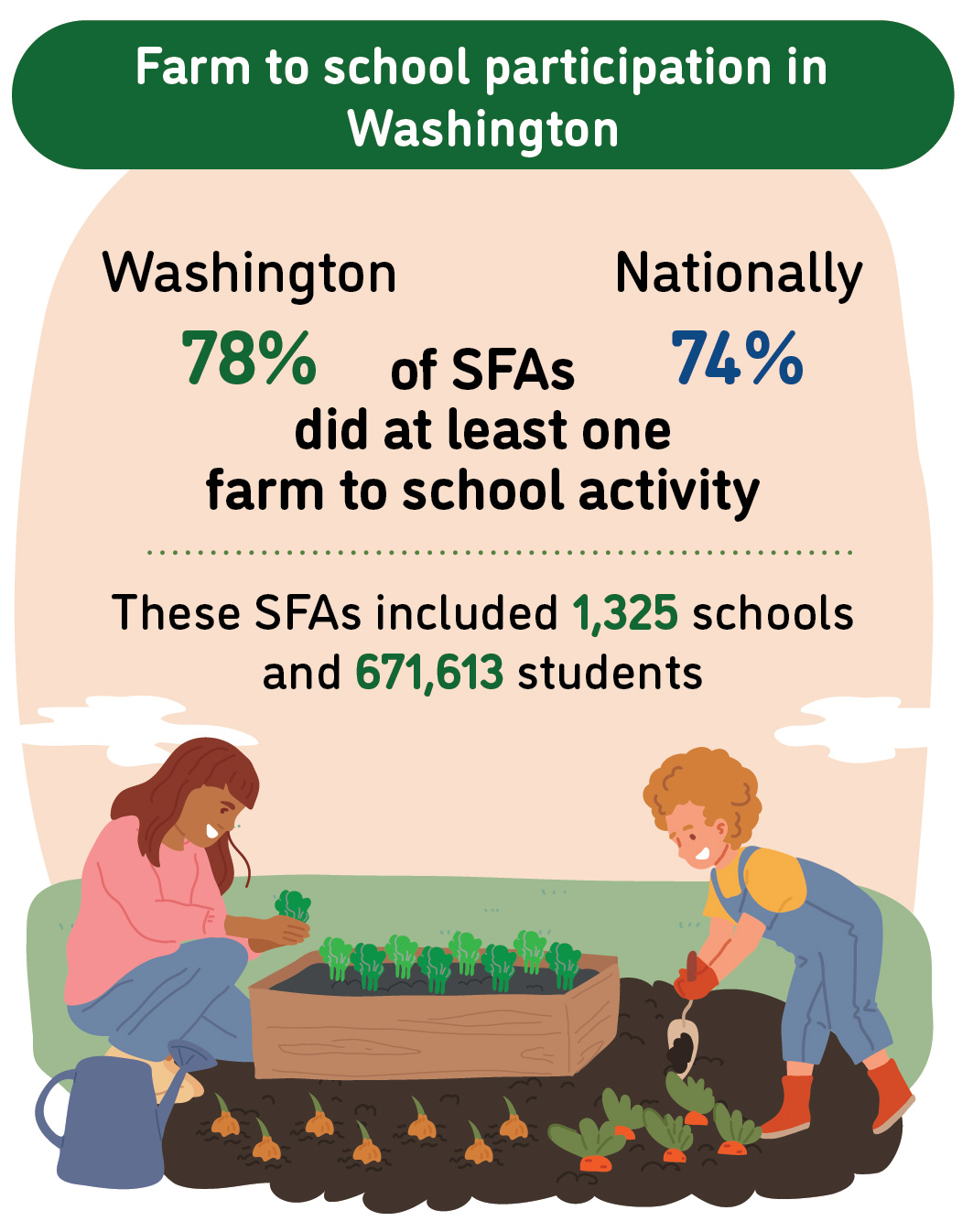
- Washington
- Wisconsin
- West Virginia
- Wyoming

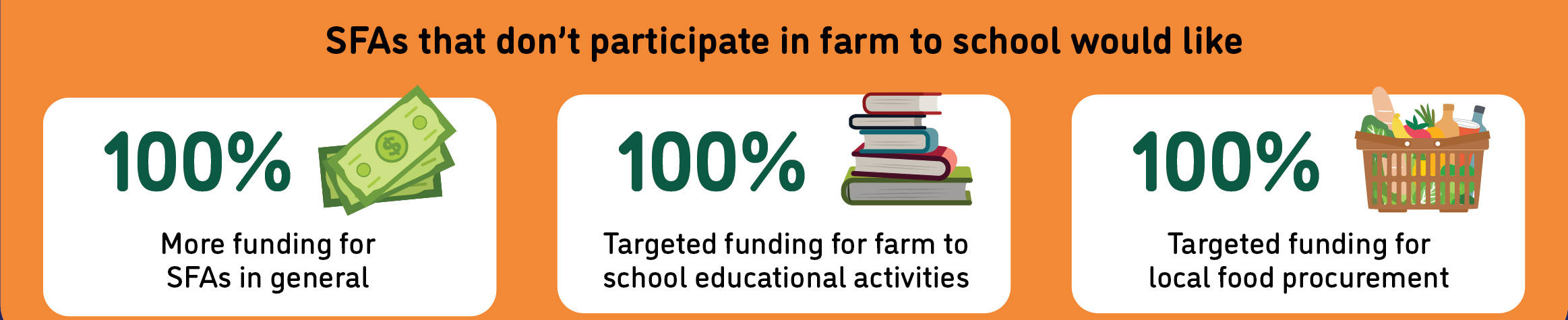

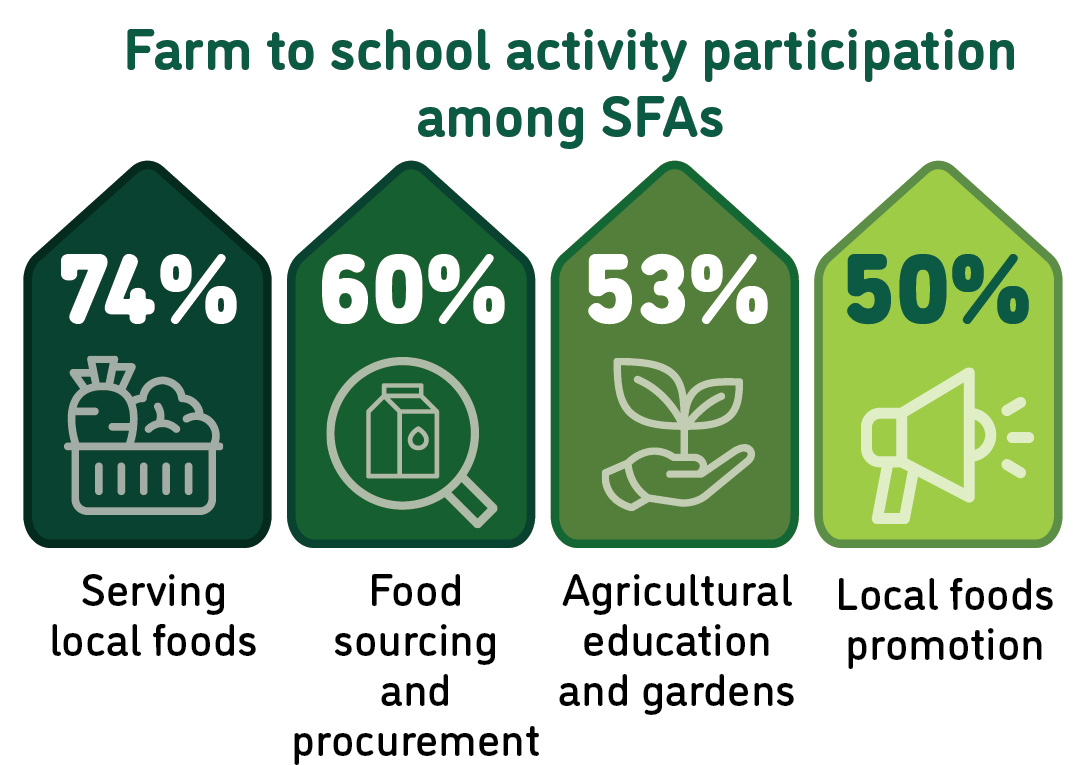
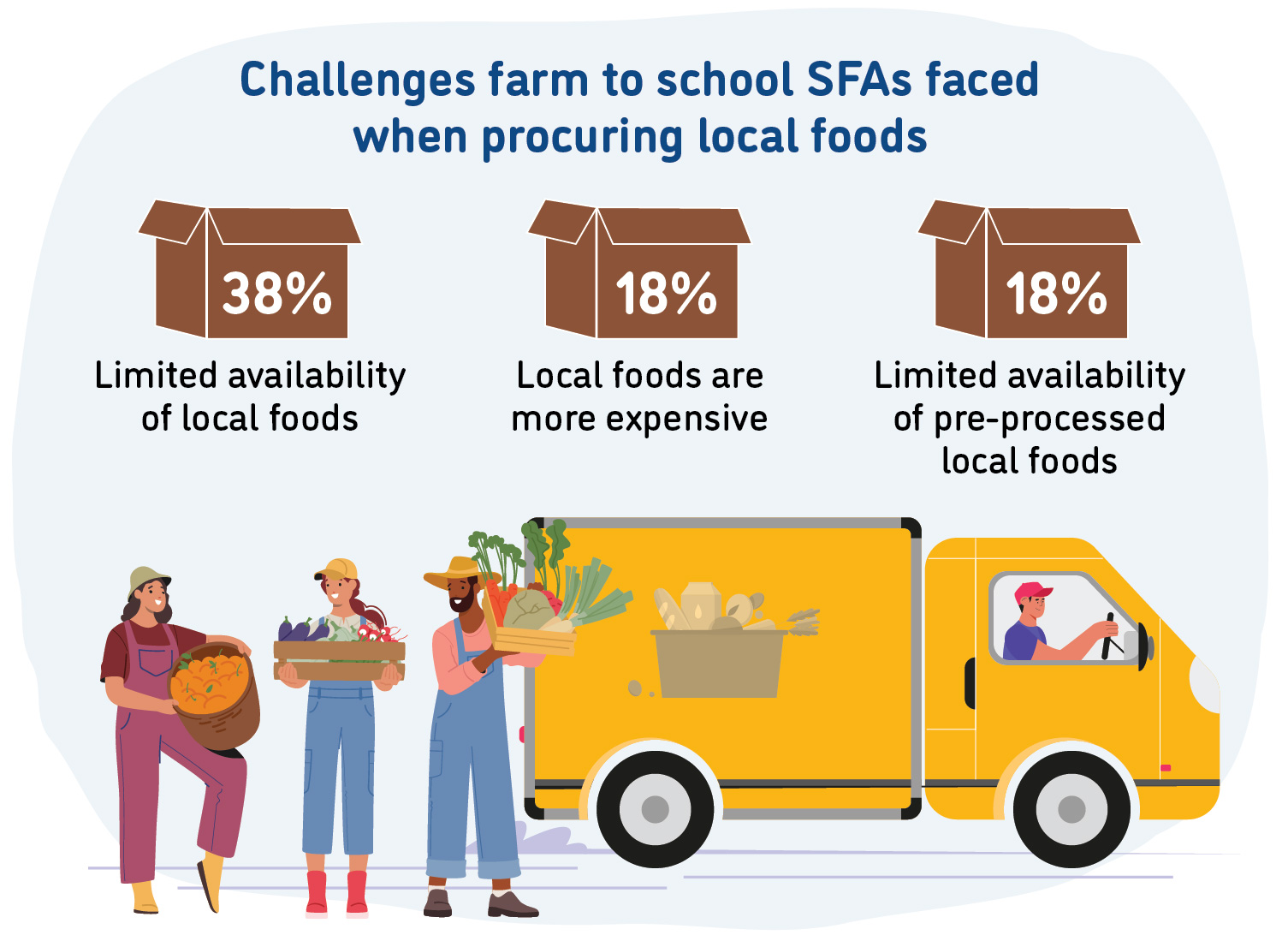
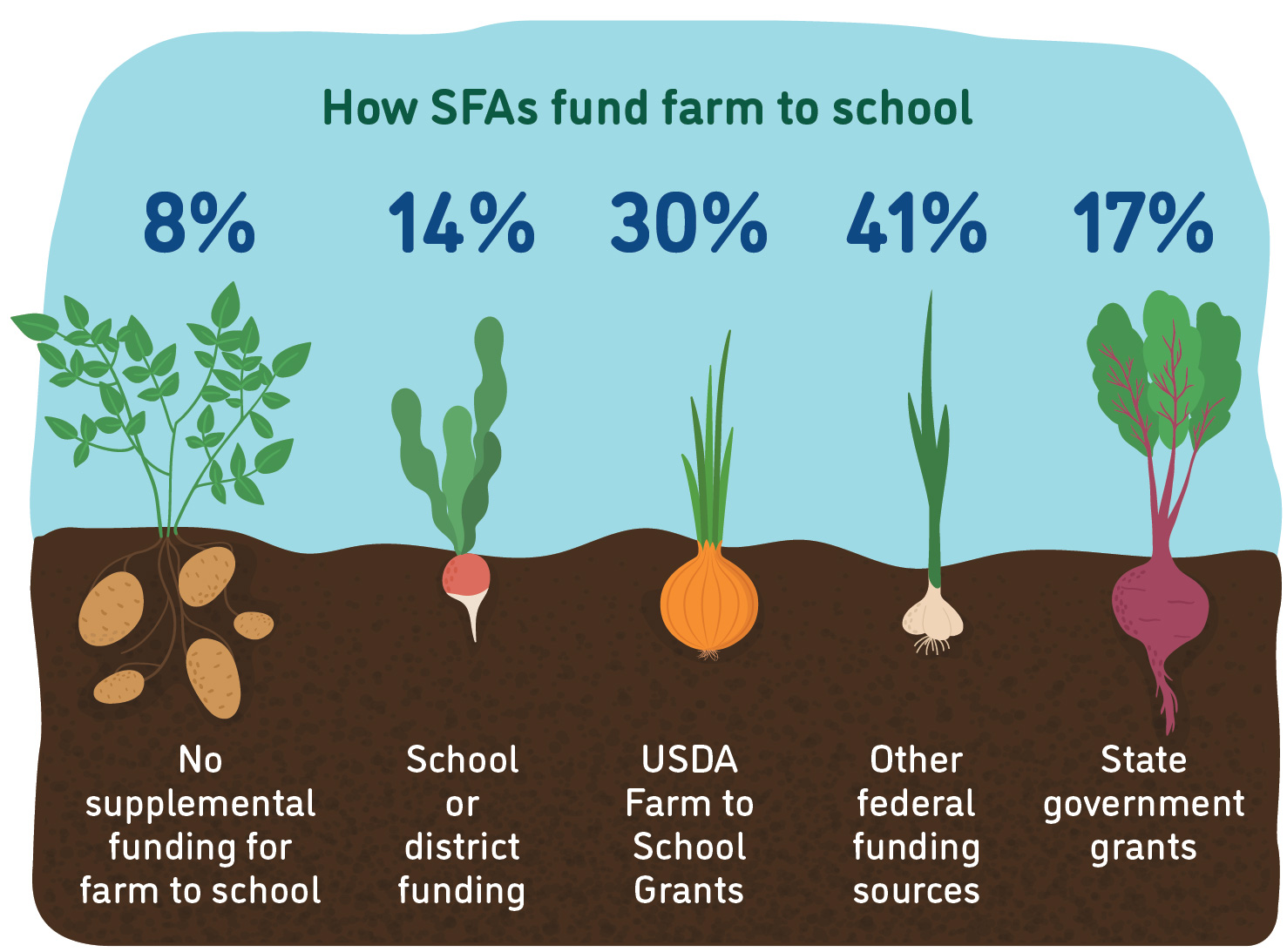



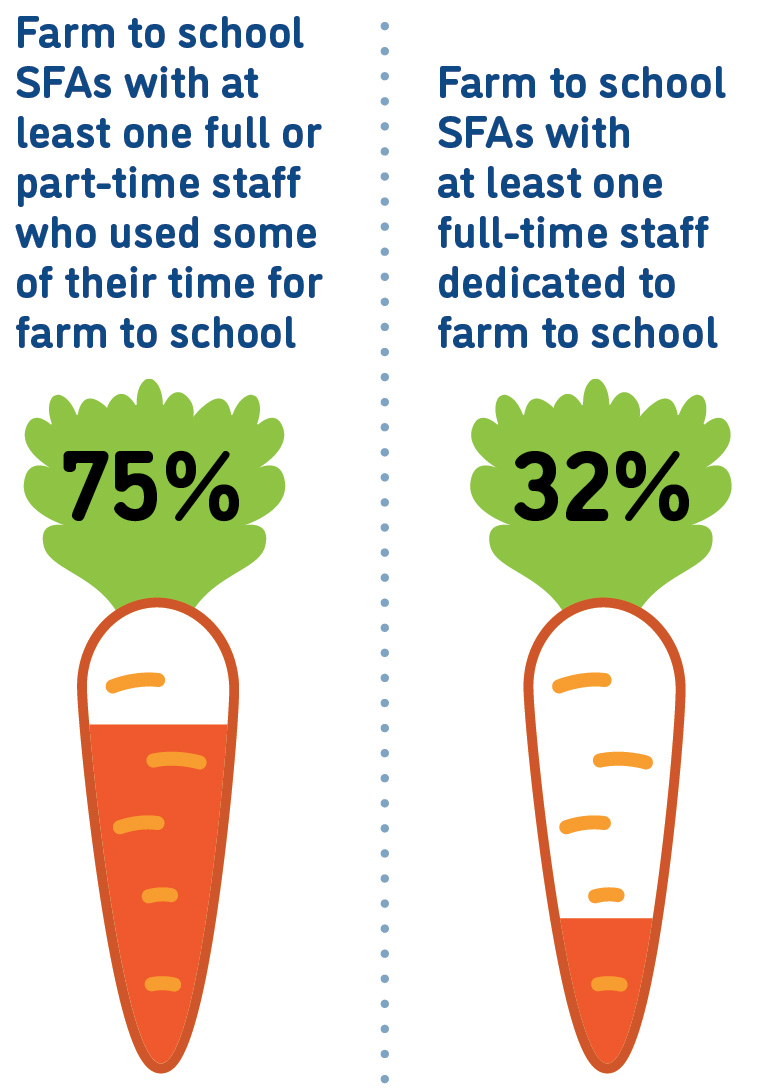
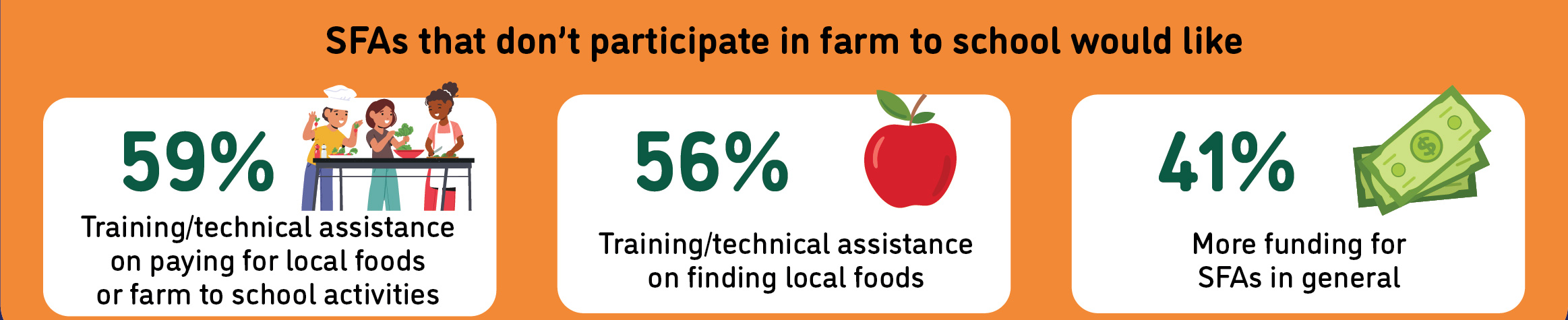

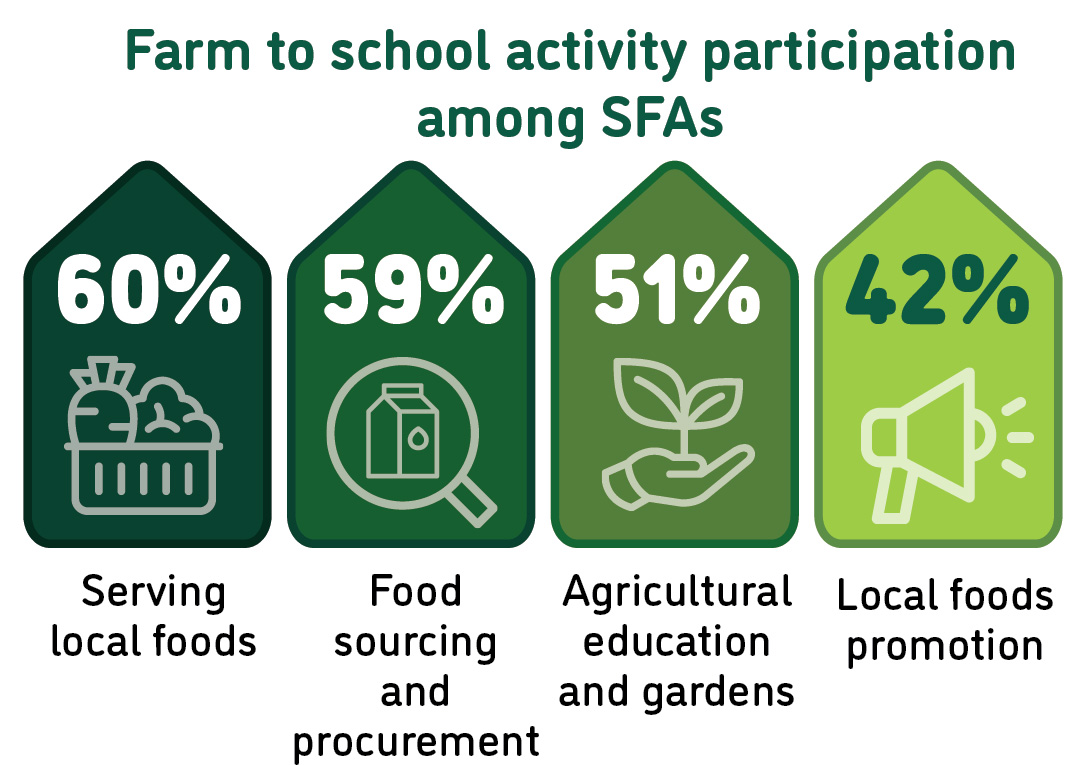
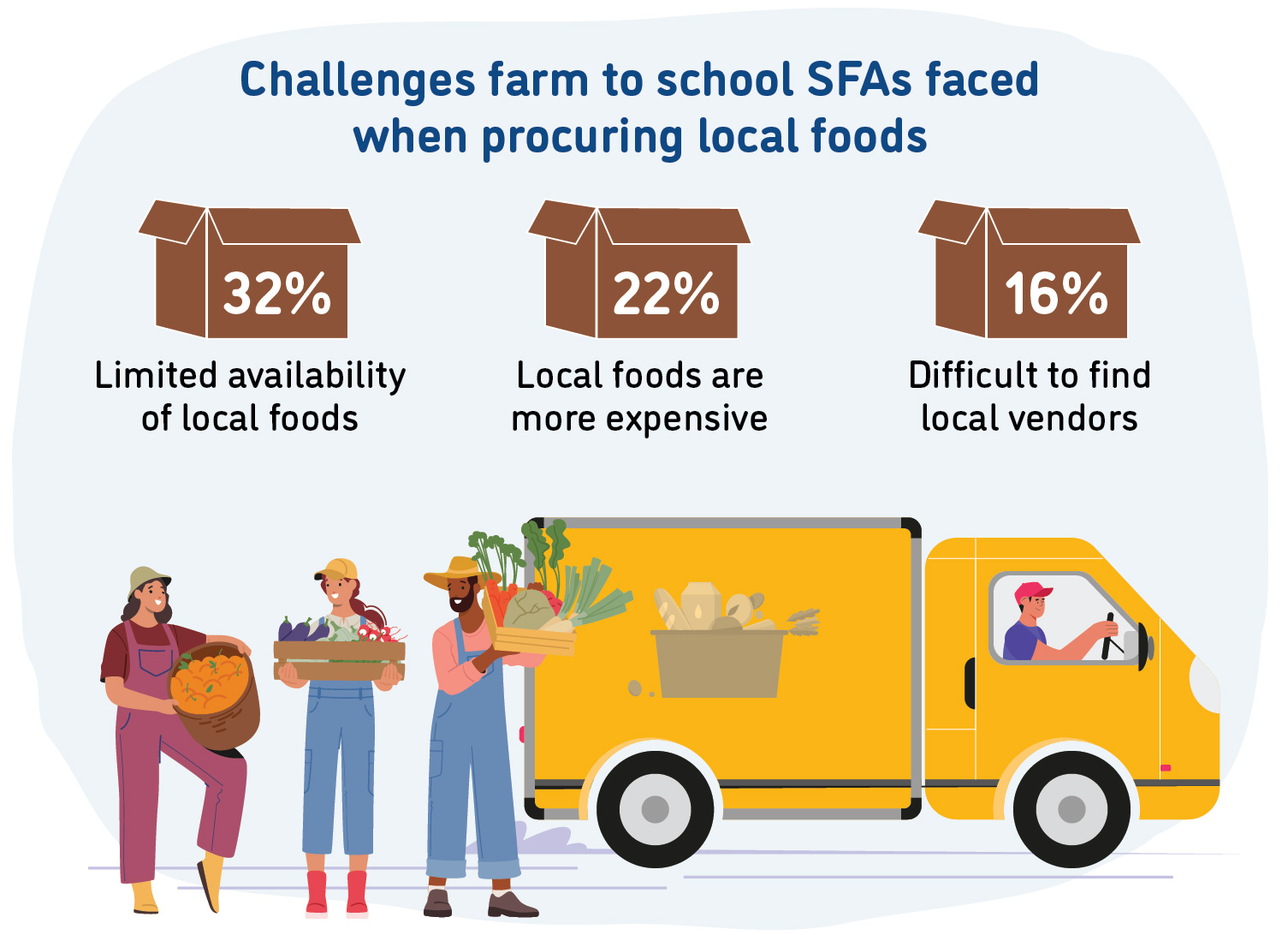





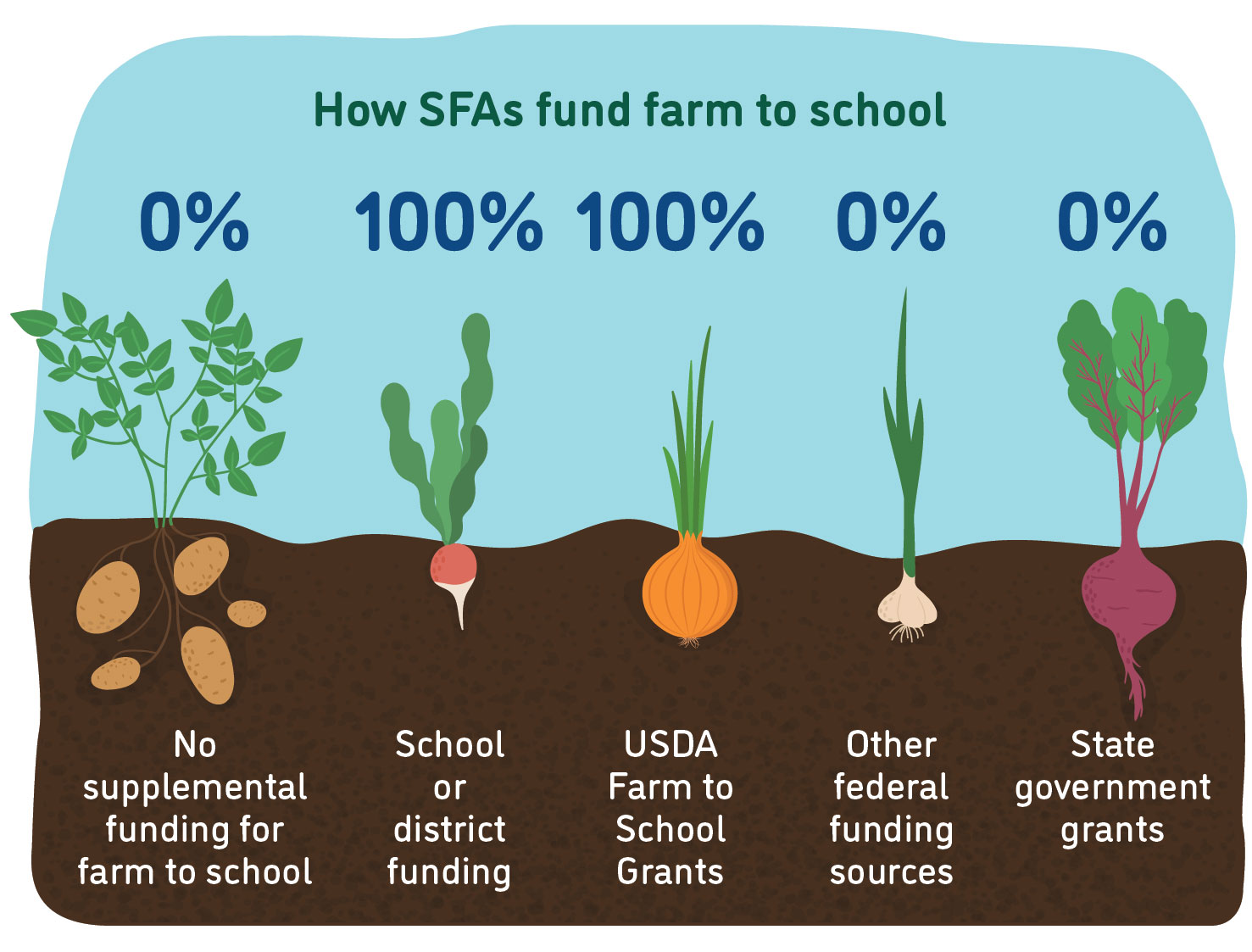
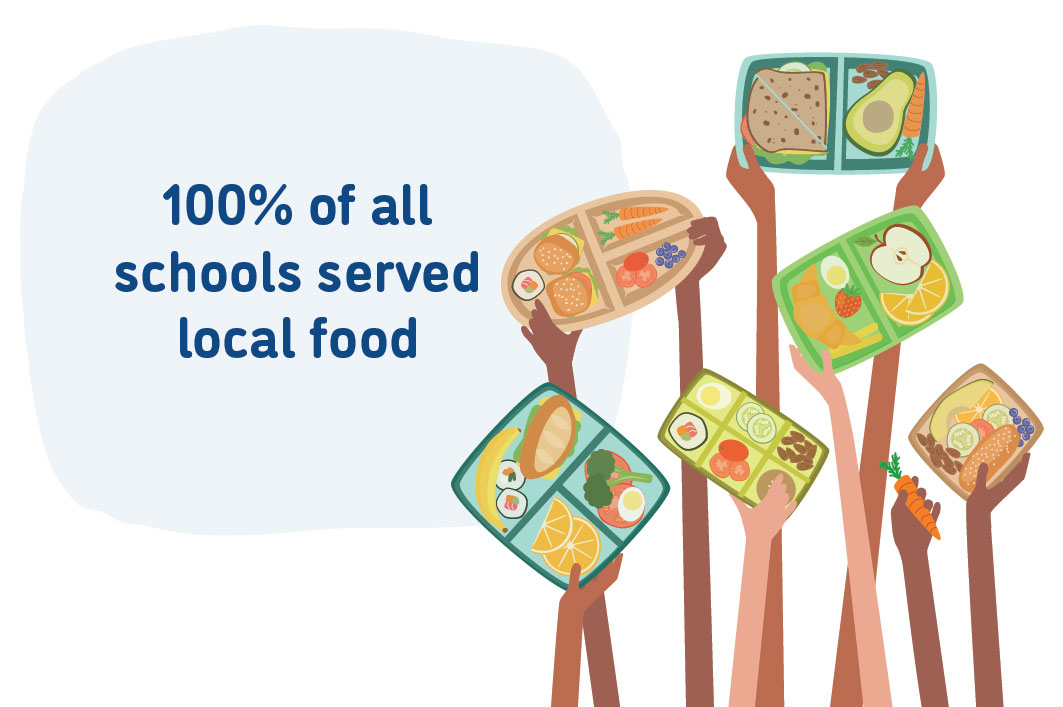

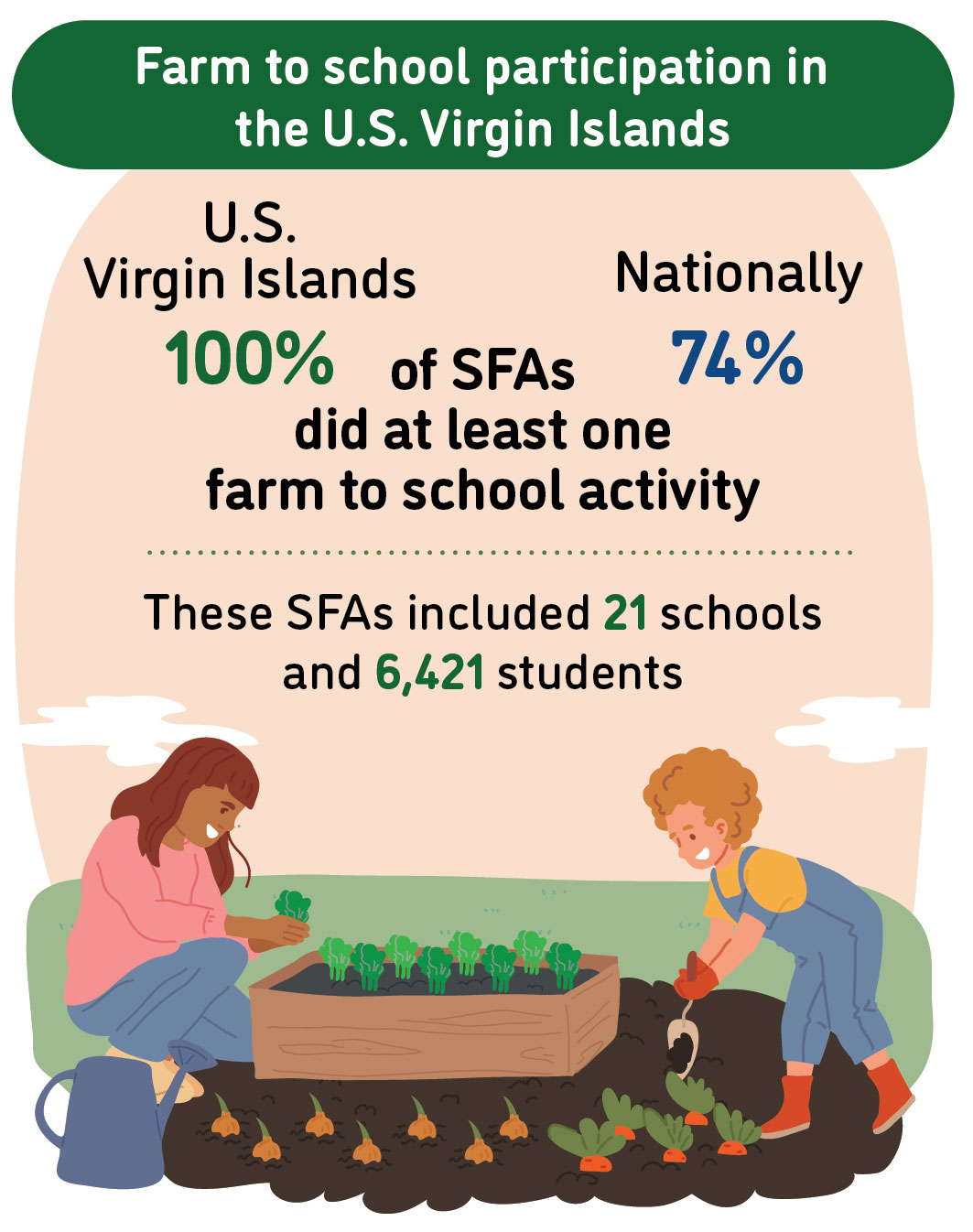
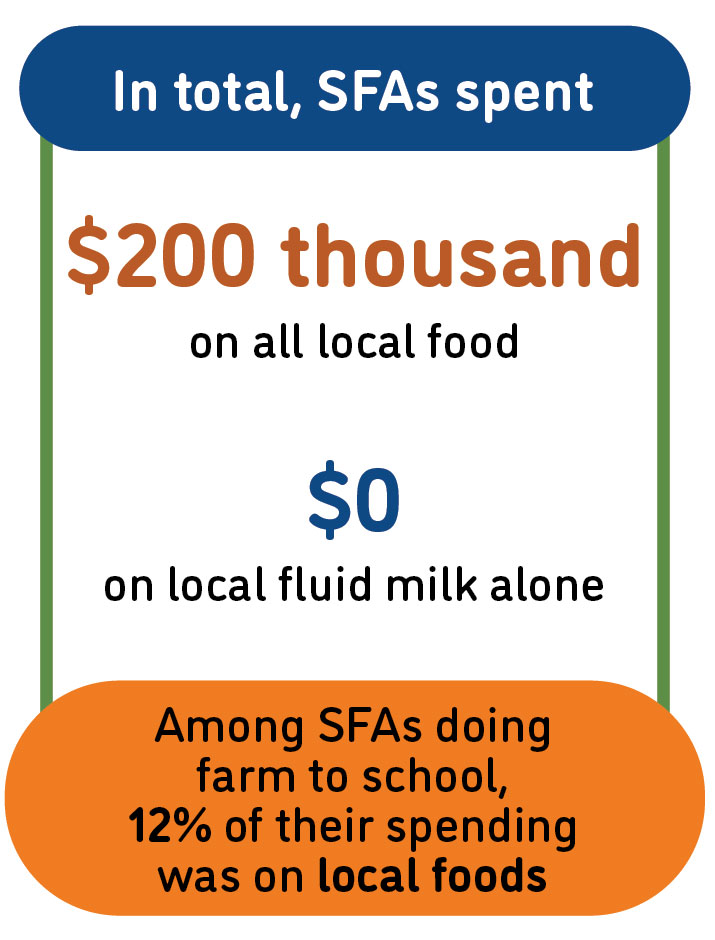



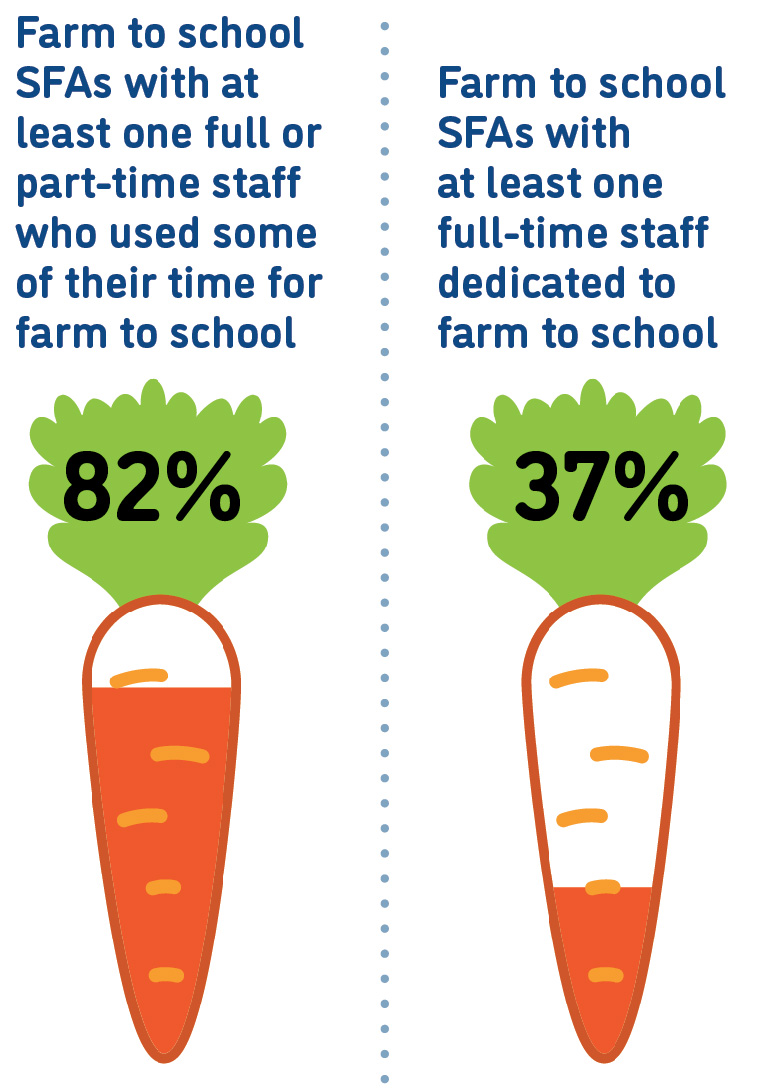
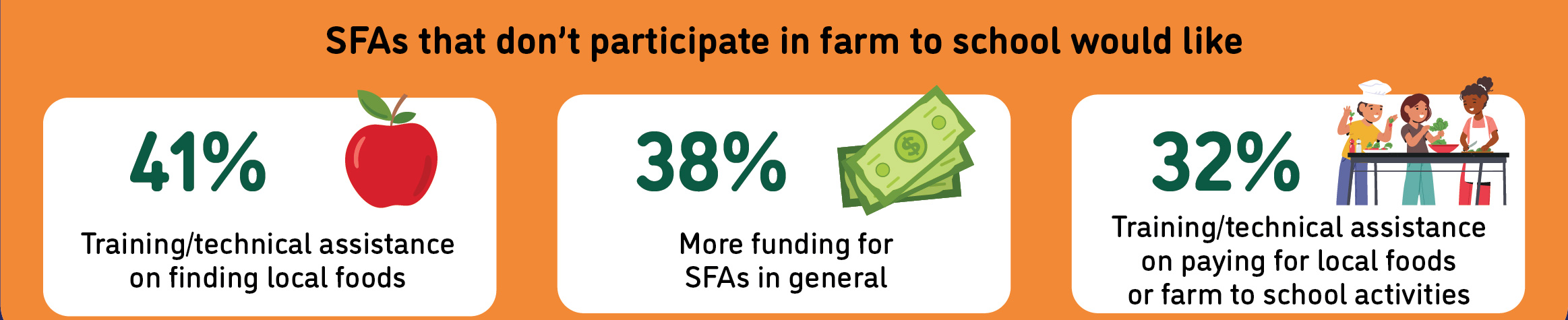

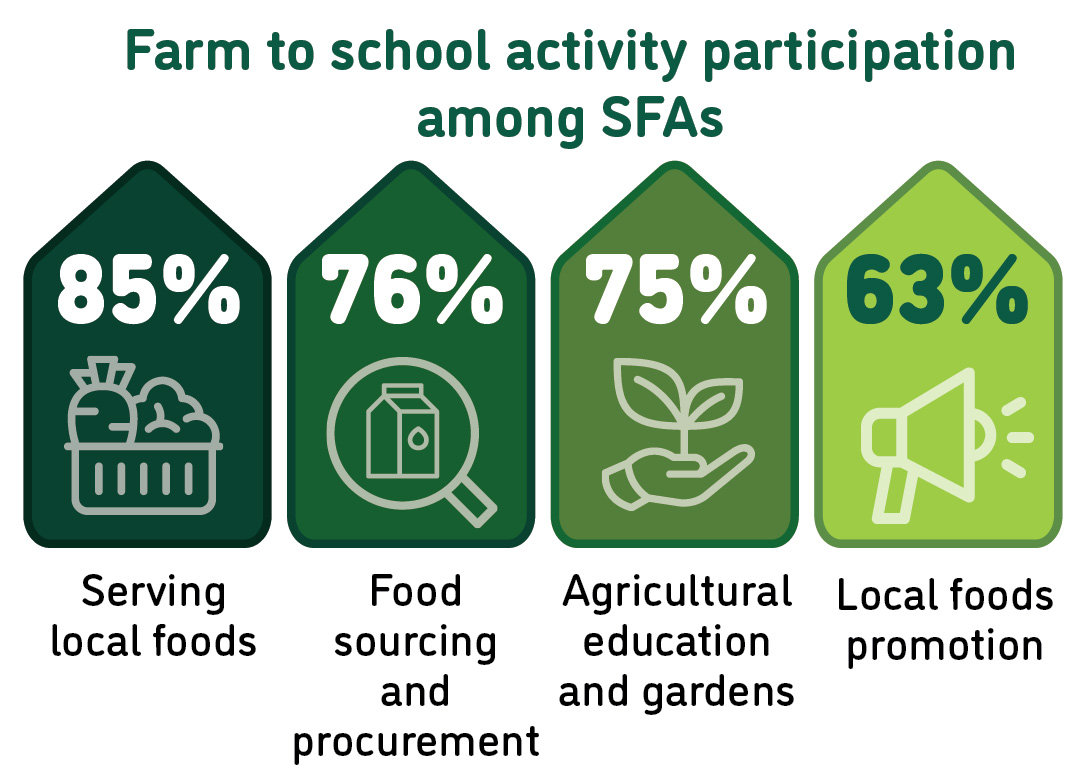
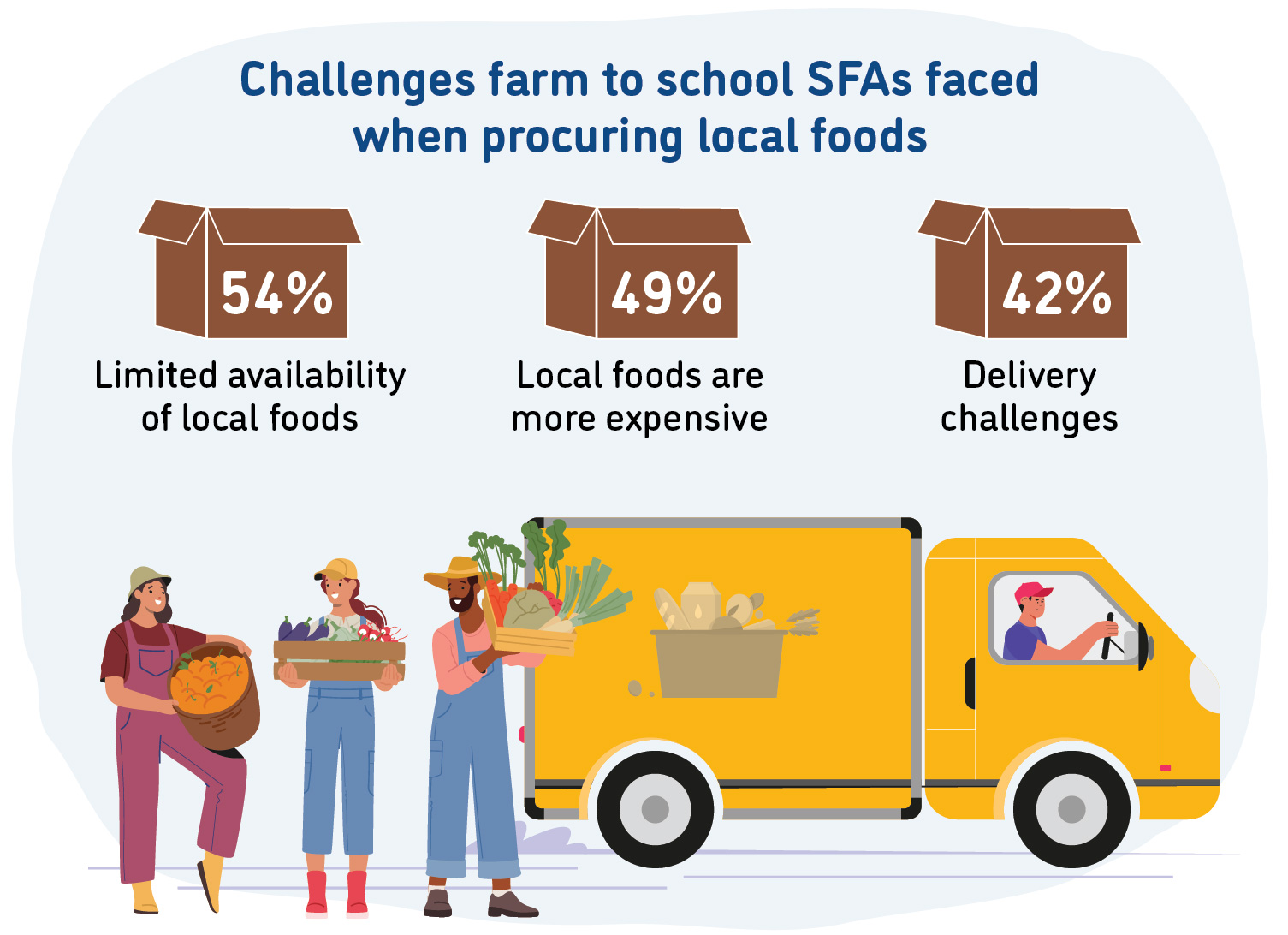
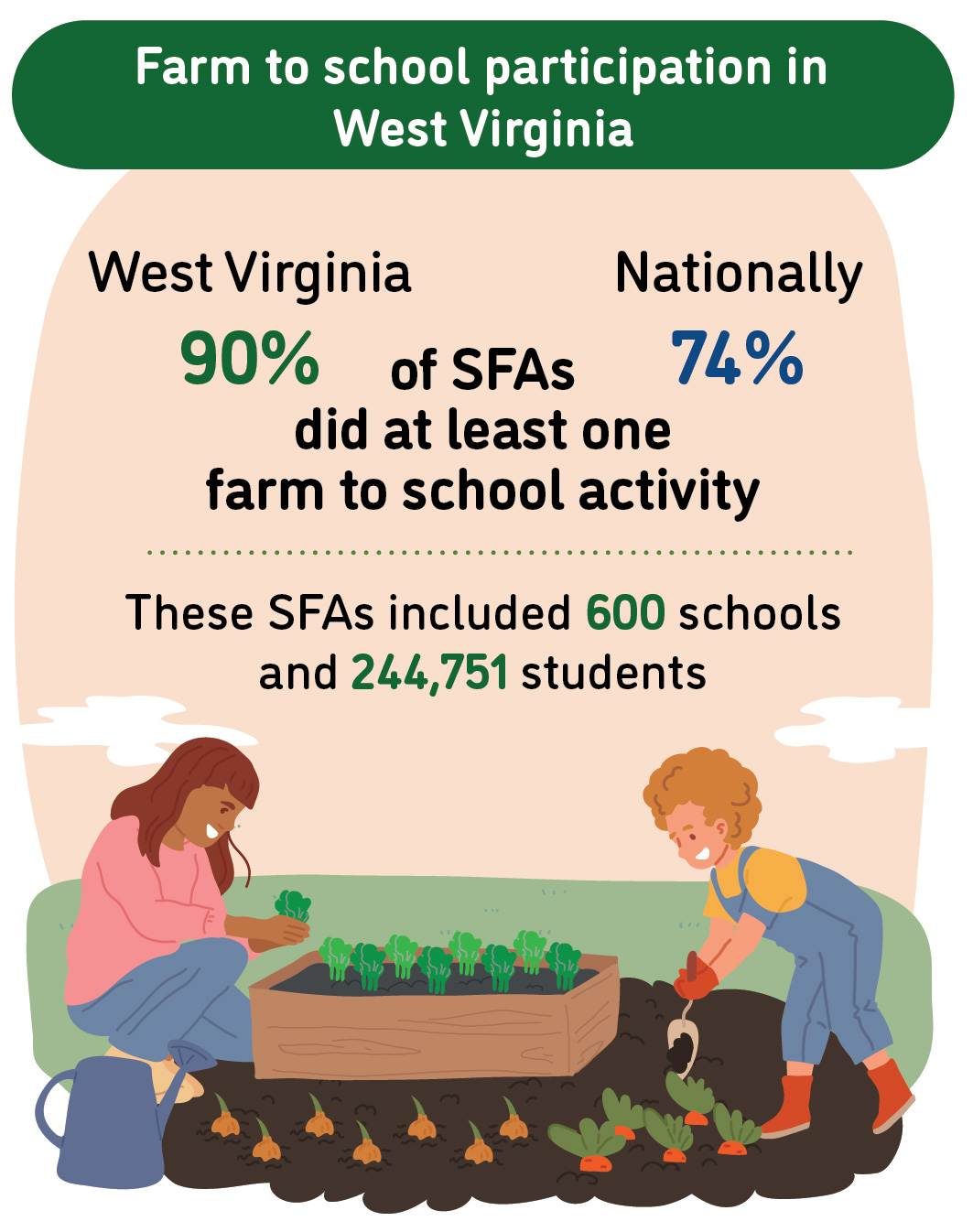
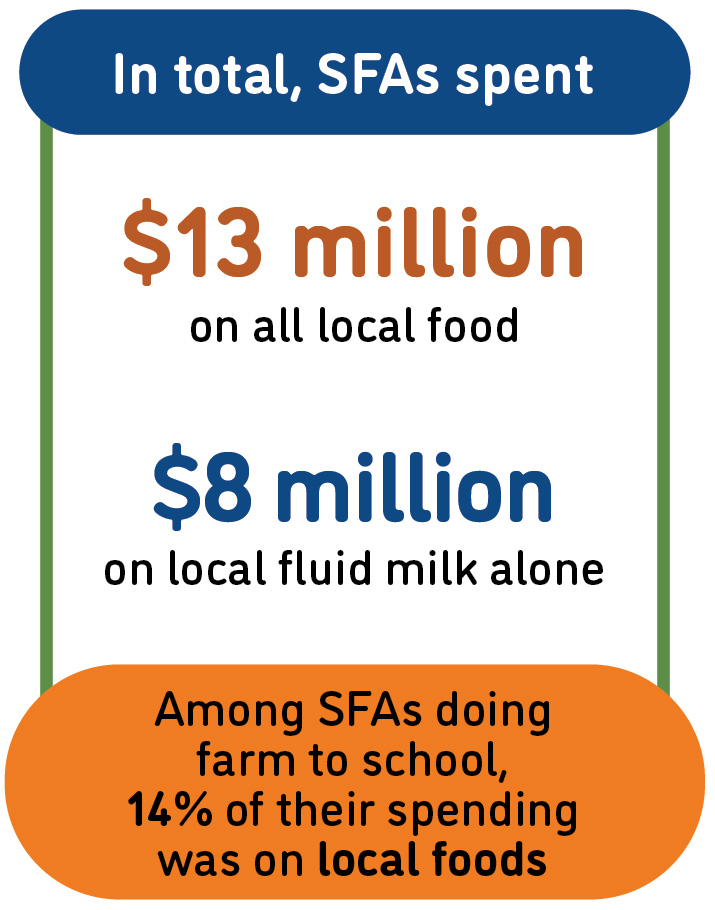
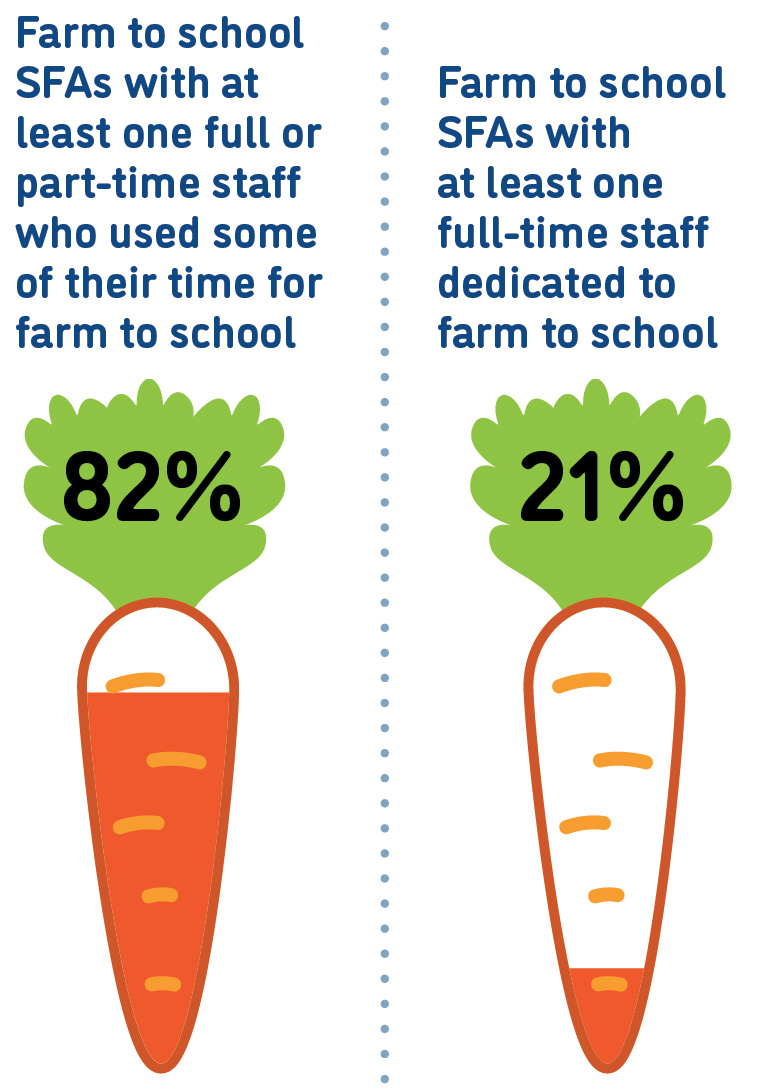
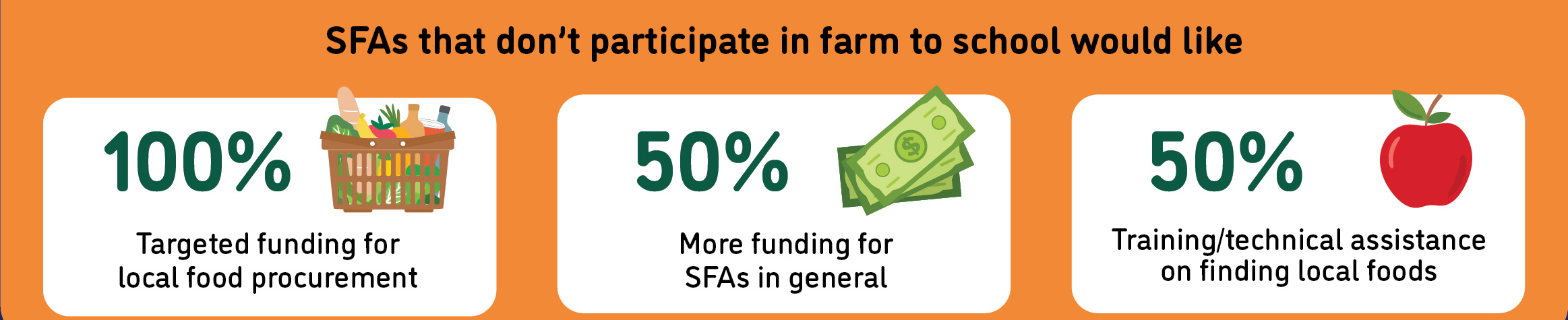



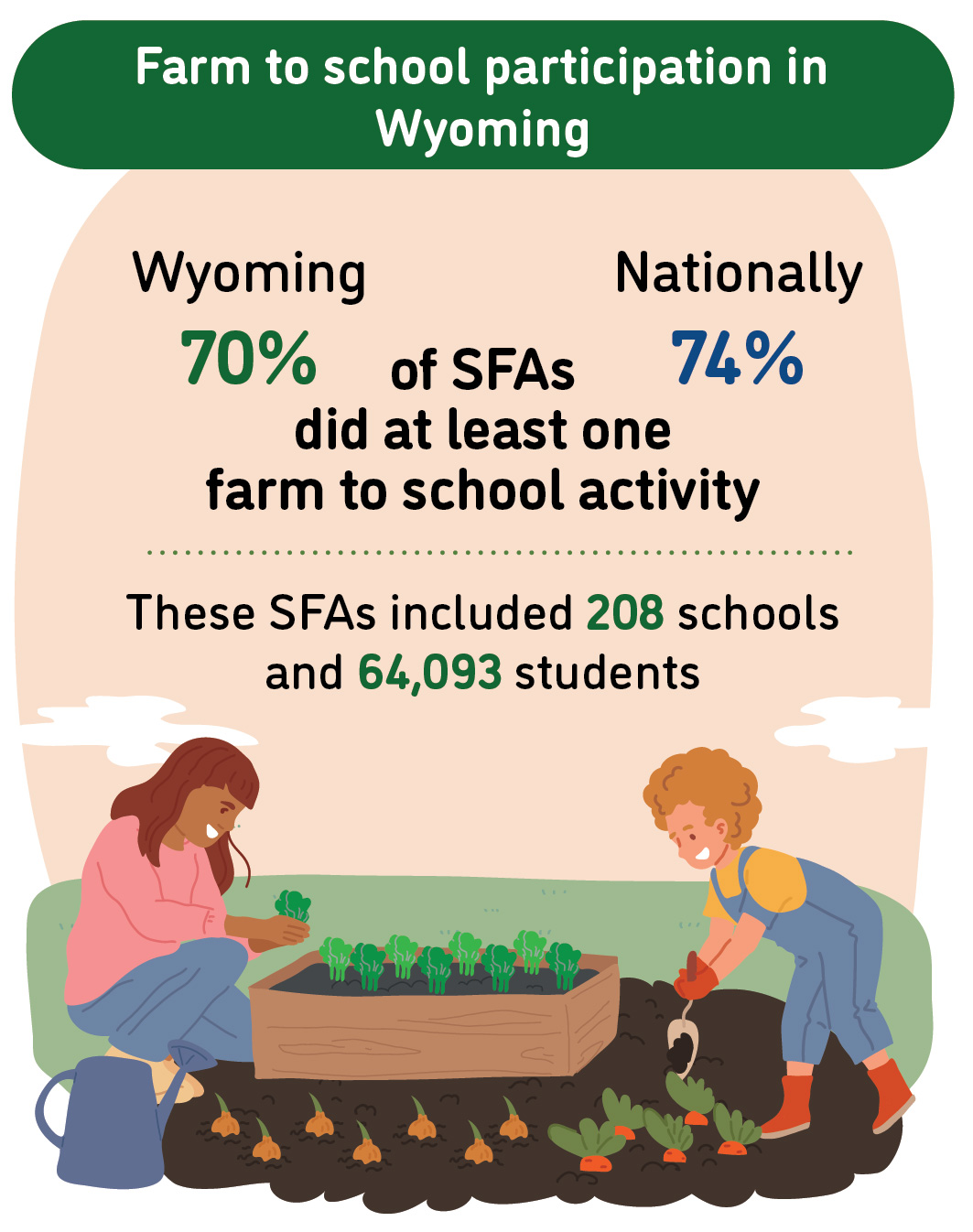
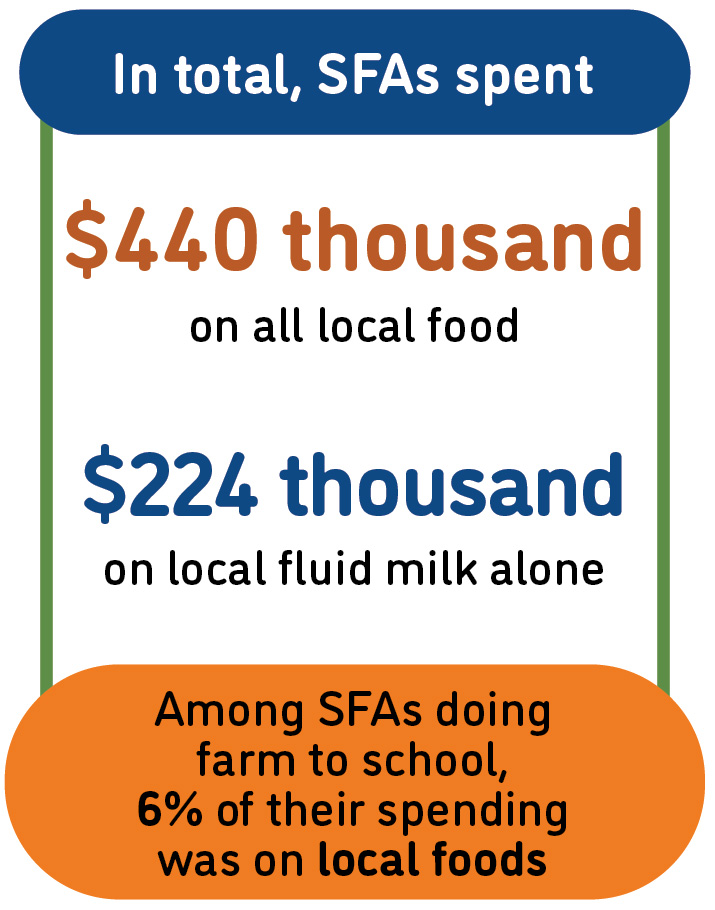
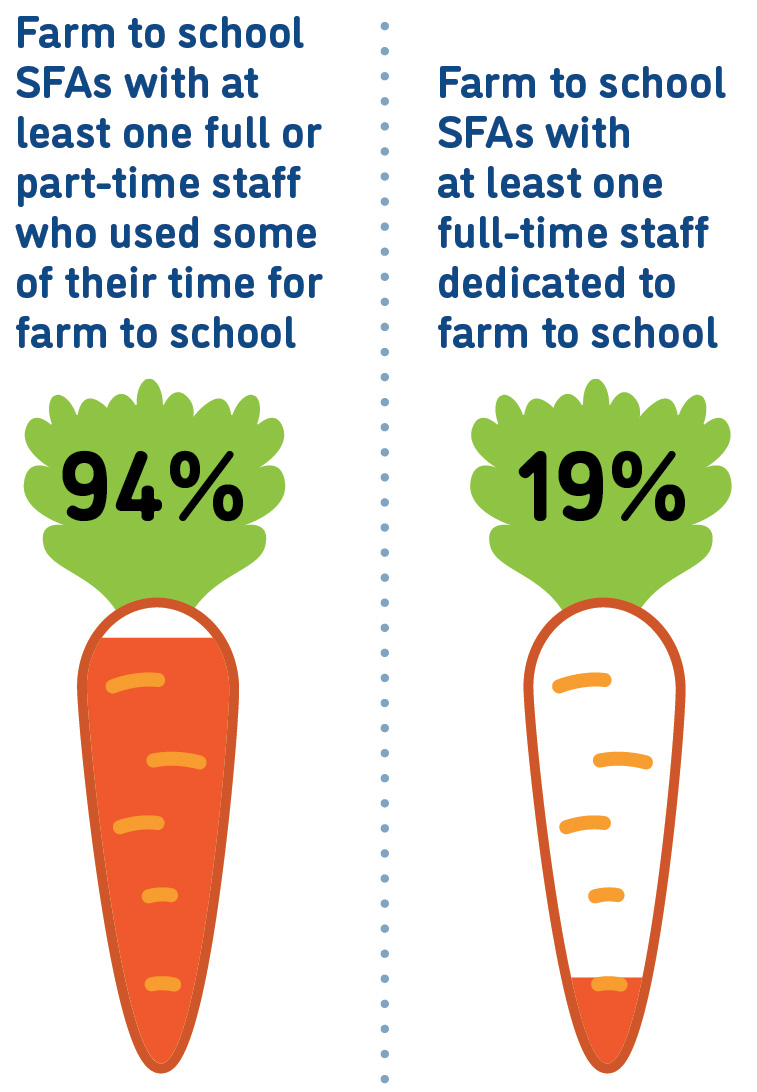
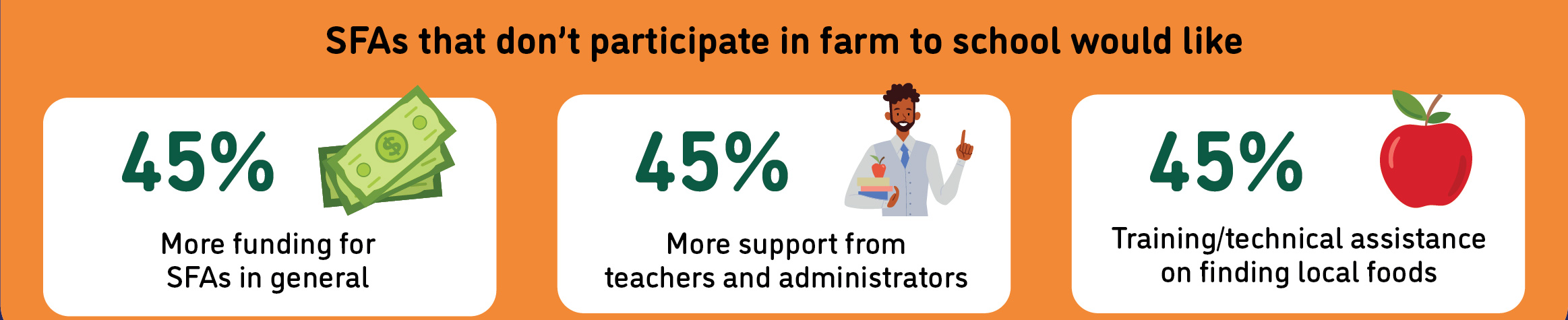

draft page
FNS - SSA Joint Letter
Dear State SNAP Directors:
The Social Security Administration (SSA) and the Food and Nutrition Service (FNS) of the U.S. Department of Agriculture (USDA) have news to share! SSA recently made changes to the Supplemental Security Income (SSI) program, making it stronger and simpler for more than a quarter of a million older adults and people with disabilities. These changes could potentially increase SSI payments and allow more people to become eligible for the program.
As of September 30, SSA expanded the definition of a public assistance household:
- If someone else in a household receives Supplemental Nutrition Assistance Program (SNAP) benefits, the household is now considered a public assistance household for SSI purposes.
- SSA no longer requires that all members of a household receive public assistance for that household to be considered a public assistance household for SSI purposes.
Nationwide, SSA expects about 250,000 people already enrolled in SSI could get higher payments under this change, along with more than 100,000 people becoming newly eligible.
SSI provides monthly payments to eligible people with little income and resources to help pay for basic needs like rent, food, clothing, and medicine. For an SSI recipient affected by this rule, the increase could be more than $300 monthly, or $3,600 annually. Some households receiving increased SSI payments may see a decrease in their SNAP benefits.
This is one of three changes that went into effect on September 30 to update and simplify the SSI policy. These changes help more people access crucial SSI payments and reduce the burden on the public and agency staff. The changes also aim to provide a baseline level of financial support to those who need it most.
SSA is interested in collaborating with states to optimize support for these initiatives, ensuring swift and efficient service delivery to those who need it most, including evaluating opportunities for data sharing that would help SSA more efficiently administer this change. SSA and FNS are currently working to clarify data sharing for these purposes, and FNS will be in touch soon to provide clarification to states.
With your support, we can help our most vulnerable Americans meet their basic needs with dignity.
| Cynthia Long Deputy Under Secretary Food, Nutrition, and Consumer Services U.S. Department of Agriculture | Carolyn W. Colvin Acting Commissioner Social Security Administration |
The Social Security Administration (SSA) and the Food and Nutrition Service (FNS) of the U.S. Department of Agriculture (USDA) have news to share! SSA recently made changes to the Supplemental Security Income (SSI) program, making it stronger and simpler for more than a quarter of a million older adults and people with disabilities. These changes could potentially increase SSI payments and allow more people to become eligible for the program.
Disasters Provisions in the Food Distribution Programs Final Rule
This webinar was held for USDA Foods distributing agency partners, including states, territories, and Indian Tribal Organizations, to talk about the USDA Foods Disaster Assistance provisions in the Food Distribution Programs Final Rule (89 FR 87228). For more information about the final rule, please visit the final rule webpage.
This webinar was held for USDA Foods distributing agency partners, including states, territories, and Indian Tribal Organizations, to talk about the USDA Foods Disaster Assistance provisions in the Food Distribution Programs: Improving Access and Parity Final Rule (89 FR 87228).
Characteristics of Adult Day Care Centers that Participate in CACFP
Why FNS Did This Study
Adult day care centers have been eligible to operate the Child and Adult Care Food Program (CACFP) since 1987. Adult day care centers receive payments for serving nutritious meals to adults who are age 60 or older, or who are physically or mentally impaired to an extent that limits their independence and ability to carry out activities of daily living. Centers may receive payments for up to two meals and one snack per participant per day. See the CACFP Adult Day Care Handbook for more information about the program.
FNS collects administrative data, tracking aggregated sponsor, site, and attendance information on participating centers from states twice each fiscal year.
The objective of this study is to better understand key characteristics of adult day care centers participating in CACFP. Key characteristics include a) the types of organizations that participate in CACFP as adult day care centers and the populations they serve; and b) the meal services and non-meal services offered at CACFP adult day care centers.
How FNS Did This Study
Data was collected through a short survey sent to 2,495 adult day care centers located in 48 states (including the District of Columbia and Puerto Rico) that participated in CACFP in fiscal year (FY) 2023. The survey was conducted in early 2024 and 1,147 centers (47%) responded. Centers provided information about their meal services using October 2023 as a point of reference. Weights were used to correct for non-response.
FNS analyzed the frequency of responses to each question and conducted significance testing based on three center characteristics: organization type (private for-profit, private non-profit, or public), center size, and whether centers are independent or sponsored.
Key Findings
- The number of adult day care centers participating in CACFP varied widely from state to state and was not always proportional to the state’s population of older adults and people with disabilities. Over half of the 2,495 CACFP-participating adult day care centers in FY 23 were in just five states: Texas (14.1%), California (11.6%), Florida (9.1%), New Jersey (8.2%), and New York (7.3%).
- About half of centers (48.1%) operate CACFP independently, while fewer centers (43.3%) have a sponsoring organization that supports the administration of CACFP. The sponsor status of 8.6% of centers is unknown.
- CACFP Adult Day Care Centers and Participants
- Just over half (51.7%) of centers identified themselves as private, for-profit organizations (see Figure 1).
- Most centers (69%) serve both adults over age 60 and adults under age 60 with disabilities (see Figure 1).
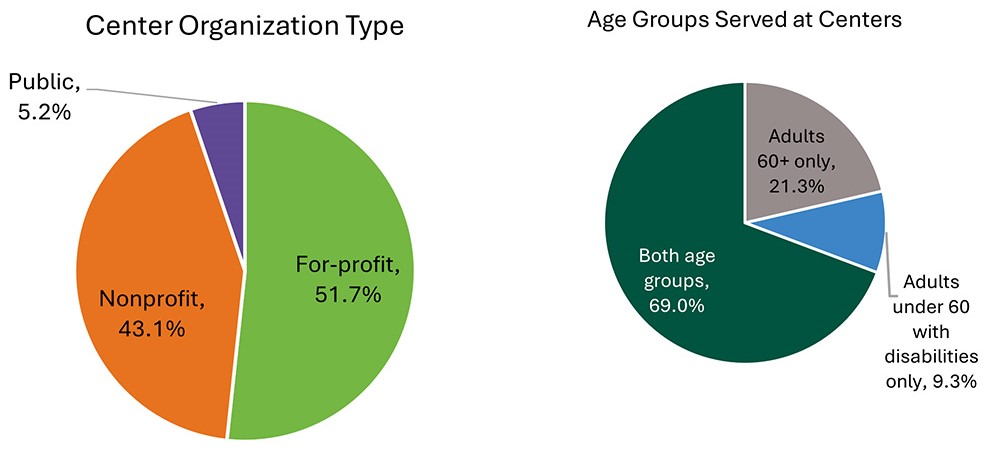
Figure 1. Characteristics of Adult Day Care Centers Participating in CACFP in fiscal year 2023.1 - Two-thirds (67.1%) of the population served at centers in October 2023 were adults over age 60.
- Adults who participated in CACFP at adult day care centers were substantially more likely to be non-White than the general population of older adults and people with disabilities. Adults identifying as Asian were much more likely to participate in CACFP at adult day care centers compared to their share of the population.
- Meal Services Offered at Participating Centers in October 2023
- According to FNS administrative data, nearly all meals claimed by adult day care centers in October 2023 were free (96%). Survey results indicate that nearly all participants (92.5%) who ate a CACFP meal at adult day care centers in October 2023 were certified for free meals.
- Most centers (59%) only claimed free meals in October 2023. Another 16.7% claimed free and paid meals, while 16.1% claimed free, reduced-price, and paid meals.
- Most centers (58.1%) claimed breakfast, lunch, and snack services (See Figure 2).
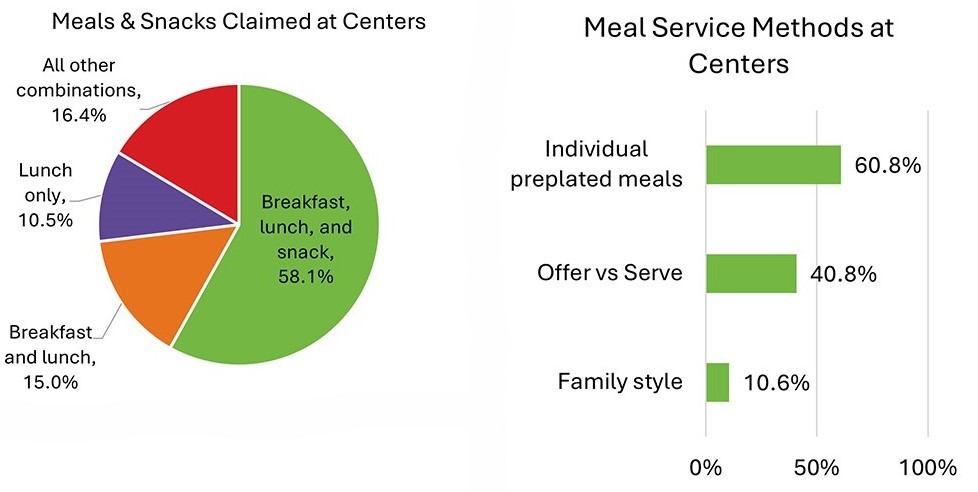
Figure 2. Characteristics of Meal Services at Adult Day Care Centers Participating in CACFP in October 2023. 2 - Almost every center claimed lunch (96.9%) in October 2023, and very few centers (6.7%) claimed suppers.
- Most centers (55.6%) prepared CACFP meals on site, and just over one quarter (27.1%) purchased meals from a commercial vendor.
- Most centers (60.8%) served individual meals, either pre-plated or “boxed” (See Figure 2).
- The top five non-meal services centers provided were: exercise/physical activities (88.5%); assistance with activities of daily living (85.9%); music or art therapy (75.6%); nursing and other health-related services (70.5%); and mental, behavioral health, or social work services (56.0%).
- For-profit vs. Nonprofit Centers
- For-profit adult day care centers are only eligible to participate in CACFP if they receive compensation under Title XIX (Medicaid) and/or Title XX (Social Services Block Grant) of the Social Security Act and at least 25% of enrolled participants receive Title XIX or Title XX benefits. Just over half (54%) of for-profit centers reported that all CACFP participants were also Title XIX or Title XX recipients.
- Most for-profit centers (97%) are in just 14 states. In the four states with the most CACFP adult day care centers, most centers were for-profit: Texas (91% of all centers), California (79%), Florida (70%), and New Jersey (80%).
- For-profit centers accounted for about 72 % of all meals claimed in the adult daycare component of CACFP in October 2023, while private, nonprofit centers accounted for 24.9 %. The remaining 3.3 % of meals were claimed by public centers.
- Compared to non-profit centers, for-profit centers were significantly more likely to claim free meals and to serve a larger proportion of adults over age 60. Other significant differences between for-profit and nonprofit centers are shown in Figure 3.
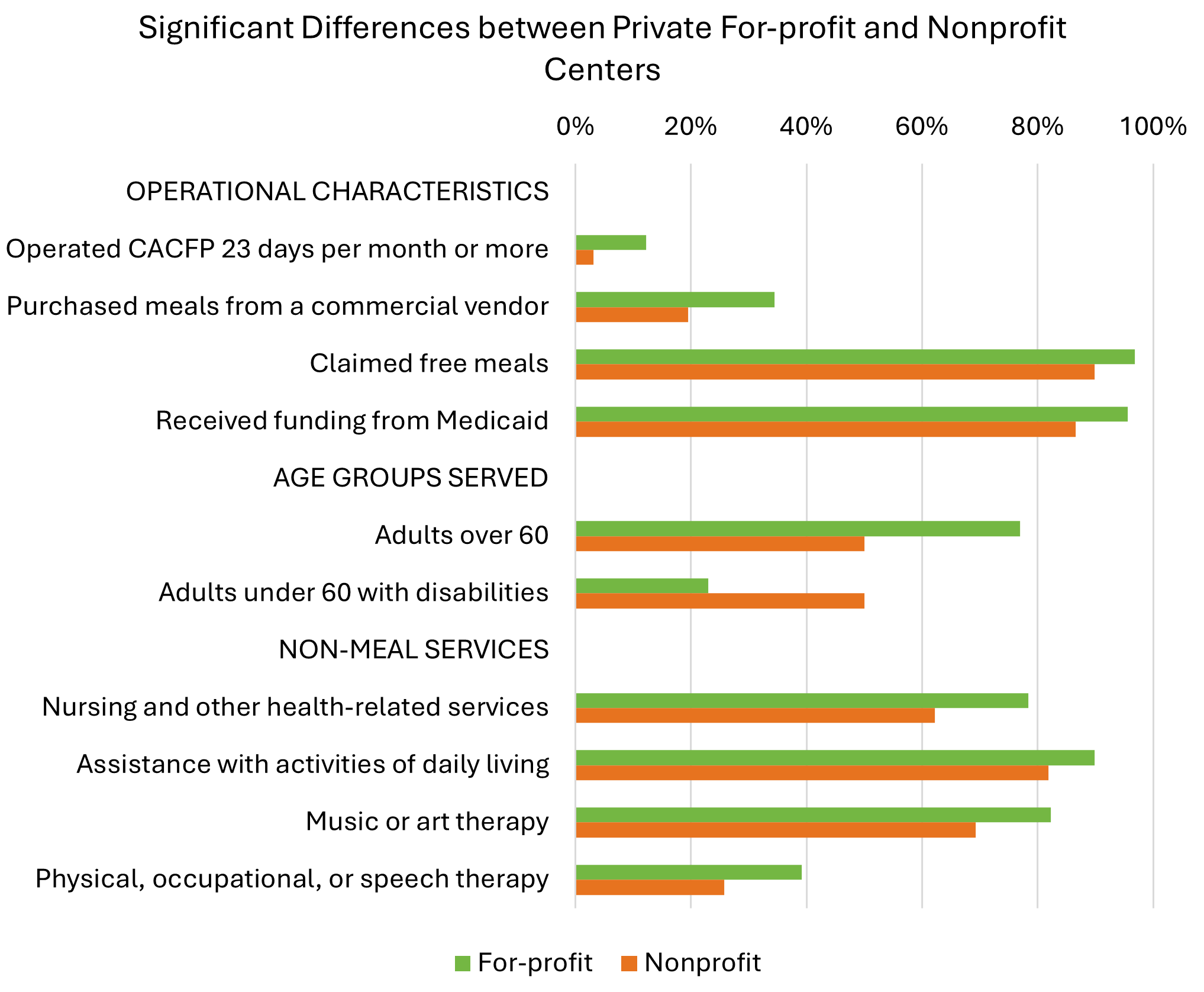
Figure 3. Significant Differences between Private For-profit and Nonprofit Centers Participating in CACFP.3
1 Source: U.S. Department of Agriculture, Food and Nutrition Service, CACFP Adult Daycare 2023 Characteristics Survey, Spring 2024, Question #1 and Question #6.
2Source: U.S. Department of Agriculture, Food and Nutrition Service, CACFP Adult Daycare 2023 Characteristics Survey, Spring 2024, Questions #13 through #16 and Question #18. Centers could select multiple meal service methods in their response to Question #18. Offer versus Serve is described on page 35 of the CACFP Adult Day Care Handbook.
3 Source: U.S. Department of Agriculture, Food and Nutrition Service, CACFP Adult Daycare 2023 Characteristics Survey, Spring 2024. All differences are statistically significant at p≤ 0.05.
Adult day care centers have been eligible to participate in the Child and Adult Care Food Program (CACFP) since 1987. The objective of this study is to better understand key characteristics of adult day care centers participating in CACFP.
Kosher and Halal Foods in Child Nutrition Programs
On Nov. 14, 2024, we held a webinar for state and local agencies administering child nutrition programs on serving halal and kosher observant students eligible for their programs.
On Nov. 14, 2024 we held a webinar for state and local agencies administering child nutrition programs on serving halal and kosher observant students eligible for their programs.
FY 2021-2023 Report to Congress on Reducing Barriers to Food Access
USDA prepared this Report to Congress to address requirements to coordinate efforts within USDA to reduce barriers to food access. USDA has identified the Food and Nutrition Service (FNS) as the Food Access Liaison to coordinate efforts and annually respond to this request. The report describes activities that occurred from October 2020 through September 2023 to reduce barriers to food access given the last such annual report submitted in March 2021 covered fiscal year 2020.
USDA adapts to numerous population and economic conditions to ensure food access, food safety, conservation of natural resources, and support for agricultural markets. During the performance period described in this report, the United States addressed a national public health emergency due to the coronavirus pandemic (COVID-19). USDA implemented several interim programs and numerous policy changes based on key legislation. Some of the legislation allowed for temporary policy flexibilities while others resulted in permanent changes or enhancements to existing programs and statutes. These strategies increased access to healthy foods, offered new market opportunities for farmers and ranchers, stabilized small and independent retailers, and created quality jobs and economic opportunities in underserved communities. Much of the work to overcome extensive challenges encountered during this historical period can be attributed to committed communities, a national resolve to push forward, and steadfast USDA staff and partners.
This Report to Congress from USDA responds to a requirement established by the 2018 Farm Bill to address requirements to coordinate efforts within USDA to reduce barriers to food access. USDA has identified FNS as the Food Access Liaison to coordinate efforts and annually respond to this request. The report describes activities that occurred from October 2020 through September 2023 to reduce barriers to food access given the last such annual report submitted in March 2021 covered fiscal year 2020
Final Rule - Food Distribution Programs
Please note: A correction to this final rule was published in the Federal Register Dec. 23, 2024.
Summary
This final rule revises regulations for the Commodity Supplemental Food Program (CSFP), the Food Distribution Program on Indian Reservations (FDPIR), The Emergency Food Assistance Program (TEFAP), and USDA Foods disaster response regulations. This final rule makes improvements in USDA’s food distribution programs.
Dates
Effective date: This rule is effective Dec. 30, 2024.
Implementation dates: See section 2 of the Supplementary Information. This rulemaking consists of multiple provisions. Implementation for each provision is referenced in the Supplementary Information section of this final rule and detailed in the section-by-section analysis.
Background
The U.S. Department of Agriculture's (the Department or USDA) Food and Nutrition Service (FNS) works to increase food security and reduce hunger through the administration of 16 federal nutrition assistance programs. Through the provision of food and administrative funding, USDA FNS food distribution programs assist the emergency feeding network—made up of thousands of food banks, food pantries, Tribal governments, and other community partners—in feeding those in need.
In a proposed rule published in the Federal Register on Aug. 14, 2023 (88 FR 54908) (described hereafter as “the proposed rule”), FNS proposed to amend food distribution regulations at 7 CFR parts 247, 250, 251, 253, and 254 to make access and parity improvements within the Commodity Supplemental Food Program (CSFP), the Food Distribution Program on Indian Reservations (FDPIR), The Emergency Food Assistance Program (TEFAP), and USDA Foods disaster response. Based on comments received in response to the proposed rule, USDA is finalizing regulatory changes with the following overall aims:
- Increasing access to food distribution programs so eligible individuals can more easily receive the nutrition resources they need, and program operators can more easily provide those resources;
- Increasing parity between FDPIR and the Supplemental Nutrition Assistance Program (SNAP);
- Modernizing program operations by updating some outdated terminology and processes;
- Updating regulations to be consistent with current program operations and building in flexibility for future changes; and
- Incorporating lessons learned from implementing these critical programs during the COVID-19 pandemic.
Resources
- Snapshot of regulatory changes that the final rule makes.
- Questions and answers about the final rule.
CSFP
FDPIR
- Regulatory changes
- Webinars
- Policy Memos
TEFAP
USDA Foods in Disasters
This final rule revises regulations for the Commodity Supplemental Food Program (CSFP), the Food Distribution Program on Indian Reservations (FDPIR), The Emergency Food Assistance Program (TEFAP), and USDA Foods disaster response regulations. This final rule makes improvements in USDA’s food distribution programs.
USDA Foods in Disaster Response
FNS, an agency of the United States Department of Agriculture (USDA), coordinates with state, local, and disaster relief organizations including Indian Tribal Organizations (ITOs) to provide nutrition assistance to those affected by major disasters, emergencies, and situations of distress. This disaster assistance includes USDA Foods Disaster Assistance.
State agencies can provide USDA Foods – nutritious, domestically sourced and produced foods – for mass feeding and/or household distribution during a Presidentially-declared disaster or emergency, or a situation of distress. USDA Foods programs operate in every state and U.S. territory; and statutory and regulatory authorities allow USDA Foods distributing agencies to leverage current USDA Foods inventories to serve people affected by disasters, emergencies, and situations of distress. USDA Foods inventories for the National School Lunch Program (NSLP) and The Emergency Food Assistance Program (TEFAP) are most commonly used.
Program Operation
Depending on the situation, USDA Foods are provided to individuals via congregate feeding or Disaster Household Distributions (DHD).

Congregate feeding involves providing USDA Foods from current program inventories to disaster relief organizations for use in preparing congregate meals served in group settings. Congregate feeding is typically provided in the immediate aftermath of a disaster when grocery stores may be closed or when people are staying in shelters and are served in a central location, such as schools, churches, community centers, or mobile kitchens.
Disaster Household Distributions (DHD) use USDA Foods from current program inventories for distribution to households for home use. In a DHD, USDA Foods are not prepared or consumed at a central location; rather, the foods are taken home to be prepared by individuals and families. DHD is typically provided for short periods of time following a disaster when traditional, commercial channels of food distribution are disrupted but when people have the ability to prepare foods.
USDA Foods Disaster Assistance is usually provided in the first days or weeks after a disaster and complements other disaster nutrition assistance, such as Disaster-SNAP (D-SNAP). Households may receive D-SNAP and USDA Foods Disaster Assistance at the same time if needed. Please see the Disaster Nutrition Assistance Timeline for additional information.
Major Disaster or Emergency
Major disasters and emergencies are defined by The Robert T. Stafford Disaster Relief and Emergency Assistance Act (the Stafford Act).
A major disaster is any natural catastrophe, in any part of the United States, which in the determination of the President causes damage of sufficient severity and magnitude to warrant major disaster assistance under the Stafford Act to supplement the efforts and available resources of states, local governments, and disaster relief organizations in alleviating the damage, loss, hardship, or suffering caused thereby.
An emergency is any occasion or instance for which, in the determination of the President, federal assistance is needed to supplement state and local efforts and capabilities to save lives and to protect property and public health and safety, or to lessen or avert the threat of a catastrophe in any part of the United States.
A formal request for a major disaster declaration or emergency assistance must be made by a State Governor or Chief Executive of a Tribal government to the President of the United States. When the President determines that federal assistance is needed, based on the Federal Emergency Management Agency’s (FEMA) evaluation and recommendation, a formal Presidential Major Disaster Declaration (MDD) or Emergency Disaster Declaration (EDD) is made, and resources of the federal government become available to designated areas.
Situation of Distress
Situations of distress are defined in program regulations as a natural catastrophe or other situation that has not been declared a disaster or emergency by the President, but, in the determination of a USDA Foods distributing agency or FNS, warrants the use of USDA Foods to assist survivors of such a catastrophe or other event. Situations of distress may include, for example, a hurricane, tornado, flood, snowstorm, or explosion.
Approvals to Provide USDA Foods Disaster Assistance

Distributing agencies including ITOs do not need approval from FNS to operate congregate feeding operations during major disasters, emergencies, and under situations of distress that are a result of a natural event (e.g., a hurricane). However, distributing agencies must notify the FNS regional office (RO) that USDA Foods are being used in this way and must notify the FNS RO of the period of time that assistance is expected to be needed. FNS approval must be obtained to operate a congregate feeding operation longer than 30 days, and to operate congregate feeding in situations of distress that are not caused by a natural event. Distributing agencies including ITOs must request approval from FNS prior to using USDA Foods to operate a Disaster Household Distribution.
Additional Resources
State agencies and partner organizations can find more information in the USDA Foods in Disasters Manual and program regulations at 7 CFR 250. This includes information regarding the replacement of USDA Foods used for disaster response, and reimbursement for applicable transportation costs.
Individuals and households in needs of disaster nutrition assistance should visit the FNS Disaster Assistance for Individuals webpage.
FNS coordinates with state, local, and disaster relief organizations including Indian Tribal Organizations to provide nutrition assistance to those affected by major disasters, emergencies, and situations of distress. This disaster assistance includes USDA Foods Disaster Assistance.
Substituting Vegetables for Grains in American Samoa, Guam, Hawaii, Puerto Rico, the U.S. Virgin Islands, and Tribal Communities
| DATE: | October 30, 2024 | |
| POLICY MEMO: | SP 03-2025, CACFP 03-2025, SFSP 01-2025 | |
| SUBJECT: | Substituting Vegetables for Grains in American Samoa, Guam, Hawaii, Puerto Rico, the U.S. Virgin Islands, and Tribal Communities | |
| TO: | Regional Directors Special Nutrition Programs All Regions | State Directors Child Nutrition Programs All States |
On April 25, 2024, the U.S. Department of Agriculture’s (USDA) Food and Nutrition Service (FNS) published the final rule, Child Nutrition Programs: Meal Patterns Consistent With the 2020-2025 Dietary Guidelines for Americans (89 FR 31962). While most provisions in the 2024 final rule focus on the National School Lunch Program (NSLP) and School Breakfast Program (SBP), this rule also includes limited updates to the Child and Adult Care Food Program (CACFP) and the Summer Food Service Program (SFSP) to better align child nutrition programs (CNP) requirements. These updates represent continued progress toward supporting the nutritional quality of meals offered through the CNPs and meeting cultural food preferences of program participants.
This memorandum clarifies longstanding program regulations and provides updated guidance on the use of vegetables as a substitution for grains, including whole grain-rich products, in eligible areas, as described in program regulations. This guidance also provides updates on the expansion of this flexibility to eligible areas following the 2024 final rule. Lastly, this memorandum informs affected state agencies and program operators how to credit vegetables toward the grains component for all CNPs, including the NSLP, SBP, SFSP, and CACFP. This memorandum supersedes SP 29-2013, Crediting Vegetables for Grains in American Samoa, Puerto Rico, and the Virgin Islands, issued on March 21, 2013.
Longstanding Program Regulations
Longstanding program regulations at 7 CFR 210.10(c)(3), 220.8(c)(3), 225.16(f)(3), and 226.20(f) allowed program operators in American Samoa, Puerto Rico, and the U.S. Virgin Islands to substitute vegetables to meet the grains or breads component in the NSLP, SBP, SFSP, and CACFP. Additionally, prior regulations allowed this option in Guam for SFSP and CACFP sponsors, institutions, and facilities.
2024 Final Rule Updates
The 2024 final rule amended existing regulations to allow additional program operators and areas to substitute vegetables to meet the grains or breads component. Expanding this menu planning option responds to extensive partner feedback and is intended to support traditional foodways in CNPs. A full list of eligible areas and entities, including those that were eligible under prior regulations and those that are newly eligible under the 2024 final rule, is below. The 2024 final rule also clarified that any creditable vegetable can be substituted for the grains or bread component with an emphasis on traditional and culturally relevant vegetables.
List of Eligible Entities: Qualifying Criteria
The table below outlines all programs that are eligible to use this menu planning flexibility and the corresponding regulatory citations. Program operators only need to meet one of the qualifying criteria for the relevant program in order to implement the menu planning flexibility.
| Program | Existing Eligible Entities | New Eligible Entities | Regulation |
| NSLP | Schools in American Samoa, Puerto Rico, and the U.S. Virgin Islands. |
| 7 CFR 210.10(c)(3) |
| SBP | Schools in American Samoa, Puerto Rico, and the U.S. Virgin Islands. |
| 7 CFR 220.8(c)(3) |
| SFSP | Programs in American Samoa, Guam, Puerto Rico, and the U.S. Virgin Islands. |
| |
| CACFP | Programs in American Samoa, Guam, Puerto Rico, and the U.S. Virgin Islands. |
| 7 CFR 226.20(f) |
For the purpose of this menu planning option, “serving primarily American Indian or Alaska Native” applies to programs where American Indian or Alaska Native participants represent the largest demographic group of enrolled participants.
State agencies are reminded to distribute this information to program operators immediately. Program operators should direct any questions concerning this guidance to their state agency. State agencies should direct questions to the appropriate FNS regional office.
Director
School Meals Policy Division
Director
Community Meals Policy Division
Attachment
On April 25, 2024, FNS published the final rule, Child Nutrition Programs: Meal Patterns Consistent With the 2020-2025 Dietary Guidelines for Americans. While most provisions in the 2024 final rule focus on the National School Lunch Program and School Breakfast Program, this rule also includes limited updates to the Child and Adult Care Food Program and the Summer Food Service Program to better align child nutrition programs requirements. These updates represent continued progress toward supporting the nutritional quality of meals offered through the CNPs and meeting cultural food preferences of program participants.
Q&As: Food Distribution Programs - Improving Access & Parity Final Rule
The final rule, Food Distribution Programs: Improving Access and Parity changes program regulations to make access and parity improvements within several food distribution programs including:
- Commodity Supplemental Food Program (CSFP) - 7 CFR 247
- The Food Distribution Program on Indian Reservations (FDPIR) - 7 CFR 253 and 254
- The Emergency Food Assistance Program (TEFAP) - 7 CFR 251
- USDA Foods Disaster Response - 7 CFR 250
- 1. Who will be affected by the changes in the rule?
Changes in the final rule affect CSFP, TEFAP, and FDPIR participants, in addition to those individuals seeking USDA Foods disaster assistance. The changes also affect state agencies, Indian Tribal Organizations (ITOs), and local agencies that administer CSFP, TEFAP, FDPIR, and USDA Foods in Disasters.
- 2. Why are we revising food distribution regulations and what are the goals of the final rule?
We are revising food distribution regulations with the following overall aims:
- Increasing access to TEFAP, CSFP, FDPIR, and USDA Foods Disaster Assistance so that eligible individuals can more easily receive the nutrition resources they need, and program operators can more easily provide those resources;
- Increasing parity between FDPIR and the Supplemental Nutrition Assistance Program (SNAP);
- Modernizing program regulations to keep them consistent with current program operations, while also building in flexibility for future changes; and
- Incorporating lessons learned from implementing these critical programs during the COVID-19 pandemic.
This routine rulemaking action has been in development since 2022. Many of the rule’s provisions have been years in the making and were specifically requested by program partners.
- 3. What major changes does the rule make?
The rule makes several key changes in each of the affected programs in addition to a number of smaller and nonsubstantive, technical changes in each program. Please see this summary chart for a list of all changes. Several of the major changes are also listed below:
In CSFP, the rule:
- Increases CSFP’s maximum income eligibility guidelines from 130% of the Federal Poverty Guidelines, to 150% of the Federal Poverty Guidelines, so that the program can reach additional seniors in need.
- Streamlines CSFP home delivery services by providing flexibility for identity verification requirements at the time of delivery of CSFP foods. This change is intended to help support state and local agencies in modernizing the program’s delivery methods.
In TEFAP, the rule:
- Removes a longstanding, burdensome requirement that requires TEFAP eligible recipient agencies (ERAs) to collect the address of all TEFAP participants. This change will streamline the TEFAP intake process and minimize lines at food banks and pantries.
- Standardizes TEFAP income eligibility standards among state agencies and establishes a maximum income eligibility threshold range for the program. This change will reduce variance in income eligibility across state agencies, and protect TEFAP access for those most in need.
In FDPIR, the rule:
- Allows FNS to waive or modify specific FDPIR administrative requirements under similar processes, for similar amounts of time, and in similar situations as outlined in SNAP regulations. This allows ITOs significantly more regulatory flexibility in administering the program, while increasing parity between FDPIR and SNAP.
- Increases the FDPIR shelter and utility standard deduction used in income eligibility calculations. It also allows actual shelter and utility expenses to be used. This long overdue change is being made in response to Tribal leader and stakeholder feedback about regional deductions not reflecting actual costs of living in Indian country.
In USDA Foods in Disasters, the rule:
- Removes a longstanding restriction on the simultaneous provision of USDA Foods and Disaster Supplemental Nutrition Assistance Program (D-SNAP) benefits, which was determined to be unnecessary and slowed down the provision of food to those affected by disasters, emergencies, and distress situations.
- Revises reporting requirements for state agencies operating approved disaster household distributions. This reporting will improve USDA’s and state distributing agencies’ understanding of the quantity and types of USDA Foods available for emergency response and allow USDA to more quickly replace USDA Foods used in disaster response.
- 4. What provisions in the final rule are different from those in the proposed rule?
We made several changes to the provisions in the final rule in response to feedback received on the proposed provisions. We thank everyone in the program community who took the time to submit this feedback; your comments were invaluable in the formation of the final rule.
In total, we received 155 comments on the proposed rule – most of which were supportive, but some that expressed concerns about the administrative burden that some of the rule’s provisions would place on state agencies and Indian Tribal Organizations that operate USDA’s food distribution programs on the ground. In response to these concerns, FNS modified several of the provisions in the final rule to reduce administrative burden. Provisions that were modified include the requirement for CSFP and TEFAP state agencies to post local agency and eligible recipient agency information online, TEFAP state agency reporting requirements related to household participation, and reporting requirements related to Disaster Household Distribution. For a detailed explanation of changes that were made, please refer to the preamble of the final rule.
- 5. How did we come up with the changes in the final rule?
Many changes in the final rule were initially proposed in response to feedback received from program partners including Feeding America, the National Association of Food Distribution Programs on Indian Reservations (NAFDPIR), the FDPIR Tribal Leaders Consultation Working Group (TLCWG), and the National Commodity Supplemental Food Program Association (NSCFPA). Other changes were identified by FNS leadership and staff to reflect more modern program operations and/or lessons learned from the COVID-19 pandemic. The final provisions in the rule also reflect feedback received during the public comment period for the proposed rule, which was open from August 14, 2023, until Oct. 13, 2023.
- 6. When will these changes take effect?
Most changes in the final rule take effect 60 days after the date of publication in the Federal Register, on Dec. 30, 2024.
As they may be particularly helpful in responding to near-term program disruptions, the establishment of administrative waiver authority in FDPIR, as well as the provision that allows households to receive both USDA Foods Disaster Assistance and Disaster-SNAP benefits during a disaster, are effective immediately upon publication of this rule.
Six provisions of the final rule will take effect within 60 days of the rule’s publication, but state agencies will not need to implement them for 12 months, or by Oct. 31, 2025. This implementation flexibility is in recognition of the fact that those provisions will require program partners to take more action or implement a larger change in program administration. Those provisions include the requirement for CSFP state agencies to post a copy of their CSFP state plan on a public webpage, the requirement for CSFP state agencies to post local agency information on a public webpage, the requirement for CSFP state agencies to share information about the Senior Farmers’ Market Nutrition Program with CSFP applicants, the requirements for TEFAP state agencies to post eligible recipient agency information and program eligibility information on a public webpage, and requirements for TEFAP state agencies related to TEFAP participation reporting.
- 7. Does this rule affect USDA Foods in Schools/USDA Foods in the child nutrition programs?
The final rule does not make any specific changes to the use of USDA Foods in the child nutrition programs, including the National School Lunch Program (NSLP); however, USDA Foods intended for child nutrition programs are frequently used in disaster response, so the changes being made to USDA Foods Disaster Assistance would apply to child nutrition state agencies.
Questions and answers about Food Distribution Programs: Improving Access and Parity Final Rule published on Oct. 31, 2024.
Snapshot of Regulatory Changes: Food Distribution Programs Final Rule
We have amended our regulations to make access and parity improvements within several food distribution programs, including the Commodity Supplemental Food Program, the Food Distribution Program on Indian Reservations, The Emergency Food Assistance Program, and USDA Foods disaster response.
Regulatory Changes by Program
- The Commodity Supplemental Food Program
Former Provision New Provision Maximum CSFP income eligibility standards set at 130% of the U.S. Federal Poverty Guidelines. States can elect to set a standard lower than 130%. Maximum CSFP income eligibility standards set at 150% of the U.S. Federal Poverty guidelines. States can still elect to set a lower standard. No requirement. State agencies have the option to allow participation in specific federal programs and state level programs with income eligibility standards at or below the CSFP requirements to demonstrate eligibility for the program. The federal programs include the Supplemental Nutrition Assistance Program (SNAP), the Food Distribution Program on Indian Reservations (FDPIR), Supplemental Security Income (SSI), the Low Income Subsidy (LIS) Program, and the Medicare Savings Programs (MSP). CSFP participants, or their proxies, must show some form of identification prior to receiving a food package. CSFP state and local agencies may establish other methods of verifying the identity of participants when receiving a food package. No requirement. CSFP state agencies must post a list of CSFP local agencies, which excludes agencies operating under an agreement with a local agency, on a publicly available internet webpage. At minimum, the information must be updated annually. CSFP state agencies must keep a copy of their state plan on file for public inspection. CSFP state agencies must post their current state plan on a public webpage. No requirement. Where applicable, local agencies must share written information and referrals to the Senior Farmers’ Market Nutrition Program to expand awareness and access to the program. N/A - Technical corrections. Throughout CSFP regulations:
- Replaces the outdated term “commodities” with “USDA Foods.”
- Removes references to “elderly” and replaces with “participants” as the program is now seniors only.
- Removes cross-citations to WIC regulations where applicable as the program is now seniors only.
- USDA Foods in Disasters
Former Provision New Provision Simultaneous provision of USDA Foods Disaster Assistance and Disaster Supplemental Nutrition Assistance Program (D-SNAP) benefits during a disaster is prohibited. Simultaneous provision of USDA Foods Disaster Assistance and Disaster Supplemental Nutrition Assistance Program (D-SNAP) benefits during a disaster is allowed. No biweekly reporting requirement, but states must submit the FNS 292-A within 45 days after a disaster. State distributing agencies operating disaster household distributions must submit a biweekly report (every two weeks) to FNS, for the duration of the approved disaster household distribution, in addition to the currently required FNS 292-A. State agencies must ensure the use of USDA Foods for disaster response activities does not have an ongoing negative impact on the operation of other programs. Codifies in regulations the existing principle that state agencies must ensure the use of USDA Foods for disaster response activities does not have an ongoing negative impact on the operation of other programs. N/A - Technical corrections. Reorganizes regulations for readability and clarity.
Replaces outdated term “donated foods” with “USDA Foods” throughout USDA Foods in Disasters regulations.- The Emergency Food Assistance Program
Former Provision New Provision State agencies must set income eligibility guidelines for household distribution that include income-based standards and that ensure that foods are only provided to those with low-income. There is no set income eligibility range. State agencies must set maximum income-based eligibility standards between 185 percent and 300 percent of the U.S. Federal Poverty Guidelines and may submit a request to FNS to establish guidelines at a higher level, with justification. Eligible recipient agencies must collect the address of all households receiving TEFAP foods for home consumption (to the extent practicable) to ensure the household resides in the geographic location served by the state agency. State agencies must develop a process for requesting residency information from households to determine eligibility but may not require households to provide an address or identification to confirm residency. For example, state agencies could implement a process that would allow self-declaration of residency. No requirement. State agencies must annually post information on all eligible recipient agencies that have an agreement with the state agency on a public webpage. State agencies must also make participant eligibility information available on a public webpage. At a minimum, the information must be updated annually and whenever participant eligibility information changes. TEFAP distribution sites must collect and maintain on record the number of persons in each household receiving USDA Foods for home consumption, as well as other household information. State agencies must report the number of persons (i.e., site visits) served by each TEFAP distribution site providing USDA Foods for home consumption per month. The requirement to collect and maintain this information on record is retained. No requirement. TEFAP participant information must be kept confidential and limits are established on the disclosure of information obtained from applicants or participants and the identity of persons making a complaint or allegation against persons participating in or administering the program. State agencies shall encourage eligible recipient agencies to implement or expand TEFAP distributions in rural areas. FNS encourages state agencies and eligible recipient agencies to implement or expand TEFAP distributions in rural, remote, and Tribal areas. N/A - Technical corrections. - Replaces outdated term “commodities” with “USDA Foods.”
- Updates definition of “food bank” for clarity.
- Reorganizes “Miscellaneous provisions” section for readability and clarity.
- Revises Farm to Food Bank Project regulations for clarity.
- The Food Distribution Program on Indian Reservations
Former Provision New Provision Any urban place (defined as a city/town with a population of 10,000+) outside of the reservation boundaries may not be served unless an FDPIR administering agency requests to serve the area with a justification. Any urban place outside of the reservation boundaries may be served by the FDPIR administering agency without justification. No regulatory waiver authority. FNS may waive or modify specific regulatory requirements for FDPIR administering agencies in certain situations. Waivers must be approved by FNS and may only be issued in specific situations outlined by FNS. FDPIR shelter and utility deductions are region-specific and based on SNAP data, inflation adjustments, and FDPIR participation in the region. FDPIR shelter and utility standard deductions are increased to the level of the SNAP maximum deduction, and FDPIR households may choose to use actual expenses to calculate the deductions. Separate household status cannot be granted to spouses not living together. Therefore, if a legally married couple lives separately and one of the individuals is receiving FDPIR or SNAP benefits, the other cannot receive FDPIR as a separate household. Separate household status can be granted to separated spouses who are living apart. Children under the age of 18 under the parental control of a member of the household cannot receive separate household status. Requirements for determining parental control of minor children mimic SNAP regulations: a child must be considered under parental control if they are financially or otherwise dependent on a member of the household. FNS makes ad-hoc changes to food packages at the request of program partners and in consultation with the FDPIR Food Package Review Work Group. FNS is required to periodically assess how USDA Foods provided in FDPIR compare to the Dietary Guidelines for Americans (DGAs) and the market baskets of the Thrifty Food Plan (TFP) to adjust food package contents to ensure they are consistent with basic dietary needs. The FDPIR Food Package Review Workgroup process will continue to be followed. N/A - Technical corrections. - Replaces outdated term “commodities” with “USDA Foods.”
- Replaces outdated term “Food Stamps” with “SNAP.”
- Updates outdated language and misspellings throughout the regulations.
- Clarifies that households can participate in FDPIR and other USDA Foods programs in the same month.
- Removes outdated references to SSI recipients in “cash-out” states.
- Corrects verification for recertification threshold from $50 to $100.

Summary of the provisions in the final rule and how they compare to previous program regulations.
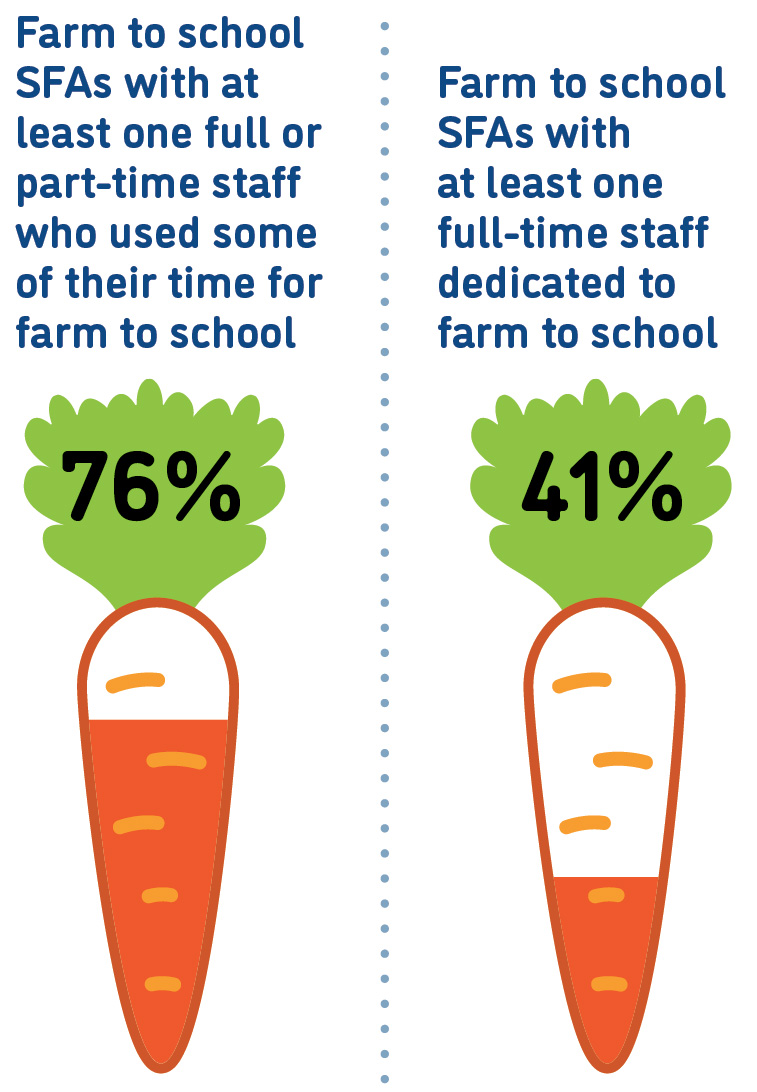
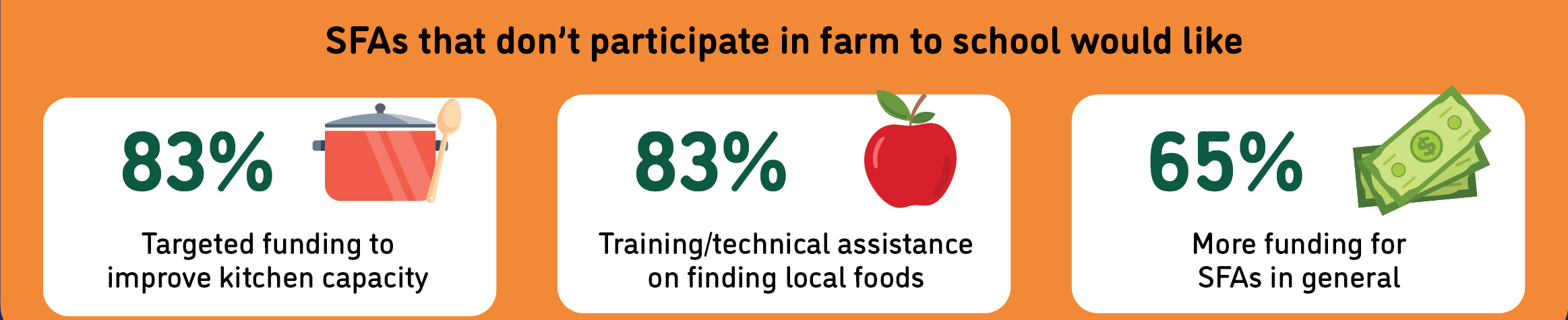
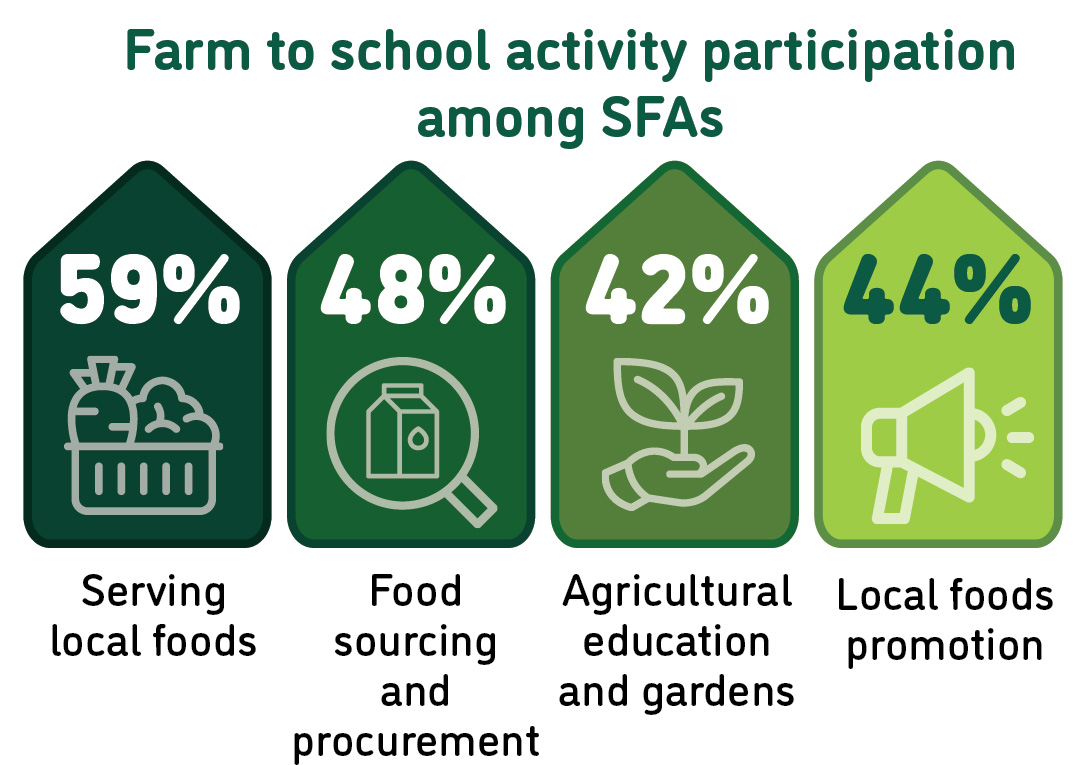
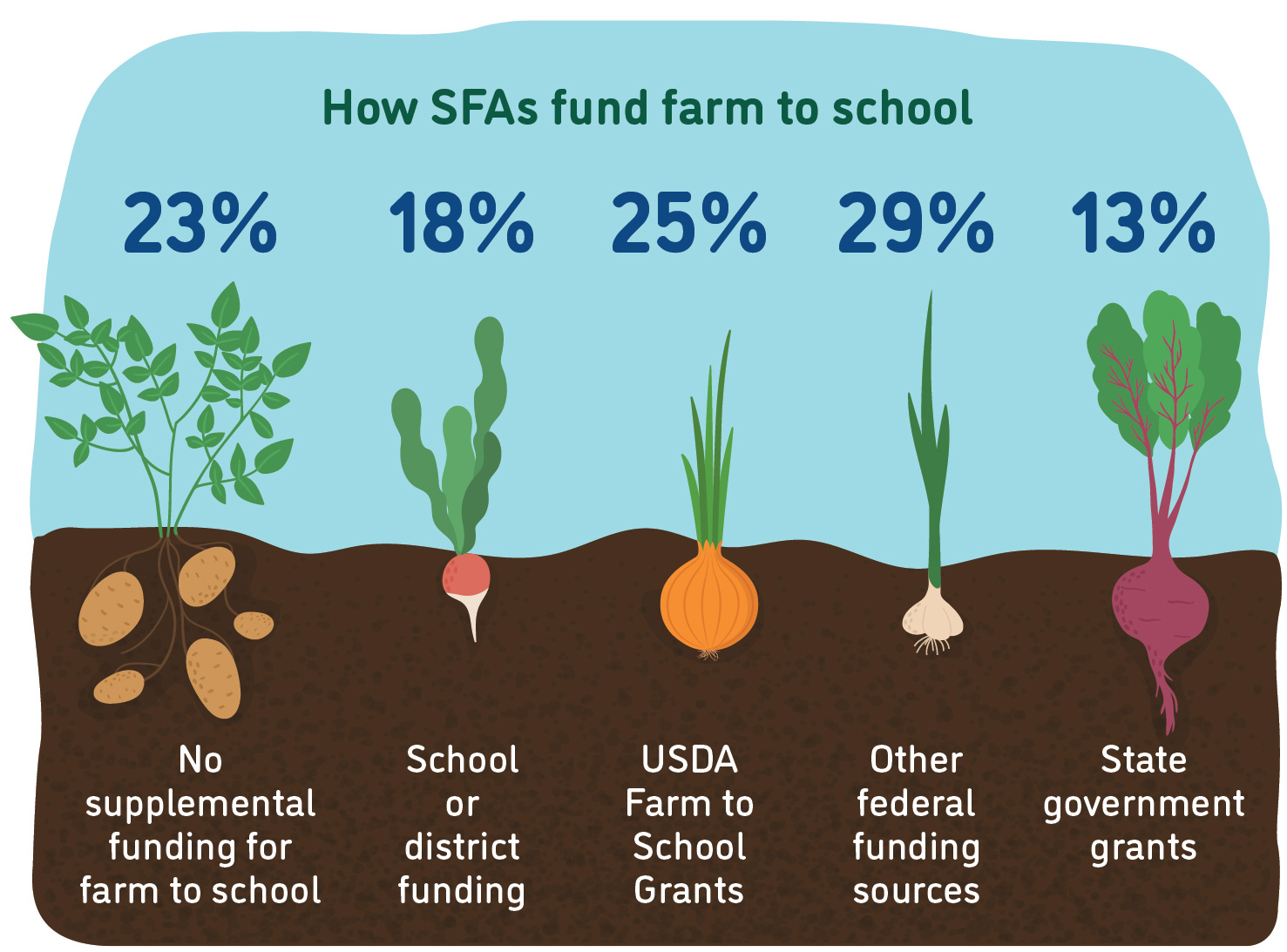
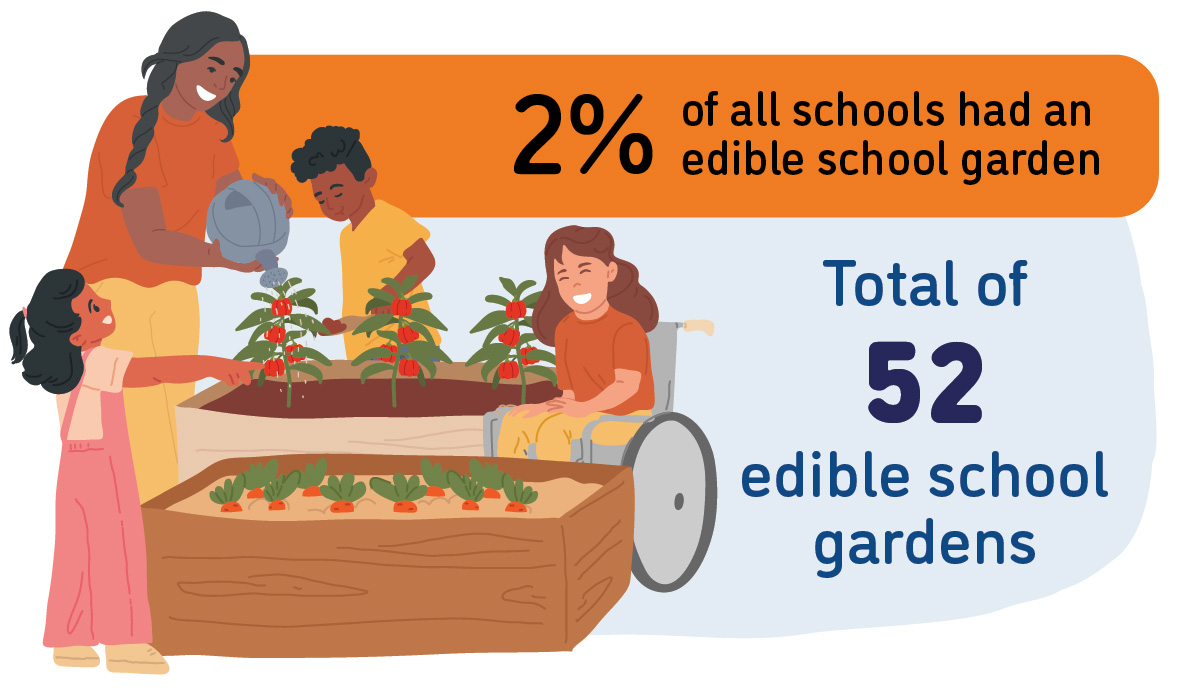
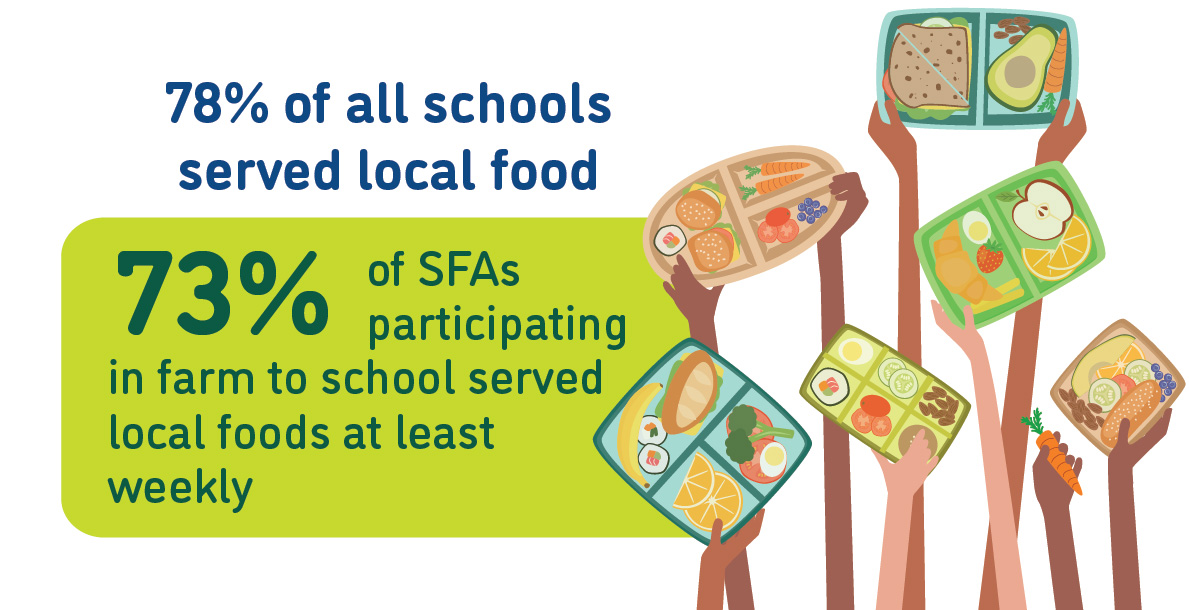
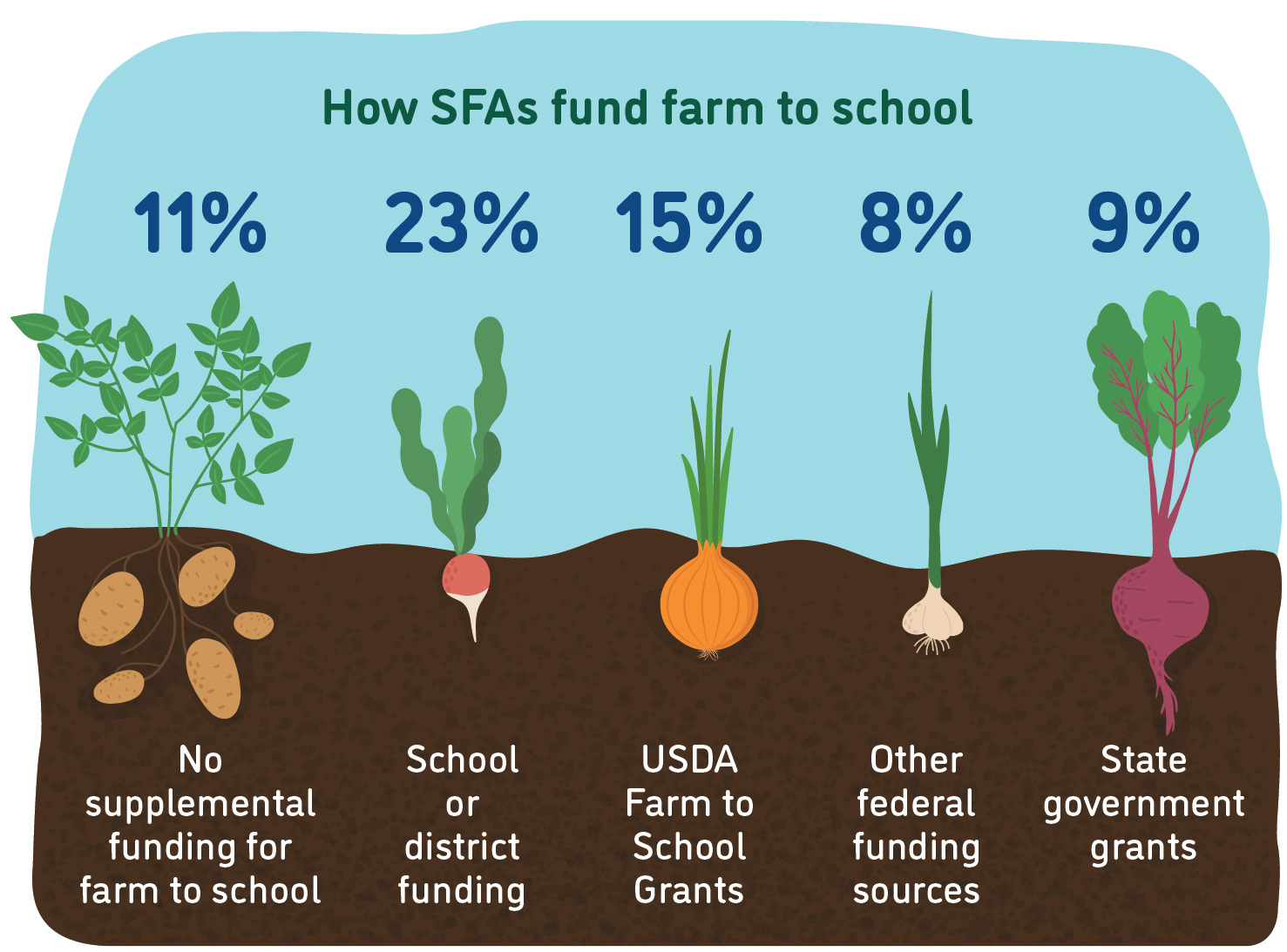
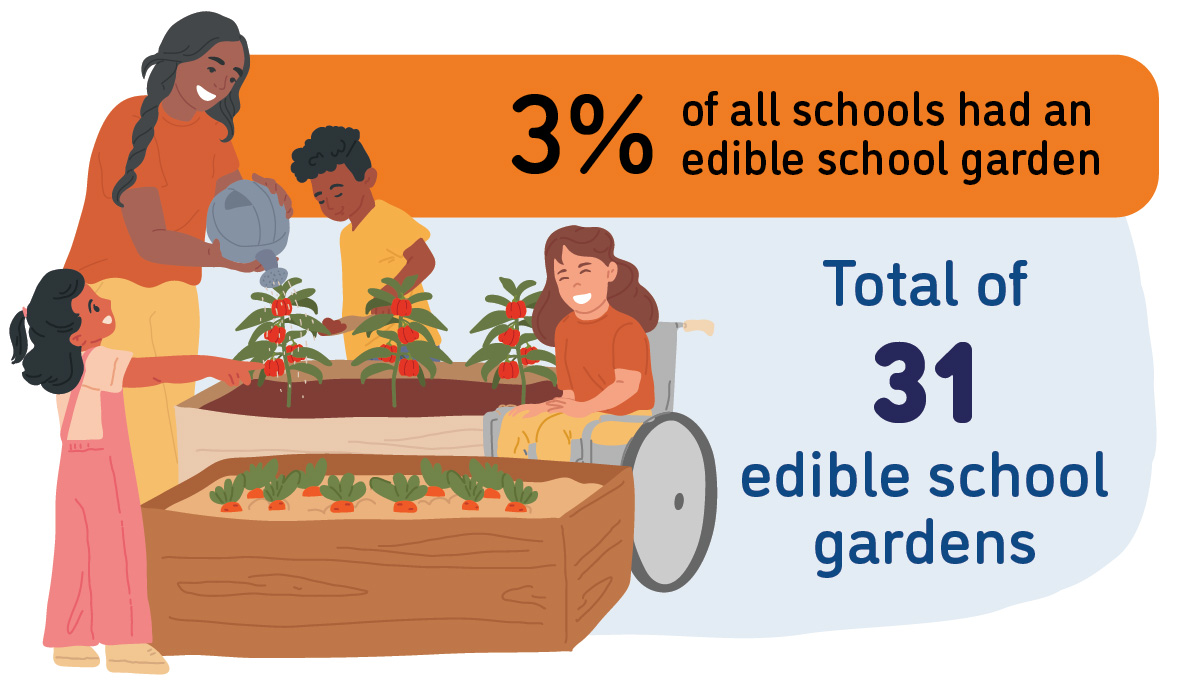
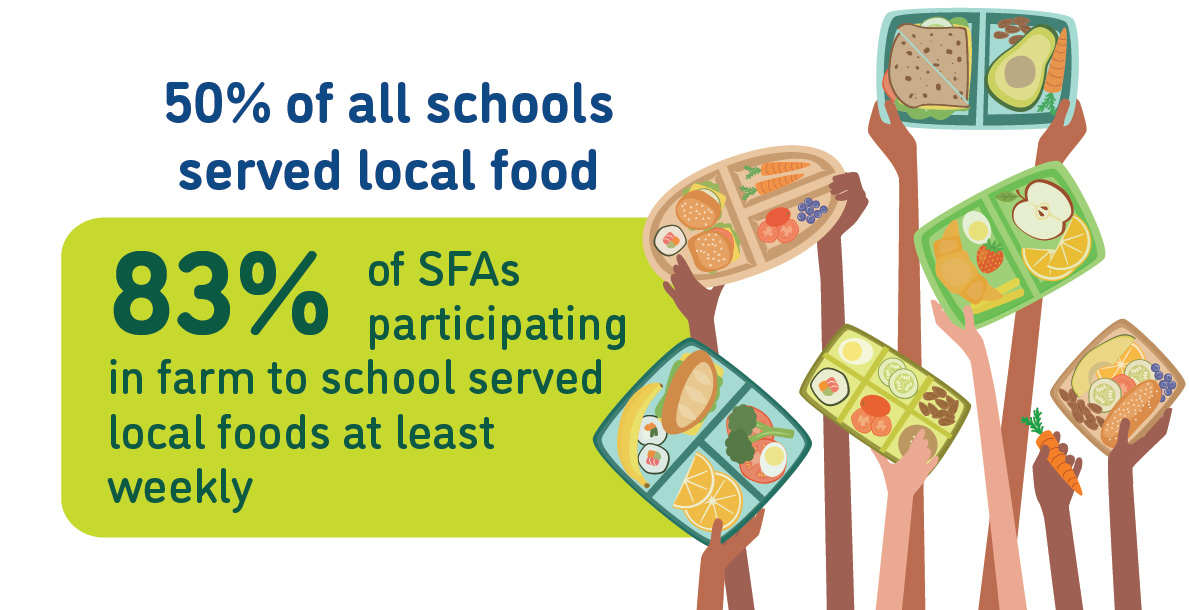
2023 Farm to School Census
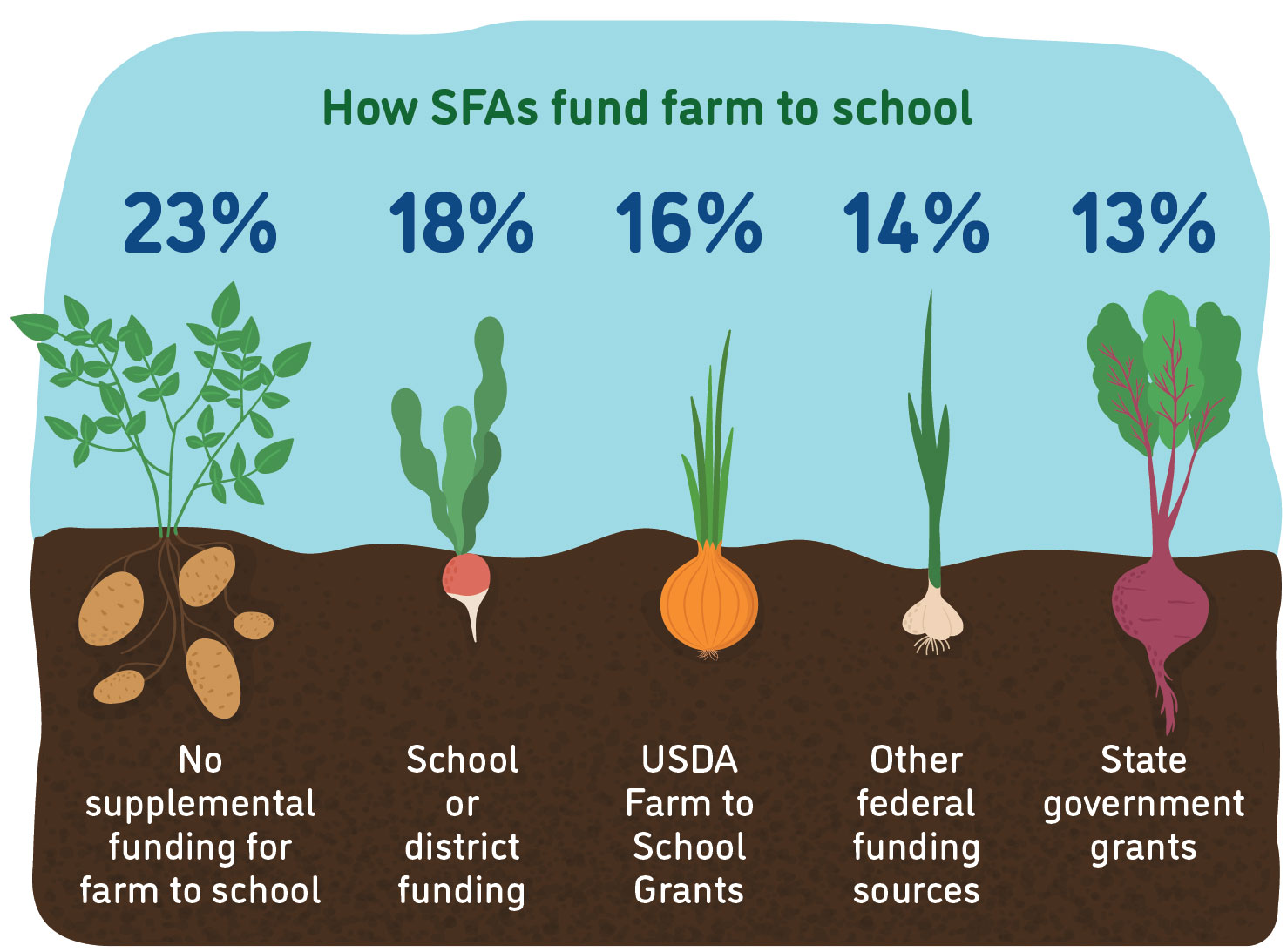
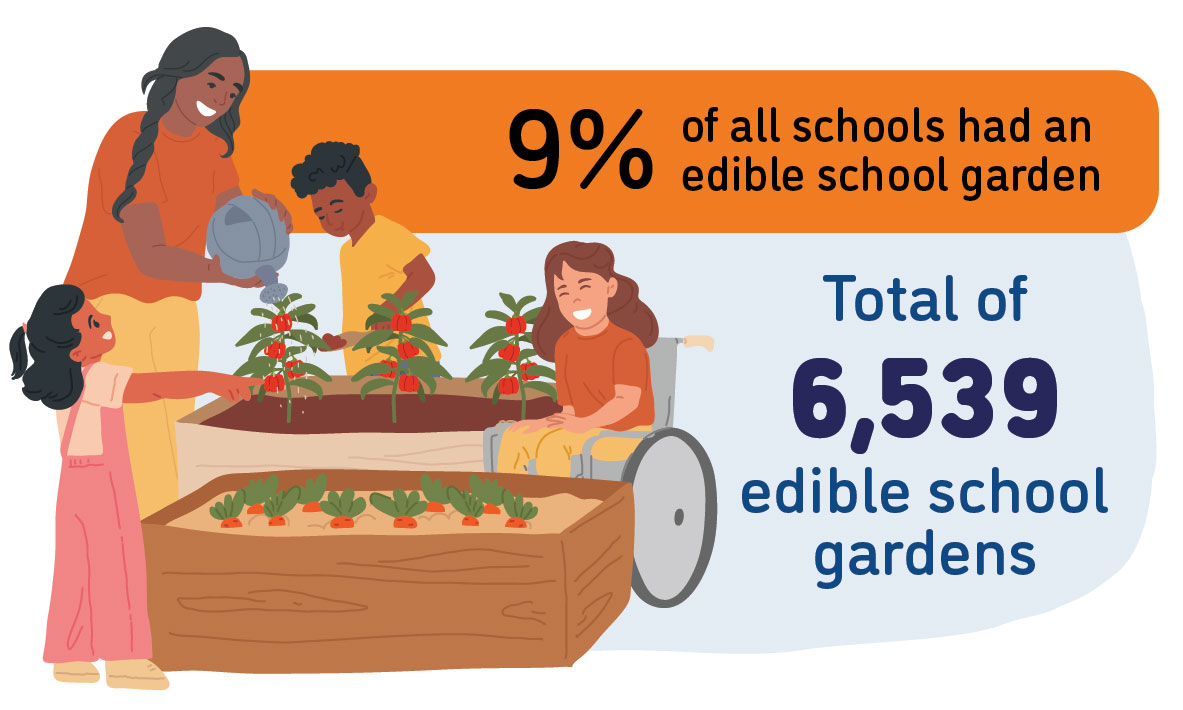
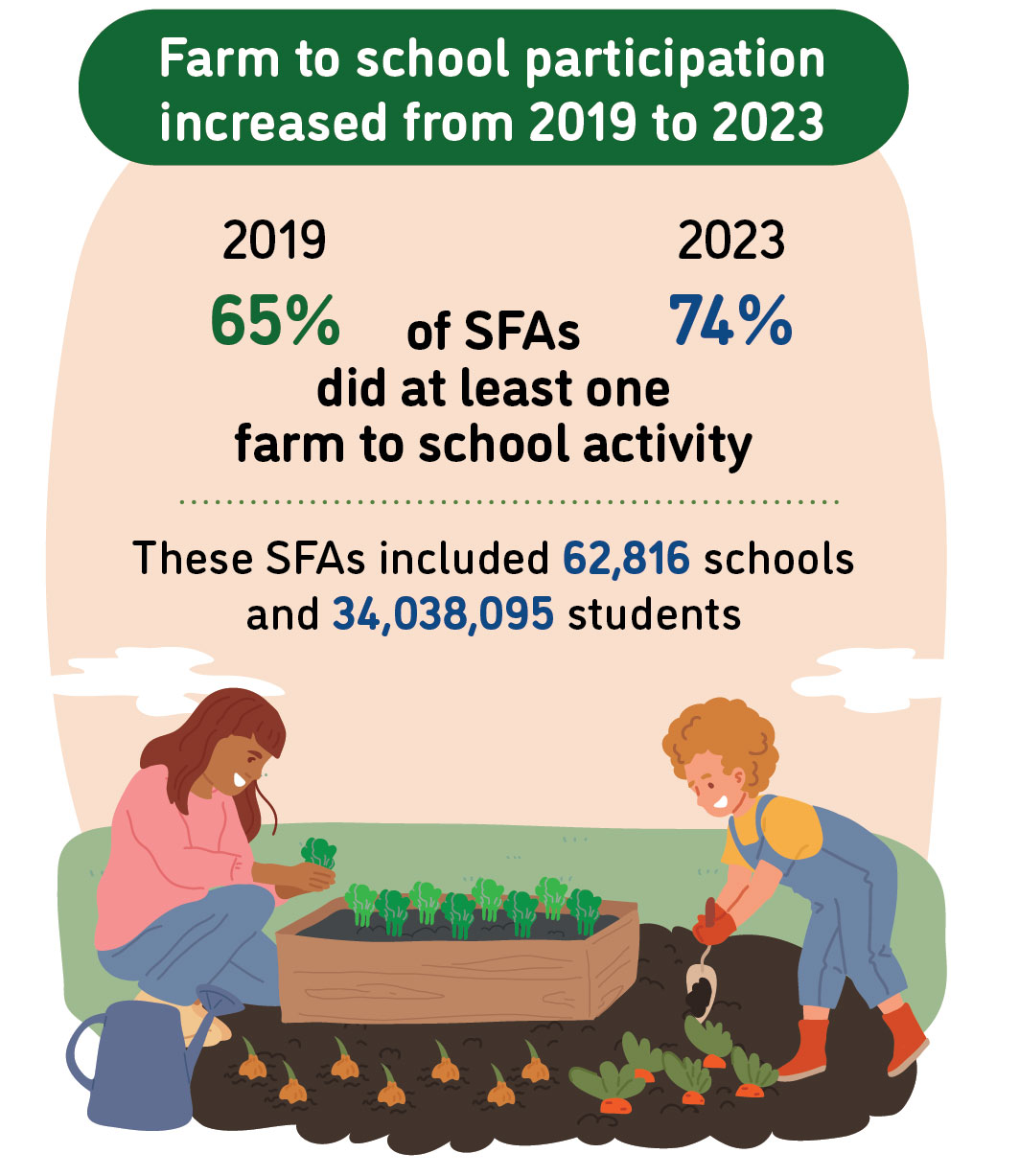
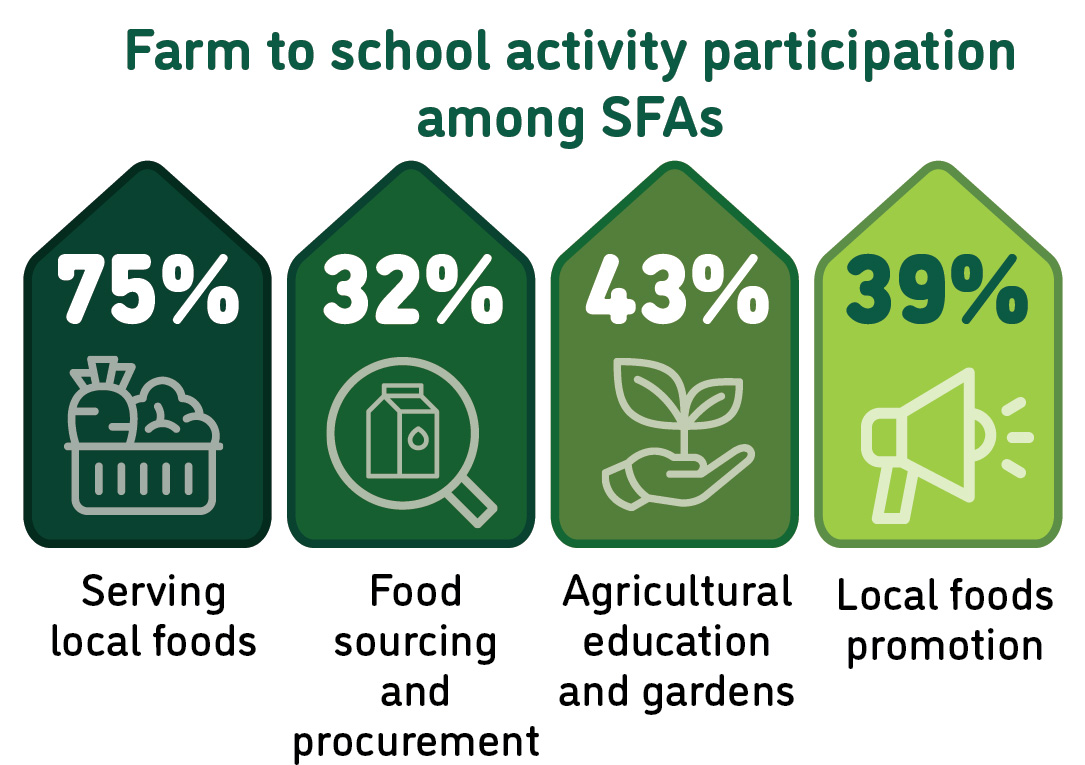
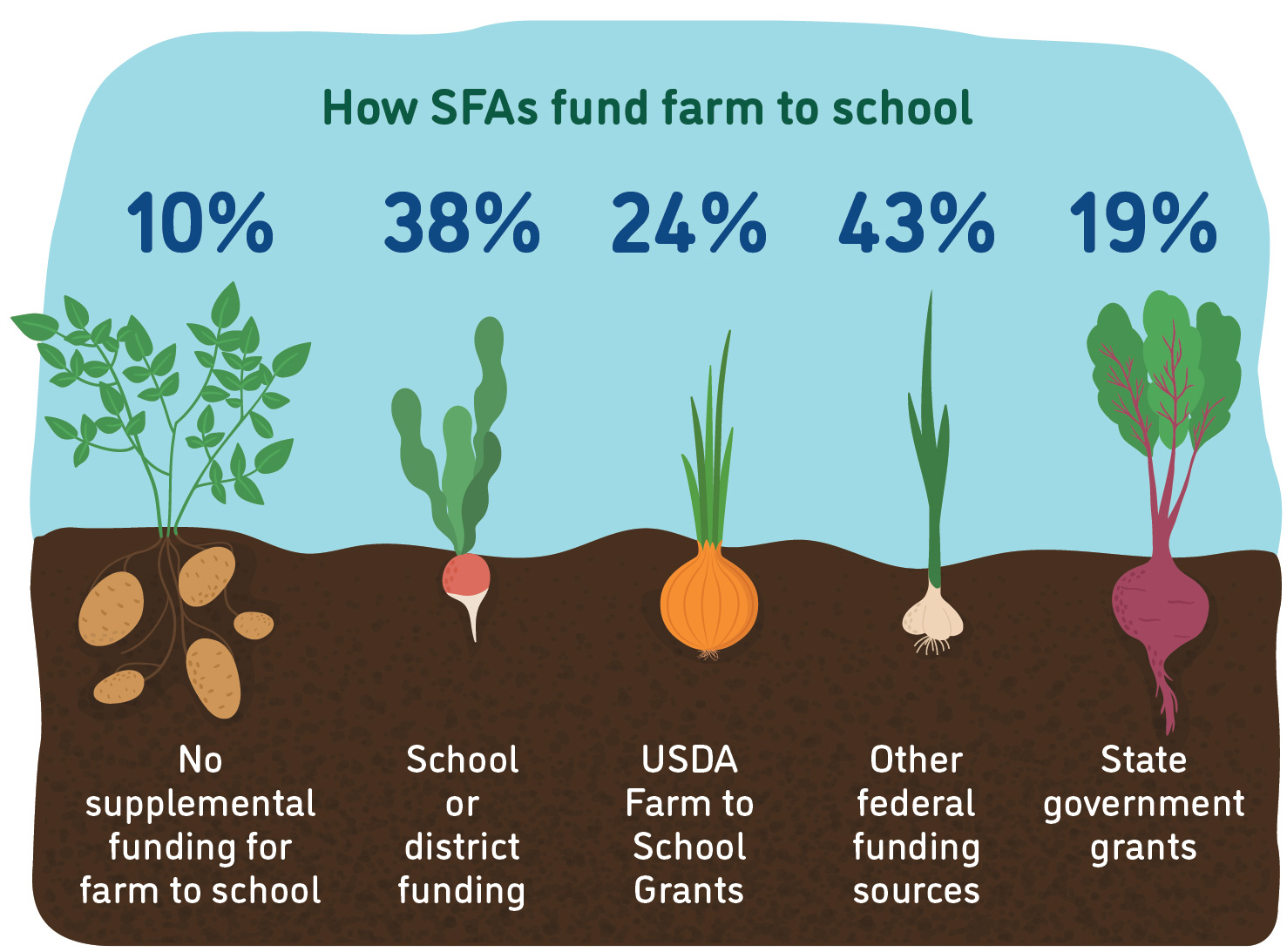
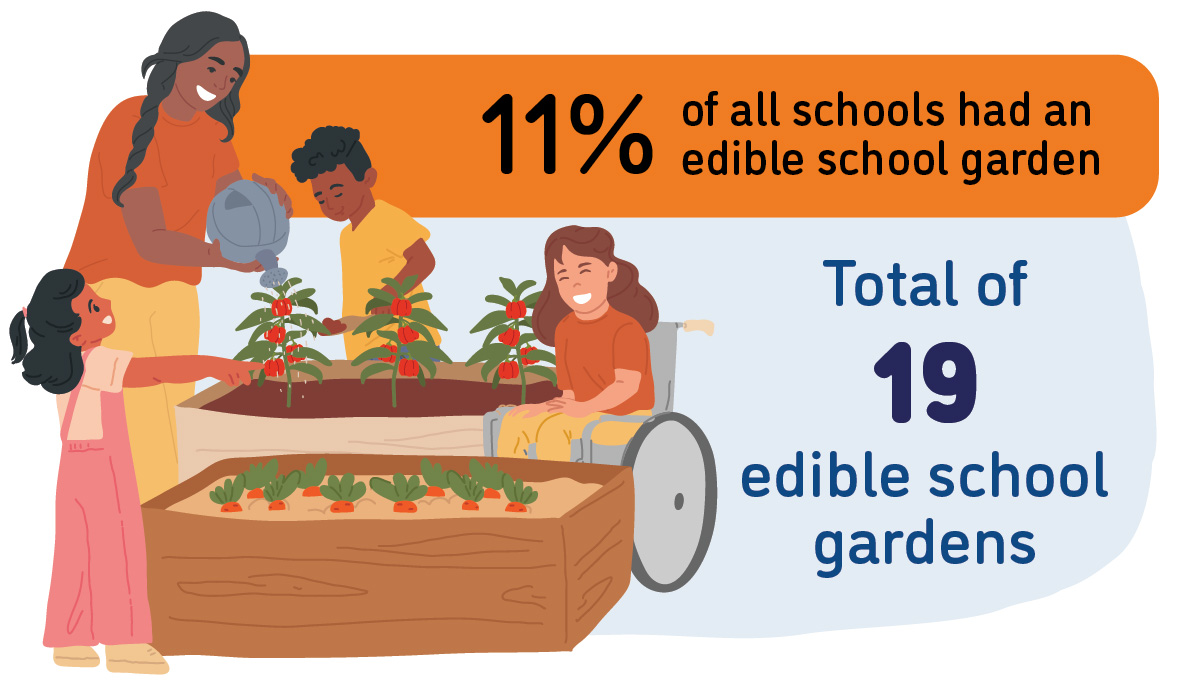
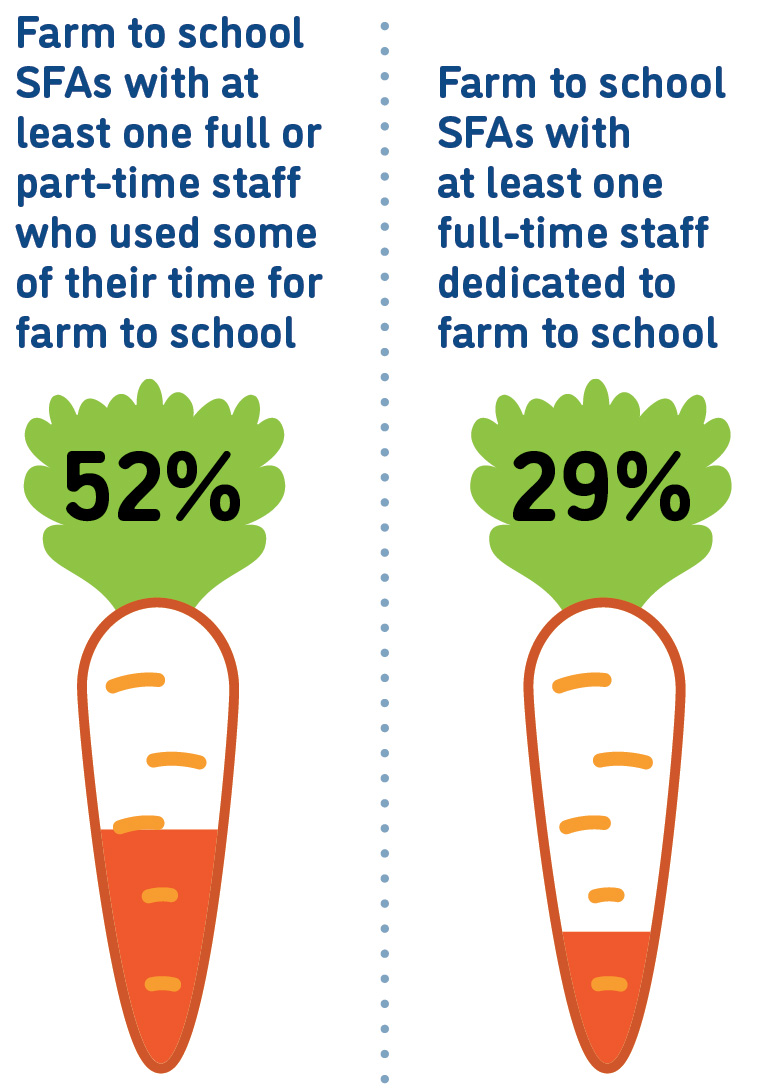
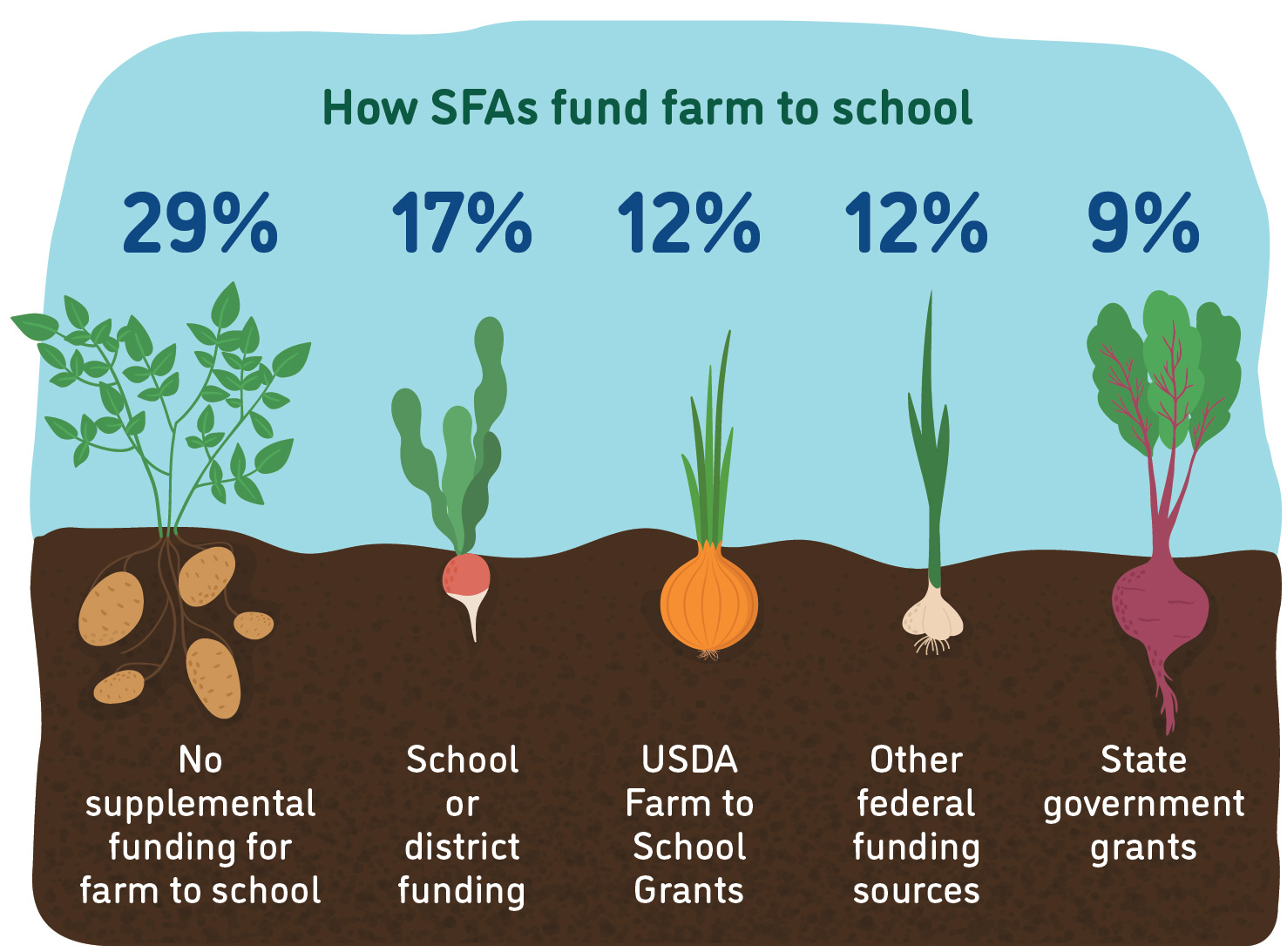
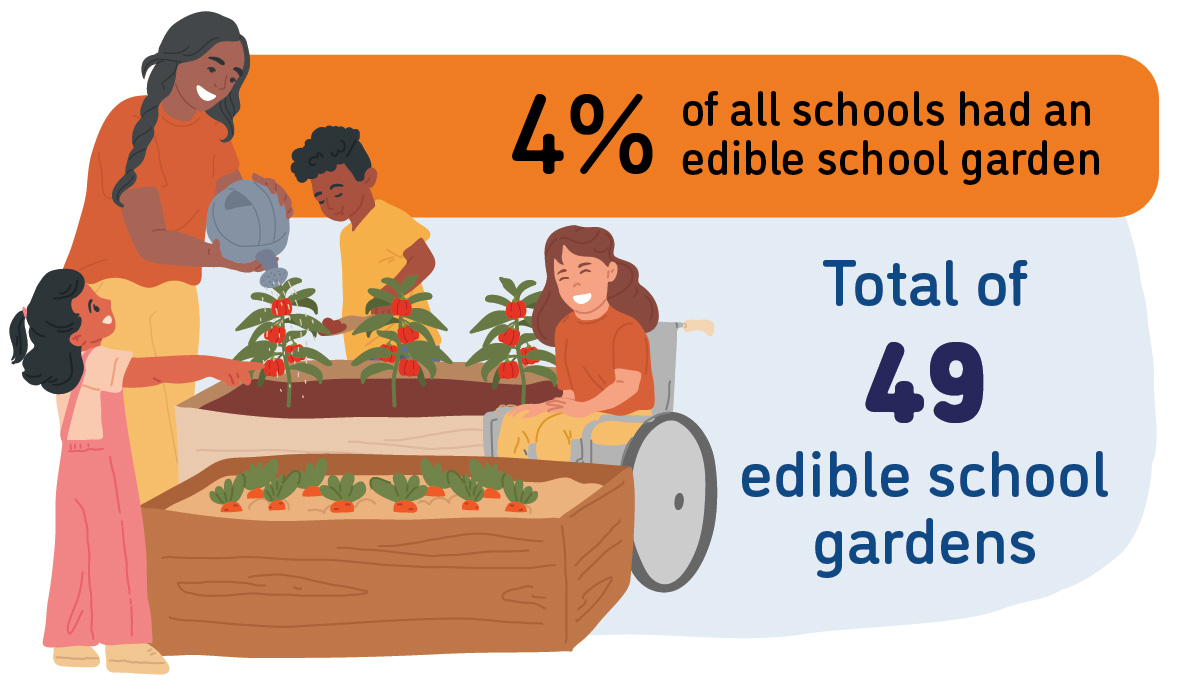
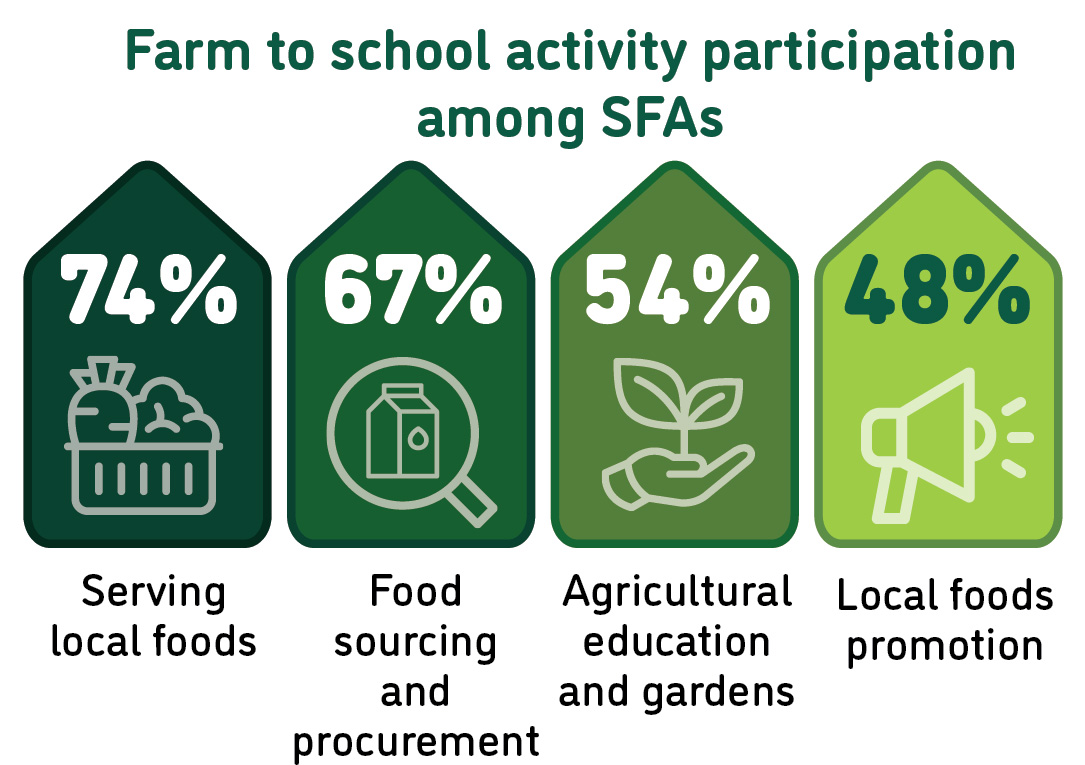
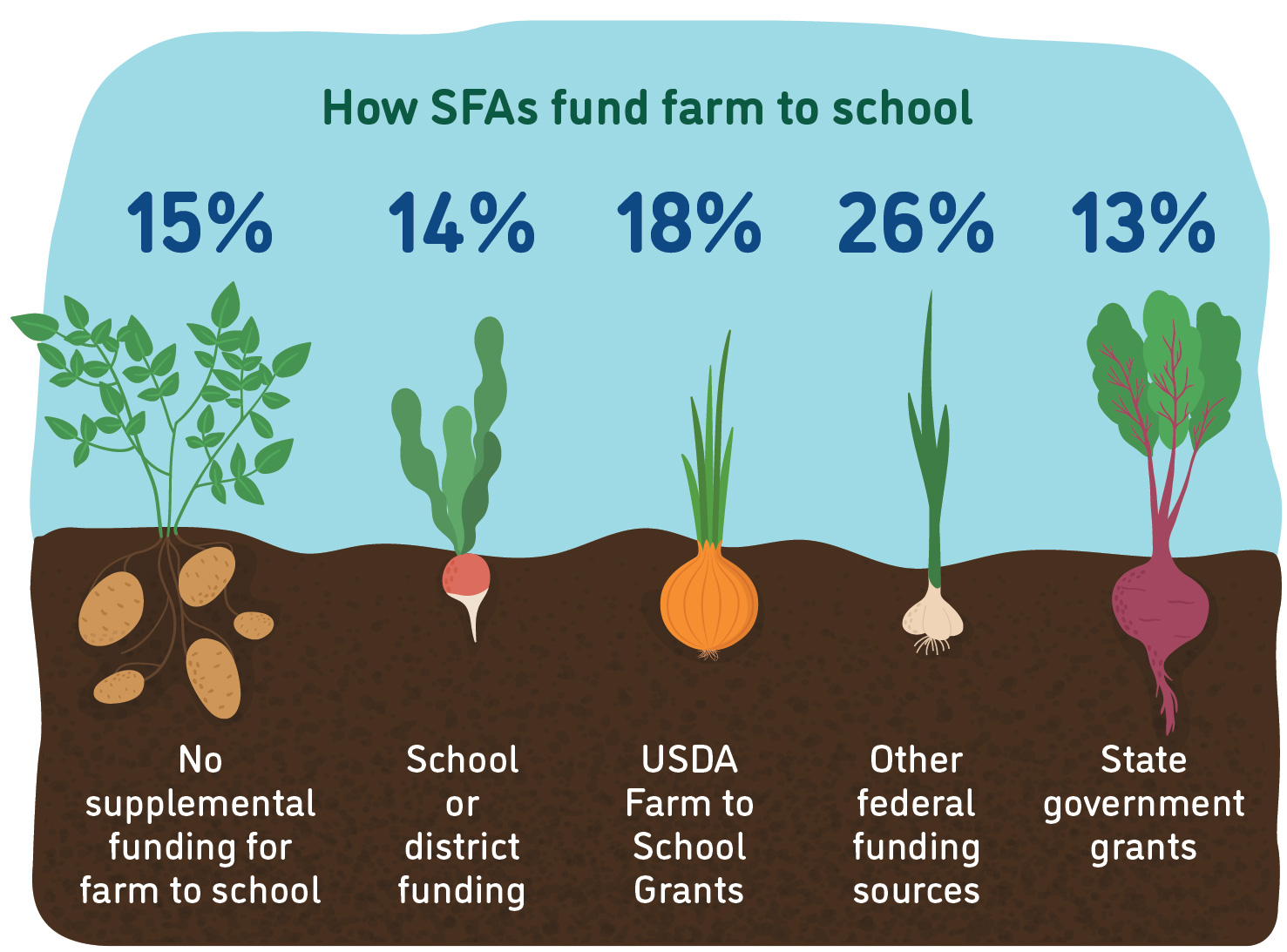
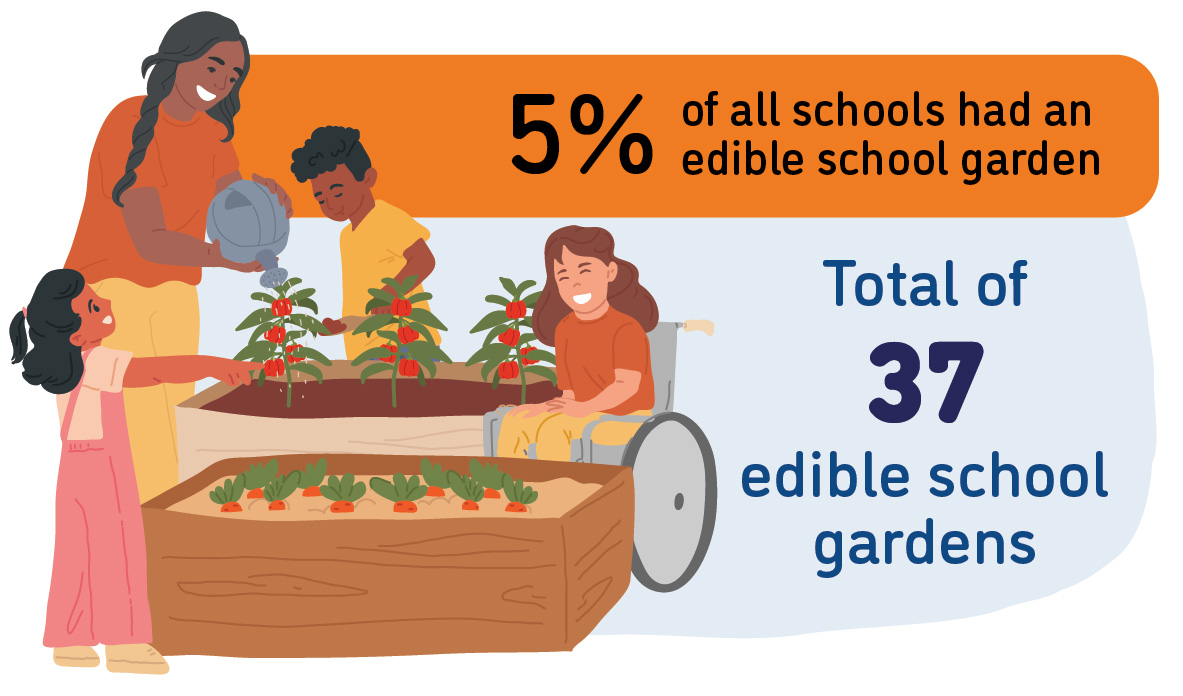
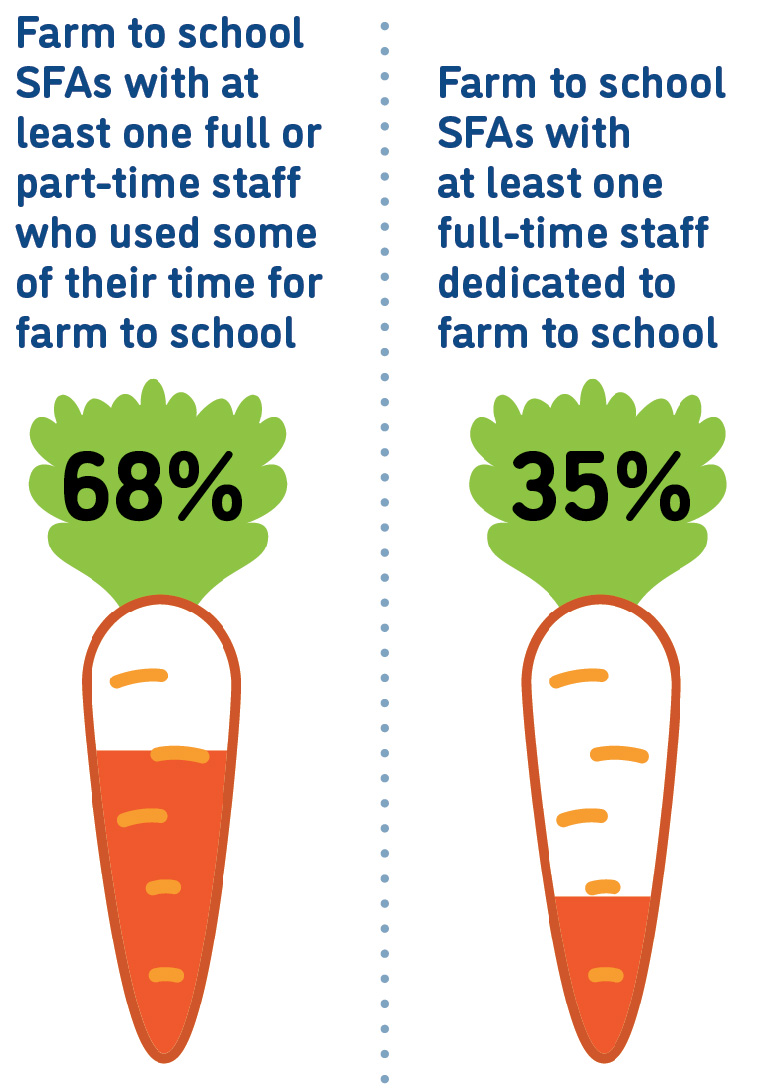
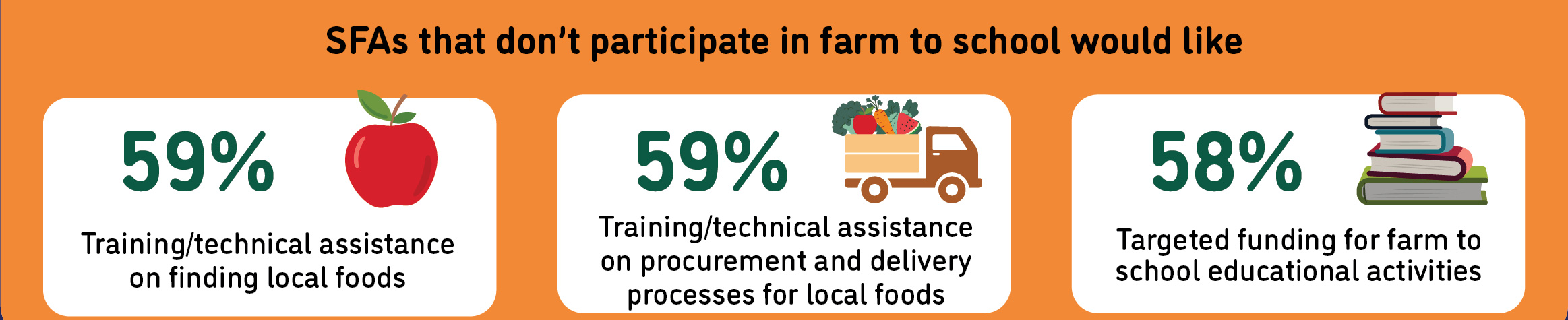
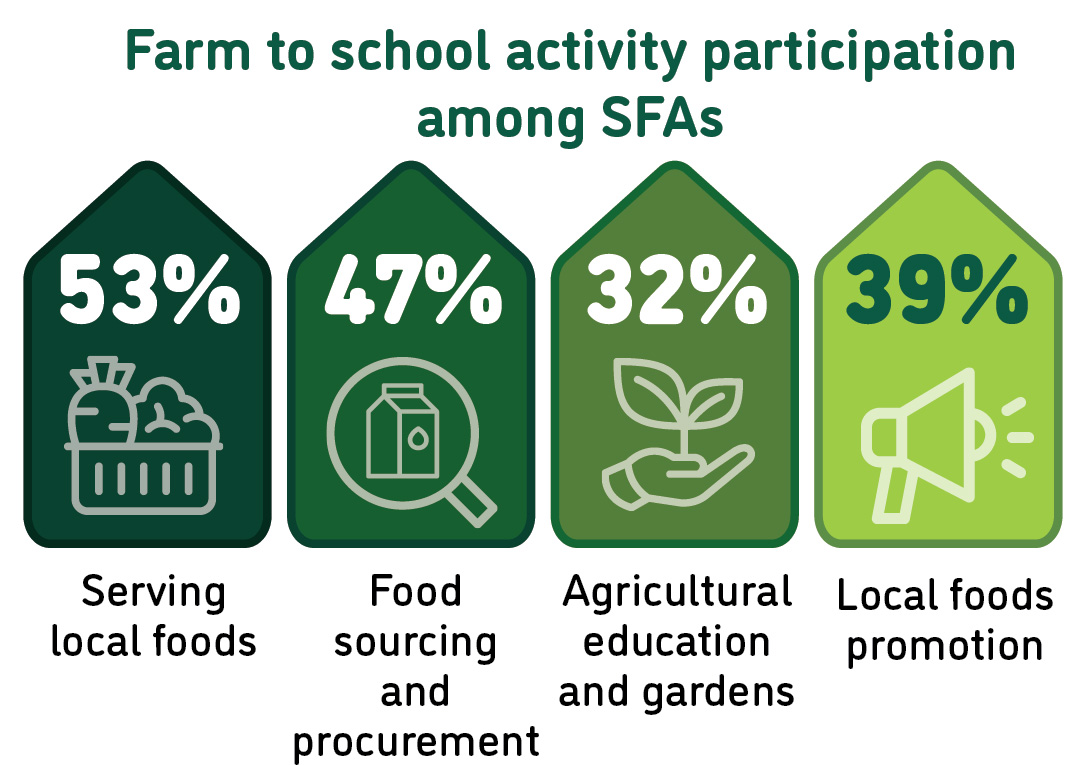
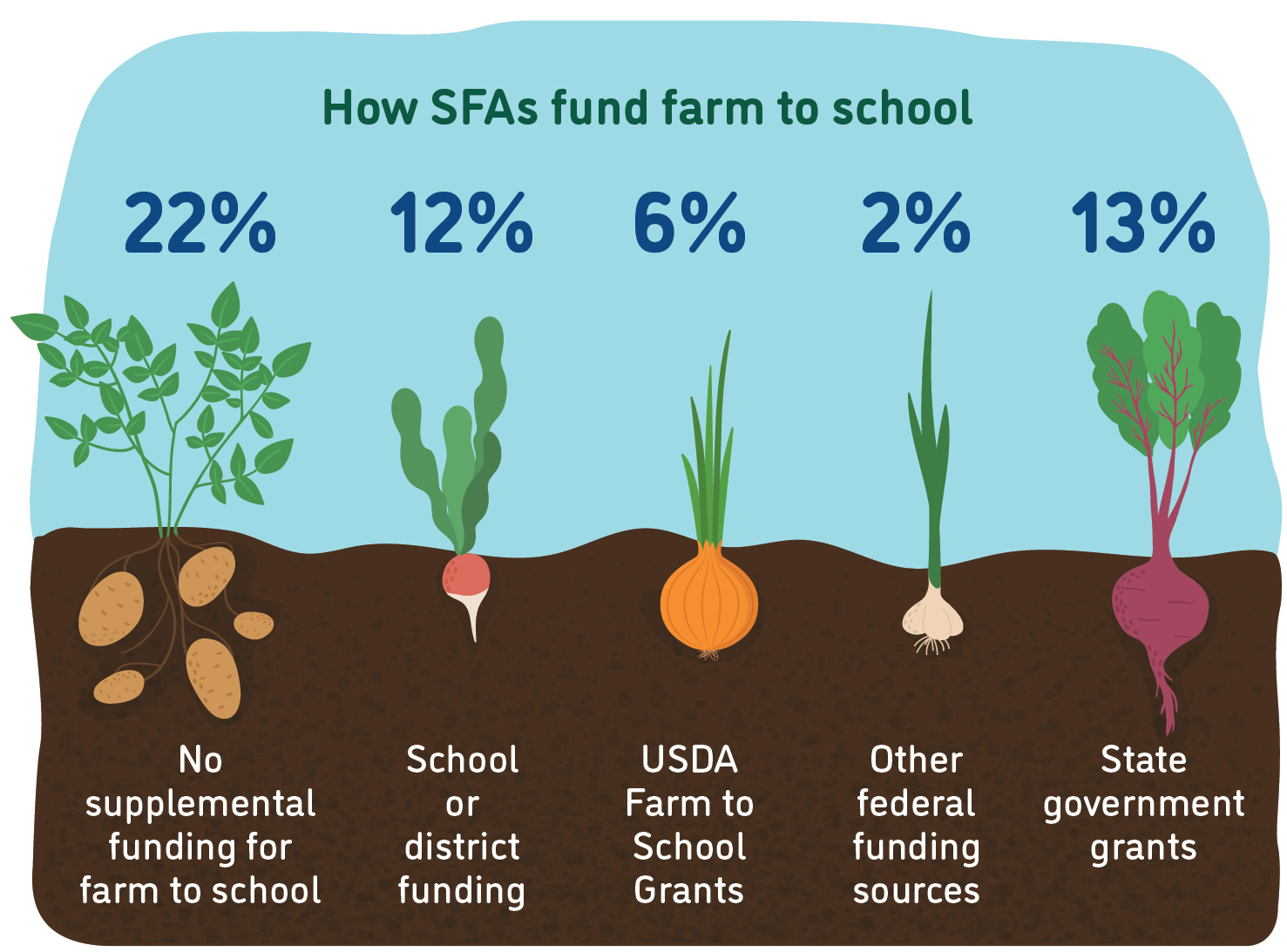
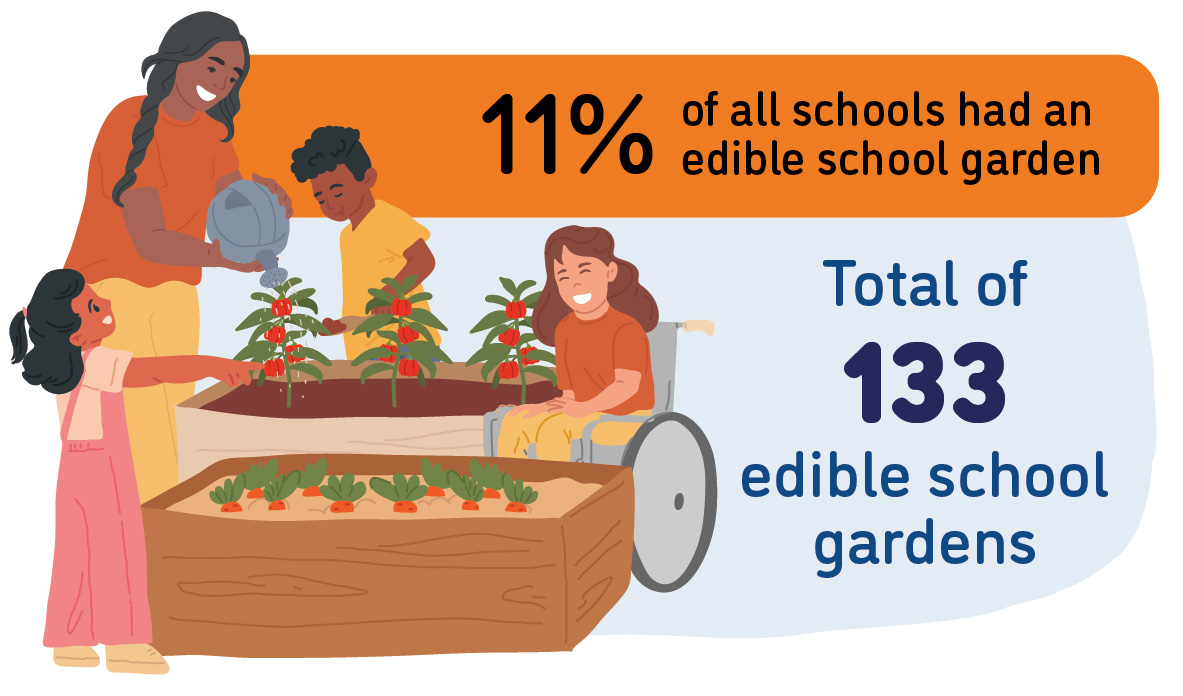
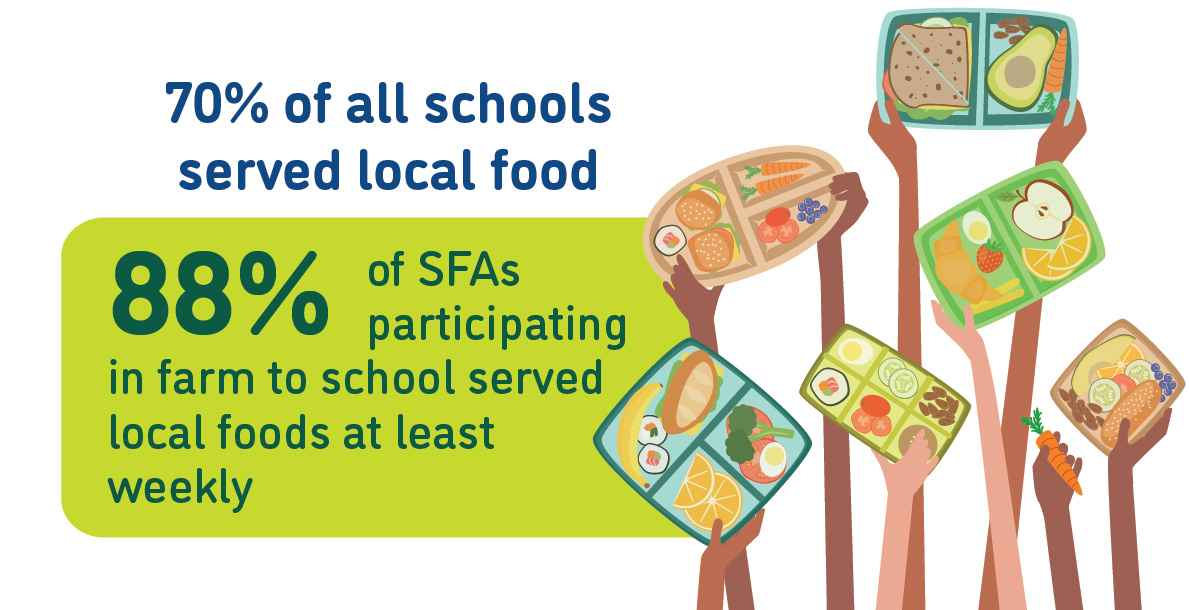
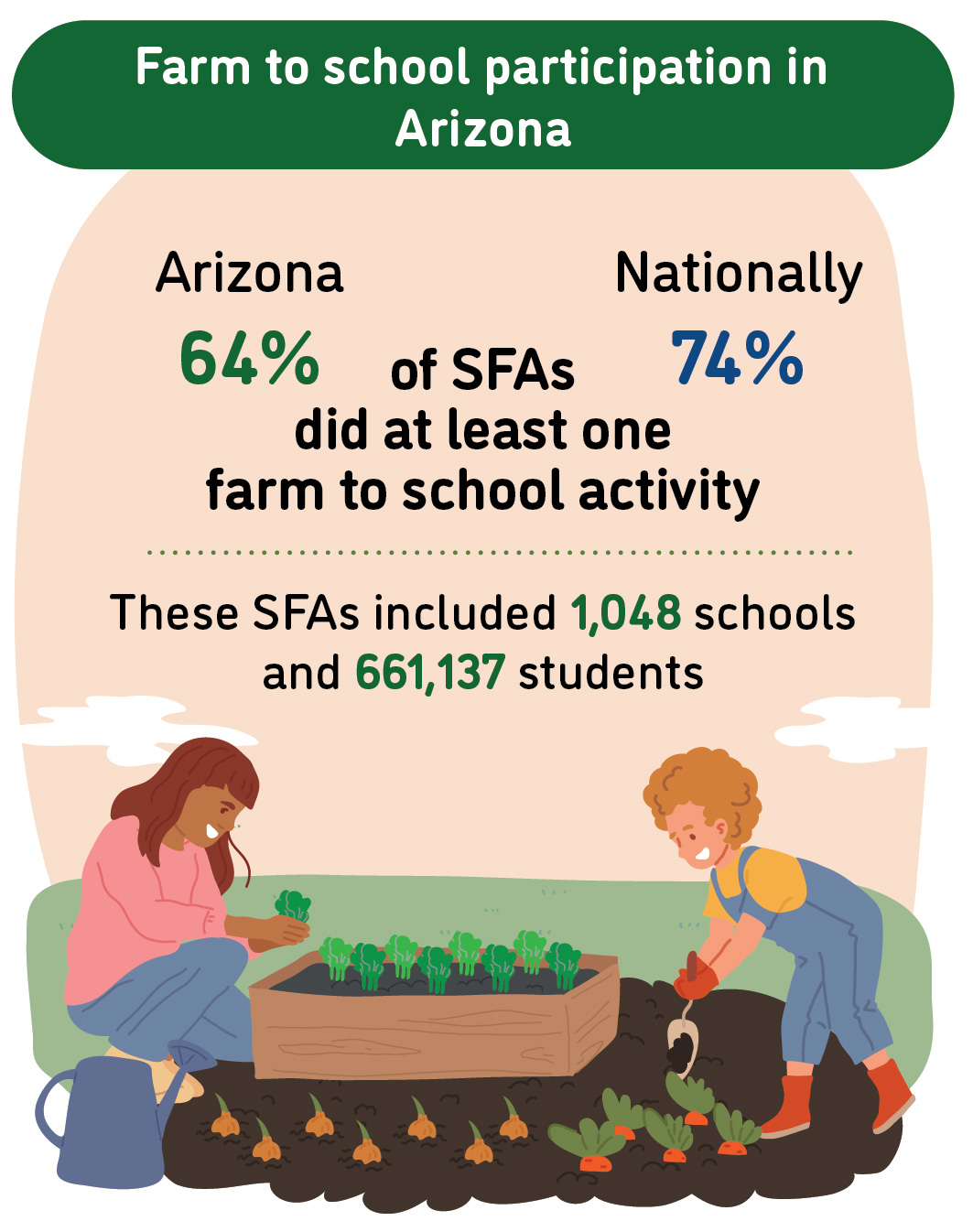
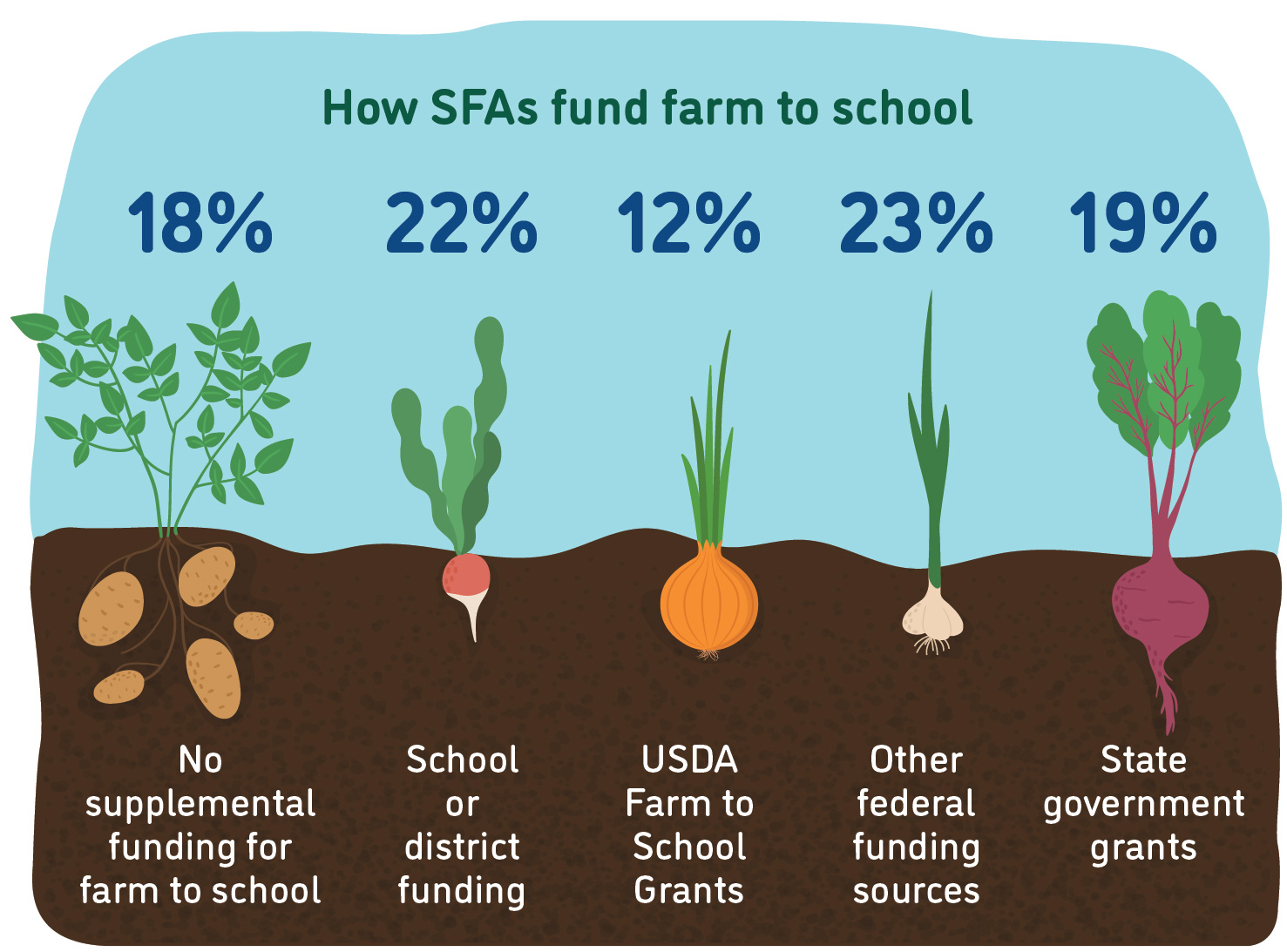
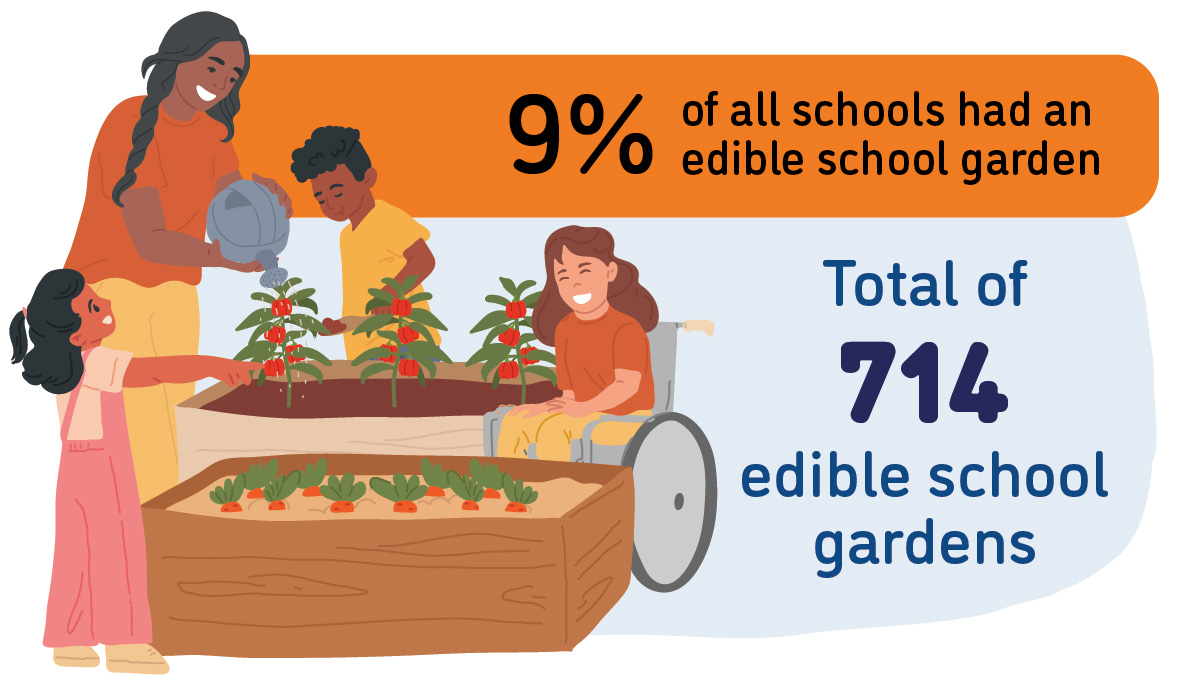
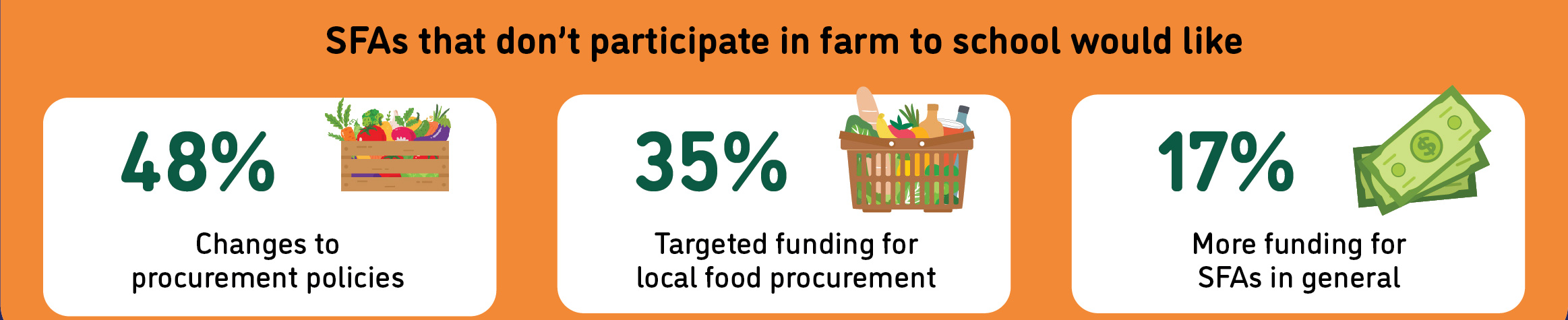
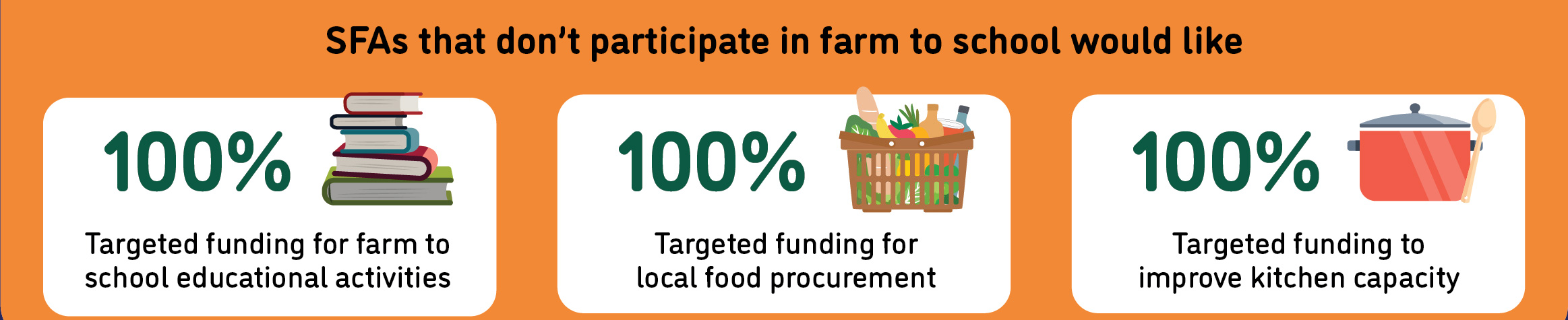
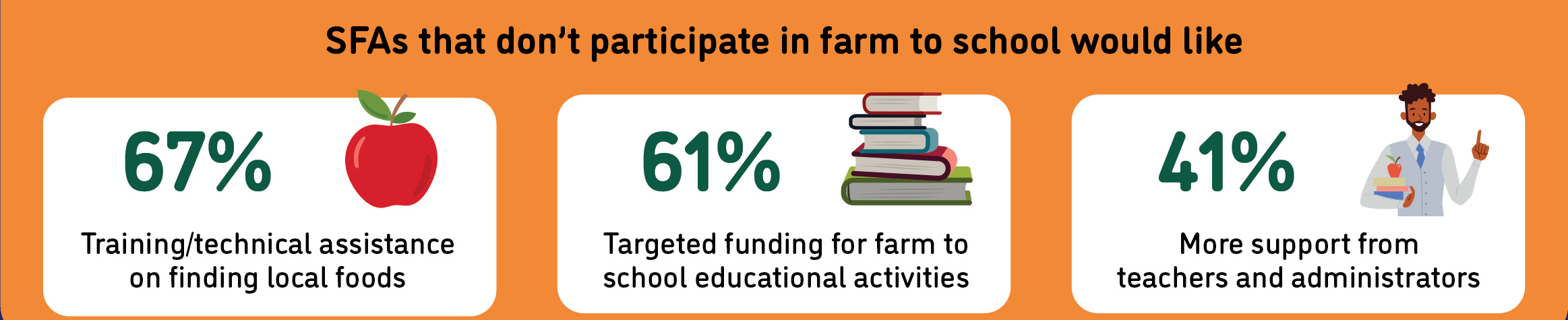
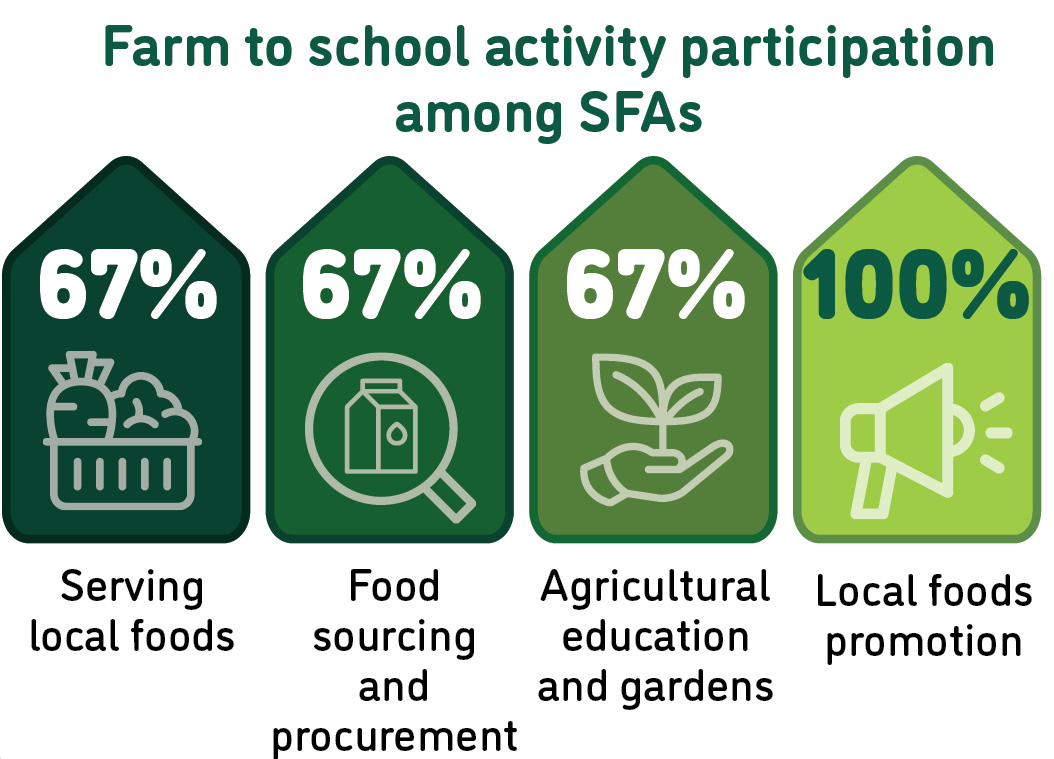
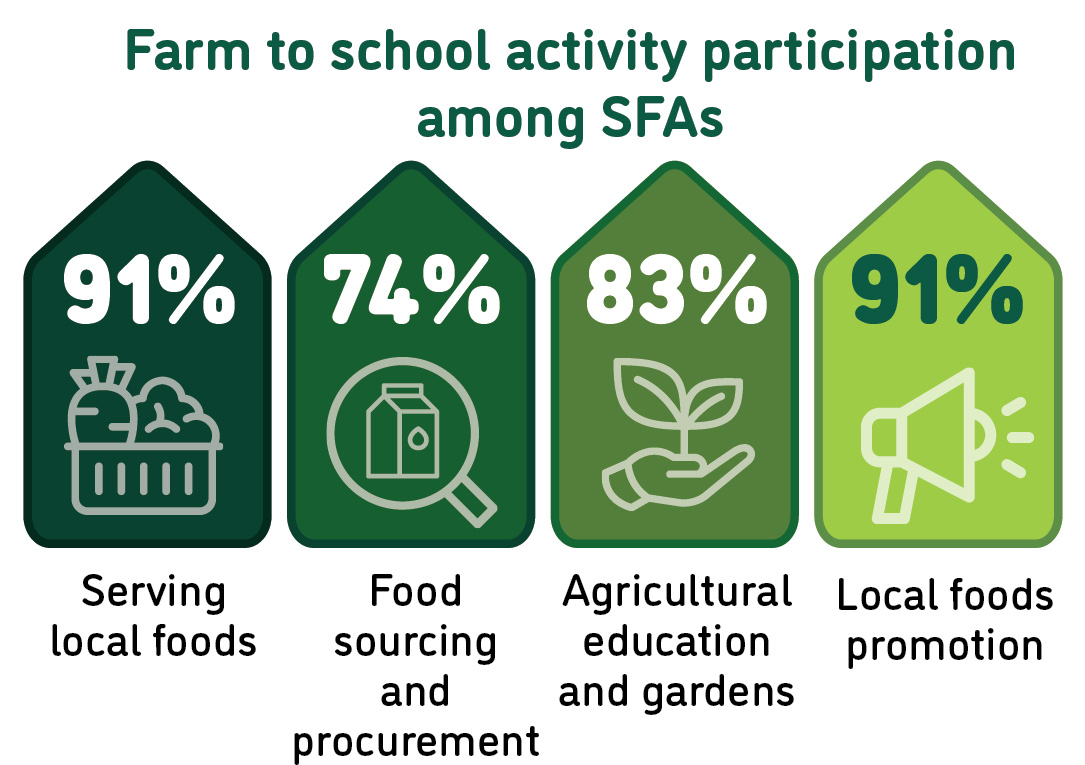
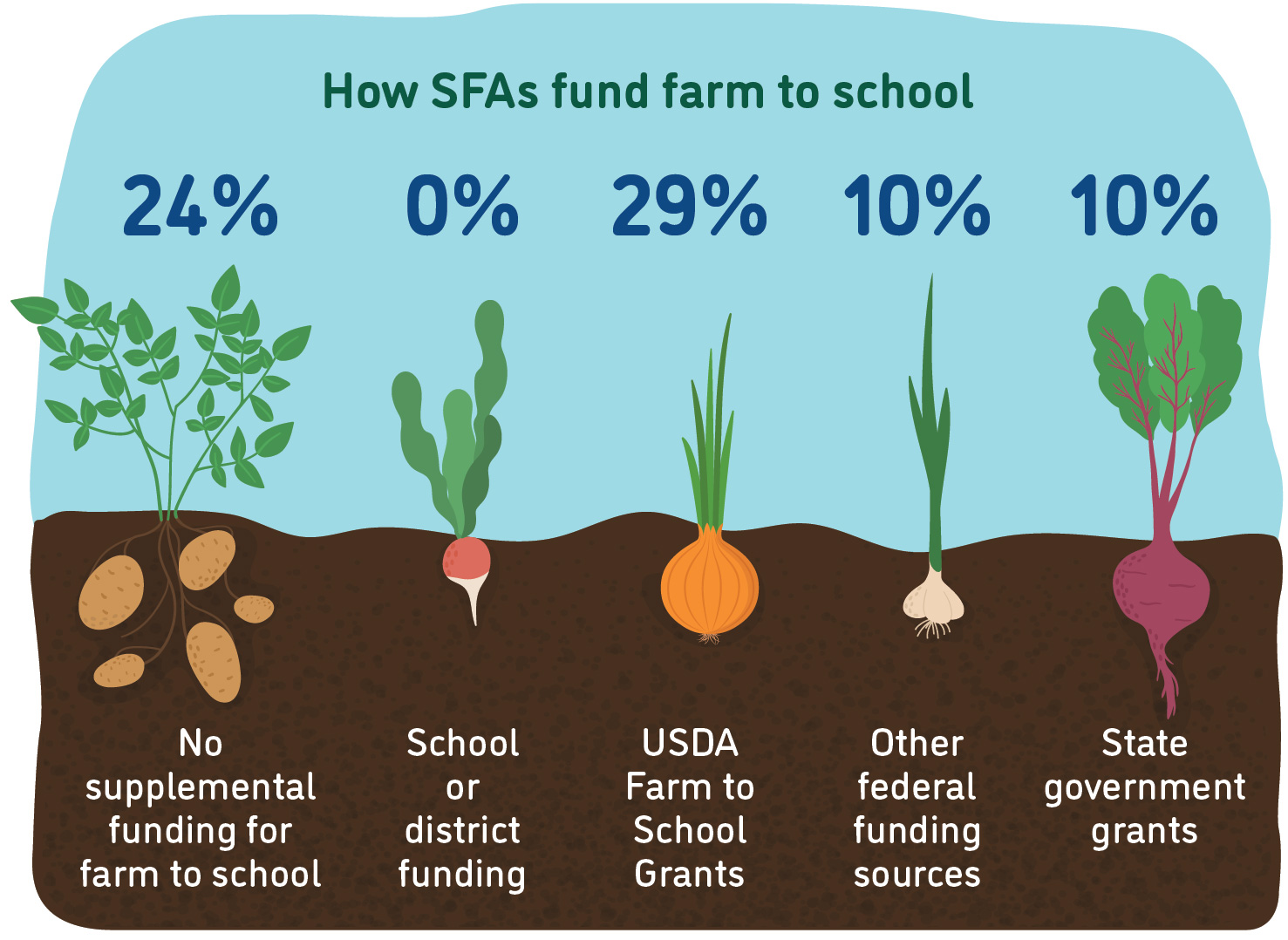
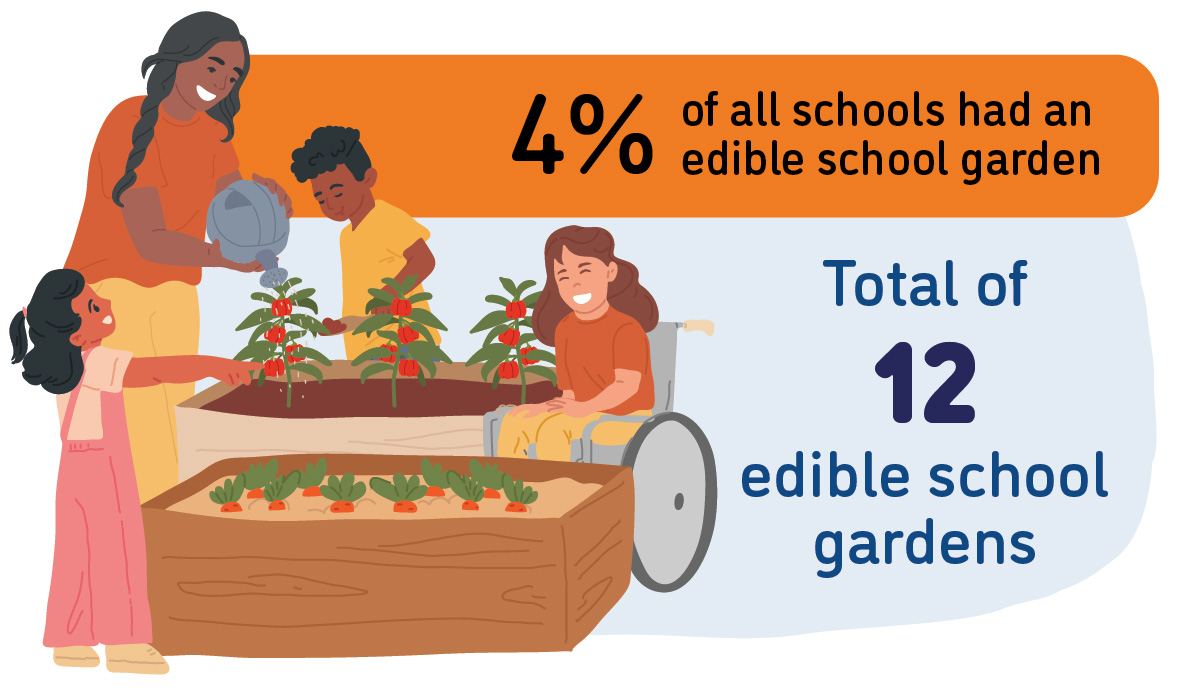
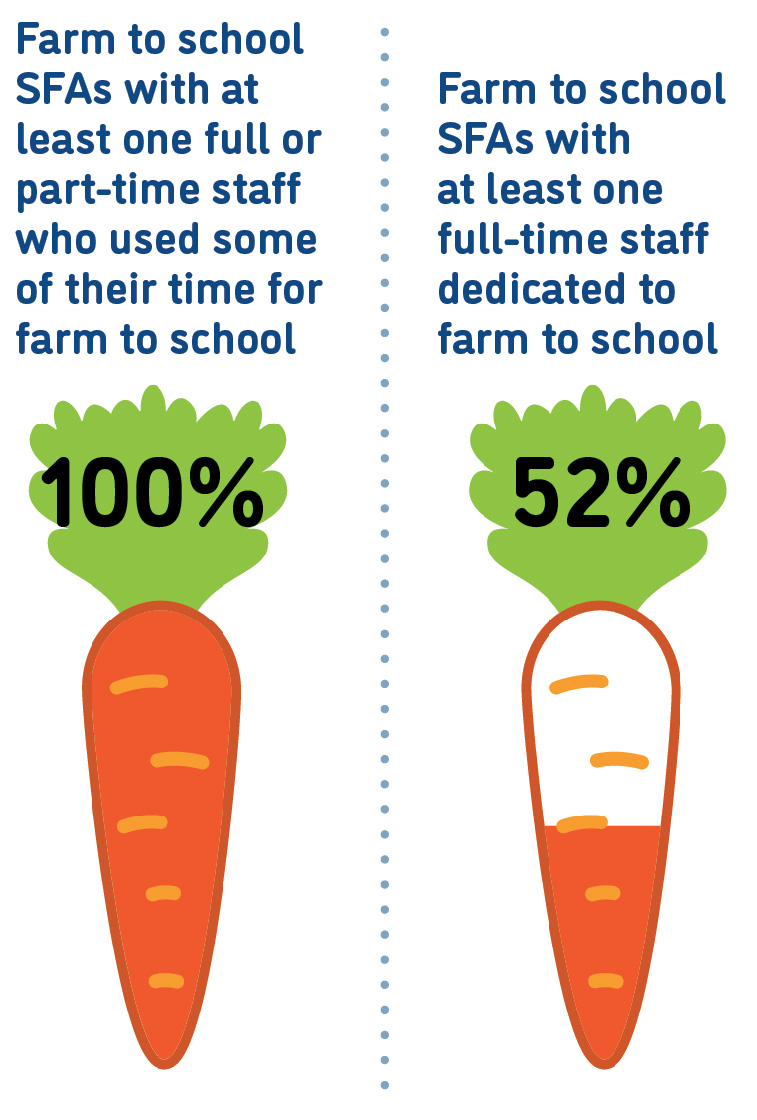
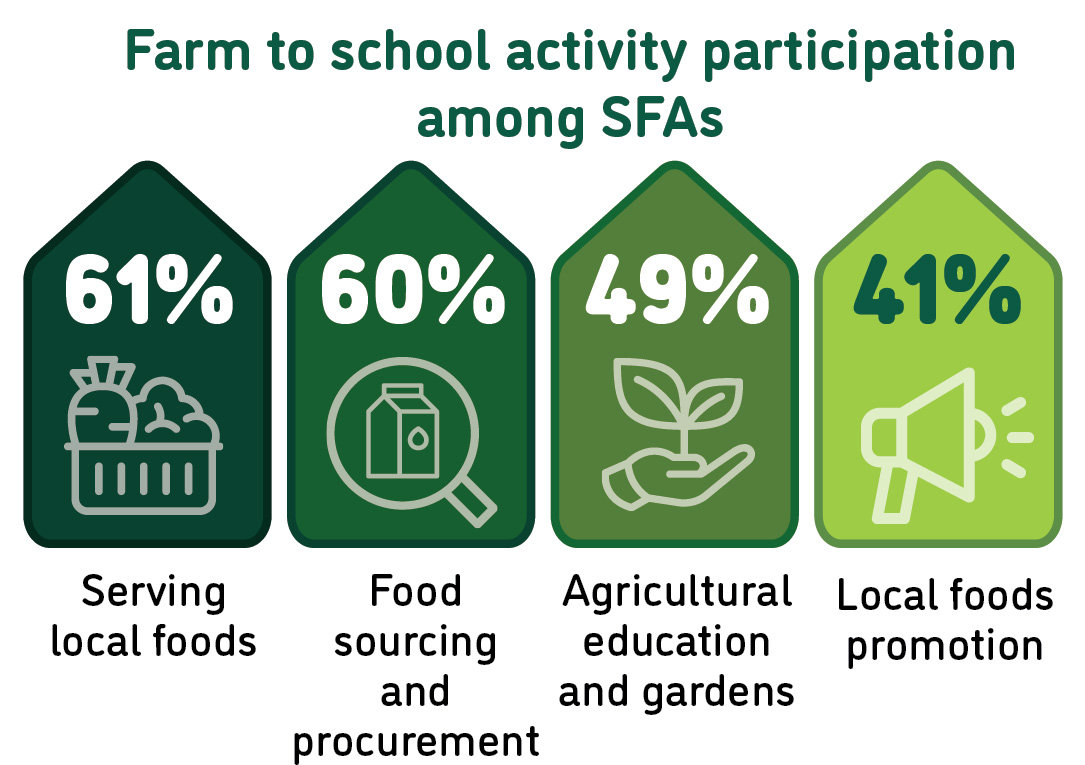
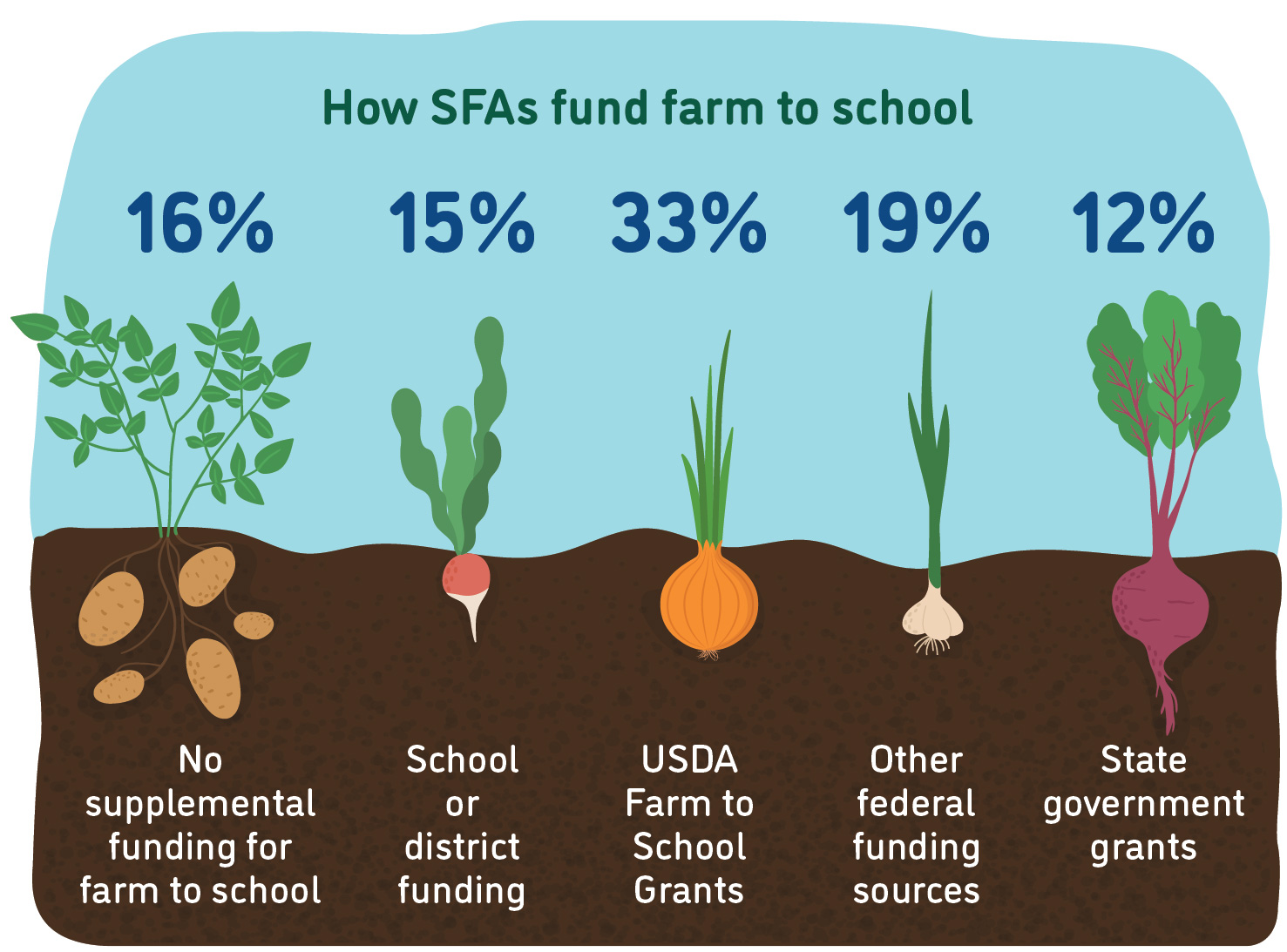
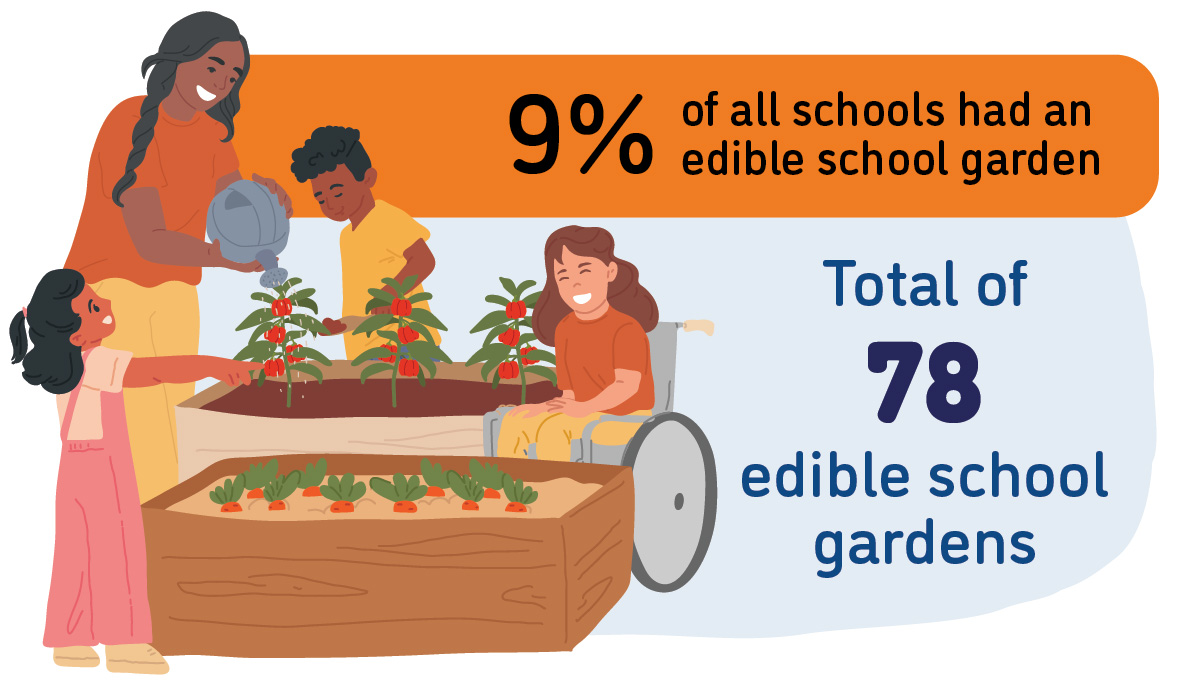
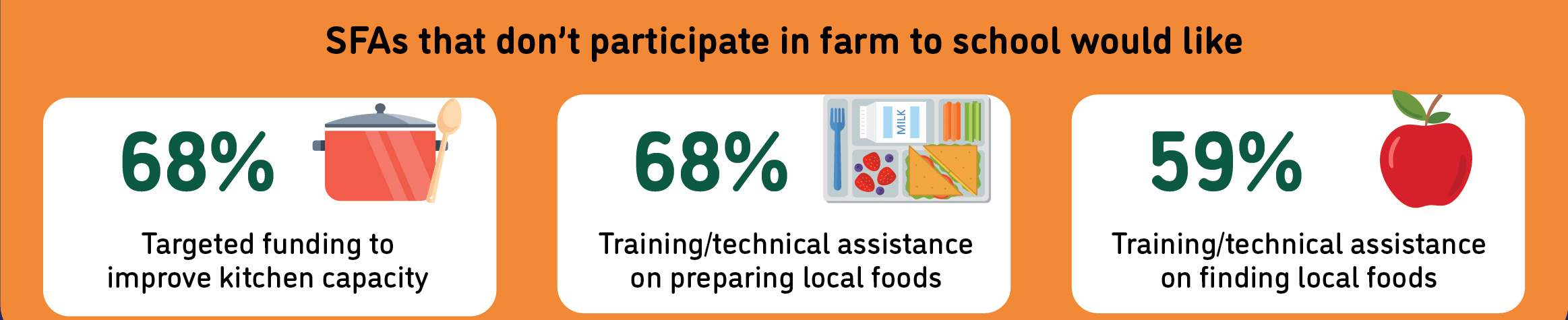
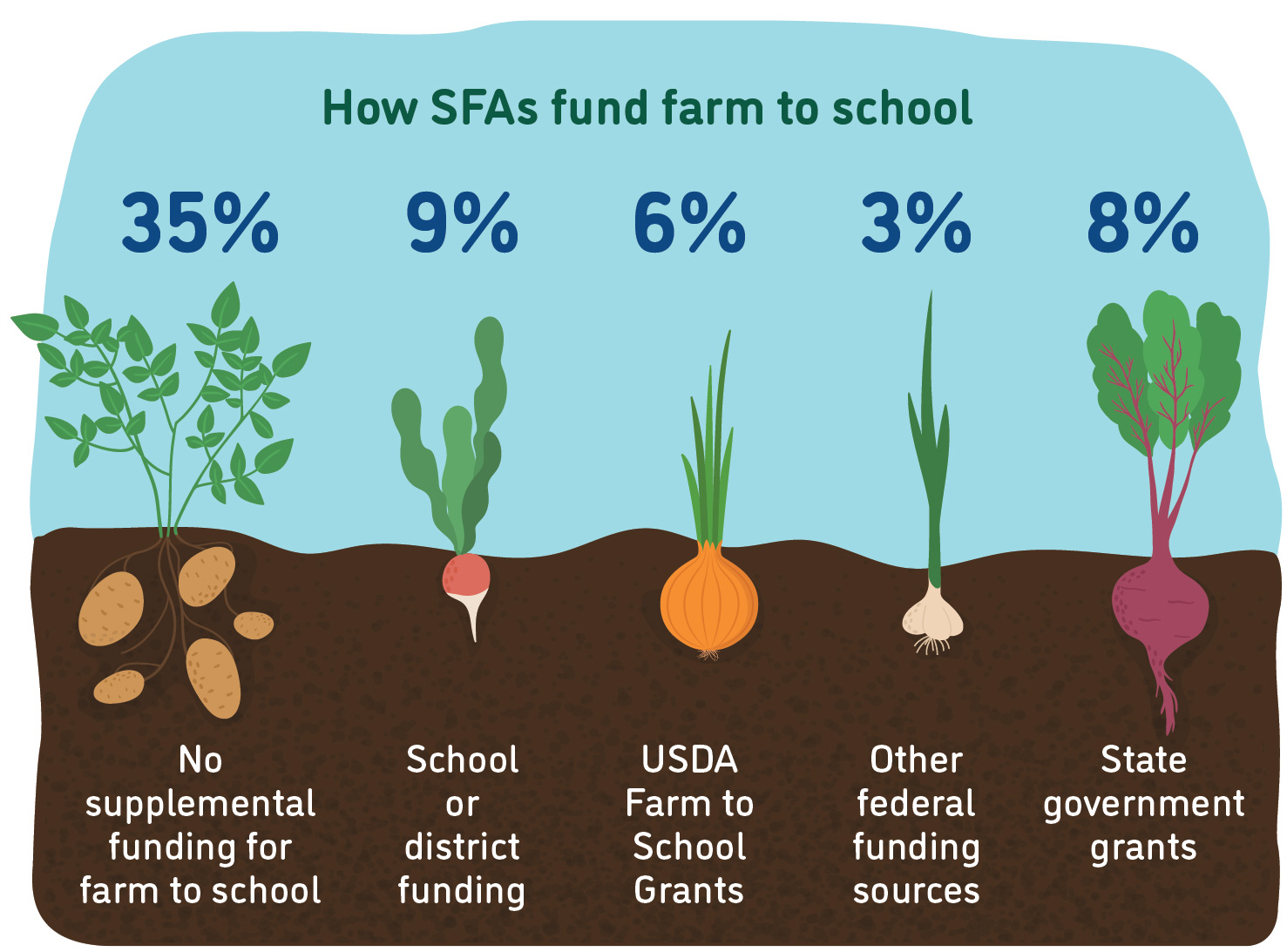
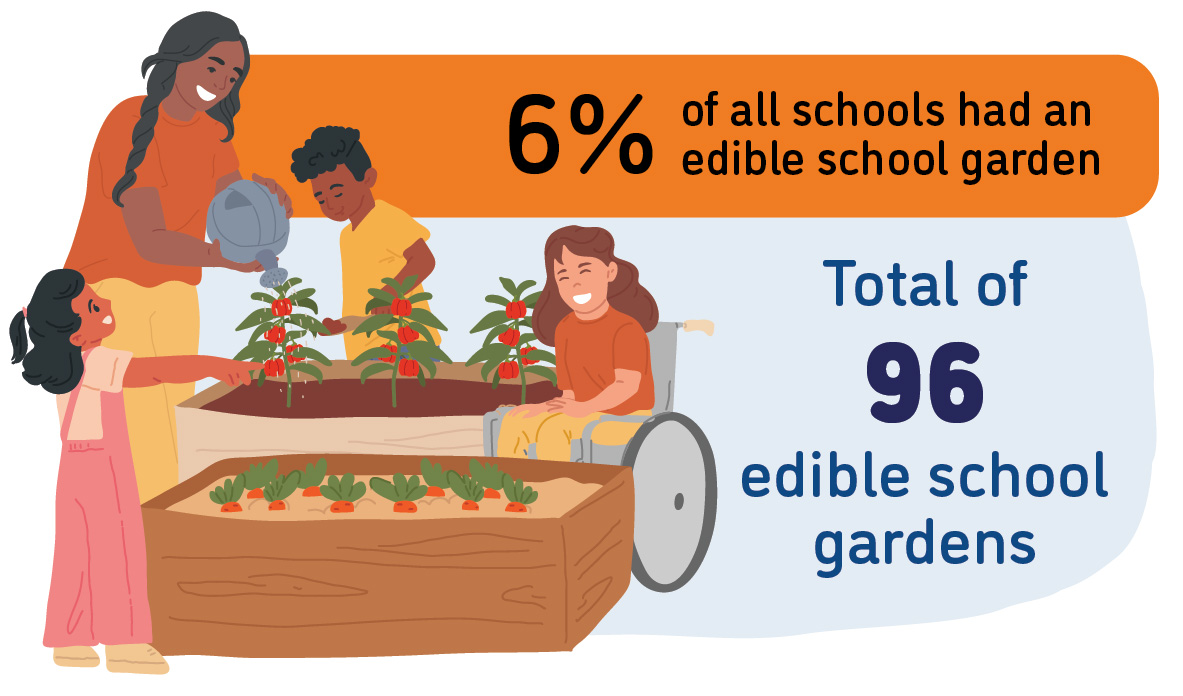
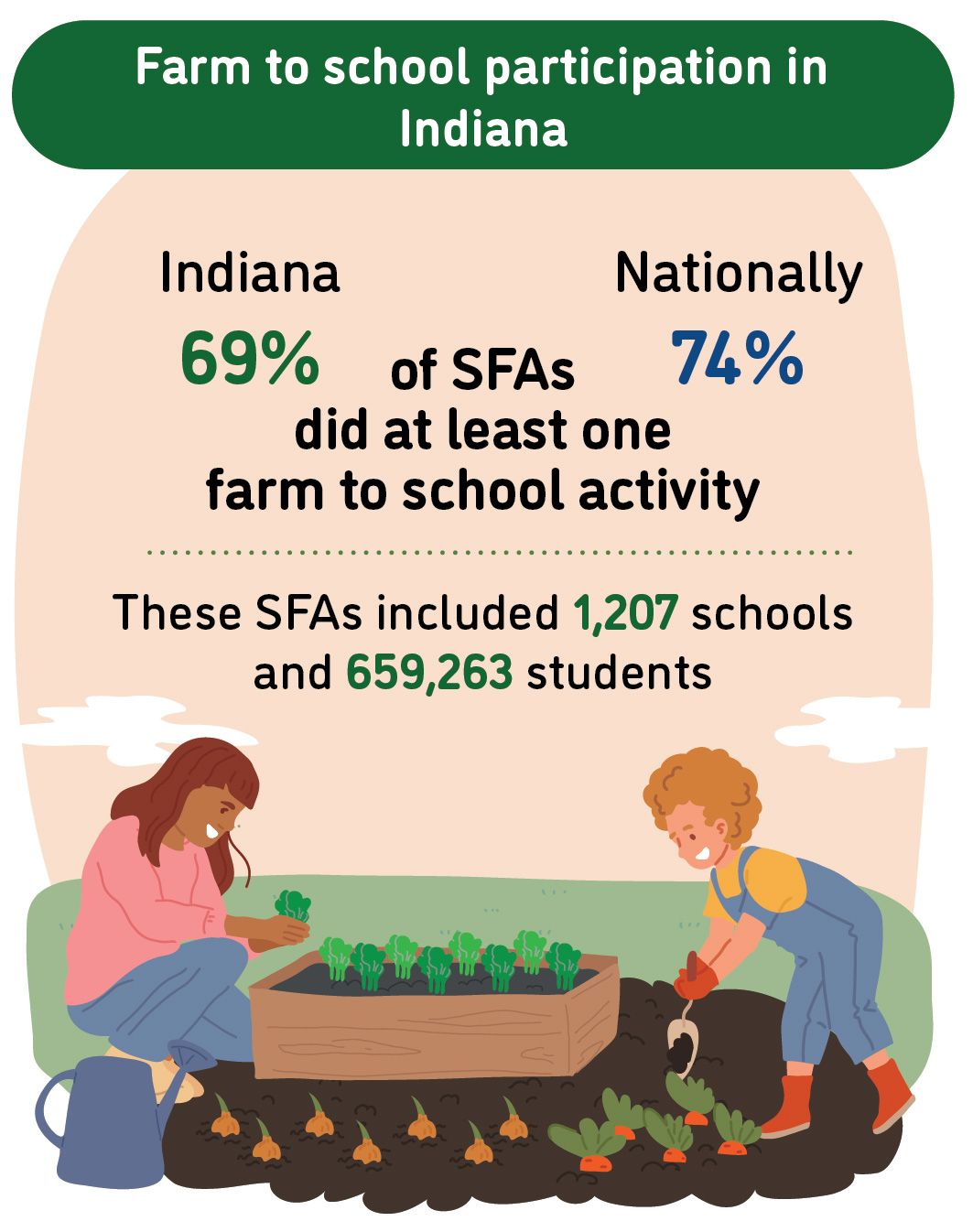
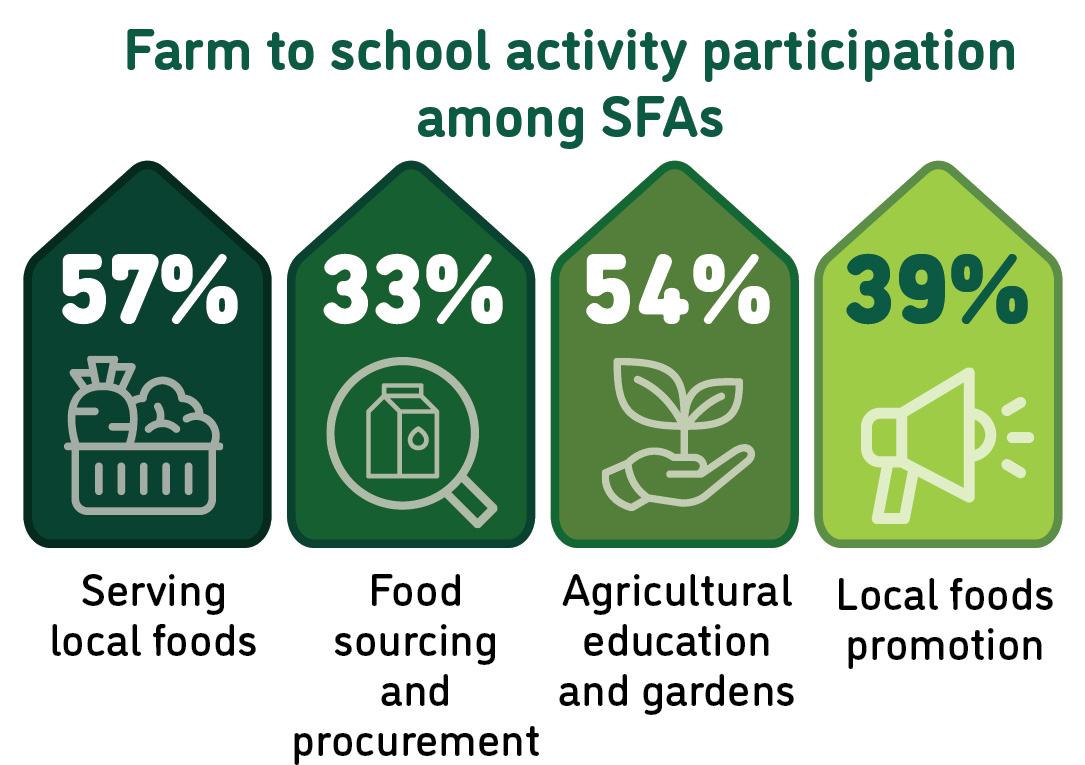
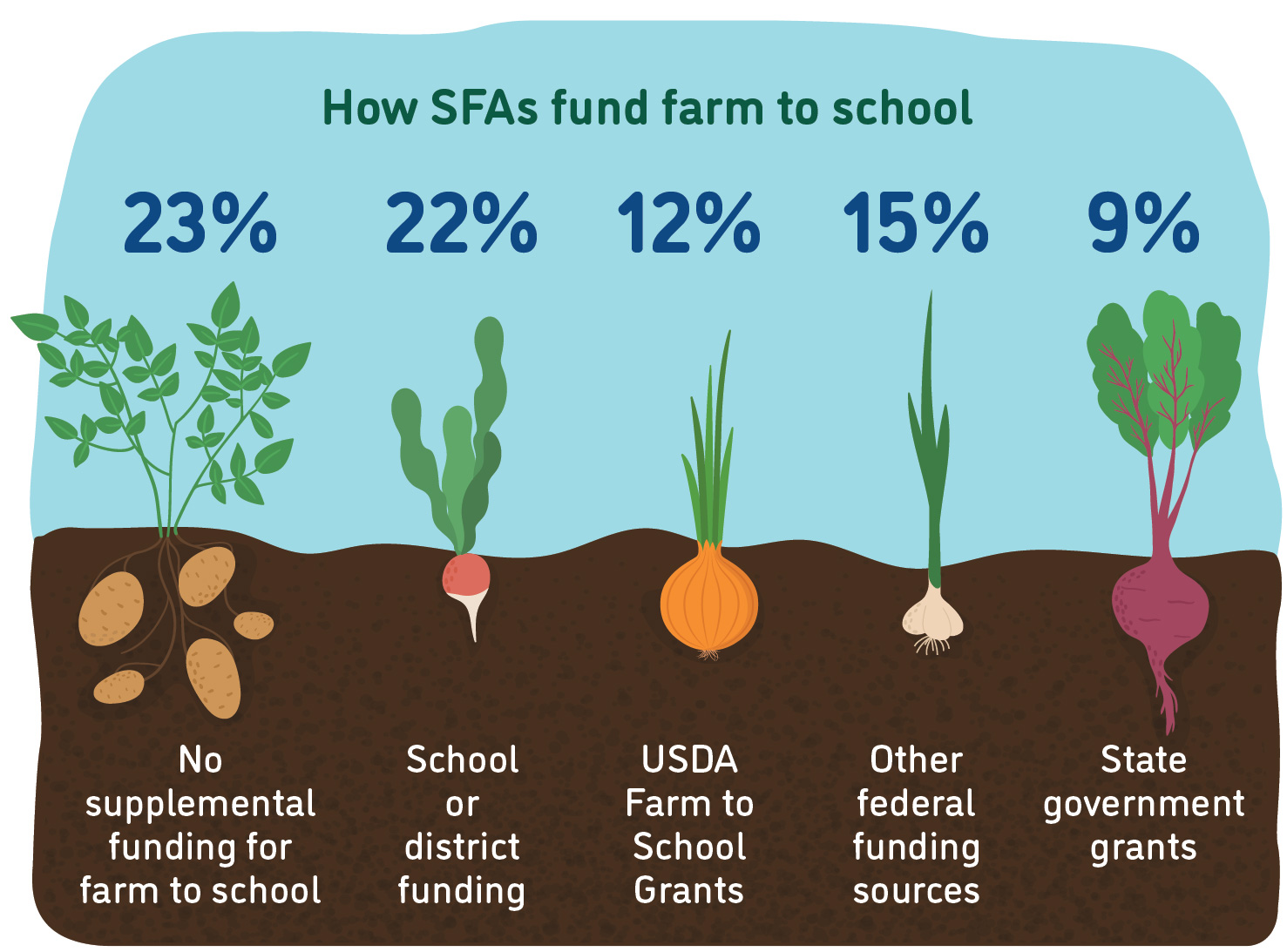
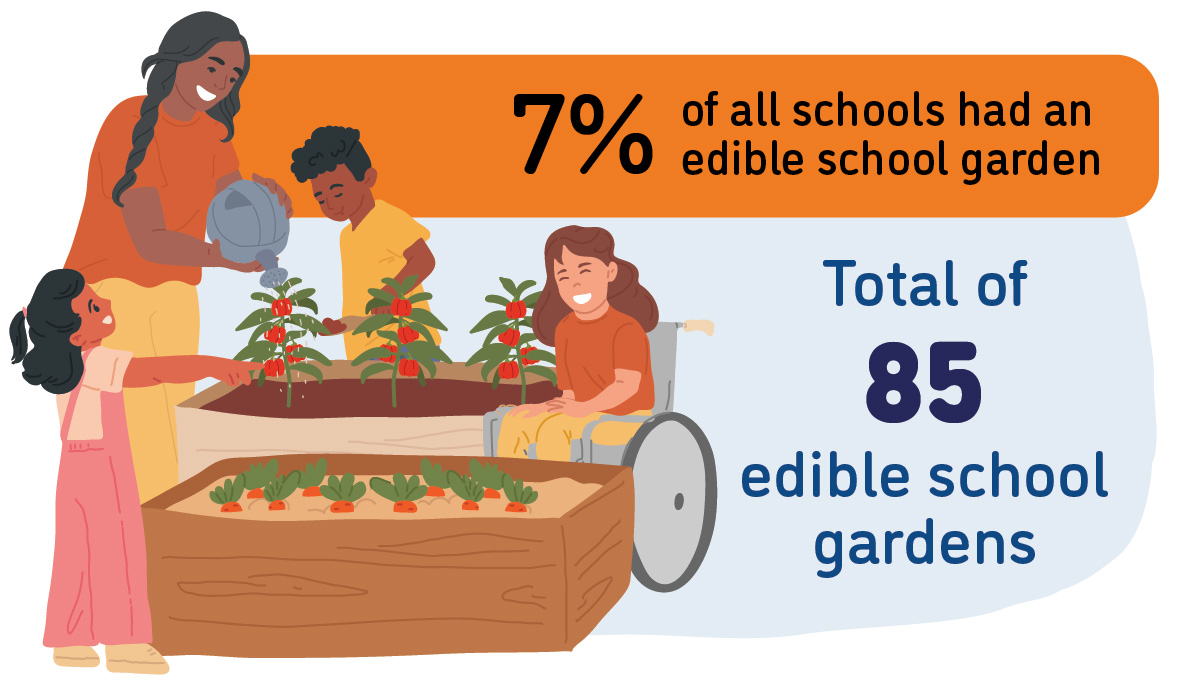
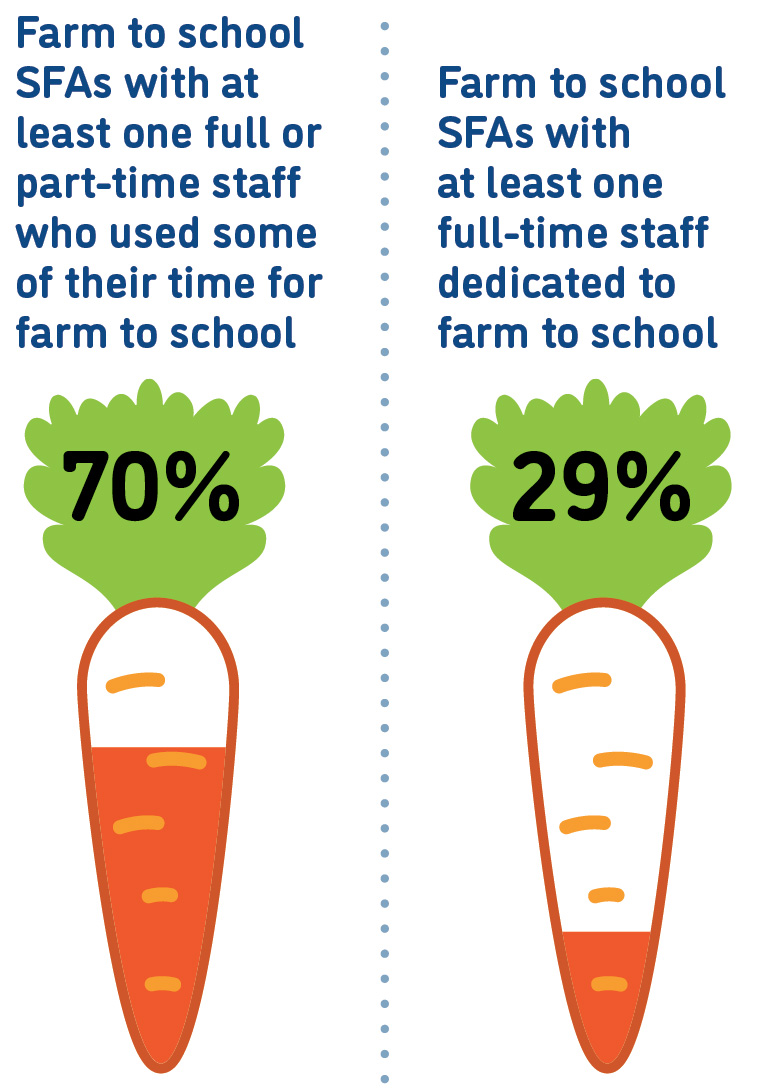
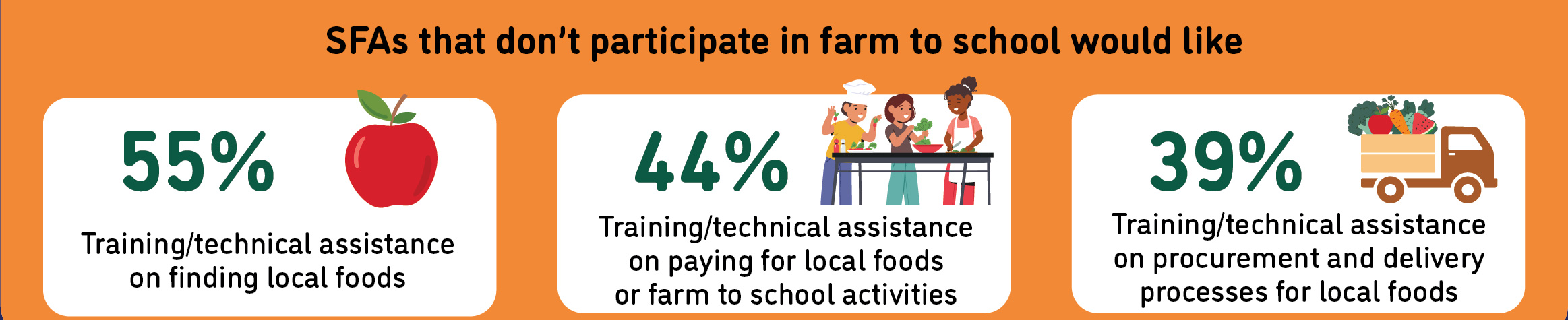
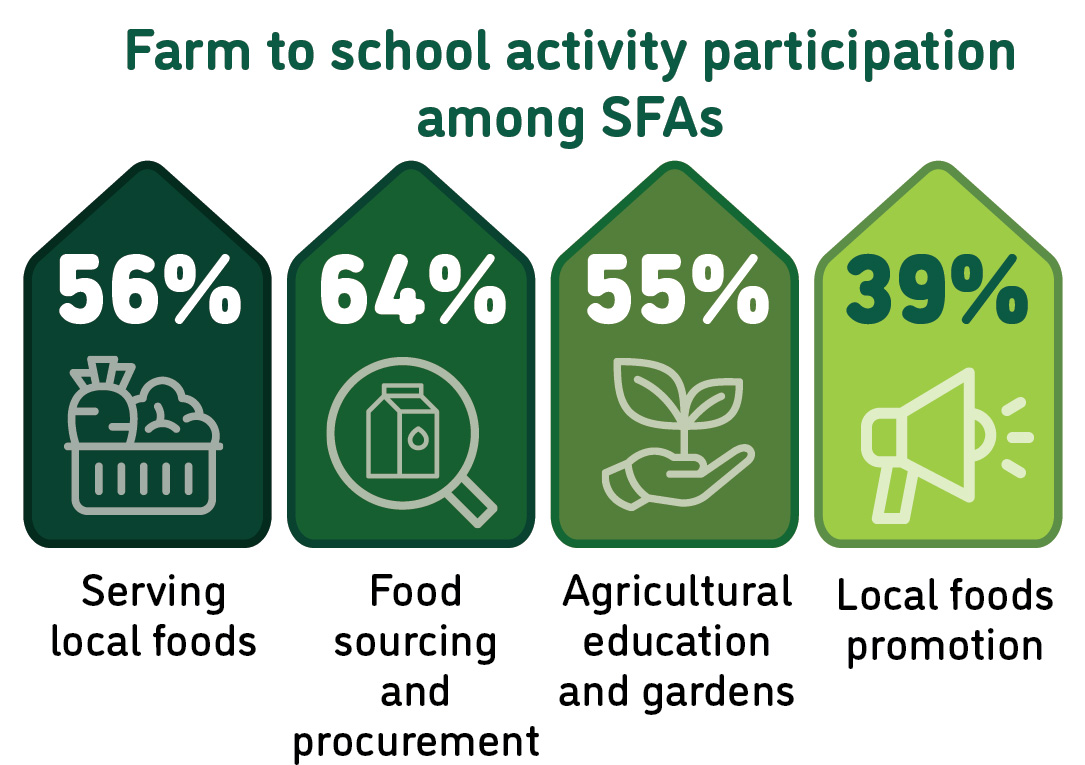
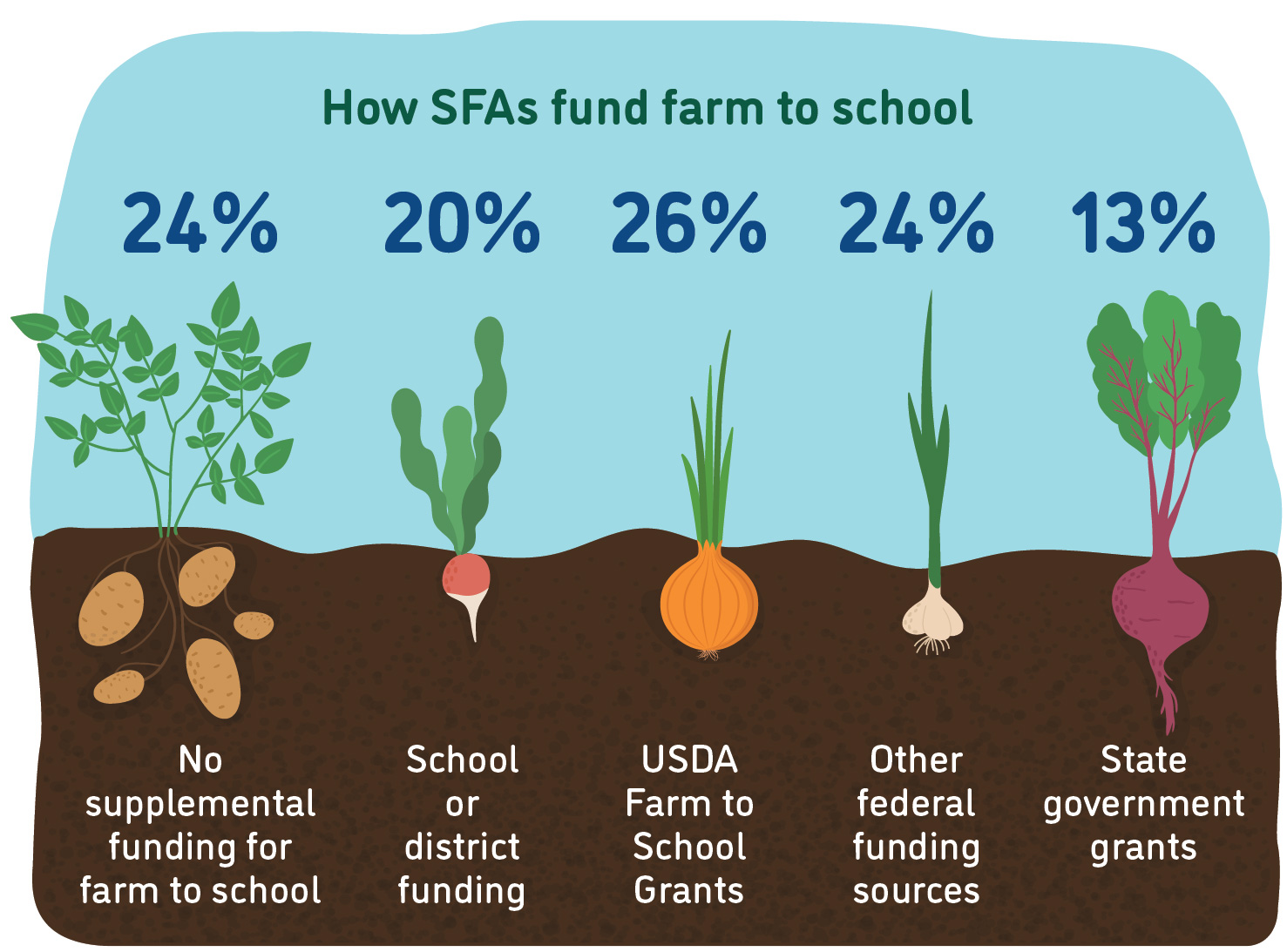
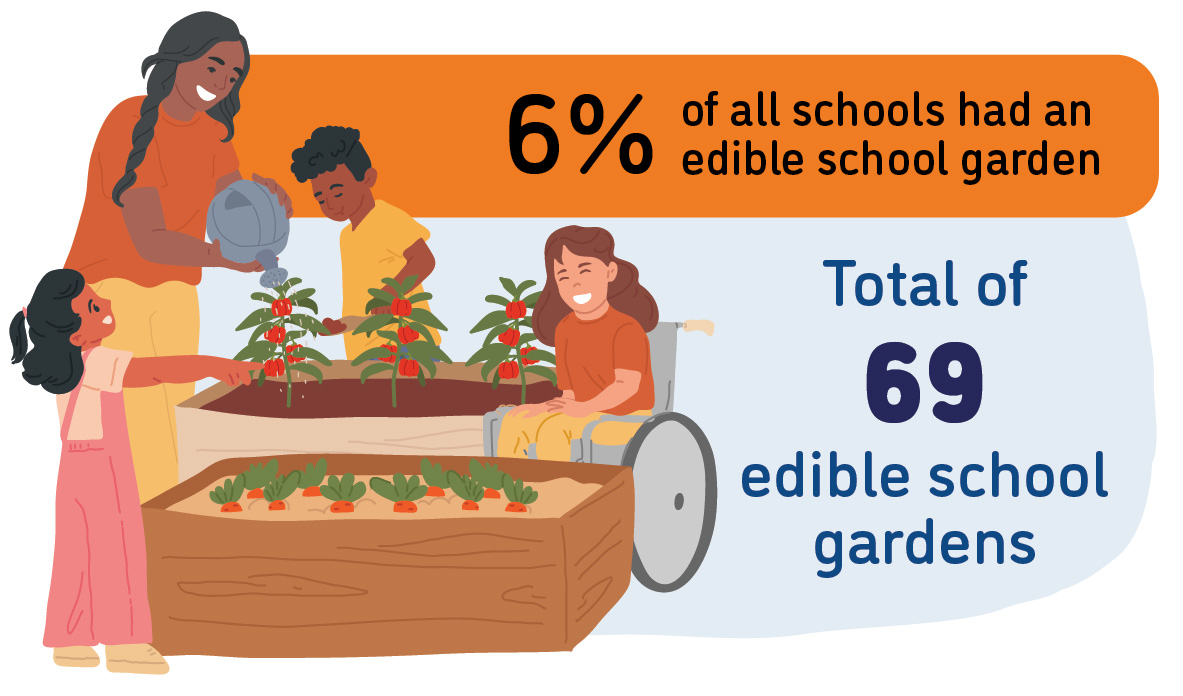
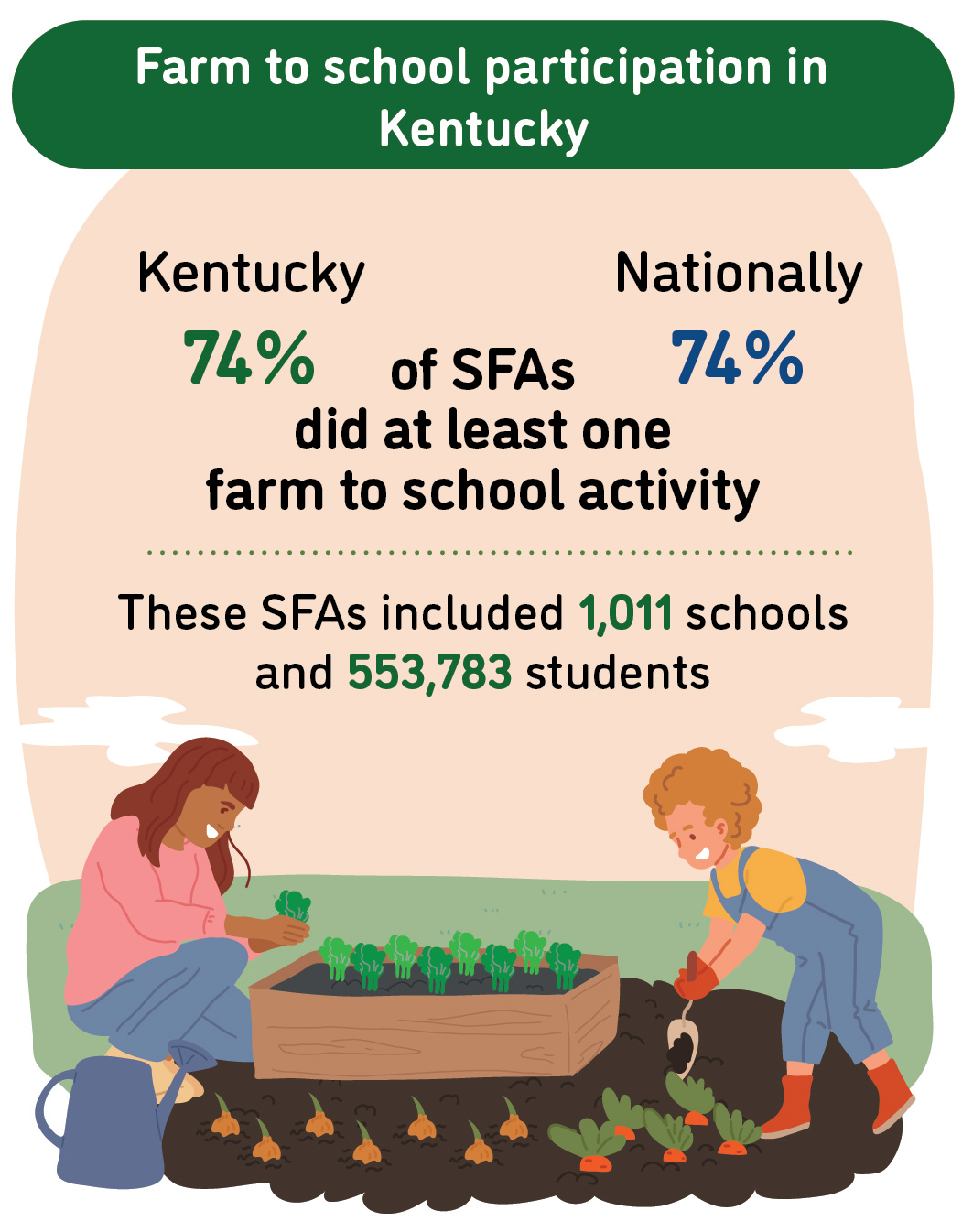
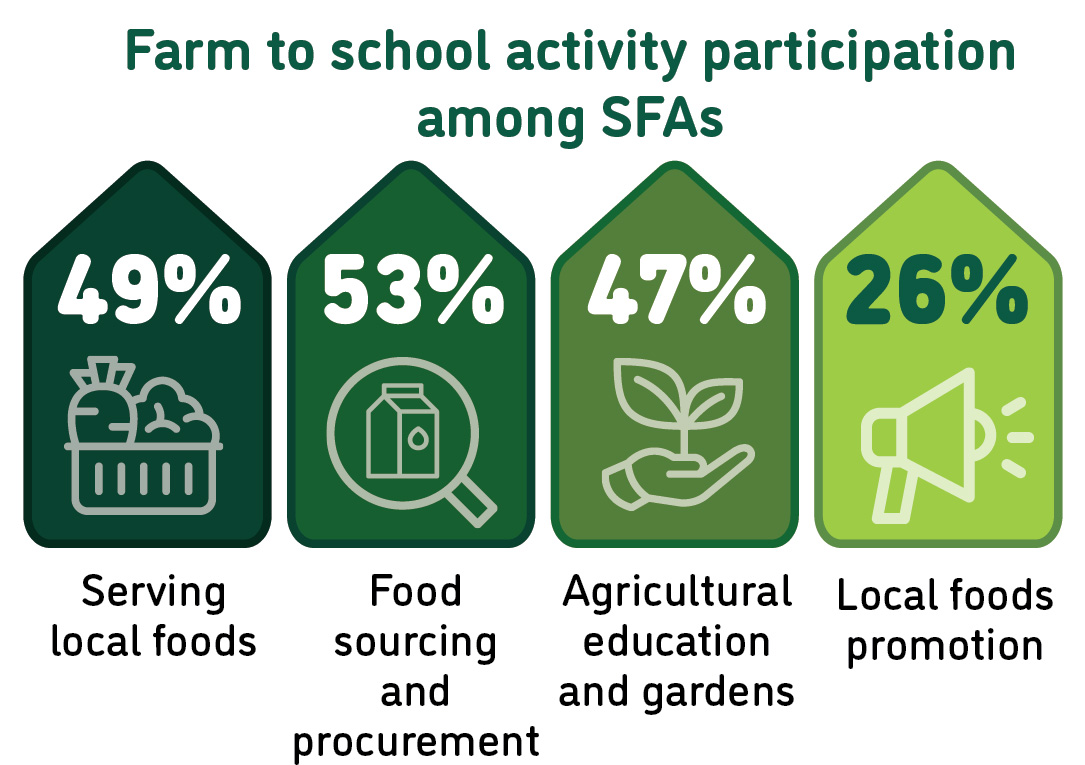
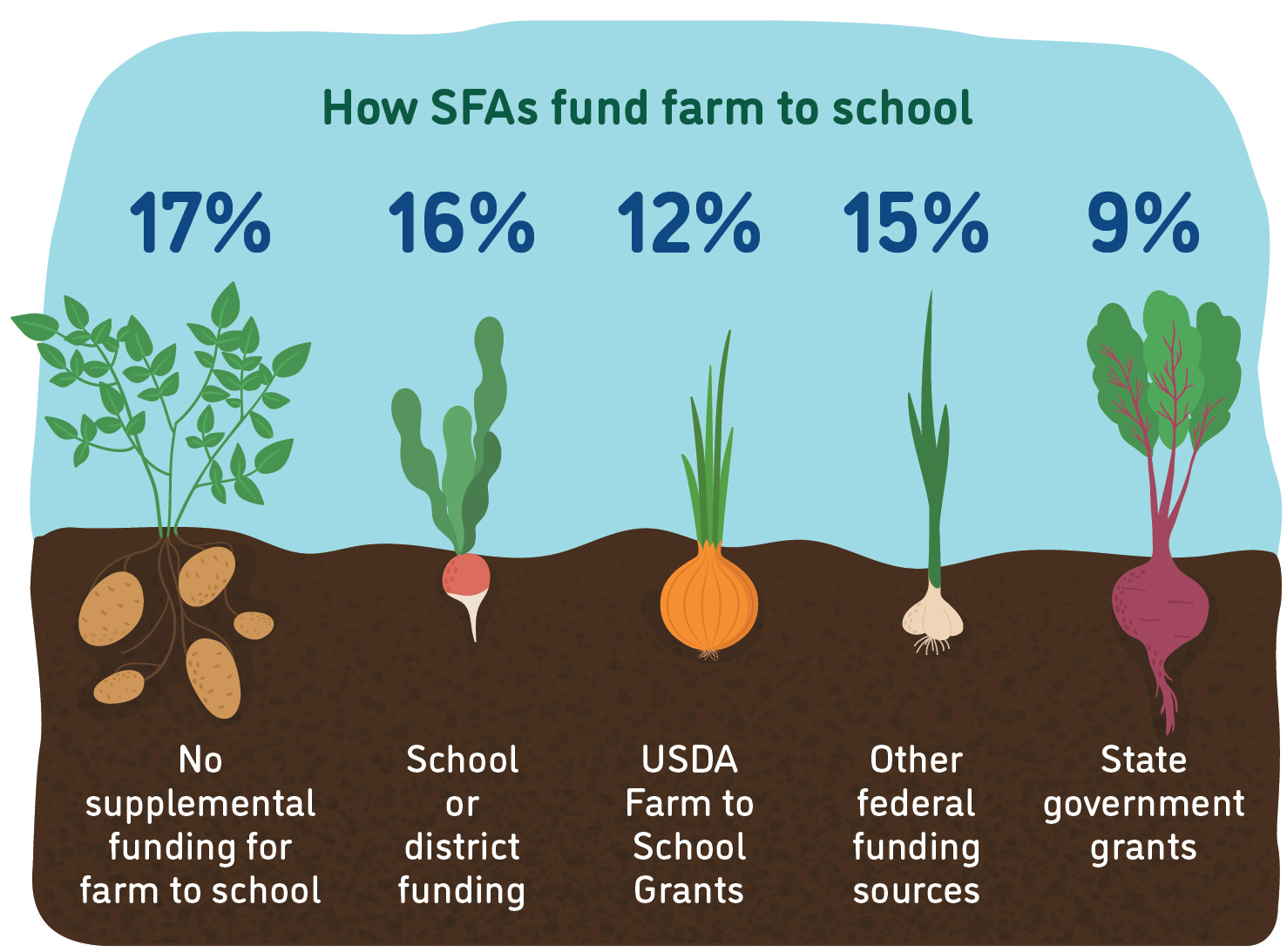
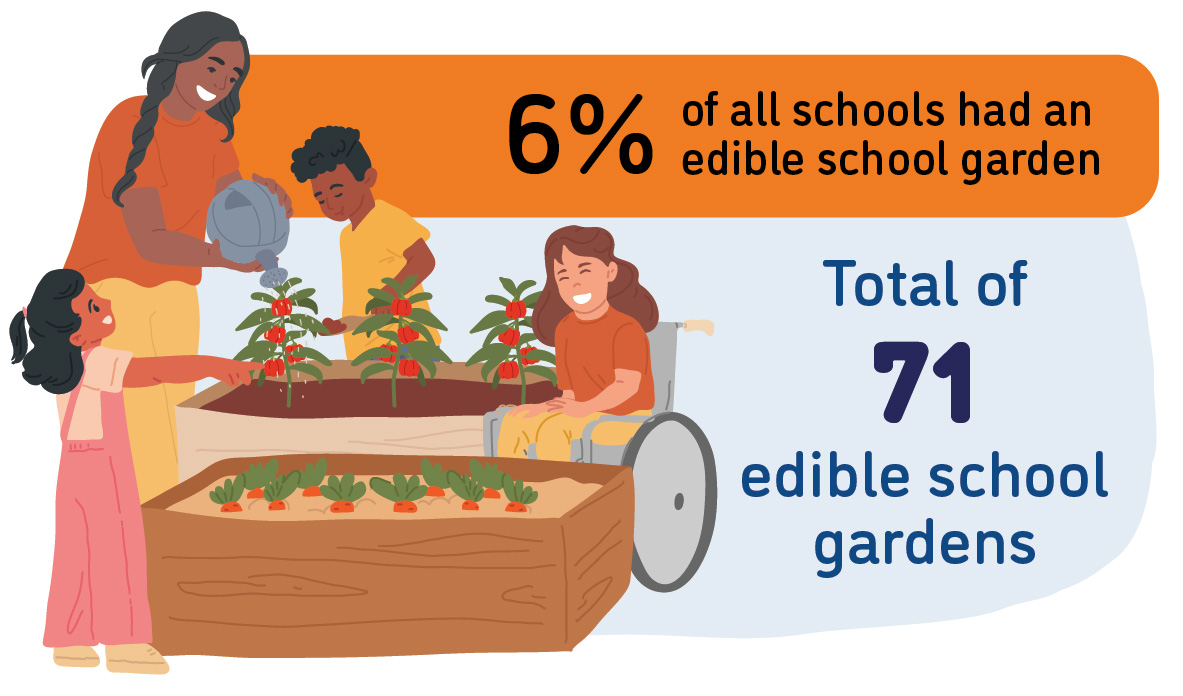
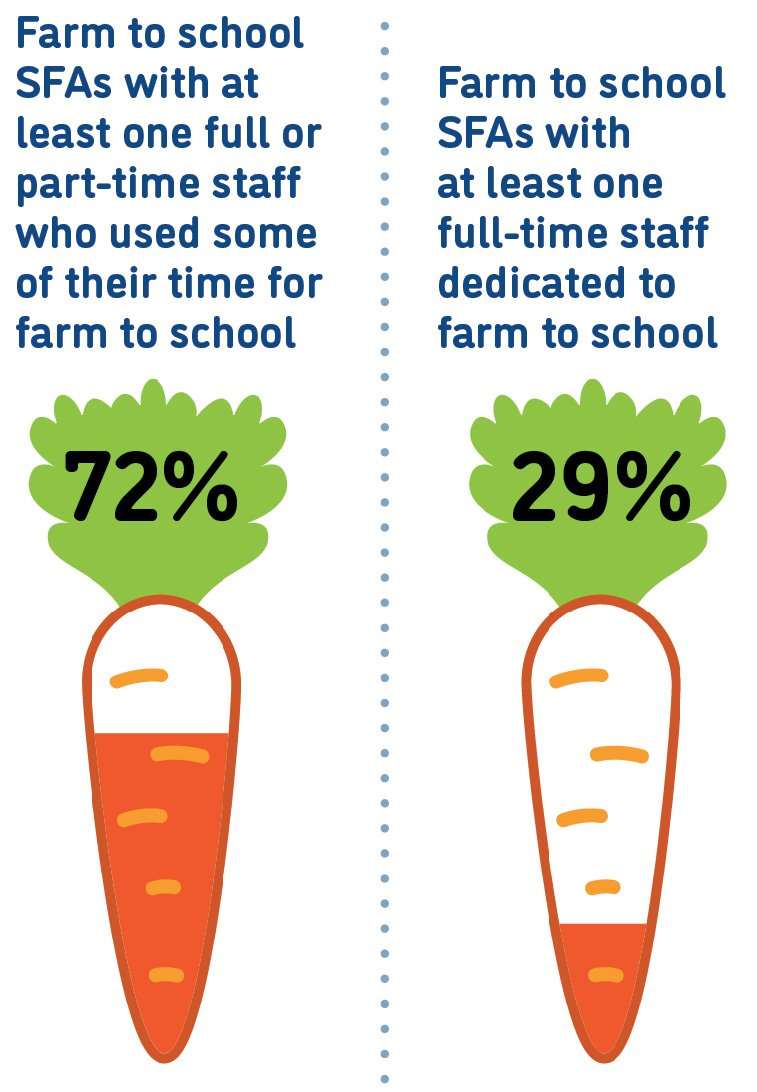
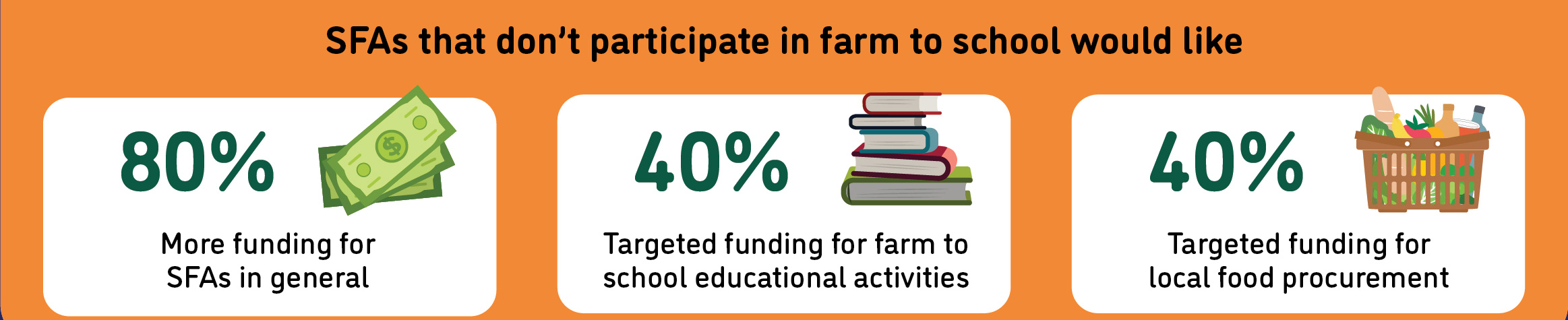
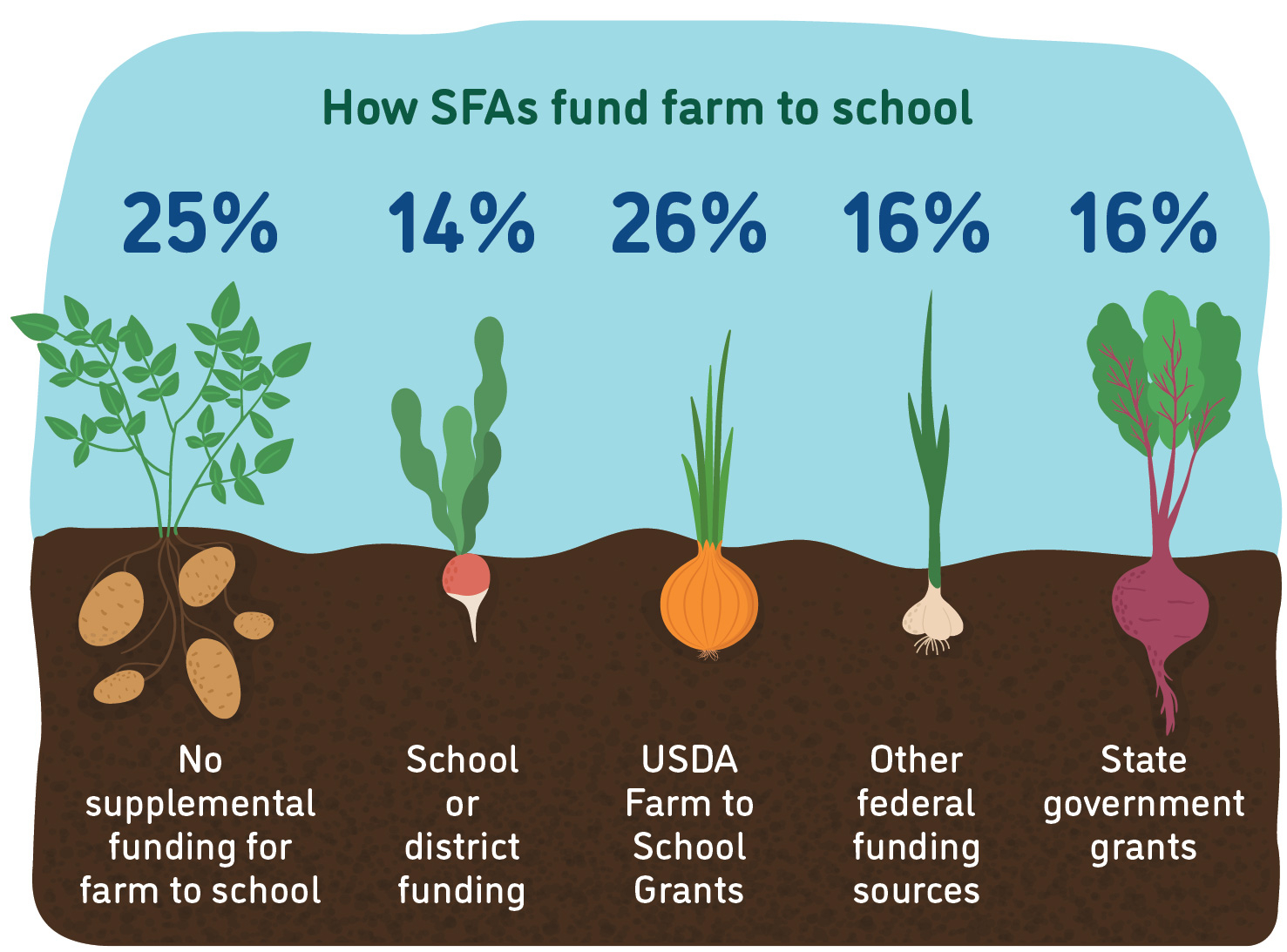
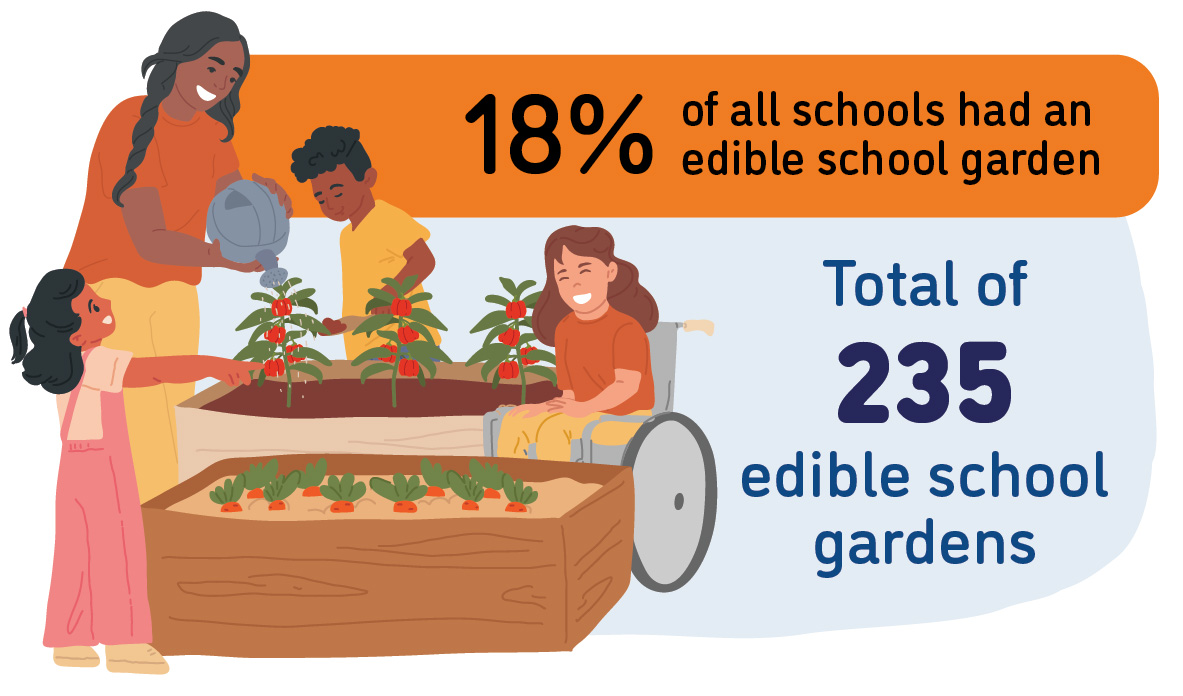
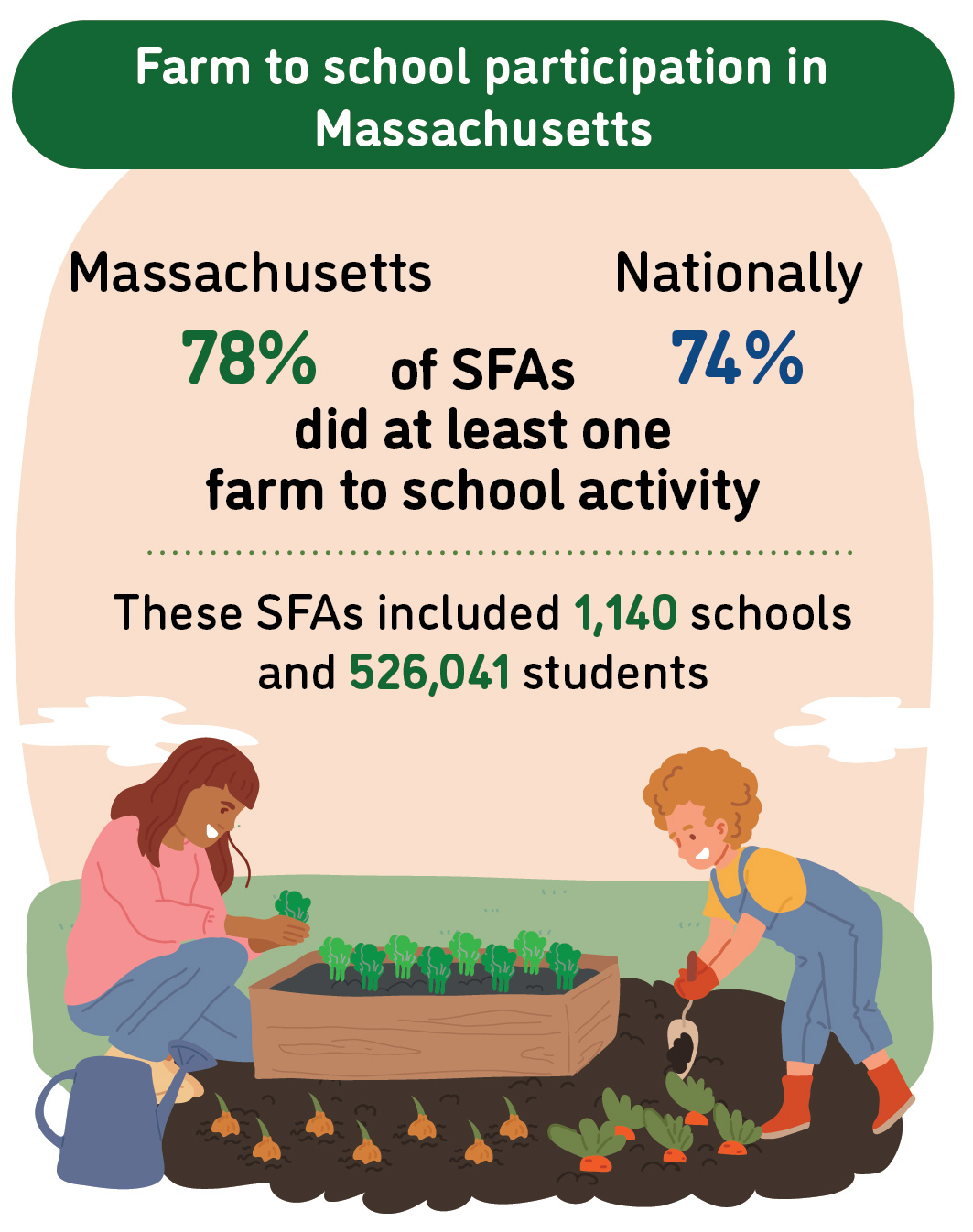
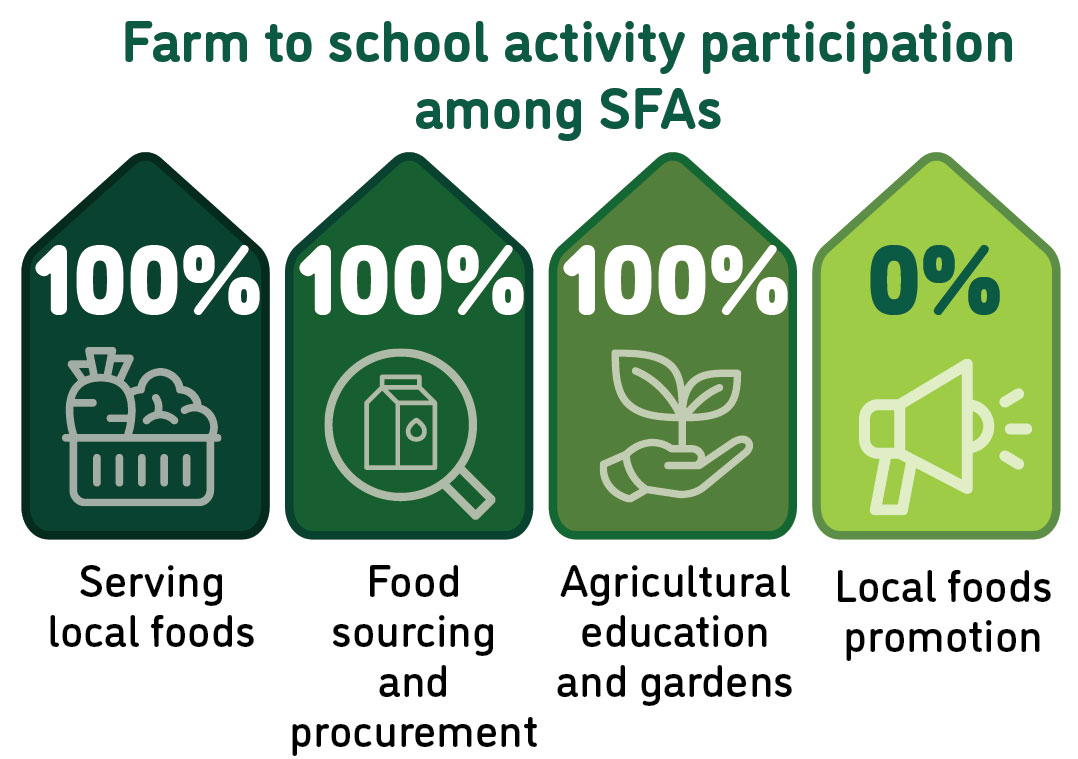
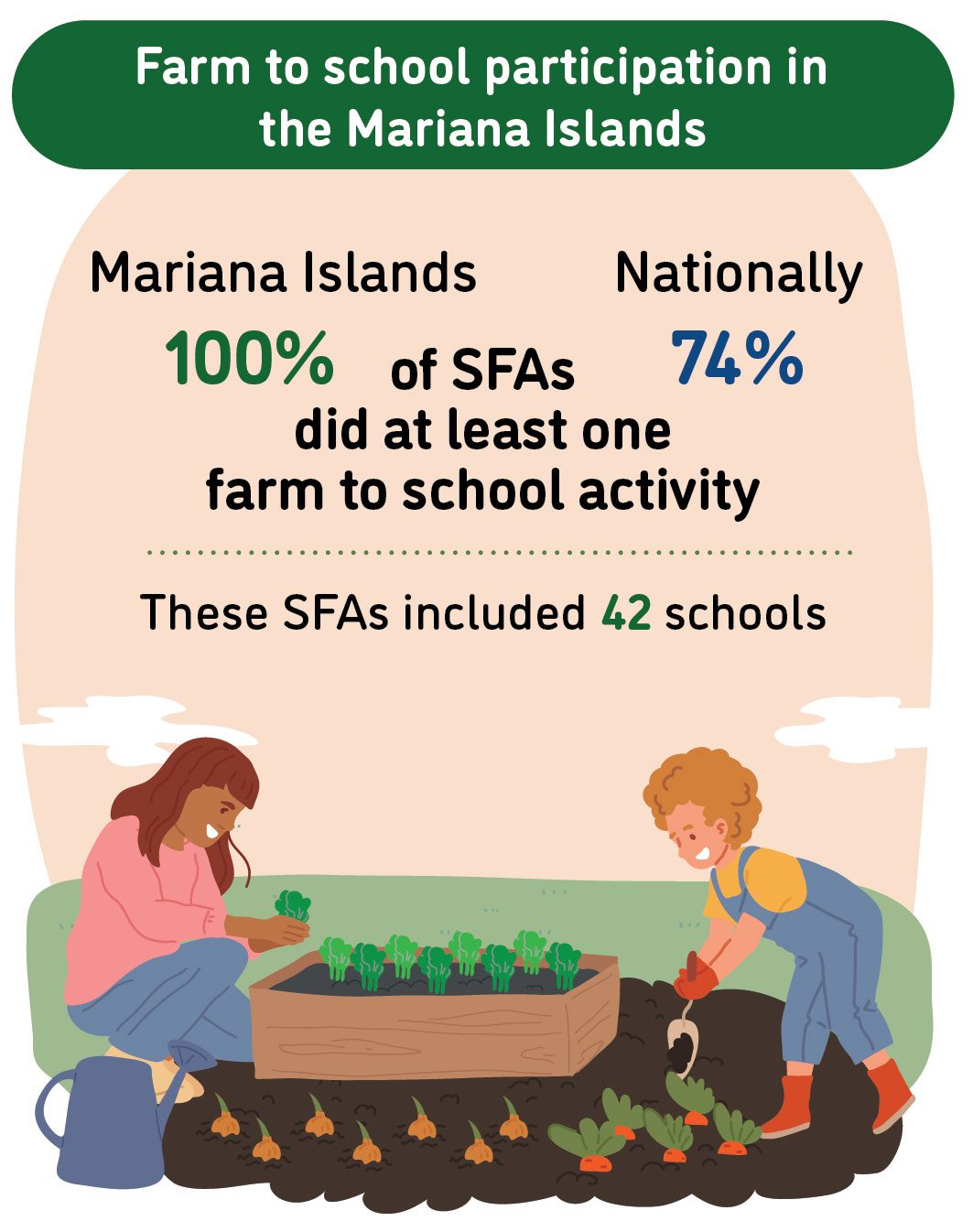
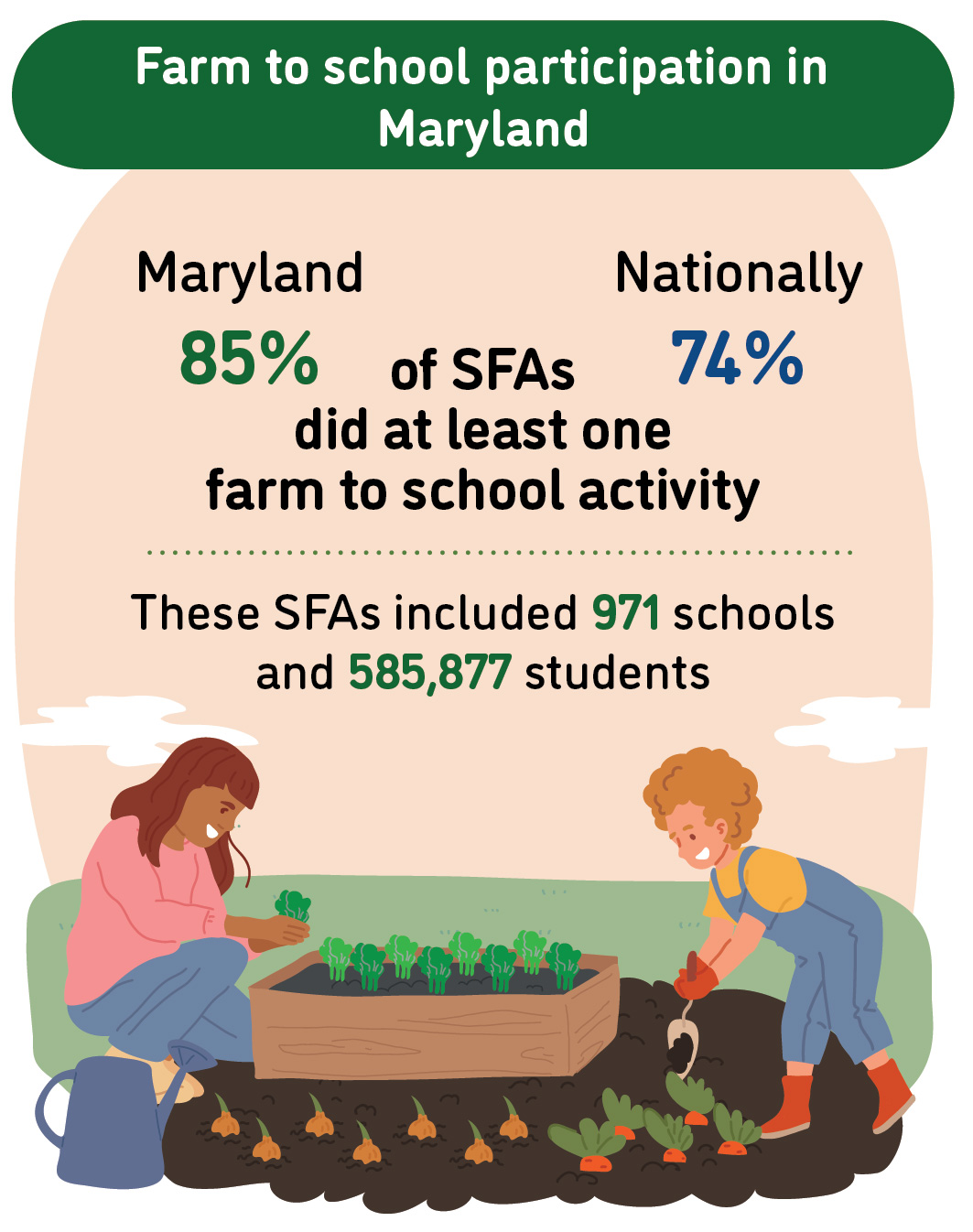
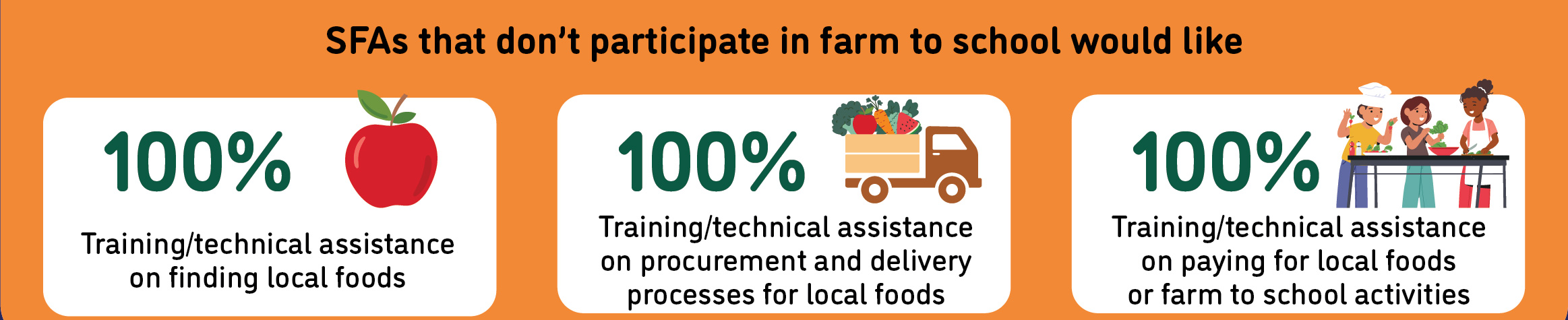
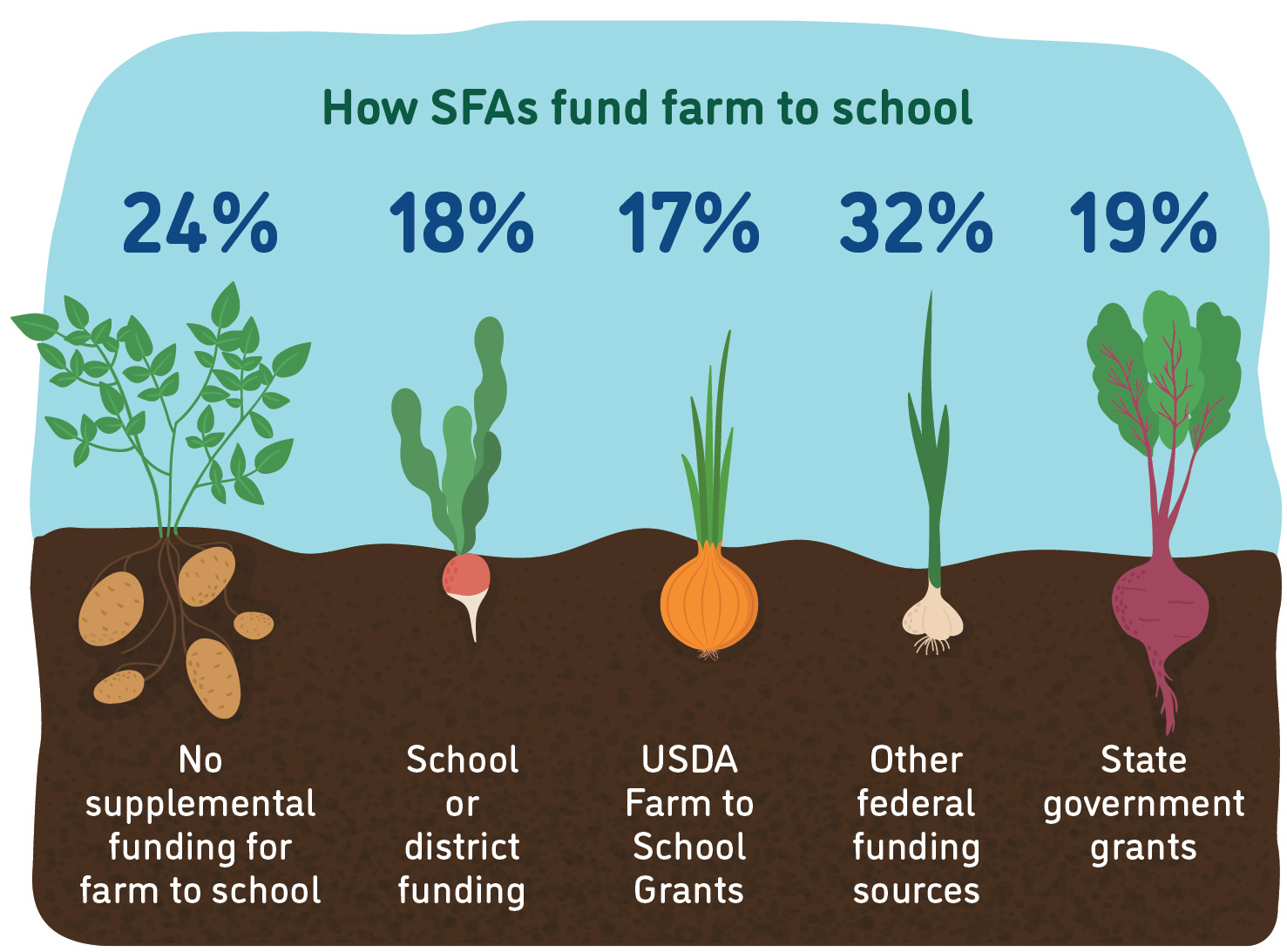
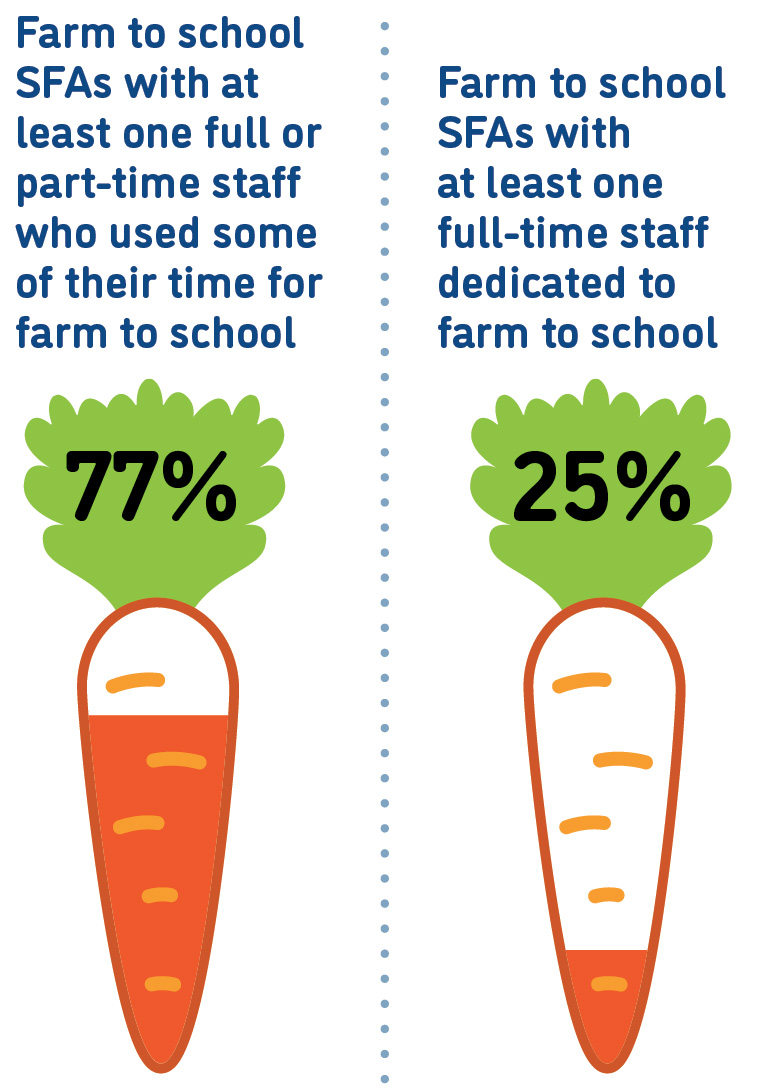
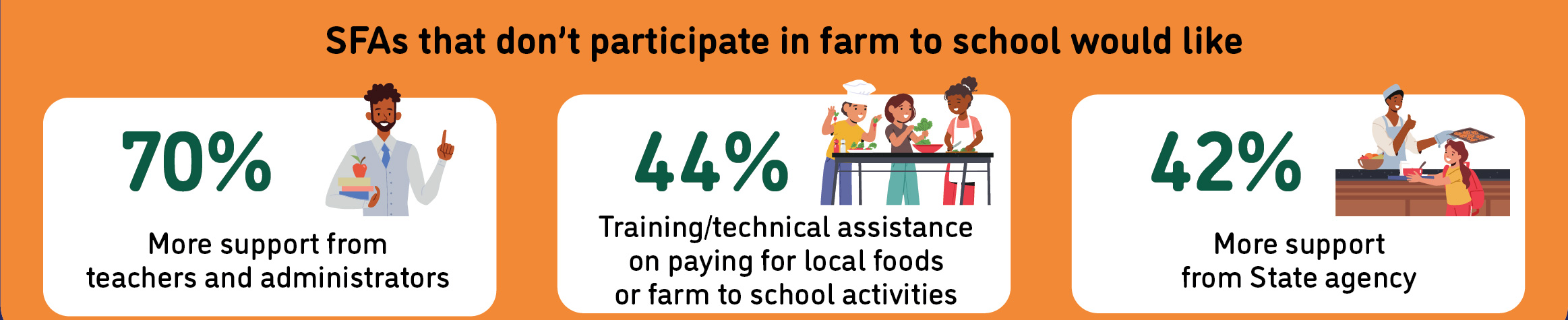
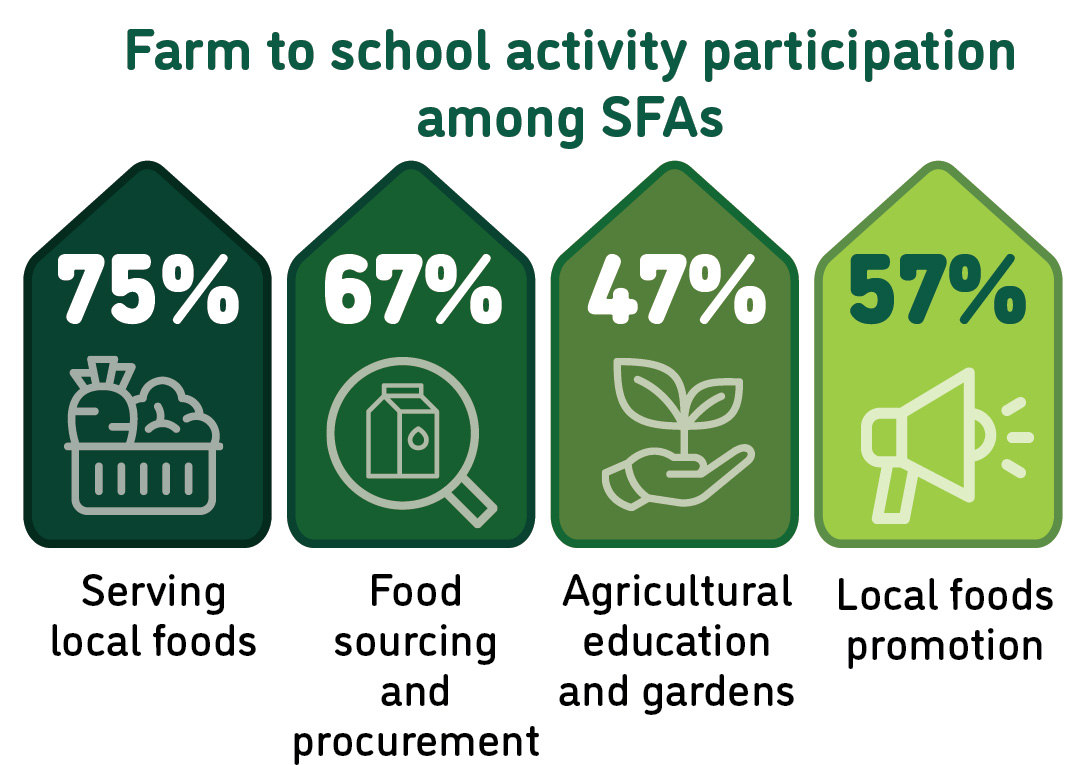
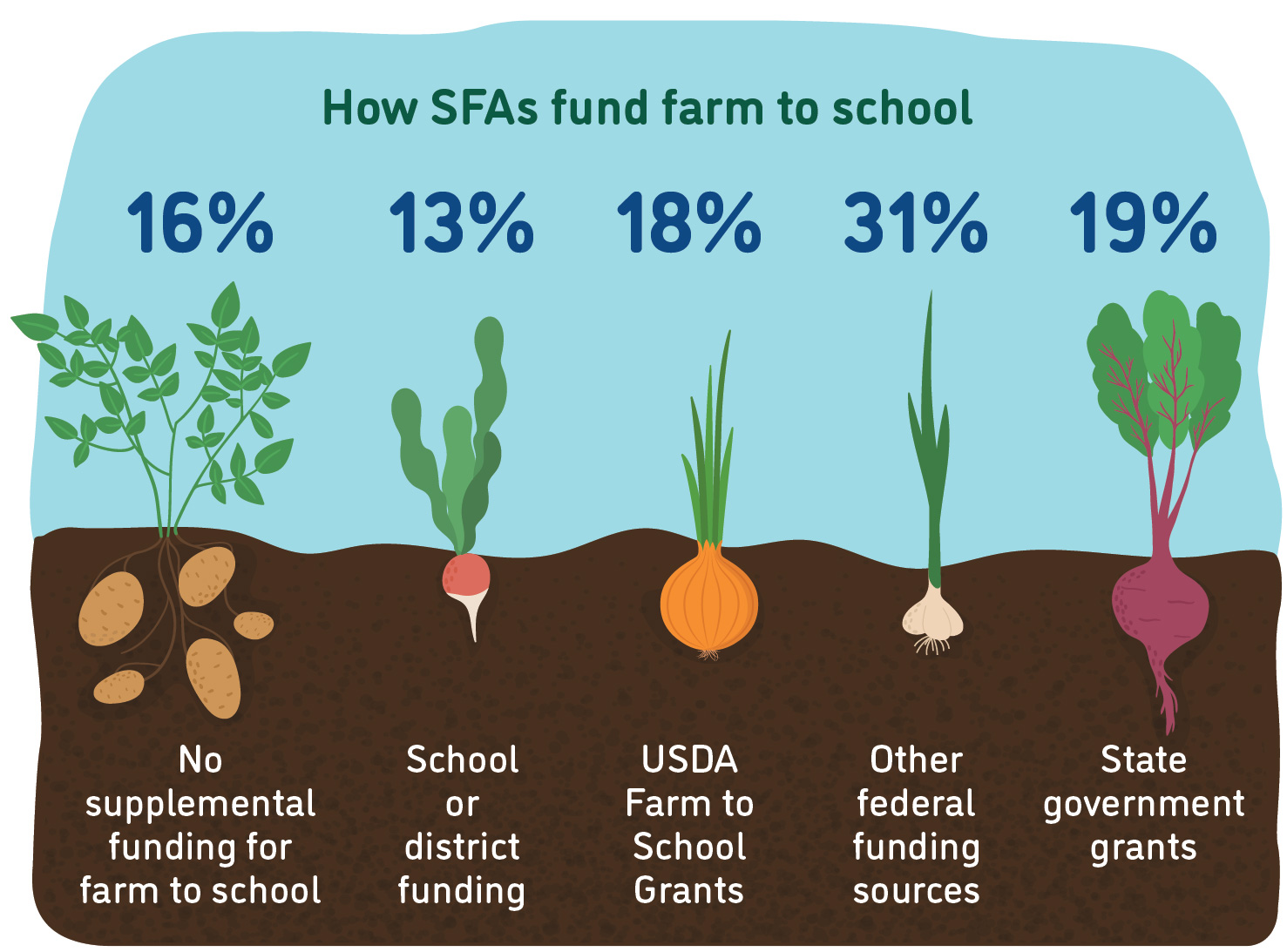
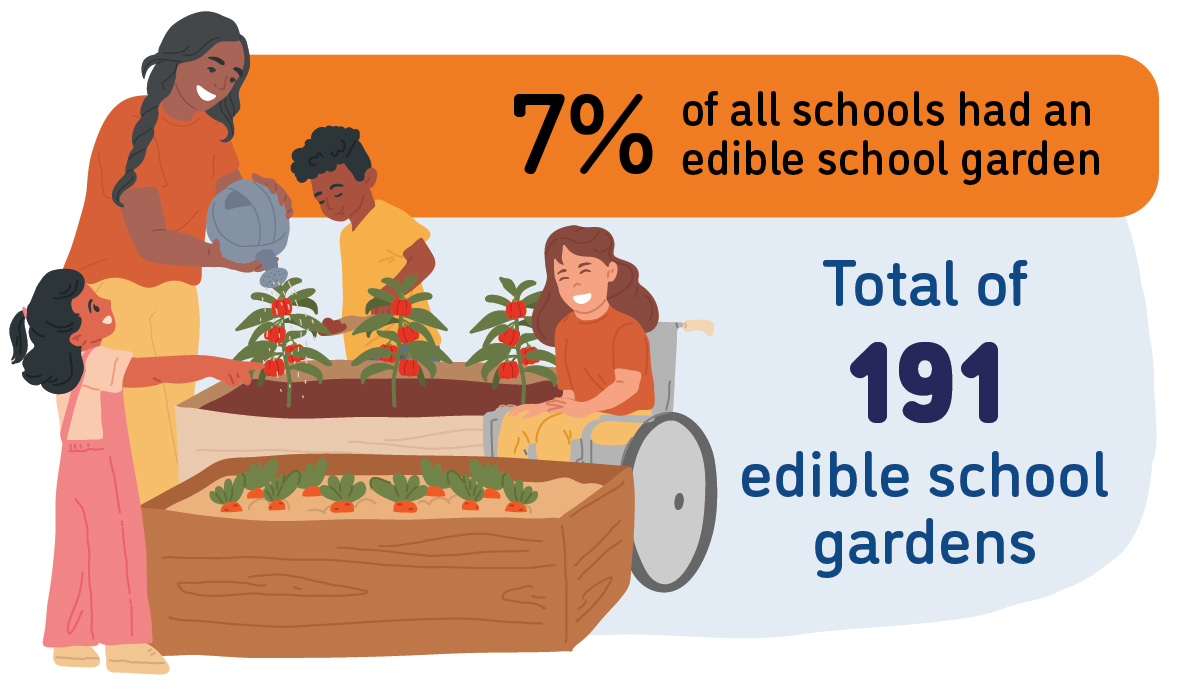
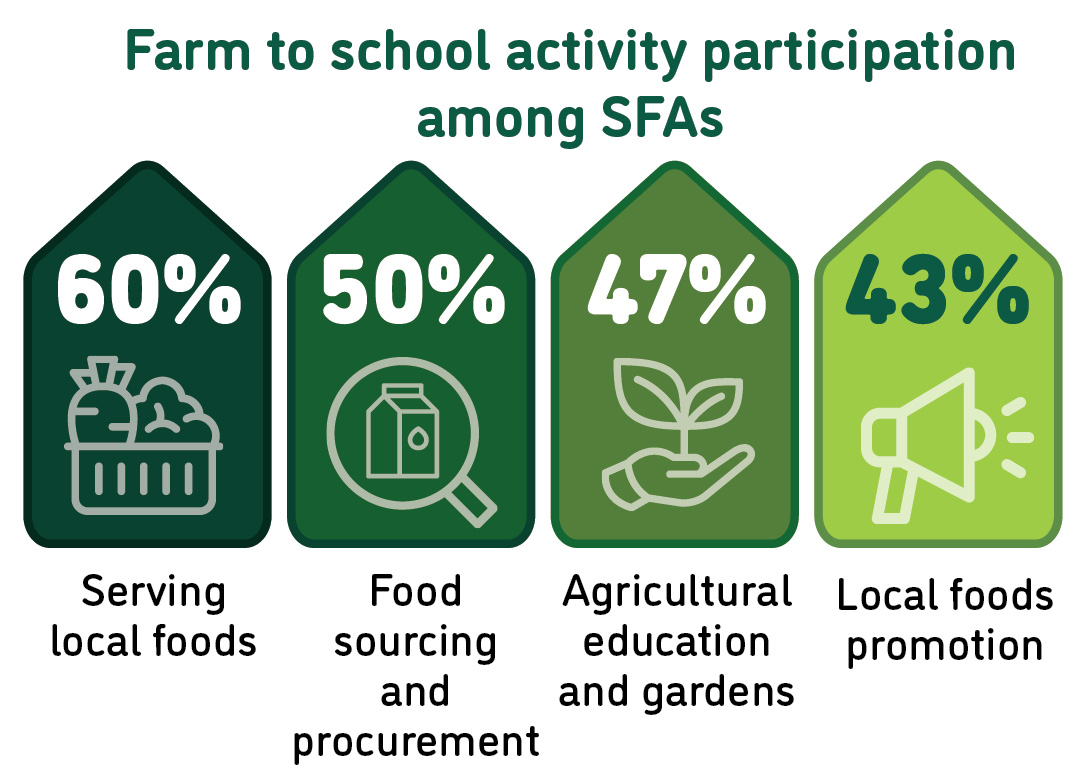
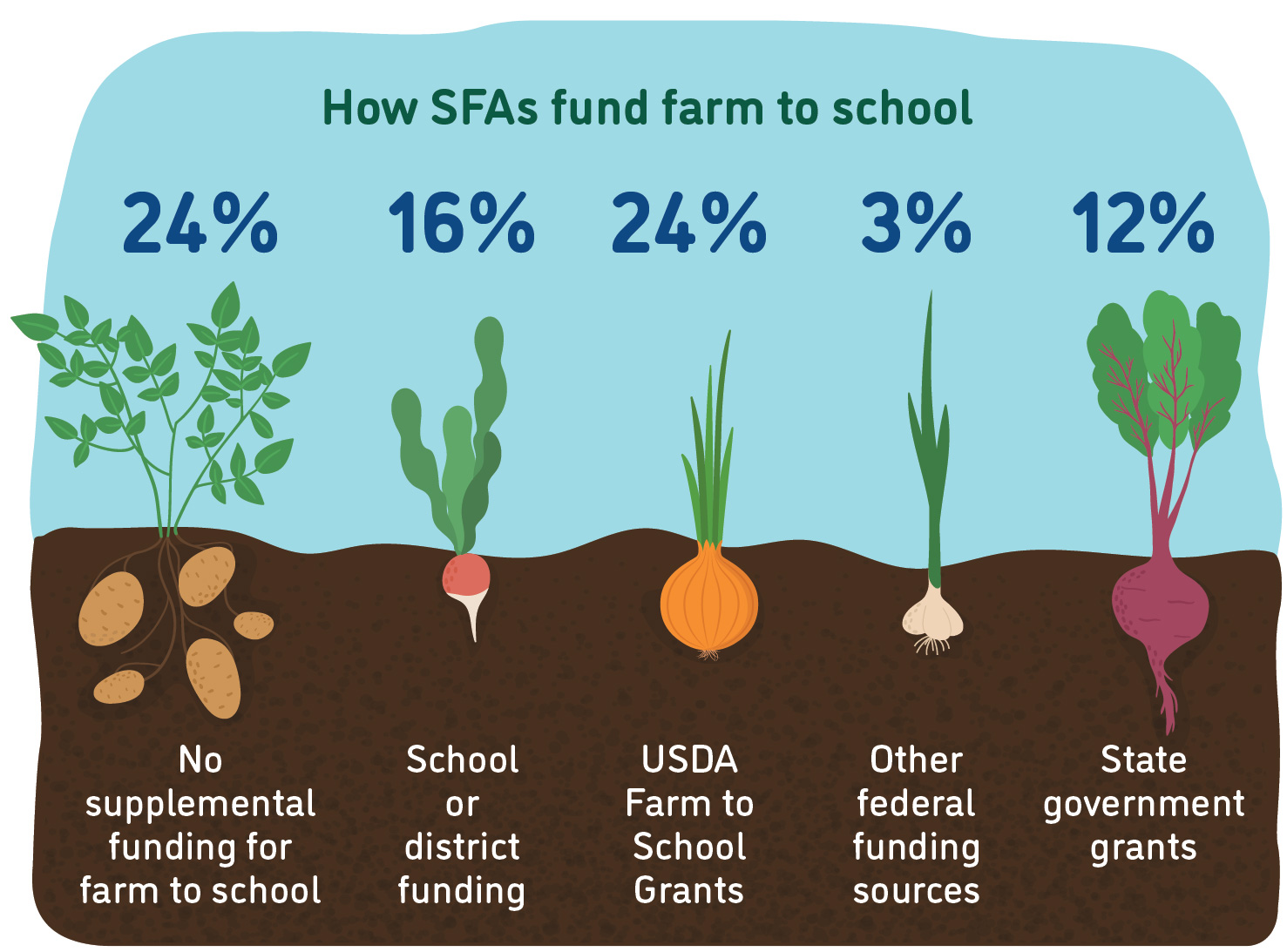
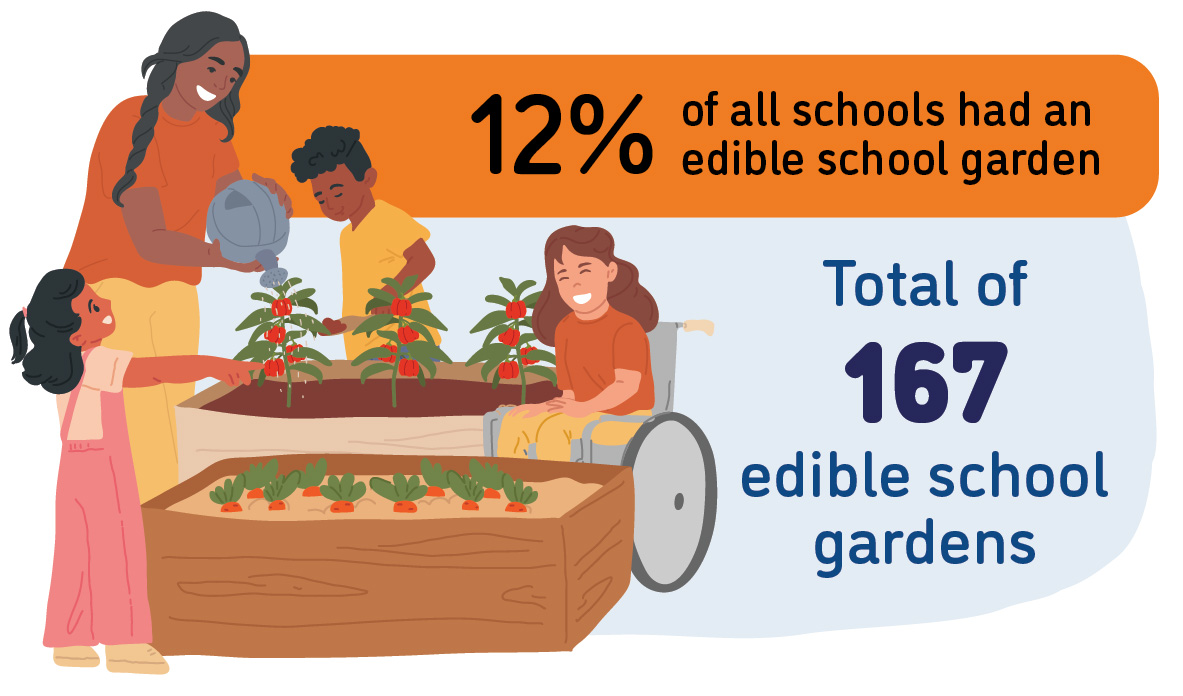
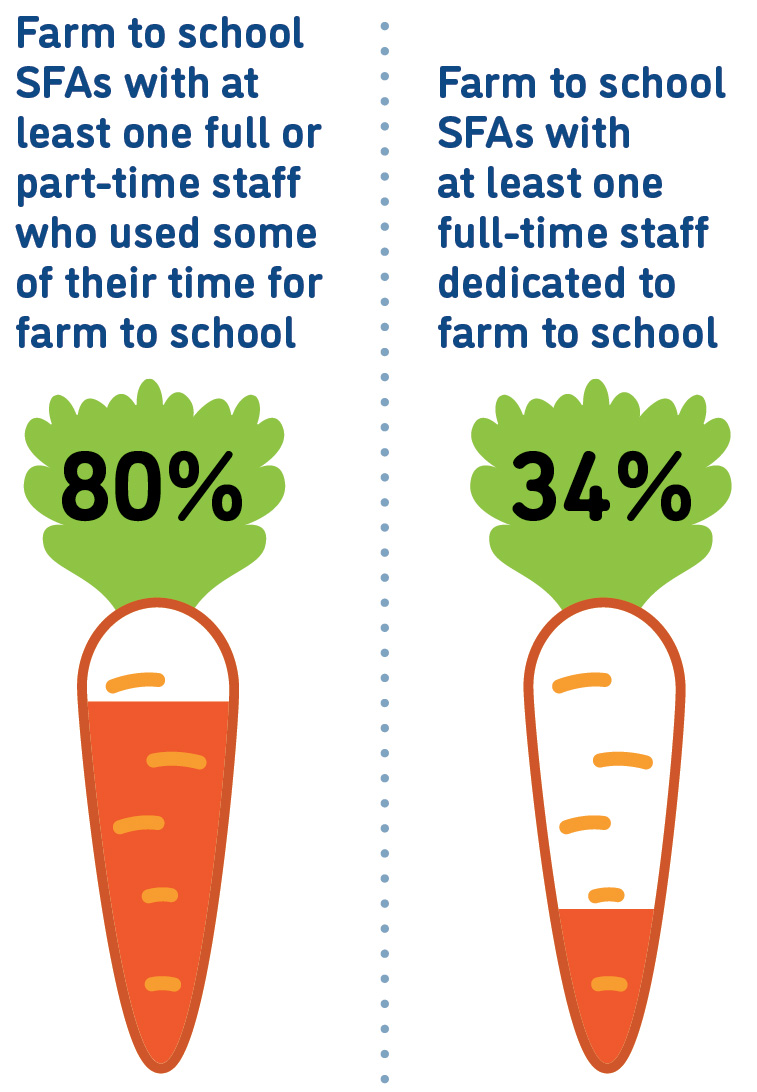
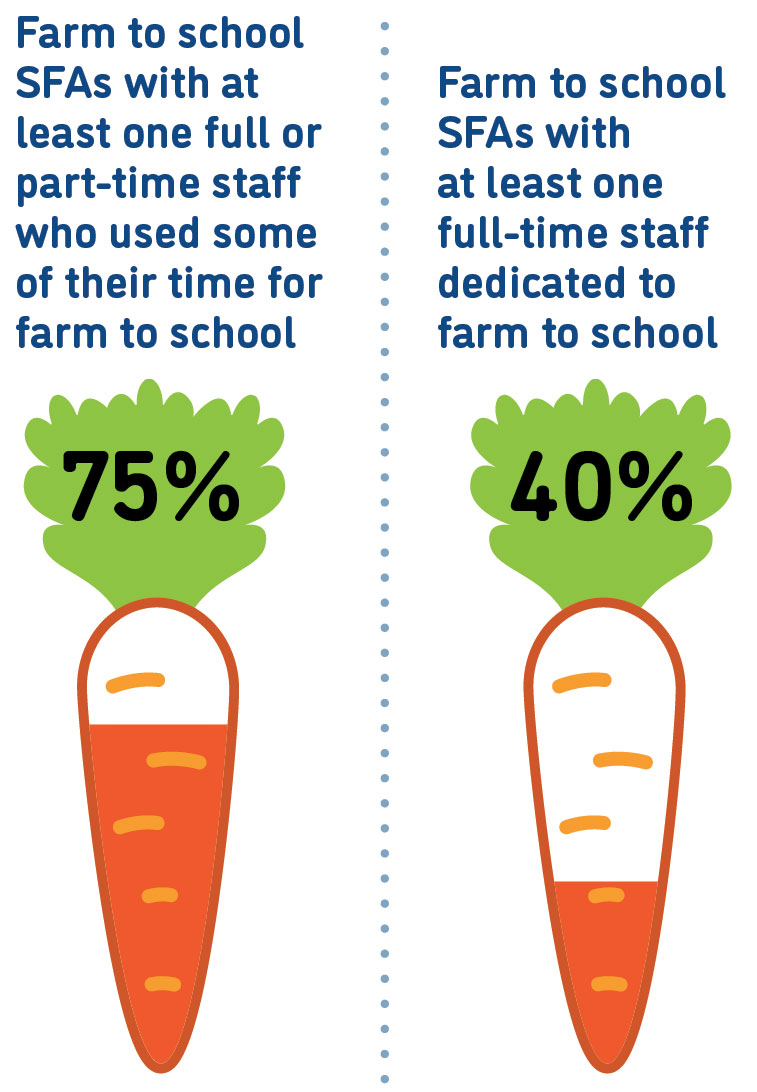
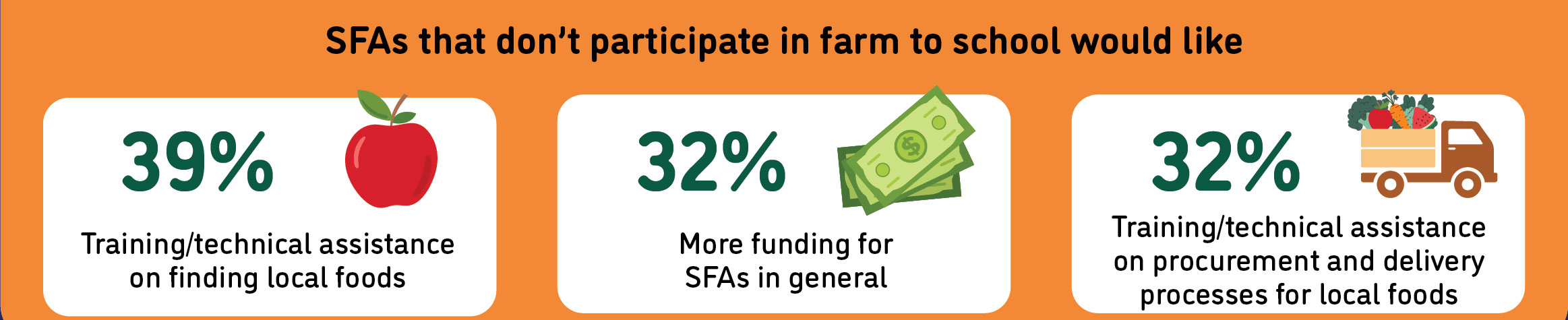
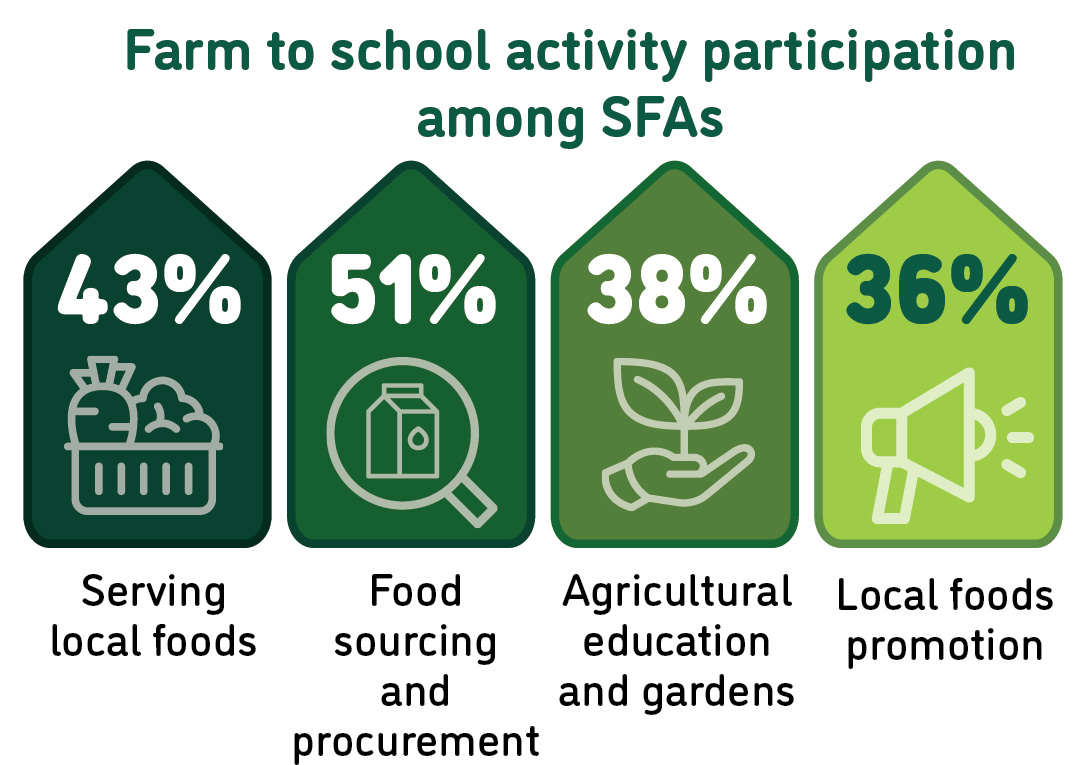
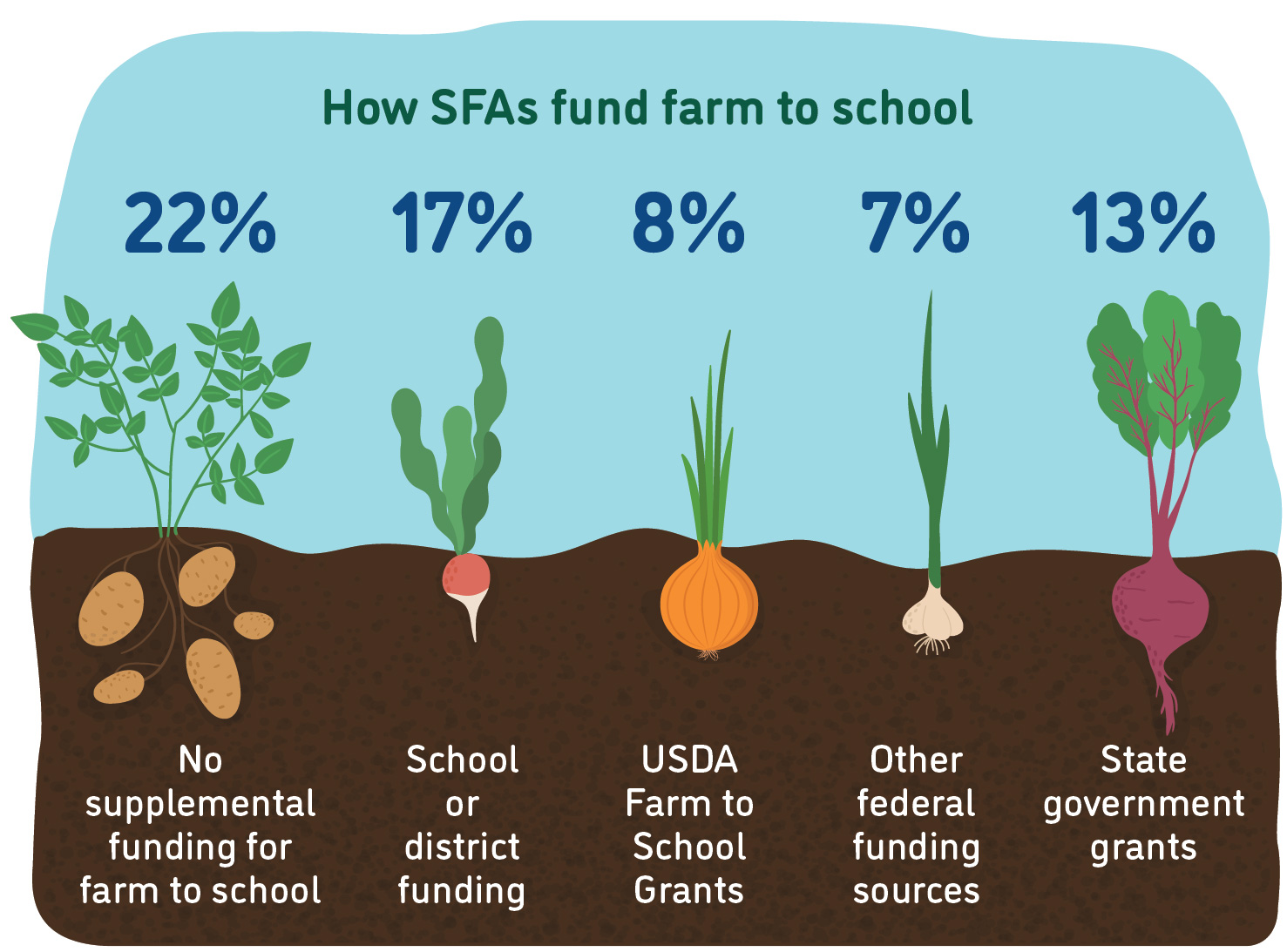
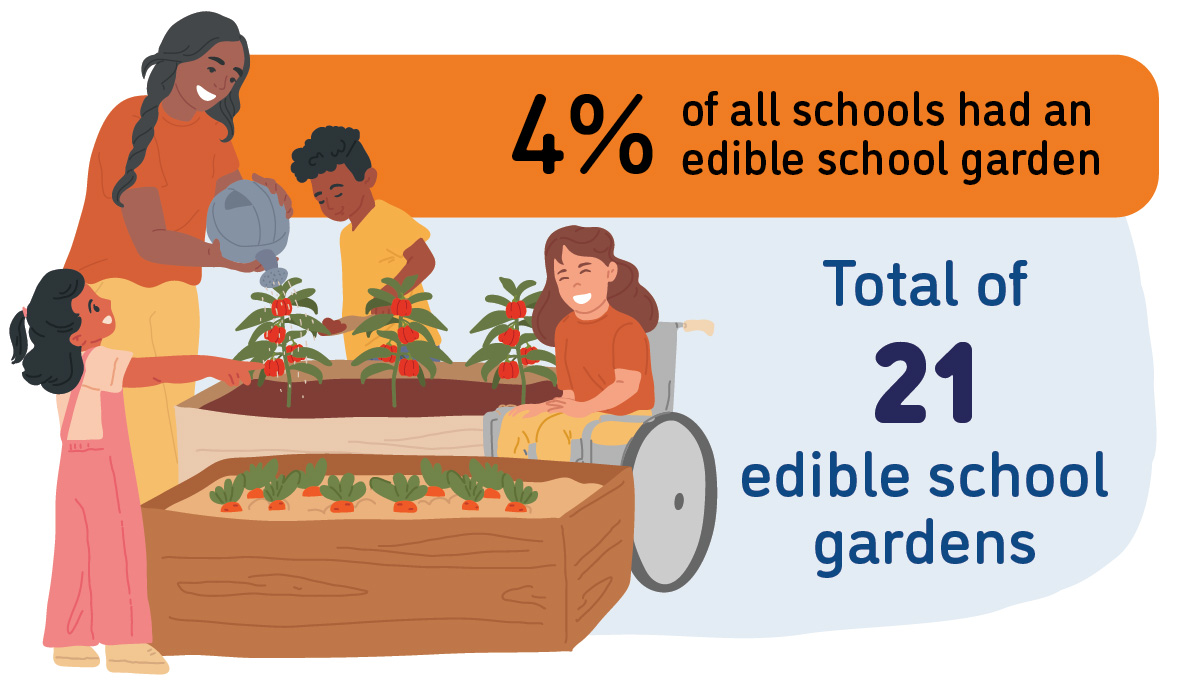
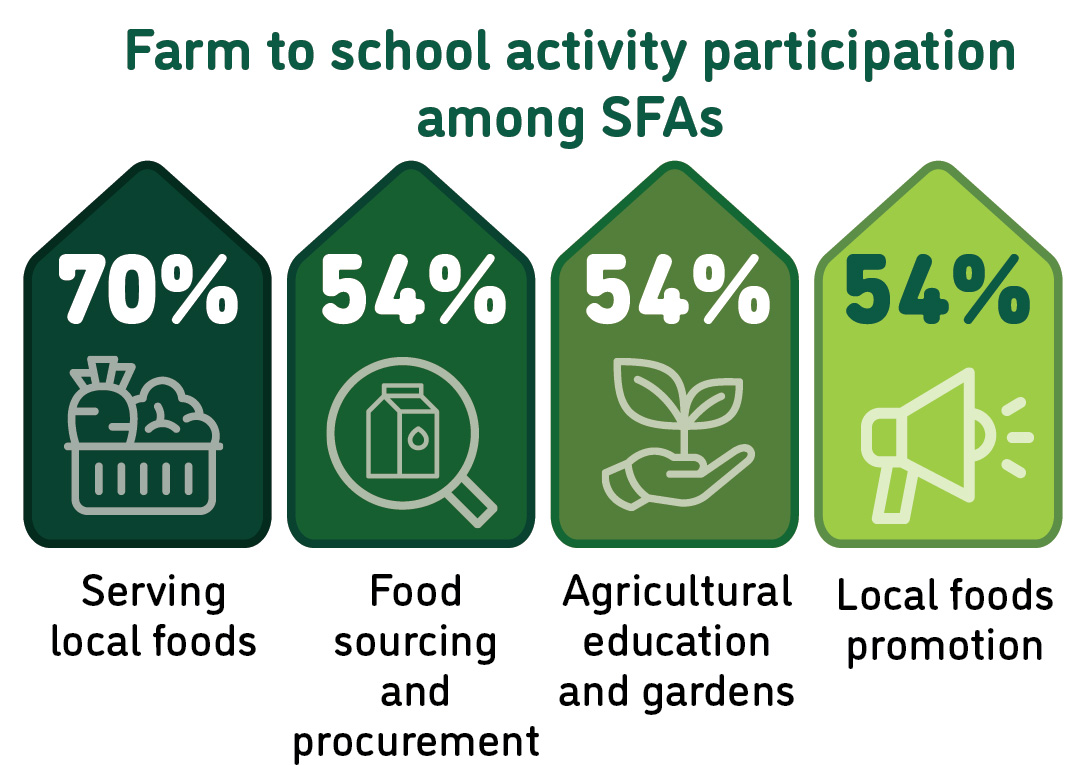
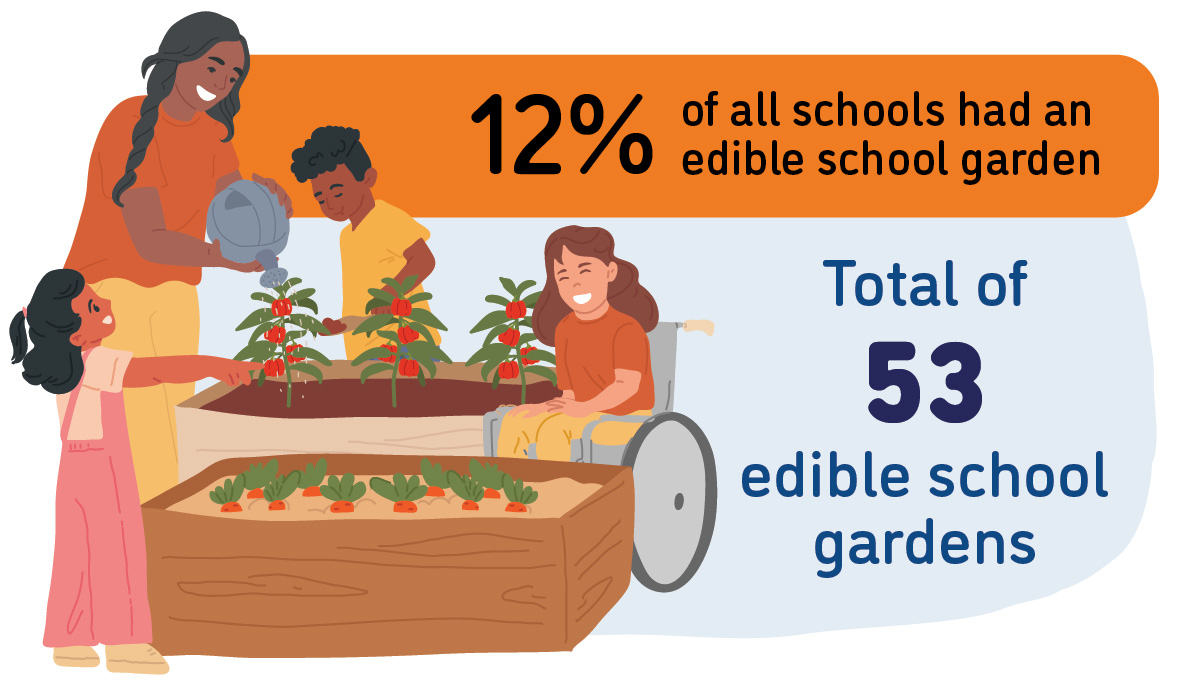
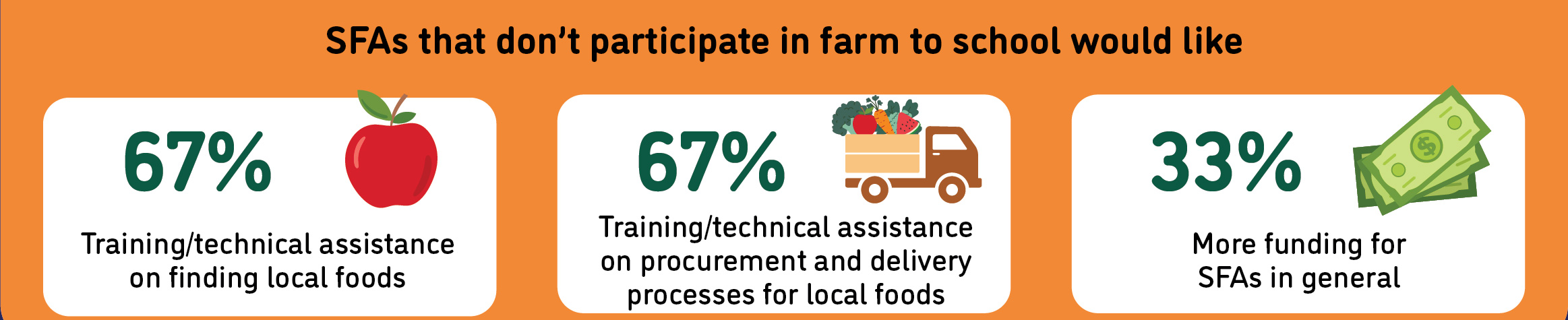
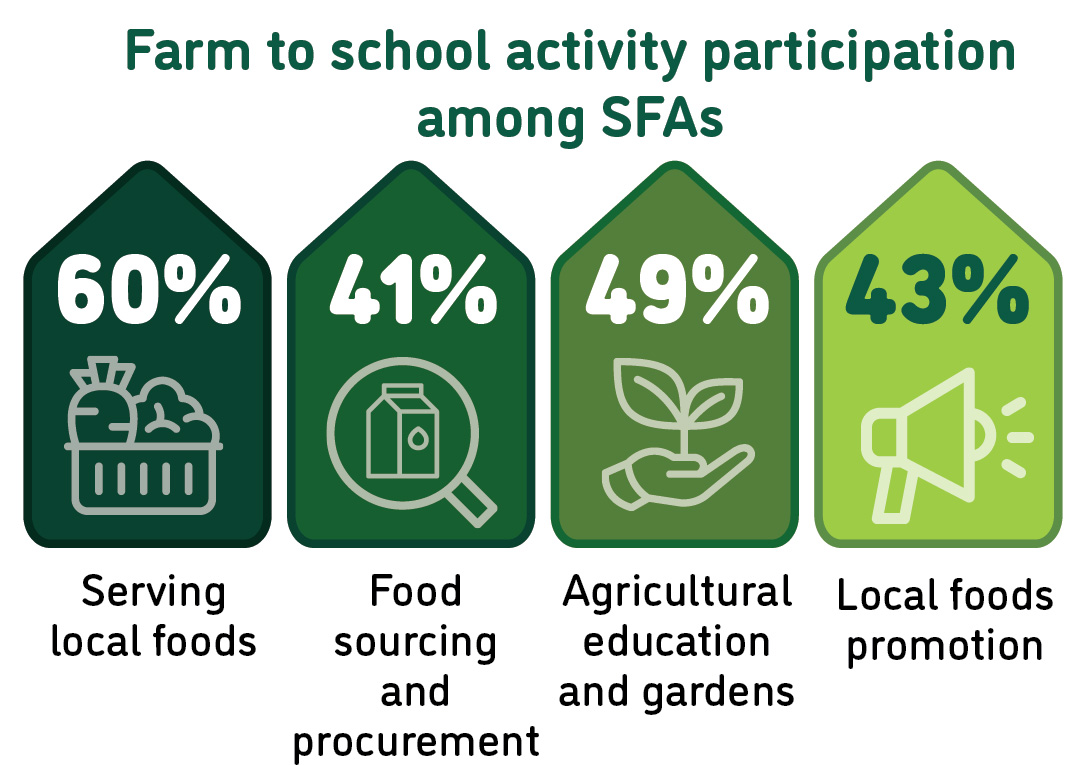
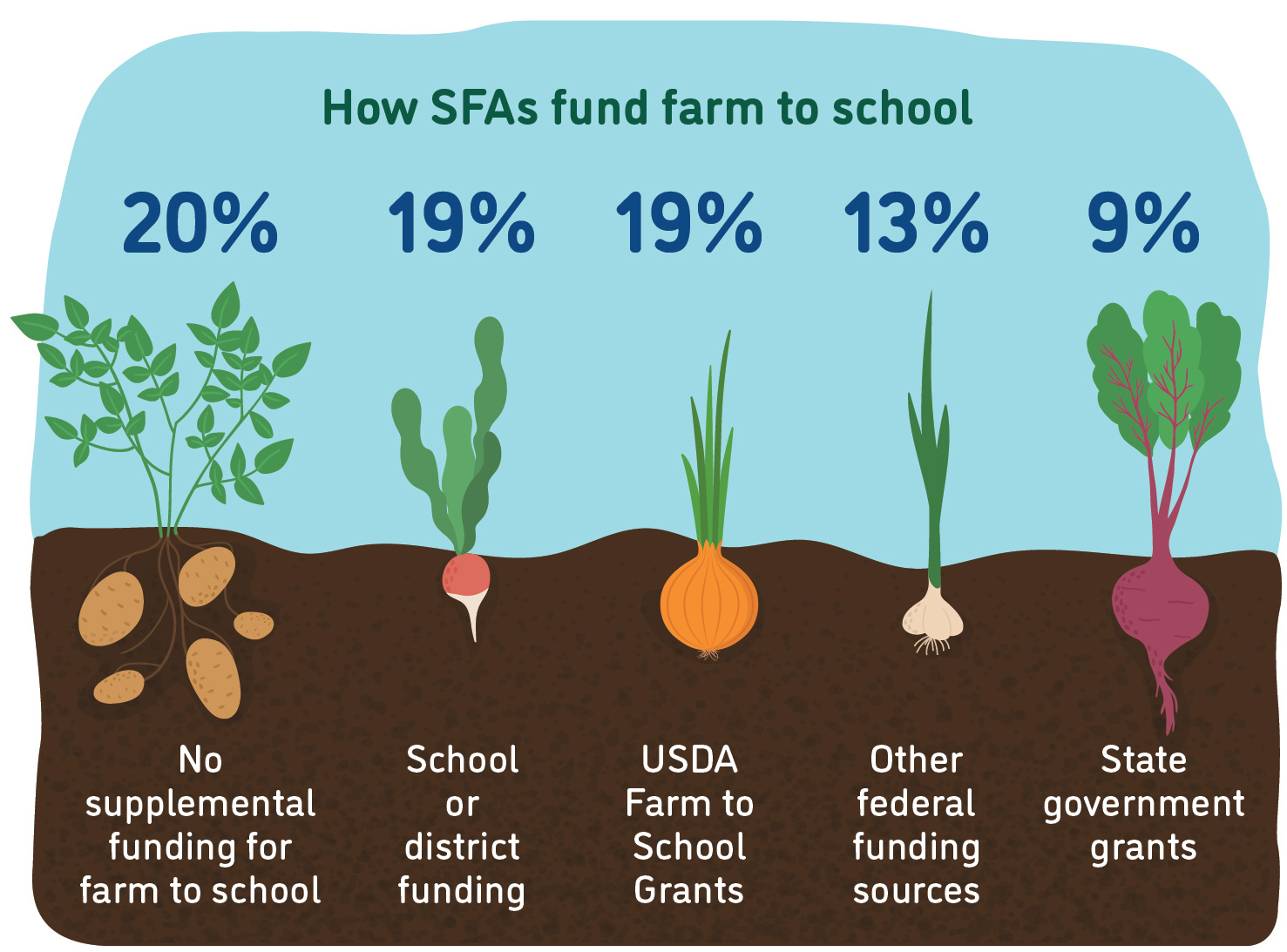
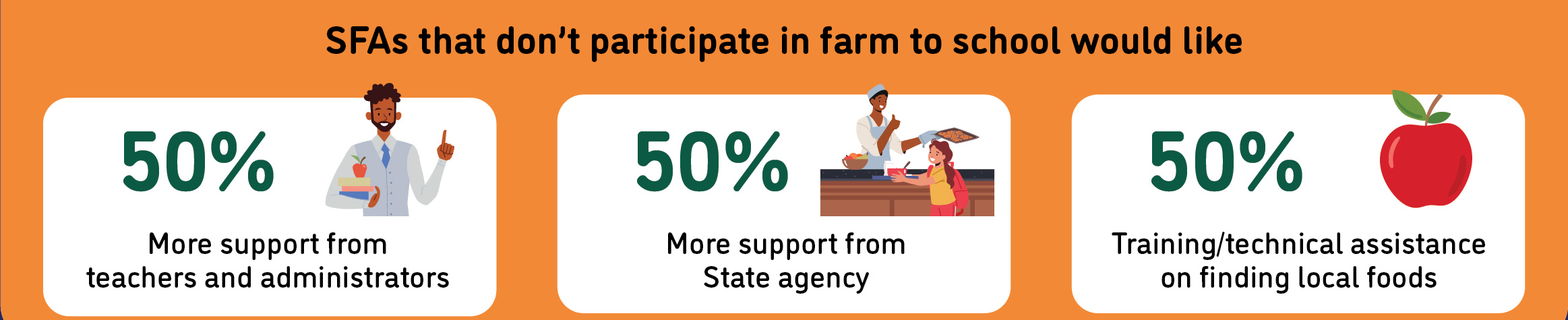
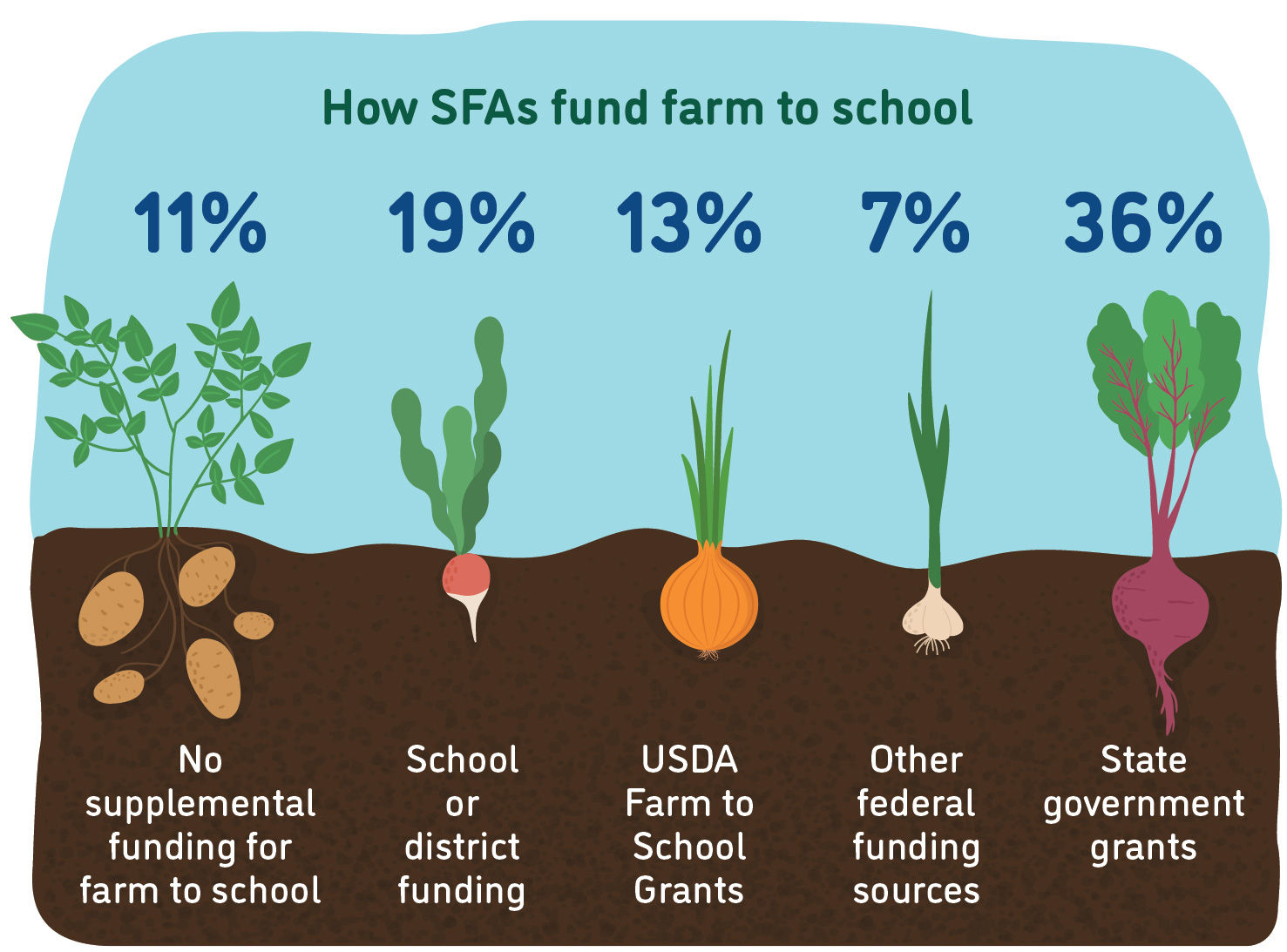
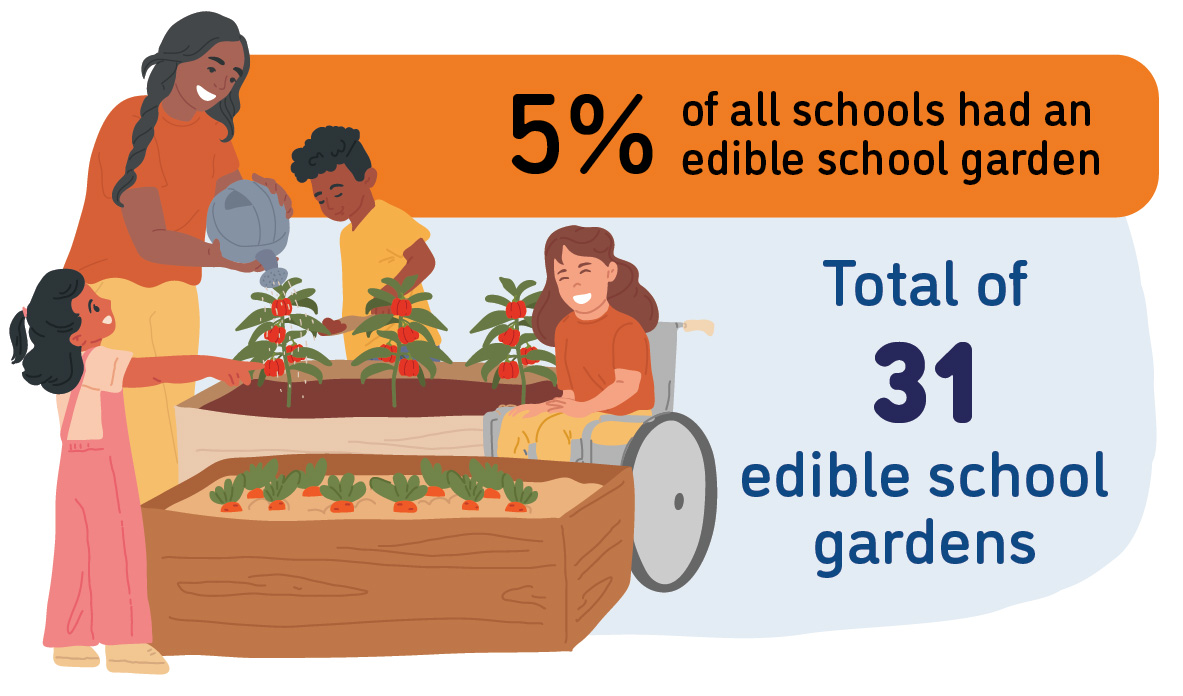
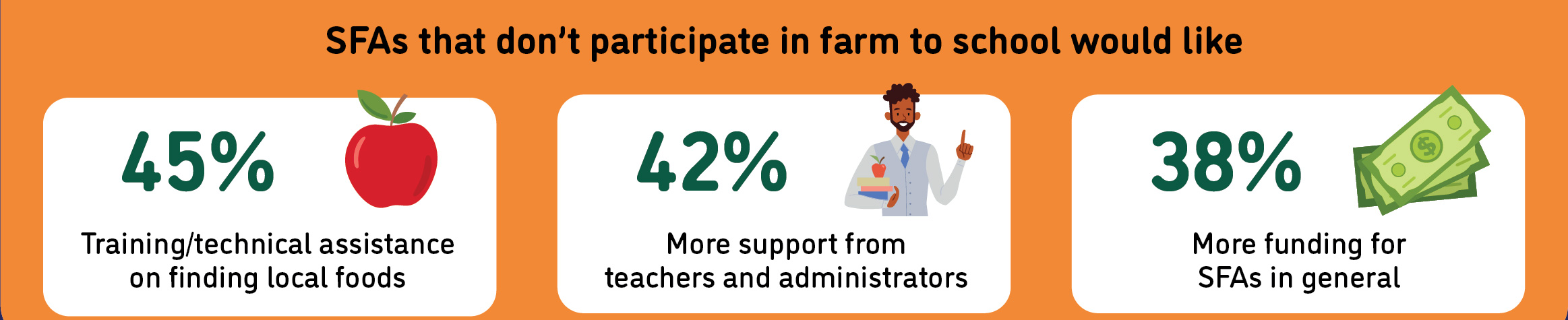
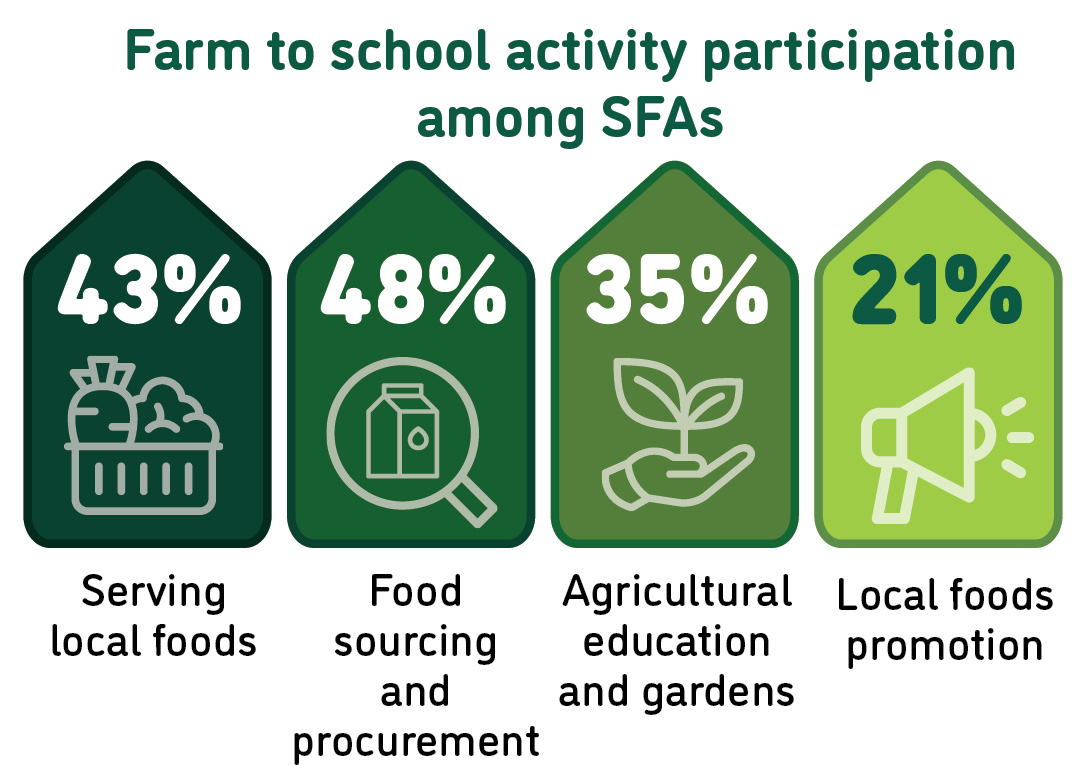
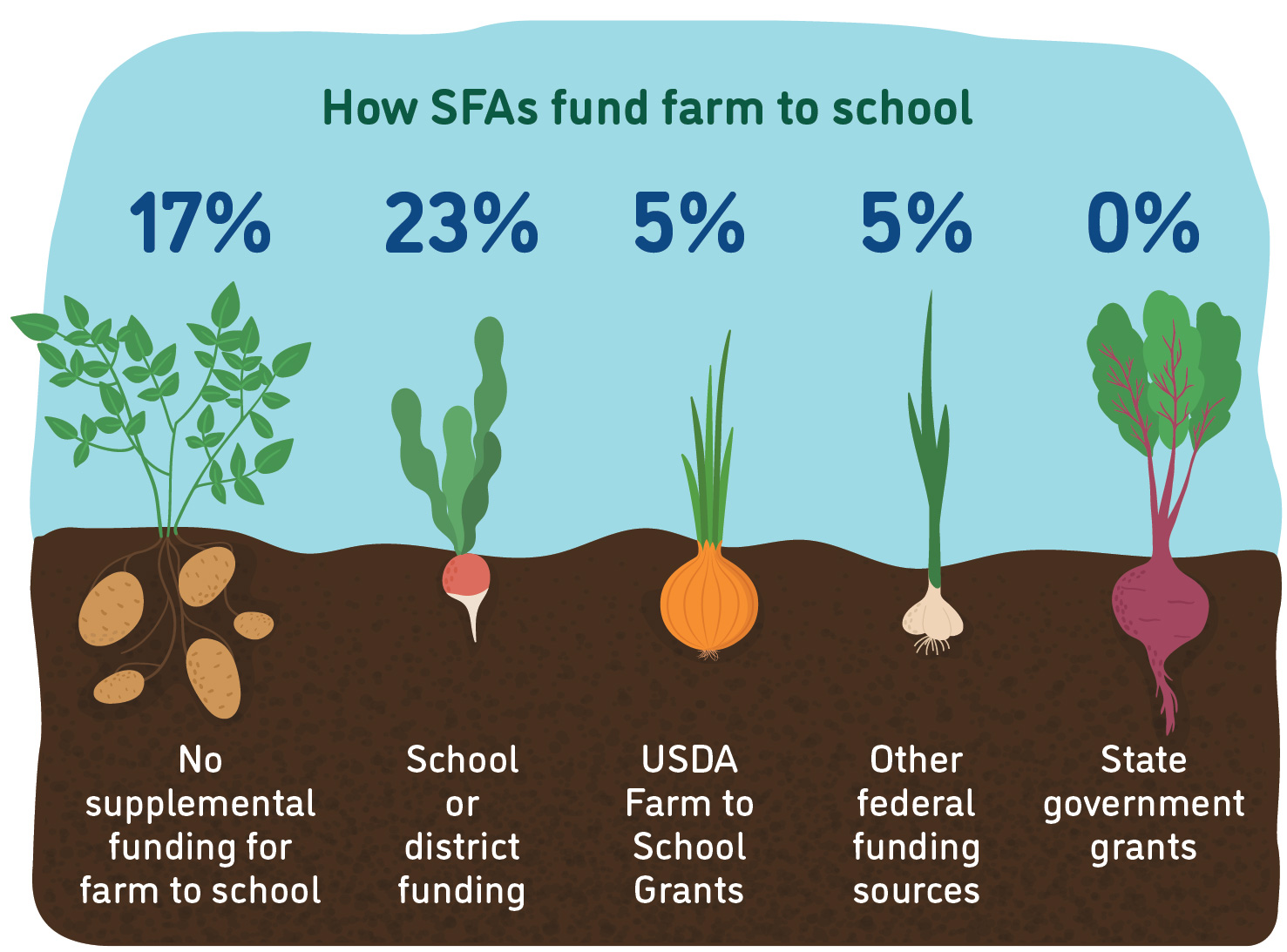
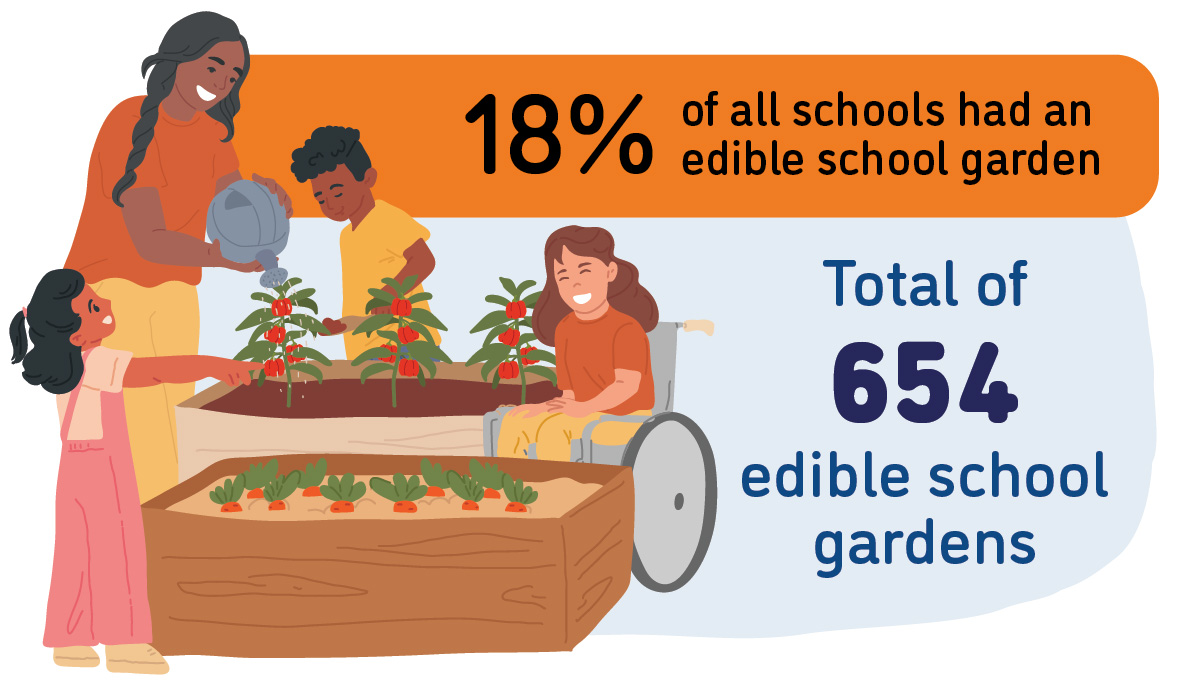
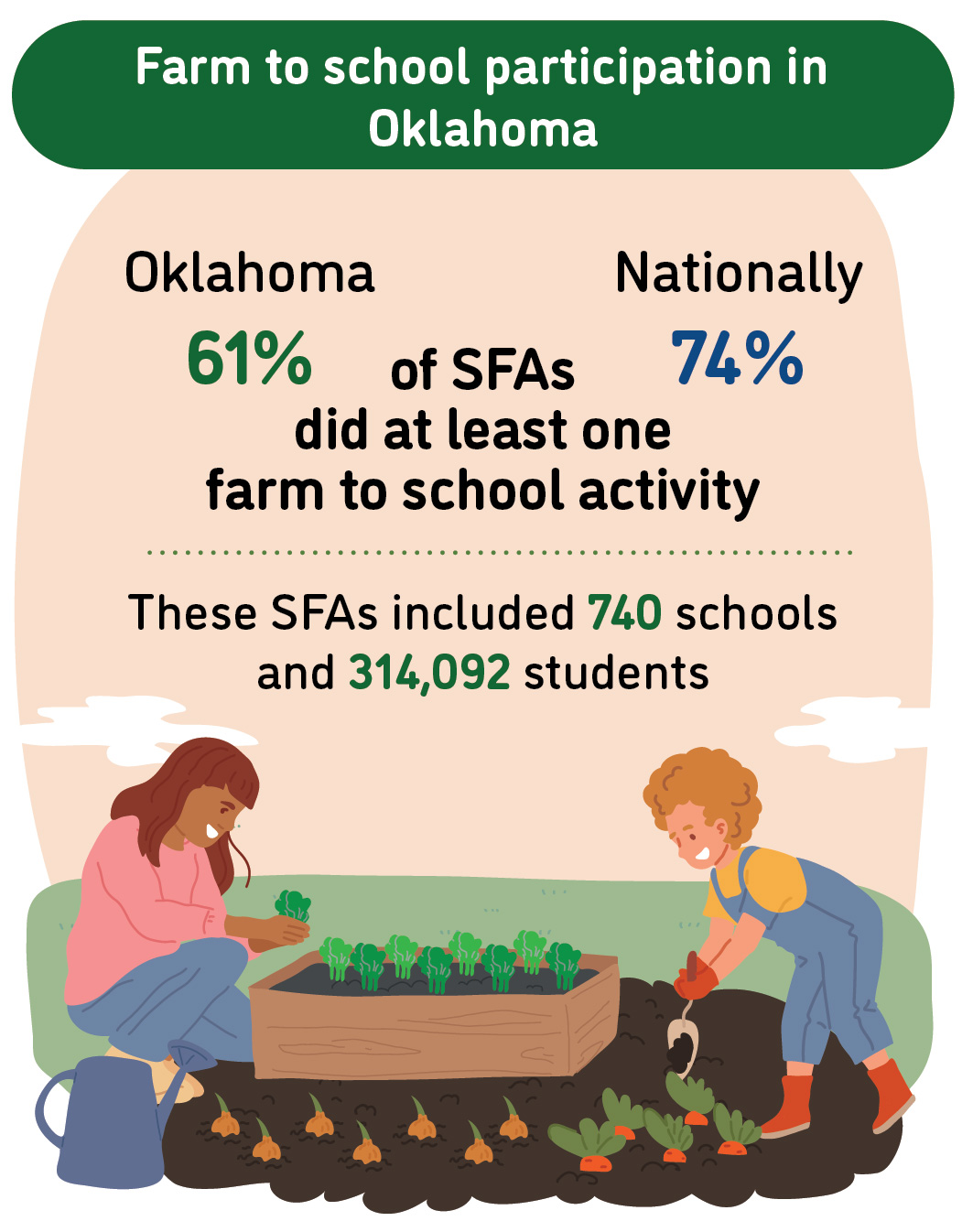
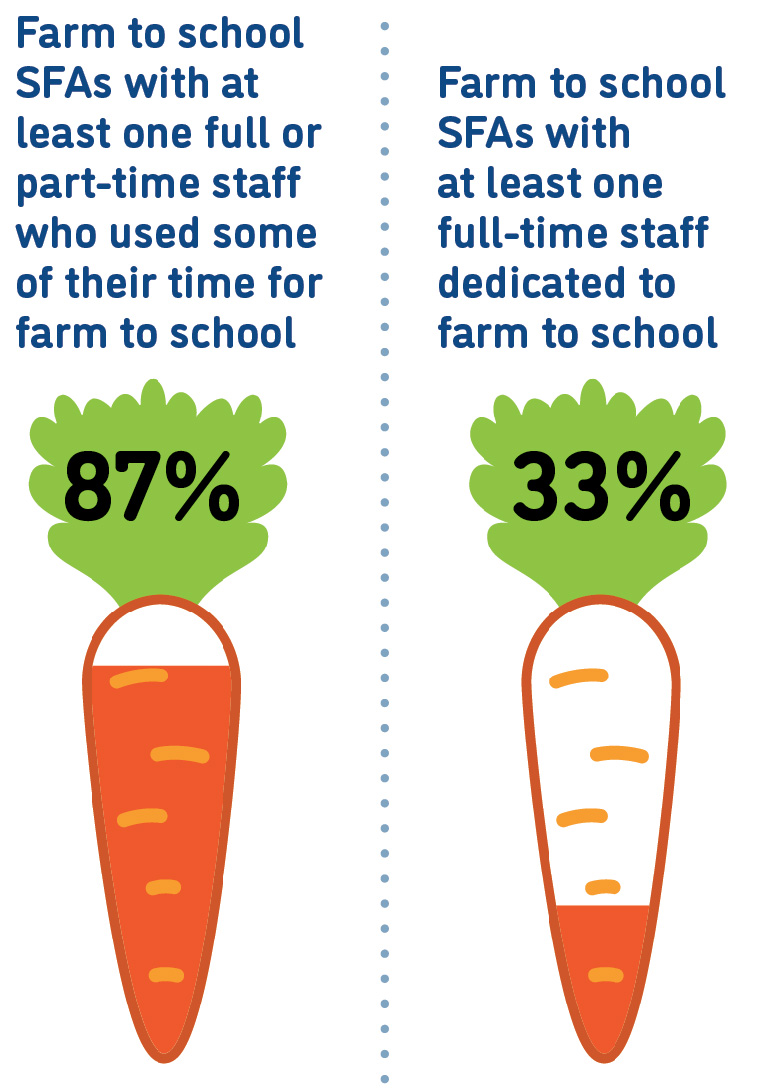
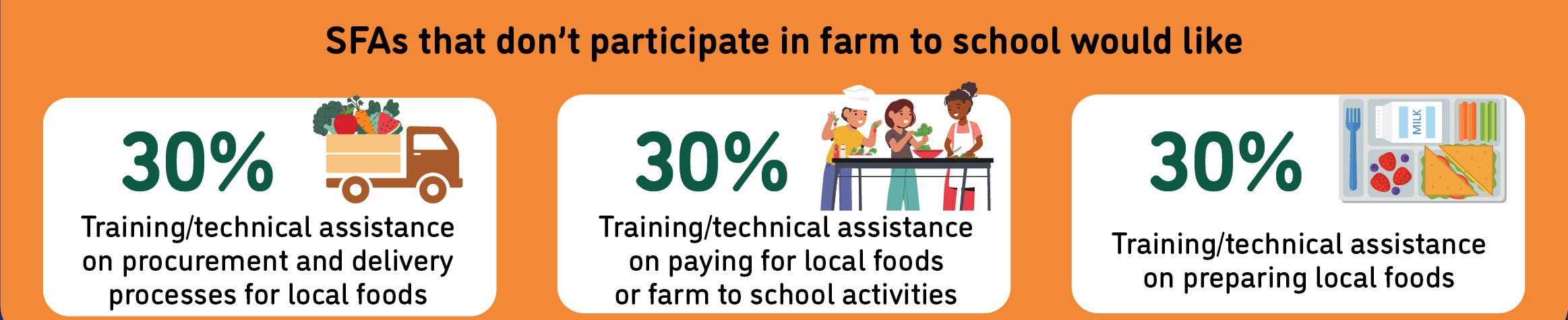
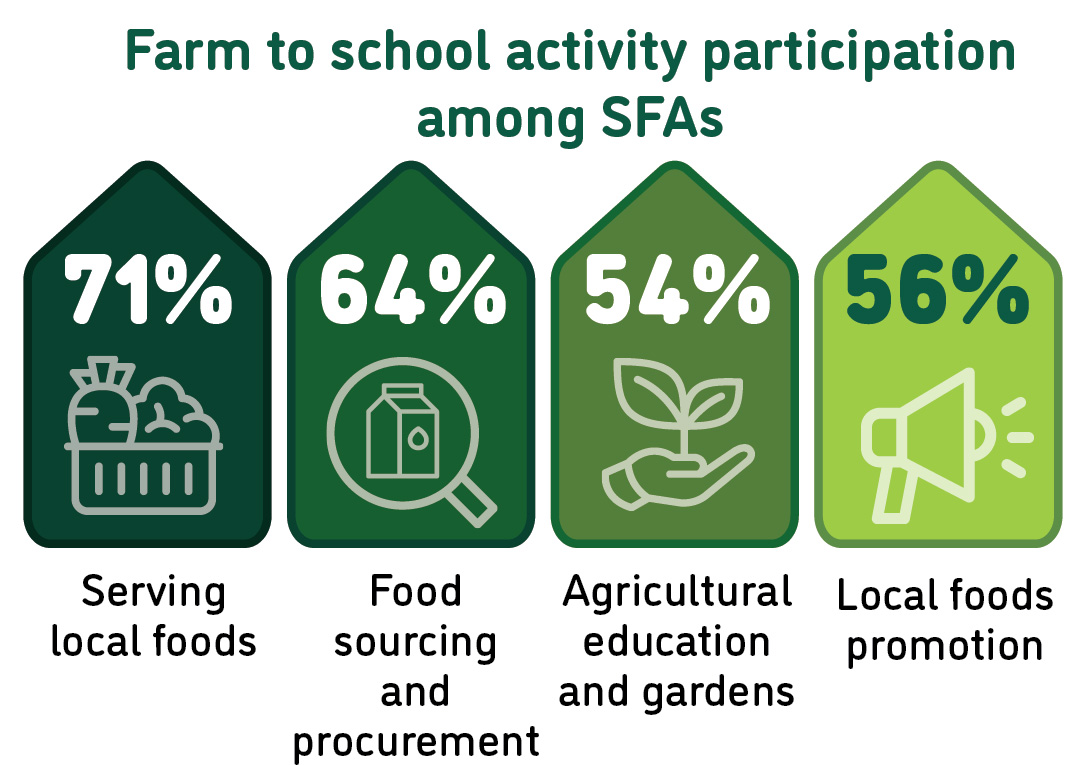
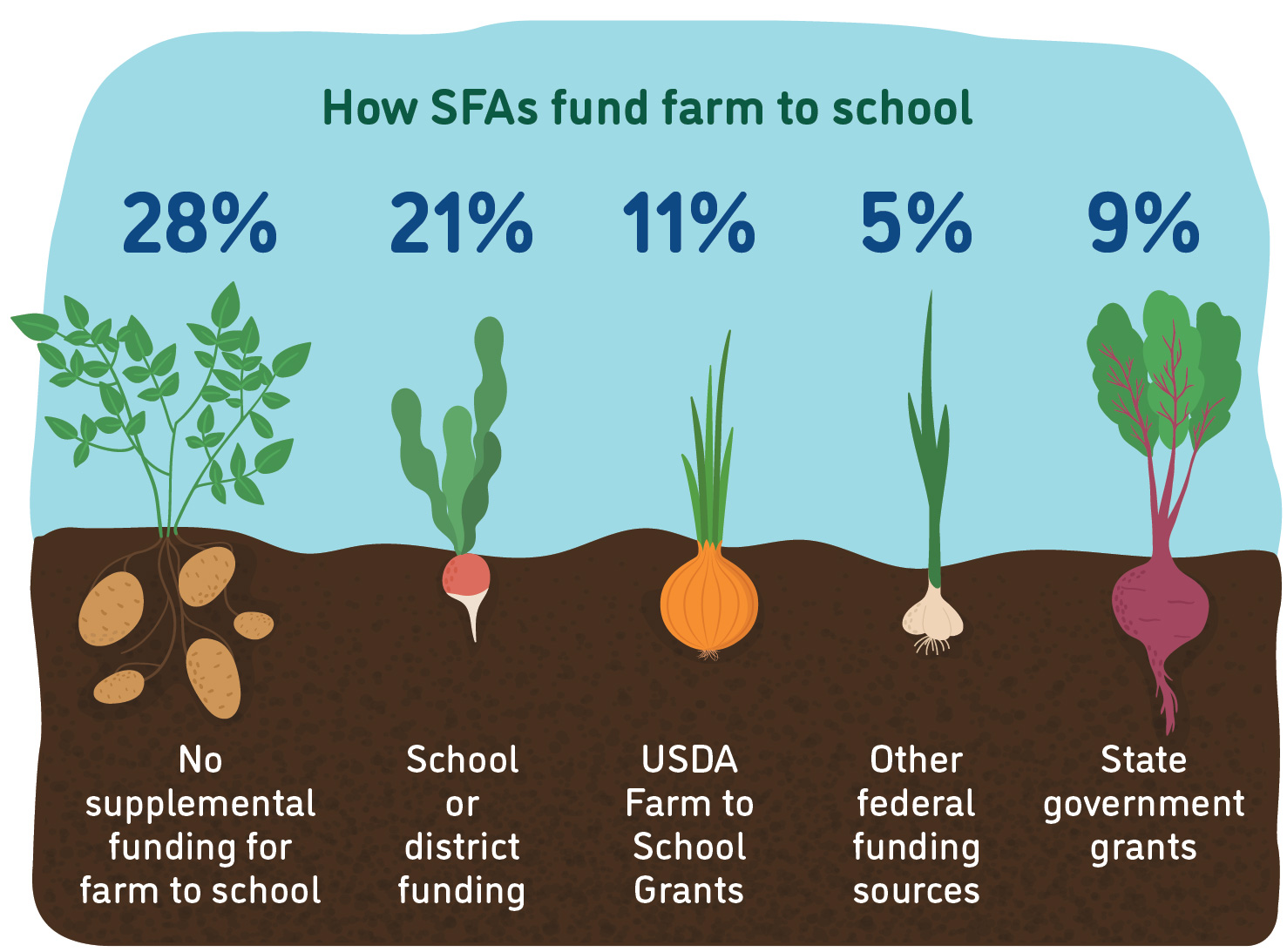
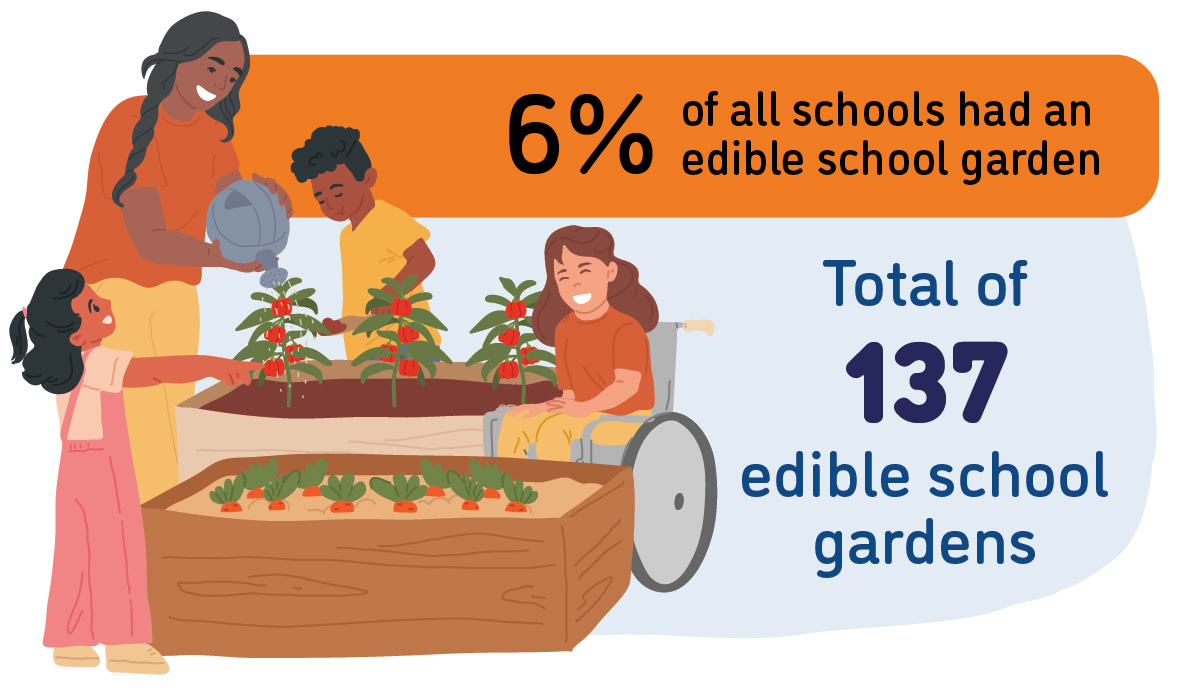
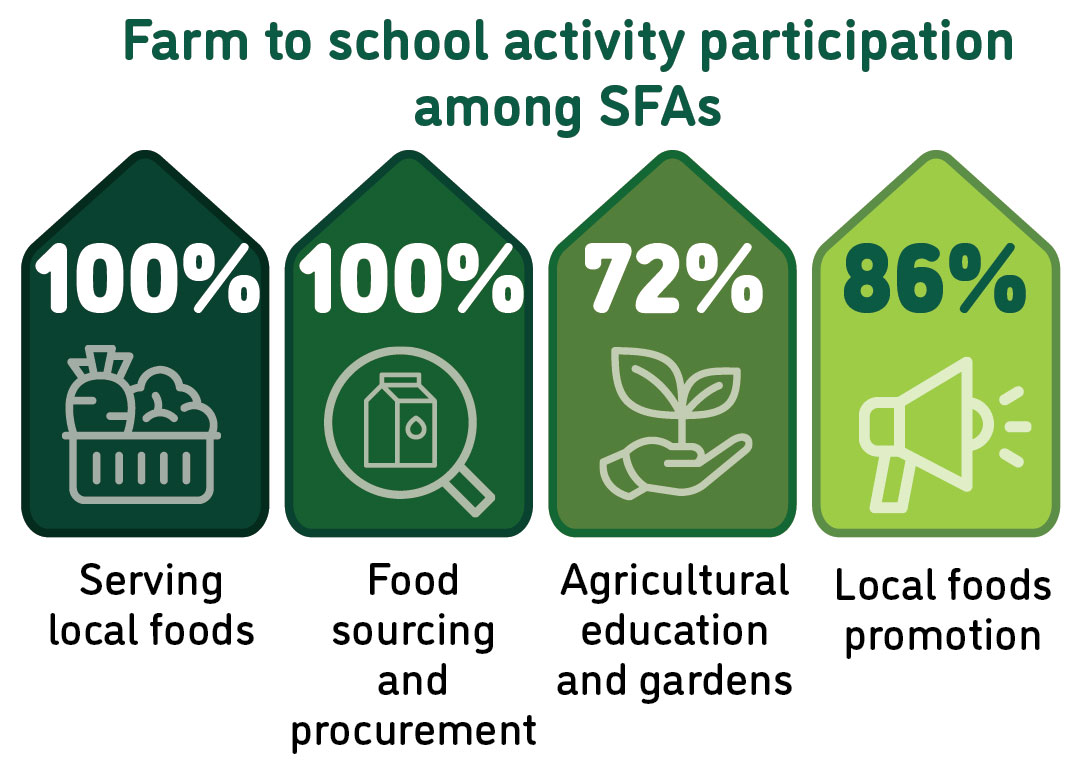
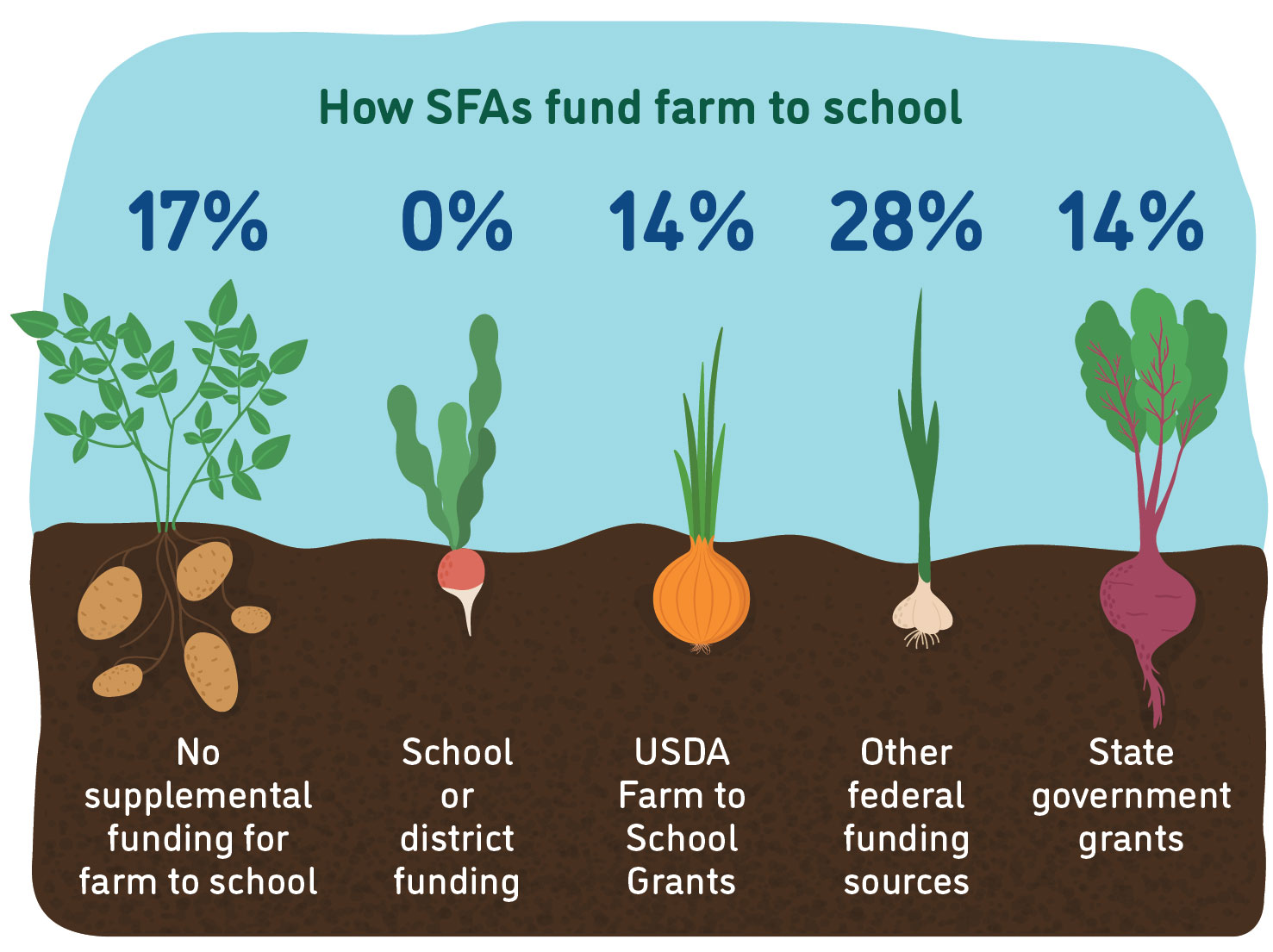
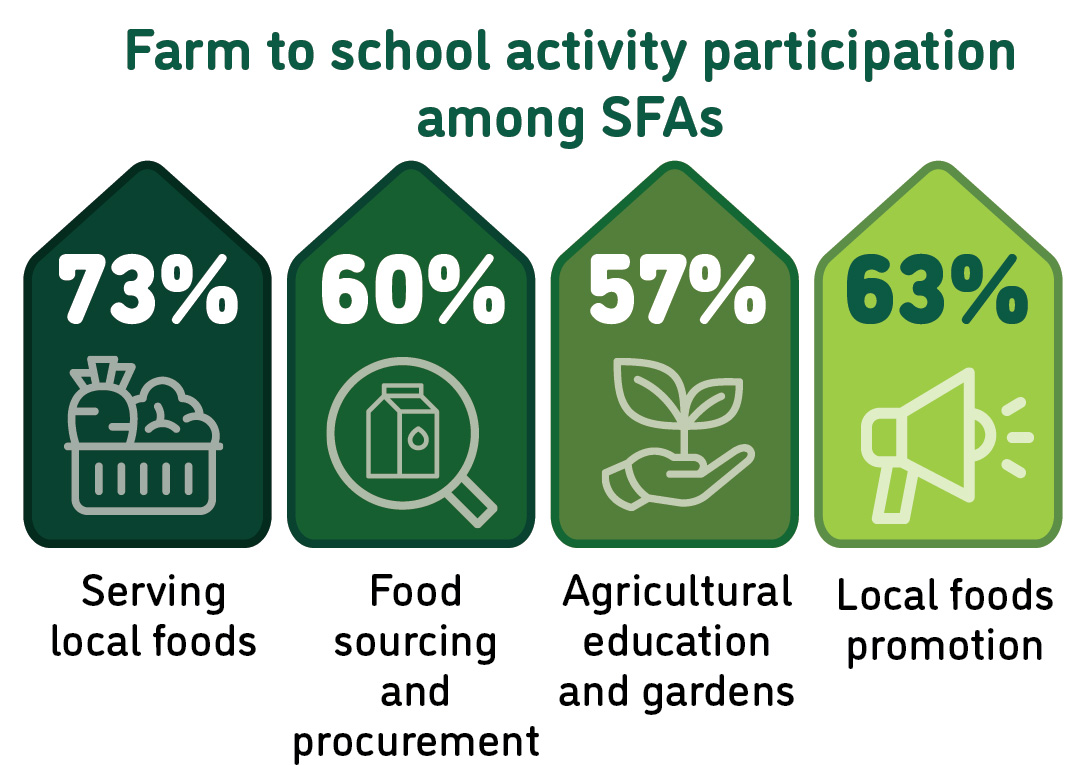
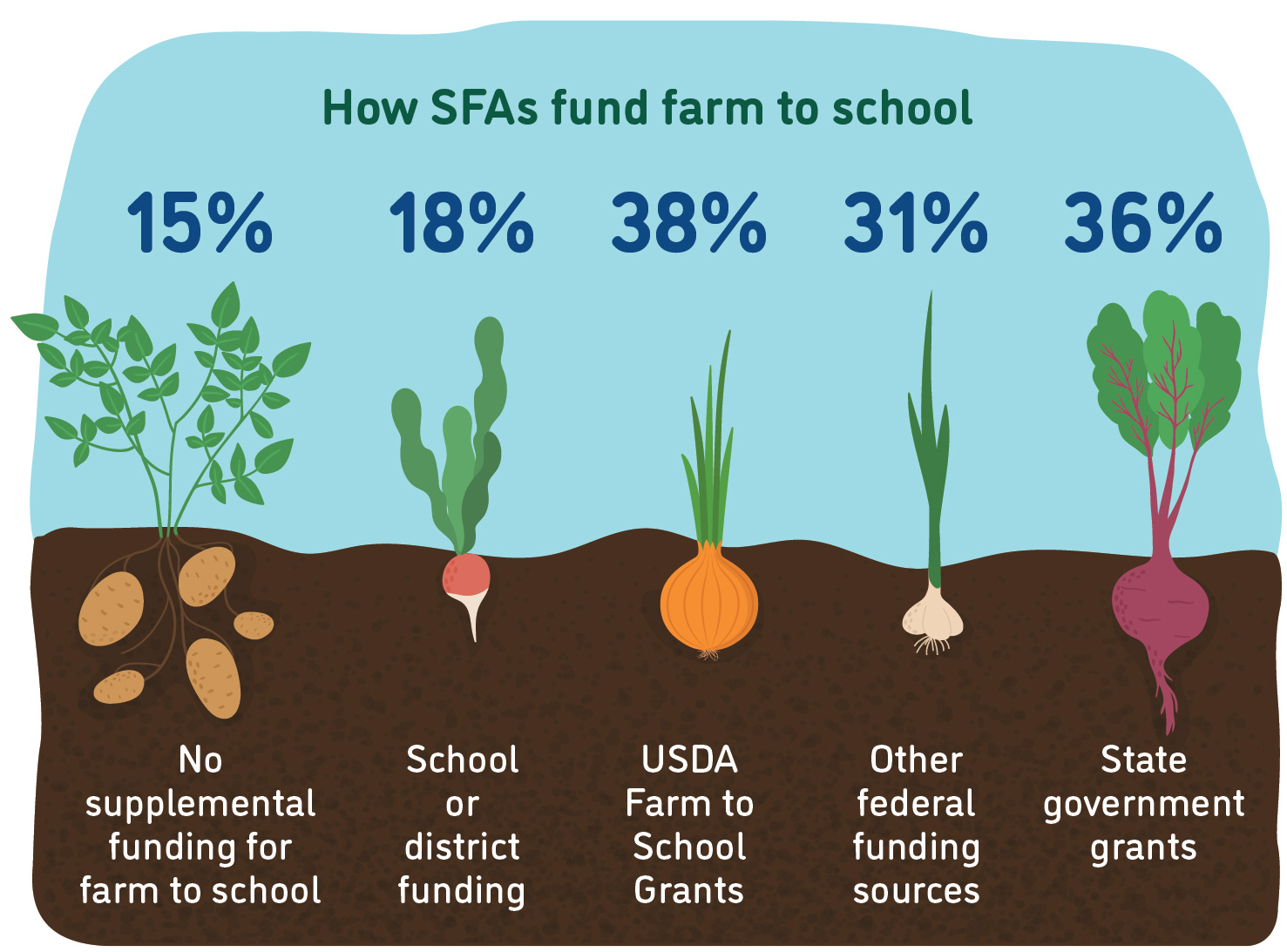
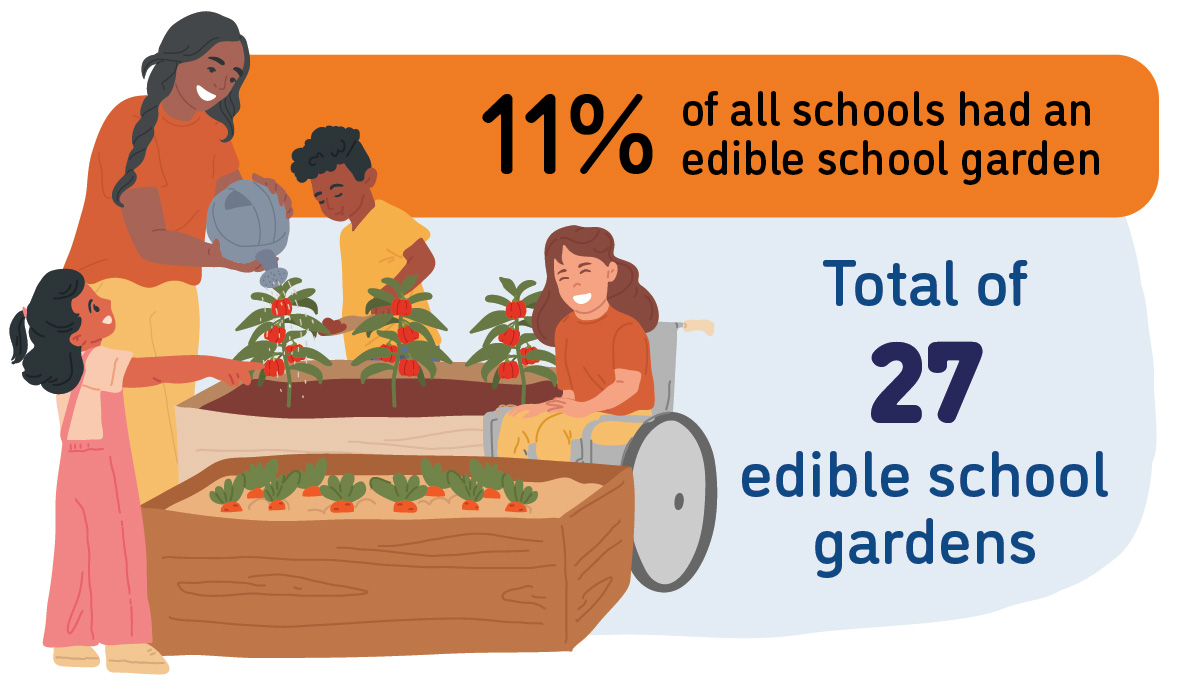
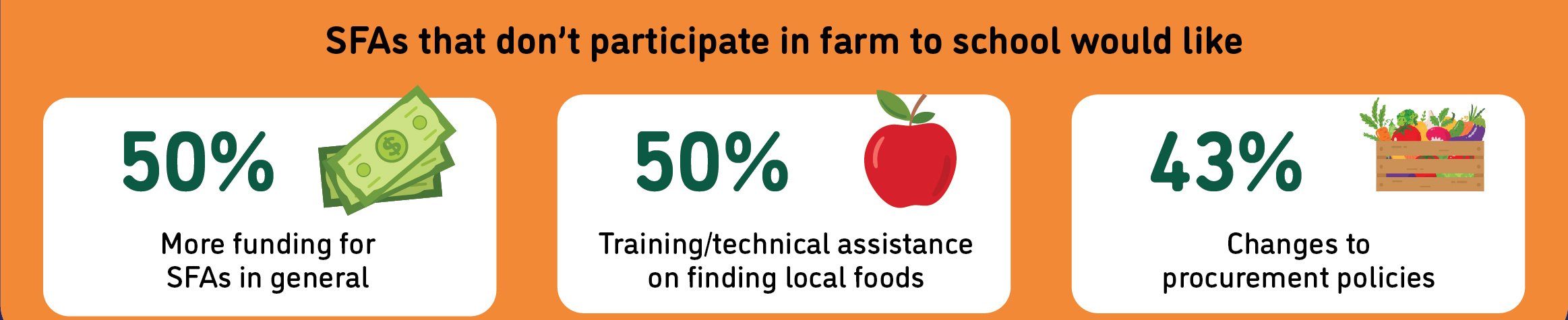
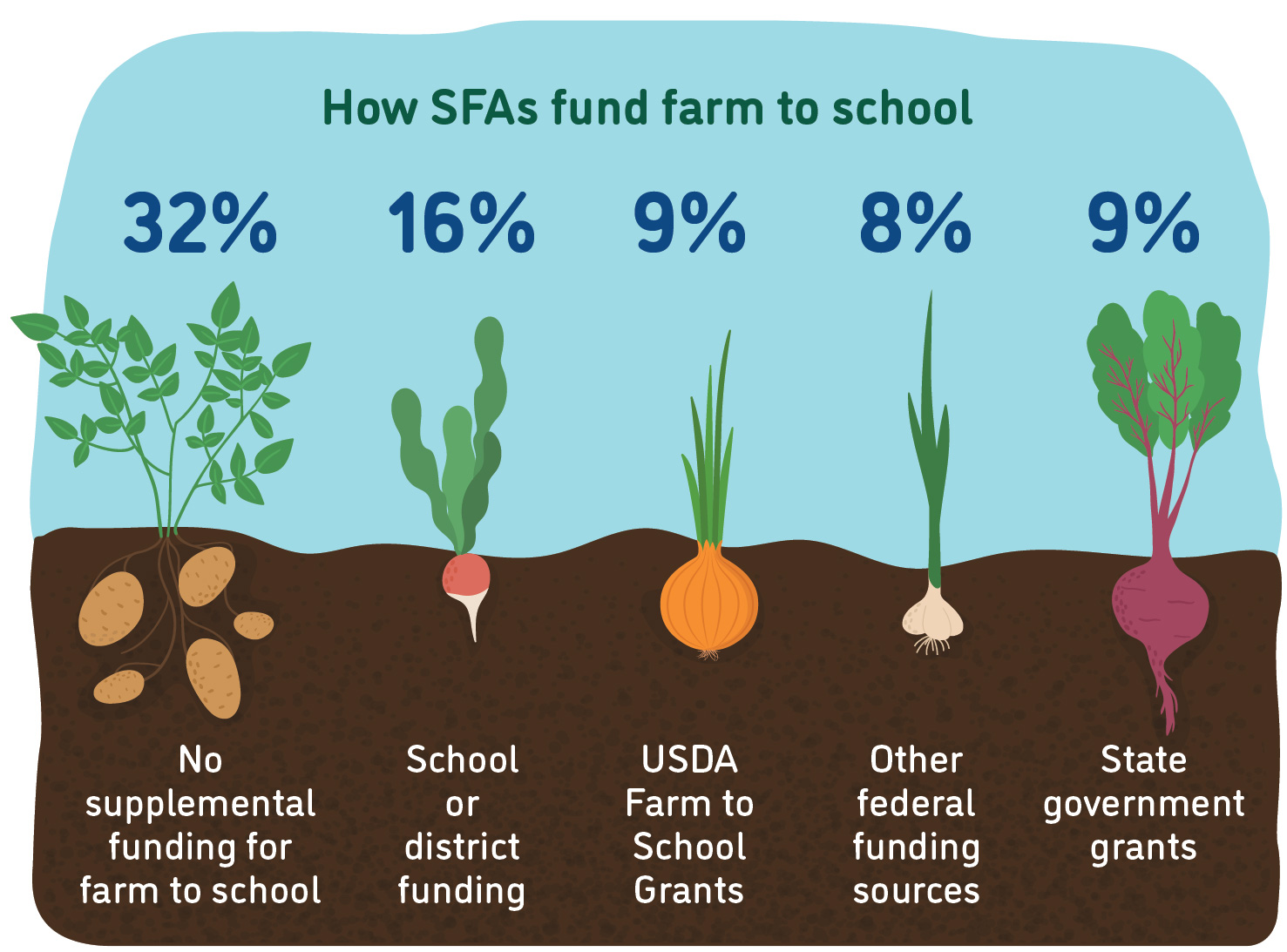
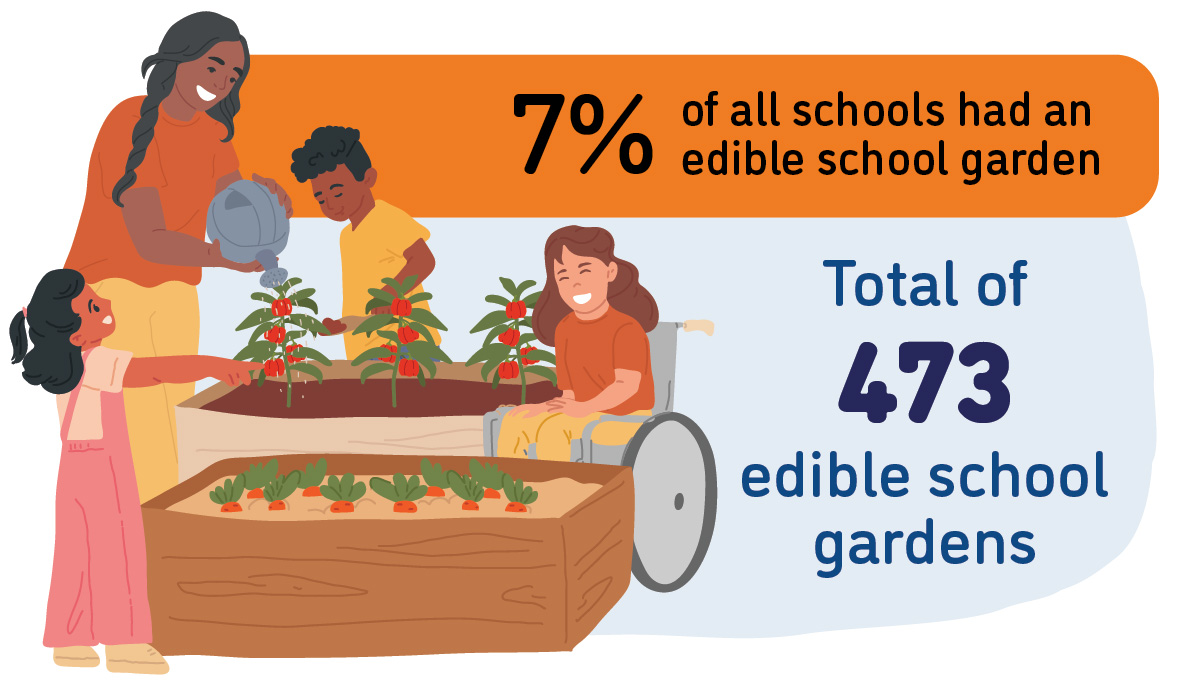
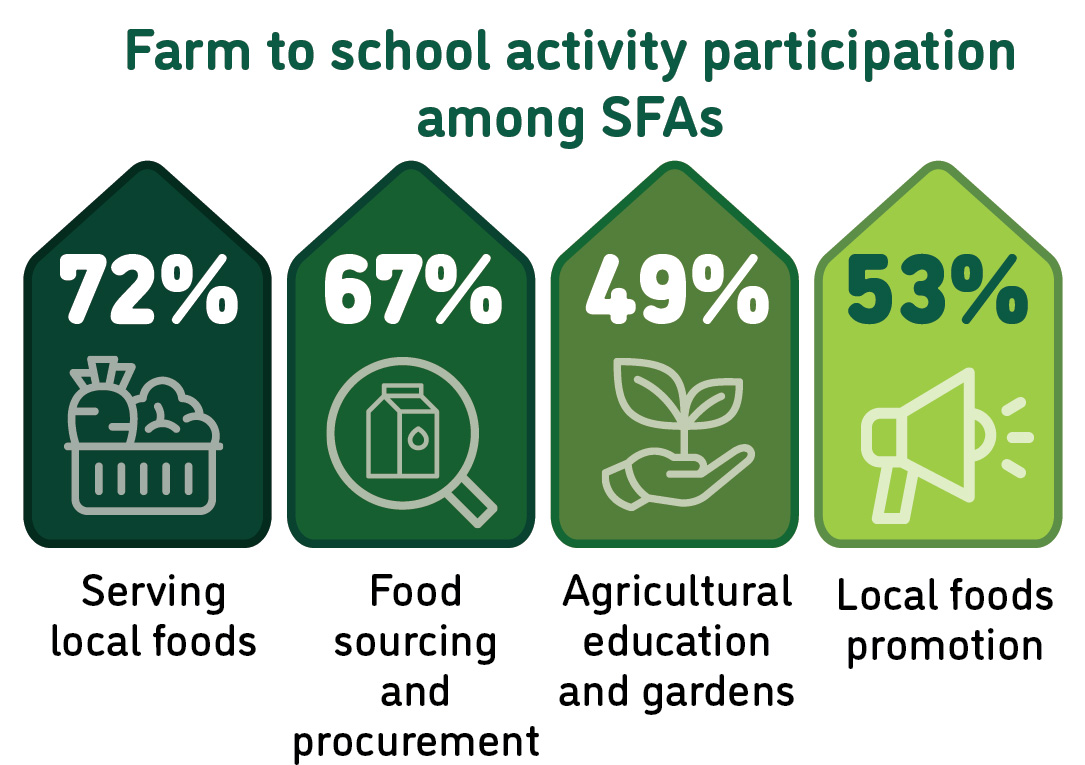
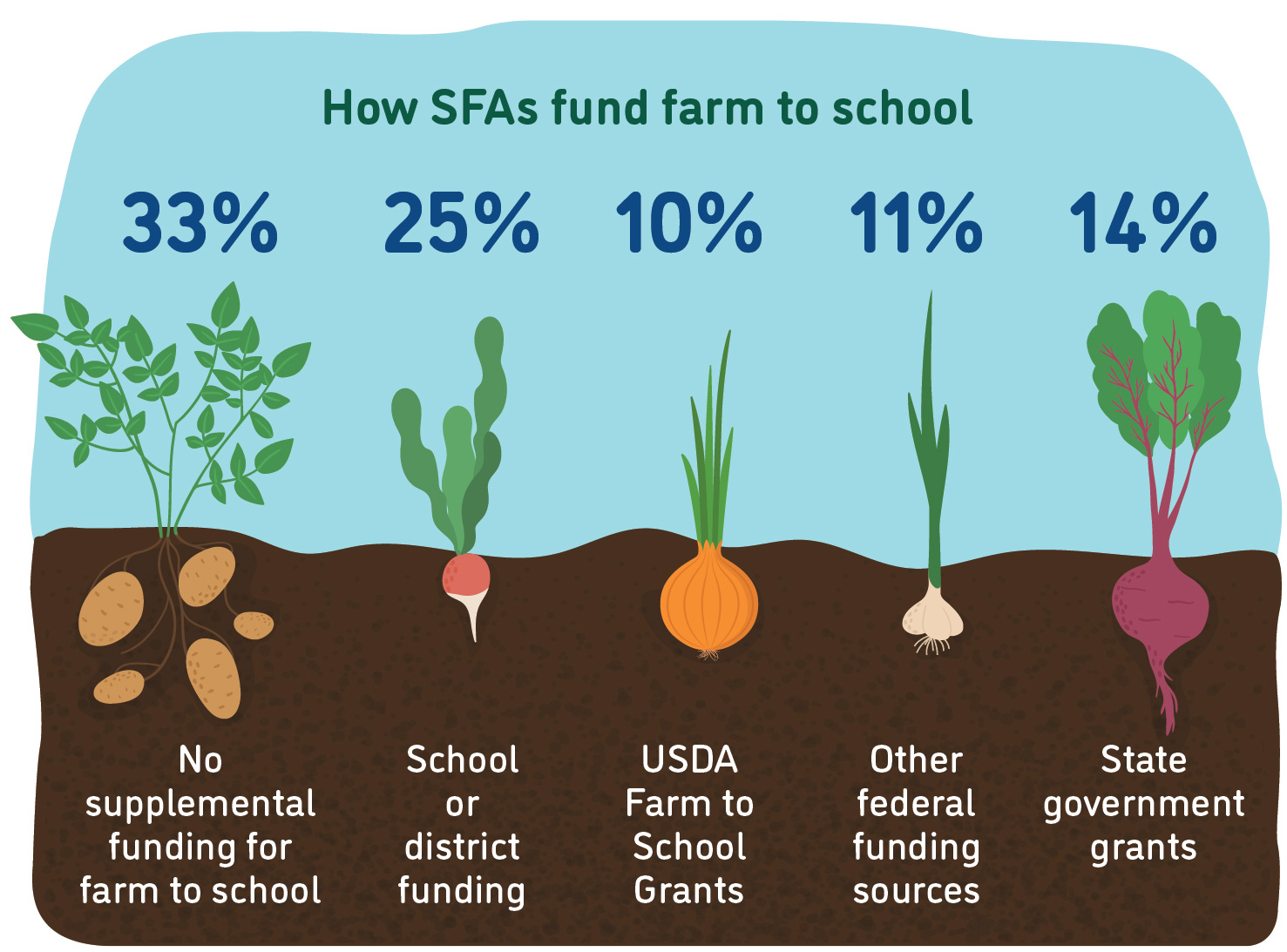
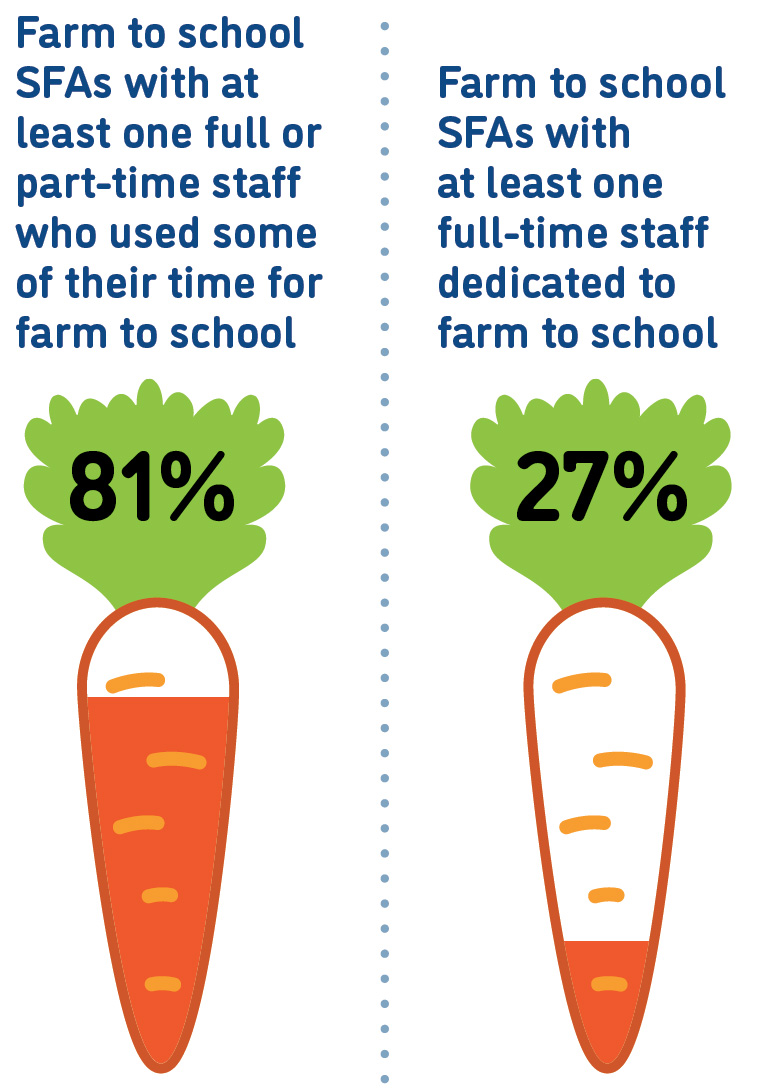
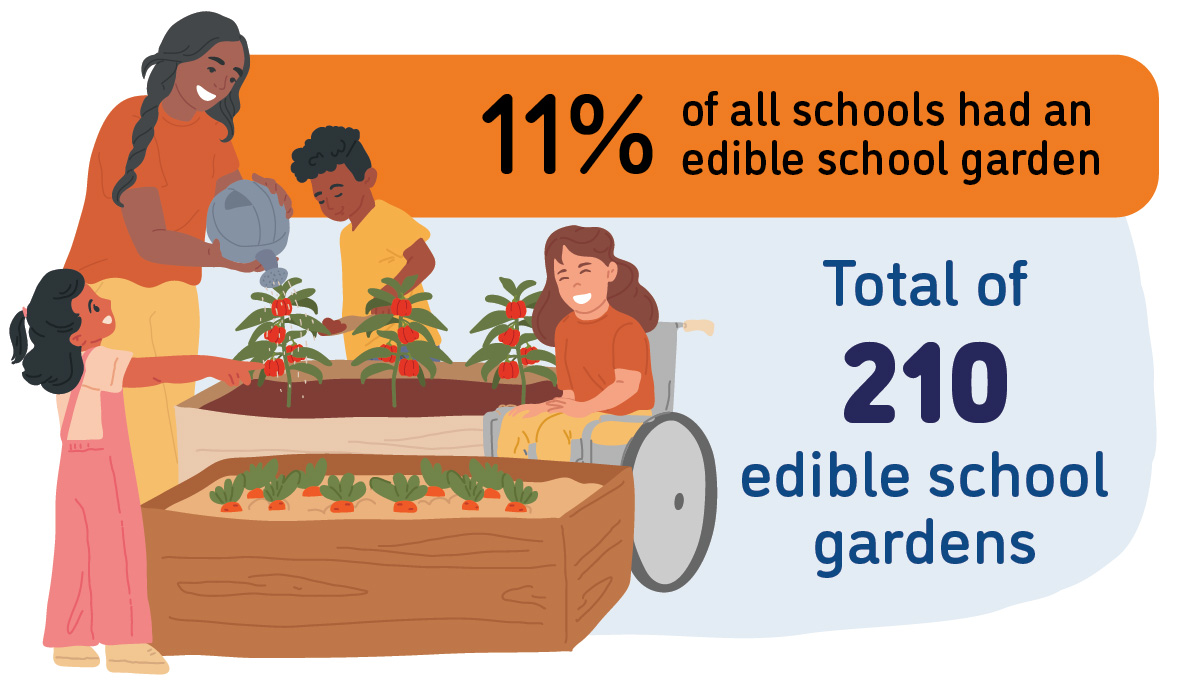
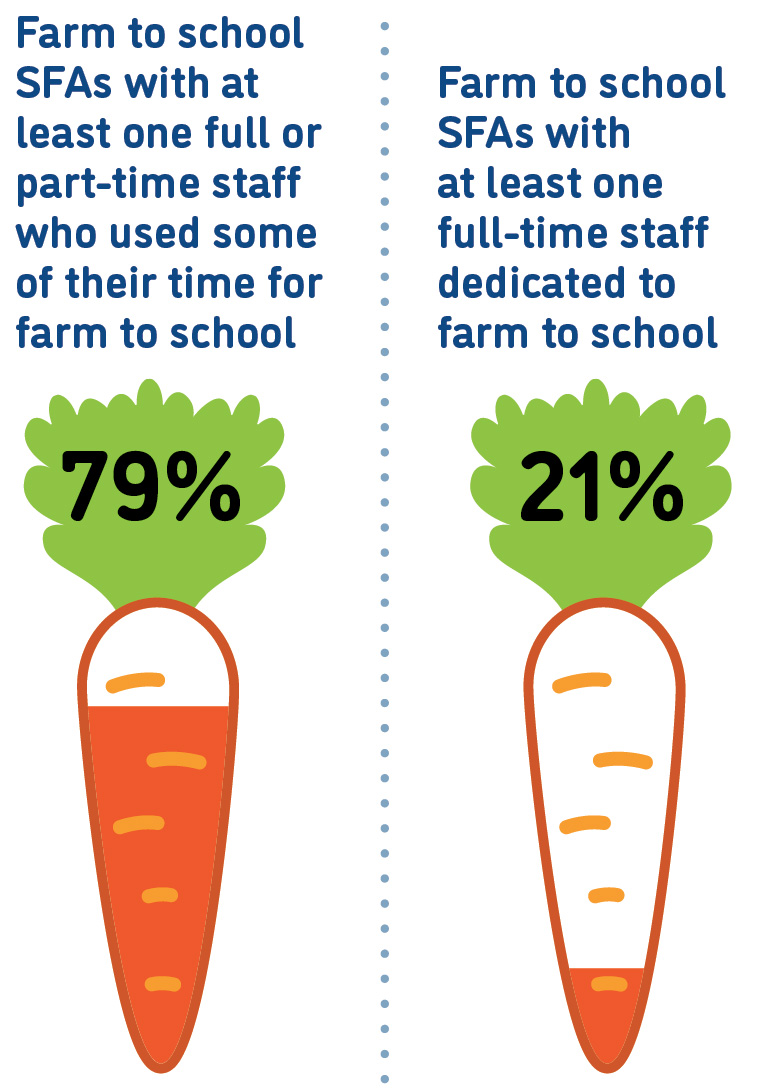
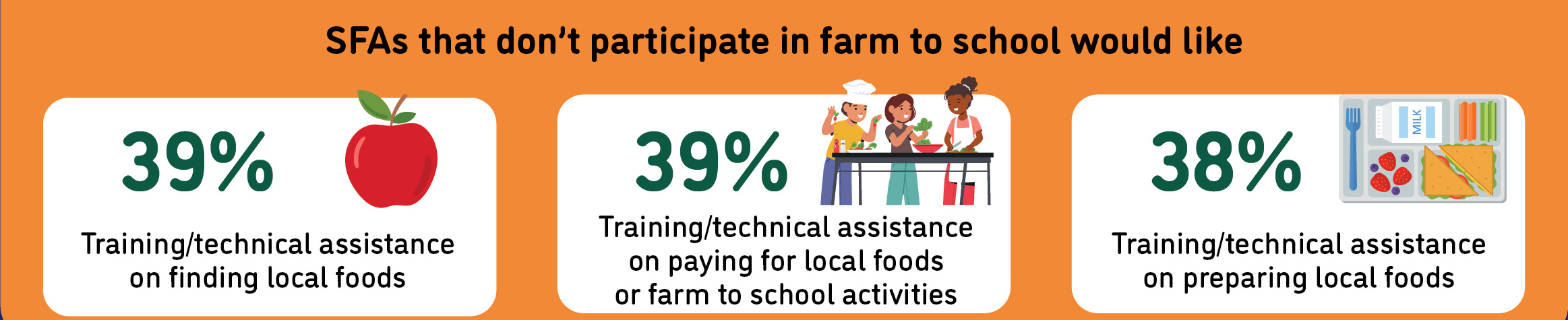
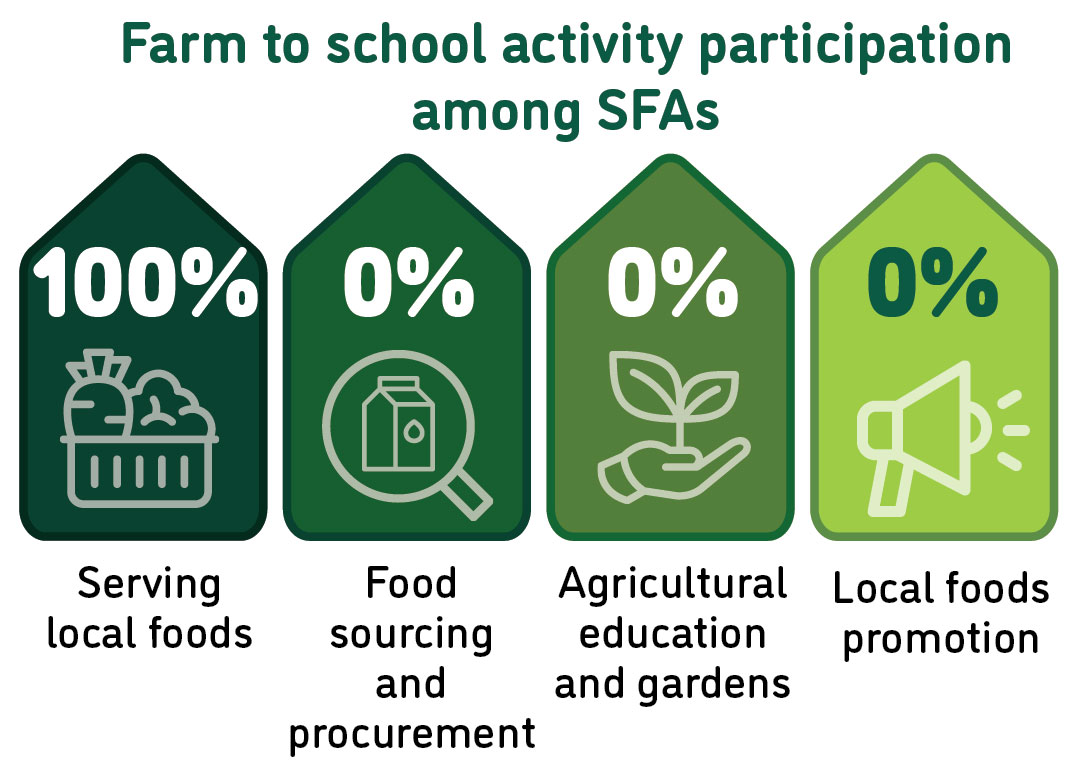
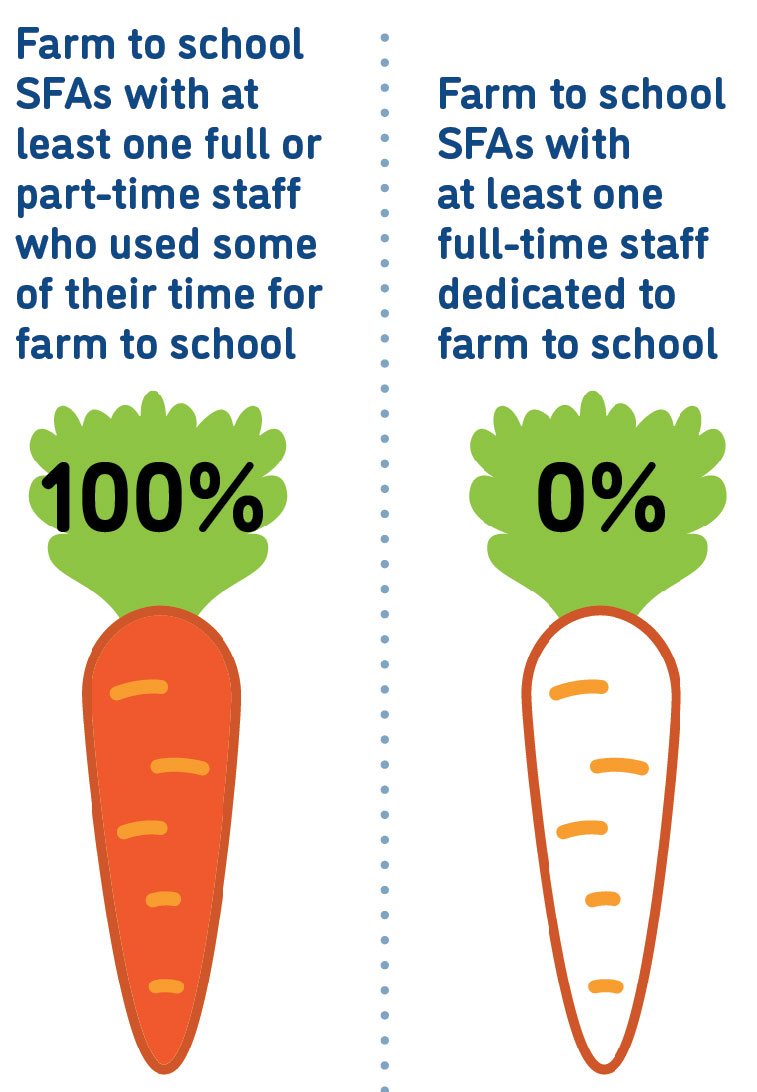
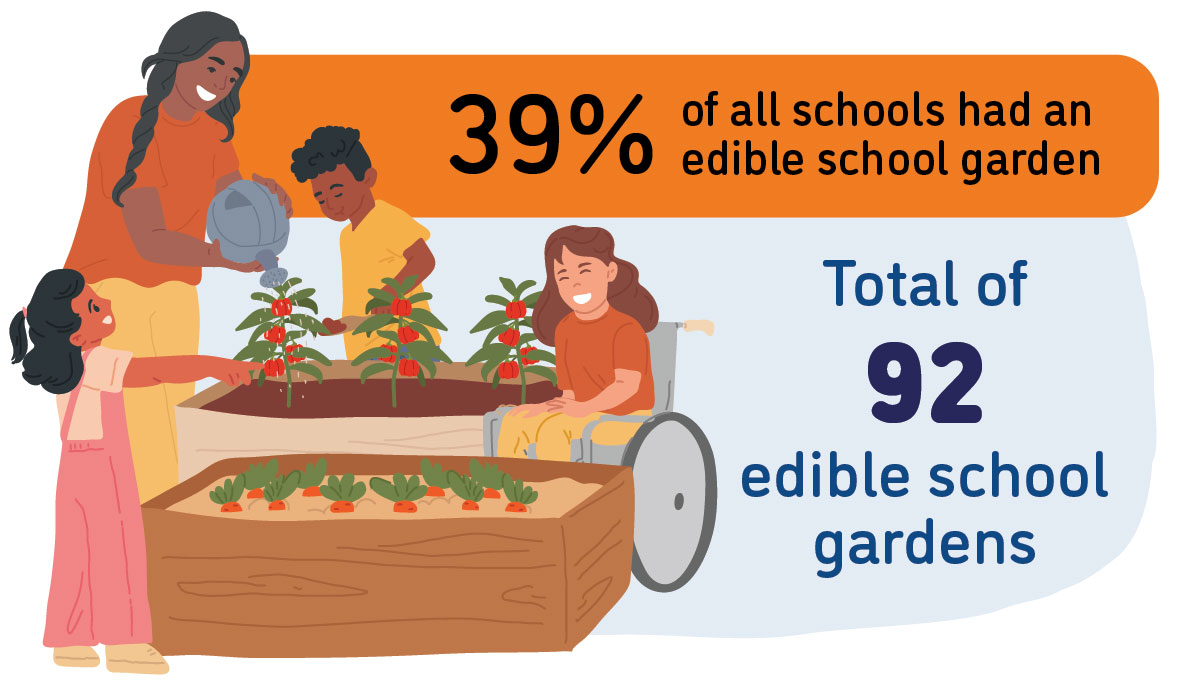
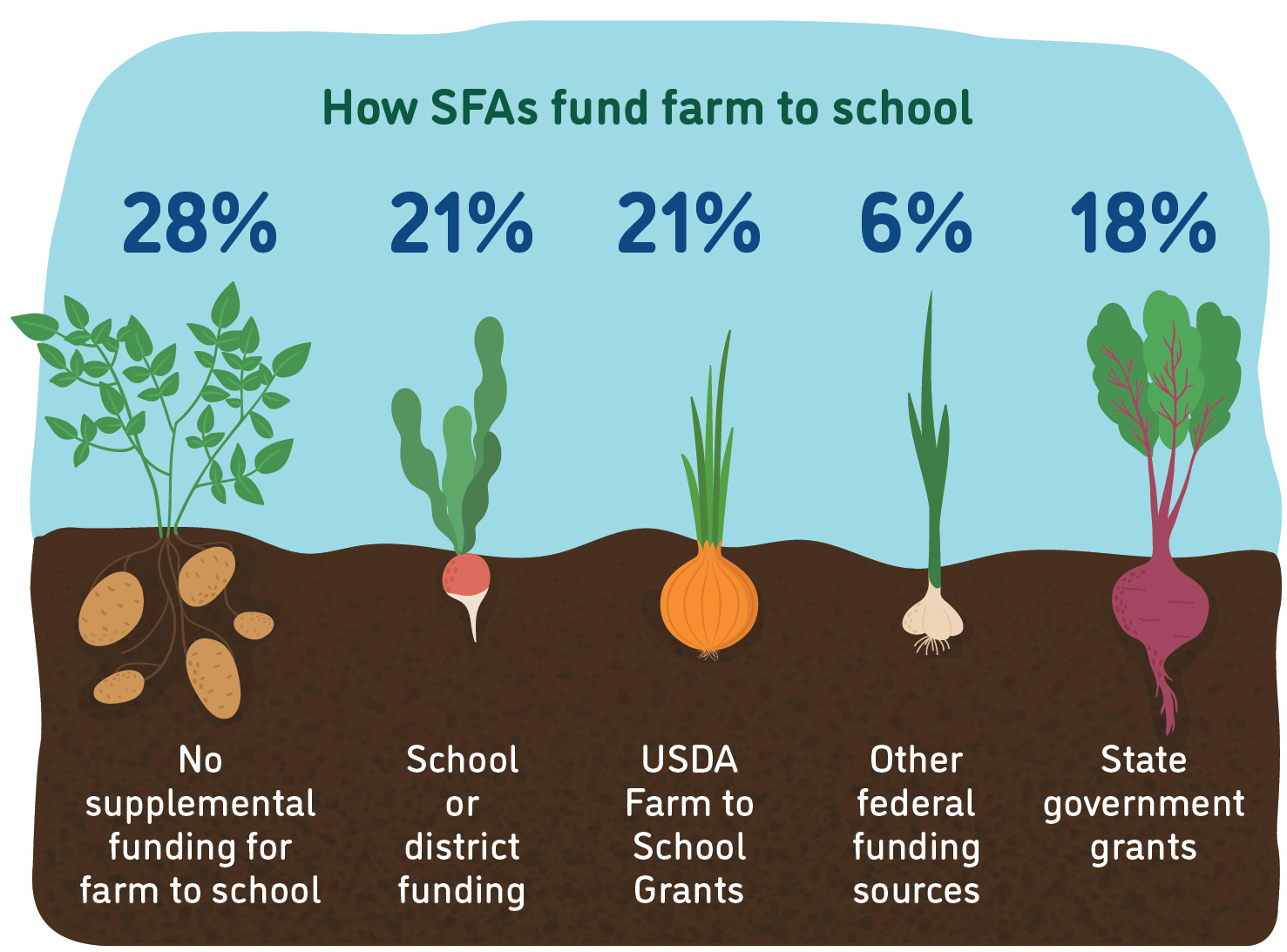
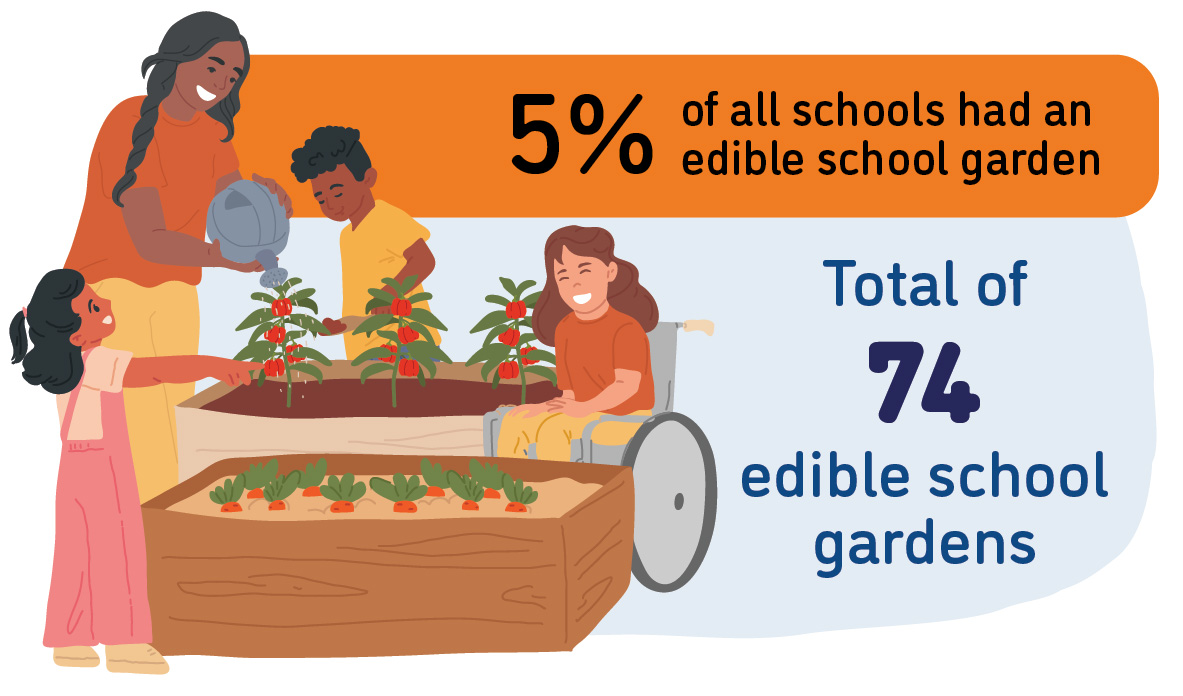
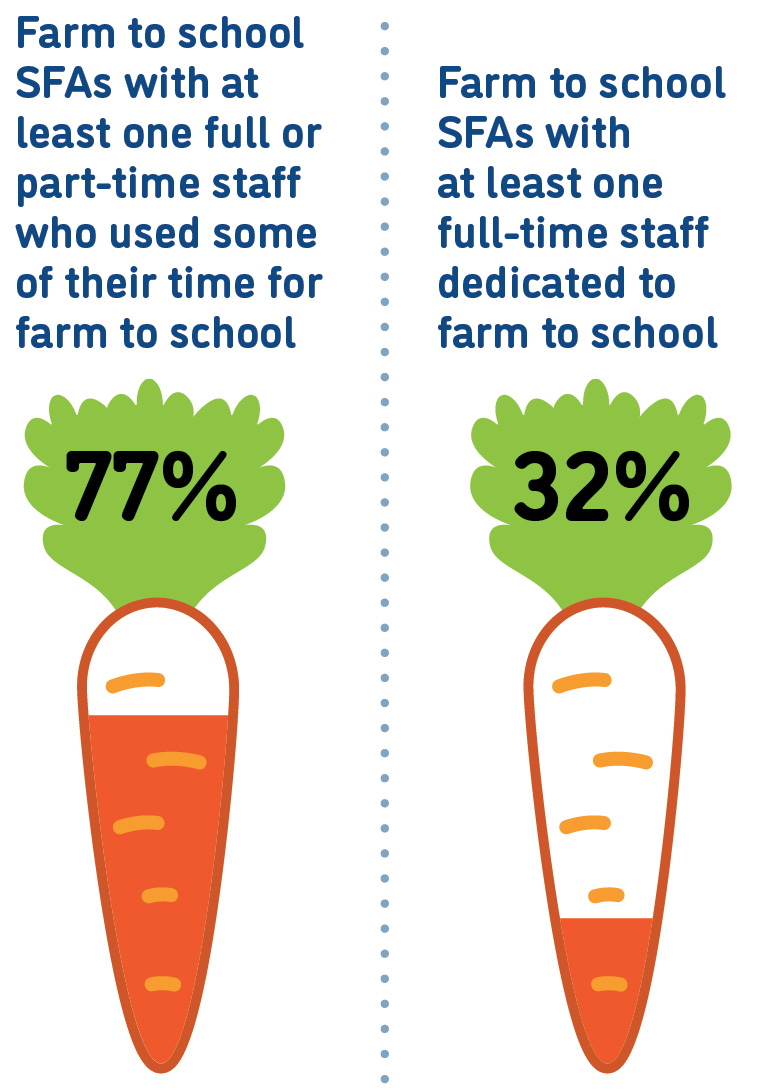
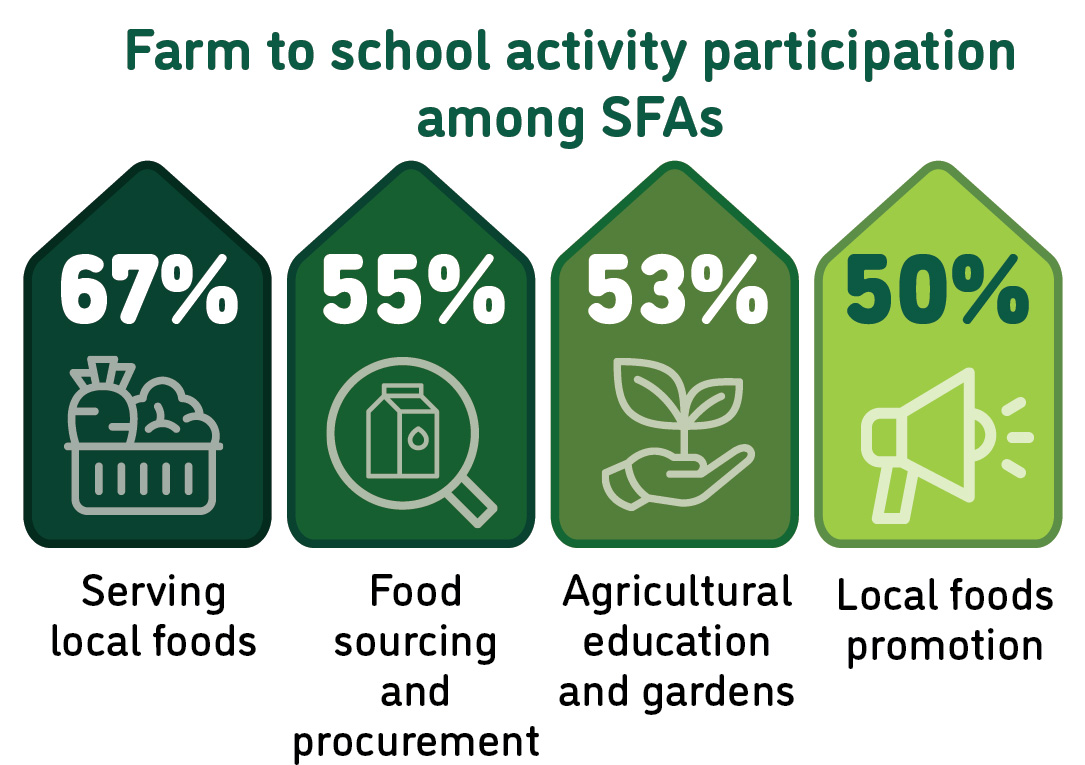
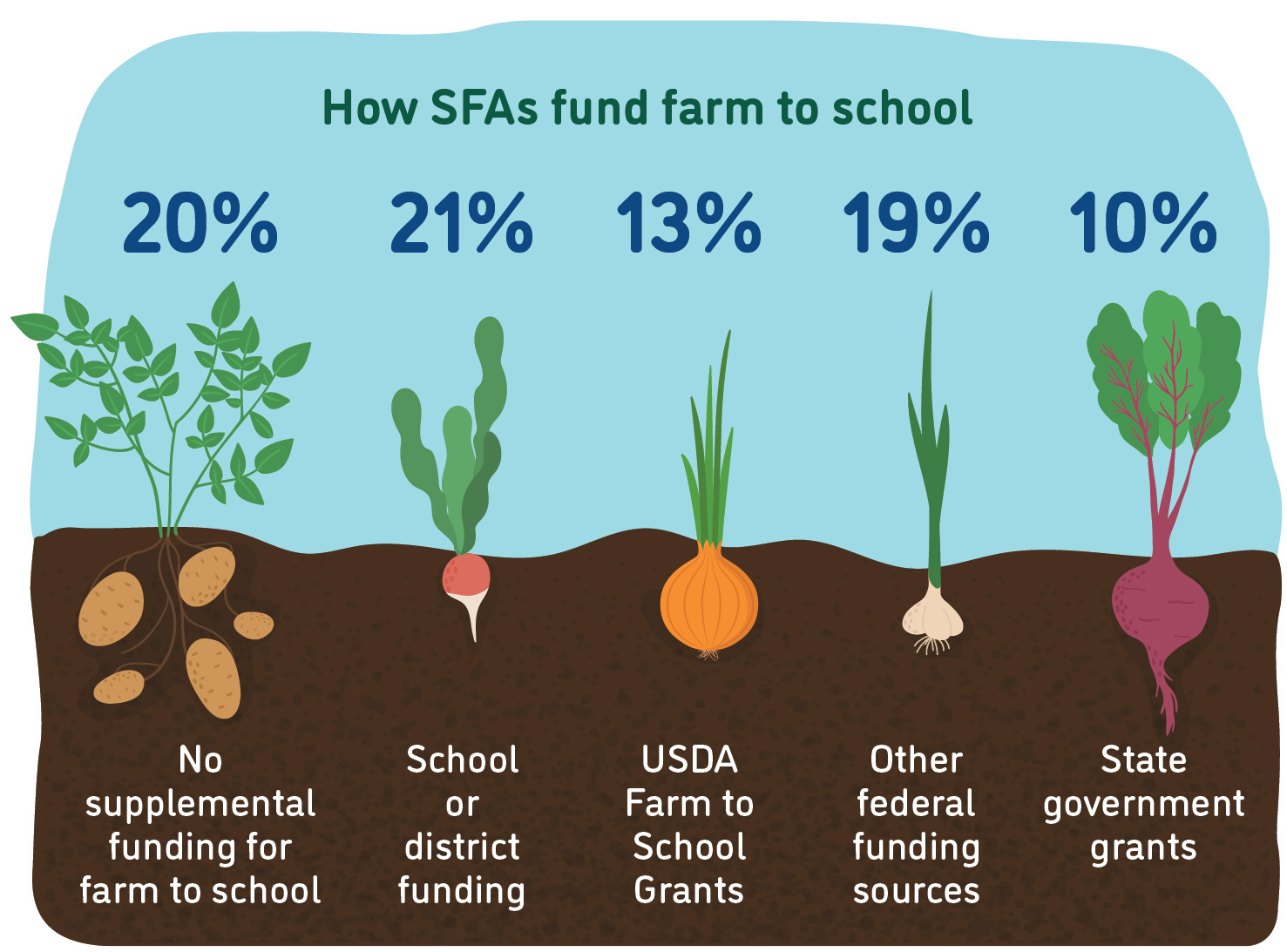
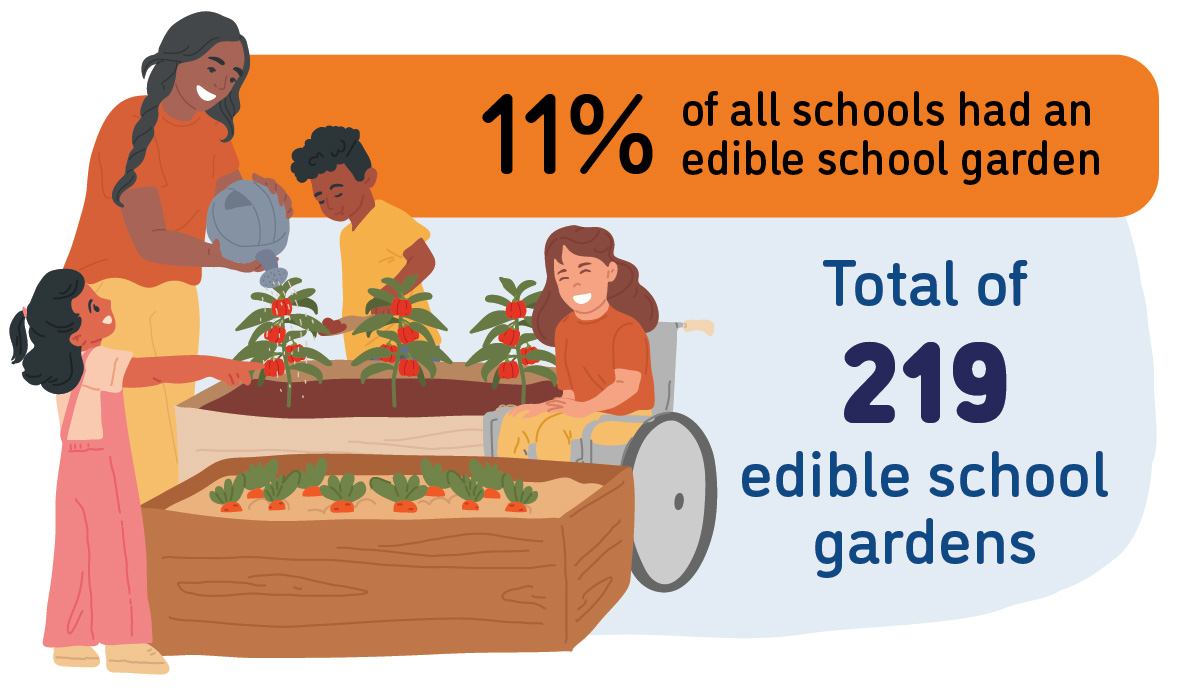
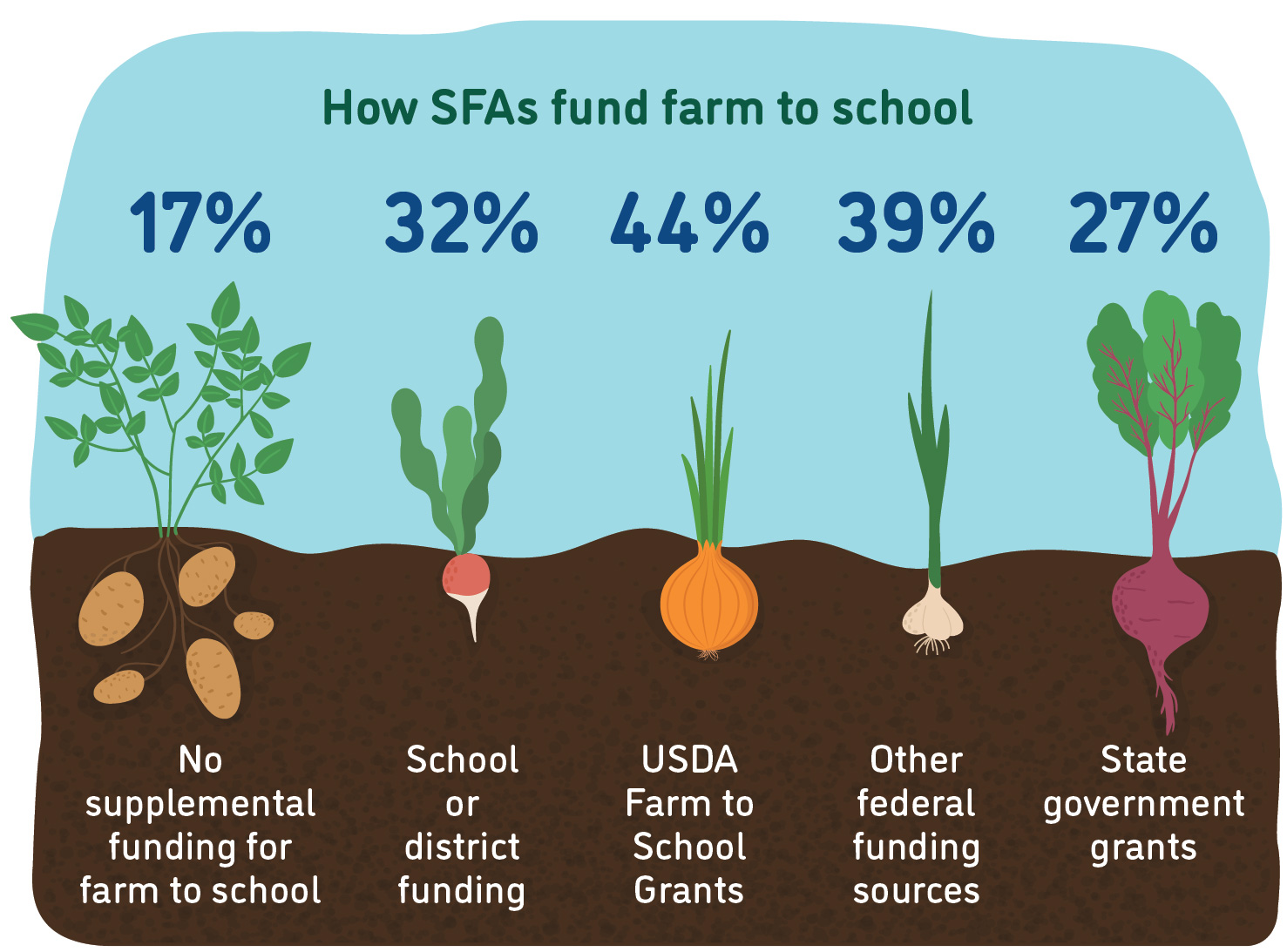
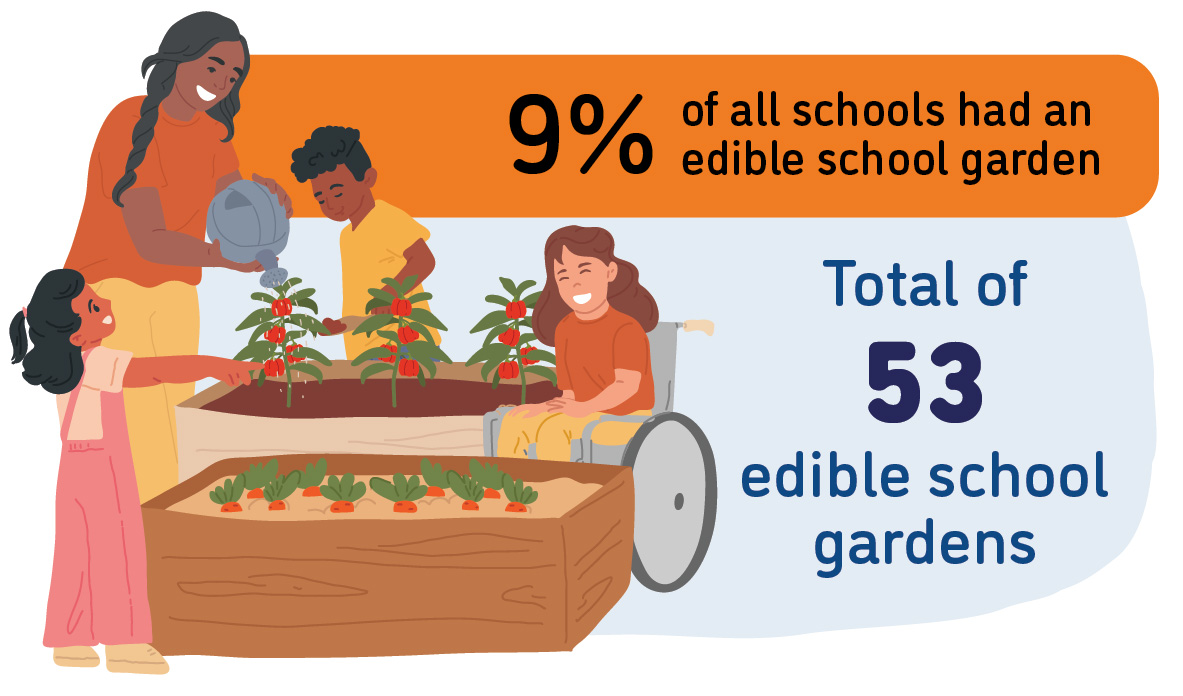
The term “farm to school” refers to efforts to serve local foods and provide education on food and agriculture to children in schools, child care settings, and summer meal sites. The 2023 Farm to School Census collected information on farm to school participation by school food authorities (SFAs) in school year (SY) 2022–23. Every SFA participating in the National School Lunch Program in the 50 states, Washington, DC, and five territories received an online survey asking about the farm to school activities they participated in, details of their participation, and their perspectives on farm to school. Past Farm to School Census surveys were conducted in 2013, 2015, and 2019.
Key Findings
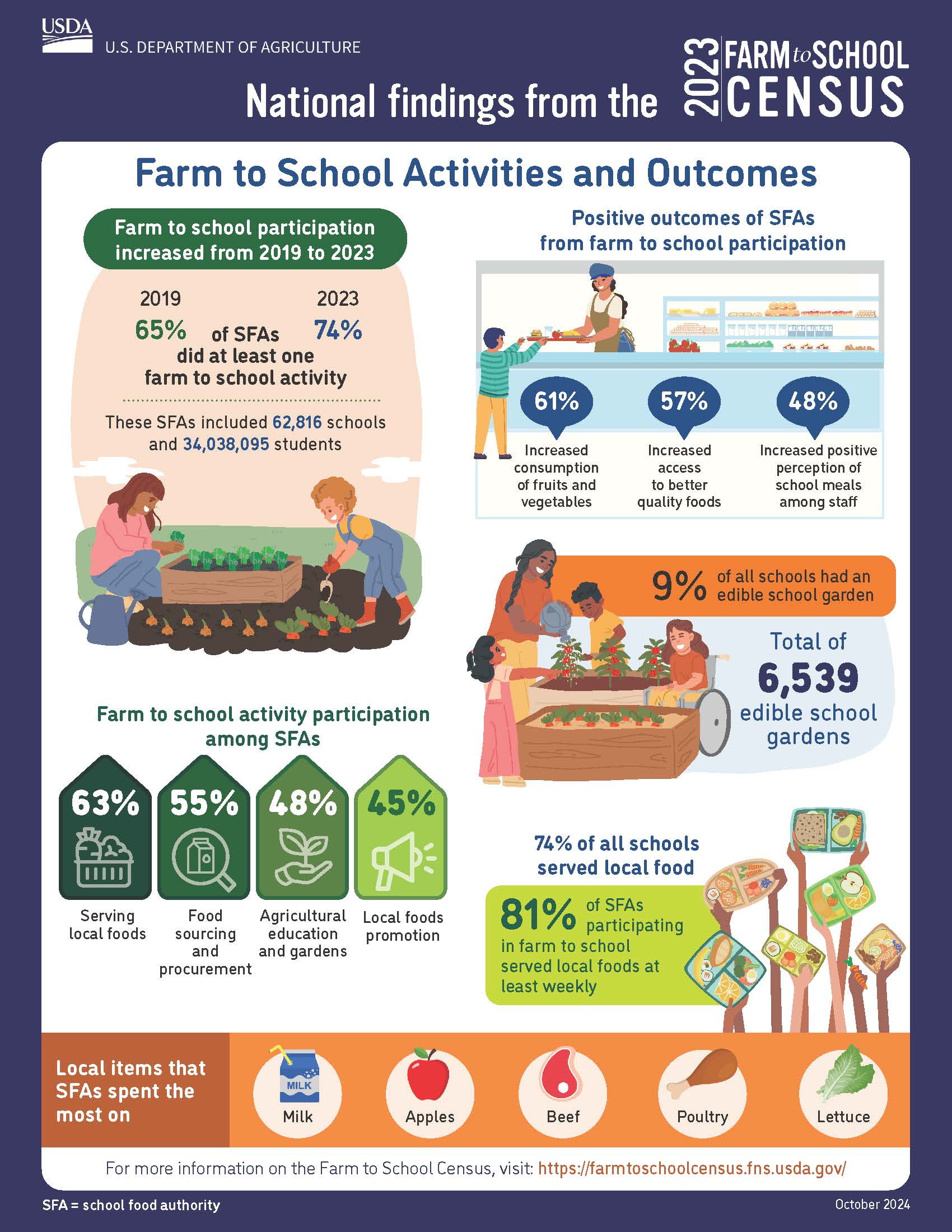
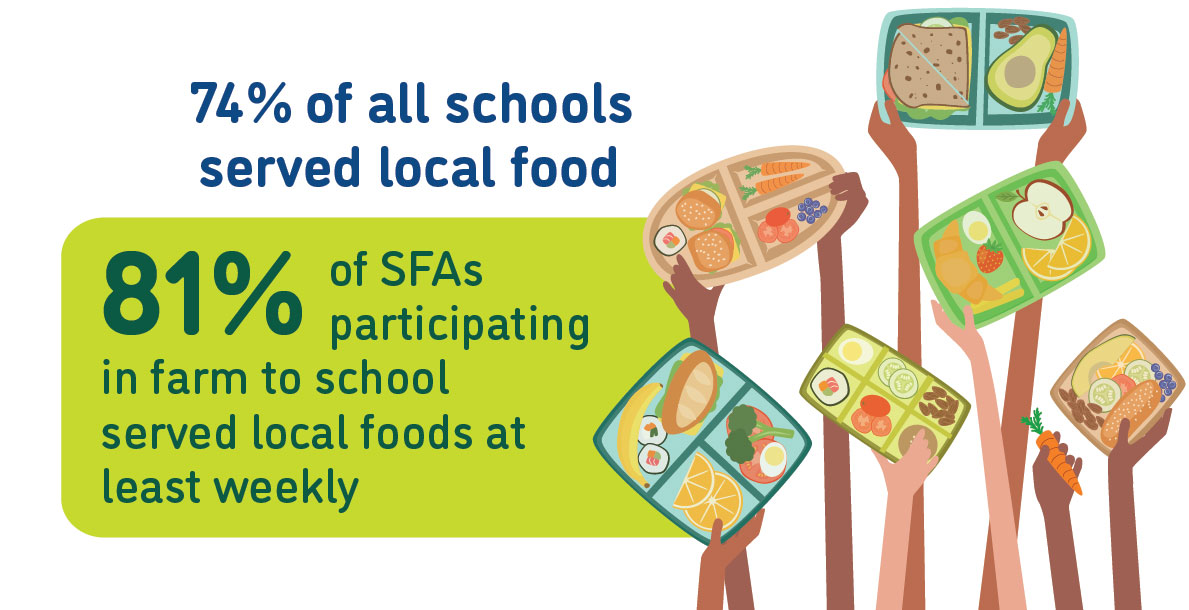
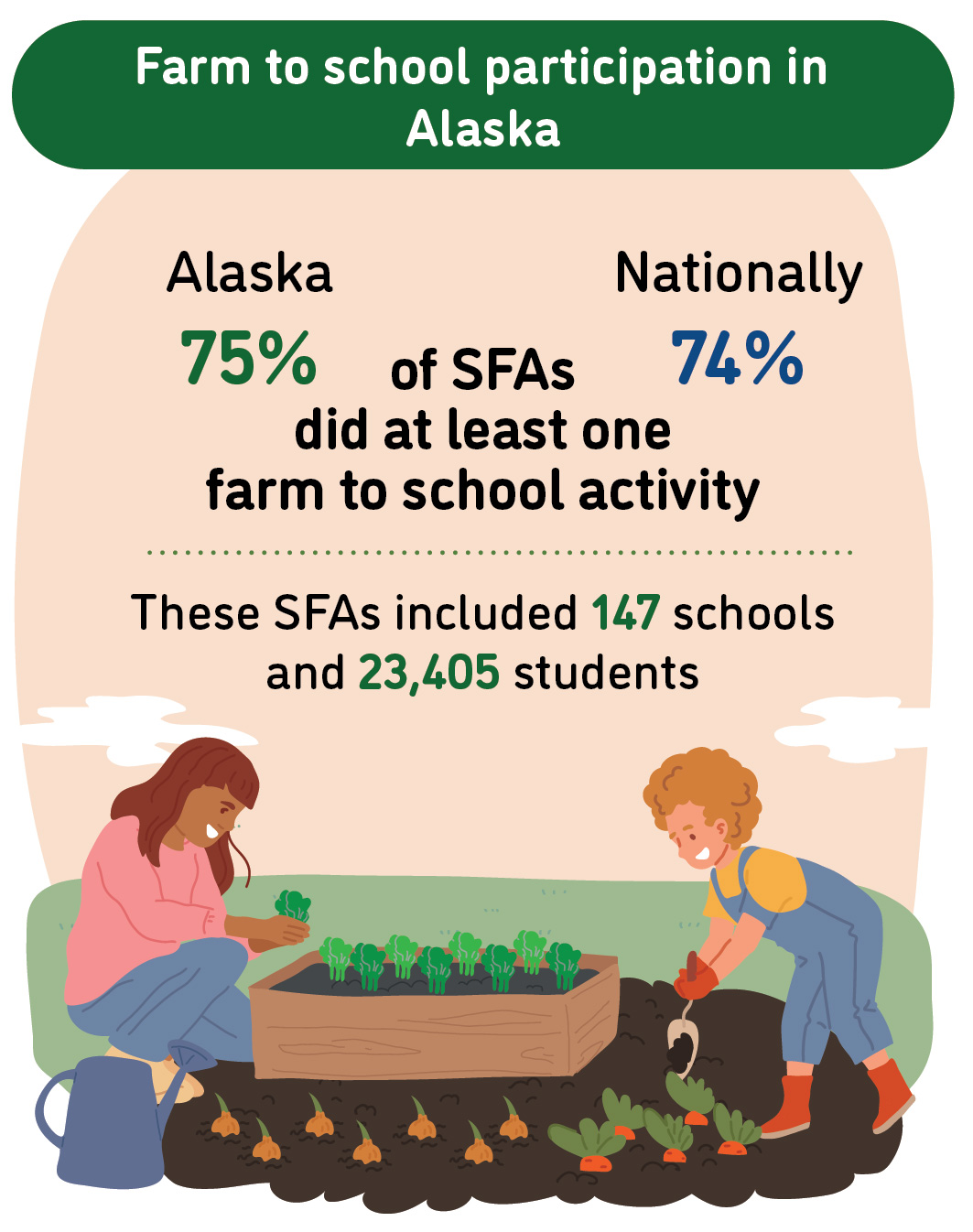
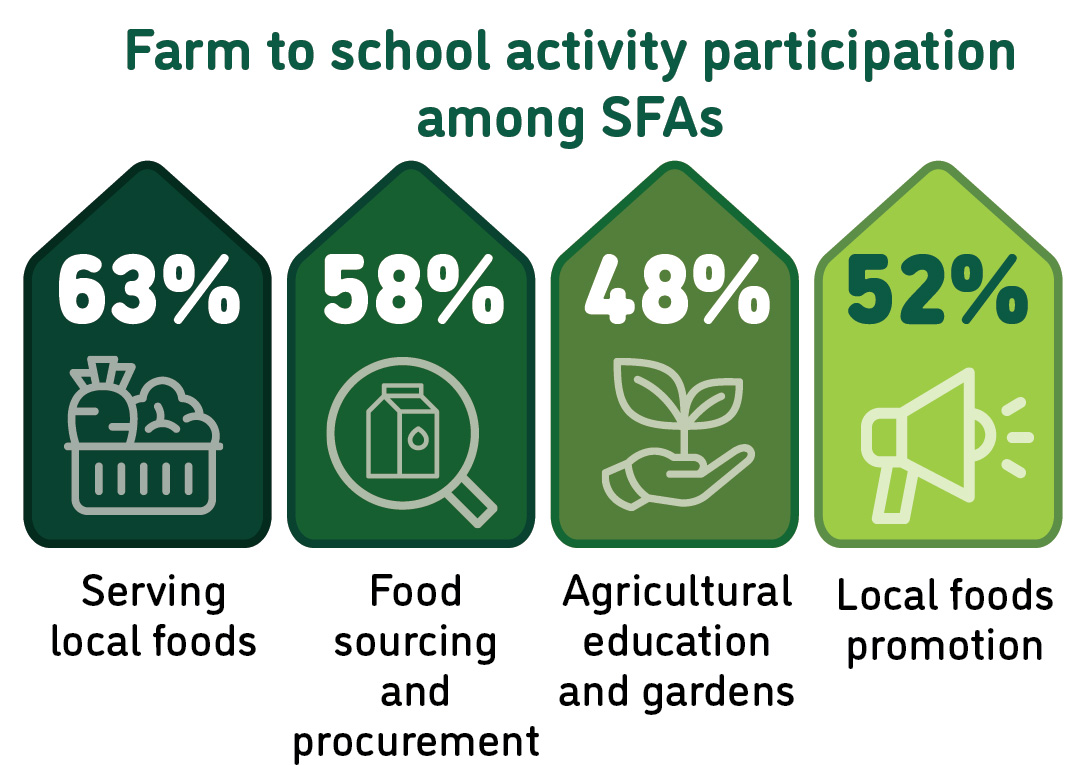
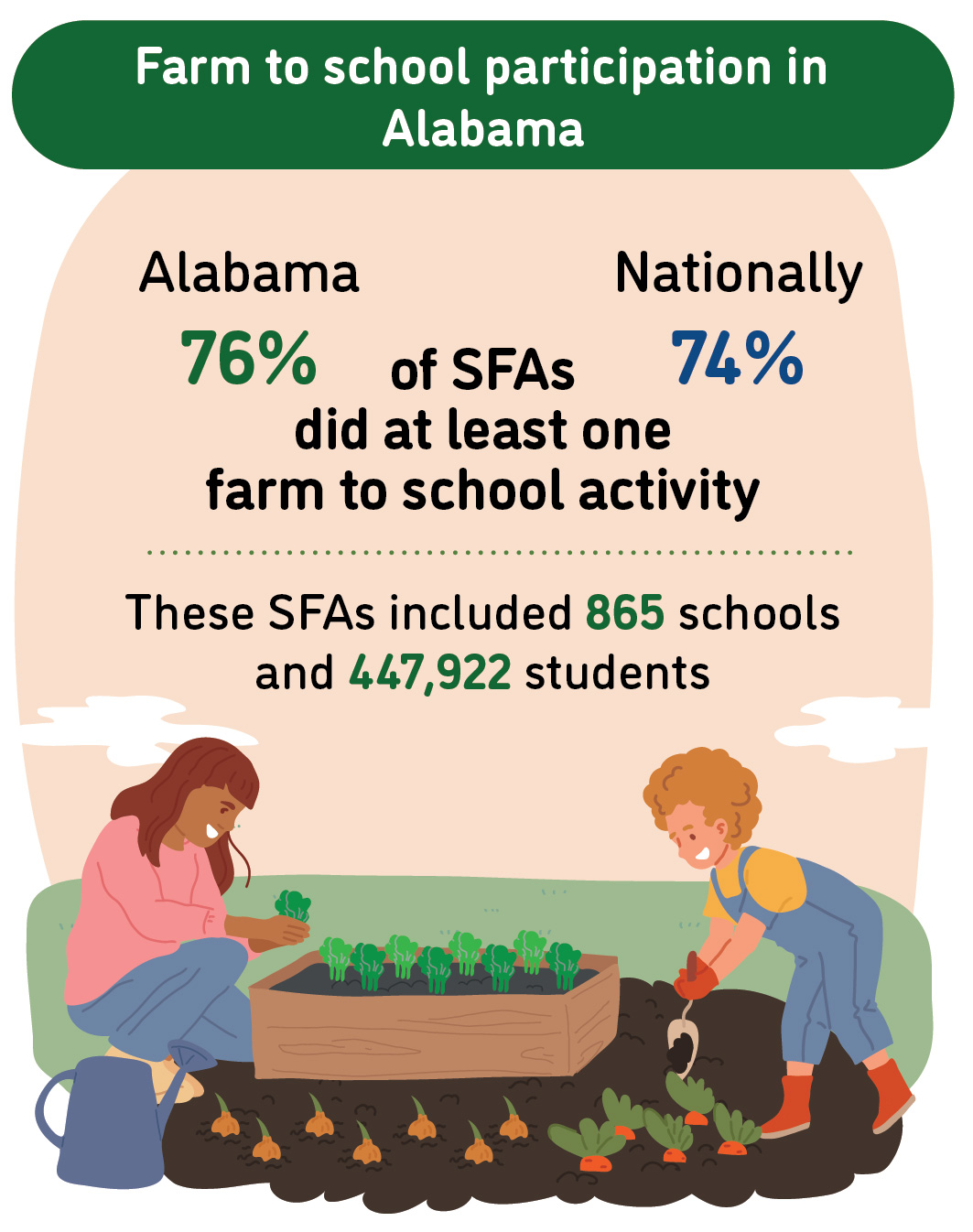
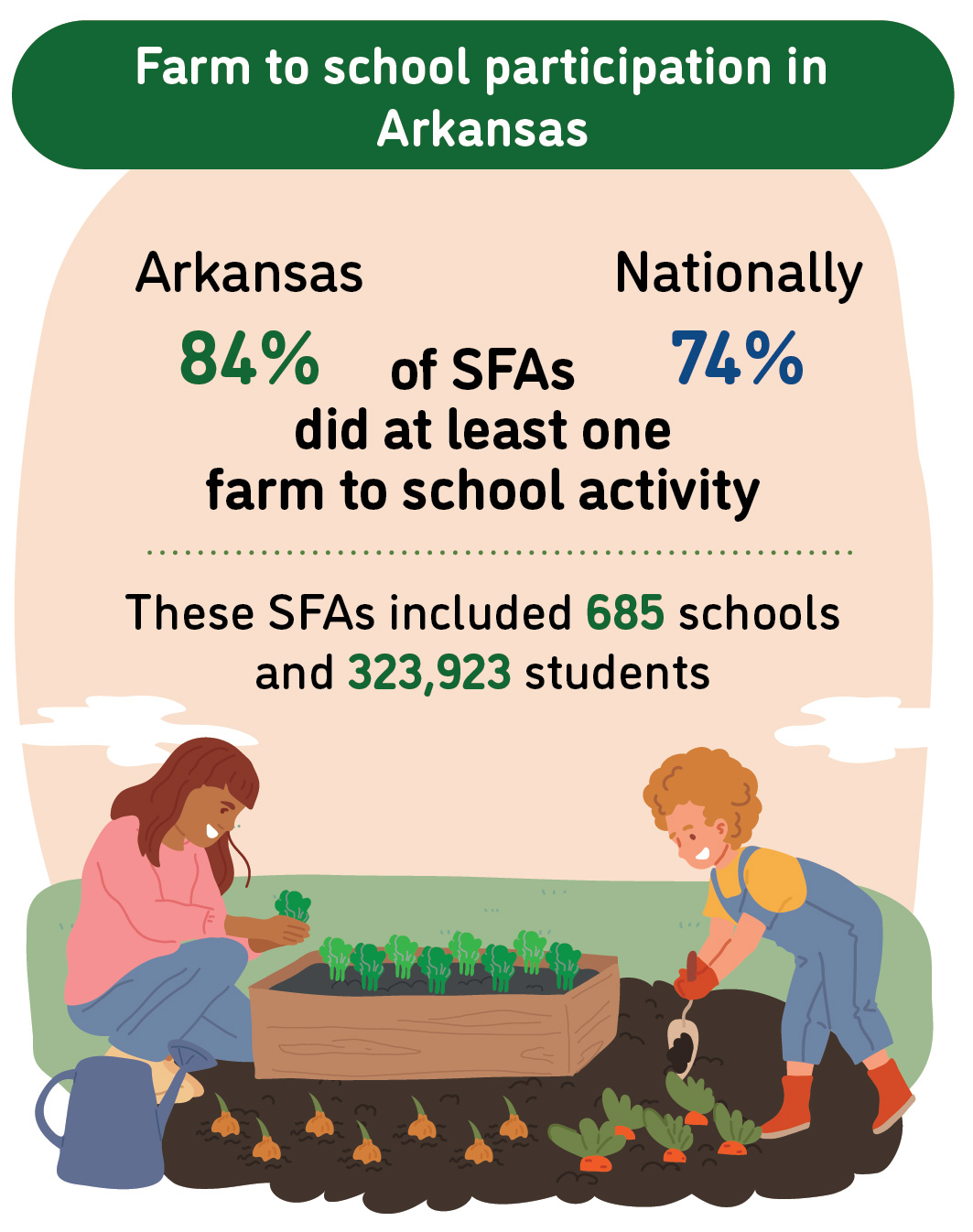
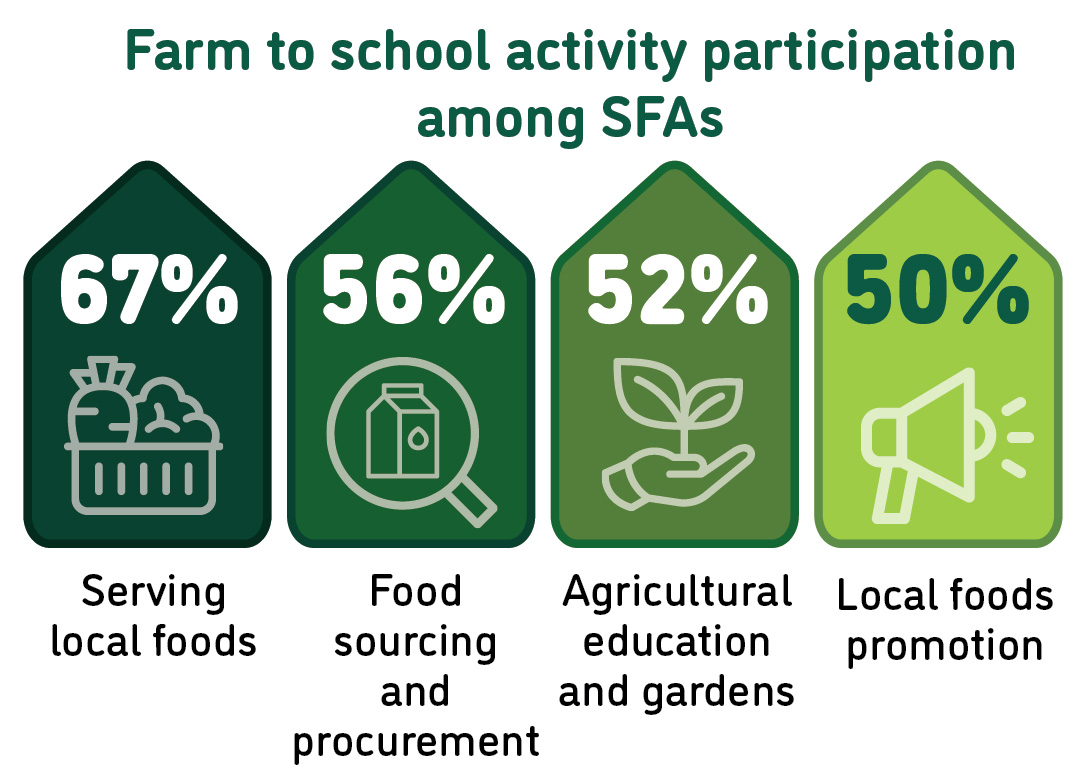
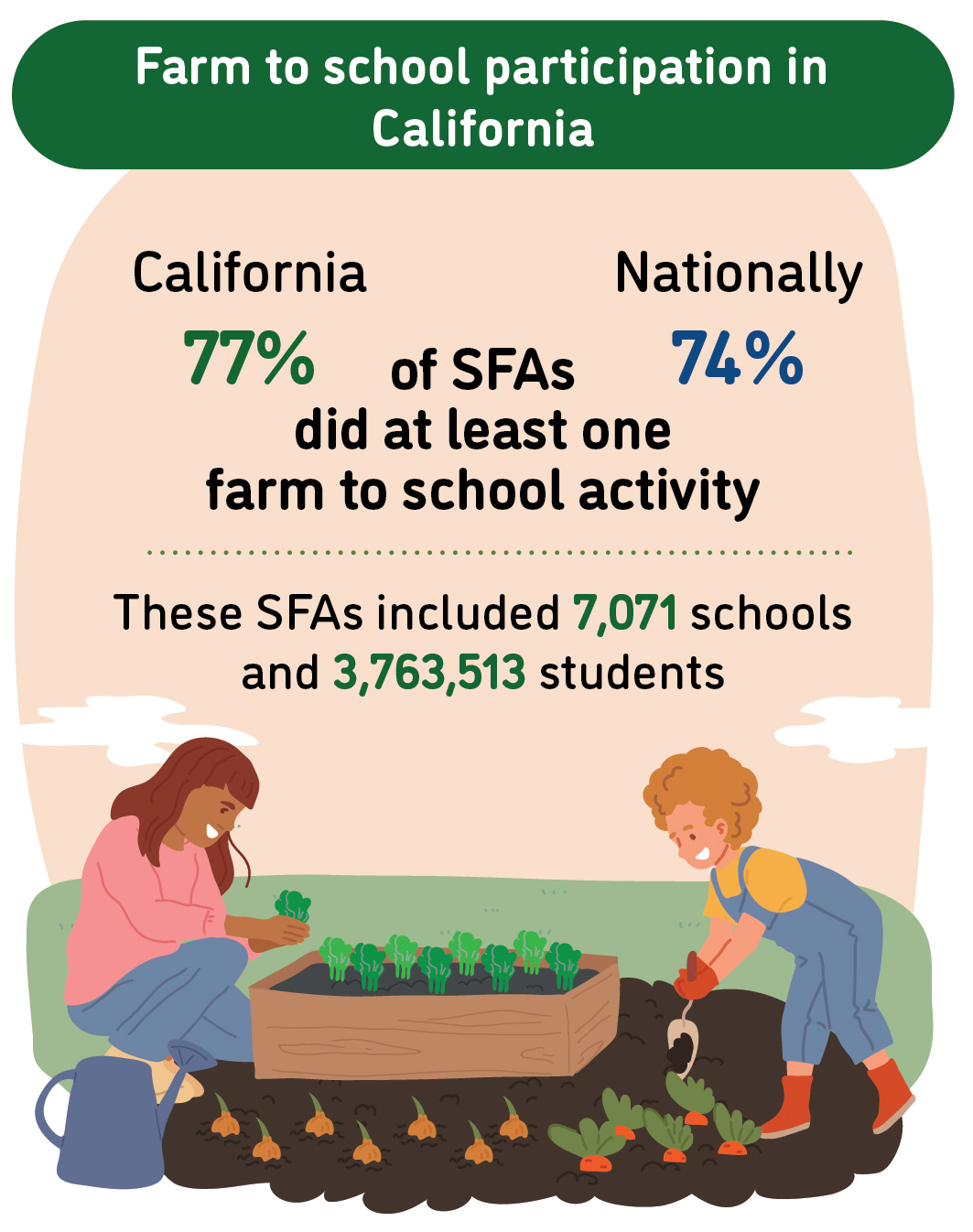
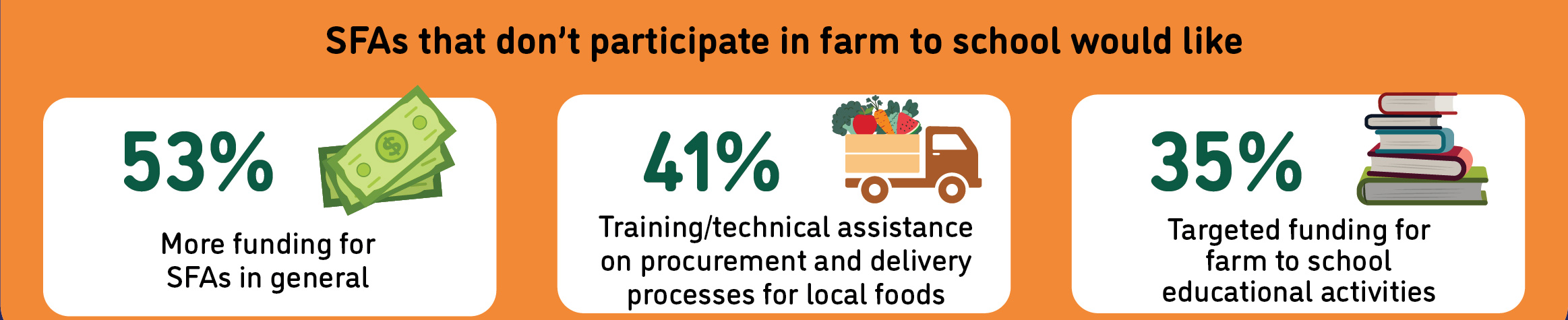
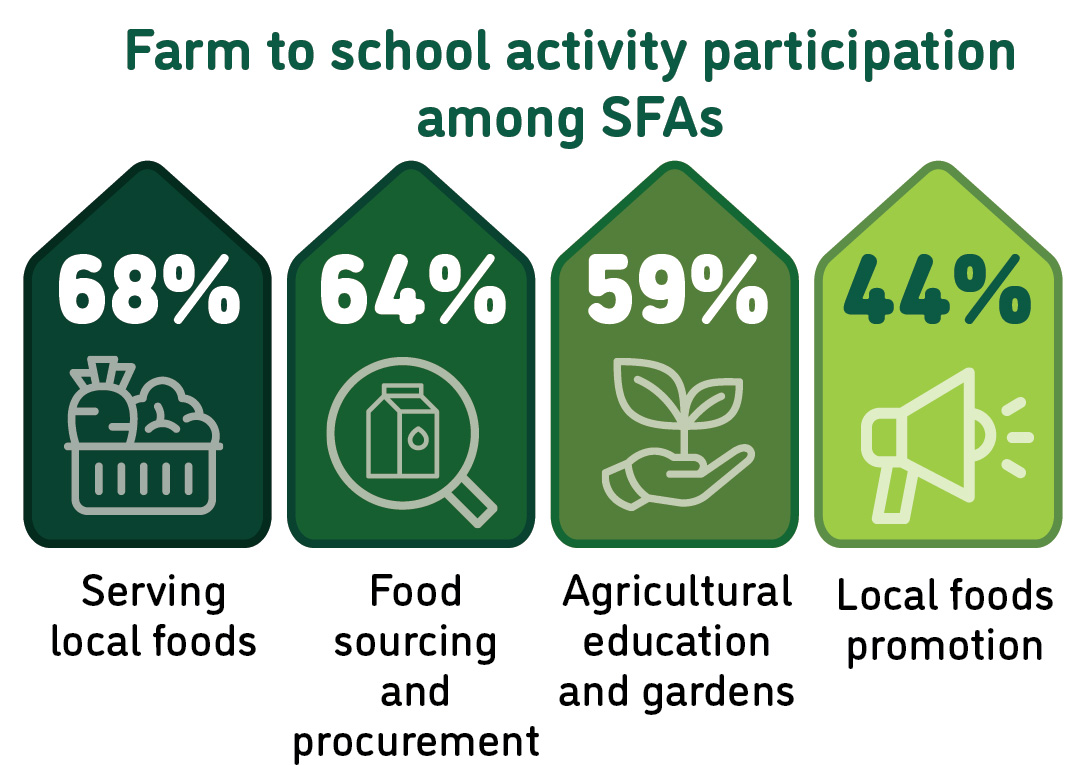
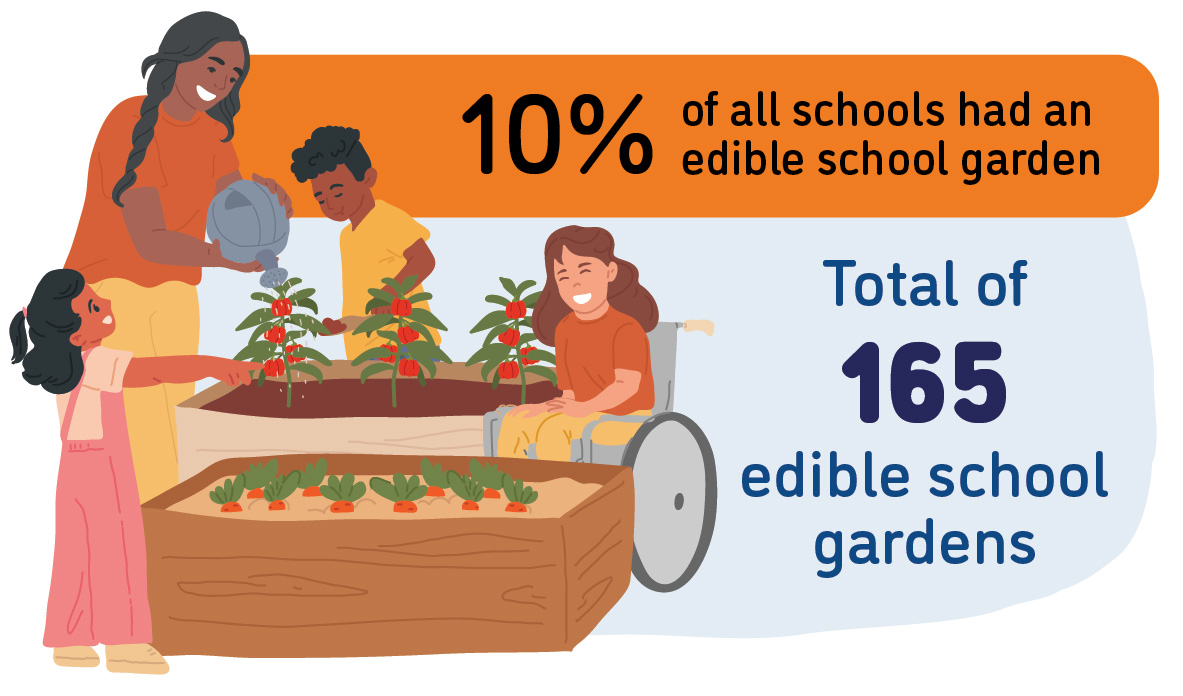
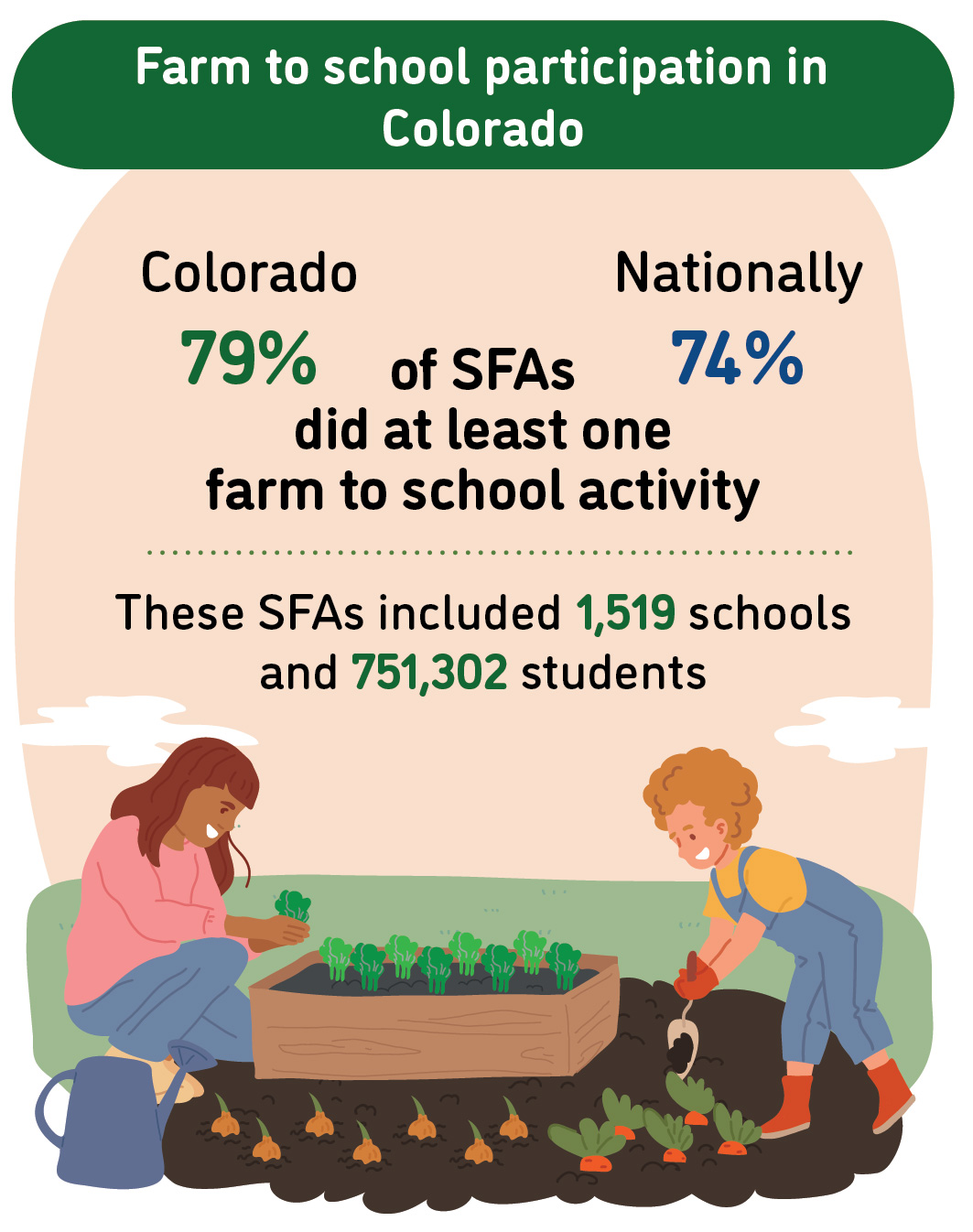
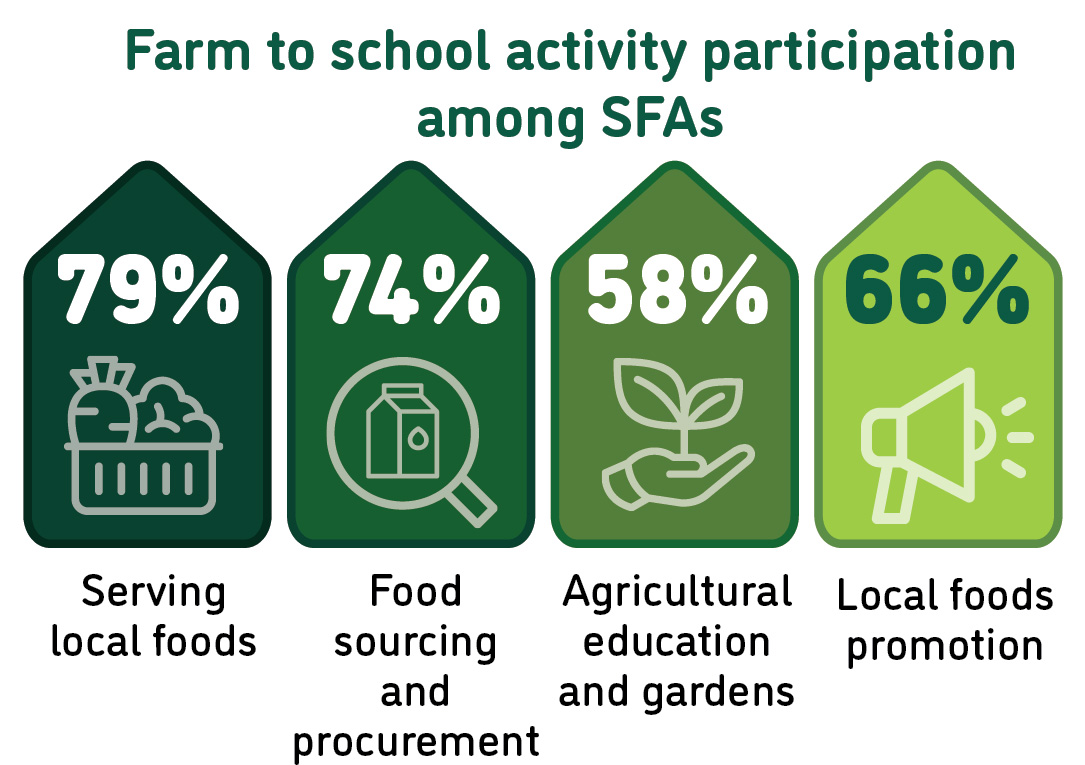
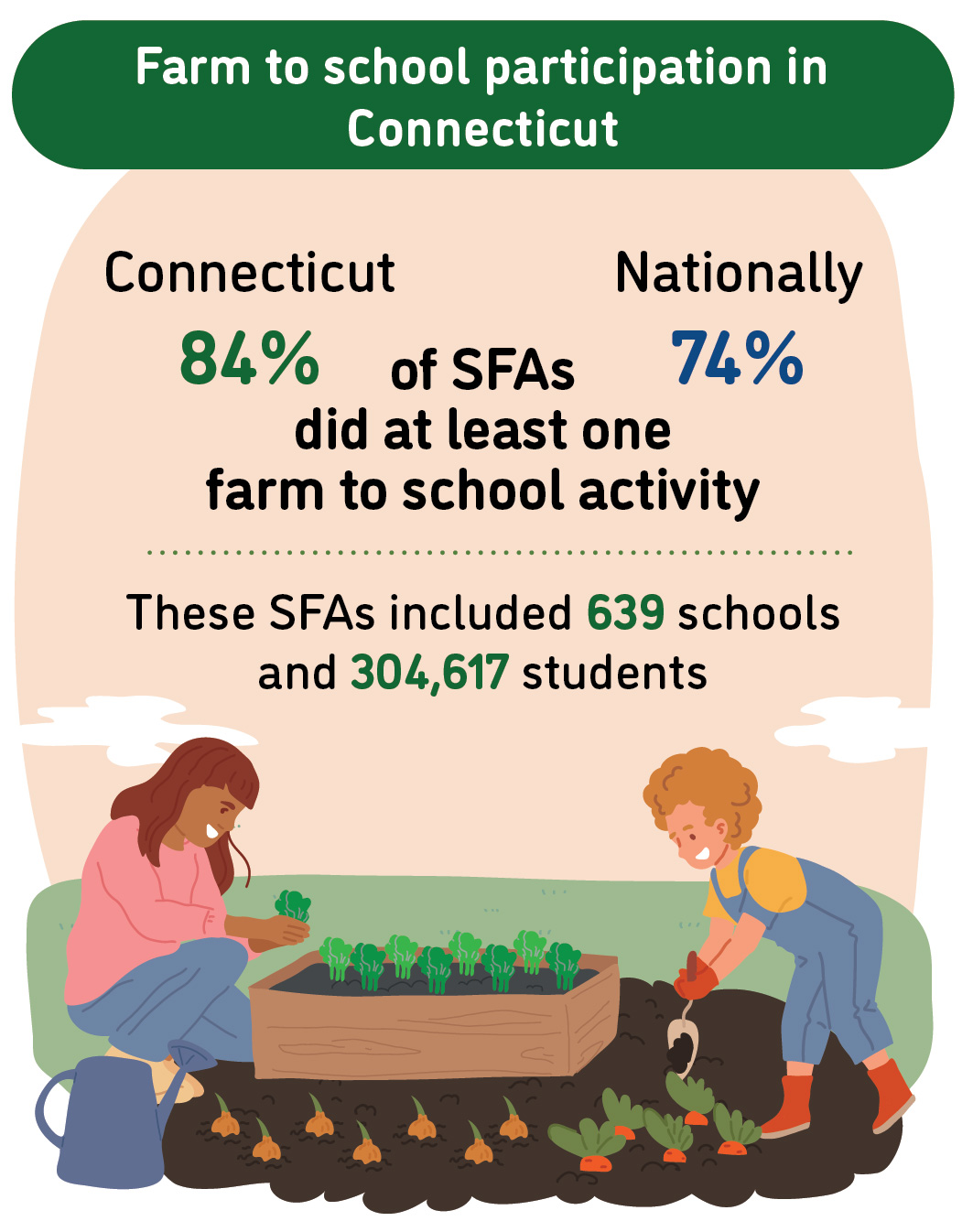
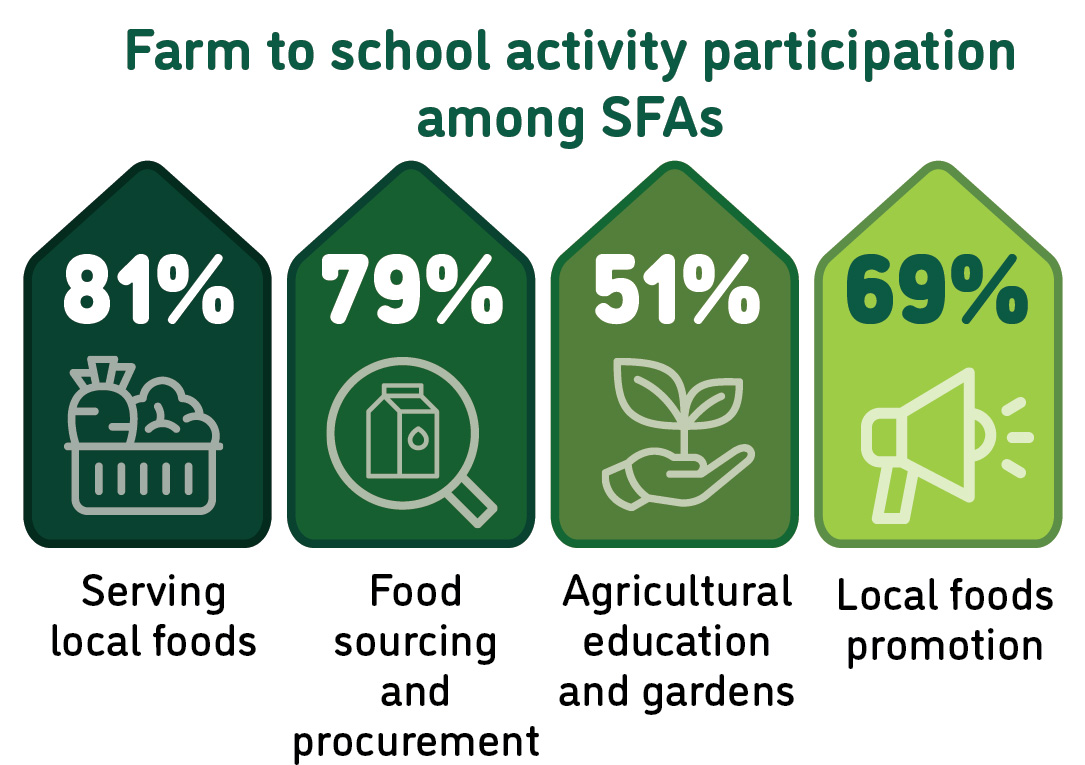
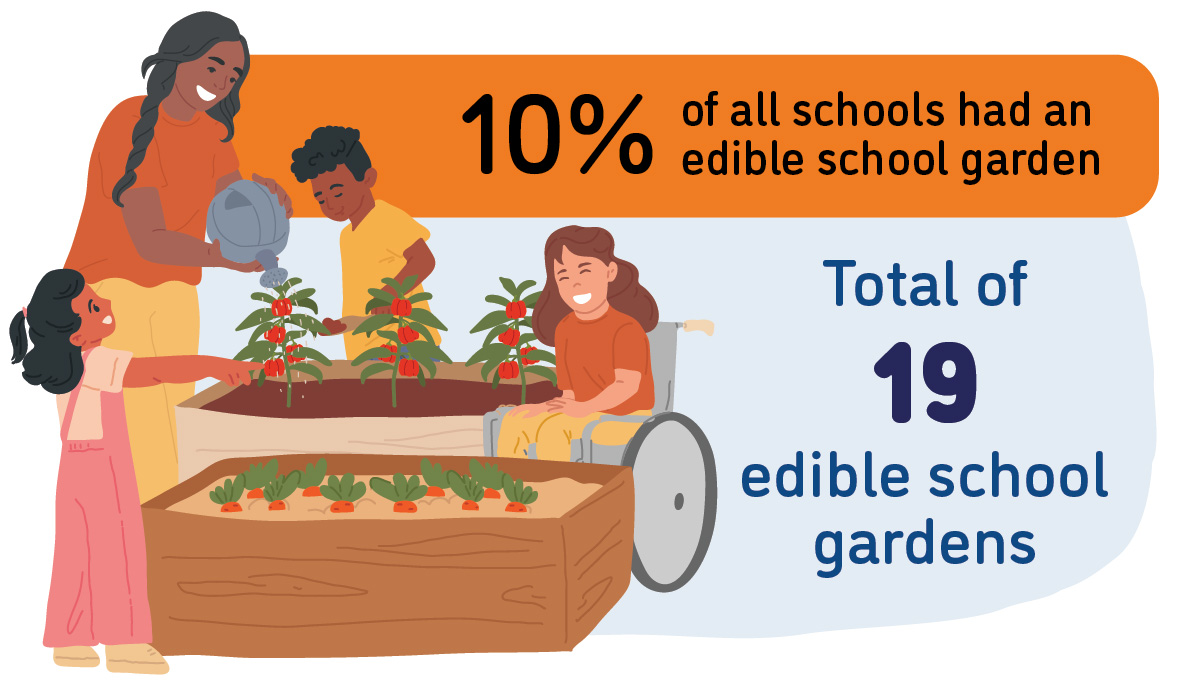
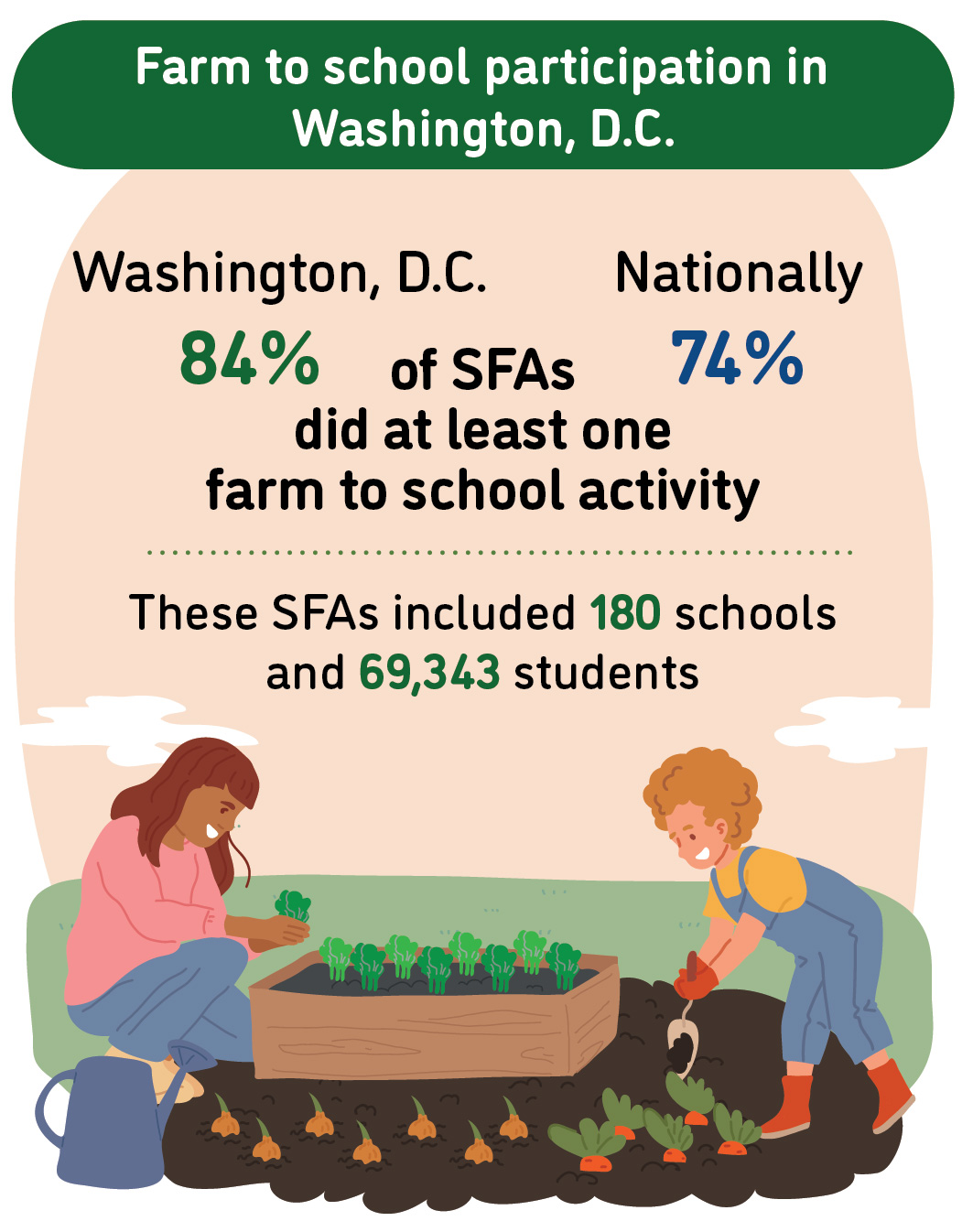
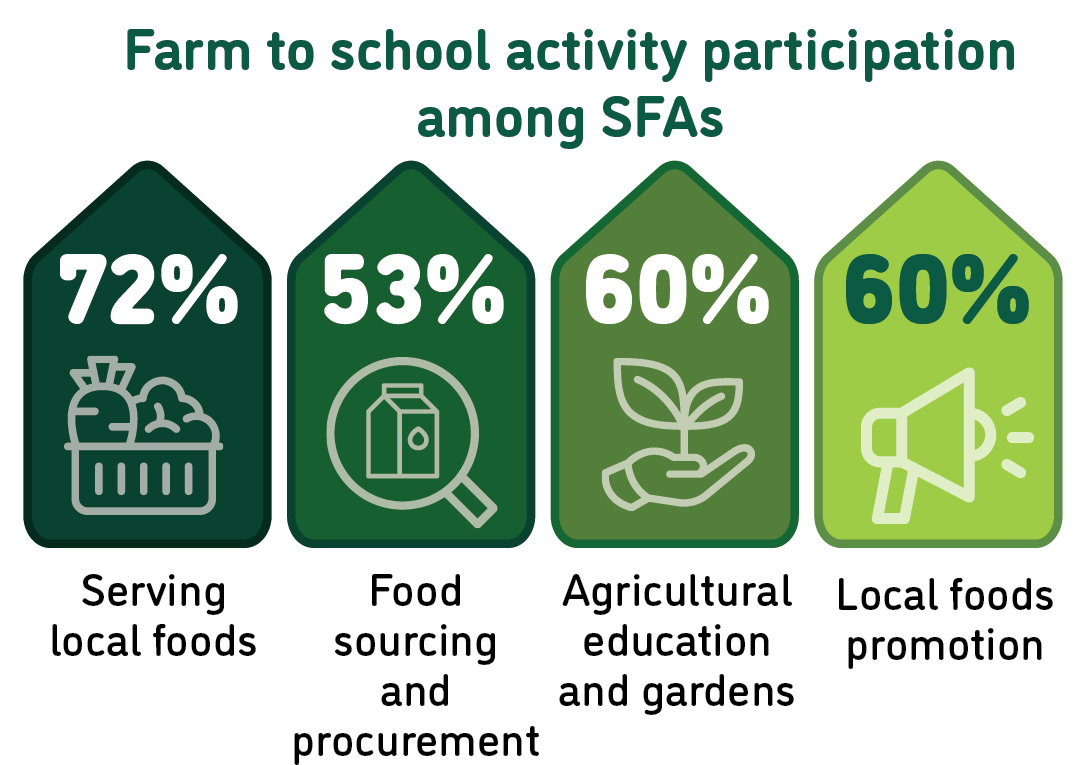
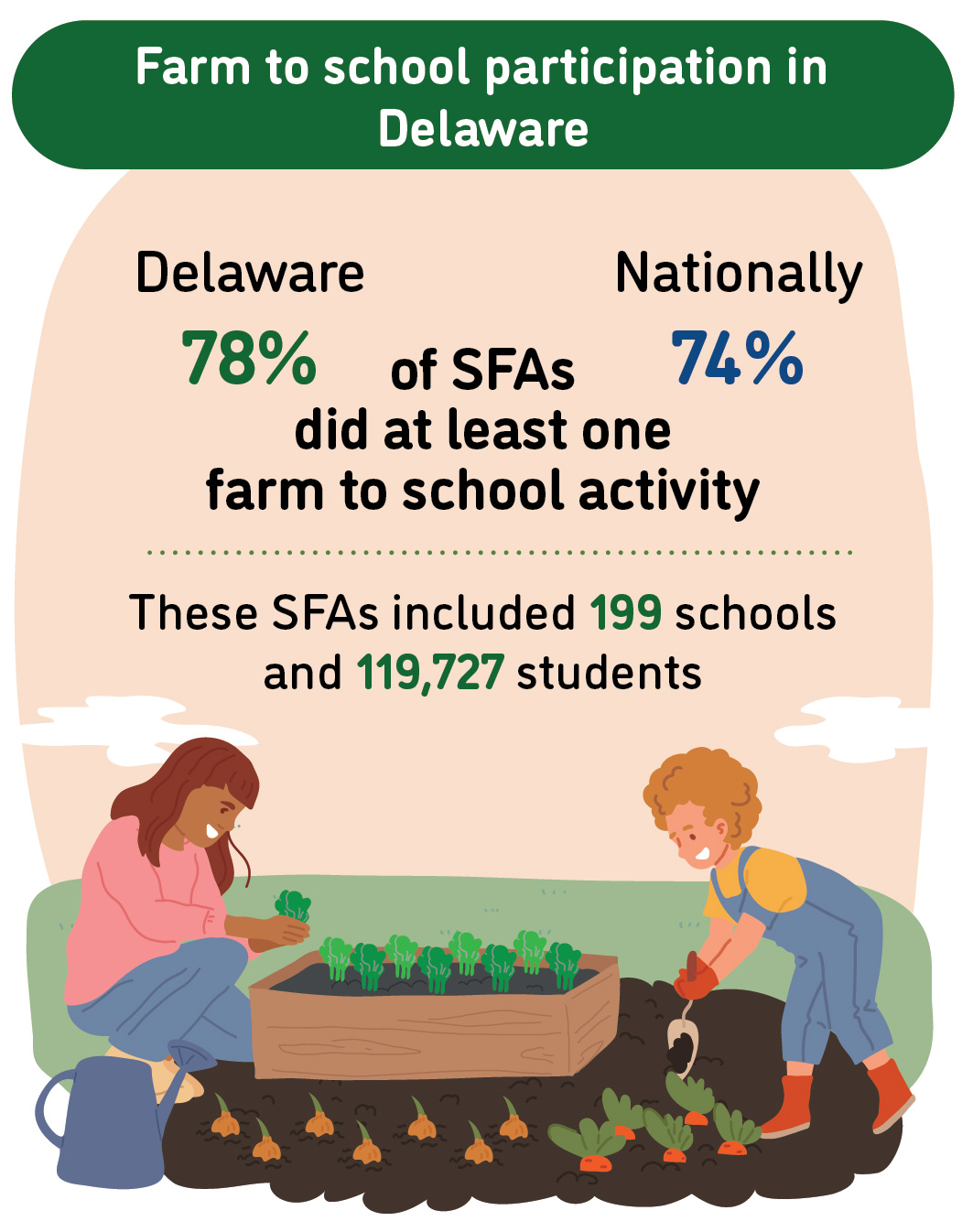
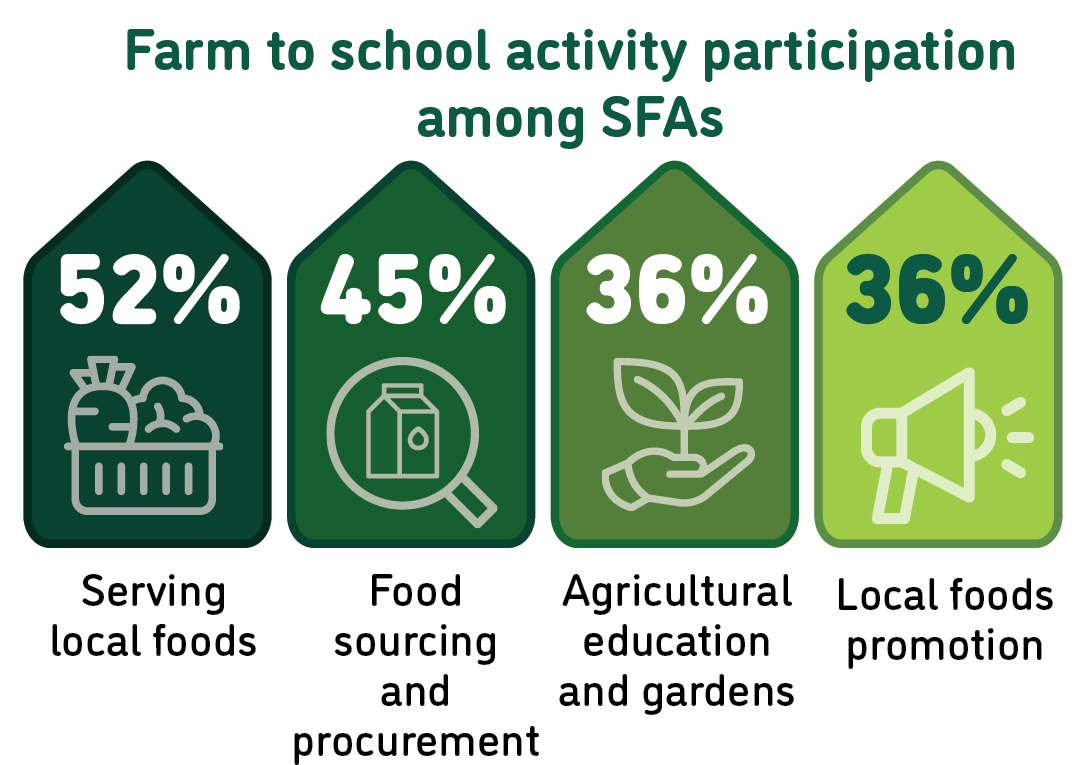
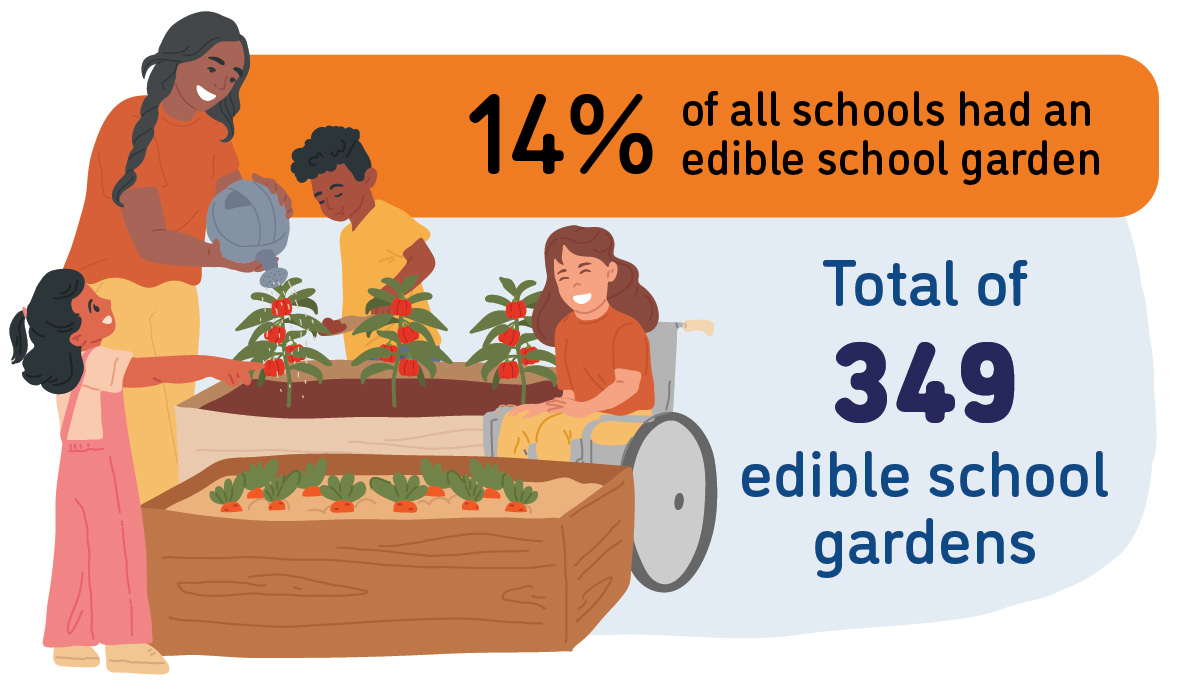
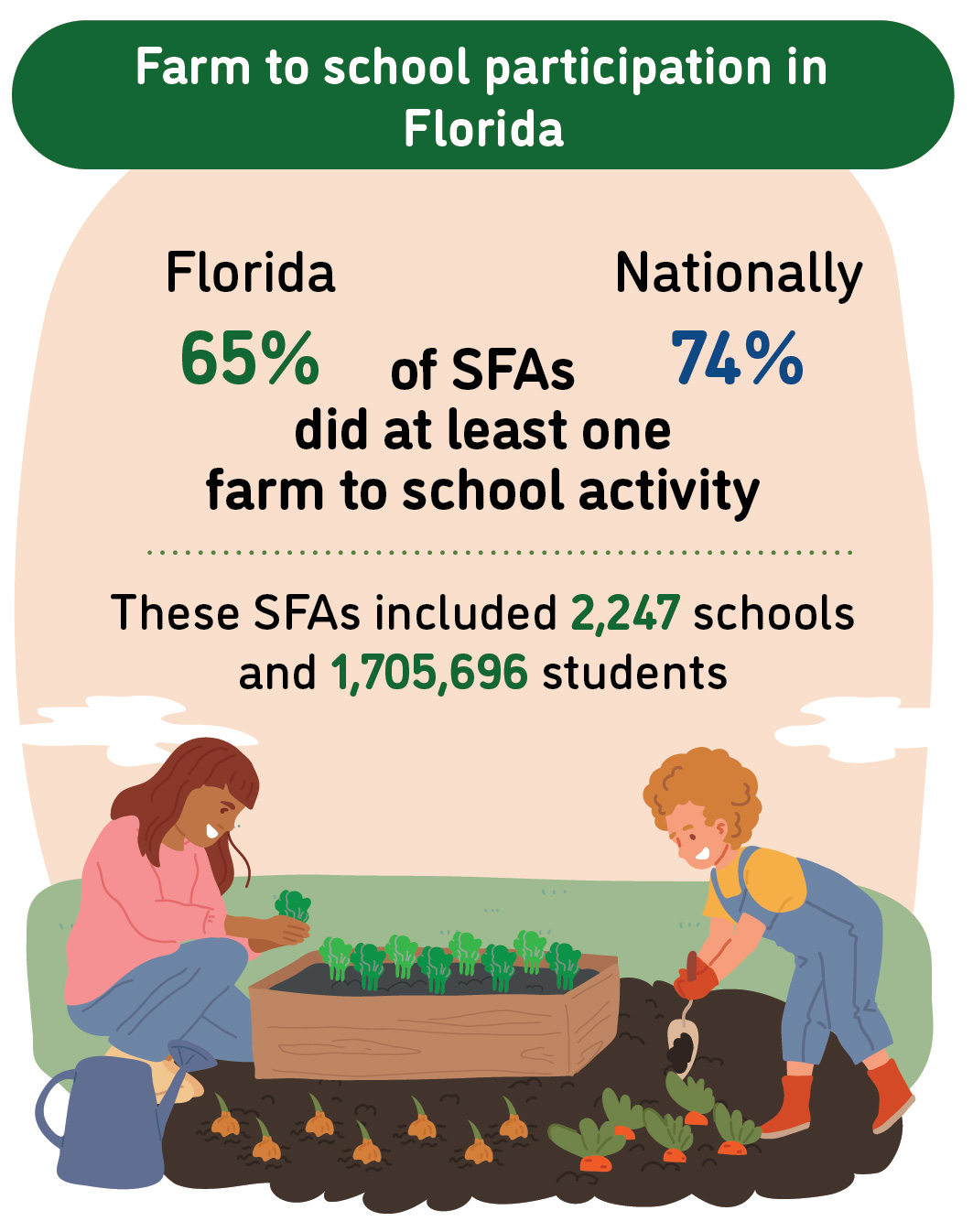
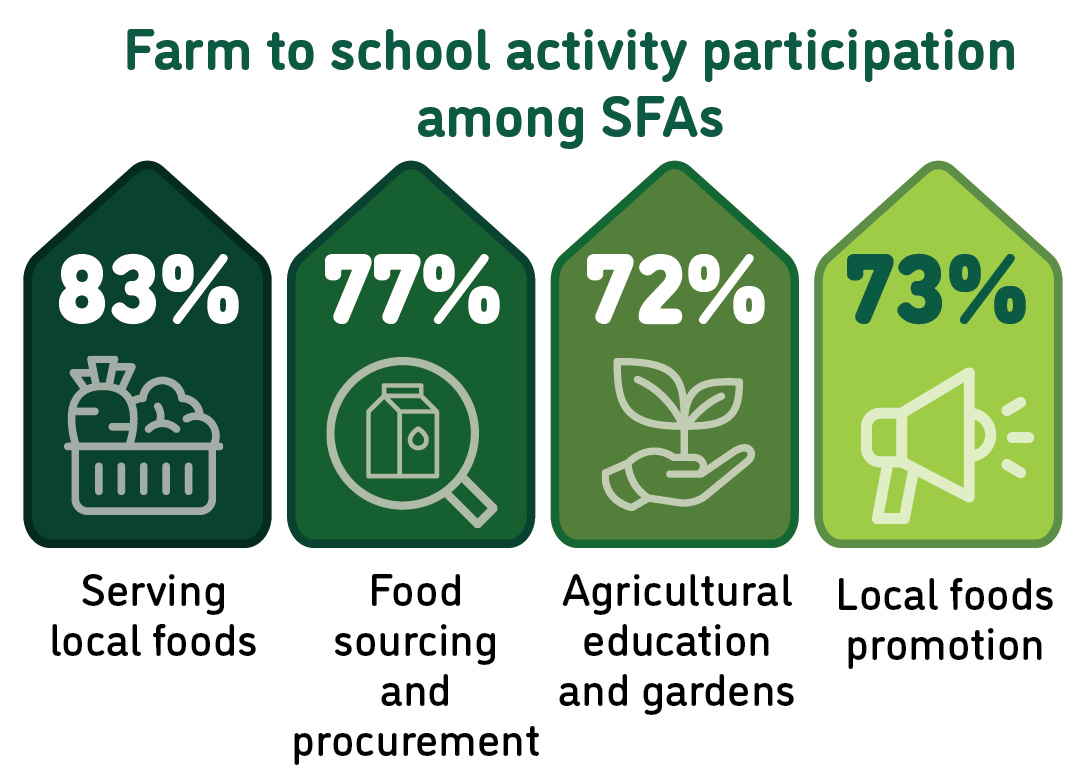
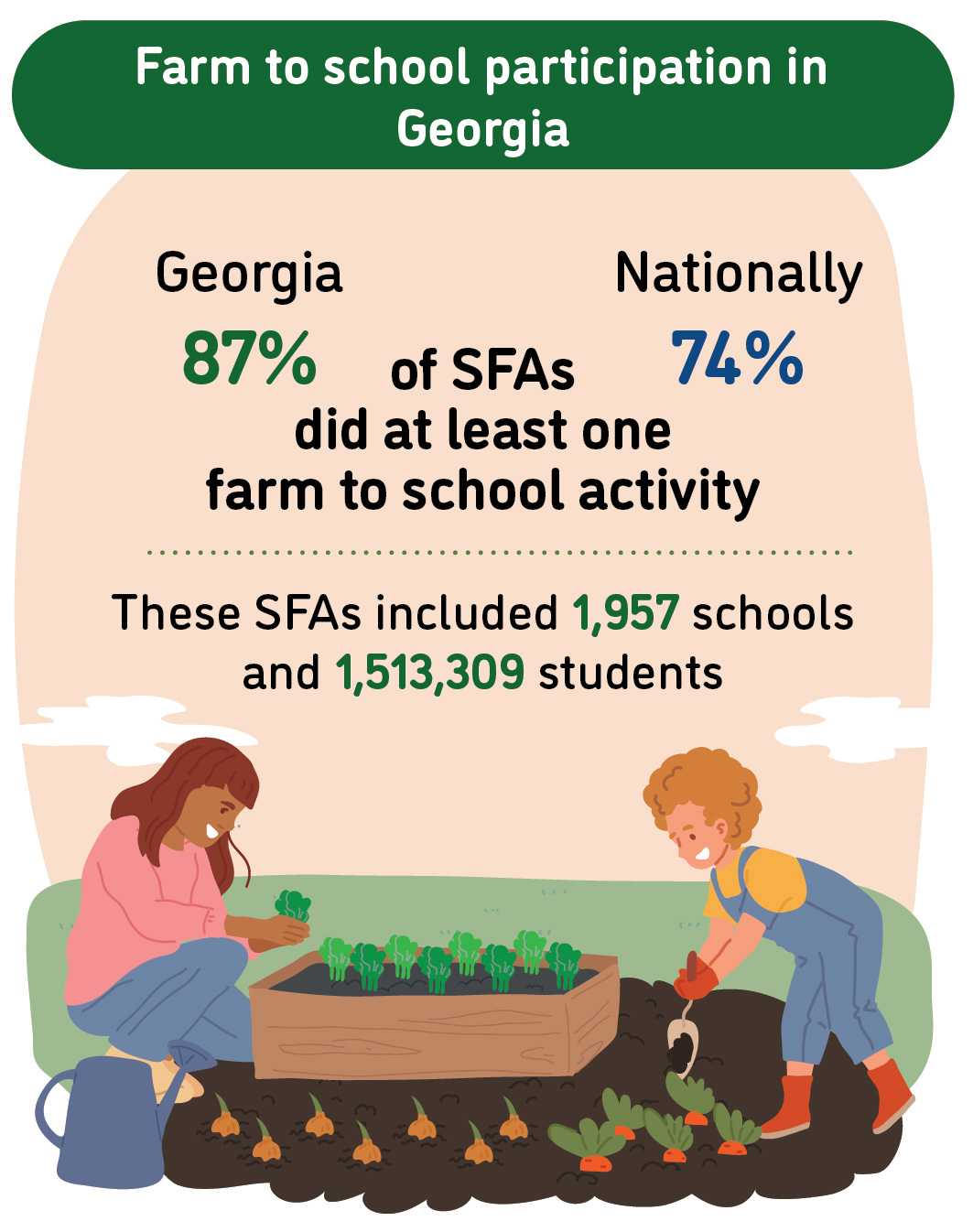
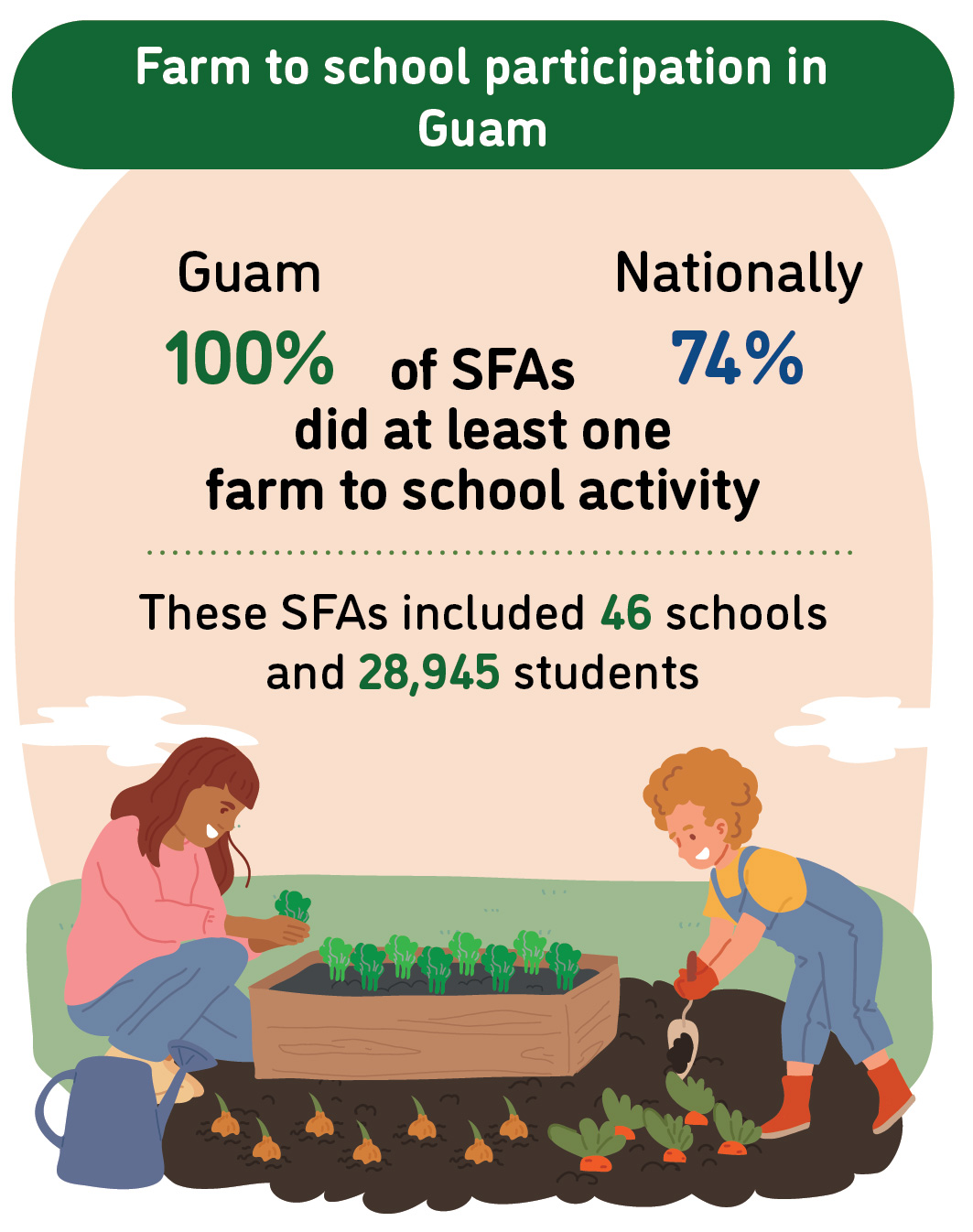
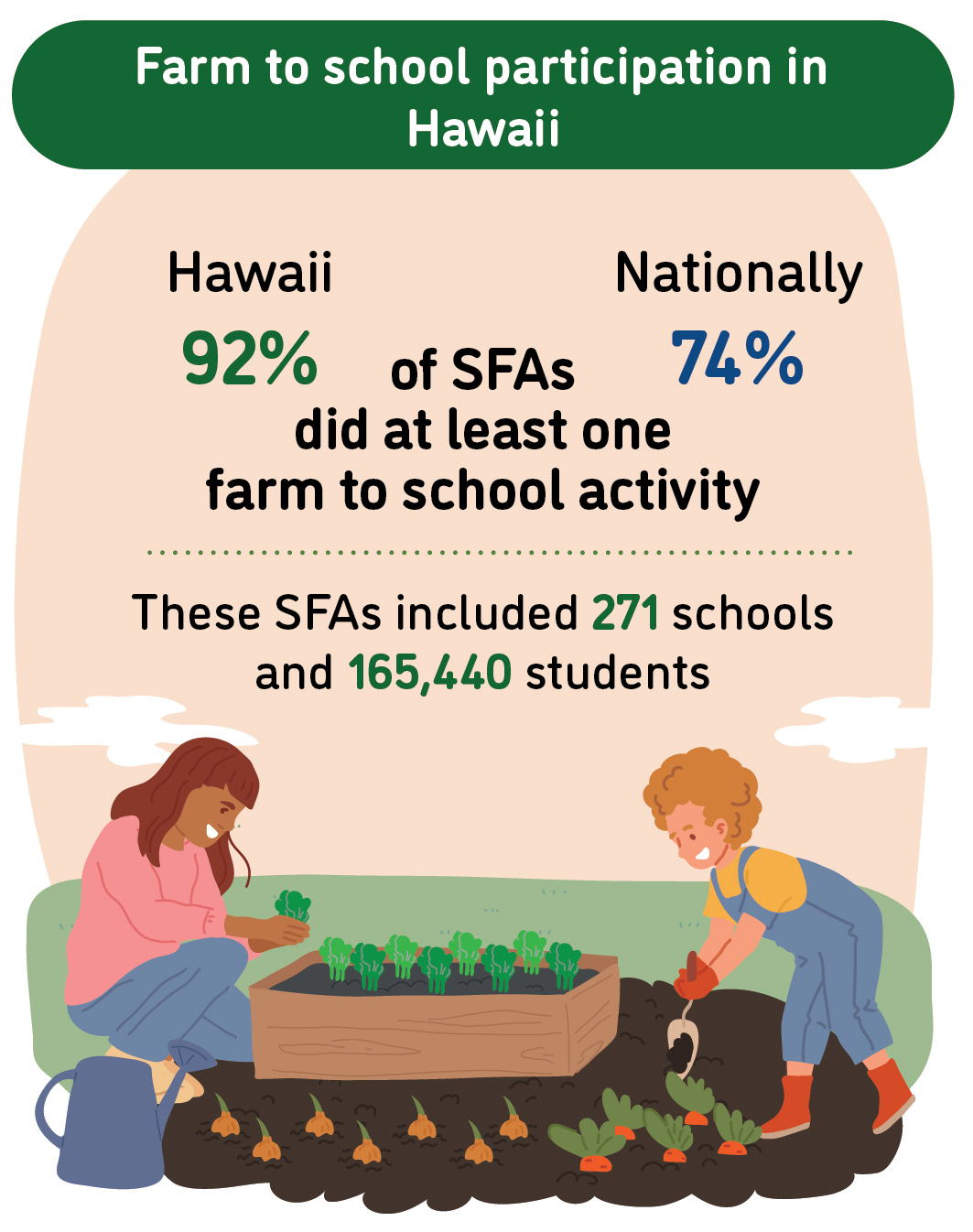
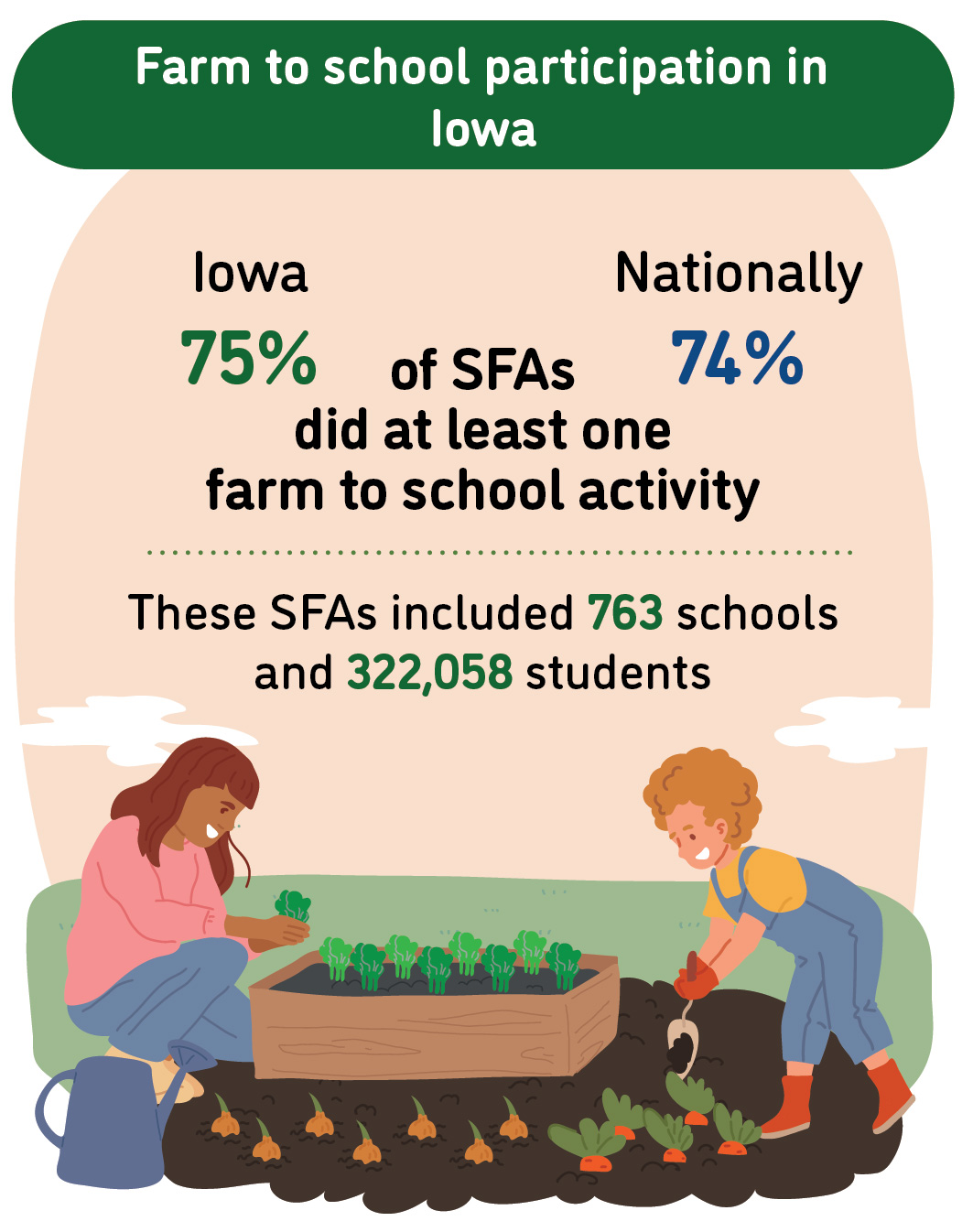
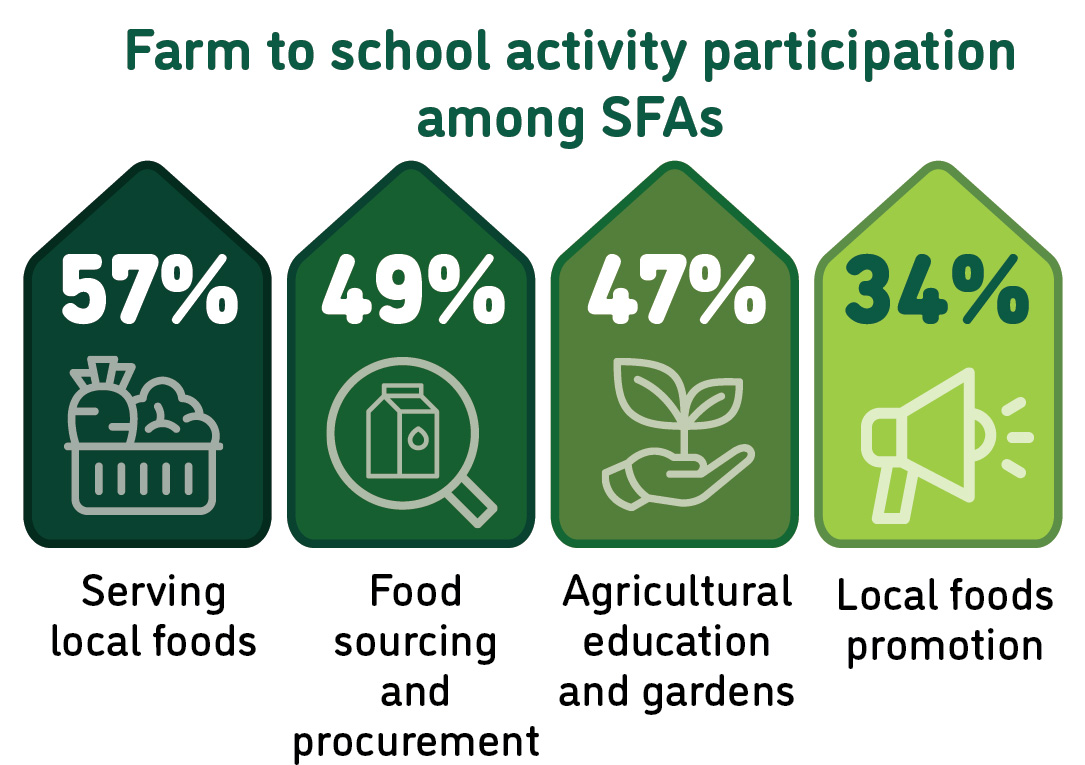
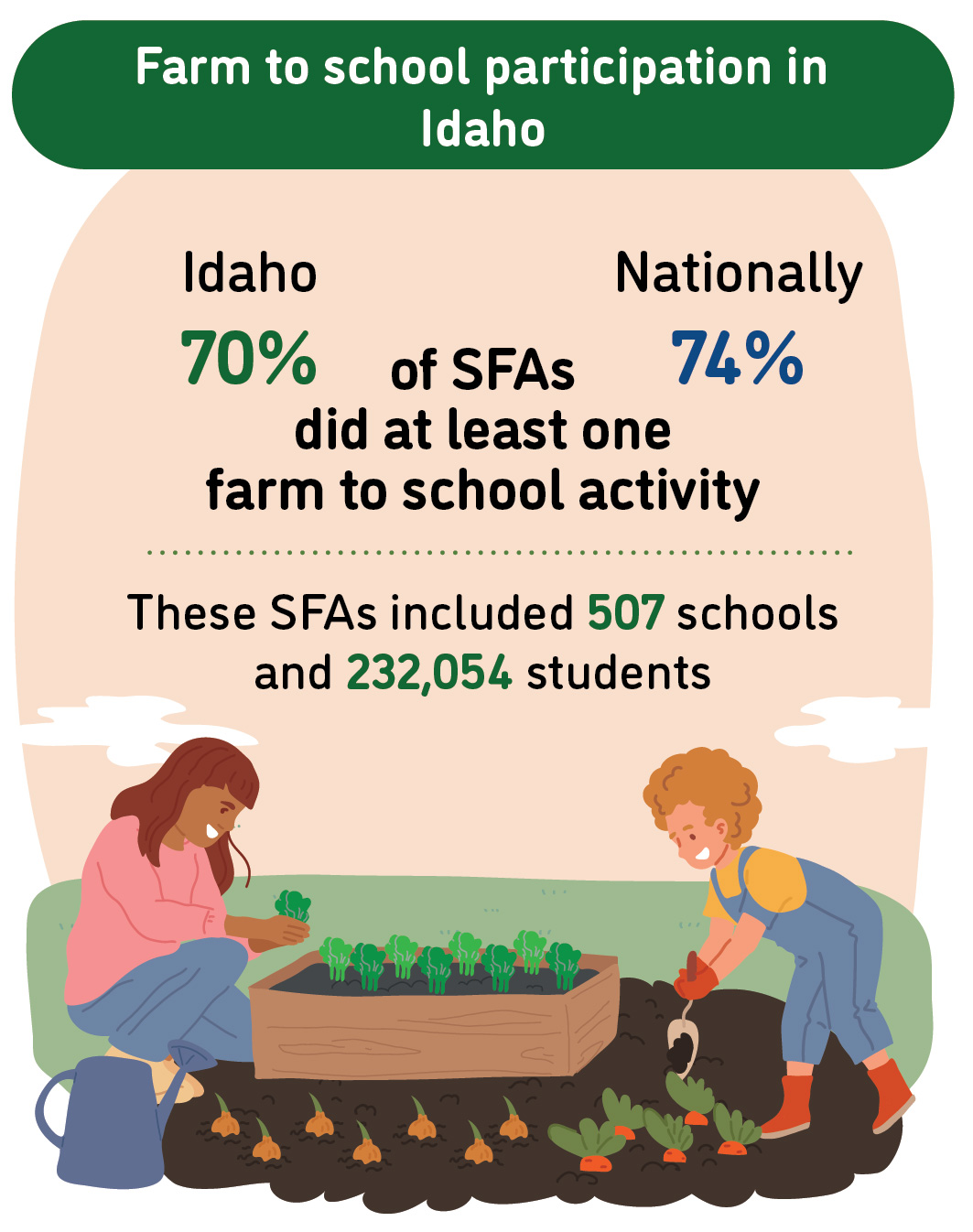
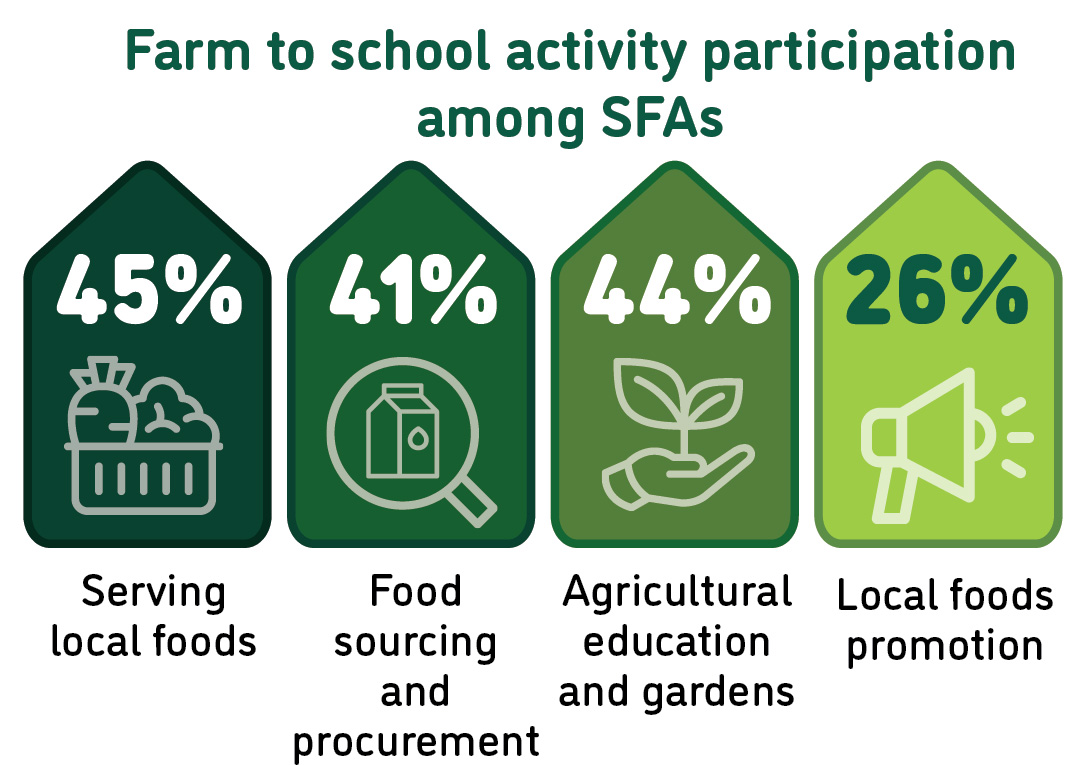
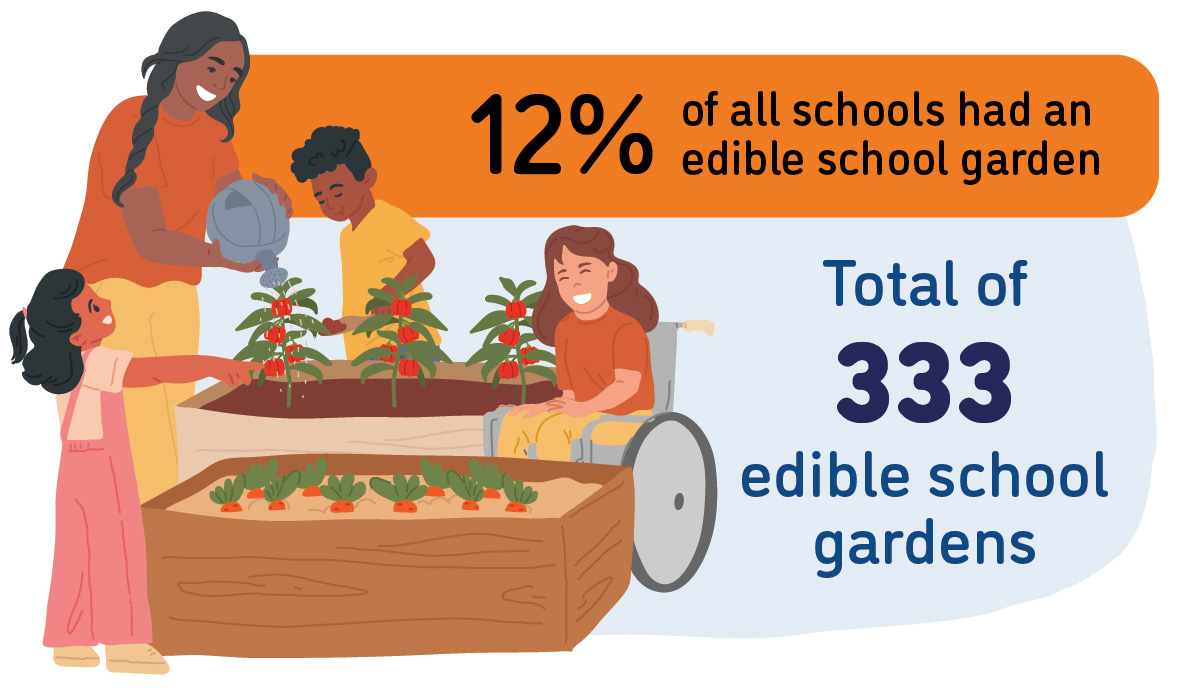
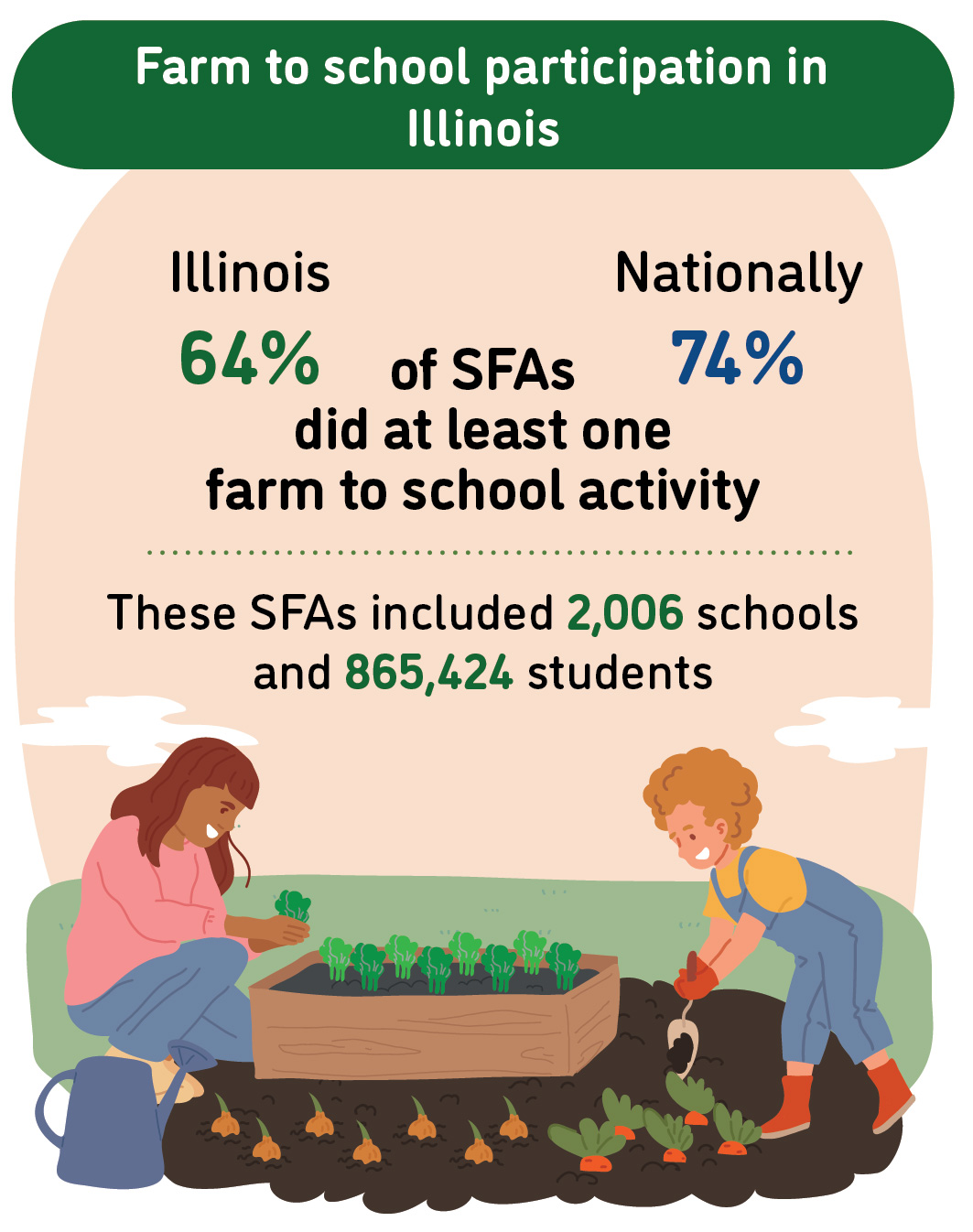
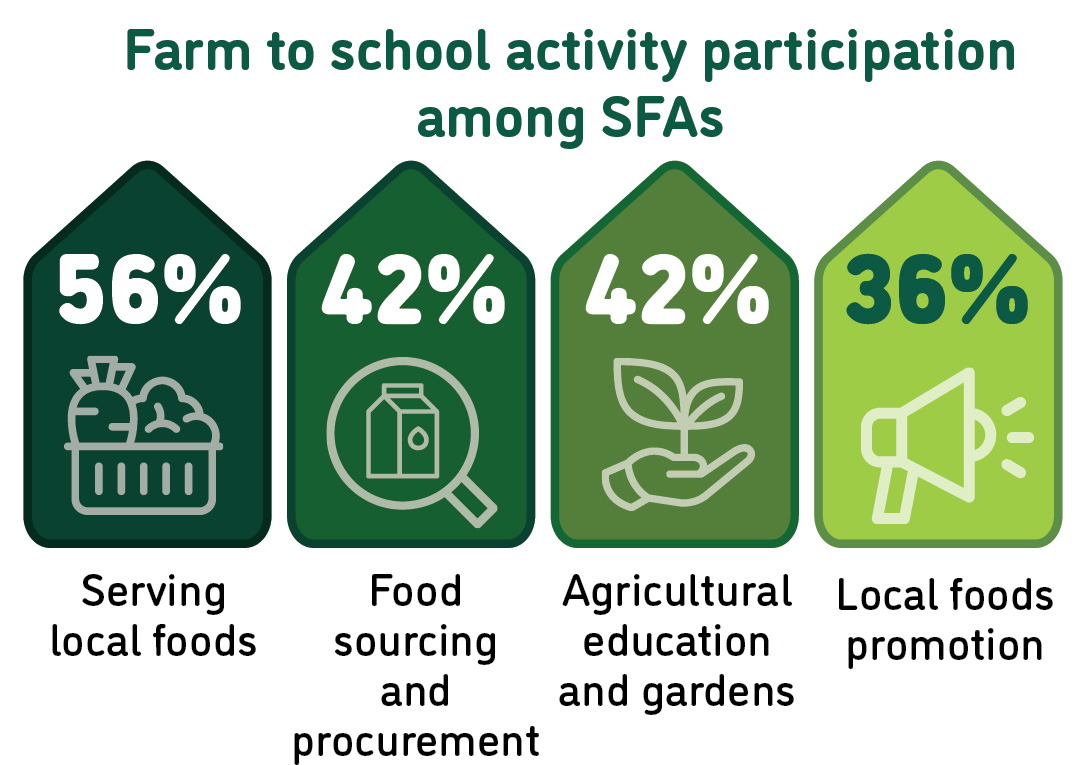
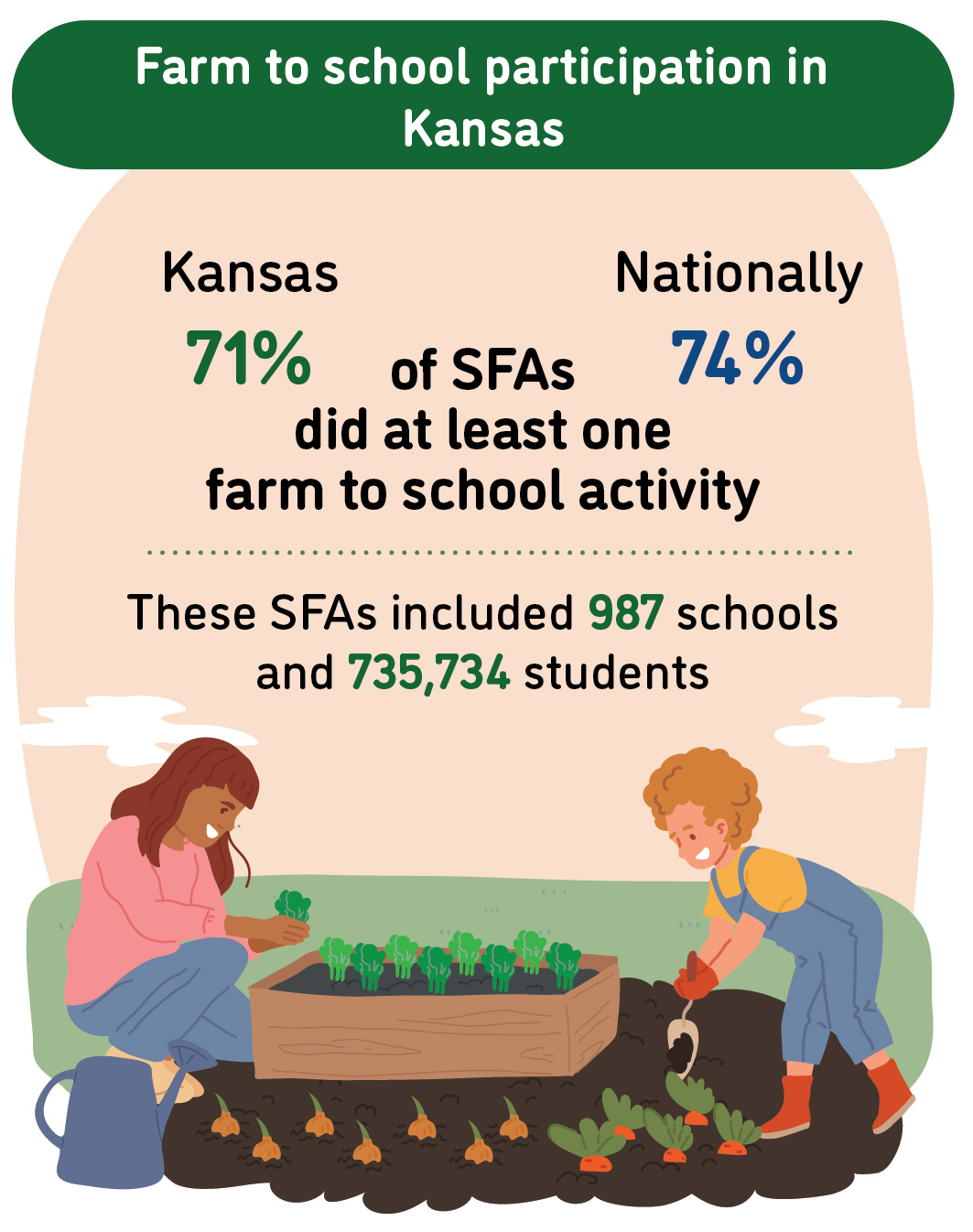
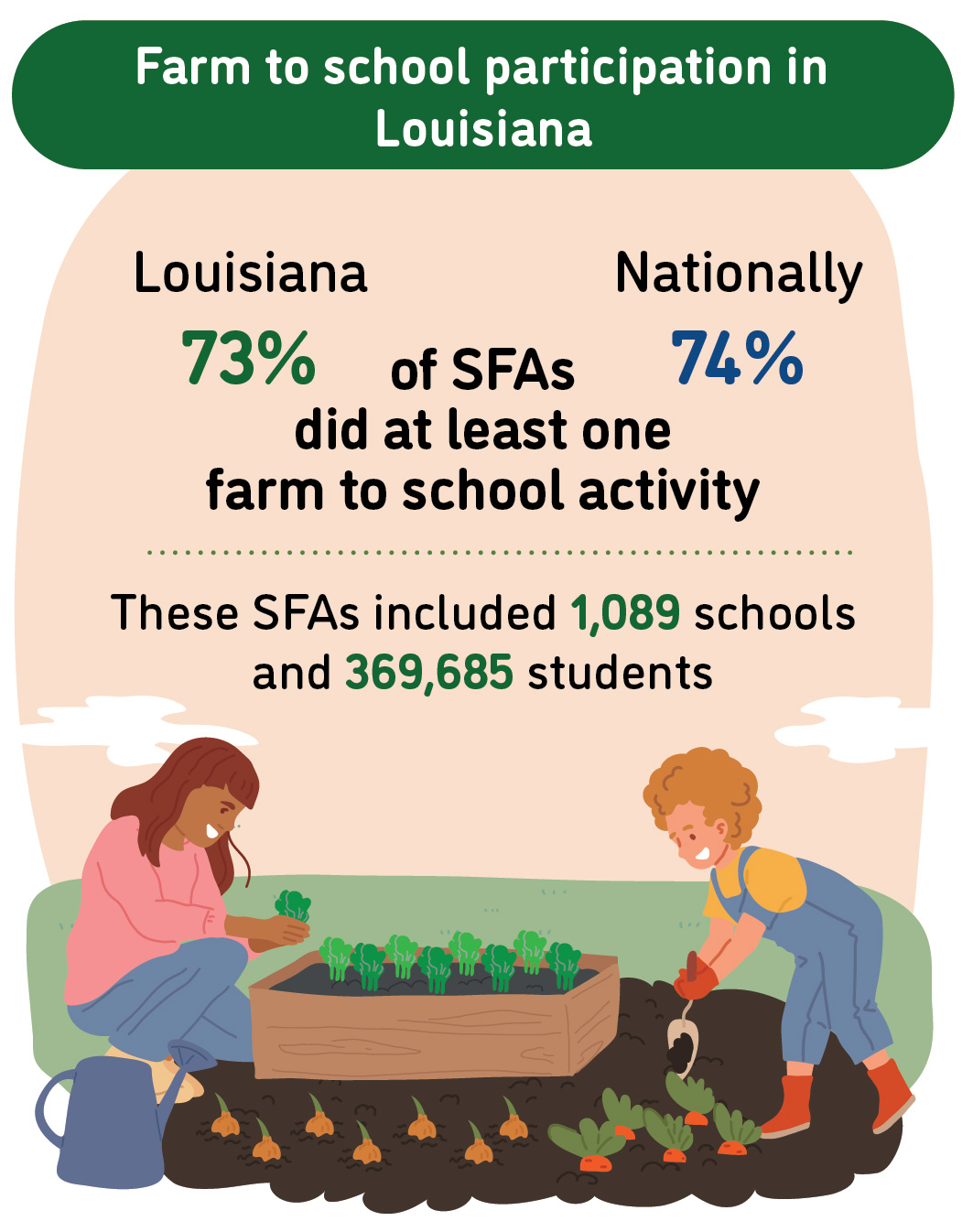
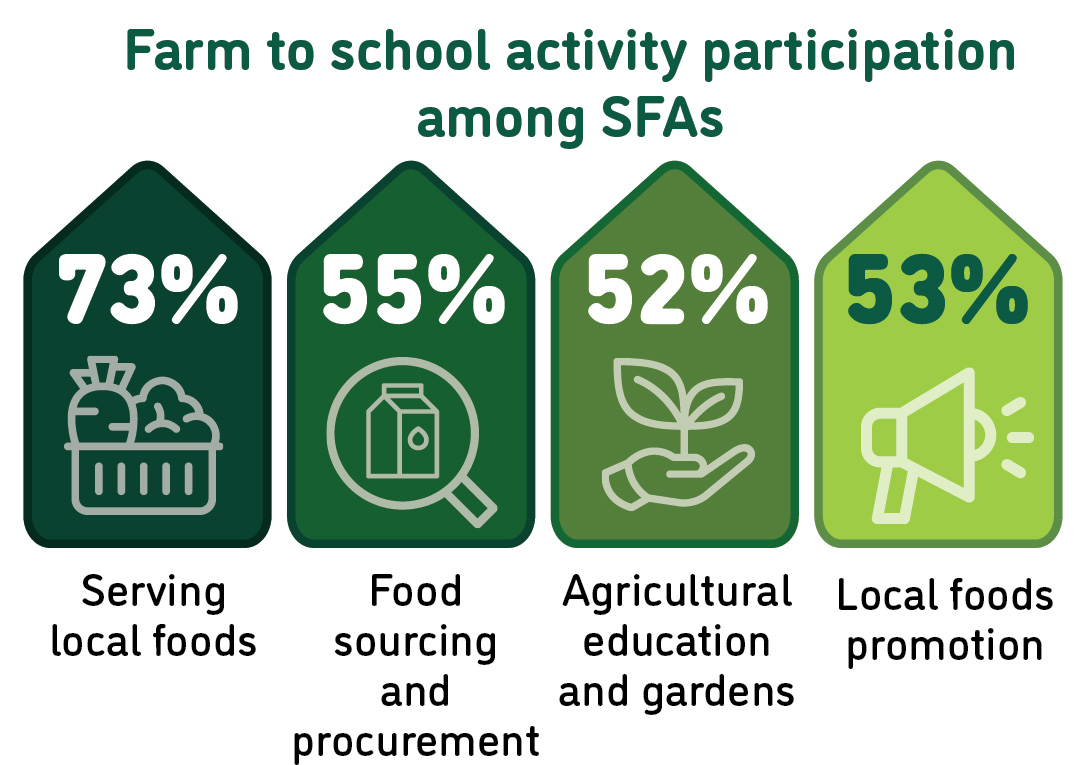
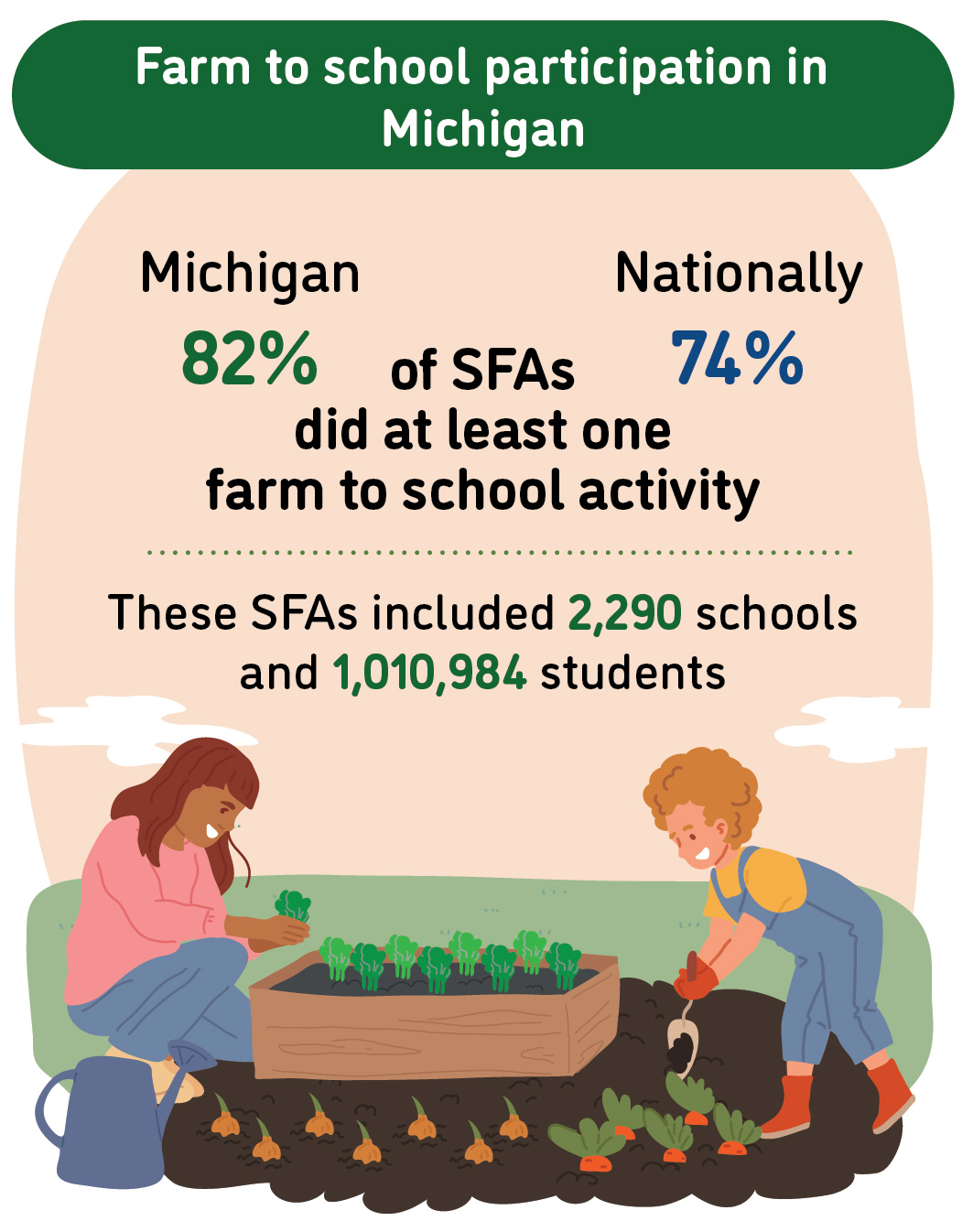
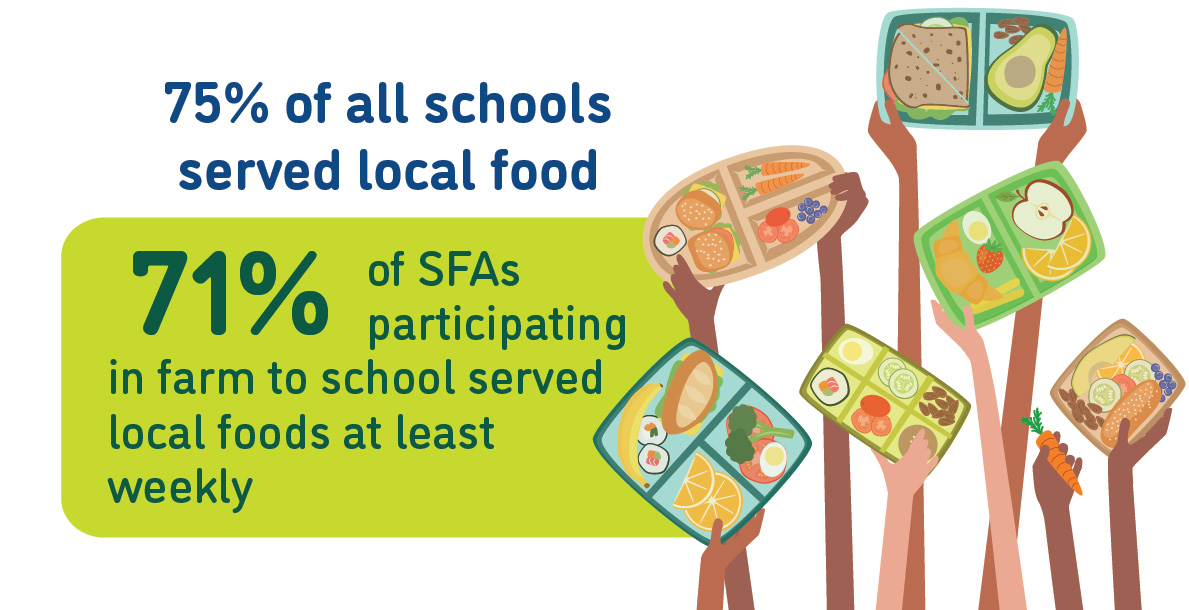
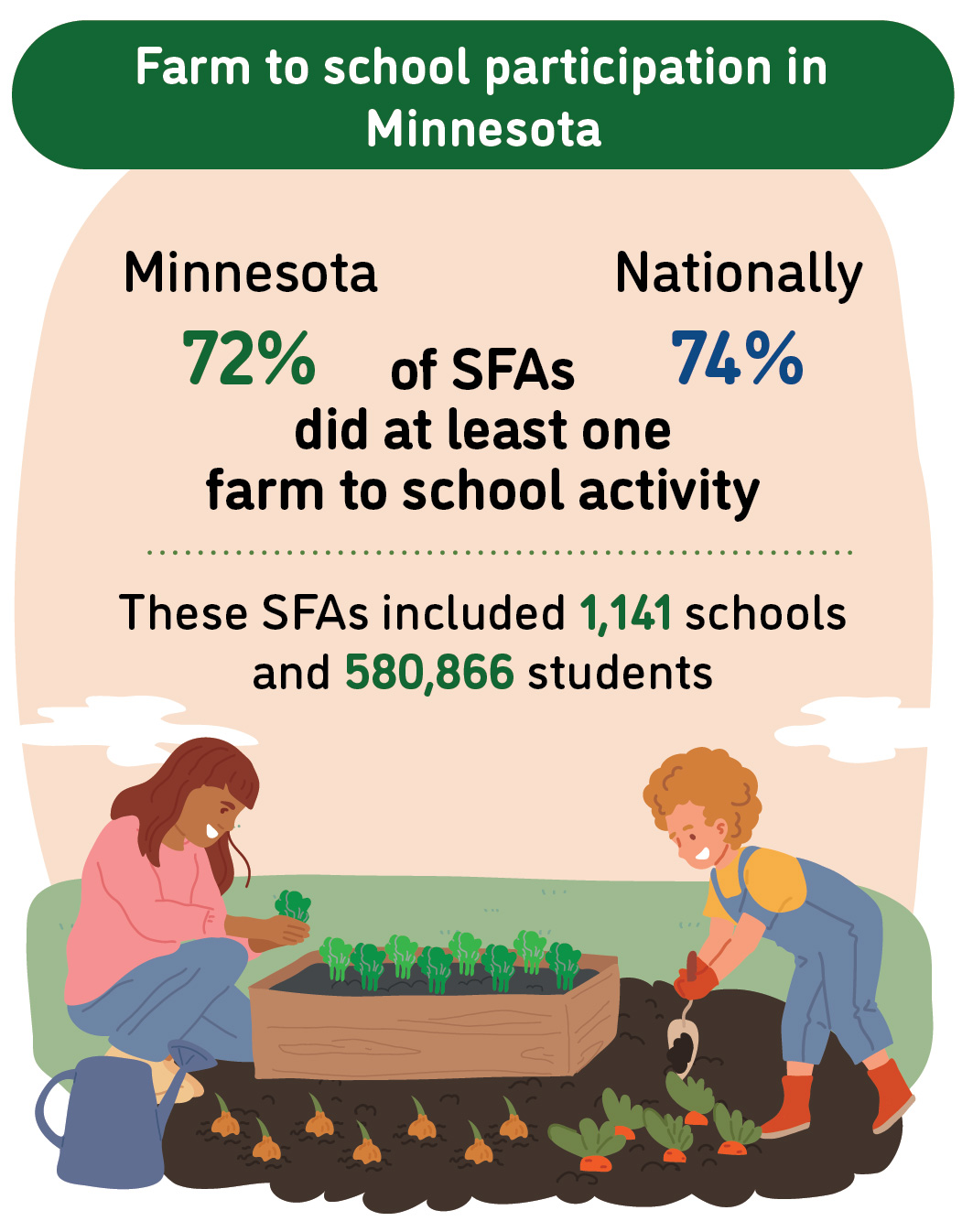
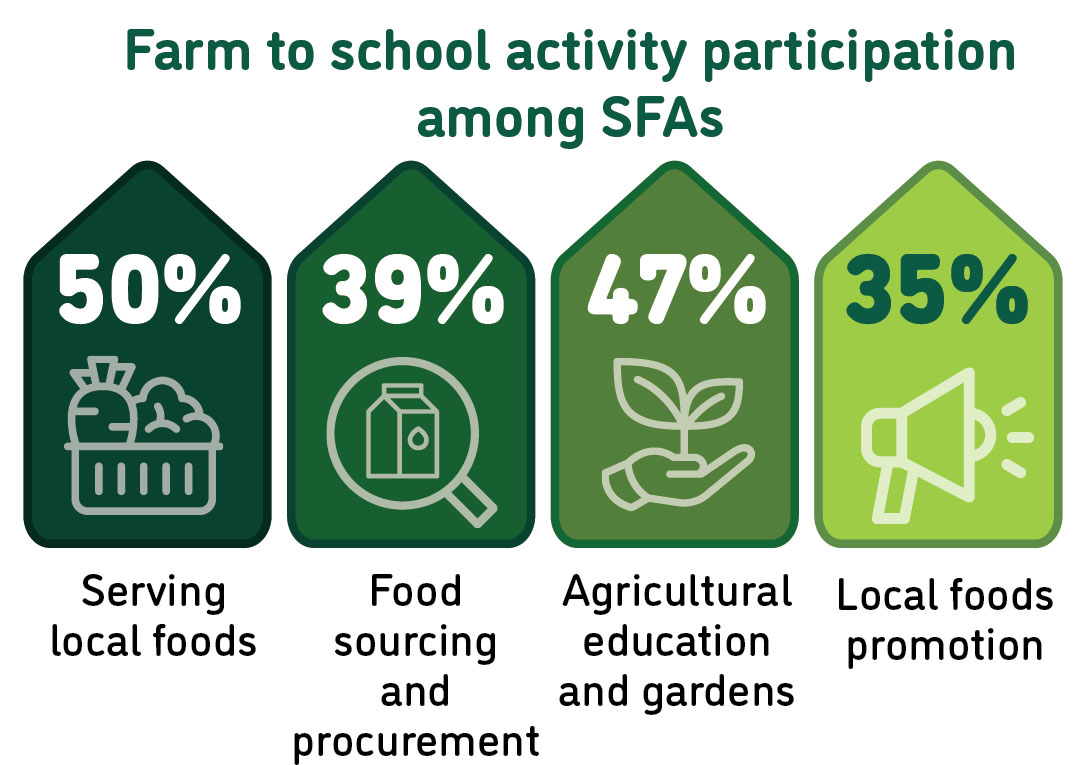
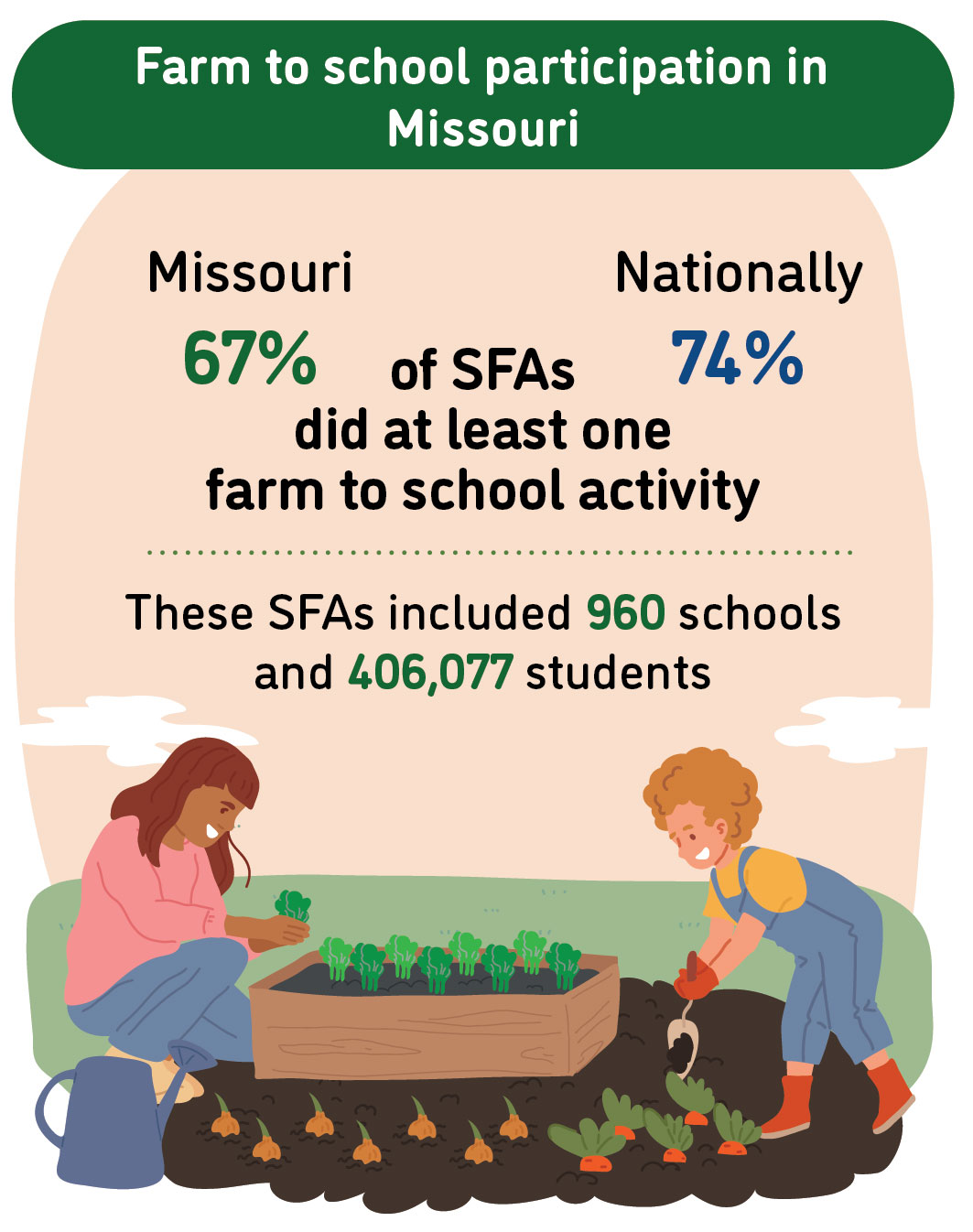
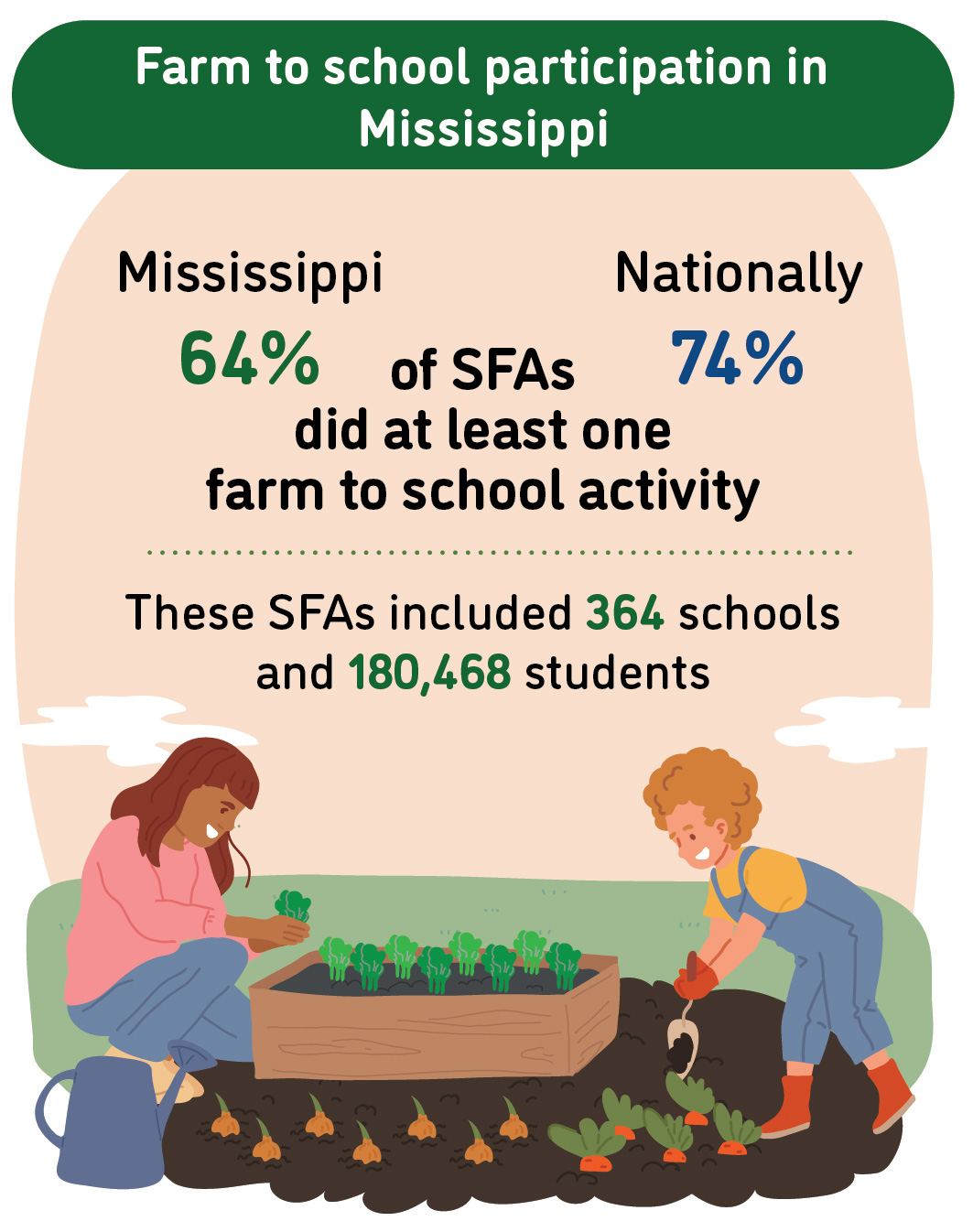
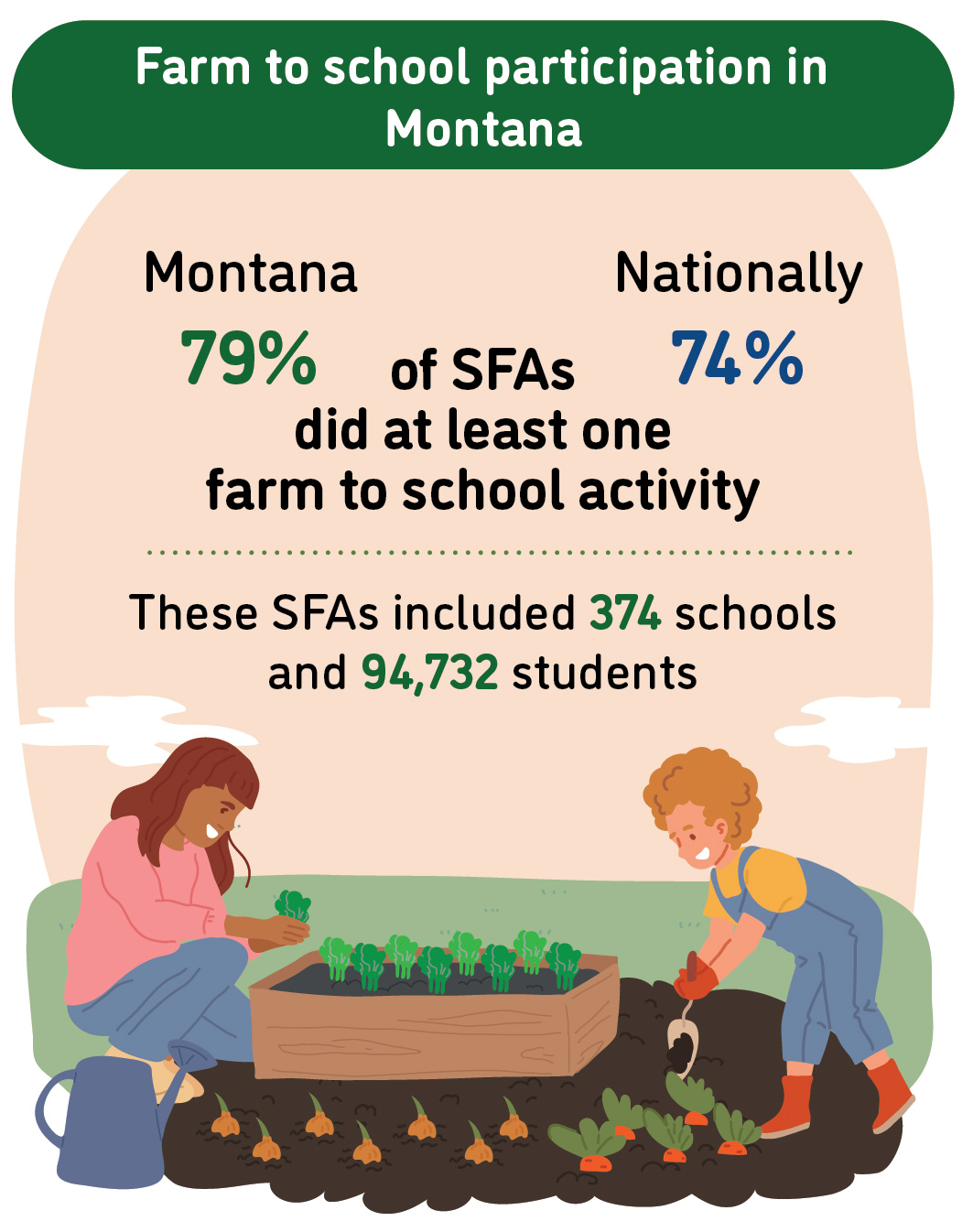
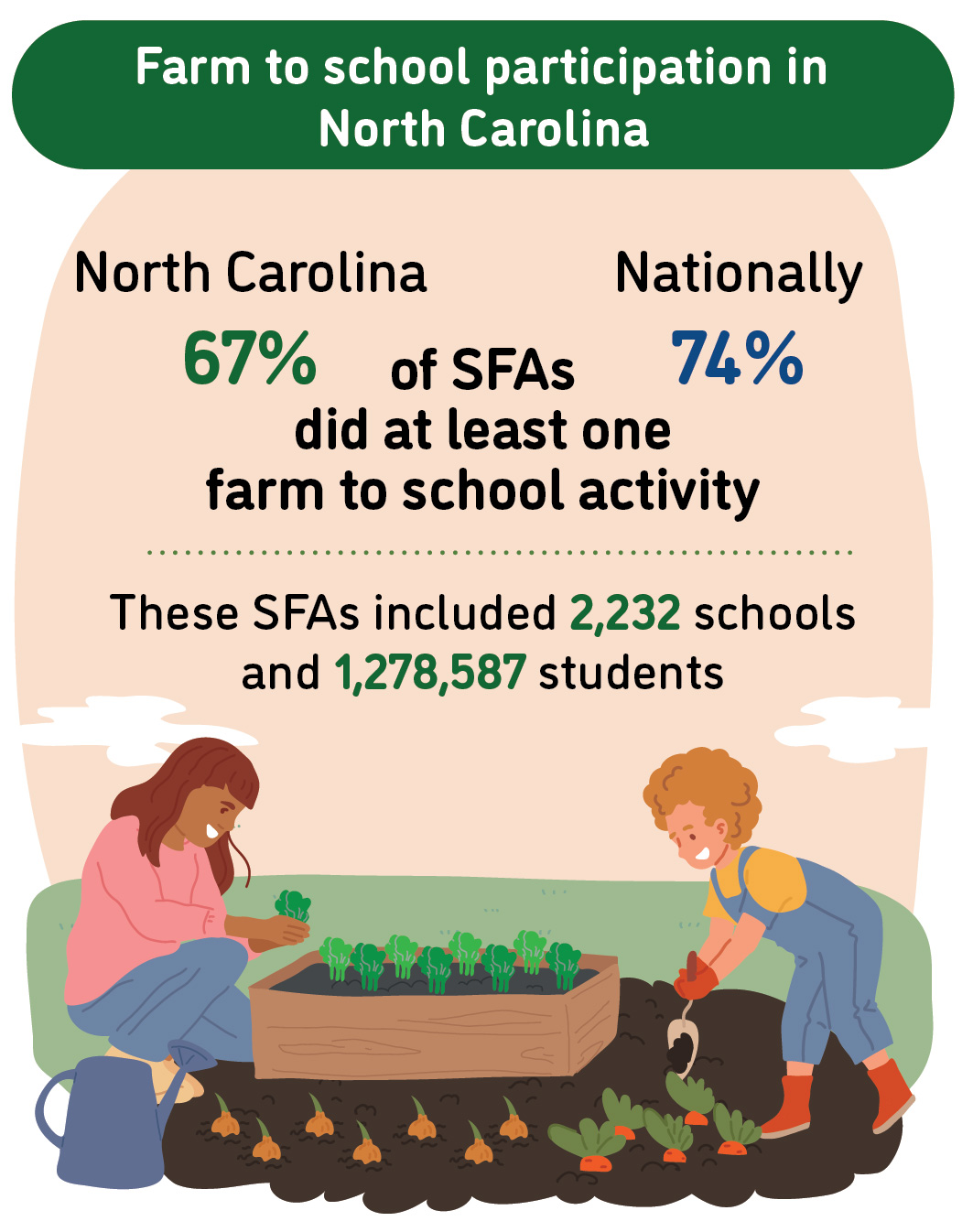
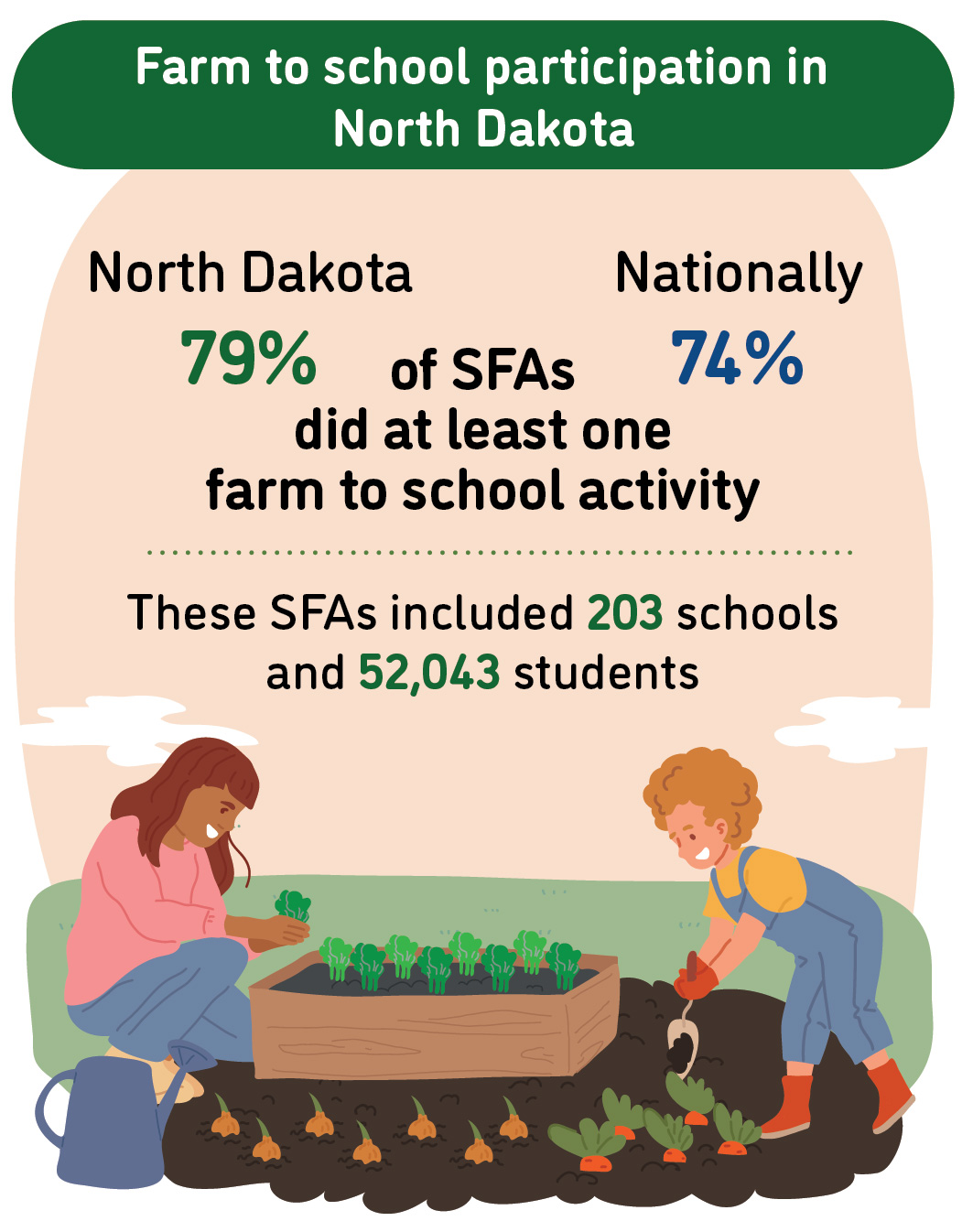
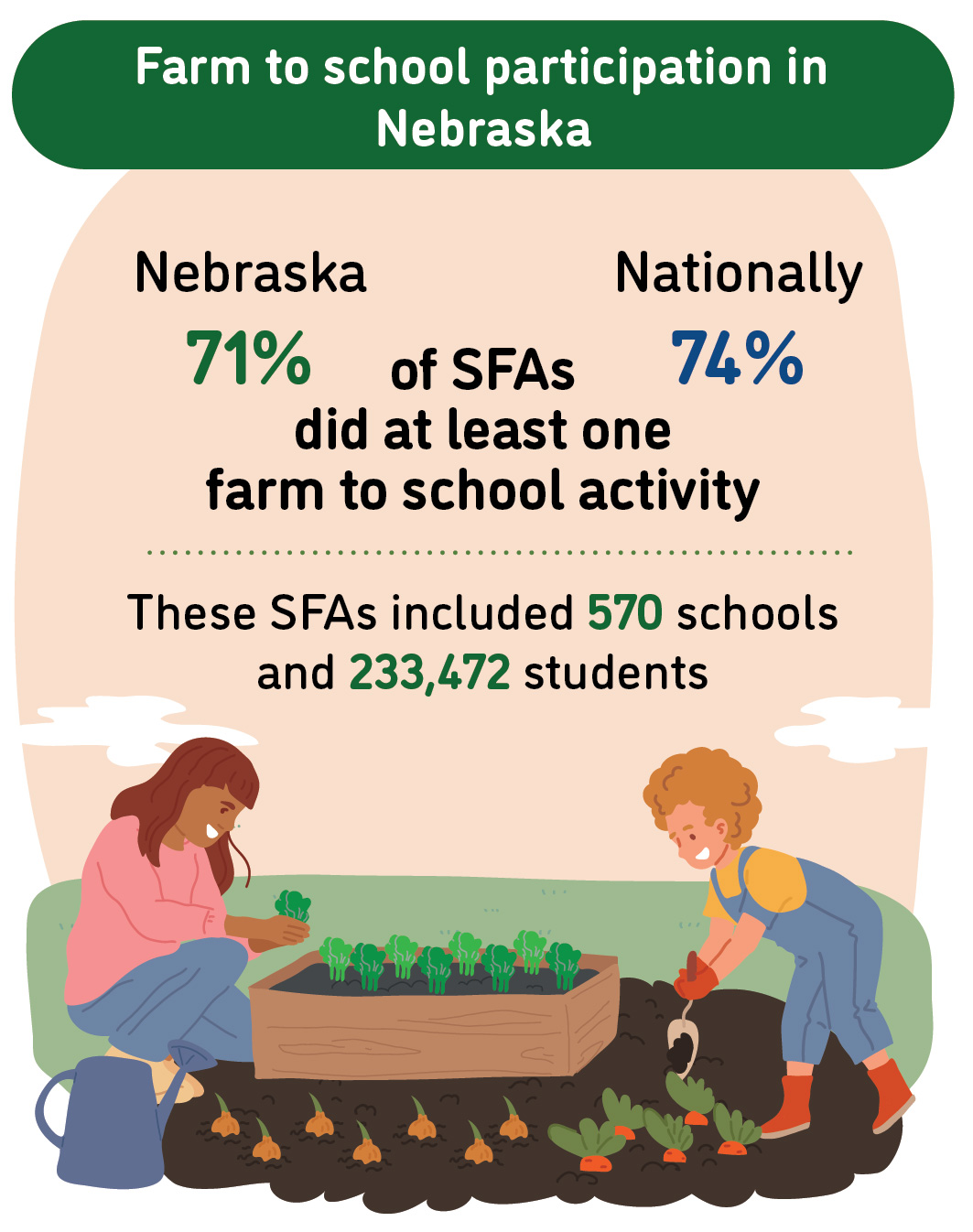
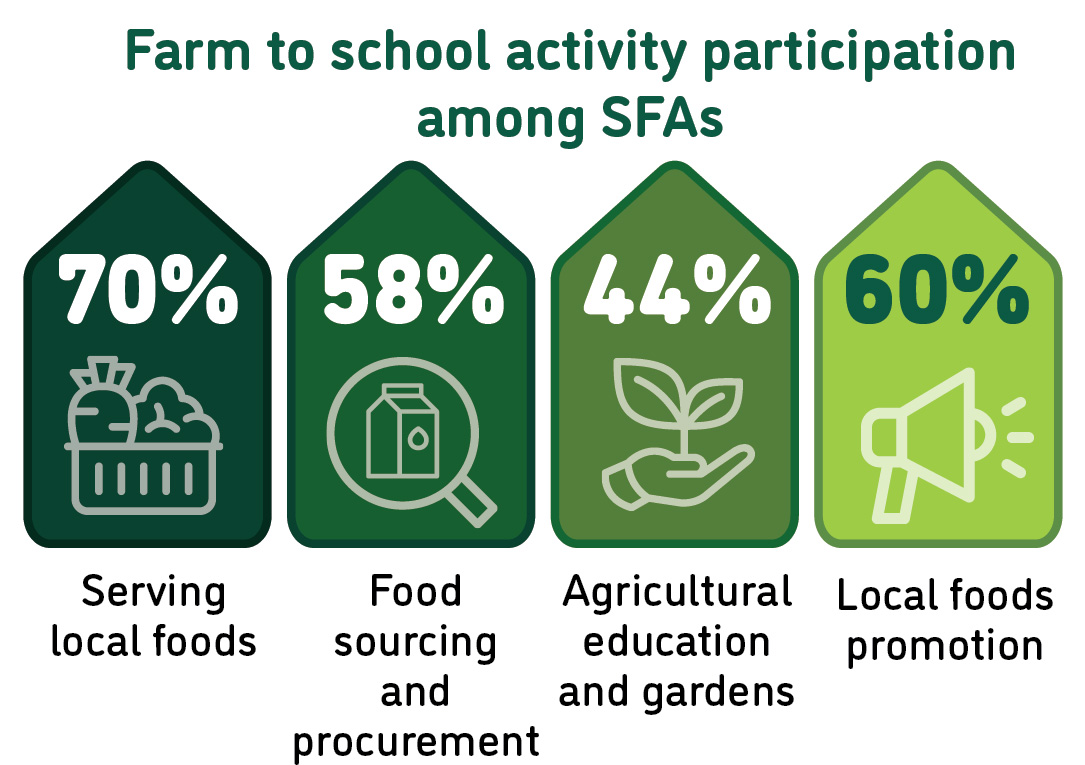
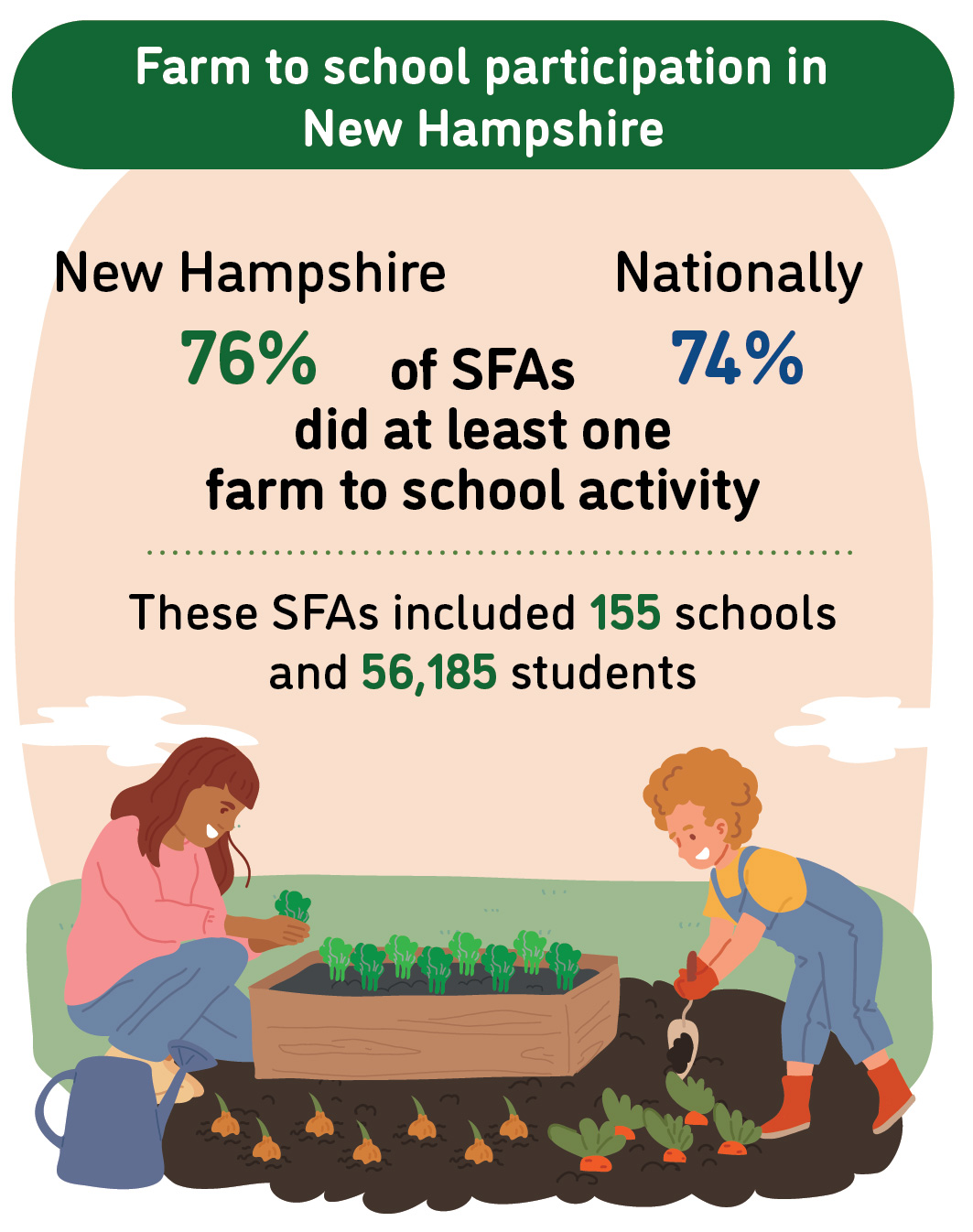
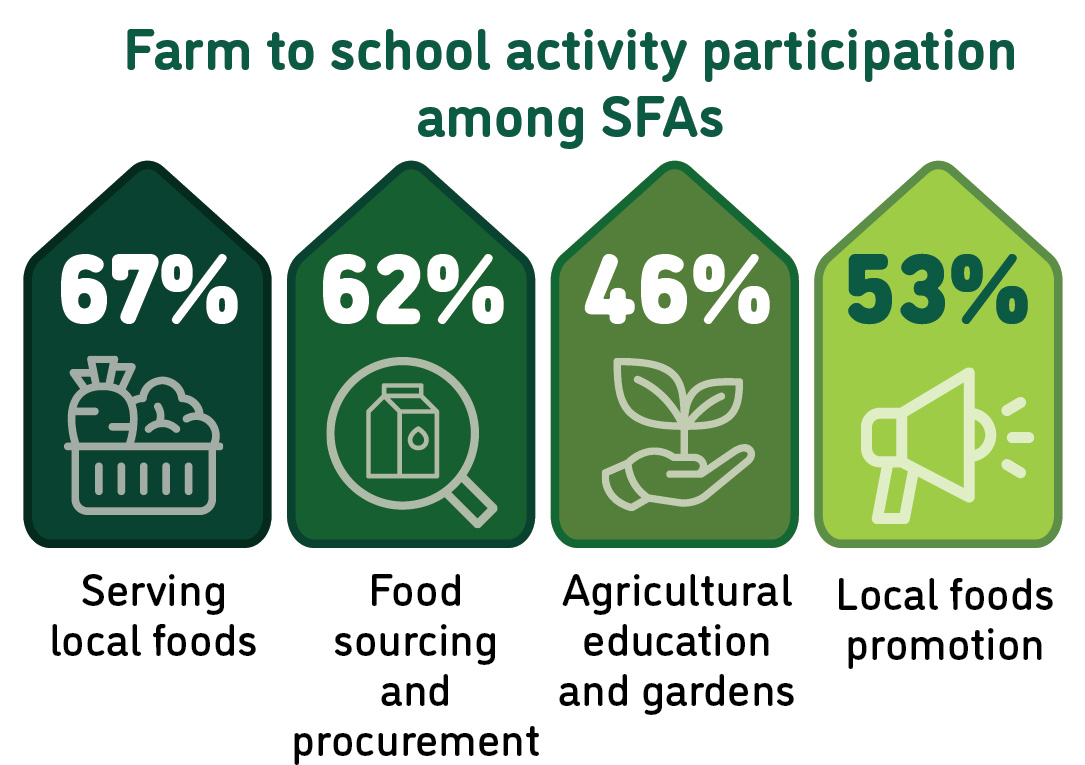
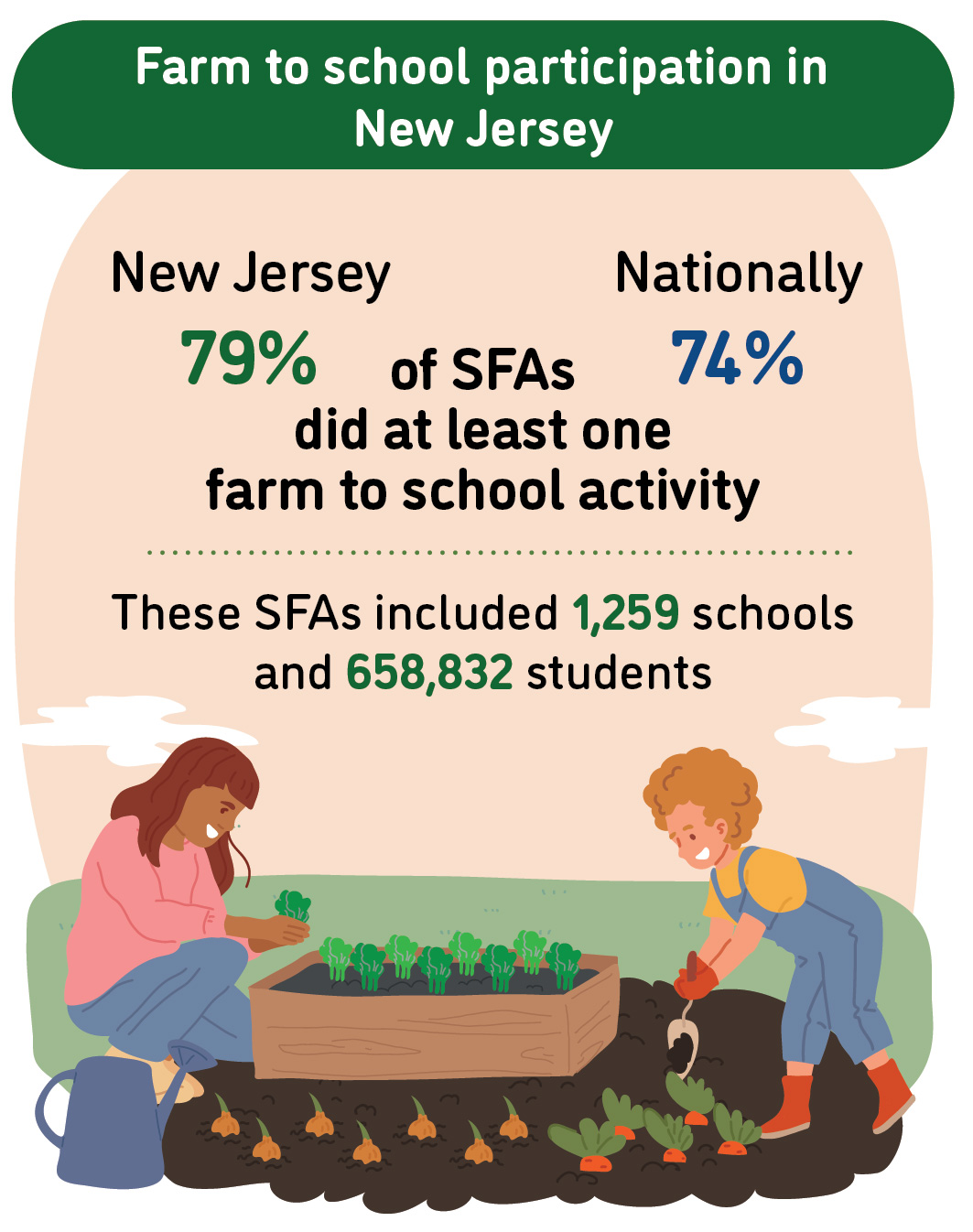
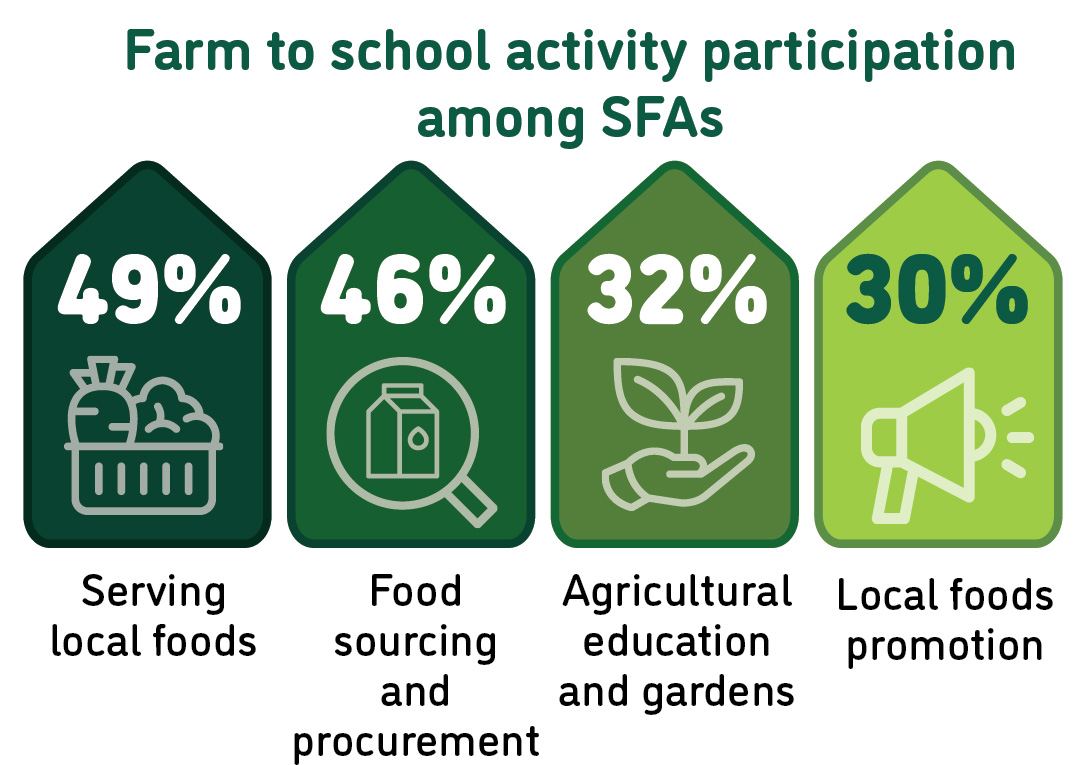
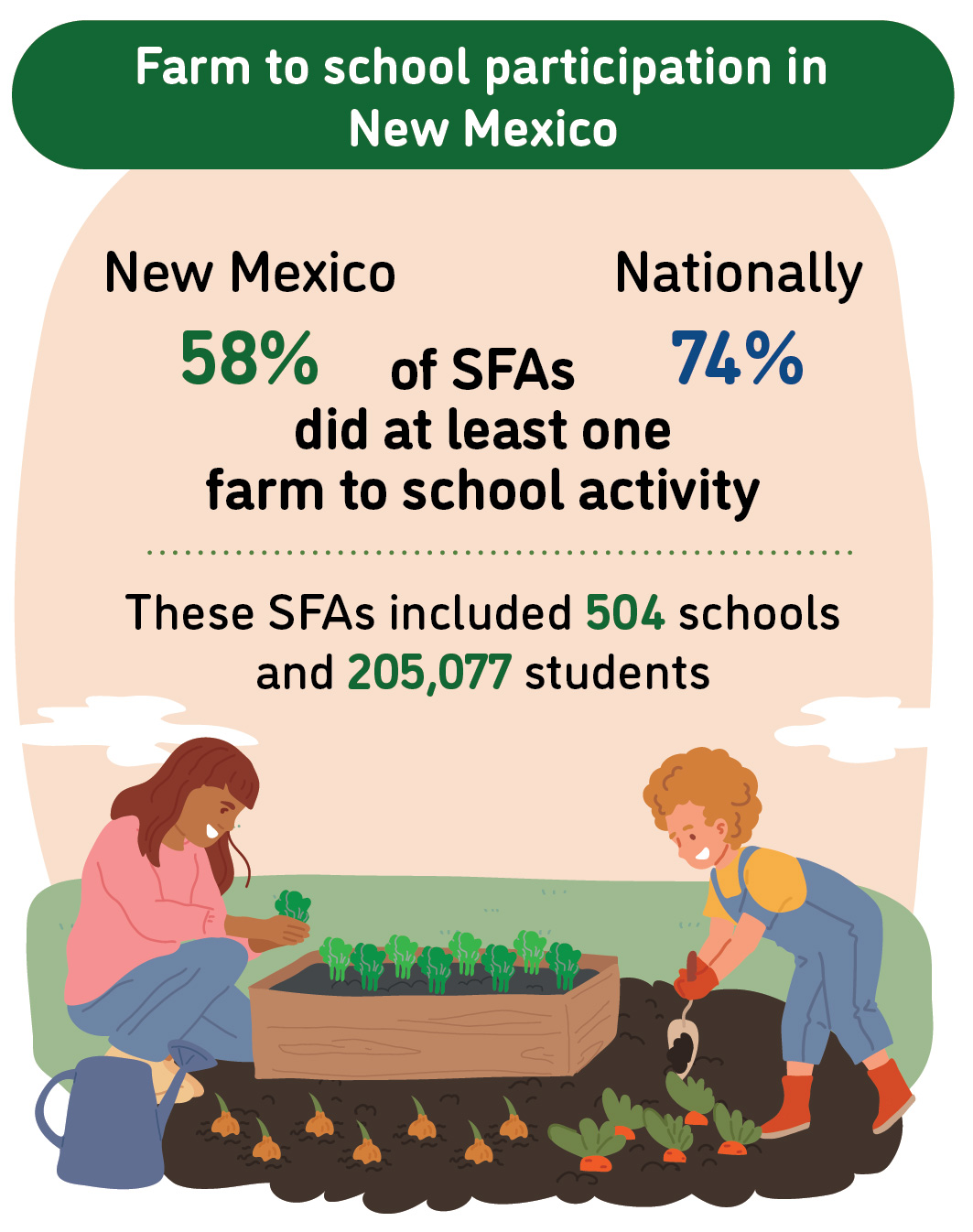
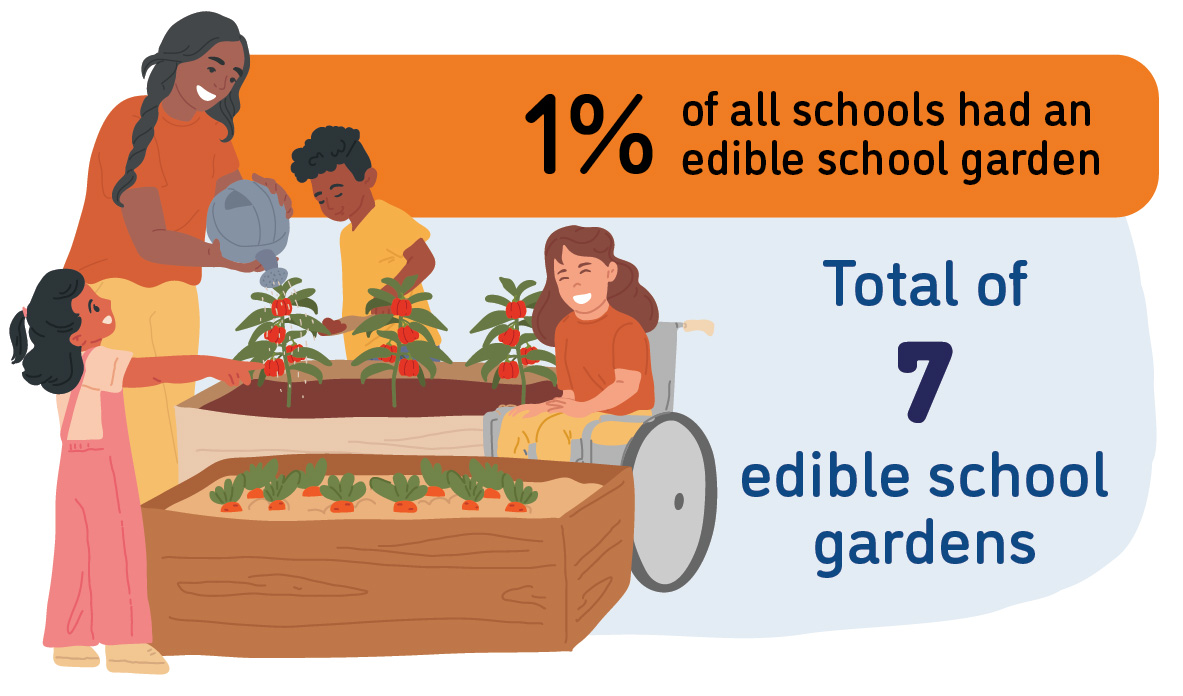
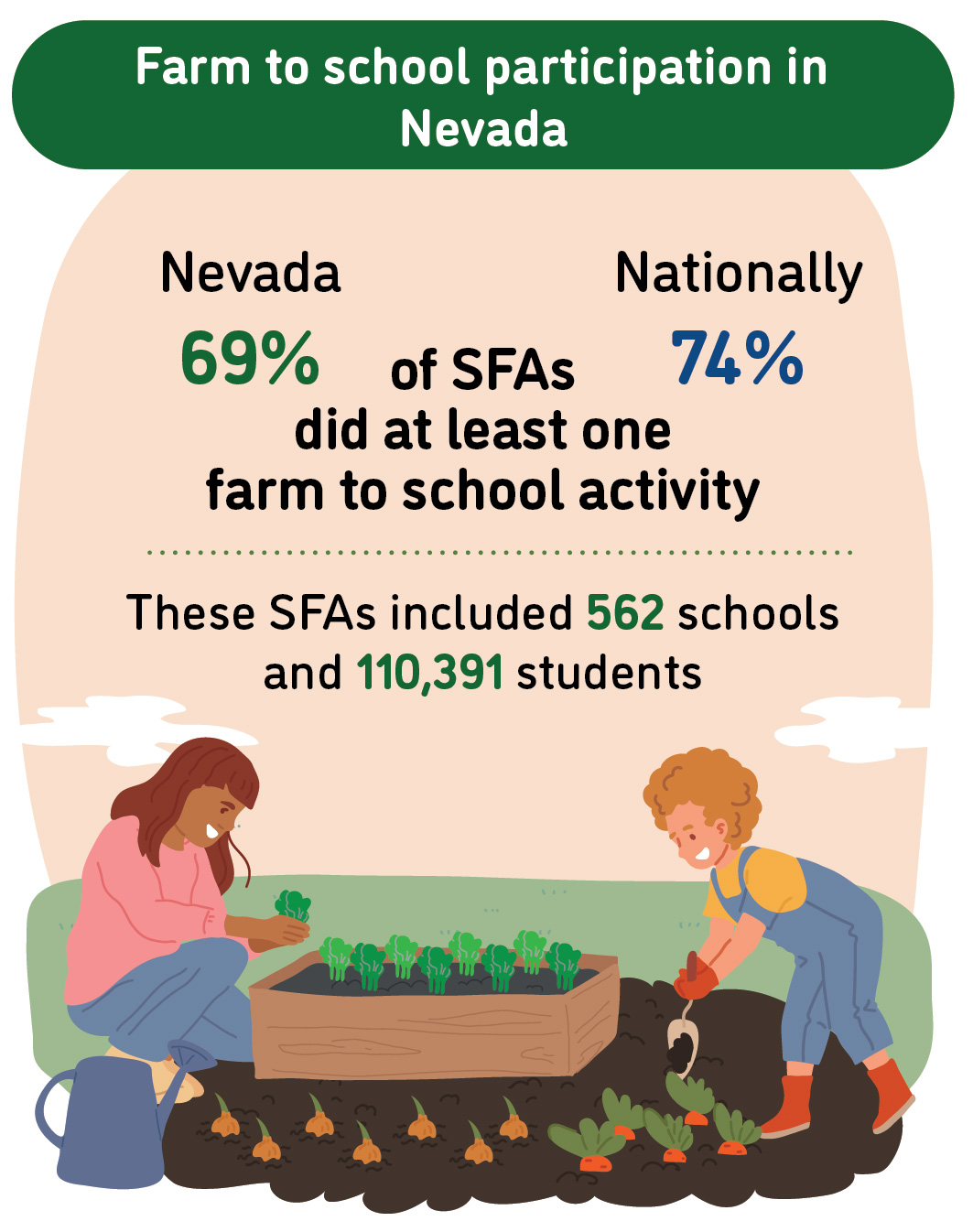
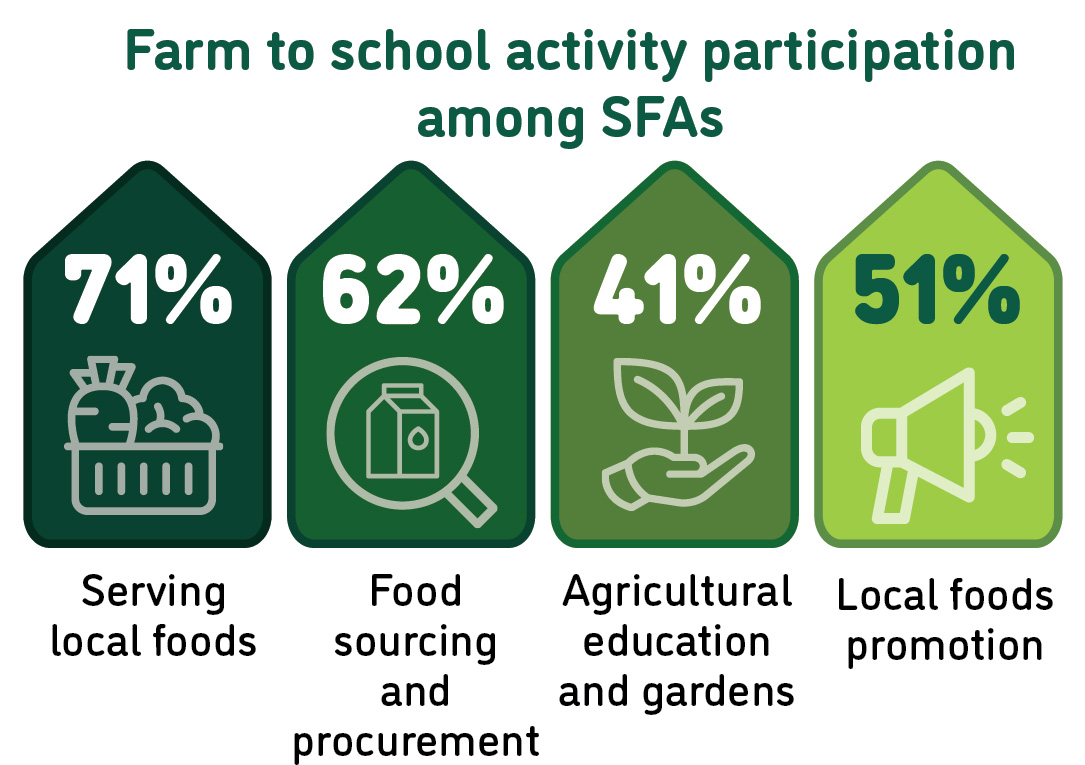
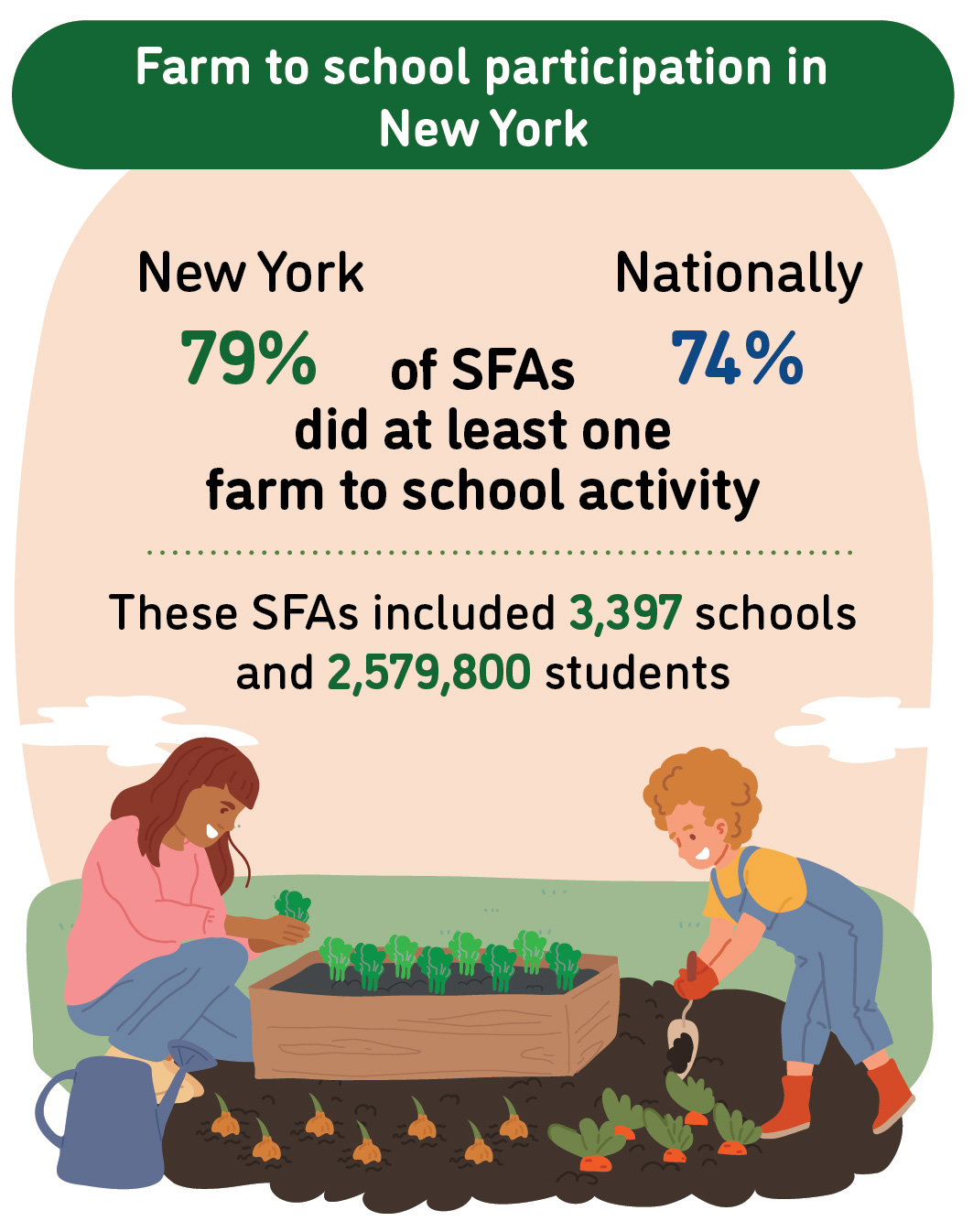
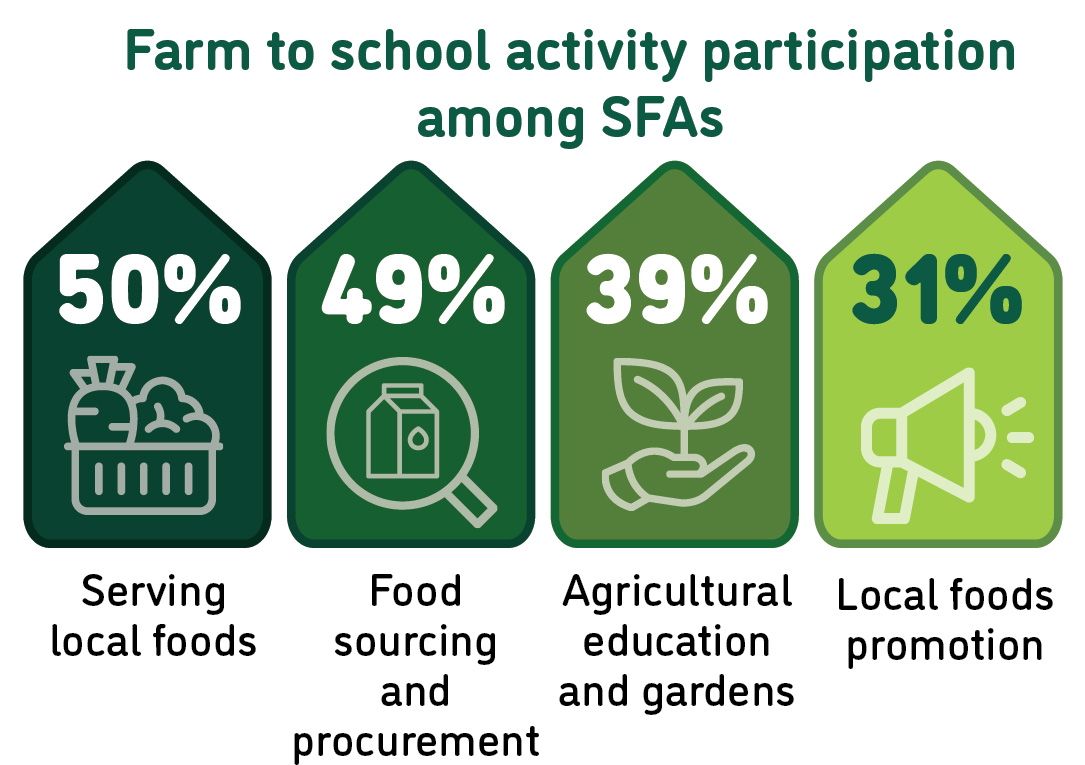
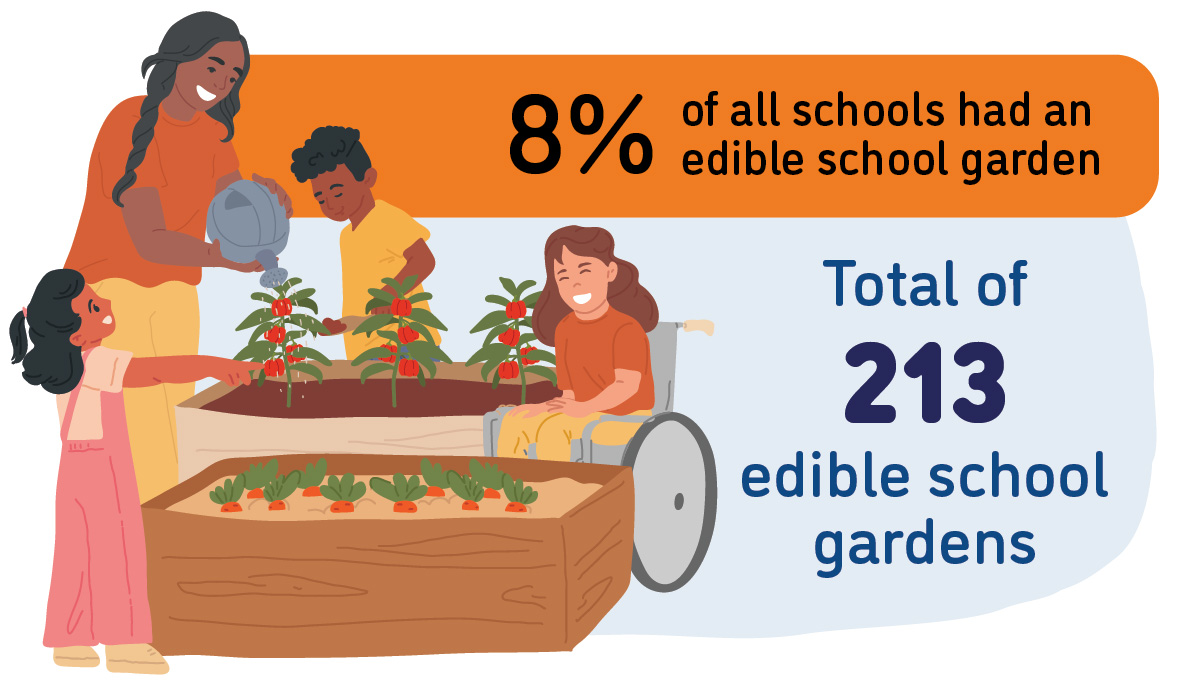
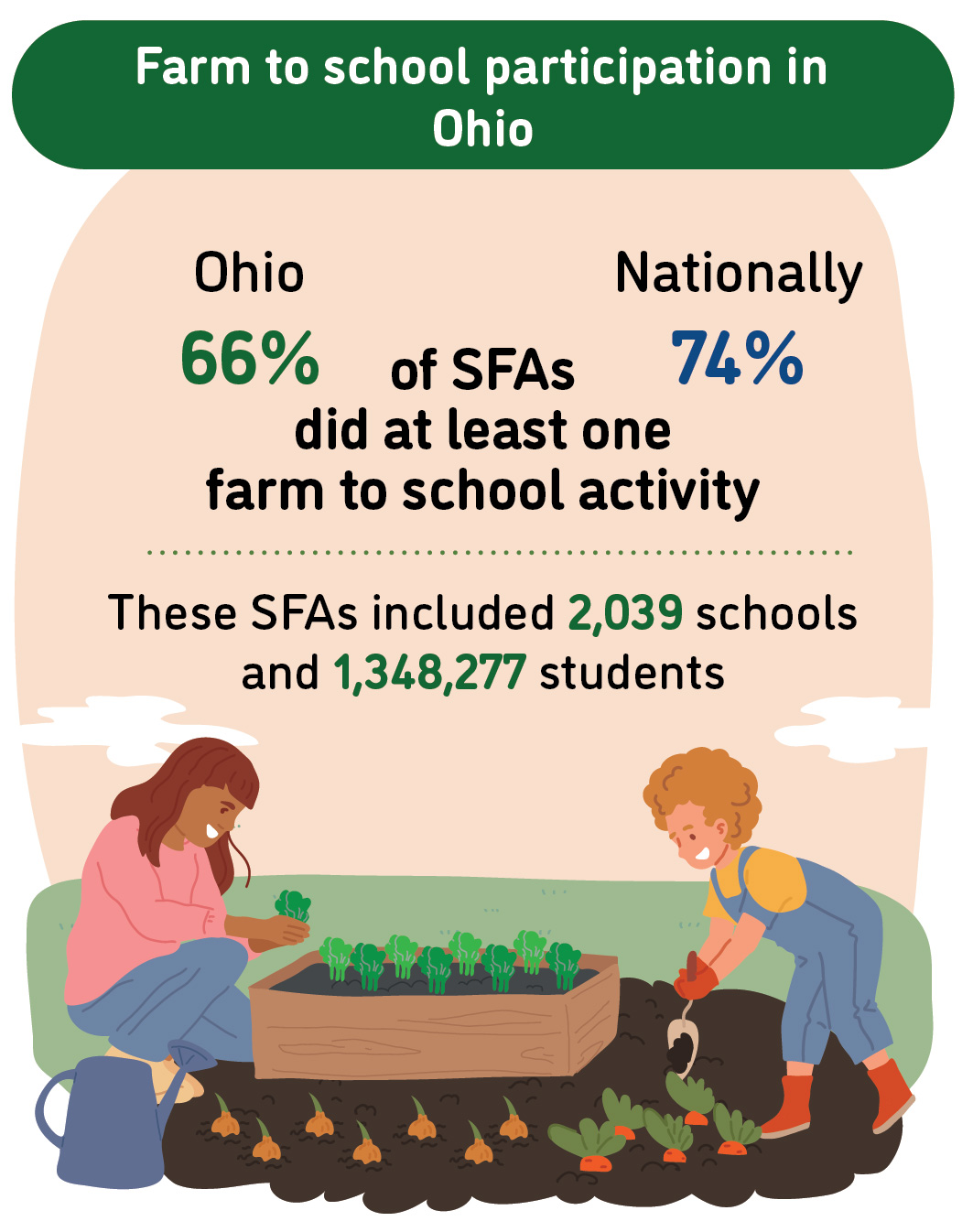
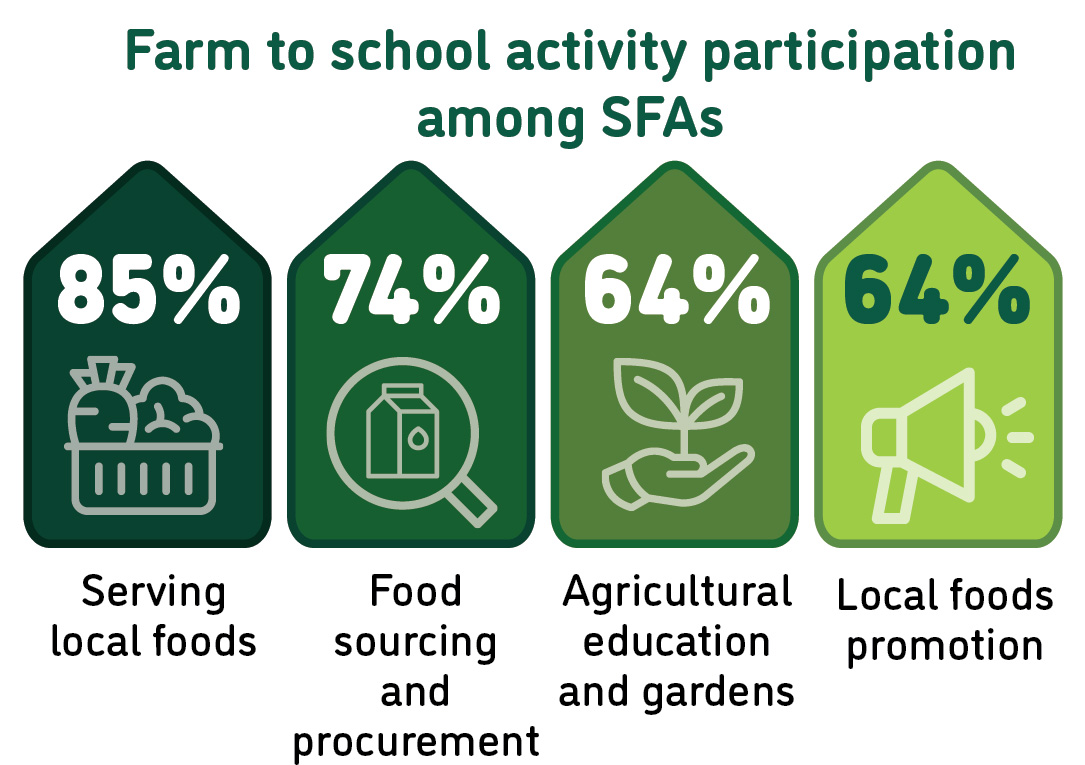
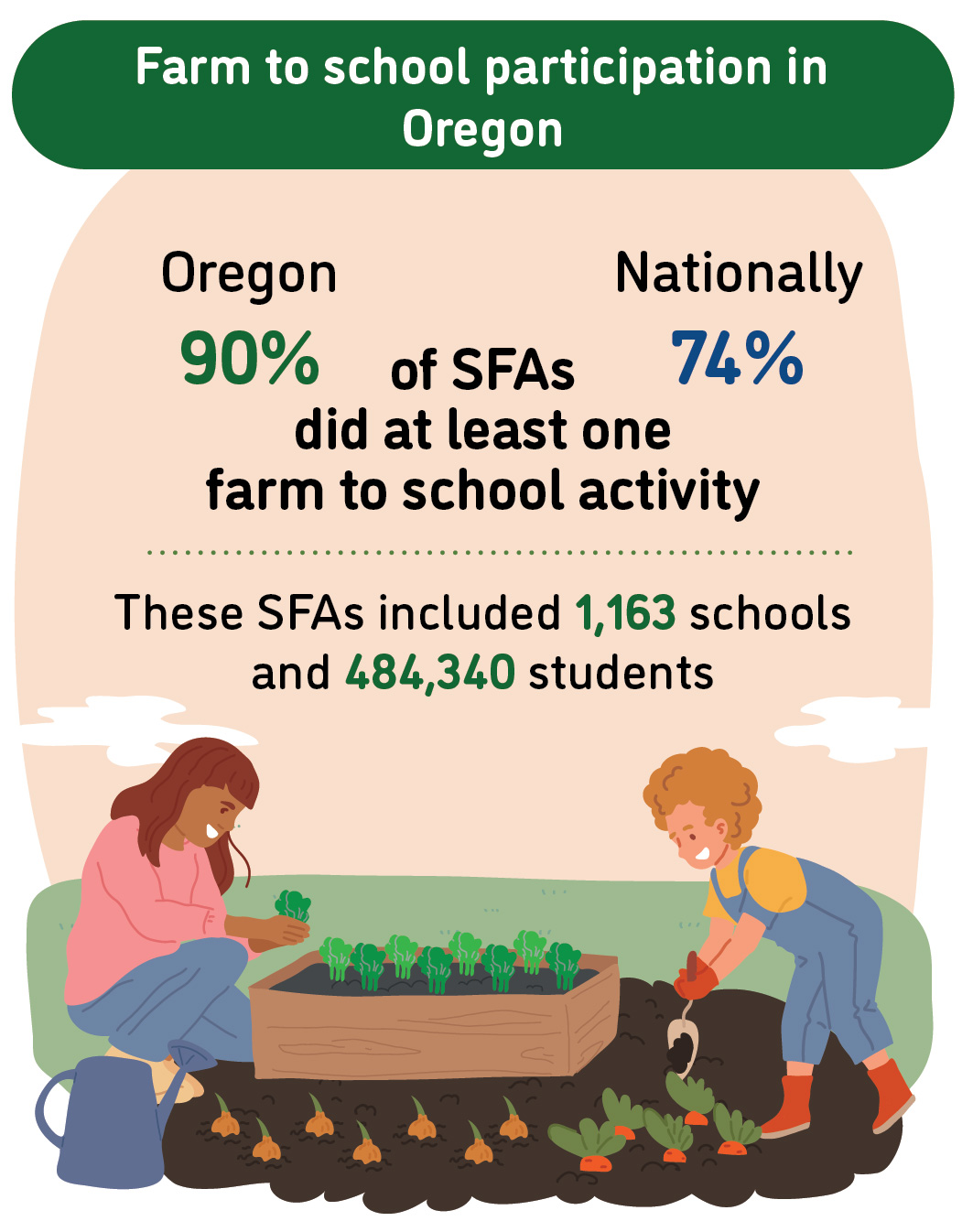
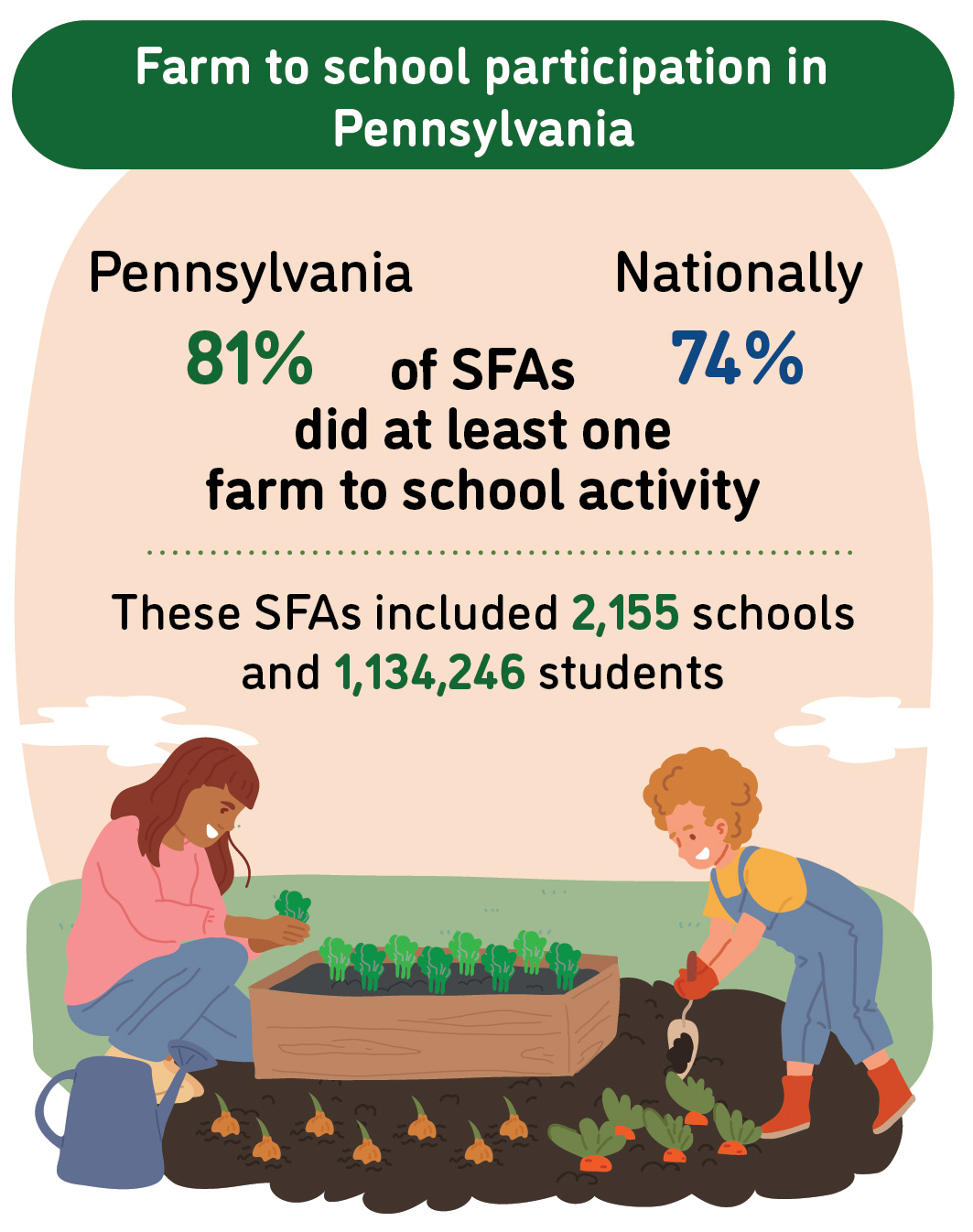
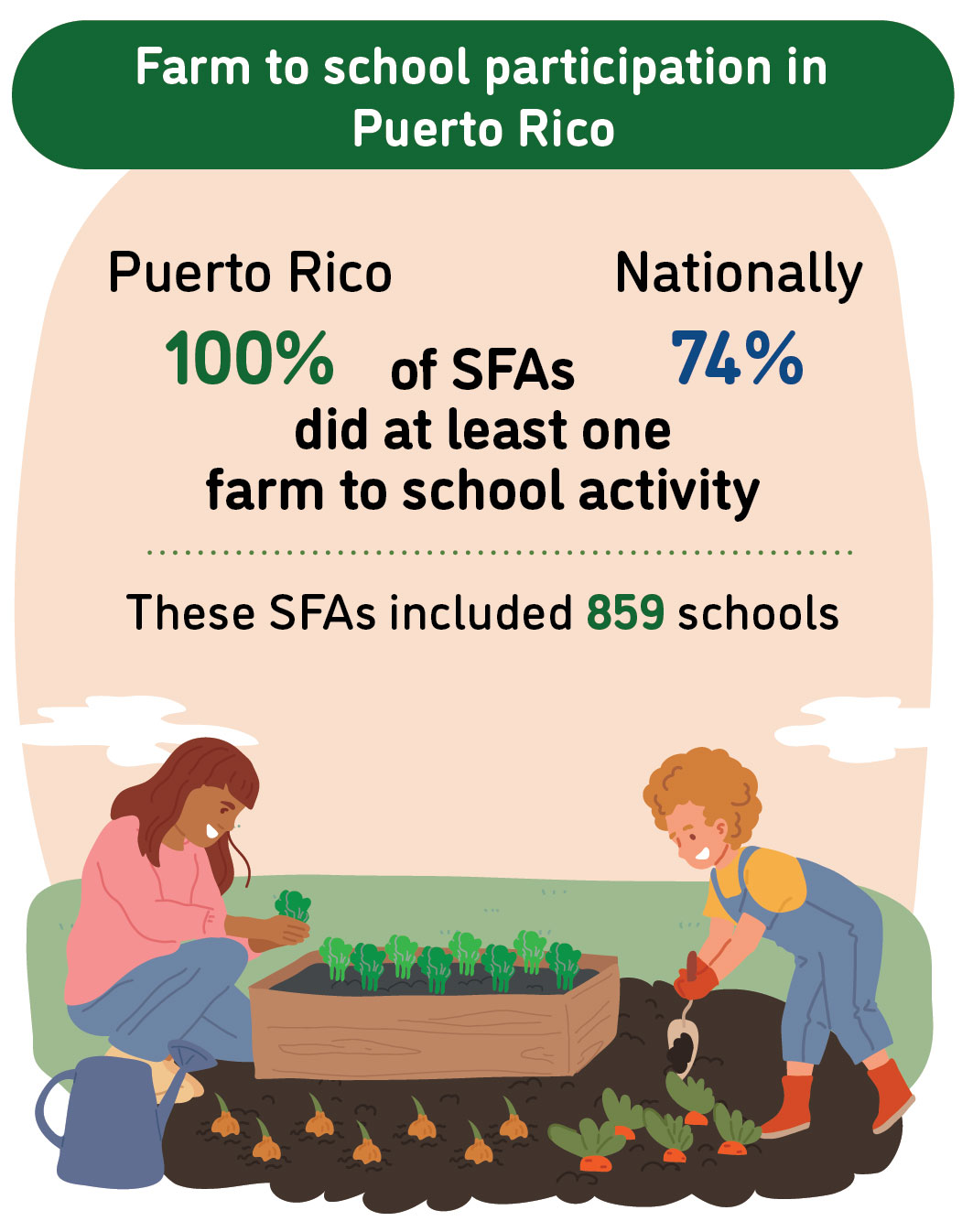
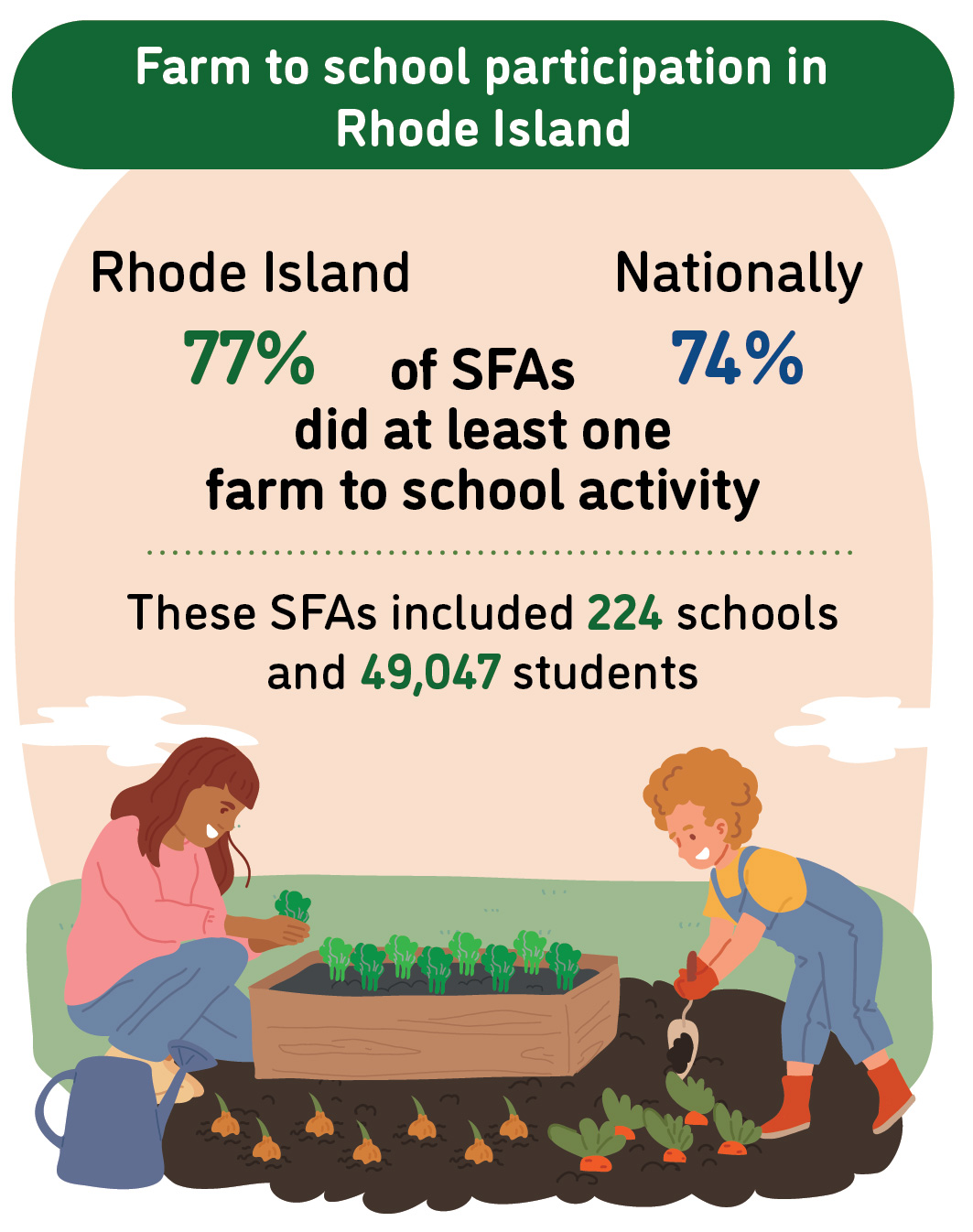
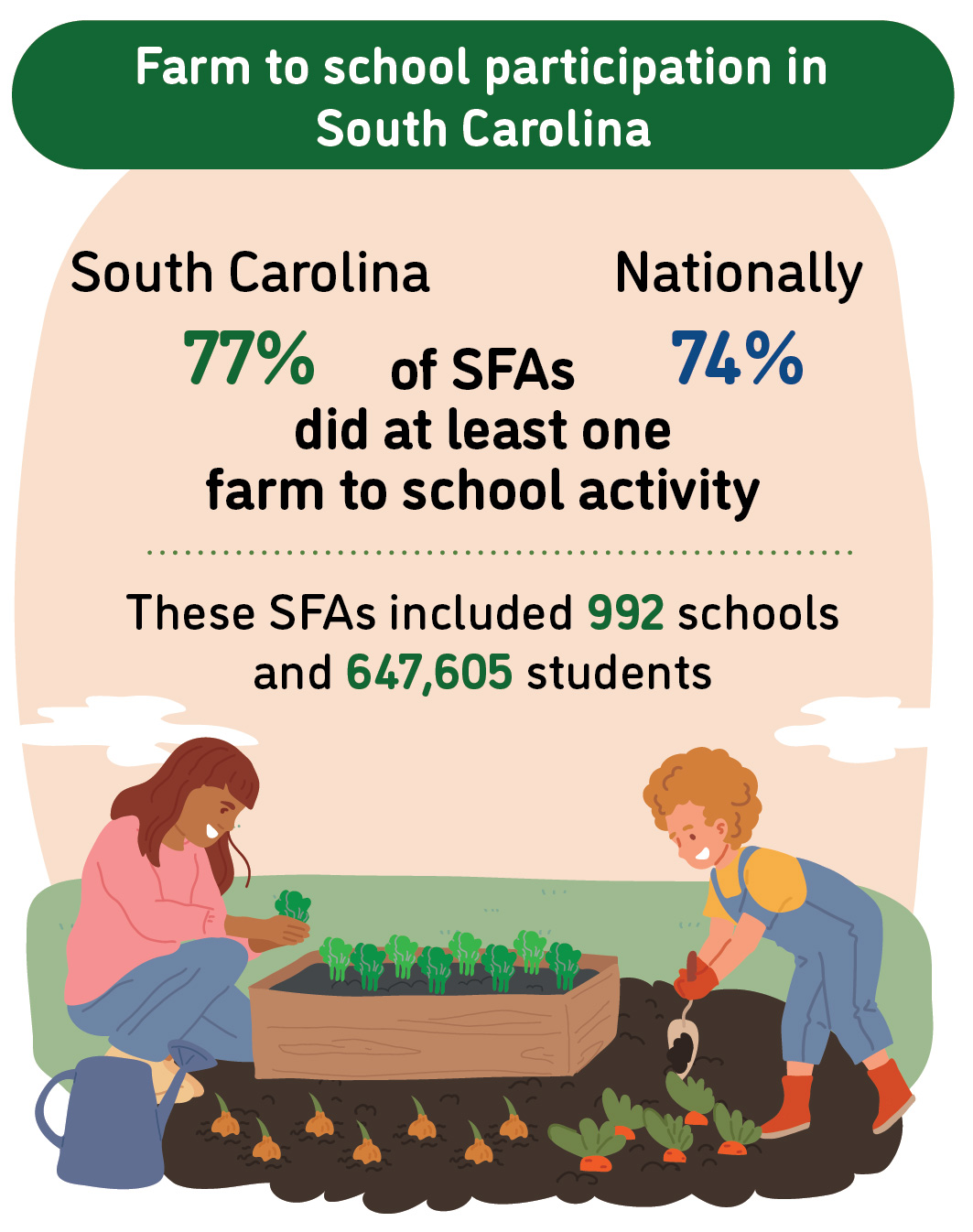
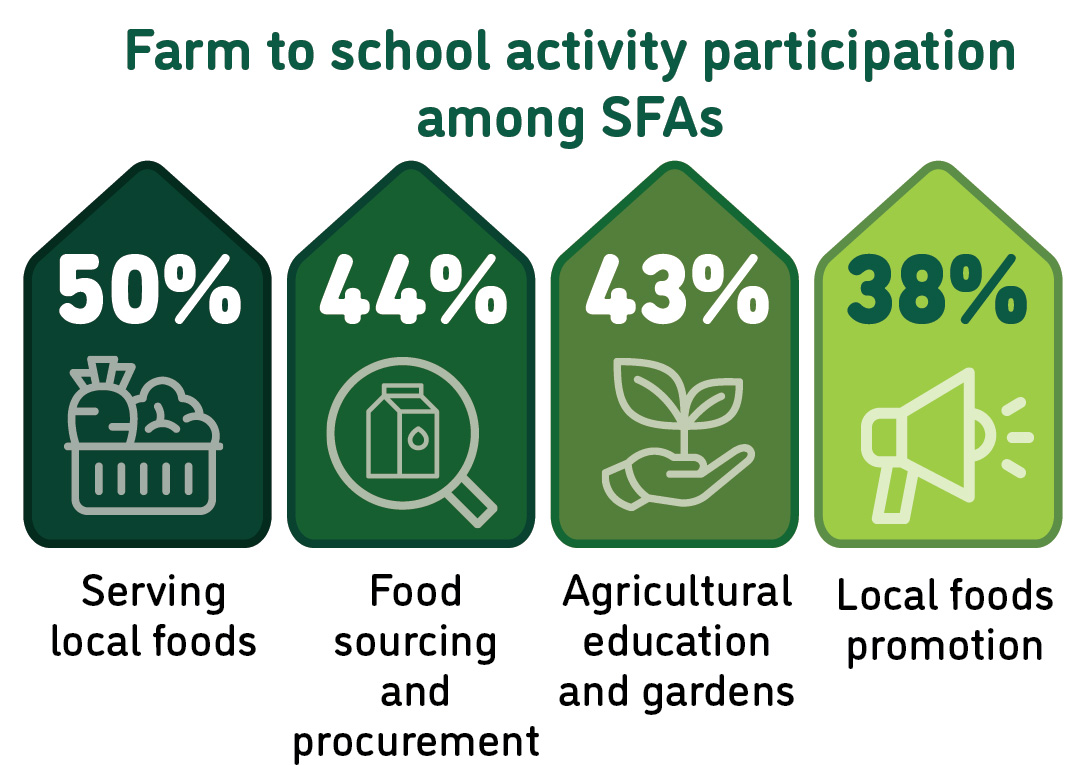
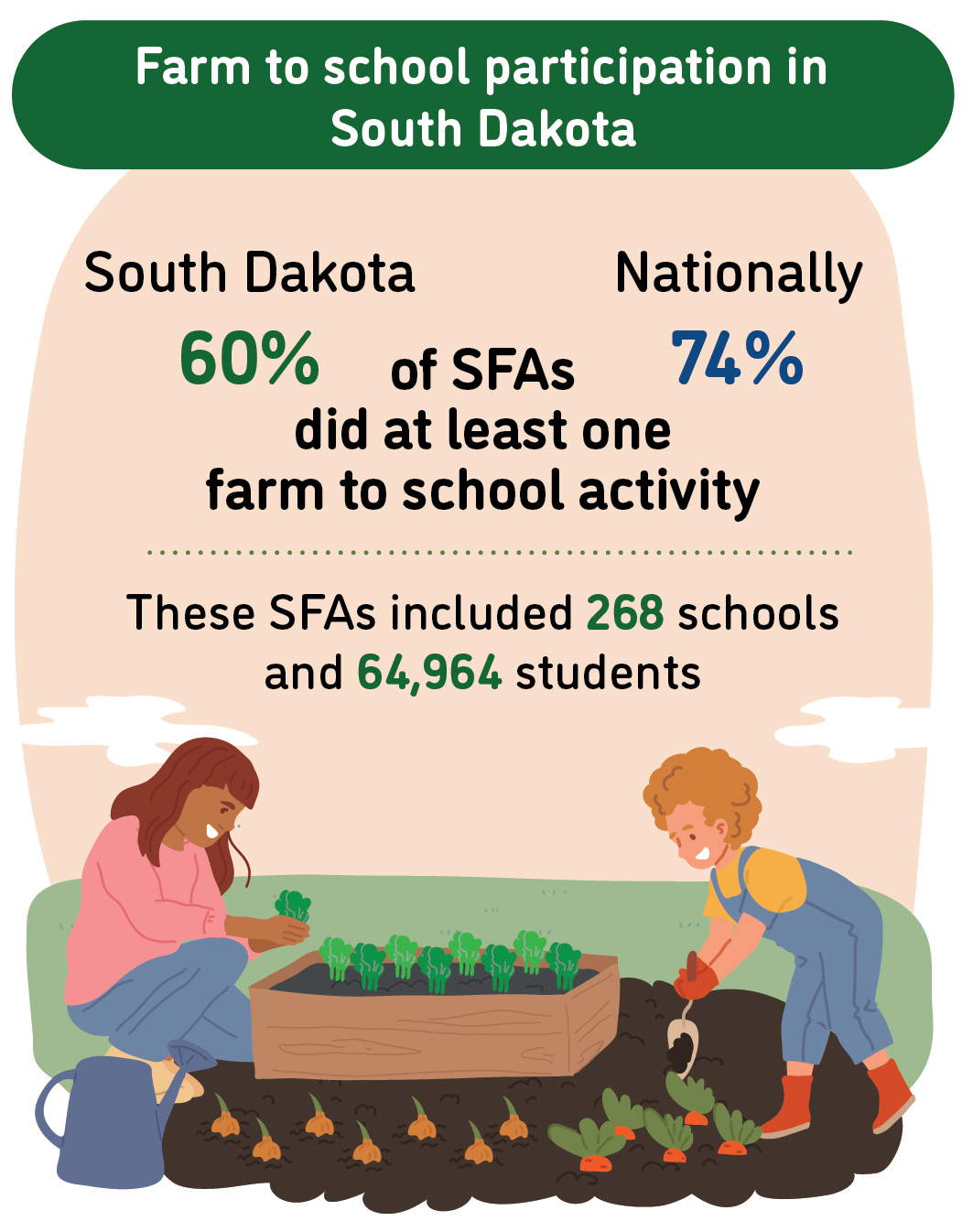
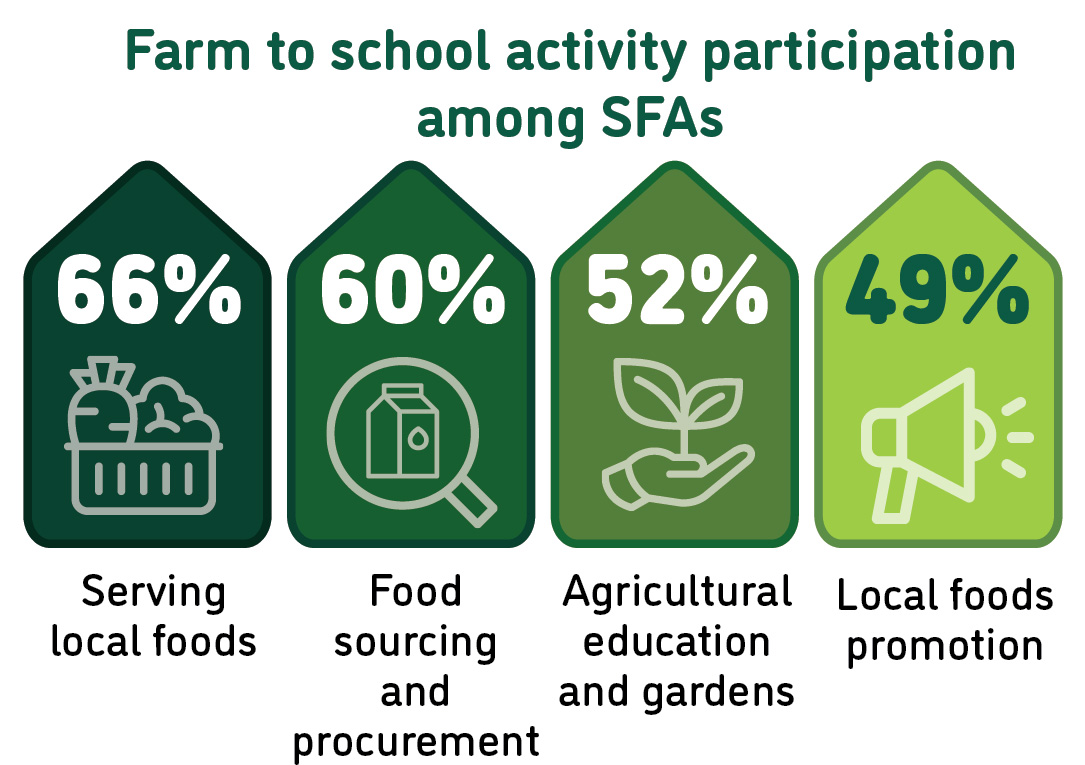
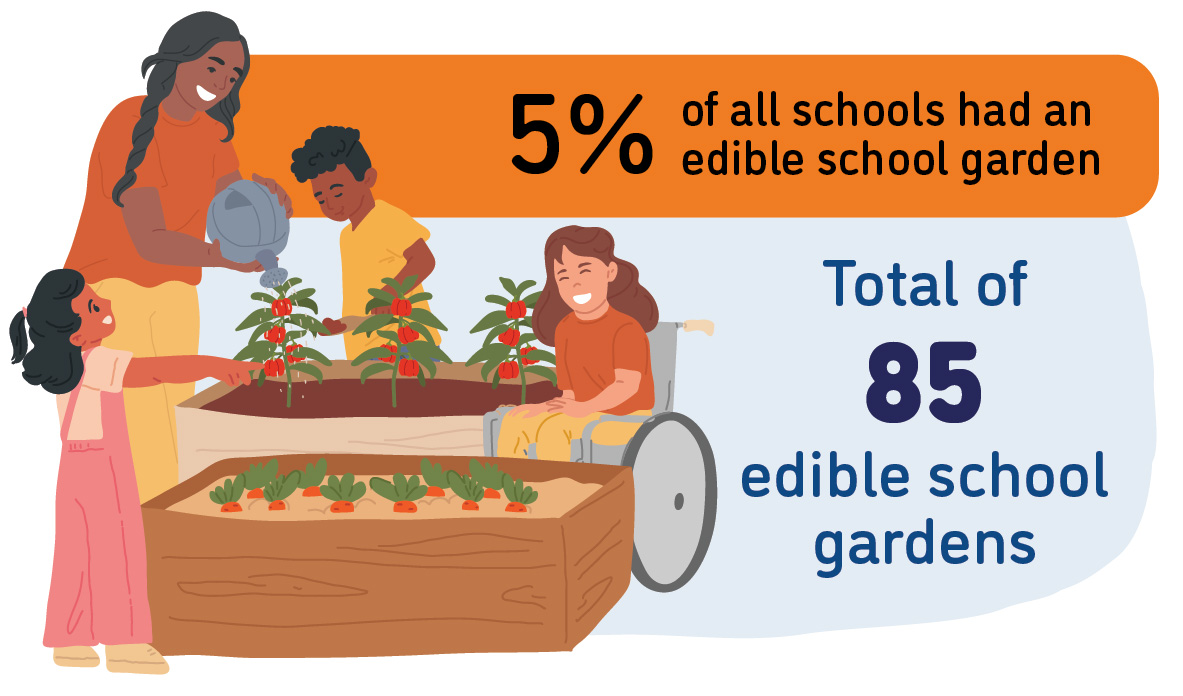
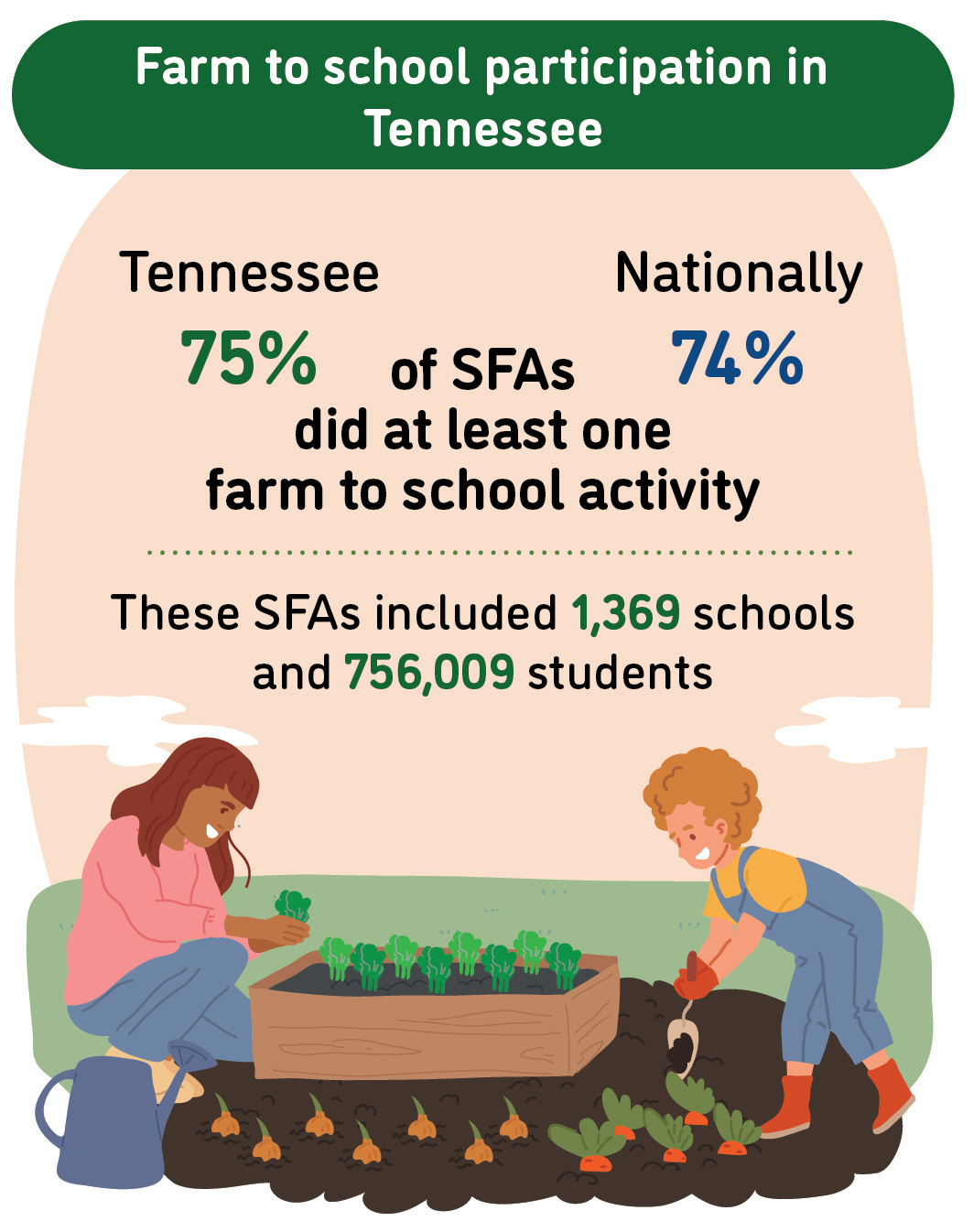
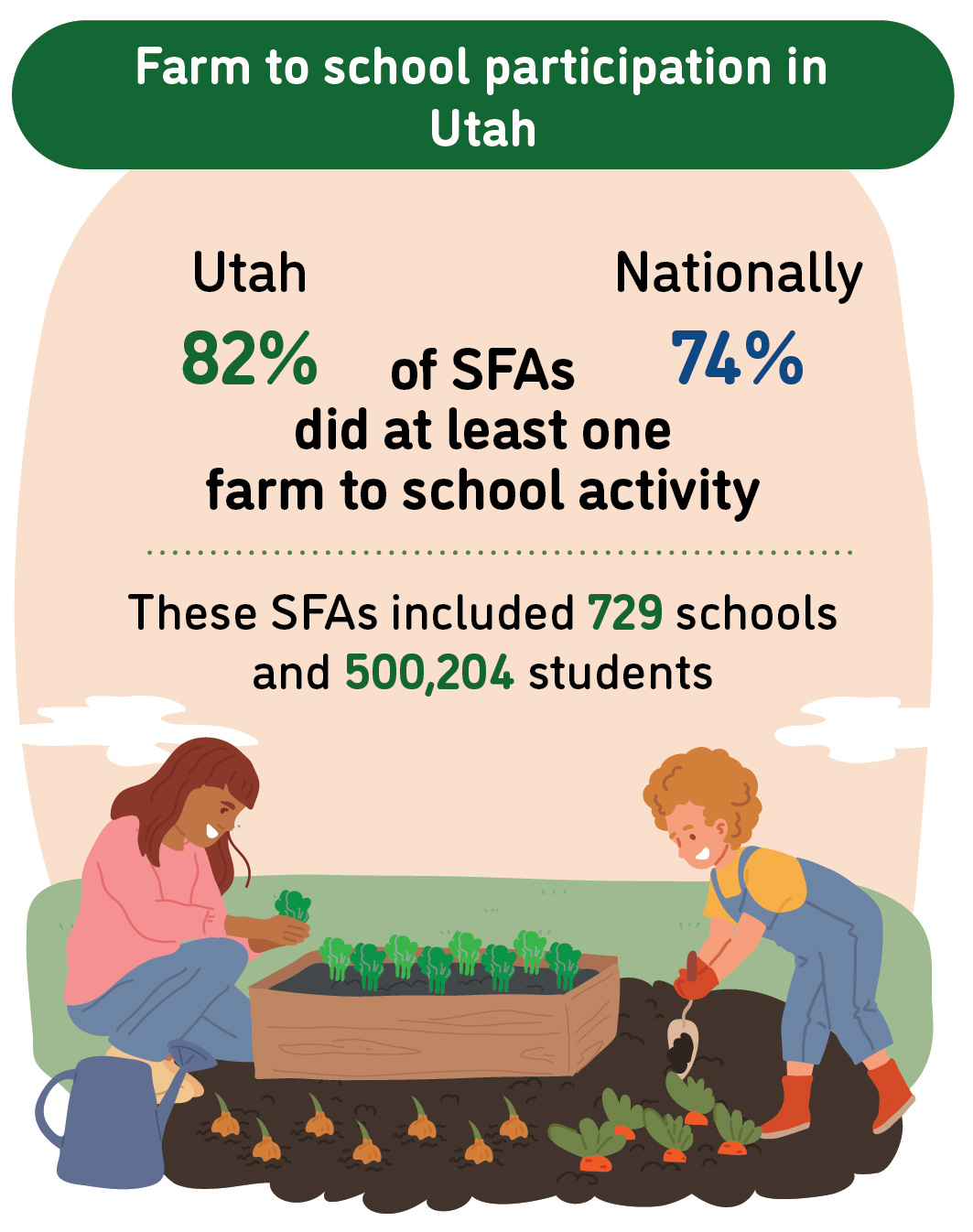
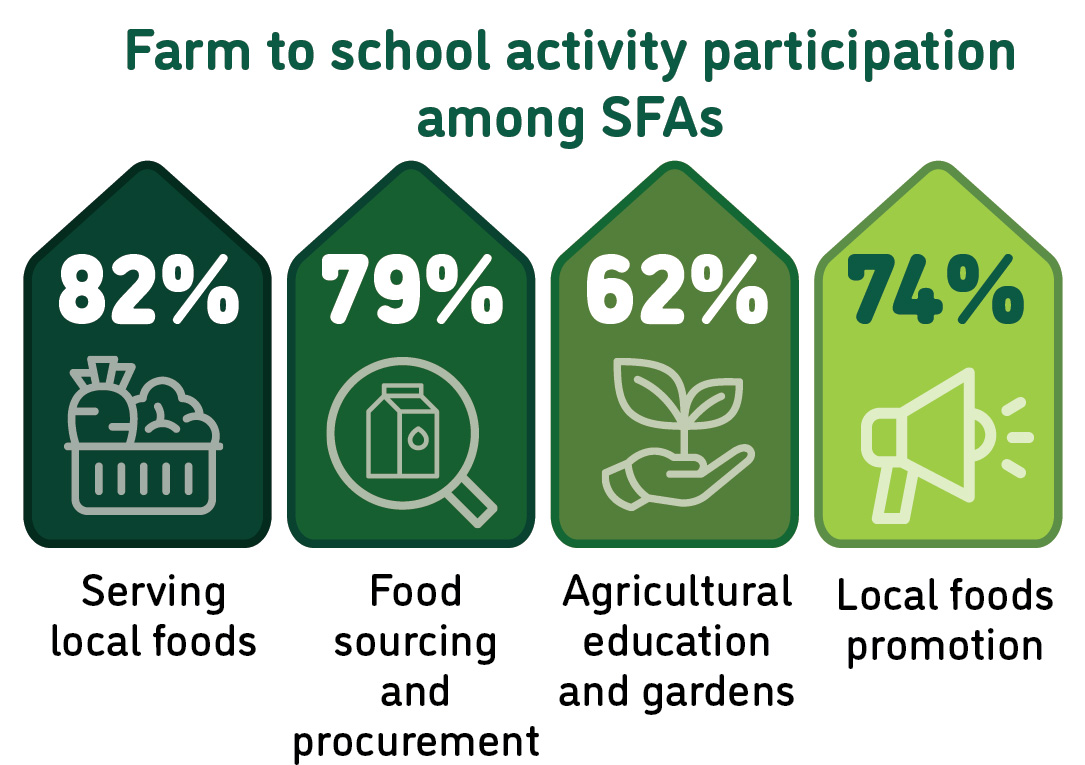
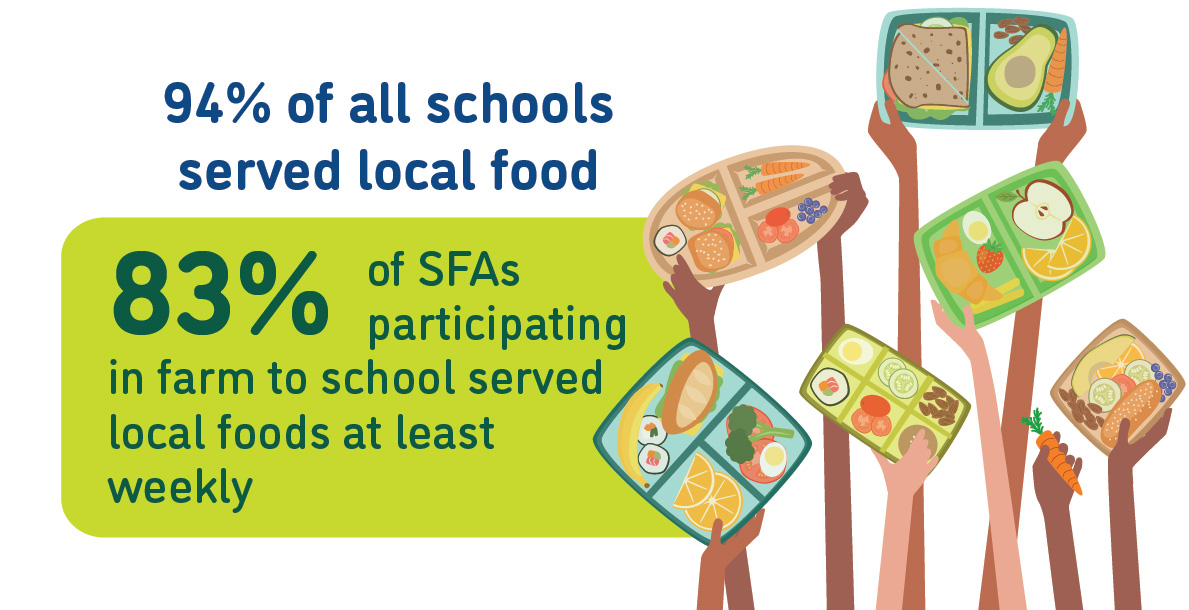
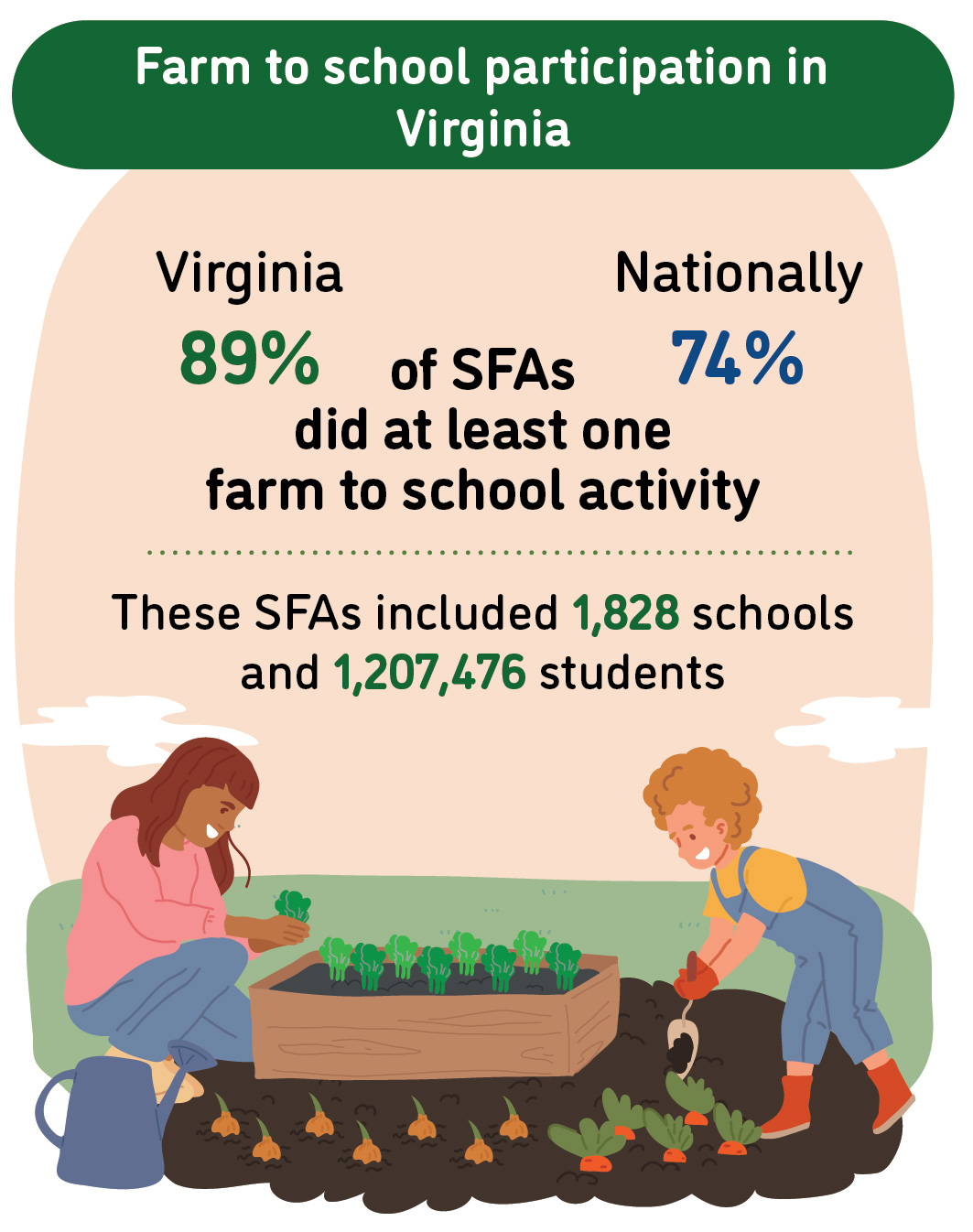
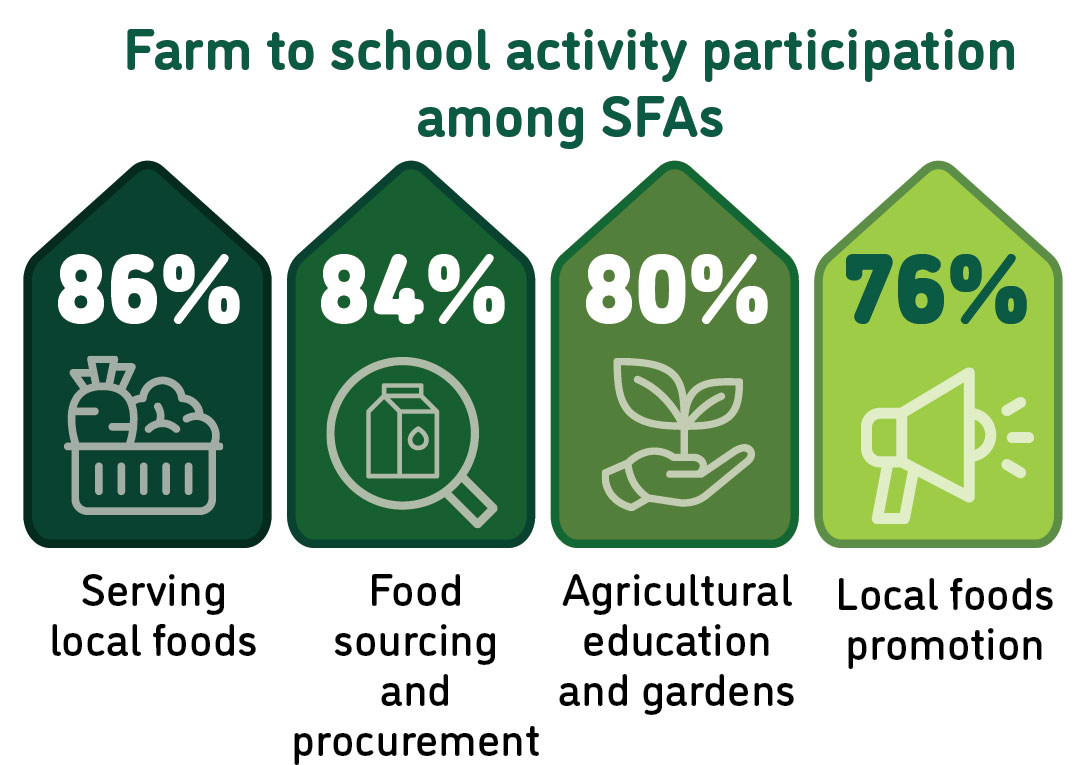
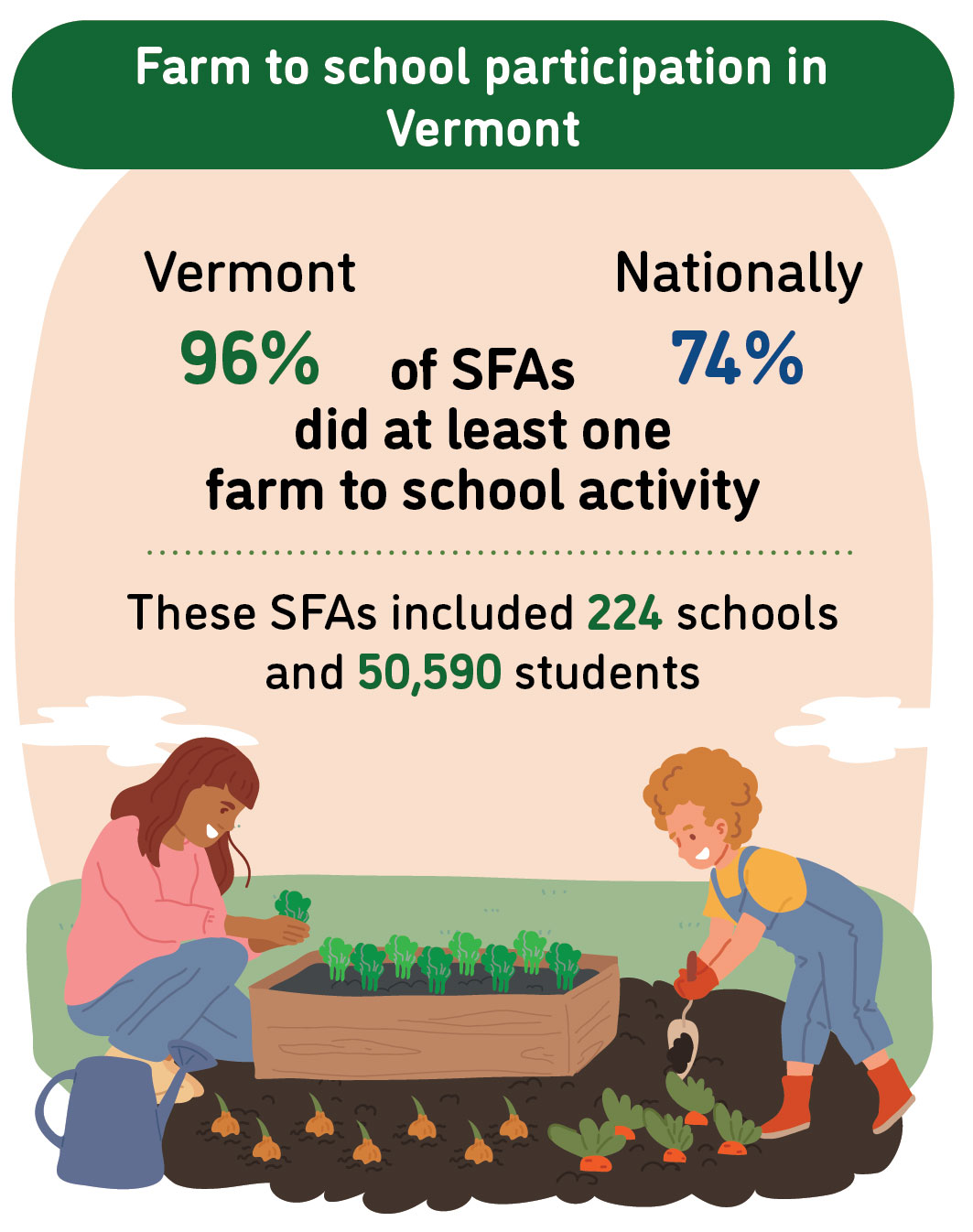
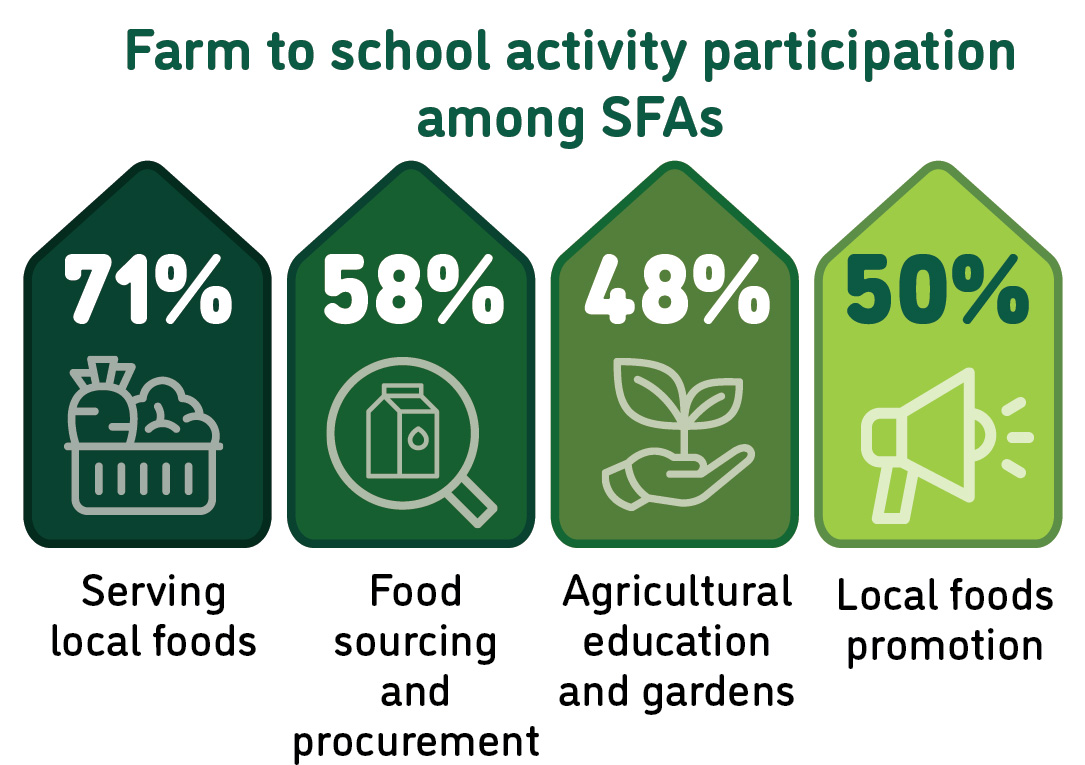
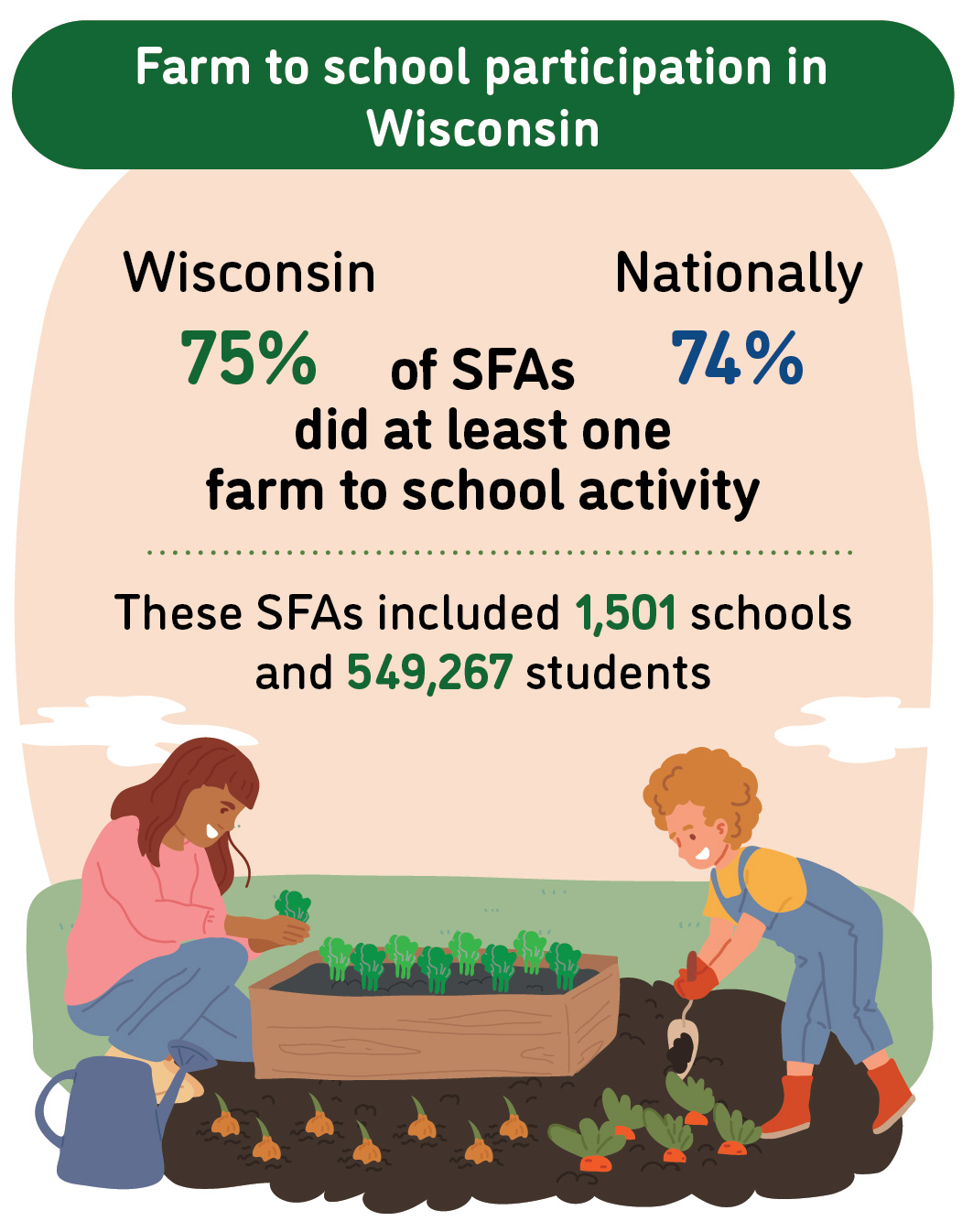
- Nearly three-quarters (74 percent) of SFAs did at least one farm to school relevant activity in SY 2022-23, an increase of 9 percentage points over SY 2018–19.
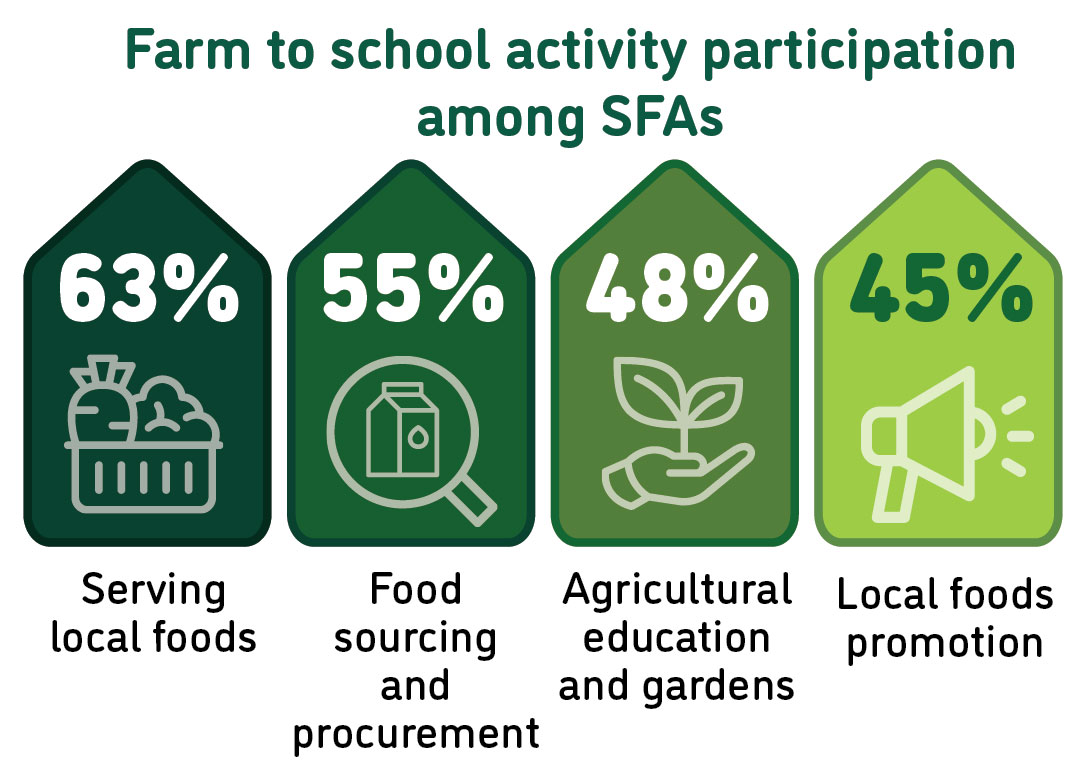
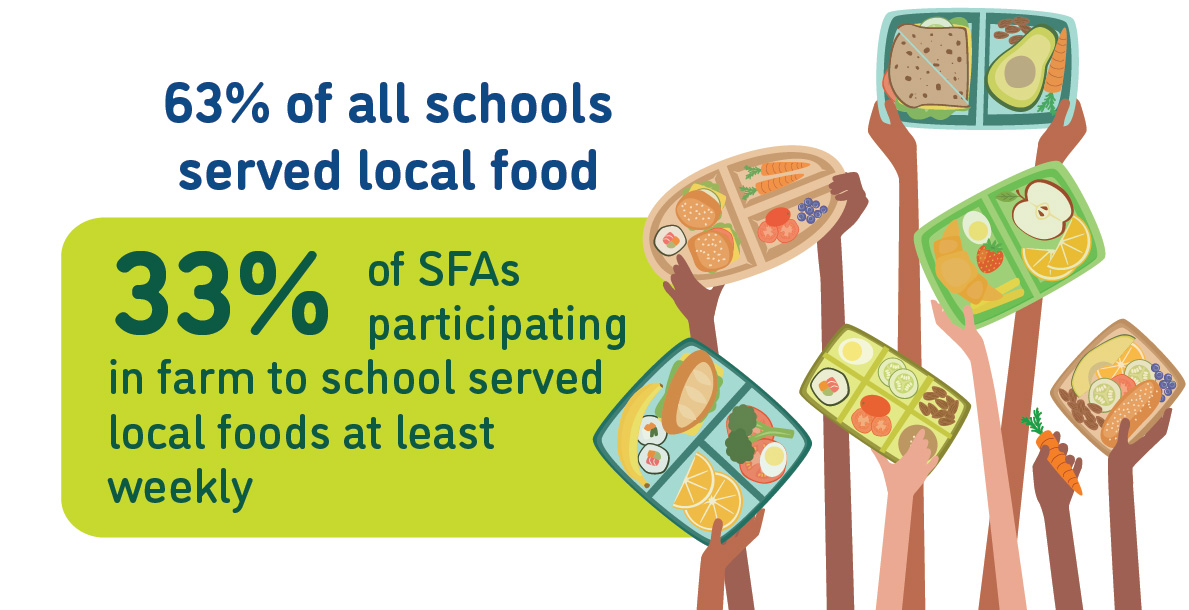
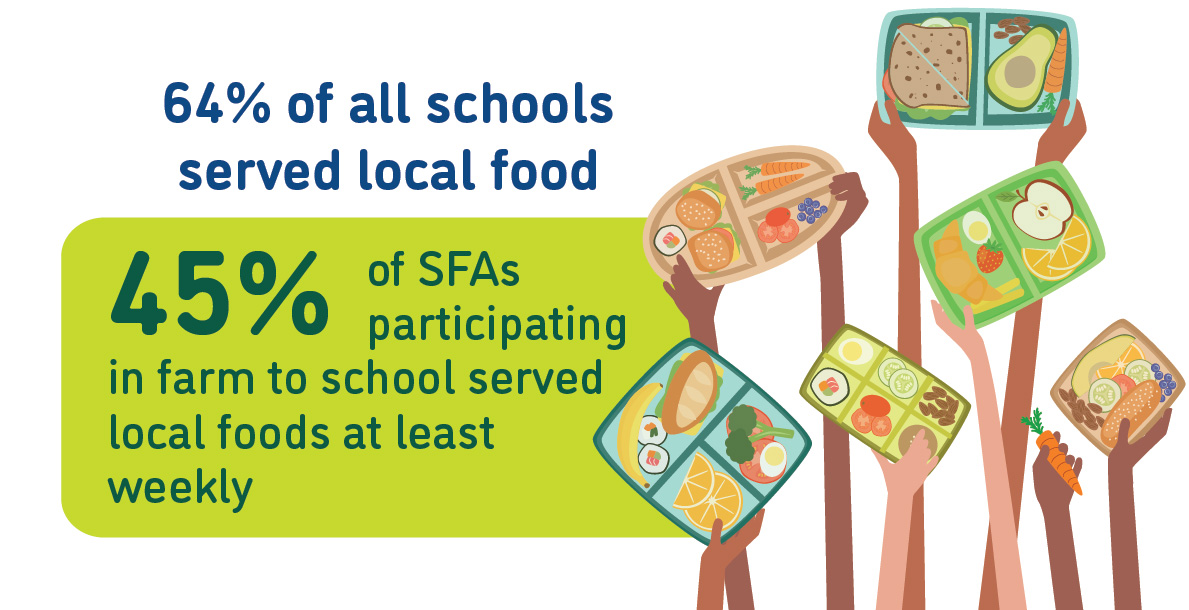
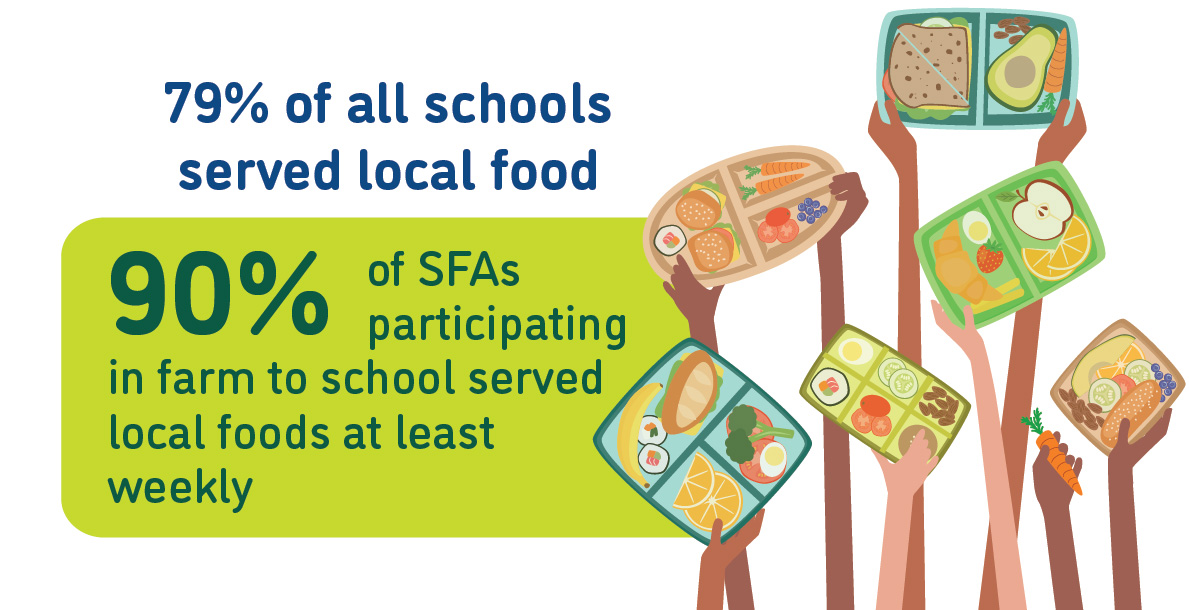
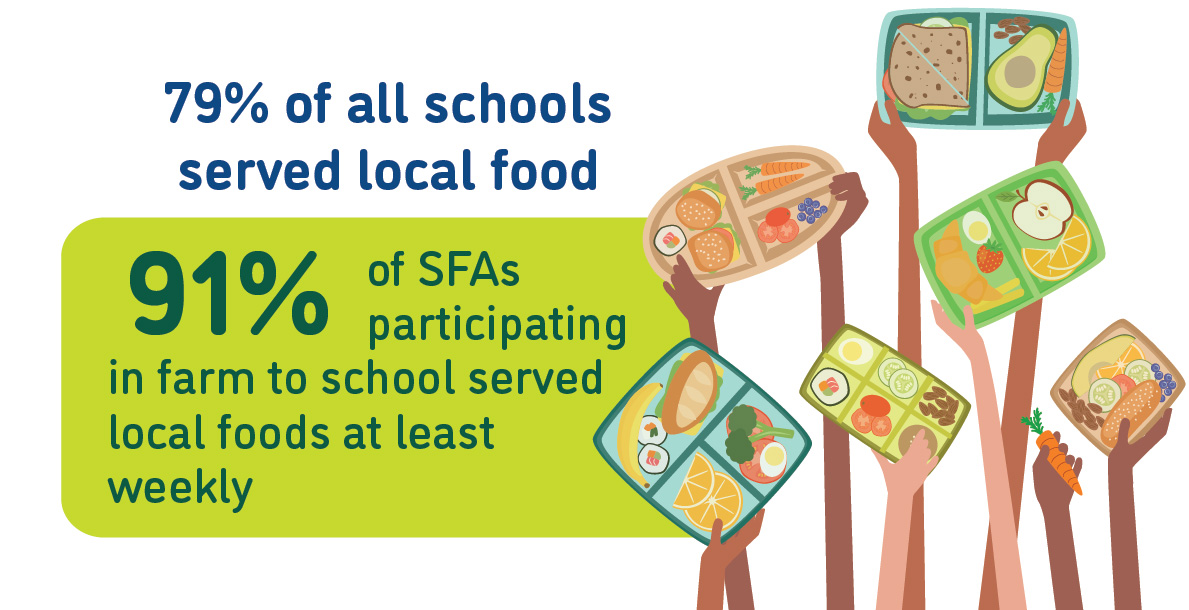
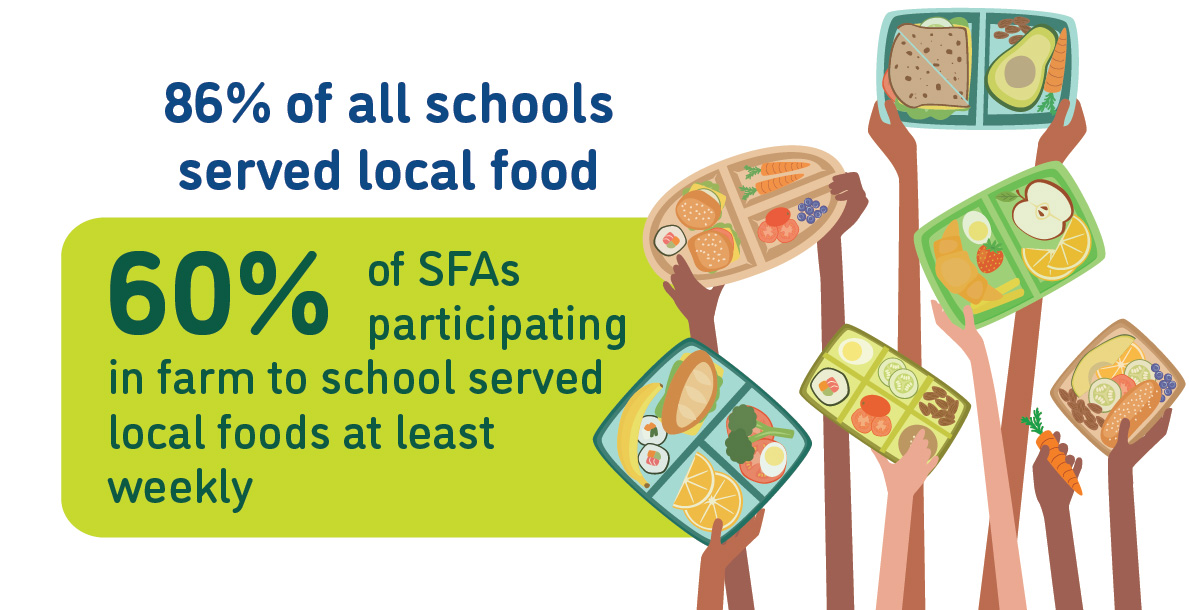
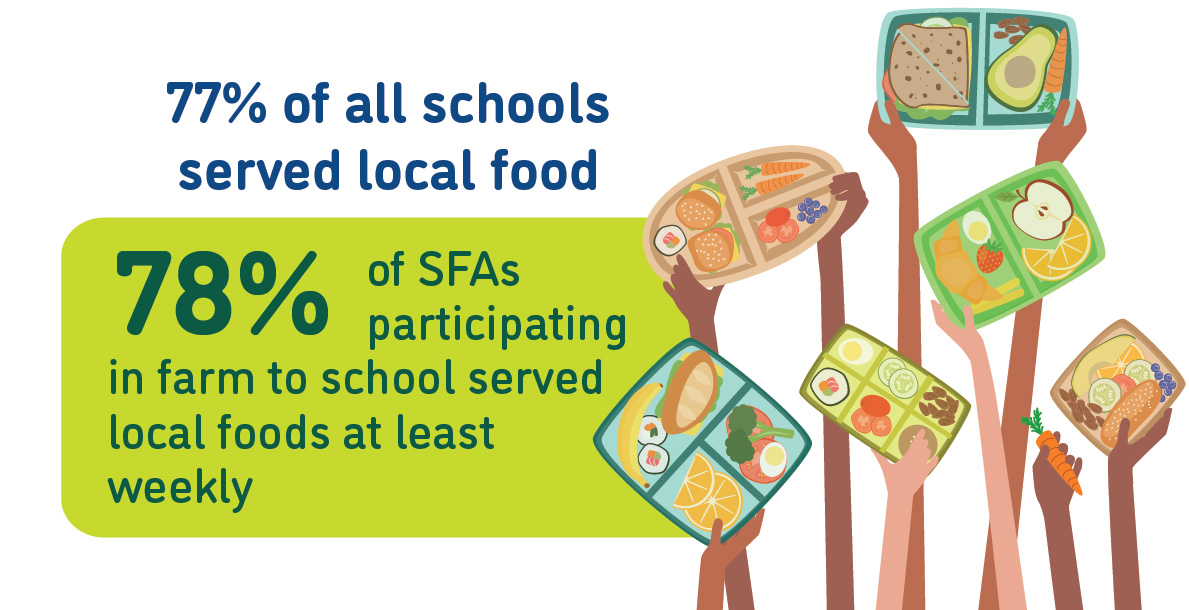
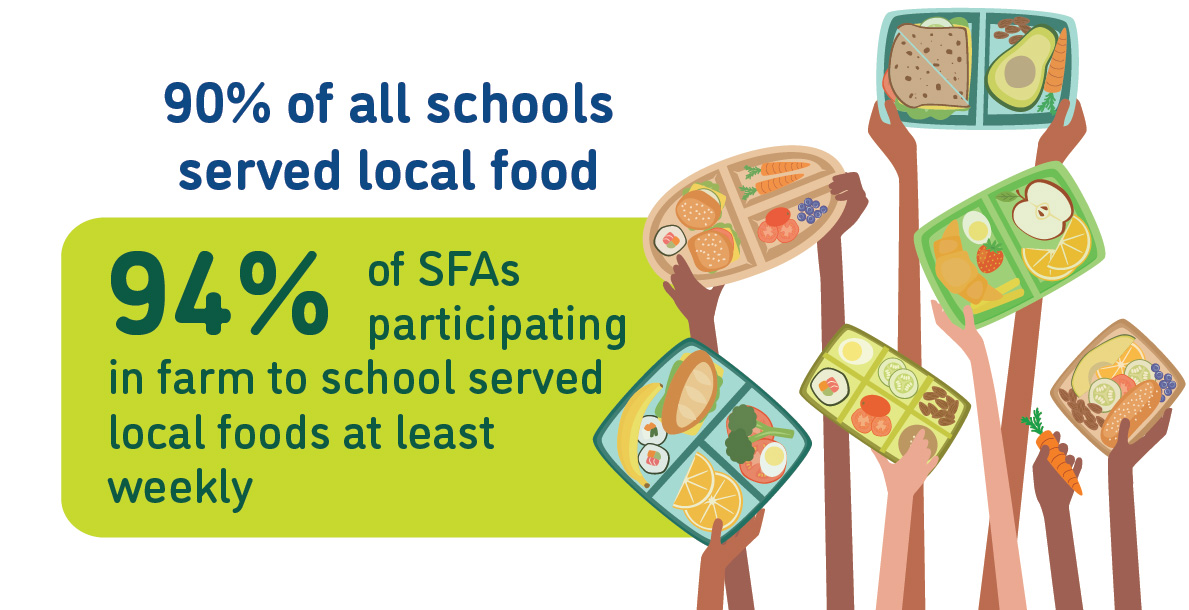
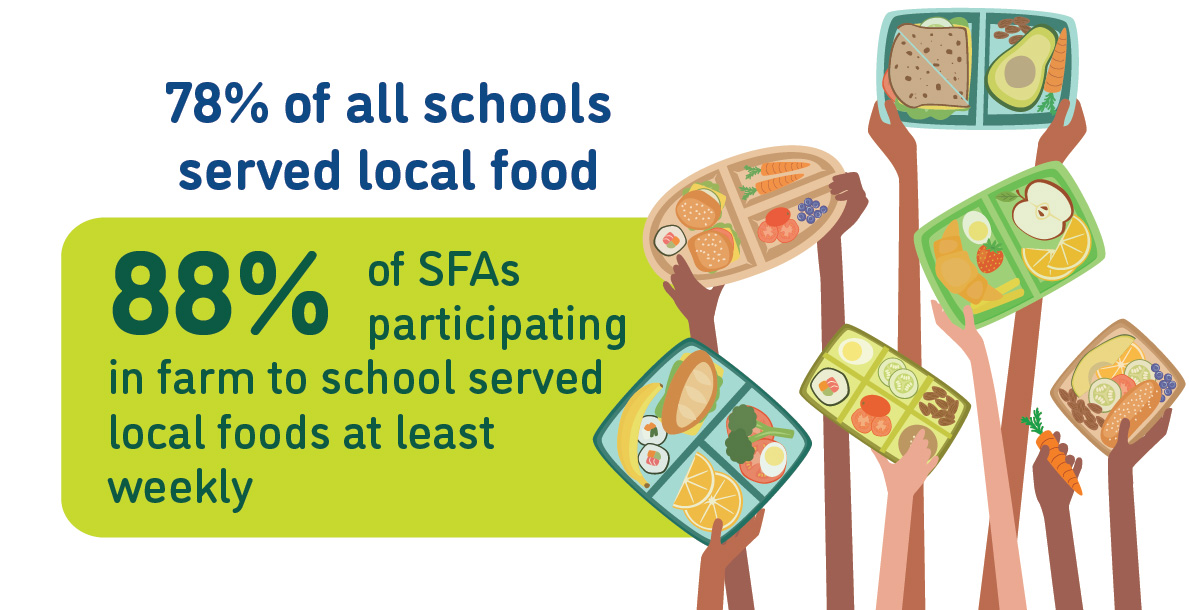
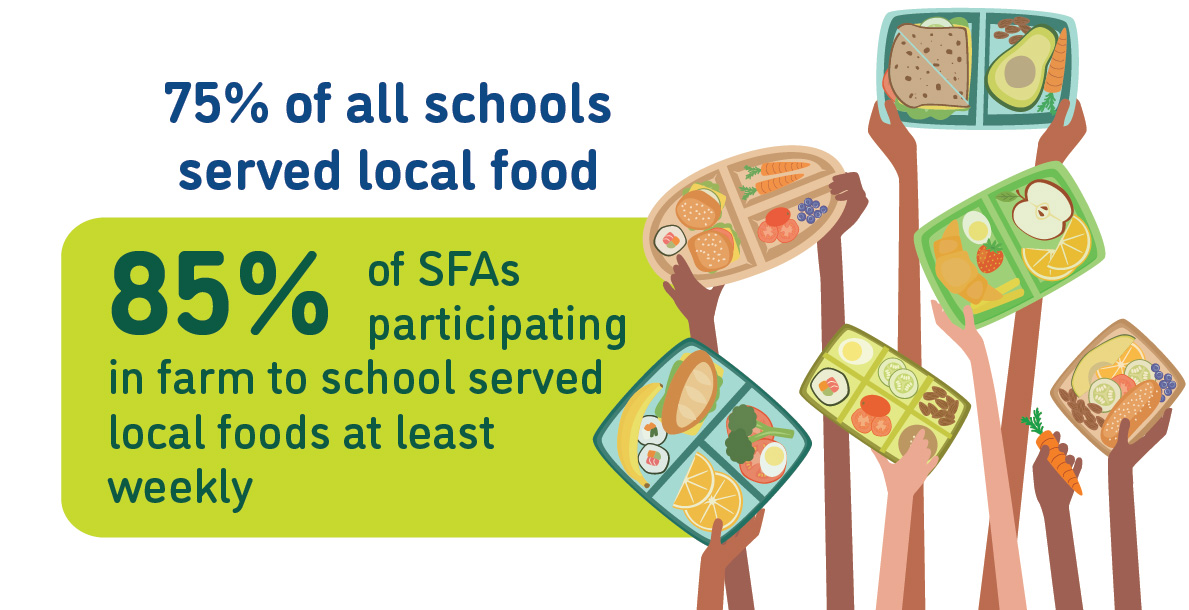
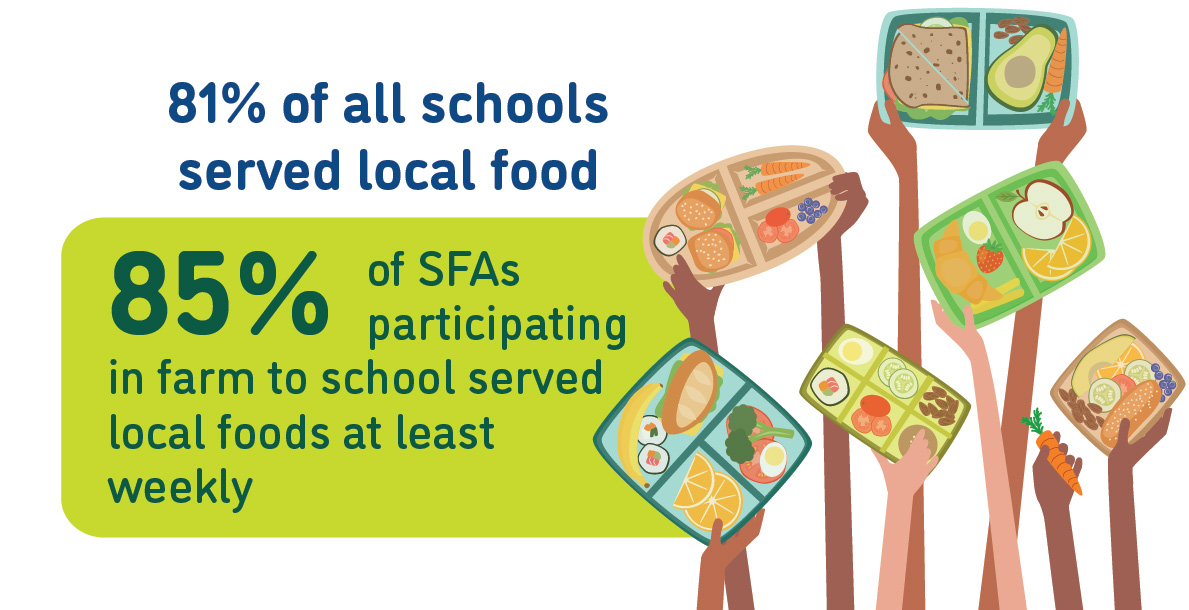
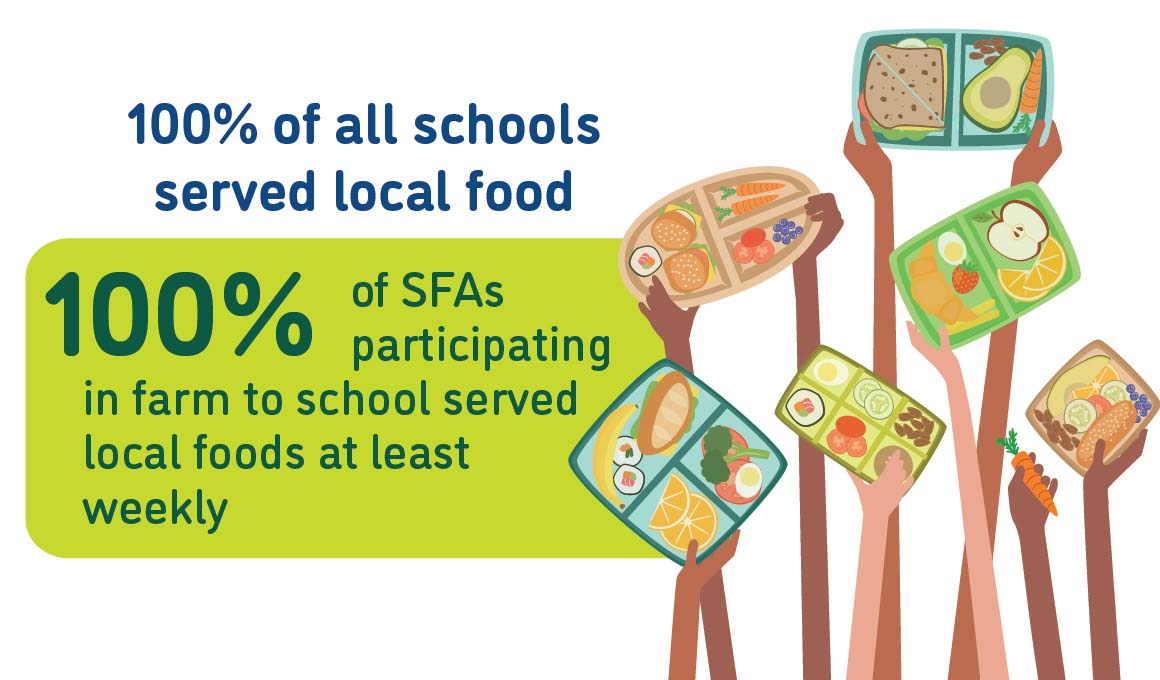
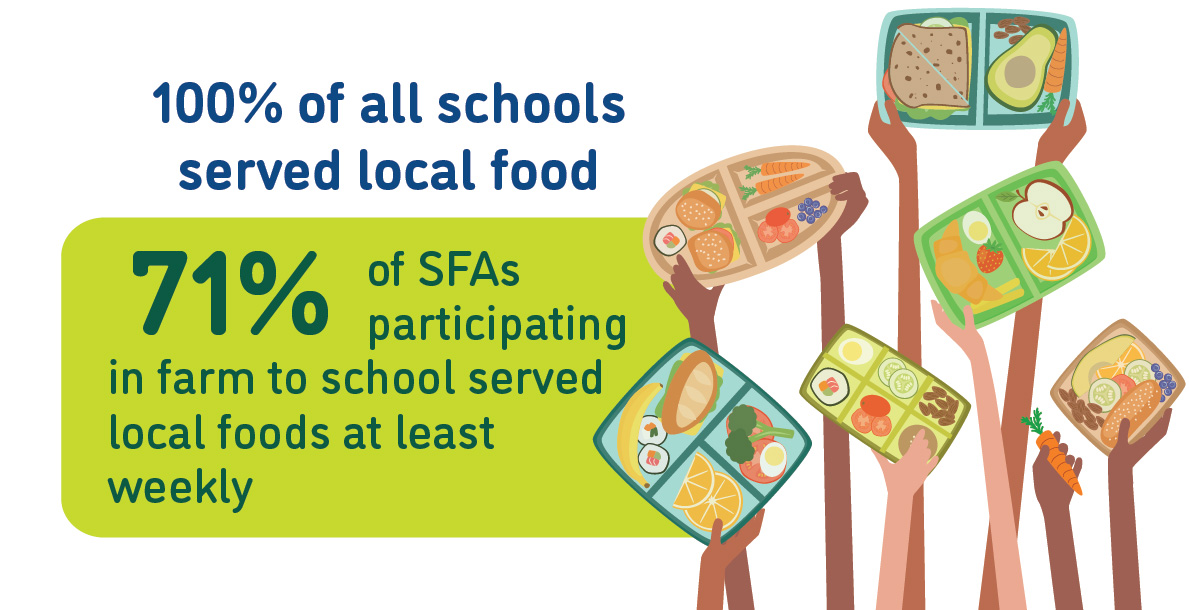
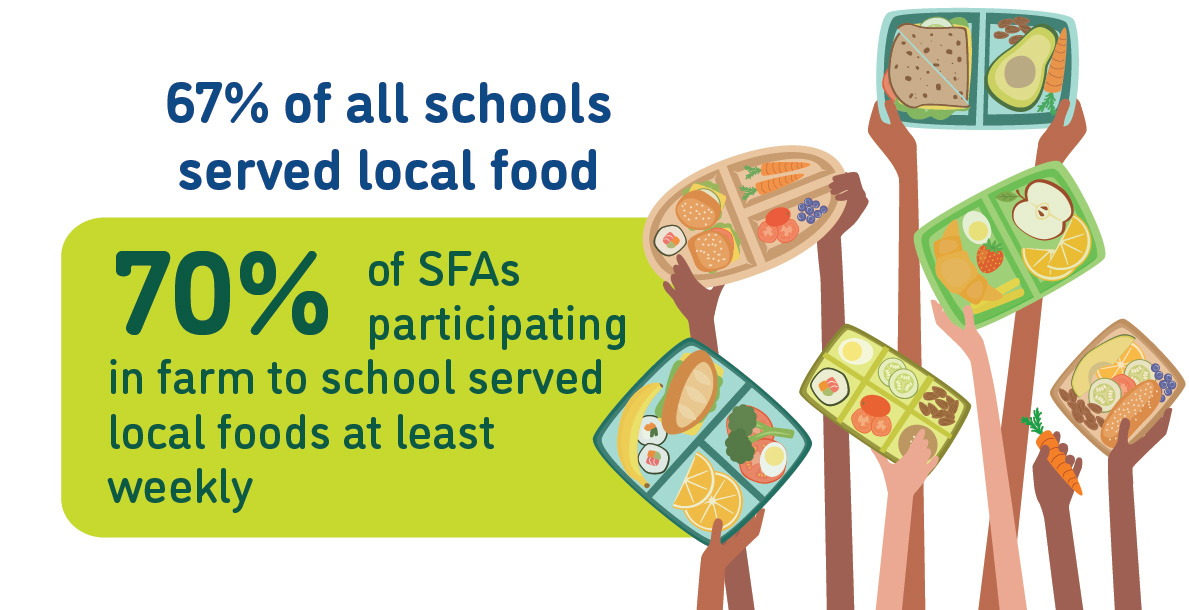
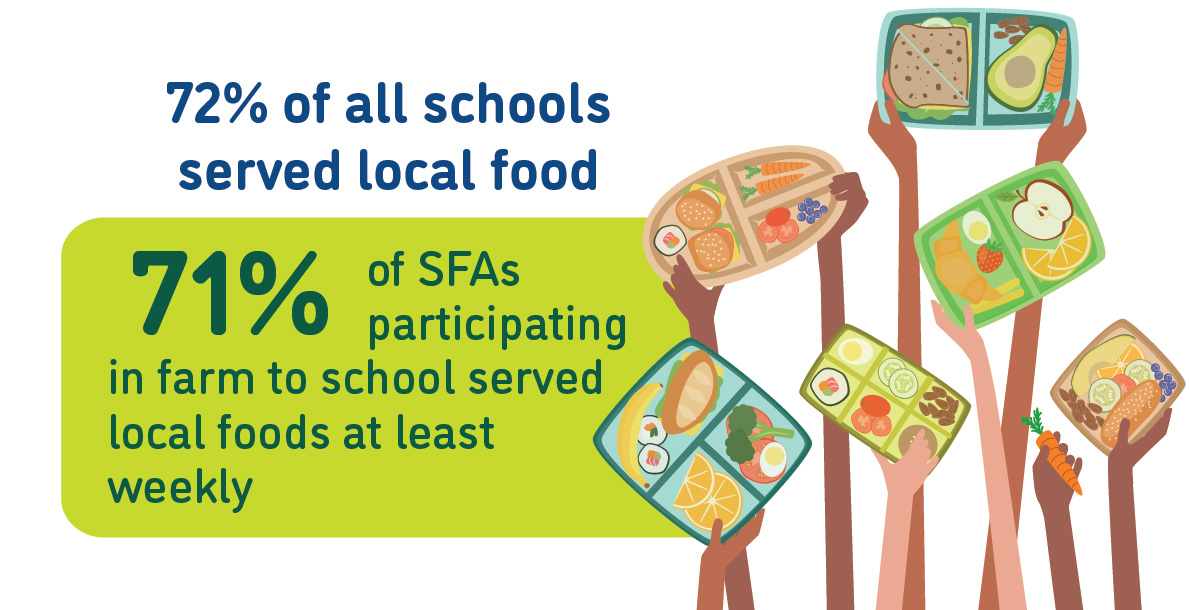
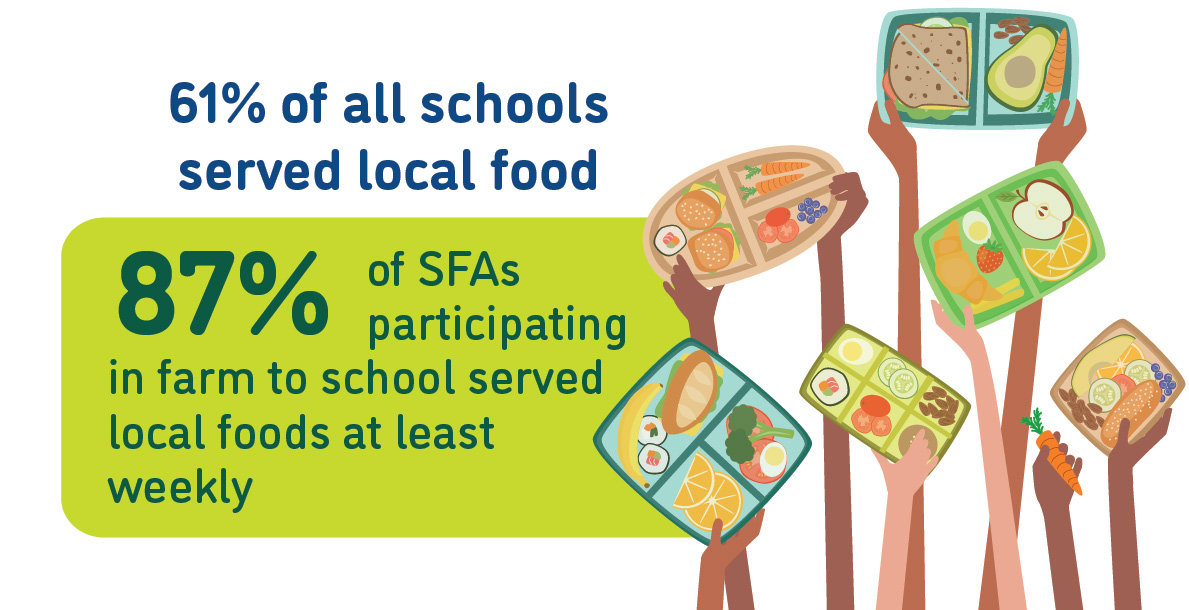
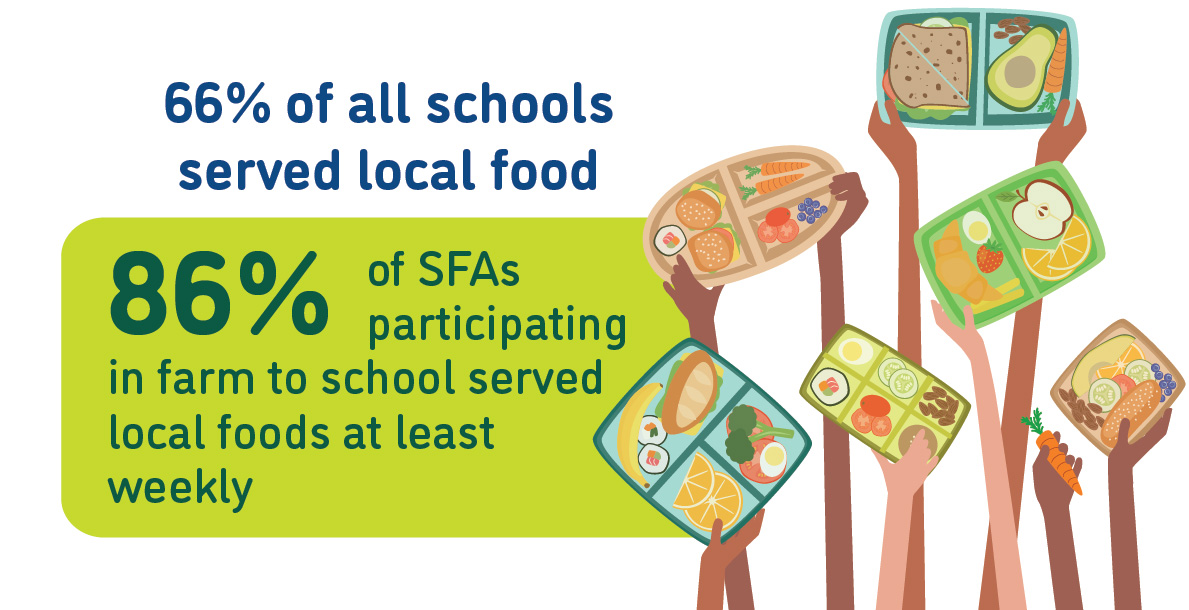
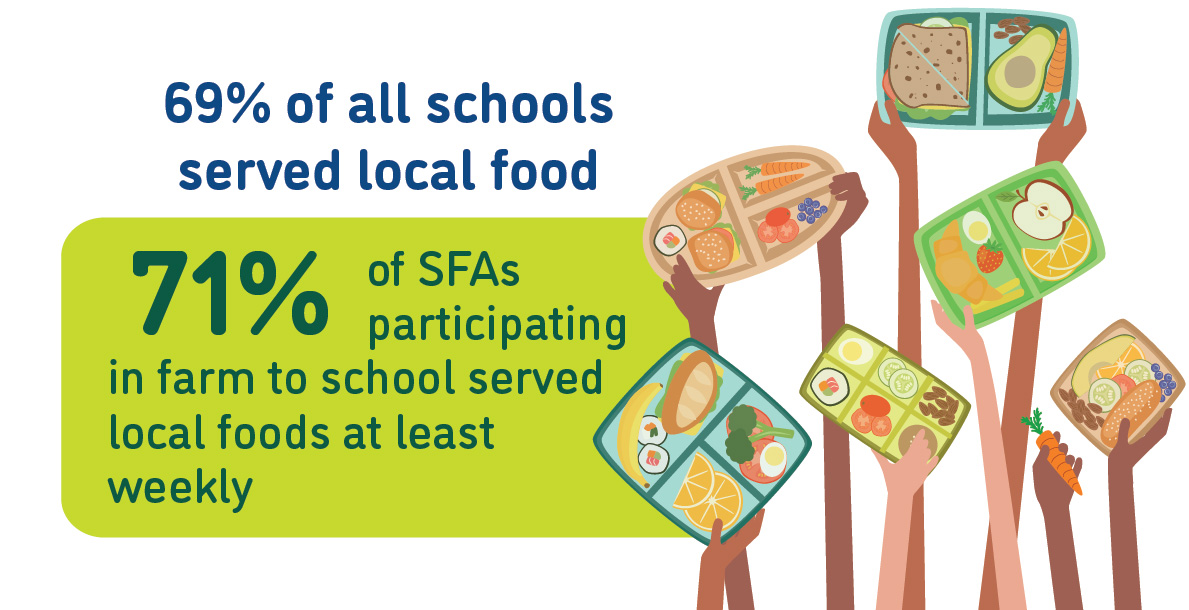
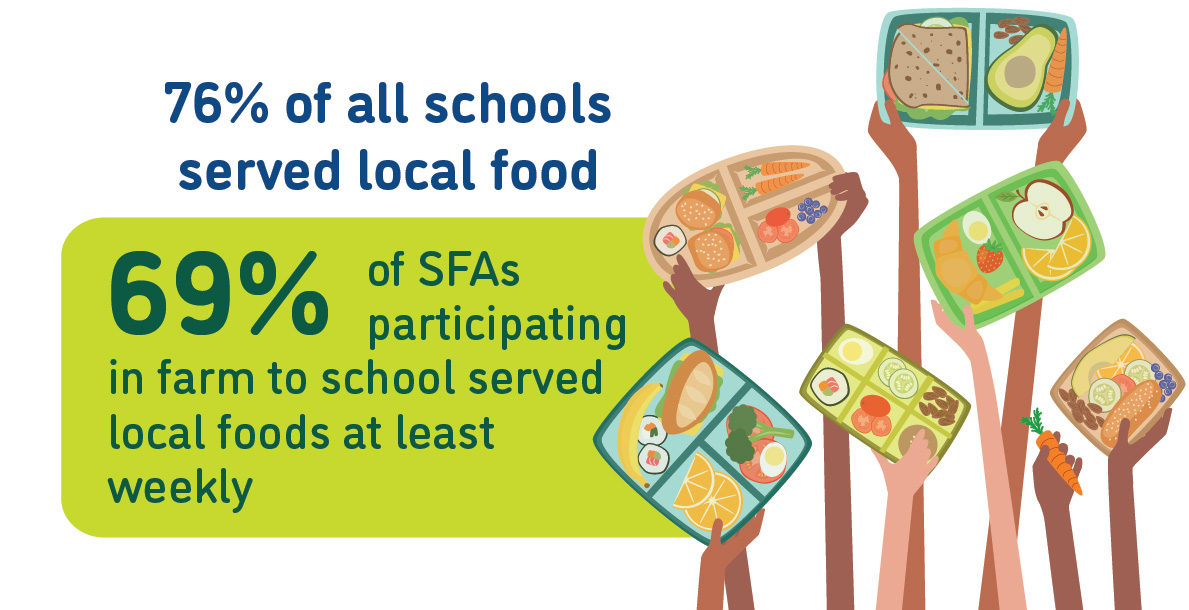
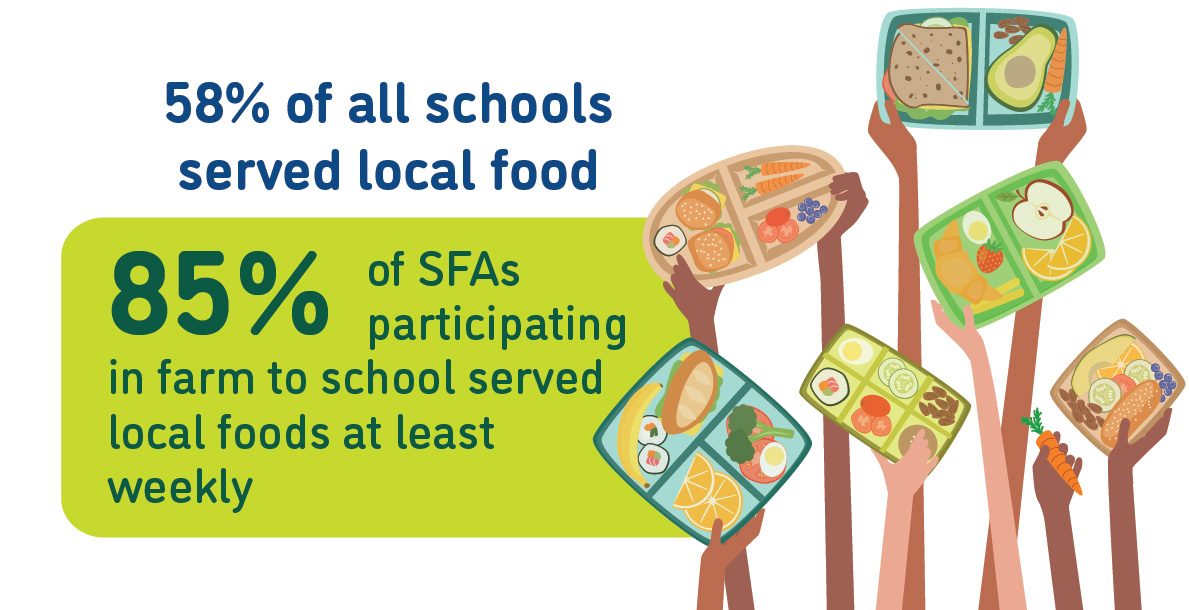
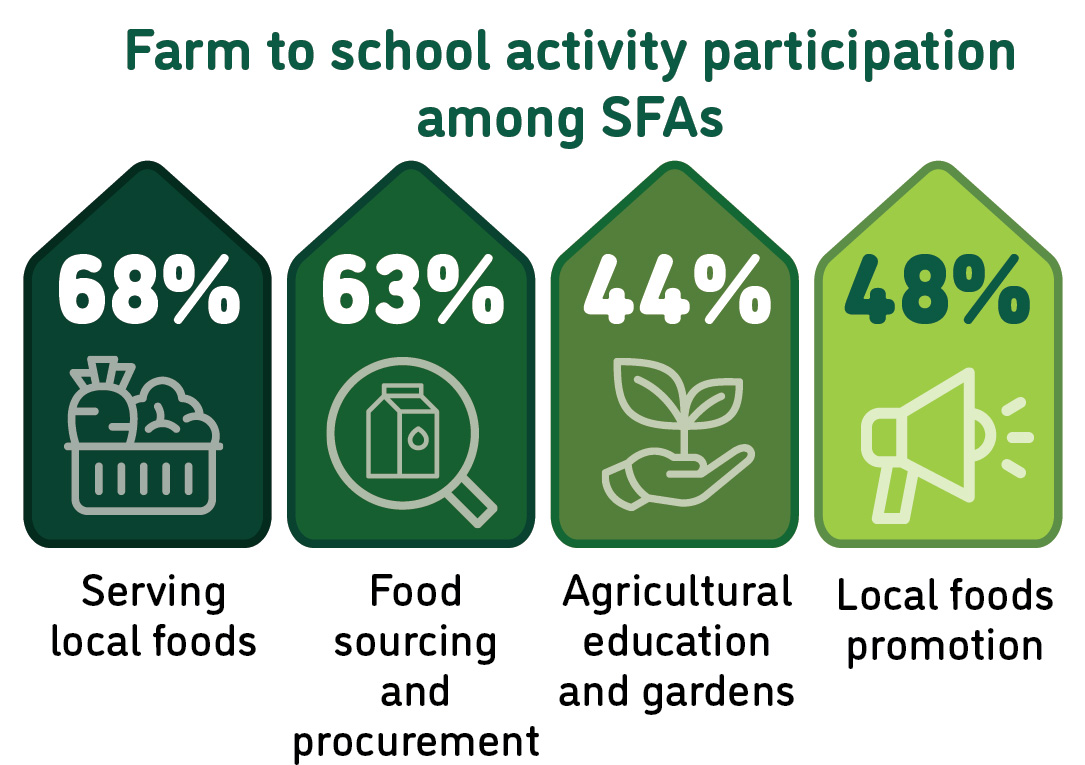
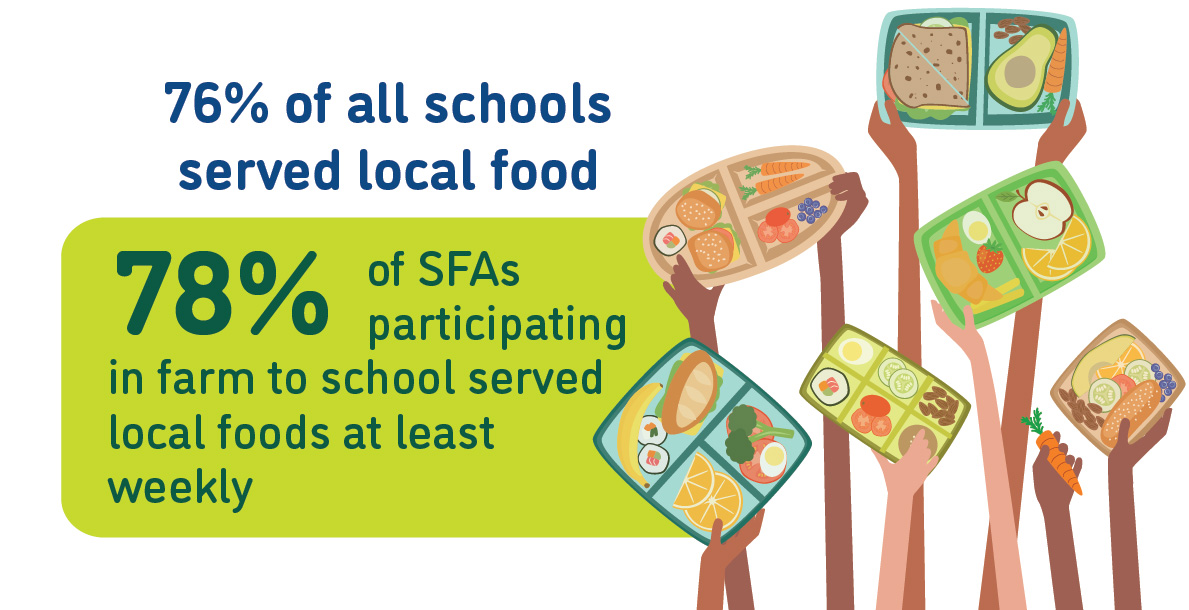
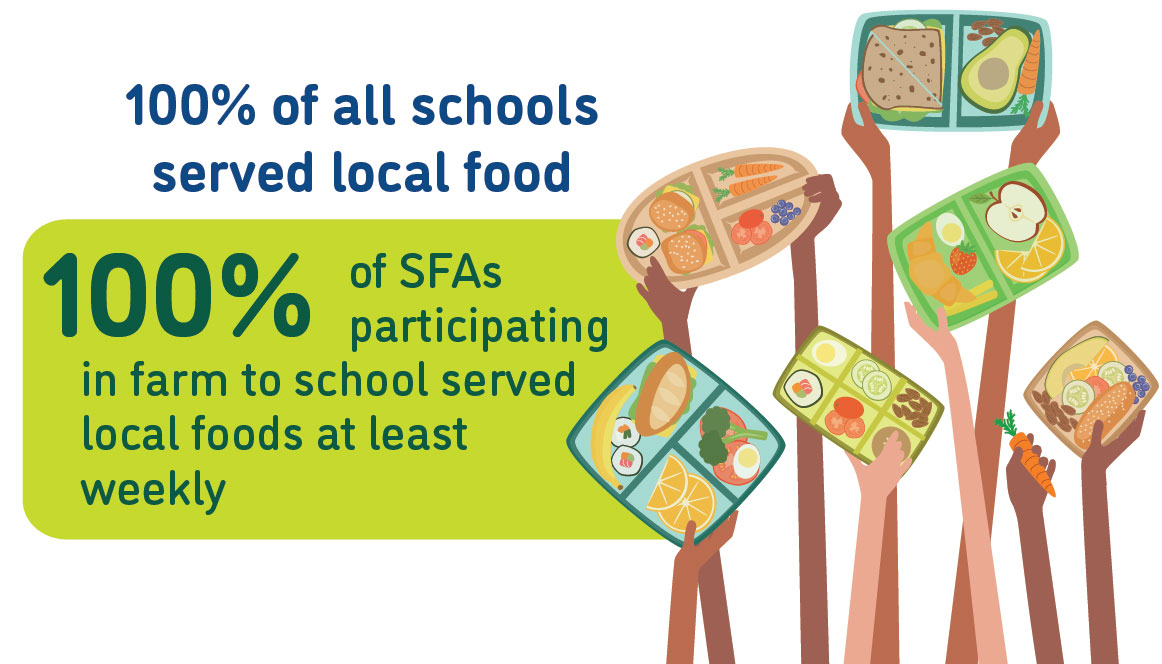
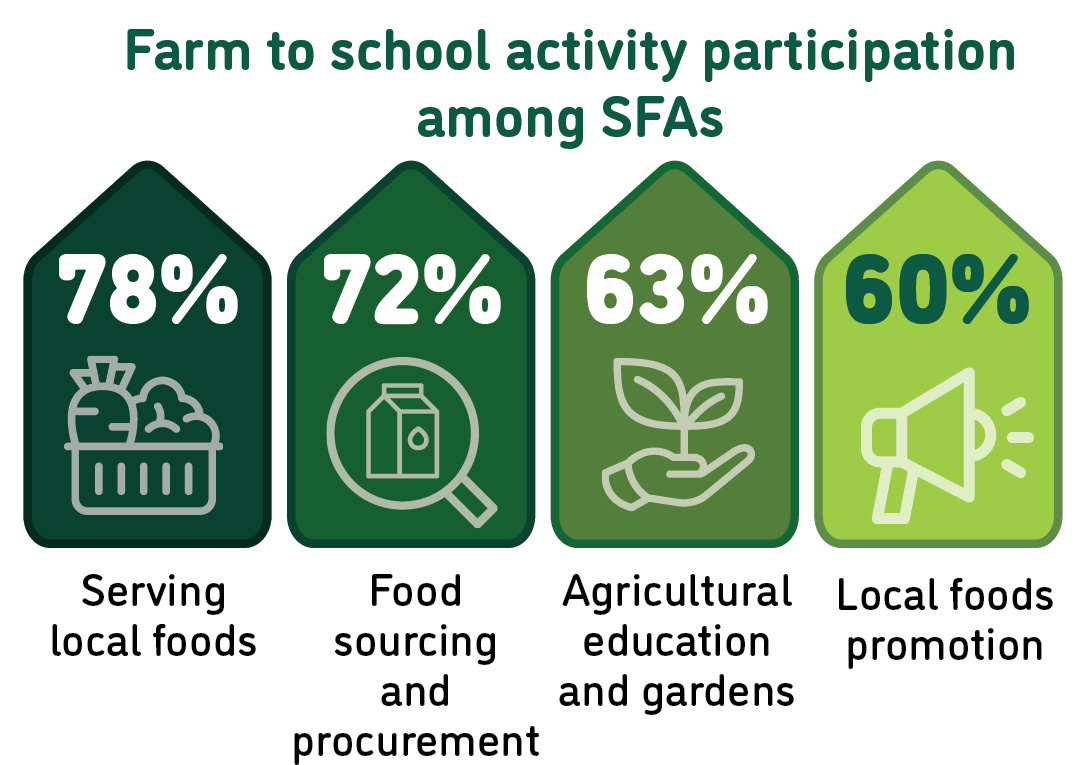
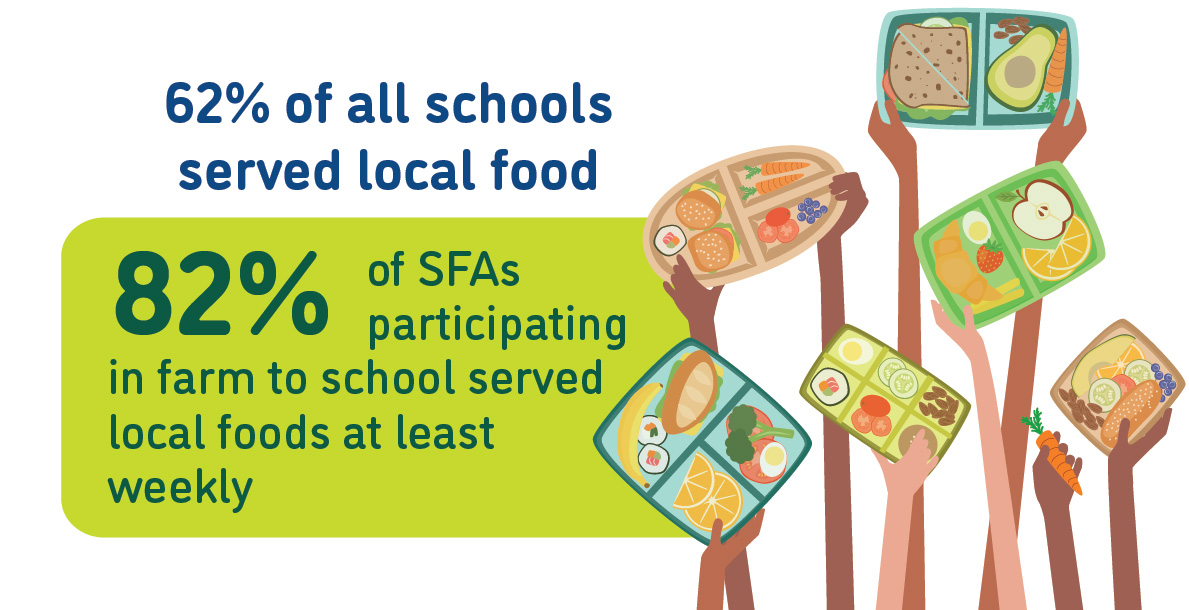
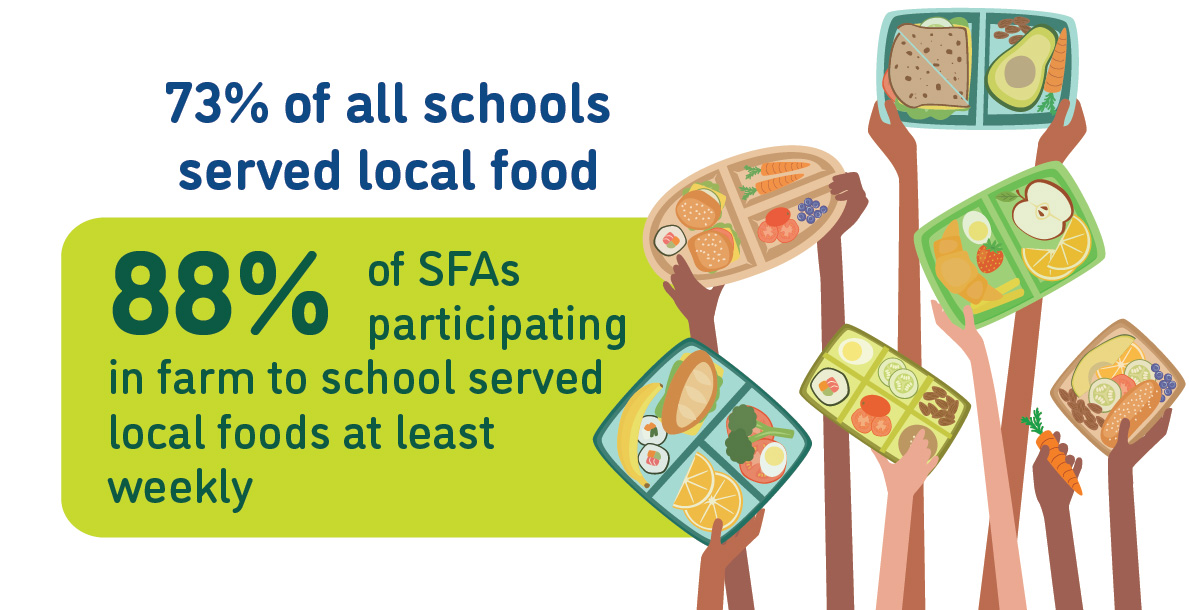
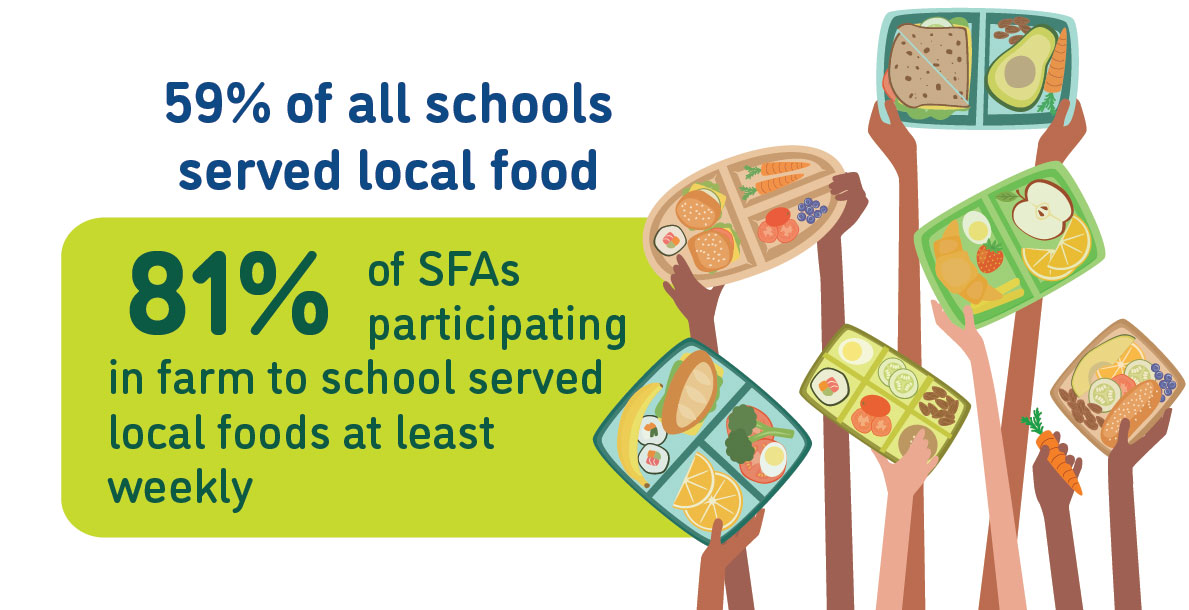
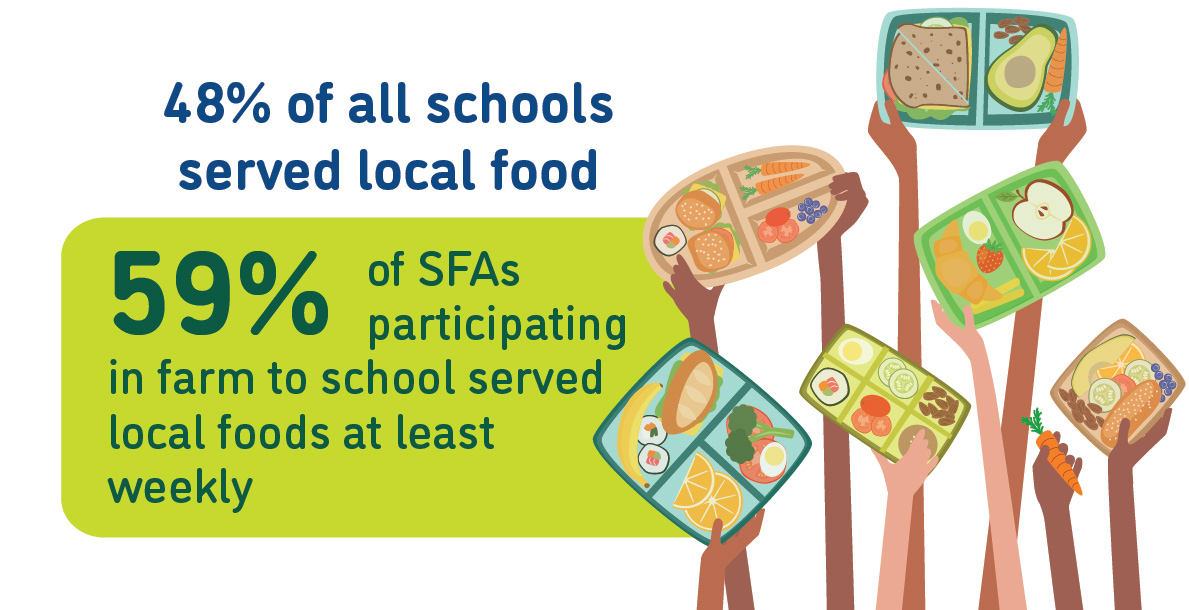
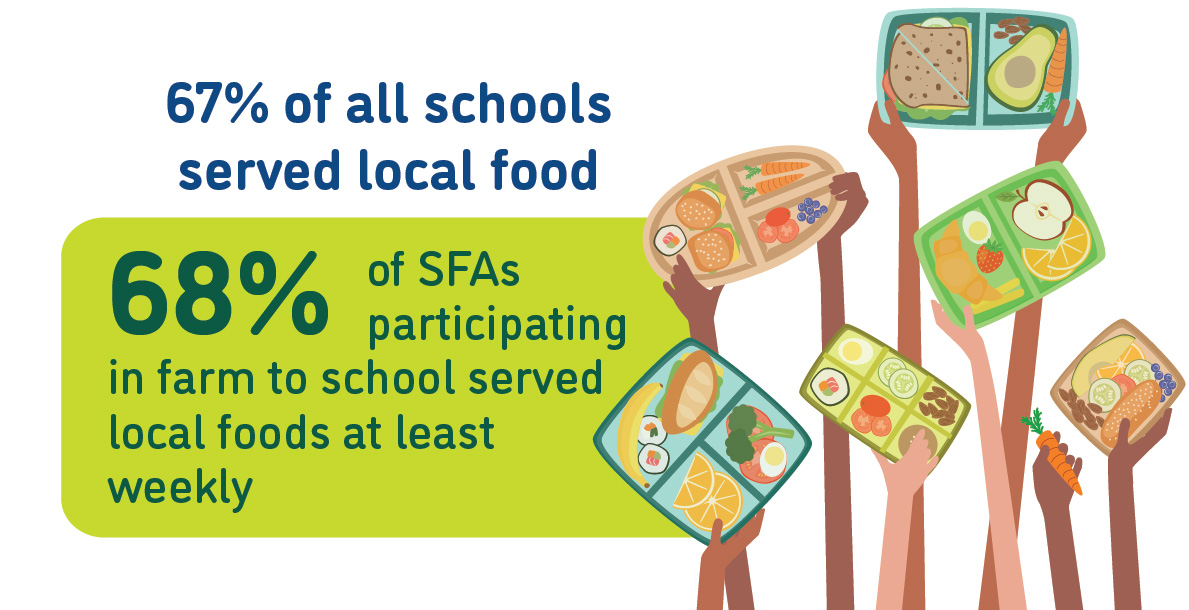
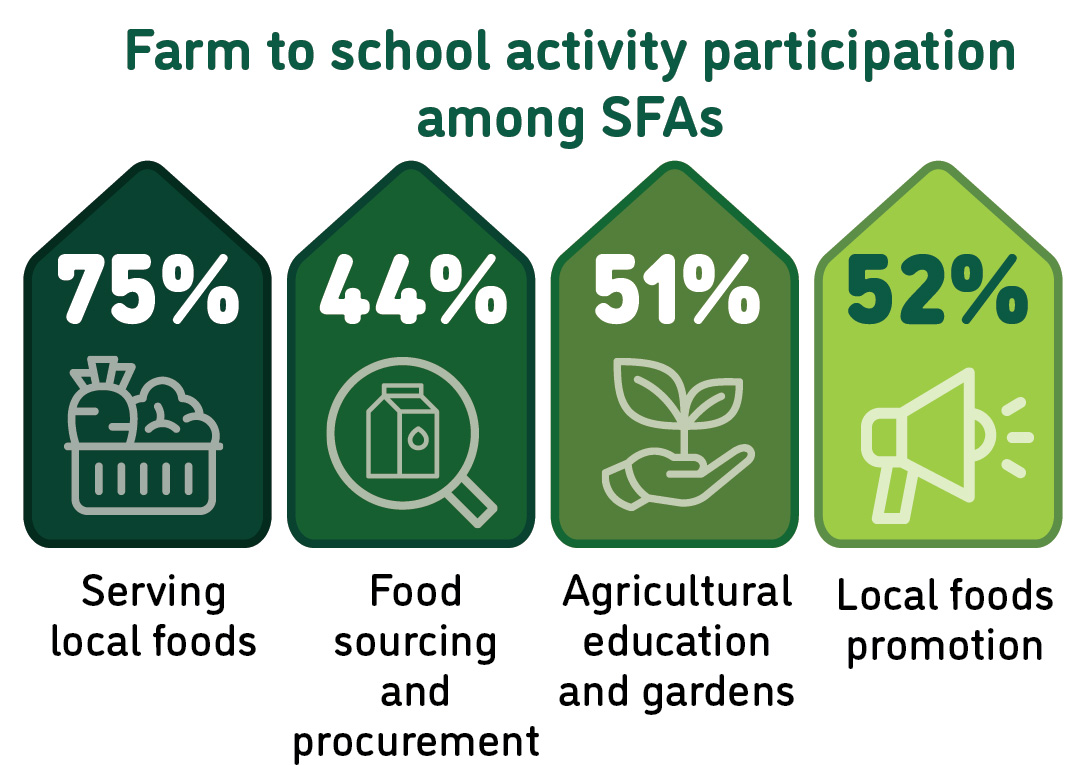
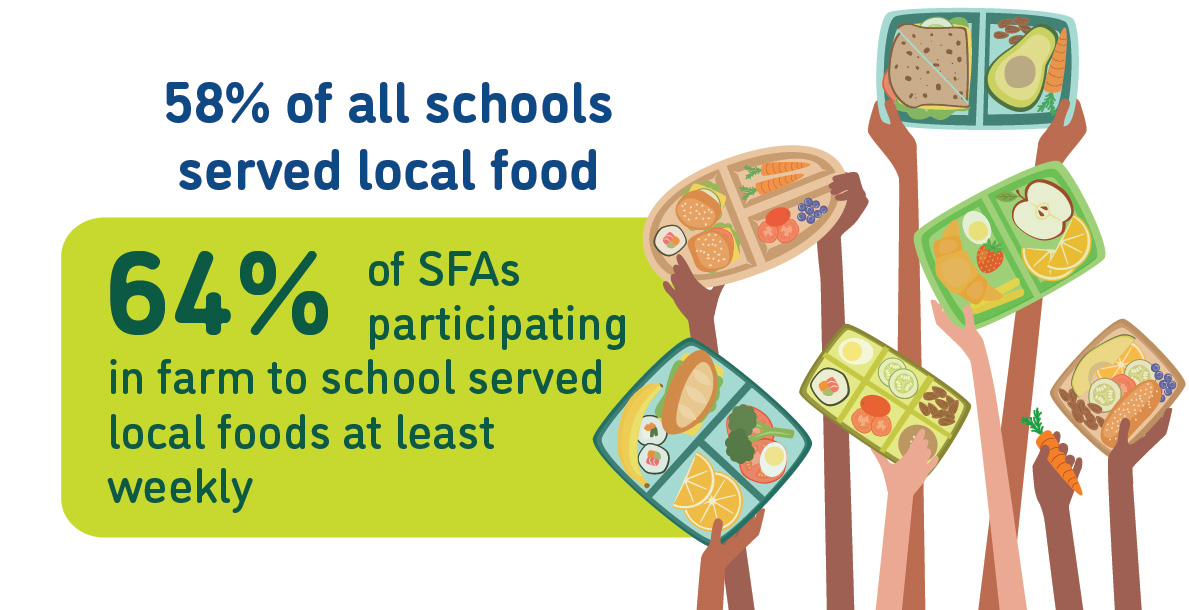
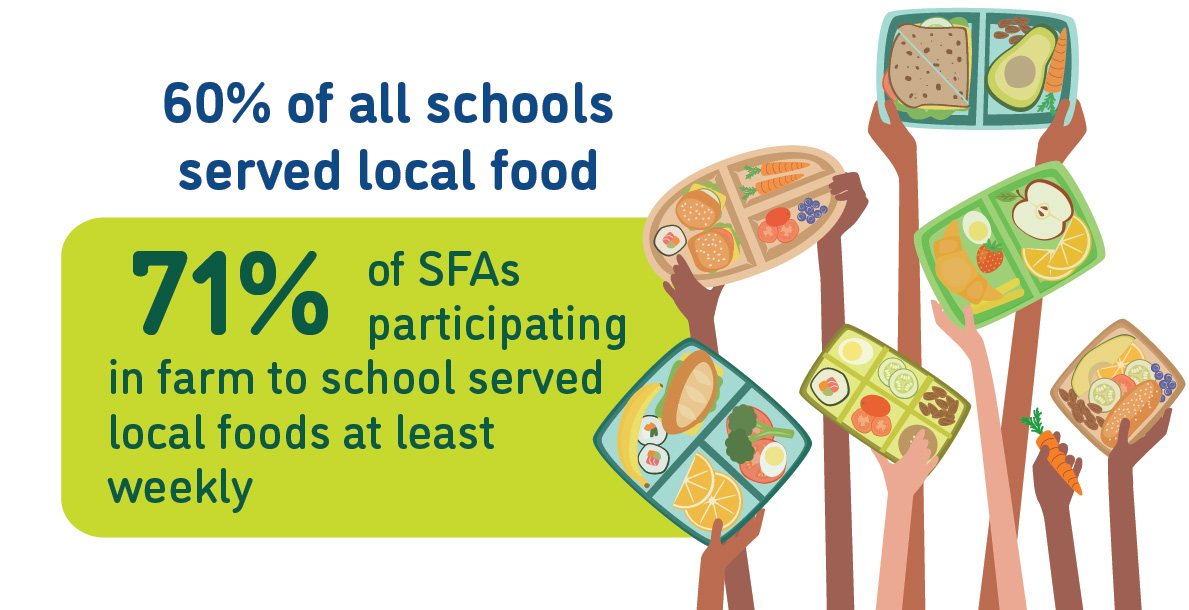
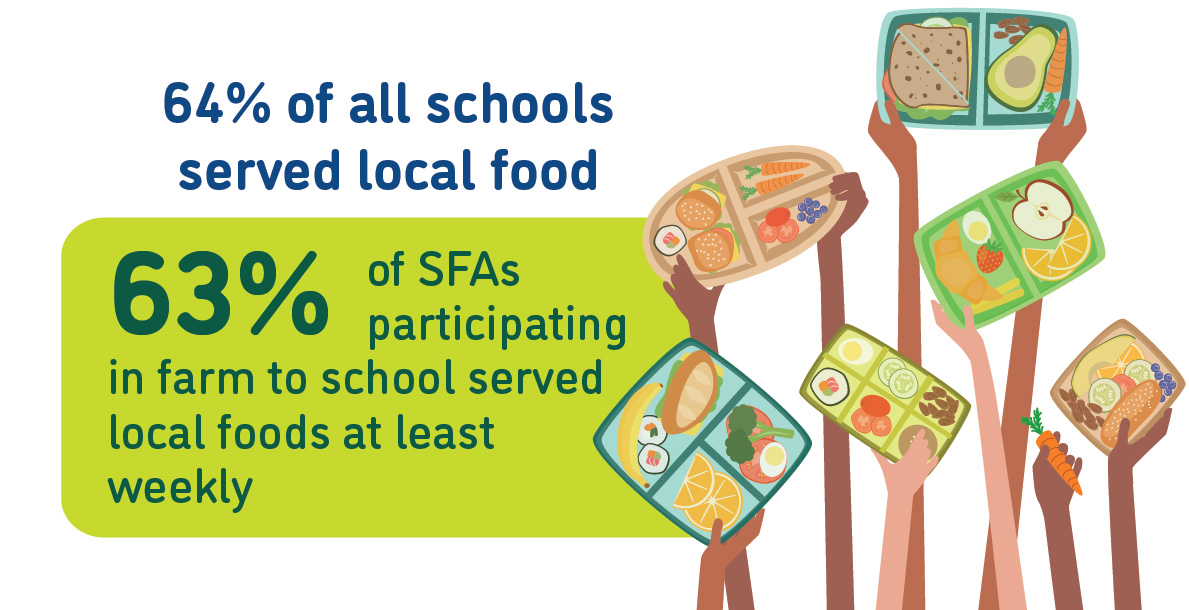
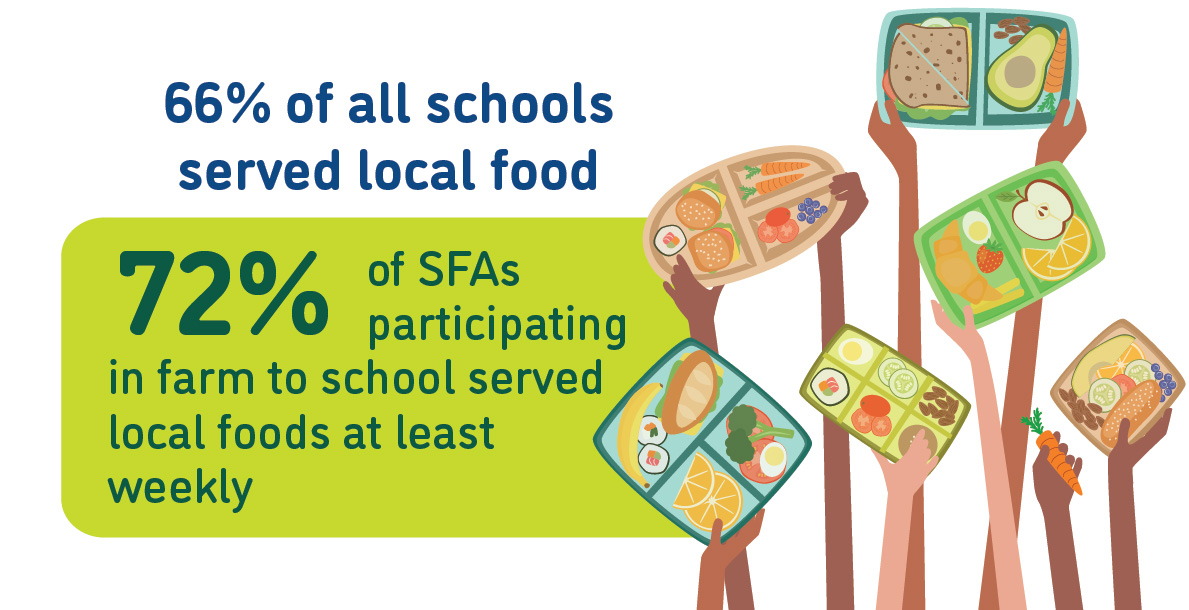
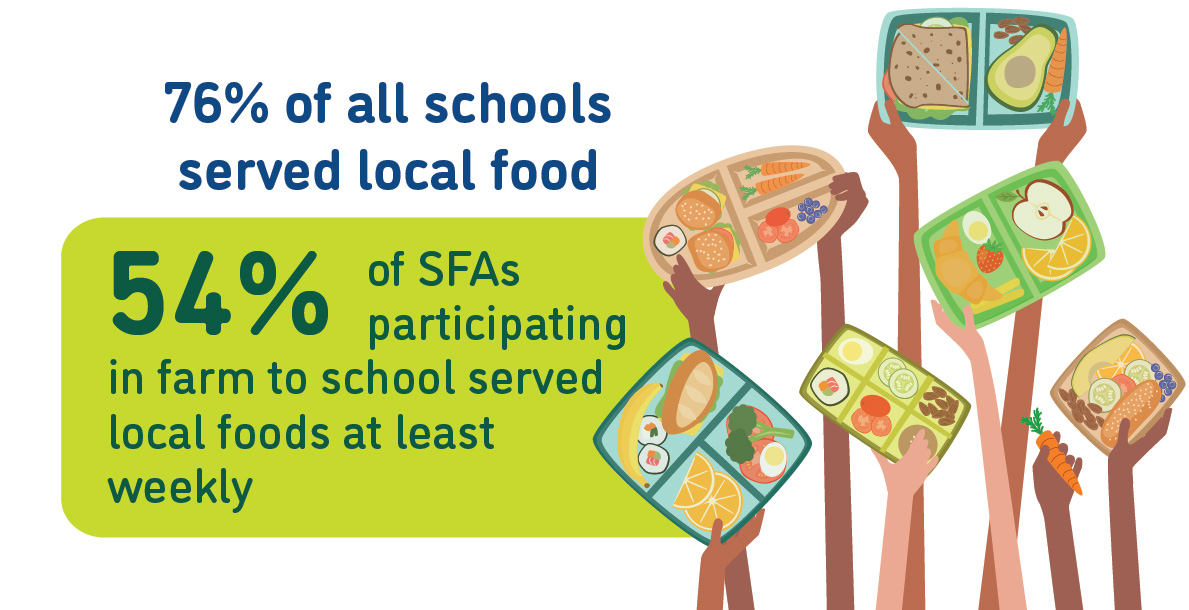
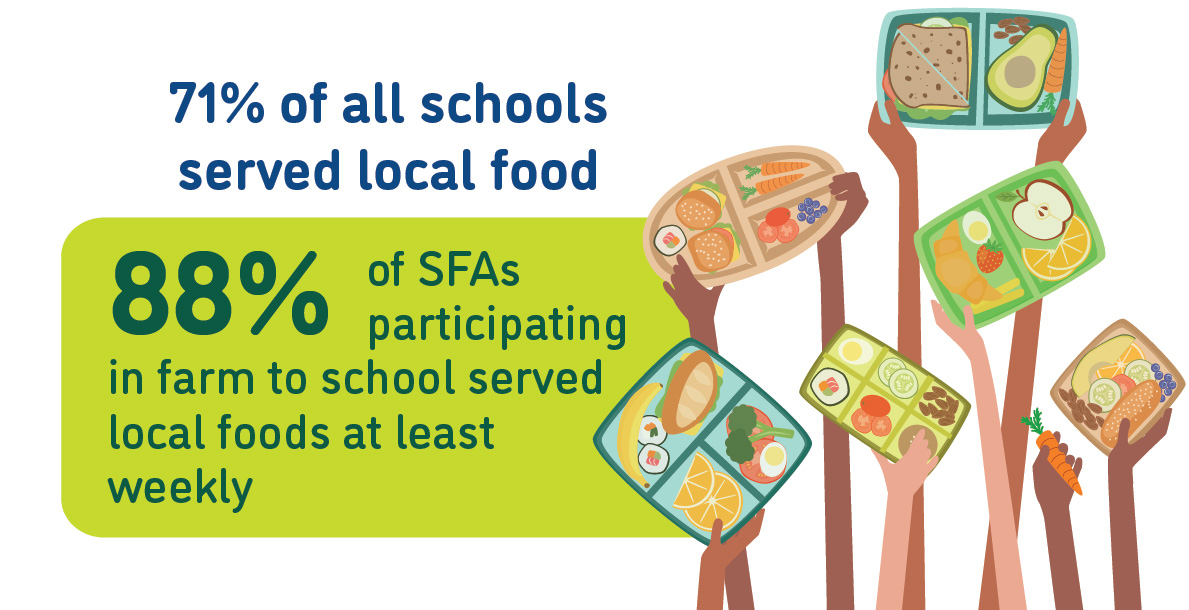
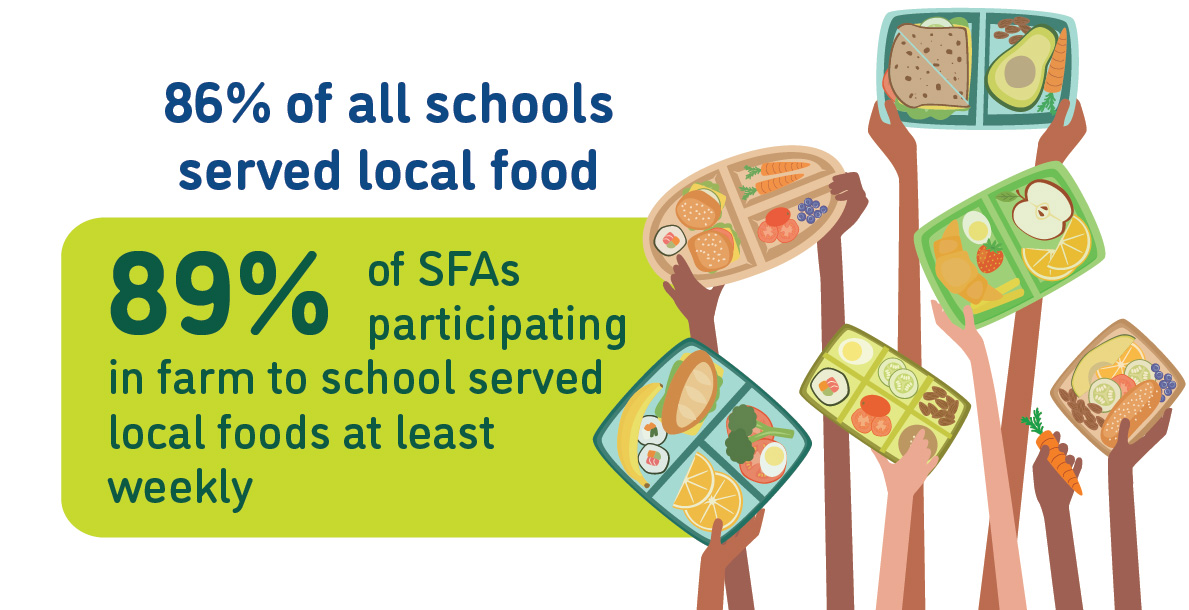
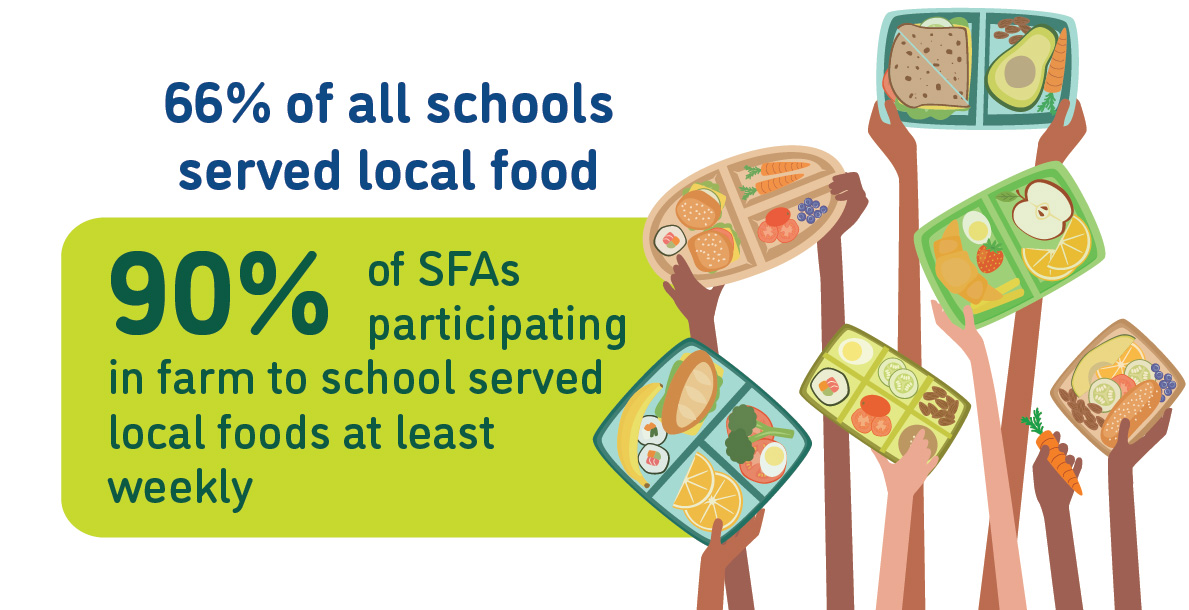
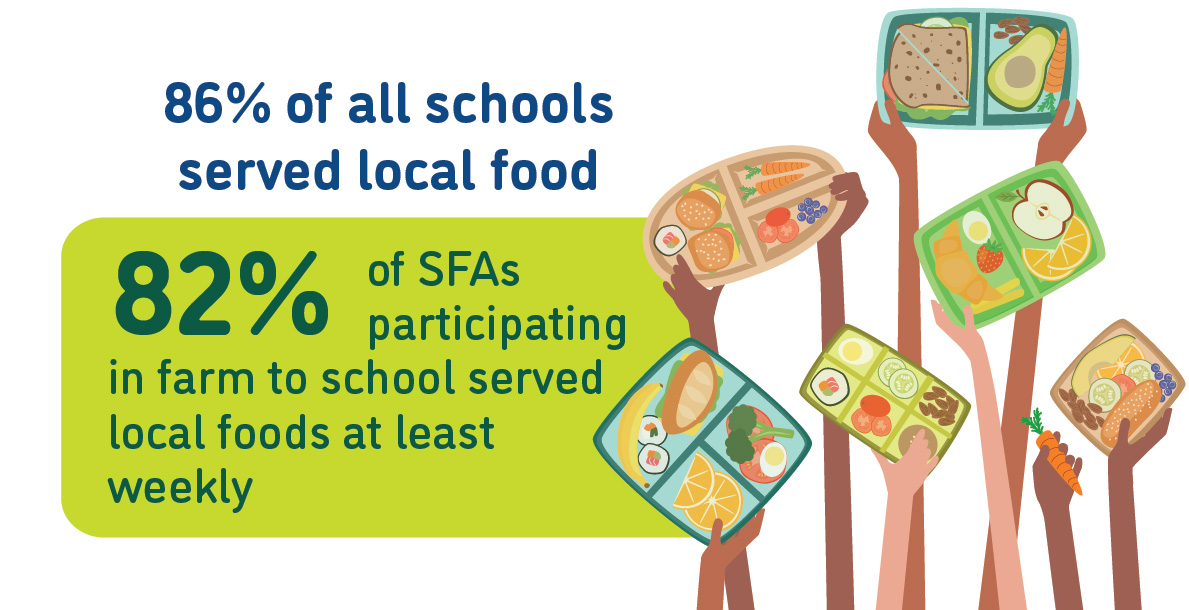
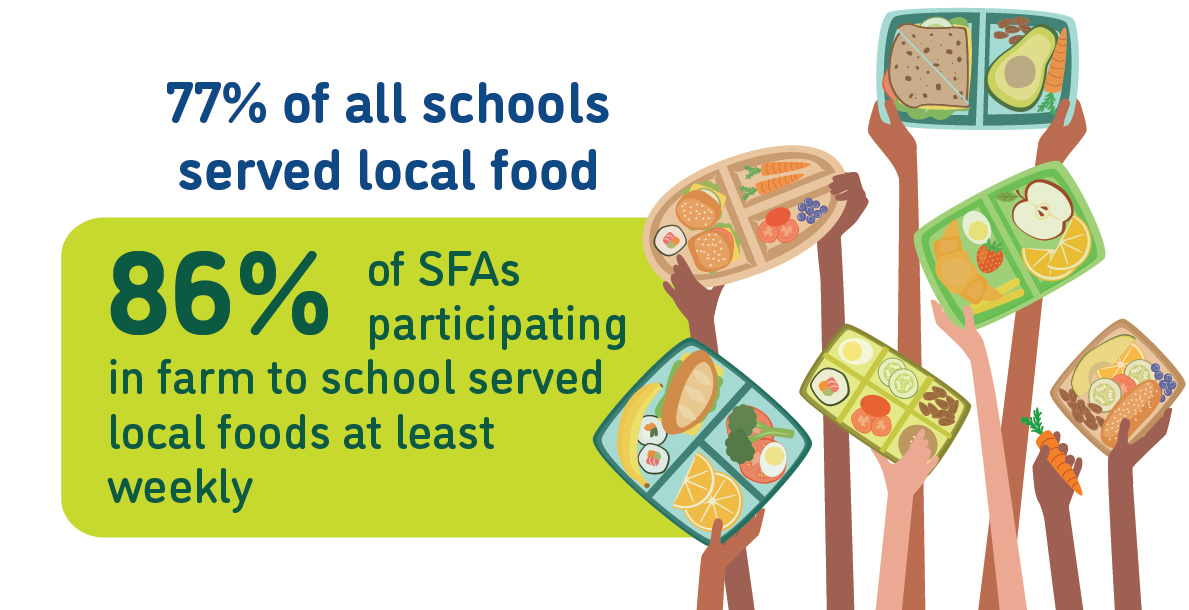
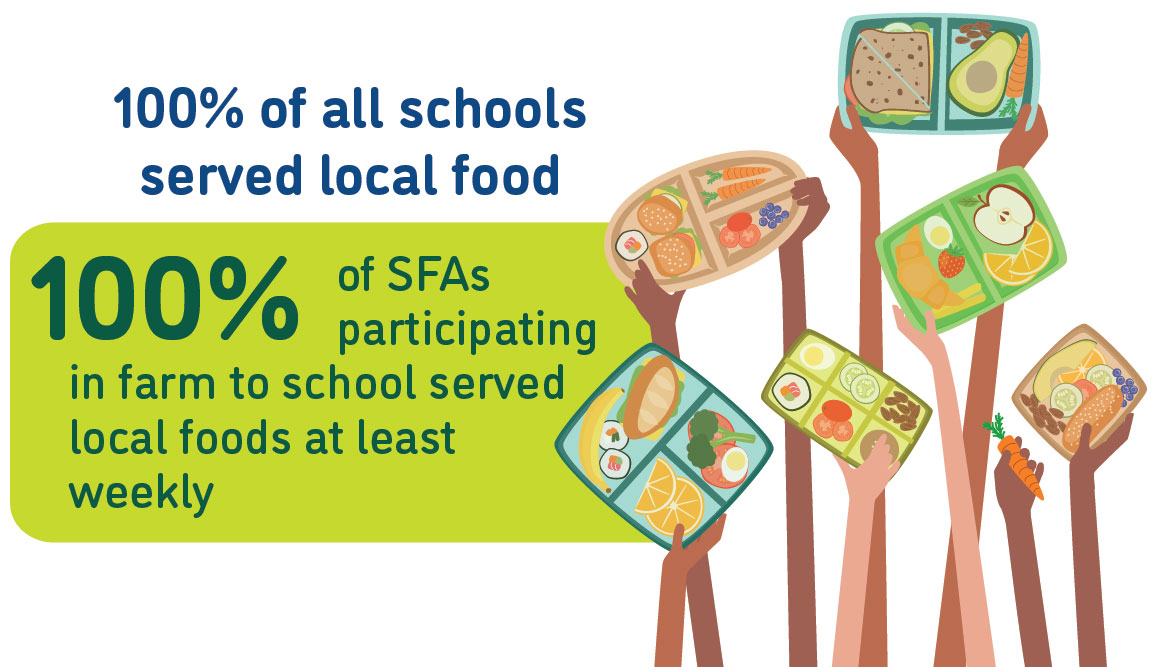
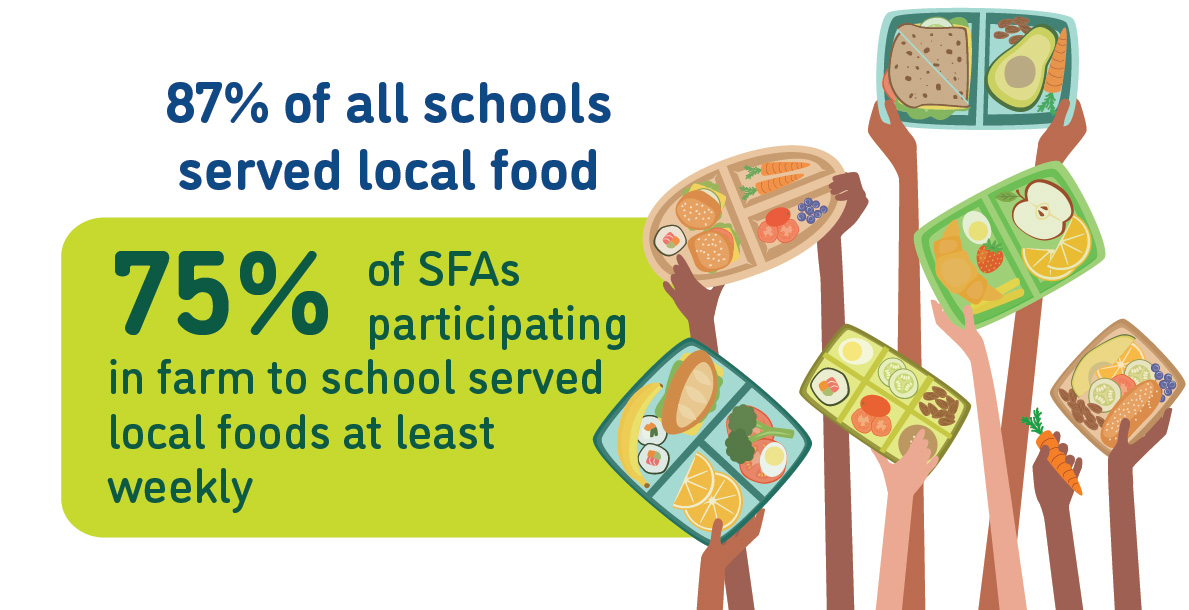
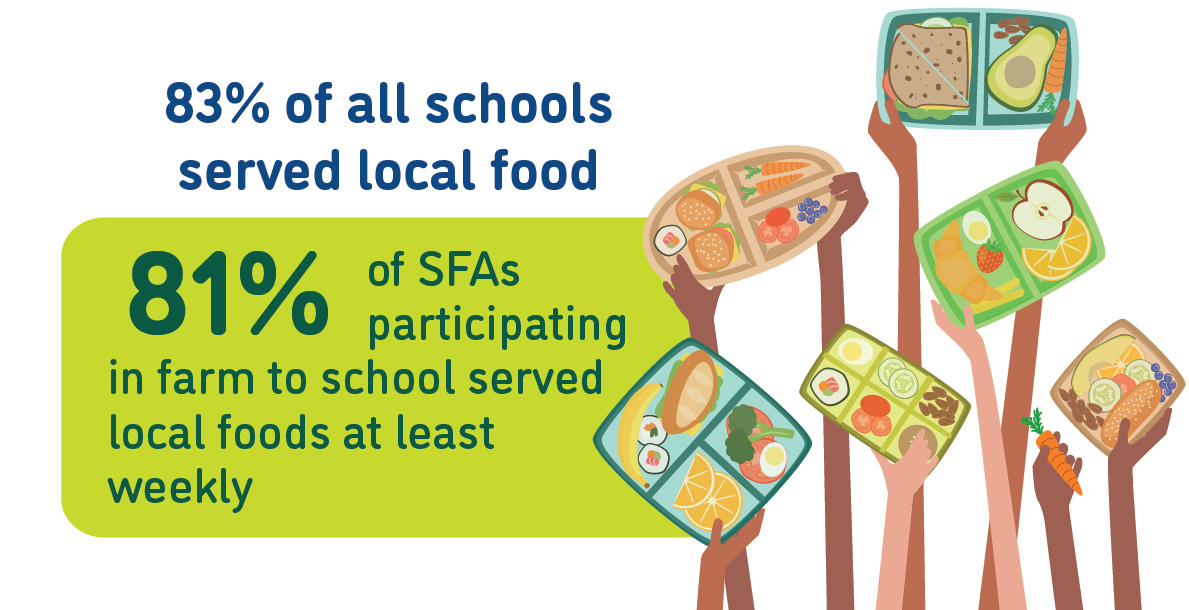
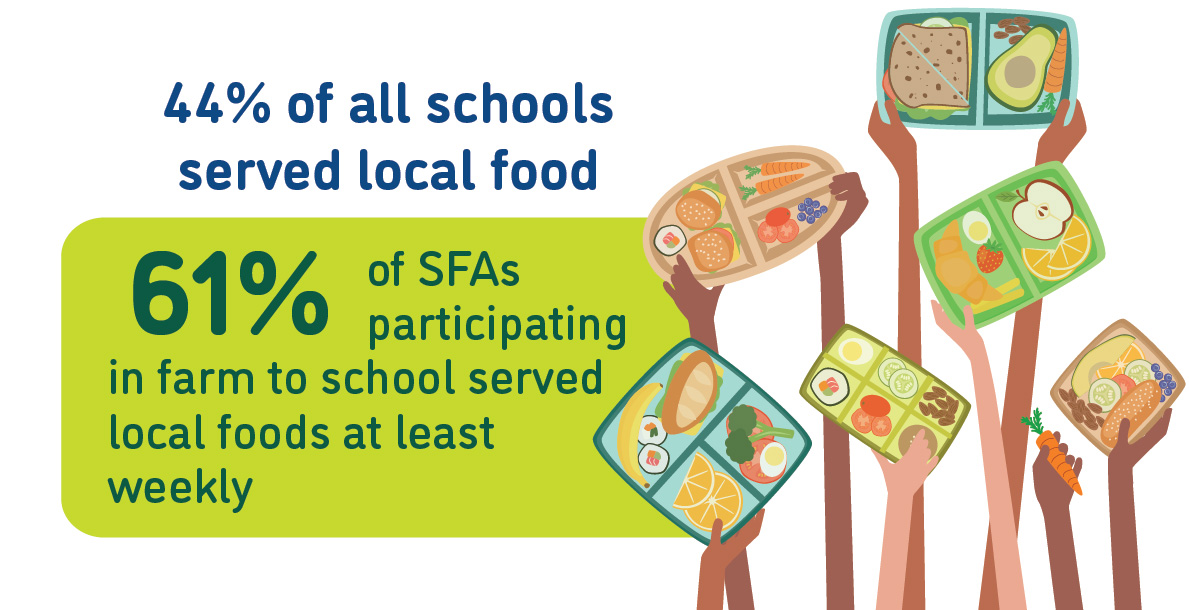
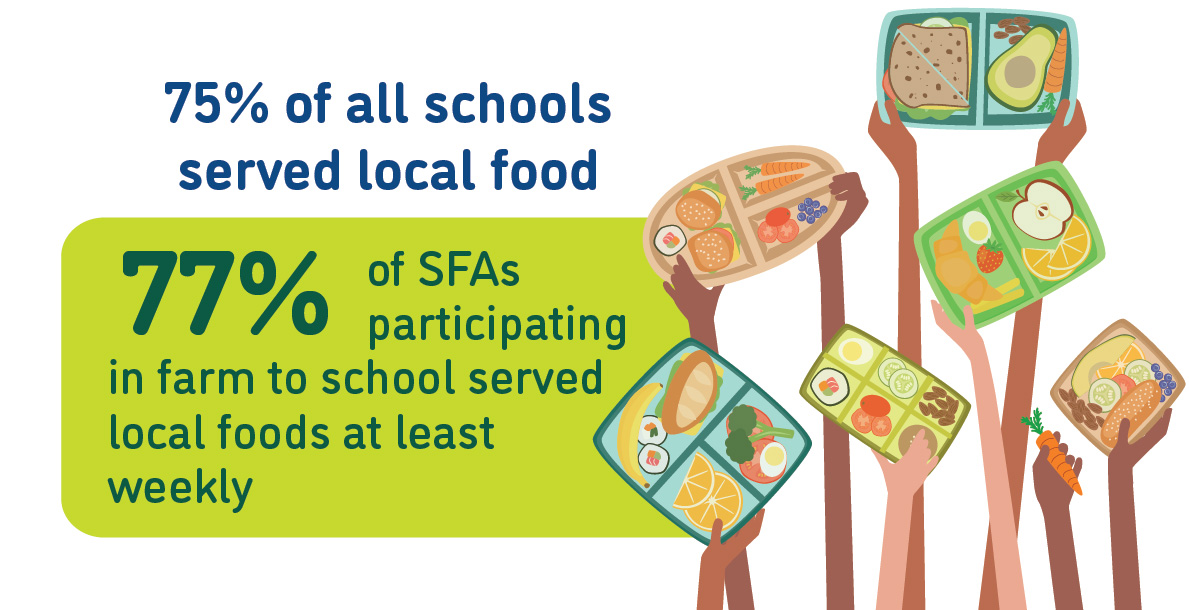
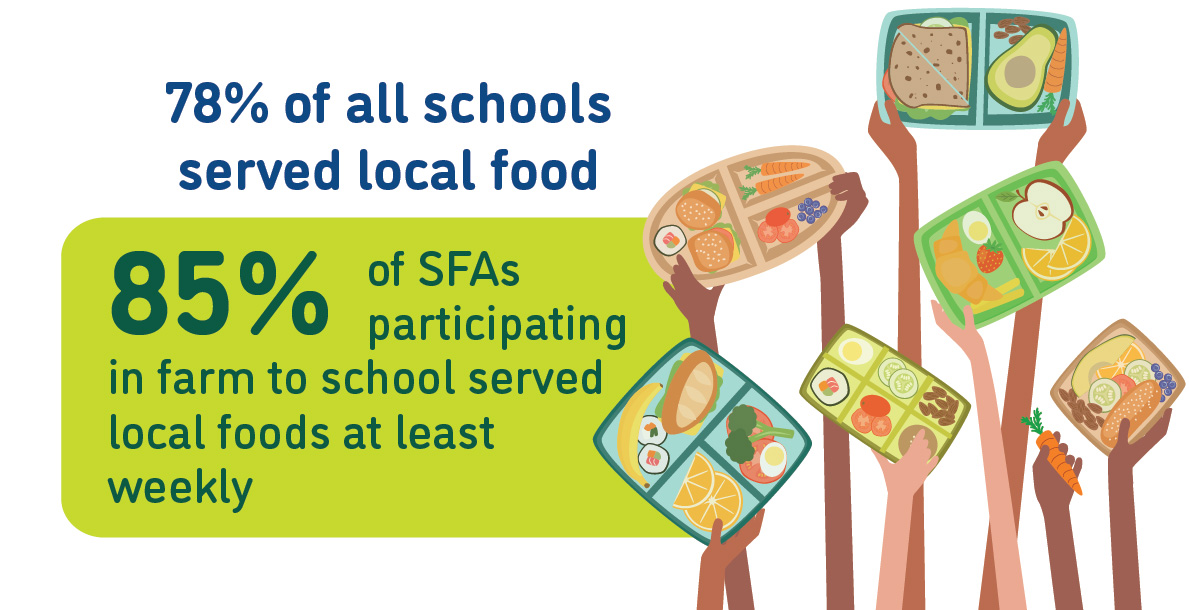
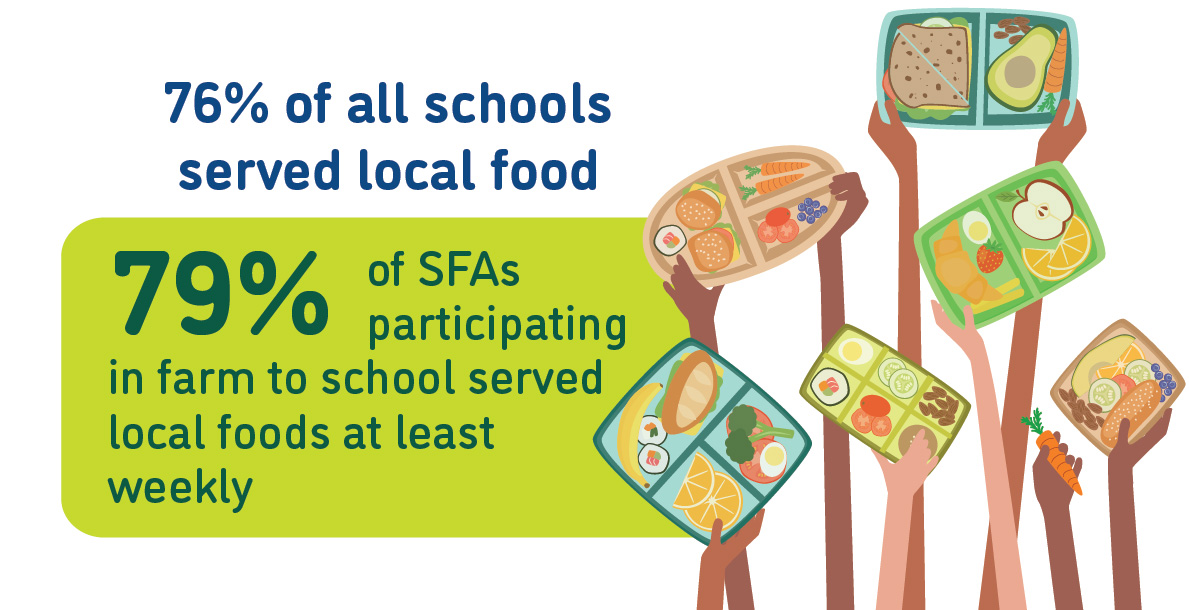
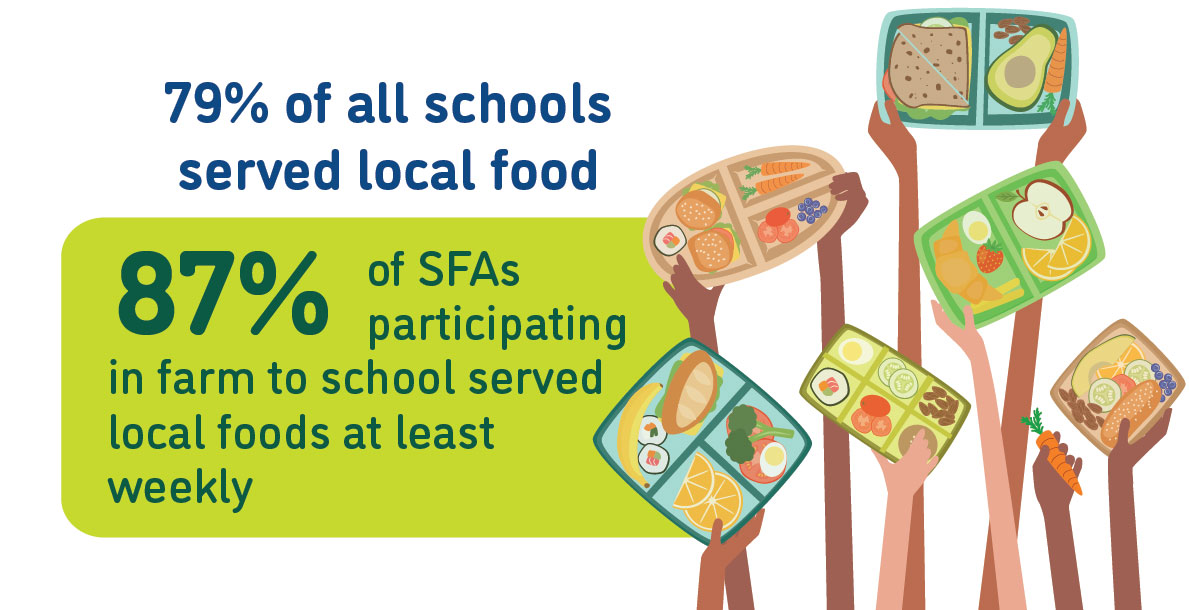
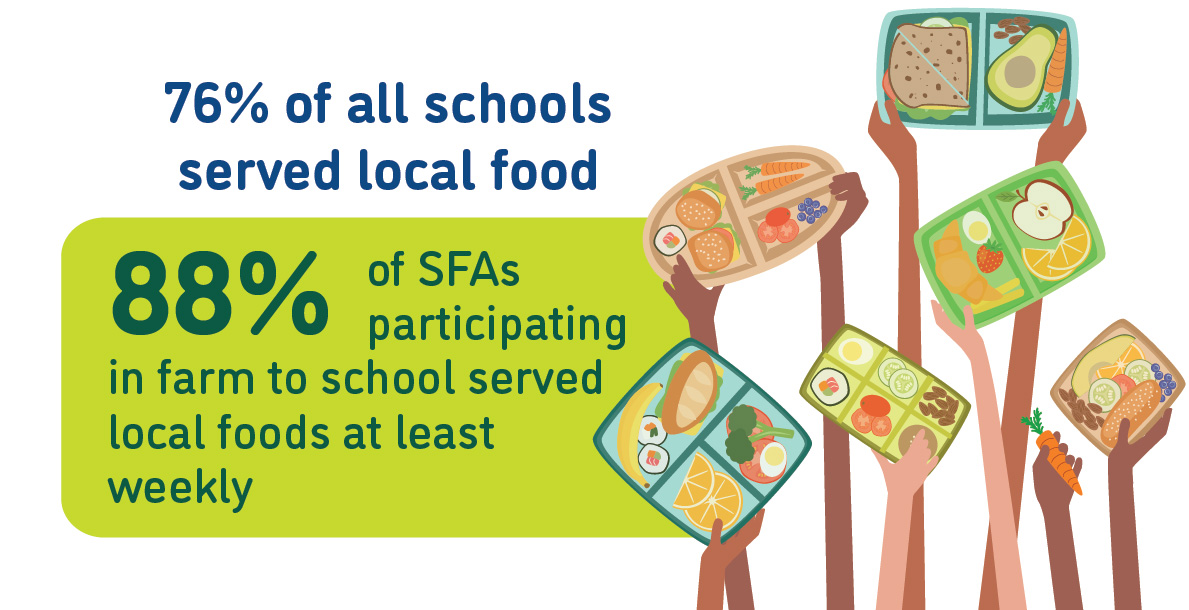
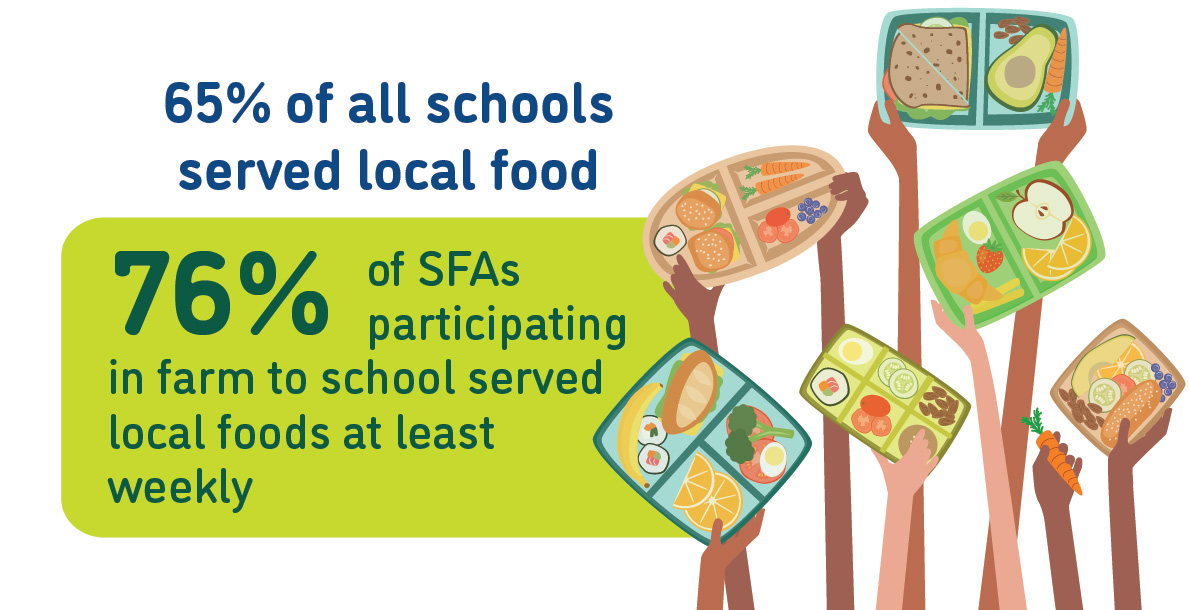
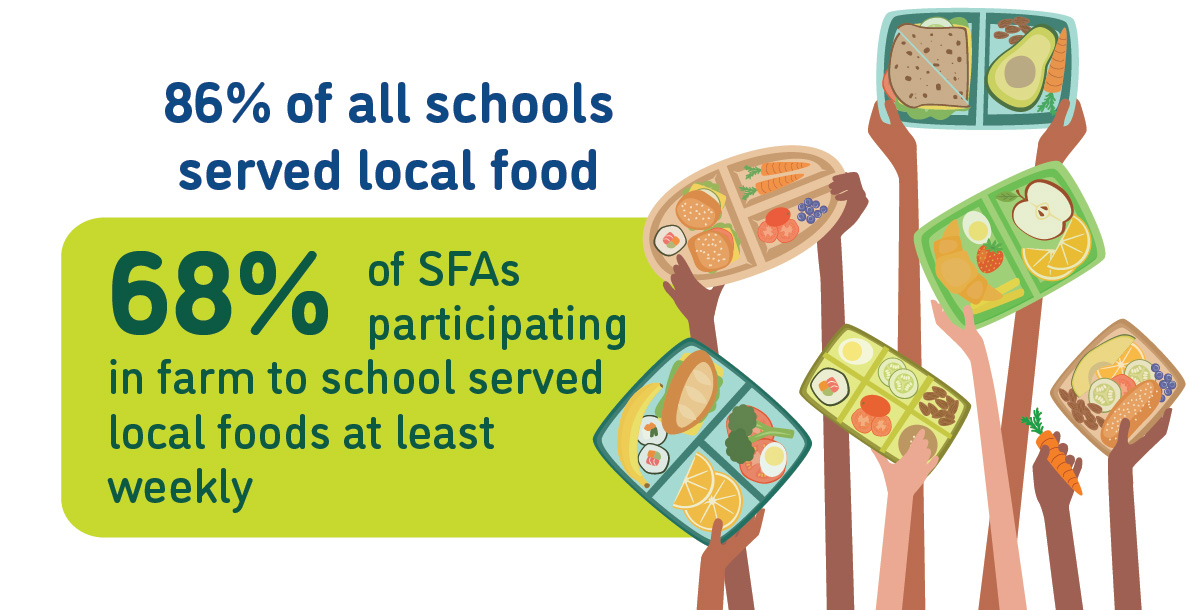
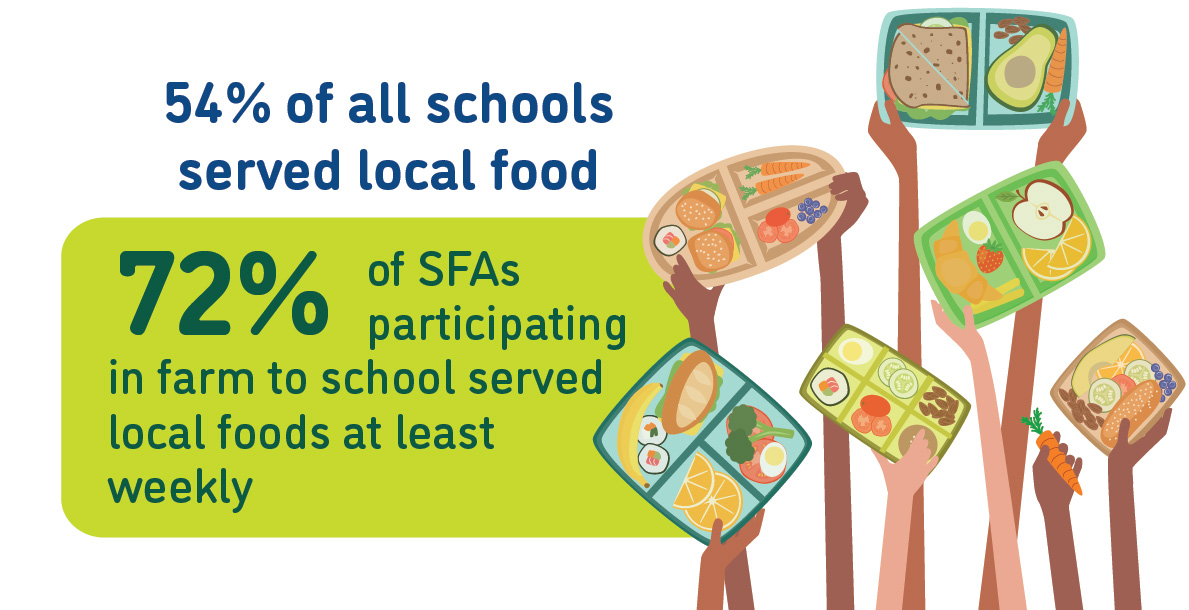
- Nearly two-thirds (63 percent) of SFAs said they served local foods to students in SY 2022-23.
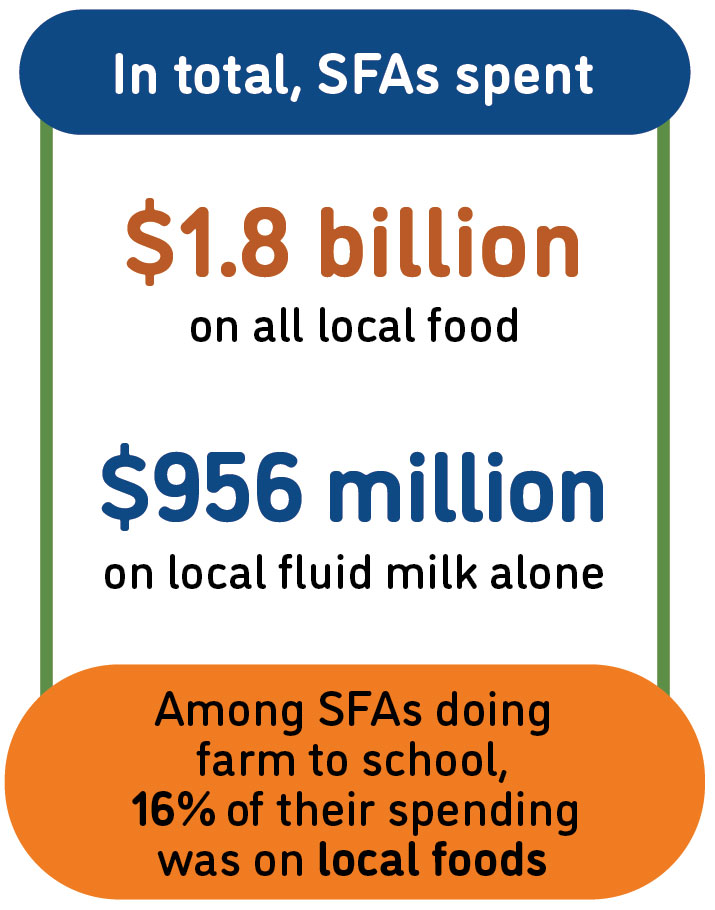
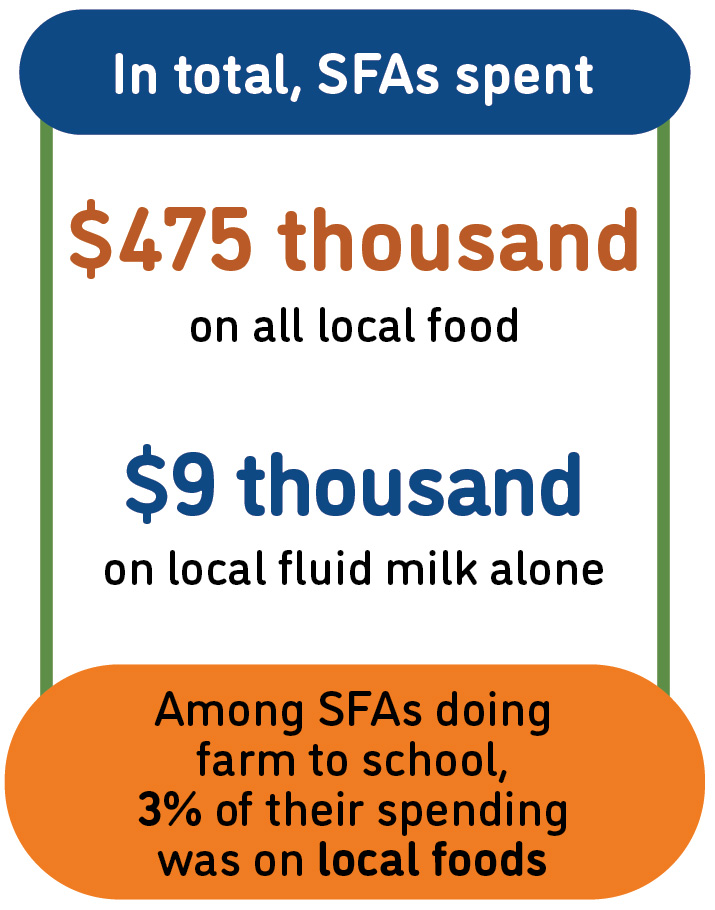
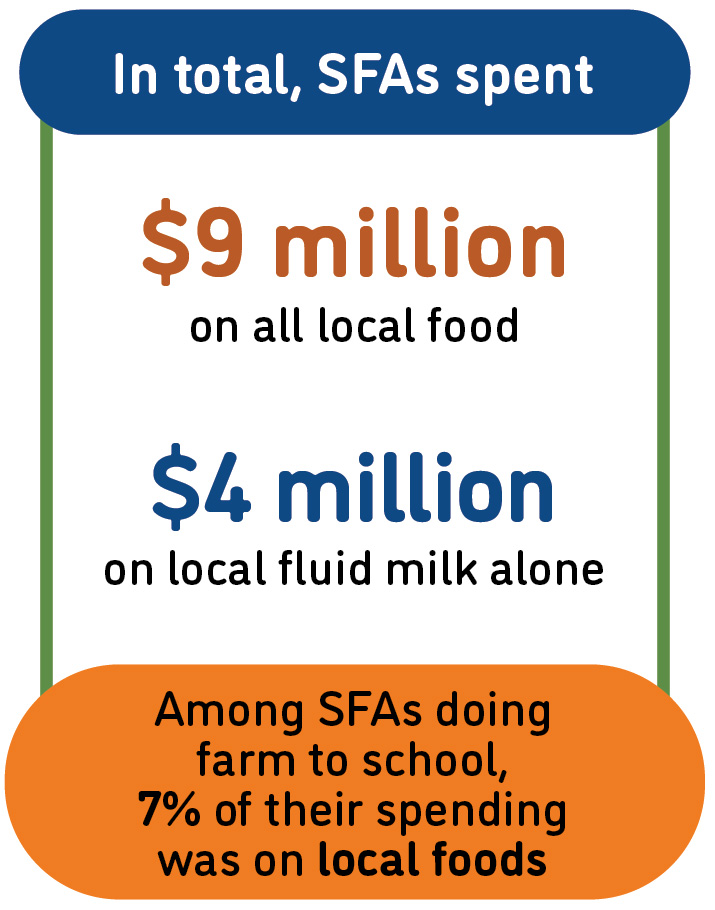
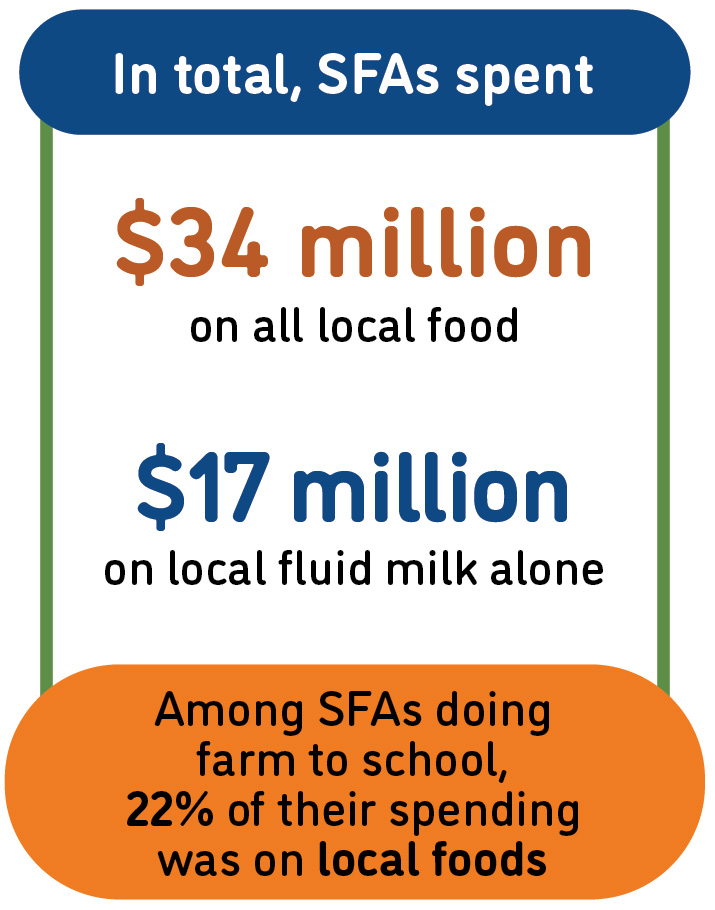
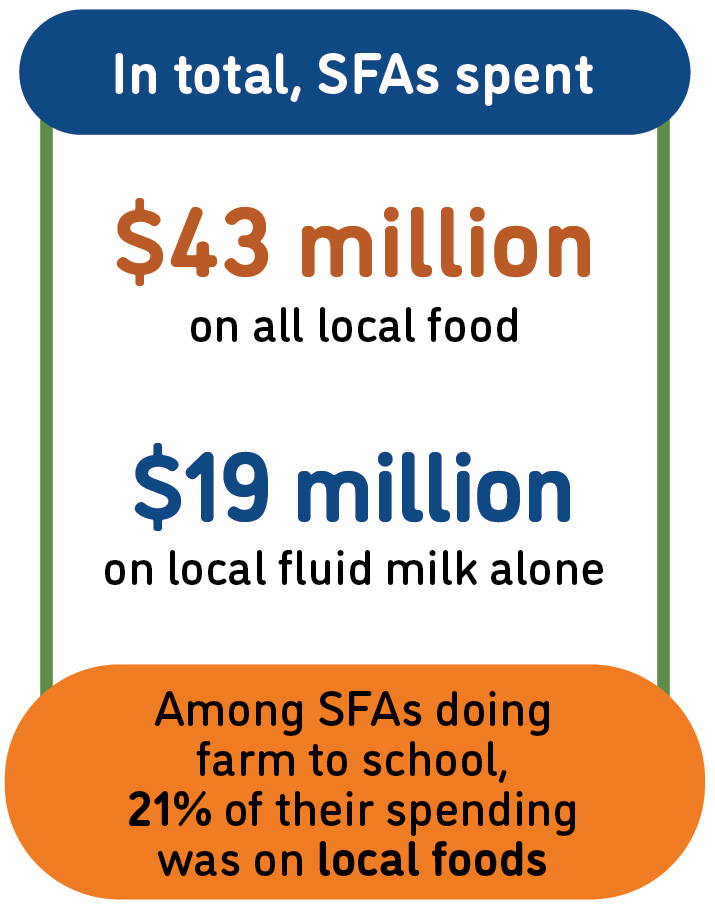
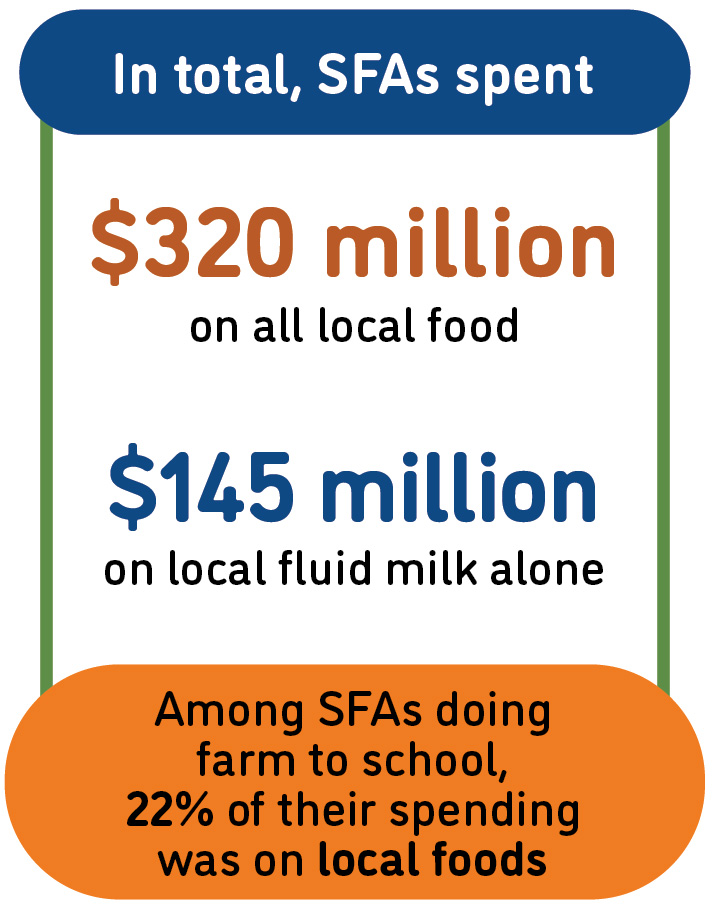
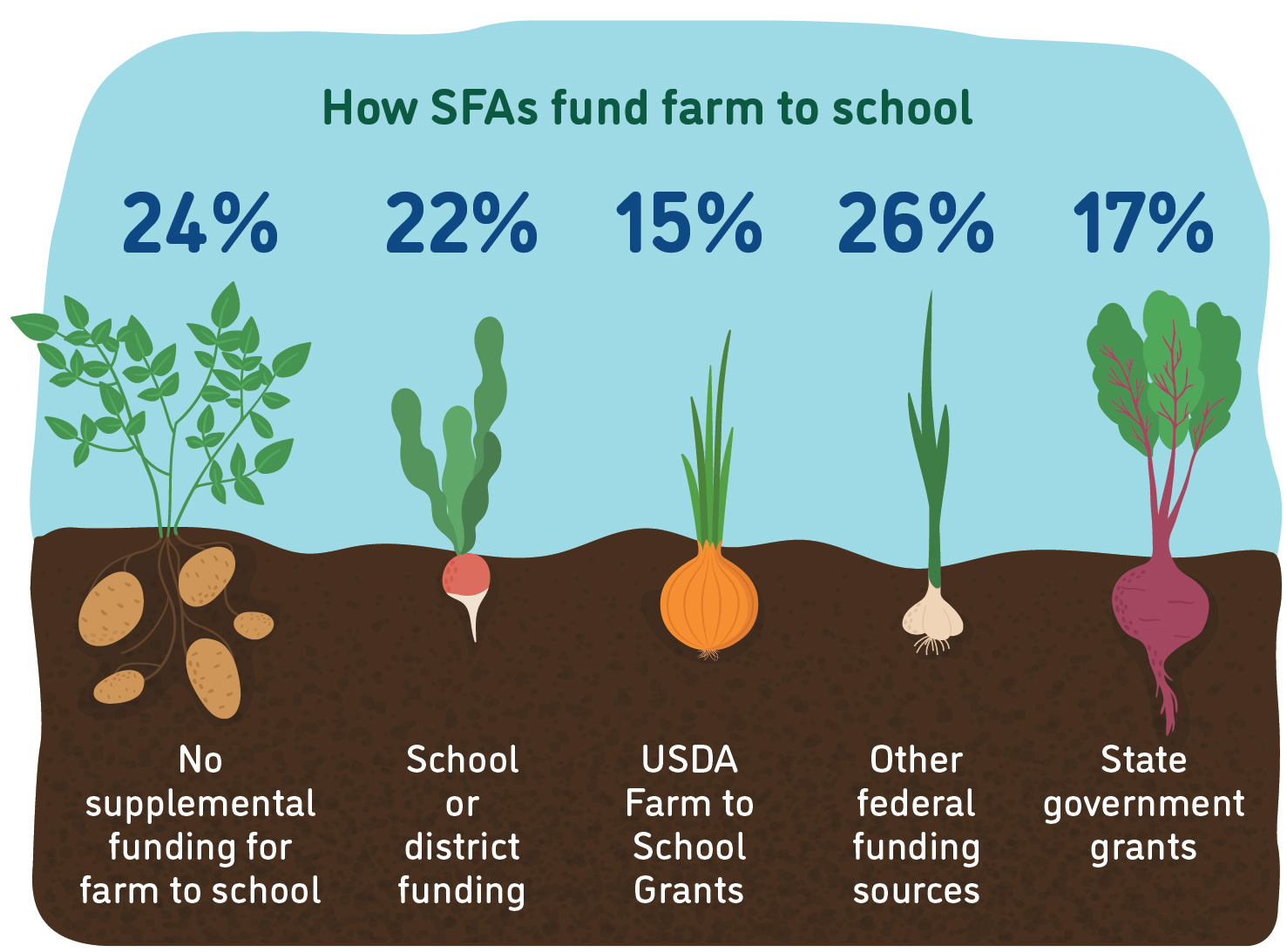
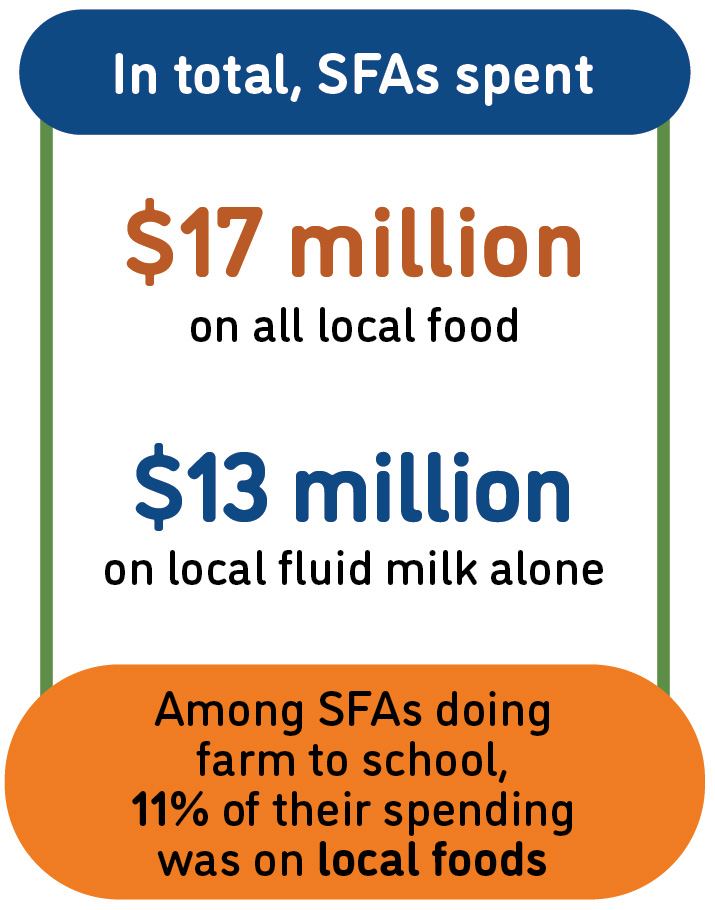
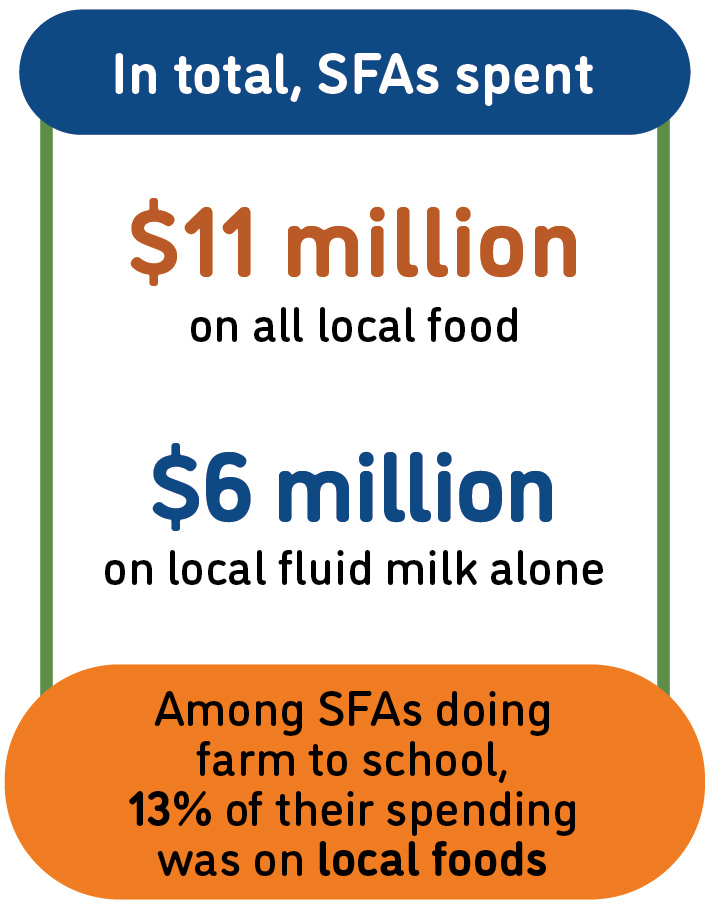
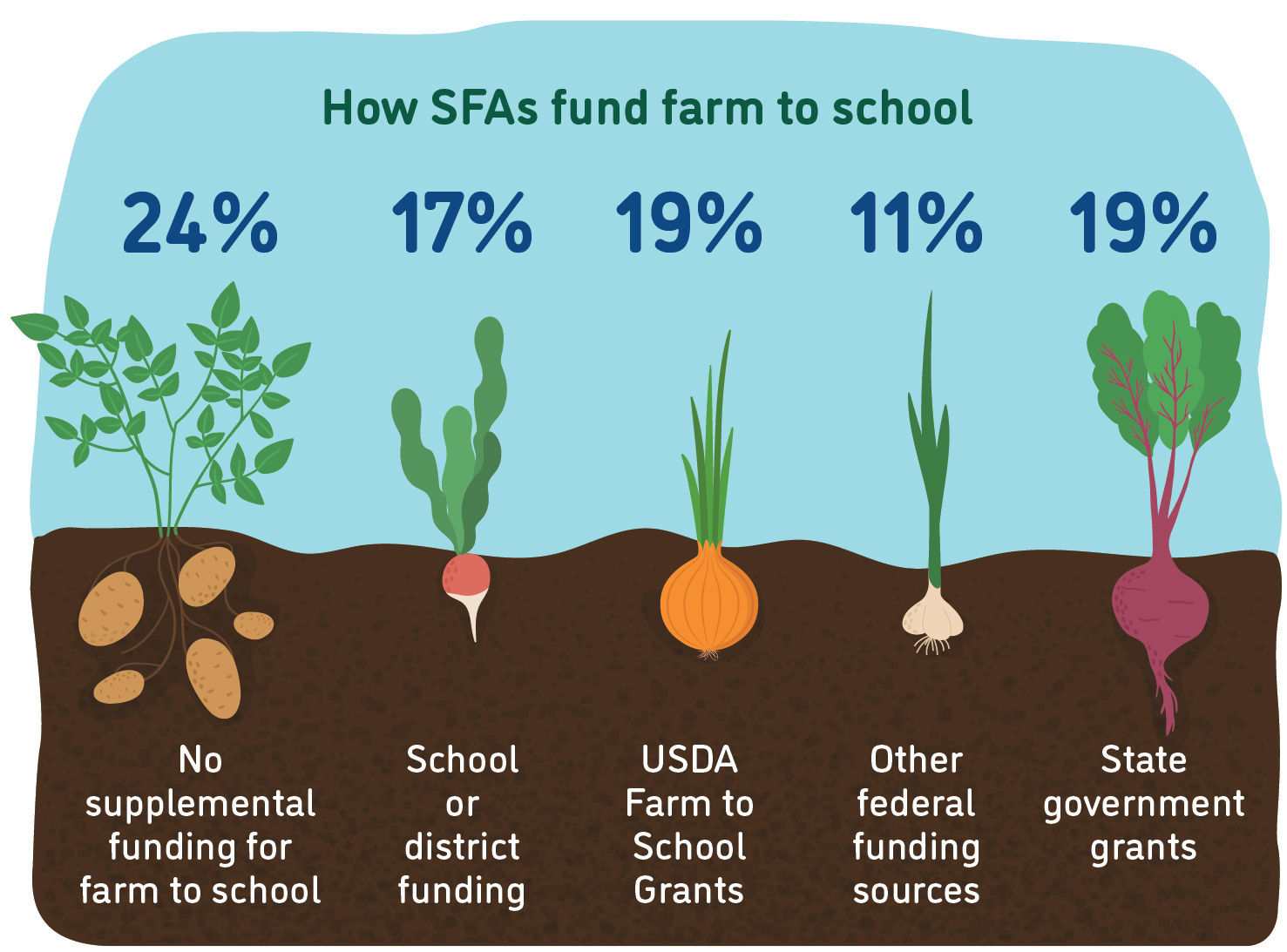
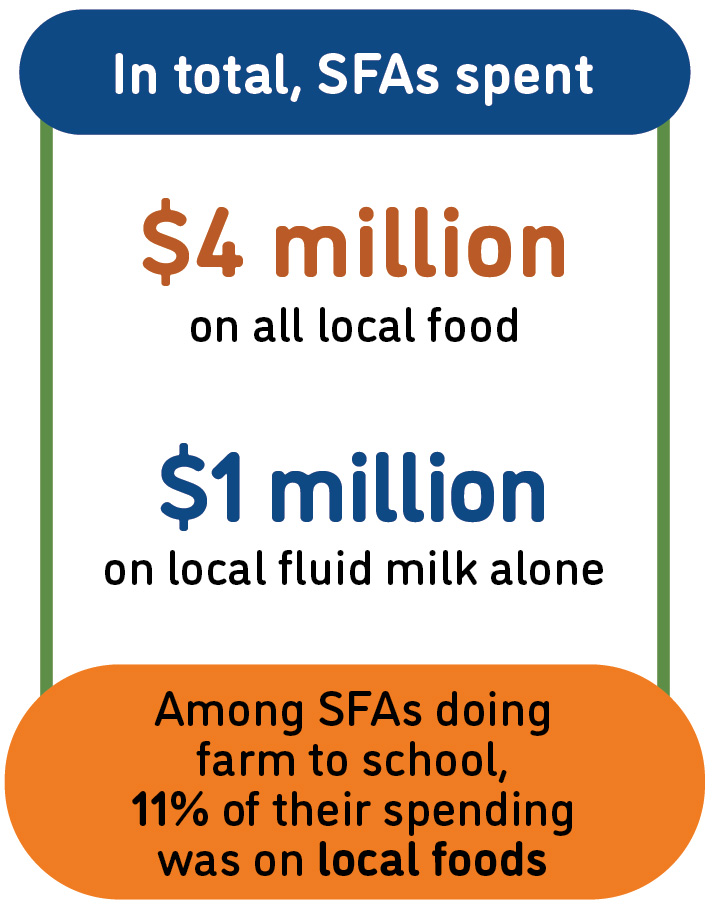
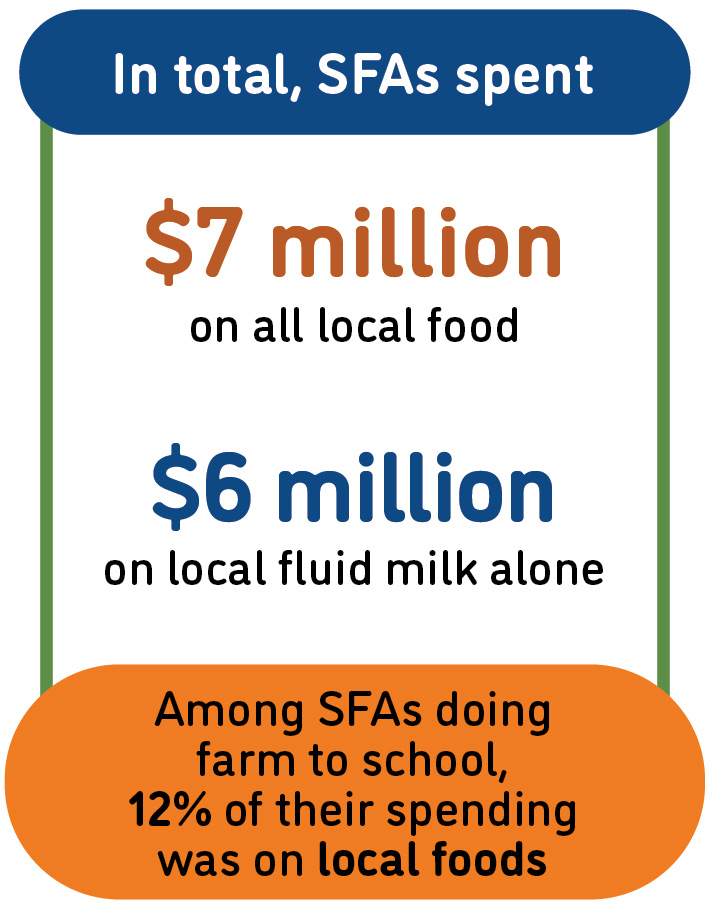
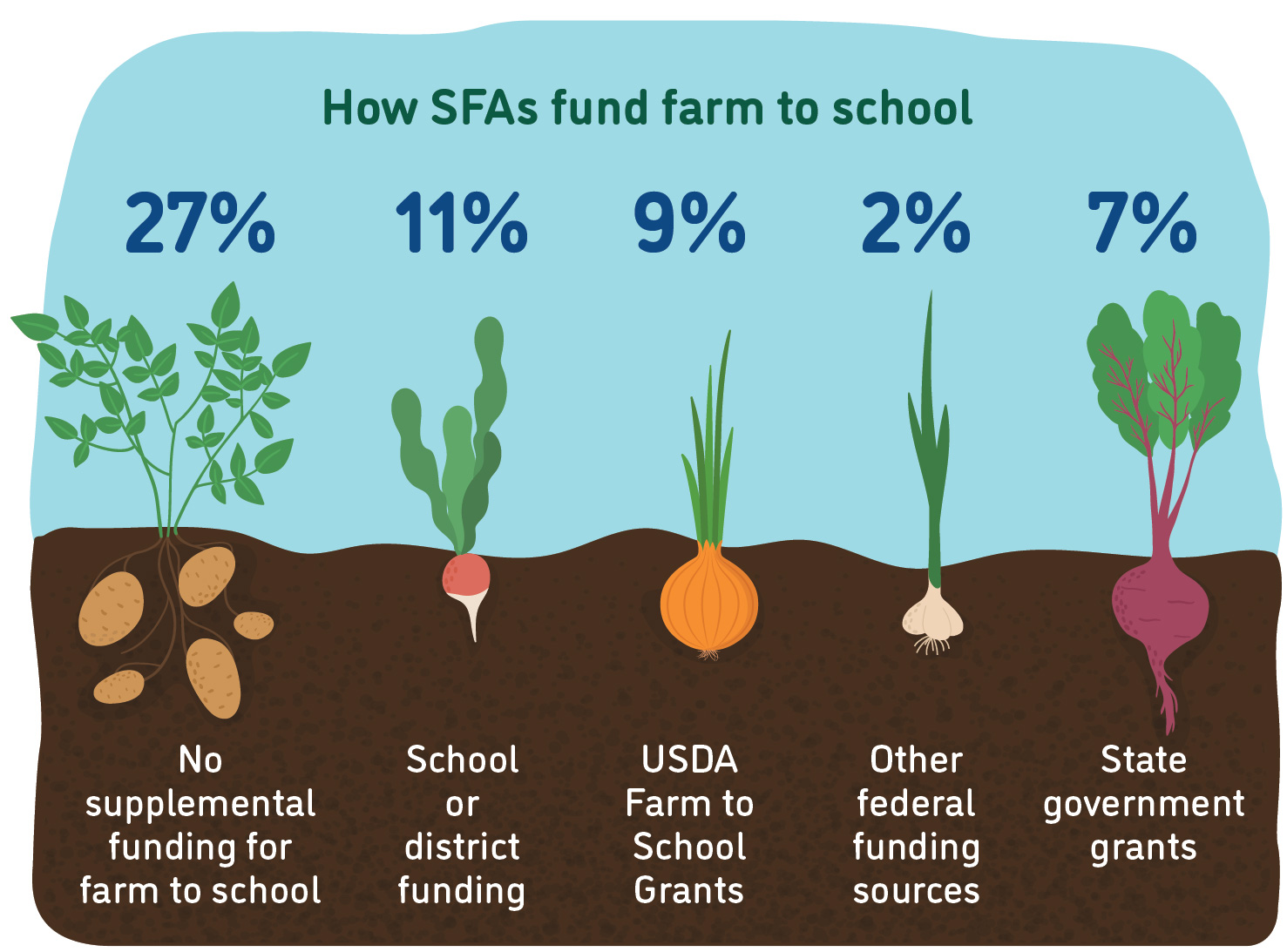
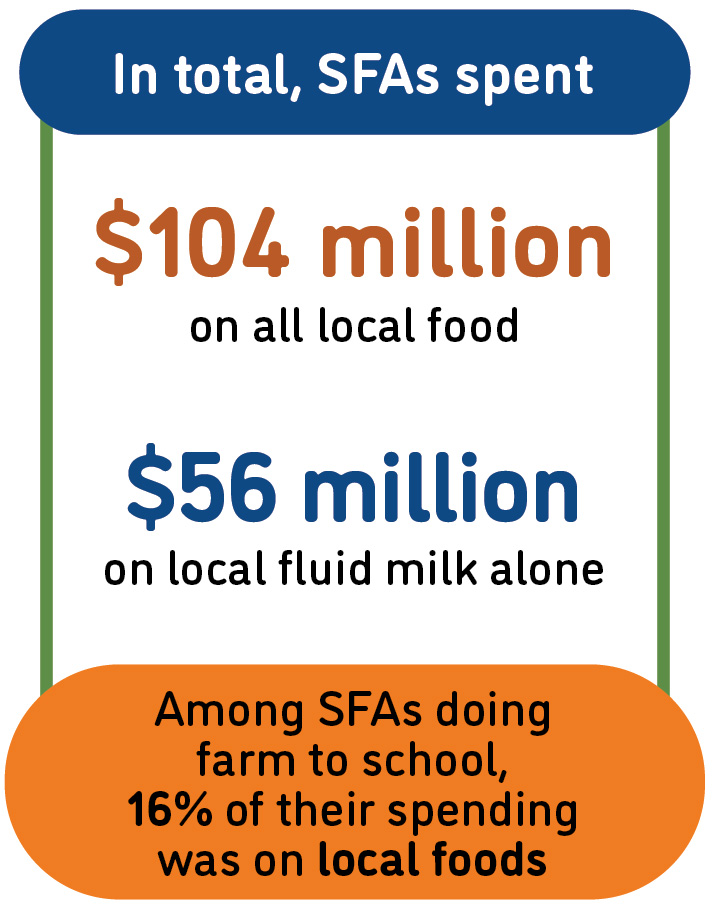
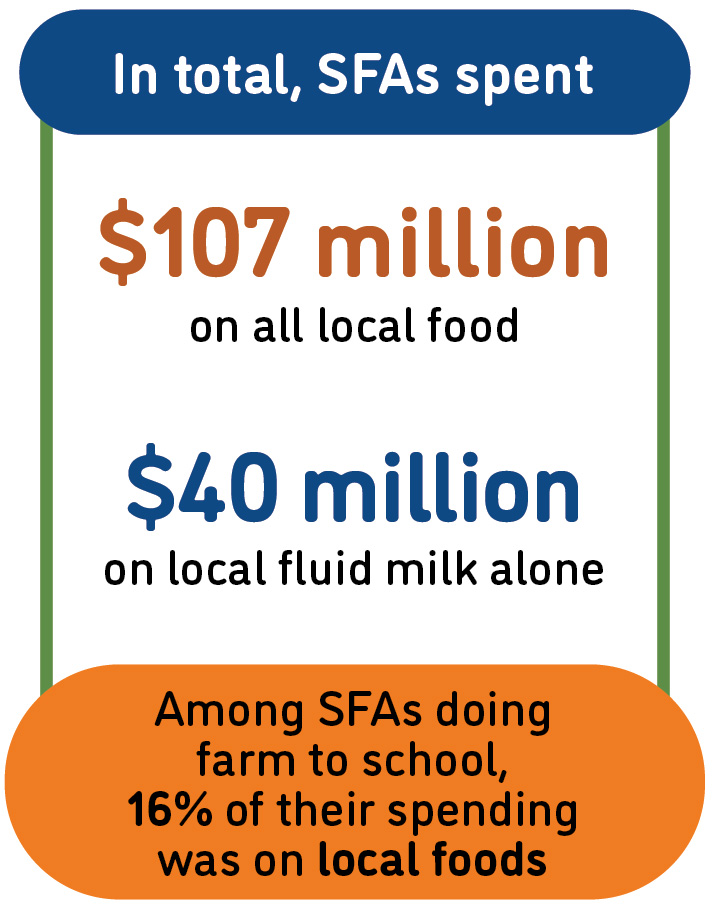
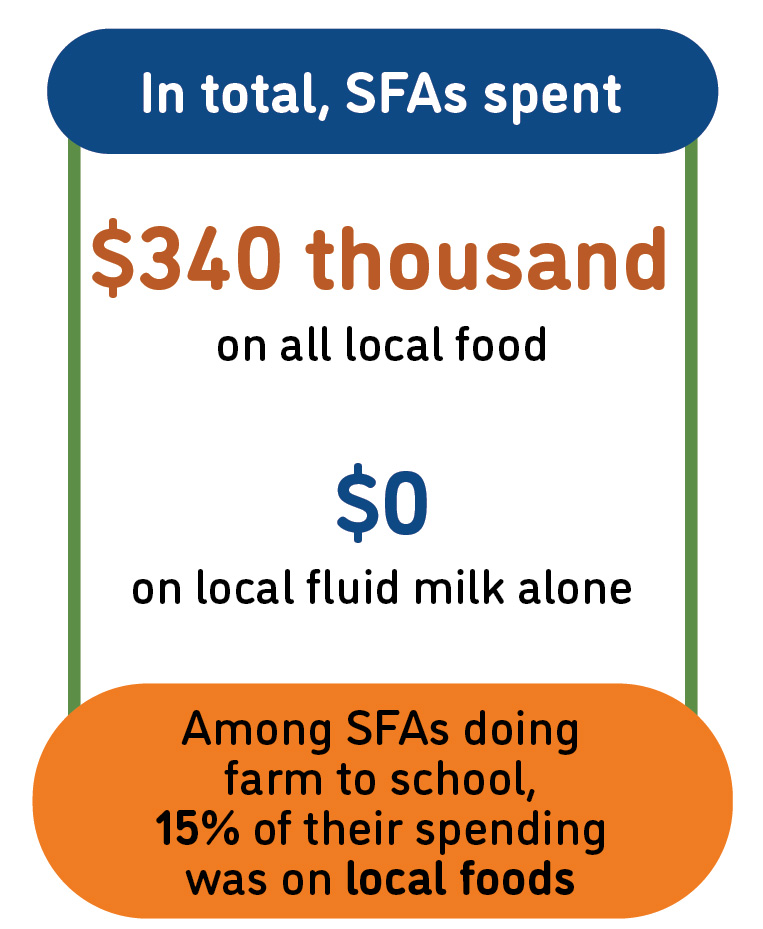
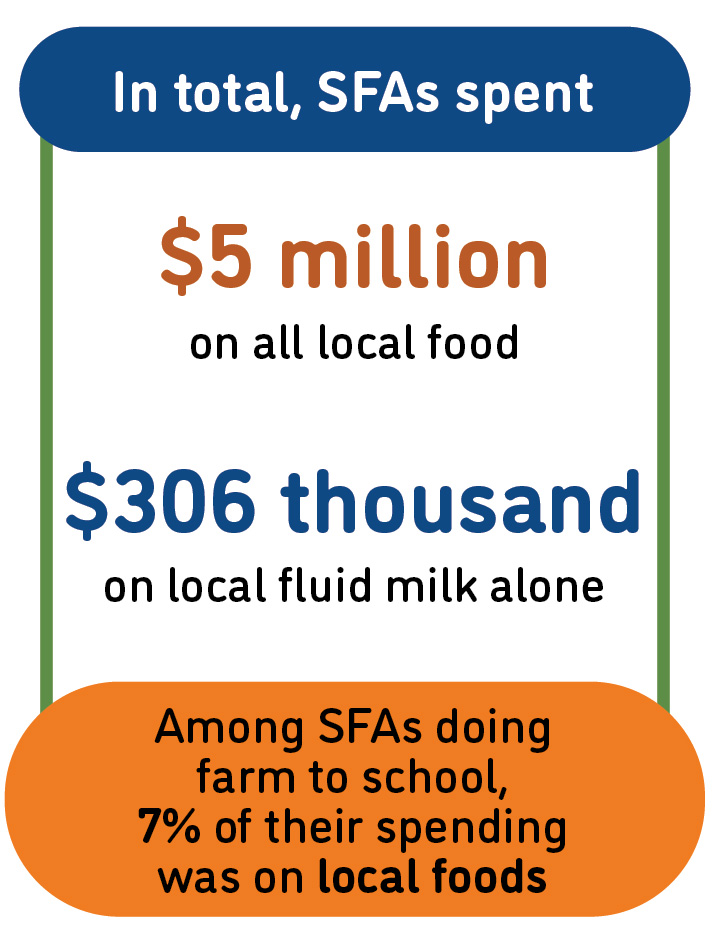
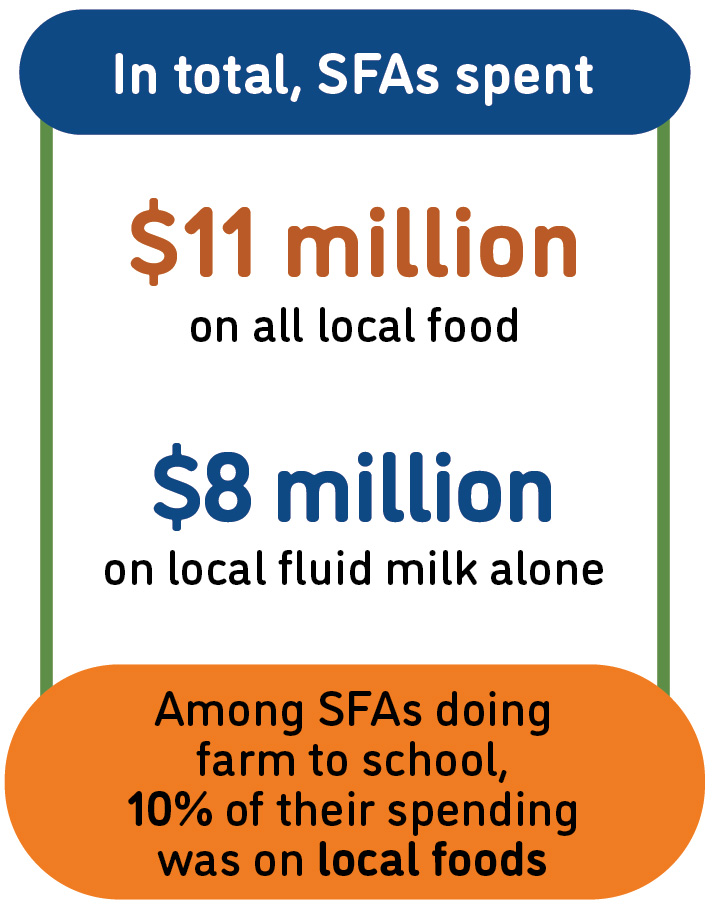
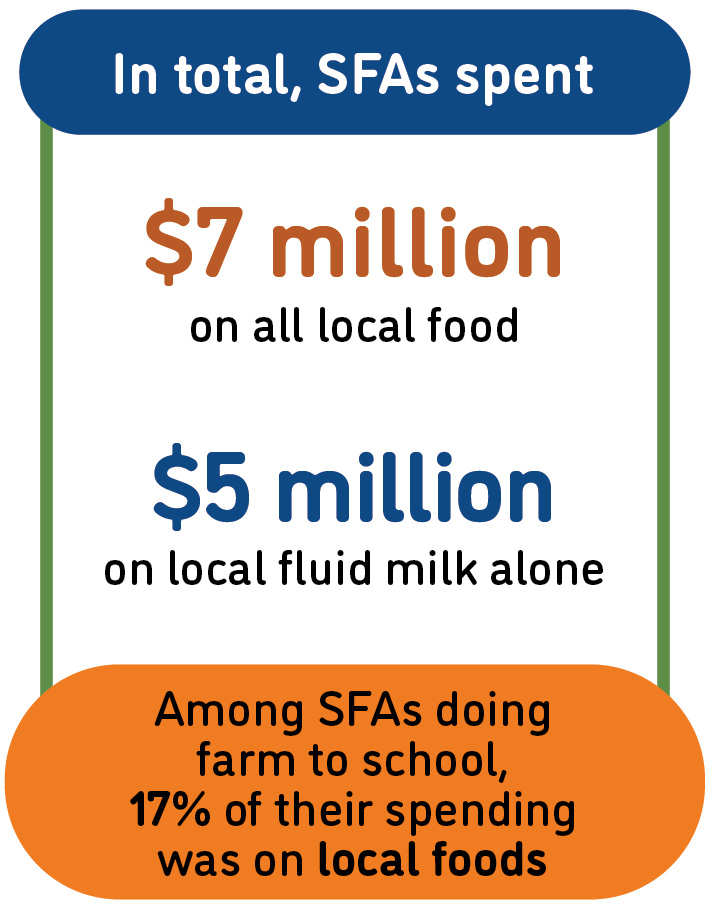
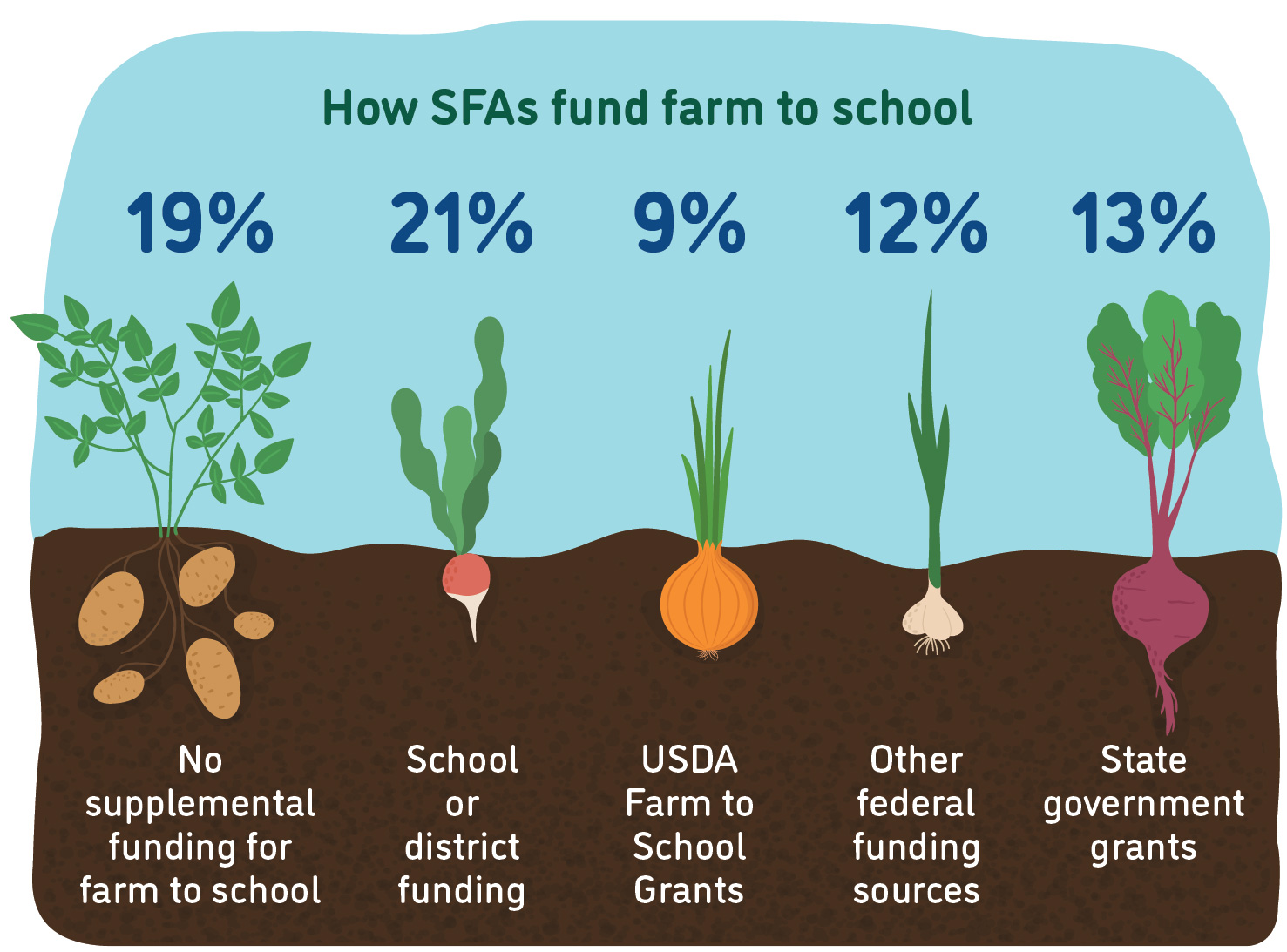
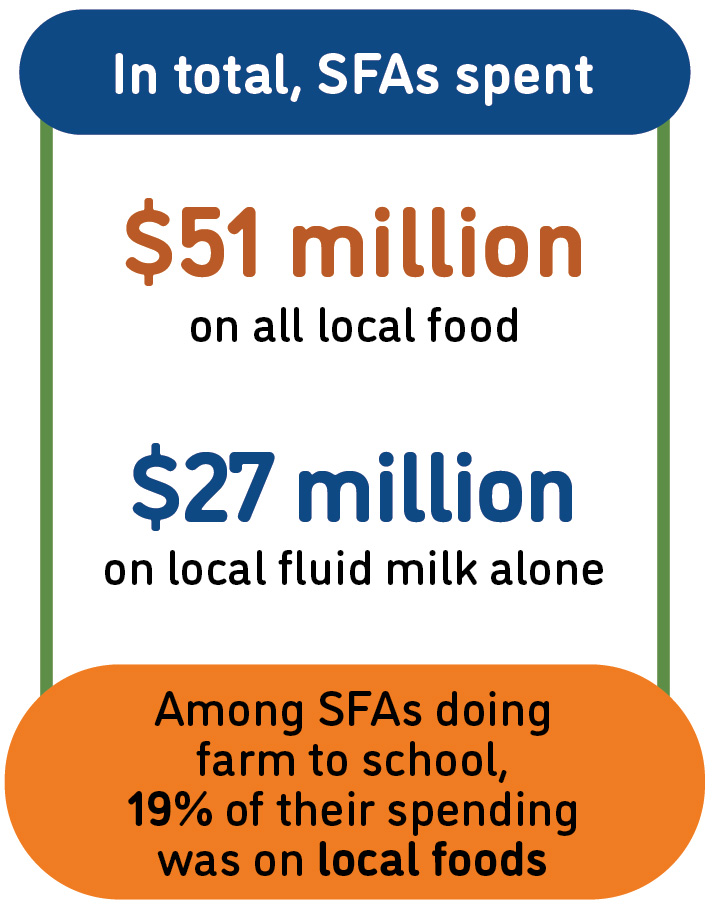
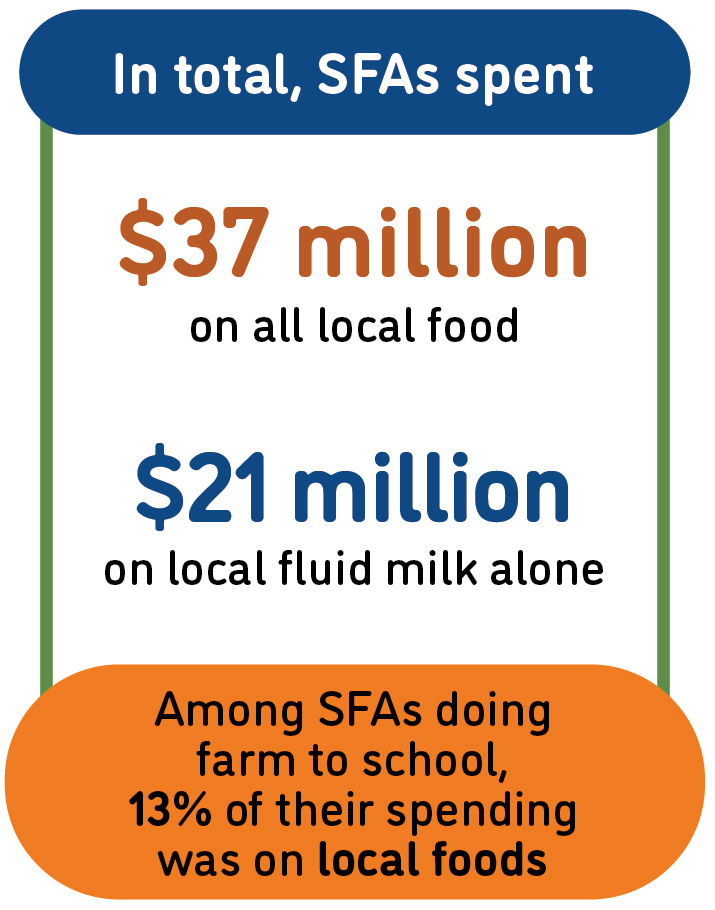
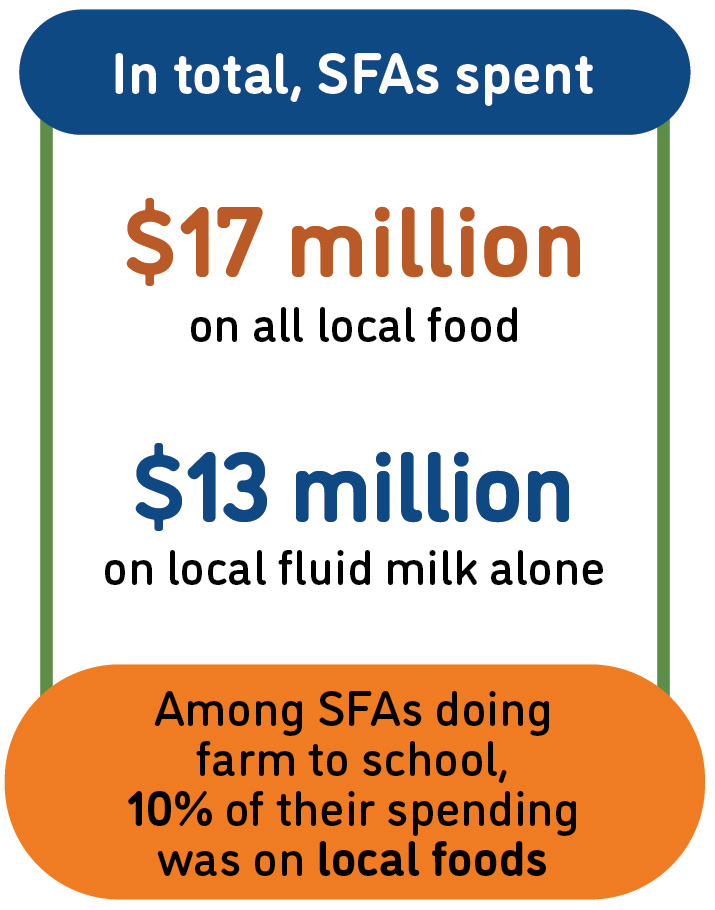
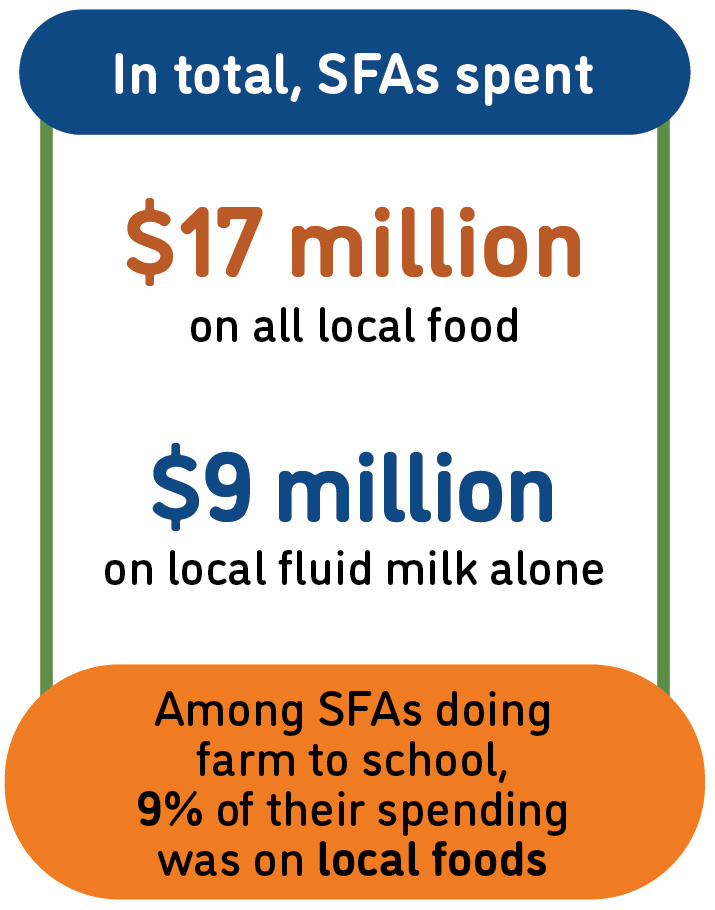
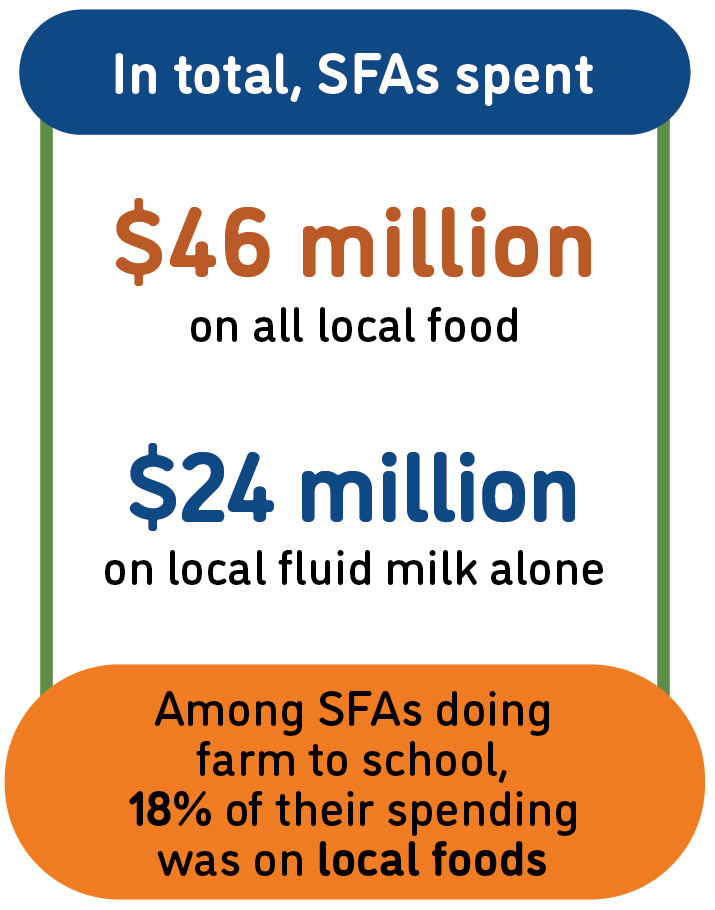
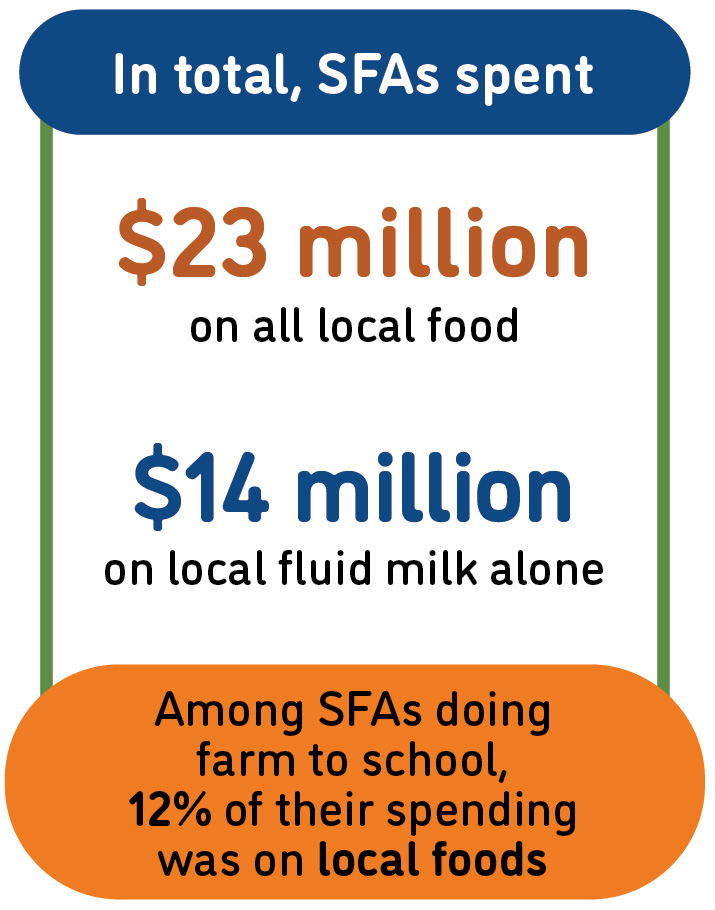
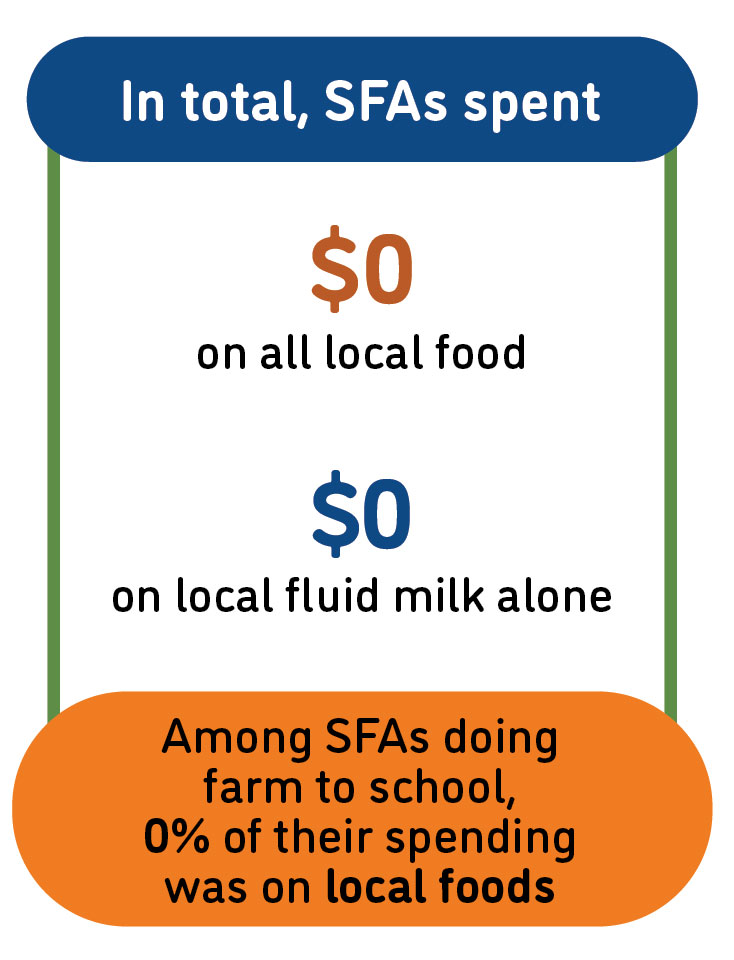
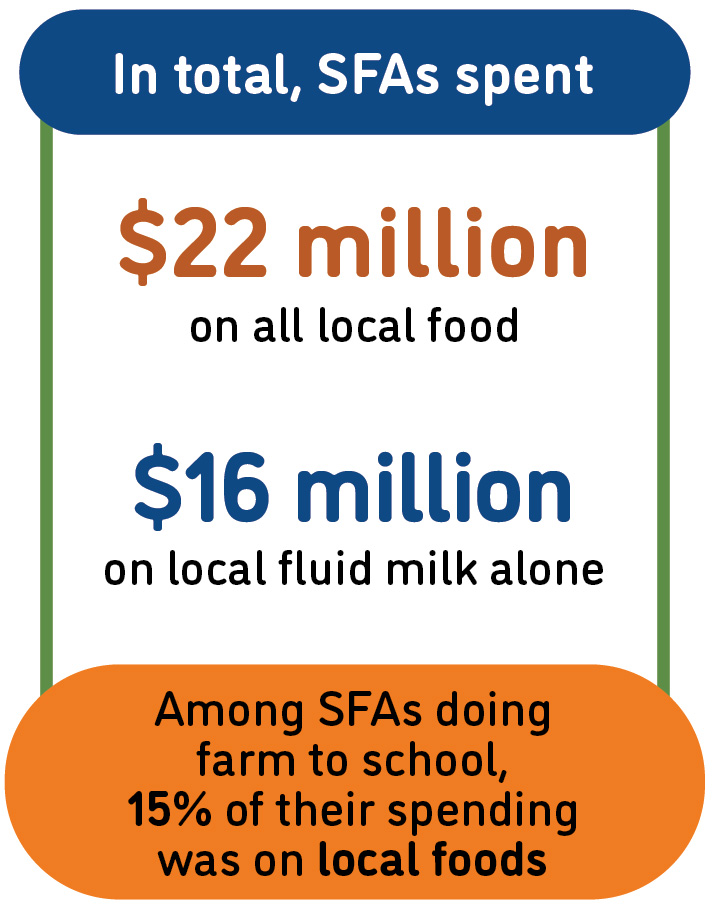
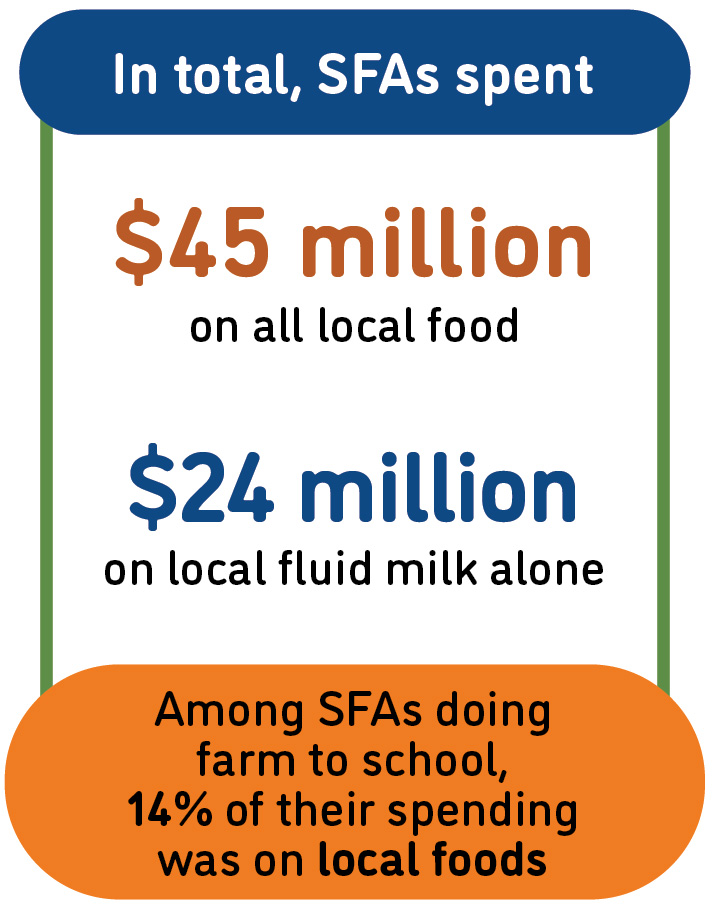
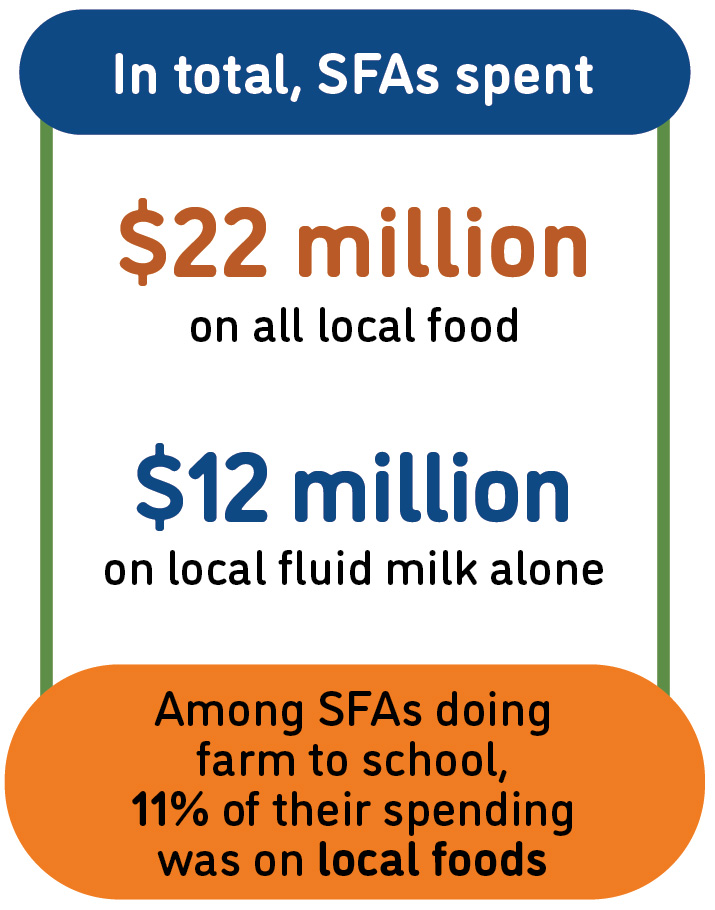
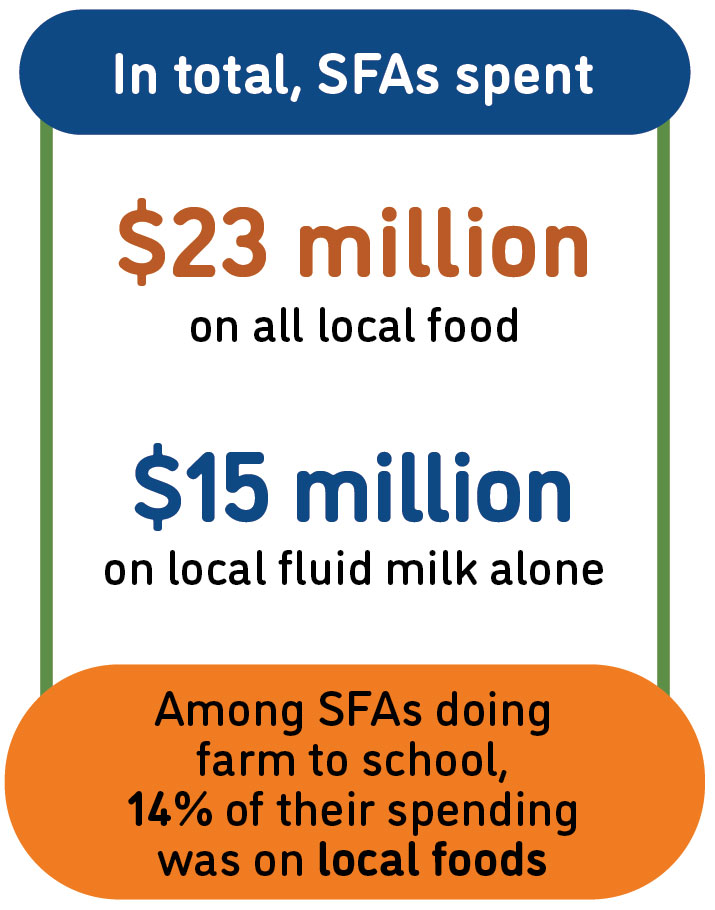
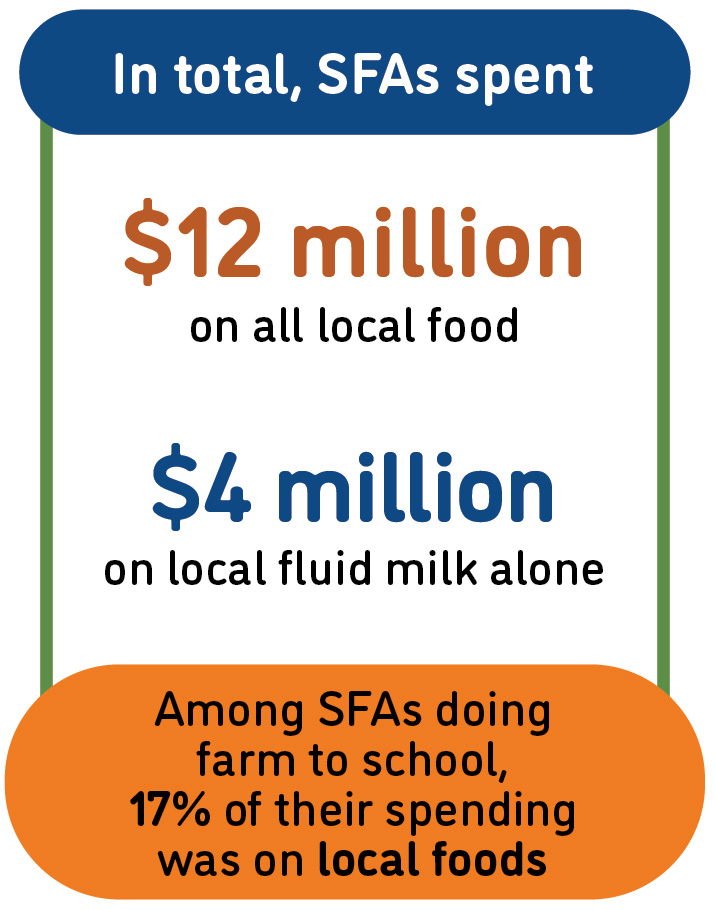
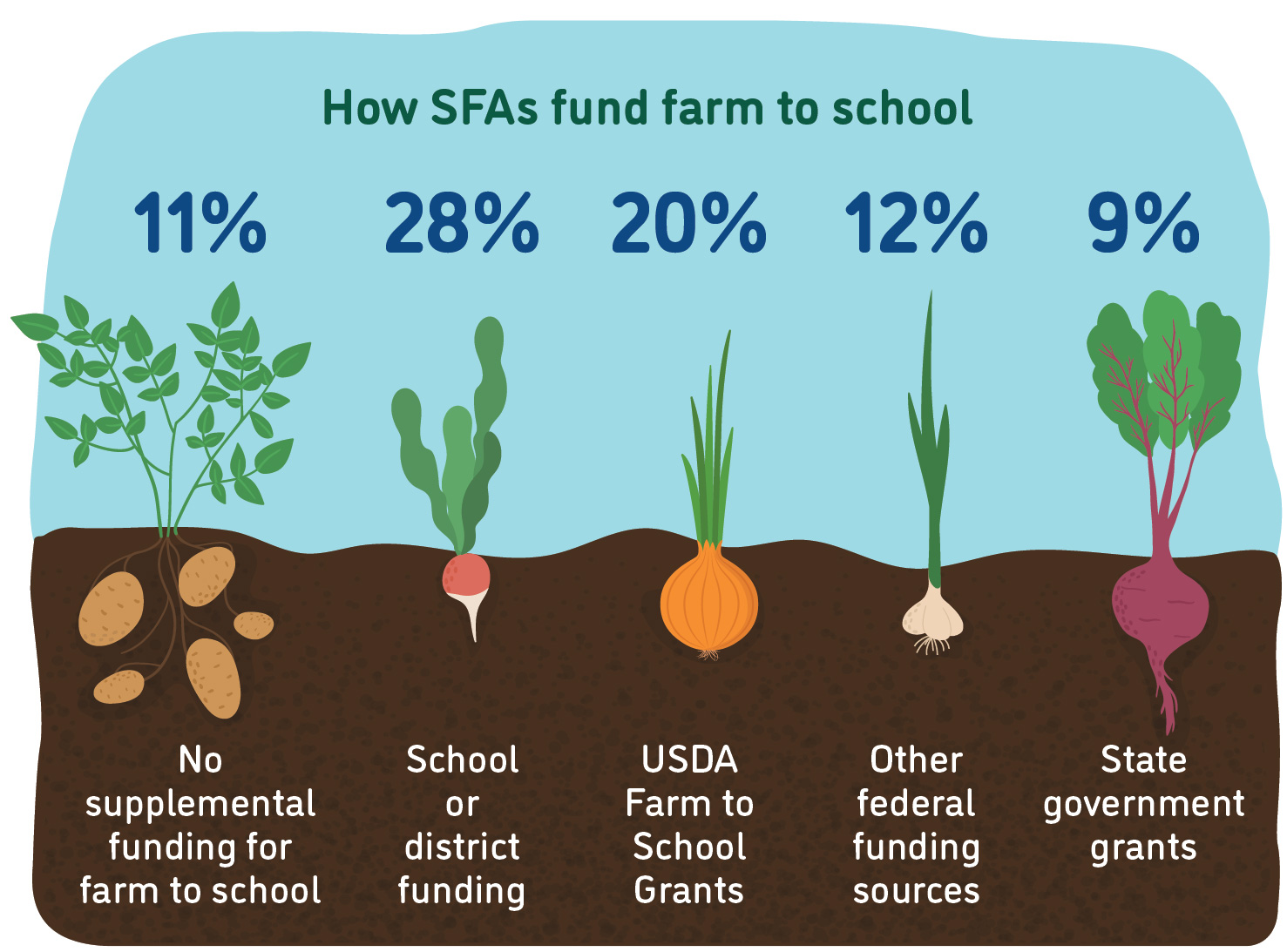
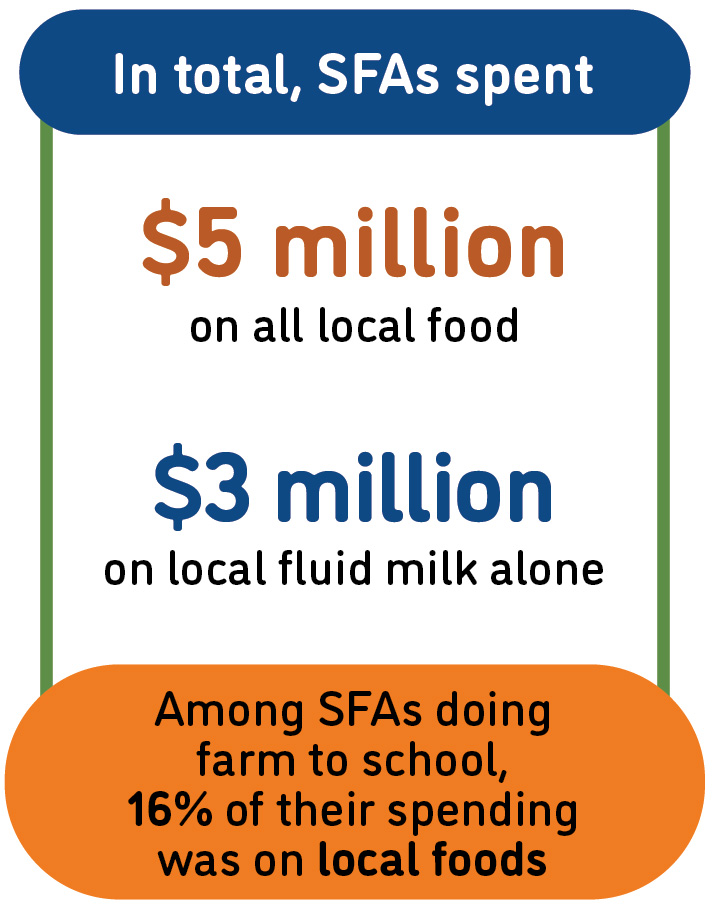
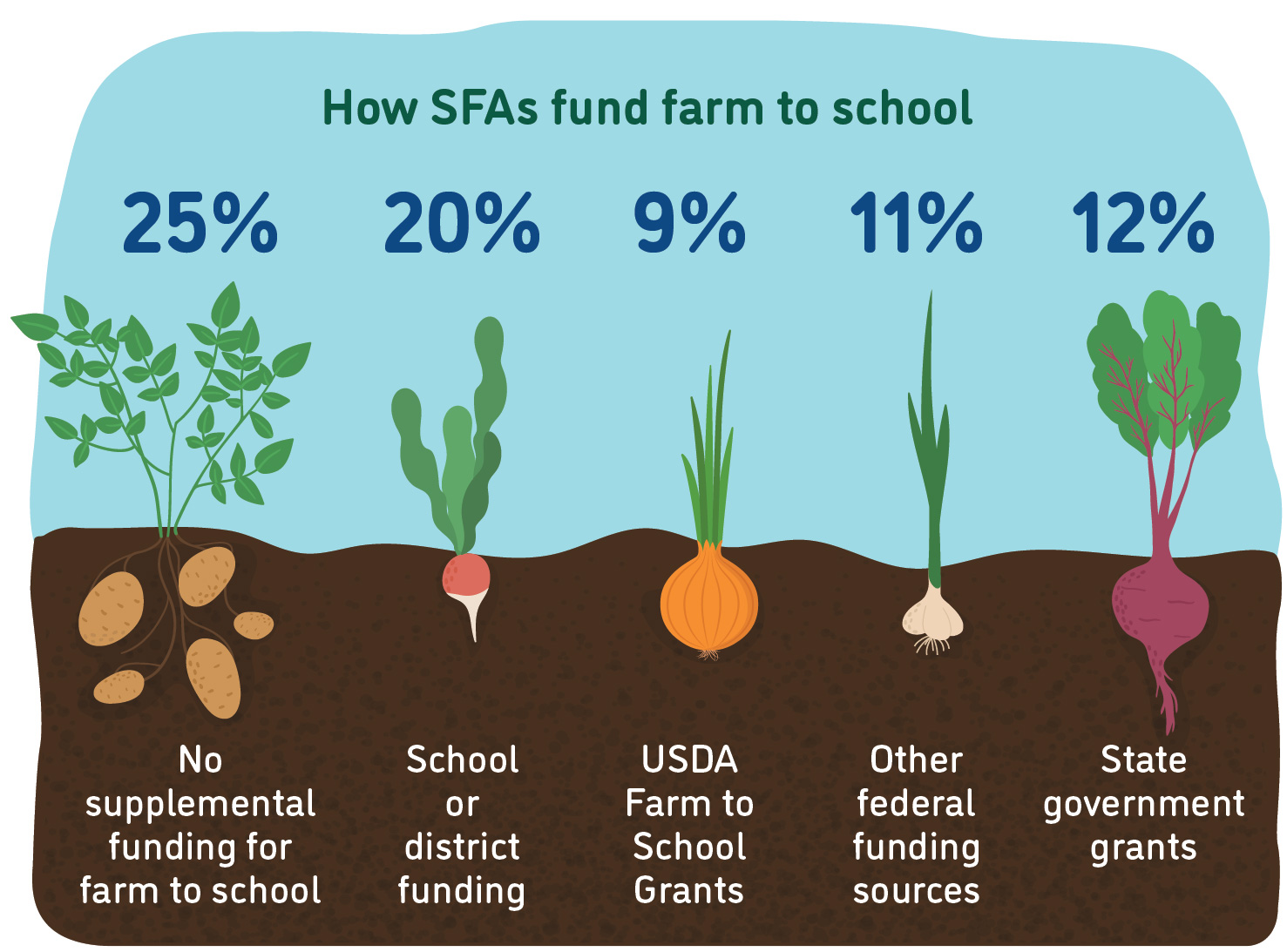
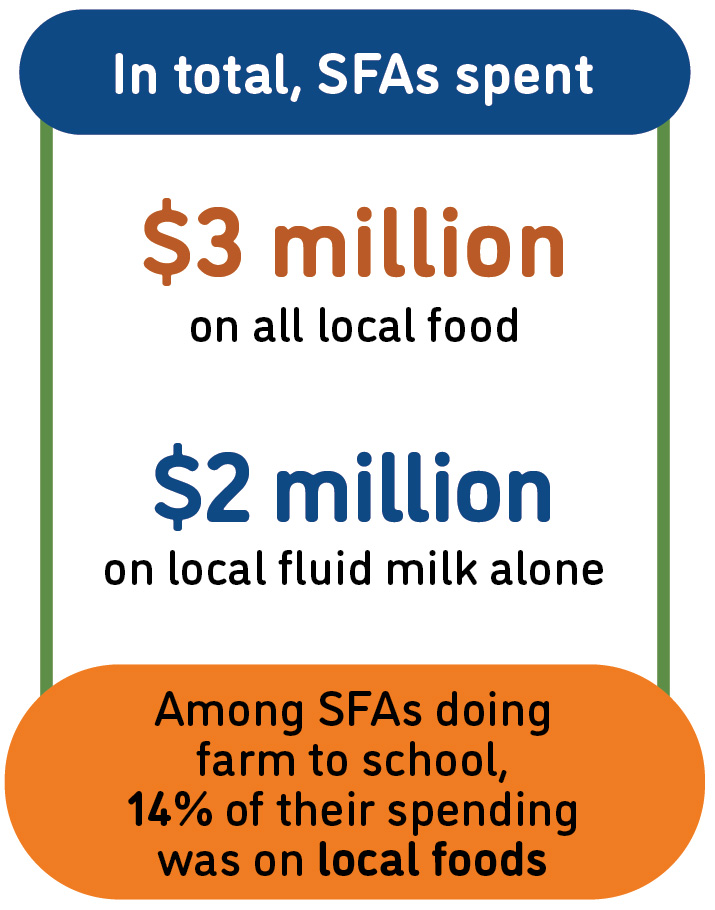
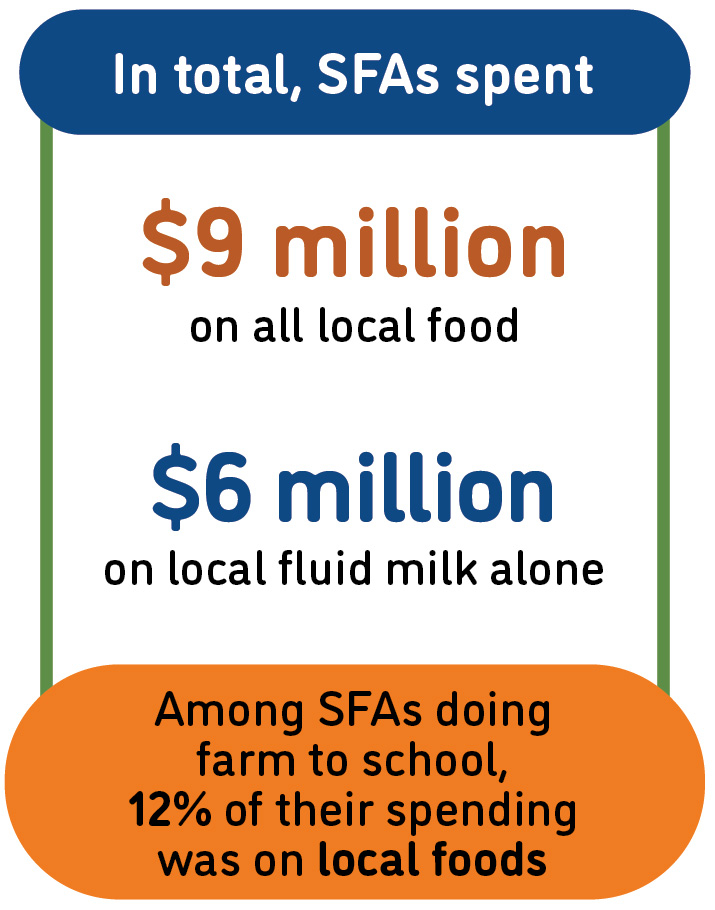
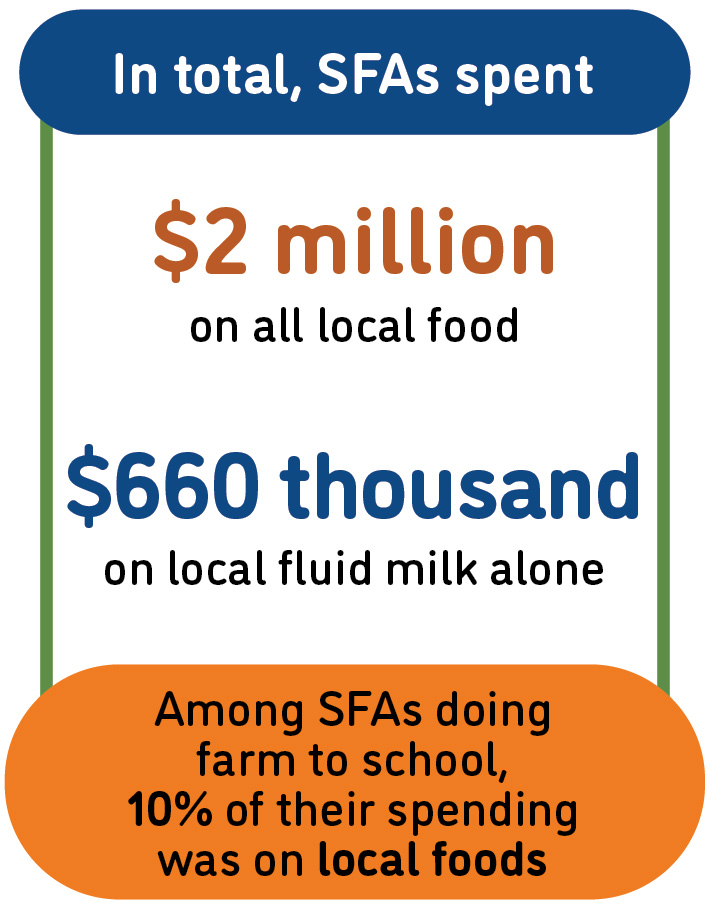
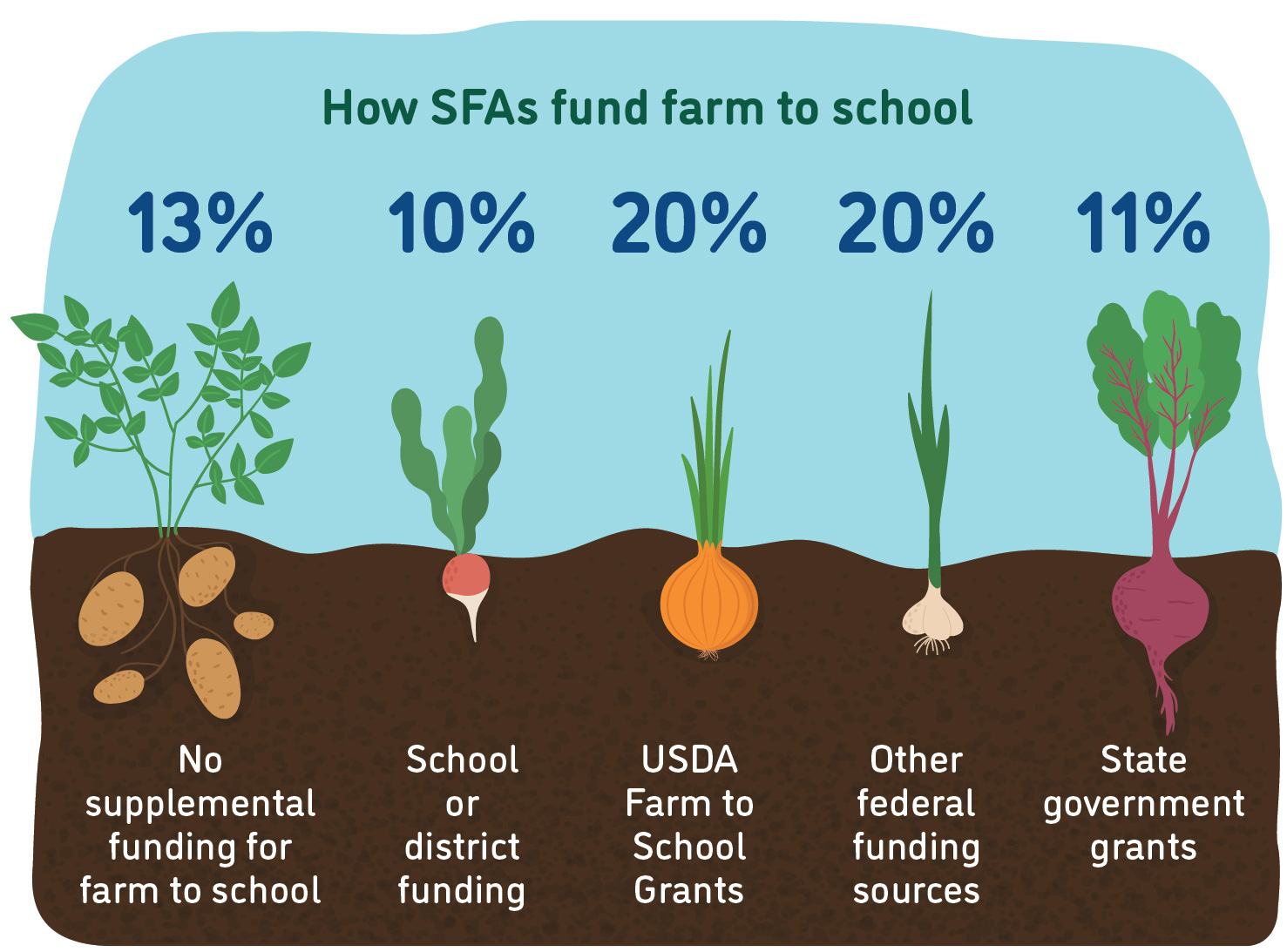
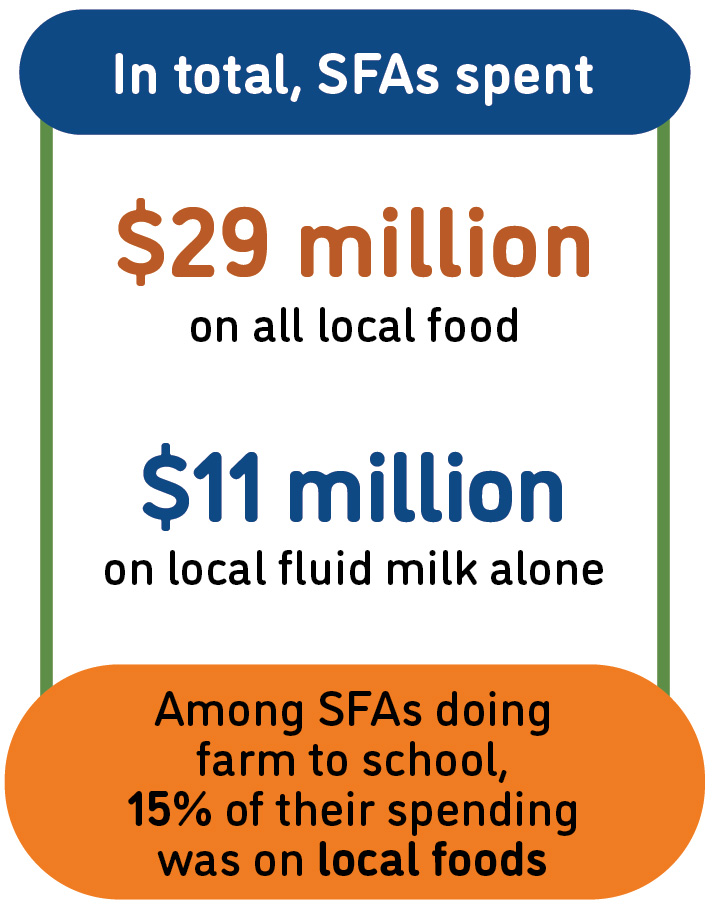
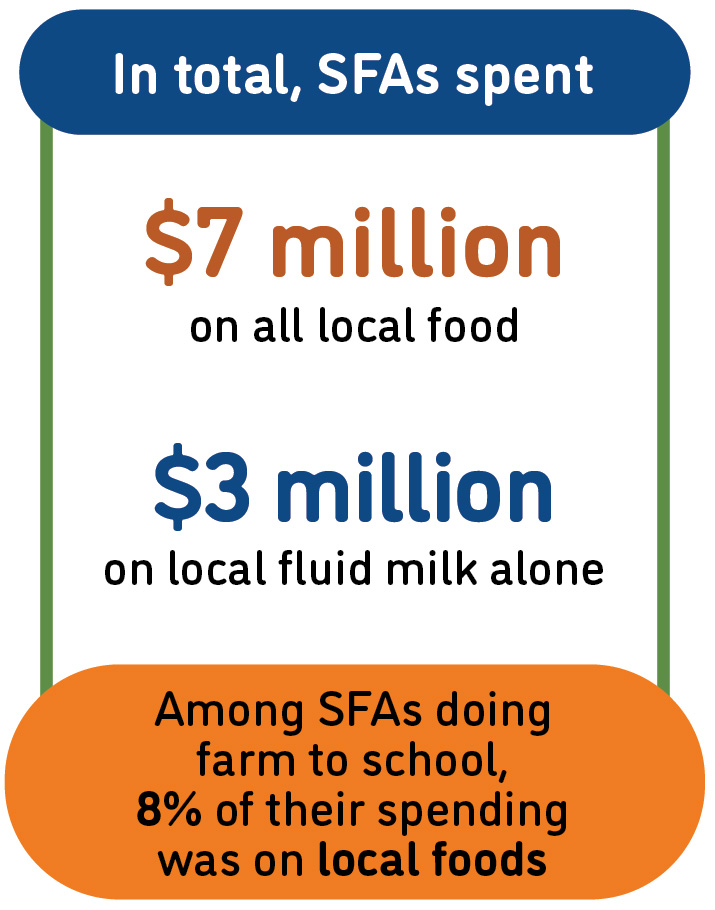
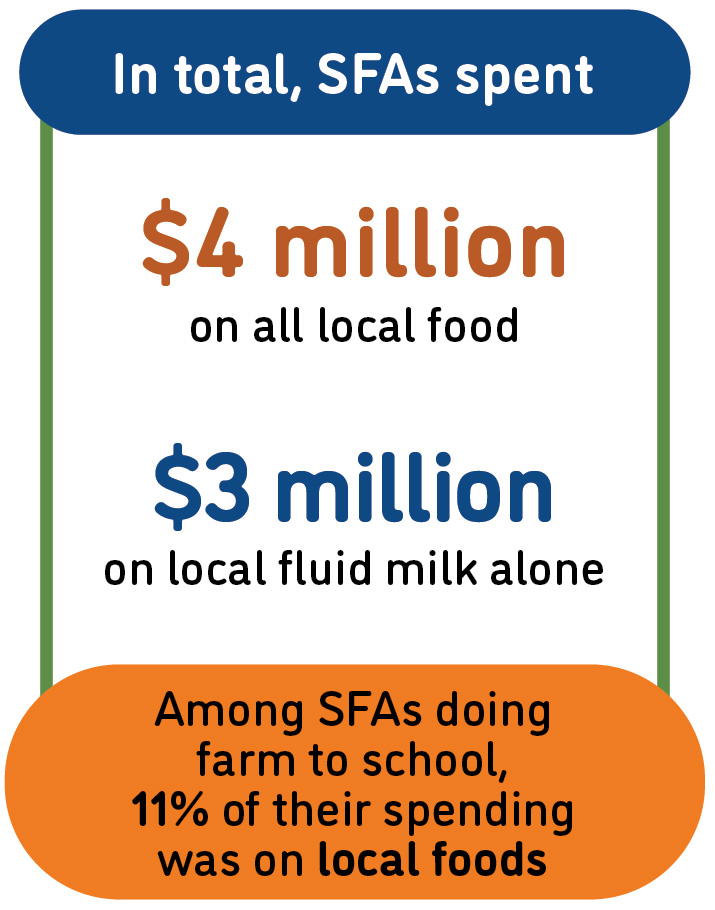
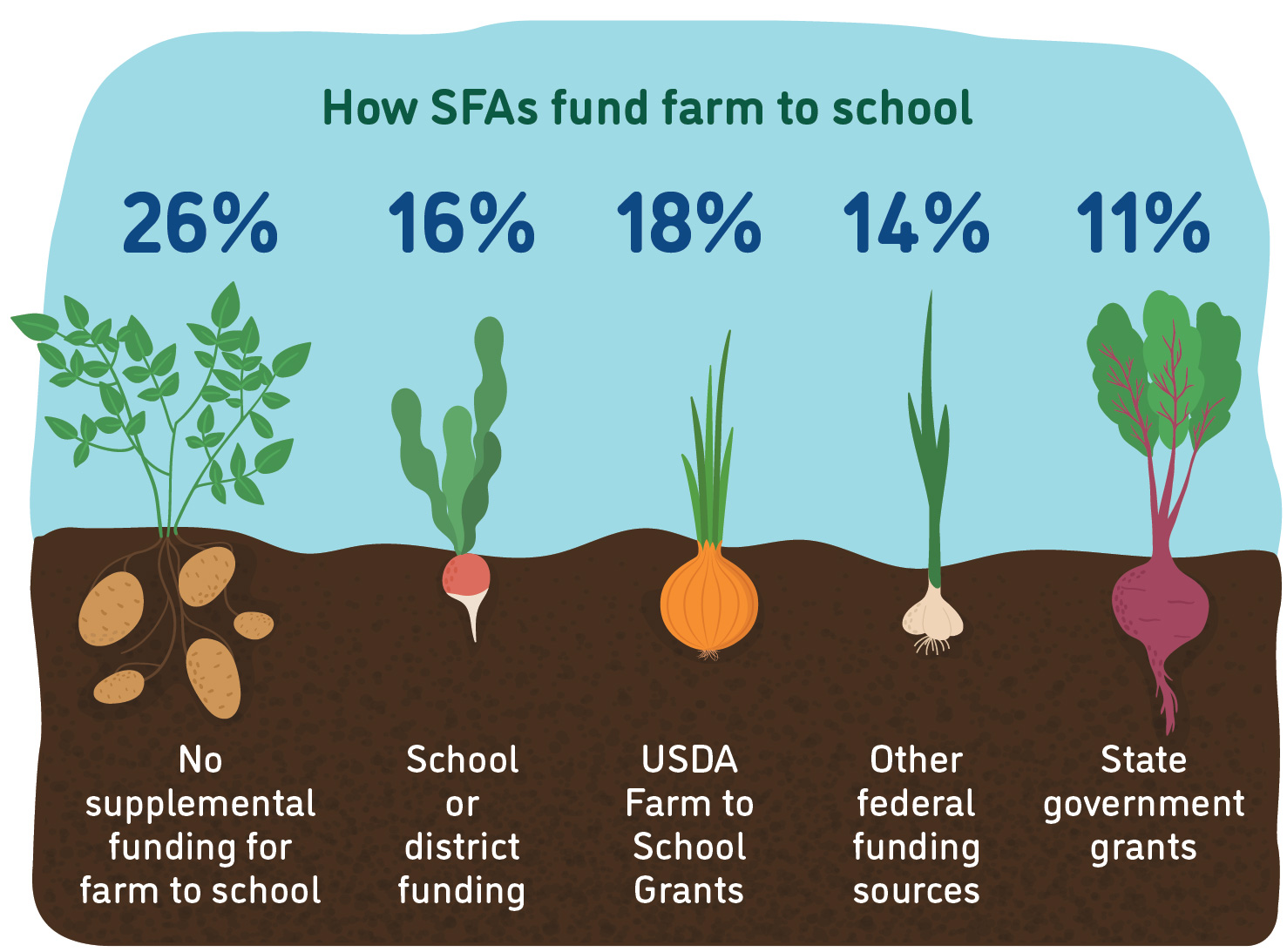
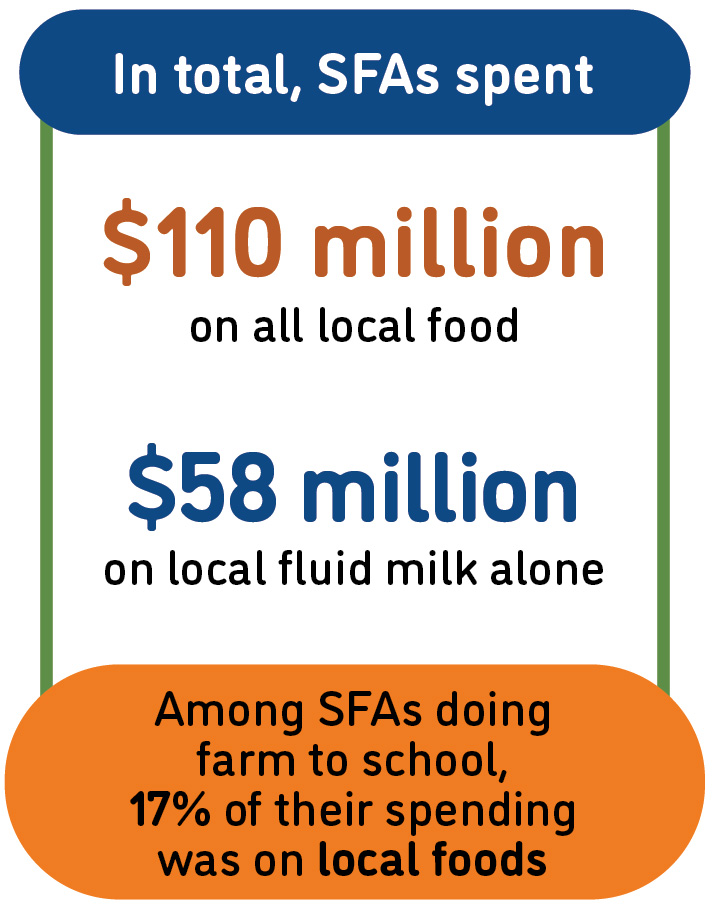
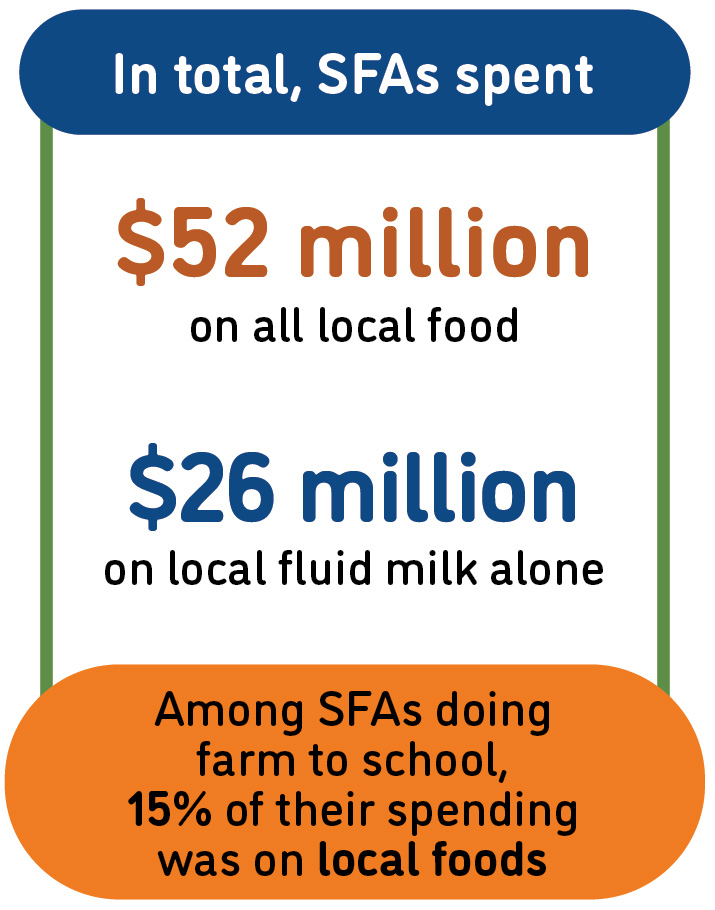
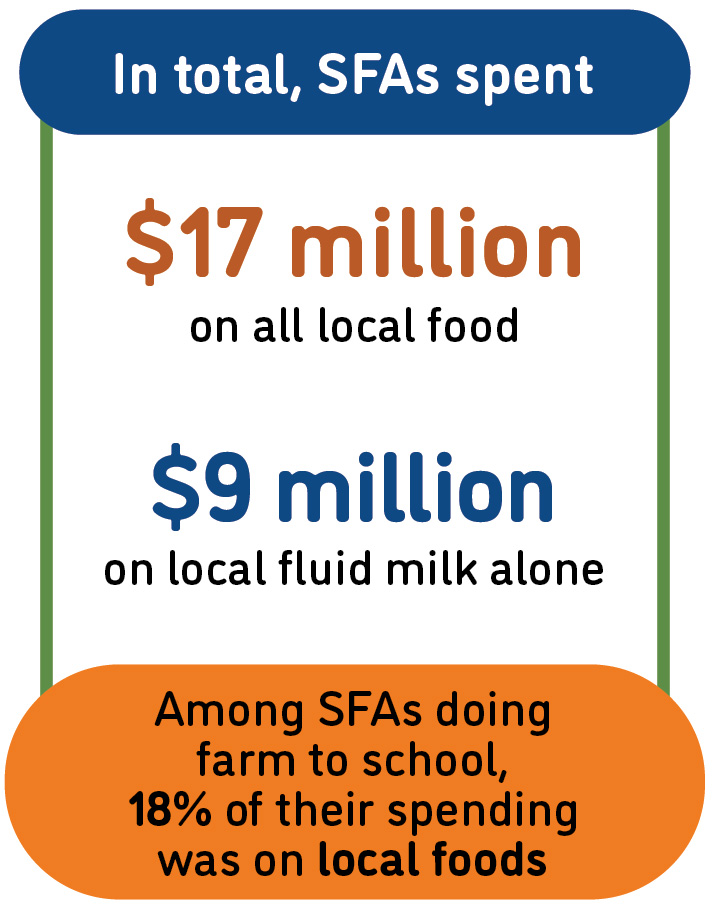
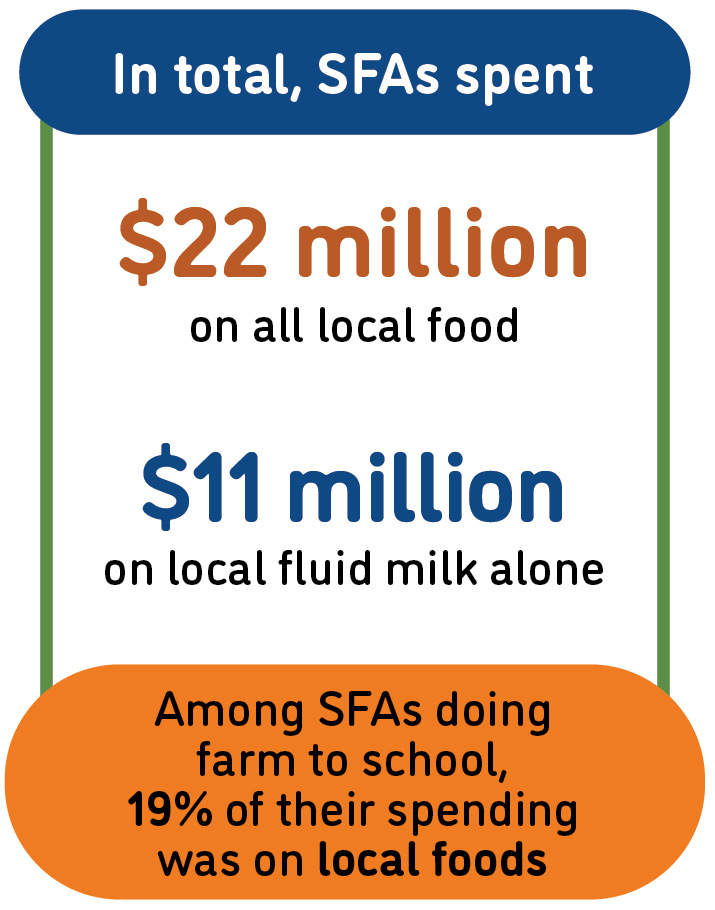
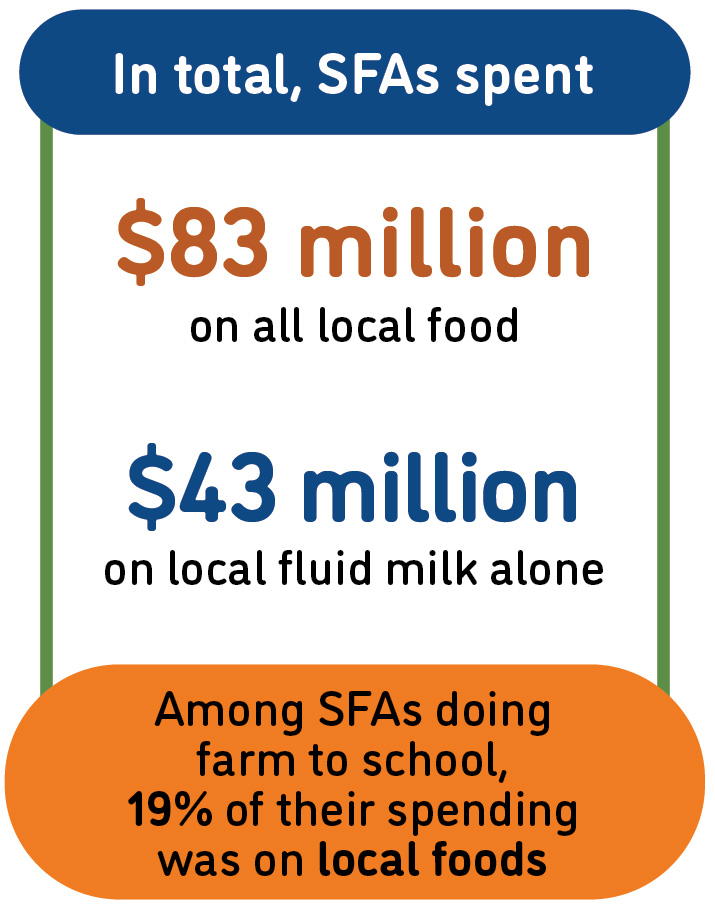
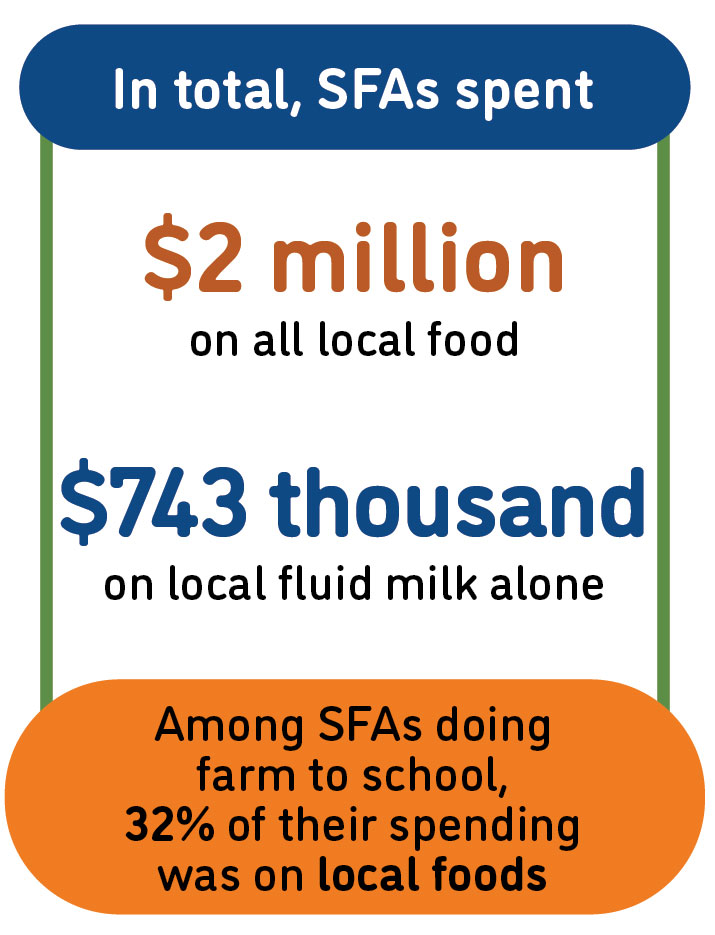
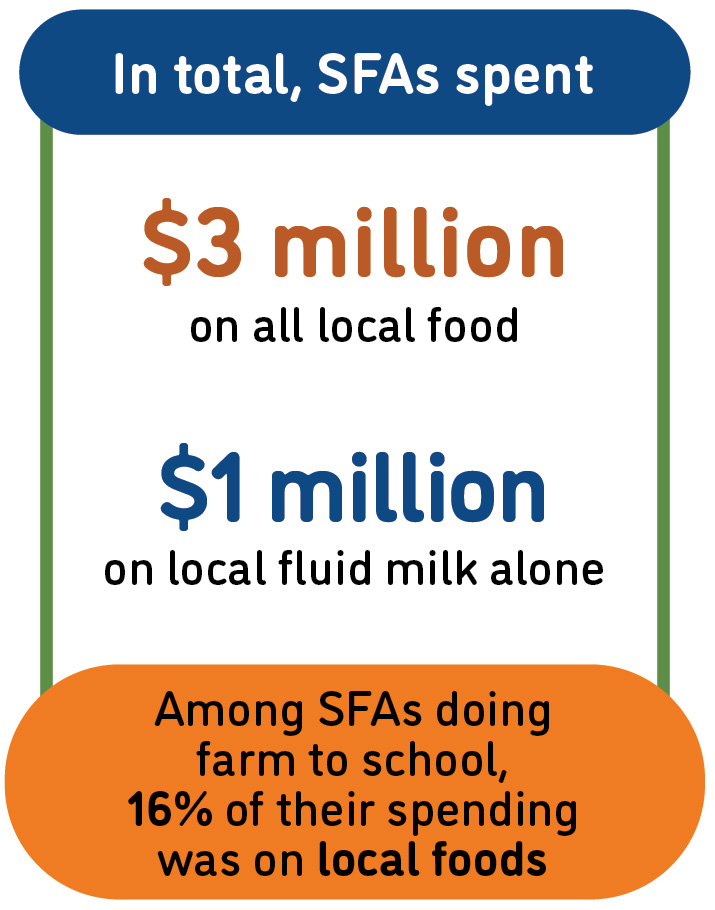
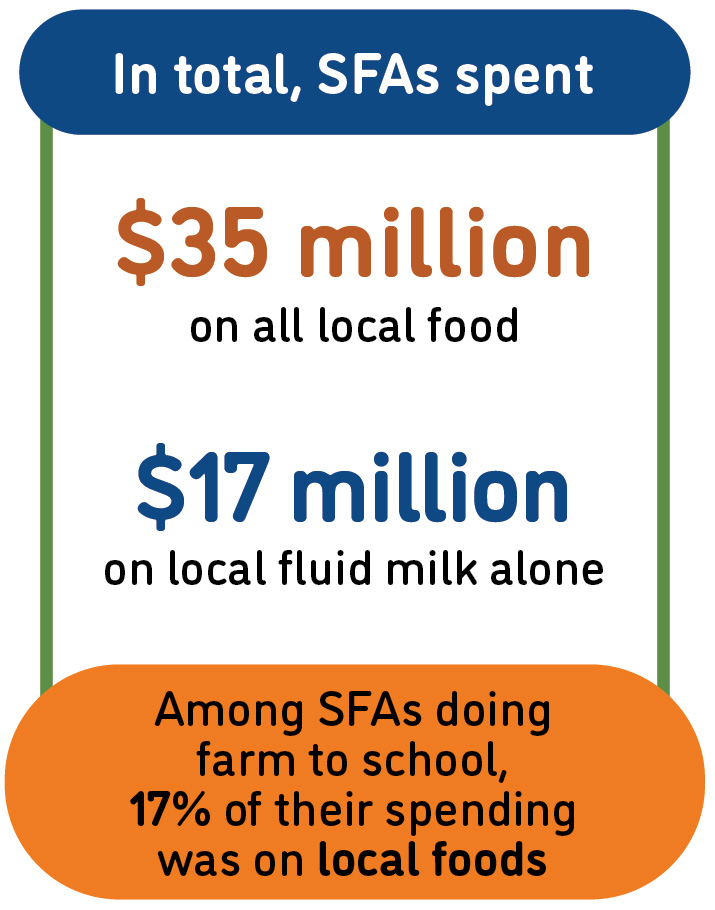
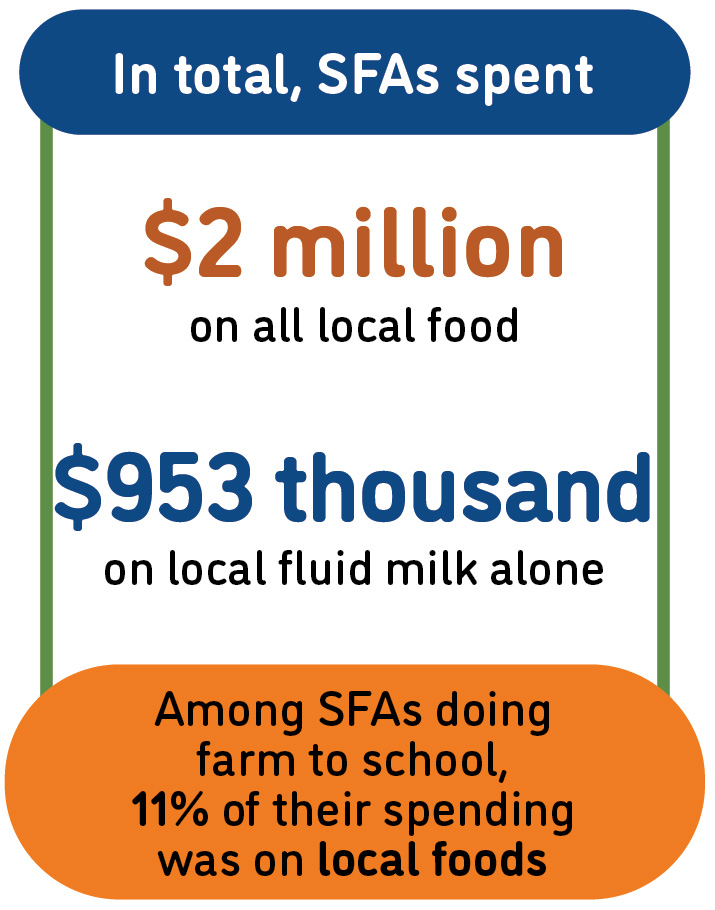
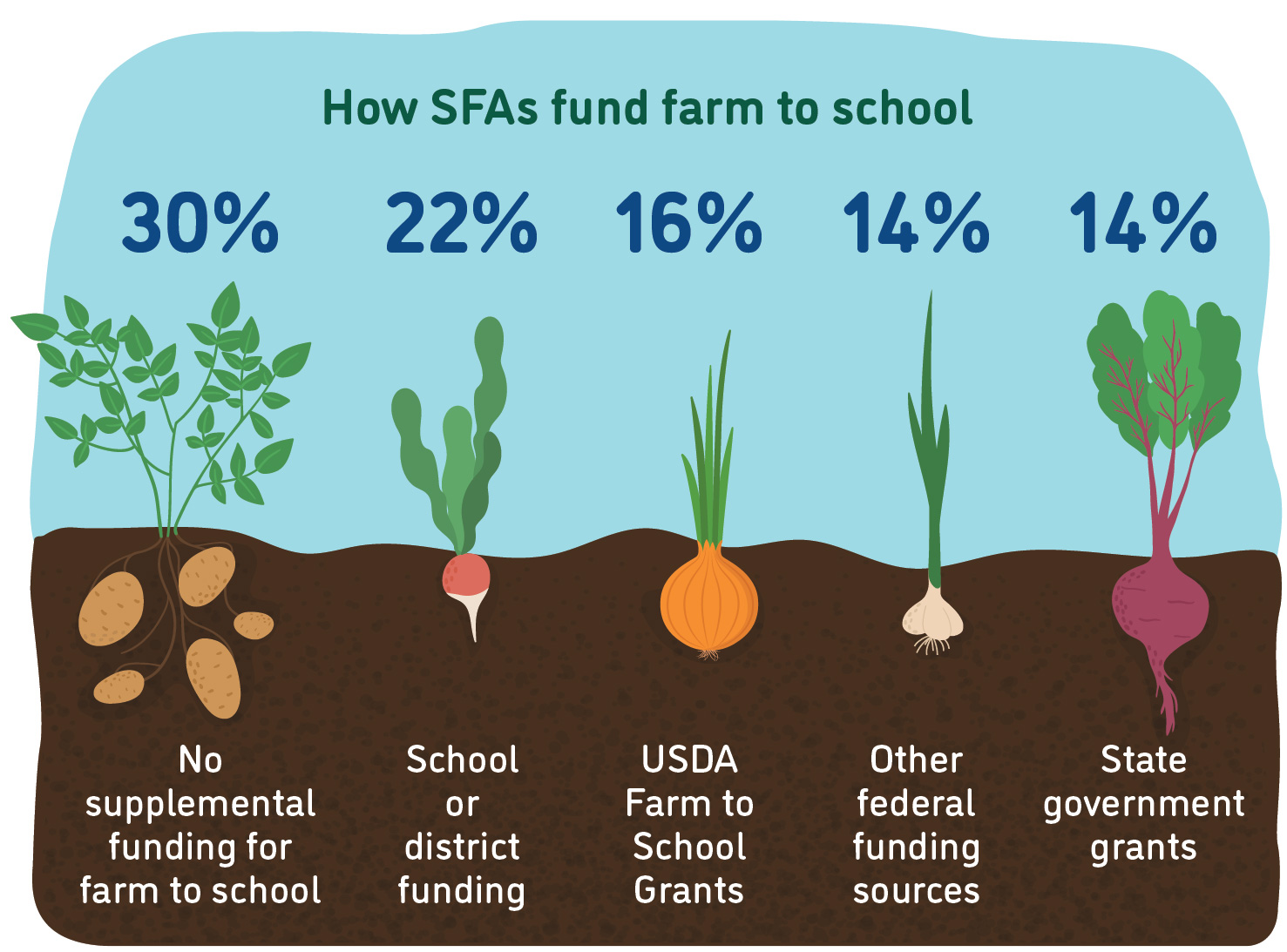
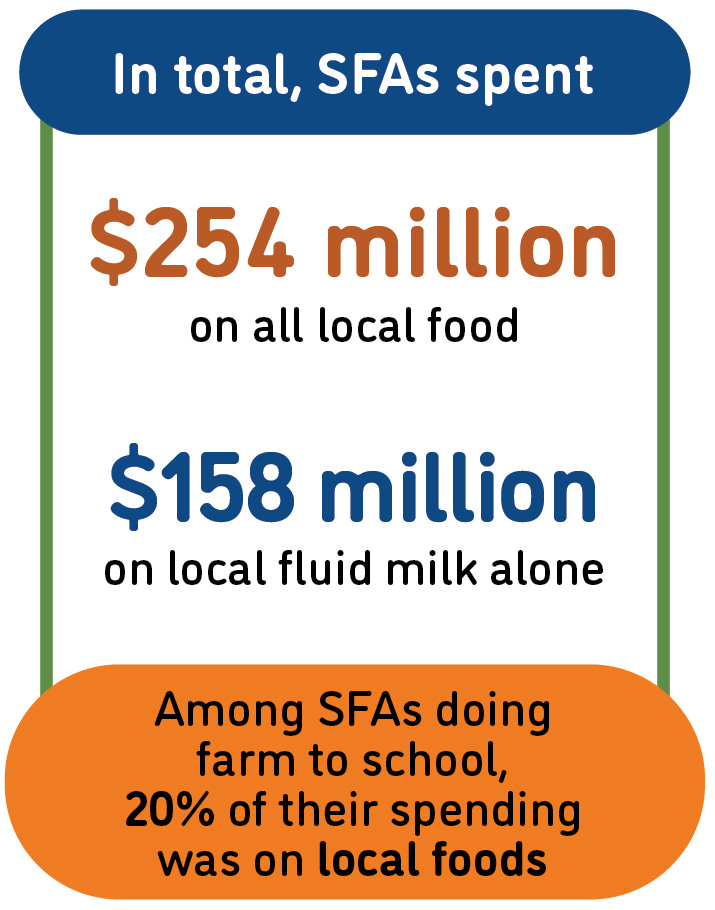
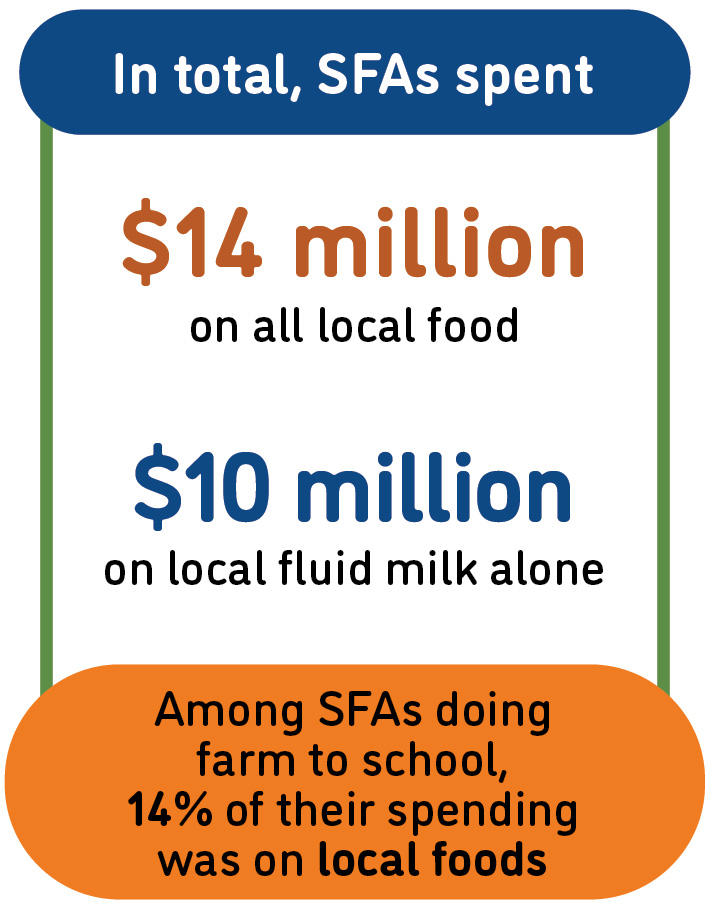
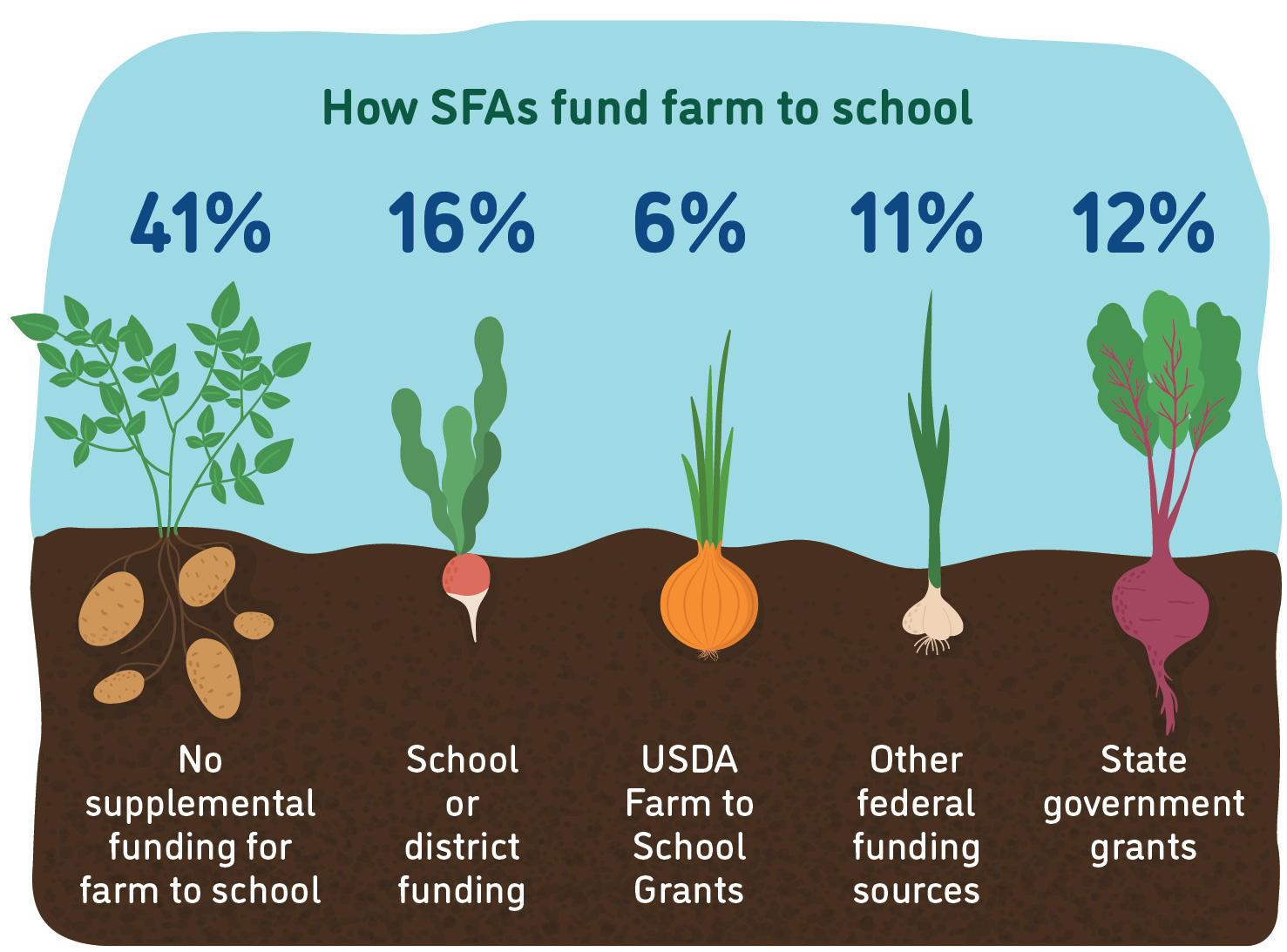
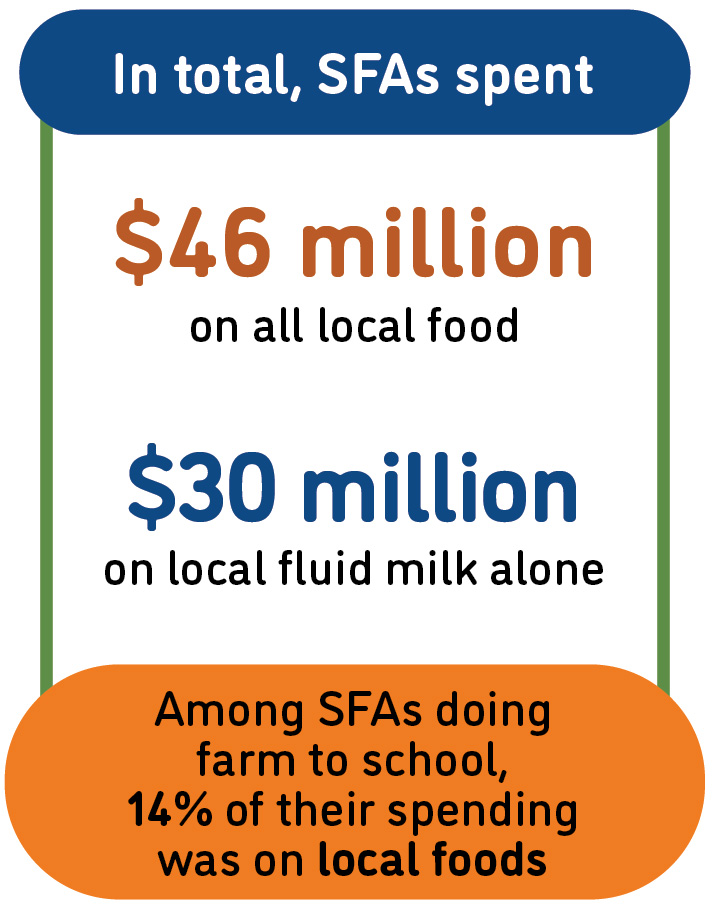
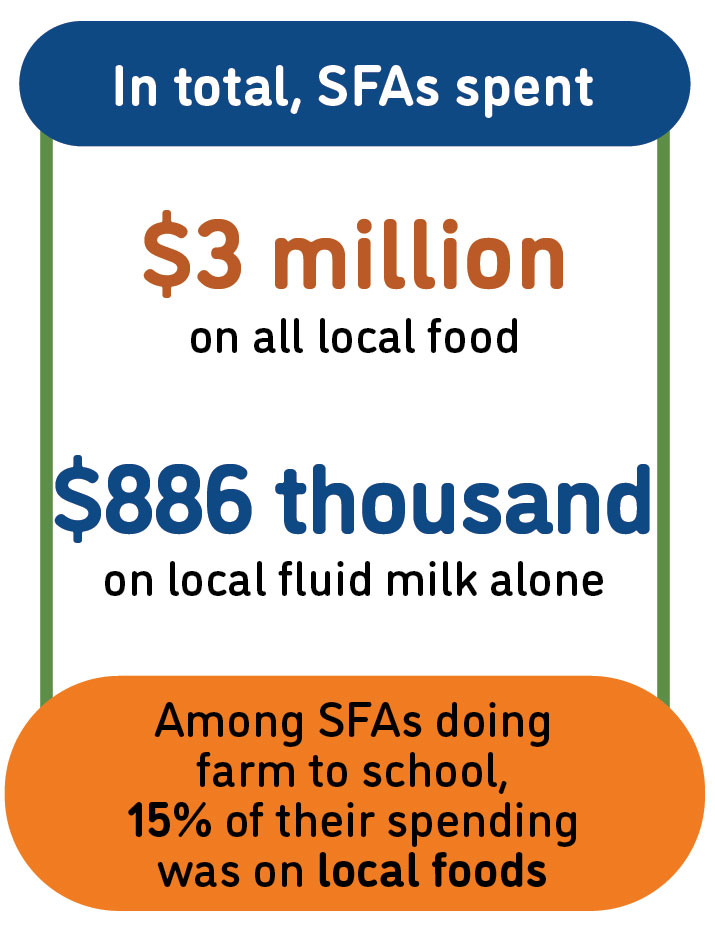
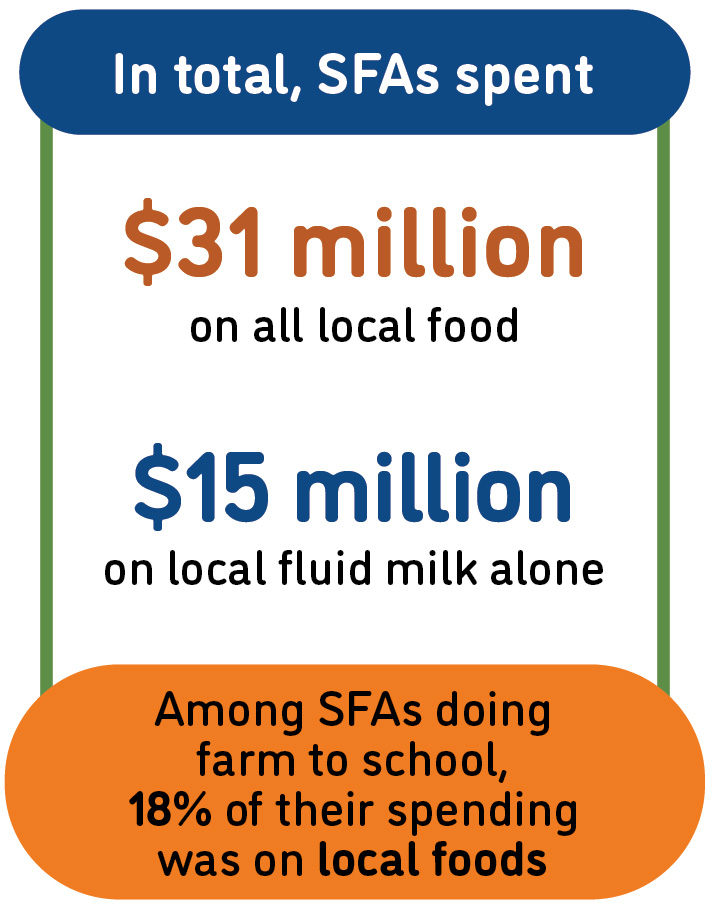
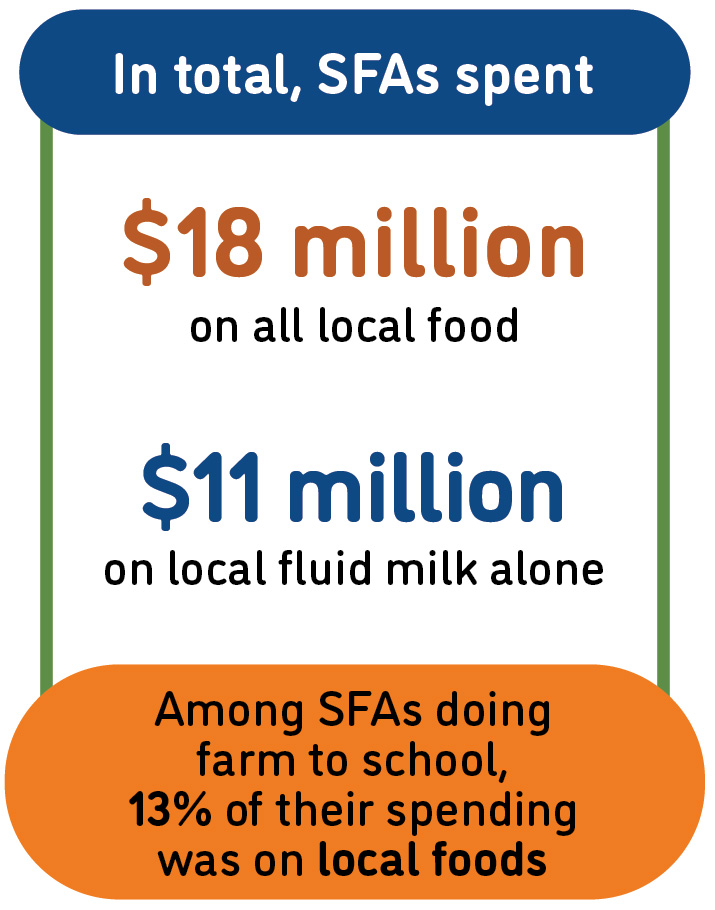
- SFAs participating in farm to school spent almost $1.8 billion on local purchases, representing about 16 percent of their total food spending. Fluid milk purchases made up about half of local spending at $955 million.
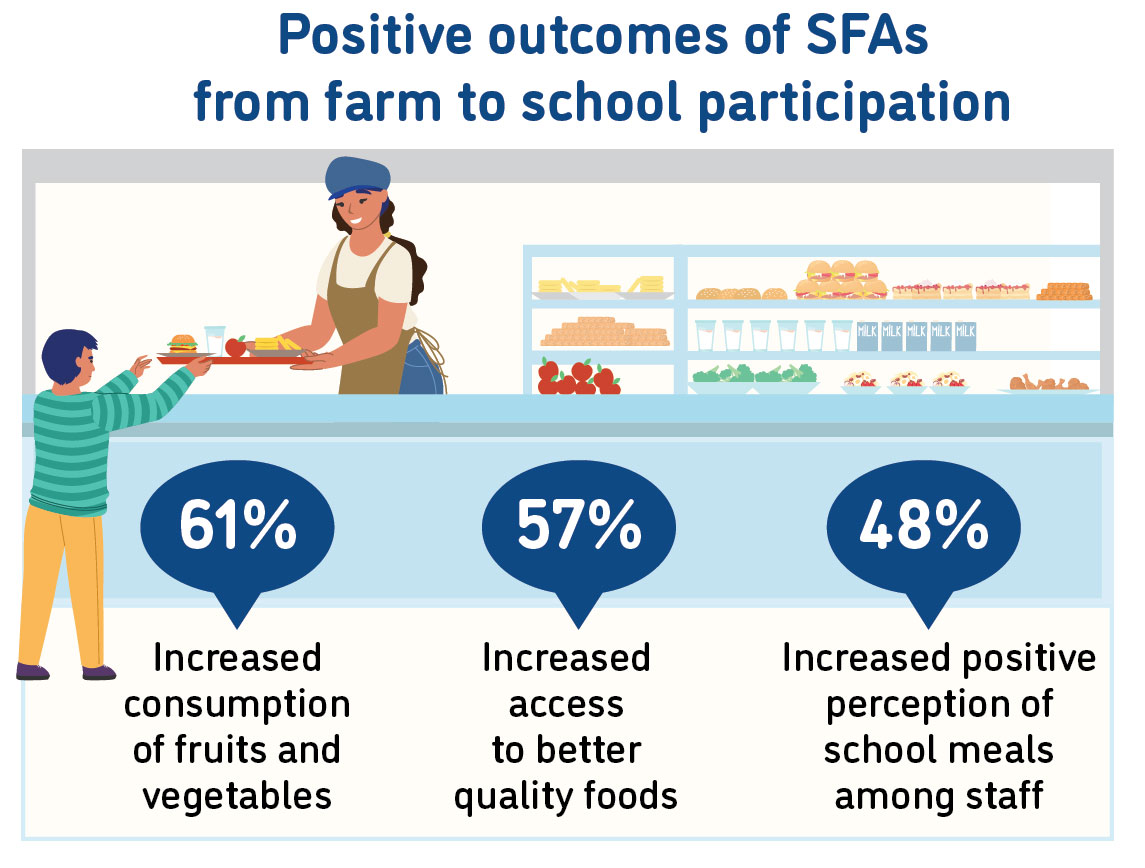
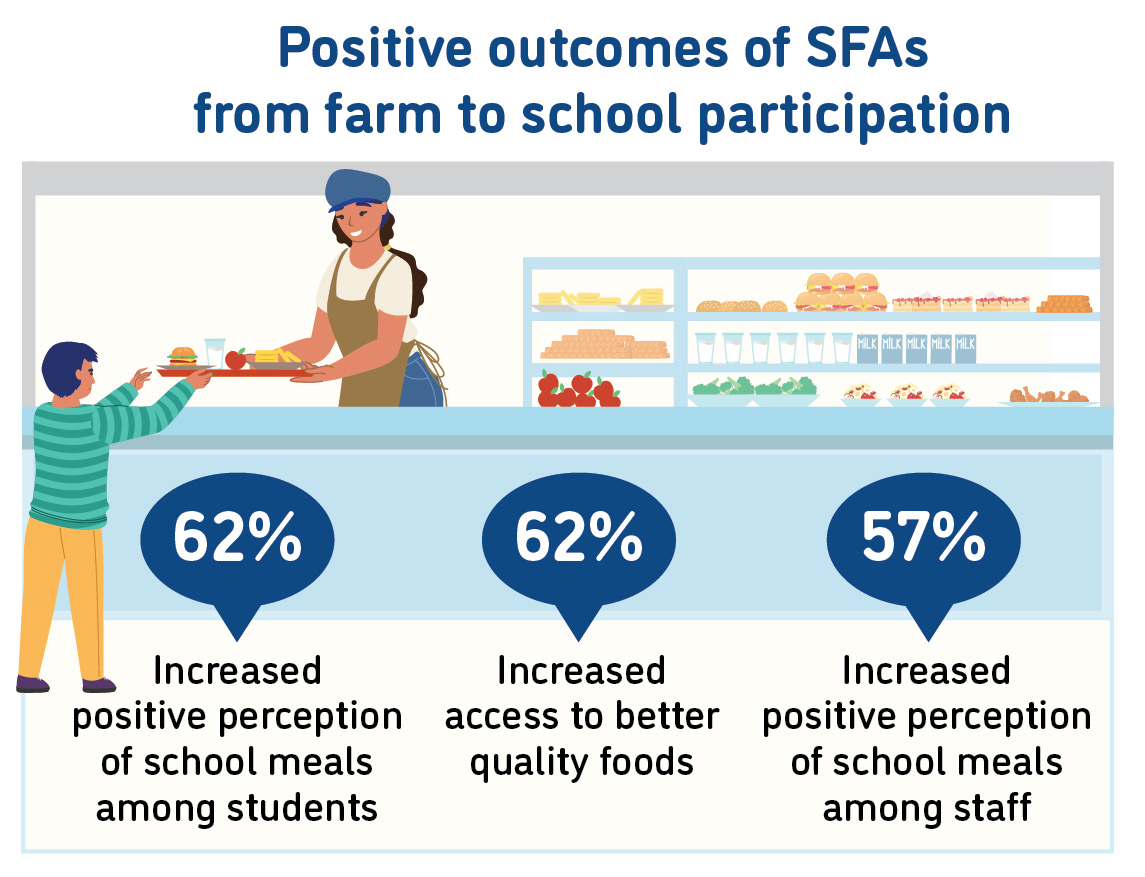
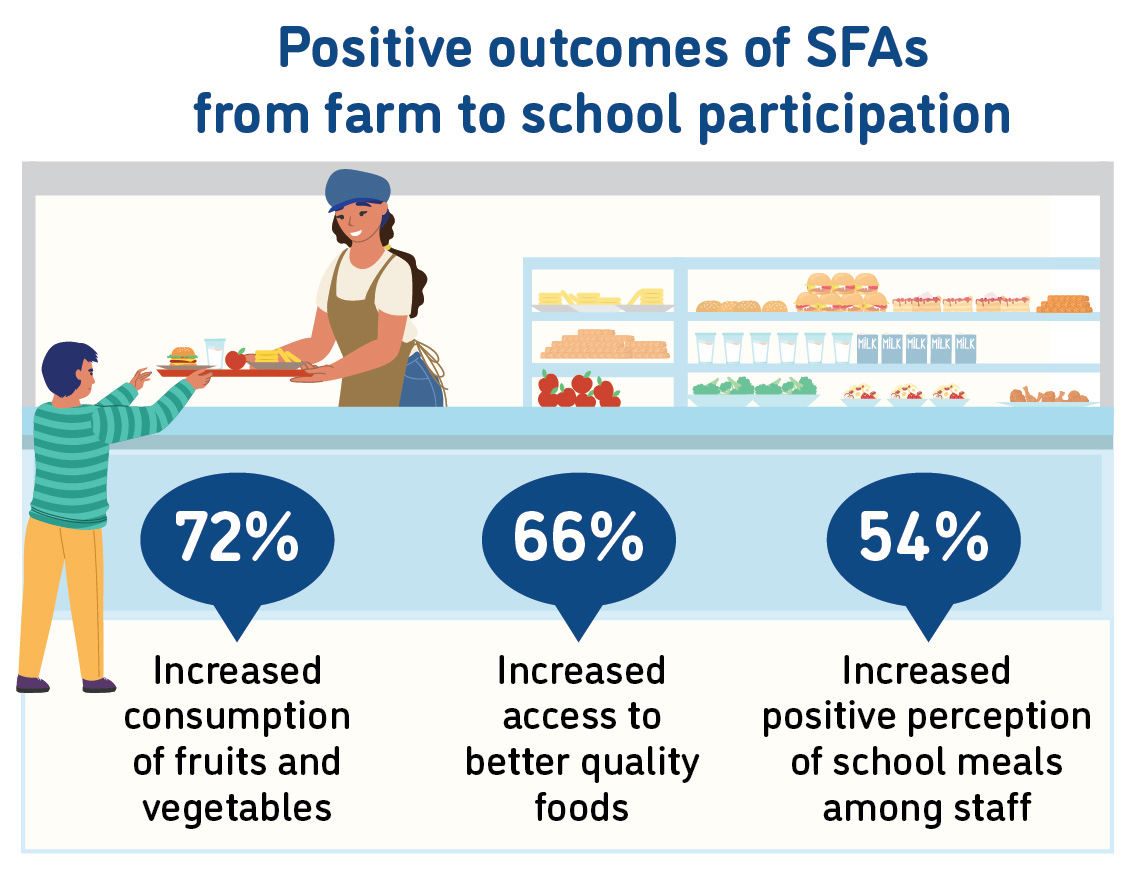
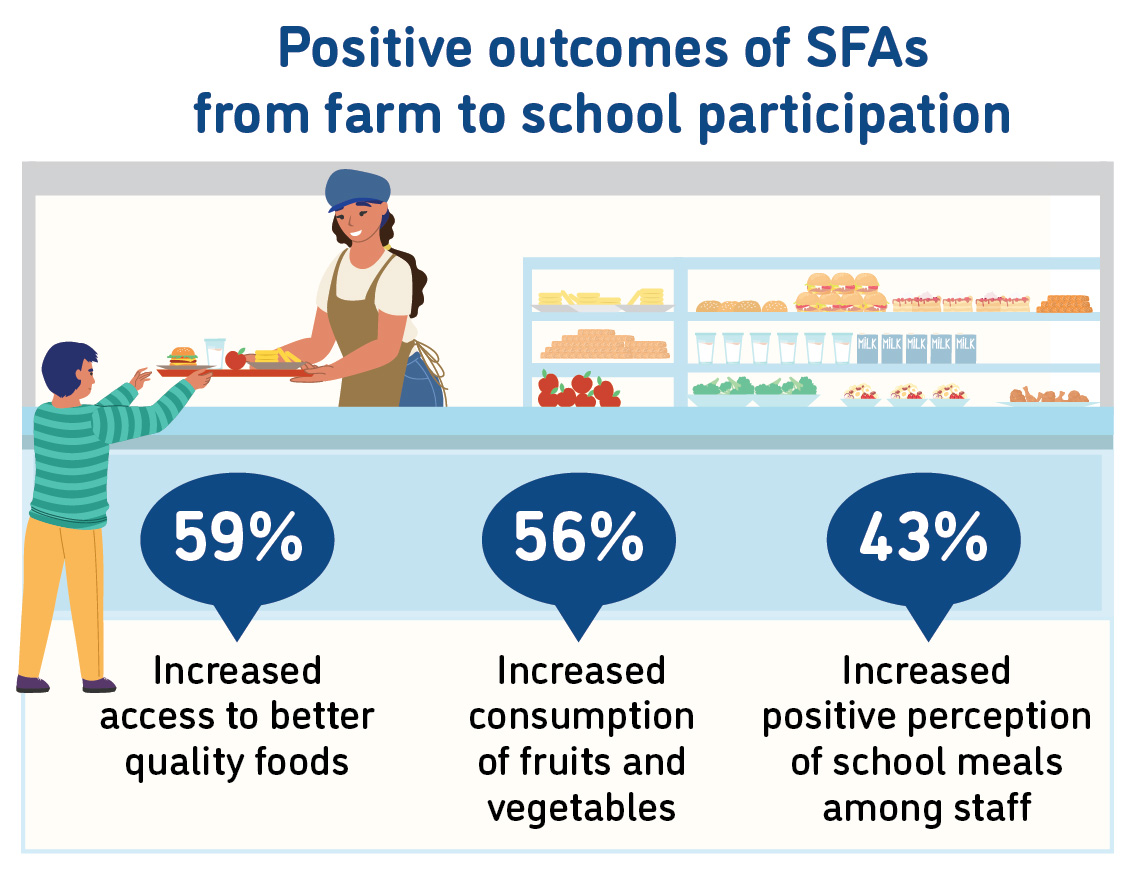
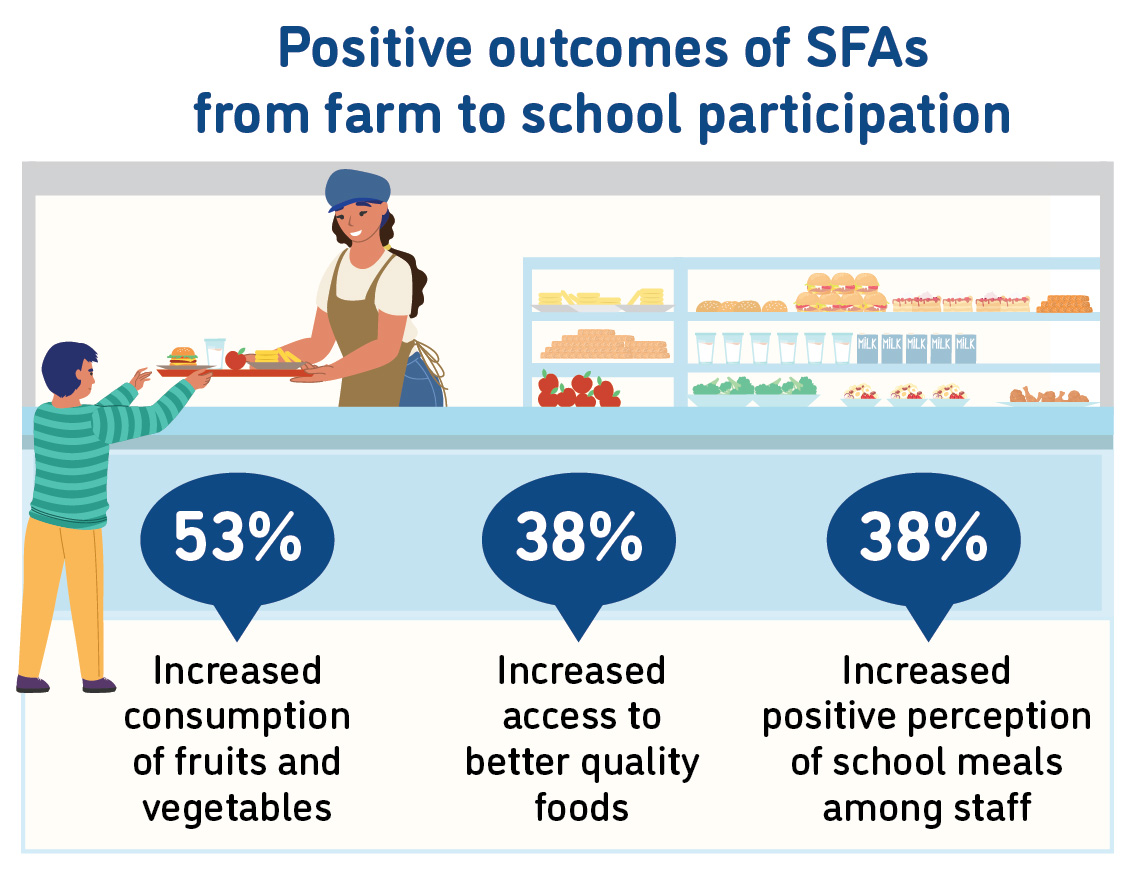
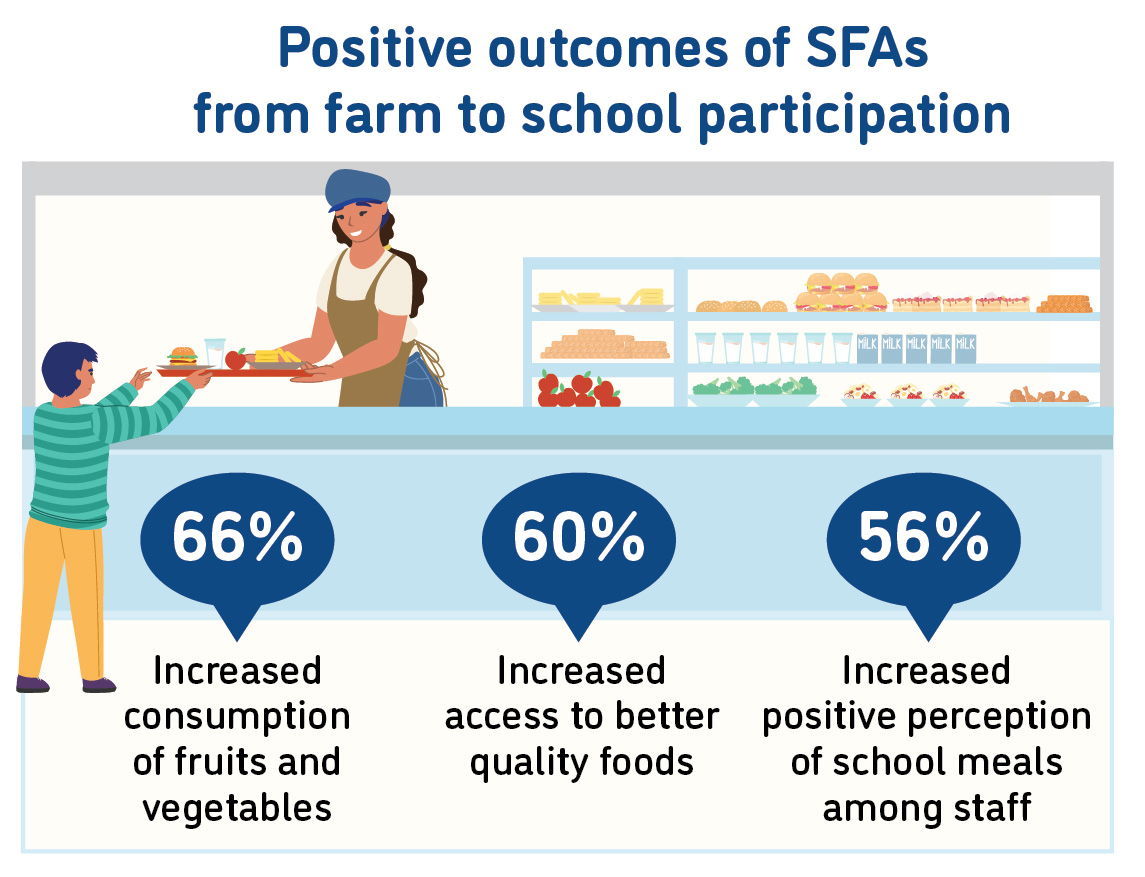
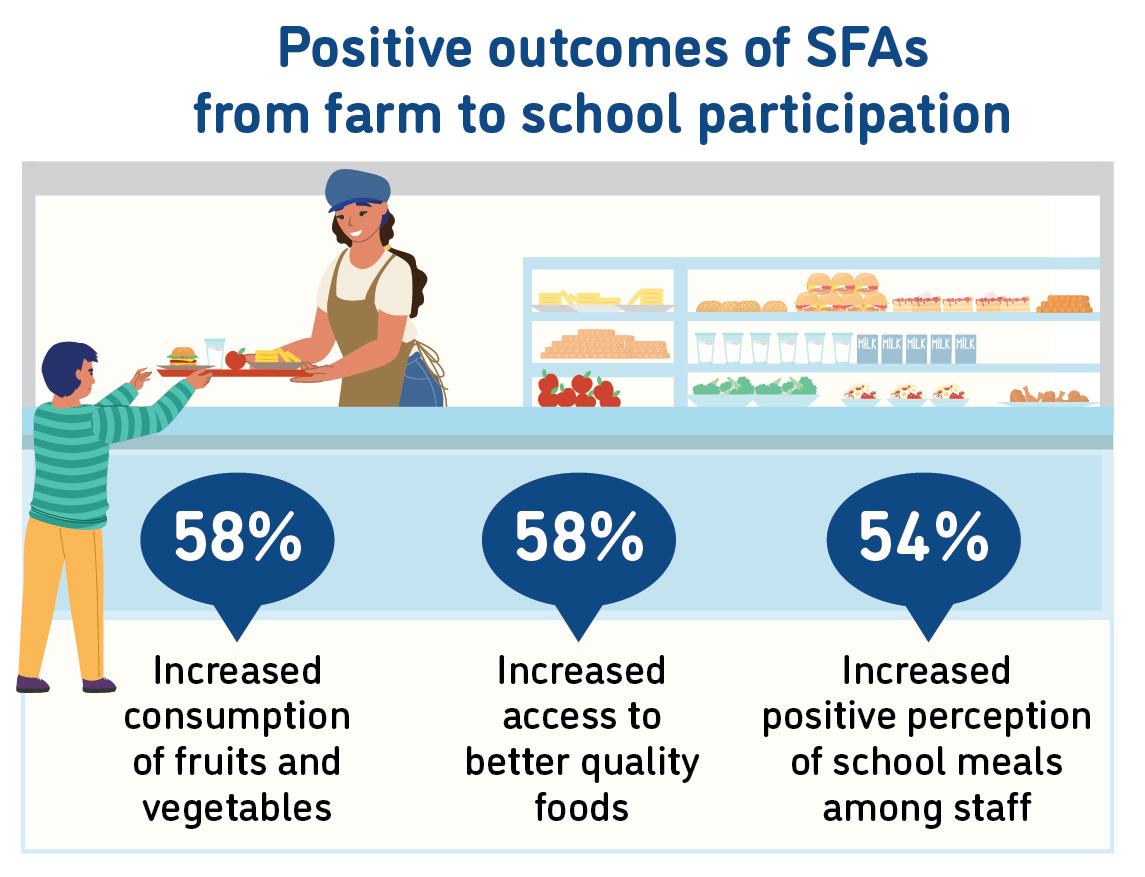
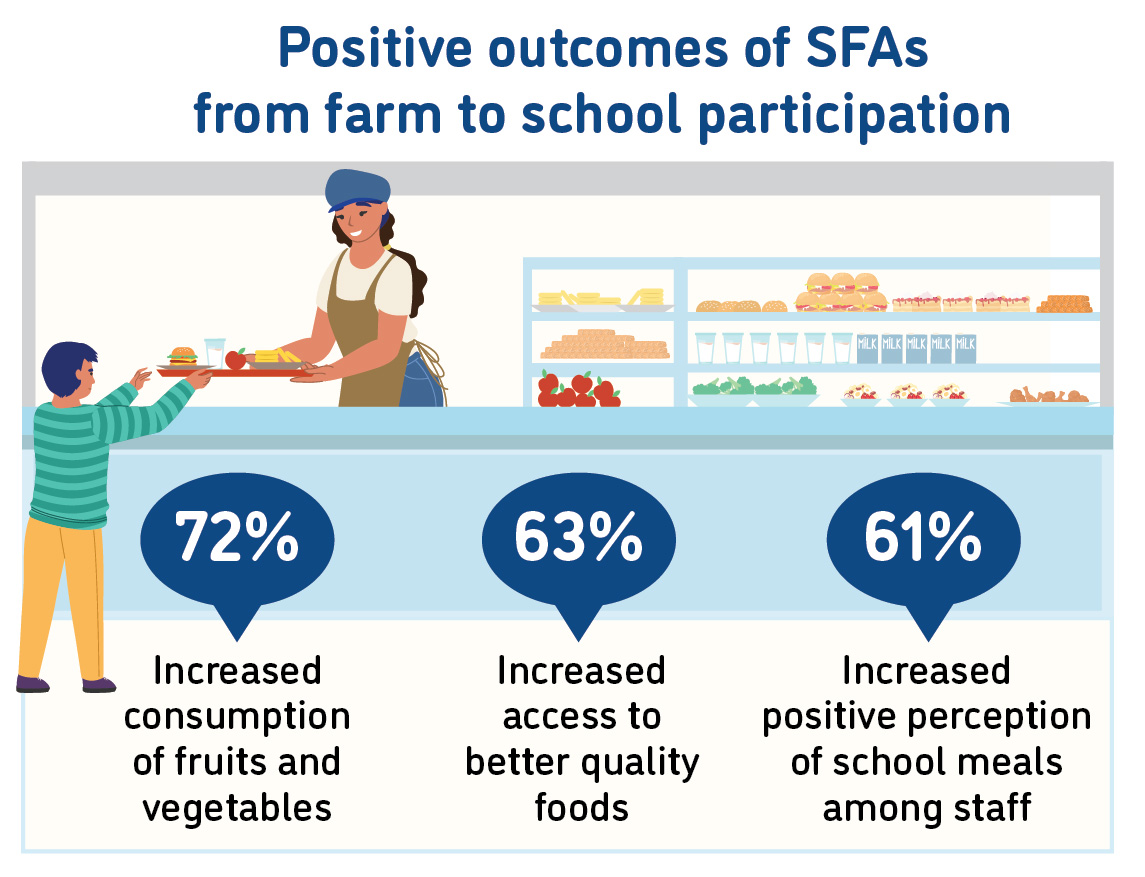
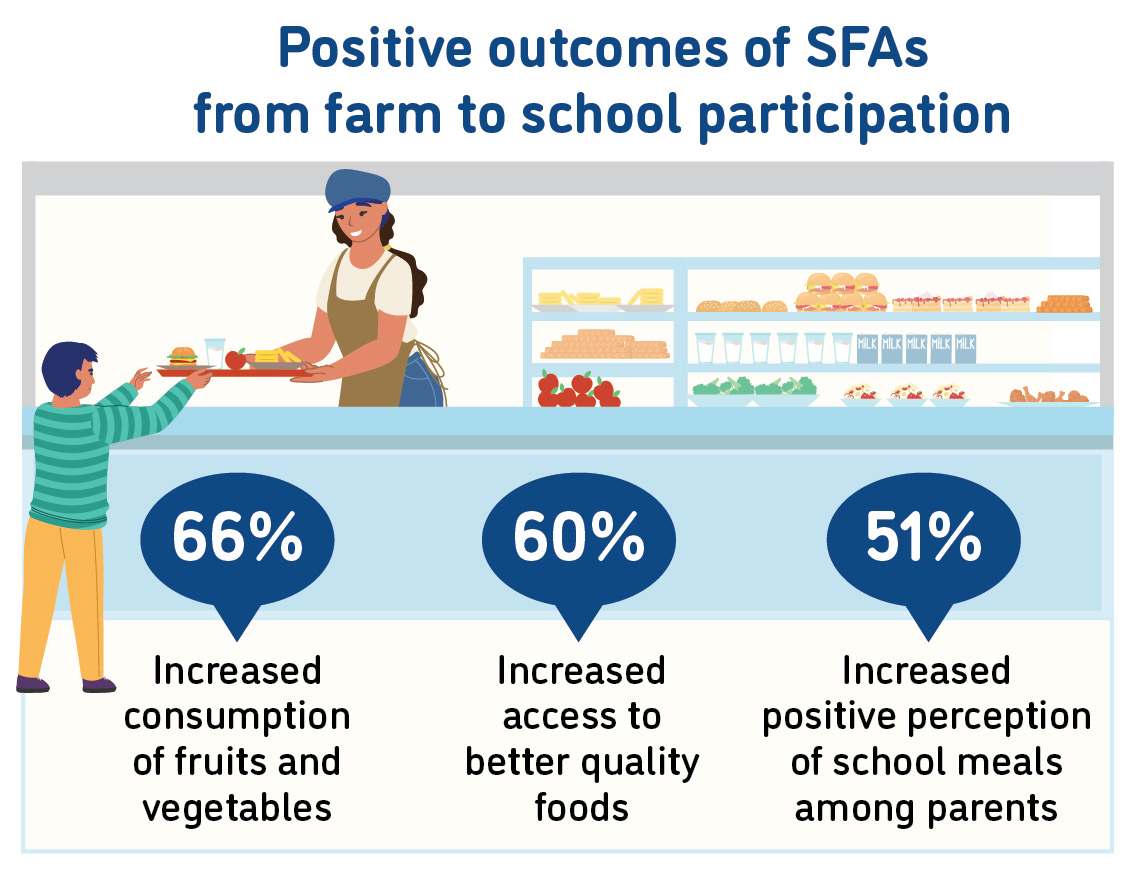
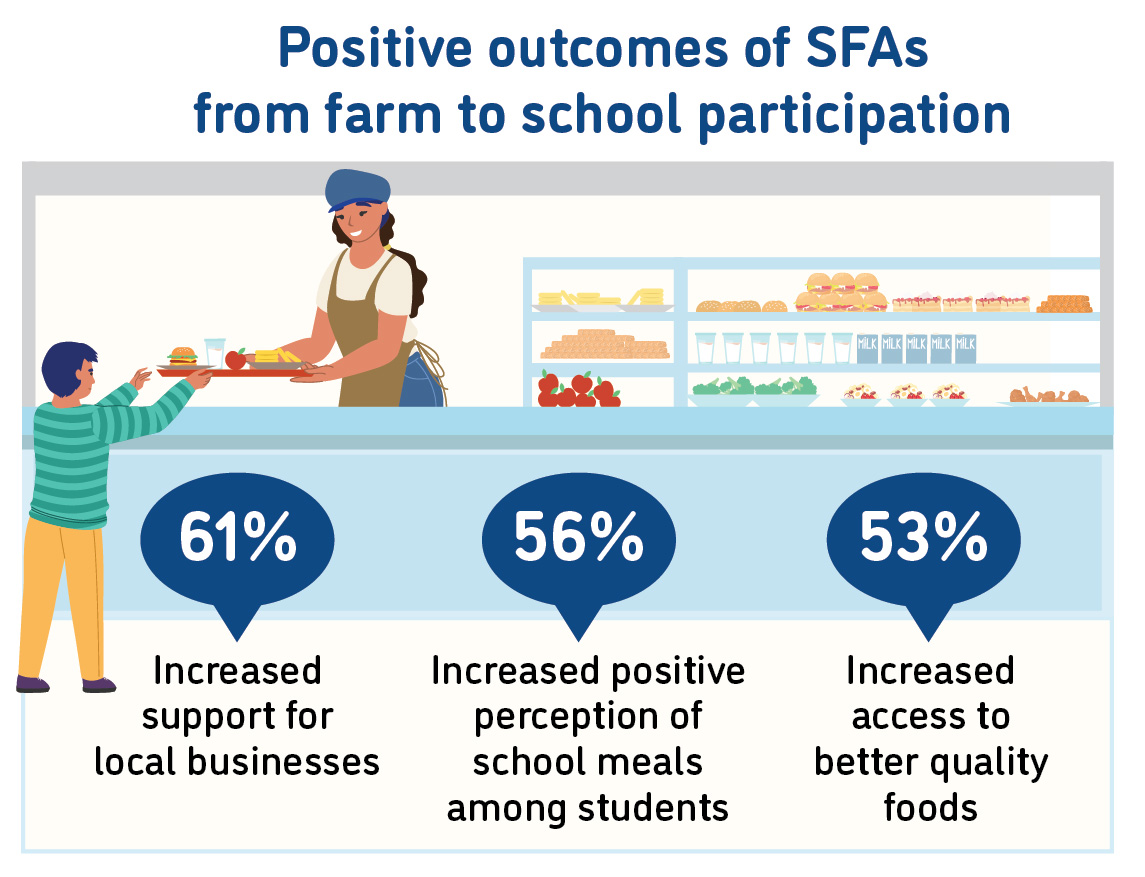
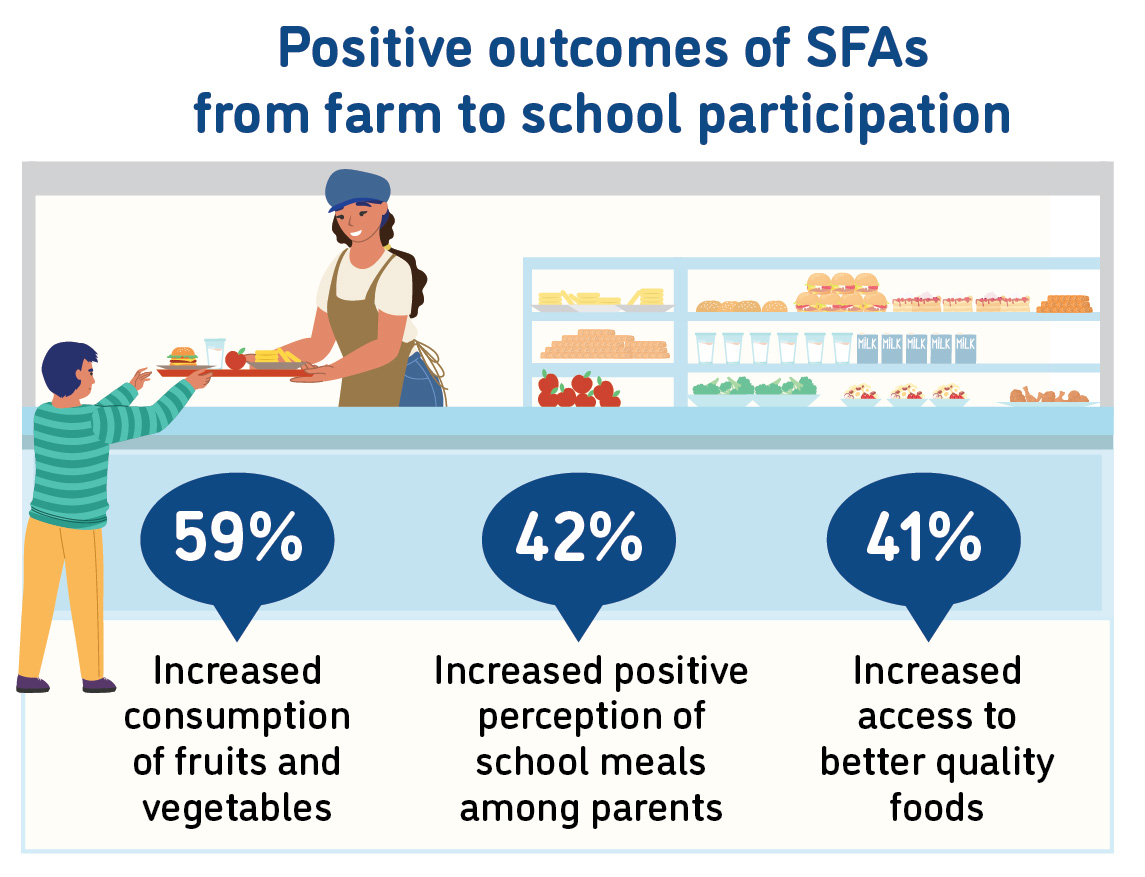
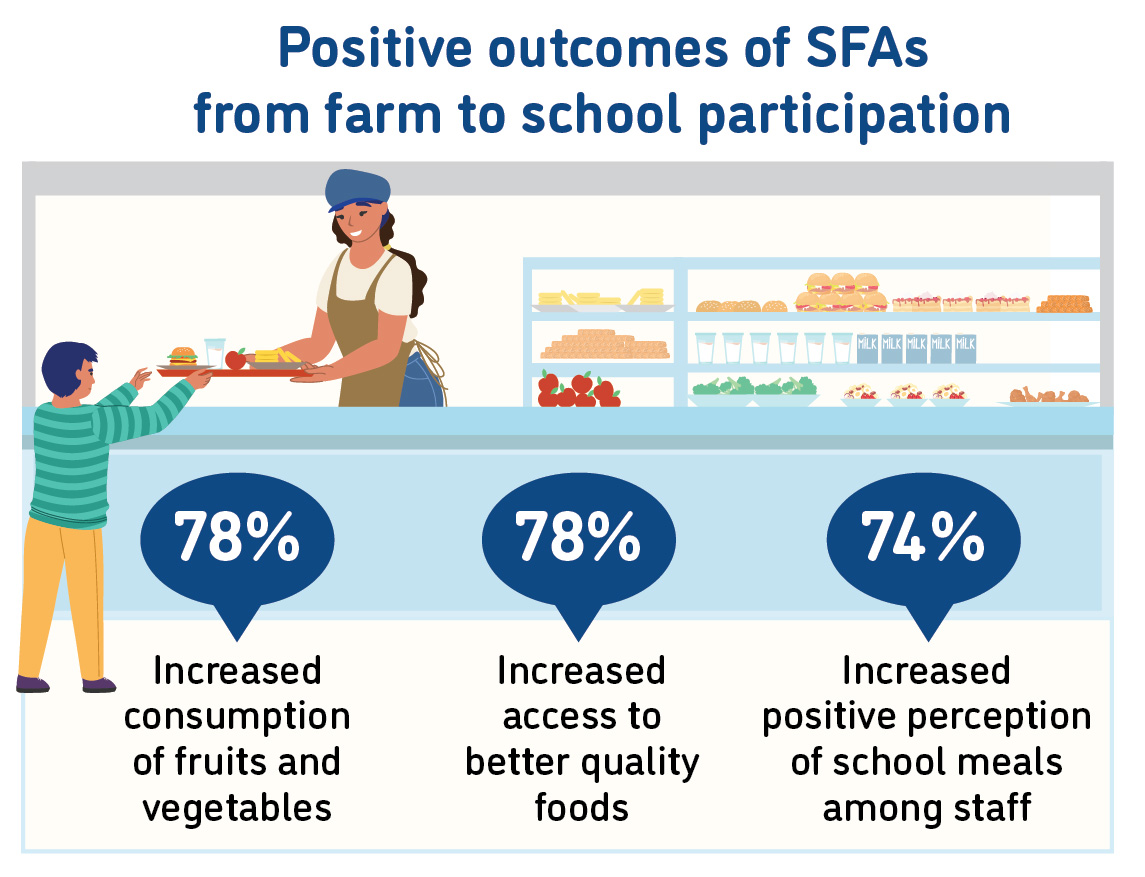
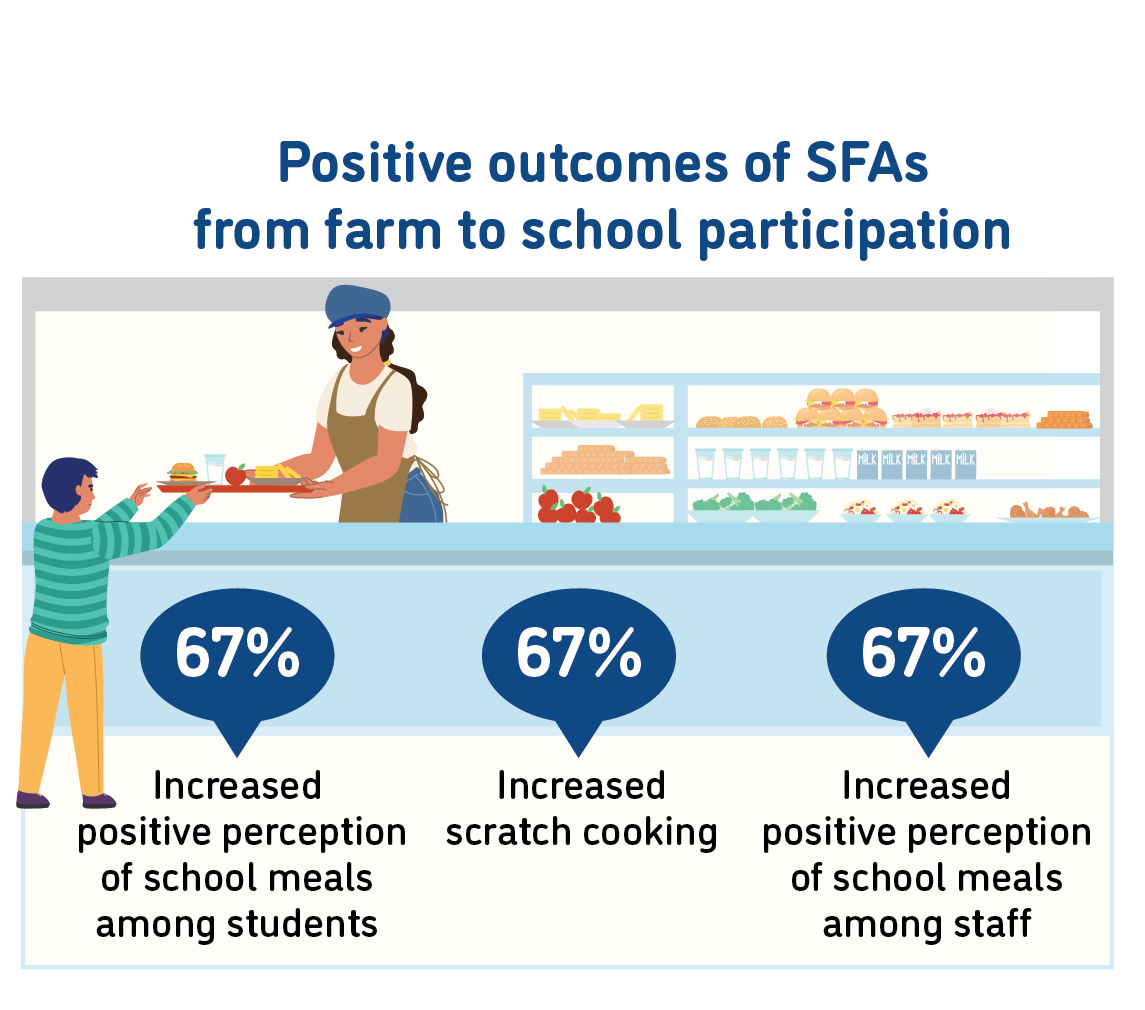
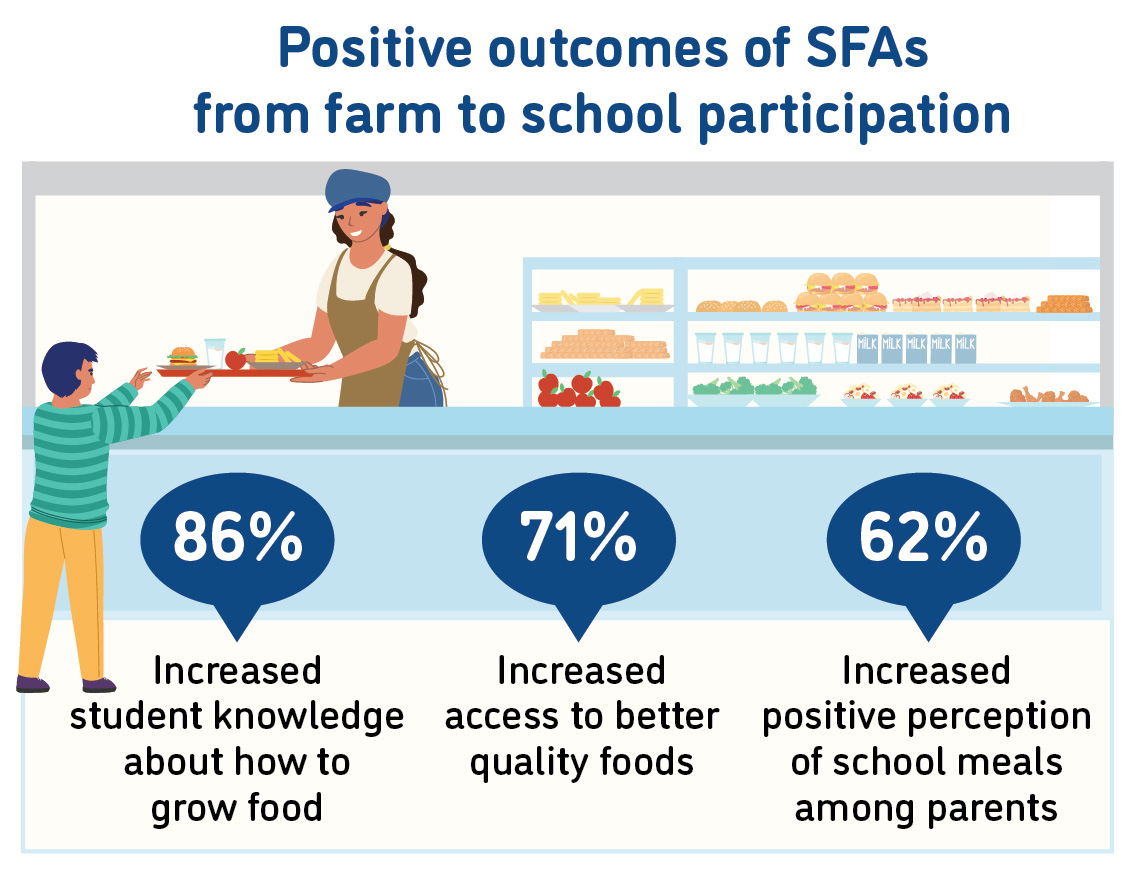
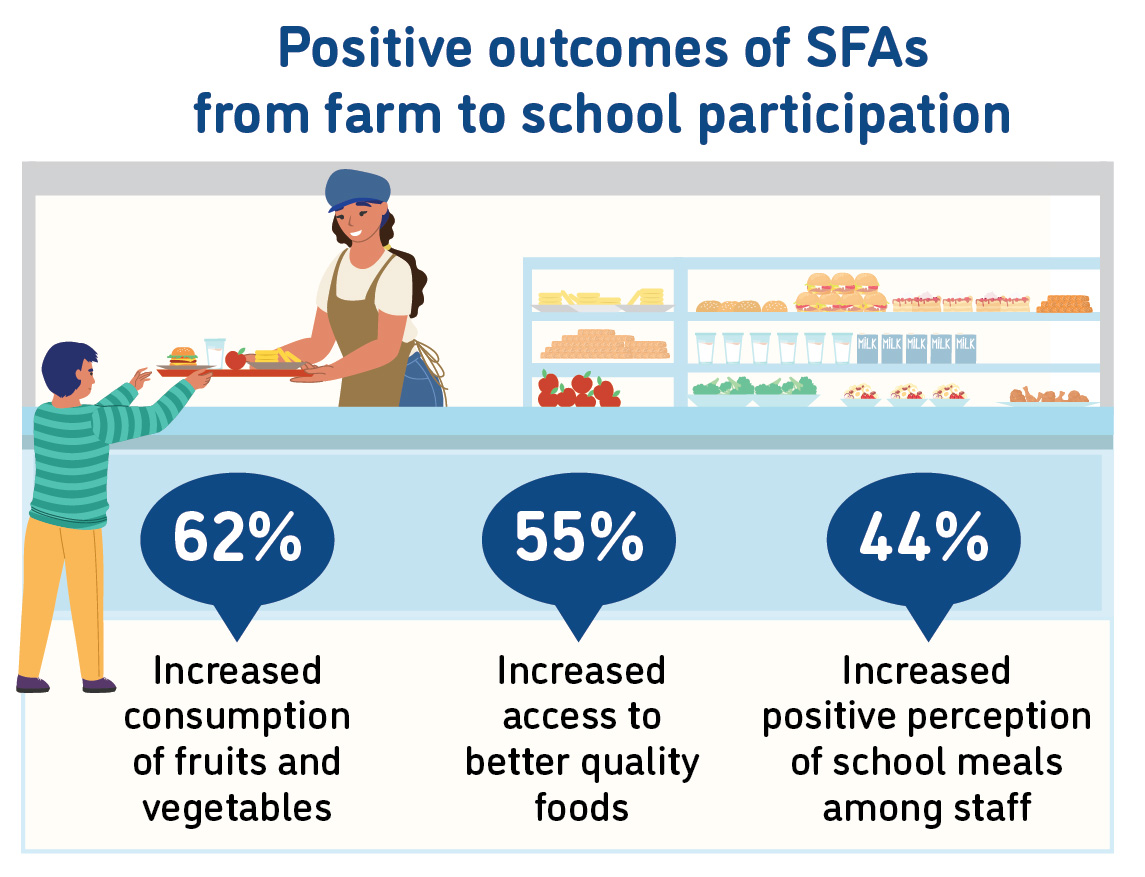
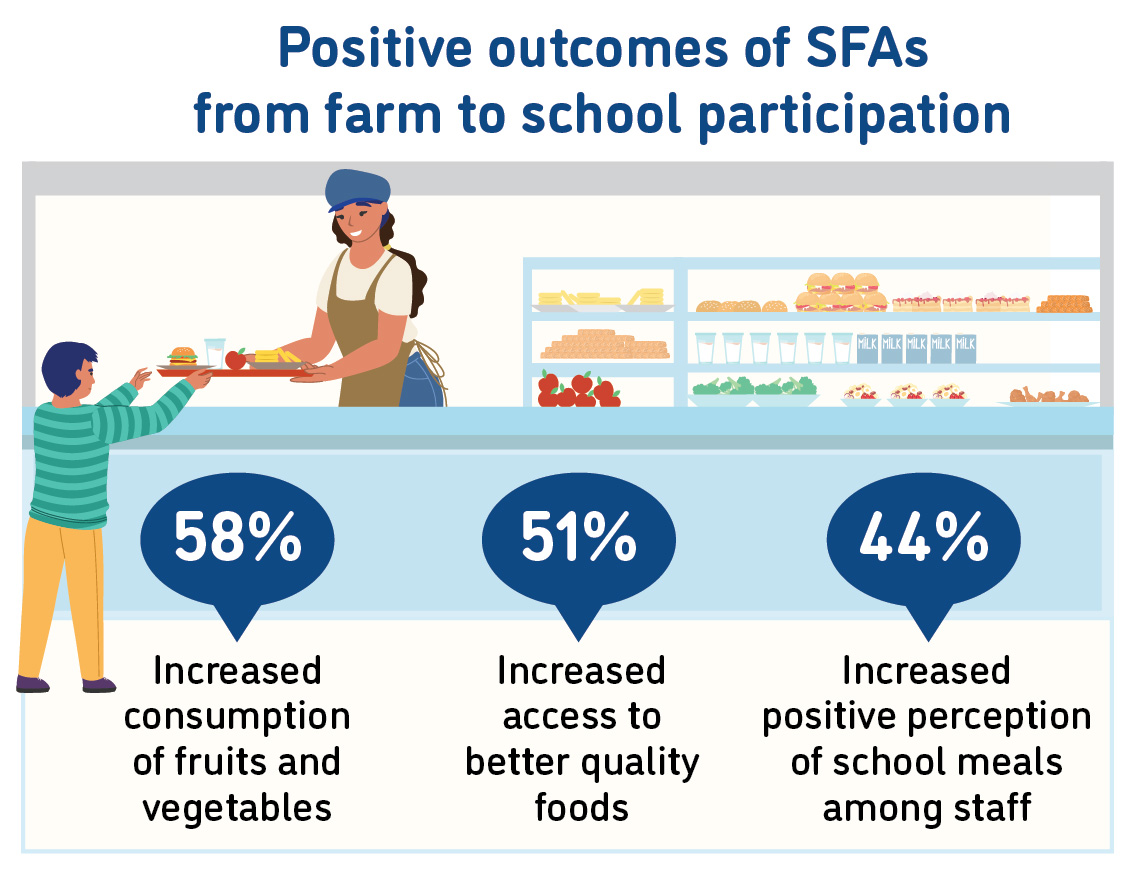
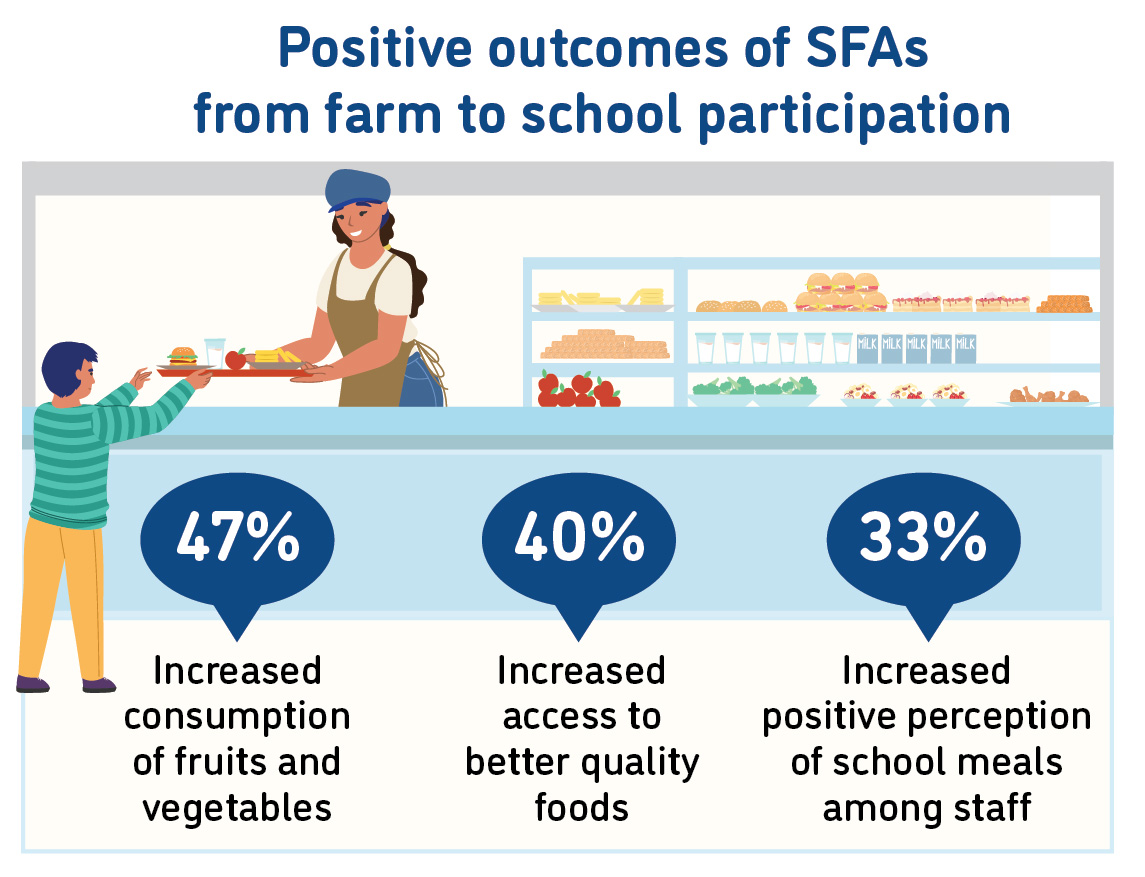
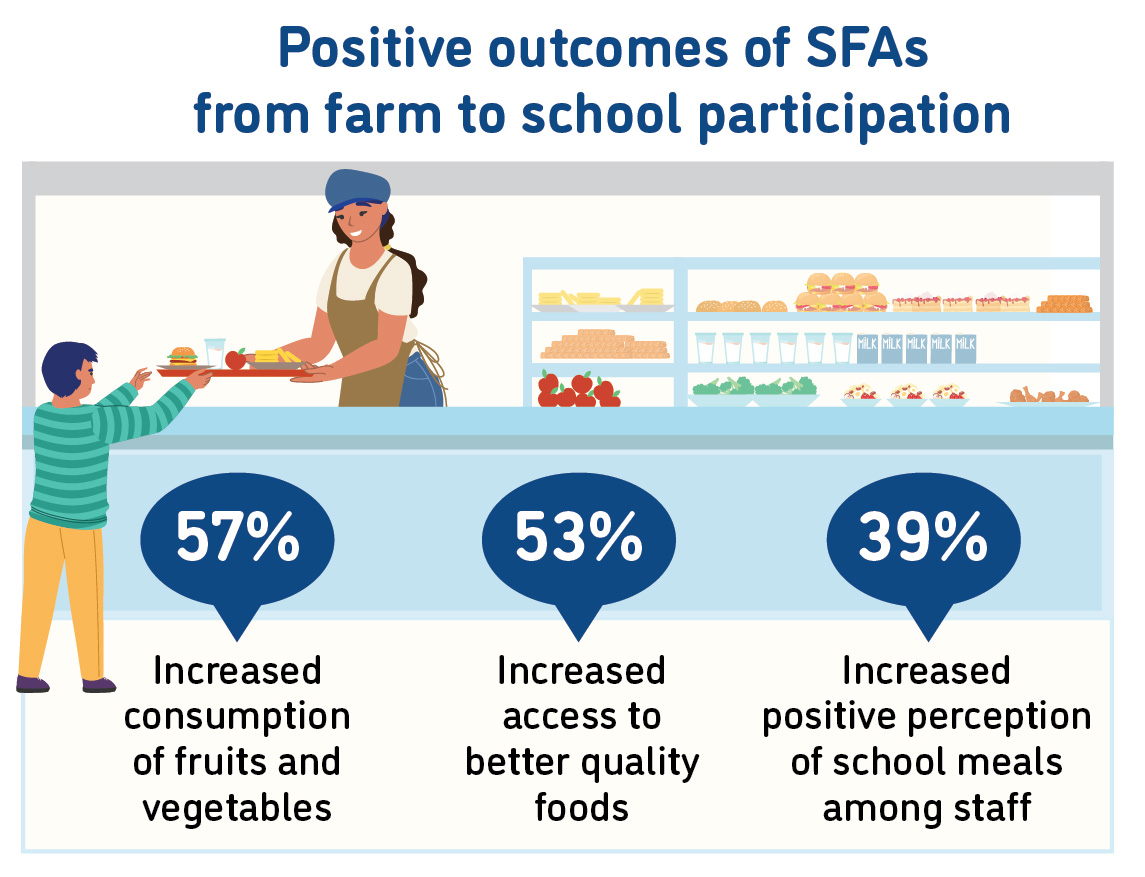
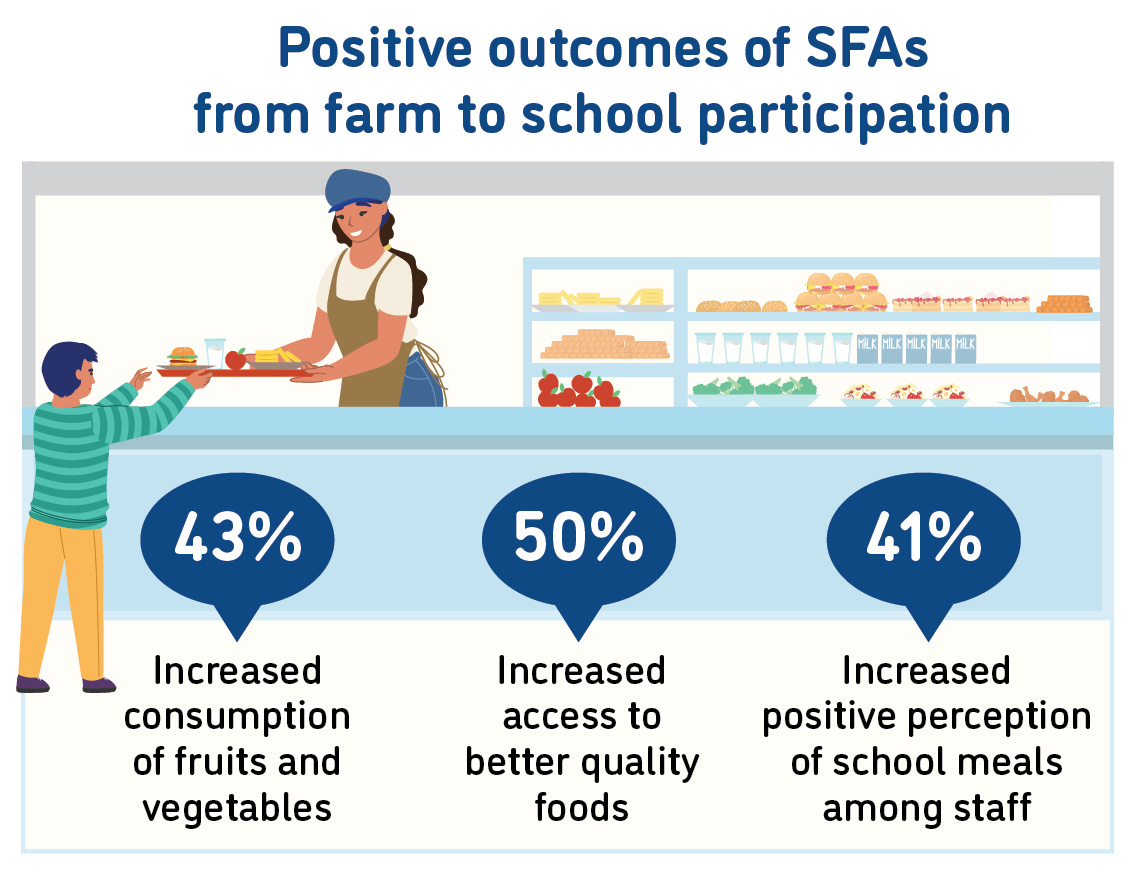
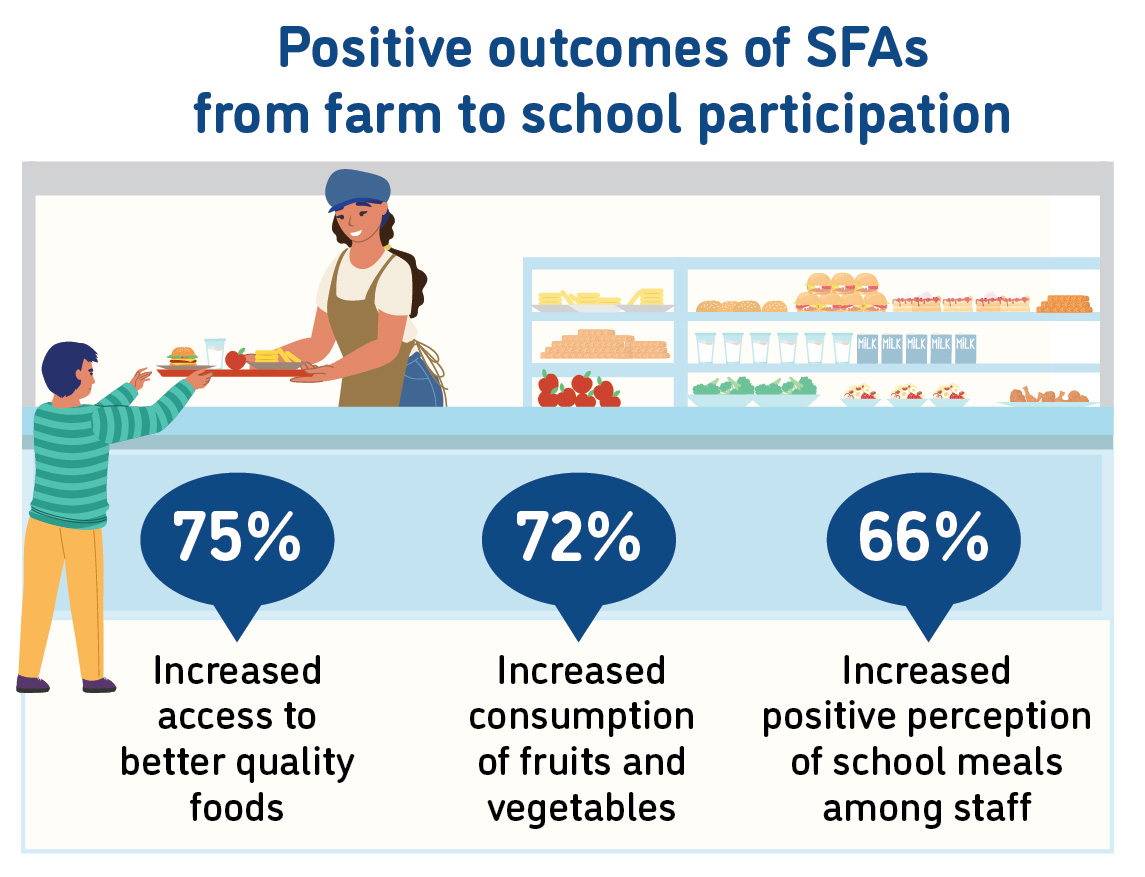
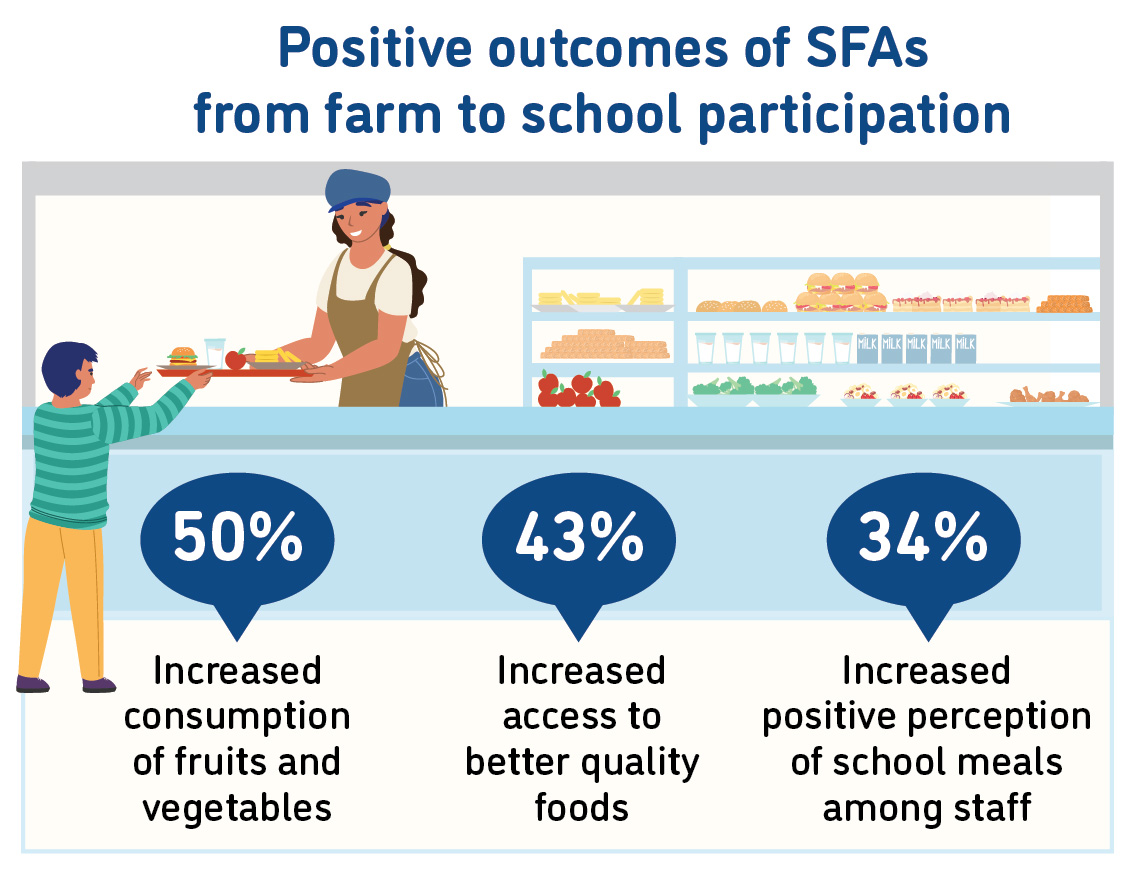
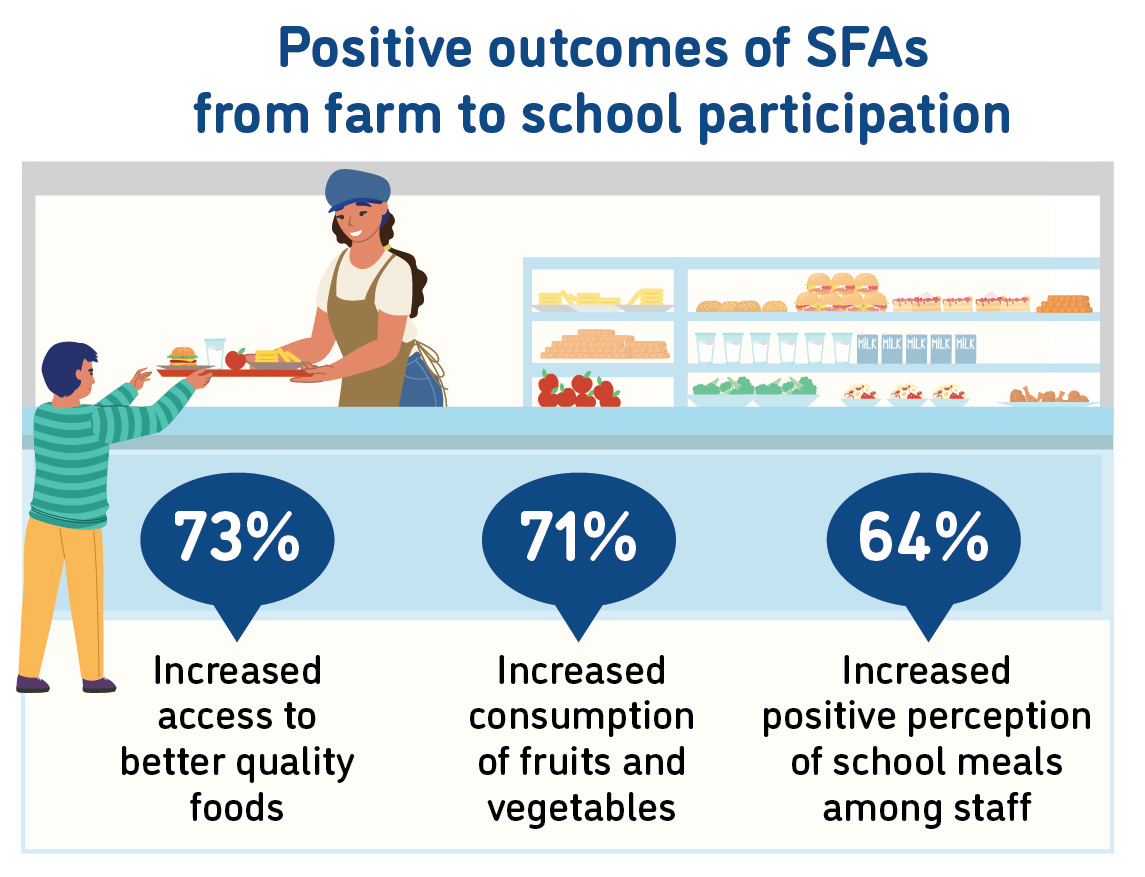
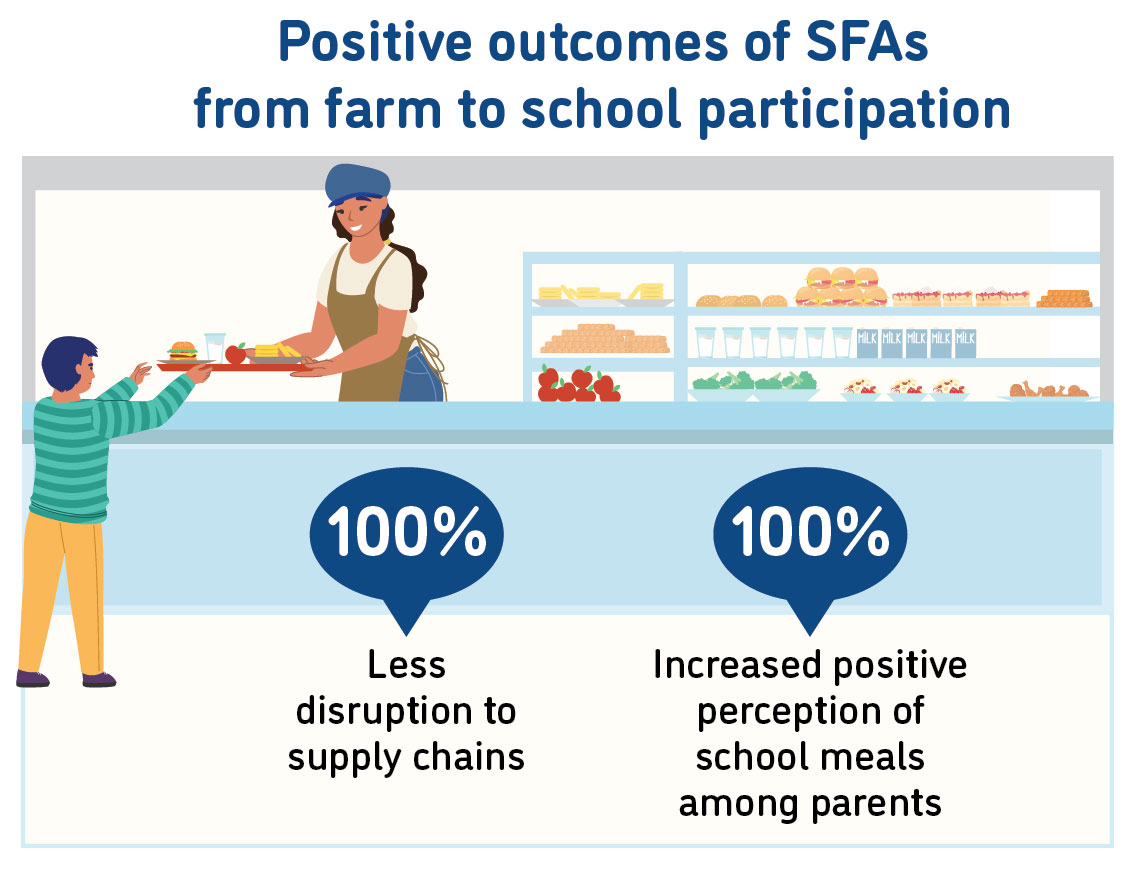
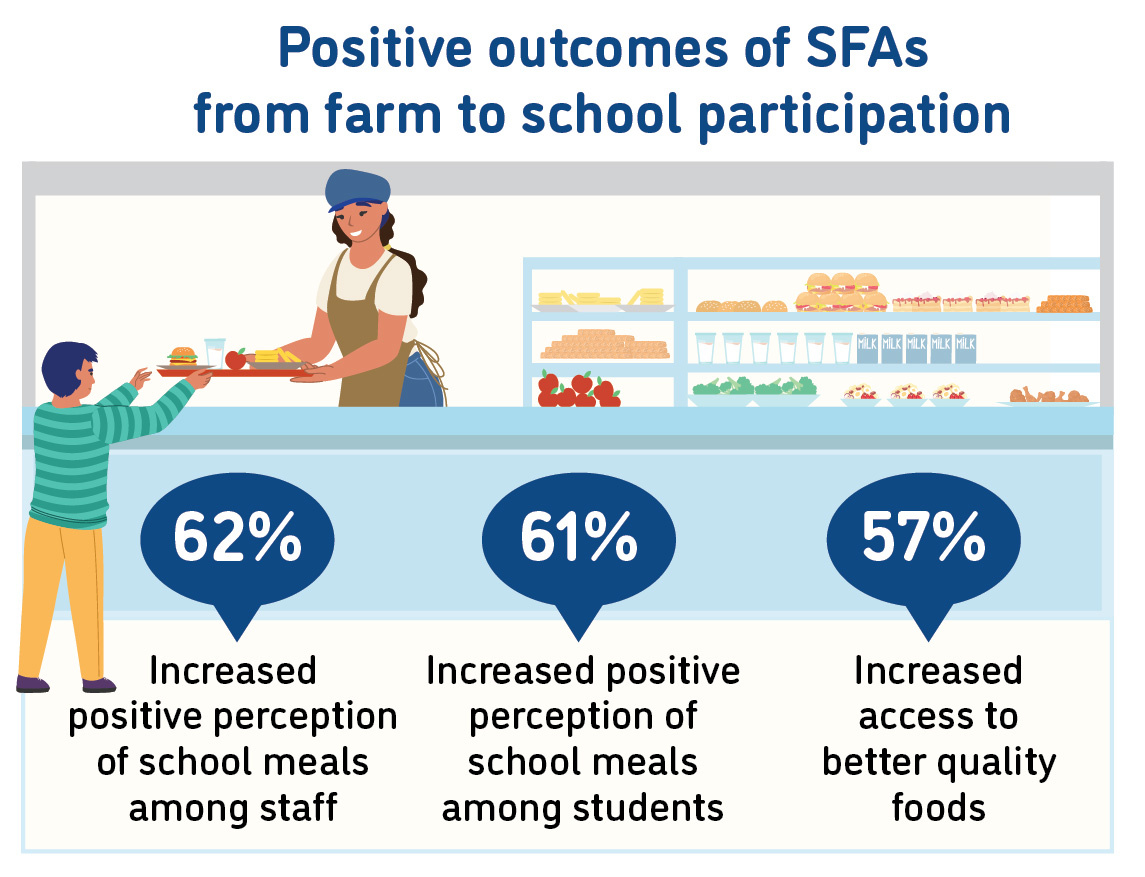
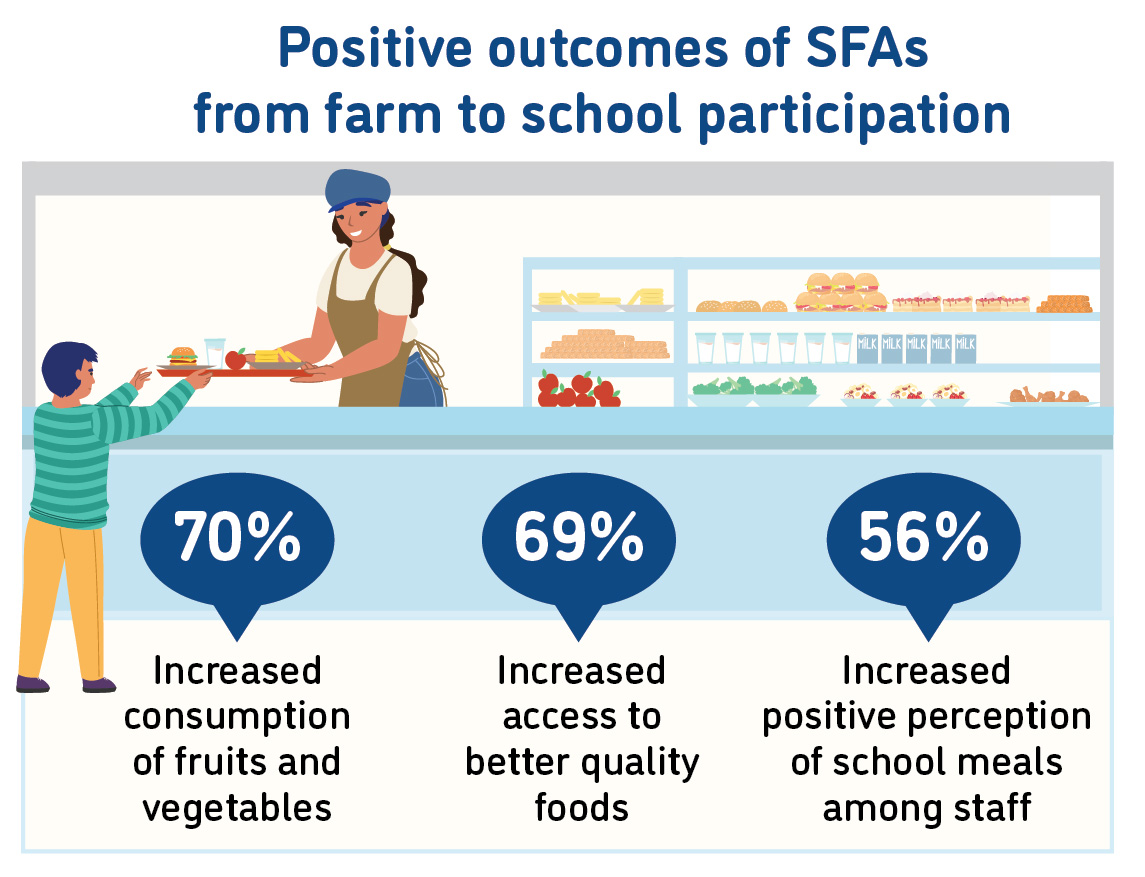
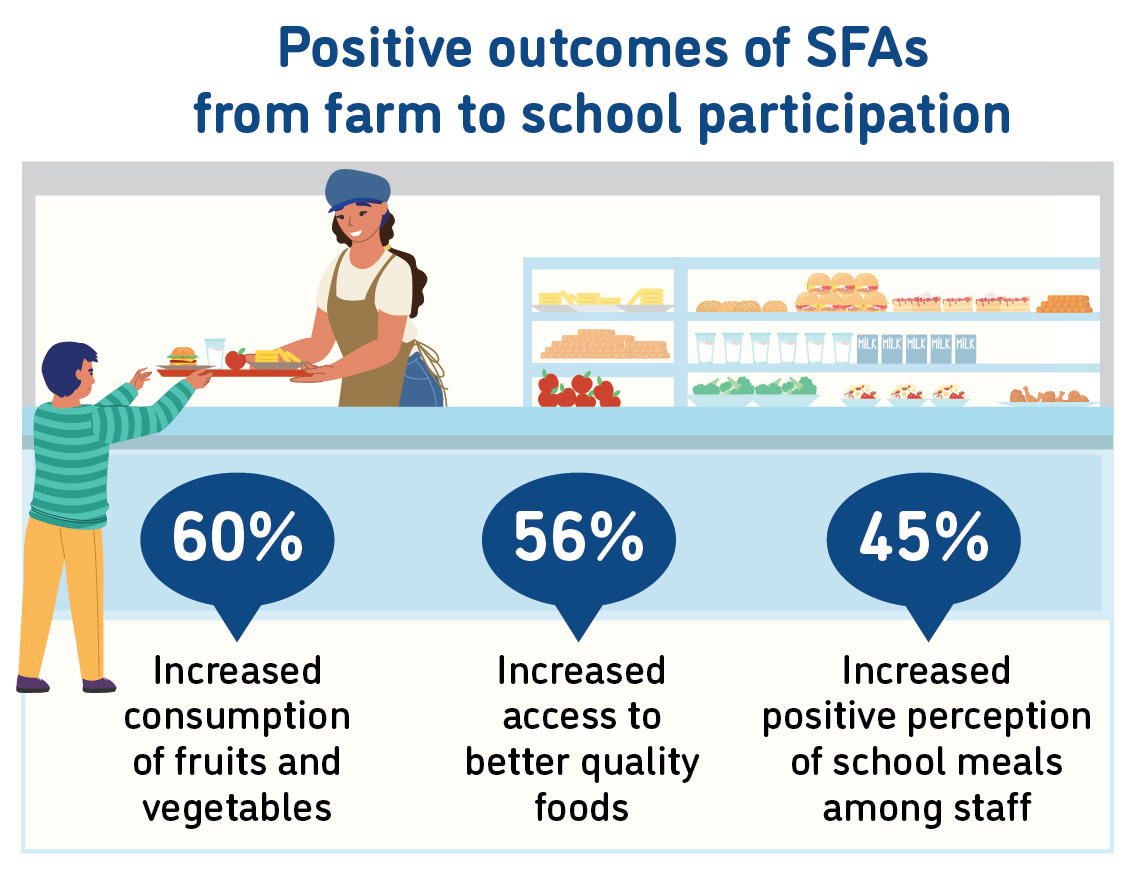
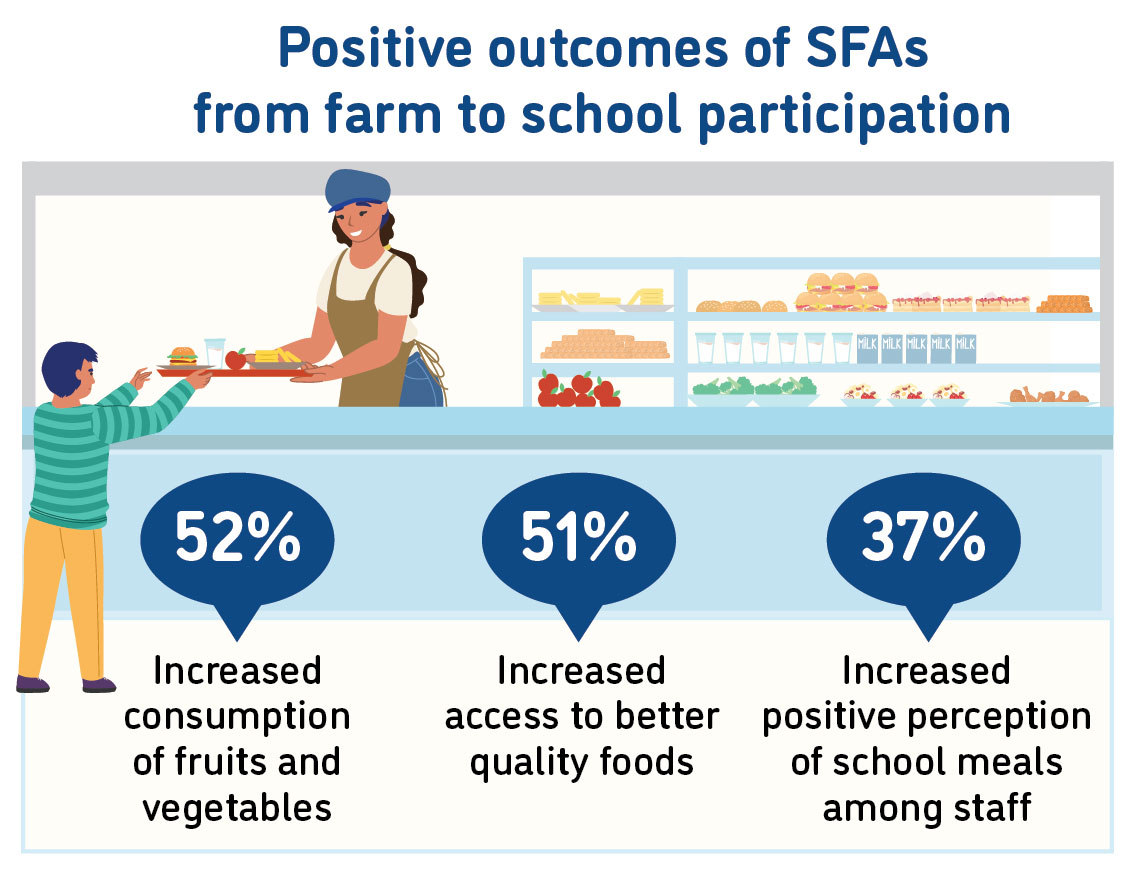
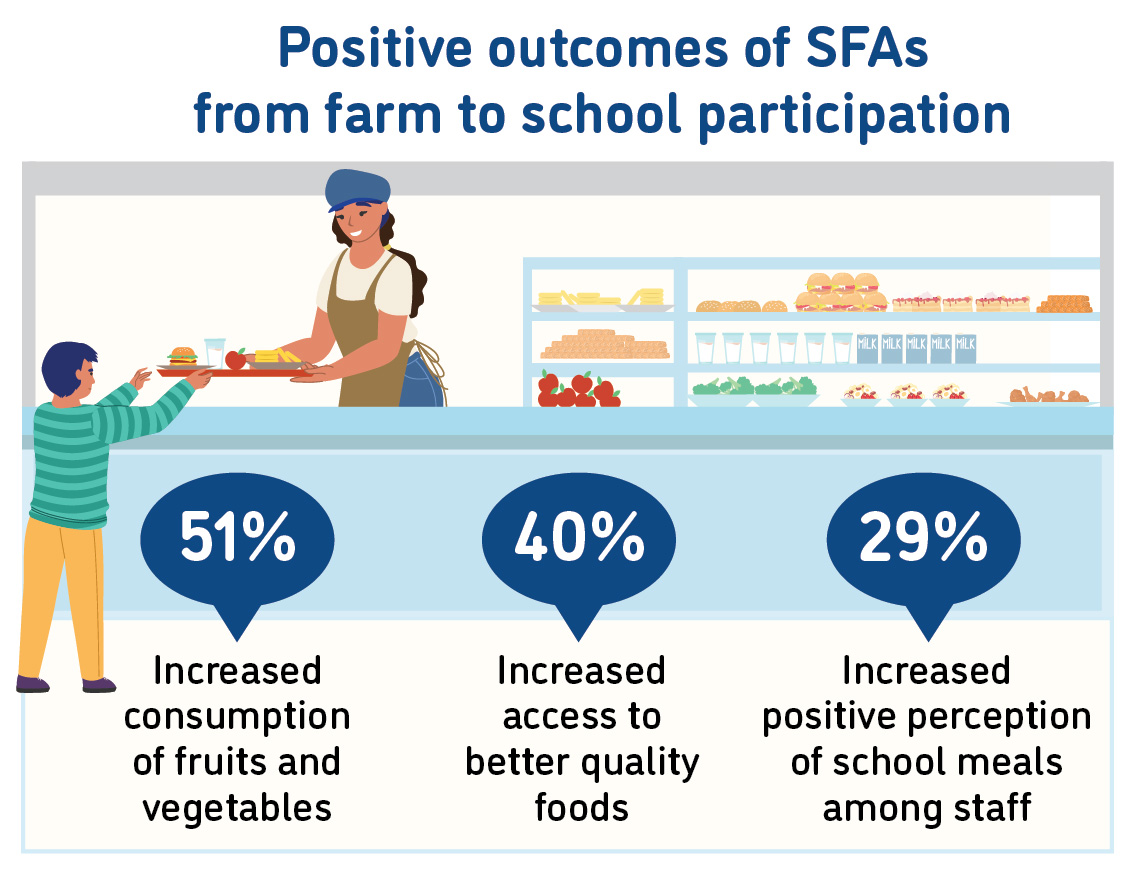
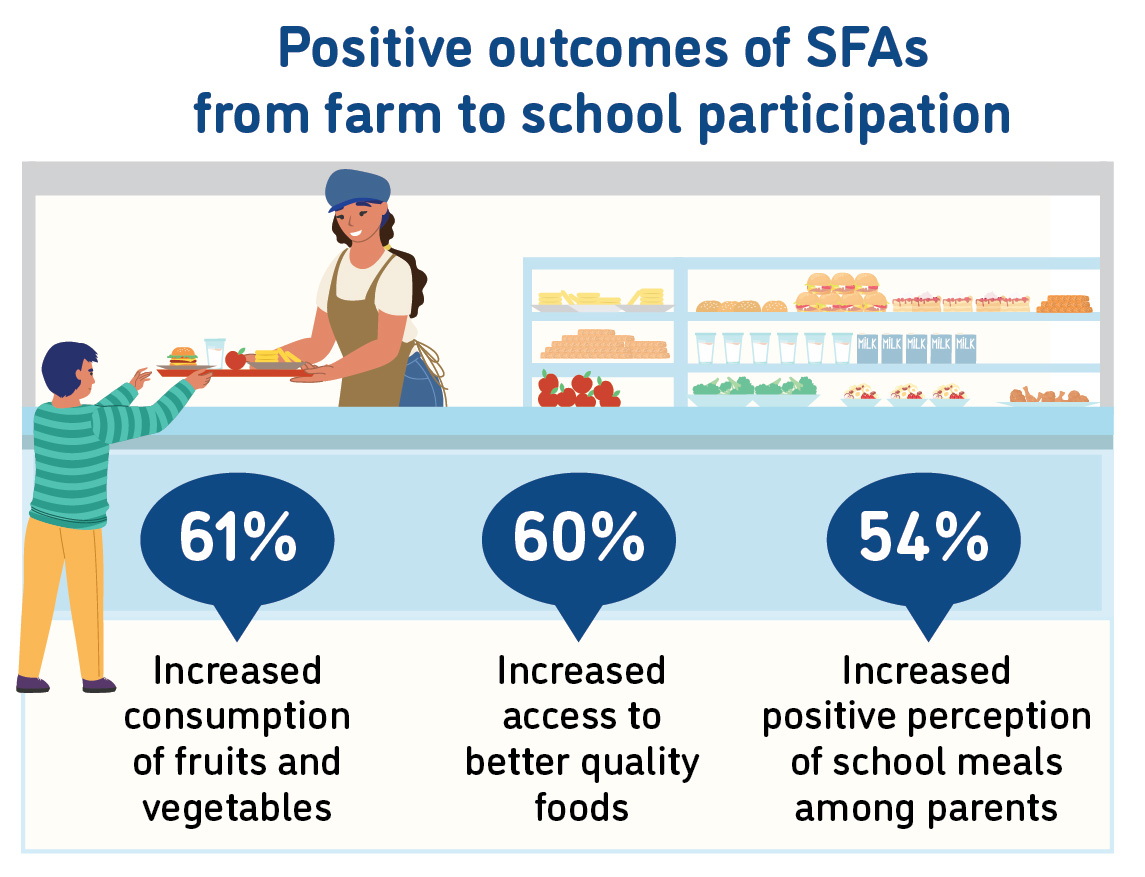
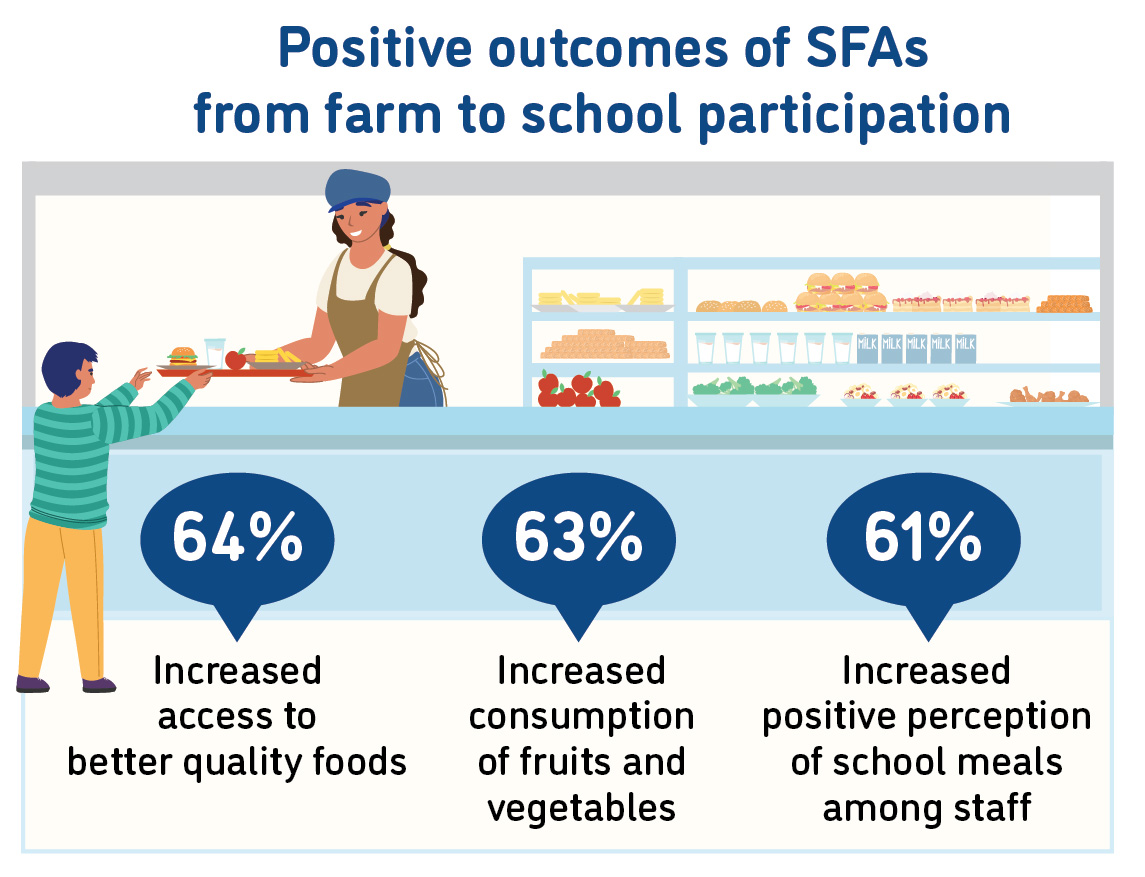
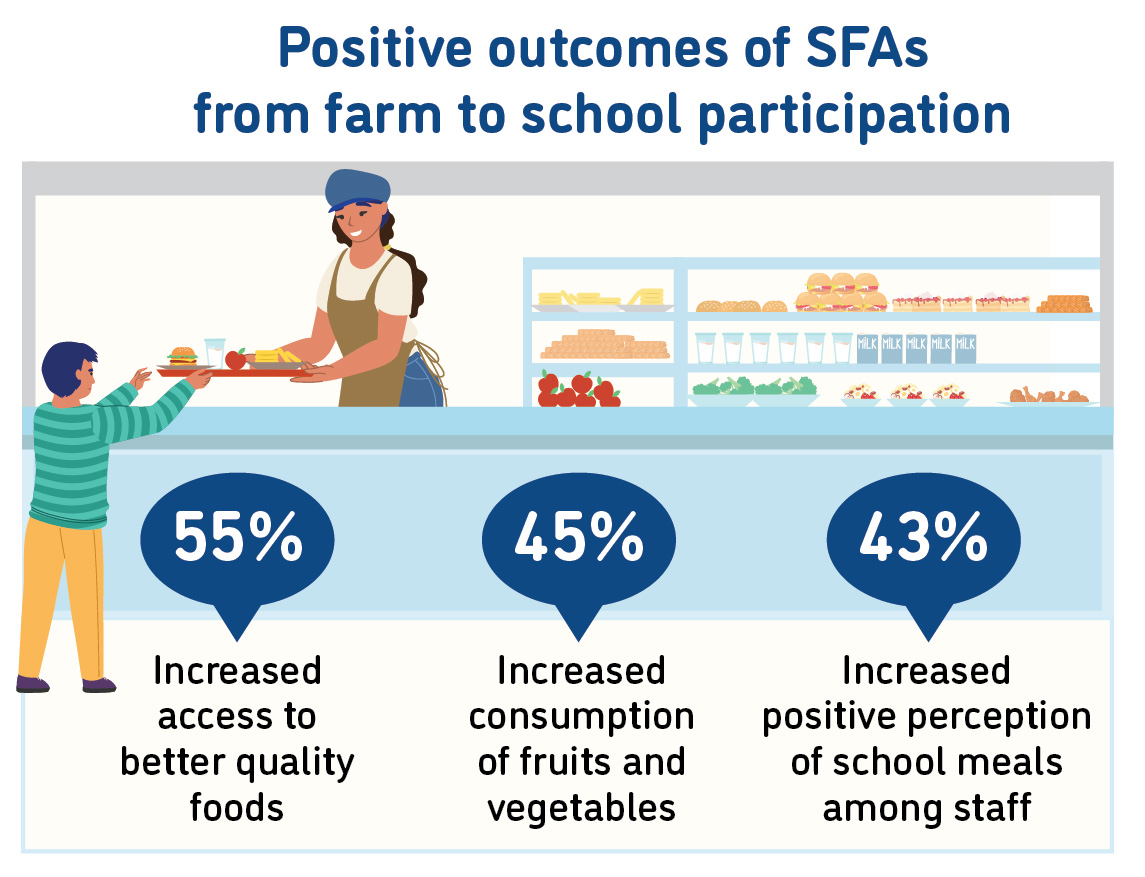
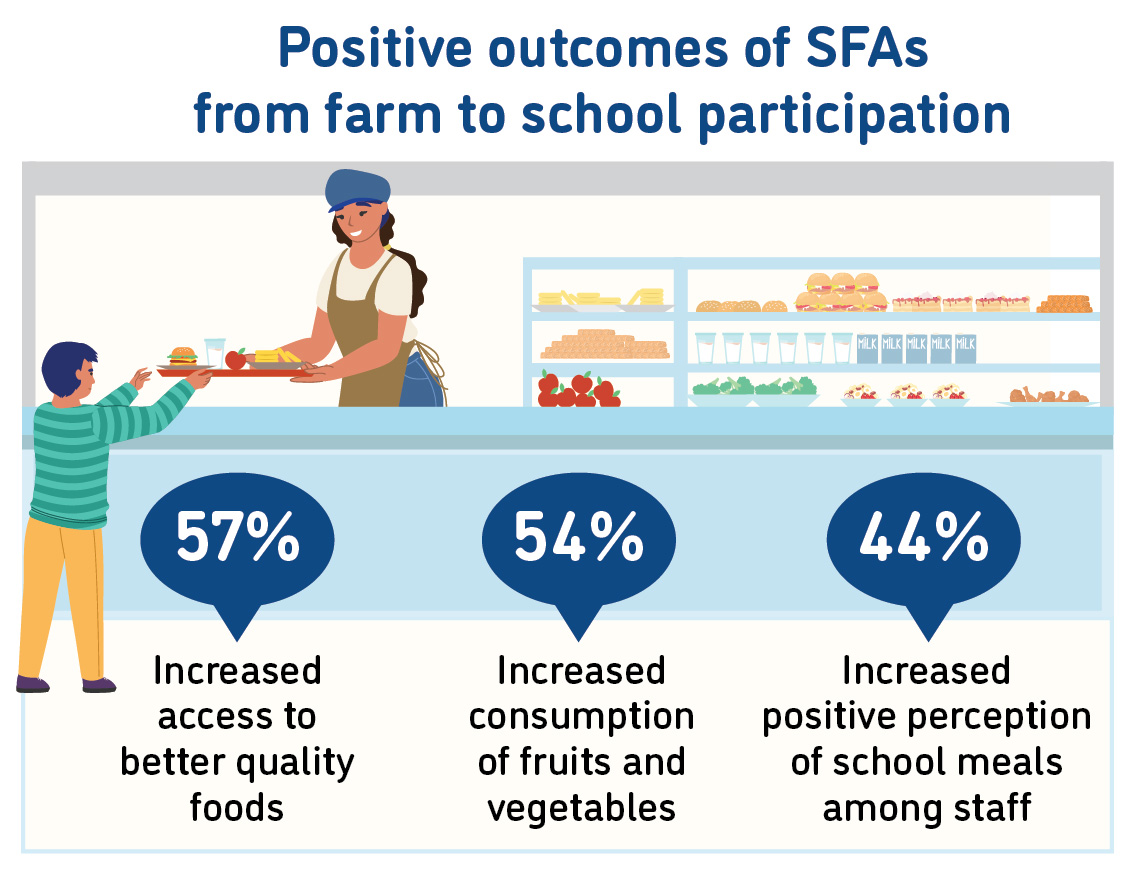
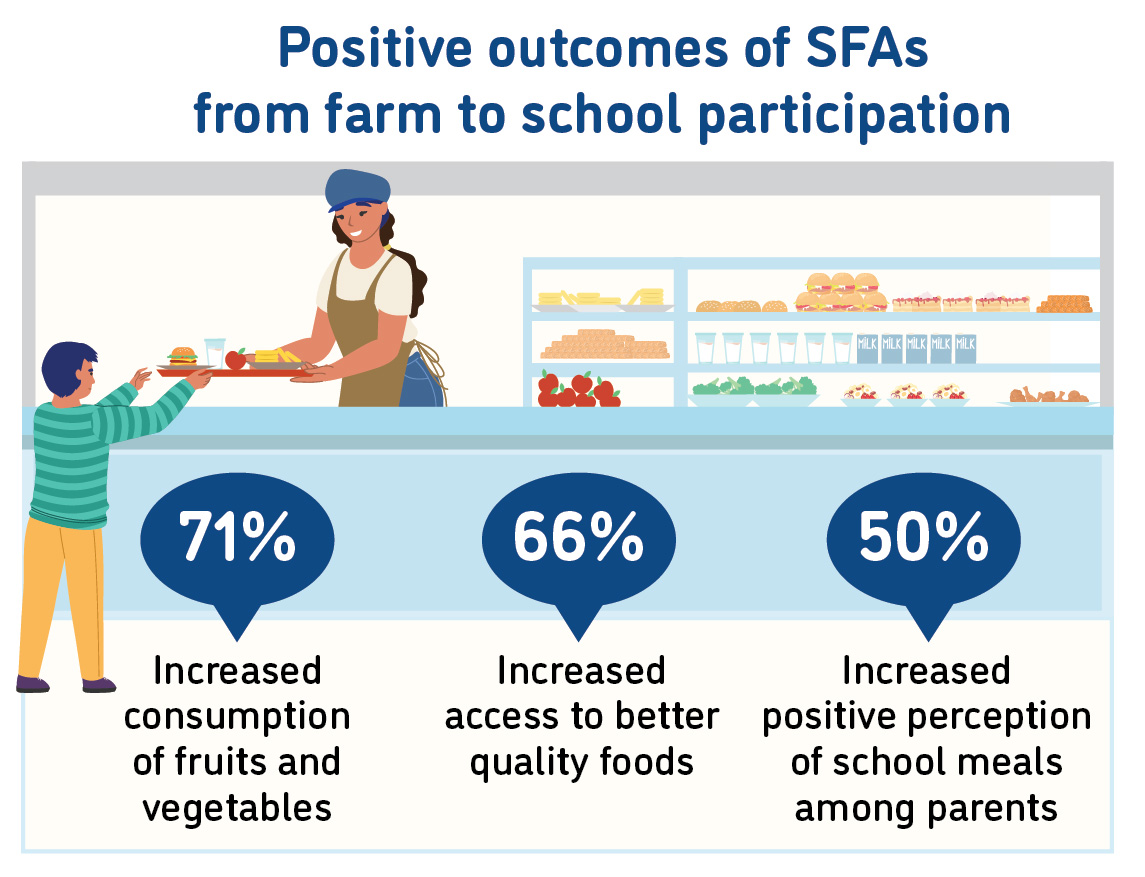
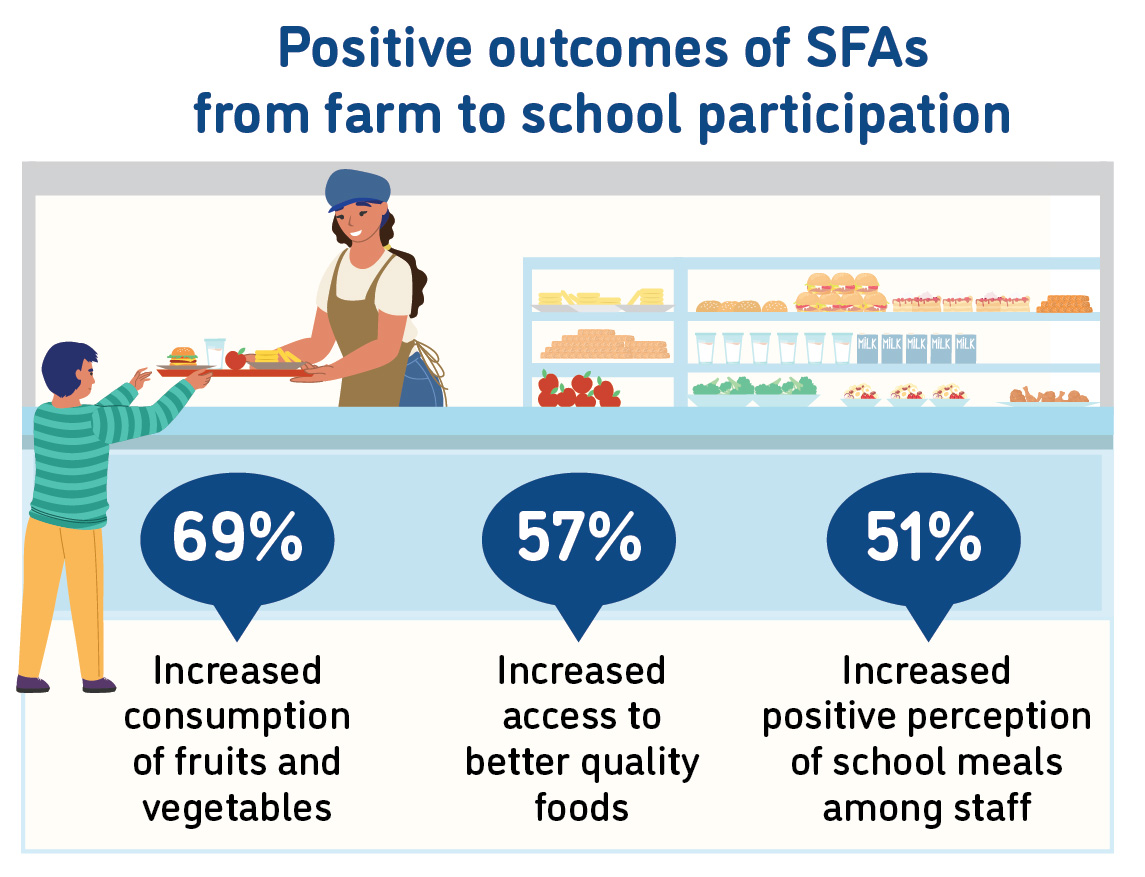
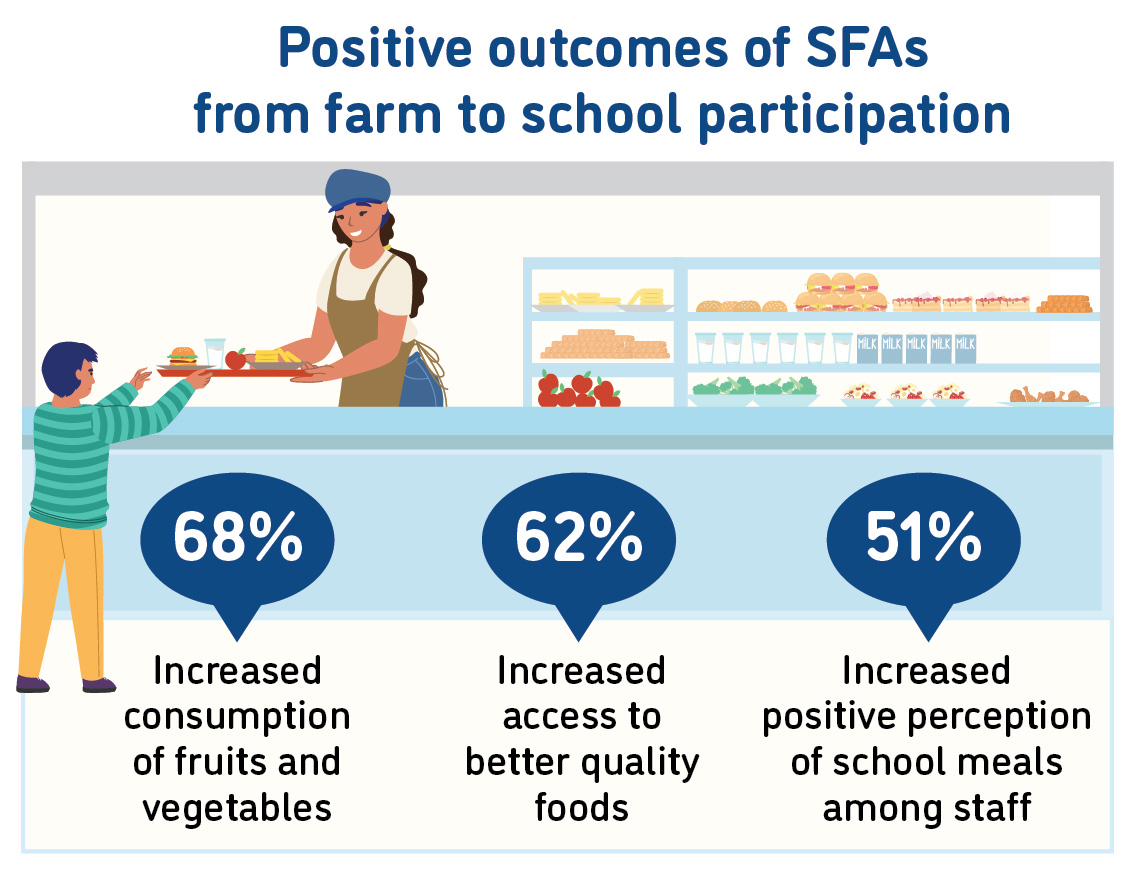
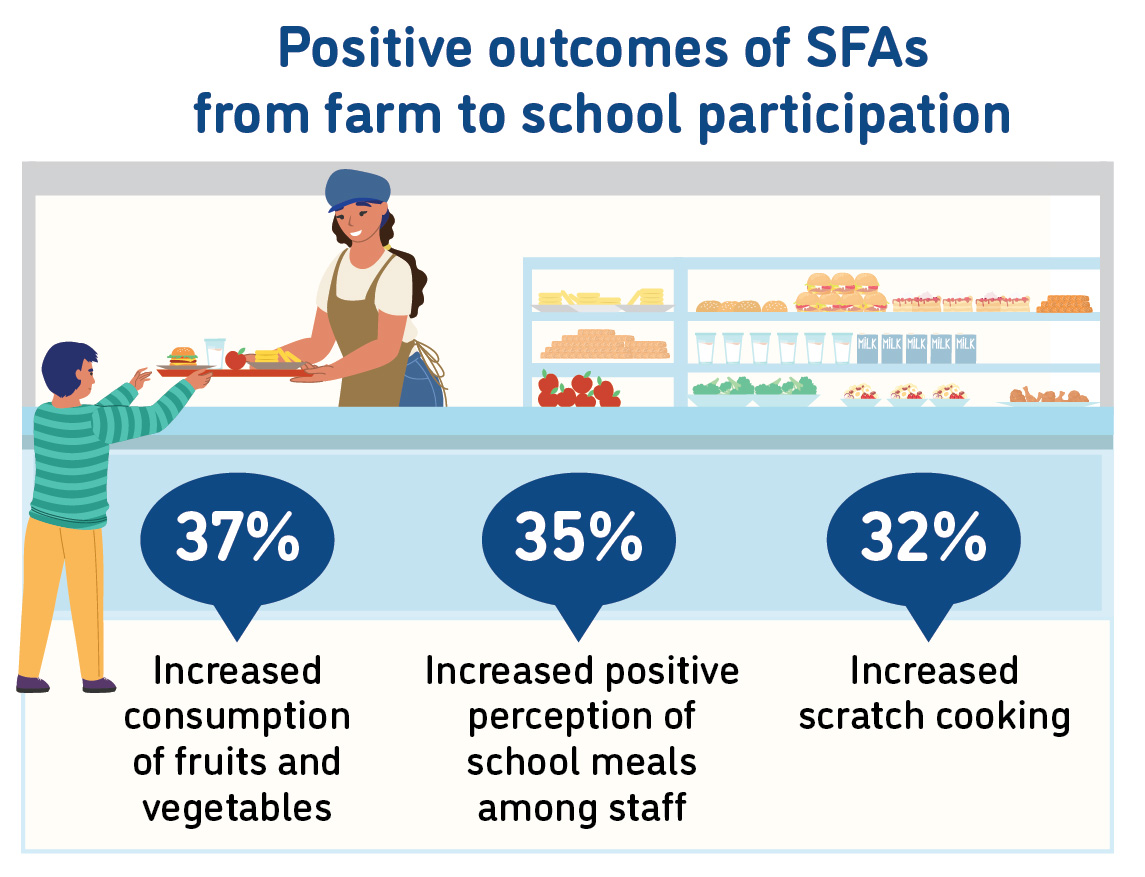
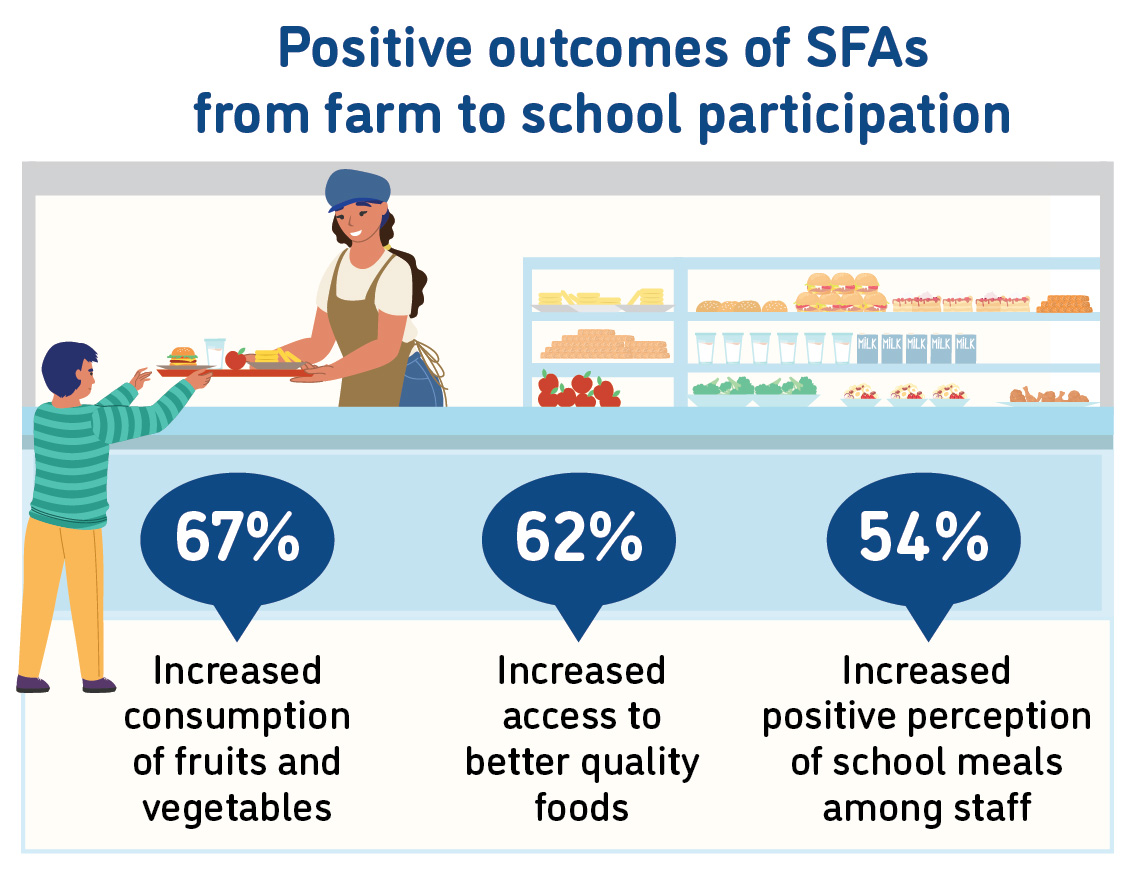
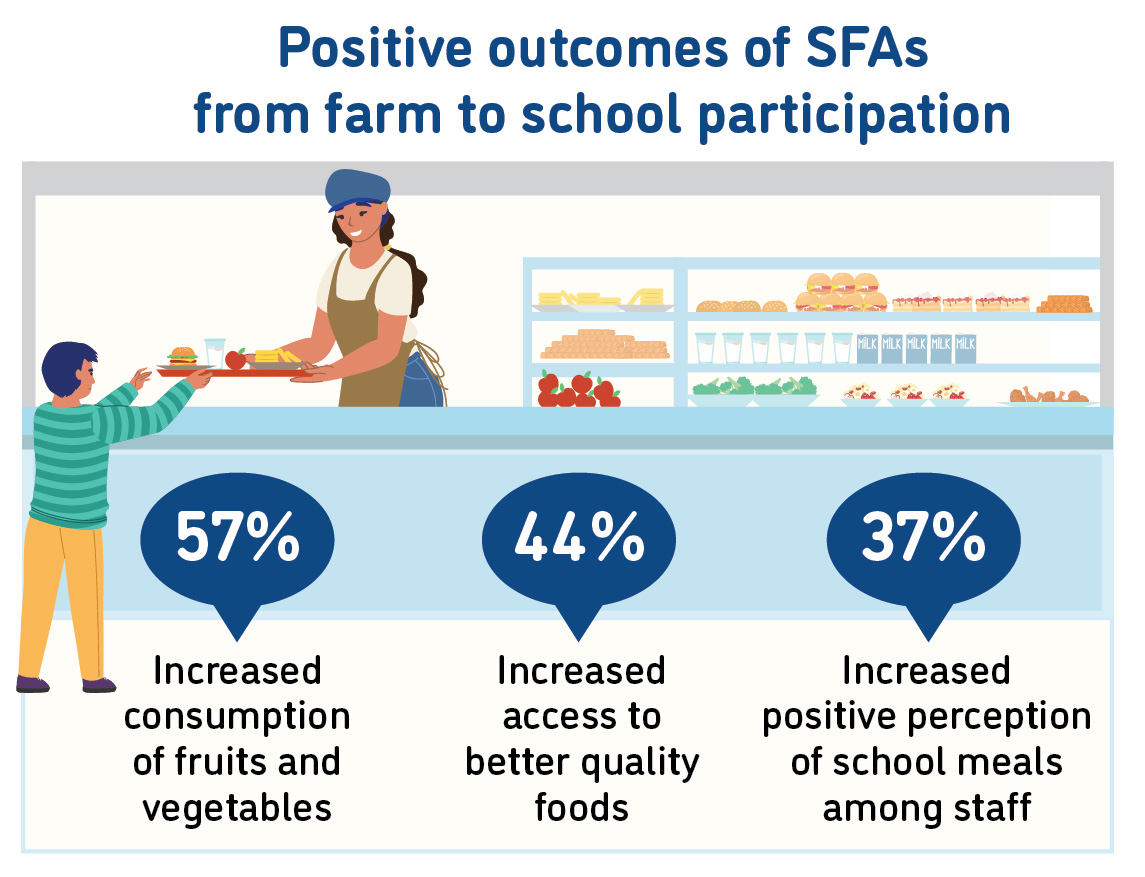
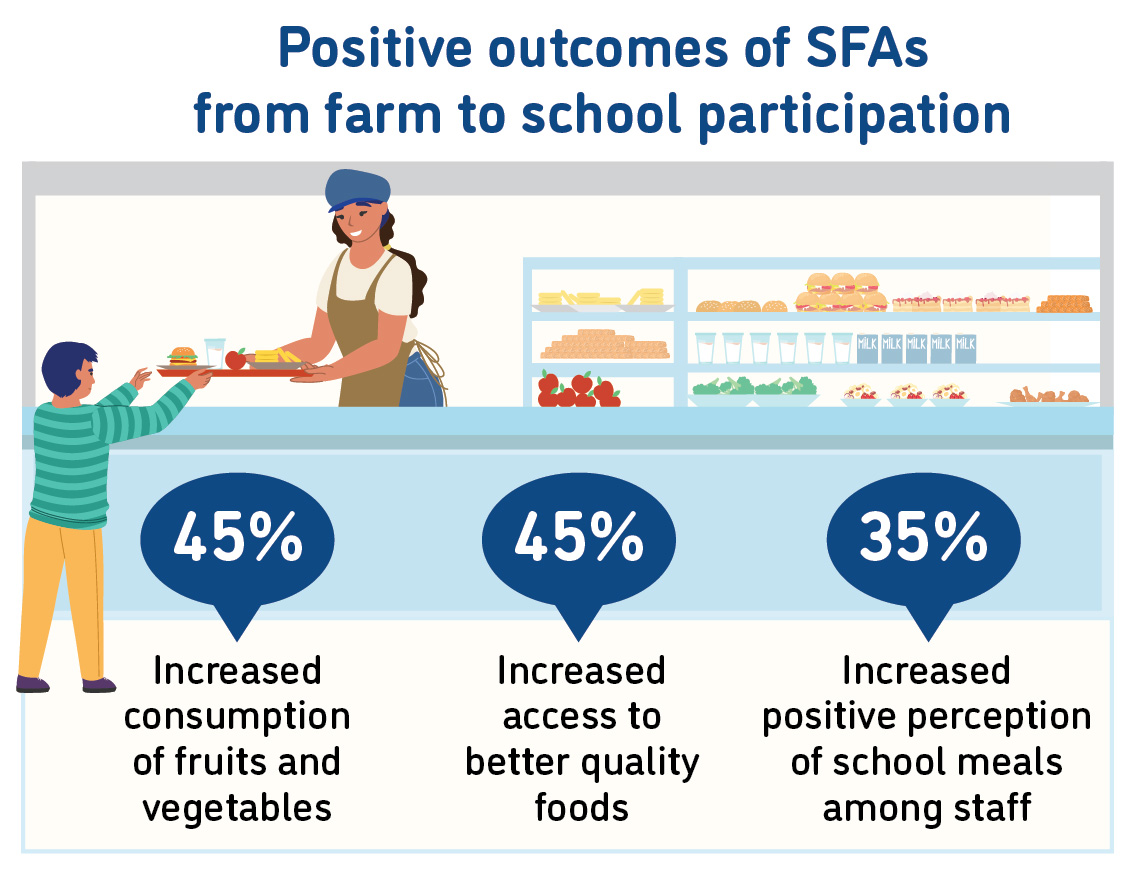
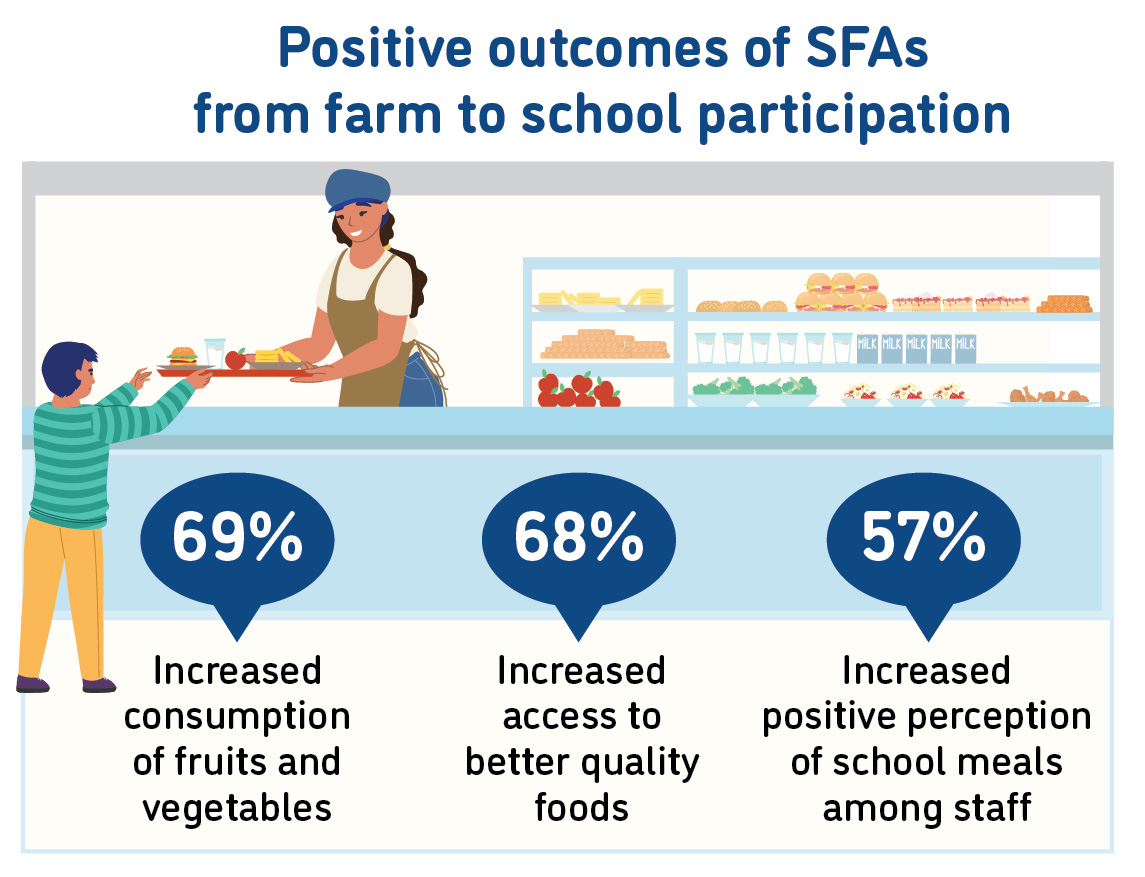
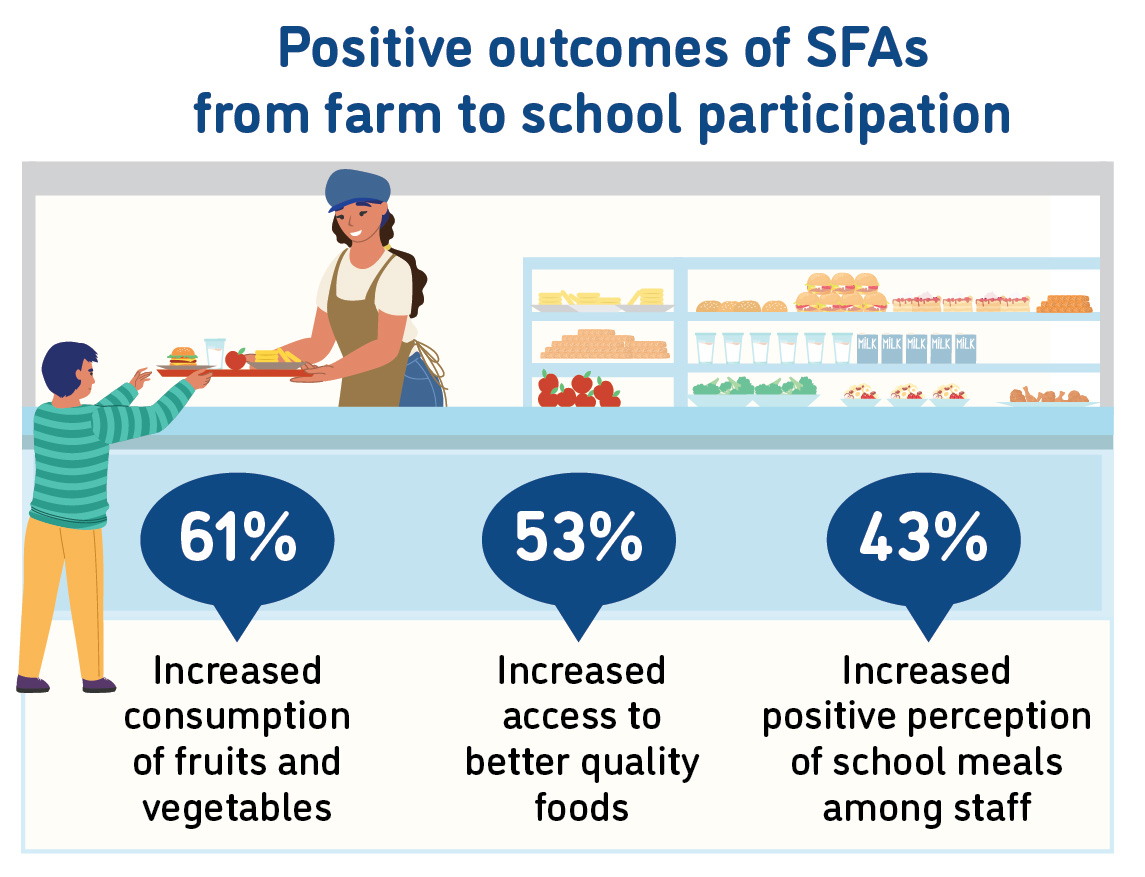
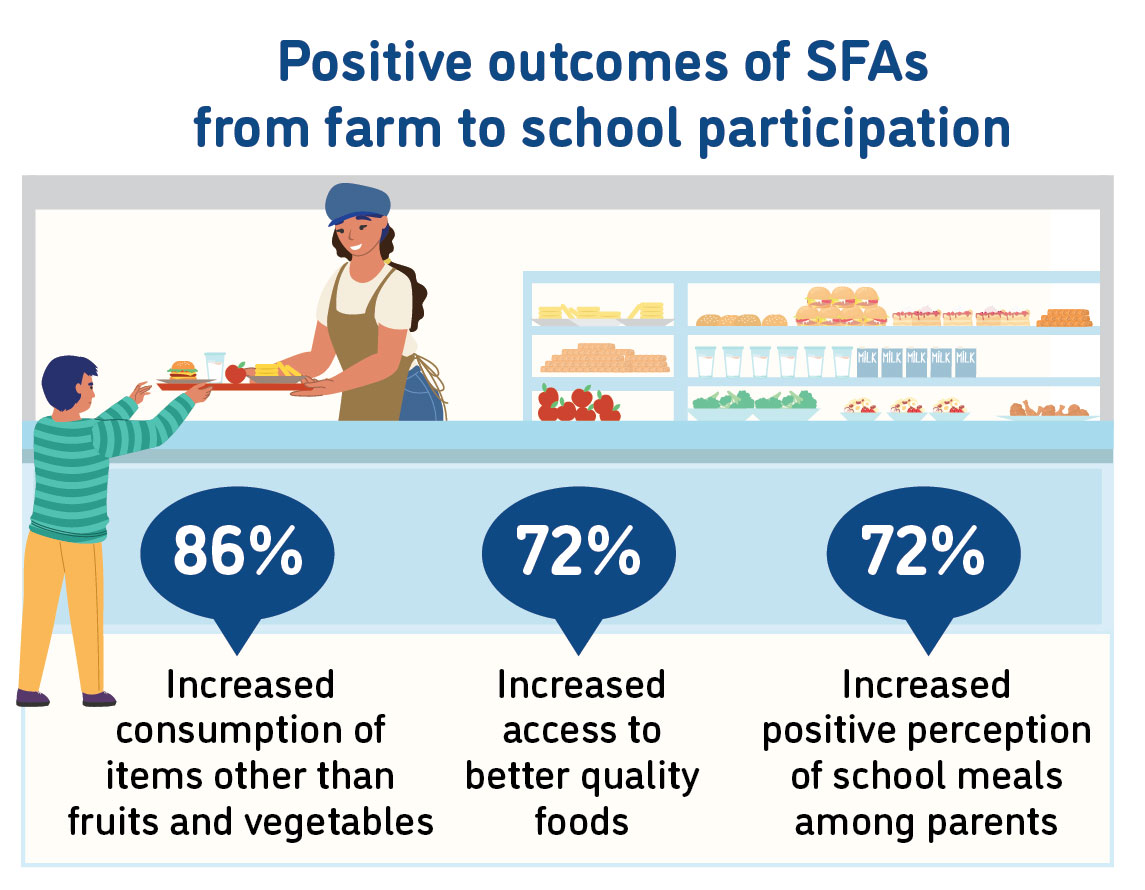
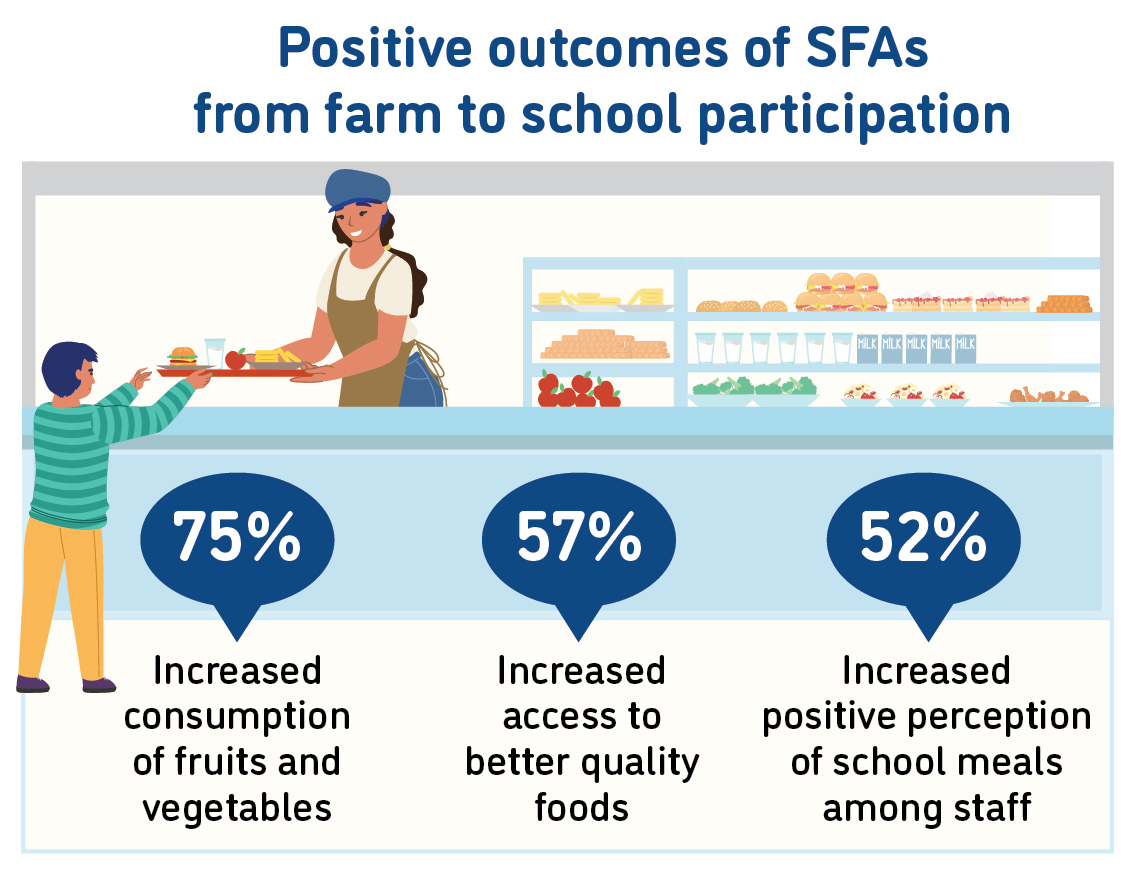
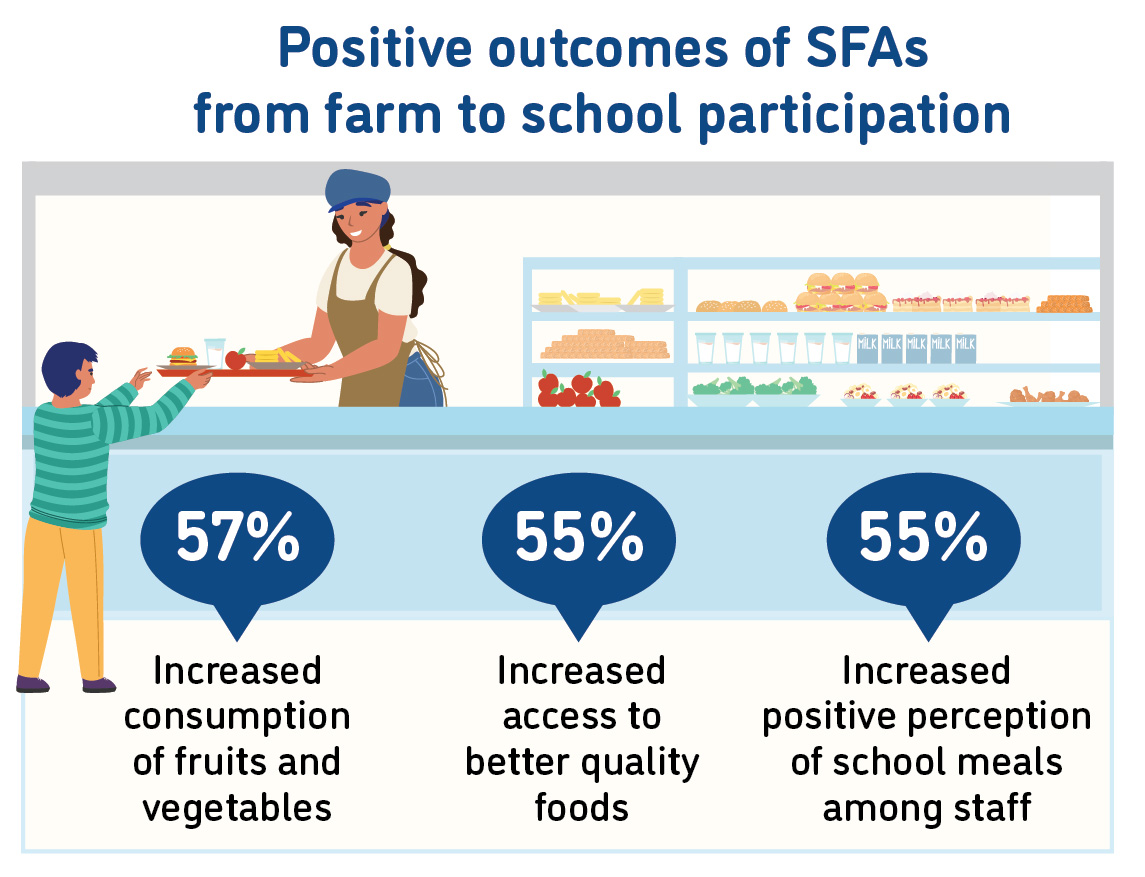
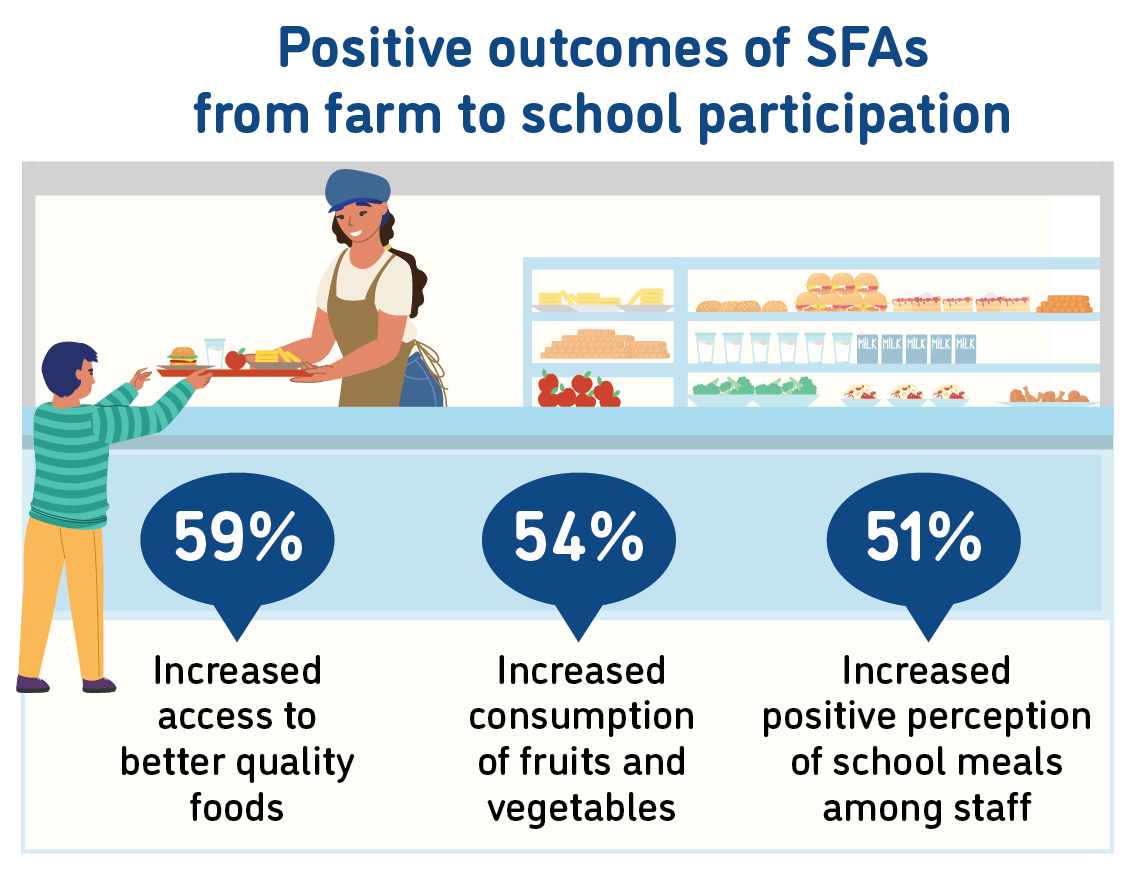
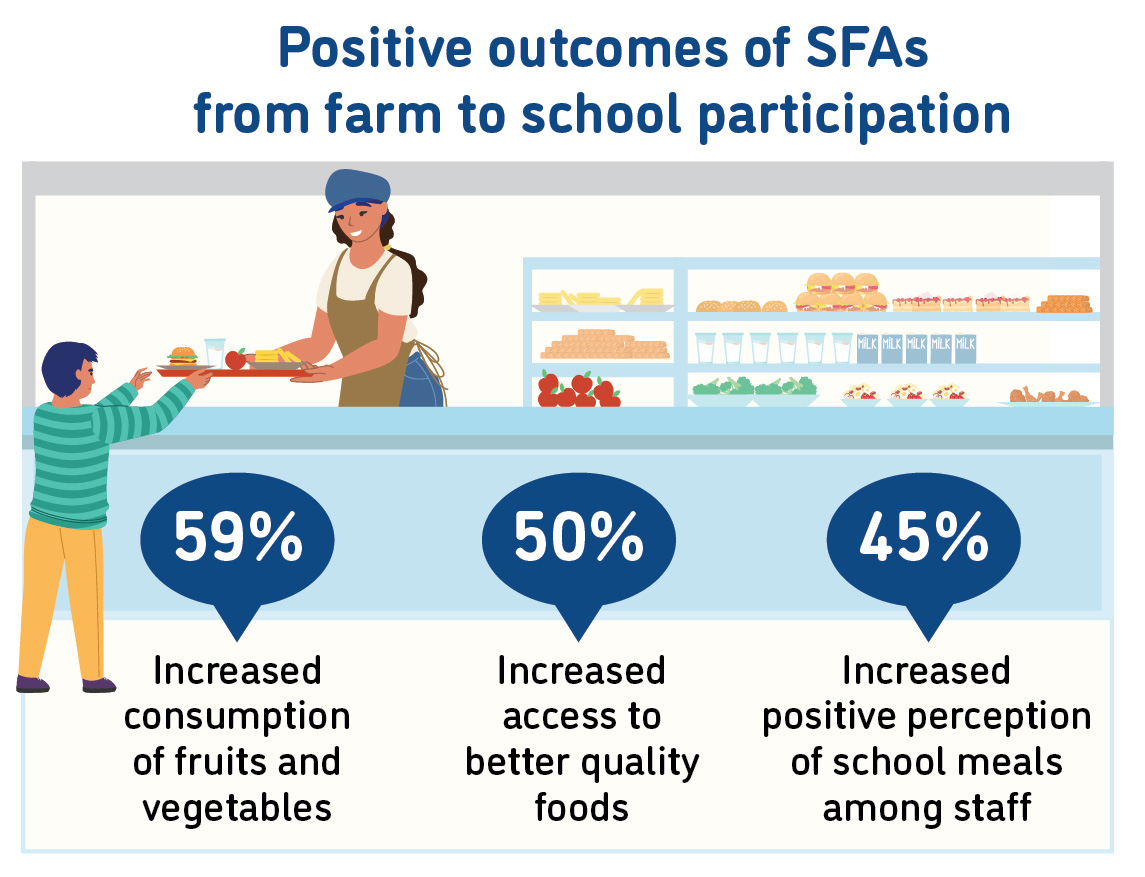
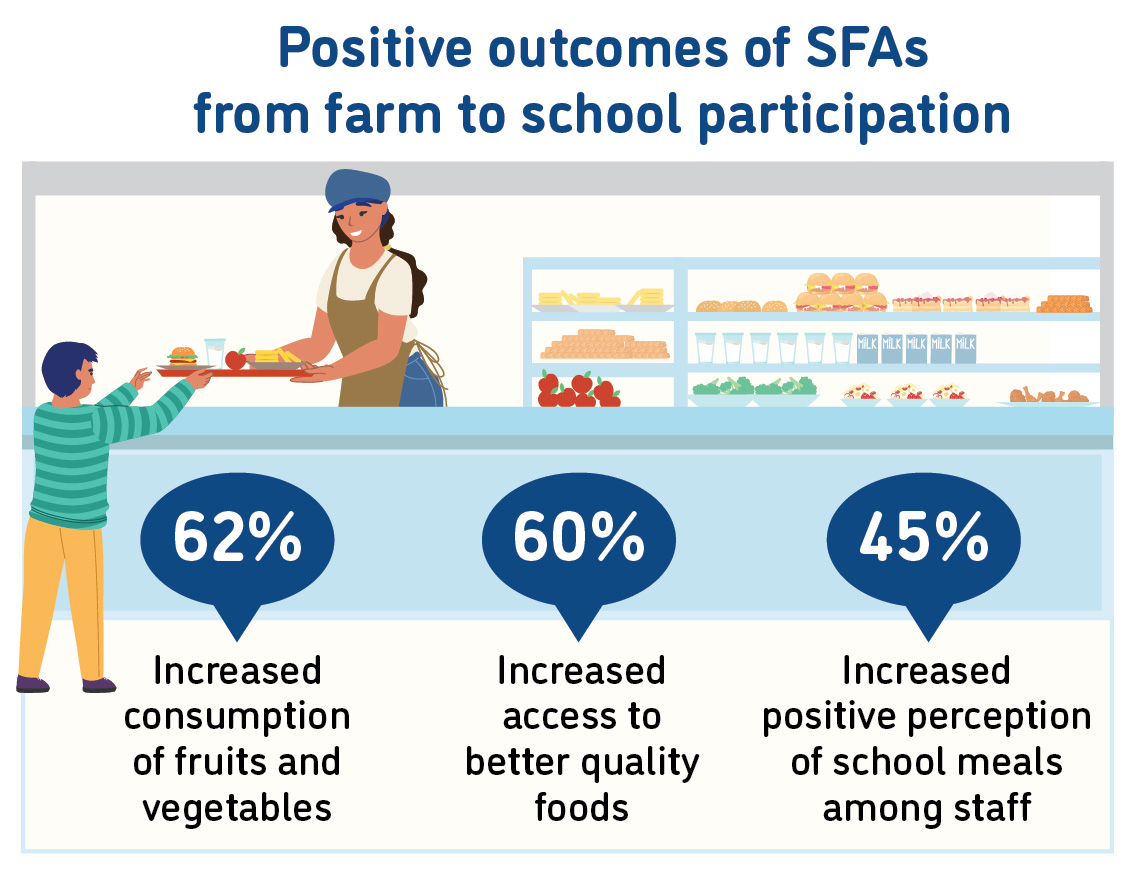
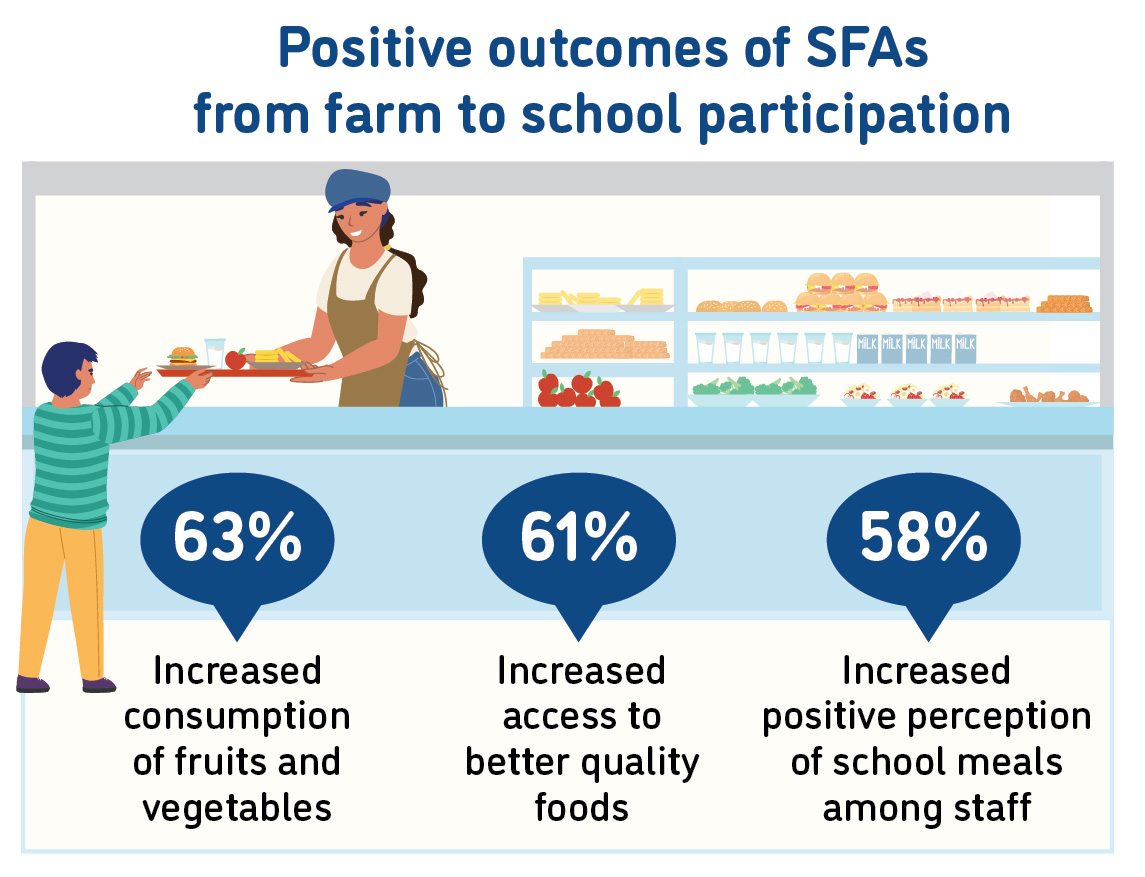
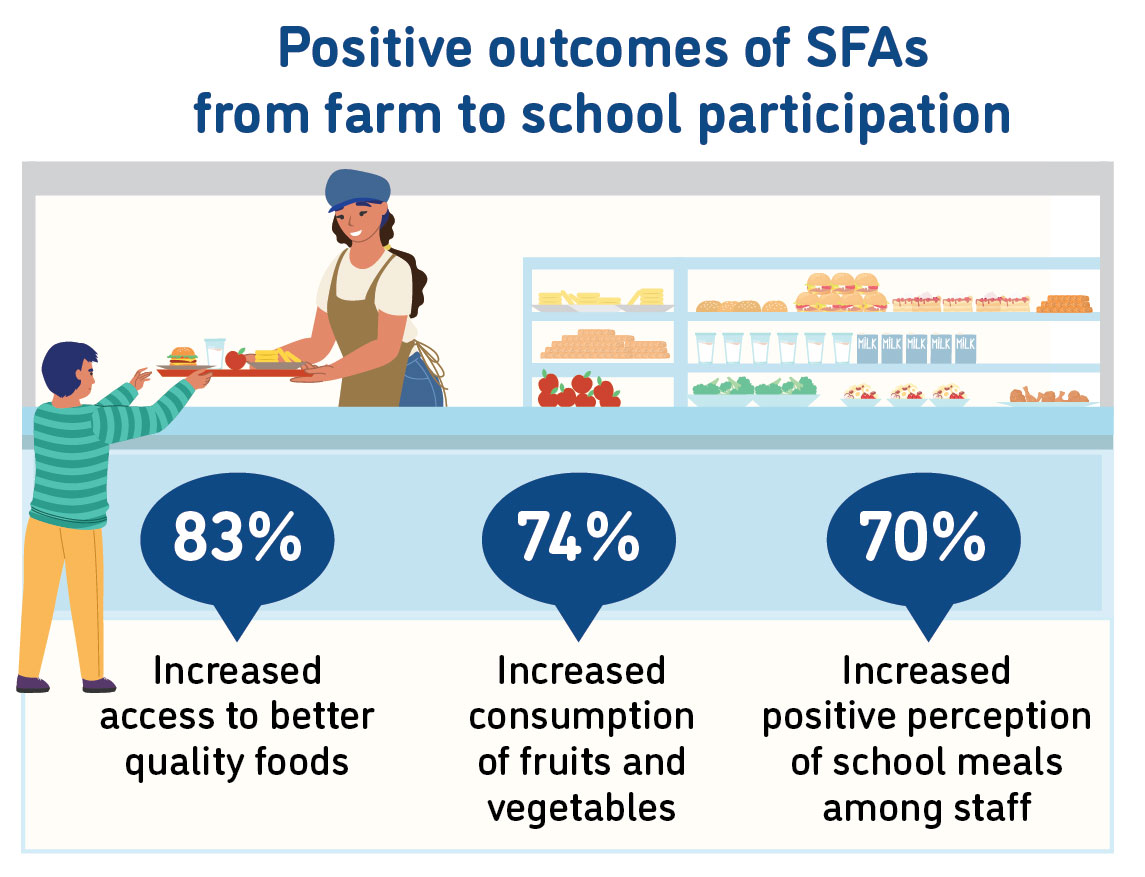
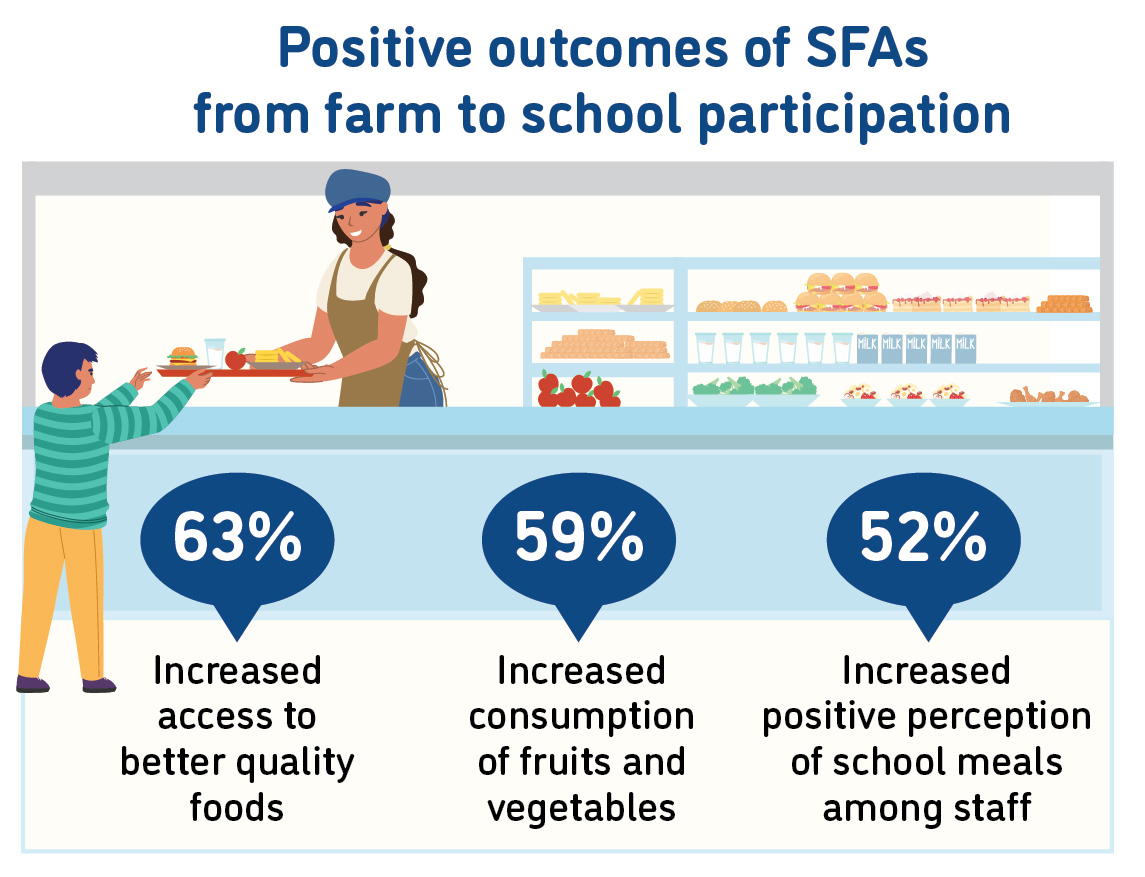
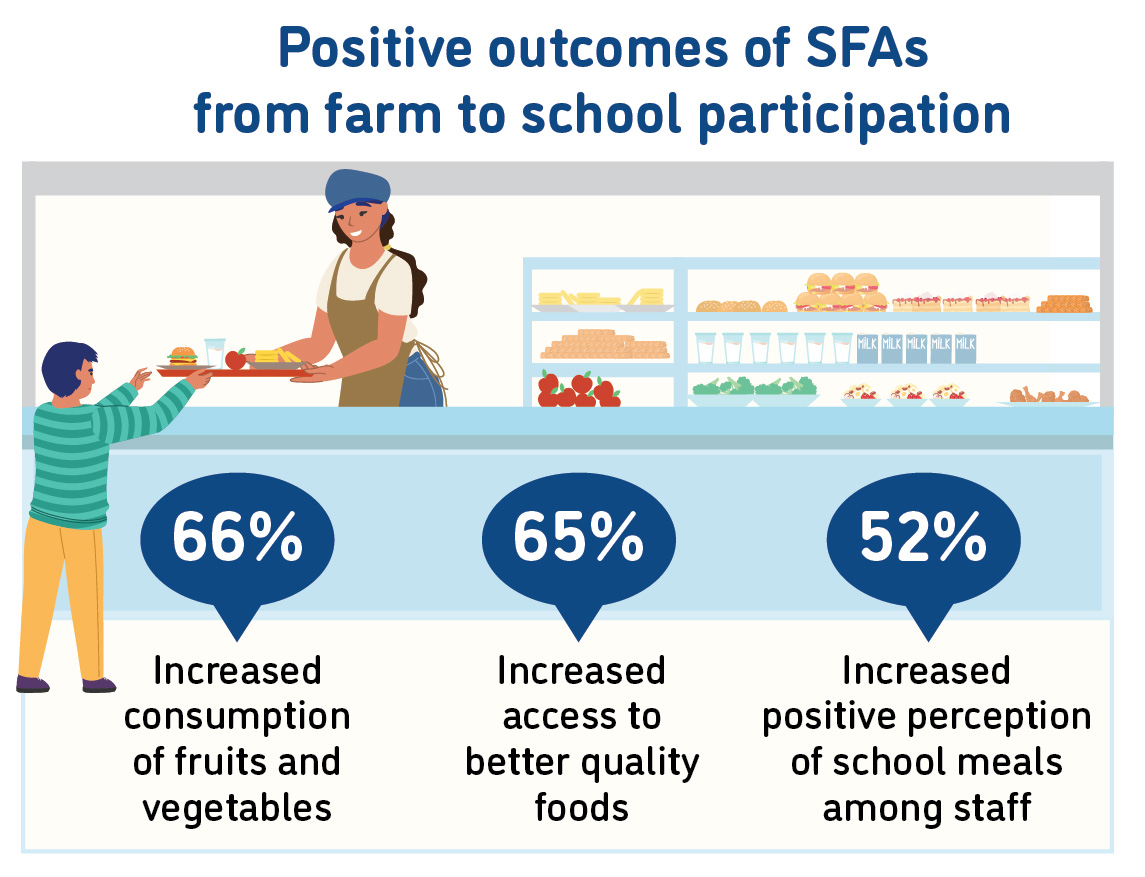
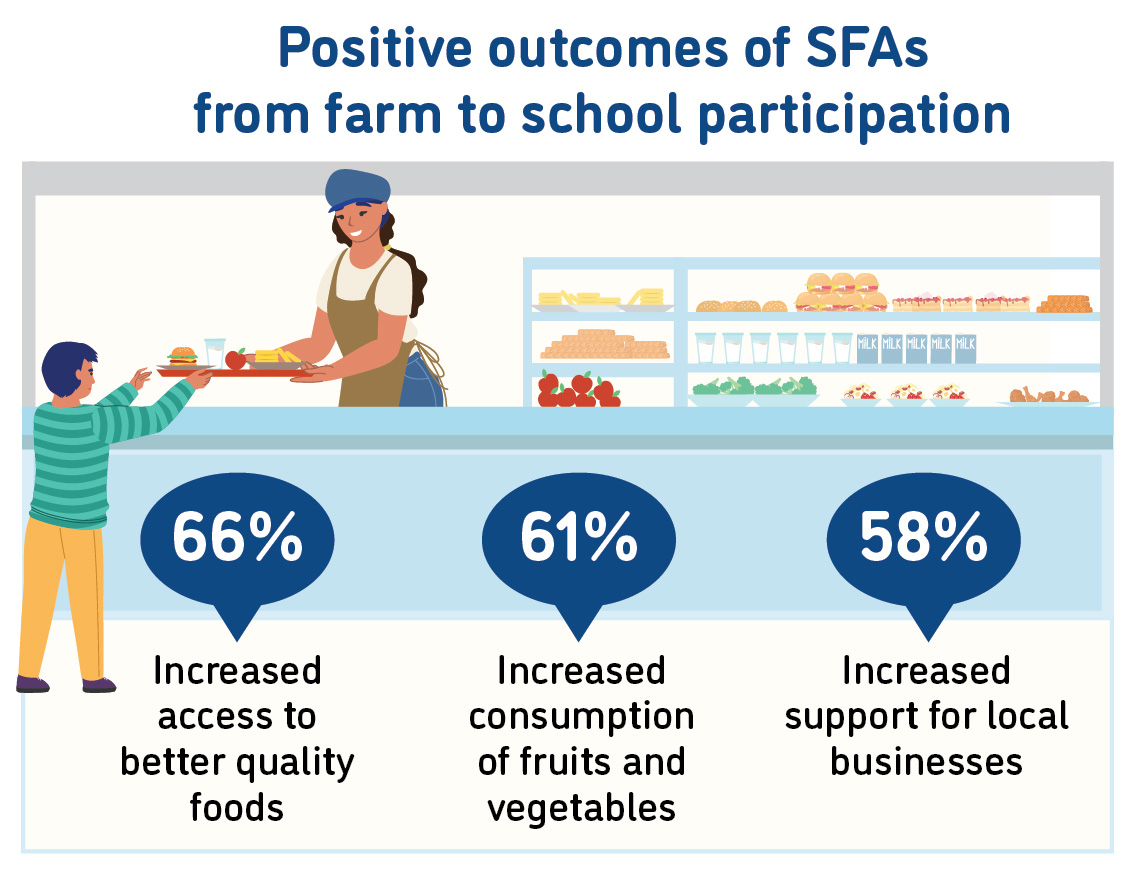
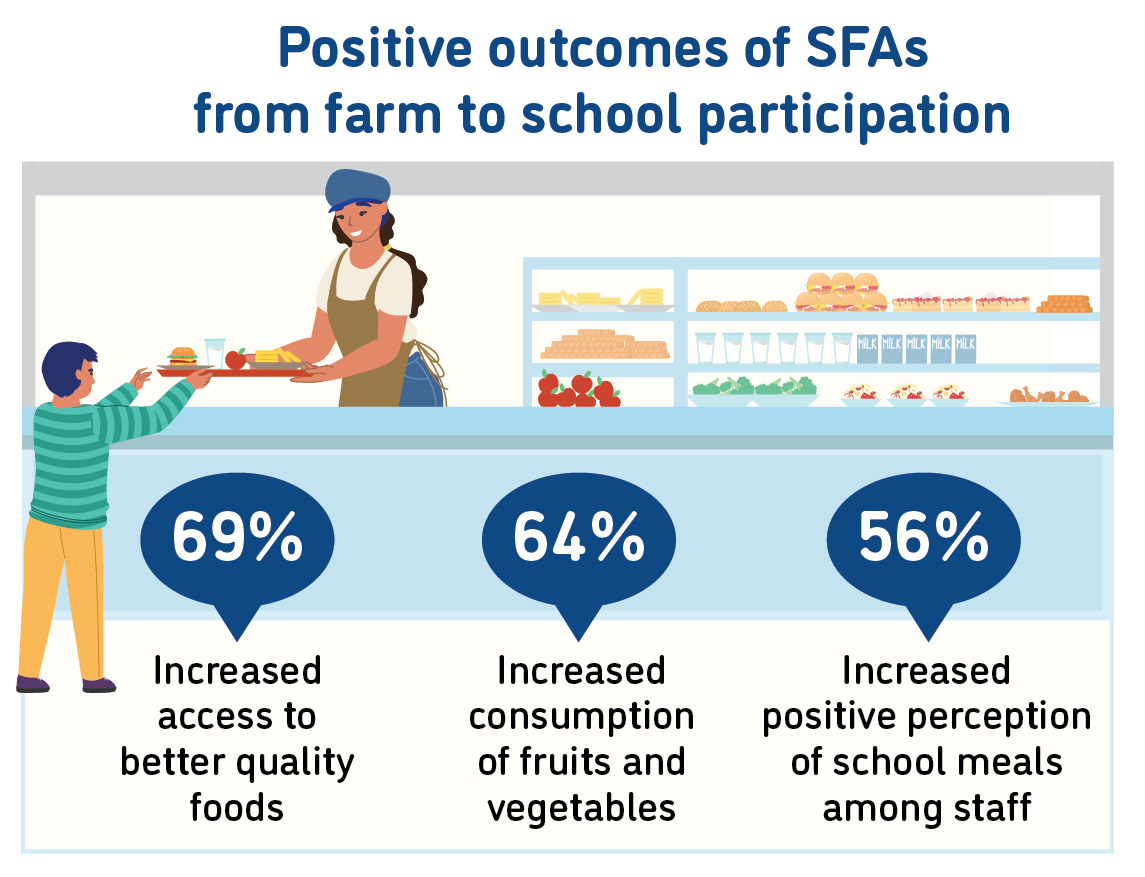
- A variety of positive outcomes were reported by SFAs that participated in farm to school, including an increase in consumption of fruits and vegetables in school meals (61 percent of participating SFAs), access to better quality foods (57 percent), and an increased positive perception of the school food program among educators (49 percent).
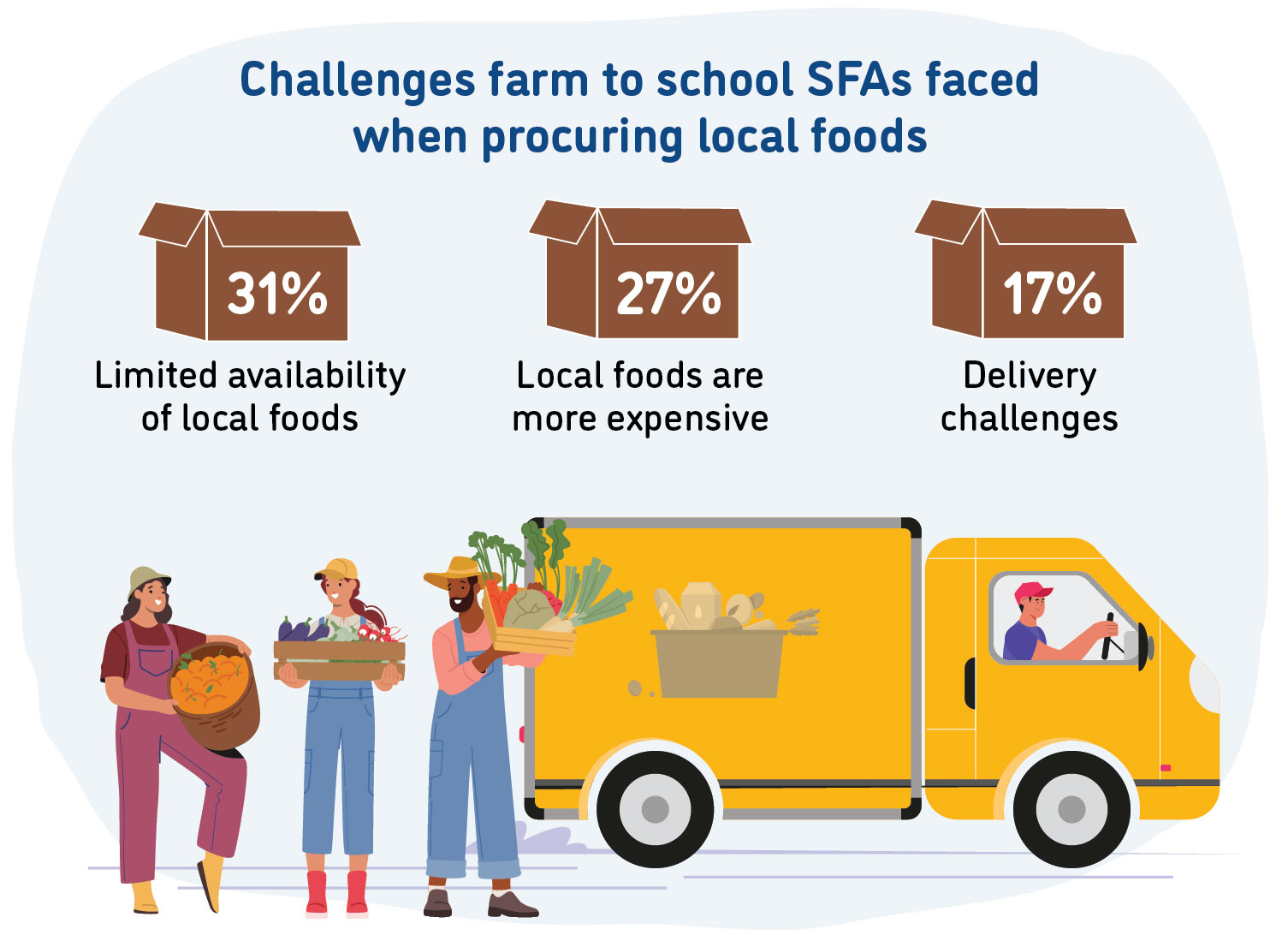
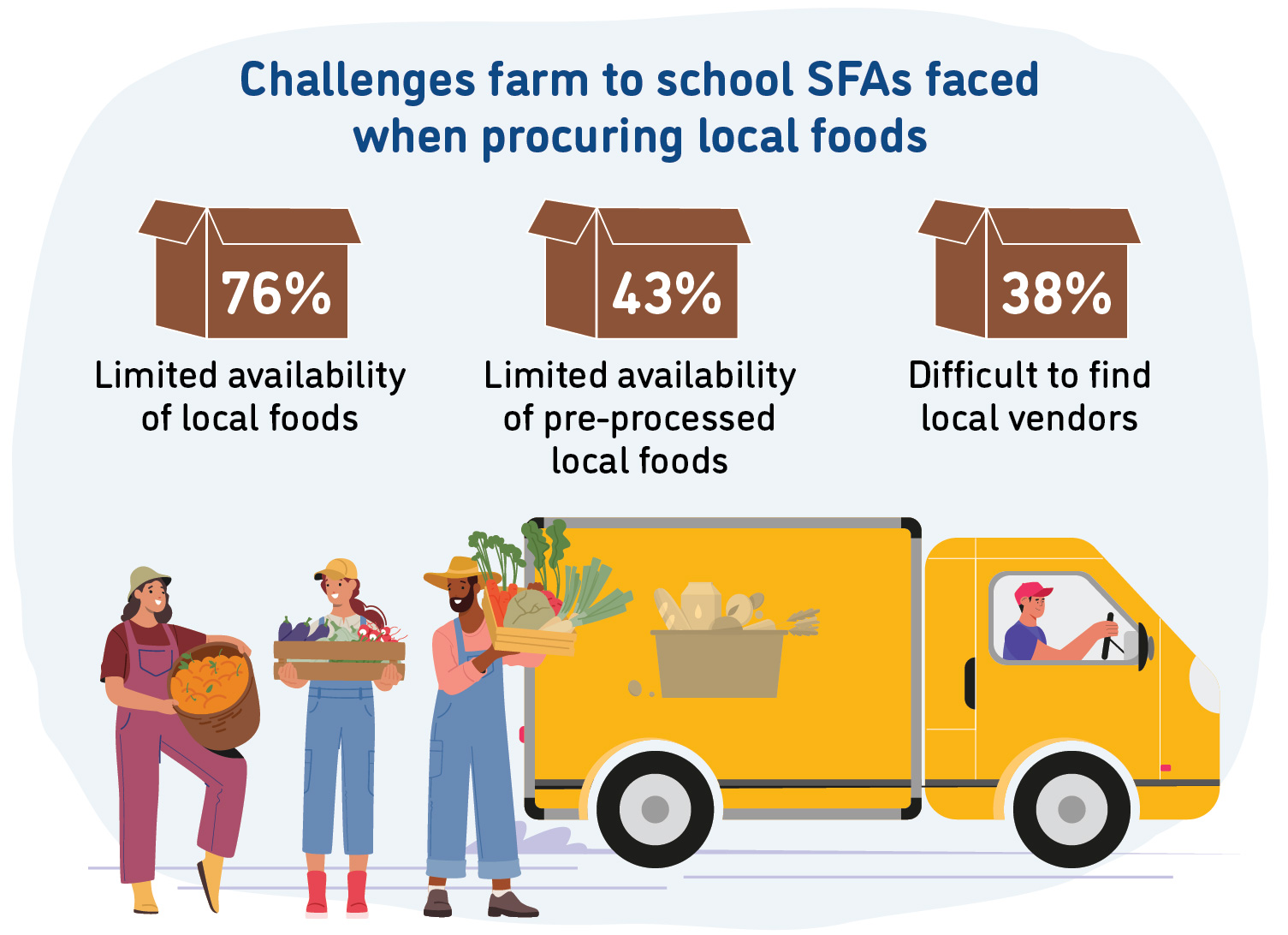
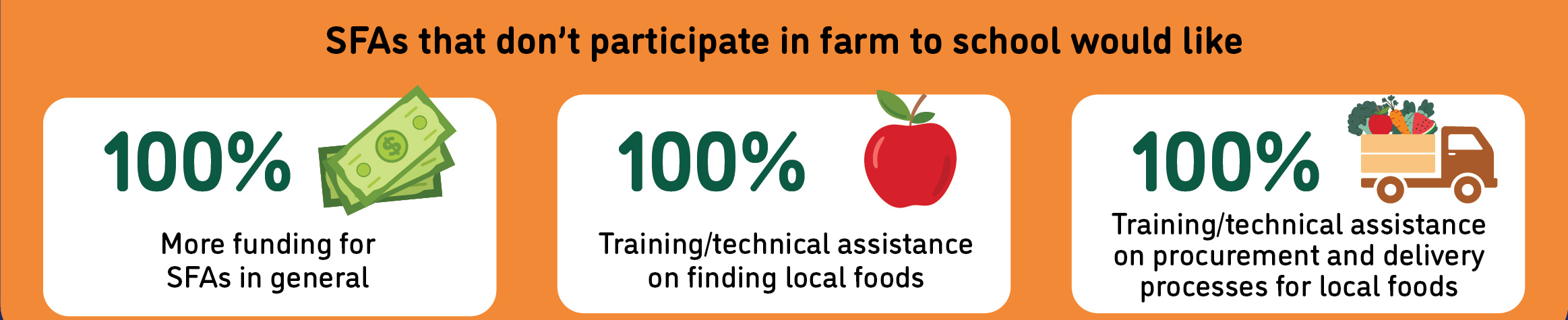
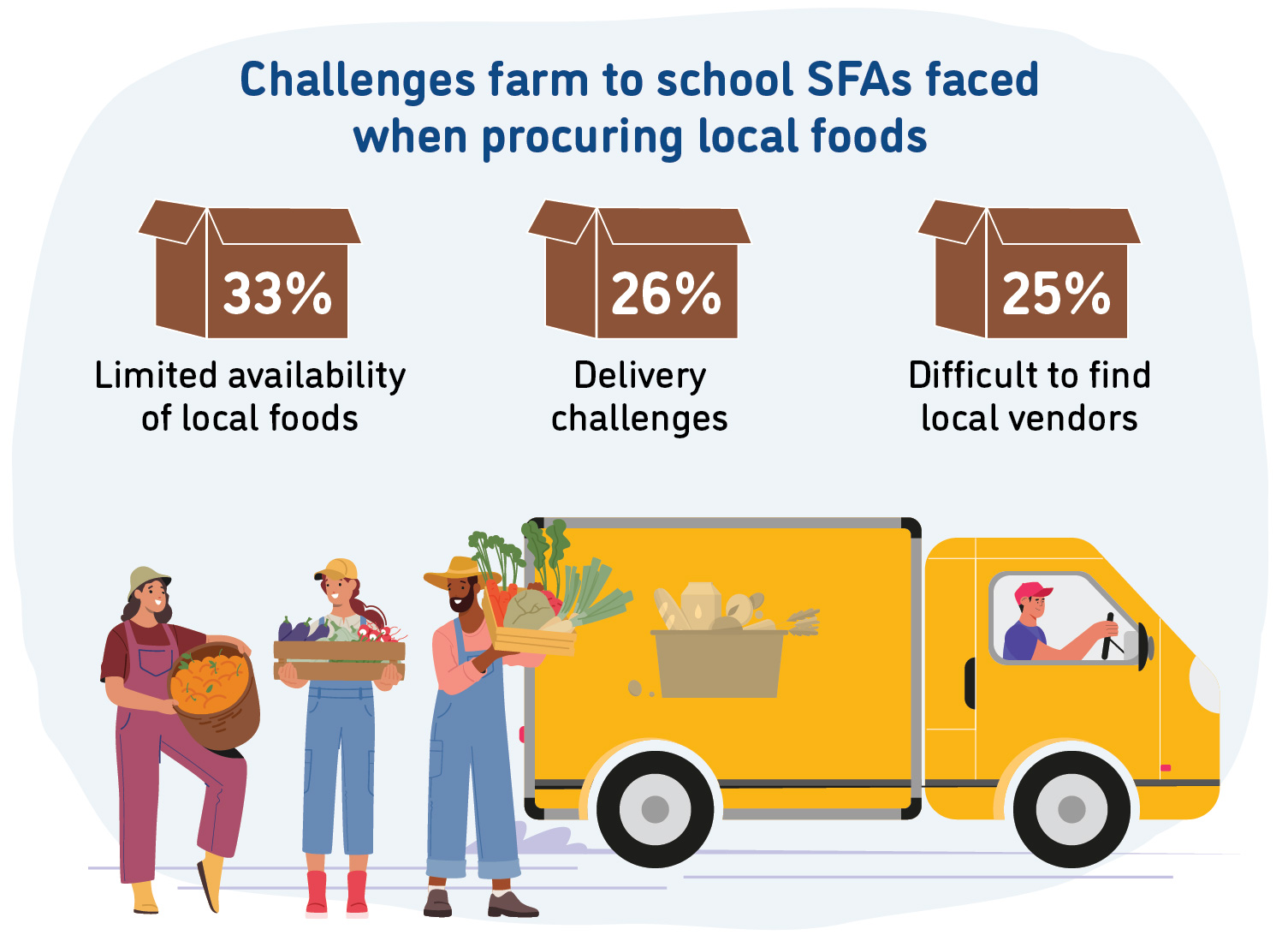
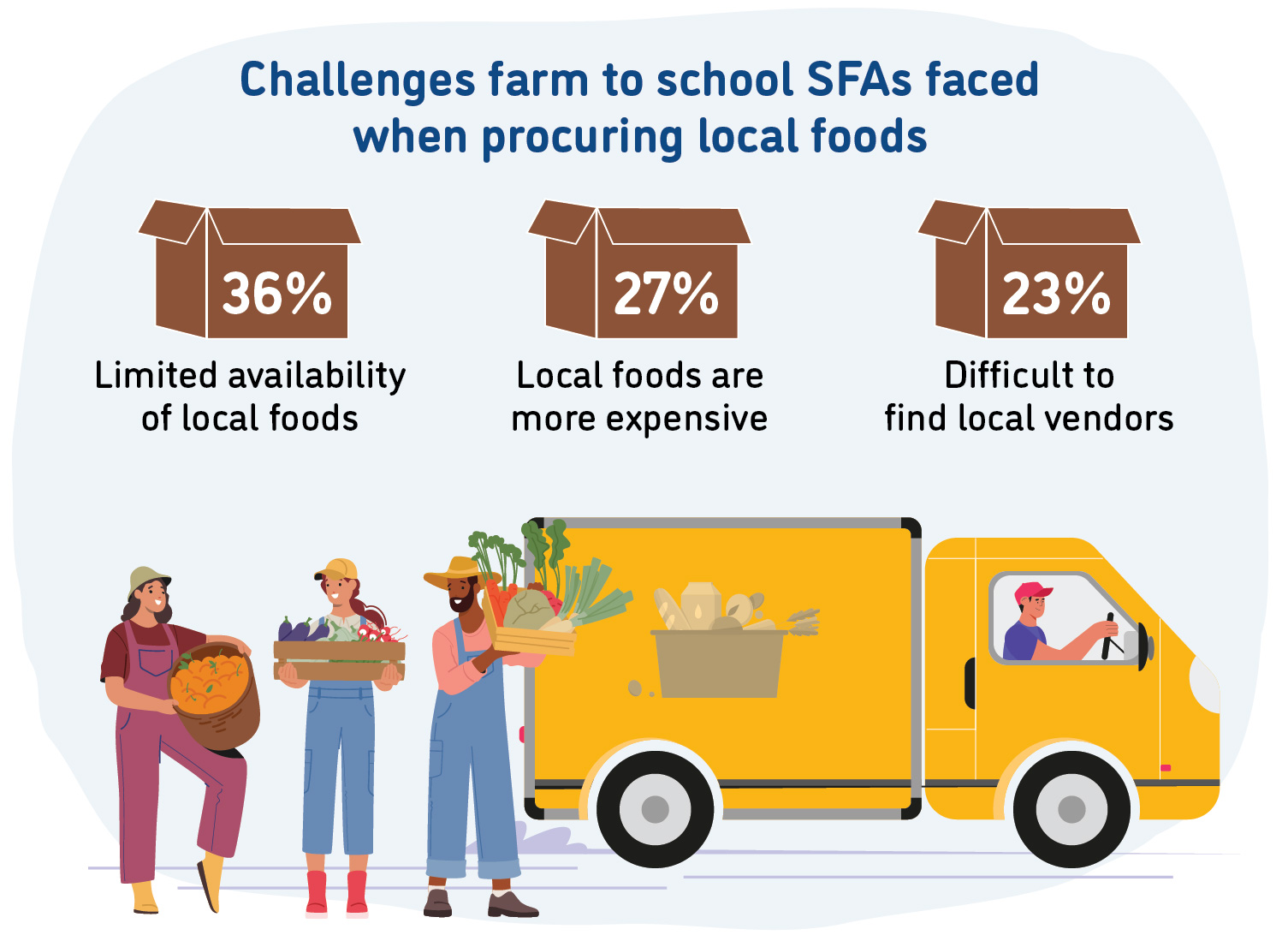
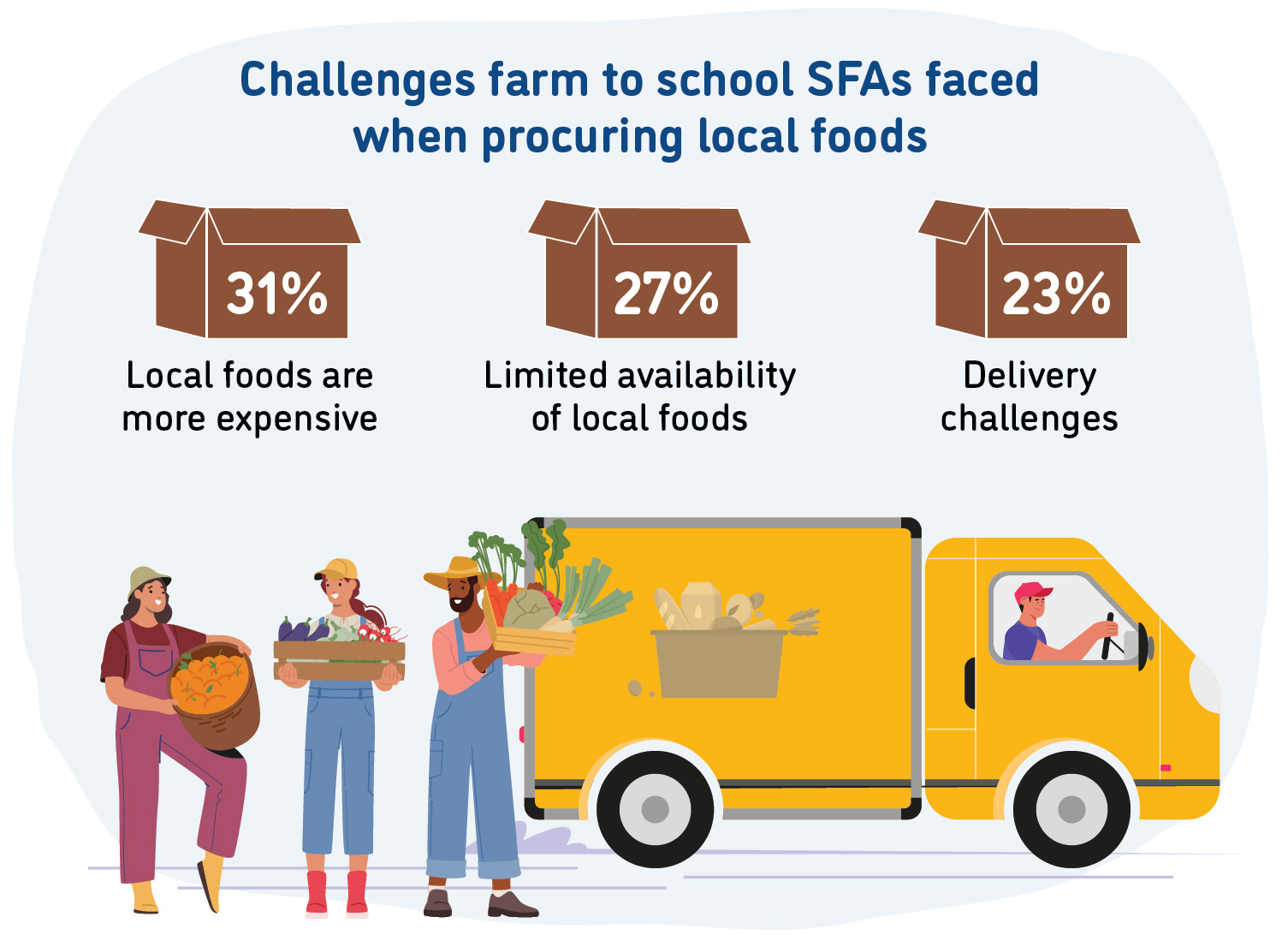
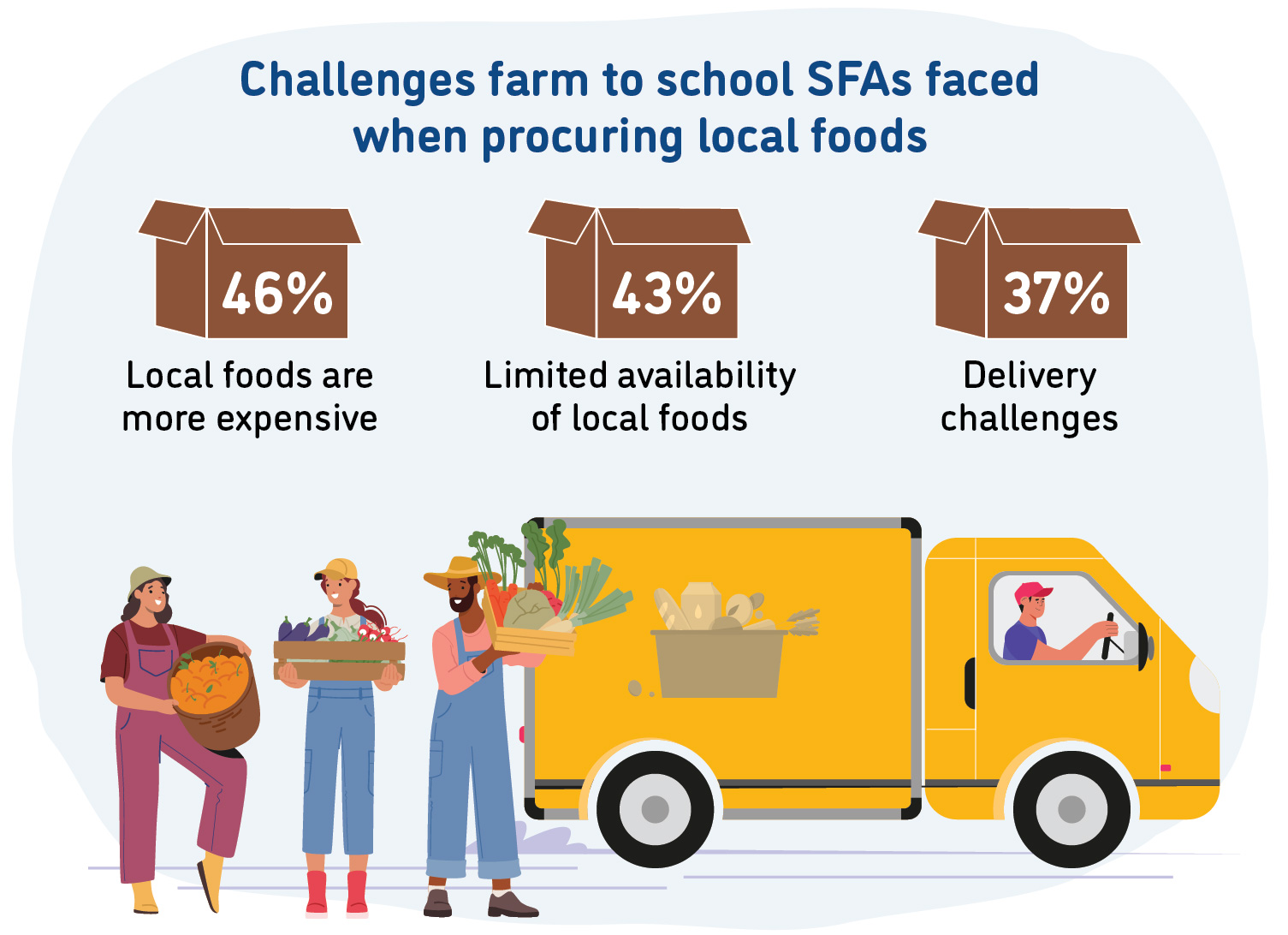
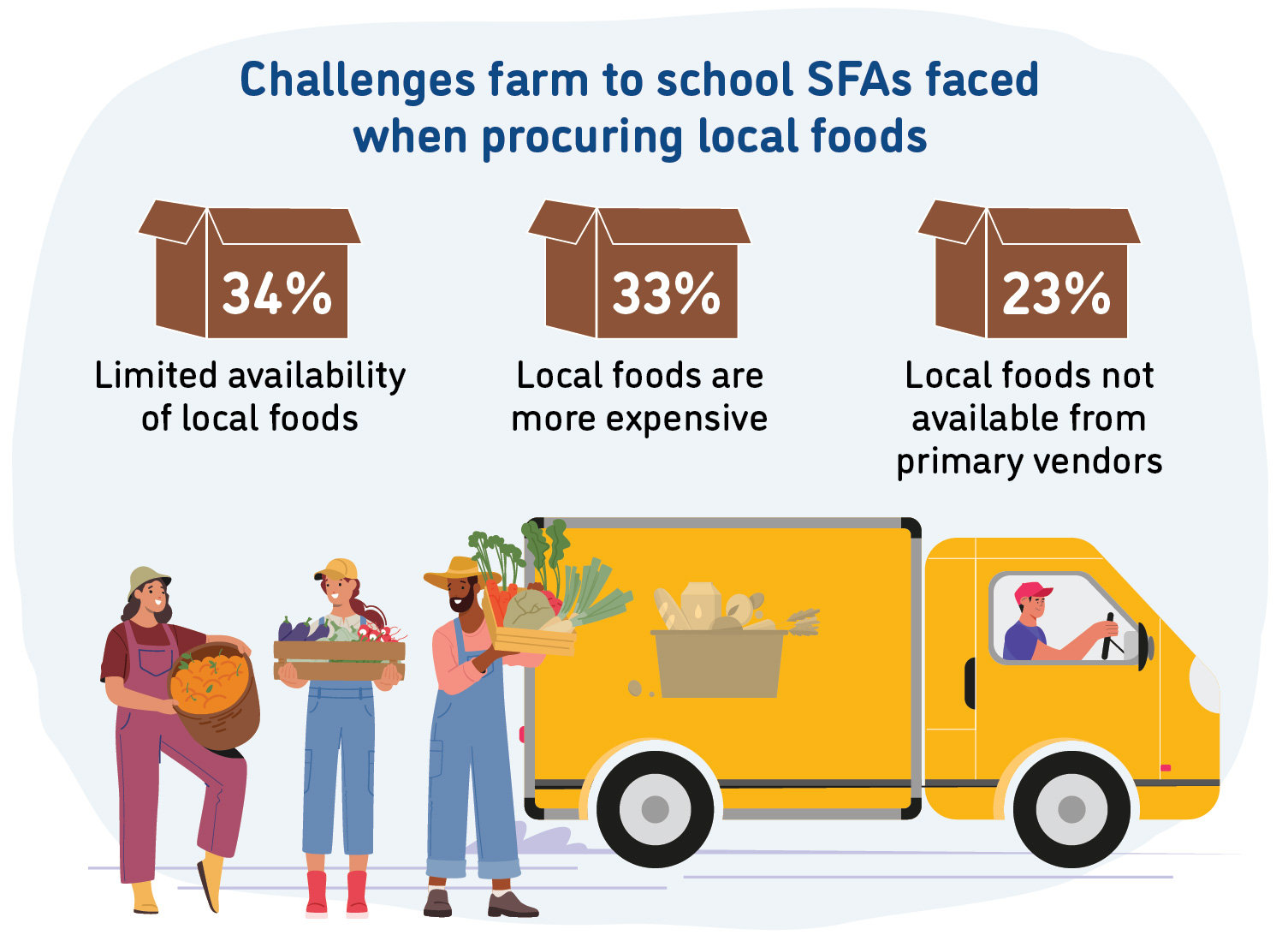
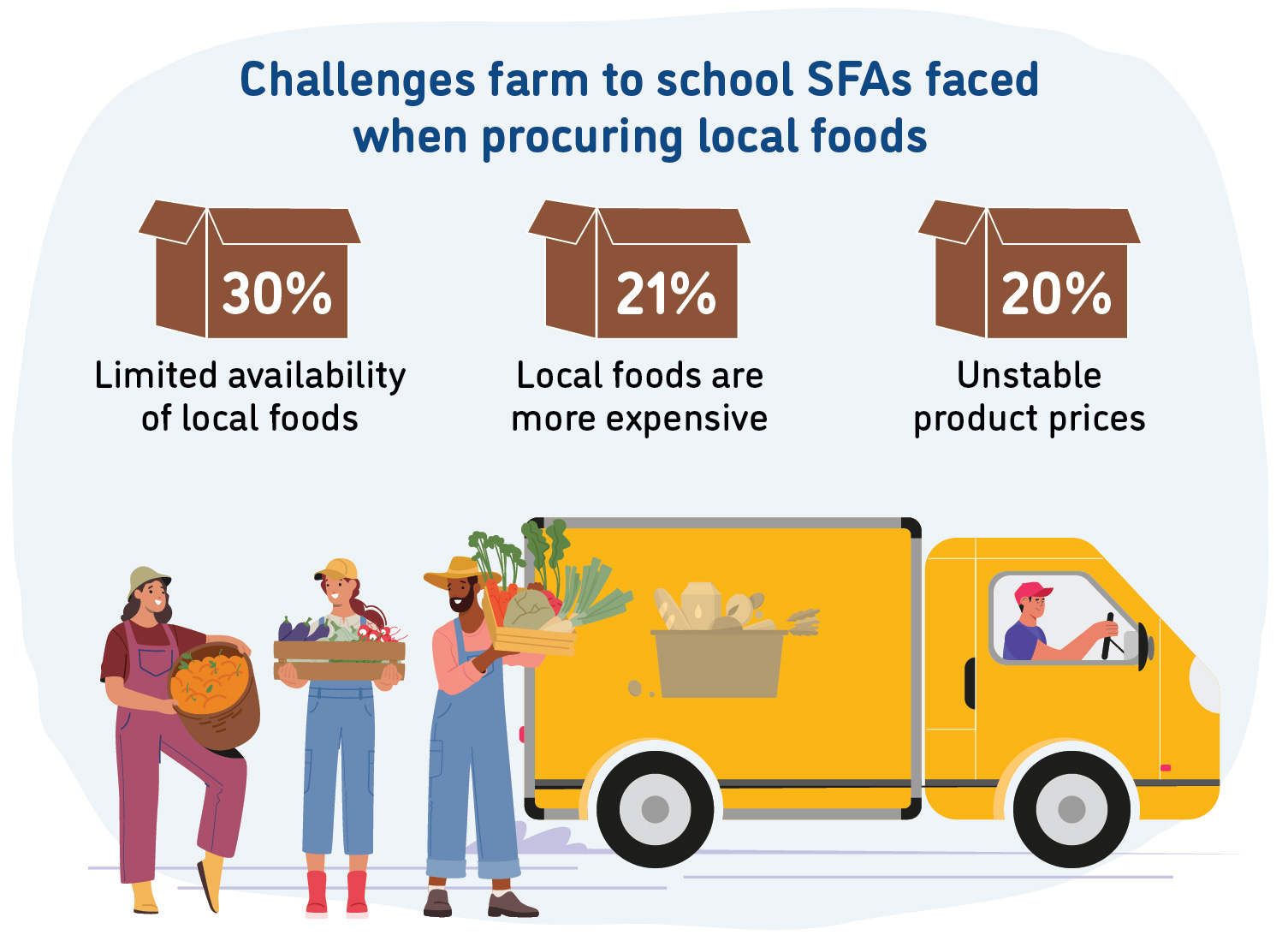
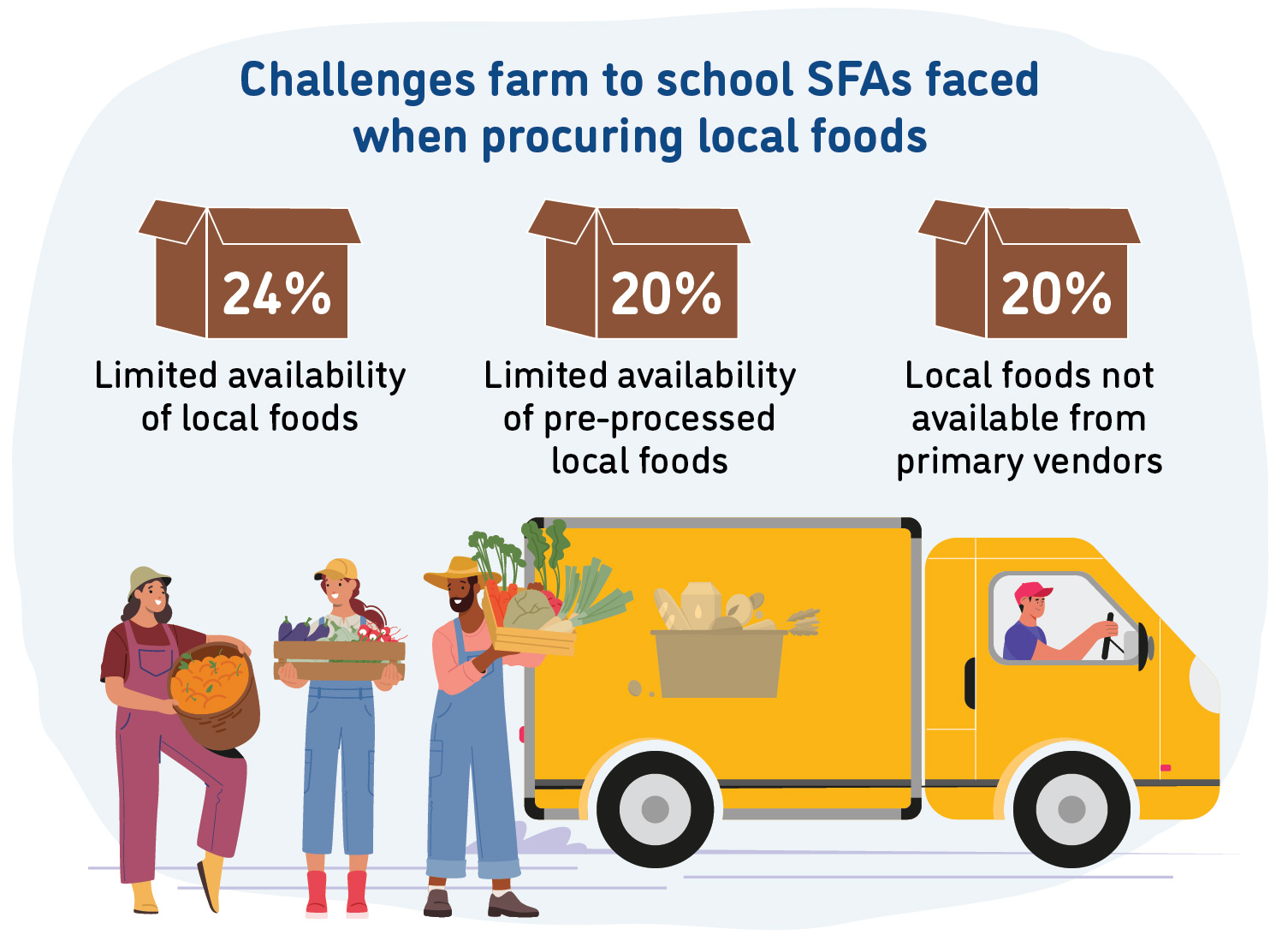
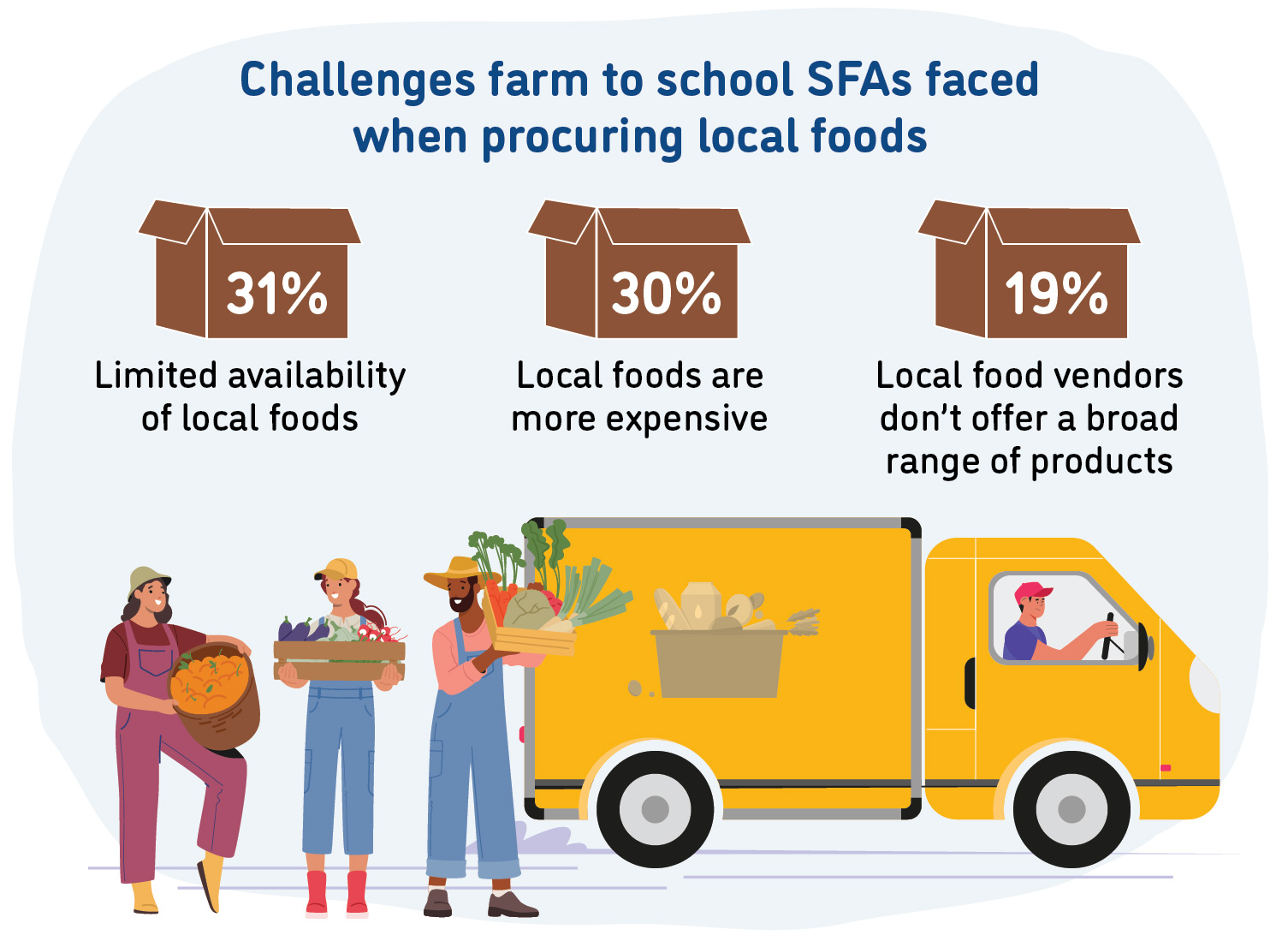
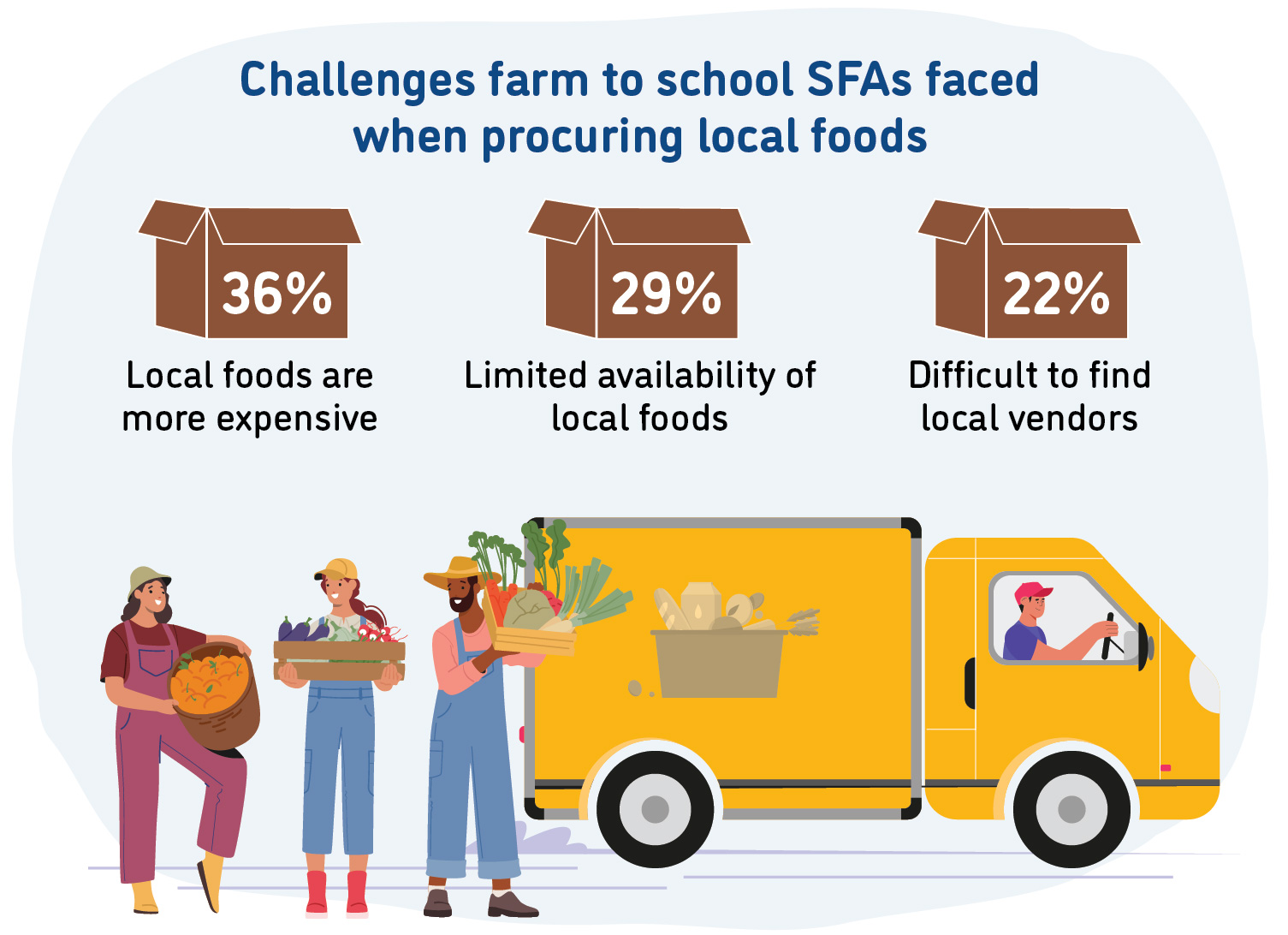
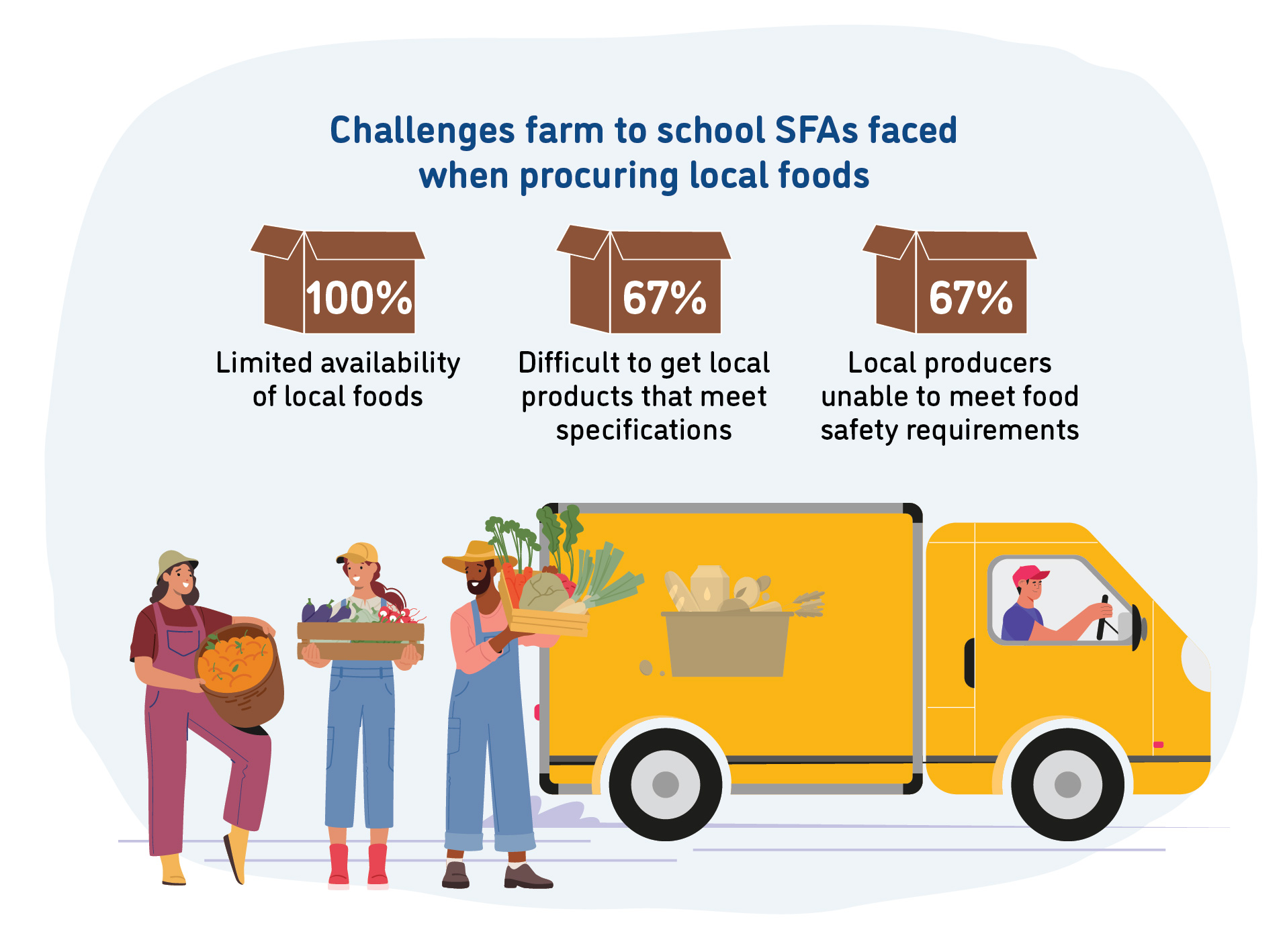
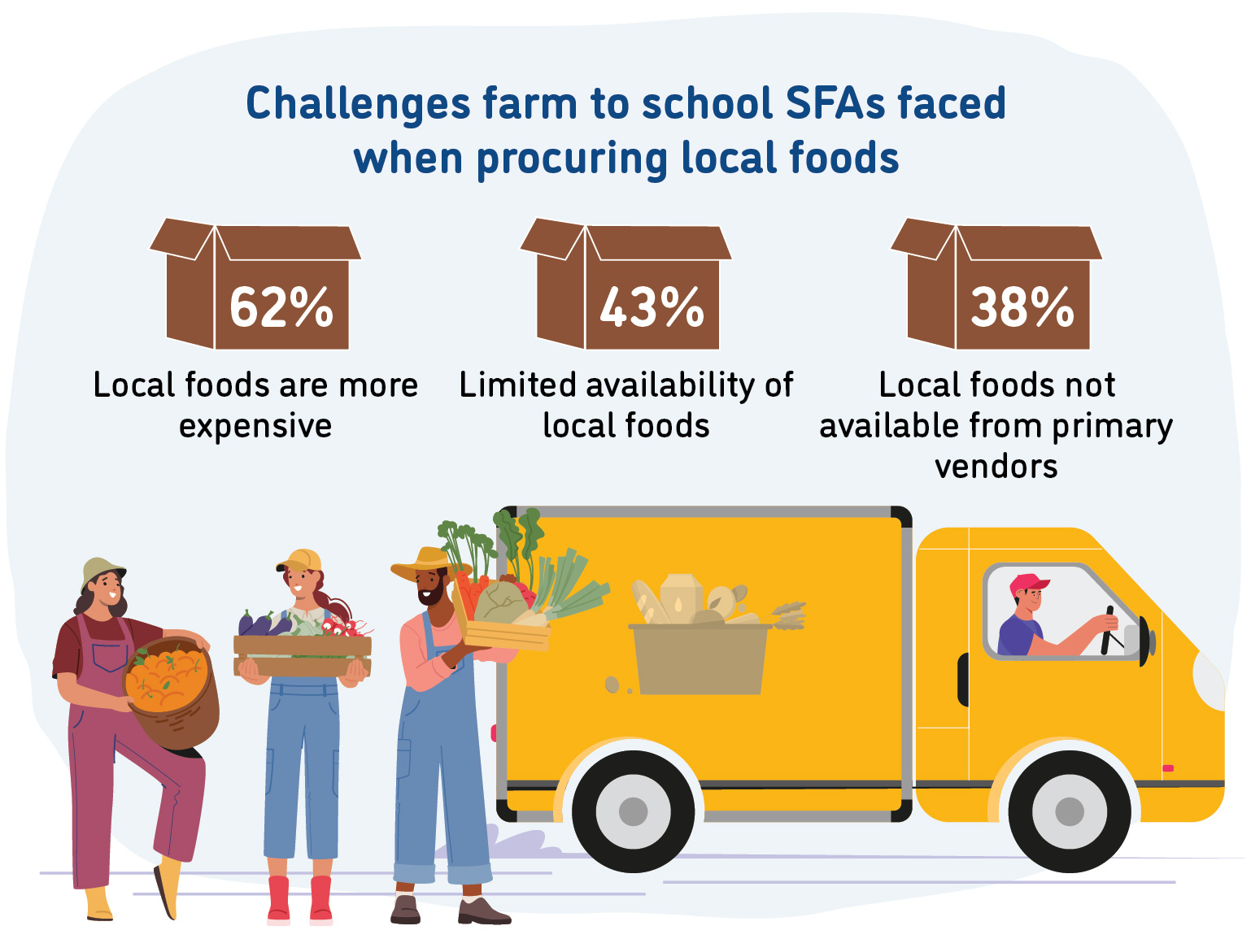
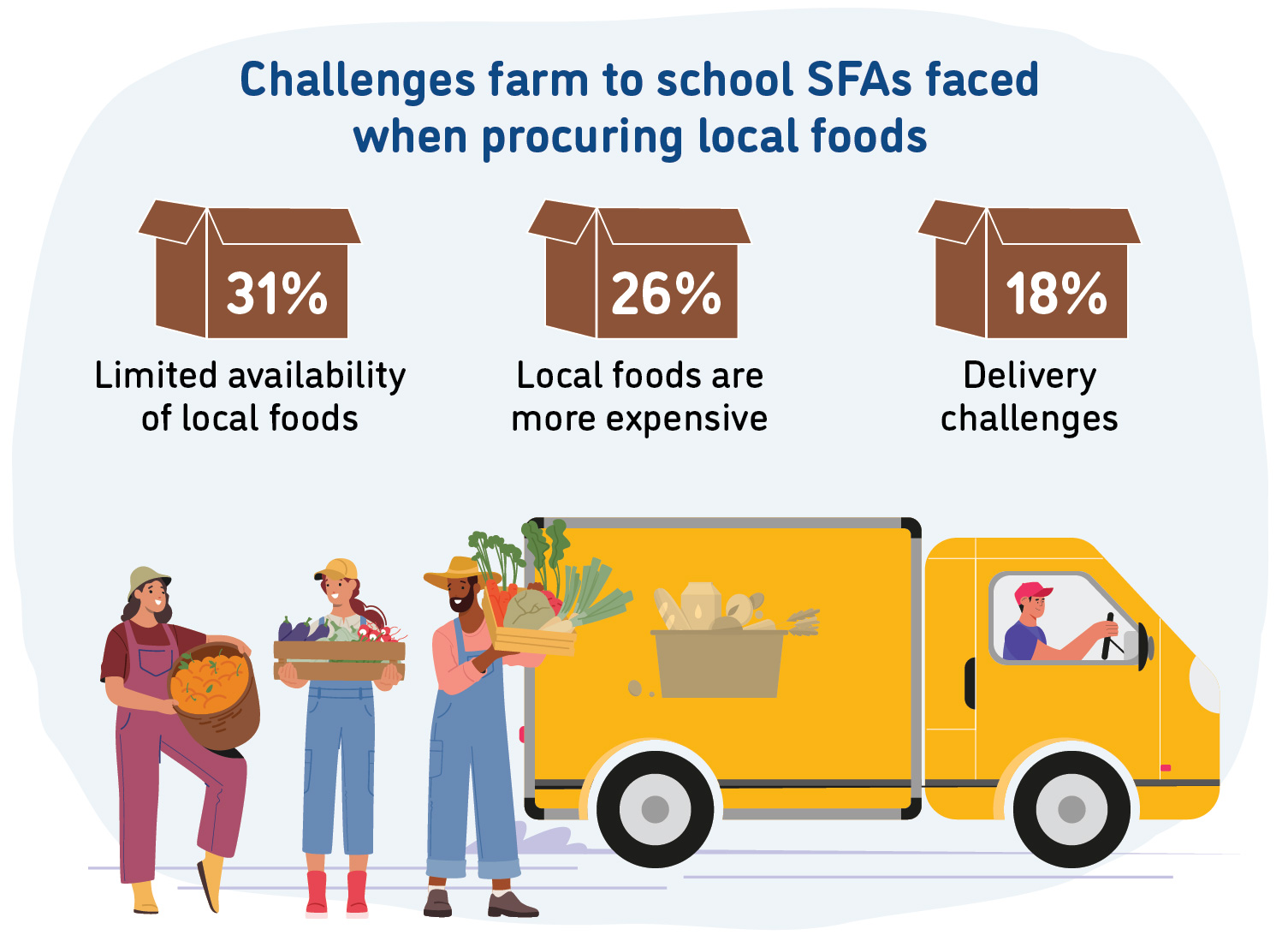
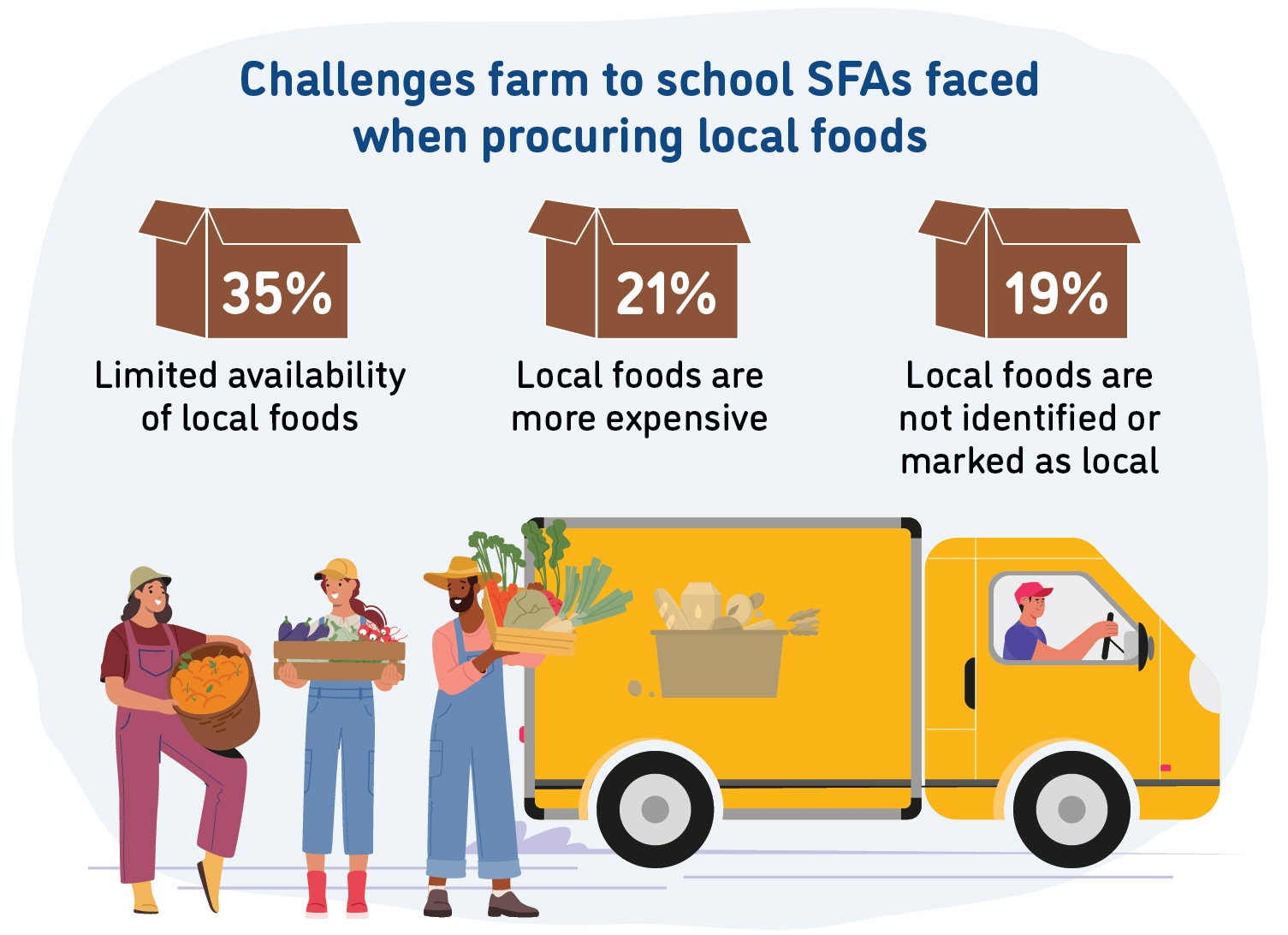
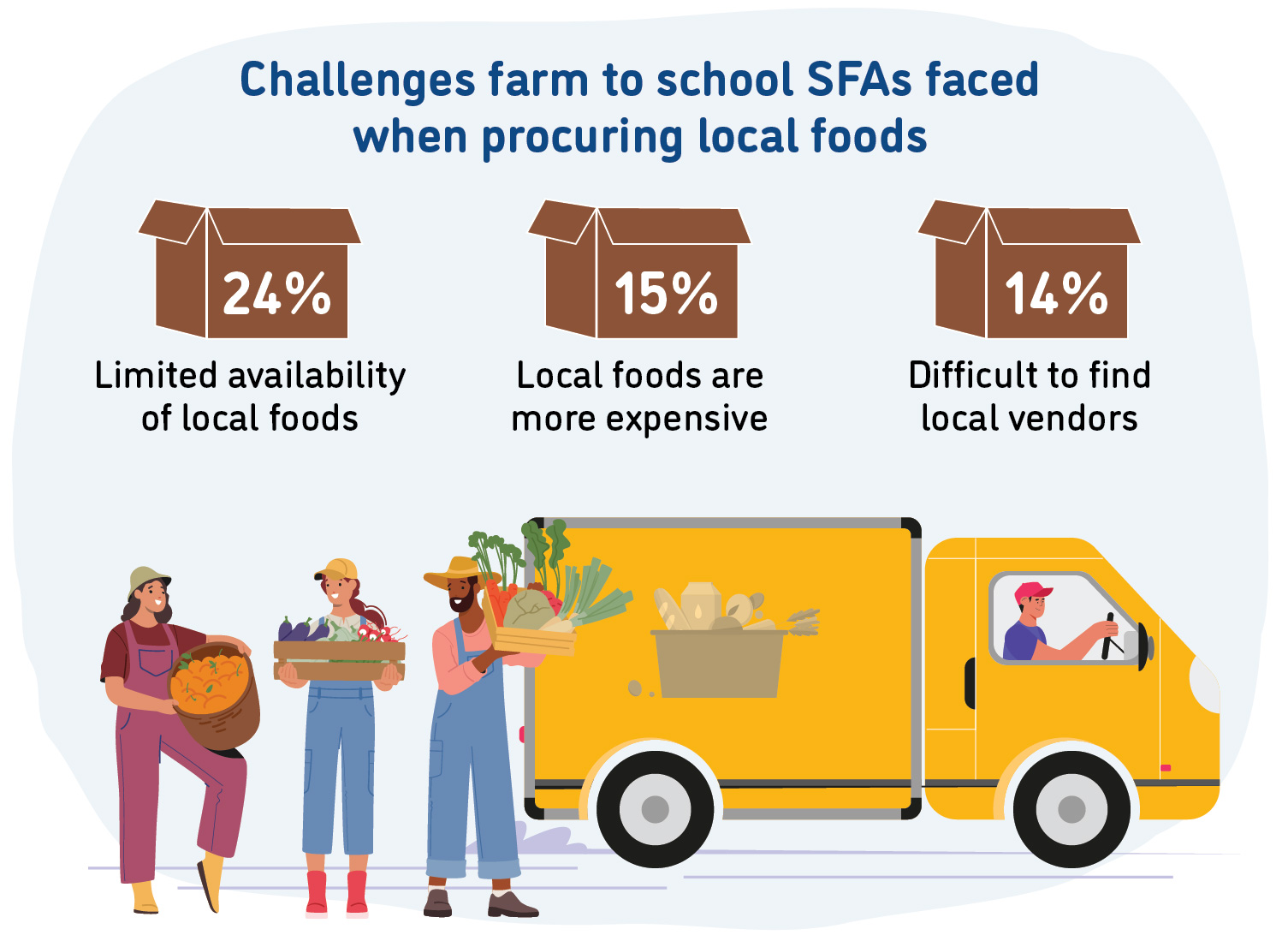
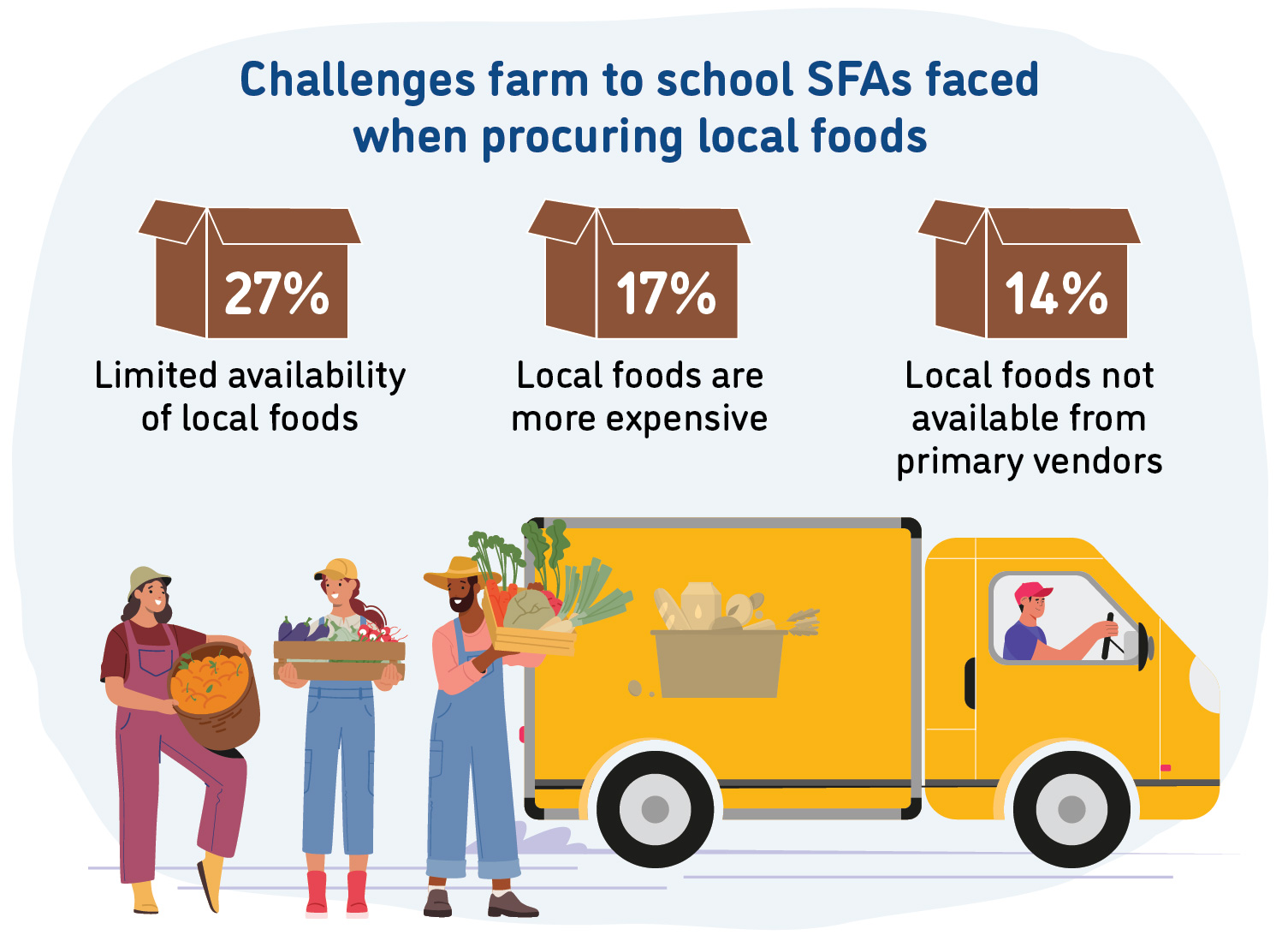
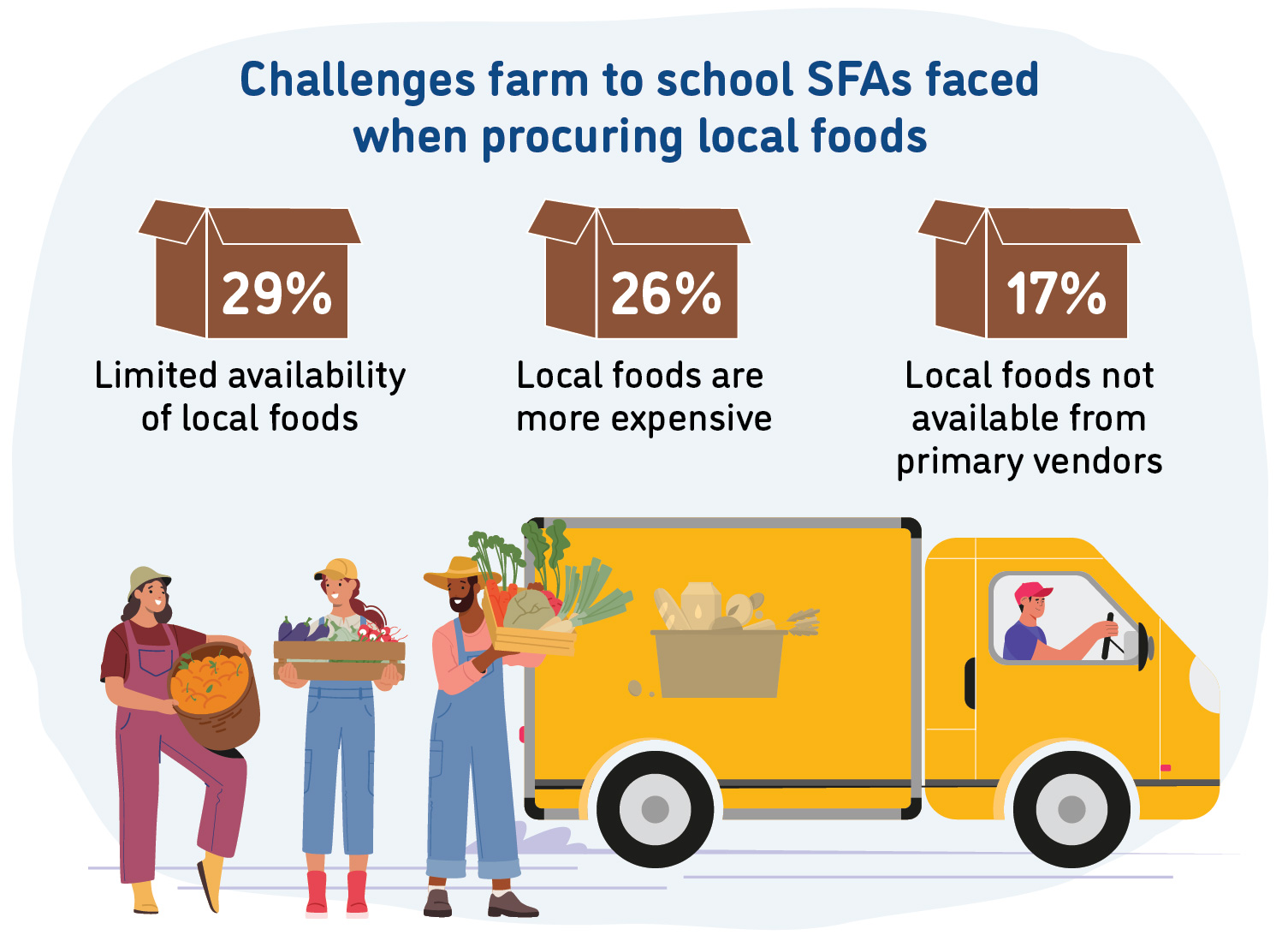
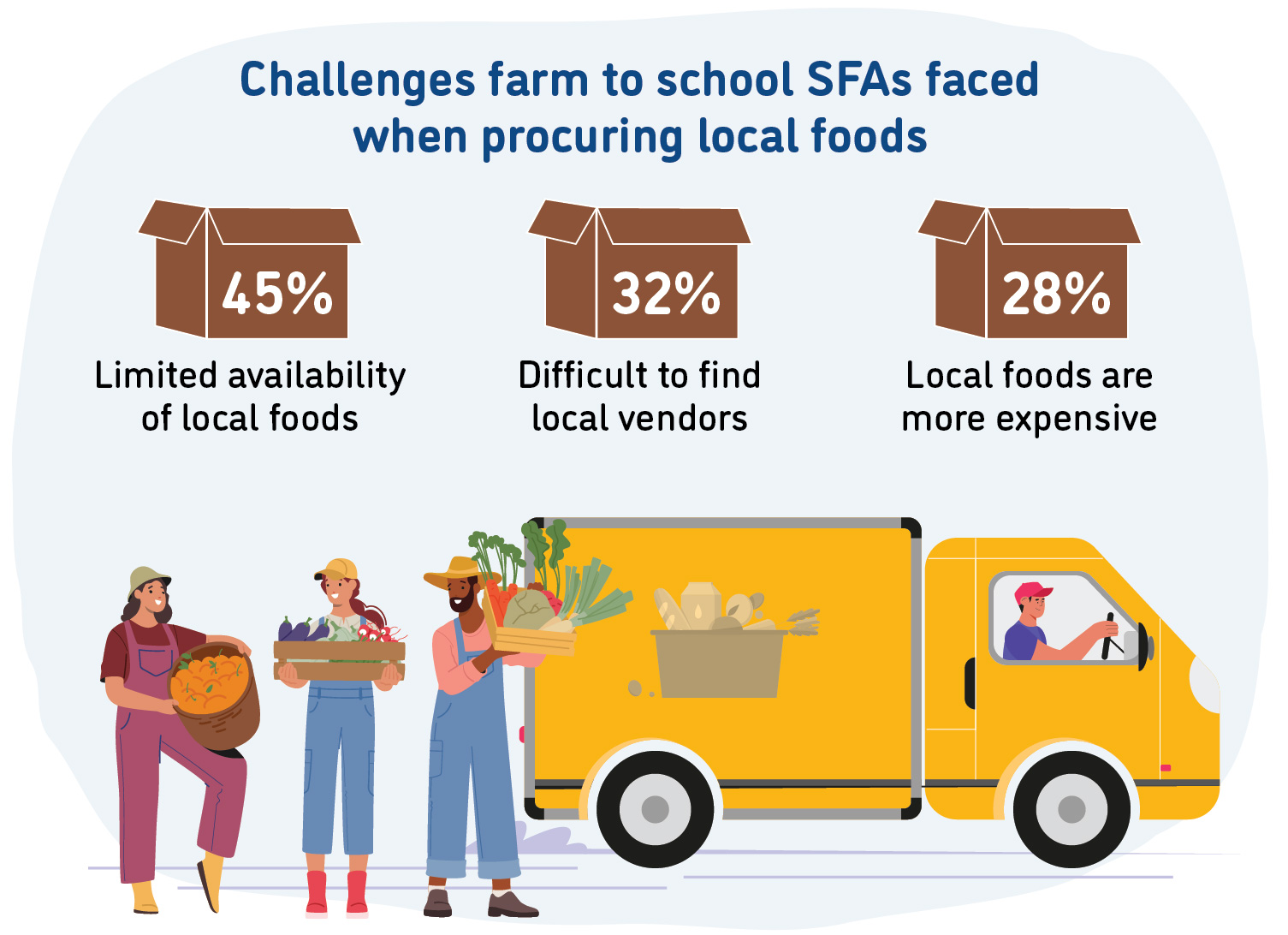
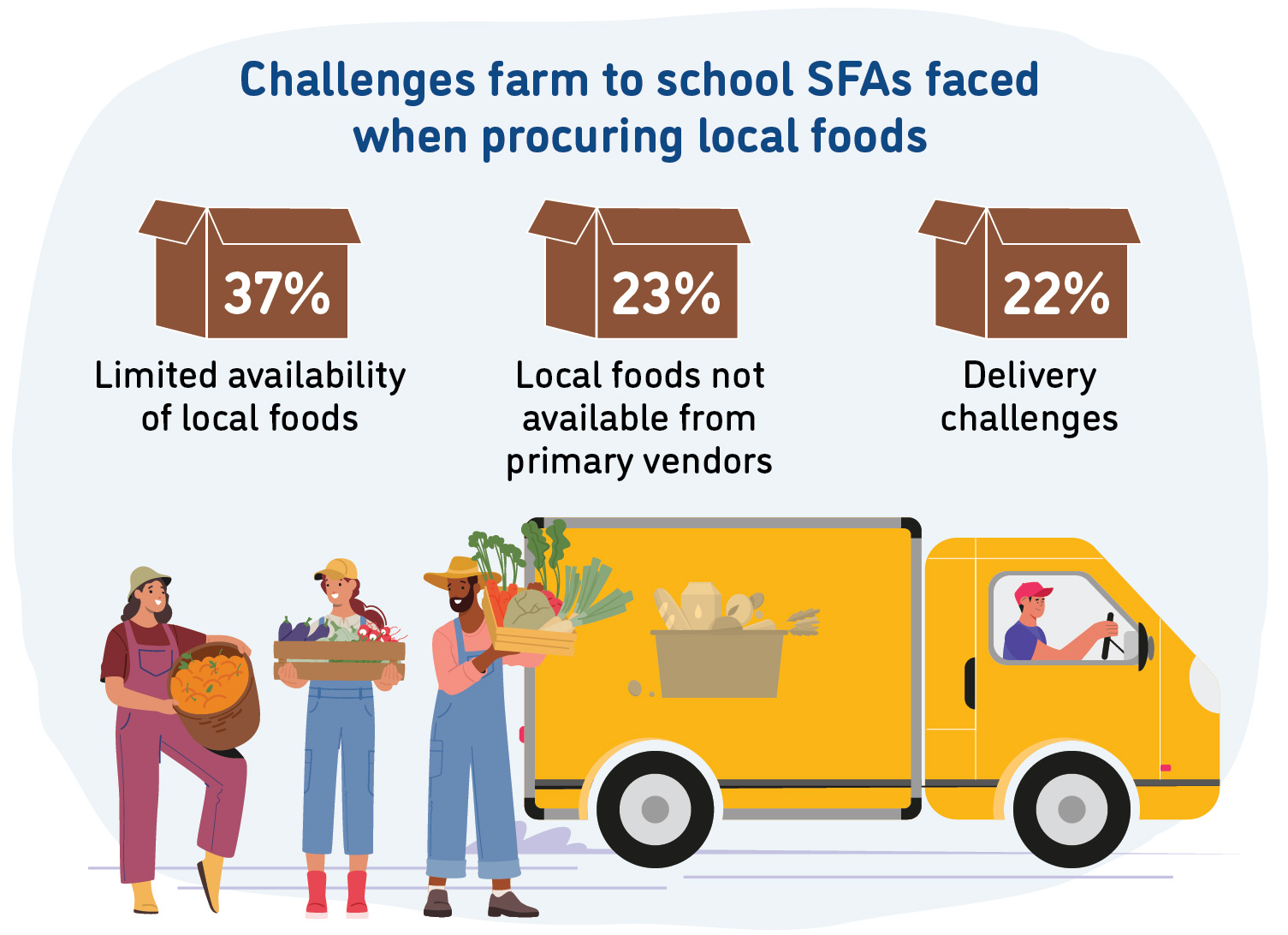
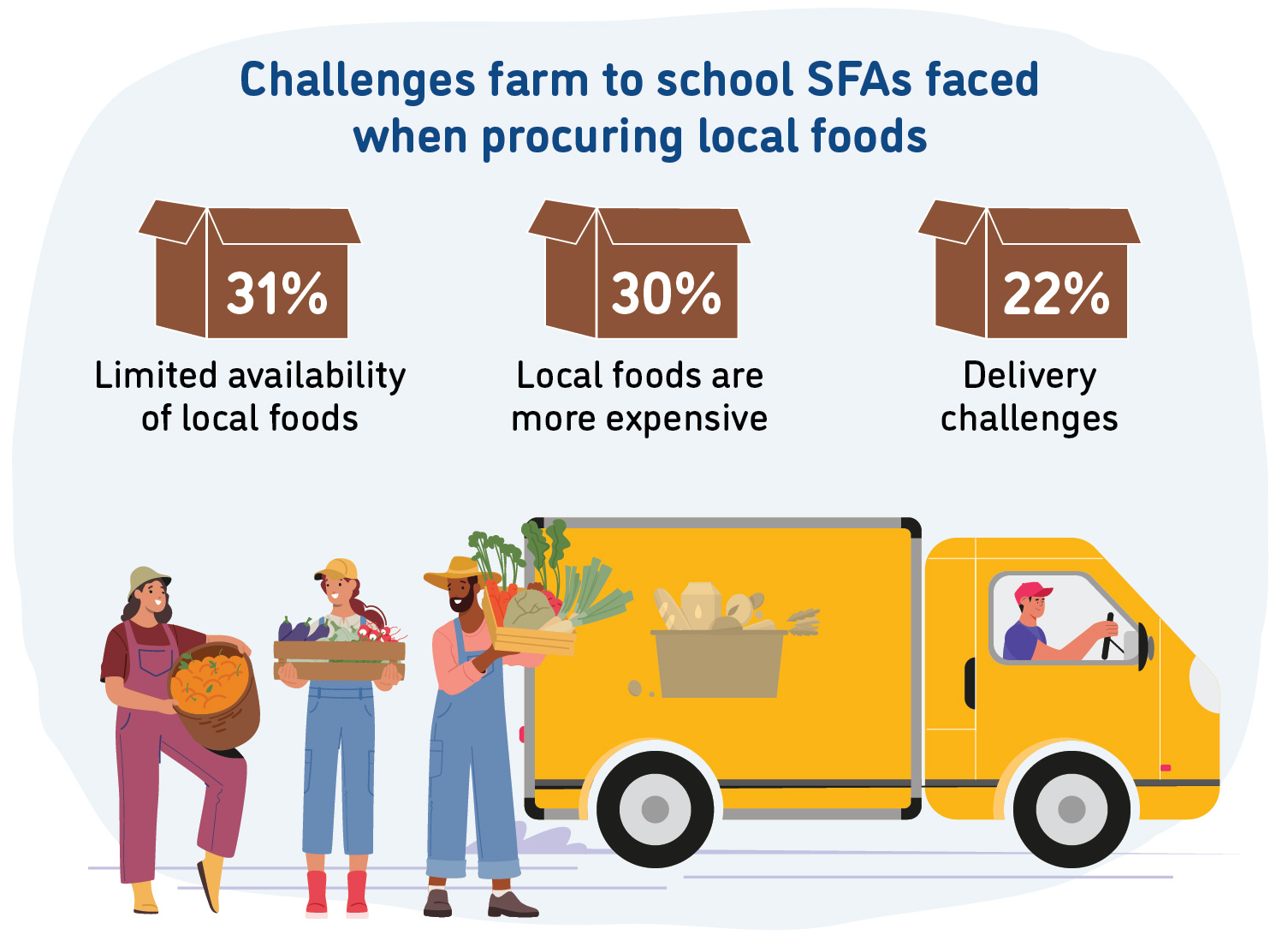
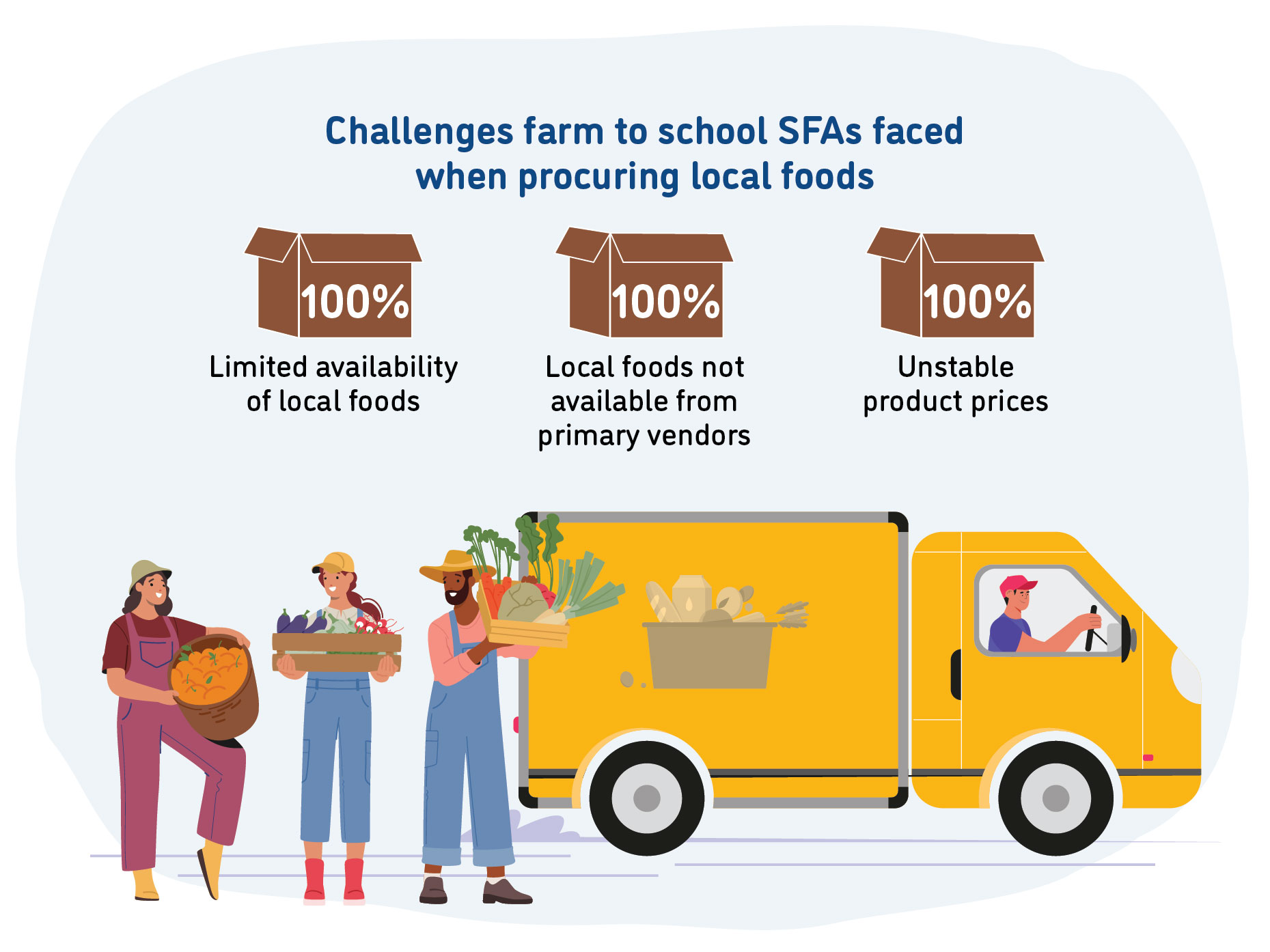
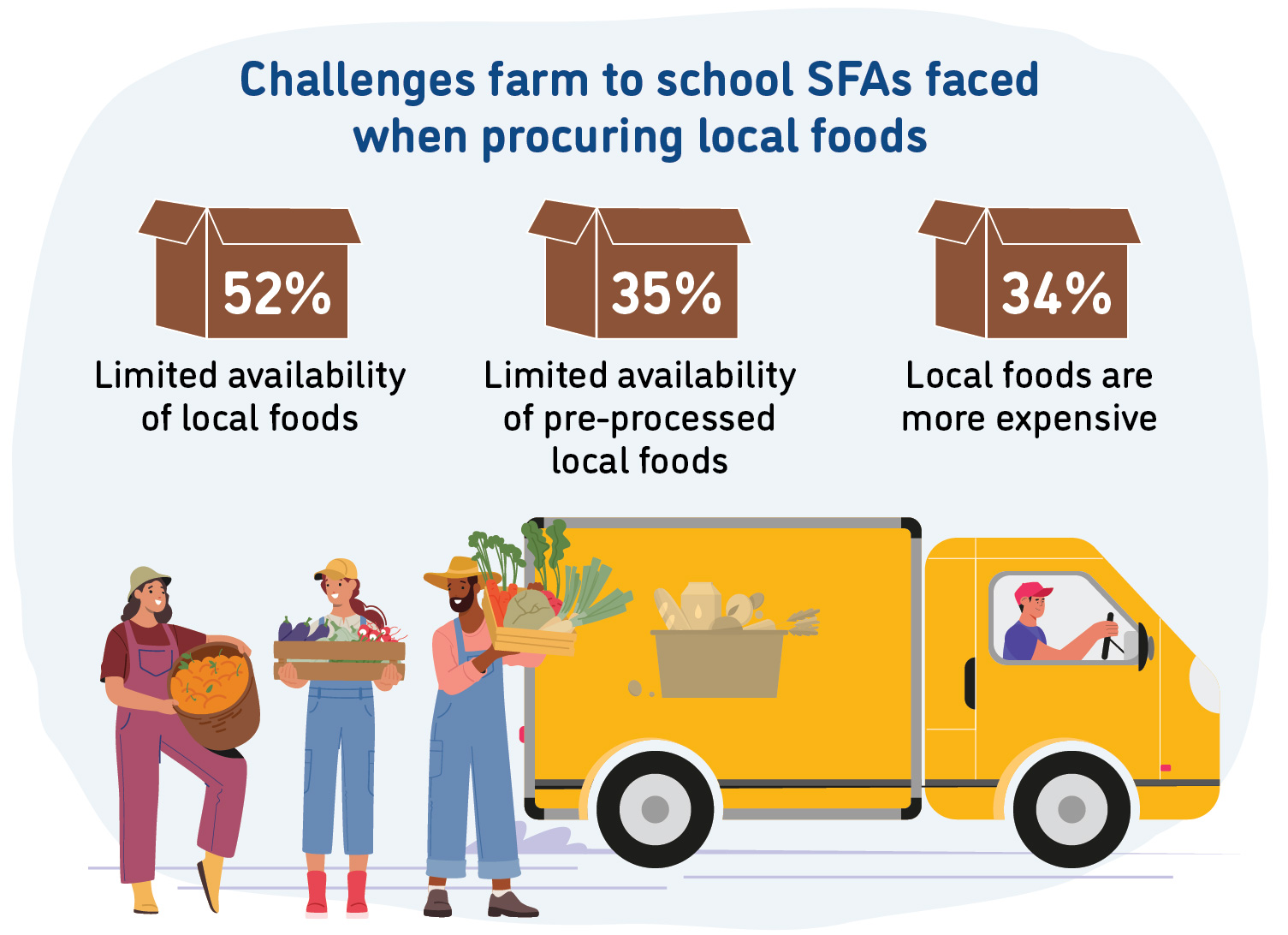
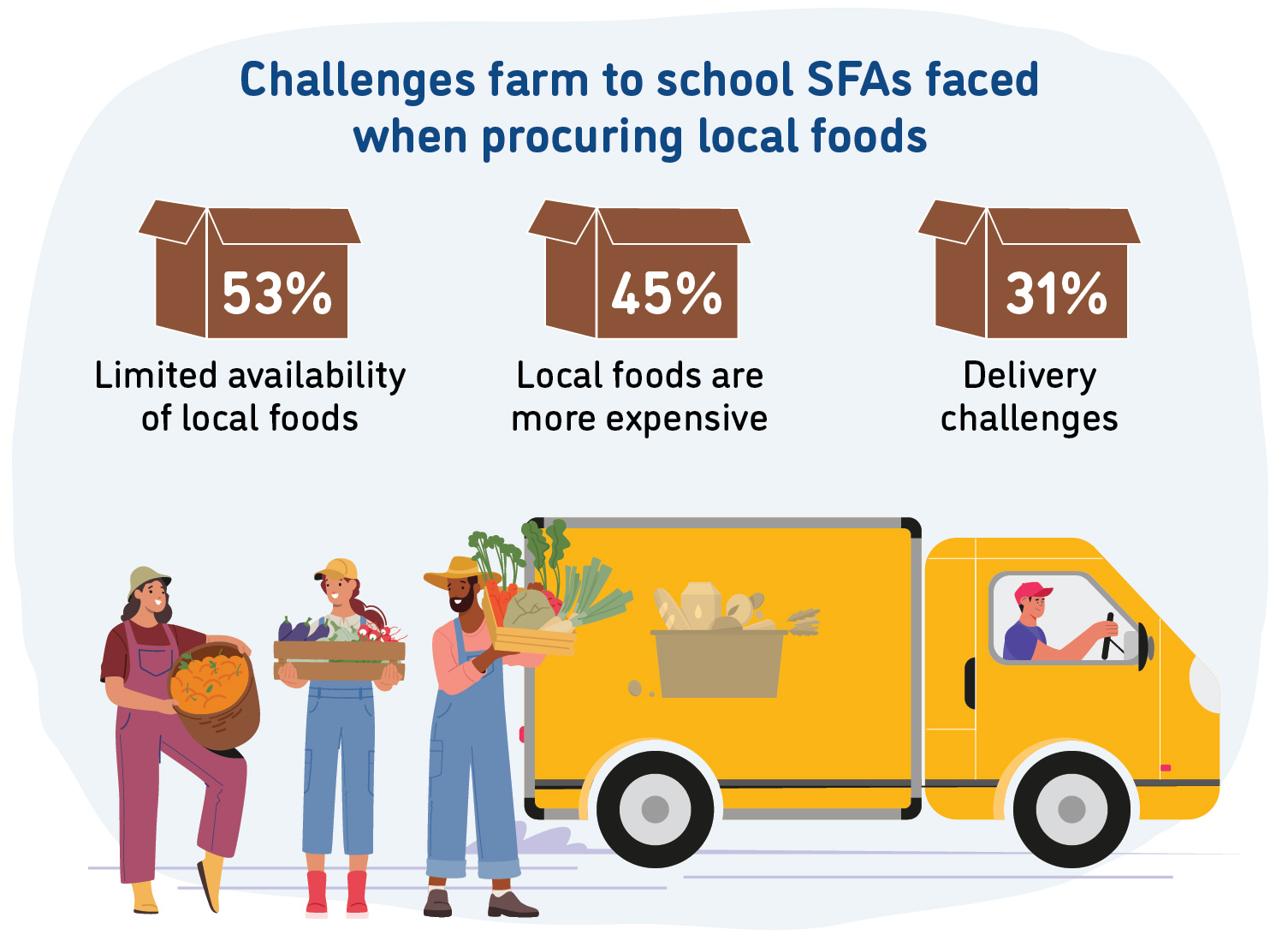
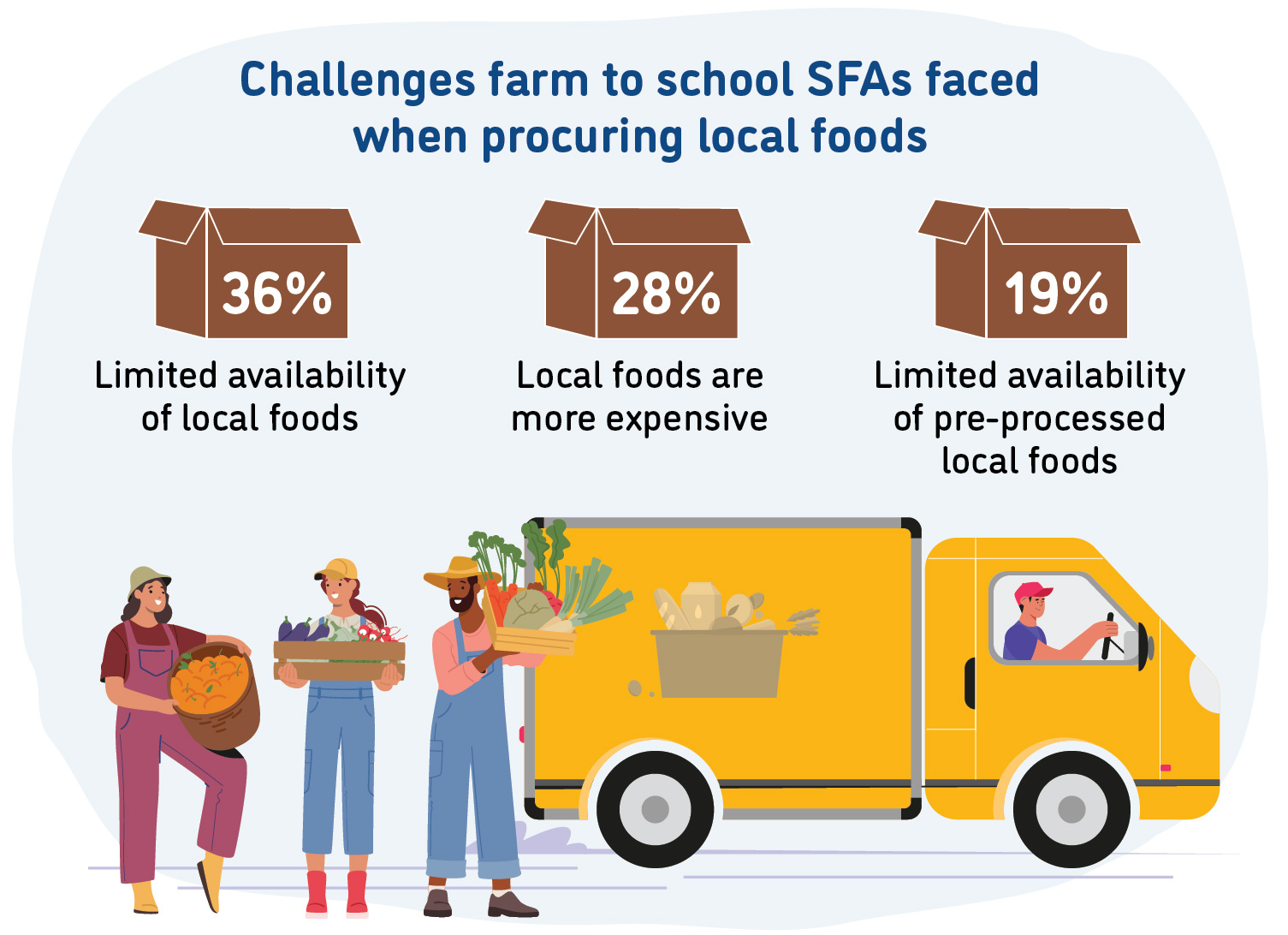
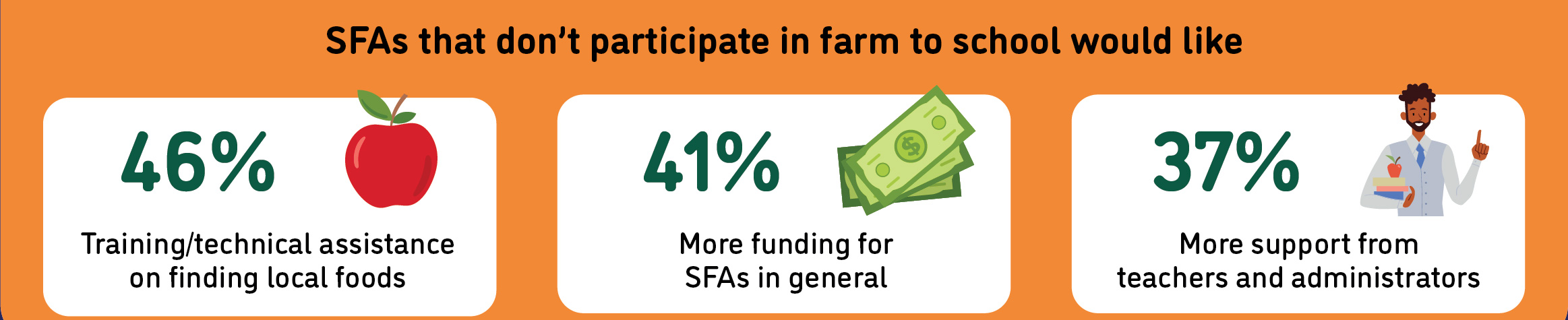
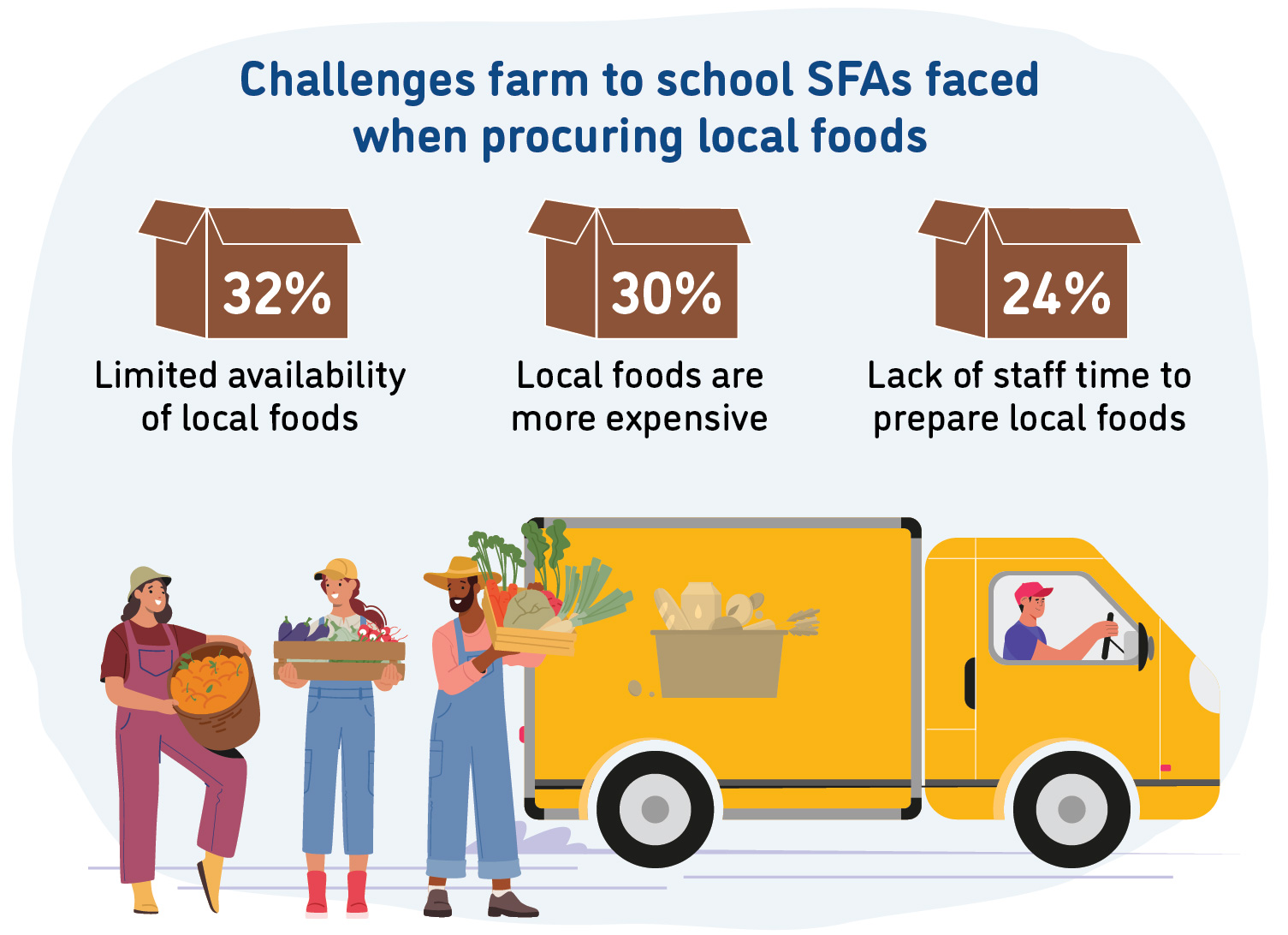
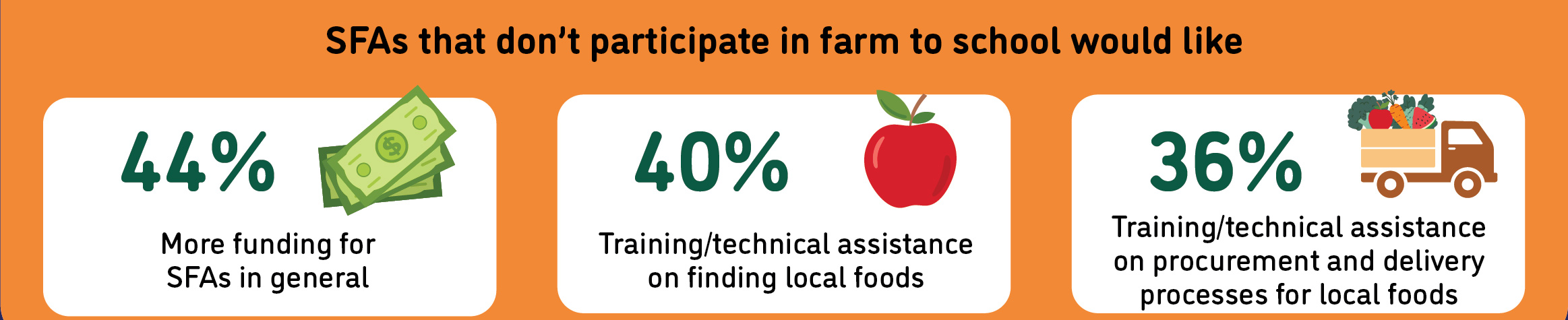
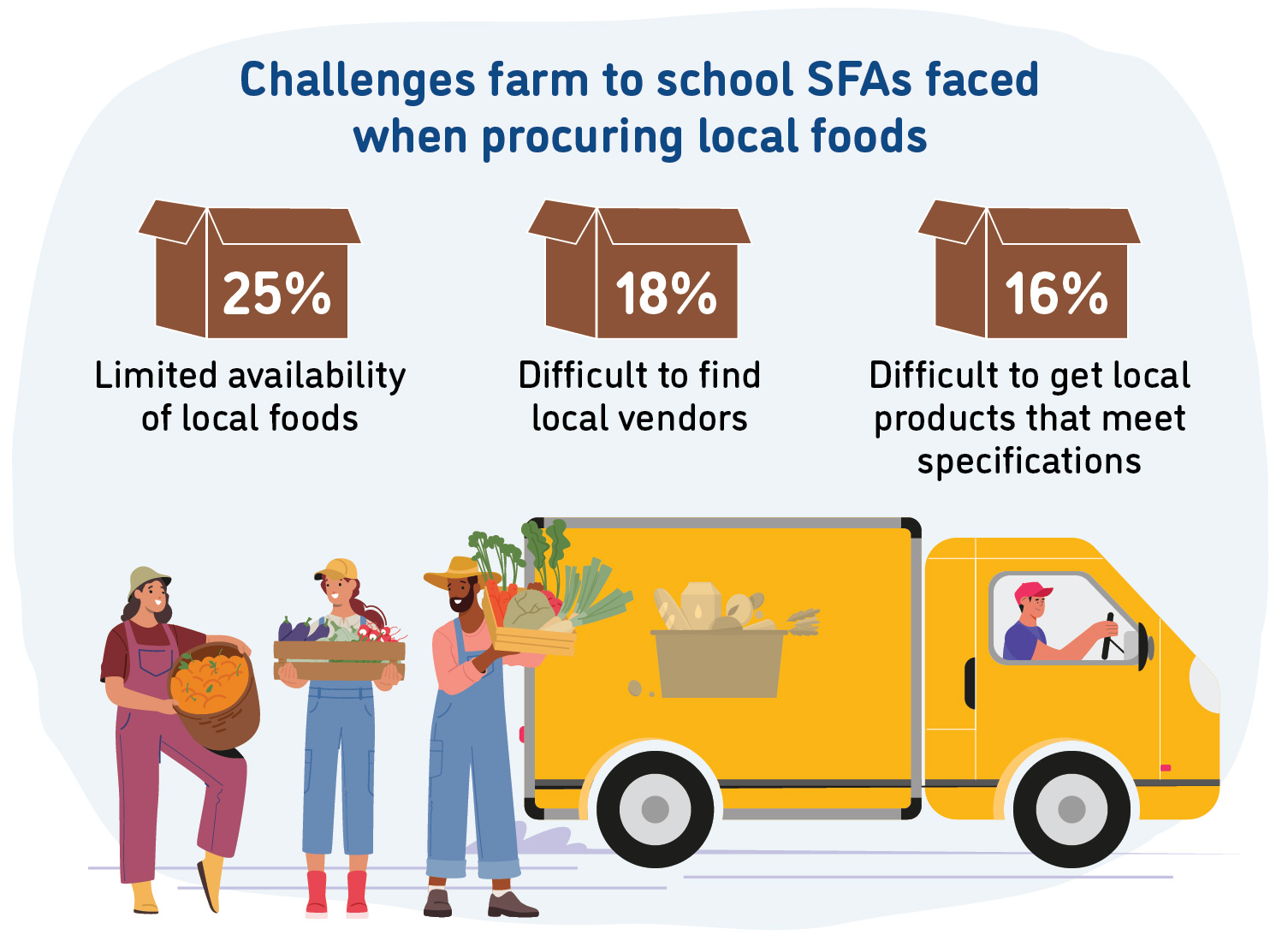
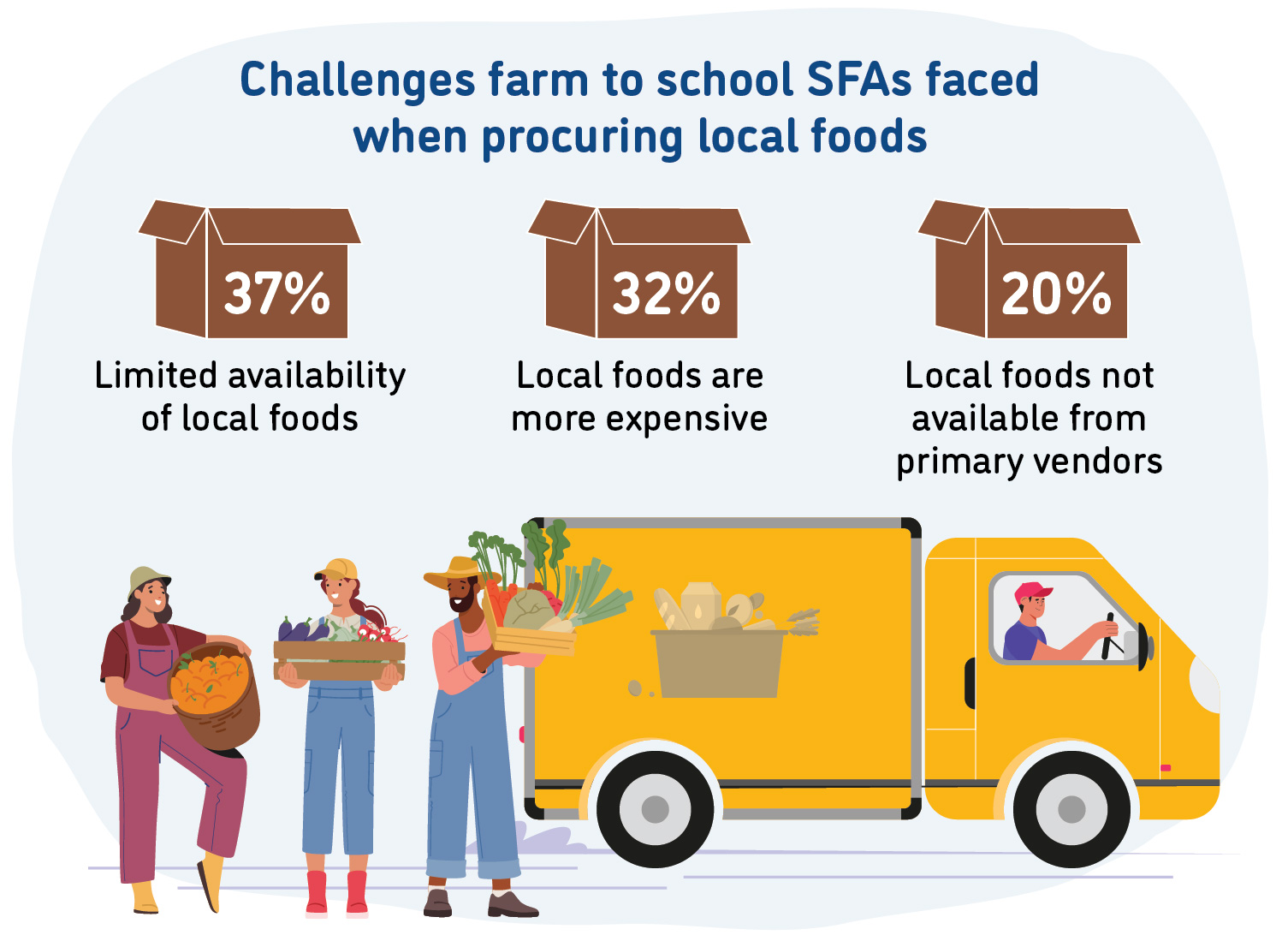
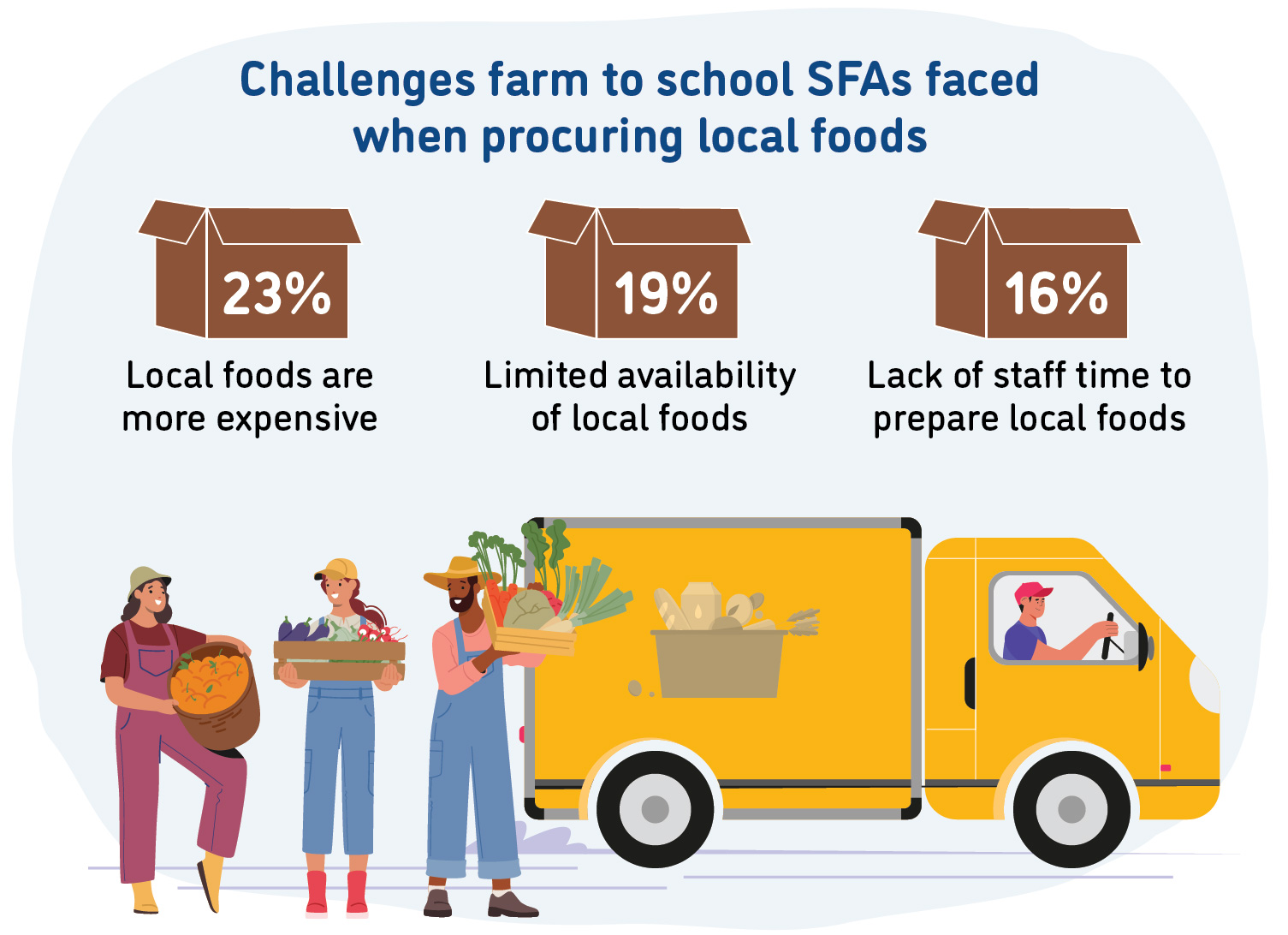
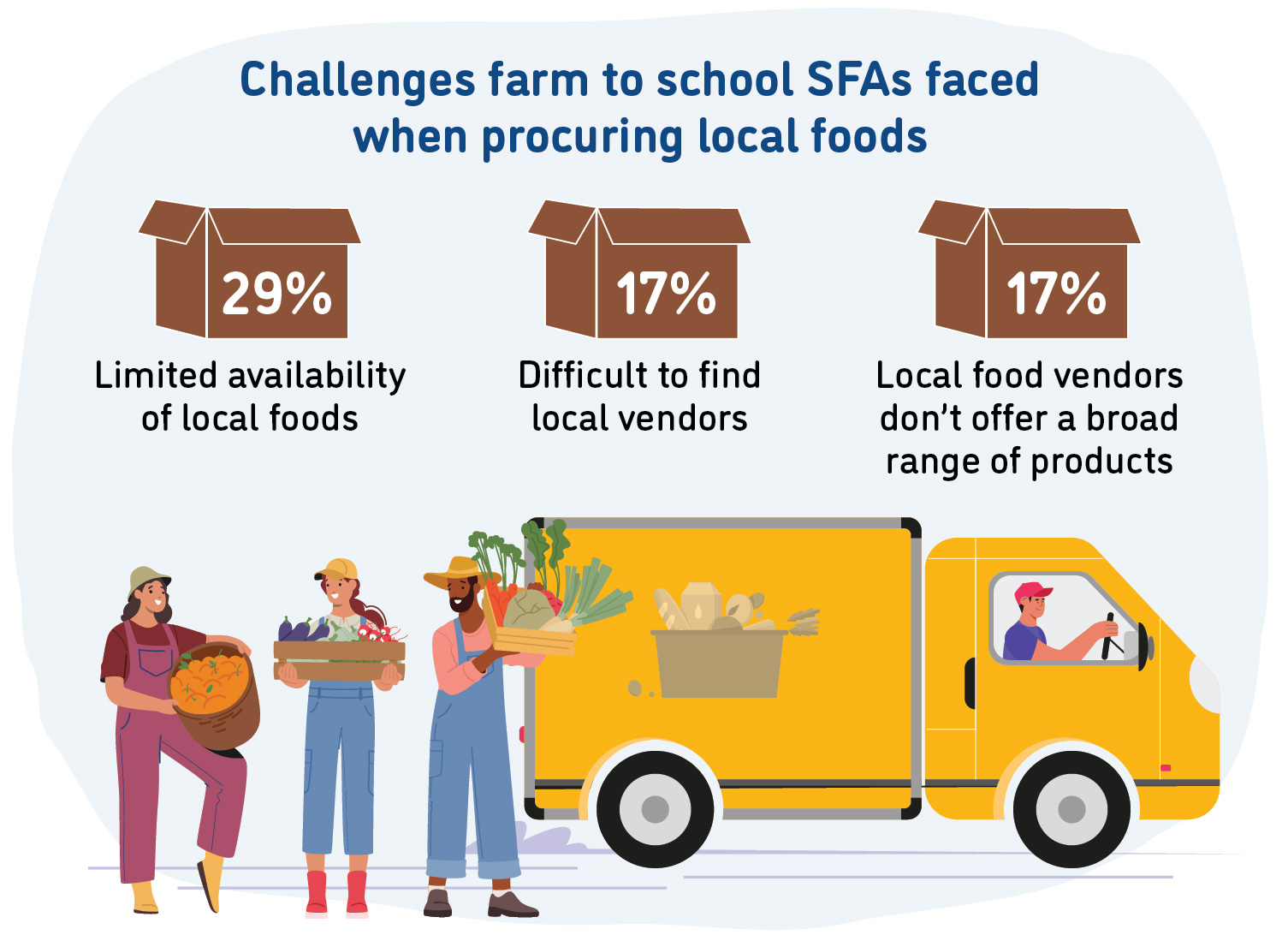
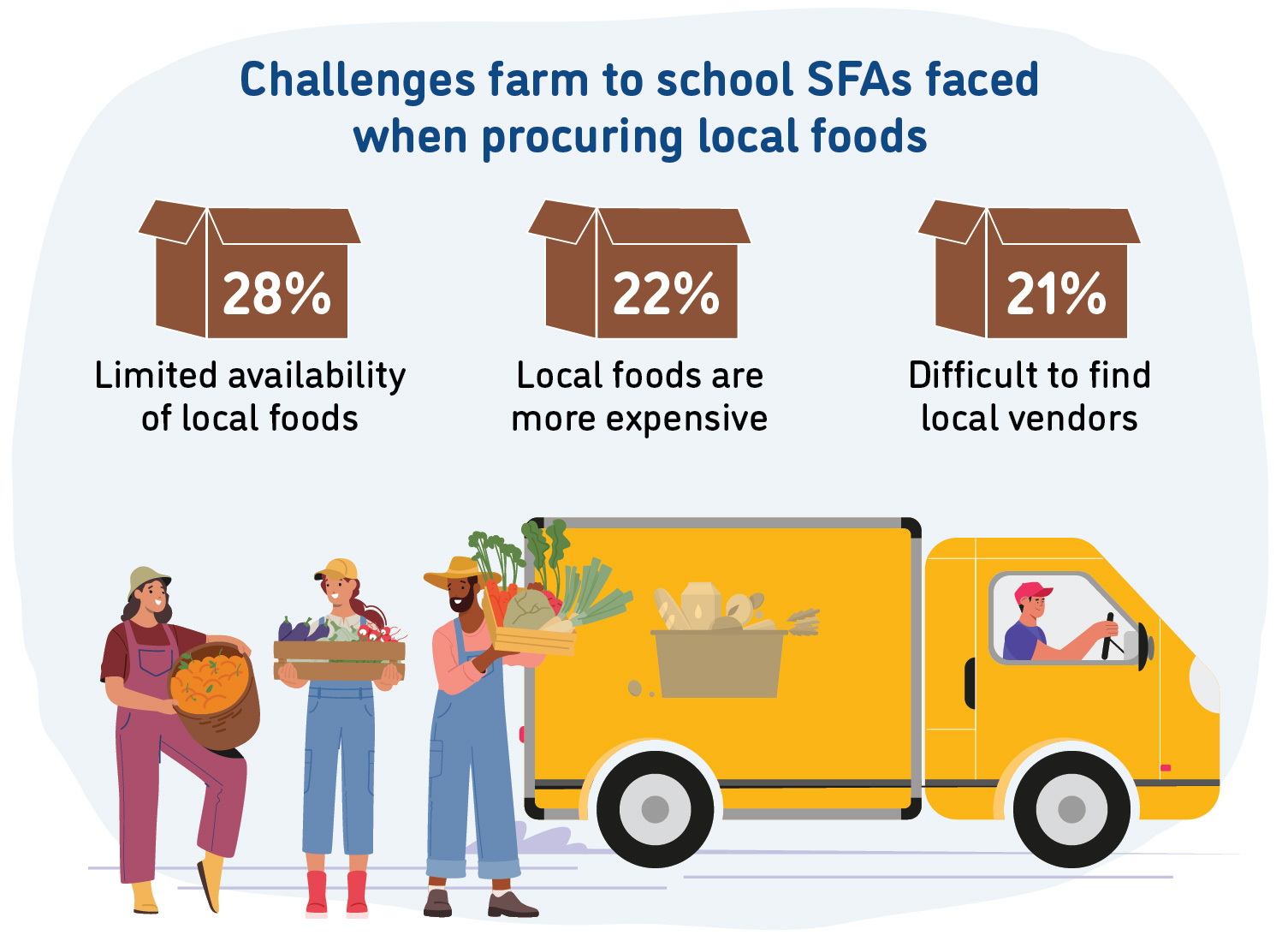
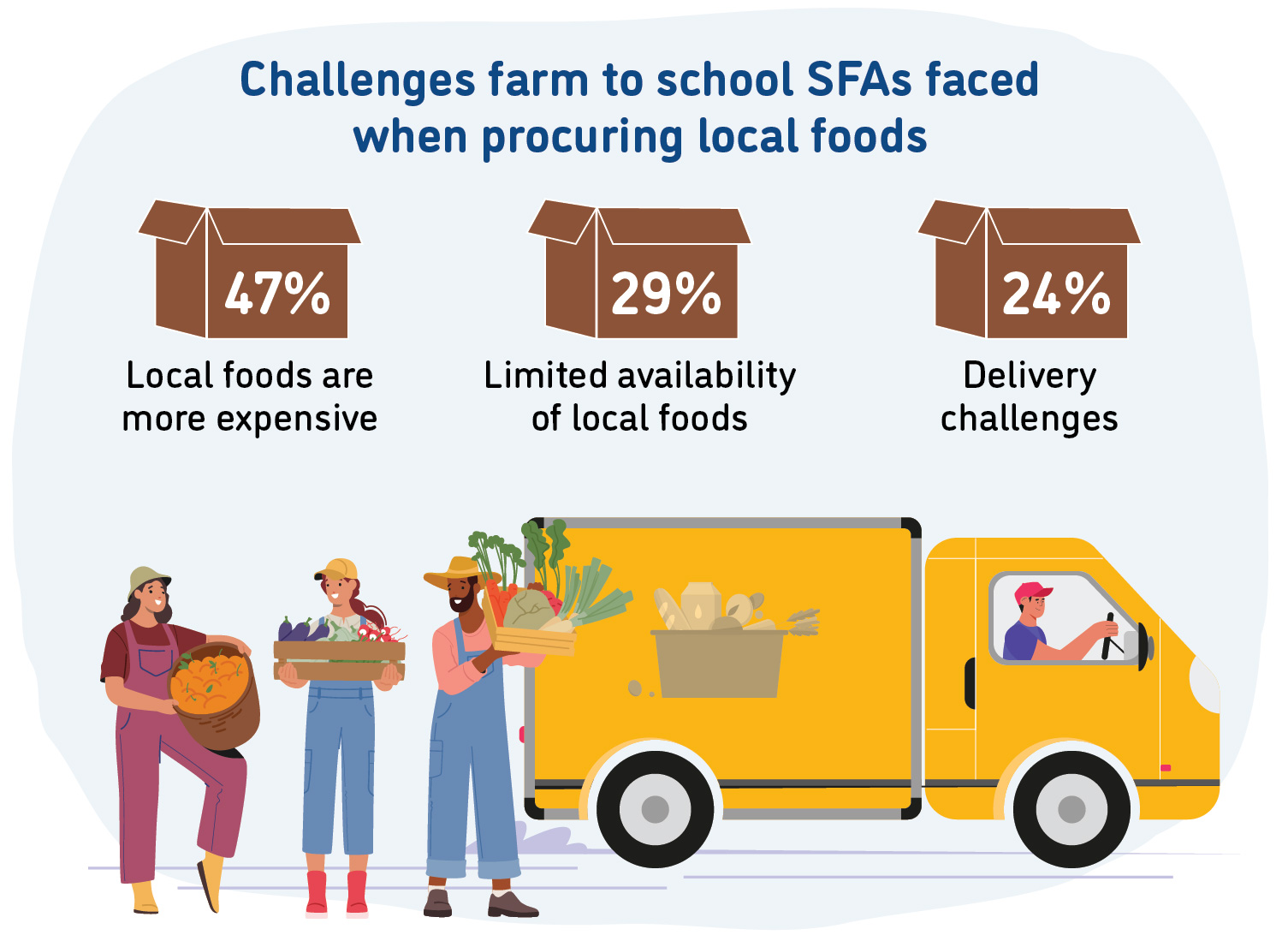
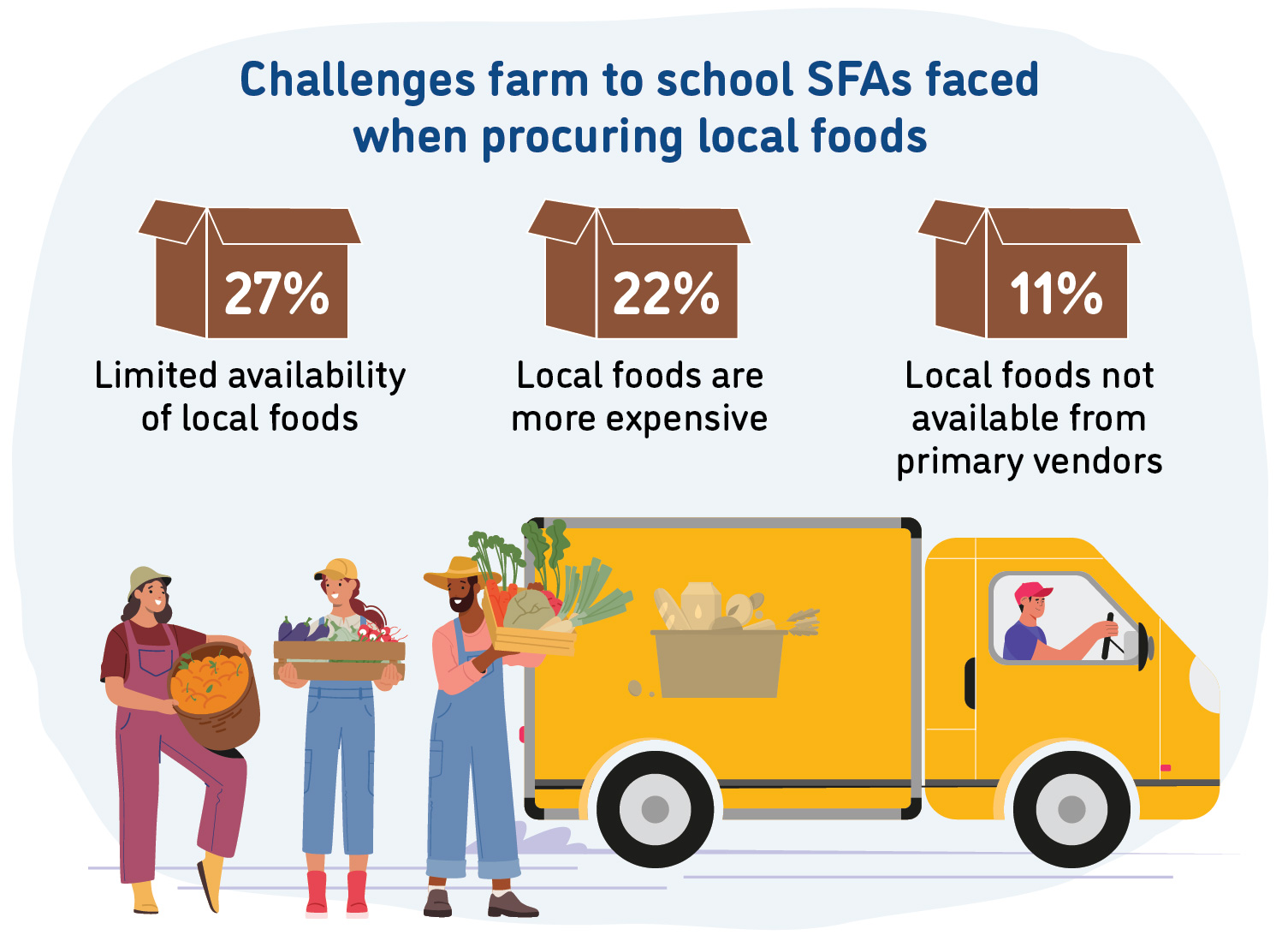
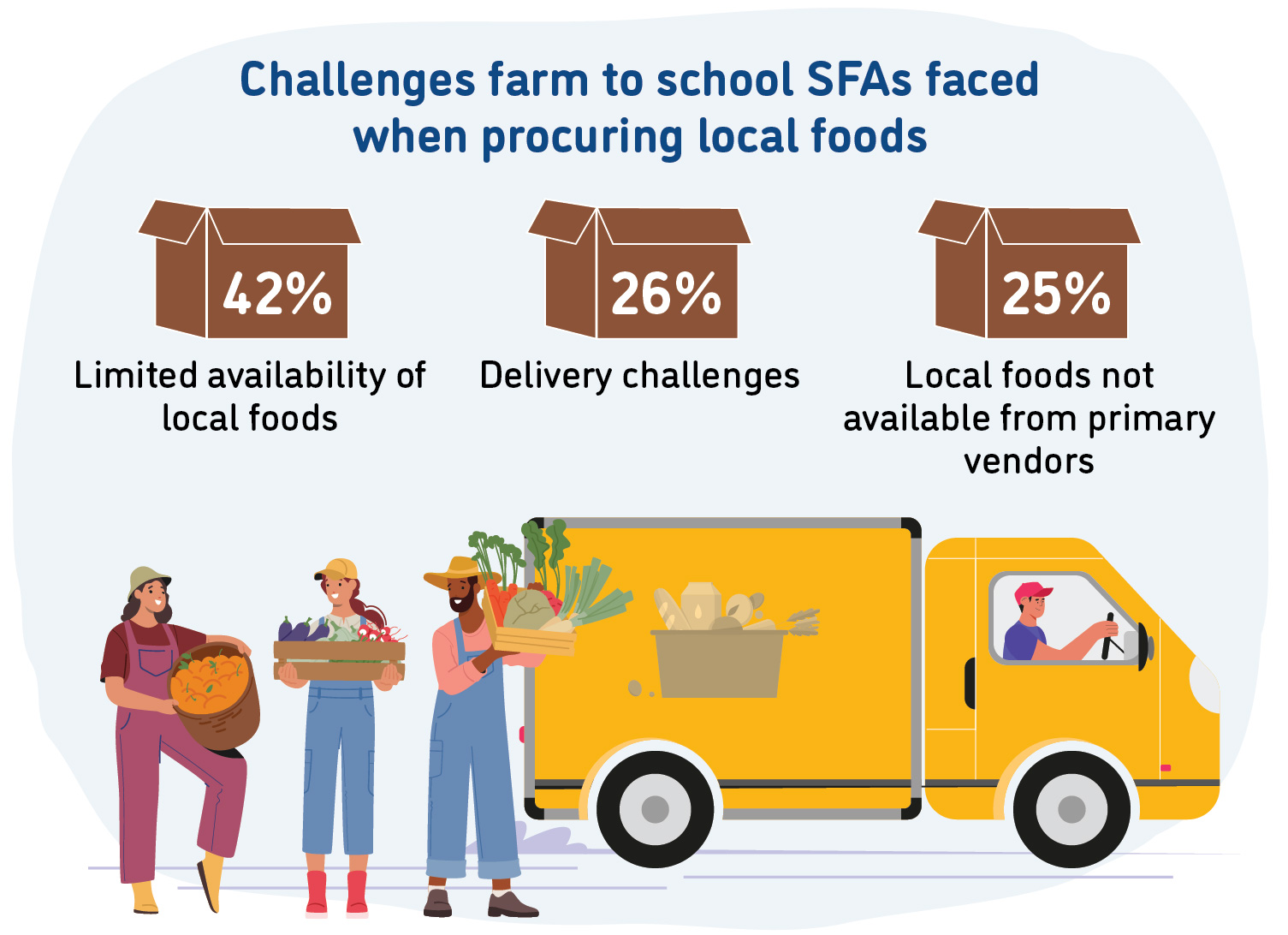
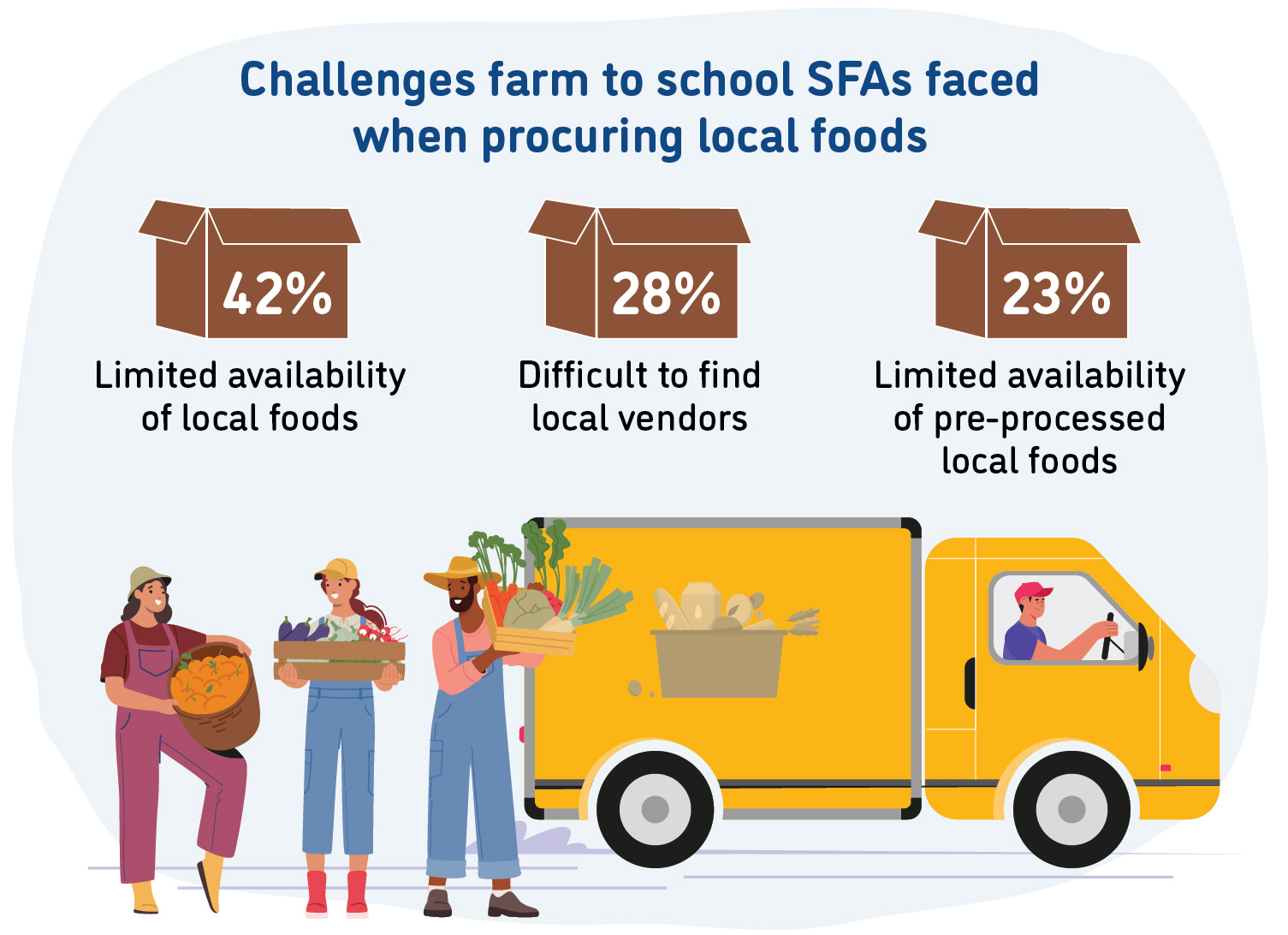
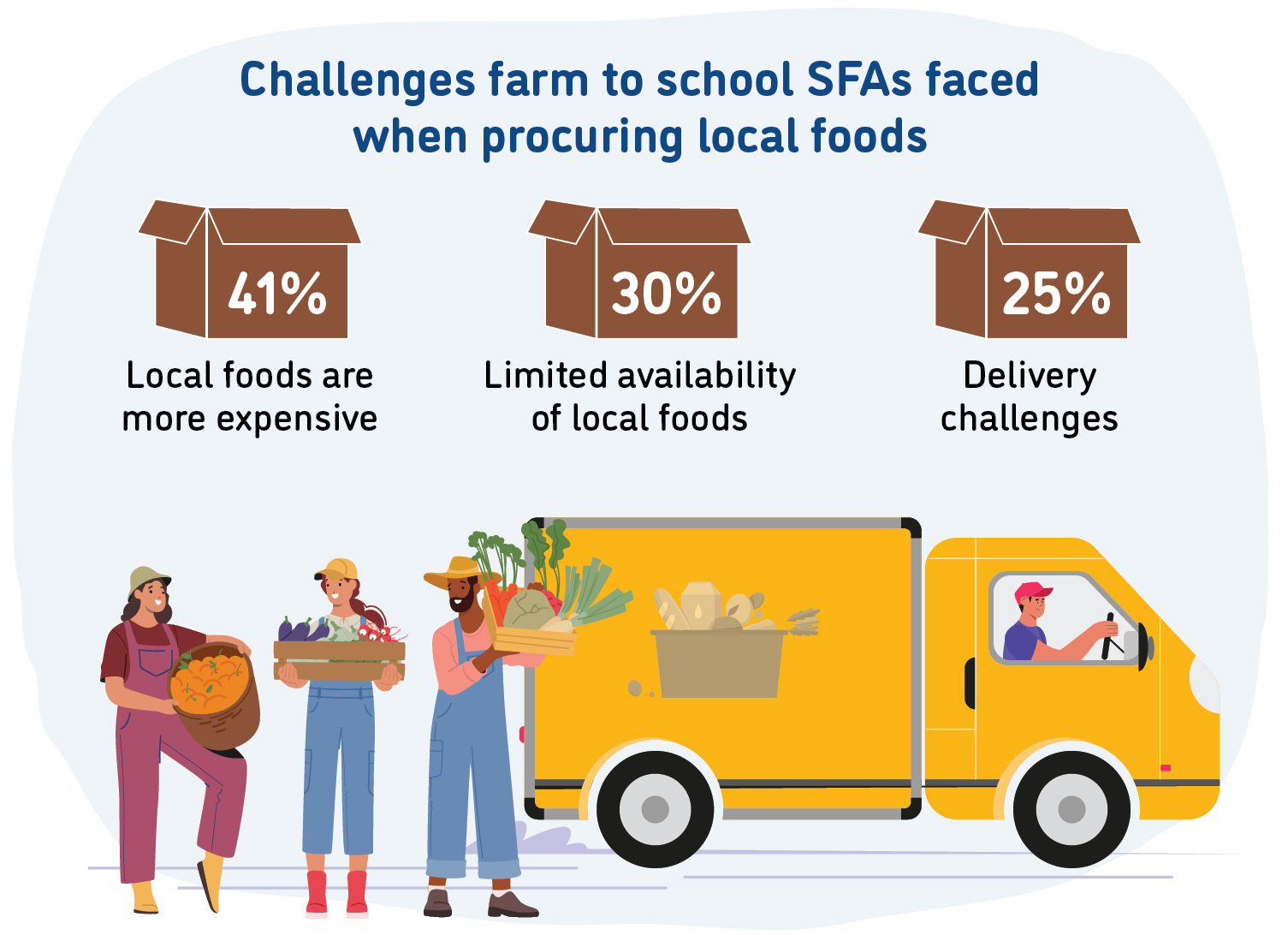
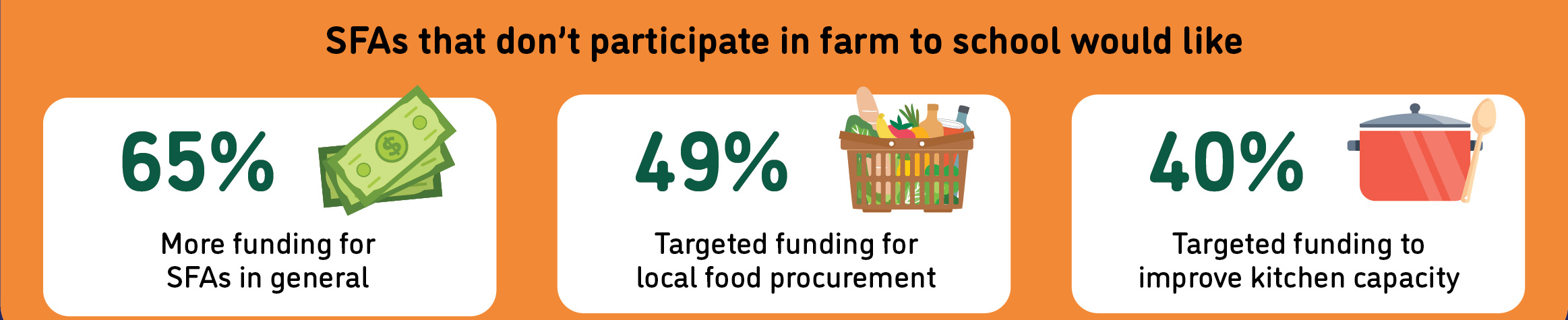
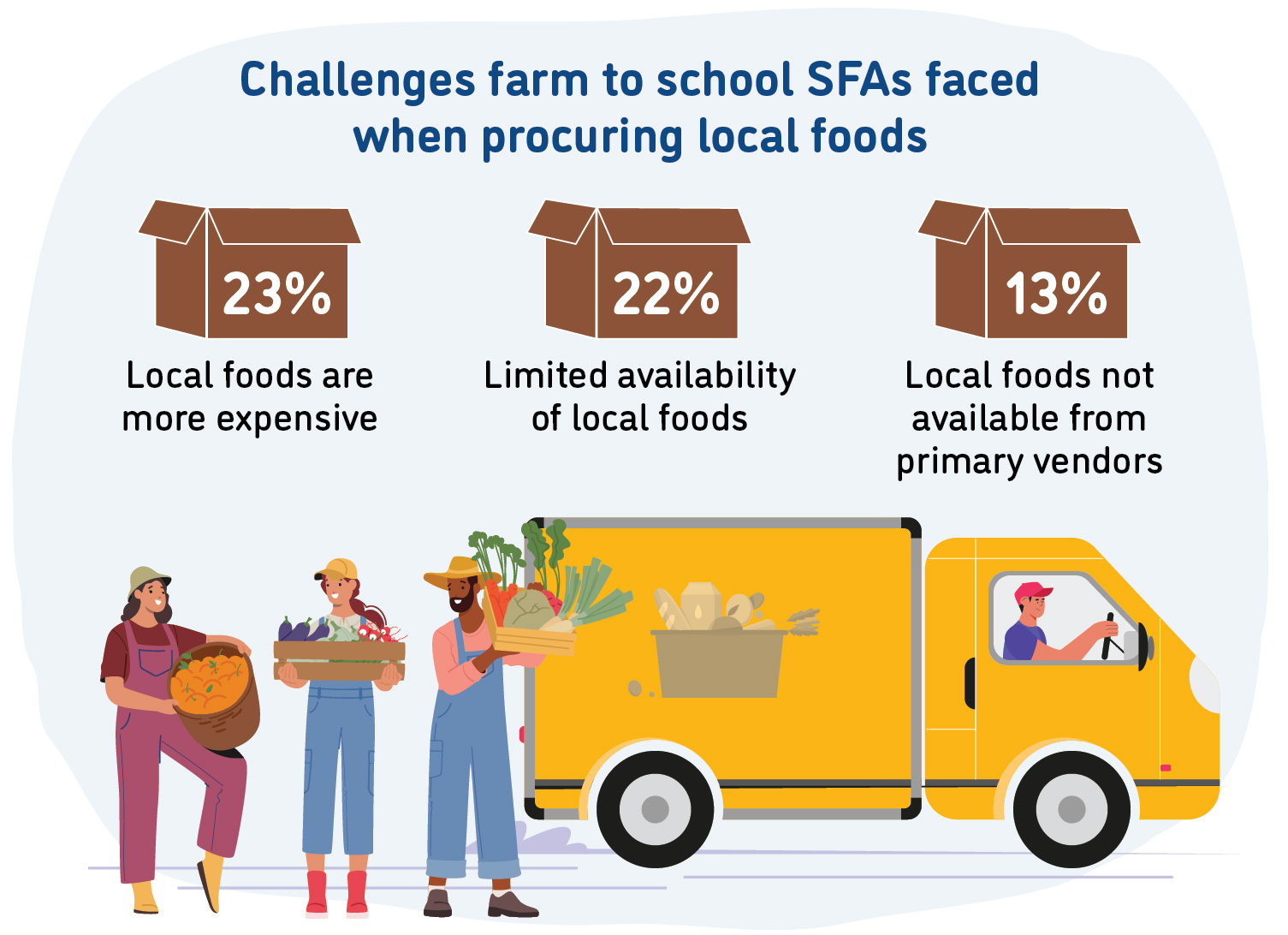
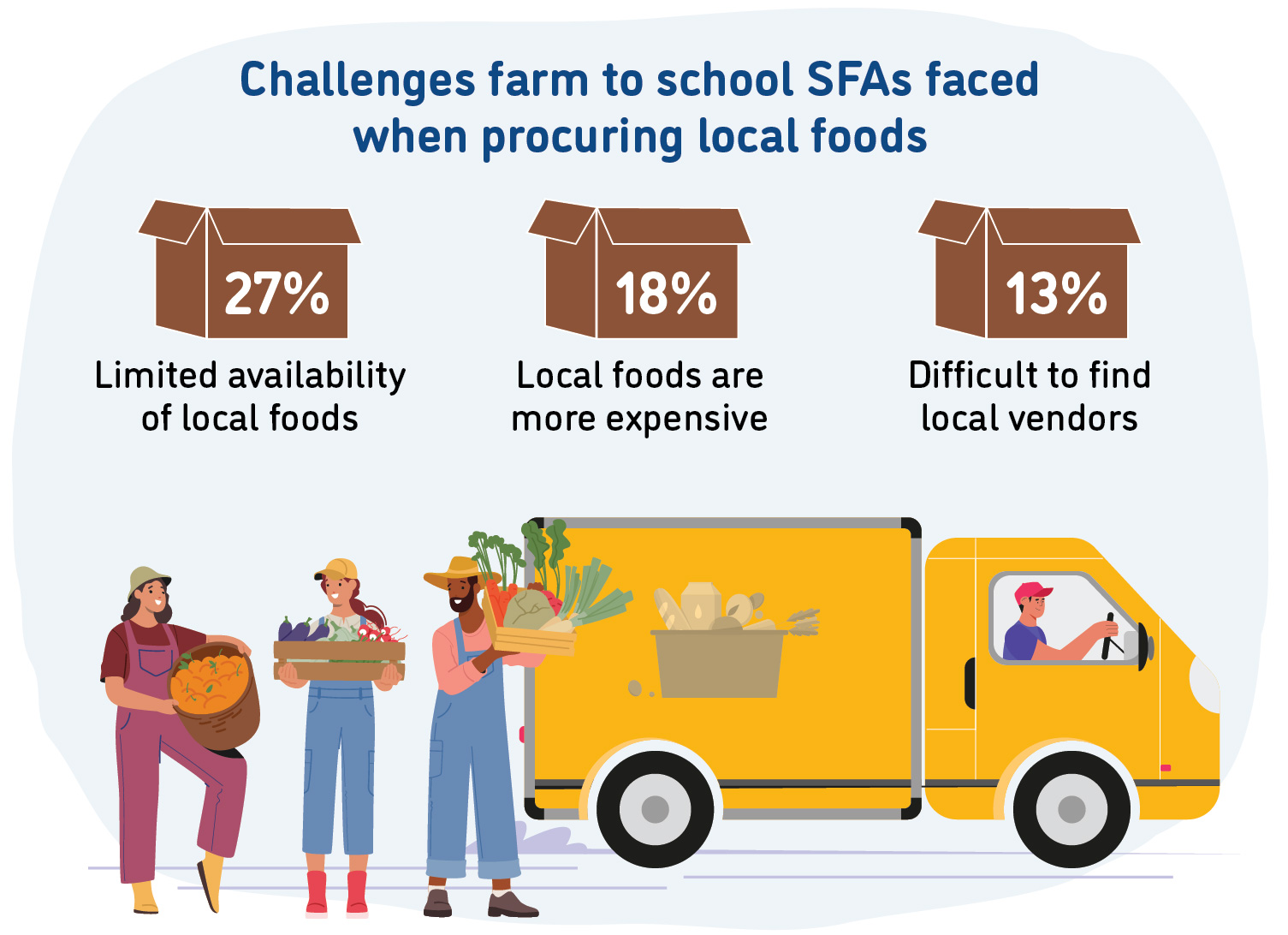
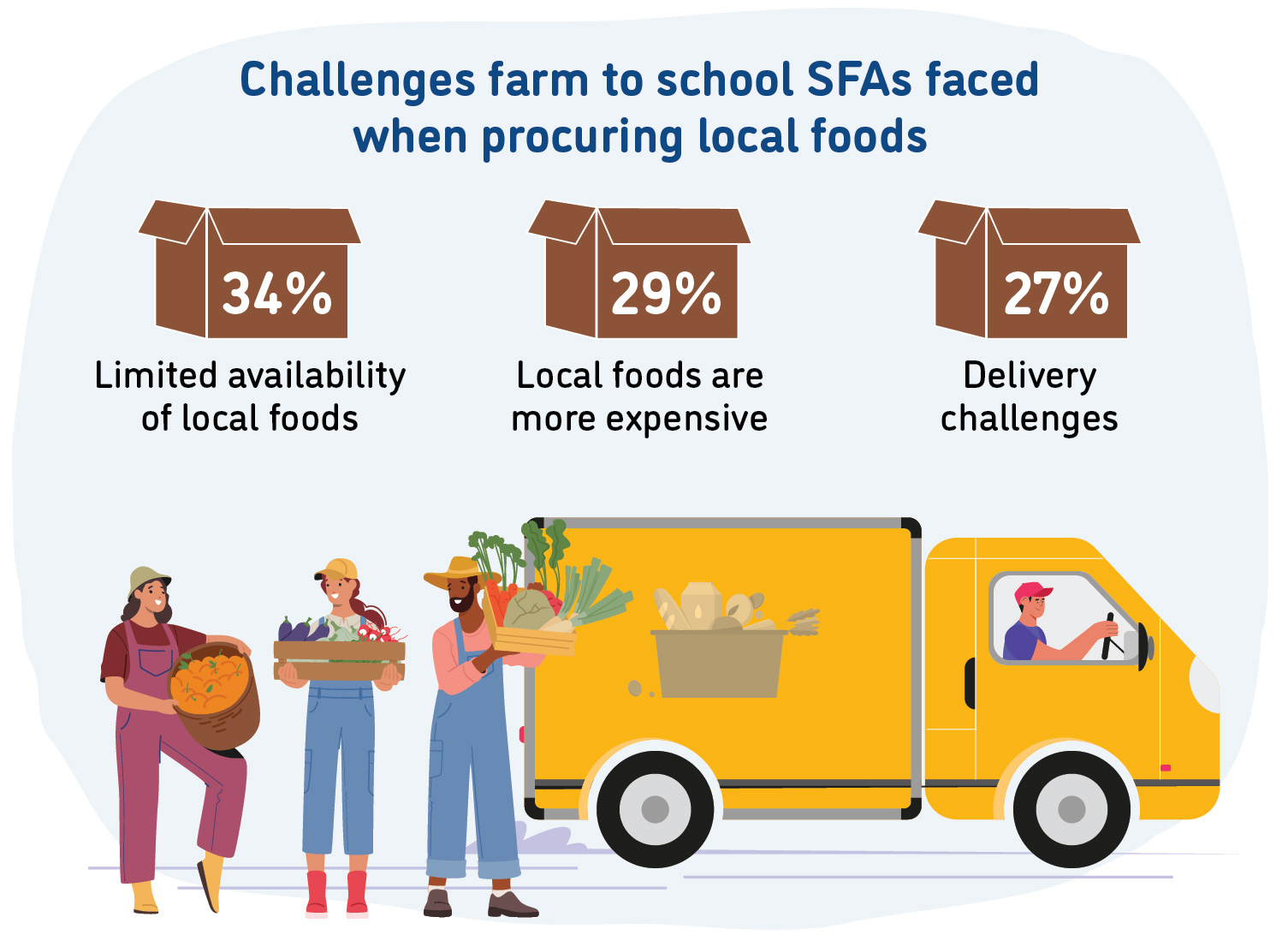
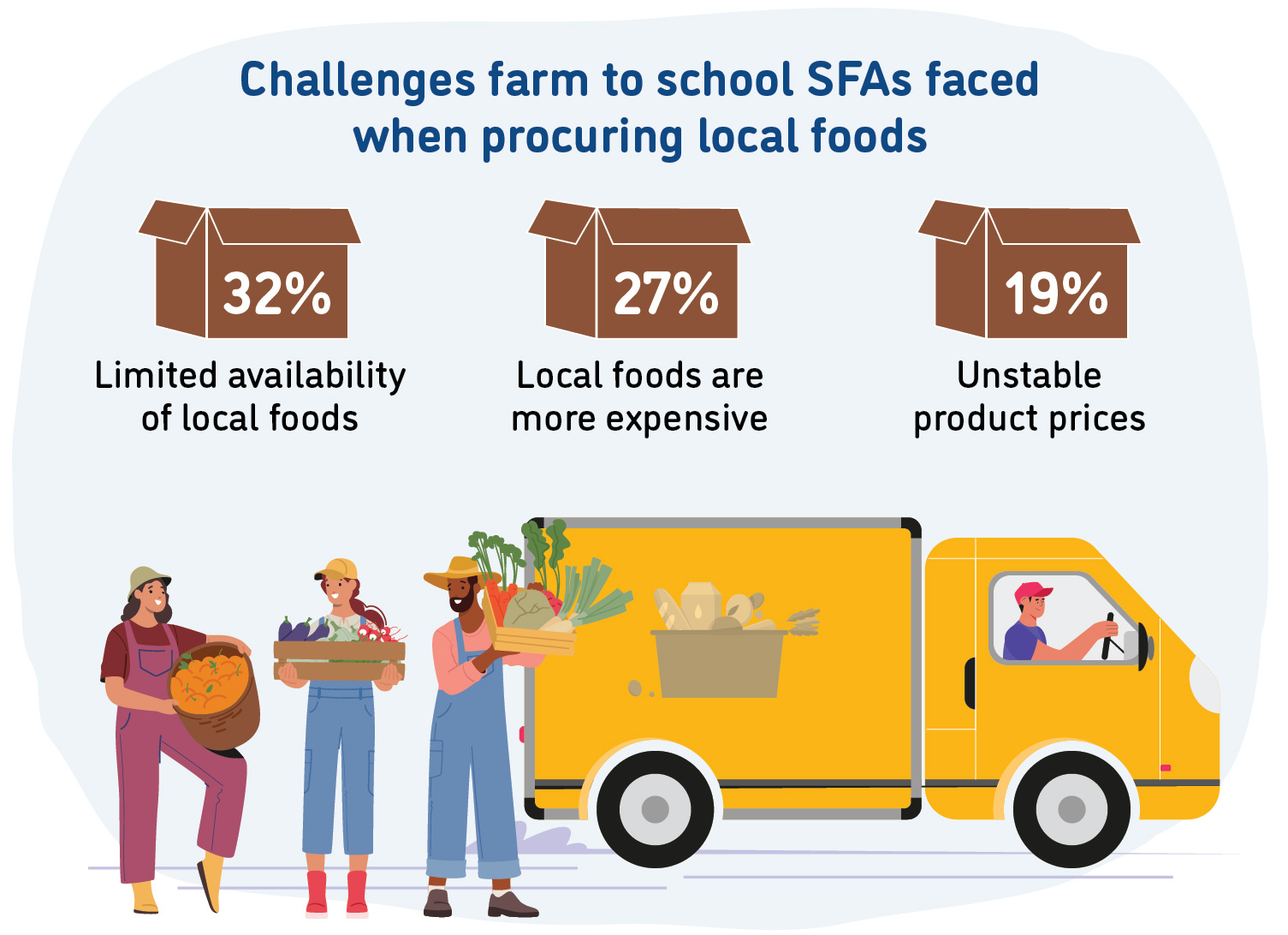
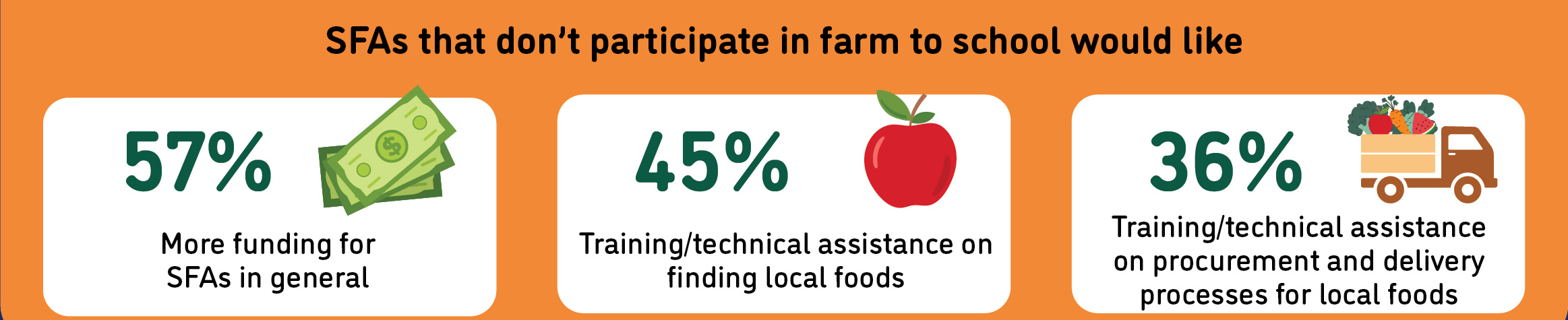
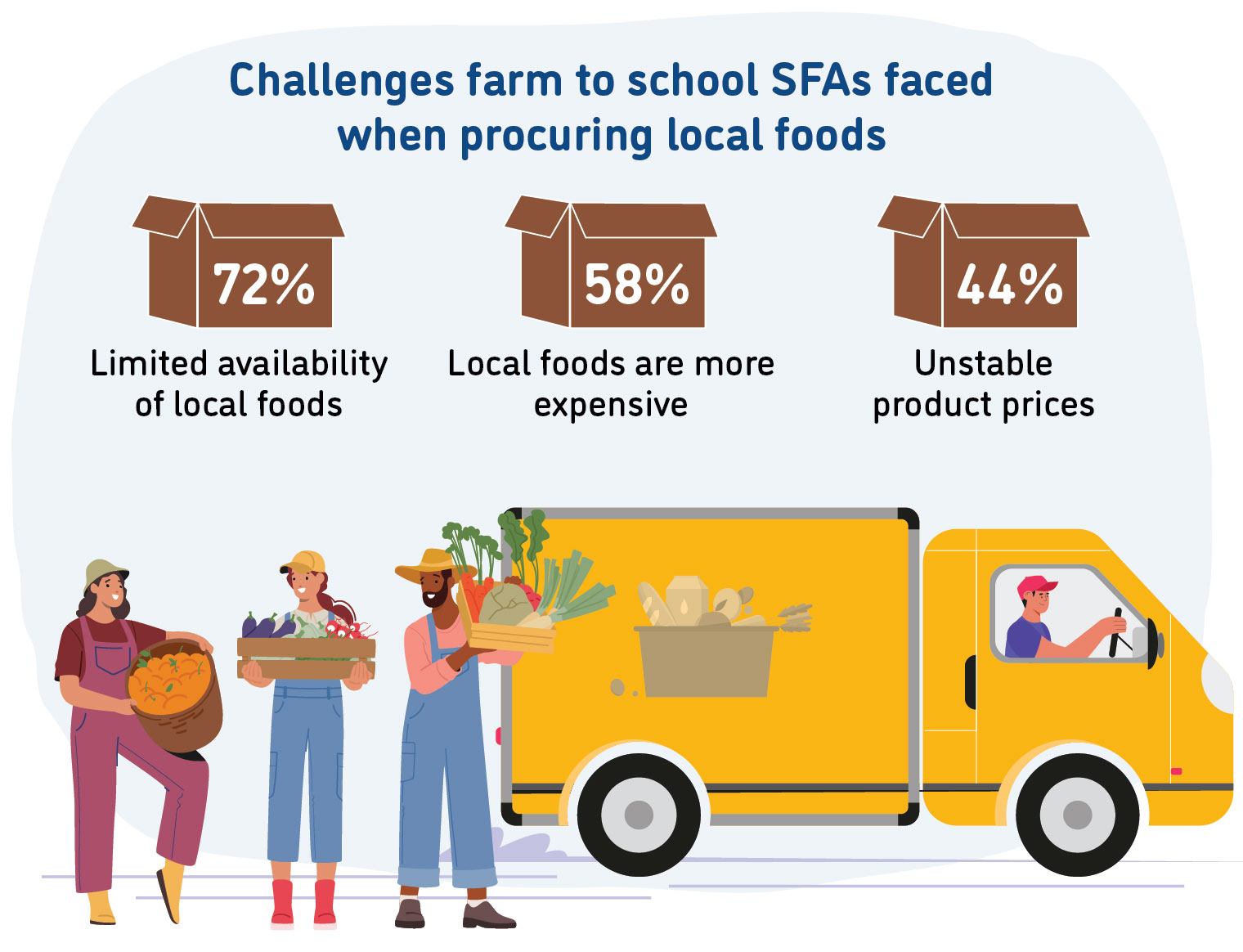
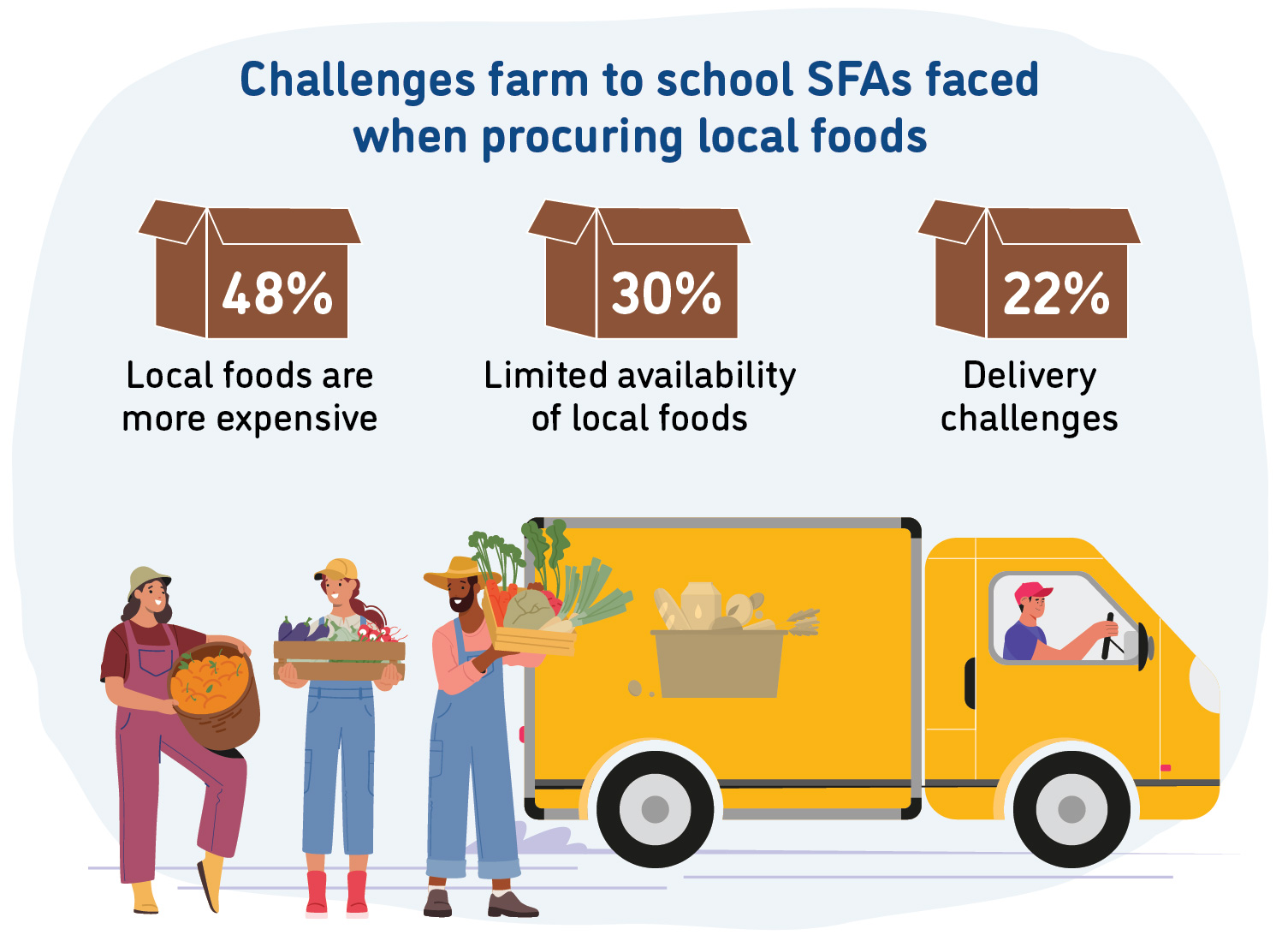
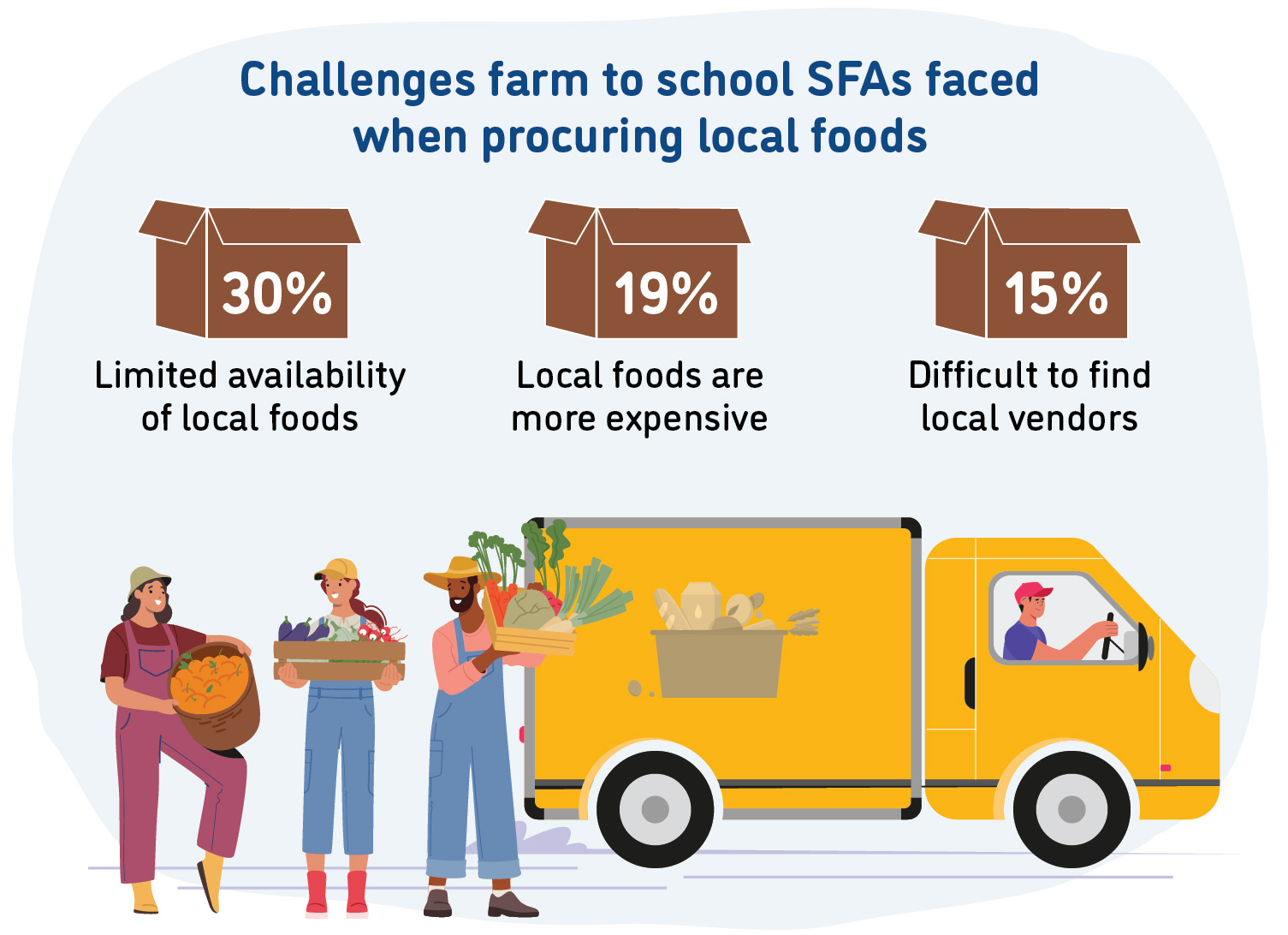
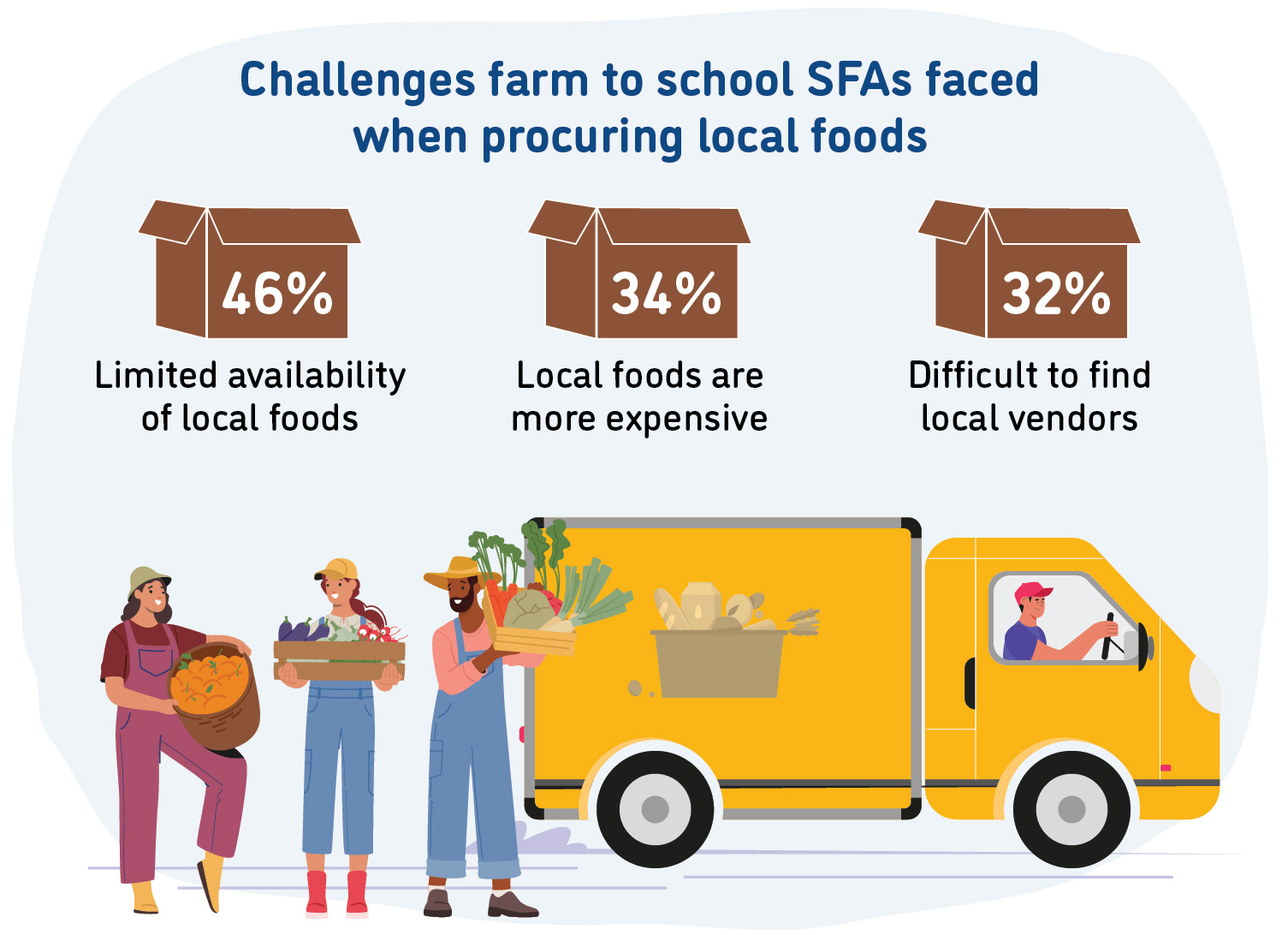
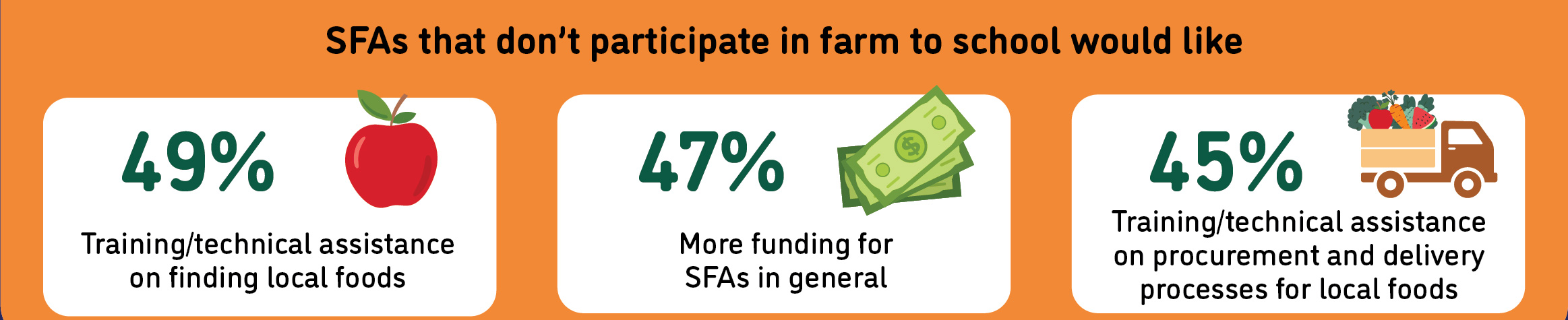
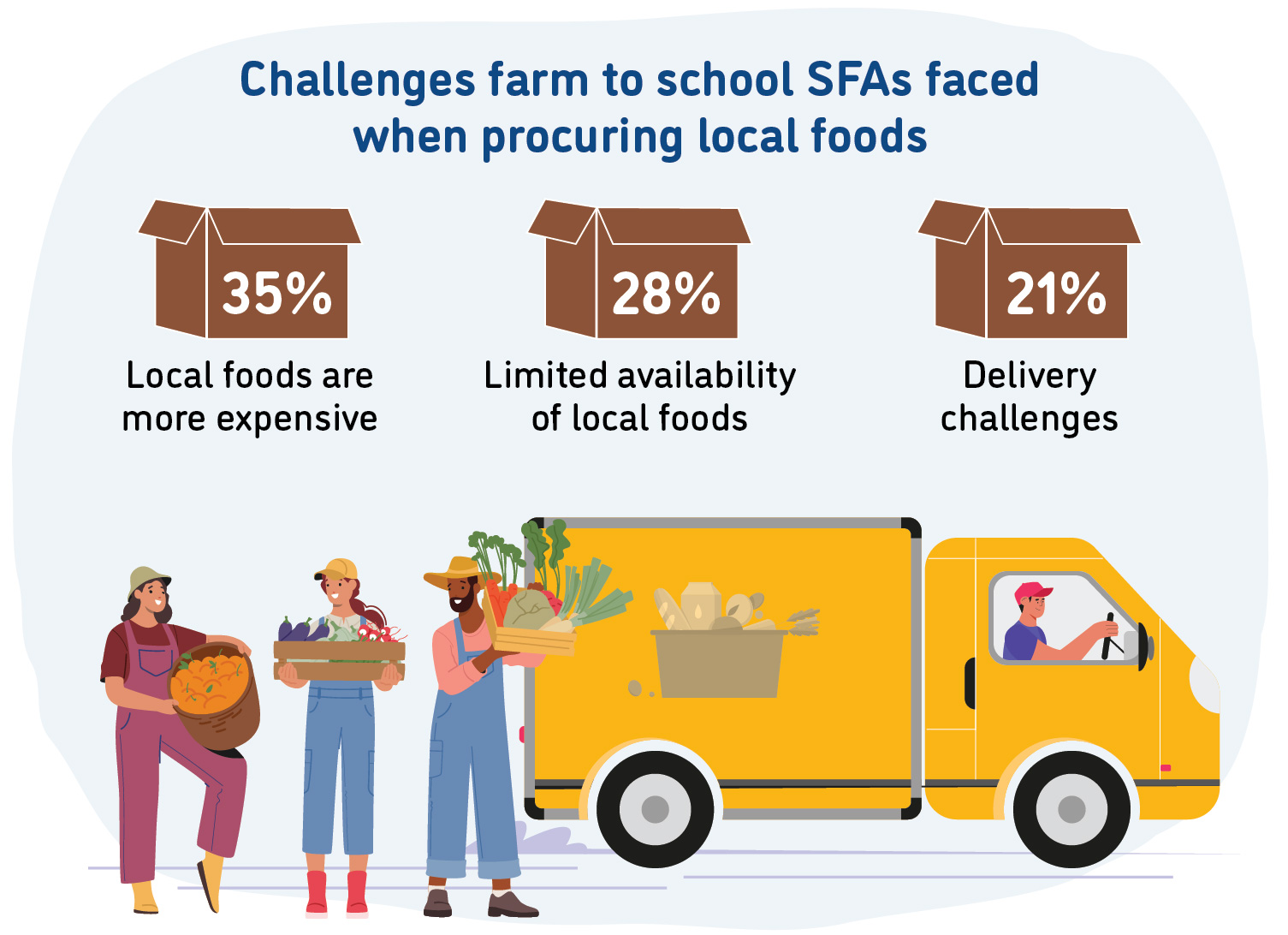
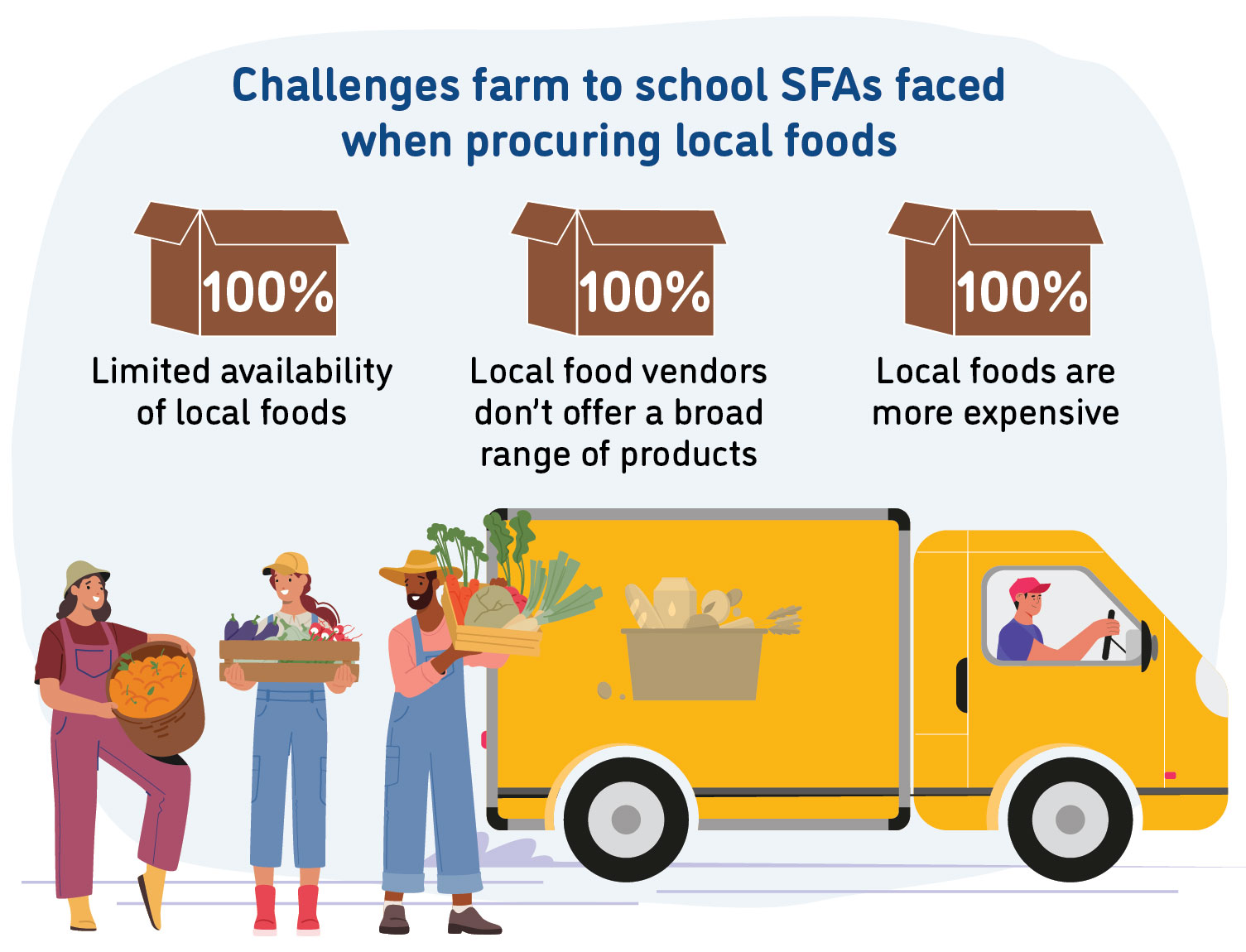
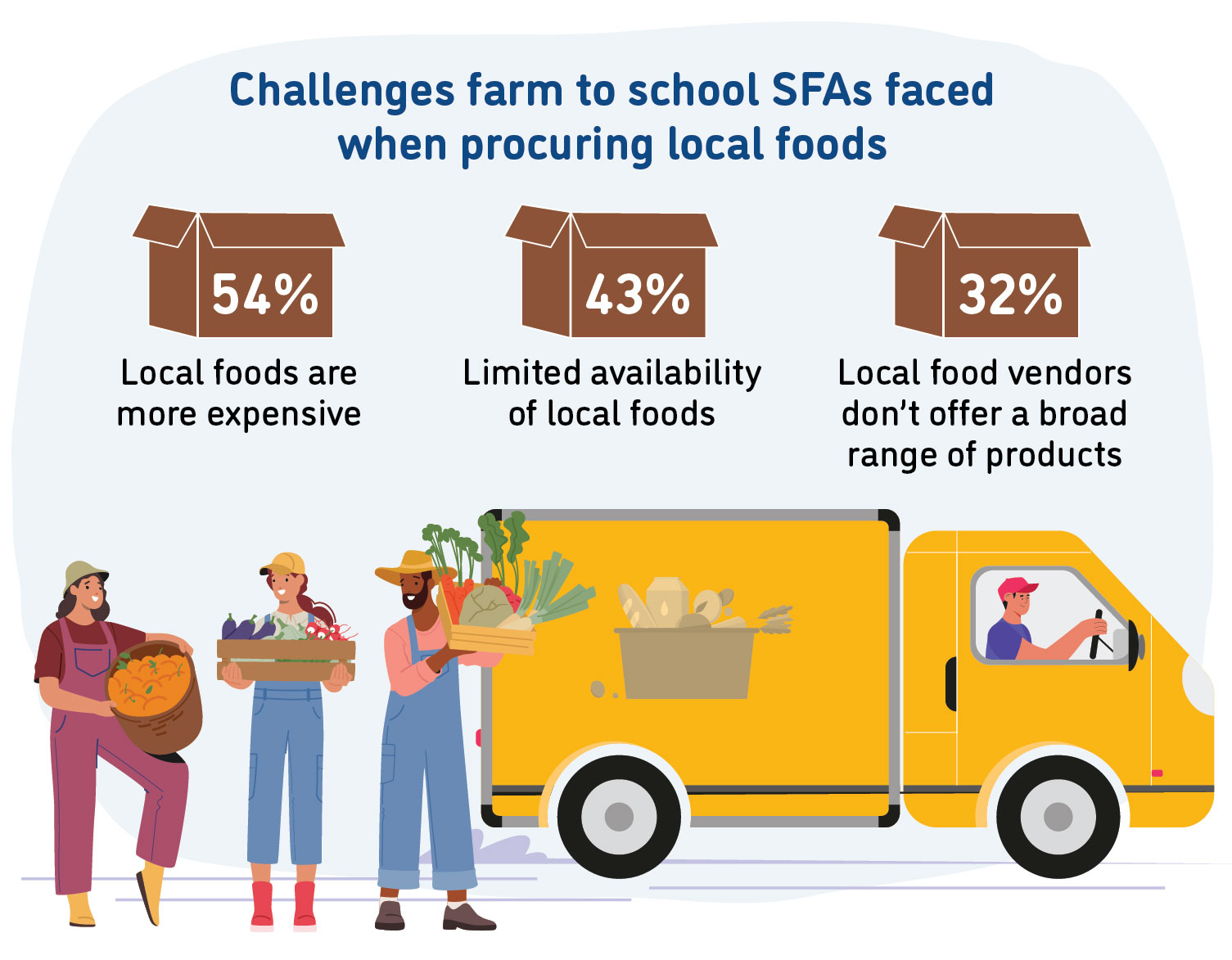
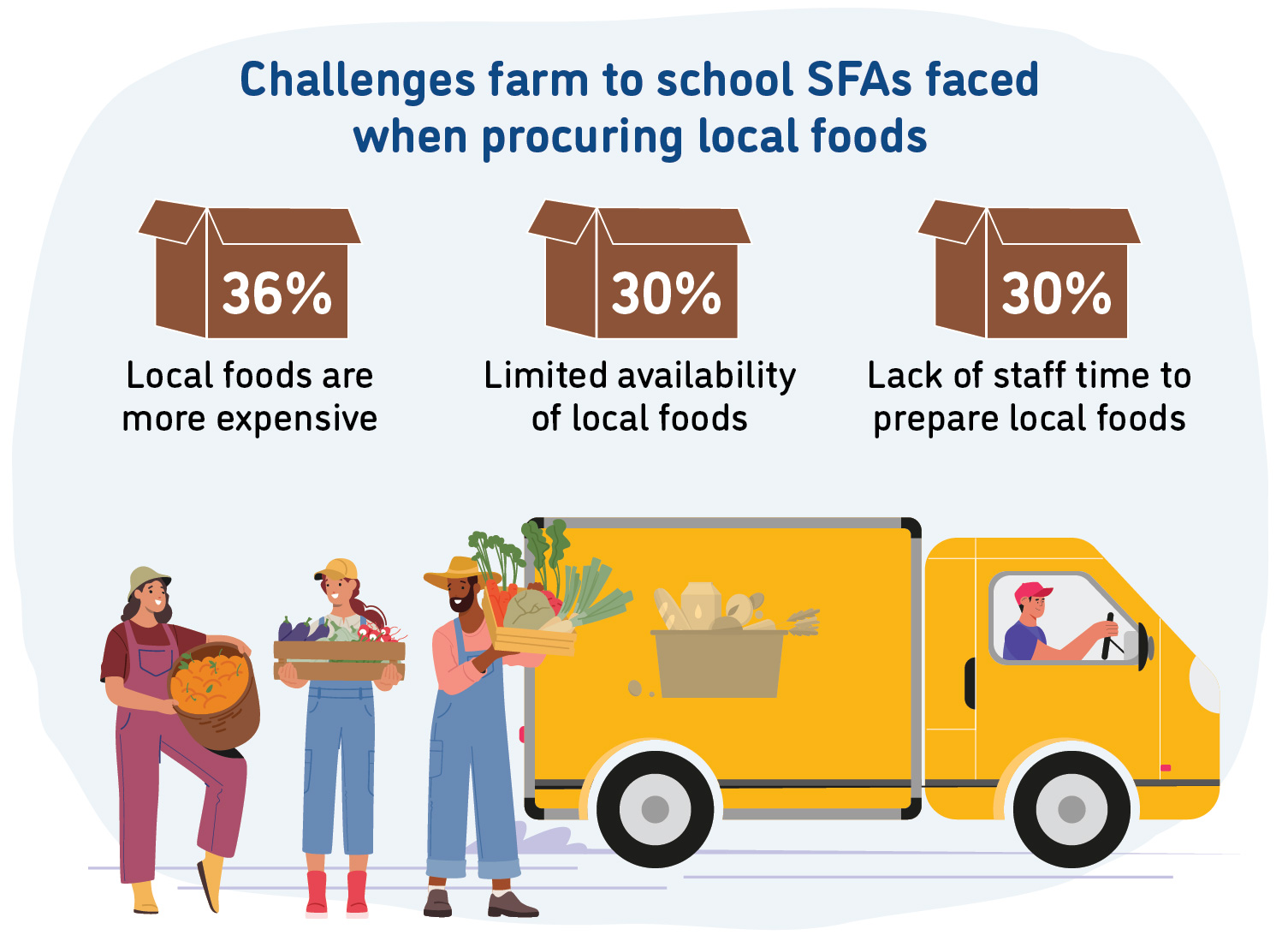
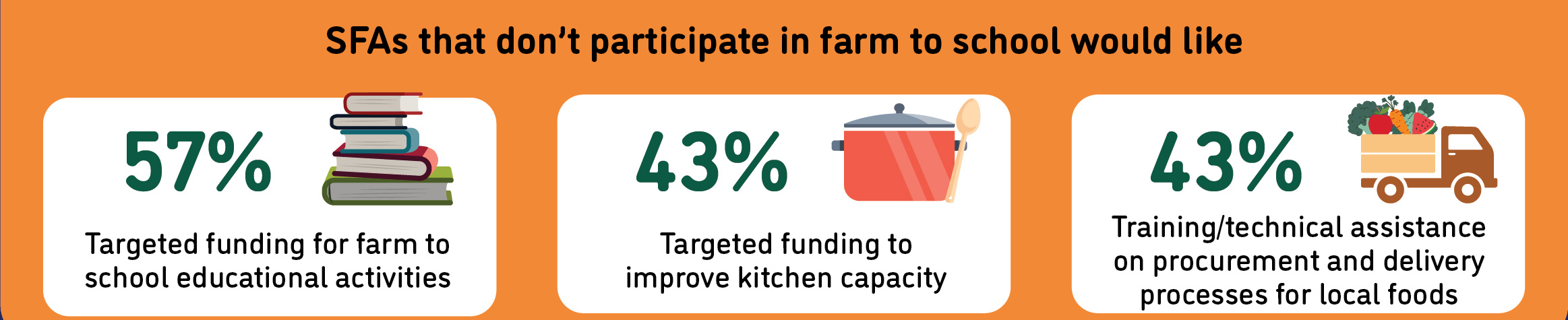
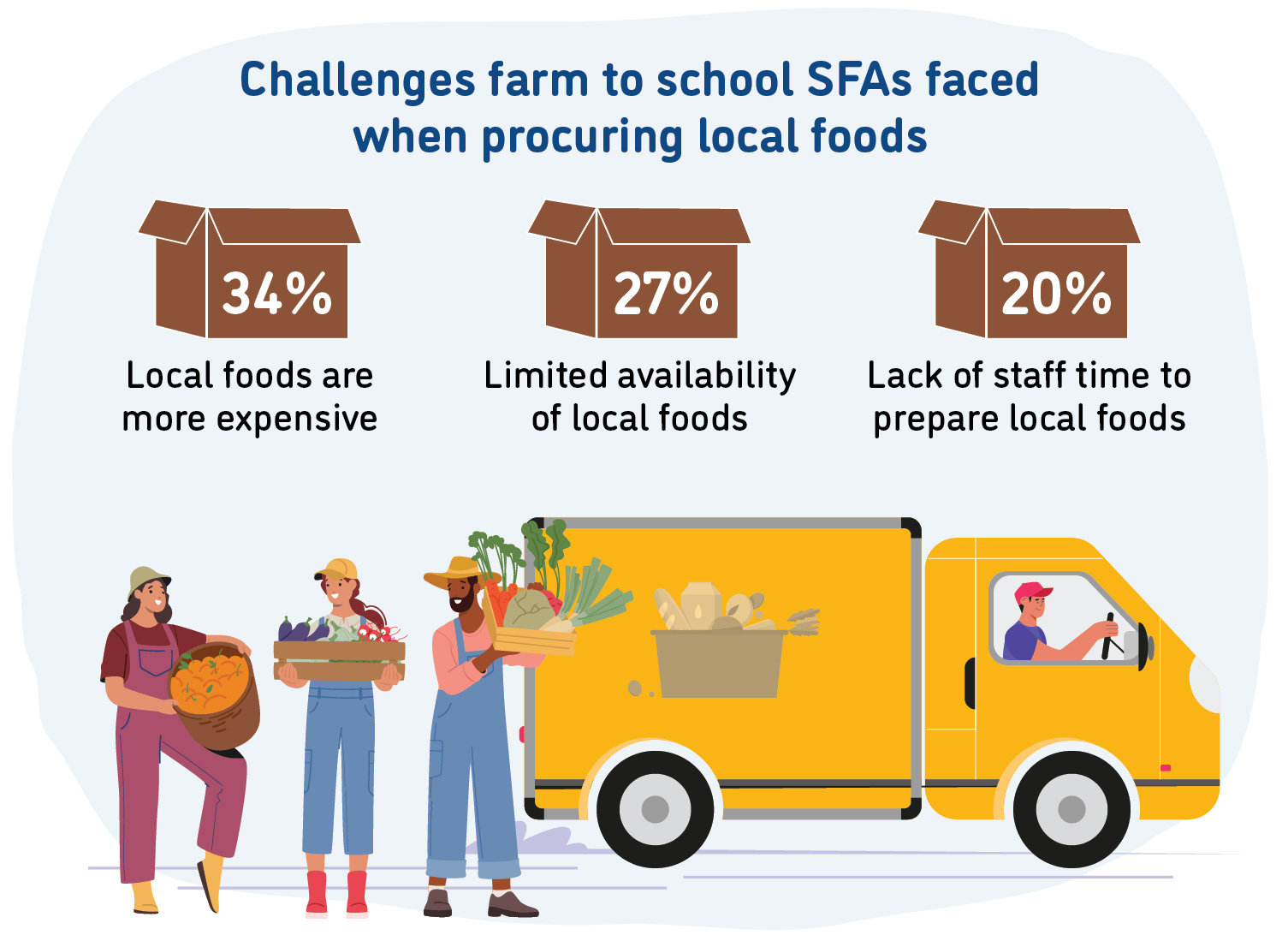
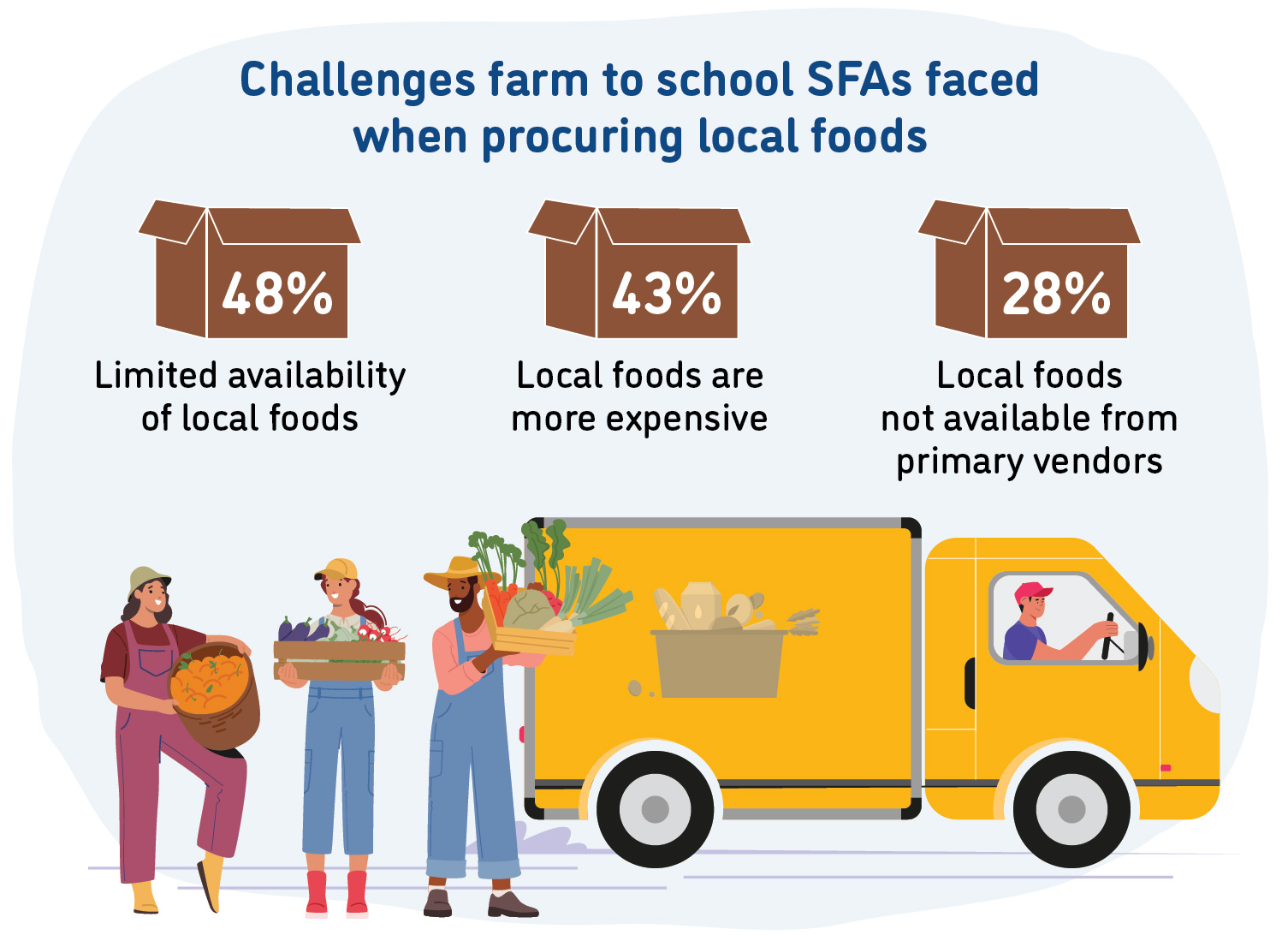
- Some SFAs said they had challenges with farm to school, most notably availability of local foods (42 percent of participating SFAs) and cost of local foods (35 percent).
- SFA engagement in farm to school grew in spite of challenges from COVID-19.
Attachments
- 2023 Farm to School Census Public Dataset - Microsoft excel file that includes all individual responses from school food authority respondents.
- 2023 Farm to School Census Public Dataset Codebook - may be used to interpret the findings in the dataset.
- 2023 Farm to School National and State Data Workbook - reference document with weighted summaries of national and state level responses.
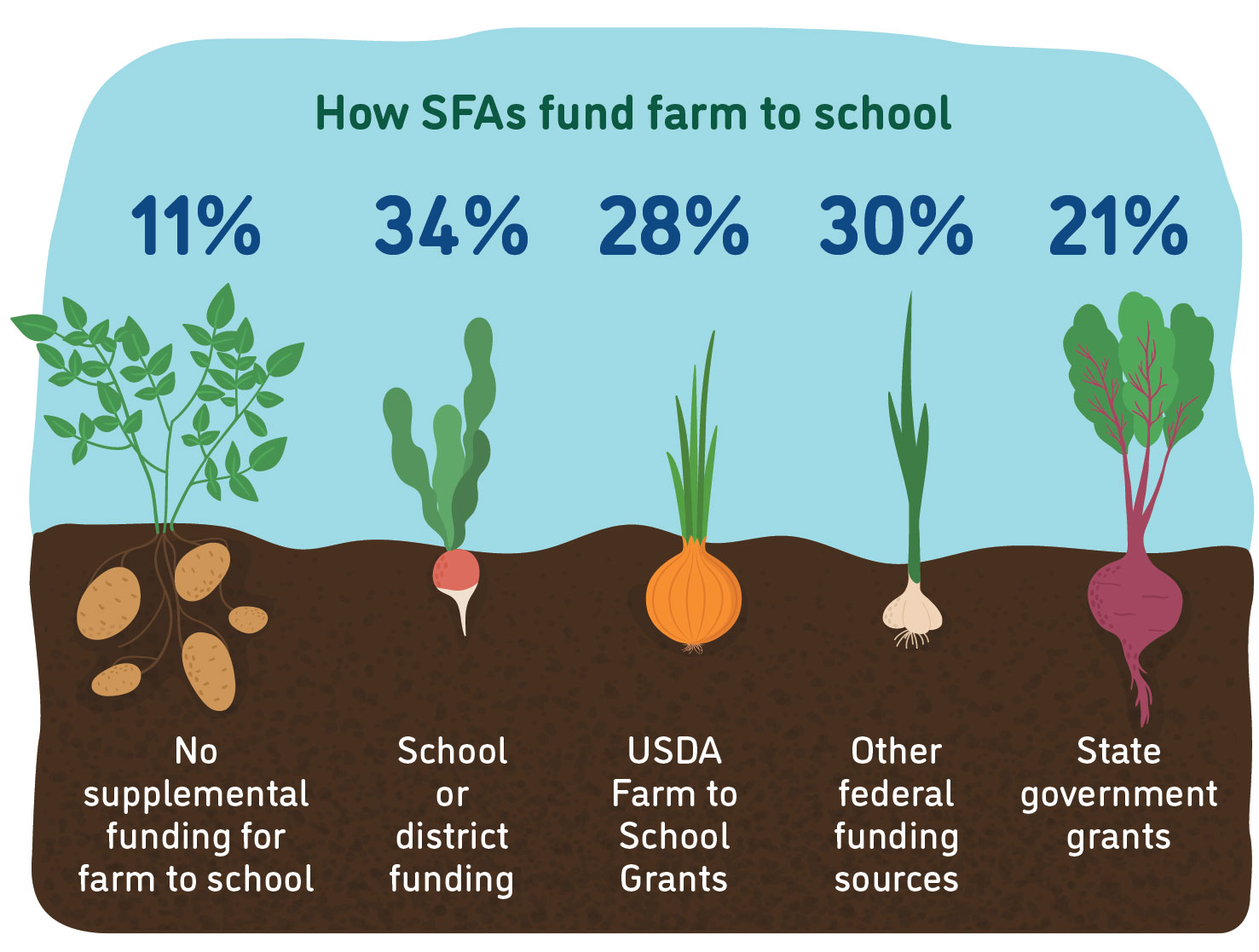
The 2023 Farm to School Census collected information on farm to school participation by school food authorities (SFAs) in school year 2022–23. Every SFA participating in the National School Lunch Program in the 50 states, Washington, DC, and five territories received an online survey asking about the farm to school activities they participated in, details of their participation, and their perspectives on farm to school.
FY 2024 SNAP Fraud Framework Implementation Grant Awards
On September 18, 2024, FNS awarded approximately $4.9 million in SNAP Fraud Framework grants to support state’s efforts to improve and expand recipient fraud prevention, detection, and investigation efforts using the procedures, ideas and practices outlined in the SNAP Fraud Framework.
FY 24 Award Summaries
- West Virginia Department of Human Services ($331,424)
Build a case management and fraud reduction software for tracking SNAP investigative caseloads that facilitates collaboration across staff and teams. Purchase equipment and supplies to produce anti-fraud materials to enhance the integrity of SNAP administration. - Montana Department of Public Health and Human Services ($424,388)
Implement technology improvements to increase program integrity efforts by capturing and analyzing IP addresses in order to track and identify recipient fraud, along with streamlining the reporting of SNAP investigations and dispositions. - Maine Department of Health and Human Services ($656,402)
Restructure overpayment database elements and update key functionality to address manual processing and tracking of overpayments. This project is expected to produce a sustainable means for state workers to management and report overpayments to effectively monitor and prevent waste and fraud. - Texas Department of Health and Human Services Commission ($425,000)
Implement Electronic Benefit Transfer (EBT) enhancements for SNAP recipients to increase fraud awareness and participation in fraud prevention activities. Improve community partnership engagements for better collaboration across various stakeholders and educate staff on effective prevention, detection and analysis of fraud on all fronts. - Illinois Department of Human Services ($475,071)
Implement a new fraud alerting system to address recipient fraud. The system will help detect potentially false information used on SNAP applications and will alert state staff on when there are fraud concerns on an application. - Kentucky Cabinet for Health and Family Services ($161,344)
Educate SNAP recipients, retailers and local office regarding electronic benefit theft and skimming/cloning of EBT card benefits. This includes establishing an annual educational training program for field staff on skimming/cloning methods, current fraud patterns, and monitoring and prevention techniques. - Florida Department of Children and Families ($748,600)
Implement a tool to track IP addresses to provide state staff with improved information and automated tools to identify potential instances of SNAP benefit fraud such as identification of SNAP applicants applying for and/or receiving SNAP benefits while not being a resident of the state of Florida. - Mississippi Department of Human Services ($238,843)
Implement a proactive data-driven approach to fraud prevention, detection, and deterrence system to quickly identify and prioritize cases for evaluation. - Michigan Health and Human Services ($746,445)
Establish an end-to-end data analytics platform to help identify skimmers using software services that help perform advance analytic functions. - Minnesota Department of Human Services ($749,000)
Develop cardholder enhancements to protect SNAP recipients from benefits theft, leverage data analytics to detect and prevent fraudulent activities, and provide robust training to SNAP recipients, eligibility workers, and investigators to enhance the integrity of SNAP benefit administration.
On Sept. 18, 2024, FNS awarded approximately $4.9 million in SNAP Fraud Framework grants to support state’s efforts to improve and expand recipient fraud prevention, detection, and investigation efforts using the procedures, ideas and practices outlined in the SNAP Fraud Framework.
SNAP-Ed Intervention Scoring Tool FNS-885 and Intervention Submission Form FNS-886
Summary
The SNAP-Ed Strategies and Interventions: An Obesity Prevention Toolkit for States (SNAP-Ed Toolkit) was developed collaboratively by FNS national and regional office SNAP-Ed staff, the National Collaborative on Childhood Obesity Reduction (NCCOR), and the Association of SNAP Nutrition Education Administrators (ASNNA). The SNAP-Ed Toolkit website and resources were recently moved to the SNAP-Ed Connection website to establish SNAP-Ed's online Clearinghouse, which includes evidence-based SNAP-Ed interventions. State agencies can use the evidence-based interventions in the SNAP-Ed Clearinghouse (formerly the SNAP-Ed Toolkit) to locate interventions for their implementation of SNAP-Ed programming.
FNS updated the forms and burden estimates based on consultations with SNAP-Ed state and implementing agency partners, other federal agencies, and users of the forms. FNS has refined and streamlined the forms, and included additional instructions, questions, or opportunities for response where users, trainers, and FNS partners indicated areas for improvement. FNS has also made wording changes to fix typographical errors and improve readability. Overall, the changes to the forms are focused on form improvements for the end user.
The SNAP-Ed Intervention Submission Form: FNS-886 provides information about the intervention they are submitting for inclusion in the SNAP-Ed Clearinghouse. This information includes intervention materials (such as materials used to develop and test the intervention, evaluation materials, or reports), the intended audience, and the evidence base which illustrates their effectiveness. The FNS-886 captures this information through a combination of multiple-choice boxes and text response areas. Submitters include members of SNAP-Ed state and implementing agencies, researchers from academic institutions and federal agencies, and non-profit or private sector nutrition education and physical activity intervention developers.
SNAP-Ed Intervention Scoring Tool Form FNS-885, is used to assess and rate each submission. The reviewers' assessments are collected through a combination of numerical and text entry fields.
Request for Comments
Comments regarding this information collection received by Oct. 21, 2024 will be considered. Written comments and recommendations for the proposed information collection should be submitted within 30 days of the publication of this notice on the following website www.reginfo.gov/public/do/PRAMain. Find this particular information collection by selecting “Currently under 30-day Review—Open for Public Comments” or by using the search function.
FNS updated the forms and burden estimates based on consultations with SNAP-Ed state and implementing agency partners, other federal agencies, and users of the forms.
Farm to School Grantee Progress Reports (2024)
FY24 Farm to School Grant Reporting Requirements and Indicators Webinar:
Watch the webinar above to understand the Farm to School FNS-908 progress reporting requirements and guidance on how to correctly record and track your required indicators for progress reporting.
Patrick Leahy Farm to School Grantees are required to submit progress reports using the FNS-908 reporting form. Links to the progress report for each grant type are provided below along with an indicator key to assist you in completing the form.
The reports on this page are only for active 2024 Farm to School Grantees. If you are operating a Farm to School Grant from a prior year, please refer to the reports that correspond with the year your grant was awarded.
For technical support navigating the FNS-908 reporting form, please watch the FNS-908 Overview for Farm to School Grantees | Food and Nutrition Service.
In order for the report to open properly, you must save it to your computer and open the file using ADOBE READER, then choose “enable all content” when prompted. These reports will not open in your web browser.
- State Agency Grant or Implementation Grant
Performance Progress Report
Indicators Key
Required Indicators 908 Friendly Equivalent Number and types of partner organizations No. & Types of Partner Orgs Number of collaborating early childhood education sites (age 0-pre-K) No. of CACFP sites Number of collaborating primary school sites (grades k-5) No. of primary schools Number of collaborating secondary school sites (grades 6-12) No. of secondary schools Number of early childhood educations students impacted (age 0-pre K) No. of CACFP participants Number of primary students impacted (grades k-5) No. of primary students Number of secondary students impacted (grades 6-12) No. of secondary students Dollar value of local foods purchased: Fruit Dollar value of fruit Dollar value of local foods purchased: Vegetables Dollar value of vegetables Dollar value of local foods purchased: Fluid Milk Dollar value of fluid milk Dollar value of local food purchased: Other Dairy Dollar value of other dairy Dollar value of local food purchased: Protein Dollar value of protein Dollar value of local food purchased: Grains (including baked goods) Dollar value of grains Dollar value of local food purchased: Other Dollar value of other - Turn-Key Action Planning Grant
Performance Progress Report
Indicators Key
Required Indicators 908 Friendly Equivalent Number attended No. Attended Number and types of partner organizations No. & Types of Partner Orgs Number of collaborating early childhood education sites (age 0-pre-K) No. of CACFP sites Number of collaborating primary school sites (grades k-5) No. of primary schools Number of collaborating secondary school sites (grades 6-12) No. of secondary schools Number of early childhood educations students impacted (age 0-pre K) No. of CACFP participants Number of primary students impacted (grades k-5) No. of primary students Number of secondary students impacted (grades 6-12) No. of secondary students - Turn-Key Agricultural Education Grant
Performance Progress Report
Indicators Key
Required Indicators 908 Friendly Equivalent Number attended No. Attended Number and types of partner organizations No. & Types of Partner Orgs Number of collaborating early childhood education sites (age 0-pre-K) No. of CACFP sites Number of collaborating primary school sites (grades k-5) No. of primary schools Number of collaborating secondary school sites (grades 6-12) No. of secondary schools Number of early childhood educations students impacted (age 0-pre K) No. of CACFP participants Number of primary students impacted (grades k-5) No. of primary students Number of secondary students impacted (grades 6-12) No. of secondary students Dollar value of local foods purchased: Fruit Dollar value of fruit Dollar value of local foods purchased: Vegetables Dollar value of vegetables Dollar value of local foods purchased: Fluid Milk Dollar value of fluid milk Dollar value of local food purchased: Other Dairy Dollar value of other dairy Dollar value of local food purchased: Protein Dollar value of protein Dollar value of local food purchased: Grains (including baked goods) Dollar value of grains Dollar value of local food purchased: Other Dollar value of other - Turn-Key Edible Garden Grant
Performance Progress Report
Indicators Key
Required Indicators 908 Friendly Equivalent Number attended No. Attended Number and types of partner organizations No. & Types of Partner Orgs Number of gardens completed No. of gardens completed Number of collaborating early childhood education sites (age 0-pre-K) No. of CACFP sites Number of collaborating primary school sites (grades k-5) No. of primary schools Number of collaborating secondary school sites (grades 6-12) No. of secondary schools Number of early childhood educations students impacted (age 0-pre K) No. of CACFP participants Number of primary students impacted (grades k-5) No. of primary students Number of secondary students impacted (grades 612) No. of secondary students Dollar value of local foods purchased: Fruit Dollar value of fruit Dollar value of local foods purchased: Vegetables Dollar value of vegetables Dollar value of local foods purchased: Fluid Milk Dollar value of fluid milk Dollar value of local food purchased: Other Dairy Dollar value of other dairy Dollar value of local food purchased: Protein Dollar value of protein Dollar value of local food purchased: Grains (including baked goods) Dollar value of grains Dollar value of local food purchased: Other Dollar value of other Pounds of food produced from edible garden site Pounds of food produced
FNS-908 Reporting Forms and the 908 Indicator Keys for 2024 Patrick Leahy Farm to School Grant Participants.
FY 22 SNAP Characteristics Video
We released a new report on SNAP household characteristics for fiscal year (FY) 2022. For more information about SNAP benefits and research findings check out our SNAP in Action Dashboard.
FNS recently released a new report on SNAP household characteristics for fiscal year (FY) 2022.
Child and Adult Care Food Program
Summary
The Richard B. Russell National School Lunch Act (NSLA) (42 USC 1751 et seq.) authorizes the Child and Adult Care Program (CACFP). Section 10 of the Child Nutrition Act of 1966 (CNA) (PL 111-296) requires the Secretary of Agriculture to prescribe such regulations as deemed necessary to carry out the child nutrition programs authorized under the NSLA and the CNA. The CACFP provides reimbursements for nutritious meals and snacks to eligible children and adults who are enrolled for care at participating childcare centers, day care homes, and adult care centers, in addition to children and adolescents participating in afterschool care programs. FNS published a final rule, “Child Nutrition Programs: Meal Patterns Consistent with the 2020-2025 Dietary Guidelines for Americans ” (RIN 0584-AE88) in the Federal Register on April 25, 2024 (89 FR 31962) which introduces a new recordkeeping requirement for the CACFP. Under the CACFP, FNS is required to develop nutrition requirements that are consistent with the goals of the most recent Dietary Guidelines for Americans. In addition, institutions and facilities are required by regulation to comply with the meal requirements. This rulemaking finalizes long-term school, institution, and facility nutrition requirements based on the most recent Dietary Guidelines for Americans and feedback from child nutrition program partners. The final rule allows CACFP institutions and facilities that serve primarily American Indian or Alaska Native children to serve vegetables to meet the grains requirements. FNS is also accounting for start-up costs of $305,000 for the CACFP operators associated with menu changes because of this final rule.
FNS is publishing a 30-Day Notice for this final rule submission because the agency changed how the requirement and burden change were submitted for approval in the final rule from what was used in the proposed rule. Due to uncertain timing of the rules in conjunction with the renewal of OMB Control Number 0584-0006, FNS decided to request a new OMB control number for the collections related to the rule and later merge them into the existing information collections that are related to these requirements. By the time of the final rule, however, OMB Control Number 0584-0006 was renewed, so FNS decided to switch to revisions of the existing collections, rather than requesting a new OMB control number. OMB reviewed the proposed submission as “filed with comment” on March 21, 2023, and assigned the preliminary OMB Control Number 0584-0679 to the collection. However, because FNS decided to submit revisions to the existing information collections, this preliminary OMB control number was not used for the final rule submission.
Request for Comments
Comments regarding this information collection received by Sept. 26, 2024 will be considered. Written comments and recommendations for the proposed information collection should be submitted within 30 days of the publication of this notice on the following website https://www.reginfo.gov/public/.
Find this particular information collection by selecting “Currently under 30-day Review—Open for Public Comments” or by using the search function. An agency may not conduct or sponsor a collection of information unless the collection of information displays a currently valid OMB control number and the agency informs potential persons who are to respond to the collection of information that such persons are not required to respond to the collection of information unless it displays a currently valid OMB control number.
Need and Use of the Information
The revisions to this ongoing information collection are due to the final rule, “Child Nutrition Programs: Meal Patterns Consistent with the 2020-2025 Dietary Guidelines for Americans”, which amends program regulations and introduces new recordkeeping requirements into this collection. CACFP program operators at institutions and facilities must maintain documentation required by this rule. This final rule contains information requirements that are required to obtain or retain a benefit. The CACFP institutions and facilities are required to maintain documentation to show that they are eligible, when they are serving primarily American Indian or Alaska Native children, to implement the menu planning options to serve vegetables to meet the grains requirement. Maintaining these records ensures program integrity. FNS uses this information to ensure compliance with the final rule requirements.
FNS is publishing a 30-Day Notice for this final rule submission because the agency changed how the requirements and burden changes were submitted for approval in the final rule from what was used in the proposed rule
Summer Food Service Program
Summary
The Richard B. Russell National School Lunch Act (NSLA) (42 USC 1751 et seq.) authorizes the Summer Food Service Program (SFSP) 7 CFR part 225. Section 10 of the Child Nutrition Act of 1966 (CNA) (PL 111-296) requires the Secretary of Agriculture to prescribe such regulations as deemed necessary to carry out child nutrition programs authorized under the NSLA and CNA. The SFSP is directed toward children in low-income areas when school is not in session and is administered by FNS in partnership with state agencies and local program sponsors. FNS published a final rule, “ Child Nutrition Programs: Meal Patterns Consistent with the 2020-2025 Dietary Guidelines for Americans ” (RIN 0584-AE88) in the Federal Register on April 25, 2024 (89 FR 31962) which introduces a new recordkeeping requirement for the SFSP. Under the SFSP, FNS is required to develop nutrition requirements that are consistent with the goals of the most recent Dietary Guidelines for Americans. In addition, SFSP sponsors are required by regulation to comply with the meal requirements. This rulemaking finalizes long-term school, institution, and facility nutrition requirements based on the most recent Dietary Guidelines for Americans and feedback from child nutrition program partners. The final rule allows SFSP sponsors, including non-profit institutions and camps, that serve primarily American Indian or Alaska Native children to serve vegetables to meet the grains requirement. FNS is also accounting for start-up costs of $10,000 for the SFSP operators associated with menu changes because of this final rule.
FNS is publishing a 30-Day Notice for this final rule submission because the agency changed how the requirement and burden change were submitted for approval in the final rule from what was used in the proposed rule. Due to uncertain timing of the rules in conjunction with the renewal of OMB Control Number 0584-0006, FNS decided to request a new OMB control number for the collections related to the rule and later merge them into the existing information collections that are related to these requirements. By the time of the final rule, however, OMB Control Number 0584-0006 was renewed, so FNS decided to switch to revisions of the existing collections, rather than requesting a new OMB control number. OMB reviewed the proposed submission as “filed with comment” on March 21, 2023, and assigned the preliminary OMB Control Number 0584-0679 to the collection. However, because FNS decided to submit revisions to the existing information collections, this preliminary OMB control number was not used for the final rule submission.
Request for Comments
Comments regarding this information collection received by Sept. 26, 2024 will be considered. Written comments and recommendations for the proposed information collection should be submitted within 30 days of the publication of this notice on the following website www.reginfo.gov/public/do/PRAMain.
Find this particular information collection by selecting “Currently under 30-day Review—Open for Public Comments” or by using the search function. An agency may not conduct or sponsor a collection of information unless the collection of information displays a currently valid OMB control number and the agency informs potential persons who are to respond to the collection of information that such persons are not required to respond to the collection of information unless it displays a currently valid OMB control number.
Need and Use of the Information
The revisions to this ongoing information collection are due to the final rule, “Child Nutrition Programs: Meal Patterns Consistent with the 2020-2025 Dietary Guidelines for Americans”, which amends program regulations and introduces a new recordkeeping requirement into this collection. SFSP program sponsors, including non-profit institutions and camps, must maintain documentation required by this rule. This final rule contains an information requirement that is required to obtain or retain a benefit. The SFSP sponsors (institutions and camps) are required to maintain documentation to show that they are eligible, when they are serving primarily American Indian or Alaska Native children, to implement the menu planning options to serve vegetables to meet the grains requirement. Maintaining these records ensures program integrity. FNS uses this information to ensure compliance with the final rule requirements concerning this menu planning option.
FNS is publishing a 30-Day Notice for this final rule submission because the agency changed how the requirements and burden changes were submitted for approval in the final rule from what was used in the proposed rule
Farm to School ASAP Training Webinar
This training provides Farm to School grantees instructions on how to complete ASAP enrollment and use ASAP to access your grant funds.
This training to provides grantees instruction on how to complete ASAP enrollment and use ASAP to access your grant funds.