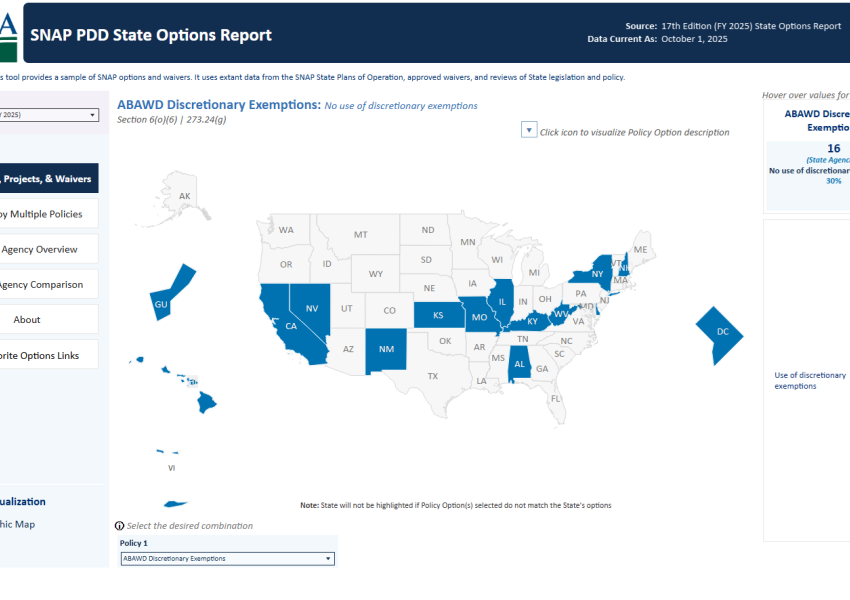
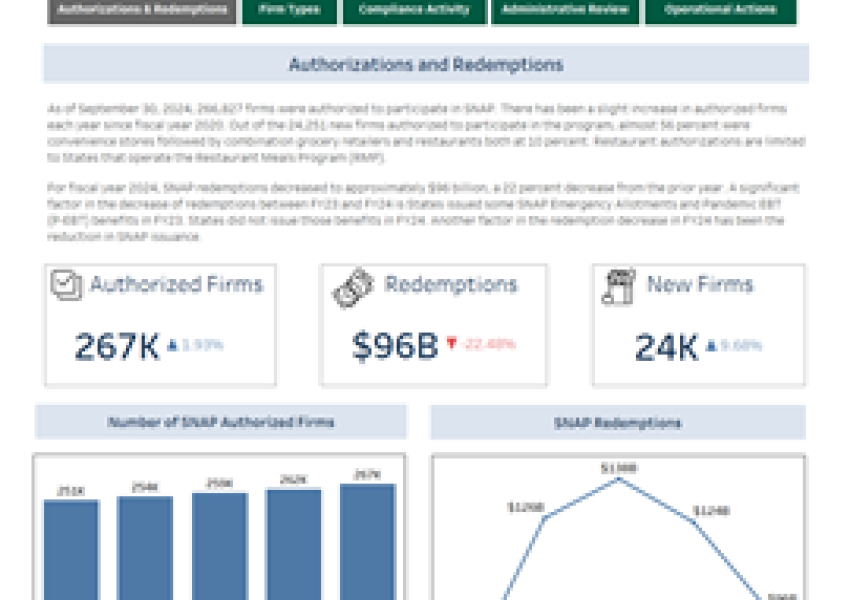
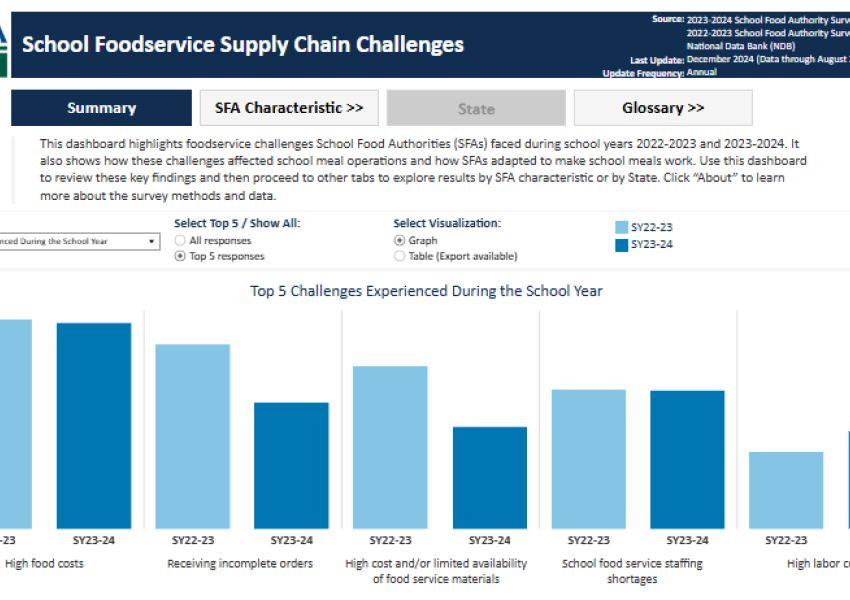
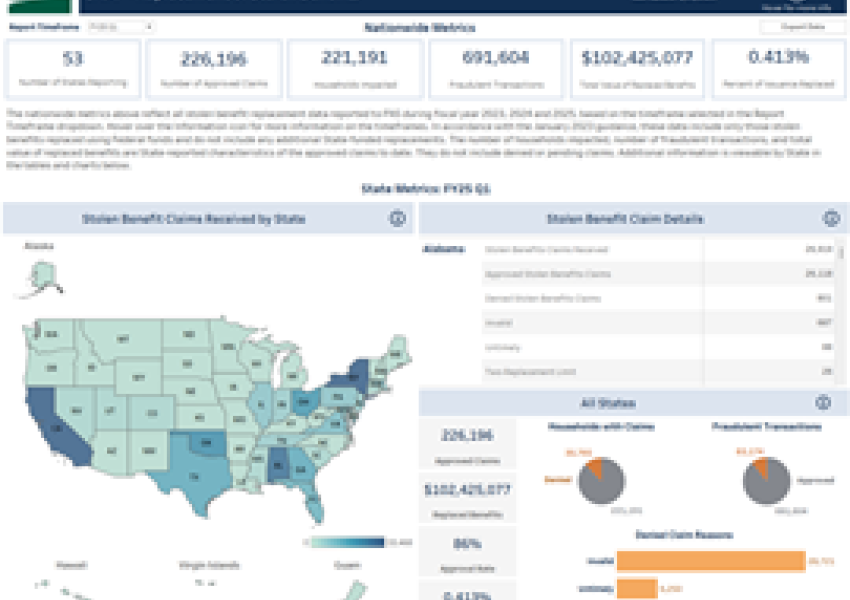
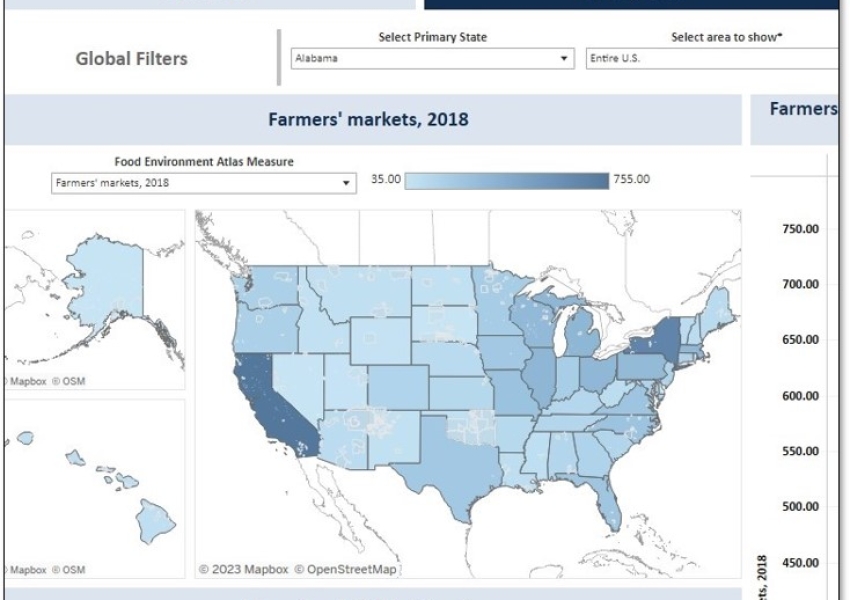
FNS regularly conducts research and data analysis to inform program or policy decisions and understand nutrition program outcomes. In addition, FNS seeks to make data accessible to state and local agencies, service providers, and the public by developing data visualization and analytics tools that can be used to support nutrition program delivery or report on outcomes.
The below data visualization and analytics products bring together FNS, USDA, and other federal datasets to answer questions related to food security, nutrition assistance programs, and the systems that support them. Dashboards include “about” or “information” pages to answer questions about navigation, interactive functionality, data sources, and the data transformations that have been applied.
Request for Information: Ultra-Processed Foods - Extension of Comment Period
Summary
FDA and USDA (we) are extending the comment period for the notice that appeared in the Federal Register of July 25, 2025. In the notice, we requested data and information to help develop a uniform definition of ultra-processed foods (UPF or UPFs). In response to requests for an extension, we are extending the comment period until Oct. 23, 2025, to allow interested persons additional time to submit comments.
Request for Comments
We are extending the comment period announced in the notice published July 25, 2025 (90 FR 35305). Electronic or written comments must be submitted by Oct. 23, 2025.
You may submit comments as follows. Please note that late, untimely filed comments will not be considered. The Regulations.gov electronic filing system will accept comments until 11:59 p.m. ET at the end of Oct. 23, 2025. Comments received by mail/hand delivery/courier (for written/paper submissions) will be considered timely if they are received on or before that date.
Electronic Submissions
Submit electronic comments in the following way:
- Federal eRulemaking Portal: Regulations.gov. Follow the instructions for submitting comments. Comments submitted electronically, including attachments, to Regulations.gov will be posted to the docket unchanged. Because your comment will be made public, you are solely responsible for ensuring that your comment does not include any confidential information that you or a third party may not wish to be posted, such as medical information, your or anyone else's Social Security number, or confidential business information, such as a manufacturing process. Please note that if you include your name, contact information, or other information that identifies you in the body of your comments, that information will be posted on Regulations.gov.
- If you want to submit a comment with confidential information that you do not wish to be made available to the public, submit the comment as a written/paper submission and in the manner detailed (see “Written/Paper Submissions” and “Instructions”).
Written/Paper Submissions
Submit written/paper submissions as follows:
- Mail/Hand delivery/Courier (for written/paper submissions): Dockets Management Staff (HFA-305), Food and Drug Administration, 5630 Fishers Lane, Rm. 1061, Rockville, MD 20852.
- For written/paper comments submitted to the Dockets Management Staff, FDA will post your comment, as well as any attachments, except for information submitted, marked and identified, as confidential, if submitted as detailed in “Instructions.”
Instructions: All submissions received must include the Docket No. FDA-2025-N-1793 for “Ultra-Processed Foods; Request for Information.” Received comments, those filed in a timely manner, will be placed in the docket and, except for those submitted as “Confidential Submissions,” publicly viewable at Regulations.gov or at the Dockets Management Staff between 9 a.m. and 4 p.m., Monday through Friday, 240-402-7500.
- Confidential Submissions—To submit a comment with confidential information that you do not wish to be made publicly available, submit your comments only as a written/paper submission. You should submit two copies total. One copy will include the information you claim to be confidential with a heading or cover note that states “THIS DOCUMENT CONTAINS CONFIDENTIAL INFORMATION.” We will review this copy, including the claimed confidential information, in our consideration of comments. The second copy, which will have the claimed confidential information redacted/blacked out, will be available for public viewing and posted on Regulations.gov. Submit both copies to the Dockets Management Staff. If you do not wish your name and contact information to be made publicly available, you can provide this information on the cover sheet and not in the body of your comments and you must identify this information as “confidential.” Any information marked as “confidential” will not be disclosed except in accordance with 21 CFR 10.20 and other applicable disclosure law. For more information about FDA's posting of comments to public dockets, see 80 FR 56469, Sept. 18, 2015.
Docket: For access to the docket to read background documents or the electronic and written/paper comments received, go to Regulations.gov and insert the docket number, found in brackets in the heading of this document, into the “Search” box and follow the prompts or go to the Dockets Management Staff, 5630 Fishers Lane, Rm. 1061, Rockville, MD 20852, 240-402-7500.
Supplementary Information
In the Federal Register of July 25, 2025, FDA and USDA published a notice requesting data and information to help develop a uniform definition of ultra-processed foods for human food products in the U.S. food supply (90 FR 35305). A uniform UPF definition, developed as part of a joint effort by federal agencies, would allow for consistency in research and policy to pave the way for addressing health concerns associated with the consumption of UPFs. The notice requested comments by Sept. 23, 2025.
We have received requests to extend the comment period for the notice. Pointing to the complexity of the questions, the importance of the issue, and other factors, the requests assert that additional time would allow stakeholders to provide FDA and USDA detailed responses. We have considered the requests and are extending the comment period for the notice by 30 days, until Oct. 23, 2025. We believe that the extension will allow adequate time for interested persons to submit comments.
FDA and USDA (we) are extending the comment period for the notice that appeared in the Federal Register of July 25, 2025. In the notice, we requested data and information to help develop a uniform definition of ultra-processed foods. In response to requests for an extension, we are extending the comment period until Oct. 23, 2025, to allow interested persons additional time to submit comments.
MAHA Commission Unveils Sweeping Strategy to Make Our Children Healthy Again
Washington, Sept. 9, 2025 – The Make America Healthy Again Commission today released the Make Our Children Healthy Again Strategy, a sweeping plan with more than 120 initiatives to reverse the failed policies that fueled America’s childhood chronic disease epidemic. The strategy outlines targeted executive actions to advance gold-standard science, realign incentives, increase public awareness, and strengthen private-sector collaboration.
Chaired by U.S. Health and Human Services Secretary Robert F. Kennedy Jr., the Commission is tasked with investigating and addressing the root causes of America’s escalating health crisis, with a focus on childhood chronic diseases.
“The Trump Administration is mobilizing every part of government to confront the childhood chronic disease epidemic,” Secretary Kennedy said. “This strategy represents the most sweeping reform agenda in modern history—realigning our food and health systems, driving education, and unleashing science to protect America’s children and families. We are ending the corporate capture of public health, restoring transparency, and putting gold-standard science—not special interests—at the center of every decision.”
“Today’s MAHA Commission report is another historic milestone for our country and a testament to President Trump’s leadership and commitment to Make America Healthy Again,” said U.S. Secretary of Agriculture Brooke L. Rollins. “America’s farmers and ranchers are at the heart of the solution — alongside doctors, parents, and communities - to fight chronic disease and protect future generations. Under this Administration, we are not just talking about healthy outcomes; we are delivering them by securing voluntary commitments to remove artificial food dye from major brands, providing technical assistance to states interested in restricting junk food and soda from SNAP, and providing growers with new tools to maintain and improve soil health, including the introduction of a regenerative farming practice pilot program. Together with our partners at HHS and EPA, we are charting a new course, strengthening the health of our families, and ensuring the United States leads the world with the safest, strongest, and most abundant food supply.”
Key Focus Areas of the Strategy
Restoring Science & Research: Expanding NIH and agency research into chronic disease prevention, nutrition and metabolic health, food quality, environmental exposures, autism, gut microbiome, precision agriculture, rural and tribal health, vaccine injury, and mental health.
Historic Executive Actions: Reforming dietary guidelines; defining ultra-processed foods; improving food labeling; closing the GRAS loophole; raising infant formula standards; removing harmful chemicals from the food supply; increasing oversight and enforcement of direct-to-consumer prescription drug advertising laws; improving food served in schools, hospitals, and to veterans; and reforming Medicaid quality metrics to measure health outcomes.
Process Reform & Deregulation: Streamlining organic certification; easing barriers to farm-to-school programs and direct-to-consumer sales; restoring whole milk in schools; supporting mobile grocery and processing units; modernizing FDA drug and device approval; and accelerating EPA approvals for innovative agricultural products.
Public Awareness & Education: Launching school-based nutrition and fitness campaigns, Surgeon General initiatives on screen time, prioritizing pediatric mental health, and expanding access to reliable nutrition and health information for parents.
Private Sector Collaboration: Promoting awareness of healthier meals at restaurants, soil health and land stewardship, and community-led initiatives, and scaling innovative solutions to address root causes of chronic disease.
With this strategy, the MAHA Commission leads the most ambitious national effort ever to confront childhood chronic disease and Make America Healthy Again.
“Protecting human health and the environment while powering America's comeback isn’t just about serving Americans today; it’s about ensuring future generations inherit clean air, land, water, and the foundation for healthy lives,” EPA Administrator Zeldin said. “The Make America Healthy Again strategy outlines the keys to success from pro-growth policies that advance research and drive innovation to private sector collaboration and increased public awareness. I look forward to continuing to work collaboratively across the federal family to ensure our kids and our environment are protected.”
“For too long health care has used a reactive approach to chronic diseases,” FDA Commissioner Dr. Marty Makary said. “I am pleased to support the findings of the MAHA commission and to promote a more proactive approach, tackling root causes undermining the health and happiness of American children.”
“The MAHA Report provides a blueprint for the entire government to focus on solving the chronic disease crisis facing American children,” NIH Director Dr. Jay Bhattacharya said. “We must make America healthy again so our children live longer and healthier lives than we will.”
Today’s MAHA Commission press event included: HHS Secretary Robert F. Kennedy, Jr., DPC Director Vince Haley, USDA Secretary Brooke Rollins, EPA Administrator Lee Zeldin, NIH Director Dr. Jay Bhattacharya, FDA Commissioner Dr. Marty Makary, HHS Deputy Secretary Jim O’Neill, NEC Director Kevin Hassett, CEA Vice Chair Pierre Yared, and OSTP Director Michael Kratsios.
###
During the Great American Farmers Market, Secretary Rollins Removes Unhealthy Food from SNAP
Washington, D.C., August 4, 2025 – U.S. Secretary of Agriculture Brooke L. Rollins, joined by Secretary of Health and Human Services Robert F. Kennedy Jr., hosted Iowa Governor Kim Reynolds and West Virginia Governor Patrick Morrisey and signed six new food choice state waivers to further advance President Trump’s efforts to Make America Healthy Again. The signed waivers will amend the statutory definition of food for purchase for Supplemental Nutrition Assistance Programs (SNAP) in West Virginia, Florida, Colorado, Louisiana, Oklahoma, and Texas, each commencing in 2026.
“It is incredible to see so many states take action at this critical moment in our nation’s history and do something to begin to address chronic health problems. President Trump has changed the status quo, and the entire cabinet is taking action to Make America Healthy Again. At USDA, we play a key role in supporting Americans who fall on hard times, and that commitment does not change. Rather, these state waivers promote healthier options for families in need,” said Secretary of Agriculture Brooke Rollins.
“For years, SNAP has used taxpayer dollars to fund soda and candy—products that fuel America’s diabetes and chronic disease epidemics,” said Health and Human Services Secretary Kennedy. “These waivers help put real food back at the center of the program and empower states to lead the charge in protecting public health. I thank the governors who have stepped up to request waivers, and I encourage others to follow their lead. This is how we Make America Healthy Again.”
“I hope to see all 50 states join this bold commonsense approach. For too long, the root causes of our chronic disease epidemic has been addressed with lip service only. It’s time for powerful changes to our nation’s SNAP program,” said FDA Commissioner Marty Makary, M.D., M.P.H. “The goal is simple—reduce mass suffering from diabetes, obesity, and other long term medical conditions. I applaud the leadership of Secretaries Rollins and Kennedy, and President Trump in going bold.”
“Thanks to Secretary Rollins, Secretary Kennedy Jr., and the Trump administration, West Virginia is on the forefront when it comes to Making America Healthy Again,” said West Virginia Governor Patrick Morrisey. “We are cleaning up the food, getting active, and rewarding healthy choices. Today’s signing of our SNAP waiver to remove soda as a taxpayer-subsidized entitlement is another step toward reversing negative health trends and helping West Virginians live long, healthy, and purposeful lives.”
“I appreciate the Trump Administration’s focus on improving the health of Americans and am proud that Iowa was the first state in the country to submit a waiver to pilot a Healthy SNAP initiative,” said Iowa Governor Kim Reynolds. “With the USDA's approval, starting on January 1, we’ll begin directing all SNAP dollars to the purchase of non-taxable food items, eliminating soft drinks, candy, and other taxable foods and beverages as eligible SNAP purchases. These changes will empower families to take charge of their health and achieve SNAP's foundational goal—meeting their nutritional needs.”
“In Florida, we are ensuring SNAP supports nutritious options that help families thrive, not unhealthy products that lead to long-term health problems,” said Florida Governor Ron DeSantis. “Thank you to President Trump for approving our waiver request.”
“Today, because of the leadership of President Trump, Secretary Rollins, and Secretary Kennedy, Louisiana’s SNAP program just became much stronger and healthier, benefiting children and families for generations to come. Gone are the days of taxpayers subsidizing unhealthy lifestyles and eating habits,” said Louisiana Governor Jeff Landry. “With today’s waiver signing, I am proud to say that Louisiana isn’t just participating in the MAHA movement, we are leading it. Thank you, Secretary Rollins, for being a great friend to Louisiana!”
“We are making Oklahoma healthy again, and I’m grateful for the support of Secretary Kennedy and Secretary Rollins,” said Oklahoma Governor Kevin Stitt. “It’s common sense that taxpayer money shouldn’t pay for foods that make us sicker. I’m glad we’re finalizing this waiver for the health and well being of Oklahomans.”
“Colorado is one of the healthiest states in the nation and has the lowest obesity rate of any state. Sadly, even Colorado’s lowest obesity rate of 24.9% is too high, and obesity endangers and shortens the lives of too many Coloradans. Today’s waiver is a big step towards improving the health of Coloradans, and reducing obesity rates, diabetes, and tooth decay. The Supplemental Nutrition Assistance Program is designed to support the nutritional needs of those struggling to put food on the table, and this waiver will help to ensure that more Coloradans participating in SNAP have access to healthy foods. Because many local grocers make stocking decisions in part based on SNAP eligibility, I’m confident that this waiver will also help reduce food deserts in Colorado by reducing shelf space for soda and increasing it for other nutritional food products eligible for SNAP. I am deeply appreciative and grateful to Secretary Rollins and the US Department of Agriculture for granting this waiver,” said Colorado Governor Jared Polis.
“To ensure the health and well-being of Texans, we must promote better, healthier food habits,” said Texas Governor Greg Abbott. “Earlier this year, I requested a waiver from the USDA to ensure SNAP benefits cannot be used to purchase junk food. I applaud Secretary Rollins and the Trump Administration for their approval of this waiver to support and promote healthy eating habits. The State of Texas will continue to consider innovative ways for Texans to lead healthy and productive lives.”
Prior to these waivers, SNAP recipients could buy anything except alcohol, tobacco, hot and prepared foods, and personal care products. This historic action expands the list of products excluded from SNAP purchases in West Virginia, Florida, Colorado, Louisiana, Oklahoma, and Texas.
These waivers are further built on top of a movement started earlier this year. Secretary Rollins has previously signed waivers for Nebraska, Iowa, Indiana, Arkansas, Idaho, and Utah.
At the direction of President Trump, Secretary Rollins is ensuring programs work harder to encourage healthy eating and improved lifestyle habits while protecting taxpayer dollars. On Secretary Rollins’ first full day in office, she sent a letter to the nation’s governors, outlining her vision for the Department and inviting them to participate in a new “Laboratories of Innovation” initiative to create bold solutions to long-ignored challenges. Secretary Rollins and Health and Human Services (HHS) Secretary Robert F. Kennedy Jr. wrote an opinion piece in USA Today outlining their plan to Make America Healthy Again, including through SNAP waivers like the ones signed today.
###
Request for Information: Ultra-Processed Foods
Extension of Comment Period
In response to requests for an extension, we are extending the comment period until Oct. 23, 2025, to allow interested persons additional time to submit comments.
Summary
FDA and USDA (we) are requesting data and information to help develop a uniform definition of ultra-processed foods (UPF or UPFs) for human food products in the U.S. food supply. A uniform UPF definition, developed as part of a joint effort by federal agencies, would allow for consistency in research and policy to pave the way for addressing health concerns associated with the consumption of UPFs.
Request for Comments
Either electronic or written comments on the notice must be submitted by Sept. 23, 2025.
You may submit comments and information as follows. Please note that late, untimely filed comments will not be considered. The https://www.regulations.gov electronic filing system will accept comments until 11:59 p.m. Eastern Time at the end of Sept. 23, 2025. Comments received by mail/hand delivery/courier (for written/paper submissions) will be considered timely if they are received on or before that date.
Electronic Submissions
Submit electronic comments in the following way:
- Federal eRulemaking Portal: https://www.regulations.gov. Follow the instructions for submitting comments. Comments submitted electronically, including attachments, to https://www.regulations.gov will be posted to the docket unchanged. Because your comment will be made public, you are solely responsible for ensuring that your comment does not include any confidential information that you or a third party may not wish to be posted, such as medical information, your or anyone else's Social Security number, or confidential business information, such as a manufacturing process. Please note that if you include your name, contact information, or other information that identifies you in the body of your comments, that information will be posted on https://www.regulations.gov.
- If you want to submit a comment with confidential information that you do not wish to be made available to the public, submit the comment as a written/paper submission and in the manner detailed (see “Written/Paper Submissions” and “Instructions”).
Written/Paper Submissions
Submit written/paper submissions as follows:
- Mail/Hand delivery/Courier (for written/paper submissions): Dockets Management Staff (HFA-305), Food and Drug Administration, 5630 Fishers Lane, Rm. 1061, Rockville, MD 20852.
- For written/paper comments submitted to the Dockets Management Staff, FDA will post your comment, as well as any attachments, except for information submitted, marked and identified, as confidential, if submitted as detailed in “Instructions.”
Instructions: All submissions received must include the Docket No. FDA-2025-N-1793 for “Ultra-Processed Foods; Request for Information.” Received comments, those filed in a timely manner, will be placed in the docket and, except for those submitted as “Confidential Submissions,” publicly viewable at https://www.regulations.gov or at the Dockets Management Staff between 9 a.m. and 4 p.m., Monday through Friday, 240-402-7500.
- Confidential Submissions—To submit a comment with confidential information that you do not wish to be made publicly available, submit your comments only as a written/paper submission. You should submit two copies total. One copy will include the information you claim to be confidential with a heading or cover note that states “THIS DOCUMENT CONTAINS CONFIDENTIAL INFORMATION.” We will review this copy, including the claimed confidential information, in our consideration of comments. The second copy, which will have the claimed confidential information redacted/blacked out, will be available for public viewing and posted on https://www.regulations.gov. Submit both copies to the Dockets Management Staff. If you do not wish your name and contact information to be made publicly available, you can provide this information on the cover sheet and not in the body of your comments and you must identify this information as “confidential.” Any information marked as “confidential” will not be disclosed except in accordance with 21 CFR 10.20 and other applicable disclosure law. For more information about FDA's posting of comments to public dockets, see 80 FR 56469, Sept. 18, 2015, or access the information at: https://www.govinfo.gov/content/pkg/FR-2015-09-18/pdf/2015-23389.pdf.
Docket: For access to the docket to read background documents or the electronic and written/paper comments received, go to https://www.regulations.gov and insert the docket number, found in brackets in the heading of this document, into the “Search” box and follow the prompts or go to the Dockets Management Staff, 5630 Fishers Lane, Rm. 1061, Rockville, MD 20852, 240-402-7500.
Supplementary Information
I. Background
The United States faces a growing epidemic of preventable diet-related chronic diseases, such as cardiovascular disease, and type 2 diabetes, which are leading causes of death and disability in the U.S. (Ref. 1). Improving nutrition is therefore one of the most important public health interventions for reducing chronic illnesses and premature death, and for helping make Americans healthier.
Over the last decade, concerns have grown significantly about the increased availability and consumption of foods that researchers have termed “ultra-processed.” Researchers have found links between consumption of these foods and a range of negative health outcomes, including cardiovascular disease, obesity, and certain cancers (see, e.g., Refs. 2, 3, 4). Consumption of these foods may also be associated with lower diet quality, increased caloric intake, and the intake of food additives (see, e.g., Refs. 5, 6, 7). Some researchers have estimated that more than half of calories consumed by adults and children in the U.S. are from foods that the researchers classified as ultra-processed (Refs. 8, 9).
In May 2025, the President's Make America Healthy Again (MAHA) Commission released “The MAHA Report: Make Our Children Healthy Again: Assessment” (MAHA Report) (Ref. 7). Among other topics, the MAHA Report highlights the prevalence of certain processed foods in the U.S. food system and notes the health concerns associated with their consumption (Ref. 7; see also Refs. 8, 9). FDA and the National Institutes of Health (NIH) have also announced plans to invest in gold standard science through the new NIH-FDA Nutrition Regulatory Science Program to help better understand how and why consumption of ultra-processed foods can harm people's health (Ref. 10).
There is no single, universally accepted definition of UPFs, and the definition of such foods has varied considerably over time (see, e.g., Ref. 11). Classification systems may use either the terms “ultra-processed” or “highly processed,” and the classification of a food can vary between systems due to differing approaches to the definition (Refs. 12, 13).
The most common classification, developed by Brazilian researchers in 2009, is the “Nova” system (Ref. 14). In its latest iteration, the Nova system classifies foods into four food categories: group 1, unprocessed or minimally processed foods; group 2, processed culinary ingredients; group 3, processed foods; and group 4, ultra-processed foods (Ref. 15). The Nova system identifies ultra-processed foods (group 4) based on multiple factors; these factors include things like the use of certain ingredients and substances (such as emulsifiers, bulking agents, or thickeners), industrial processing technologies, as well as sophisticated packaging, that result in a palatable and appealing product (Refs. 15, 16, 17).
However, concerns have been raised about the full ability of UPF classification systems to accurately capture the characteristics of UPFs that may impact health. For example, on one hand, there is overlap between foods considered to be ultra-processed and foods that are high in added sugars, sodium, and saturated fat, which independently are recommended to be limited by the Dietary Guidelines for Americans, 2020-2025 (Refs. 6, 18). Foods commonly considered to be ultra-processed encompass a broad range of industrially processed foods, such as soft drinks and many packaged snacks.
On the other hand, foods considered to be ultra-processed may also include foods such as whole grain products or yogurt, which are known to have beneficial effects on health and are recommended as part of healthy dietary patterns (see Ref. 18). It is important therefore to consider unintended consequences of an overly-inclusive definition of UPFs that could discourage intake of potentially beneficial foods.
Recently, some U.S. states have sought to establish their own definitions of “ultra-processed foods,” with proposed definitions varying. These proposed state definitions include, among others:
- Proposals to define UPFs as foods that include substances intended to have a certain effect on food (such as stabilizers and thickeners, coloring or flavoring agents) (see,e.g., Pennsylvania, 2025 Bill Text PA H.B. 1132; California, 2025 Bill Text CA A.B. 1264);
- Proposals to define UPFs as foods that have undergone certain processing steps (such as hydrogenation of oils or hydrolysis of proteins) (see,e.g., Massachusetts, 2025 Bill Text MA H.B. 539); and
- Proposals to define UPFs as foods that include one of anywhere between 10 and 15 listed ingredients (see,e.g., Florida, 2025 Bill Text FL S.B. 1826 (seeking to define UPFs as foods that include one of 11 listed ingredients); Louisiana, 2025 Bill Text LA S.B. 117 (seeking to define UPFs as foods that include one of 15 listed ingredients); North Carolina, 2025 Bill Text NC H.B. 874 (seeking to define UPFs as foods that include one of 11 listed ingredients); Arkansas, 2025 Bill Text AR H.B. 1962 (seeking to define UPFs as foods that contain one of 10 listed ingredients); Alabama, 2025 Bill Text AL H.B. 580 (seeking to define UPFs as foods that contain one of 11 listed ingredients); South Carolina, 2025 Bill Text SC S.B. 589 (seeking to define UPFs as foods that contain one of 11 listed ingredients); Kentucky, 2025 Bill Text KY H.B. 439 (seeking to define UPFs as foods that contain one of 11 listed ingredients)).
Additionally, some third-party organizations are starting to develop their own definitions for UPFs.
There is a clear need for a uniform definition of UPFs to allow for consistency in research and policy. With this Request for Information, we seek data and information that would enable us, as part of a joint federal agency effort, to define UPFs.
II. Issues for Consideration and Request for Information
We invite comment on the questions below. Please explain your answers and provide references and data, if possible. To the extent that you rely on an existing definition of UPFs (or a facet of such definition) to inform your responses, please state which specific definition it is.
- What, if any, existing classification systems or policies should we consider in defining UPFs? What are the advantages and challenges in applying these systems (or aspects of them) to classify a food as ultra-processed? What are characteristics that would or would not make a given system (or aspect of the system) particularly suitable for the U.S. food supply? Please provide supporting data and explain your rationale in your response.
- FDA-required ingredient labeling provides important information to consumers about what is in packaged foods. The ingredient declaration on a food label lists each ingredient by its common or usual name (21 CFR 101.4(a)(1)). This ingredient name sometimes provides information on specific forms of the ingredient used, such as “flour” versus “whole grain flour.” Additionally, ingredients are declared in descending order of predominance by weight (21 CFR 101.4(a)), which may help a consumer determine the relative proportion of whole versus processed ingredients. For certain types of ingredients, such as flavorings, colorings, and chemical preservatives, labeling must also provide the function of the ingredient (see 21 CFR 101.22). The following questions focus on the ingredient list on the labeling of packaged foods.
- In considering ingredients that appear toward the beginning of an ingredient list (that is, ingredients that likely form most of a finished food by weight), what types of ingredients (e.g., ingredients that may share a similar composition, function, or purpose) might be used to characterize a food as ultra-processed? Please provide supporting data and explain your rationale in your response.
- Ingredients that appear toward the end of an ingredient list may contribute minimally to the overall composition and weight of a finished food (for example, ingredients may sometimes be listed as containing 2% or less by weight of the finished food (21 CFR 101.4(a)(2))). What types of these less prominent ingredients (e.g., ingredients that may share a similar composition, function, or purpose) might be used to characterize a food as ultra-processed?
Further, ingredients that function as flavorings are either natural flavors or artificial flavors; colorings are either certified (for instance, “FD&C Red No. 40”) or non-certified (for instance, “colored with beet juice”) (21 CFR 101.22). Should these various types of flavors and colors be considered separately when characterizing a food as ultra-processed? Please provide supporting data and explain your rationale in your response. - To what extent, if any, should the relative amount of an ingredient used in a food influence whether the food should be characterized as ultra-processed? Please provide supporting data and explain your rationale in your response.
- What, if any, other ingredients or ingredient-related criteria not discussed previously should or should not be used to characterize a food as ultra-processed? Please provide supporting data and explain your rationale in your response.
- FDA defines “manufacturing/processing,” in part, to mean making food from one or more ingredients, or synthesizing, preparing, treating, modifying, or manipulating food, including food crops or ingredients (21 CFR 117.3; see also 21 USC 321(gg) for the statutory definition of “processed food”). Certain FDA regulations, such as standards of identity, may prescribe methods of production or formulation (see, e.g., 21 CFR part 133). Processing of a food is often achieved by a combination of physical, biological, and chemical methods; however, while processing information is sometimes found on food labeling, manufacturers are not always required to disclose processing information on food labeling. The following questions focus on the processing of an ingredient or a mixture of ingredients into the finished food and whether certain processing methods may contribute to a food being considered ultra-processed.
- Processing a food through physical means may include cutting, extracting juice by an application of force, heating, freezing, extrusion, and other physical manipulations. What physical processes might be used to characterize a food as ultra-processed? Please provide supporting data and explain your rationale in your response.
- Processing a food through biological means may include non-alcoholic fermentations of the food by microorganisms (for example, bacteria and yeasts), enzymatic treatment, and other biological manipulations. What biological processes might be used to characterize a food as ultra-processed? Please provide supporting data and explain your rationale in your response.
- Processing a food through chemical means may include pH adjustment and other chemical manipulations. What chemical processes might be used to characterize a food as ultra-processed? Please provide supporting data and explain your rationale in your response.
- What, if any, other processing-related techniques should or should not be used to characterize a food as ultra-processed? Please provide supporting data and explain your rationale in your response.
- Is the term “ultra-processed” the best term to use, or is there other terminology that would better capture the concerns associated with these products? If there is another term to consider, please name and define that term and provide specific scenarios and citations (if available) to support its use.
- FDA and USDA are aware of ongoing research on nutrition and other attributes relating to the health outcomes associated with consumption of UPFs. As noted in the background, FDA is also initiating a joint effort with NIH to answer questions such as how and why UPFs can harm people's health.
- In considering nutritional attributes (such as information presented on the Nutrition Facts label), to what extent, if any, and how, should nutritional composition or the presence of certain nutrients be incorporated in a definition of UPFs? Please provide supporting data and explain your rationale in your response.
- What other attributes, such as energy density or palatability, might be used to characterize a food as ultra-processed? Please provide supporting data and explain your rationale in your response. If relevant to your answer, please also provide suggestions on how these attributes can be measured and/or potentially be incorporated into a definition of UPFs, if they are not readily apparent on the food labeling.
- FDA and USDA are exploring whether and how to incorporate various factors, such as the ones discussed in the questions above, into a uniform definition of UPFs. How might these factors be integrated in the classification of a food as ultra-processed in a way that can be systematically measured and applied to foods sold in the U.S.? And what considerations should be taken into account in incorporating such a classification in food and nutrition policies and programs?
III. References
The following references marked with an asterisk (*) are on display at the Dockets Management Staff and are available for viewing by interested persons between 9 a.m. and 4 p.m., Monday through Friday; they also are available electronically at https://www.regulations.gov. References without asterisks are not on public display at https://www.regulations.gov because they have copyright restriction. Some may be available at the website address, if listed. References without asterisks are available for viewing only at the Dockets Management Staff. Although FDA verified the website addresses in this document, please note that websites are subject to change over time.
- * Murphy, S.L., Kochanek, K.D., et al., “Mortality in the United States, 2023.” NCHS Data Brief, No. 521. Hyattsville, MD: National Center for Health Statistics. 2024. Accessed June 6, 2025. Available at https://stacks.cdc.gov/view/cdc/170564.
- Lane M.M., Davis, J.A., et al., “Ultraprocessed food and chronic noncommunicable diseases: a systematic review and meta-analysis of 43 observational studies.” Obesity Reviews. 2021;22(3):e13146. Accessed June 6, 2025. Available at https://doi.org/10.1111/obr.13146.
- Cordova R., Viallon, V., et al., “Consumption of ultra-processed foods and risk of multimorbidity of cancer and cardiometabolic diseases: a multinational cohort study.” Lancet Regional Health Europe. 2023;35:100. Accessed June 6, 2025. Available at https://www.thelancet.com/journals/lanepe/article/PIIS2666-7762(23)00190-4/fulltext.
- Lane M.M., Gamage, E., et al., “Ultra-processed food exposure and adverse health outcomes: umbrella review of epidemiological meta-analyses.” BMJ. 2024;384:e077310. Accessed June 6, 2025. Available at https://doi.org/10.1136/bmj-2023-077310.
- Hall, K.D., Ayuketah, A., et al., “Ultra-Processed Diets Cause Excess Calorie Intake and Weight Gain: An Inpatient Randomized Controlled Trial of Ad Libitum Food Intake.” Cell Metabolism. 2019; 30:67-77. Accessed June 2, 2025. Available at: https://doi.org/10.1016/j.cmet.2019.05.008.
- Popkin, B., Miles, D., et al., “A policy approach to identifying food and beverage products that are ultra-processed and high in added salt, sugar and saturated fat in the United States: a cross-sectional analysis of packaged foods,” The Lancet Regional Health—Americas. 2024; 32: 100713. Accessed June 2, 2025. Available at https://doi.org/10.1016/j.lana.2024.100713.
- * Make America Healthy Again Commission, “The MAHA Report: Make Our Children Healthy Again,” The White House. 2025. Accessed June 2, 2025. Available at https://www.whitehouse.gov/maha/.
- Juul, F., Parekh, N., Martinez-Steele, E., et al., “Ultra-processed food consumption among US adults from 2001 to 2018,” The American Journal of Clinical Nutrition. 2022; 115: 211-221. Accessed June 2, 2025. Available at https://doi.org/10.1093/ajcn/nqab305.
- Wang, L., Martinez-Steele, E., et al., “Trends in Consumption of Ultraprocessed Foods Among US Youths Aged 2-19 Years, 1999-2018,” Journal of the American Medical Association. 2021; 326(6):519-530. Accessed June 2, 2025. Available at https://doi.org/10.1001/jama.2021.10238.
- * U.S. Food and Drug Administration and National Institutes for Health (NIH). “FDA and NIH Announce Innovative Joint Nutrition Regulatory Science Program.” Accessed June 2, 2025. Available at https://www.fda.gov/news-events/press-announcements/fda-and-nih-announce-innovative-joint-nutrition-regulatory-science-program.
- Gibney, M.J., “Ultra-Processed Foods: Definitions and Policy Issues.” Current developments in nutrition. 2019; 3:nzy077. Accessed June 2, 2025. Available at https://doi.org/10.1093/cdn/nzy077.
- Crino, M., Barakat T., et al., “Systematic Review and Comparison of Classification Frameworks Describing the Degree of Food Processing,” Nutrition and Food Technology. 2017; 3(1). Accessed June 2, 2025. Available at http://dx.doi.org/10.16966/2470-6086.138.
- de Araújo, T.P., de Moraes, M.M., et al., “Food Processing: Comparison of Different Food Classification Systems,” Nutrients. 2022; 14: 729. Accessed June 2, 2025. Available at https://doi.org/10.3390/nu14040729.
- Monteiro, C.A., “Nutrition and Health. The Issue Is Not Food, nor Nutrients, so Much as Processing.” Public Health Nutrition. 2009; 12: 729-731. Accessed June 2, 2025. Available at https://doi.org/10.1017/S1368980009005291.
- Monteiro, C.A., Cannon, G., et al., “Ultra-processed foods, diet quality, and health using the NOVA classification system,” Food and Agriculture Organization of the United Nations. 2019. Accessed June 5, 2025. Available at https://openknowledge.fao.org/bitstreams/5277b379-0acb-4d97-a6a3-602774104629/download.
- Monteiro, C.A., Cannon, G., et al., “Ultra-Processed Foods: What They Are and How to Identify Them.” Public Health Nutrition. 2019; 22: 936-941. Accessed June 2, 2025. Available at https://doi.org/10.1017/S1368980018003762.
- Monteiro C.A., Cannon G., et al., “The UN Decade of Nutrition, the NOVA food classification and the trouble with ultra-processing,” Public Health Nutrition. 2018; 21(1):5-17. Accessed June 2, 2025. Available at https://doi.org/10.1017/s1368980017000234.
- * U.S. Department of Agriculture and U.S. Department of Health and Human Services. Dietary Guidelines for Americans, 2020-2025. 9th ed. 2020. Accessed June 2, 2025. Available at https://www.dietaryguidelines.gov/sites/default/files/2020-12/Dietary_Guidelines_for_Americans_2020-2025.pdf.
FDA and USDA (we) are requesting data and information to help develop a uniform definition of ultra-processed foods (UPF or UPFs) for human food products in the U.S. food supply. A uniform UPF definition, developed as part of a joint effort by federal agencies, would allow for consistency in research and policy to pave the way for addressing health concerns associated with the consumption of UPFs.
HHS, FDA and USDA Address the Health Risks of Ultra-Processed Foods
Washington, D.C., July 23, 2025 –Under the leadership of the U.S. Department of Health and Human Services Secretary Robert F. Kennedy, Jr. and the U.S. Department of Agriculture Secretary Brooke L. Rollins, the U.S. Food and Drug Administration and U.S. Department of Agriculture are accelerating federal efforts to address the growing concerns around ultra-processed foods and the current epidemic of diet-related chronic disease that is plaguing America. The agencies are announcing a joint Request for Information (RFI) to gather information and data to help establish a federally recognized uniform definition for ultra-processed foods—a critical step in providing increased transparency to consumers about the foods they eat.
"Ultra-processed foods are driving our chronic disease epidemic," said HHS Secretary Robert F. Kennedy, Jr. "We must act boldly to eliminate the root causes of chronic illness and improve the health of our food supply. Defining ultra-processed foods with a clear, uniform standard will empower us even more to Make America Healthy Again."
Currently, there is no single authoritative definition for ultra-processed foods for the U.S. food supply. Creating a uniform federal definition will serve as a key deliverable on the heels of the recently published Make Our Children Healthy Again Assessment, which recognizes that the overconsumption of ultra-processed foods is one of the driving factors of the childhood chronic disease crisis.
“President Trump has made it a priority to improve health outcomes for American families and communities. And this Request for Information is yet another step in seeking commonsense ways to foster improved and more informed consumer choice. A unified, widely understood definition for ultra processed foods is long overdue and I look forward to continued partnership with Secretary Kennedy to Make America Healthy Again. As this process unfolds, I will make certain the great men and women of the agriculture value chain are part of the conversation,” said U.S. Secretary of Agriculture Brooke L. Rollins.
“I am delighted to lead this critical effort at the FDA,” said FDA Commissioner Marty Makary, M.D., M.P.H. “The threats posed to our health by foods often considered ultra-processed are clear and convincing, making it imperative that we work in lockstep with our federal partners to advance, for the first time ever, a uniform definition of ultra-processed foods.”
It is estimated that approximately 70% of packaged products in the U.S. food supply are foods often considered ultra-processed, and that children get over 60% of their calories from such foods. Dozens of scientific studies have found links between the consumption of foods often considered ultra-processed with numerous adverse health outcomes, including cardiovascular disease, Type 2 diabetes, cancer, obesity and neurological disorders. Helping to address overconsumption of ultra-processed foods is a key element to Make America Healthy Again.
A uniform definition of ultra-processed foods will allow for consistency in research and policy to pave the way for addressing health concerns associated with the consumption of ultra-processed foods. The RFI will be publicly available in the federal register on July 24 and seeks information on what factors and criteria should be included in a definition of ultra-processed foods.
Alongside developing a uniform definition, the FDA and National Institutes of Health are investing in high-quality research to help answer remaining questions about the health impacts of ultra-processed foods through its recently announced Nutrition Regulatory Science Program. The Department will also continue to pursue developing and implementing other key policies and programs that seek to, collectively, dramatically reduce chronic disease and help ensure a healthy future for our nation.
###
Secretary Rollins Signs State Waivers to Make America Healthy Again by Removing Unhealthy Foods from SNAP in Arkansas, Idaho, and Utah in Addition to Indiana, Iowa, and Nebraska
Washington, D.C., June 10, 2025 – U.S. Secretary of Agriculture Brooke L. Rollins, joined by Secretary of Health and Human Services Robert F. Kennedy Jr., signed three new food choice waivers to Make America Healthy Again. The signed waivers will amend the statutory definition of food for purchase for Supplemental Nutrition Assistance Programs (SNAP) in Arkansas, Idaho, and Utah, each commencing in 2026.
“The Trump Administration is unified in improving the health of our nation. America’s governors have proudly answered the call to innovate by improving nutrition programs, ensuring better choices while respecting the generosity of the American taxpayer. Each waiver submitted by the states and signed is yet another step closer to fulfilling President Trump’s promise to Make America Healthy Again,” said Secretary Rollins.
“Thank you to the governors of Indiana, Arkansas, Idaho, Utah, Iowa, and Nebraska for their bold leadership and unwavering commitment to Make America Healthy Again,” said Secretary Kennedy. “I call on every governor in the nation to submit a SNAP waiver to eliminate sugary drinks—taxpayer dollars should never bankroll products that fuel the chronic disease epidemic.”
Secretary Rollins and Secretary Kennedy were joined at the event by Governor of Arkansas Sarah Huckabee Sanders and Governor of Indiana Mike Braun.
“This approval sends a clear message: President Trump and his administration are tackling America’s chronic disease epidemic and Arkansas stands with him in that fight,” said Governor Sanders. “I am incredibly grateful for Secretary Rollins’ quick approval of our waiver. Arkansas leads the nation in getting unhealthy, ultra-processed foods off food stamps and helping our most vulnerable citizens lead healthier lives.”
“Indiana is proud to be a leader in the Make America Healthy Again initiative, and I'm proud to join Secretary Rollins, Secretary Kennedy, Congressman Baird, and my fellow Governor Sarah Huckabee Sanders today to discuss returning SNAP to its proper purpose of nutrition, and how my Make Indiana Healthy Again agenda supports Indiana agriculture and empowers Hoosiers to live longer, healthier lives,” said Governor Braun.
Prior to these waivers, SNAP recipients could buy anything except alcohol, tobacco, hot and prepared foods, and personal care products. This historic action expands the list of products excluded from SNAP purchases in Arkansas, Idaho, and Utah. Arkansas’ waiver excludes soda, low and no-calorie soda, fruit and vegetable drinks with less than 50% natural juice, other unhealthy drinks, and candy, and it will take effect July 1, 2026. The waiver for Idaho excludes soda and candy, and it will take effect Jan. 1, 2026. The waiver for Utah excludes soft drinks, and it will take effect Jan. 1, 2026. Secretary Rollins has previously signed waivers for Nebraska, Iowa, and Indiana.
"Idaho proudly welcomes the MAHA movement because it is all about looking for new ways to improve nutrition, increase exercise, and take better care of ourselves and one another, especially our children. We are excited to partner with the Trump administration in bringing common sense to the government's food assistance program with the approval of our SNAP waiver," said Governor Brad Little.
At the direction of President Trump, Secretary Rollins is ensuring programs work harder to encourage healthy eating and improved lifestyle habits while protecting taxpayer dollars. On Secretary Rollins’ first full day in office, she sent a letter to the nation’s governors (PDF, 88.8 KB), outlining her vision for the Department and inviting them to participate in a new “Laboratories of Innovation” initiative to create bold solutions to long-ignored challenges. Secretary Rollins and Health and Human Services (HHS) Secretary Robert F. Kennedy Jr. wrote an opinion piece in USA Today outlining their plan to Make America Healthy Again, including through SNAP waivers like the ones signed today.
###
Proposed Information Collection: Generic Clearance To Conduct Formative Research or Development of Nutrition Education and Promotion Materials and Related Tools and Grants for FNS Population Groups
Summary
In accordance with the Paperwork Reduction Act of 1995, this notice invites the general public and other interested parties to comment on a proposed information collection. This collection is an extension of a currently approved collection. This information collection will conduct research in support of FNS' goal of delivering science-based nutrition education to targeted audiences. This information collection will also conduct research that will assist FNS in identifying effective design and implementation approaches to use to develop and assess grants. From development through testing of materials and tools with the target audience, FNS plans to conduct data collections that involve formative research including focus groups, interviews (dyad, triad, telephone, etc.), surveys and Web-based collection tools.
Request for Comments
Written comments must be received on or before July 28, 2025.
Comments may be sent to the Planning and Regulatory Affairs Office, Food and Nutrition Service, U.S. Department of Agriculture, 1320 Braddock Place, 5th floor, Alexandria, VA 22314. Comments may also be sent via fns-prao@usda.gov.
Comments will also be accepted through the Federal eRulemaking Portal. Go to https://www.regulations.gov, and follow the online instructions for submitting comments electronically. All responses to this notice will be summarized and included in the request for Office of Management and Budget (OMB) approval. All comments will be a matter of public record.
Abstract
This information collection is based on section 19 of the Child Nutrition Act of 1966 (42 USC 1787), section 5 of the Richard B. Russell National School Lunch Act (42 USC 1754) and section 11(f) of the Food and Nutrition Act of 2008 (7 USC 2020). This request for approval of information collection is necessary to obtain input into the development of nutrition education interventions for population groups served by the U.S. Department of Agriculture, Food and Nutrition Service (USDA-FNS). FNS also uses this collection to obtain input that can be used to develop and assess grants. Interventions need to be designed so that they can be delivered through different types of media and in a variety of formats for diverse audiences.
FNS develops a variety of resources to support nutrition education and promotion activities. These resources are designed to convey science-based, behavior-focused nutrition messages about healthy eating and physical activity to children and adults eligible to participate in FNS nutrition assistance programs and to motivate them to consume more healthful foods as defined by the Dietary Guidelines for Americans (DGA). This includes education materials, messages, promotion tools and interventions for the diverse population served by the federal nutrition programs as well as WIC, Team Nutrition, Food Distribution and other programs.
Obtaining formative input and feedback is fundamental to FNS' success in delivering science-based nutrition messages and reaching diverse segments of the population in ways that are meaningful and relevant. This includes conferring with the target audience, individuals who serve the target audience, and key stakeholders on the communication strategies and interventions that will be developed and on the delivery approaches that will be used to reach consumers. The formative research and testing activities described will help in the development of effective education and promotion tools and communication strategies. Collection of this information will increase FNS' ability to formulate nutrition education interventions that resonate with the intended target population, particularly low-income families.
FNS also uses formative input and feedback to determine how best to develop and assess grants so that grant recipients can successfully meet their goals under these grants. To do this, FNS confers with grant recipients to obtain input regarding their experiences, expectations, challenges, and lessons learned while implementing the grant.
Formative research methods and information collection will include focus groups, interviews (dyad, triad, telephone, etc.), surveys and web-based data collection. The data obtained will provide input regarding the potential use of materials and products during both the developmental and testing stages, in addition to the development of grants. Key informant interviews will be conducted in order to determine future nutrition education and grant needs, tools and dissemination strategies. This task involves collecting a diverse array of information from a variety of groups including: people familiar with the target audiences; individuals delivering nutrition education intervention materials and projects; program providers at state and local levels; program participants; grant recipients, and other relevant informants associated with FNS programs.
Findings from all data collection will be included in summary reports submitted to USDA-FNS. The reports will describe the data collection methods, findings, conclusions, implications, and recommendations for the development and effective dissemination of nutrition education materials and related tools for FNS population groups. There will be no specific quantitative analysis of data. No attempt will be made to generalize the findings to be nationally representative or statistically valid. There are no recordkeeping or third party disclosure burden requirements.
In accordance with the Paperwork Reduction Act of 1995, this notice invites the general public and other interested parties to comment on a proposed information collection. This collection is an extension of a currently approved collection to conduct research in support of FNS' goal of delivering science-based nutrition education to targeted audiences.
Secretary Rollins Applauds President Trump’s Leadership to Make America Healthy Again
Washington, D.C., May 22, 2025 – U.S. Secretary of Agriculture Brooke L. Rollins today joined President Donald J. Trump in releasing the Make America Healthy Again (MAHA) Commission Report at the White House. The report is a call to evaluate the many reasons American families, particularly children, face high rates of chronic health issues, and it encourages additional research and education on diet, environmental exposures, lack of physical activity, and overmedicalization.
“We must do more to improve the health outcomes of our kids and families, and President Trump knows agriculture is at the heart of the solution. America’s farmers and ranchers dedicate their lives to the noble cause of feeding their country and the world, and in doing so have created the safest and most abundant and affordable food supply in the world. We are working to make sure our kids and families are consuming the healthiest food we produce,” said Secretary Rollins. “I look forward to continuing to work with Secretary Kennedy and other members of the MAHA Commission to improve our nation’s health.”
At the direction of President Trump, USDA is ensuring programs work harder to encourage healthy eating and improved lifestyle habits. Secretary Rollins has called on all governors to submit Supplemental Nutrition Assistance Program (SNAP) waivers to empower states to help their communities meet those same goals. This week, Secretary Rollins signed the first-ever waiver to remove soda and energy drinks from Nebraska’s SNAP program.
In the last few weeks, Secretary Rollins has worked with America’s dairy producers to voluntarily remove artificial colors from products sold to K-12 schools for the National School Lunch and Breakfast Programs beginning during the 2026-2027 school year. Tyson Foods also committed to voluntarily removing petroleum food dyes from their products by the end of this month.
Secretary Rollins and Health and Human Services Secretary Robert F. Kennedy Jr. are actively working together in crafting sensical Dietary Guidelines for Americans (DGAs), which are set to be released soon. The agencies are working to ensure federal nutrition advice is sound, simple, and clear. The guidelines will prioritize whole, healthy, and nutritious foods such as dairy, fruits, vegetables, and meats, and suggest limitations of foods high in sugar and salt.
###
In the First 100 Days of the Trump Administration, Secretary Rollins Works to Make America Healthy Again
Washington, D.C., May 2, 2025 - In the first 100 days of the Trump Administration, U.S. Secretary of Agriculture Brooke Rollins has taken bold action to support the leadership of President Donald J. Trump and work to Make America Healthy Again (MAHA) at the United States Department of Agriculture (USDA).
“President Trump has made fixing our chronic health problems a main priority. Our farmers and ranchers produce the safest, most abundant food supply in the world, and we are working every day to ensure our kids and families are eating the healthiest foods. We have made great strides in the last 100 days to Make America Healthy Again,” said Secretary Rollins.
On her first full day in office, Secretary Rollins sent a letter to the nation’s governors (PDF, 88.8 KB), outlining her vision for the Department and inviting them to participate in a new “laboratories for innovation” initiative to create bold solutions to long-ignored challenges. She has supported the leadership of states who are submitting waivers to Make America Healthy Again. The MAHA movement at USDA has also supported major voluntary changes to make food healthier, including applauding the dairy industry for voluntarily removing artificial colors from the National School Lunch Program.
At the direction of President Trump, USDA and the U.S. Department of Health and Human Services (HHS) are ensuring programs work harder to encourage healthy eating and lifestyle habits. As part of the MAHA Commission led by HHS Secretary Robert F. Kennedy Jr., this work will not only research and report the many reasons children face unbelievable rates of diet-related disease like obesity and diabetes but also how government can implement change through things like revised dietary policy, state innovation, and less regulation. Secretary Kennedy and Secretary Rollins collaborated on their first MAHA event during a visit to Ferdinand T. Day Elementary School in Alexandria, VA where they participated in a healthy snack time with students and met facility staff. The event was an opportunity to learn more about the impact that federally funded nutrition programs have on children and signaled their strong partnership to work together to effectuate their vision for a healthier America. The Secretaries also wrote an opinion piece in USA Today outlining their plan to MAHA.
This week, the Secretaries visited Texas to discuss food security and learn how America’s farmers are working to Make America Healthy Again by visiting cutting-edge laboratories at the Texas A&M Norman E. Borlaug Building and receiving a briefing on the Grand Nutrition Challenge at the Institute for Advancing Health Through Agriculture (IHA). The Secretaries then toured the Automated Precision Phenotyping Greenhouse in addition to touring the fourth-generation Sawyer Farms who are utilizing stewardship practices to ensure healthy production of a robust barley, rye, corn, and wheat crop. The visit to Texas A&M IHA included amplifying the HHS and USDA commitment to a timely and consumer-facing update to Dietary Guidelines for Americans (DGA). On March 11, 2025, after the inaugural meeting of the Make America Healthy Again Commission, Secretary Rollins and Secretary Kennedy announced a commitment to a final DGA no later than Dec. 31, 2025.
###
In the First 100 Days of the Trump Administration, Secretary Rollins Puts Farmers First
Washington, D.C., April 30, 2025 - In the first 100 days of the Trump Administration, U.S. Secretary of Agriculture Brooke Rollins has taken action to support the leadership of President Donald J. Trump and put Farmers First at the United States Department of Agriculture (USDA).
“Farmers come first at the United States Department of Agriculture in the Trump Administration. We have had an action-packed first 100 days of President Donald J. Trump in the White House. At USDA, I have made bold changes to improve the lives of American producers and consumers. I look forward to continuing our work to bring America into a new golden age of prosperity, with American farmers and ranchers leading the way,” said Secretary Rollins.
Secretary Rollins also visited 15 states in the first 100 days of the Trump Administration, including Virginia, Kentucky, North Carolina, Georgia, Arkansas, Texas, Oklahoma, Pennsylvania, North Dakota, Minnesota, Kansas, Missouri, Colorado, Ohio, and Iowa.
On day one, Secretary Rollins took action to support America’s farmers and ranchers, and in just her first week on the job, Secretary Rollins traveled to four states to hear directly from producers and to see their operations firsthand. In her first month, Secretary Rollins moved swiftly to advance key priorities focused on efficiency and agricultural prosperity.
In the first 100 days, USDA has put Farmers First. At Secretary Rollins’ direction, USDA has
- Supported American poultry and egg producers, addressed the avian flu, and lowered the cost of eggs for consumers. In February, Secretary Rollins announced a five-point plan to combat the avian flu and lower egg prices which has been applauded by agriculture and government leaders across the country. Since the plan was introduced, the wholesale price of eggs has decreased 56 percent.
- Taken bold action to respond to disease outbreaks to strengthen the domestic food supply, because food security is national security. This includes work to put pressure on the Mexican government for failing to cooperate in addressing the New World Screwworm or meet its water delivery obligations under the 1944 Water Treaty. As a result of these negotiations, Secretary Rollins announced a major win for American agriculture by securing the agreement of the Mexican government to meet the current water needs of farmers and ranchers in Texas.
- Dropped criminal charges against Charles and Heather Maude, a South Dakota family with a small cattle and hog operation, who endured a senseless politically motivated prosecution waged by the Biden Administration over 25 acres of U.S. Forest Service federal land.
- Fought for fair trade for all American farmers and ranchers by tackling trade barriers and visiting six countries in the next six months to expand market access.
- Unleashed American energy dominance through expanded access to mining and drilling on federal land and releasing a biofuels incentive program to help fuel America.
- Streamlined unnecessary regulations and cutting red tape for agricultural producers and industries to allow them to feed, fuel, and clothe the world. This work included sweeping reforms to boost timber production, streamline pork and poultry processing, and reduce wildfire risk through public-private partnerships.
- Approved a variety of congressionally authorized fund distributions to support communities affected by wind storms and disasters and the agricultural sector.
- Worked to reduce the cost of living for farmers and consumers, including seeking reform for H2A and H2B visas to ensure reliable, legal labor on farms and ranches.
- Sought out and eliminating waste, fraud, and abuse in all USDA programs, including improper payments, SNAP fraud, and woke programs that don’t put Farmers First. Woke programs include a climate slush fund and funding to schools that violate Title IX and endanger women and girls.
- Led major steps to Make America Healthy Again (MAHA) through reforming SNAP and nutrition education services. The MAHA movement at USDA has also supported major voluntary changes to make food healthier.
- Took leadership to make rural America prosper again by reducing regulations and revitalizing communities.
###
Secretary Rollins and Secretary Kennedy Visit Texas to Meet with Farmers Who Are Making America Healthy Again and Utilizing Stewardship Practices, Secretary Rollins Provides Update on New World Screwworm
Washington, D.C., April 29, 2025 - U.S. Secretary of Agriculture Brooke Rollins visited Texas with U.S. Health and Human Services (HHS) Secretary Robert F. Kennedy Jr. to discuss food security and learn how America’s farmers are working to Make America Healthy Again. During the visit, Secretary Rollins met at the Texas A&M Beef Center to provide an update on the status of the New World Screwworm. Secretary Rollins and Secretary Kennedy visited cutting-edge laboratories at the Texas A&M Norman E. Borlaug Building, received a briefing on the Grand Nutrition Challenge at the Institute for Advancing Health Through Agriculture. The Secretaries then toured the Automated Precision Phenotyping Greenhouse in addition to touring the fourth-generation Sawyer Farms who are utilizing stewardship practices to ensure healthy production of a robust barley, rye, corn, and wheat crop.
“Making America Healthy Again starts with supporting America’s farmers and ranchers. In Texas, I was joined by Secretary Kennedy to do just that. At USDA, I am negotiating with Mexico to stop the spread of invasive species like the New World Screwworm, and Secretary Kennedy and I are working together to ensure that our kids and families are consuming the healthiest food produced in the U.S.A.,” said Secretary Rollins.
“It was an honor to join Secretary Rollins in her home state of Texas,” said Secretary Kennedy. “Together, HHS and USDA are taking on the chronic disease epidemic by fixing our broken food system and giving families the tools they need to eat well, stay healthy, and Make America Healthy Again.”
Over the weekend, Secretary Rollins sent a letter to her counterpart in Mexico demanding Mexico eliminate impediments on aircraft operations and landings that are critically impairing the U.S. response to combat the ongoing spread of the New World Screwworm across Mexico, thereby preventing it from entering the United States. Secretary Rollins also announced a major win for American agriculture yesterday by securing the agreement of the Mexican government to meet the current water needs of farmers and ranchers in Texas as part of the 1944 Water Treaty. The Mexican government committed to transfer water from international reservoirs and increase the U.S. share of the flow in six of Mexico’s Rio Grande tributaries through the end of the current five-year water cycle. While negotiations were ongoing with Mexico, Secretary Rollins announced a $280 million grant agreement between the U.S. Department of Agriculture (USDA) and the Texas Department of Agriculture (TDA) to provide critical economic relief to eligible Rio Grande Valley farmers and producers suffering from Mexico’s ongoing failure to meet its water delivery obligations under the 1944 Water Treaty. In the first 100 days of the Trump Administration, Secretary Rollins has affirmed the bold leadership of President Donald J. Trump by supporting America First Policies.
At the direction of President Trump, USDA and HHS are ensuring programs work harder to encourage healthy eating and lifestyle habits. As part of the Make America Healthy Again (MAHA) Commission led by Secretary Kennedy, this work will not only research and report the many reasons children face unbelievable rates of diet-related disease like obesity and diabetes but also how government can implement change through things like revised dietary policy, state innovation, and less regulation. The visit to Texas A&M Institute for Advancing Health Through Agriculture (IHA) included amplifying the HHS and USDA commitment to a timely and consumer-facing Dietary Guidelines for Americans (DGA). On March 11, 2025, after the inaugural meeting of the Make America Healthy Again Commission, Secretary Rollins and Secretary Kennedy announced a commitment to a final DGA no later than Dec. 31, 2025. Secretary Rollins has taken major steps to Make America Healthy Again through encouraging states to reform SNAP and nutrition education services. The MAHA movement at USDA has also supported major voluntary changes to make food healthier, including applauding the dairy industry for voluntarily removing artificial colors from the National School Lunch Program.
Earlier today, USDA introduced funding for the Marketing Assistance for Specialty Crops (MASC) program to assist specialty crop growers with rising input costs and aide in the expansion of domestic markets. This would support Texas producers as they grow fruits, vegetables, and tree nuts and other specialty crops to Make America Healthy Again. USDA has also awarded over $521 million to 19,675 farmers in Texas through the Emergency Commodity Assistance Program (ECAP) for the 2024 crop year.
###
CSFP Sharing Gallery: Additional Resources
This gallery features links to outside organizations that provide programming, funding, or resources specifically tailored to CSFP participants and older Americans. These organizations often link to additional resources and can be a source to help identify partners for future nutrition-related projects or initiatives.
Healthy Eating for Older Adults
National Council on Aging
The National Council on Aging is a national non-profit that provides resources, tools, best practices, and conducts advocacy work to improve the lives of older adults.
Nutrition.gov: Older Adults
United States Department of Agriculture
Find nutrition information for older adults to eat healthy, reduce disease risk, and deal with changes that affect appetite and eating.
National Commodity Supplemental Food Program Association
The National CSFP Association mission is to provide leadership in program advocacy, sustainability, and opportunities for members to share practices and resources to ensure seniors have the food security needed to support their health and comfort during their golden years.
Academy of Nutrition and Dietetics
The Academy of Nutrition and Dietetics is the world's largest organization of food and nutrition professionals founded in Cleveland, Ohio, in 1917, by a visionary group of women dedicated to helping the government conserve food and improve the public's health and nutrition during World War I. Today, the Academy represents more than 112,000 credentialed practitioners — registered dietitian nutritionists, dietetic technicians, registered, and other dietetics and nutrition professionals holding undergraduate and advanced degrees in nutrition and dietetics, and students — and is committed to improving the nation's health and advancing the profession of dietetics through research, education and advocacy.
The National Institute on Aging
NIA, one of the 27 Institutes and Centers of the U.S. Department of Health and Human Services, National Institutes of Health (NIH), leads a broad scientific effort to understand the nature of aging and to extend the healthy, active years of life.
The National Resource Center on Nutrition and Aging
The NRCNA’s purpose is to build the capacity of senior nutrition programs funded by the Older Americans Act (OAA) to provide high quality, person-centered services, and to assist ACL and stakeholders to identify current and emerging issues and opportunities to enhance program sustainability and resiliency.
The National Center to Reframe Aging
The National Center to Reframe Aging is dedicated to ending ageism by advancing an equitable and complete story about aging in America. The center is a source for proven communication strategies and tools to effectively frame aging issues. Led by the Gerontological Society of America (GSA), the National Center acts on behalf of and amplifies efforts of the ten Leaders of Aging organizations.
APA Style: Age
APA Style provides a foundation for effective communication because it helps writers present their ideas in a clear, precise, and inclusive manner. This page provides guidelines for talking about age with inclusivity and respect, as well as principles to ensure that language used is free of bias.
Interested in contributing content to the CSFP sharing gallery? Please review our inclusion criteria for submitting materials. Send your resources to USDAFoods@usda.gov.
FNS facilitated the development of this sharing gallery. Materials placed here do not reflect the policies of FNS, and FNS does not conduct thorough reviews of materials submitted for placement here.
This CSFP sharing gallery page features links to outside organizations that provide programming, funding, or resources specifically tailored to CSFP participants and older Americans.
CSFP Sharing Gallery: Handouts
This gallery contains handouts such as infographics, brochures, and factsheets on a variety of nutrition education topics developed by the National Council on Aging, U.S. Department of Health and Human Services (HHS), and U.S. Department of Agriculture (USDA). These handouts can easily be printed and distributed or shared online with program participants.
- Healthy Eating and Meal Preparation Tips
Nutrition in the CSFP Food Package
USDA Food and Nutrition Service
This factsheet discusses the nutritional value of shelf-stable foods in the CSFP food package.
Make Healthy Drink Choices
CDC, Office of Disease Prevention and Health Promotion
Building a healthy eating routine isn't just about the foods you eat - it's important to pay attention to your drink choices, too. Follow these tips to make healthy drink choices.
Build a Healthy Eating Routine as You Get Older
CDC, Office of Disease Prevention and Health Promotion
Good nutrition is key to staying healthy, active, and independent as you get older. And it's never too late to make healthy changes! Follow these tips to build a healthy eating routine that works for you!
What's your Move?
CDC, Office of Disease Prevention and Health Promotion
The handout explains how physical activity can make your daily life better.Create Better Health
Utah State University Extension
The Create Better Health Utah SNAP-Ed curriculum has multiple handouts available. Topics to choose from include meal preparation, food safety, shopping with a list, being more physically active, and more.
Healthy Eating After 50
U.S. Department of Health and Human Services, National Institutes of Health, National Institute on Aging
This handout, developed by the National Institute on Aging, contains important tips on eating healthy after 50. Topics include how much water to drink, cutting back salt and fat, and keeping food safe to eat.Using the Nutrition Facts Label: For Older Adults
U.S. Department of Health and Human Services, Food and Drug Administration
This guide contains a comprehensive overview of how to successfully read a Nutrition Facts Label. It also includes a glossary of terms and detailed information about key nutrients.What’s On Your Plate? Smart Food Choices for Healthy Aging
U.S. Department of Health and Human Services, National Institutes of Health, National Institute on Aging
Learn how to eat healthfully as you get older. Get an overview of healthy eating plans, nutrients, and food safety. Find information about healthy recipes and how to overcome roadblocks to healthy eating. Learn how to make smart food choices every day.
Order free paper copies.MyPlate for Dysphagia
University of Florida IFAS Extension
This resource illustrates how resources from MyPlate.gov can be easily adapted for people with swallowing difficulties (dysphagia) that require texture-modified foods.Add Flavor with Herbs and Spices
Nebraska Extension
This handout focuses on using herbs and spices to add fabulous flavor and color to food without adding salt, fat or sugar.Calcium Fact Sheet for Consumers
U.S. Department of Health and Human Services, National Institutes of Health, Office of Dietary Supplements
Many people in the US get less than recommended amounts of calcium from food and supplements, especially low-income adults 50 years and older. Learn more about calcium, food sources and supplements in this Calcium Fact Sheet from the NIH.Quick and Easy Meals Using the Freezer
Connecticut/Rhode Island Family Nutrition Program Senior Nutrition Awareness Project
Tips for making meals ahead and freezing them in single-serve sizes. Helps participants save time and money.- Food Safety
Baby Boomers and Food Safety
FoodSafety.gov
This infographic provides food safety information for adults age 65 and older.Food Safety for Older Adults
U.S. Department of Health and Human Services, U.S. Food and Drug Administration
Food safety is important for everyone – but it’s extremely important for individuals with a weakened immune system, which makes them especially vulnerable to foodborne illness. This guide is intended to help older adults and people with cancer, diabetes, HIV/AIDS, organ transplants, or autoimmune diseases avoid foodborne infections.- Infographics
Make Smart Food Choices for Healthy Aging
U.S. Department of Health and Human Services, National Institutes of Health, National Institute on Aging
Share this infographic and help spread the word about making smart food choices for healthy aging.Tips to Booste Your Health as you Age
U.S. Department of Health and Human Services, National Institutes of Health, National Institute on Aging
Many factors can influence healthy aging. While some of these factors, such as genetics, are not within our control, research shows there are steps you can take to help manage your health as you age. Even making small changes in your daily life can help you live longer and better.6 Ways to Eat Well as You Get Older
National Council on Aging
This infographic provides six easy tips to eat healthier as an older adult.Easy Steps to Prevent Food Waste
United States Department of Agriculture
Each year, the average American family of four loses $1,500 to uneaten food. USDA offers a range of advice to help Americans reduce food waste, which in turn increases household food budgets and makes nutritious diets more affordable. Download this infographic and share these easy steps to reduce food waste at home.
Interested in contributing content to the CSFP Sharing Gallery? Review our inclusion criteria and send your handouts to USDAFoods@usda.gov.
We facilitated the development of this Sharing Gallery. Materials placed here do not reflect the policies of FNS, and we do not conduct thorough reviews of materials submitted for placement here.
This gallery contains CSFP handouts such as infographics, brochures, and factsheets on a variety of nutrition education topics developed by the National Council on Aging, U.S. Department of Health and Human Services and USDA.
CSFP Sharing Gallery: Recipes & Cookbooks
This gallery contains cookbooks and recipes that specifically target participants of CSFP and older adults. Resources have been developed by non-profit organizations, state agencies, and the USDA. Cookbooks and recipes can be used to provide participants with ideas on how to utilize foods found in their CSFP food package.
United States Department of Agriculture, Food and Nutrition Service
Consumers can also access over a thousand healthy, budget-friendly recipes through the MyPlate Kitchen.
National Commodity Supplemental Food Program Association
“Stockbox Cookbook: Meals You Can Make with Ingredients from the Commodity Supplemental Food Program” contains numerous recipes that use USDA Foods found in the monthly CSFP food package.
Connecticut Department of Health
This virtual cookbook provides a variety of recipes that can be used with the CSFP food package.
Utah CSFP Outside the Box Cookbook
Utah Food Bank
A collection of recipes developed by the Utah Food Bank to use with the CSFP food package.
United States Department of Agriculture, Food and Nutrition Service
The SNAP-Ed Recipes page provides links to many partners which have recipes that are healthy and affordable. In addition, you will find a seasonal recipes section. Search for recipes that use in-season fruits and vegetables all year long!
Interested in contributing recipes or cookbooks to the CSFP sharing gallery? Please review our inclusion criteria and recipe criteria and send your materials to USDAFoods@usda.gov for consideration.
We facilitated the development of this sharing gallery. Materials placed here do not reflect the policies of FNS, and we do not conduct thorough reviews of materials submitted for placement here.
This sharing gallery page contains cookbooks and recipes that specifically target participants of CSFP and older adults. Resources have been developed by non-profit organizations, state agencies, and the USDA.
Back to School
Back to school means back to tasty, healthy meals served to nearly 30 million children every school day.
Read more about the science-based improvements to school meals.
Parents/Guardians
Contact your local school district today to see if your family is eligible for free or reduced price meals!
Look to MyPlate resources to send kids off with a healthy dose of nutrition.
Program Operators
Prepare for the road ahead with these ready-to-go menu planning, nutrition education, and school meal promotion resources that support the updates to the school nutrition standards.
Partners and Media
You are invited to share these messages and resources about how school meals help empower children to grow, learn and thrive.
Back to school means back to tasty, healthy meals served to nearly 30 million children every school day.
SUN Programs Flyer
Consumer-friendly single-sided handout with basic information on the SUN programs, including SUN Bucks, SUN Meals, and SUN Meals To-Go.
SUN Programs Videos
USDA’s SUN programs give kids the nutrition they need in summer when school meals aren’t available. SUN Bucks, SUN Meals, and SUN Meals To-Go help kids reach their full potential!
A set of 60 second, 30 second, and 15 second videos available on YouTube.
Summer Meals for Kids Site Finder
As of Aug. 29, 2025, the site finder has data for the following states: AR, CA, CO, CT, DE, IL, KS, KY, LA, MA, MD, ME, MI, MN, MO, MT, NC, ND, NE, NH, NJ, NV, NY, OH, OR, PA, RI, SC, VA, VT, WA, WI, and WY.
If your state is not included in this list, please check back. The site finder is updated with new state submissions regularly throughout the summer. Additionally, the site finder does not list sites offering meal delivery for SUN Meals To-Go. Please contact the site directly or your state agency to explore additional meal service options that may be available where you live.
Open the Site Finder in a new window.
About the Site Finder
USDA works closely with states to ensure that children who receive free or reduced-price school meals can get the nutrition they need when schools are closed for summer break. Through USDA's summer meal programs, approved sites in communities across the country serve meals and snacks to kids 18 and younger at no cost. Families can use the Summer Meals for Kids Site Finder to find directions to nearby meal sites, as well as their hours of operation and contact information.
The Summer Meals for Kids Site Finder was developed by the USDA Food and Nutrition Service (FNS) to help children, families, and others quickly and easily find summer meal sites near them. The site finder is a free, web-based application that also works on tablets, smartphones, and other mobile devices.
Information found on the site finder is provided by state agencies throughout the country that operate USDA summer meal programs. This year the Site Finder can help you find two types of summer meal sites: Eat On-Site and Meals To-Go. Both types of sites offer free meals and snacks to children 18 and younger.
- Eat On-Site
- meals and snacks must be eaten at the site
- kids get to spend time with other kids and many sites also offer enrichment activities
- Meals To-Go
- available in some rural areas
- meals and snacks can be picked up to eat off-site
- sites may provide meals and snacks for multiple days at a time
- kids may get to spend time with other kids before taking their meals or snacks off-site and sites may also offer enrichment activities
Learn more about USDA’s SUN Programs: Summer Nutrition Programs for Kids.
Quick Tips for Using the Site Finder
Search box - Enter a zip code, city, state, or street address to find a map showing summer meal sites in your area. If several sites appear, select the best option and the map will zoom in and pin that location.
Map - Use the plus (+) and minus (-) buttons to zoom in and out on the map. If you do not see any sites using the information you entered in the search box, try zooming out in the map to look for sites in the surrounding area.
Site openings – If your search doesn’t show any results on the map, it’s possible that summer sites in your area have not opened for the season or have closed for the season. The site finder is updated every Friday, so check back frequently for the latest information.
Search results will appear on the map as well as in a table below the map. When you click on a dot or square on the map, a pop-up window will appear. This window will show important information about the summer site, such as its name, location, meal schedule, and whether the meals or snacks are provided on-site or to-go. Select the arrow button to view this information in a table below the map. The table will be highlighted in blue after you click on a dot or square. Zoom out and search again to find a different location or broaden your search.
When you select sites that are grouped close together on the map, a pop-up window with multiple pages will appear. Use the (<) or (>) buttons located on the bottom left corner of the pop-up window to click through the results. The number in the bottom right corner indicates the total number of meal sites found.
Reporting Incorrect Data
Local summer meal operators provide information about their meal sites to their state agency. The state agency then submits that information to USDA. Data is updated every Friday throughout the summer to include new locations.
To report incorrect data, please contact your state agency.
Additional Assistance
Families seeking food assistance for their children can also contact The USDA National Hunger Hotline, operated by Hunger Free America. The hotline can be reached Monday through Friday between 8:00 a.m. to 8:00 p.m. ET at 1-866-3-HUNGRY (1-866-348-6479).
Please contact your state agency for additional meal service options that may be available in your state.
Families can use the Summer Meals for Kids Site Finder to find directions to nearby meal sites, as well as their hours of operation and contact information.
On this page
USDA Foods by Program
Below you will find links to USDA Foods that are available or expected to be made available to participants in each of the food distribution programs. The lists are subject to change based on market availability. Please reference the WBSCM catalog which contains the most up to date list of available USDA Foods.
Commodity Supplemental Food Program (CSFP)
Food Distribution Program on Indian Reservations (FDPIR)
The Emergency Food Assistance Program (TEFAP)
USDA Foods in Schools (USDA-FIS)
While most USDA Foods are found on the Foods Available Lists, additional items are made available through:
- The USDA DoD Fresh Fruit and Vegetable Program allows state distributing agencies and tribes to order fresh produce through a partnership with the DoD Defense Logistics Agency. This program is available in USDA Foods in Schools and FDPIR.
- The USDA Foods Processing program allows program operators to contract with commercial food processors to convert USDA Foods into more convenient, ready-to-use end products. This program is available in USDA Foods in Schools.
If you would like USDA to consider adding a new product to the FAL, please visit How to Get Your Product Considered for USDA Foods.
Learn more about the nutritious, 100% American grown USDA Foods that are designed to meet the needs of the specific population each program serves.