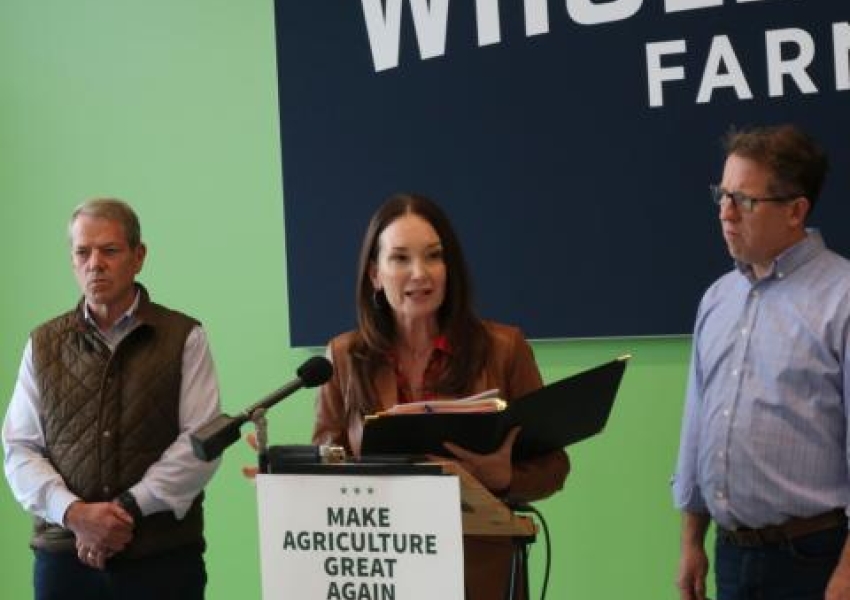
Comment Request: 7 CFR Part 215 – Special Milk Program for Children
Summary
Section 3 of the Child Nutrition Act (CNA) (PL 89-642, as amended; 42 USC 1772) authorizes the Special Milk Program (SMP) for Children. It provides for appropriation of such sums as may be necessary to enable the Secretary of Agriculture, under such rules and regulations as the Secretary may deem in the public interest, to encourage consumption of fluid milk by children in the United States in (1) nonprofit schools of high school grade and under, and (2) nonprofit nursery schools, child care centers, settlement houses, summer camps, and similar nonprofit institutions devoted to the care and training of children, which do not participate in a food service program authorized under the CAN. Section 10 of the CNA (42 USC 1779) requires the Secretary of Agriculture to “prescribe such regulations as the Secretary may deem necessary to carry out this Act” and pursuant to that provision, the Secretary has issued 7 CFR part 215 which contains the policies and procedures for the administration and operation of the SMP. For this revision, FNS estimates that the burden for the collection will decrease due to fewer state agencies, such as School Food Authorities (SFA), and Non-Profit Child Care Institutions (CCI) participating in the program.
Need and Use of the Information
This is a revision of the currently approved information collection. This is an ongoing collection that contains both mandatory and required to obtain or retain benefit requirements. The SMP is administered at the state, SFA, and CCI levels. In accordance with the regulations, state and local operators are required to collect information concerning the operation of the program including the submission of applications and agreements, submission and payment of claims, and the maintenance of records. Without this information FNS would not be able to reimburse schools and institutions in a timely manner to allow them to properly administer the program. In addition, data reporting would be delayed, and the timely monitoring of program funding and program trends would be affected. If the recordkeeping activities were not conducted, FNS would be unable to provide adequate oversight of the SMP operators and State agencies. State and local operators are required to meet federal reporting and accountability requirements.
Request for Comments
Comments regarding this information collection received by Jan. 29, 2026 will be considered.
Written comments and recommendations for the proposed information collection should be submitted within 30 days of the publication of this notice on Reginfo.gov. Find this particular information collection by selecting “Currently under 30-day Review—Open for Public Comments” or by using the search function. An agency may not conduct or sponsor a collection of information unless the collection of information displays a currently valid OMB control number and the agency informs potential persons who are to respond to the collection of information that such persons are not required to respond to the collection of information unless it displays a currently valid OMB control number.
This is a revision of the currently approved information collection. This is an ongoing collection that contains both mandatory and required to obtain or retain benefit requirements.
Food Distribution Program Tables
For information on all Food Distribution programs (and on food distributed in child nutrition programs), see the USDA Foods home page. Here you can access regulations, information on available commodities, and links to other agencies concerned with USDA Foods distribution.
National Level Summary Tables
Fiscal Years 1969-2024
- Cost of Food Distribution Programs
Nutrition Services Incentive Program (NSIP, formerly Nutrition Program for the Elderly), Food Distribution on Indian Reservations (FDPIR), Commodity Supplemental Food (CSFP), Emergency Food Assistance (TEFAP) - Participation (FDPIR and CSFP) or Meals Served (NSIP)
State Level Tables
Fiscal Years 2020-2024
Food distribution program data.
Child Nutrition Tables
This factsheet provides information on the child nutrition programs. Also see the child nutrition home page for the latest news and further information.
National Level Annual Summary Tables: FY 1969-2024
- National School Lunch Program (NSLP) - Participation and Meals Served: PDF | Excel
- School Breakfast Program (SBP) - Participation and Meals Served: PDF | Excel
- Special Milk Program (SMP) - Outlets and Milk Served: PDF | Excel
- NSLP, SBP and SMP - Program Costs (cash and commodities): PDF | Excel
- Child and Adult Care Food Program - Participation, Meals and Costs: PDF | Excel
- Summer Food Service Program - Participation, Meals and Costs: PDF | Excel
National Level Monthly Data
- National School Lunch Program - PDF | Excel
- School Breakfast Program - PDF | Excel
- Child and Adult Care Program - PDF | Excel
State Level Tables: FY 2020-2024
National School Lunch Program
- Participation - PDF | Excel
- Meals Served - PDF | Excel
- Cash Payments - PDF | Excel
- Commodity Costs - PDF | Excel
School Breakfast Program
Special Milk Program
Child and Adult Care Food Program
Summer Food Service Program
State Level Table Current Activity
Child nutrition program data.
WIC Participant Access to Authorized Vendors Study - Part 1
The USDA’s Special Supplemental Nutrition Program for Women, Infants, and Children (WIC) Participant Access Study is a two-part study series designed to provide insight into the current geographic coverage and density of WIC retailers1 across the United States and to assist states in ensuring they are providing adequate participant access to WIC foods in their communities.
Key Findings
Retailer participation in WIC declined between 2015 and 2020, but has remained steady through 2022.
- In FY 2022, there were 40,377 WIC retailers (i.e., grocery stores, referred to as “vendors” in WIC). Among these WIC retailers, over two-thirds were super stores or supermarkets. Other retailer types, such as grocery stores or convenience stores, were less common.
- Although the total number of WIC retailers decreased by 15% (from about 47,000 to 40,000) between FY 2015 and FY 2022, most reductions occurred prior to FY 2020. Around 80% of this decline was attributed to smaller retailers. It is important to note that this decline occurred in the period leading up to the 2020 WIC Electronic Benefits Transfer (EBT) mandate.
More than half of WIC-eligible families have convenient access to a WIC retailer but some still lack access.
- This study explored whether WIC-eligible families have convenient access to a WIC retailer based on USDA definitions of access.1 In FY 2022, 55% of census tracts2 had convenient access to a WIC retailer. On average, census tracts had convenient access to 2.3 WIC retailers.
- Among the 50 states and DC, we estimate that 2.1 million WIC-eligible families did not have convenient access to a WIC retailer in FY 2022. This represents nearly half (45%) of the WIC-eligible population.
- Just over one-third (34%) of WIC-eligible families living in census tracts with high social vulnerability3 lacked convenient access to a WIC retailer.
Some optional state policies are associated with lower convenient access to WIC retailers.
- In FY 2022, thirty-four state agencies (38%) imposed limiting criteria,4 which determine the maximum number and distribution of retailers authorized. State agencies use these criteria to limit the number of stores they authorize so they can effectively manage, oversee, and review their authorized retailer population. Some examples of limiting criteria include vendor/participant ratio and vendor/geographic area (e.g., number per mile or ZIP code).
- The average number of WIC retailers within convenient access to WIC-eligible census tracts was consistently lower in areas with limiting criteria. Among the 50 states and D.C. using limiting criteria, there were 1.4 WIC retailers within convenient access, on average, compared with 2.1 retailers in states without limiting criteria (Figure 3a).
- Nearly all state agencies (98%) used optional vendor selection criteria4 (e.g., requirements regarding specific hours of operation, proof of authorization as a SNAP retailer, and requirements to stock a full range of foods in addition to WIC foods), in addition to required vendor selection criteria, when determining which retailers to authorize in FY 2022.
- State agencies that used optional selection criteria had slightly higher average numbers of retailers within convenient access to WIC-eligible census tracts than states without these criteria. States adding requirements for retailers to stock a full range of foods (i.e., full-service grocery stores) were the only exception among the 50 states and D.C.; states that used this additional criterion had fewer retailers within convenient access to a census tract, on average, than states that did not (1.6 compared to 2.4 retailers) (Figure 3b).
Why FNS Did This Study
WIC state agencies are responsible for authorizing and overseeing retailers that accept WIC food benefits. They must establish selection criteria that dictate the qualifications for retailers that may be authorized, in accordance with federally mandated criteria. Federal regulations (7 CFR 246.12) require state agencies to authorize a sufficient number and distribution of retailers to ensure adequate participant access to supplemental foods. In 2022, we observed a decline in the number of WIC authorized retailers since 2015 and, in response, issued a policy memorandum to encourage state agencies to assess their WIC retailer populations and “ensure that the appropriate number and distribution of vendors are authorized to support participants’ access to supplemental foods”. This study was conducted to understand the current geographic coverage and density of WIC retailers across the United States and how state agency policies and the composition of retailers may affect participant access to supplemental foods.
How FNS Did This Study
- To map and analyze the geographic distribution of WIC and SNAP retailers across the U.S., the study team obtained administrative data that described retailer locations, store types, and WIC state agency retailer selection policies from the following FNS data sources: The Integrity Profile (TIP), Food Delivery Portal (FDP), Store Tracking and Redemption System (STARS), and WIC State Plan data. To supplement the FNS administrative data sources and capture variation in urbanicity, food access, and social vulnerability, data were obtained from the Centers for Disease Control (CDC), Economic Research Service (ERS), and the American Community Survey (ACS).
- This study explored two primary measures of food access: 1) Convenient access, a proximity-based measure defined as the availability of at least one WIC retailer within a one-mile driving distance in urban areas and a 10-mile driving distance, and 2) Average number of WIC vendors within convenient access of a census tract to differentiate between different levels of access to WIC.
- The study examined these measures overall and by a variety of census tract-level characteristics, including by urbanicity; low-income; and social vulnerability status.
Suggested Citation
Sarah Bardin, Tracy Vericker, Addison Larson, Dory Thrasher, and Nathan Chesterman (2025). WIC Participant Access Study: Part 1; Final Report. Prepared by Mathematica, Contract No. 12319819A0006. Alexandria, VA: U.S. Department of Agriculture, Food and Nutrition Service, Office of Evidence, Analysis, and Regulatory Affairs, Project Officer: Kathryn Knoff. Available online at: https://www.fns.usda.gov/research/wic/participant-access-vendors-part1.
1 Convenient access is a USDA Economic Research Service proximity-based measure defined as the availability of at least one WIC retailer within a one-mile driving distance in urban areas and a 10-mile driving distance in rural areas.
2 A census tract is defined by the United States Census Bureau as “a small, relatively permanent statistical subdivision of a county delineated by a local committee of census data users for the purpose of presenting data. Census tracts nest within counties, and their boundaries normally follow visible features, but may follow legal geography boundaries and other non-visible features in some instances, Census tracts ideally contain about 4,000 people and 1,600 housing units.”
3 Social vulnerability refers to the demographic and socioeconomic factors (such as poverty, lack of access to transportation, and crowded housing) that adversely affect communities that encounter hazards and other community-level stressors.
4 Per federal regulation, the state agency may establish criteria to limit the number of stores it authorizes. The state agency must apply its limiting criteria consistently throughout its jurisdiction. Any vendor limiting criteria used by the state agency must be included in the State Plan in accordance with § 246.4(a)(14)(ii).
5 Per federal regulation, vendor selection criteria are established by the state agency to select individual vendors for authorization consistent with the requirements in § 246.12(g)(3) and (g)(4). Optional selection criteria are those criteria that states choose to implement in addition to what is required in accordance with § 246.12(g)(3) and (g)(4).
This study is a two-part series designed to provide insight into the current geographic coverage and density of WIC retailers across the United States and to assist states in ensuring they are providing adequate participant access to WIC foods in their communities.
Comment Request - SNAP Supplemental Nutrition Assistance for Victims of Disaster
Summary
The authority to operate the Disaster Supplemental Nutrition Assistance Program (D-SNAP) is found in section 5(h) of the Food and Nutrition Act of 2008, formerly the Food Stamp Act of 1977, as amended and the Disaster Relief Act of 1974, as amended by the Robert T. Stafford Disaster Relief and Assistance Act of 1988 authorizes the Secretary of Agriculture to establish temporary emergency standards of eligibility for victims of a disaster if the commercial channels of food distribution have been disrupted, and subsequently restored. D-SNAP is a program that is separate from the Supplemental Nutrition Assistance Program (SNAP) and is conducted for a specific period of time. In order for a state to request to operate a D-SNAP, an affected area in the state must have received a Presidential Declaration of “Major Disaster” with Individual Assistance.
Need and Use of the Information
This information collection concerns information obtained from state agencies seeking to operate D-SNAP. A state agency request to operate a D-SNAP must contain the following information: Description of incident; geographic area; application period; benefit period; eligibility criteria; ongoing household eligibility; affected population; electronic benefit card issuance process; logistical plans for Disaster SNAP rollout; staffing; public information outreach; duplicate participation check process; fraud prevention strategies; and employee application procedures. The Food and Nutrition Service reviews the request to ensure that all the necessary requirements to conduct a D-SNAP are met. If this collection is not conducted, D-SNAP would not be available to help meet the nutritional needs of disaster victims.
Request for Comments
Comments regarding this information collection received by Dec. 26, 2025 will be considered. Written comments and recommendations for the proposed information collection should be submitted within 30 days of the publication of this notice on RegInfo.gov. Find this particular information collection by selecting "Currently under 30-day Review - Open for Public Comments" or by using the search function. An agency may not conduct or sponsor a collection of information unless the collection of information displays a currently valid OMB control number and the agency informs potential persons who are to respond to the collection of information that such persons are not required to respond to the collection of information unless it displays a currently valid OMB control number.
This information collection concerns information obtained from state agencies seeking to operate D-SNAP.
Request for Information: Ultra-Processed Foods - Extension of Comment Period
Summary
FDA and USDA (we) are extending the comment period for the notice that appeared in the Federal Register of July 25, 2025. In the notice, we requested data and information to help develop a uniform definition of ultra-processed foods (UPF or UPFs). In response to requests for an extension, we are extending the comment period until Oct. 23, 2025, to allow interested persons additional time to submit comments.
Request for Comments
We are extending the comment period announced in the notice published July 25, 2025 (90 FR 35305). Electronic or written comments must be submitted by Oct. 23, 2025.
You may submit comments as follows. Please note that late, untimely filed comments will not be considered. The Regulations.gov electronic filing system will accept comments until 11:59 p.m. ET at the end of Oct. 23, 2025. Comments received by mail/hand delivery/courier (for written/paper submissions) will be considered timely if they are received on or before that date.
Electronic Submissions
Submit electronic comments in the following way:
- Federal eRulemaking Portal: Regulations.gov. Follow the instructions for submitting comments. Comments submitted electronically, including attachments, to Regulations.gov will be posted to the docket unchanged. Because your comment will be made public, you are solely responsible for ensuring that your comment does not include any confidential information that you or a third party may not wish to be posted, such as medical information, your or anyone else's Social Security number, or confidential business information, such as a manufacturing process. Please note that if you include your name, contact information, or other information that identifies you in the body of your comments, that information will be posted on Regulations.gov.
- If you want to submit a comment with confidential information that you do not wish to be made available to the public, submit the comment as a written/paper submission and in the manner detailed (see “Written/Paper Submissions” and “Instructions”).
Written/Paper Submissions
Submit written/paper submissions as follows:
- Mail/Hand delivery/Courier (for written/paper submissions): Dockets Management Staff (HFA-305), Food and Drug Administration, 5630 Fishers Lane, Rm. 1061, Rockville, MD 20852.
- For written/paper comments submitted to the Dockets Management Staff, FDA will post your comment, as well as any attachments, except for information submitted, marked and identified, as confidential, if submitted as detailed in “Instructions.”
Instructions: All submissions received must include the Docket No. FDA-2025-N-1793 for “Ultra-Processed Foods; Request for Information.” Received comments, those filed in a timely manner, will be placed in the docket and, except for those submitted as “Confidential Submissions,” publicly viewable at Regulations.gov or at the Dockets Management Staff between 9 a.m. and 4 p.m., Monday through Friday, 240-402-7500.
- Confidential Submissions—To submit a comment with confidential information that you do not wish to be made publicly available, submit your comments only as a written/paper submission. You should submit two copies total. One copy will include the information you claim to be confidential with a heading or cover note that states “THIS DOCUMENT CONTAINS CONFIDENTIAL INFORMATION.” We will review this copy, including the claimed confidential information, in our consideration of comments. The second copy, which will have the claimed confidential information redacted/blacked out, will be available for public viewing and posted on Regulations.gov. Submit both copies to the Dockets Management Staff. If you do not wish your name and contact information to be made publicly available, you can provide this information on the cover sheet and not in the body of your comments and you must identify this information as “confidential.” Any information marked as “confidential” will not be disclosed except in accordance with 21 CFR 10.20 and other applicable disclosure law. For more information about FDA's posting of comments to public dockets, see 80 FR 56469, Sept. 18, 2015.
Docket: For access to the docket to read background documents or the electronic and written/paper comments received, go to Regulations.gov and insert the docket number, found in brackets in the heading of this document, into the “Search” box and follow the prompts or go to the Dockets Management Staff, 5630 Fishers Lane, Rm. 1061, Rockville, MD 20852, 240-402-7500.
Supplementary Information
In the Federal Register of July 25, 2025, FDA and USDA published a notice requesting data and information to help develop a uniform definition of ultra-processed foods for human food products in the U.S. food supply (90 FR 35305). A uniform UPF definition, developed as part of a joint effort by federal agencies, would allow for consistency in research and policy to pave the way for addressing health concerns associated with the consumption of UPFs. The notice requested comments by Sept. 23, 2025.
We have received requests to extend the comment period for the notice. Pointing to the complexity of the questions, the importance of the issue, and other factors, the requests assert that additional time would allow stakeholders to provide FDA and USDA detailed responses. We have considered the requests and are extending the comment period for the notice by 30 days, until Oct. 23, 2025. We believe that the extension will allow adequate time for interested persons to submit comments.
FDA and USDA (we) are extending the comment period for the notice that appeared in the Federal Register of July 25, 2025. In the notice, we requested data and information to help develop a uniform definition of ultra-processed foods. In response to requests for an extension, we are extending the comment period until Oct. 23, 2025, to allow interested persons additional time to submit comments.
Fiscal Year 2026 D-SNAP Income Eligibility Standards
| DATE: | September 16, 2025 |
|---|---|
| SUBJECT: | SNAP – Fiscal Year 2026 D-SNAP Income Eligibility Standards |
| TO: | All State Agencies Supplemental Nutrition Assistance Program |
This memorandum provides the fiscal year (FY) 2026 income standards and maximum allotments for the Disaster Supplemental Nutrition Assistance Program (D-SNAP). State agencies may use these standards to determine eligibility for D-SNAP, as well as the maximum allotment for eligible households may receive based on their size.
D-SNAP is a similar, yet distinct, program from SNAP that provides temporary food assistance to households affected by a natural disaster. State agencies may request D-SNAP for areas that receive a Presidential disaster declaration of Individual Assistance. Households that are eligible for D-SNAP receive a temporary, one-month benefit equal to the maximum SNAP benefit allotment for their household size. Eligibility is based on household size and income. The D-SNAP benefit allotment is determined by household size. Please see the tables below for the income limits and allotments.
Early and ongoing communication is critical as FNS remains available to assist state agencies in their evaluation of whether and when D-SNAP is appropriate. For example, ensuring that local infrastructure and food retailers are up and running are important steps for determining D-SNAP readiness.
State agencies must find a balance between responding quickly, operating efficiently, and protecting program integrity. Effective D-SNAP fraud prevention strategies begin in the preplanning phase. FNS is available to provide technical assistance to support state agencies in developing their requests and establishing strong internal controls to prevent fraud, waste, and abuse of this important disaster assistance. State agencies with questions regarding D-SNAP should contact their respective regional office representatives.
Ronald Ward
Acting Associate Administrator
Supplemental Nutrition Assistance Program
Food and Nutrition Service
U.S. Department of Agriculture
Option 1: Disaster Gross Income Limit (DGIL)
The Disaster Gross Income Limit (DGIL) combines the SNAP maximum monthly net income limit, the maximum standard income deduction, and the maximum capped shelter expense deduction for the current fiscal year. In order to be eligible under DGIL, a household’s take-home income and accessible liquid resources during the disaster benefit period, minus disaster expenses as determined by the state agency, must not exceed the income limit for its size.
| Household Size | Income Limit | Allotment |
|---|---|---|
| 1 | $2,258 | $298 |
| 2 | $2,716 | $546 |
| 3 | $3,174 | $785 |
| 4 | $3,647 | $994 |
| 5 | $4,143 | $1,183 |
| 6 | $4,639 | $1,421 |
| 7 | $5,098 | $1,571 |
| 8 | $5,556 | $1,789 |
| Each Additional Member | +$459 | +$218 |
| Household Size | Income Limit | Allotment (Urban) | Allotment (Rural 1) | Allotment (Rural 2) |
|---|---|---|---|---|
| 1 | $3,177 | $385 | $491 | $598 |
| 2 | $3,750 | $707 | $901 | $1,097 |
| 3 | $4,323 | $1,015 | $1,295 | $1,576 |
| 4 | $4,897 | $1,285 | $1,639 | $1,995 |
| 5 | $5,470 | $1,529 | $1,950 | $2,374 |
| 6 | $6,059 | $1,838 | $2,344 | $2,853 |
| 7 | $6,633 | $2,031 | $2,590 | $3,152 |
| 8 | $7,206 | $2,314 | $2,950 | $3,591 |
| Each Additional Member | +$574 | +$282 | +$360 | +$438 |
| Household Size | Income Limit | Allotment |
|---|---|---|
| 1 | $2,598 | $439 |
| 2 | $3,056 | $806 |
| 3 | $3,514 | $1,157 |
| 4 | $3,998 | $1,465 |
| 5 | $4,533 | $1,743 |
| 6 | $5,067 | $2,095 |
| 7 | $5,526 | $2,315 |
| 8 | $5,984 | $2,637 |
| Each Additional Member | +$459 | +$322 |
| Household Size | Income Limit | Allotment |
|---|---|---|
| 1 | $2,796 | $506 |
| 2 | $3,323 | $929 |
| 3 | $3,851 | $1,334 |
| 4 | $4,378 | $1,689 |
| 5 | $4,913 | $2,010 |
| 6 | $5,484 | $2,415 |
| 7 | $6,012 | $2,668 |
| 8 | $6,539 | $3,040 |
| Each Additional Member | +$528 | +$371 |
| Household Size | Income Limit | Allotment |
|---|---|---|
| 1 | $2,075 | $383 |
| 2 | $2,533 | $703 |
| 3 | $2,992 | $1,009 |
| 4 | $3,489 | $1,278 |
| 5 | $3,985 | $1,521 |
| 6 | $4,481 | $1,827 |
| 7 | $4,940 | $2,019 |
| 8 | $5,398 | $2,300 |
| Each Additional Member | +$459 | +$281 |
Option 2: Disaster Standard Expense Deduction Option (DSED)
State agencies may simplify calculating eligibility for D-SNAP by using the Disaster Standard Expense Deduction (DSED), which uses a standard amount for a household’s disaster expenses, which includes food loss.
Note: Only households with actual, unreimbursed disaster expenses equal to or greater than $100 may qualify using DSED. DSED cannot be used when food loss is the only qualifying disaster expense.
| Household Size | Net Income Limit | Standard Deduction | Shelter Cap | Disaster Expenses | Income Limit | Allotment |
|---|---|---|---|---|---|---|
| 1 | $1,305 | $209 | $744 | $1,011 | $3,269 | $298 |
| 2 | $1,763 | $209 | $744 | $1,527 | $4,243 | $546 |
| 3 | $2,221 | $209 | $744 | $1,696 | $4,870 | $785 |
| 4 | $2,680 | $223 | $744 | $2,086 | $5,733 | $994 |
| 5 | $3,138 | $261 | $744 | $2,171 | $6,314 | $1,183 |
| 6 | $3,596 | $299 | $744 | $2,410 | $7,049 | $1,421 |
| 7 | $4,055 | $299 | $744 | $2,486 | $7,584 | $1,571 |
| 8 | $4,513 | $299 | $744 | $2,561 | $8,117 | $1,789 |
| Each Additional Member | +$459 | Not Applicable | Not Applicable | Not Applicable | +$533 | +$218 |
This memorandum provides the fiscal year 2026 income standards and maximum allotments for the Disaster Supplemental Nutrition Assistance Program (D-SNAP). State agencies may use these standards to determine eligibility for D-SNAP, as well as the maximum allotment for eligible households may receive based on their size.
Information Collection: State Administrative Expense Funds
Summary
In accordance with the Paperwork Reduction Act of 1995, this notice invites the general public and other public agencies to comment on this proposed information collection. This collection is a revision of a currently approved collection for state administrative expense funds expended in the operation of the child nutrition programs administered under the Child Nutrition Act of 1966.
Request for Comments
Written comments must be received on or before Nov. 10, 2025.
Comments may be sent to Penny Burke, Chief, Operational Support Branch, Food and Nutrition Service, U.S. Department of Agriculture, 1320 Braddock Place, Alexandria, VA 22314. Comments may also be submitted via email to Penny.Burke@usda.gov. Comments will also be accepted through the Federal eRulemaking Portal. Go to Regulations.gov, and follow the online instructions for submitting comments electronically. All responses to this notice will be summarized and included in the request for Office of Management and Budget (OMB) approval and will become a matter of public record.
Abstract
Section 7 of the Child Nutrition Act of 1966 (PL 89-642), 42 USC 1776, authorizes the Department to provide federal funds to state agencies (SAs) for administering the Child Nutrition Programs (7 CFR parts 210, 215, 220, 226 and 250). State Administrative Expense (SAE) Funds, 7 CFR part 235, sets forth procedures and recordkeeping requirements for use by SAs in reporting and maintaining records of their need and use of SAE funds. A summary of the reporting and recordkeeping burden associated with this revision is presented in the table below.
The FNS-525 State Administrative Expense Funds Reallocation Report is used by the state agencies to report information related to the SAE funds. 7 CFR 235.5(d) states that “Annually, between March 1 and May 1 on a date specified by FNS, of each year, each state agency shall submit to FNS a State Administrative Expense Funds Reallocation Report (FNS-525) on the use of SAE funds.” This report will be used to reallocate SAE funds.
The FNS-777 Financial Status Report was formerly associated with this collection. However, due to revisions made to FNS-525 for the 2022 renewal, completion of FNS-525 now provides all of the required information and it is no longer necessary to obtain information from the FNS-777. Therefore, the recordkeeping requirement and burden associated with FNS-777 is being removed from the collection. FNS-777 and its associated burden is approved under OMB Control Number 0584-0594 Food Programs Reporting System (FPRS) (expiration date Sept. 30, 2026) and is therefore not included in this collection. Removing this recordkeeping requirement will reduce 216 responses and 54 burden hours from the recordkeeping burden, due to a program change, resulting in a new overall burden of 3,075 responses and 6,252 hours for this collection.
This collection is a revision of a currently approved collection for state administrative expense funds expended in the operation of the child nutrition programs administered under the Child Nutrition Act of 1966.
FD-162: Public Posting of TEFAP Information
| DATE: | September 9, 2025 | |
|---|---|---|
| POLICY NO: | FD-162: The Emergency Food Assistance Program (TEFAP) | |
| SUBJECT: | Public Posting of TEFAP Information | |
| TO: | Regional Directors Supplemental Nutrition Programs | State Directors All TEFAP State Agencies |
Under the leadership of Secretary Brooke Rollins, the U.S. Department of Agriculture’s (USDA) Food and Nutrition Service (FNS) is committed to strengthening strategies to encourage healthy choices, healthy outcomes, and healthy families, along with clarifying program requirements for our state agency partners. In support of these goals, this memorandum provides guidance to TEFAP state agencies on requirements for public posting of TEFAP information at 7 CFR 251.4(l). Each state agency must post a list of eligible recipient agencies (ERAs) that have an agreement with the state agency on a publicly available webpage. In addition, state agencies must post the state’s uniform statewide eligibility criteria on a publicly available webpage. The public posting of ERAs and uniform statewide eligibility criteria must be implemented by Oct. 31, 2025. State agencies are encouraged to implement these provisions before that deadline.
ERAs that have an Agreement with the State Agency
TEFAP regulations at 7 CFR 251.4(l) require each state agency to post a list of ERAs that have an agreement with the state agency on a publicly available webpage. At a minimum, this list must include the name, address, and contact telephone number of all ERAs that have an agreement with the state agency. State agencies must update this list annually but are encouraged to update it more frequently as needed.
FNS recognizes that state agencies may identify a compelling public safety reason to forgo posting an ERA address publicly; for example, for a domestic abuse shelter. In such circumstances and without divulging sensitive or confidential information, the state agency should submit general information to their FNS regional office regarding why the location should be exempted from the publicly available list posted online. FNS will work with state agencies on a case-by-case basis for ERAs in this situation.
State Agency Option to Post Additional ERA Information
State agencies may choose to exceed the above minimum posting requirements to support public awareness. While state agencies are not required to post information about ERAs that have agreements with other ERAs, states have the option to publish this information online. State agencies may also choose to include additional information about ERAs on the webpage, such as operating hours, the areas served by the ERA, links to ERA websites, and distribution site addresses. In addition, state agencies may develop tools to aid eligible individuals in accessing the program, for example by establishing a searchable tool to identify aid based on zip code.
Posting TEFAP Statewide Eligibility Information
TEFAP regulations at 7 CFR 251.5(b) require each state agency to establish uniform statewide criteria for determining the eligibility of households to receive USDA Foods for home consumption, including requirements for demonstrating income and residency. Per 7 CFR 251.4(l), state agencies must post this uniform statewide eligibility criteria to a publicly available webpage. This information must be updated on an annual basis or whenever changes to eligibility criteria are made. Additional guidance on establishing criteria and methods for determining the eligibility of households to receive TEFAP can be found in Participant Eligibility in TEFAP (revised).
State agencies should contact their respective FNS regional office with any questions about this memorandum.
Sara Olson
Director
Policy Division
Supplemental Nutrition and Safety Programs
This TEFAP program guidance memorandum provides TEFAP state agencies information on requirements for public posting of TEFAP information.
Information Collection: Generic Clearance for the Development of Nutrition Education Messages and Products for the General Public
Summary
In accordance with the Paperwork Reduction Act of 1995, this notice invites the general public and other public agencies to comment on this proposed information collection. This is an extension, without change, of a currently approved collection. The purpose of performing consumer research is to identify consumers' understanding of proposed nutrition education messages and obtain their reaction to prototypes of nutrition education products, including internet-based tools. The information collected will be used to refine messages and improve the usefulness of products as well as aid consumer understanding of Dietary Guidelines-grounded messages and related materials.
Request for Comments
Written comments must be received on or before Oct. 27, 2025.
Comments may be sent to: Jessica Larson, Food and Nutrition Service, U.S. Department of Agriculture, 1320 Braddock Place, Fourth Floor, Alexandria, VA 22314. Comments may also be submitted via email to SM.FN.CNPPSupport@usda.gov. Comments will also be accepted through the Federal eRulemaking Portal. Go to http://www.regulations.gov, and follow the online instructions for submitting comments electronically.
All responses to this notice will be summarized and included in the request for Office of Management and Budget (OMB) approval. All comments will be a matter of public record.
Abstract
This notice announces the intent of the Center for Nutrition Policy and Promotion (CNPP) of the U.S. Department of Agriculture (USDA) to request approval from the Office of Management and Budget (OMB) for information collection processes and instruments used during consumer research that tests nutrition education messages and products for the general public. CNPP conducts consumer research to identify key issues of concern related to the public understanding of key guidance from the Dietary Guidelines for Americans (Dietary Guidelines). These key issues are then translated into consumer messages, tools, and resources.
As background, the Dietary Guidelines is a primary source of dietary health information. Users include federal agencies, health professionals, policy makers, and nutrition educators. Issued jointly by the USDA and U.S. Department of Health and Human Services (HHS) every five years, the Dietary Guidelines serve as the cornerstone of federal nutrition policy and form the basis for these agencies' development of consumer nutrition education efforts (nutrition messaging and development of consumer materials). Consumer messages and resources are essential so that the public has resources to help them make healthier eating choices. Information collected from consumer research will further develop consumer nutrition messages and related resources to be communicated through a food guidance symbol and other channels. These may include:
- Messages and resources that help consumers make healthier food choices grounded in the latest Dietary Guidelines;
- Amendments to current or subsequent consumer food guidance symbols and their supporting implementation website;
- Materials relaying consumer messages grounded in the latest Dietary Guidelines, for different population groups (e.g., women who are pregnant or lactating, parents, families, etc.); and
- New policy, messages, resources, and tools that may be developed as a result of the most current Dietary Guidelines, as well as the most currently available technologies.
Among its major functions, CNPP develops and coordinates nutrition guidance within USDA and investigates techniques for effective nutrition communication. Under Subtitle D of the National Agriculture Research, Extension, and Teaching Policy Act of 1997 (7 USC 3171-3173, 3175), the Secretary of Agriculture is required to develop and implement a national food and human nutrition research and extension program, including research on the factors affecting food preference and habits; and the development of techniques and equipment to assist consumers in the home or in institutions in selecting food that supplies a nutritionally adequate diet. Pursuant to 7 CFR 2.19(a)(3), the Secretary of Agriculture has delegated authority to the Food, Nutrition, and Consumer Services (FNCS) for, among other things, developing techniques, equipment, and materials to aid the public in selecting food for good nutrition; coordinating nutrition education promotion and professional education projects within the Department; and consulting with federal and state agencies, the Congress, universities, other public and private organizations, and the general public regarding food consumption and dietary adequacy.
Under Section 301 of Public Law 101-445 (7 USC 5341, the National Nutrition Monitoring and Related Research Act of 1990, Title III), the Secretaries of USDA and HHS are directed to publish the Dietary Guidelines for Americans jointly at least every five years. The law instructs that this publication shall contain nutritional and dietary information and guidelines for the general public, shall be based on the preponderance of scientific and medical knowledge which is current at the time the report is prepared, and shall be promoted by each federal agency in carrying out any federal food, nutrition, or health program. Recent editions of the Dietary Guidelines provide dietary advice for Americans across the lifespan. By providing consumer-friendly nutrition education and communication materials, CNPP and partnering agencies are able to help Americans improve food and beverage choices to promote health. One of the primary ways CNPP helps Americans apply the nutrition guidance in their daily lives is by developing and maintaining interactive, digital tools. CNPP's digital resources and tools provide hands-on learning opportunities that empower Americans to think critically about their food and beverage choices. Maintaining and enhancing CNPP's digital resources and tools are part of a broad Government wide effort to reverse the trend of childhood obesity and build a healthier next generation.
Under Section 3 of Public Law 88-525 (7 USC 2012, the Food and Nutrition Act of 2008), USDA is required to integrate current dietary guidance into reevaluations of the Thrifty Food Plan at five-year intervals. The Thrifty Food Plan outlines nutrient-dense foods and beverages, their amounts, and associated costs that can be purchased on a limited budget to support a healthy diet through nutritious meals and snacks at home. The Thrifty Food Plan is one of the ways the Dietary Guidelines is used to inform policy, as it serves as the basis for setting maximum Supplemental Nutrition Assistance Program (SNAP) benefit allotments and supports public-facing communications related to the basis for establishing benefit levels.
Conducting research to ensure effective implementation of the Dietary Guidelines through consumer food guidance resources and related tools that are relevant and useful to intended audiences is critical to CNPP's work, and is a major activity included in its 5-year strategic plan in fulfillment of the Government Performance and Results Act of 1993 (31 USC 9701).
This is an extension, without change, of a currently approved collection. The purpose of performing consumer research is to identify consumers' understanding of proposed nutrition education messages and obtain their reaction to prototypes of nutrition education products, including internet-based tools. The information collected will be used to refine messages and improve the usefulness of products as well as aid consumer understanding of Dietary Guidelines-grounded messages and related materials.
Written Information on and Referrals to Public Assistance Programs for CSFP Participants
| DATE: | August 25, 2025 | |
|---|---|---|
| POLICY NO: | FD-161: Commodity Supplemental Food Program (CSFP) | |
| SUBJECT: | Written Information on and Referrals to Public Assistance Programs for CSFP Participants | |
| TO: | Regional Directors Supplemental Nutrition Programs | Directors CSFP State Agencies and Indian Tribal Organizations (ITOs) |
Under the leadership of Secretary Brooke Rollins, USDA’s Food and Nutrition Service (FNS) is prioritizing the clarification of statutory, regulatory, and administrative requirements, as well as strengthening strategies to encourage healthy choices, healthy outcomes, and healthy families. In support of these goals, FNS is issuing this memorandum to provide CSFP state agencies, including ITOs, with guidance on implementing 7 CFR § 247.14(a), which requires local agencies, as appropriate, to make referrals and provide CSFP applicants with written information on specific public assistance programs. The specific public assistance programs are:
- supplemental security income benefits (SSI);
- medical assistance under Title XIX of the Social Security Act, including medical assistance provided to qualified Medicare beneficiaries;
- the Supplemental Nutrition Assistance Program (SNAP); and
- beginning on Oct. 31, 2025, the Senior Farmers’ Market Nutrition Program (SFMNP).
Methods of Information Sharing
CSFP local agencies may provide written materials in hard copy or via electronic means such as a link to a webpage, an email, or text messages to applicants.
State and Local Agency Coordination
FNS recommends that, as applicable, CSFP state agencies coordinate with the appropriate state agency for each public assistance program to ensure written information for local agency dissemination is accurate and up to date. Coordination may also occur between CSFP local agencies and entities administering the identified public assistance programs at the local level; for example, between a CSFP local agency and the local Social Security Office. For further information and applicable state or local agency contacts, see below:
- SSI
- Medicaid and Medicare
- SNAP
- SFMNP
Considerations for the Senior Farmers' Market Nutrition Program
SFMNP is a federal nutrition assistance program that provides low-income seniors with seasonal benefits that can be exchanged for eligible foods directly from farmers, farmers’ markets, roadside stands, and community-supported agriculture programs (CSAs). CSFP and SFMNP work in tandem to serve the low-income senior population and help meet their nutritional needs. Connecting CSFP participants with SFMNP creates new opportunities for American farmers to connect with federal nutrition assistance programs.
SFMNP is administered by state agencies, which are responsible for determining months of operation, as the program may not be available year-round. SFMNP is not available nationwide and, in states where it does operate, may not be available in all areas of a state. CSFP state and local agencies may use discretion on when it is appropriate to distribute materials and make referrals to SFMNP based on program availability.
CSFP state agencies should coordinate with SFMNP state agencies to access up-to-date information on SFMNP and determine whether the program is accepting new participants within the state. If SFMNP is not available in the applicable area(s) or the state’s SFMNP is not accepting participants, then CSFP local agencies do not need to provide written information and/or referrals to that program.
State agencies should contact their respective FNS regional office with any questions about this memorandum.
Sara Olson
Director
Policy Division
Supplemental Nutrition and Safety Programs
We are issuing this memorandum to provide CSFP state agencies, including ITOs, with guidance on implementing 7 CFR § 247.14(a), which requires local agencies, as appropriate, to make referrals and provide CSFP applicants with written information on specific public assistance programs.
CSFP: Announcement of Update to the Food Package Maximum Monthly Distribution Rates, Effective Sept. 1, 2025
| DATE: | August 11, 2025 | |
|---|---|---|
| SUBJECT: | Commodity Supplemental Food Program (CSFP): Announcement of Update to the Food Package Maximum Monthly Distribution Rates, Effective Sept. 1, 2025 | |
| TO: | Regional Directors Special Nutrition Programs All Regional Offices | State Directors CSFP State Agencies and Indian Tribal Organizations |
In alignment with Agriculture Secretary Brooke Rollins’ priorities to encourage healthy choices, healthy outcomes, and healthy families and connect America’s farmers to nutrition assistance programs, the USDA Food and Nutrition Service (FNS) is revising the CSFP Maximum Monthly Distribution Rates to reflect the foods currently available in the program.
These revised guide rates, outlined in Attachment A, will be effective on Sept. 1, 2025 and remain in effect until further notice. There are no changes to the maximum amounts of foods that may be distributed in each food package category. CSFP state agencies should use the guide rates in conjunction with the latest CSFP Foods Available List.
Thank you for your commitment to providing one of our nation’s most vulnerable populations with nutritious, minimally processed American grown and produced foods to support their health and well-being.
Director
Policy Division
Supplemental Nutrition and Safety Programs
Director
Food Safety and Nutrition Division
Supplemental Nutrition and Safety Programs
Attachment A - CSFP Maximum Monthly Distribution Rates
These rates are effective Sept. 1, 2025 until further notice.
| Food Package Category | Food Item | Amount Each Month |
|---|---|---|
| Fruits and Juice | Canned Fruit (15.5 ounces) Juice (64 ounces) Raisins (15 ounces) |
|
| Vegetables | Canned Vegetables or Soup (10.5–15.5 ounces) Dehydrated Potatoes (1 pound) |
|
| Cheese | Cheese (2 pounds) | 1 package cheese |
| Milk | UHT Fluid Milk 1% (32 ounces) Instant Nonfat Dry Milk (12.8 ounces) |
|
| Meat, Poultry, and Fish | Beef or Beef Stew (24 ounces) Beef Chili with Beans (15 ounces) Chicken (10–12.5 ounces) Tuna (12 ounces) Salmon (14.75 ounces) |
|
| Plant-Based Protein | Canned Beans (15.5 ounces) Dry Beans or Lentils (1 pound) Peanut Butter (16 ounces) | 3 units of any combination of canned beans, dry beans or lentils, and peanut butter |
| Cereals | Cereal, Ready-to-Eat (10–20 ounces) Farina (18 ounces) Rolled Oats (18 ounces) Grits (2 pounds) | 2 units of any combination of cereal, farina, rolled oats, and grits |
| Pasta and Rice | Pasta (1 pound) Rice (1 pound) | 2 units of any combination of pasta and rice |
In alignment with Agriculture Secretary Brooke Rollins’ priorities to encourage healthy choices, healthy outcomes, and healthy families and connect America’s farmers to nutrition assistance programs, we are revising the CSFP Maximum Monthly Distribution Rates to reflect the foods currently available in the program.
SNAP E&T - Provisions of the Monitoring, Oversight and Reporting Measures Final Rule Q&A
Questions and Answers
A. Employment and Training (E&T) Annual Report Submission (7 CFR 273.7(c)(17))
- 1. What is the due date for the federal fiscal year (FFY) 2025 E&T Annual Report?
The final rule became effective on Jan. 17, 2025, with an implementation date of Oct. 1, 2025. As a result, the FFY 2025 report will be due on April 15, 2026.
- 2. Which measures should states report on for the FFY 2025 E&T Annual Report?
For FFY 2025, state agencies are only required to submit a "partial" report that includes the following reporting requirements under the interim final rule:
- E&T participant characteristics,
- state component measures, and
- able-bodied adults without dependents (ABAWD) Pledge State Reporting (if applicable).
States will not be required to report the employment and earnings measures and the associated disaggregated characteristics. This ensures that all states are on track for reporting the expected four (4) quarters for these measures under the final rule for the FFY 2026 report. Additionally, with the replacement of the completion of educational, training, work experience and on-the-job training measure with educational measures, states are not required to report this measure for FFY 2025 so that they may concentrate efforts toward making any changes necessary for the collection of the new educational measures.
- 3. Is the E&T Annual Report template changing, and if so, when will it be available?
Yes, the E&T Annual Report template is changing. The new E&T Annual Report will be submitted in our new web-based data collection system, Data Analysis and Tracking Application for SNAP Employment and Training (DATASET).
While state agencies will submit the report in DATASET and not by paper copy, a template is provided, which provides the reporting requirements under 7 CFR 273.7(c)(17) for the E&T Annual Report and instructions for each section of the report as it will appear in DATASET. We will also provide another version of the template without instructions that state agencies can use to compile the information needed to complete the E&T Annual Report in DATASET.
- 4. What are the cohort dates for the E&T Annual Report for FFY 2026?
Each section of the E&T annual report will consist of data from distinct time periods. For example, the employment and quarterly earnings measures in the second quarter after completion of participation of E&T will consist of data from the third quarter of the preceding FFY to the second quarter of the reporting FFY (i.e. for FFY 2026 report, April 2025 to March 2026). Below is a chart that provides the various time periods that should be reported for each section of the E&T annual report.
Table 1. Reporting time periods for the E&T Annual Report E&T Annual Report Section and Measure Time Period to Report A. Employment, Earnings and Educational Measures
Employment and Earnings Measures for all E&T Participants; and Employment and Earnings Measures by Participant Characteristics
- Unsubsidized employment during the second quarter after completion of participation in E&T
- Median quarterly earnings of E&T participants in unsubsidized employment during the second quarter after completion of participation in E&T
April of preceding FFY to March of reporting FFY (e.g. FFY 2026 report: April 2025 to March 2026) - Unsubsidized employment in the fourth quarter after completion of participation in E&T
October to September of preceding FFY (e.g. FFY 2026 Report: October 2024 to September 2025) Educational Measures for all E&T Participants; and
Educational Measures by Participant Characteristics- Attainment of a credential or certificate
- Measurable skill gains
B. Participant Characteristics
- a) Mandatory E&T Program Reporting
b) SNAP E&T Participant Characteristics
C. ABAWD Pledge State Reporting
October to September of reporting FFY (e.g. FFY 2026 Report: October 2025 to September 2026) D. State Component Measures Based on the state agencyʼs reporting methodology for each component
B. Definitions (7 CFR 271.2)
- 5. Completion of participation in E&T means that an E&T participant has not received any E&T services for at least 90 days and no future services are planned. Does this mean disenrollment from SNAP E&T cannot occur until those 90 days are met, or can a participant be disenrolled as deemed by the E&T service provider?
The completion of participation in E&T definition does not affect the ability of a state agency or of their E&T providers to determine when to remove an E&T participant from E&T services. The definition of a “completion of participation in E&T” has been in use under the interim final rule and was codified in the final rule. The purpose of establishing a waiting period of 90 days after a participant last received E&T services before collecting employment and earnings information is to align with the practice for Workforce Innovation and Opportunity Act (WIOA) programs. Under WIOA, the exit date is the last date of service. And the last date of service cannot be determined until at least 90 days have elapsed since the participant last received services. This 90-day waiting period is to ensure that a participant is truly no longer engaged in the program and allows time if an individual decides to return for additional services.
- 6. Regarding the definition of a former E&T participant: in a state operating a voluntary E&T program, E&T participants may disenroll from the E&T program for a variety of reasons, not necessarily because they lost SNAP benefits. Would a state agency report on those E&T participants in the employment and earnings measures?
The term "former E&T participant" was included in the interim final rule to capture E&T participants who may no longer be participating in the E&T program because they lost their SNAP benefits due to a SNAP eligibility action, such as failure to recertify. The intent was to ensure that those participants were included in outcomes, specifically employment and earnings measures. Whether a state is operating a mandatory or voluntary E&T program, or whether an E&T participant disenrolls from E&T, has no impact on including these former participants in these measures. Regardless of whether an E&T participant lost their SNAP benefits, if an E&T participant has not received any E&T services for 90 days, they should be considered as having completed participation in E&T and their attainment of employment and earnings should be tracked and reported.
- 7. Our stateʼs contracted E&T service providers note in the system of record when an E&T participant completes a component. When tracking for the employment and earnings measures, we use both the date of component completion recorded in the system as well as the 90-day look back period cited in the new definition for completion of participation in E&T. Is this acceptable to use both types of completion?
Yes, it is acceptable. At a minimum, a state agency needs to have the ability to determine when an E&T participant has completed participation in E&T, meaning the E&T participant has not received any E&T services for 90 days and no future services are planned.
While we do not require state agencies to capture completion dates for component participation, we recommend this as a best practice as the state agency considers system development or modifications to their processes for tracking SNAP E&T participation.
- 8. Our state agencyʼs eligibility system automatically end dates the E&T component and E&T program based on the last day of eligibility when an individual is discontinued from SNAP benefits. Based on the definition of “former E&T participant” is this functionality accurate and can we determine when an individual is discontinued from SNAP that no future E&T service is planned?
Yes, when an E&T participant has been discontinued from SNAP benefits, the state agency can consider that as having no future E&T services planned. The definition for completion of participation in E&T is intended to align with the definition of “exit” in WIOA programs, including the provision for no future E&T services. This provision is also intended to address those instances where an E&T participant may be waiting to start a component, such as a training or educational program.
- 9. If an individual is discontinued from SNAP benefits, but regains eligibility and continues with E&T services within 90 days, should the individual be counted as a “new” participant for the employment and earnings measures, or is this considered a single E&T participation event?
No, if 90 days has not elapsed from when the participant was discontinued from SNAP, then the individual would not be treated as a new participant upon regaining eligibility. They would continue with the prior period of participation, and the state would not include that participant in their employment or earnings measures in the reporting FFY. If there is 90 days or more since the participant completed participation in E&T, then the state would count that individual as starting a new period of participation in E&T.
- 10. A state agency’s current policy is to disenroll a participant within 60 days of no activity, does the state agency need to update the policy to 90 days with no activity?
No, the state agency does not need to modify their practice to disenroll a participant from E&T after 60 days with no activity. However, the state agency would wait an additional 30 days before they would begin to track and report the employment and earnings for those participants. Regardless of the reason that an E&T participant leaves the E&T program, whether due to loss of SNAP benefits, having completed a component or choosing to stop participating in the E&T program, a state agency should wait 90 days from the date of the last E&T service before they begin to track employment and earnings measures for the E&T participant.
C. Employment and Earnings Measures (7 CFR 273.7(c)(17)(i))
- 11. What is the impact of the new E&T annual report due date on those states that receive unemployment insurance (UI) wage data on a six-month delay?
We recognize that there is typically a six-month lag time before quarterly wage records (QWR) are available through statesʼ (UI) agencies. Changing the due date of the E&T Annual Report to April 15 (from Jan. 1) will ensure that all state SNAP agencies can report the same four quarters of data for the employment and earnings measures.
The two figures below demonstrate how availability of QWR aligns with the new due date of the E&T annual report (using the FFY 2026 E&T Annual Report, due April 15, 2027, as an example).
- Figure 1 represents data availability for the employment and earnings measures in the second quarter for an individual completing E&T participation between April 2025 to March 2026.
- Figure 2 represents the data for the employment measure in the fourth quarter after completion of participation in E&T for E&T participants completing E&T participation between October 2024 to September 2025.
Figure 1. Availability of quarterly wage records for second quarter employment/earnings measures (example: FFY 2026 E&T Annual Report); download alt text file - The first row represents the dates E&T participants have completed participation in E&T.
- The second row contains the dates that should be matched for employment for those E&T participants.
- The last row is when the QWR should be available from the state UI agency.
For example, for the second quarter employment/earnings measure: a participant who completed participation in April 2025, the state agency would be looking for wages two quarters (i.e. six months) afterwards—October 2025. The UI quarterly wage records should be available for matching by June 2026.
Figure 2. Availability of quarterly wage records for fourth quarter employment measure (example: FFY 2026 E&T Annual Report); download accessible alt text file.
D. Educational Measures (7 CFR 273.7(c)(17)(ii))
- 12. The regulations for the educational reporting measures indicate that state agencies willreport on the number and percentage of E&T participants enrolled in education or training programs. Please clarify which components are included in each of the educational measures?
The regulations under 7 CFR 273.7(c)(17)(ii) refer to E&T participants enrolled in education ortraining programs. To clarify, training programs include the sub-components of work-based learning programs under work experience. The components to be reported for each of the educational reporting measures are shown in the table below.
Table 2. Components included in Educational Reporting Measures Component Attainment of Credential/Certificate Measurable Skill Gains Education Basic Education or Foundational Skills Instruction Yes
Yes
Integrated Education and Training/Bridge Program Yes
Yes
Work Readiness Training Yes
Yes
English Language Acquisition Yes
Yes
Career/Technical Education Programs or other Vocational Training Yes
Yes
Work Experience/Work-Based Learning Internships Yes
Yes
Pre-Apprenticeships Yes
Yes
Apprenticeships Yes
Yes
Incumbent Worker Training Yes
Yes
On-the-Job Training (OJT) No
Yes
Customized Training No
Yes
Transitional Jobs No
Yes
- 13. Are state agencies required to report on both educational measures of attainment of credential/certificate and measurable skill gains?
Yes, state agencies should report on both educational measures. While both measures contain similar attributes, such as attainment of a secondary school diploma or recognized equivalent, each measure serves a different purpose. Attainment of a credential or certificate is an outcome measure, while the measurable skill gains is an interim measure to gauge progress.
- 14. For individuals who obtain their secondary school diploma or equivalency, are these individuals counted in the “Attainment of Credential/Certificate” measure, or in the “Measurable Skill Gains” measure, or both?
Yes, in this scenario, a state agency should report on an E&T participant who obtains a secondary school diploma or its equivalency in both the attainment of a credential or certificate measure and the measurable skill gains measure.
- 15. Are there targets for credential attainment and measurable skill gain? Is there an expectation that a certain percentage of participants will achieve these outcomes?
No.
- 16. Are the two educational measures a duplicated count if the individual participated in more than one educational program or work-based learning (WBL) component?
Yes, if a participant was enrolled in multiple different educational or WBL components during a FFY, they would be counted in each component.
For example: In May, Jane was enrolled in a basic education component that led to a certificate. Jane completed that program and in July was enrolled in a WBL component that led to a credential. Jane would be counted twice in the denominator in both of the educational measures. Additionally, if she obtained a certificate or credential, she would be counted twice in the numerator for both measures.
- 17. What is customized training?
Customized training is a type of a work-based learning program that meets the following criteria:
- that is designed to meet the special requirements of an employer, including a group of employers;
- is conducted with a commitment by the employer to employ an individual upon successful completion of the training; and
- for which the employer pays a significant cost of the training, as determined by the state SNAP agency taking in such factors as the size of the employer, the number of individuals participating in the training, the wage and benefit level of those individuals during the training and anticipated upon completion of the training, and other employer-provided training an advancement opportunities with the employer for individuals upon successful completion of the training.
This definition differs slightly from the definition for Workforce and Innovation Opportunity Act (WIOA) programs. However, the definitions in both programs are consistent with one another. State agencies should consult with their state workforce development agencies when considering allowing customized training in E&T.
- 18. What is incumbent worker training?
Incumbent worker training is typically associated with WIOA programs under Title I, specifically the adult and dislocated worker programs. The broad definition of incumbent worker training is work-based training and upskilling to help current employees acquire the skills necessary to retain their jobs or advance within their company. It is designed to meet the special requirements of an employer, including a group of employers, to retain a skilled workforce or to avert the need to layoff employees by assisting workers in obtaining the skills necessary to retain employment. It is conducted with a commitment by the employer to retain or avert the layoffs of the incumbent workers trained.
E. Educational Measures: Attainment of a Credential or Certificate (7 CFR 273.7(c)(17)(ii)(A))
- 19. Should the date an E&T participant obtains a credential or certificate fall in the current FFY reported?
Yes, the attainment of a credential or a certificate should fall within the FFY that is being reported. However, the participant does not need to have started participation in that reporting FFY. For example, if an E&T participant was enrolled or was participating in an educational or work-based learning component in a FFY and they obtained a credential or certificate in that same FFY, they would be included in both the denominator and numerator for that FFY. For the attainment of a credential or certificate measure specifically if an E&T participant was enrolled in the preceding FFY but continued participating in the educational or work-based learning component in the subsequent next FFY, they would be included in the measure for the reporting FFY. The table below provides different scenarios for an E&T participantʼs inclusion in the educational measures.
Table 3. E&T Participant Inclusion in Attainment of Credential or Certificate Educational Measure (Various Scenarios) If reporting FFY is… When E&T participant was enrolled or participating in educational or WBL component… And when E&T participant obtained credential or certificate… How E&T participant is included in E&T annual report FFY 2026 Enrolled in FFY 2025 and still participating during FFY 2026 Obtained a credential between in FFY 2026 Included in both denominator and numerator FFY 2026 Enrolled in FFY 2026 Obtained a credential in FFY 2026 Included in both denominator and numerator FFY 2026 Enrolled in FFY 2026 Include in denominator only FFY 2027 Enrolled in FFY 2026 and still participating during FFY 2027 Obtained a credential in FFY 2027 Included in both denominator and numerator - 20. How would an E&T participant be counted in the attainment of a credential or certificate measure if they participate in FFY 26 and FY 27 but only receive a credential in FFY 27? Should they be counted in the denominator in both FFYs, or just FFY 27?
If a participant is enrolled in an educational or work-based learning component in one FFY and is still participating in that component in the subsequent FFY, they would be included in the denominator for both FFYs. The participant would only be included in the numerator in the reporting FFY in which they obtain the certificate or credential.
For example, Jane was enrolled in a career and technical education program in January 2026 (FFY 2026) and was still participating in that program in November 2026 (FFY 2027) when she obtained the certificate or credential. Jane would only be counted in the denominator in the FFY 2026 E&T annual report but would be counted in both the denominator and the numerator for the FFY 2027 E&T annual report. See table 3 for different scenarios.
- 21. Is an E&T provider required to obtain a copy of the credential or certificate? Can E&T participants self-report the attainment of a credential or certificate?
We recommend that state agencies have some documented evidence of an E&T participantʼs attainment of a credential or certificate to validate the reporting measure. Suggested source documents state agencies could consider include data match with postsecondary data system or k-12 system; copy of enrollment record; case notes; school records or verification of enrollment; and transcript or report card. These suggested source documentations are consistent with the requirement in the WIOA programs for this same measure.
An E&T participantʼs self-reported attainment of the credential or certificate, documented in the case managerʼs case notes, could be considered as evidence to validate the reporting measure.
- 22. Should a state agency work toward utilizing the Eligible Training Provider List (ETPL) that is used by Workforce Innovation and Opportunity Act (WIOA) programs?
No, there is no requirement for a state agency to utilize the ETPL.
F. Educational Measures: Measurable Skill Gains (7 CFR 273.7(c)(17)(ii)(B))
- 23. What is the purpose of a measurable skill gains measure?
The measurable skill gains measure is used to gauge the interim progress of participants who are enrolled in education or training services during a FFY. This may be particularly critical for education or training services that are designed as part of a pathway to a longer-term program or credential.
- 24. What are the types of measurable skill gains that count in this measure?
States have discretion to determine the types of information that they will collect to report on measurable skill gains. Examples of measurable skill gains include the following:
- Documented achievement of at least one educational functioning level;
- Documented attainment of a secondary school diploma or recognized equivalency;
- Secondary or postsecondary transcript or report card for sufficient number of credit hours that shows a participant is meeting the stateʼs academic standards;
- Satisfactory or better progress toward established milestones from a training provider who is providing training; or
- Successful passage of an exam that is required for particular occupation or progress in attaining technical or occupational skills as evidenced by trade-related benchmarks.
- 25. What if an E&T participant participated in one component but was able to achieve two skills gains in the same year? Would they be counted twice because they achieved two gains?
For the measurable skill gains measure, the denominator consists of the participants who, at any point in the reporting fiscal year, were in an education or work-based learning component that leads to a recognized postsecondary credential or employment. Participants should be counted only once. However, if the participant was enrolled in more than one education or work-based learning component during the reporting FFY, they would be counted in each component The numerator contains those participants who achieved at least one type of gain during the reporting FFY. A participant may have achieved more than one type of gain in a reporting FFY however, only one gain per participant may be reported for each component. If the participant was enrolled in more than one education or work-based learning component and achieved a measurable skill gain in each of the enrolled components then they would be counted in the numerator and denominator for each enrolled component.
- 26. What is the definition of achievement of at least one educational functioning level?
The achievement of at least one educational functioning level particularly applies to those E&T participants receiving instruction below the postsecondary level, such as those participating in Basic Education or Foundational skills instruction (e.g. adult basic education, high school equivalency programs). Aligning with the practice for WIOA programs, there are a few ways that a state may measure educational functioning level, such as:
- Compare the participantʼs initial educational functioning level, as measured by a pre-test, with the participantʼs educational functional level, as measure by a post-test.
- Adult high school programs that lead to a secondary school diploma or equivalent may measure and report educational gain through the awarding of credits or Carnegie units (i.e. credit hours); or
- Report a gain for a participant who completes a program that was below the postsecondary level and was enrolled in a postsecondary education and training after completion during the year.
We recommend that state agencies consult with their state agencies responsible for postsecondary education or secondary education when considering methods for measuring educational functioning level.
- 27. What are some examples of documentation for measurable skills gains?
States are encouraged to develop consistent policies on the types of documentation they will collect to report on measurable skill gains and align their practices with WIOA. Below are examples of documentation, listed by category, that state agencies may consider as they develop policies and procedures. These examples are drawn from the documentation that is utilized for WIOA programs.
- Documented attainment of a secondary school diploma or its recognized equivalent. Examples include:
- participant obtains certification of attaining passing scores on all parts of a state-recognized high school equivalency test; or
- participant obtains a diploma or state-recognized equivalent documenting satisfactory completion of secondary studies, including a high school or adult secondary school diploma.
- Secondary or postsecondary transcript or report card of a sufficient number of credit hours that shows a participant is meeting the state unit's academic standards. Examples include:
- For secondary education, this gain may be documented through receipt of a secondary transcript or report card for one semester showing that the participant is achieving the state unit's policies for academic standards.
- For postsecondary education, this gain should demonstrate enough credit hours, typically at least 12 hours per semester, that shows a participant is achieving the state unit's academic standards, or the equivalent for non- credit hour programs.
- Satisfactory or better progress report, toward established milestones from a training provider who is providing the training, such as:
- training reports on milestones completed as the individual masters the required skills, or steps to complete programs, such as on-the-job training or apprenticeship programs. Milestones should be established in advance of the education or training and should be documented in the participant's case file.
- Successful passage of an exam that is required for a particular occupation or progress in attaining technical or occupational skills as evidenced by trade-related benchmarks, such as knowledge-based exams. Examples of documentation:
- passage of a component exam in a Registered Apprenticeship program;
- employer-required knowledge based exam;
- satisfactory attainment of an element on an industry or occupational competency-based assessment; or
- other completion tests necessary to obtain a credential.
- Documented attainment of a secondary school diploma or its recognized equivalent. Examples include:
- 28. Where are the stateʼs academic standards located? Is this within the purview of the stateʼs Department of Education?
Within each state there is an administrative agency that provides authorization to postsecondary institutions, such as setting postsecondary education standards. These agencies are often called State Boards of Higher Education.
For secondary education, every state has a State Educational agency, that establishes the educational standards for secondary education within the state.
G. Employment, Earnings and Educational Measures by Participant Characteristics (7 CFR 273.7(c)(17)(iii))
- 29. For the participant characteristic under 7 CFR 273.7(c)(17)(iii) of mandatory E&T participants deemed ineligible due to failure to comply with mandatory E&T, are you asking for the number of unduplicated individuals who were removed from SNAP due to non-compliance in E&T?
State agencies operating a mandatory E&T program should report an unduplicated count of E&T participants who were deemed ineligible for SNAP due to failure to comply with E&T requirements. For the employment, earnings and educational measure for this characteristic, the denominator will include SNAP participants required to participate in E&T who were referred to E&T and were deemed ineligible for SNAP due to a failure to comply with E&T requirements. The numerator would include the mandatory E&T participants who were deemed ineligible due to failure to comply with E&T requirements and who, for example, had wages in the second quarter after the date of ineligibility.
H.Mandatory E&T Program Reporting (7 CFR 273.7(c)(17)(iv))
- 30. Do the “certification or recertification” rules in the instructions for line 9 of the FNS-583 report for the number of individuals required to participate in E&T apply to the unduplicated number of SNAP participants who are required to participate in E&T for the E&T annual report?
While the mandatory E&T program reporting measures under 7 CFR 273.7(c)(17)(iv) are similar to the elements being reported through the quarterly E&T Program Activity Report (FNS-583), the methodology for the measures are different. For the E&T annual report, state agencies operating a mandatory E&T program will report an unduplicated count for each of the measures. For example, for the unduplicated number of SNAP participants who were required to participate in E&T state agencies will count everyone only one time if the individual was required to participate in E&T at any time during the reporting FFY, even if they were required to participate more than one time in the reporting FFY.
- 31.If someone is terminated during the FFY twice because of failure to comply with E&T requirements, will they only be counted once for the count of SNAP participants that were deemed ineligible for failure to comply with E&T requirements?
Yes, they would only be counted once. Individuals should only be counted once during a reporting period, regardless of the number of times they are sanctioned during the reporting period.
I.E&T Participant Characteristics (7 CFR 273.7(c)(17)(v))
- 32. The term "participant characteristics" is now used in two different sections of the E&T Annual Report—E&T participation for the FFY and in the Employment, Earnings and Educational Measures. Are the time periods used for reporting the same for each section?
No, the time periods are different. To understand the effectiveness of an E&T program and its impact on the individuals being served, it is important to capture both the characteristics of the E&T participants receiving E&T services as well as the outcomes, such as the employment measure for unsubsidized employment in the second quarter after completion of E&T participation, disaggregated by certain participant characteristics.
- For the E&T Participant Characteristics, state agencies will report on the participant characteristics of the E&T participants served during the reporting FFY (e.g. Oct. 1, 2025, to Sept. 30, 2026, for FFY 2026).
- For the Employment, Earnings and Educational measures by Participant Characteristics, state agencies will report on the same time as the applicable measure. See table 1 for more information on the reporting time periods. For ease of reference, table 4 below provides a list of the participant characteristics to be reported in the two sections of the E&T annual report.
Table 4. Participant Characteristics Reported in each Section of the E&T Annual Report Participant Characteristic Included in Employment, Earnings and Educational Measures Included in E&T Participant Characteristic Voluntary E&T Participant Yes
Yes
Mandatory E&T Participant Yes
Yes
Have received a high school diploma or equivalency prior to referral to E&T services Yes
Yes
ABAWDs Yes
Yes
English Language Learners No
Yes
Sex (female, male, not reported by participant) No
Yes
Age ranges (16-17; 18-35; 36-49; 50-59; 60 or older) No
Yes
Race and/or Ethnicity Yes
Yes
Mandatory E&T Participants deemed ineligible due to failure to comply with E&T requirements Yes
No
K. State Component Measures (7 CFR 273.7(c)(17)(vi))
- 33. Will states be required to include credential attainment as a state specific component measure for certain components (e.g. career/technical education) that are projected to serve 100 participants or more?
The final rule did not modify the regulation under 7 CFR 273.7(c )(6)(xviii) that requires state agencies to identify in their annual E&T State Plan a reporting measure for any component that is expected to include at least 100 participants. The Food and Nutrition Act of 2008, as amended, provides states with the flexibility to determine component measures.
We note that the Act specifies that measures should be appropriate to the component with the goal of identifying improvements in the skills, training, education or work experience of E&T participants. While the attainment of a credential or certificate or measurable skill gains are not required as a state component measure, we would encourage the use of these measures, particularly for educational or work-based learning components. When determining a state component measure, you should ensure that it's a measure that can be collected by the state agency, that it's relevant or appropriate to the component and that it's timely to the receipt of E&T services.
- 34. Should states try to align their measures with the FFY if they are now measuring periods that cross years due to data collection limitations?
State agencies have the flexibility to determine an appropriate component measure. While it is a best practice to have a measure that is timed closely to the receipt of E&T services under a particular component, it is not required by FNS. SNAP regulations at 7 CFR 273.7(c )(6)(xviii) provide several examples of measures that state agencies may consider proposing in their annual E&T State Plans. State agencies should be aware that the component measure included in an approved E&T State Plan in DATASET will be the measure that will be pre-loaded in DATASET for the E&T annual report for the reporting FFY.
- 35. If a state does not expect to have 100 participants in a component, does the component measure need to be included in the state plan?
If a state agency does not indicate in their E&T State Plan that they expect to serve at least 100 participants in a particular component, the state is not required to establish a component measure. For the E&T State Plan in DATASET the state agency will only see the questions regarding a state component measure only if they have indicated a given component is expected to serve at least 100 participants in that FFY.
- 36. If a state intended to serve 100 participants and included a component measure in the State Plan, will they be required to report on that measure in the E&T Annual Report?
Yes. If a state intended to serve 100 participants in a FFY and included a reporting measure for that component in the E&T State Plan, they would be expected to report on that measure in the E&T annual report, even if they served fewer than the expected 100 participants.
L. Assessing the Effectiveness of E&T Programs (7 CFR 273.7(c)(16))
- 37. What specific measures will be considered in determining whether a program is effective or efficient? For example, will you look at specific percentages that need to be met in terms of certificate completion, etc.?
The reporting measures in the E&T Annual Report are just one tool that we will use to assess the effectiveness of a stateʼs E&T program. Other information that we will consider includes, but is not limited to, the stateʼs E&T State Plan, the E&T Program Activity Reports (FNS-583) and management evaluations. Because state agencies have great flexibility in the design of their E&T program, we are not establishing benchmarks or a threshold for inadequate performance. We will assess and evaluate each state agency based on the attributes of a stateʼs E&T program.
M. Miscellaneous or Other Categories
- 38. With the E&T Annual Report due April 15, is it correct that certain line items must continue to match between the 4th quarter FNS-583 and E&T Annual Report, such as the number of individuals served in E&T in line 8 of the FNS-583 and the E&T participant characteristics of the E&T Annual Report?
With the implementation of our new web-based system, DATASET, some information and data will be pre-populated in the system for the E&T Annual Report. The components that were expected to serve at least 100 and the corresponding reporting measure will be pre-populated based on the approved E&T State Plan for the reporting year. In addition, the number of E&T participants reported on line 8 in the FNS-583 4th quarter report will be pre-populated in the participant characteristics section of the E&T Annual Report. State agencies will then only enter the number of E&T participants with a particular characteristic, such as voluntary E&T participants.
- 39. What tools/materials can you provide to support training E&T staff at the state or county level?
Several training tools have been provided, including the following:
- a reporting template that provides details for each reporting line as reflected in DATASET;
- a methodology chart for each section of the report; and
- various tip sheets, such as the components that count (or do not count) for the educational measures.
We welcomes state agencies' input about other documents or tools that would be helpful in meeting reporting obligations.
- 40. Can states receive an extension of the implementation date of Oct. 1, 2025?
We will work with state agencies to ensure that they are prepared to submit the FFY 2026 report on April 15, 2027. The employment and earnings measures did not change, except for reporting those measures by certain participant characteristics. We understand that the addition of the educational measures, for example, may require either process or system changes to states' Management Information Systems (MIS), and that changes to states' MIS may be delayed due to either operational or funding implications. We will work with states on a case-by-case basis to address those elements of the E&T Annual Report that may be impacted by such a delay.
Questions and answers on provisions of the SNAP Employment and Training Monitoring, Oversight and Reporting Measures Final Rule.
Information Collection Request for Comments - Understanding Participant Experiences in SNAP E&T
Summary
In accordance with the Paperwork Reduction Act of 1995, this notice invites the general public and other public agencies to comment on this proposed information collection. This is a new information collection for the contract of the project titled “Understanding Participant Experiences in Supplemental Nutrition Assistance Program (SNAP) Employment and Training (E&T).” The purpose of this collection is to help FNS develop a comprehensive understanding of how SNAP participants experience the SNAP E&T program and to identify actionable recommendations to help programs improve their customer service and efficiently connect participants with training and services that meet their needs.
Request for Comments
Written comments must be received on or before Sept. 29, 2025.
Comments may be mailed to Kristen Corey, Food and Nutrition Service, U.S. Department of Agriculture, 1320 Braddock Place, 5th Floor, Alexandria, VA 22314 or submitted via email to kristen.corey@usda.gov. Comments will also be accepted through the Federal eRulemaking Portal; go to http://www.regulations.gov, and follow the online instructions for submitting comments electronically.
All responses to this notice will be summarized and included in the request for Office of Management and Budget approval. All comments will be a matter of public record.
Abstract
The Supplemental Nutrition Assistance Program (SNAP) offers a vital lifeline to low-income Americans, preventing hunger during difficult times. When determining SNAP eligibility, states must identify anyone in the household that is (1) subject to general work requirements, (2) subject to a time limit on benefits if they are not meeting work requirements, and (3) required to participate in the State's SNAP Employment and Training (E&T) program. States vary considerably in how they determine eligibility, share information about work requirements and employment and training opportunities, and make referrals to SNAP E&T programs. The “Understanding Participant Experiences in SNAP E&T” project will help the U.S. Department of Agriculture (USDA), Food and Nutrition Service's (FNS) to assess SNAP participants' understanding of work requirements and their experiences accessing SNAP E&T programs that meet their needs.
We expect four states to participate in the project, including two states that operate mandatory SNAP E&T programs and two states that operate voluntary SNAP E&T programs. The project aims to (1) explore SNAP work registrants' understanding of work requirements when certifying or recertifying for SNAP eligibility; (2) describe SNAP work registrants' experiences with accessing SNAP E&T services and finding training opportunities that meet their needs; (3) assess the experiences of SNAP E&T participants; and (4) develop recommendations that States can use to support program participants in navigating work requirements and SNAP E&T.
To achieve the research objectives, the project will document and describe the experiences of SNAP participants in the four states through two qualitative research methods: photovoice and in-depth interviews. Photovoice engages participants in structured activities where they use photos they have taken to guide interviews with researchers. The interviews will focus on and highlight themes and issues most significant to participants about SNAP E&T. In-depth interviews will provide rich, detailed accounts of participants' thoughts, behaviors, and experiences with work requirements and in SNAP E&T programs. Finally, the project will include video interviews with SNAP E&T participants and staff that provide E&T services to create a multimedia deliverable that tells a complete story of navigating work requirements and engaging with SNAP E&T. The study team will work with FNS to select and recruit state agencies and SNAP E&T providers that offer direct services to SNAP participants to support the recruitment for photovoice and in-depth interviews.
This is a new information collection for the contract of the project titled “Understanding Participant Experiences in Supplemental Nutrition Assistance Program Employment and Training.” The purpose of this collection is to help us develop a comprehensive understanding of how SNAP participants experience the SNAP E&T program and to identify actionable recommendations to help programs improve their customer service and efficiently connect participants with training and services that meet their needs.
Request for Information: Ultra-Processed Foods
Extension of Comment Period
In response to requests for an extension, we are extending the comment period until Oct. 23, 2025, to allow interested persons additional time to submit comments.
Summary
FDA and USDA (we) are requesting data and information to help develop a uniform definition of ultra-processed foods (UPF or UPFs) for human food products in the U.S. food supply. A uniform UPF definition, developed as part of a joint effort by federal agencies, would allow for consistency in research and policy to pave the way for addressing health concerns associated with the consumption of UPFs.
Request for Comments
Either electronic or written comments on the notice must be submitted by Sept. 23, 2025.
You may submit comments and information as follows. Please note that late, untimely filed comments will not be considered. The https://www.regulations.gov electronic filing system will accept comments until 11:59 p.m. Eastern Time at the end of Sept. 23, 2025. Comments received by mail/hand delivery/courier (for written/paper submissions) will be considered timely if they are received on or before that date.
Electronic Submissions
Submit electronic comments in the following way:
- Federal eRulemaking Portal: https://www.regulations.gov. Follow the instructions for submitting comments. Comments submitted electronically, including attachments, to https://www.regulations.gov will be posted to the docket unchanged. Because your comment will be made public, you are solely responsible for ensuring that your comment does not include any confidential information that you or a third party may not wish to be posted, such as medical information, your or anyone else's Social Security number, or confidential business information, such as a manufacturing process. Please note that if you include your name, contact information, or other information that identifies you in the body of your comments, that information will be posted on https://www.regulations.gov.
- If you want to submit a comment with confidential information that you do not wish to be made available to the public, submit the comment as a written/paper submission and in the manner detailed (see “Written/Paper Submissions” and “Instructions”).
Written/Paper Submissions
Submit written/paper submissions as follows:
- Mail/Hand delivery/Courier (for written/paper submissions): Dockets Management Staff (HFA-305), Food and Drug Administration, 5630 Fishers Lane, Rm. 1061, Rockville, MD 20852.
- For written/paper comments submitted to the Dockets Management Staff, FDA will post your comment, as well as any attachments, except for information submitted, marked and identified, as confidential, if submitted as detailed in “Instructions.”
Instructions: All submissions received must include the Docket No. FDA-2025-N-1793 for “Ultra-Processed Foods; Request for Information.” Received comments, those filed in a timely manner, will be placed in the docket and, except for those submitted as “Confidential Submissions,” publicly viewable at https://www.regulations.gov or at the Dockets Management Staff between 9 a.m. and 4 p.m., Monday through Friday, 240-402-7500.
- Confidential Submissions—To submit a comment with confidential information that you do not wish to be made publicly available, submit your comments only as a written/paper submission. You should submit two copies total. One copy will include the information you claim to be confidential with a heading or cover note that states “THIS DOCUMENT CONTAINS CONFIDENTIAL INFORMATION.” We will review this copy, including the claimed confidential information, in our consideration of comments. The second copy, which will have the claimed confidential information redacted/blacked out, will be available for public viewing and posted on https://www.regulations.gov. Submit both copies to the Dockets Management Staff. If you do not wish your name and contact information to be made publicly available, you can provide this information on the cover sheet and not in the body of your comments and you must identify this information as “confidential.” Any information marked as “confidential” will not be disclosed except in accordance with 21 CFR 10.20 and other applicable disclosure law. For more information about FDA's posting of comments to public dockets, see 80 FR 56469, Sept. 18, 2015, or access the information at: https://www.govinfo.gov/content/pkg/FR-2015-09-18/pdf/2015-23389.pdf.
Docket: For access to the docket to read background documents or the electronic and written/paper comments received, go to https://www.regulations.gov and insert the docket number, found in brackets in the heading of this document, into the “Search” box and follow the prompts or go to the Dockets Management Staff, 5630 Fishers Lane, Rm. 1061, Rockville, MD 20852, 240-402-7500.
Supplementary Information
I. Background
The United States faces a growing epidemic of preventable diet-related chronic diseases, such as cardiovascular disease, and type 2 diabetes, which are leading causes of death and disability in the U.S. (Ref. 1). Improving nutrition is therefore one of the most important public health interventions for reducing chronic illnesses and premature death, and for helping make Americans healthier.
Over the last decade, concerns have grown significantly about the increased availability and consumption of foods that researchers have termed “ultra-processed.” Researchers have found links between consumption of these foods and a range of negative health outcomes, including cardiovascular disease, obesity, and certain cancers (see, e.g., Refs. 2, 3, 4). Consumption of these foods may also be associated with lower diet quality, increased caloric intake, and the intake of food additives (see, e.g., Refs. 5, 6, 7). Some researchers have estimated that more than half of calories consumed by adults and children in the U.S. are from foods that the researchers classified as ultra-processed (Refs. 8, 9).
In May 2025, the President's Make America Healthy Again (MAHA) Commission released “The MAHA Report: Make Our Children Healthy Again: Assessment” (MAHA Report) (Ref. 7). Among other topics, the MAHA Report highlights the prevalence of certain processed foods in the U.S. food system and notes the health concerns associated with their consumption (Ref. 7; see also Refs. 8, 9). FDA and the National Institutes of Health (NIH) have also announced plans to invest in gold standard science through the new NIH-FDA Nutrition Regulatory Science Program to help better understand how and why consumption of ultra-processed foods can harm people's health (Ref. 10).
There is no single, universally accepted definition of UPFs, and the definition of such foods has varied considerably over time (see, e.g., Ref. 11). Classification systems may use either the terms “ultra-processed” or “highly processed,” and the classification of a food can vary between systems due to differing approaches to the definition (Refs. 12, 13).
The most common classification, developed by Brazilian researchers in 2009, is the “Nova” system (Ref. 14). In its latest iteration, the Nova system classifies foods into four food categories: group 1, unprocessed or minimally processed foods; group 2, processed culinary ingredients; group 3, processed foods; and group 4, ultra-processed foods (Ref. 15). The Nova system identifies ultra-processed foods (group 4) based on multiple factors; these factors include things like the use of certain ingredients and substances (such as emulsifiers, bulking agents, or thickeners), industrial processing technologies, as well as sophisticated packaging, that result in a palatable and appealing product (Refs. 15, 16, 17).
However, concerns have been raised about the full ability of UPF classification systems to accurately capture the characteristics of UPFs that may impact health. For example, on one hand, there is overlap between foods considered to be ultra-processed and foods that are high in added sugars, sodium, and saturated fat, which independently are recommended to be limited by the Dietary Guidelines for Americans, 2020-2025 (Refs. 6, 18). Foods commonly considered to be ultra-processed encompass a broad range of industrially processed foods, such as soft drinks and many packaged snacks.
On the other hand, foods considered to be ultra-processed may also include foods such as whole grain products or yogurt, which are known to have beneficial effects on health and are recommended as part of healthy dietary patterns (see Ref. 18). It is important therefore to consider unintended consequences of an overly-inclusive definition of UPFs that could discourage intake of potentially beneficial foods.
Recently, some U.S. states have sought to establish their own definitions of “ultra-processed foods,” with proposed definitions varying. These proposed state definitions include, among others:
- Proposals to define UPFs as foods that include substances intended to have a certain effect on food (such as stabilizers and thickeners, coloring or flavoring agents) (see,e.g., Pennsylvania, 2025 Bill Text PA H.B. 1132; California, 2025 Bill Text CA A.B. 1264);
- Proposals to define UPFs as foods that have undergone certain processing steps (such as hydrogenation of oils or hydrolysis of proteins) (see,e.g., Massachusetts, 2025 Bill Text MA H.B. 539); and
- Proposals to define UPFs as foods that include one of anywhere between 10 and 15 listed ingredients (see,e.g., Florida, 2025 Bill Text FL S.B. 1826 (seeking to define UPFs as foods that include one of 11 listed ingredients); Louisiana, 2025 Bill Text LA S.B. 117 (seeking to define UPFs as foods that include one of 15 listed ingredients); North Carolina, 2025 Bill Text NC H.B. 874 (seeking to define UPFs as foods that include one of 11 listed ingredients); Arkansas, 2025 Bill Text AR H.B. 1962 (seeking to define UPFs as foods that contain one of 10 listed ingredients); Alabama, 2025 Bill Text AL H.B. 580 (seeking to define UPFs as foods that contain one of 11 listed ingredients); South Carolina, 2025 Bill Text SC S.B. 589 (seeking to define UPFs as foods that contain one of 11 listed ingredients); Kentucky, 2025 Bill Text KY H.B. 439 (seeking to define UPFs as foods that contain one of 11 listed ingredients)).
Additionally, some third-party organizations are starting to develop their own definitions for UPFs.
There is a clear need for a uniform definition of UPFs to allow for consistency in research and policy. With this Request for Information, we seek data and information that would enable us, as part of a joint federal agency effort, to define UPFs.
II. Issues for Consideration and Request for Information
We invite comment on the questions below. Please explain your answers and provide references and data, if possible. To the extent that you rely on an existing definition of UPFs (or a facet of such definition) to inform your responses, please state which specific definition it is.
- What, if any, existing classification systems or policies should we consider in defining UPFs? What are the advantages and challenges in applying these systems (or aspects of them) to classify a food as ultra-processed? What are characteristics that would or would not make a given system (or aspect of the system) particularly suitable for the U.S. food supply? Please provide supporting data and explain your rationale in your response.
- FDA-required ingredient labeling provides important information to consumers about what is in packaged foods. The ingredient declaration on a food label lists each ingredient by its common or usual name (21 CFR 101.4(a)(1)). This ingredient name sometimes provides information on specific forms of the ingredient used, such as “flour” versus “whole grain flour.” Additionally, ingredients are declared in descending order of predominance by weight (21 CFR 101.4(a)), which may help a consumer determine the relative proportion of whole versus processed ingredients. For certain types of ingredients, such as flavorings, colorings, and chemical preservatives, labeling must also provide the function of the ingredient (see 21 CFR 101.22). The following questions focus on the ingredient list on the labeling of packaged foods.
- In considering ingredients that appear toward the beginning of an ingredient list (that is, ingredients that likely form most of a finished food by weight), what types of ingredients (e.g., ingredients that may share a similar composition, function, or purpose) might be used to characterize a food as ultra-processed? Please provide supporting data and explain your rationale in your response.
- Ingredients that appear toward the end of an ingredient list may contribute minimally to the overall composition and weight of a finished food (for example, ingredients may sometimes be listed as containing 2% or less by weight of the finished food (21 CFR 101.4(a)(2))). What types of these less prominent ingredients (e.g., ingredients that may share a similar composition, function, or purpose) might be used to characterize a food as ultra-processed?
Further, ingredients that function as flavorings are either natural flavors or artificial flavors; colorings are either certified (for instance, “FD&C Red No. 40”) or non-certified (for instance, “colored with beet juice”) (21 CFR 101.22). Should these various types of flavors and colors be considered separately when characterizing a food as ultra-processed? Please provide supporting data and explain your rationale in your response. - To what extent, if any, should the relative amount of an ingredient used in a food influence whether the food should be characterized as ultra-processed? Please provide supporting data and explain your rationale in your response.
- What, if any, other ingredients or ingredient-related criteria not discussed previously should or should not be used to characterize a food as ultra-processed? Please provide supporting data and explain your rationale in your response.
- FDA defines “manufacturing/processing,” in part, to mean making food from one or more ingredients, or synthesizing, preparing, treating, modifying, or manipulating food, including food crops or ingredients (21 CFR 117.3; see also 21 USC 321(gg) for the statutory definition of “processed food”). Certain FDA regulations, such as standards of identity, may prescribe methods of production or formulation (see, e.g., 21 CFR part 133). Processing of a food is often achieved by a combination of physical, biological, and chemical methods; however, while processing information is sometimes found on food labeling, manufacturers are not always required to disclose processing information on food labeling. The following questions focus on the processing of an ingredient or a mixture of ingredients into the finished food and whether certain processing methods may contribute to a food being considered ultra-processed.
- Processing a food through physical means may include cutting, extracting juice by an application of force, heating, freezing, extrusion, and other physical manipulations. What physical processes might be used to characterize a food as ultra-processed? Please provide supporting data and explain your rationale in your response.
- Processing a food through biological means may include non-alcoholic fermentations of the food by microorganisms (for example, bacteria and yeasts), enzymatic treatment, and other biological manipulations. What biological processes might be used to characterize a food as ultra-processed? Please provide supporting data and explain your rationale in your response.
- Processing a food through chemical means may include pH adjustment and other chemical manipulations. What chemical processes might be used to characterize a food as ultra-processed? Please provide supporting data and explain your rationale in your response.
- What, if any, other processing-related techniques should or should not be used to characterize a food as ultra-processed? Please provide supporting data and explain your rationale in your response.
- Is the term “ultra-processed” the best term to use, or is there other terminology that would better capture the concerns associated with these products? If there is another term to consider, please name and define that term and provide specific scenarios and citations (if available) to support its use.
- FDA and USDA are aware of ongoing research on nutrition and other attributes relating to the health outcomes associated with consumption of UPFs. As noted in the background, FDA is also initiating a joint effort with NIH to answer questions such as how and why UPFs can harm people's health.
- In considering nutritional attributes (such as information presented on the Nutrition Facts label), to what extent, if any, and how, should nutritional composition or the presence of certain nutrients be incorporated in a definition of UPFs? Please provide supporting data and explain your rationale in your response.
- What other attributes, such as energy density or palatability, might be used to characterize a food as ultra-processed? Please provide supporting data and explain your rationale in your response. If relevant to your answer, please also provide suggestions on how these attributes can be measured and/or potentially be incorporated into a definition of UPFs, if they are not readily apparent on the food labeling.
- FDA and USDA are exploring whether and how to incorporate various factors, such as the ones discussed in the questions above, into a uniform definition of UPFs. How might these factors be integrated in the classification of a food as ultra-processed in a way that can be systematically measured and applied to foods sold in the U.S.? And what considerations should be taken into account in incorporating such a classification in food and nutrition policies and programs?
III. References
The following references marked with an asterisk (*) are on display at the Dockets Management Staff and are available for viewing by interested persons between 9 a.m. and 4 p.m., Monday through Friday; they also are available electronically at https://www.regulations.gov. References without asterisks are not on public display at https://www.regulations.gov because they have copyright restriction. Some may be available at the website address, if listed. References without asterisks are available for viewing only at the Dockets Management Staff. Although FDA verified the website addresses in this document, please note that websites are subject to change over time.
- * Murphy, S.L., Kochanek, K.D., et al., “Mortality in the United States, 2023.” NCHS Data Brief, No. 521. Hyattsville, MD: National Center for Health Statistics. 2024. Accessed June 6, 2025. Available at https://stacks.cdc.gov/view/cdc/170564.
- Lane M.M., Davis, J.A., et al., “Ultraprocessed food and chronic noncommunicable diseases: a systematic review and meta-analysis of 43 observational studies.” Obesity Reviews. 2021;22(3):e13146. Accessed June 6, 2025. Available at https://doi.org/10.1111/obr.13146.
- Cordova R., Viallon, V., et al., “Consumption of ultra-processed foods and risk of multimorbidity of cancer and cardiometabolic diseases: a multinational cohort study.” Lancet Regional Health Europe. 2023;35:100. Accessed June 6, 2025. Available at https://www.thelancet.com/journals/lanepe/article/PIIS2666-7762(23)00190-4/fulltext.
- Lane M.M., Gamage, E., et al., “Ultra-processed food exposure and adverse health outcomes: umbrella review of epidemiological meta-analyses.” BMJ. 2024;384:e077310. Accessed June 6, 2025. Available at https://doi.org/10.1136/bmj-2023-077310.
- Hall, K.D., Ayuketah, A., et al., “Ultra-Processed Diets Cause Excess Calorie Intake and Weight Gain: An Inpatient Randomized Controlled Trial of Ad Libitum Food Intake.” Cell Metabolism. 2019; 30:67-77. Accessed June 2, 2025. Available at: https://doi.org/10.1016/j.cmet.2019.05.008.
- Popkin, B., Miles, D., et al., “A policy approach to identifying food and beverage products that are ultra-processed and high in added salt, sugar and saturated fat in the United States: a cross-sectional analysis of packaged foods,” The Lancet Regional Health—Americas. 2024; 32: 100713. Accessed June 2, 2025. Available at https://doi.org/10.1016/j.lana.2024.100713.
- * Make America Healthy Again Commission, “The MAHA Report: Make Our Children Healthy Again,” The White House. 2025. Accessed June 2, 2025. Available at https://www.whitehouse.gov/maha/.
- Juul, F., Parekh, N., Martinez-Steele, E., et al., “Ultra-processed food consumption among US adults from 2001 to 2018,” The American Journal of Clinical Nutrition. 2022; 115: 211-221. Accessed June 2, 2025. Available at https://doi.org/10.1093/ajcn/nqab305.
- Wang, L., Martinez-Steele, E., et al., “Trends in Consumption of Ultraprocessed Foods Among US Youths Aged 2-19 Years, 1999-2018,” Journal of the American Medical Association. 2021; 326(6):519-530. Accessed June 2, 2025. Available at https://doi.org/10.1001/jama.2021.10238.
- * U.S. Food and Drug Administration and National Institutes for Health (NIH). “FDA and NIH Announce Innovative Joint Nutrition Regulatory Science Program.” Accessed June 2, 2025. Available at https://www.fda.gov/news-events/press-announcements/fda-and-nih-announce-innovative-joint-nutrition-regulatory-science-program.
- Gibney, M.J., “Ultra-Processed Foods: Definitions and Policy Issues.” Current developments in nutrition. 2019; 3:nzy077. Accessed June 2, 2025. Available at https://doi.org/10.1093/cdn/nzy077.
- Crino, M., Barakat T., et al., “Systematic Review and Comparison of Classification Frameworks Describing the Degree of Food Processing,” Nutrition and Food Technology. 2017; 3(1). Accessed June 2, 2025. Available at http://dx.doi.org/10.16966/2470-6086.138.
- de Araújo, T.P., de Moraes, M.M., et al., “Food Processing: Comparison of Different Food Classification Systems,” Nutrients. 2022; 14: 729. Accessed June 2, 2025. Available at https://doi.org/10.3390/nu14040729.
- Monteiro, C.A., “Nutrition and Health. The Issue Is Not Food, nor Nutrients, so Much as Processing.” Public Health Nutrition. 2009; 12: 729-731. Accessed June 2, 2025. Available at https://doi.org/10.1017/S1368980009005291.
- Monteiro, C.A., Cannon, G., et al., “Ultra-processed foods, diet quality, and health using the NOVA classification system,” Food and Agriculture Organization of the United Nations. 2019. Accessed June 5, 2025. Available at https://openknowledge.fao.org/bitstreams/5277b379-0acb-4d97-a6a3-602774104629/download.
- Monteiro, C.A., Cannon, G., et al., “Ultra-Processed Foods: What They Are and How to Identify Them.” Public Health Nutrition. 2019; 22: 936-941. Accessed June 2, 2025. Available at https://doi.org/10.1017/S1368980018003762.
- Monteiro C.A., Cannon G., et al., “The UN Decade of Nutrition, the NOVA food classification and the trouble with ultra-processing,” Public Health Nutrition. 2018; 21(1):5-17. Accessed June 2, 2025. Available at https://doi.org/10.1017/s1368980017000234.
- * U.S. Department of Agriculture and U.S. Department of Health and Human Services. Dietary Guidelines for Americans, 2020-2025. 9th ed. 2020. Accessed June 2, 2025. Available at https://www.dietaryguidelines.gov/sites/default/files/2020-12/Dietary_Guidelines_for_Americans_2020-2025.pdf.
FDA and USDA (we) are requesting data and information to help develop a uniform definition of ultra-processed foods (UPF or UPFs) for human food products in the U.S. food supply. A uniform UPF definition, developed as part of a joint effort by federal agencies, would allow for consistency in research and policy to pave the way for addressing health concerns associated with the consumption of UPFs.