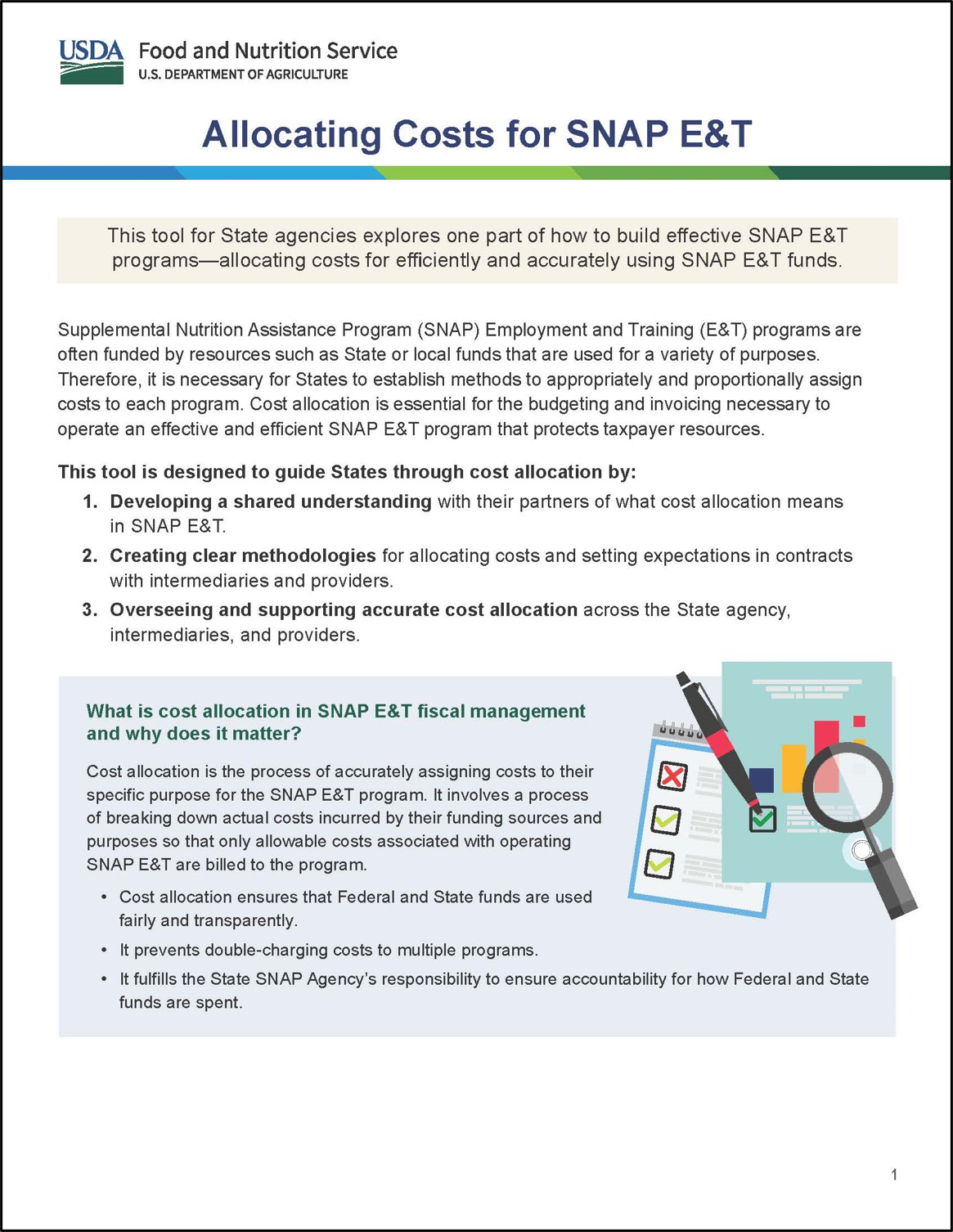
SNAP Employment and Training (E&T) programs are often funded by state or local funds that are used for a variety of purposes. Each state is responsible for having a plan to accurately separate costs. Cost allocation involves a process of breaking down actual costs incurred by their funding sources and purposes so that only allowable costs associated with operating SNAP E&T are billed to the program.
The Cost Allocation Brief is designed to guide states through the following: developing a shared understanding with their partners of what cost allocation means in SNAP E&T, creating clear methodologies for allocating costs and setting expectations in contracts with intermediaries and providers, and overseeing and supporting accurate cost allocation across the state agency, intermediaries, and providers.
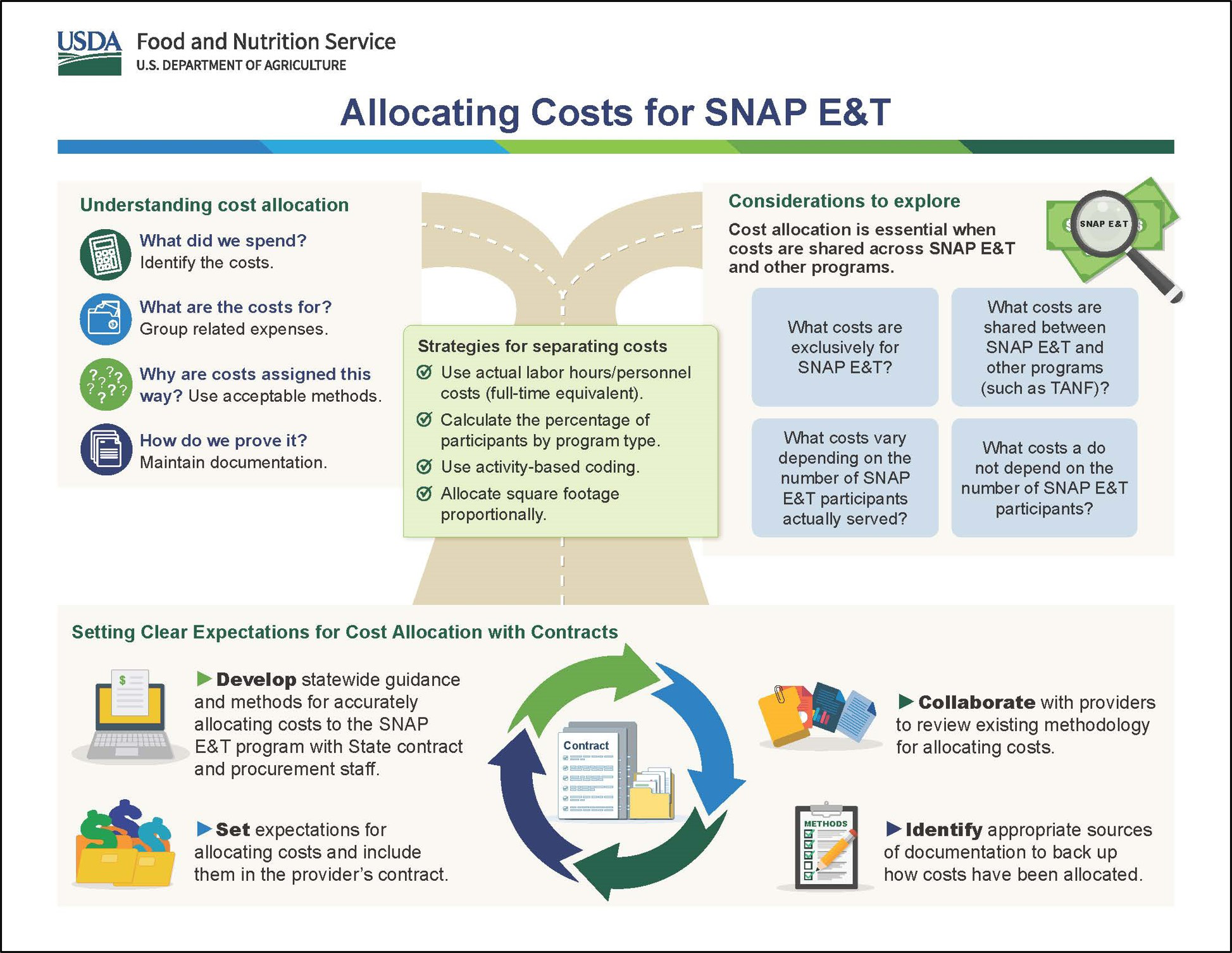
The Cost Allocation Infographic offers a snapshot of the cost allocation process and strategies for separating costs.
Page updated: May 29, 2026