


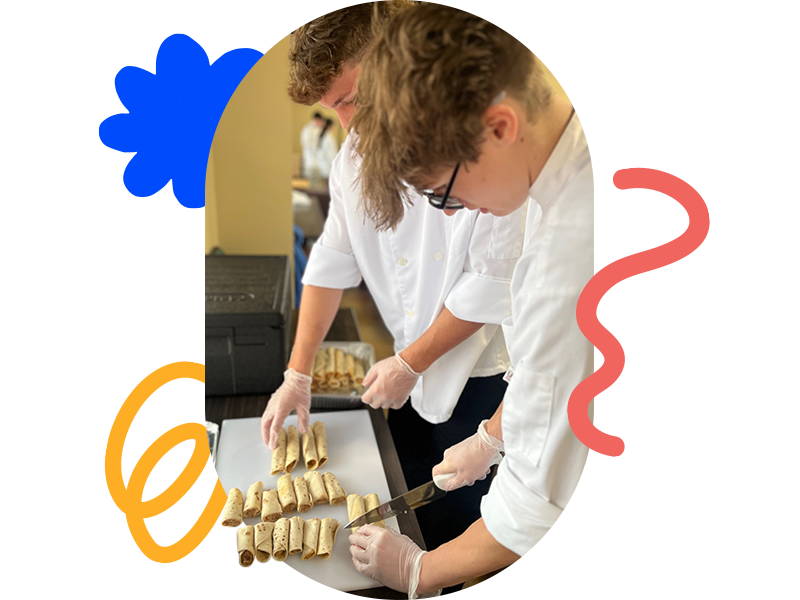
Middle school students participate in a tasting event where they sample and vote on a variety of school menu options. This event idea was adapted from the Team Nutrition Popular Events Idea Booklet to incorporate the Real Food Pyramid and the Dietary Guidelines for Americans, 2025–2030 (.pdf). It is geared towards middle school students and can be a fun way to engage students and get them excited about school meals.
Objective
Give students a voice in selecting healthy school meals by empowering them to make nutritious choices, while increasing their awareness of the Real Food Pyramid and the Dietary Guidelines for Americans, 2025–2030.
Event
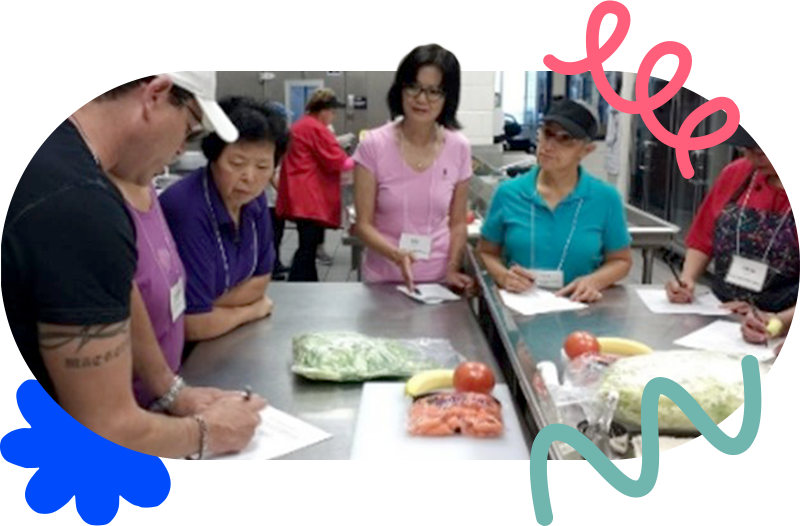
Kick off the school year with a fun, student powered taste testing event! If possible, the first part of this event should be held at the beginning of the school year, prior to the date when ingredients for the next school year must be ordered. School nutrition staff can present two to four dishes that could be incorporated into the school menu. To give students the chance to try healthy ingredients in a variety of ways, consider giving your dishes themes around a common protein, fruit, vegetable, dairy, or whole-grain ingredient. For example, students could taste both a sweet potato and black bean stew; and a sweet potato, squash, and carrot side dish.
Set up a different table for each dish and prominently display the ingredients. A teacher or school nutrition professional can briefly introduce the dish, making it clear how each food fits into the Real Food Pyramid. Students then visit the tables to receive sample cups of each item. When all dishes have been tasted, students can vote for the dish they would most like to see on the school menu using a ballot. Visit Team Nutrition’s Taste Testing Event Resources for sample ballots, posters, and stickers for the event.
The second part of the event occurs once the votes have been tallied and the winning food is announced. Give students the opportunity to suggest a creative name for the dish. Each classroom can then vote so that one title per classroom can be submitted to a schoolwide title selection. The winning title can be announced over the school’s public address system.
When the winning dish debuts on the school menu, promote it as the students’ choice and offer additional samples.
Planning
Form a team. To determine what kinds of healthy food choices would work best as additions to the school menu, gather the wellness committee, school nutrition staff, volunteers, student advisory board, and teachers for a wide range of input and ideas. Consider availability of ingredients, cost, taste, and ease of preparation.
Decide which dishes to present to students for sampling and voting. The selection can range from two to four dishes determined well in advance by the school nutrition staff. Loudoun County Public School District in Broadlands, Virg. hosted a Food Show at the high school to gather student feedback on new recipes for the upcoming school year. Over 40 recipes were sampled, along with education on health and nutrition topics from community partners. The event was a huge success, with over 250 participants!
Did you know? USDA Foods provides more than 180 nutritious choices of fruits, vegetables, meat, fish, poultry, and grains. For a full list, read the USDA Foods Available List.
Set a date and decide what resources you will need. The tasting and voting can be held in conjunction with lunch, and school nutrition staff can plan to incorporate the dish samples into the day’s menu items, if possible. Once the dish ideas have been selected, develop a list of the ingredients needed. Invite the principal and other faculty members to attend and serve as role models in trying the various dishes. Ideally, three to four volunteers will help staff the event and hand out samples, as well as tally the students’ votes.
Promote the idea in a fun way. Display materials in the hallways and cafeteria to drum up enthusiasm for the event and reinforce the power students have to make healthy choices. Promote taste-test events on social media, display posters, and have stickers to get kids excited to participate. Use Team Nutrition’s Taste Testing Event Resources to get started.
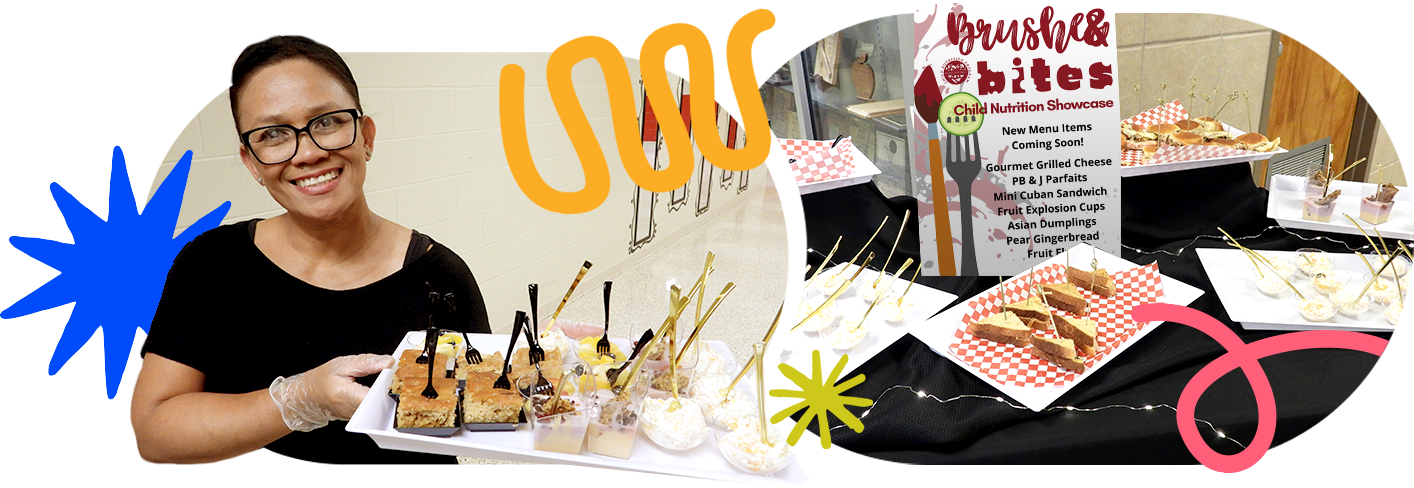
The Child Nutrition Program and Science, Technology, Engineering, and Math (STEM) program at Haleyville City School District in Haleyville, AL collaborated to host a “Brushes and Bites” event for students and families to view art while tasting new recipes. Students were engaged in creating art or preparing food for the event, and over 900 guests attended!
Team Up for Success

School
- Form an advisory panel of students from each grade to consult with school nutrition staff. They can be invited to the planning meetings or hold their own meeting and present a list of suggestions to the school nutrition staff.
- Share Team Nutrition’s How School Lunch is Made and How You Can Help article with students so they can learn more about school meals.
- For more ways to promote your meal program and get menu ideas, check out Team Nutrition’s School Breakfast Materials and School Lunch Materials.
- The entire student body can be involved in voting, both for the meal they want to see added to the menu and for the meal's title.

Classroom
- Students can use class time to learn about the food groups on the Real Food Pyramid. The Dietary Guidelines for Americans, 2025-2030 and related resources are available at realfood.gov.
- Teachers can incorporate the voting process into the math curriculum, asking students to create different pie or bar charts that display the results.
- If it is an election year, social studies teachers may want to incorporate the voting element of this event into a lesson on the national election process.

Cafeteria
- School nutrition services will provide two to four new menu items for tasting. For ideas, consult the planning team, the USDA Foods Available List, Team Nutrition’s Recipes for Healthy Kids Cookbook, and the State Child Nutrition Agency Developed Recipes for Schools.
- Prepare ballots for students to vote. Find sample ballots on the Institute of Child Nutrition's Child Nutrition Sharing Site and use signage to encourage sampling on voting day. Reward taste testers with stickers.
- Promote the menu of the day with Team Nutrition’s Today’s Lunch Poster and Today’s Breakfast Poster.

Community
- Invite a local community figure such as a registered dietitian to join the planning team and provide nutritious meal ideas that kids will enjoy.
- After the voting reveals the winning dish, ask local health-related organizations to include the students’ favorite recipe in their newsletter or on their website.

Media
- Talk about new recipes and encourage students to vote in morning announcements.
- Promote the event in newsletters or on social media.
- Take photos and/or videos of each dish selection, along with the number of votes they received and students’ comments about the foods and post them to the school’s website and social media accounts.
- Students can host a school podcast or write a short article for the school’s newsletter about the new food items they tried and what they liked and didn’t like about each new dish. They can also share what they learned about the nutritional benefits of the various ingredients.

Home
- Provide students with the recipe for the winning dish to take home and try making with their families.
Schools in Action
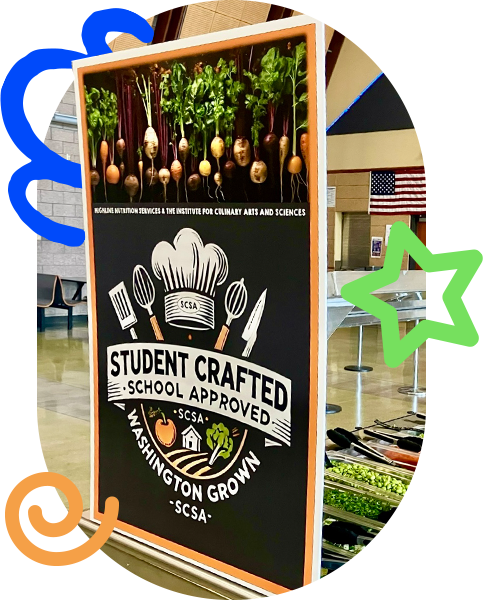
Highline School District in Washington hosted a student-led culinary event that showcased creativity, collaboration, and community voice. Thanks to a strong partnership with the Institute for Culinary Arts and Sciences, culinary students and school nutrition staff teamed up to bring innovative, locally inspired recipes to nearly 800 students.
Before stepping into the kitchen, culinary students gathered more than 100 community survey responses to better understand the flavors and cuisines their peers wanted to see in school meals and used that feedback to develop recipes that were both delicious and aligned with school nutrition standards.
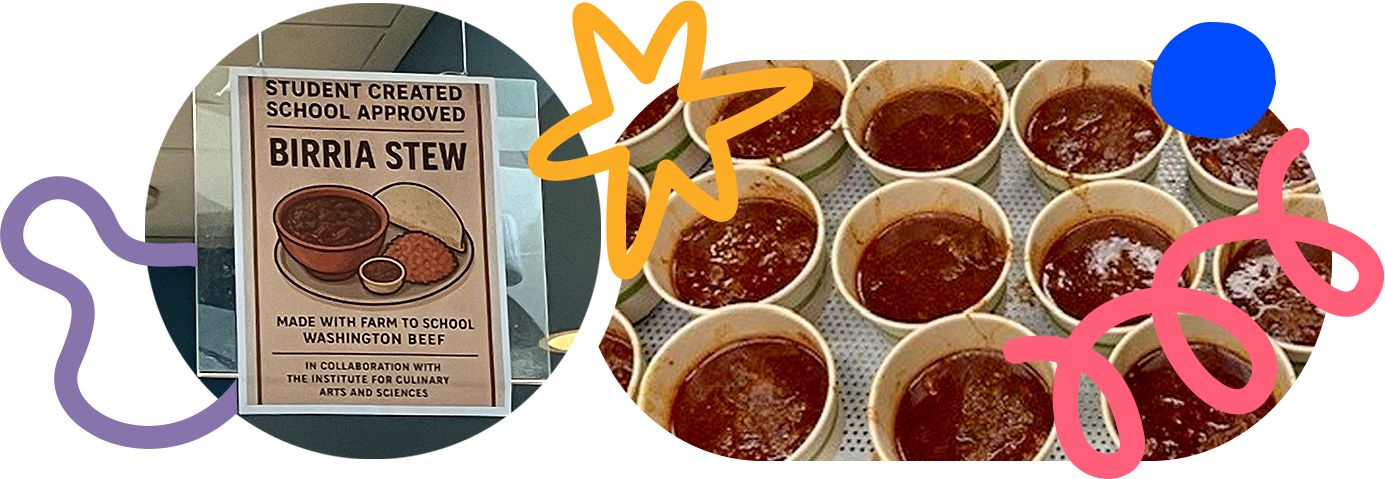
On the event day, culinary students arrived early to prep ingredients, cook from scratch, and set up the serving line. By lunchtime, they were fully immersed in the real-world pace of a school kitchen—serving dishes like beef birria stew, chicken ramen with scratch-made broth, and sides featuring Washington-grown beets, goat cheese, and salmon. The excitement drew district leaders as well, with the superintendent jumping in to help serve meals.
Students also surveyed their peers during lunch, gathering immediate feedback to help shape future menu innovations. The overwhelming positivity from students has inspired school nutrition staff to expand these recipes across the district and continue building connections between child nutrition programs and culinary education.