



The USDA’s Special Supplemental Nutrition Program for Women, Infants, and Children (WIC) Participant Access Study is a two-part study series designed to provide insight into the current geographic coverage and density of WIC retailers1 across the United States and to assist states in ensuring they are providing adequate participant access to WIC foods in their communities.
Key Findings
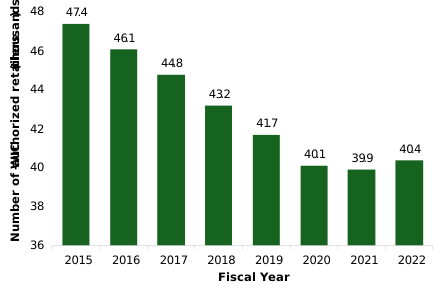
Retailer participation in WIC declined between 2015 and 2020, but has remained steady through 2022.
- In FY 2022, there were 40,377 WIC retailers (i.e., grocery stores, referred to as “vendors” in WIC). Among these WIC retailers, over two-thirds were super stores or supermarkets. Other retailer types, such as grocery stores or convenience stores, were less common.
- Although the total number of WIC retailers decreased by 15% (from about 47,000 to 40,000) between FY 2015 and FY 2022, most reductions occurred prior to FY 2020. Around 80% of this decline was attributed to smaller retailers. It is important to note that this decline occurred in the period leading up to the 2020 WIC Electronic Benefits Transfer (EBT) mandate.
More than half of WIC-eligible families have convenient access to a WIC retailer but some still lack access.
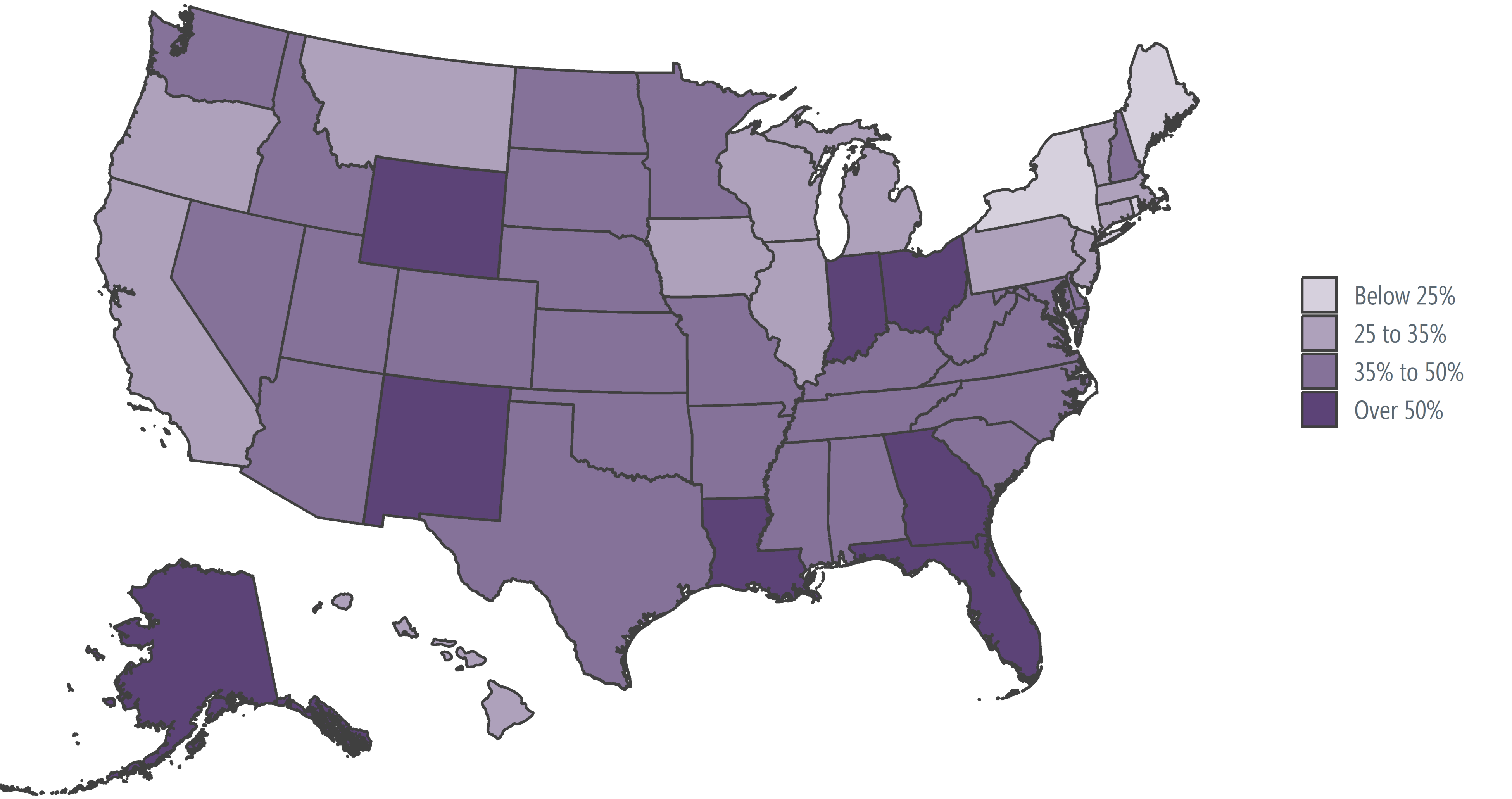
- This study explored whether WIC-eligible families have convenient access to a WIC retailer based on USDA definitions of access.1 In FY 2022, 55% of census tracts2 had convenient access to a WIC retailer. On average, census tracts had convenient access to 2.3 WIC retailers.
- Among the 50 states and DC, we estimate that 2.1 million WIC-eligible families did not have convenient access to a WIC retailer in FY 2022. This represents nearly half (45%) of the WIC-eligible population.
- Just over one-third (34%) of WIC-eligible families living in census tracts with high social vulnerability3 lacked convenient access to a WIC retailer.
Some optional state policies are associated with lower convenient access to WIC retailers.
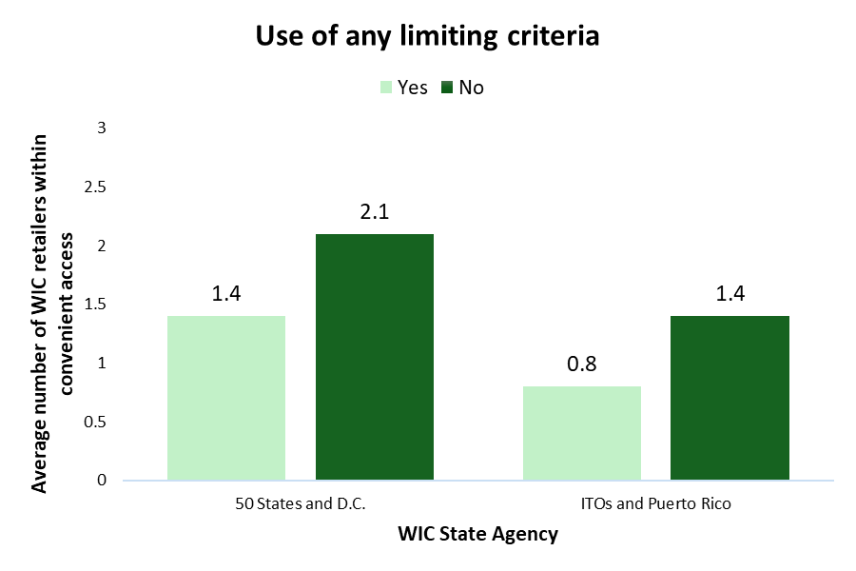
- In FY 2022, thirty-four state agencies (38%) imposed limiting criteria,4 which determine the maximum number and distribution of retailers authorized. State agencies use these criteria to limit the number of stores they authorize so they can effectively manage, oversee, and review their authorized retailer population. Some examples of limiting criteria include vendor/participant ratio and vendor/geographic area (e.g., number per mile or ZIP code).
- The average number of WIC retailers within convenient access to WIC-eligible census tracts was consistently lower in areas with limiting criteria. Among the 50 states and D.C. using limiting criteria, there were 1.4 WIC retailers within convenient access, on average, compared with 2.1 retailers in states without limiting criteria (Figure 3a).
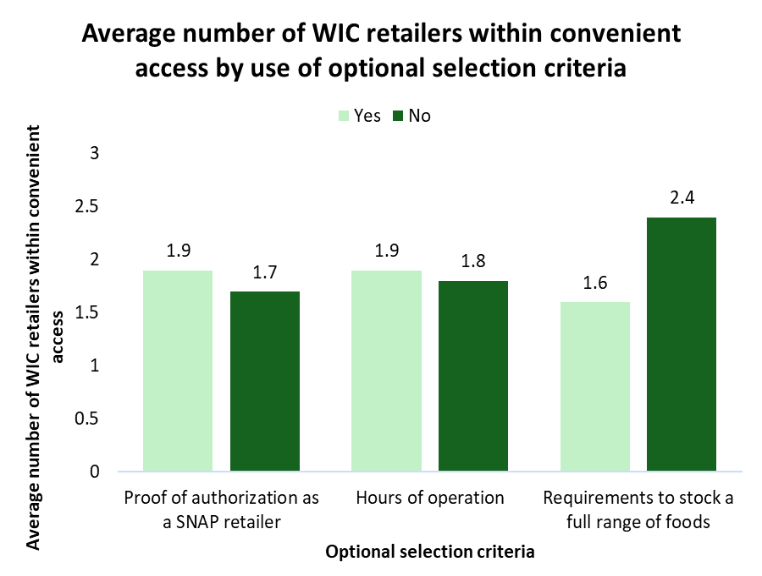
- Nearly all state agencies (98%) used optional vendor selection criteria4 (e.g., requirements regarding specific hours of operation, proof of authorization as a SNAP retailer, and requirements to stock a full range of foods in addition to WIC foods), in addition to required vendor selection criteria, when determining which retailers to authorize in FY 2022.
- State agencies that used optional selection criteria had slightly higher average numbers of retailers within convenient access to WIC-eligible census tracts than states without these criteria. States adding requirements for retailers to stock a full range of foods (i.e., full-service grocery stores) were the only exception among the 50 states and D.C.; states that used this additional criterion had fewer retailers within convenient access to a census tract, on average, than states that did not (1.6 compared to 2.4 retailers) (Figure 3b).
Why FNA Did This Study
WIC state agencies are responsible for authorizing and overseeing retailers that accept WIC food benefits. They must establish selection criteria that dictate the qualifications for retailers that may be authorized, in accordance with federally mandated criteria. Federal regulations (7 CFR 246.12) require state agencies to authorize a sufficient number and distribution of retailers to ensure adequate participant access to supplemental foods. In 2022, we observed a decline in the number of WIC authorized retailers since 2015 and, in response, issued a policy memorandum to encourage state agencies to assess their WIC retailer populations and “ensure that the appropriate number and distribution of vendors are authorized to support participants’ access to supplemental foods”. This study was conducted to understand the current geographic coverage and density of WIC retailers across the United States and how state agency policies and the composition of retailers may affect participant access to supplemental foods.
How FNA Did This Study
- To map and analyze the geographic distribution of WIC and SNAP retailers across the U.S., the study team obtained administrative data that described retailer locations, store types, and WIC state agency retailer selection policies from the following FNA data sources: The Integrity Profile (TIP), Food Delivery Portal (FDP), Store Tracking and Redemption System (STARS), and WIC State Plan data. To supplement the FNA administrative data sources and capture variation in urbanicity, food access, and social vulnerability, data were obtained from the Centers for Disease Control (CDC), Economic Research Service (ERS), and the American Community Survey (ACS).
- This study explored two primary measures of food access: 1) Convenient access, a proximity-based measure defined as the availability of at least one WIC retailer within a one-mile driving distance in urban areas and a 10-mile driving distance, and 2) Average number of WIC vendors within convenient access of a census tract to differentiate between different levels of access to WIC.
- The study examined these measures overall and by a variety of census tract-level characteristics, including by urbanicity; low-income; and social vulnerability status.
Suggested Citation
Sarah Bardin, Tracy Vericker, Addison Larson, Dory Thrasher, and Nathan Chesterman (2025). WIC Participant Access Study: Part 1; Final Report. Prepared by Mathematica, Contract No. 12319819A0006. Alexandria, VA: U.S. Department of Agriculture, Food and Nutrition Administration, Office of Evidence, Analysis, and Regulatory Affairs, Project Officer: Kathryn Knoff. Available online at: https://www.fns.usda.gov/research/wic/participant-access-vendors-part1.
1 Convenient access is a USDA Economic Research Service proximity-based measure defined as the availability of at least one WIC retailer within a one-mile driving distance in urban areas and a 10-mile driving distance in rural areas.
2 A census tract is defined by the United States Census Bureau as “a small, relatively permanent statistical subdivision of a county delineated by a local committee of census data users for the purpose of presenting data. Census tracts nest within counties, and their boundaries normally follow visible features, but may follow legal geography boundaries and other non-visible features in some instances, Census tracts ideally contain about 4,000 people and 1,600 housing units.”
3 Social vulnerability refers to the demographic and socioeconomic factors (such as poverty, lack of access to transportation, and crowded housing) that adversely affect communities that encounter hazards and other community-level stressors.
4 Per federal regulation, the state agency may establish criteria to limit the number of stores it authorizes. The state agency must apply its limiting criteria consistently throughout its jurisdiction. Any vendor limiting criteria used by the state agency must be included in the State Plan in accordance with § 246.4(a)(14)(ii).
5 Per federal regulation, vendor selection criteria are established by the state agency to select individual vendors for authorization consistent with the requirements in § 246.12(g)(3) and (g)(4). Optional selection criteria are those criteria that states choose to implement in addition to what is required in accordance with § 246.12(g)(3) and (g)(4).